-
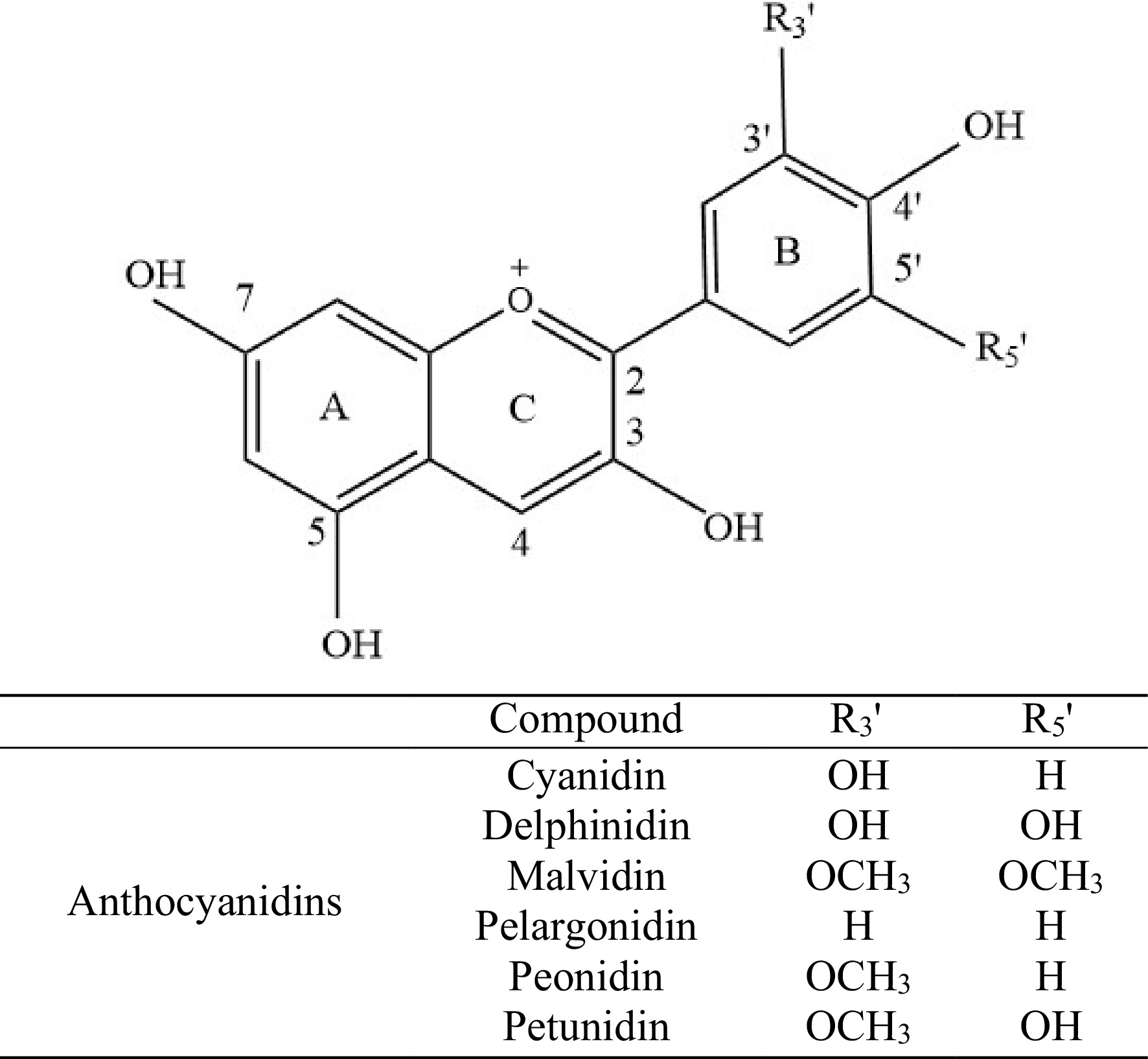
Figure 1.
Chemical structures of anthocyanidins.
-
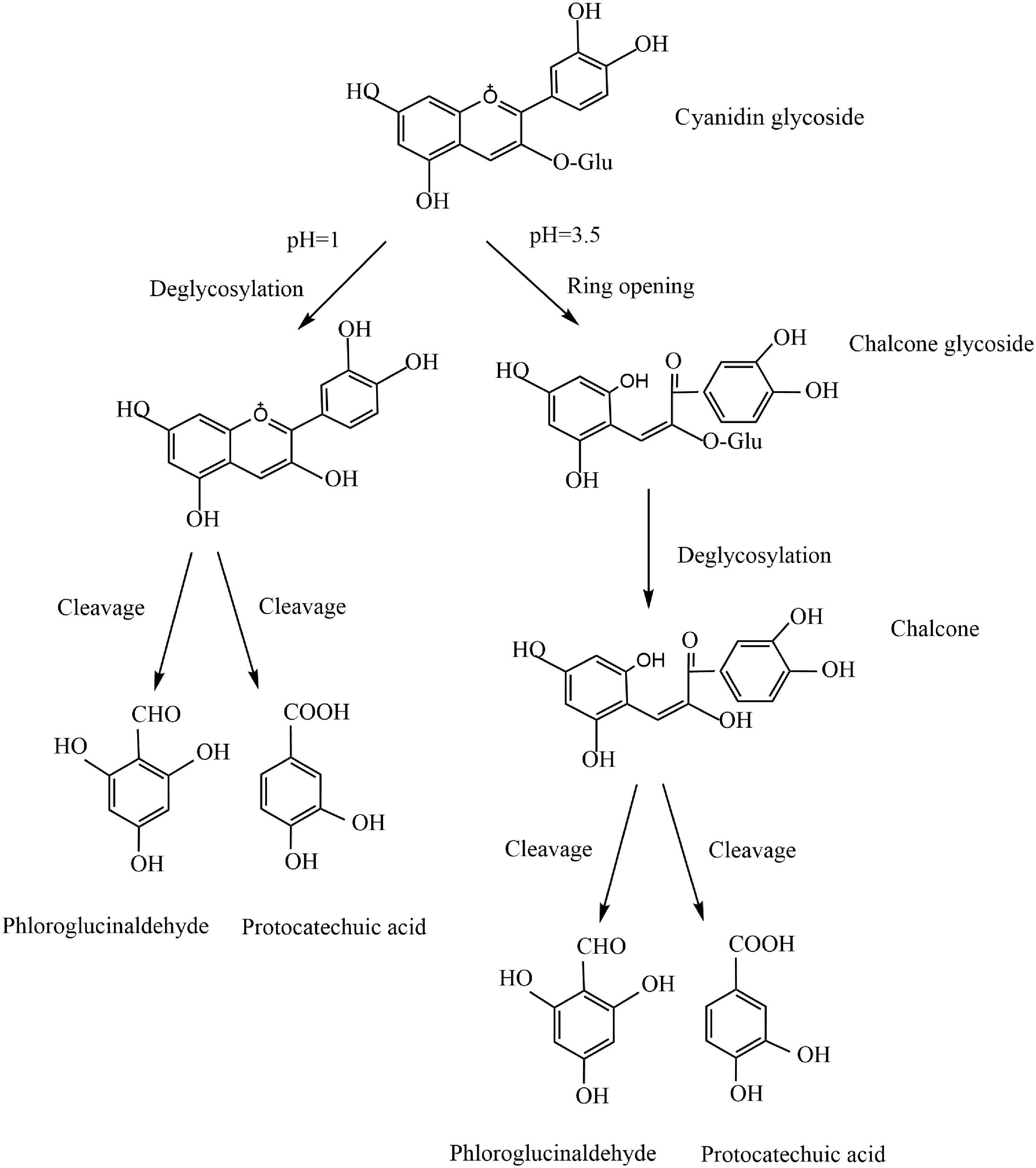
Figure 2.
Two thermal degradation pathways of cyaninin-3-glucoside at pH = l and pH = 3.5[20].
-
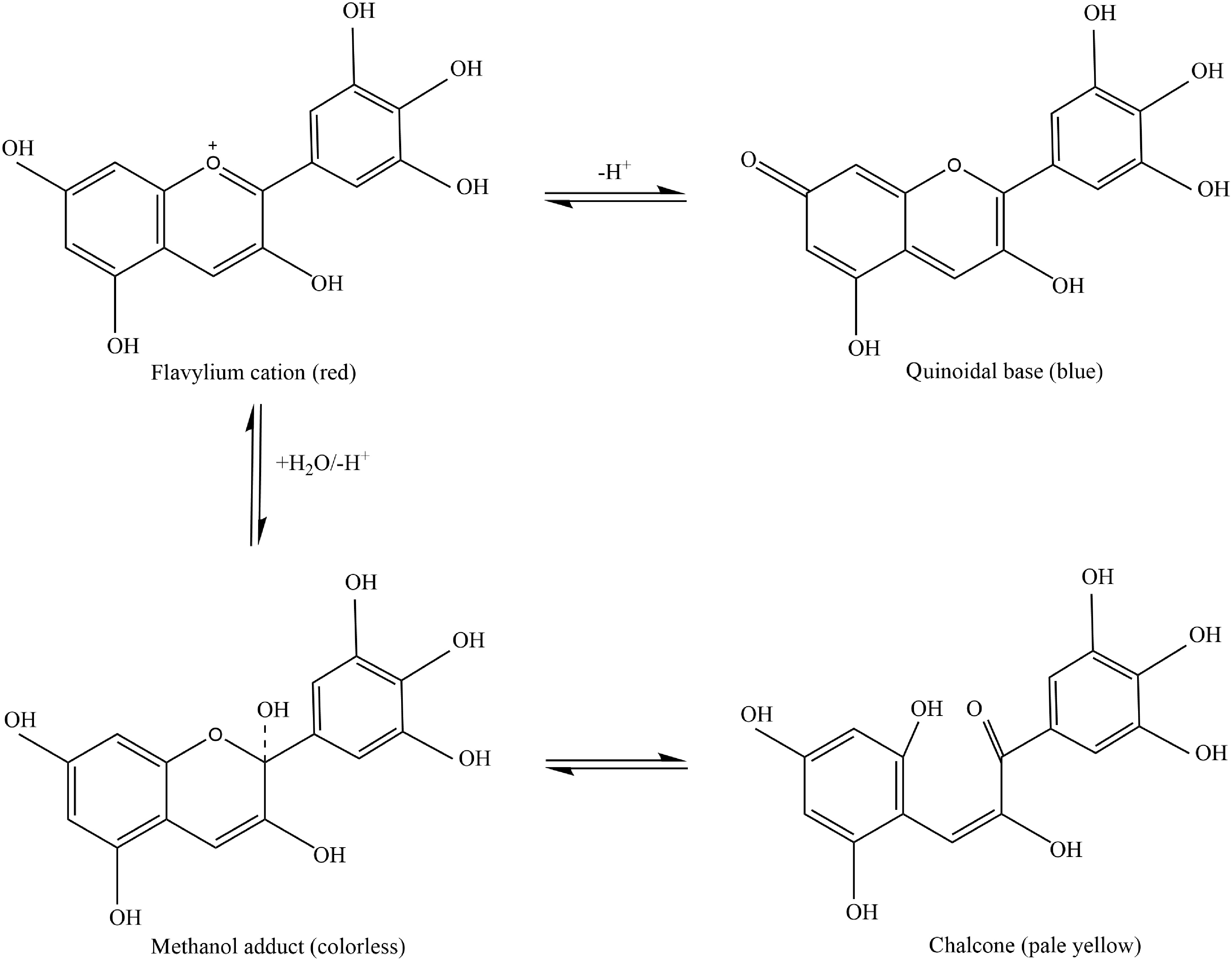
Figure 3.
Structural changes of anthocyanins at different pH values.
-
Anthocyanidins pH response range pH response sensitivity Stability Application Cyanidin pH 2–8 Somewhat strong in solution; high sensitivity after film formation Stable in solution and after film formation Monitoring food spoilage Delphinidin pH 5.5 shows a significant blue shift Highest in solution; significantly decreases after film formation Worst in solution; significantly improved after film formation Neutral/weakly alkaline systems Malvidin pH 1–4 Not sensitive to weak alkalinity in solution; least sensitivity change after film formation Stable Monitoring of spoilage of highly acidic foods, such as juice and kimchi Pelargonidin pH 3–6 Slightly decreases after film formation High stability Long-term and stable intelligent packaging Peonidin pH 4.5–7 Somewhat strong after film formation Better than delphinidin Sensitive and durable packaging film Petunidin pH 4–6 The lowest sensitivity after film formation Strongest Long-term color retention; only provides slight indications Table 1.
The pH-responsive properties of anthocyanidins.
-
pH 1 2 3 4 5 6 7 8 9 10 11 12 13 14 Color 


Table 2.
Color changes of blueberry anthocyanins at different pH levels.
Figures
(3)
Tables
(2)