-
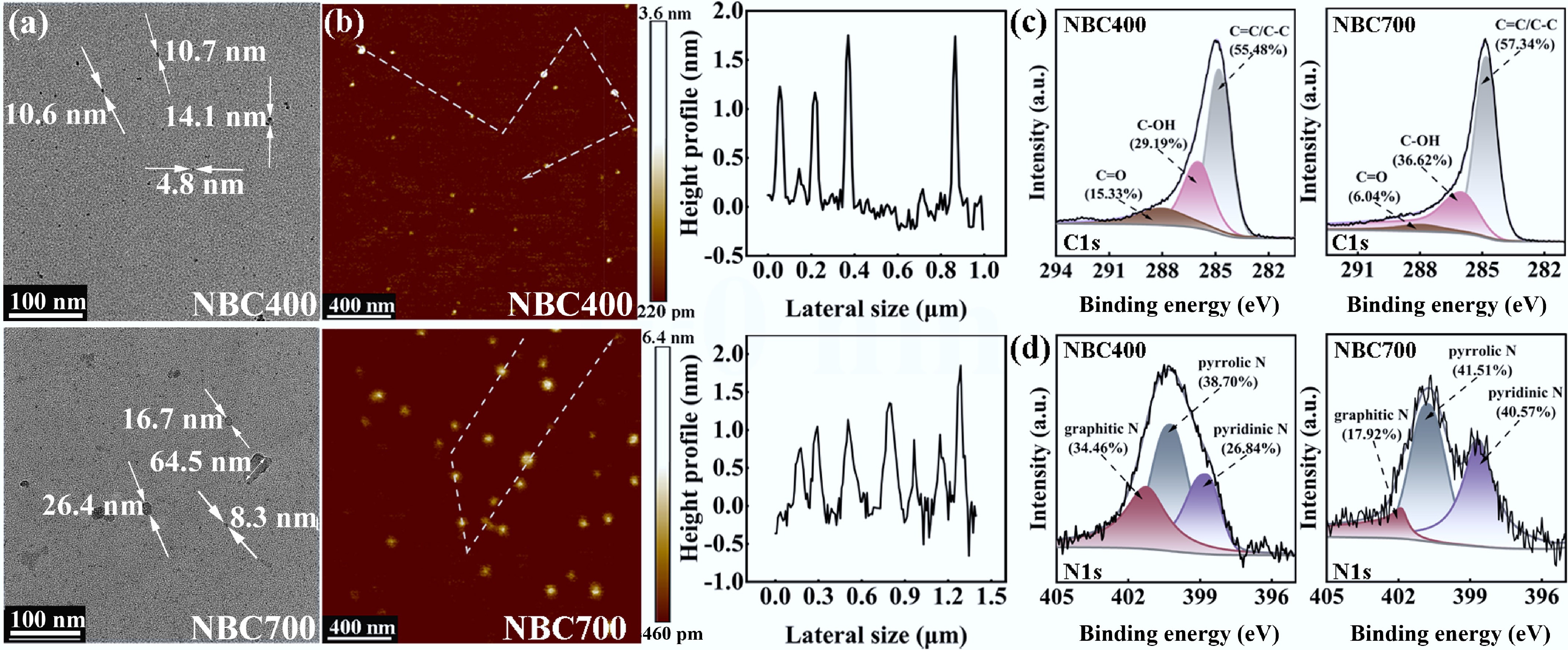
Figure 1.
Characterization of NBC. (a) TEM images of NBC400 and NBC700. (b) AFM images of NBC400 and NBC700. The diameter (lateral size, x-axis) and thickness (height profile, y-axis) analysis of NBC particles along the dotted line in the panel. (c) High-resolution C1s XPS spectra of NBC. (d) High-resolution N1s XPS spectra of NBC.
-
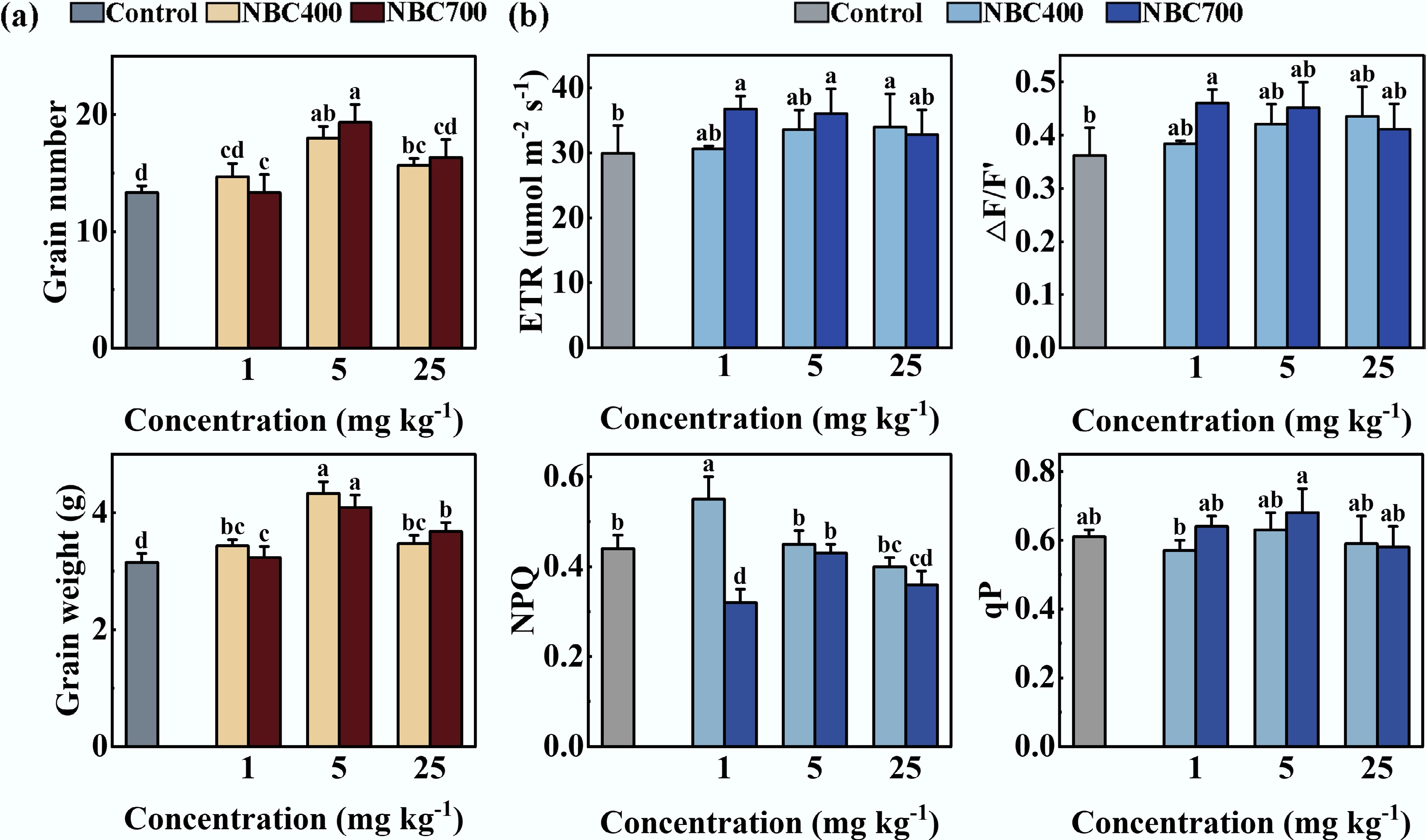
Figure 2.
Beneficial effects of NBC on the growth and photosynthesis of soybean. (a) Grain number and weight; (b) electron transfer rate (ETR), actual photosynthetic efficiency (ΔF/Fm') of PSII, non-photochemical quenching coefficients (NPQ), and photochemical quenching coefficients (qP). Different lowercase letters indicate significant differences between groups (p < 0.05).
-
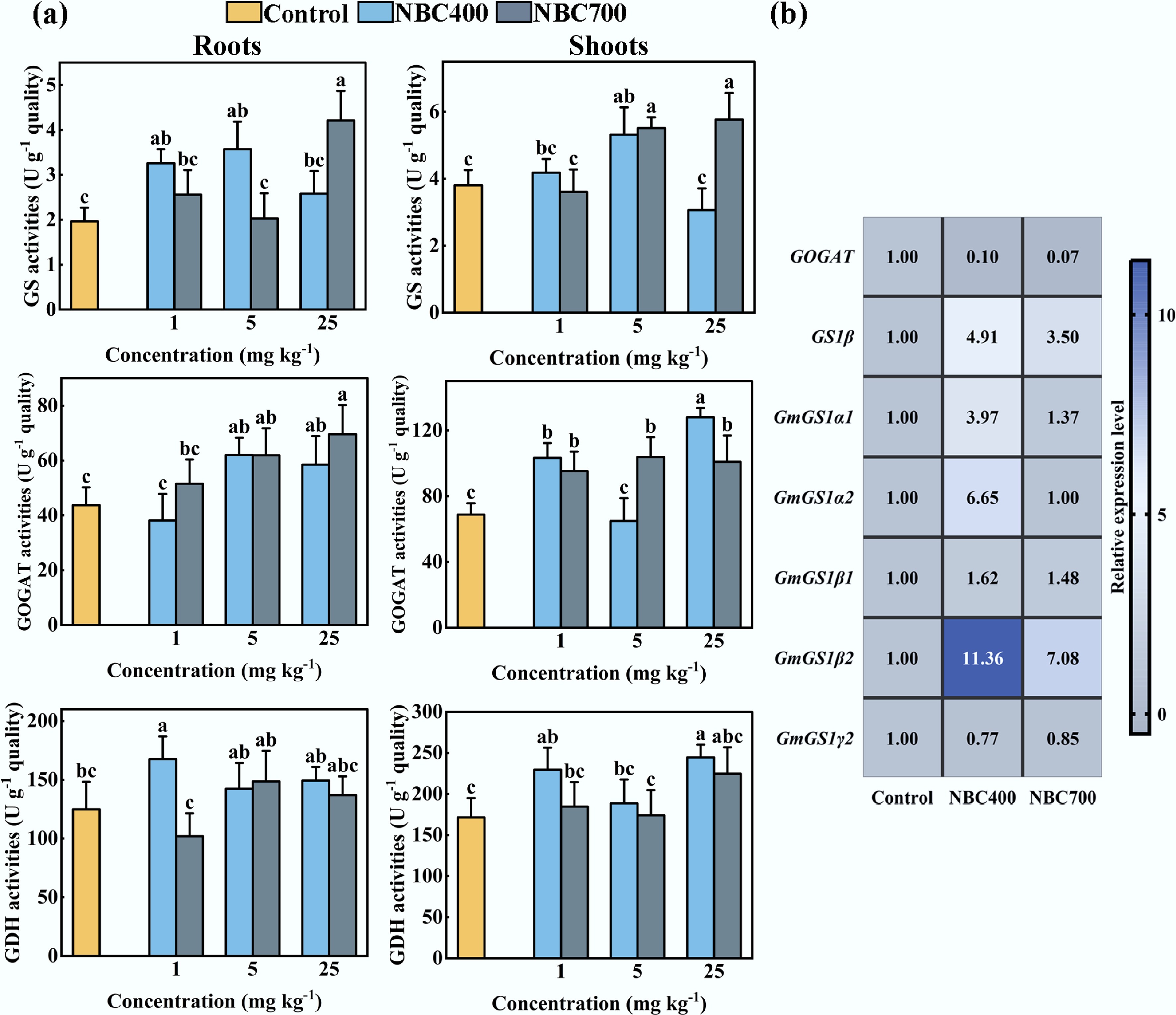
Figure 3.
The effects of NBC on the activity of N assimilation-related enzymes and relative gene expression in soybean. (a) The activities of GS, GOGAT, and GDH in the roots and shoots. (b) The relative expression of the glutamate synthase gene (GOGAT) and the glutamine synthetase gene (GS) in plant roots treated with 5 mg kg−1 of NBC. Different lowercase letters indicate significant differences between groups (p < 0.05).
-
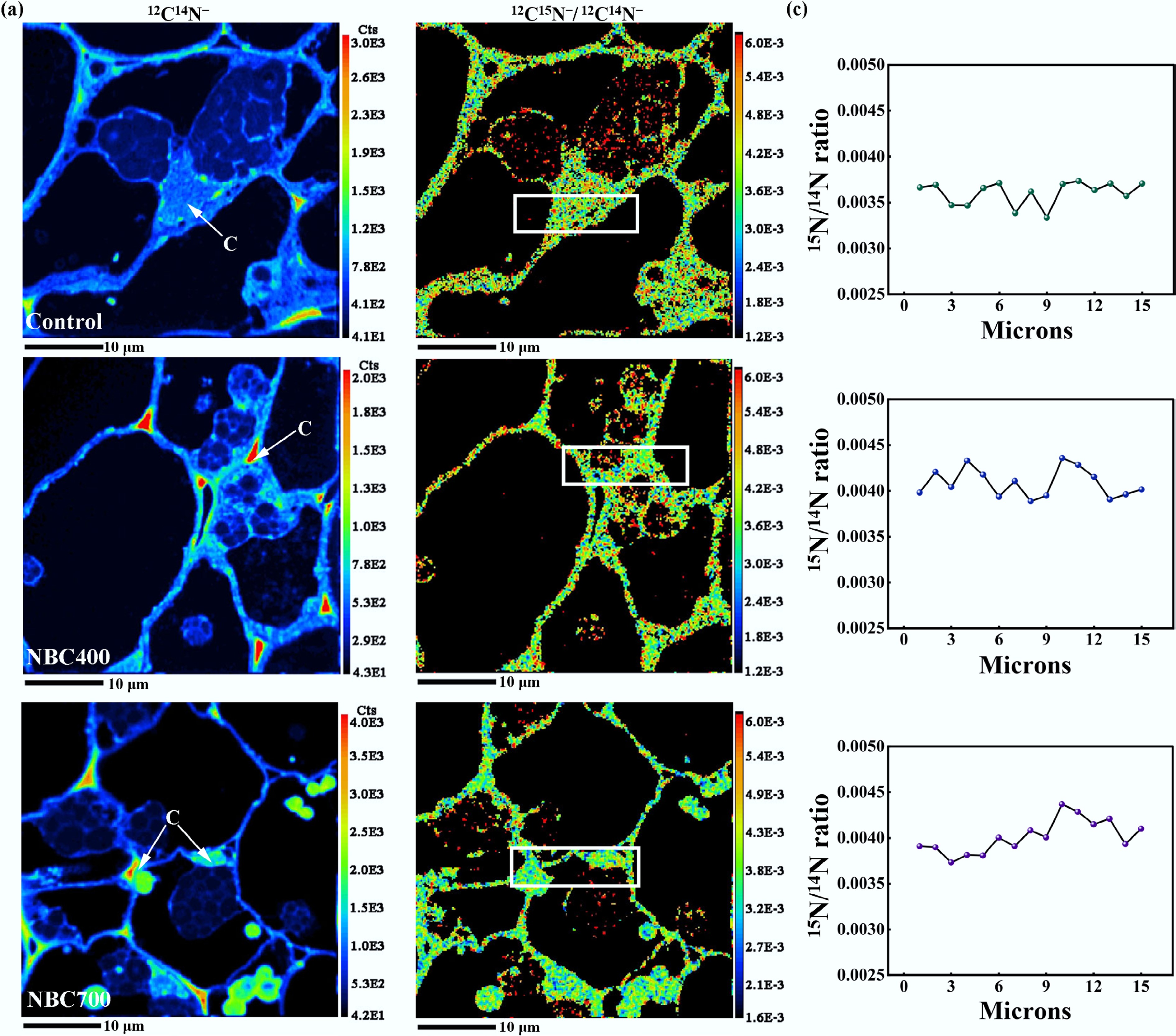
Figure 4.
Nano-scale secondary ion mass spectrometry (NanoSIMS) imaging of soybean nodules in the treatment of NBC400 and NBC700 (5 mg kg−1). (a) 12C14N− NanoSIMS images, showing the nitrogen contents in rhizome cells; (b) hue saturation intensity image generated from the NanoSIMS 15N/14N ratio of the same region, showing the 15N/14N ratios were enriched for the rhizome cells in the treatments of NBC compared with those for the control; (c) line scan analyses of the selected regions defined in (b) with respect to 15N/14N ratios. Scale bar: 10 μm for all images.
-
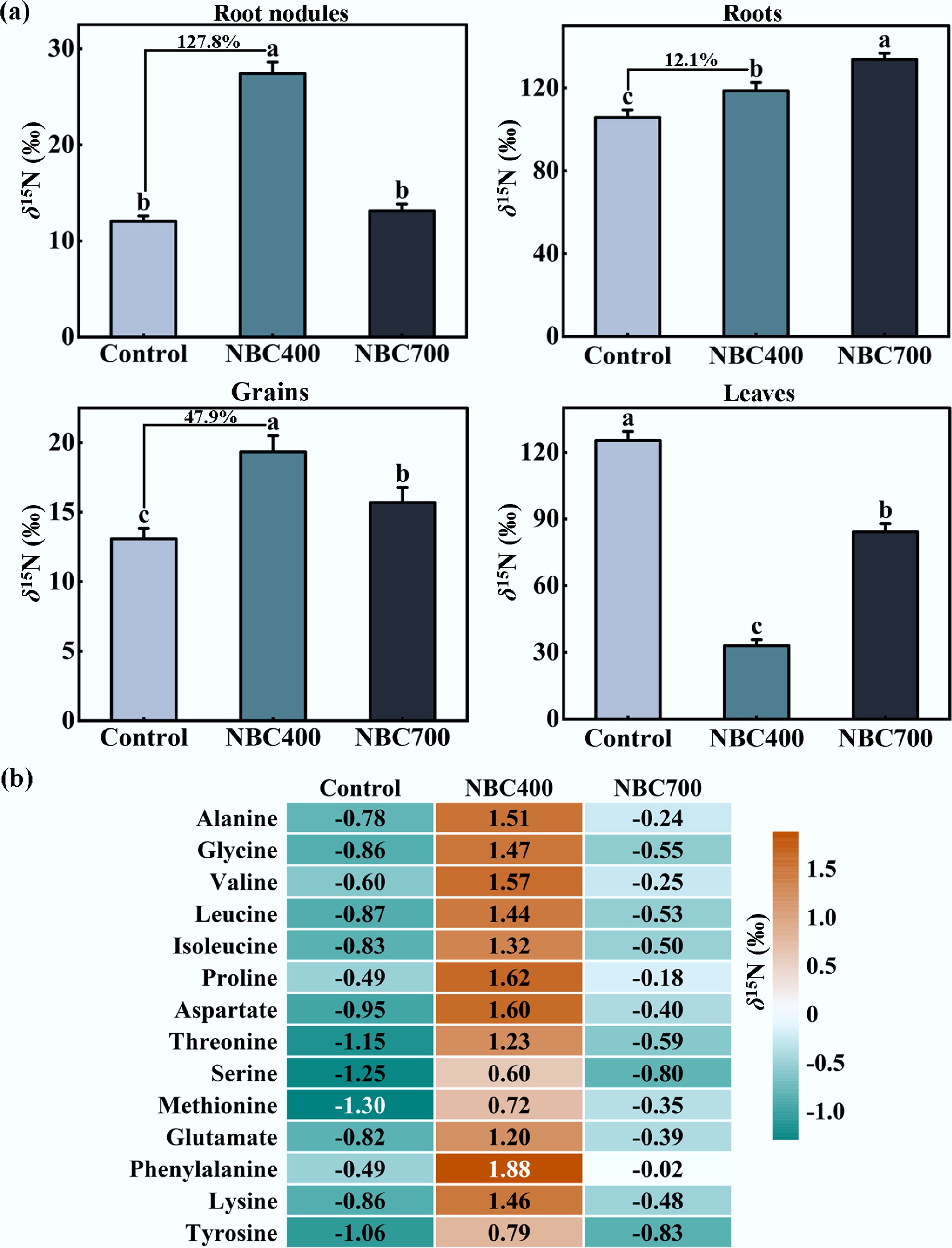
Figure 5.
Accumulation and spatial distribution of 15N in soybean. (a) 15N abundance in the roots, nodules, leaves, and grains of soybean; (b) 15N abundance in the amino acids of soybean grains. Different lowercase letters indicate significant differences between groups (p < 0.05). The application rates of NBC400 and NBC700 were 5.0 mg kg−1.
-
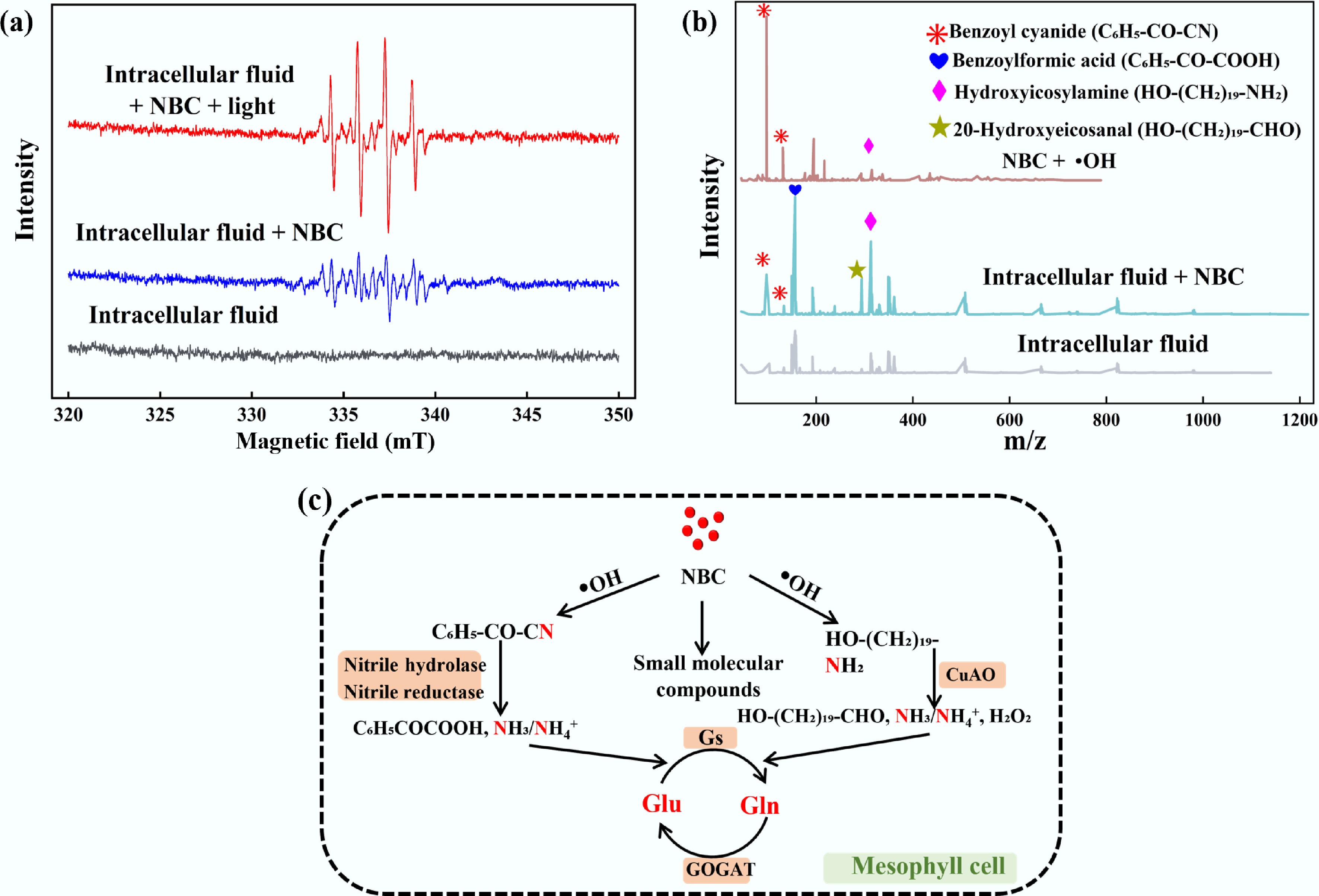
Figure 6.
Transformations of NBC in soybean leaves. (a) Hydroxyl radical (·OH) signal intensities in the intracellular fluid extracted from soybean leaves under dark conditions and in intracellular fluid-NBC mixtures with and without simulated sunlight exposure. (b) Comparison of NBC degradation products identified by LC–MS in intracellular fluid and the Fenton reaction system. The chemical composition of the intracellular fluid alone was characterized by LC–MS as a control. (c) Proposed mechanistic pathway for NBC transformation in soybean foliar tissues. Partial ·OH-mediated degradation of NBC yields nitrogen-containing intermediates, which undergo enzymatic denitrification via nitrile hydratase, nitrile reductase, and copper amine oxidase (CuAO) to release bioavailable nitrogen for assimilation through the GS–GOGAT cycle.
Figures
(6)
Tables
(0)