










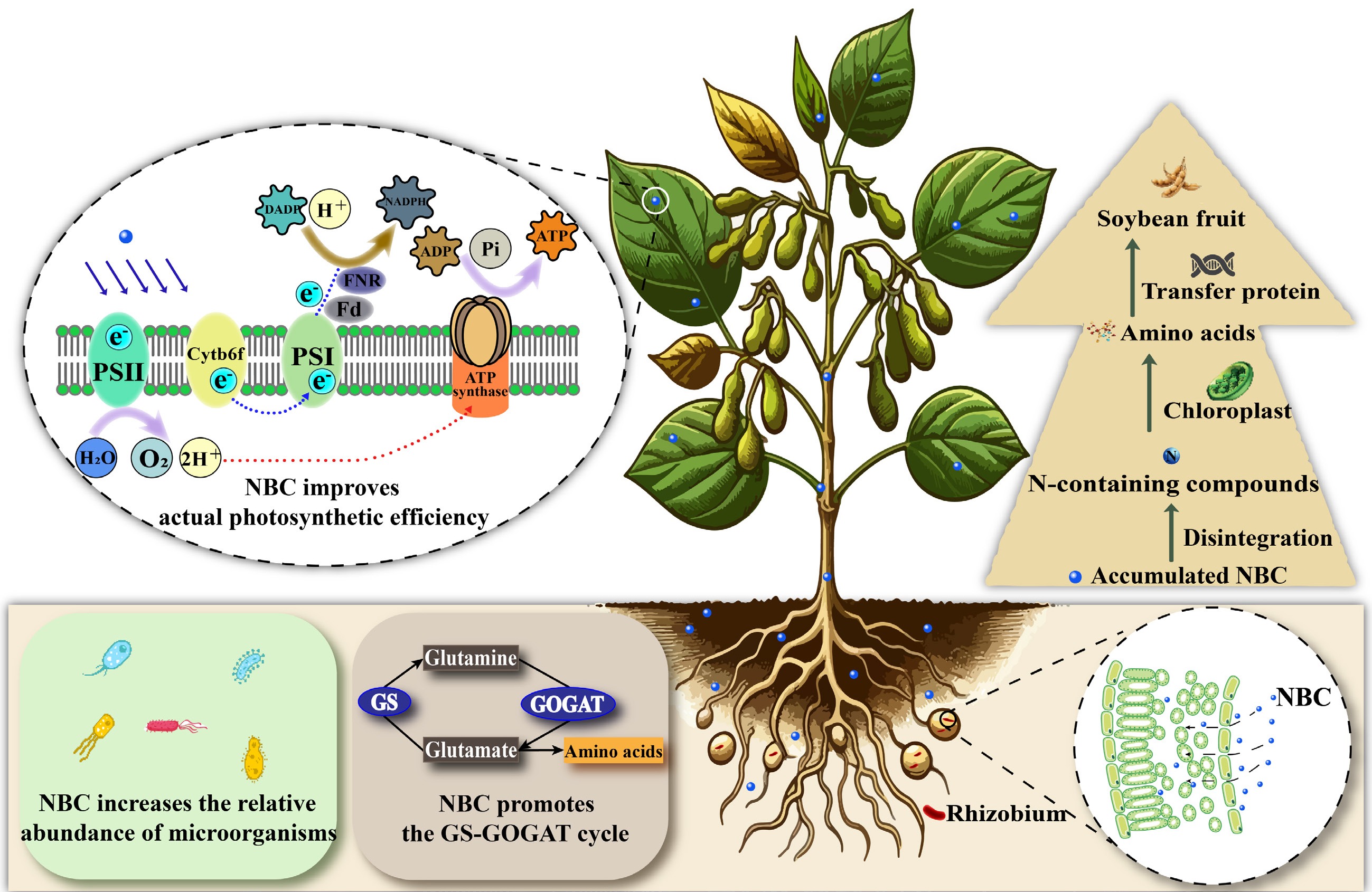



-
Biochar (BC) is the refractory carbonaceous residue produced naturally or anthropogenically from oxygen-limited pyrolysis of biomass[1]. BC is commonly considered a complicated combustion continuum from large pieces to dissolved fractions[2]. Among the mixture, BC with particle sizes smaller than 100 nm, i.e., nano-biochar (NBC), has gained increasing research attention due to its active nature in terrestrial ecosystems[3]. NBC has high surface reactivity similar to engineered carbon nanomaterials such as graphene oxides (GO) and carbon quantum dots (CQDs) and plays critical roles in many biogeochemical processes, including sorption[4,5], redox[6], and heteroaggregation[7]. Comparatively, NBC possesses higher environmental friendliness and lower cost relative to engineered carbon nanomaterials. Hence, it is essential to explore the potential applications of NBC across various domains such as sorbents, nanofertilizers, and nanopesticides, based on its physicochemical properties and high reactivity.
Nanobiotechnology provides agricultural systems with a great opportunity to become more sustainable, efficient, and resilient in facing climate change[8,9]. The nanoscale size of engineered nanomaterials enables them to penetrate the vascular systems of plants following root or foliar applications, facilitating new and efficient delivery routes for nutrients and agrochemicals[10]. The most widely used engineered nanomaterials include carbon-based materials[11], mineral nanoparticles[12], and metal oxide nanoparticles[13]. The delivery efficiency and manner are highly dependent on the exposed concentration, surface charges, and particle size of the nanomaterials[14]. To our knowledge, no prior studies have investigated NBC as a nanocarrier for crop fertilizers, likely due to concerns about its plant availability and nutrient delivery efficiency. Our previous study demonstrated that NBC preferentially associates with rice roots and subsequently modifies iron plaque composition[15]. More directly, NBC has been documented to undergo absorption and systemic translocation in wheat and Chinese cabbage plants[16]. Beyond carbon, heteroatoms such as aromatic nitrogen (N) are consistently identified within NBC molecular structures[17]. To date, the fate of both NBC and its associated heteroatoms after plant uptake remains largely unexplored. Based on documented structural transformations of carbonaceous nanomaterials in plant leaves[18,19], we hypothesize that NBC could serve as a nanoscale platform for the co-delivery of heteroatom-derived nutrients and carbon sources to crops.
N is an essential nutrient for plant growth and development[20], constituting a significant constraint on crop yield. To satisfy the escalating food demand globally, over 110 Tg of N fertilizers are applied annually to enhance soil fertility, with N fertilizer synthesis consuming 1%–2% of global energy[21,22]. Enhancing N use efficiency in soybeans (Glycine max L.) through nanobiotechnology represents a promising strategy for reducing N fertilizer application while simultaneously increasing crop yields[23]. Nanomaterials such as molybdenum disulfide and iron oxide nanoparticles[24] have demonstrated the ability to enhance N utilization and increase soybean yields. In this study, we focus on evaluating NBC as a potential N nanocarrier for soybean cultivation, with specific emphasis on the bioavailability of its heteroaromatic N components.
The primary objectives of this work are: (1) to evaluate the influence of N-enriched NBC on N assimilation, yield formation, and rhizosphere microbial diversity in soybeans throughout their life cycle; and (2) to elucidate the transformation of N-enriched NBC in soybeans and the underlying mechanism of N delivery to the plant. To this end, we synthesized 15N-doped NBC at two pyrolysis temperatures (400 and 700 °C). Greenhouse pot experiments were conducted to trace the uptake and transformation of 15N-labeled NBC through analysis of its degradation products and N isotope ratios. The findings will advance our understanding of plant–NBC interactions and underscore NBC's potential as a naturally derived platform for controlled nutrient delivery in nanobiotechnology applications.
-
A mixture of corn stover powder and 15N-labeled urea (2:1 mass ratio) served as the precursor for NBC synthesis via slow pyrolysis conducted at 400 and 700 °C[25]. 15N-labeled NBC was isolated from the bulk BC via extraction and filtration (0.7 μm). The resulting filtrate was freeze-dried, stored in the dark at 4 °C, and designated as NBC400 and NBC700, respectively, prior to use. The detailed protocol is shown in Supplementary Text S1 in the Supporting Information (SI).
The abundances of 15N in NBC were determined using an elemental analyzer–isotope ratio mass spectrometer (EA-IRMS; Flash 2000 HT, Thermo Fisher Scientific, USA) at a reaction temperature of 960 °C, with a helium carrier gas flow rate of 120 mL min−1 and a reference gas flow rate of 100 mL min−1. The particle size and surface morphology of NBC were characterized by transmission electron microscopy (TEM) and atomic force microscopy (AFM). The ζ potential and hydrodynamic diameters (Dh) in deionized water at different pH values (4, 7, and 10) were determined using a Zeta potential analyzer (Malvern Zetasizer Nano ZS90, UK). Surface chemical compositions were acquired through X-ray photoelectron spectroscopy (XPS, Thermo Fisher, USA). The specific characterization methods are shown in Supplementary Text S2.
Greenhouse experiment
-
Soil samples were collected from an agricultural field in Tianjin, China (39°23' N, 117°05' E), and their physicochemical properties were characterized prior to soybean cultivation (see Supplementary Text S3 and Supplementary Table S1 for details). All soils used in this experiment were non-sterile, retaining their original soil microbial communities. Soybean seeds (Glycine max [L.] Merr. cv. Zhonghuang 13, hereafter abbreviated as G. max cv. ZH13) were provided by the Institute of Crop Sciences, Chinese Academy of Agricultural Sciences, and sterilized with 5% NaClO for 5 min, and subsequently soaked and incubated in deionized water at 25 °C for 3 d. Uniform seedlings were selected and transplanted into pots containing 2.0 kg of soil for subsequent cultivation. Before transplantation, NBC400 and NBC700 were individually mixed into the soil to achieve final concentrations of 1, 5, and 25 mg kg−1, respectively. An untreated soil without any NBC addition served as the control. The pot experiment adopted a randomized block design, with three biological replicates for each group. The transplanted seedlings were cultivated in a greenhouse under controlled conditions: 25 °C during the day, 18 °C at night, 50% humidity, and 70% soil moisture. At the physiological maturity stage (90 d after planting), soybean plants were harvested and stored for subsequent analysis.
Determination of chlorophyll fluorescence parameters
-
Chlorophyll fluorescence parameters in plant leaves, including the actual photosynthetic efficiency of PSII (ΔF/Fm'), electron transfer rate (ETR), non-photochemical quenching coefficient (NPQ), and the proportion of open PSII reaction centers capable of undergoing photochemical reactions (qP), were assessed before harvest employing a basic modulated chlorophyll fluorometer (Junior-PAM, Zealquest Scientific Technology Co.). The detailed procedure is provided in Supplementary Text S4.
Quantification of total N content in soybean tissues
-
The total N content in the roots, nodules, leaves, and grains was determined using an elemental analyzer (Flash 2000 CHNS/O) from Thermo Fisher Scientific, USA. The detailed parameters and calculation methodologies are described in Supplementary Text S5.
Determination of amino acid content and N isotope ratios in grains
-
The sampled grains were subjected to amino acid extraction, purification, and derivatization (Supplementary Text S6), and the amino acid NPP derivatives were quantified by gas chromatography-mass spectrometry (GC-MS, Shimadzu, Japan) to obtain the content of each amino acid. Amino acid NPP derivatives were separated using a Trace GC Ultra gas chromatograph. The amino acid monomers were then converted to N2 in oxidizing and reducing furnaces, followed by analysis using a Mat253 isotope ratio mass spectrometer (IRMS, Thermo Fisher, USA) for N isotope ratio determination. Detailed chromatographic and mass spectrometric conditions are given in Supplementary Text S7.
Nitrogen metabolism-related enzyme activity
-
The activities of glutamine synthetase (GS), glutamate synthetase (GOGAT), and glutamate dehydrogenase (GDH) were determined in freshly collected roots and shoots using assay kits from Beijing Solarbio Science and Technology Co.
Quantitative real-time PCR analysis
-
Quantitative real-time PCR was employed to analyze the expression of key genes involved in N metabolism, including the GOGAT gene and GS-related genes (GS1β, GmGS1α1, GmGS1α2, GmGS1β1, GmGS1β2, and GmGS1γ2). Detailed methods and information about the internal reference genes and primers can be found in Supplementary Text S8 and Supplementary Table S2.
Soil microbial diversity analysis
-
High-throughput sequencing, conducted on the NovaSeq-PE250 second-generation sequencing platform from Illumina (California, USA), was employed to scrutinize the soil microbial community’s composition. Specific test parameters are detailed in Supplementary Text S9.
Determination of δ15N in plants
-
The abundances of δ15N in the roots, nodules, leaves, and grains of plants were assessed using a Sercon HS-2022 EA-IRMS. Standard substances IAEA-600 (δ15N = 1‰) and acetanilide (δ15N = 1.18) were employed. Detailed conversion formulas and δ15N determination methods are provided in Supplementary Text S10.
TEM imaging of leaf ultrastructure
-
Soybean leaf segments were fixed in 2.5% glutaraldehyde, dehydrated, embedded in resin, and ultrathin-sectioned to approximately 90 nm. After double-staining with uranyl acetate and lead citrate, the sections were examined using an FEI Tecnai TF20 field-emission TEM equipped with EDS (Oxford Instruments ISIS 300). High-resolution TEM imaging and selected-area electron diffraction (SAED) were performed to analyze the subcellular structure and crystalline features, while EDS was employed to determine the local chemical composition. Lattice spacing measurements were conducted on the acquired HRTEM images using DigitalMicrograph software.
Nanoscale Secondary Ion Mass Spectrometry (NanoSIMS) analysis of nodules
-
In situ, isotope mapping was performed using a NanoSIMS 50L (Cameca, Gennevilliers, France) with a 16 keV Cs+ primary ion beam. Secondary ion counts of carbon (12C−), oxygen (16O−), nitrogen (12C14N− and 12C15N−), phosphorus (31P−), and sulfur (32S−) were measured. Images were processed using OpenMIMS data analysis software from ImageJ (National Institutes of Health, Bethesda, MD, USA). Images were corrected for detector dead time (44 ns) before any other data processing. Plots of 15N : 14N ratios (r = 15N/14N from 12C15N−/12C14N−) were obtained by dividing the 12C15N− counts by the 12C14N− counts for each pixel. Ten to fifteen points per sample were analyzed to provide a reliable database for calculating the fate of 15N. Specific test parameters are detailed in Supplementary Text S11.
NBC stability assessment in the soil
-
To evaluate the structural stability of NBC in the soil, both N-release assays in root exudates and NBC mineralization experiments were conducted. Detailed methods can be found in Supplementary Text S12.
Reactive oxygen species (ROS) accumulation in soybean leaves
-
ROS in soybean leaves for all treatments and the control were analyzed using electron spin resonance spectrometry (Magnettech ESR5000, Bruker). Specific methods and test parameters are detailed in Supplementary Text S13.
Identification of NBC transformation in soybean leaves
-
Due to the extremely low concentration of absorbed NBC in soybean leaves, in situ monitoring of its transformed products is highly challenging. Therefore, we designed an in vitro simulation experiment to analyze the potential transformation pathways of NBC in foliar tissues. Briefly, an aliquot of intracellular fluid extracted from soybean leaves was mixed with NBC (1 mg mL−1) and reacted for 24 h. The reaction was conducted in vials submerged in a thermostated water bath maintained at 25 °C, with simulated sunlight provided by an Atlas SunTest CPS+ solar simulator equipped with a 1 kW xenon arc lamp irradiating the solution from above. The intracellular fluid without NBC addition served as the control. The degradation products were analyzed by LC-MS equipped with an electrospray ionization (ESI) source. The detailed extraction procedure for intracellular fluids and the mass spectrometer are presented in Supplementary Text S14.
Statistical analysis
-
Statistical analyses were conducted using one-way analysis of variance in SPSS v26.0. Mean values for each treatment were compared using the least significant difference multiple comparison tests at a significance level of p < 0.05. The data are presented as means ± standard deviation (SD).
-
The δ15N isotopic signatures (Supplementary Table S3) demonstrated exceptional 15N enrichment in both NBC400 and NBC700, with values of 150,811‰ and 162,136‰, respectively. These values were three orders of magnitude higher than those of the unlabeled nano-BC controls (137.4‰ and 143.3‰), confirming the successful synthesis of highly enriched 15N-labeled NBC materials. TEM images show that NBC400 and NBC700 were nanosized solids with average particle sizes of 10.1 ± 0.5 nm and 28.9 ± 0.5 nm, respectively (Fig. 1a). AFM observation suggests that NBC exhibited flake-like morphologies, with thickness (height profile) ranging from 0.38 to 1.75 nm for NBC400 and 0.27 to 1.84 nm for NBC700. The lateral sizes were in the ranges of 47.64–83.53 nm for NBC400 and 69.16–139.7 nm for NBC700, respectively (Fig. 1b). Surface elemental compositions determined by XPS (Supplementary Tables S4 and S5) indicate that the contents of C, N, and O were 61.17%, 33.31%, and 5.52% for NBC400, while those for NBC700 were 65.07%, 31.57%, and 3.36%, respectively. High-resolution C1s XPS spectra (Fig. 1c) show that, besides sp2- and sp3-hybridized carbons (reflected by the peaks of C–C/C=C), NBC400 and NBC700 contained a high content of oxygen-containing groups (mainly C–OH and C=O, more than 40%), implying their high polarity and surface charge density. The N1s XPS spectra (Fig. 1d) reveal that pyridinic-N and pyrrolic-N constituted the predominant N species in NBC400 and NBC700, collectively accounting for more than 65% of the total N content. These findings demonstrate that NBC400 and NBC700 contained typical heteroaromatic N structures, which are similar to the dissolved black nitrogen separated from the natural environment[26]. The ζ potentials of NBC remained negative and lower than −25 mV under a wide range of pH conditions (4–10), indicating excellent colloidal stability in aqueous solutions (Supplementary Fig. S1). The Dh of NBC400 and NBC700 ranged from 220 to 342 nm and 396 to 712 nm at different pH levels (Supplementary Figs S2 and S3), suggesting their high potential to be taken up by plant roots.
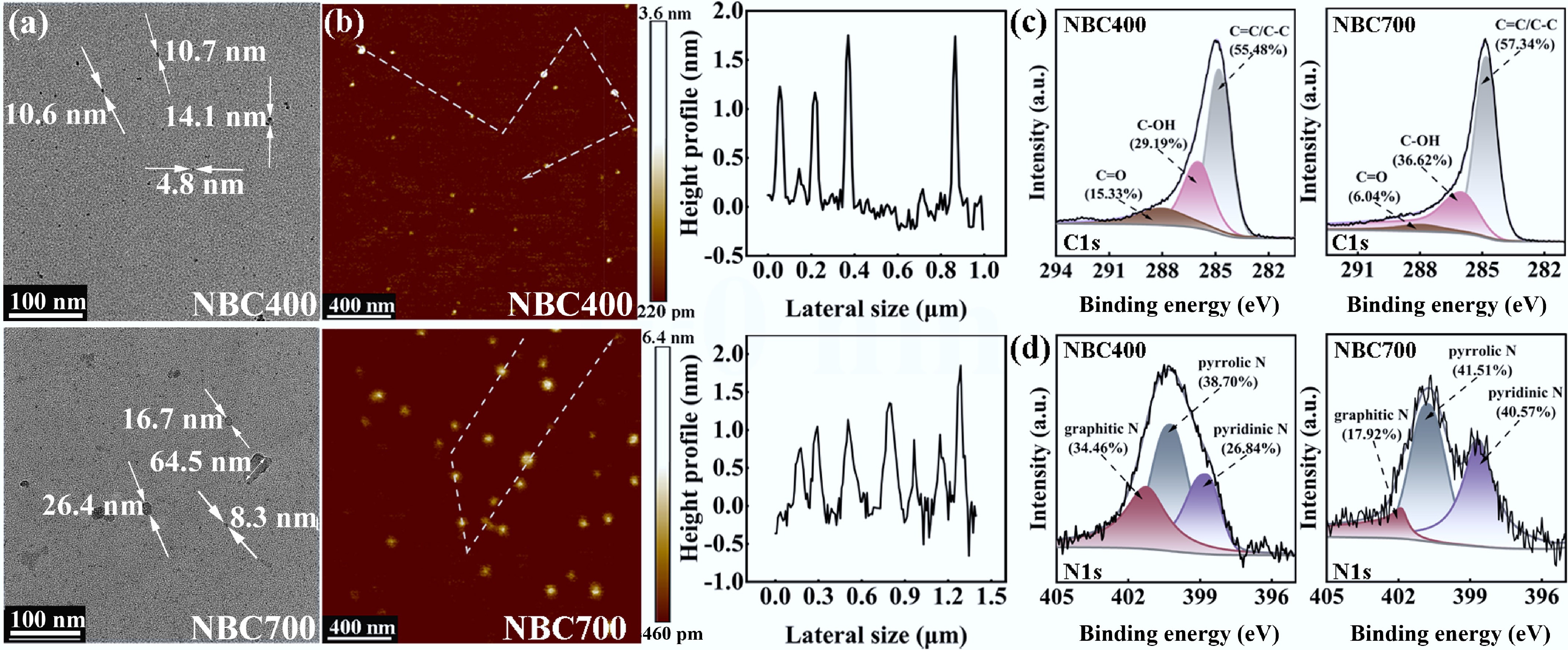
Figure 1.
Characterization of NBC. (a) TEM images of NBC400 and NBC700. (b) AFM images of NBC400 and NBC700. The diameter (lateral size, x-axis) and thickness (height profile, y-axis) analysis of NBC particles along the dotted line in the panel. (c) High-resolution C1s XPS spectra of NBC. (d) High-resolution N1s XPS spectra of NBC.
NBC-enhanced soybean growth and photosynthesis
-
Impacts of NBC at different dosages (1, 5, and 25 mg kg−1) on the growth and yield of soybean were examined. The application of NBC400 and NBC700 generally enhanced soybean grain number and weight, with the most pronounced improvement observed at the 5.0 mg kg−1 application rate (p < 0.05) (Fig. 2a). For instance, the grain numbers were enhanced by 35.0% and 45.0% under the 5.0 mg kg−1 NBC400 and NBC700 treatments, respectively. The root images of soybean visually illustrated that the roots in the 5.0 mg kg−1 NBC treatment developed better and had relatively more root nodules than those of other treatments (Supplementary Fig. S4). The application of NBC400 significantly increased N content in soybean roots and grains compared to the control, with a more pronounced promoting effect than that achieved by NBC700 (Supplementary Table S6). Consistently, NBC application, particularly NBC400, significantly increased the amino acid content in soybean grains (p < 0.05; Supplementary Table S7), demonstrating its efficacy in enhancing the crop's nutritional quality. This nano-enabled enhancement of N assimilation and crop yield is consistent with recent reports on other nanomaterials. For instance, Li et al. demonstrated that molybdenum nanofertilizer improved biological N fixation and soybean yield by delaying nodule senescence and enhancing nutrient uptake[27]. Compared with engineered nanomaterials, our NBC achieves comparable or even greater promotion (35%–45% increase in grain number) at a very low application rate (5 mg kg−1). These comparisons further support that the observed promotion originates primarily from the nano-size effect of NBC. The superior performance of NBC400 over NBC700 can be explained by its distinct structure. Specifically, NBC400 possesses a higher proportion of edge-site N species, a lower degree of aromatic condensation, and more abundant surface oxygen-containing groups. These properties facilitate ROS-mediated partial decomposition, better aqueous dispersibility, and more efficient root uptake and subsequent N translocation to nodules and grains.
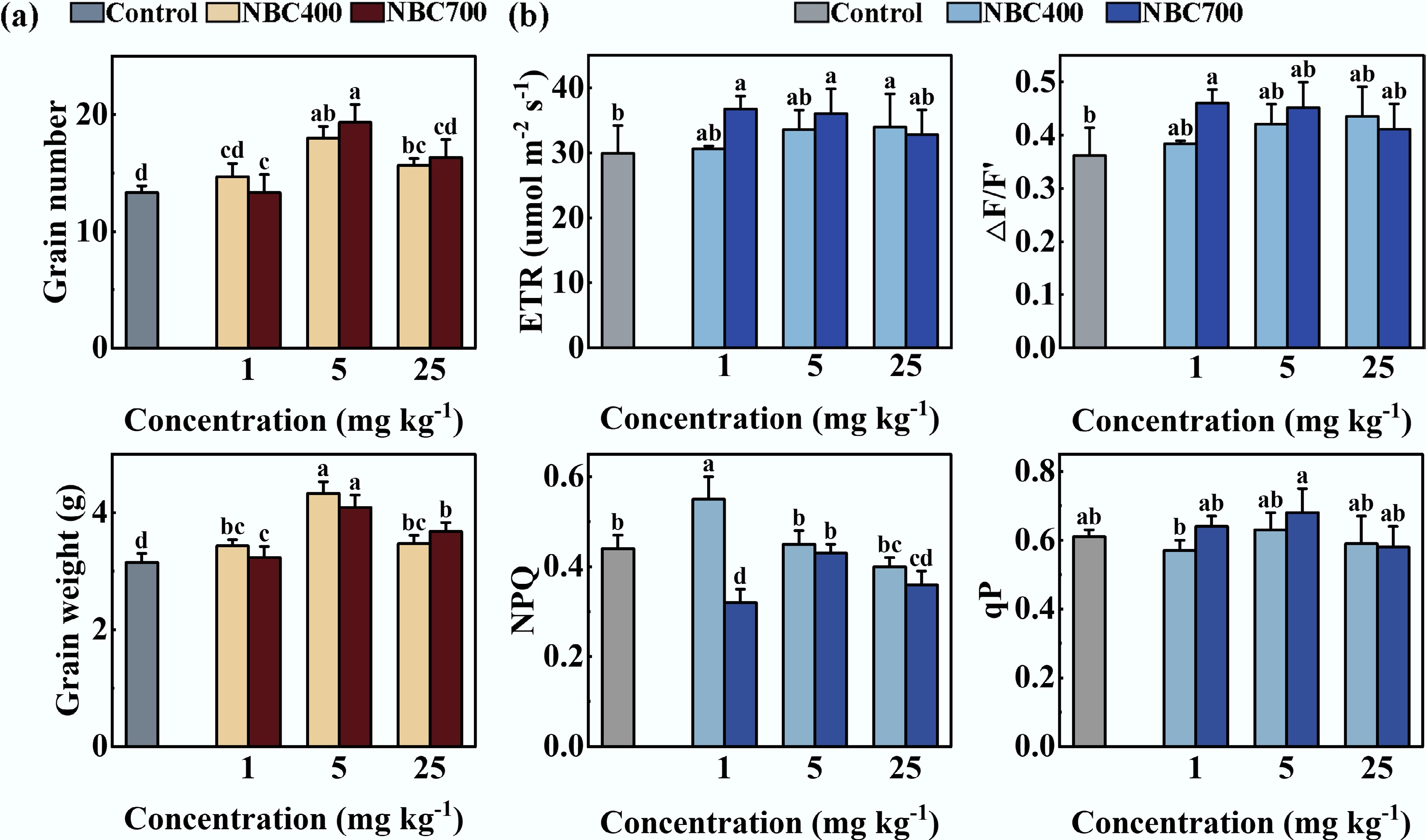
Figure 2.
Beneficial effects of NBC on the growth and photosynthesis of soybean. (a) Grain number and weight; (b) electron transfer rate (ETR), actual photosynthetic efficiency (ΔF/Fm') of PSII, non-photochemical quenching coefficients (NPQ), and photochemical quenching coefficients (qP). Different lowercase letters indicate significant differences between groups (p < 0.05).
Chlorophyll fluorescence emitted by plants is closely related to chemical processes in photosynthesis[28]. Thus, the impact of NBC on the soybean photosystem was examined by assessing essential chlorophyll fluorescence parameters, including ETR, ΔF/Fm', NPQ, and qP. The results suggest that these parameters were generally improved in the NBC treatments, indicative of a promoting effect on photosynthetic activities (Fig. 2b). For example, 1 mg kg−1 of NBC700 increased ETR and ΔF/Fm' by 22.6% and 27.2% compared with the control.
Enhanced activity of nitrogen assimilation enzymes by NBC
-
The activities of three key enzymes in the roots and shoots, including GS, GOGAT, and GDH, involved in N assimilation during soybean growth were examined[29]. GS contributes to glutamine biosynthesis by catalyzing the reaction between NH4+ and glutamate to produce amino acids. GOGAT catalyzes the production of glutamate from glutamine and 2-oxoglutarate. GDH catalyzes the reaction of NH4+ with 2-oxoglutarate to form glutamate[30]. The NBC treatments exhibited a general promoting effect on the activities of these enzymes both in roots and shoots (Fig. 3a). Specifically, higher dosages of NBC more significantly enhanced the activities of GS and GOGAT than those of GDH; the NBC dosage-dependent promoting effect on the activity of GDH was not as evident as those for GS and GOGAT. Notably, NBC treatment significantly enhanced enzymatic activities, with GS showing maximal increases of 114% and 51.6% in roots and shoots, respectively. Similarly, GOGAT activity was elevated by 59.1% in roots and 46.6% in shoots. In comparison, GDH exhibited more moderate enhancement, with maximal activity increases of 34.2% in roots and 33.8% in shoots compared to the control. These results reveal that the presence of NBC greatly facilitated the GS-GOGAT cycle, thereby enhancing N assimilation in soybean. The enhanced N assimilation is favorable to plant photosynthesis[31], which partly accounts for the positive effect of NBC on the photosynthetic performance as discussed above.
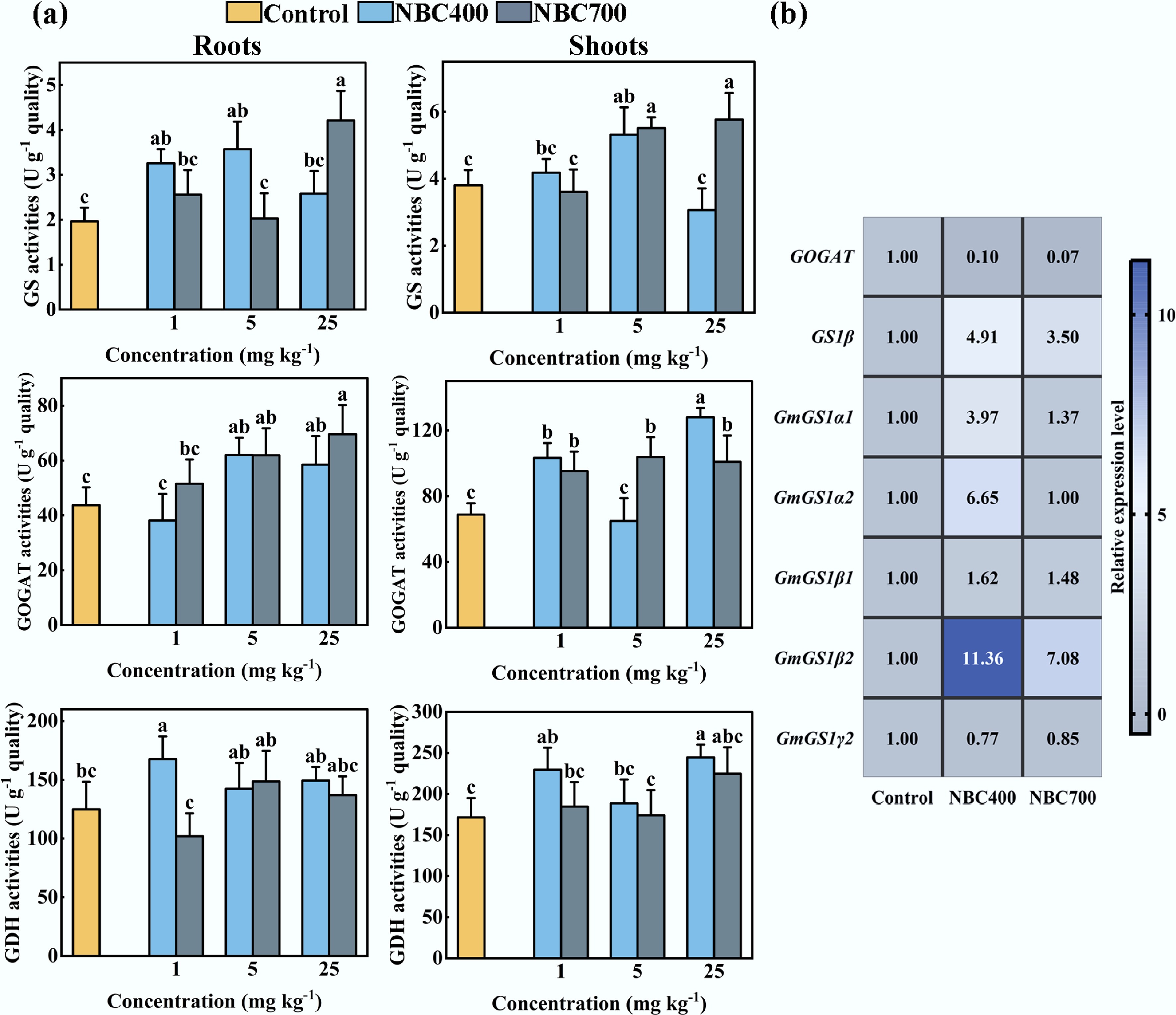
Figure 3.
The effects of NBC on the activity of N assimilation-related enzymes and relative gene expression in soybean. (a) The activities of GS, GOGAT, and GDH in the roots and shoots. (b) The relative expression of the glutamate synthase gene (GOGAT) and the glutamine synthetase gene (GS) in plant roots treated with 5 mg kg−1 of NBC. Different lowercase letters indicate significant differences between groups (p < 0.05).
To further explore the molecular mechanism of N assimilation enzymatic responses, we investigated the regulation of these enzymes at the genetic level in the presence of 5 mg kg−1 NBC. As depicted in Fig. 3b, the expression of genes related to GS activity (GS1β, GmGS1α1, GmGS1α2, GmGS1β1, and GmGS1β2, except for GmGS1γ2) in the NBC treatment was upregulated from 1.37 to 11.36 times higher than that of the control. The GmGS1β2 gene encodes a protein with glutamine synthetase activity, which is involved in N assimilation in soybean nodules. It serves as a key regulatory locus for the genetic enhancement of N metabolism in soybean[32]. We noted that the GmGS1β2 gene was the most highly expressed gene (Fig. 3b), which reflected the high potential of NBC in facilitating N assimilation in soybean.
The enhancement of growth, photosynthesis, and enzyme activities by NBC likely involves both indirect and direct pathways: (1) indirect mediation via rhizospheric improvements, where NBC enhances soil conditions and stimulates beneficial microbial activity, thereby supporting plant growth and development; (2) direct uptake and transformation of NBC into soybean root and shoot tissues, where its optoelectronic, physicochemical, and catalytic properties exert nano-specific benefits[8,9,33]. The structural stability of NBC in soil was assessed by monitoring N mineralization dynamics. No significant differences were observed in δ15N abundances of collected gases between NBC-amended and control soils over the two-month experimental period (Supplementary Fig. S5). These findings indicate that NBC exhibits mineralization resistance and is likely to persist in particulate form, facilitating extended interactions with plant roots and soil microbiota throughout the experimental period.
Responses of soil enzyme activities and microorganisms to NBC
-
Soil nitrate reductase and urease are ubiquitous in agricultural soils and are involved in the geochemical behavior of N[34]. As shown in Supplementary Fig. S6, NBC treatments did not significantly improve soil nitrate reductase and urease activities during the 90-d incubation. In comparison, the distribution and abundance of rhizosphere soil microorganisms exhibited a more significant response to the presence of NBC than the soil enzymatic activity. Venn diagrams reveal that the incorporation of NBC led to an increase in the distinctiveness of operational taxonomic units (OTUs), with only 1,129 (17.88%) OTUs shared between the treatments and the control (Supplementary Fig. S7a). Consistently, principal component analysis shows a distinct separation of microbial communities in the rhizosphere as a function of treatment (Supplementary Fig. S7b). The first principal component explained 69.7% of the differences, with NBC700 exposure showing the greatest disparity. The relative abundance of dominant rhizosphere bacteria was analyzed at the phylum and genus levels, respectively. Both NBC400 and NBC700 (5 mg kg−1) significantly increased the relative abundance of the top 10 bacterial phyla by 0.7–1.4 fold relative to the control (Supplementary Fig. S7c). Specifically, the relative abundance of Acidobacteriota with NBC400 and Proteobacteria with NBC700 increased by 5.2% and 15.2%, respectively. Proteobacteria are key functional bacteria in the soil and widely involved in the cycles of carbon, nitrogen, and sulfur elements[35]. All the Acidobacteriota, Actinobacteria, and Proteobacteria could significantly contribute to N transformation in the soil[36,37]. The relative abundance of Gemmatimonadota increased by 16.7% and 3.4% under NBC400 and NBC700 treatments, respectively. Gemmatimonadota are plant growth-promoting rhizobacteria that secrete enzymes and metabolites to help solubilize nutrients such as nitrogen, phosphorus, and potassium in the soil. This process makes such nutrients more easily absorbed and utilized by plants, promoting their growth. Additionally, Gemmatimonadota activate the immune system in plants, enhancing their resistance[38].
The incorporation of NBC also significantly increased the relative abundance of the top 10 bacterial genera (e.g., Flavisolibacter, Lysobacter, Gemmatimonas, and Sphingomonas) by 0.8–1.6-fold compared with the control (Supplementary Fig. S7d). Flavisolibacter is capable of catalyzing hydrogen peroxide to protect itself and host plants from oxidation[39]. Flavisolibacter can also secrete acid phosphatase, fix carbon dioxide, and participate in ammonia oxidation[40−42]. Lysobacter exhibits strong bacteriolytic and bacteriostatic functions, along with high antagonistic activity against a variety of plant pathogens[43]. Gemmatimonas is one of the dominant taxa found in agroecosystems[44]. A significant positive correlation between Gemmatimonas and soil nutrient composition has been reported in previous studies[45], and Gemmatimonas may be an indicator genus in response to changes in soil nutrient content. Sphingomonas has potential roles as biocontrol agents, plant growth promoters, and biological nitrogen fixers[46]. However, α-diversity analysis showed no significant difference in bacterial diversity between NBC treatments and the control (Supplementary Fig. S8), indicating that NBC did not remarkably alter rhizosphere microbial diversity. The soil microbial analysis revealed that moderate NBC application exerted negligible impacts on bacterial classification and diversity, demonstrating its low ecotoxicity and excellent environmental compatibility. However, NBC improved the relative abundance of dominant bacterial taxa, thereby promoting nitrogen assimilation and enhancing soybean growth performance.
Uptake and spatial distribution of NBC in soybean
-
TEM analysis revealed the localization of NBC within leaf mesophyll cells (Supplementary Fig. S9). Particulate aggregates were observed primarily in intercellular spaces and along cell walls. HRTEM images showed discontinuous lattice fringes, while corresponding SAED patterns exhibited broad, diffuse rings superimposed with discrete diffraction spots. The diffuse rings indicate an amorphous carbon structure, consistent with the short-range ordered, graphite-like microcrystalline architecture characteristic of biochar. Furthermore, EDS mapping confirmed the co-localization of C, N, and O within these particulates, verifying their identity as NBC deposits.
To further elucidate the spatial distribution of 15N derived from NBC in nodules, NanoSIMS measurement of nodular cells was subsequently carried out. Higher N content especially in the intercellular spaces for the NBC-treated samples was evidenced by the 12C14N− signals (Fig. 4a). The stronger intensity of 12C14N− signals with NBC400 relative to NBC700 suggests that a higher amount of NBC400 was taken up and accumulated in the nodules, consistent with the stable isotope results (Fig. 5a). Subsequent measurement of 15N/14N ratios (Fig. 4b) revealed that the intercellular spaces for the NBC-treated samples were highly enriched in 15N (up to 0.0044), significantly (p < 0.05) higher than that of the control (0.0037) (Fig. 4c). The preferential distribution of NBC within intercellular spaces suggests that a significant portion of the assimilated NBC retains its particulate form within plant tissues. Had extensive decomposition into dissolved nitrogenous fractions occurred, these components would likely have been distributed more uniformly throughout intracellular compartments.
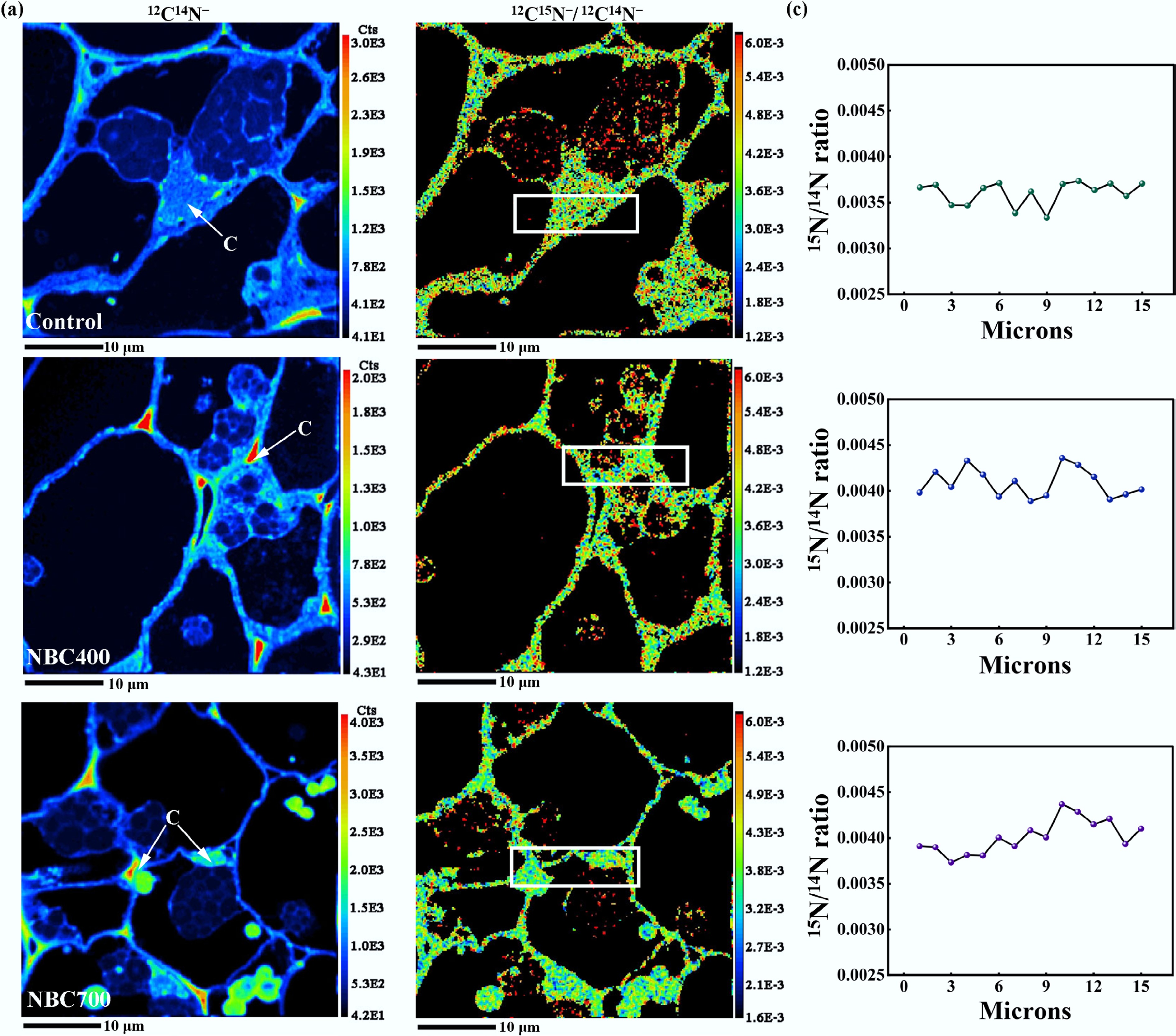
Figure 4.
Nano-scale secondary ion mass spectrometry (NanoSIMS) imaging of soybean nodules in the treatment of NBC400 and NBC700 (5 mg kg−1). (a) 12C14N− NanoSIMS images, showing the nitrogen contents in rhizome cells; (b) hue saturation intensity image generated from the NanoSIMS 15N/14N ratio of the same region, showing the 15N/14N ratios were enriched for the rhizome cells in the treatments of NBC compared with those for the control; (c) line scan analyses of the selected regions defined in (b) with respect to 15N/14N ratios. Scale bar: 10 μm for all images.
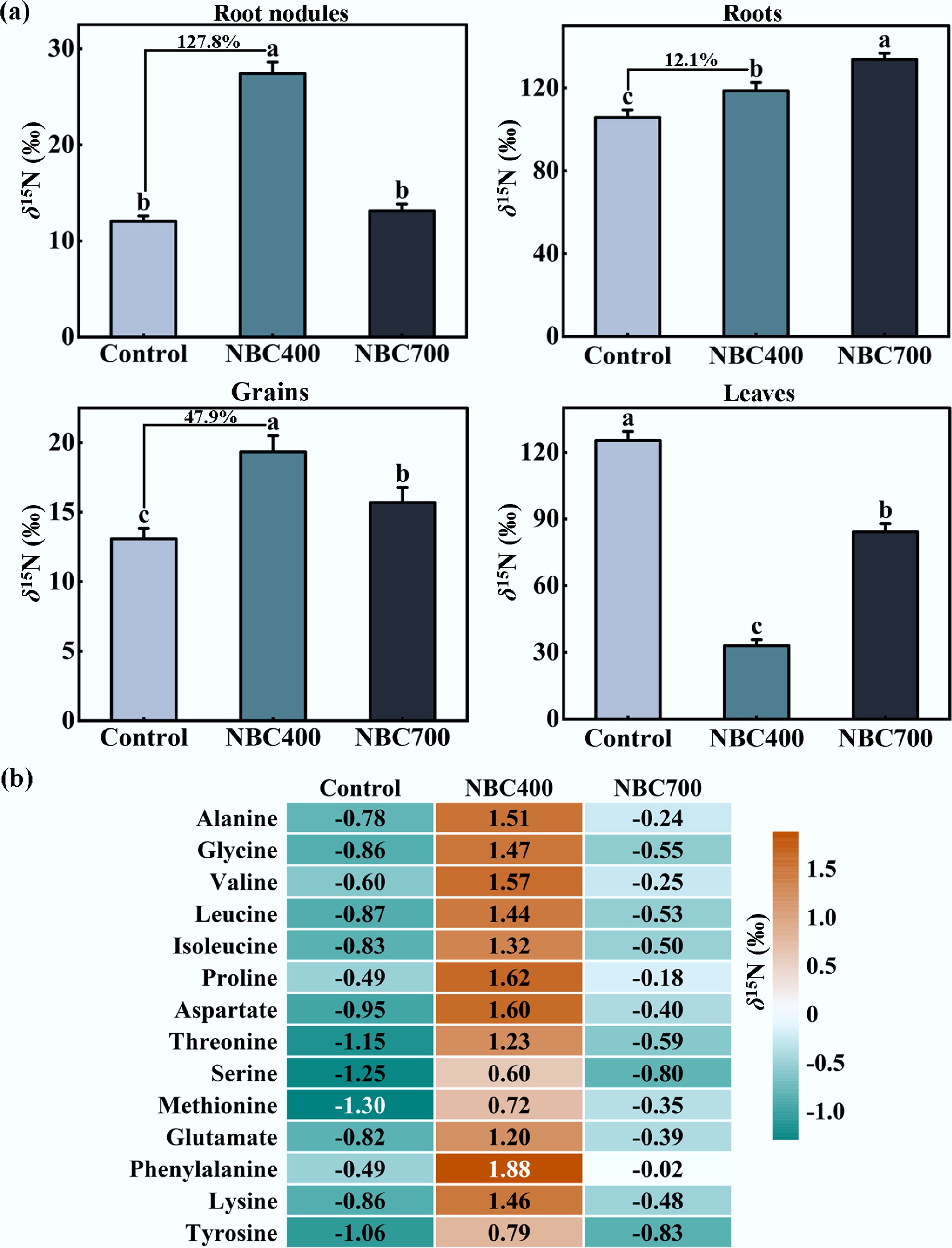
Figure 5.
Accumulation and spatial distribution of 15N in soybean. (a) 15N abundance in the roots, nodules, leaves, and grains of soybean; (b) 15N abundance in the amino acids of soybean grains. Different lowercase letters indicate significant differences between groups (p < 0.05). The application rates of NBC400 and NBC700 were 5.0 mg kg−1.
Transformation and fate of NBC in soybean
-
Values of δ15N in the roots, nodules, leaves, and grains were determined (Fig. 5a). The treatment of NBC400 (5 mg kg−1) increased δ15N values in the nodules and grains by 127.8% and 47.9% compared with the control, respectively, and these increases were significantly higher than the enhancement observed in the roots (12.1%). Interestingly, little enhancement of δ15N was observed in the leaves of soybeans after exposure to NBC. The isotope tracing results suggest that NBC in the rhizosphere was taken up by soybean roots and preferentially accumulated in the nodules. A portion of the accumulated NBC was translocated from roots to aboveground tissues. The lower δ15N in soybean leaves indicates that a majority of the assimilated NBC likely functions as an N reservoir, facilitating nutrient translocation from foliar tissues to developing grains during the reproductive phase to support soybean's physiological requirements. Based on δ15N isotopic analysis, the accumulated NBC content in nodules and roots was quantified as 0.05–0.1 mg g−1 (dry weight) for both NBC400 and NBC700 treatments (Supplementary Fig. S10). We also noted that, although the δ15N value of NBC700 was significantly (p < 0.05) higher than that of NBC400 in roots (Fig. 5a), the δ15N value of NBC400 was much higher than that of NBC700 in the nodules and grains, indicating the greater transfer efficiency of NBC400 within plant tissues. This large discrepancy might be ascribed to structural differences between low- and high-temperature BCs. With increasing charring temperature, the amorphous carbon in BC is gradually converted into increasingly condensed forms of carbon, leading to a reduced content of oxygen-containing groups and enhanced hydrophobicity of BC. As a result, the morphology of NBC400 contributed more favorably to its absorption by soybean roots compared to that of NBC700, due to its higher hydrophilicity, dispersibility, and smaller Dh in aqueous solution.
To further explore the fate of assimilated NBC, the 15N abundance of amino acids in the soybean grains was also examined. It was found that the presence of NBC400 and NBC700 significantly increased 15N abundance of amino acids (Ala, Gly, Val, Leu, Ile, Pro, Asp, Thr, Ser, Met, Glu, Phe, Lys, and Tyr) by 2.3–3.6 times and 1.2–2.3 times compared to the control, respectively (Fig. 5b). We hypothesized that the assimilated NBC underwent partial degradation into smaller fragments and/or nitrogenous compounds during its translocation from root to shoot systems (especially in leaves). These degradation products subsequently participated in plant N assimilation and metabolic processes, potentially serving as additional N sources to support soybean growth and development. To verify the hypothesis, a simulated NBC transformation in soybean foliar tissues was conducted. Intense hydroxyl radical (·OH) signals were detected in mixtures of NBC and intracellular fluid, particularly under illuminated conditions (Fig. 6a). We recently found that NBC is susceptible to photochemical transformation, primarily driven by self-generated ROS[47]. ROS can also be produced in plant leaves, especially during daylight. These ROS, as byproducts of plant cell metabolism, actively participate in plant growth and development[48−50]. The ·OH generated in this study induced partial decomposition of NBC into low-molecular-weight fractions capable of participating in soybean metabolic processes. This conclusion is supported by the identification of analogous degradation products—such as benzoyl cyanide (C6H5–CO–CN) and hydroxyicosylamine (HO–[CH2]19–NH2)—in both the intracellular fluid incubations and the classical Fenton reaction system (FeSO4 + H2O2) (Fig. 6b). Additionally, denitrification products of NBC—including benzoylformic acid (C6H5–CO–COOH) and 20-hydroxyeicosanal (HO–[CH2]19–CHO)—were identified in the mixture of NBC and intracellular fluid (Fig. 6b). Based on these results, we propose a mechanistic pathway for NBC transformation in soybean foliar tissues (Fig. 6c): ·OH-mediated degradation of NBC produces nitrogen-containing intermediates (e.g., C6H5–CO–CN and HO–[CH2]19–NH2), which are further metabolized through enzymatic denitrification to release bioavailable nitrogen (e.g., NH4+) for assimilation via the GS–GOGAT cycle.
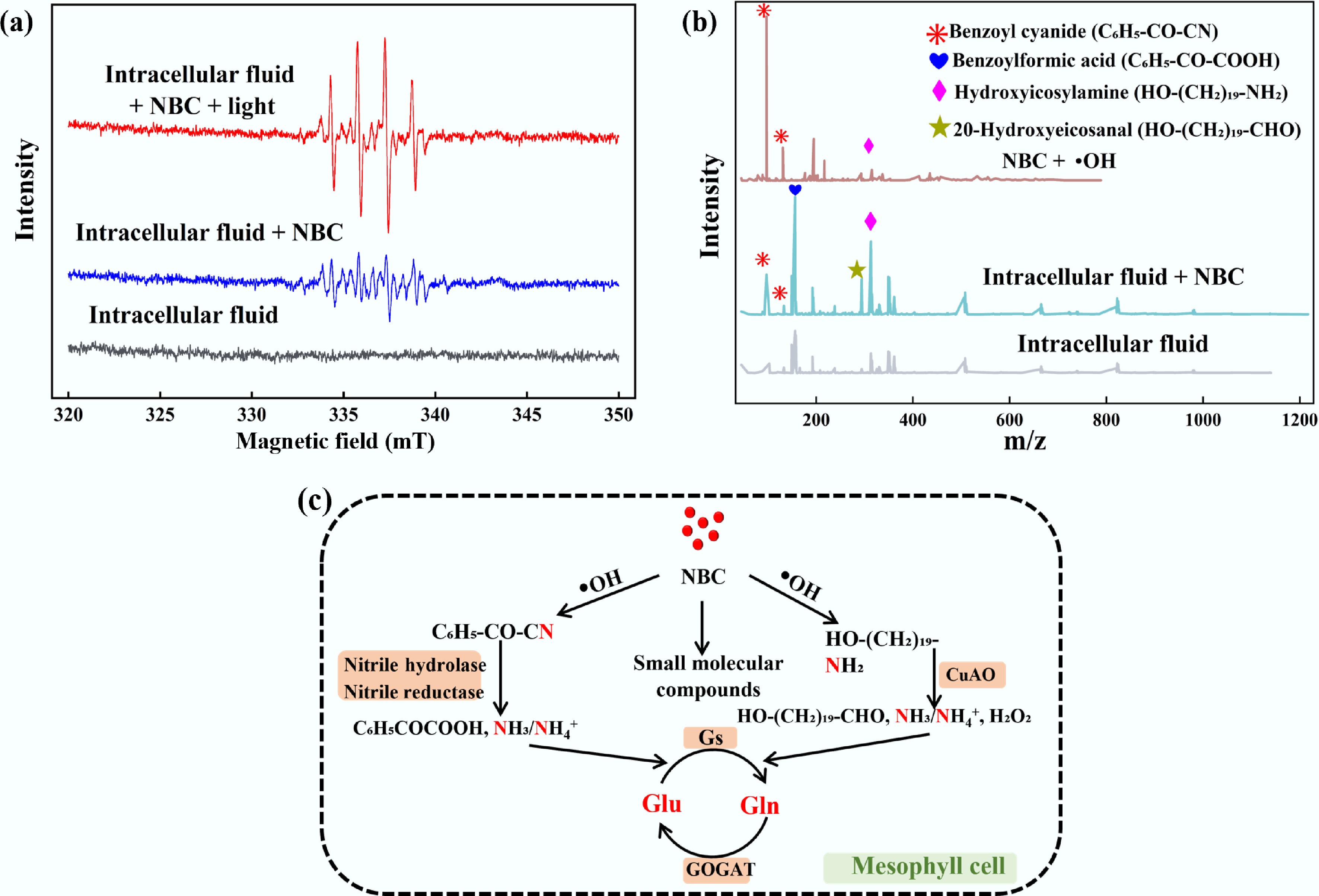
Figure 6.
Transformations of NBC in soybean leaves. (a) Hydroxyl radical (·OH) signal intensities in the intracellular fluid extracted from soybean leaves under dark conditions and in intracellular fluid-NBC mixtures with and without simulated sunlight exposure. (b) Comparison of NBC degradation products identified by LC–MS in intracellular fluid and the Fenton reaction system. The chemical composition of the intracellular fluid alone was characterized by LC–MS as a control. (c) Proposed mechanistic pathway for NBC transformation in soybean foliar tissues. Partial ·OH-mediated degradation of NBC yields nitrogen-containing intermediates, which undergo enzymatic denitrification via nitrile hydratase, nitrile reductase, and copper amine oxidase (CuAO) to release bioavailable nitrogen for assimilation through the GS–GOGAT cycle.
This study demonstrates that NBC can serve as an efficient nanocarrier to facilitate N delivery from soil to plant tissues and reproductive organs in soybean. The assimilated NBC significantly enhanced photosynthetic performance while upregulating key N assimilation enzymes and associated gene expression, ultimately improving soybean growth and yield. Meanwhile, the application of NBC exhibited minimal adverse effects on soil microbial communities. Beyond N delivery, NBC's unique structure enables the incorporation of additional essential nutrients, including phosphorus, sulfur, and mineral elements, either through feedstock selection or intentional functionalization[51]. Hence, NBC has significant potential to act as a promising nanofertilizer and/or targeted delivery platform for precision agriculture. Compared with engineered carbon nanomaterials such as GO and SWNTs, NBC offers exceptional advantages in terms of environmental compatibility and the ability to be produced in a large-scale, reproducible, and cost-effective manner. This research highlights the transformative potential of biochar-based nanomaterials in sustainable agricultural practices, providing an eco-friendly alternative to conventional chemical fertilizers while promoting the development of green nanotechnology solutions.
-
This study explored the potential of nitrogen-doped biochar nanoparticles as N delivery nanocarriers for soybean. At a soil application rate of 5 mg kg−1, NBC improved photosynthetic performance, upregulated key N assimilation enzymes and related genes, and consequently promoted soybean growth and yield, while exerting negligible impacts on soil microbial communities. Microscopic observations confirmed that NBC can be directly taken up by soybean roots. The unique physicochemical and nano-scale properties of NBC facilitate efficient N delivery and in planta assimilation. Additionally, NBC improved soil physicochemical conditions and stimulated the activity of beneficial microorganisms. Collectively, N-doped biochar nanoparticles exhibit great potential for applications in nano-enabled agriculture as a more effective and low-cost alternative to conventional fertilizers.
No acknowledgments are applicable for this work.
-
It accompanies this paper at: https://doi.org/10.48130/scm-0026-0028.
-
Not applicable.
-
The authors confirm their contributions to the paper as follows: Zexuan Geng: conceptualization, investigation, data curation, formal analysis, writing – original draft; Heng Zhang: conceptualization, investigation, data curation; Meiyan Wang: investigation, data curation; Jiadong Cheng: investigation, methodology support; Xiaoyi Xu: investigation, data curation; Fei Lian: conceptualization, methodology, funding acquisition, supervision, project administration, writing – review & editing.
-
The datasets generated and/or analyzed during the current study are available from the corresponding author upon reasonable request.
-
The authors declare that they have no known competing financial interests or personal relationships that could have appeared to influence the work reported in this paper.
-
Full list of author information is available at the end of the article.
- The supplementary files can be downloaded from here.
- Copyright: © 2026 by the author(s). Published by Maximum Academic Press, Fayetteville, GA. This article is an open access article distributed under Creative Commons Attribution License (CC BY 4.0), visit https://creativecommons.org/licenses/by/4.0/.
-
About this article
Cite this article
Geng Z, Zhang H, Wang M, Cheng J, Xu X, et al. 2026. Stable isotope evidence for biochar nanoparticles as potential nanocarriers boosting nitrogen delivery in soybean. Sustainable Carbon Materials 2: e033 doi: 10.48130/scm-0026-0028 

Stable isotope evidence for biochar nanoparticles as potential nanocarriers boosting nitrogen delivery in soybean
- Received: 31 March 2026
- Revised: 02 June 2026
- Accepted: 18 July 2026
- Published online: 10 October 2026
Abstract: Nano biochar (NBC) is a ubiquitous component of terrestrial ecosystems and plays a pivotal role in rhizosphere dynamics. However, its potential applications in nanobiotechnology and sustainable agriculture remain largely unexplored. In this study, 15N-labeled NBC was synthesized and evaluated as a nitrogen nanocarrier by investigating its uptake, translocation, and transformation in soybean plants. Applied at 5 mg kg−1, NBC significantly enhanced δ15N enrichment in nodules, grains, and grain amino acids by 127.8%, 47.9%, and 3.6-fold, respectively, compared with the control, indicating improved nitrogen assimilation. Furthermore, NBC treatment significantly increased the activities of key nitrogen assimilation enzymes and upregulated related gene expression. Consistent with these results, NBC application boosted grain number and weight by 30%–45% and increased amino acid contents by 6.5%–97.1%. Microscopy confirmed the translocation of NBC from roots to leaves. These findings highlight the potential of NBC as a nanocarrier for enhancing nitrogen delivery in soybean.
-
Key words:
- Nano-biochar /
- Nano-enabled delivery /
- Nitrogen assimilation /
- Soybean /
- Stable isotope tracing