-
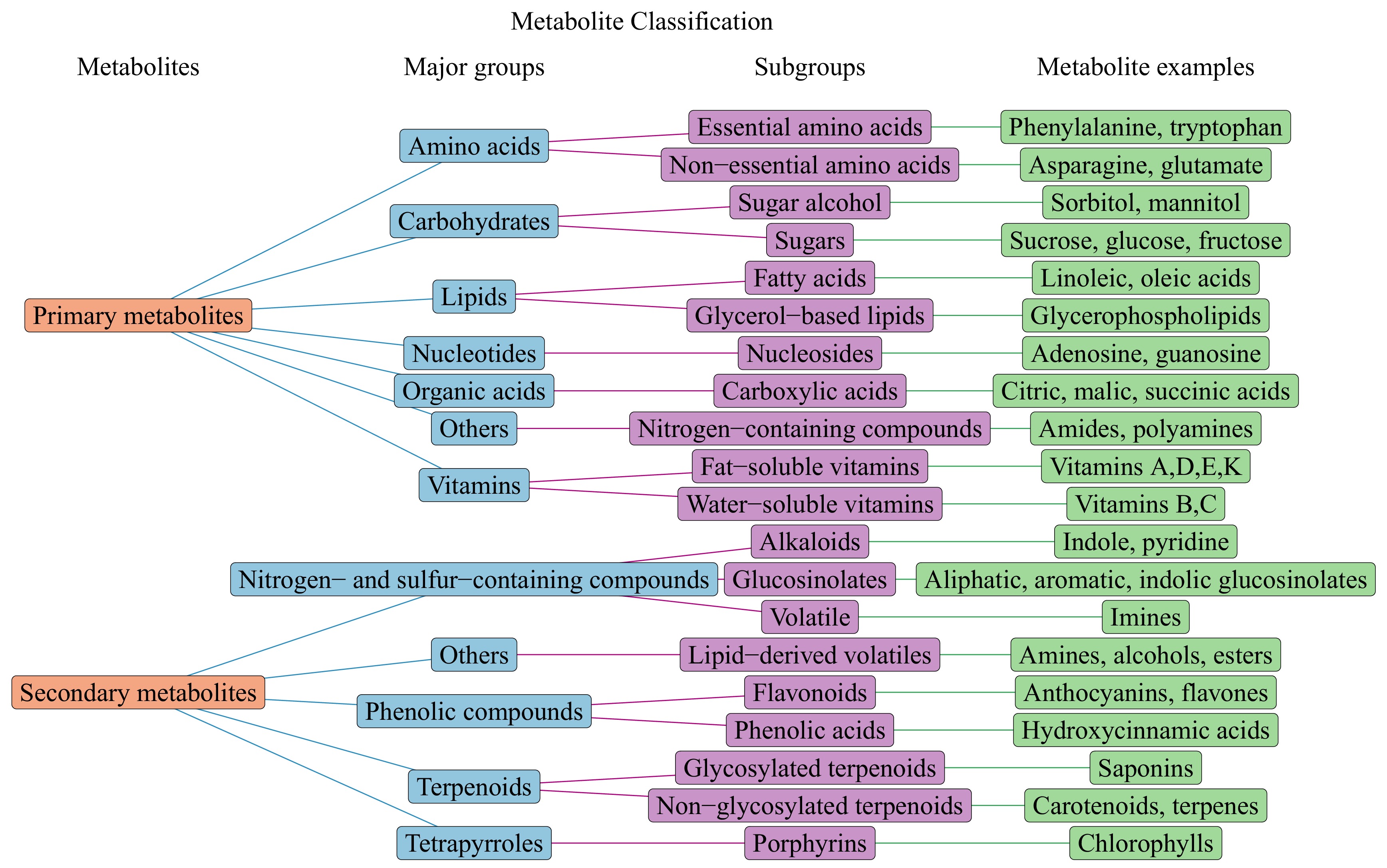
Figure 1.
Classification of all identified metabolites into major groups and subgroups.
-
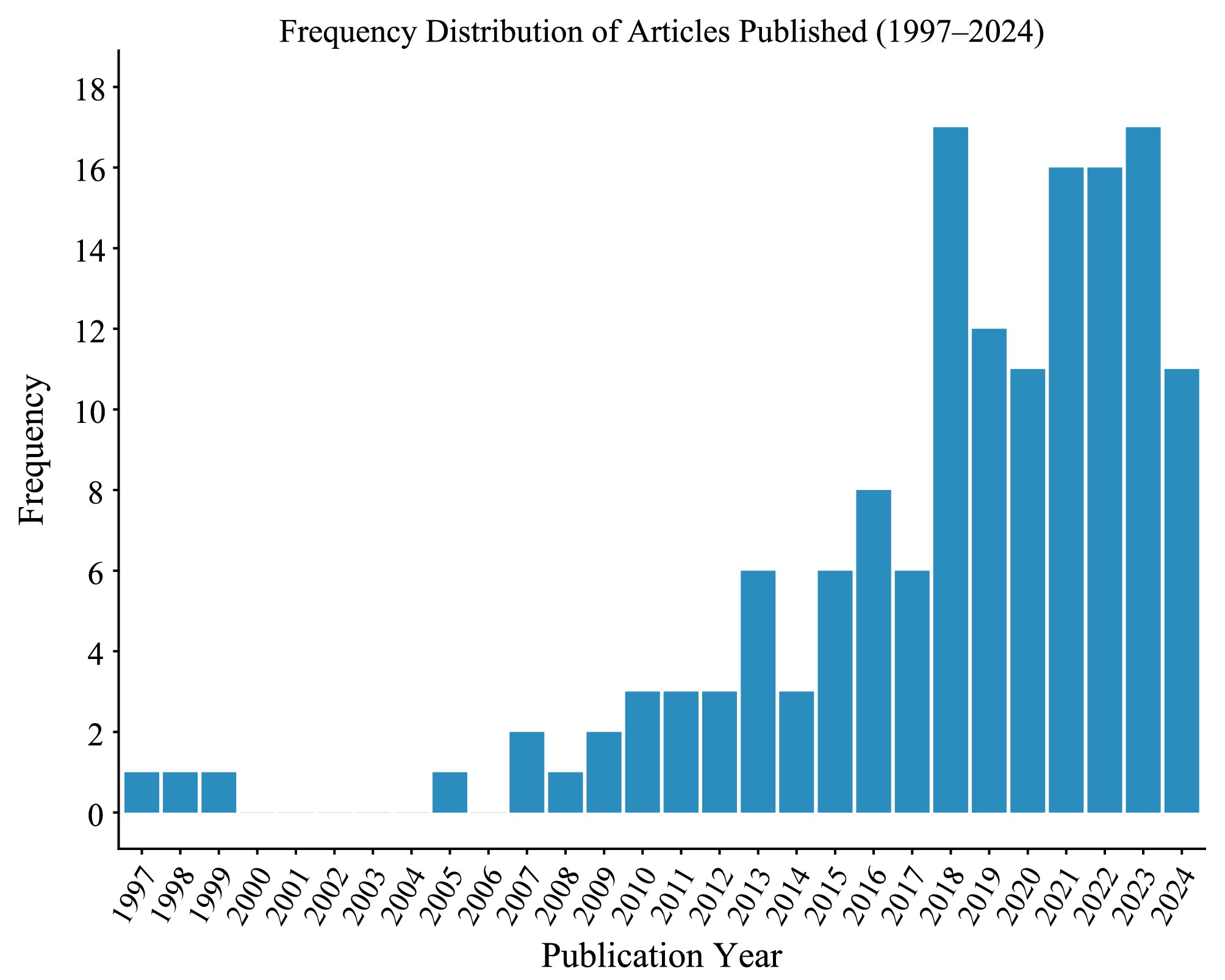
Figure 2.
Annual frequency of articles meeting the inclusion criteria for metabolomic studies in pre-defined leafy vegetables published between 1997 and 2024.
-
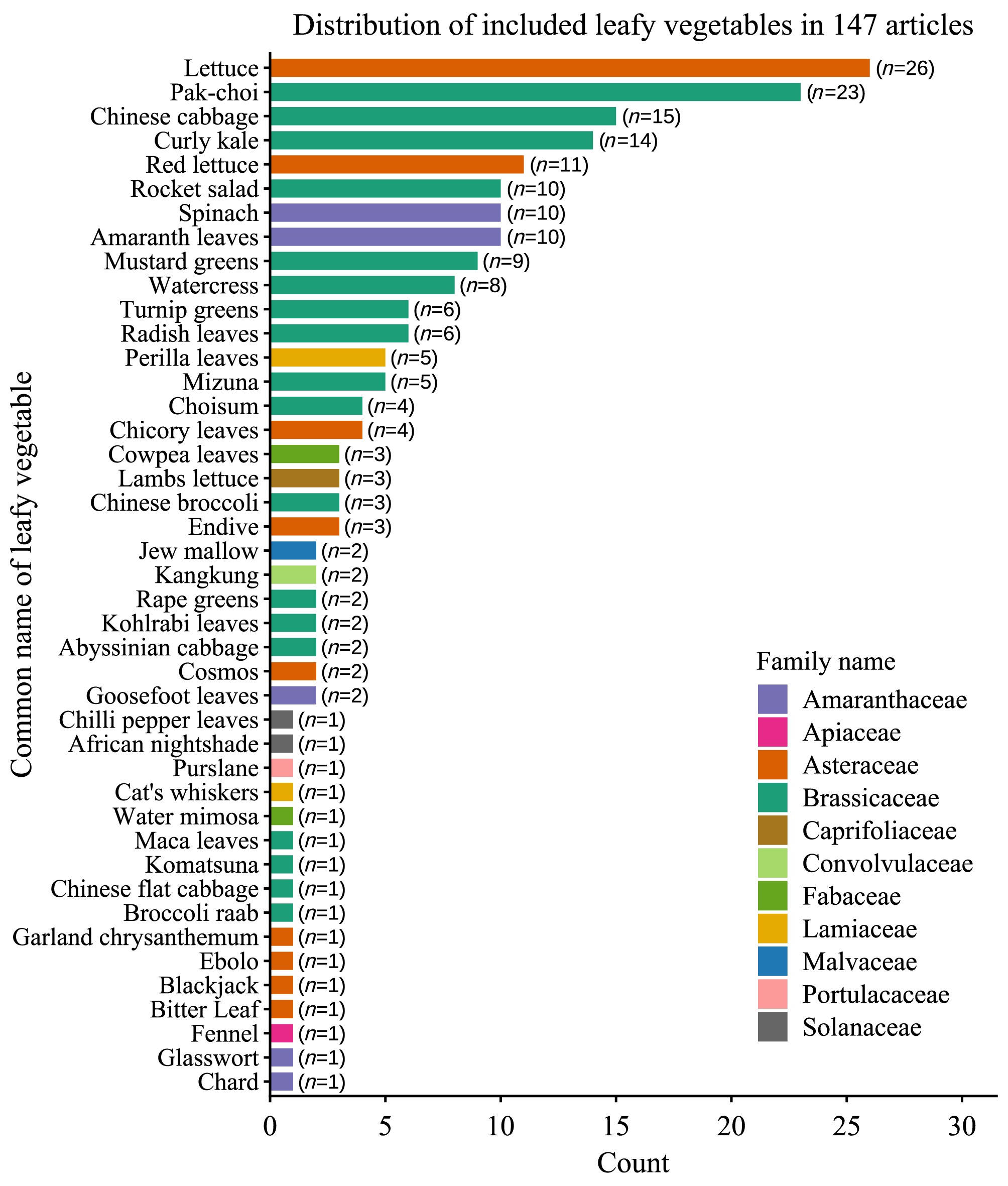
Figure 3.
Frequency distribution of each included leafy vegetable in the included 147 articles in this review.
-
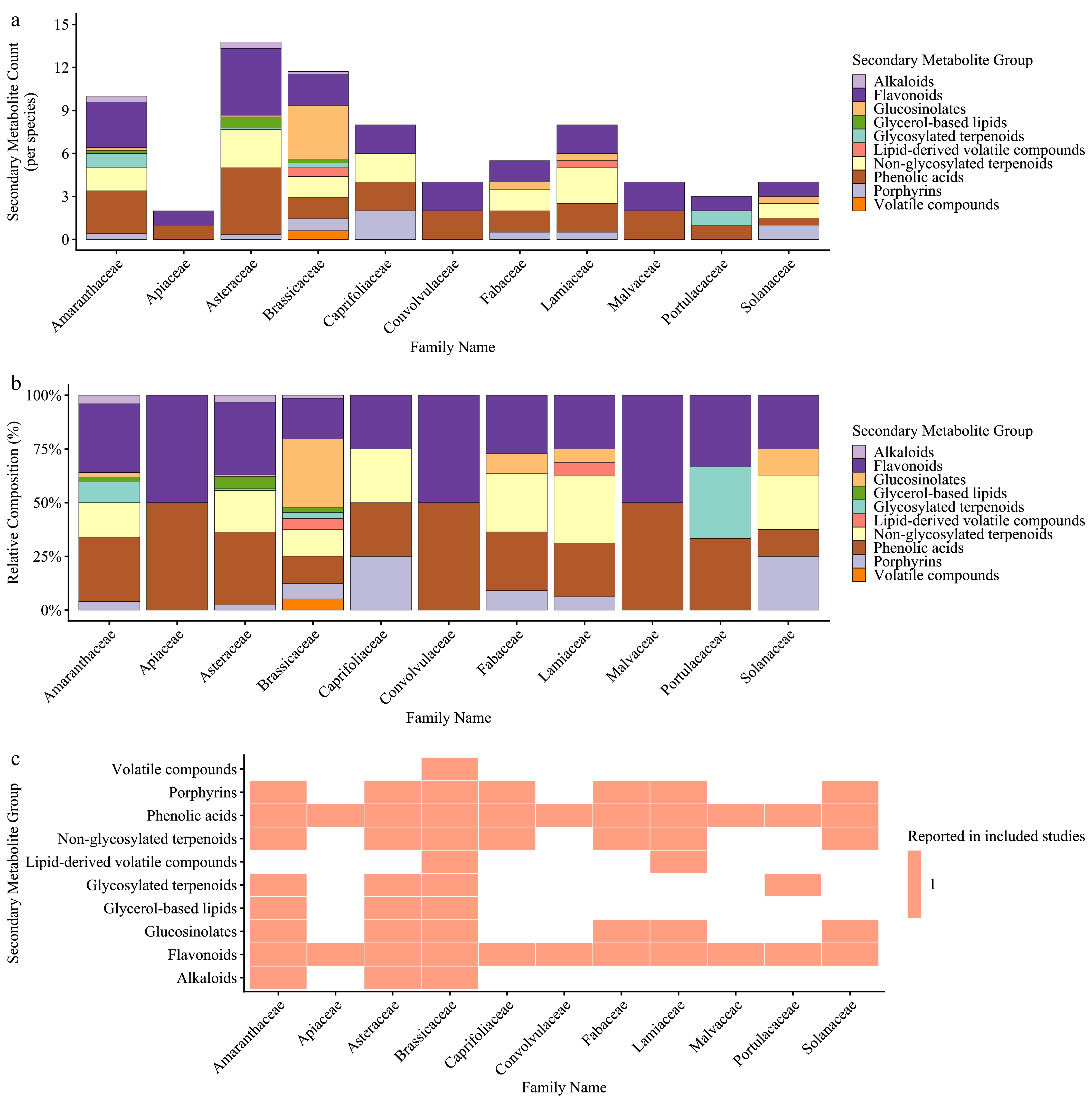
Figure 4.
Distribution and occurrence of secondary metabolite groups across leafy vegetable families. (a) Absolute counts of reported secondary metabolite groups across different families; (b) relative composition (%) of secondary metabolite groups within each family, illustrating proportional distribution independent of total counts; (c) presence-absence heatmap showing whether specific secondary metabolite groups were reported in each family.
-
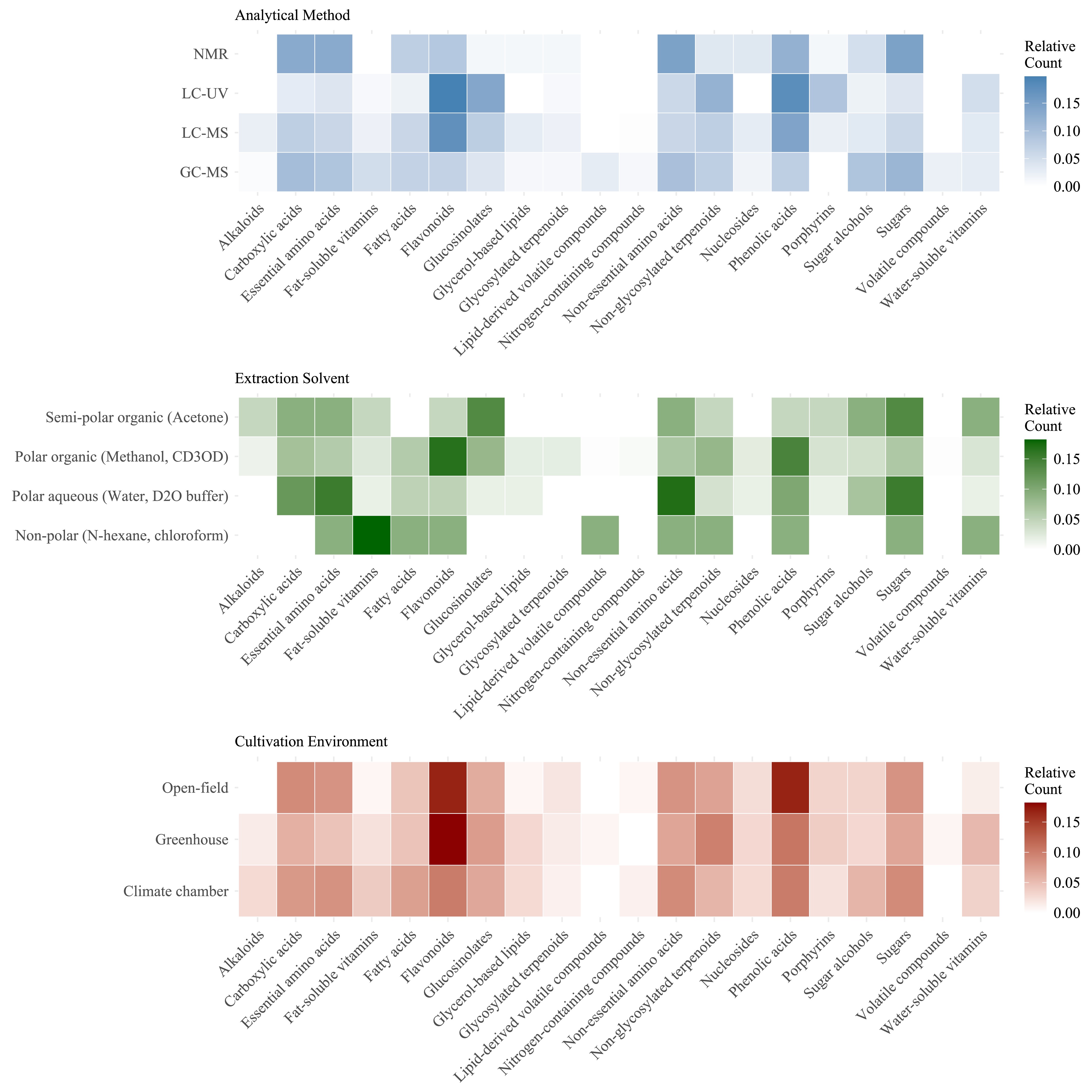
Figure 5.
Heatmap showing relative reporting frequency of metabolite groups across technical factors.
-
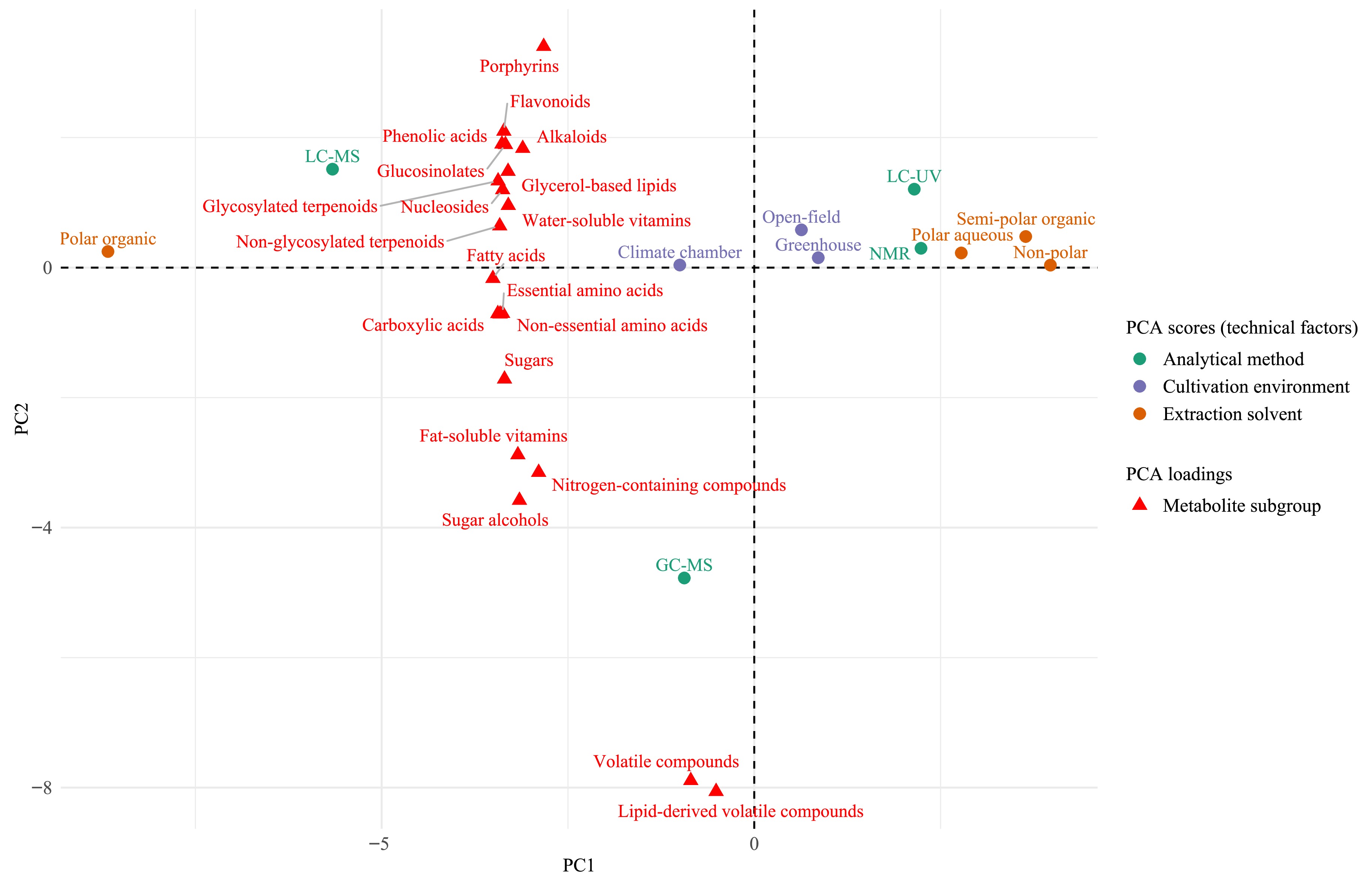
Figure 6.
Principal component analysis of metabolite reporting patterns across technical factors.
-
Category Sub-category No. of studies
(n = 147)% of total studies Leafy vegetable families Brassicaceae 68 46.26% Asteraceae 39 26.53% Amaranthaceae 17 11.56% Lamiaceae 5 3.40% Fabaceae 3 2.04% Convolvulaceae 2 1.36% Caprifoliaceae 2 1.36% Apiaceae 1 0.68% Malvaceae 1 0.68% Portulacaceae 1 0.68% Solanaceae 1 0.68% Mixed species 7 4.76% Analytical approaches used LC-MS 77 52.38% LC-UV 23 15.65% GC-MS 14 9.52% NMR 8 5.44% Combined/multi analytical approaches 25 17.01% Primary metabolite major groups reported Amino acids 4 2.72% Carbohydrates* 0 0.00% Lipids 5 3.40% Nucleotides* 0 0.00% Organic acids 8 5.44% Vitamins 6 4.08% Others (nitrogen-containing compounds) 1 0.68% Multiple primary metabolite groups reported 54 36.73% NA (did not report primary metabolites) 69 46.94% Secondary metabolite major groups reported Nitrogen- and sulfur-containing compounds 23 15.65% Phenolic compounds 47 31.97% Terpenoids 5 3.40% Tetrapyrroles** 0 0.00% Multiple secondary metabolite groups reported 64 43.54% NA (did not report secondary metabolites) 8 5.44% Scope of analysis Metabolite screening (without any factor) 14 9.52% Metabolite screening (across intrinsic factors) 60 40.82% Metabolite screening (across environmental factors) 73 49.66% The symbol * indicates that this group was always reported together with other primary metabolite groups in the included studies.
The symbol ** indicates that this group was always reported together with other secondary metabolite groups in the included studies.Table 1.
Sub-category, number of studies, and percentage of total studies derived from each category of 147 included studies in this systematic review.
-
Bioactive effect Leafy vegetable(s) Bioassay Anti-Alzheimer's Goosefoot leaves[75] In vitro enzymatic assay: (1) Anticholinesterase assay[75] Antibacterial Lettuce and red lettuce[104], spinach[77] In vitro cell-based assay: (1) Staphylococcus aureus DSM 346 strain[104] (2) Strain H. pylori 51 (HPKTCC B0006) culture assay[77] Anti-cancer Cowpea leaves[101], endive[24],
perilla leaves[73],
red lettuce[105]In vitro cell-based assay: (1) 3-(4,5-dimethylthiazol-2-yl)-2,5-diphenyl tetrazolium bromide (MTT) assay[24,105] (2) Cytotoxicity on skeletal muscle cell line[101] (3) Water-soluble tetrazolium Salt-1 (WST-1) assay (anti-prostate cancer activity)[73] (4) Trypan blue (TB) exclusion assay[105] In silico assay: (1) Network pharmacology[73] Antidiabetic Cosmos[106], cowpea leaves[101], ebolo[102], kangkung[66,67],
lettuce[6],
water mimosa[70]In vitro biochemical assay: (1) Dipeptidyl peptidase-4 (DPP-4) inhibitory activity assay[6] In vitro cell-based assay: (1) GLP-1 secretory response in pGIP/Neo STC-1 cells[6] In vitro enzymatic assay: (1) Alpha-glucosidase inhibition assay[6,66,67,70,101,106] (2) Alpha-amylase inhibition assay[101,102] In silico assay: (1) Network pharmacology[102] Anti-genotoxicity Turnip greens[103] In vitro cell-based assay: (1) Trypan blue (TB) exclusion assay[103] In vivo assay: (1) Somatic mutation and recombination test (SMART)[103] Anti-inflammatory Endive[24], fennel[107] In vitro enzymatic assay: (1) Cyclooxygenase (COX) inhibitor screening assay[107] In vitro cell-based assay: (1) Enzyme-linked immunosorbent assay (ELISA)[24] Anti-microbial Chinese cabbage[95] In vitro cell-based assay: (1) Pathogens: Bacillus cereus (KCTC 3624), Escherichia coli (KCTC 1682), Pseudomonas aeruginosa (KCCM 11803), Staphylococcus aureus (KCTC 3881), and Salmonella paratyphi C (KCCM 41577) culture assay[95] Antioxidant Abyssinian cabbage[68], amaranth[108], blackjack[78], Chinese cabbage[85,89,95,109], choisum[82], cosmos[80], cowpea leaves[101],
curly kale[2,3], endive[24], goosefoot leaves[75],
jew mallow[110], kangkung[66], lettuce[4,5,64,86,104,109,111], pak-choi[91], perilla leaves[65], purslane[69], radish leaves[109], red lettuce[4,5,64,86,104,105], spinach[78,88,109,112,113], water mimosa[70], watercress[84]In vitro chemical-based assay: (1) 2,2-diphenyl-1-picrylhydrazyl (DPPH) assay[2,4,5,24,66,69,70,75,80,82,84,87−89,91,95,105,108] (2) 2,2′-azino-bis(3-ethylbenzothiazoline-6-sulfonic acid) (ABTS) assay[2,3,5,24,64,65,78,86,89,104,105,108,111] (3) Ferric reducing antioxidant power (FRAP) assay[4,78,84,85,89,91,101,105,108] (4) Oxygen radical absorbance capacity[114] assay[78,82] (5) Hydrogen peroxide (H2O2) assay[3,4] (6) Cupric reducing antioxidant capacity (CUPRAC) assay[75] (7) Linoleic acid peroxidation inhibition assay[110] (8) Lipid peroxidation (LPO) inhibition assay[65] (9) Hydrophilic oxygen radical absorbance capacity (H-ORAC) assay[113] (10) Hydrogen peroxide–horseradish peroxidase (H2O2-HRP) assay[24] In vitro cell-based assay: (1) 2′,7′-dichlorodihydrofluorescein diacetate (DCFH-DA) assay[78] (2) Radioimmunoprecipitation assay[68] (3) OxiSelect cellular antioxidant activity assay[24] In vitro enzymatic assay: (1) Superoxide dismutase (SOD) assay[24,68,91,109,112] (2) Catalase (CAT) assay[24,68,109,112] (3) Peroxidase (POD) assay[109] (4) Ascorbate peroxidase (APX) assay[112] Table 2.
Bioactive effects reported in various leafy vegetables and corresponding validation methods.
Figures
(6)
Tables
(2)