











-
Leafy vegetables constitute a vital component of the human diet, providing a rich source of essential nutrients, bioactive compounds, and dietary fiber[1]. Beyond their culinary versatility, species such as kale (Brassica oleracea var. acephala)[2,3] and lettuce (Lactuca sativa)[4−6] have gained increasing attention for their potential health-promoting properties. These benefits are largely attributed to their diverse metabolite content, encompassing both primary and secondary metabolites.
Metabolites are low-molecular-weight compounds found in living organisms[7] and are generally classified into primary and secondary metabolites. Plant metabolites span diverse chemical and structural compartments, including lipophilic, polar, ionic, and oxidized forms. Understanding the metabolite composition of leafy vegetables is valuable across multiple domains, especially nutrition, breeding, and market value. From a nutritional perspective, bioactive compounds such as carotenoids[8] and antioxidant polyphenols[9] contribute significantly to human health by reducing the risk of chronic diseases. Agriculturally, metabolites play crucial roles in plant development and stress response[10]. Metabolite profiling further provides novel insights into the biochemical pathways governing shelf-life[11], nutritional quality[12], and flavor[13] traits, all of which influence the market value of various leafy vegetables.
Metabolomics is defined as the comprehensive analysis of metabolites in a biological system[14]. Modern metabolomic studies predominantly employ analytical methods such as liquid chromatography-mass spectrometry (LC-MS) and gas chromatography-mass spectrometry (GC-MS), coupled with metabolite profiling to characterize the detected compounds. In recent years, advancements in these analytical technologies have enabled comprehensive metabolomic analyses[15]. These advances allow a more precise quantification and characterization of metabolites across diverse leafy vegetable species and cultivars, leading to new avenues for crop improvement through metabolite-assisted selection and the development of functional foods[16].
Aim of review
-
This systematic review aims to evaluate previous metabolomic studies on leafy vegetables, focusing on a wide variety of defined leafy vegetables and their detected metabolites. To this end, our objectives are to: (1) examine research trends in leafy vegetable metabolomics and identify the most studied species and families; (2) comprehensively review the metabolites reported across existing leafy vegetable metabolomic studies; (3) critically evaluate the evidence linking investigated metabolites to experimentally validated bioactive effects; and (4) systematically synthesize the key factors that contribute to metabolic variation in leafy vegetable metabolomics.
-
The protocol for this systematic review was prospectively registered with INPLASY (INPLASY202590005; doi:
10.37766/inplasy2025.9.0005 ). This review was conducted in accordance with the Preferred Reporting Items for Systematic Reviews and Meta-Analyses (PRISMA) guidelines[17], and the checklist was completed accordingly (Supplementary File 1). Scopus, Web of Science, and BIOSIS databases were employed to conduct a systematic literature search, with the designated full search terms listed in Supplementary File 2 (Table S1) on 1 February 2025.Eligibility criteria
-
For eligibility assessment, both inclusion and exclusion criteria were defined to guide article screening. All potential studies were independently assessed by two reviewers (SCL and PWO) in accordance with these criteria, using the systematic review management platform Rayyan.
This review included only English-language articles that focused on the selected leafy vegetable subgroups, in accordance with the pre-defined definition of 'leafy vegetables'. According to 'Classification of foods and animal feed leafy vegetables', summarized by Codex Committee on Pesticide Residue (CCPR) as part of joint Food and Agriculture Organization of the United Nations/World Health Organization Food Standards Programme held in 2013, leafy vegetables are defined as foods derived from the leaves of a wide range of edible annual or biennial plants, characterized by a high surface-to-weight ratio (
https://codex.fao.org/restapi/searchMeetingDocument/REP13_PRe.pdf?lang=en&id=13990 ). Leafy vegetables are further classified into eight subgroups: leafy greens (013A); Brassica leafy vegetables (013B); leaves of root and tuber vegetables (013C); leaves of trees, shrubs, and vines (013D); leafy aquatic vegetables (013E); witloof (013F); leaves of Cucurbitaceae (013G); and baby leaves (013H). In the present review, we focused exclusively on selected subgroups in which the leaves or other aerial parts are primarily consumed[18]. Accordingly, subgroups 013C, 013D, 013F, and 013G were excluded from our analysis.Articles were excluded for one or more of the following criteria: full text was unavailable; leafy or aerial plant parts were not collected for metabolite extraction; the article was a review or meta-analysis; analytical methods were partially described or not reported; or metabolite profiles were not provided.
Using these criteria, articles retrieved from a literature search across three databases were screened. Titles and abstracts were first reviewed to identify potentially eligible studies, followed by full-text retrieval and reassessment against the exclusion criteria. Only articles that passed both screening stages were included in the final data extraction step.
Metabolite identification standards assessment
-
The majority of metabolites reported in the included studies are non-novel, as the compounds have been previously characterized. As proposed by the Chemical Analysis Working Group (CAWG)[19], the minimum reporting standard relative to metabolite identification should include the level of identification rigor for all metabolites reported. Particularly, minimum standards for level 1 (high confidence), non-novel metabolite identification should include the following criteria: (1) a minimum of two independent and orthogonal data relative to an authentic compound analysed under similar experimental conditions; (2) authentic spectra should be described appropriately or libraries made publicly available if spectral (mass spectrometry [MS] or nuclear magnetic resonance [NMR]) matching is utilized in the identification process; and (3) additional orthogonal data that provides additional confidence to metabolite identification.
Based on the proposed reporting guidelines, all included studies were evaluated according to their reported metabolite identification standards or annotation levels to investigate differences in identification accuracy and their implications for the reliability of subsequent data integration. The annotations will be categorized into three levels: (1) level 1 confidence, corresponding to compounds identified using authentic chemical standards; (2) level 2 confidence, referring to putatively annotated compounds without referring to chemical reference standards; and (3) level 3 confidence, representing putatively characterized compound classes. Annotation information that was not clearly stated in the articles was recorded as 'NA'.
Metabolites classification
-
A considerable number of metabolites were reported using common names instead of International Union of Pure and Applied Chemistry (IUPAC) nomenclature across all included studies. For consistency and to facilitate data analysis, all metabolites in this review were recorded using their assigned common names or converted to common names, in accordance with the CAWG guidelines.
Metabolites were compiled and categorized into primary and secondary metabolites, with each group further subdivided into specific subgroups (Fig. 1). Primary metabolites were classified into six major groups: amino acids, carbohydrates, lipids, nucleotides, organic acids, and vitamins. Secondary metabolites were grouped into four major categories: nitrogen- and sulfur-containing compounds, phenolic compounds, terpenoids, and tetrapyrroles. This hierarchical classification facilitated a structured and in-depth analysis in this review.
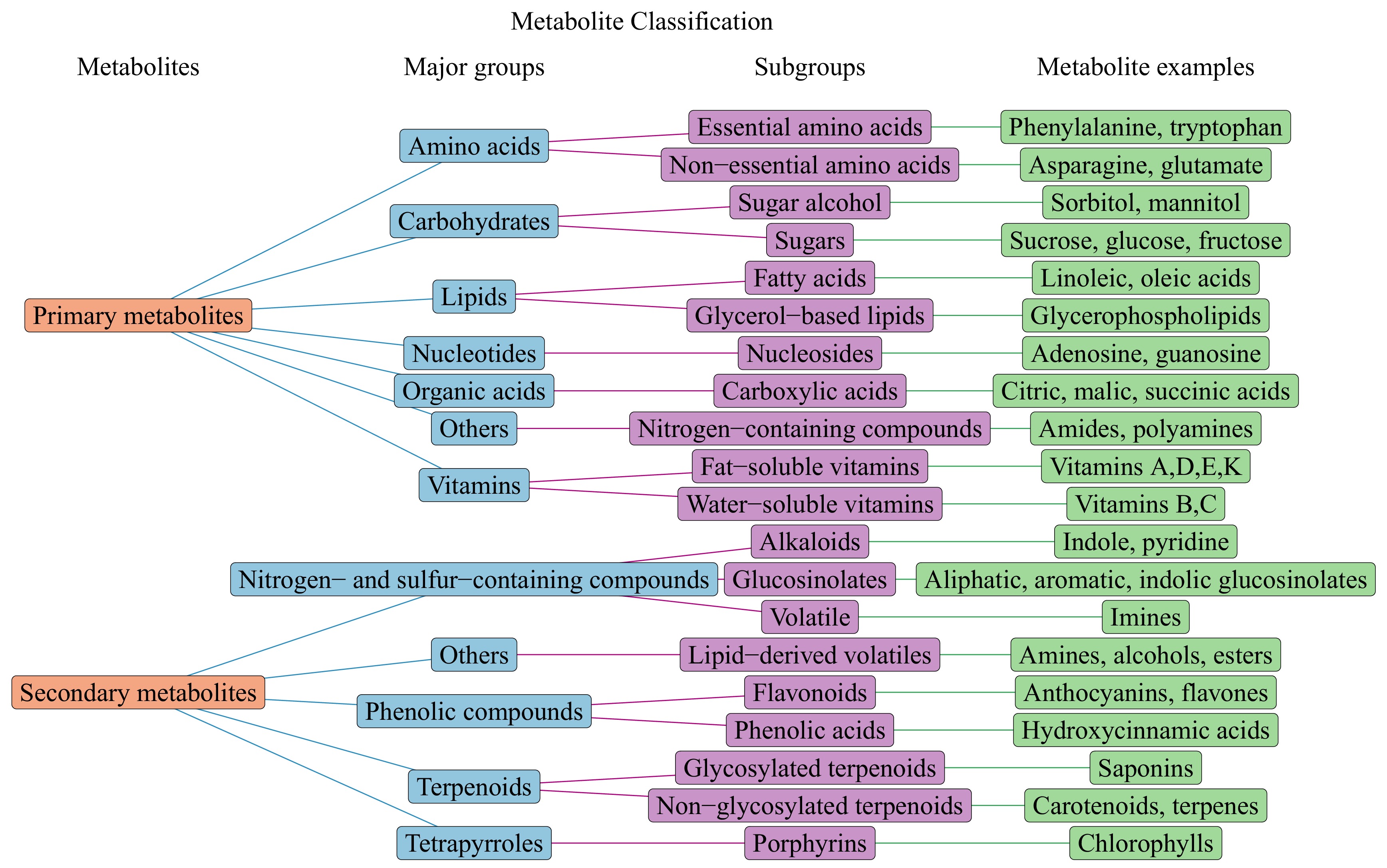
Figure 1.
Classification of all identified metabolites into major groups and subgroups.
Risk of bias in studies
-
Methodological quality was assessed jointly by two reviewers (SCL and PWO) using a customized Risk of Bias (RoB) Checklist (Supplementary File 3). The quality of evidence was evaluated using the Grading of Recommendations, Assessment, Development, and Evaluation (GRADE) approach with the GRADEpro tool[20], considering five domains: risk of bias, inconsistency, indirectness, imprecision, and reporting or publication bias (Supplementary File 4).
Data extraction
-
Data extraction was done jointly by the same two reviewers (SCL and PWO) on Rayyan. The following metadata were extracted from the filtered full-text articles: title, article type, author(s), year of publication, journal, risk of bias level, metabolite annotation level, common and scientific names of the studied leafy vegetables, and technical factors (including cultivation environments, extraction solvents, analytical methods [chromatography and spectroscopy]). In addition, outcome data such as primary and secondary metabolites (major groups and subgroups), secondary metabolite classes' complementary verification and associated methods, reported bioactive effects, and bioactive validation methods (in vitro [including biochemical, enzymatic, and cell-based assays], in silico, and in vivo) were collected. Other than that, data on the scope of analysis, intrinsic and environmental factor(s) influencing metabolic variation were also included. Information that was not clearly stated was recorded as 'NA'. All subsequent data analysis and visualization (e.g., bar chart, heatmap, and PCA) were performed using RStudio.
-
A total of 1,857 articles were screened based on their titles and abstracts for eligibility, followed by full-text article retrieval. This resulted in 167 articles that qualified for full-text screening. Ultimately, 147 articles fulfilled the eligibility criteria and were included in this review, as illustrated in the PRISMA flow chart (in Supplementary File 2: Fig. S1).
In summary, Amjadi et al.[21]; Pino Del Carpio et al.[22]; Cozzolino et al.[23]; Donadio et al.[24]; Sun et al.[25]; Zhang et al.[26]; Xing et al.[27] were excluded because non-aerial or non-leafy samples were collected in their study despite the target leafy vegetable falling within the definition of leafy vegetable in this review. Five articles, including Anju et al.[28]; Brychkova et al.[29]; Fan et al.[30]; Guo et al.[31]; Zhang et al.[32] were excluded due to the absence of metabolite profiles. Next, Chandradevan et al.[33]; Das[34]; Giorgetti et al.[35]; Nemadodzi & Managa[36]; da Silva et al.[37]; Suparman et al.[38]; Tuan et al.[39] were removed because analytical methods were either partially reported or not reported. Lastly, Ronoh et al.[40] was excluded because it is a review paper.
The extracted data were compiled and are presented in Table 1 (additional details are provided in Supplementary File 5). Risk of bias was assessed for each included study, and all studies were judged to have a low to moderate risk of bias, ensuring the methodological quality across studies included for data extraction.
Table 1. Sub-category, number of studies, and percentage of total studies derived from each category of 147 included studies in this systematic review.
Category Sub-category No. of studies
(n = 147)% of total studies Leafy vegetable families Brassicaceae 68 46.26% Asteraceae 39 26.53% Amaranthaceae 17 11.56% Lamiaceae 5 3.40% Fabaceae 3 2.04% Convolvulaceae 2 1.36% Caprifoliaceae 2 1.36% Apiaceae 1 0.68% Malvaceae 1 0.68% Portulacaceae 1 0.68% Solanaceae 1 0.68% Mixed species 7 4.76% Analytical approaches used LC-MS 77 52.38% LC-UV 23 15.65% GC-MS 14 9.52% NMR 8 5.44% Combined/multi analytical approaches 25 17.01% Primary metabolite major groups reported Amino acids 4 2.72% Carbohydrates* 0 0.00% Lipids 5 3.40% Nucleotides* 0 0.00% Organic acids 8 5.44% Vitamins 6 4.08% Others (nitrogen-containing compounds) 1 0.68% Multiple primary metabolite groups reported 54 36.73% NA (did not report primary metabolites) 69 46.94% Secondary metabolite major groups reported Nitrogen- and sulfur-containing compounds 23 15.65% Phenolic compounds 47 31.97% Terpenoids 5 3.40% Tetrapyrroles** 0 0.00% Multiple secondary metabolite groups reported 64 43.54% NA (did not report secondary metabolites) 8 5.44% Scope of analysis Metabolite screening (without any factor) 14 9.52% Metabolite screening (across intrinsic factors) 60 40.82% Metabolite screening (across environmental factors) 73 49.66% The symbol * indicates that this group was always reported together with other primary metabolite groups in the included studies.
The symbol ** indicates that this group was always reported together with other secondary metabolite groups in the included studies.Overview of metabolomic studies on leafy vegetables
-
Our data collection revealed the frequency distribution of articles that fulfilled the eligibility criteria and were published between 1997 and 2024 (Fig. 2). While metabolomic studies began gaining attention in the 1970s[41], coinciding with the development of high-throughput analytical platforms such as LC-MS and GC-MS[42], research specifically targeting plants became notably popular in the early 2010s[43]. Based on our results, the number of such studies has increased substantially, with a sharp rise observed from 2018 onward—approximately doubling compared with the early 2010s. This upward trend reflects both the growing interest in leafy vegetables as metabolite-rich resources and the enhanced accessibility of advanced metabolomic technologies.
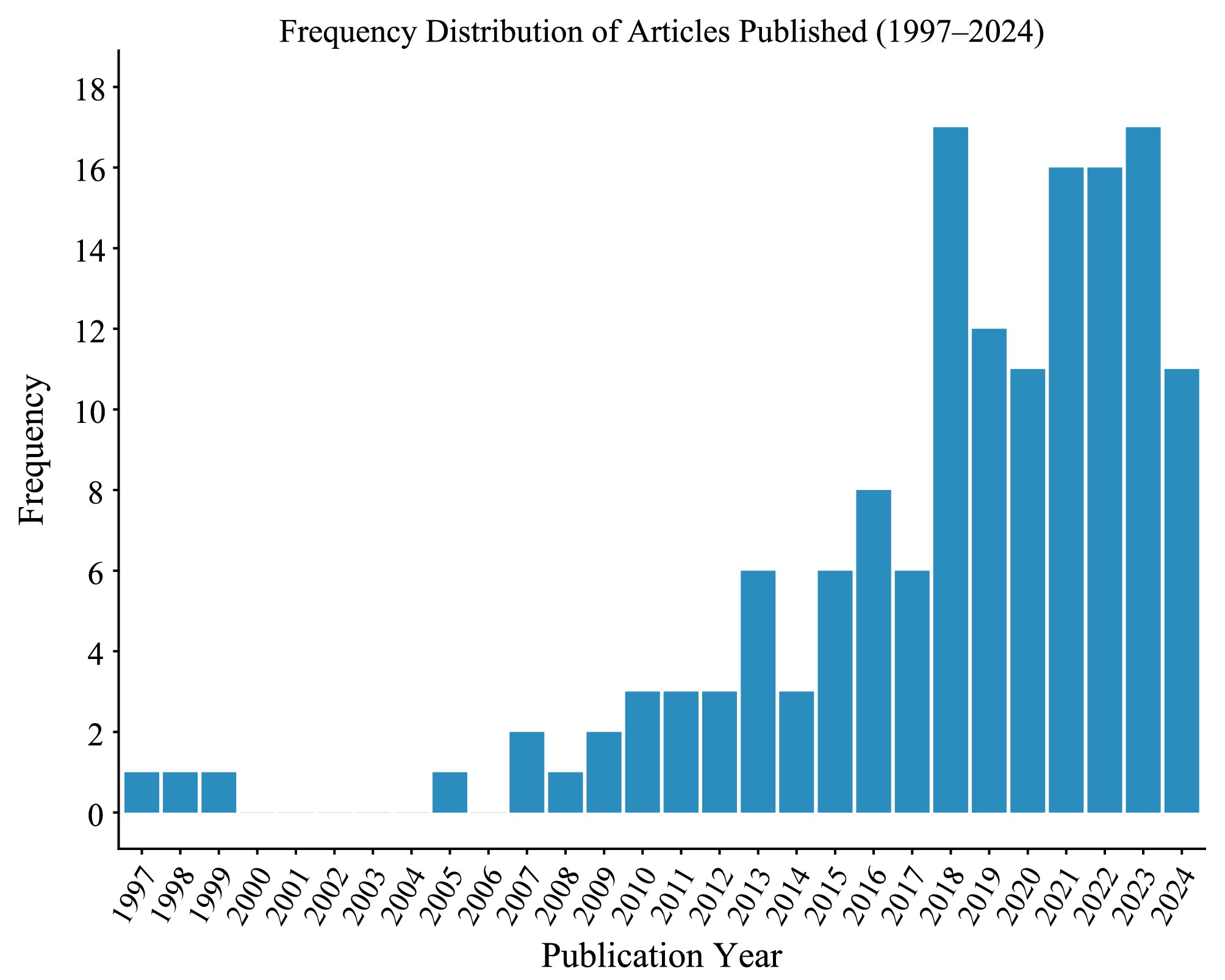
Figure 2.
Annual frequency of articles meeting the inclusion criteria for metabolomic studies in pre-defined leafy vegetables published between 1997 and 2024.
In addition, the expanding application of metabolomics is closely linked to its role as a central platform for integration with other omics approaches[44], including genomics, transcriptomics, and proteomics. Despite the increasing trend, many studies remain largely descriptive, focusing solely on metabolite profiling without fully exploiting the potential of integrative multi-omics analyses. This has resulted in the restricted translation of metabolomic data into mechanistic insights and functional applications. Subsequently, this highlights a critical gap in leveraging metabolomics not only as a profiling tool, but as a key component of integrated frameworks for understanding and predicting biological processes in leafy vegetables.
Overview of studied leafy vegetables
-
Forty-three leafy vegetables investigated in these qualified articles were listed in Supplementary File 2 (Table S2), and the frequency distribution of articles published for each included leafy vegetable between November 1997 and January 2025 was summarized in Fig. 3. Lettuce emerged as the most frequently studied leafy vegetable in metabolomic research over the past approximately three decades, suggesting its suitability as a preferred model for such studies. Pak-choi ranked second, followed by Chinese cabbage, curly kale, red lettuce, and rocket salad, each appearing in at least 10 of the included studies. Notably, among the 10 most studied vegetables, pak-choi, Chinese cabbage, curly kale, and rocket salad are all members of the Brassicaceae family, highlighting the perception of this family as a metabolite-dense source. This trend was further supported by the steady increase in harvesting and production rates of major Brassica crops from 1961 to 2022[45], reflecting their growing agricultural and research importance.
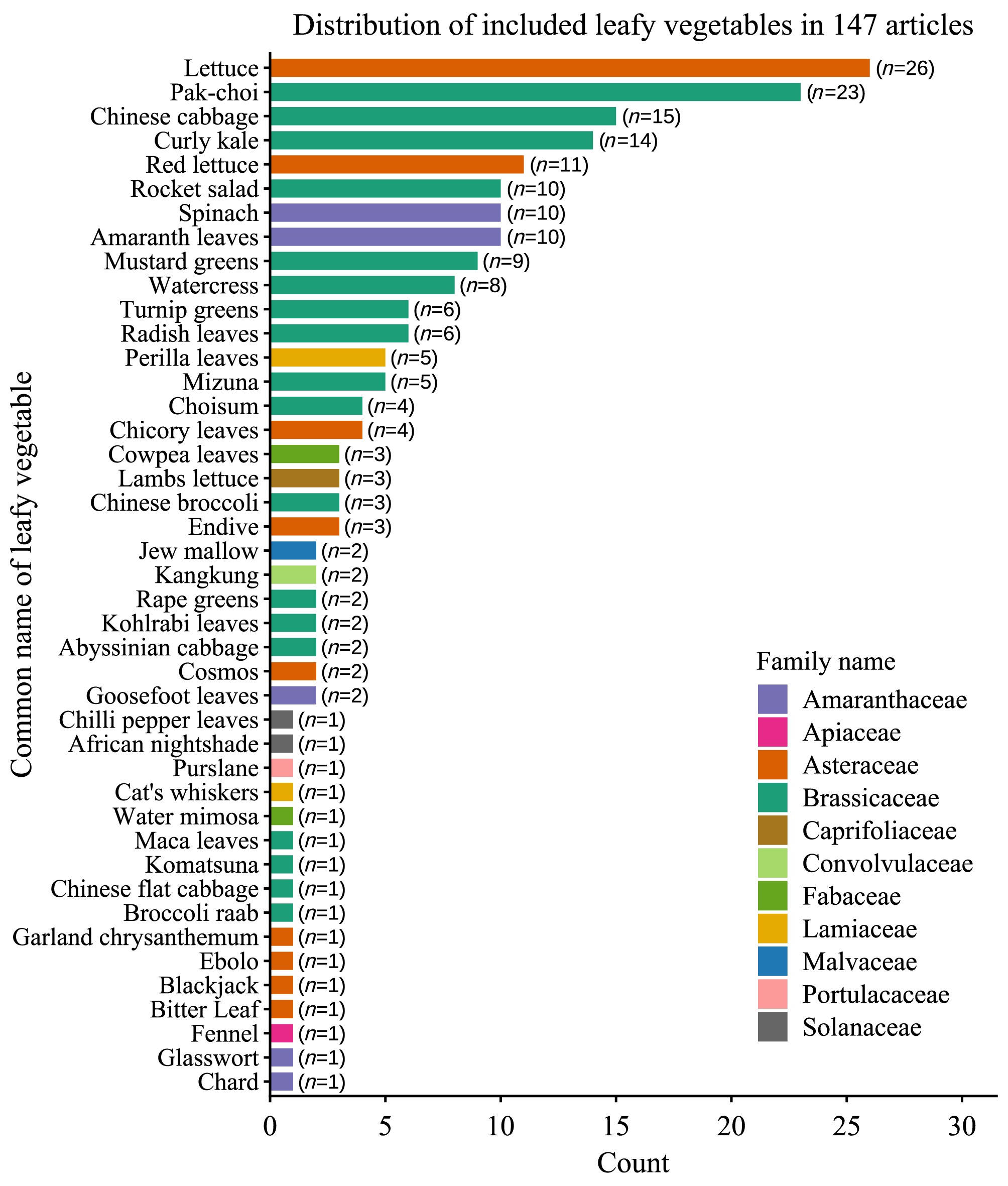
Figure 3.
Frequency distribution of each included leafy vegetable in the included 147 articles in this review.
However, this distribution also reveals a clear research bias toward a limited number of well-developed model leafy crops, especially Brassica species, which are widely cultivated and relatively easy to grow under controlled conditions[46]. In contrast, region-specific or less commercially prominent leafy crops remain underrepresented in metabolomics studies. This imbalance restricts the diversity of metabolomic data and may overlook some unique metabolic traits exhibited in less-studied species. Addressing this knowledge gap is crucial for expanding the representation of leafy vegetables and enabling a more comprehensive understanding of metabolic variation across diverse leafy crops.
Metabolite identification discrepancy and a framework for improving evidence
-
Metabolomic studies primarily aimed to evaluate known or potentially novel metabolites. The majority of included articles relied on level 2 identification (putative annotation) for non-novel metabolites instead of level 1 confirmation (Supplementary File 5), which is regarded as insufficient for high-confidence identification in general.
In contrast, a subset of studies performed level 1 identification by validating metabolites of interest using authentic standards. These metabolites were chosen due to their potential to exhibit bioactive properties, rather than all the detected and putatively annotated metabolites. Although this targeted validation method yields more reliable results, it is substantially more costly. Given the high expense of authentic standards[47], selective validation is therefore a justifiable strategy. However, this also leads to indirectness and reporting bias in the evidence base during assessment of overall certainty of evidence.
This was evident in the assessment of the overall certainty of evidence in this review. Following data extraction, each metabolite group was treated as an independent outcome and assessed using the five domains in the Grading of Recommendations, Assessment, Development, and Evaluations (GRADE) approach. All outcomes were rated as having very low certainty, mainly due to publication bias, indirectness, and imprecision. The majority of metabolomics studies selectively reported metabolites of interest while omitting others, contributing to potential publication bias. In addition, most studies relied on level 2 metabolite annotation and qualitative synthesis, resulting in indirectness and imprecision in the evidence base, respectively.
To enhance reliability, a more robust metabolomics framework should be established, beginning with clearly defined experimental targets, treatment groups, and analytical methods to minimize the risk of bias. Comprehensive reporting of all detected metabolites, rather than selectively reporting metabolites of interest, is essential to improve the consistency across metabolomics studies with similar experimental designs and to reduce reporting bias. Furthermore, while level 1 identification is not feasible, studies should strengthen level 2 annotations by integrating multiple complementary annotation strategies (e.g., spectral matching, fragmentation patterns, and orthogonal evidence) to increase confidence and reduce indirectness. Finally, prioritizing quantitative measurement of reported metabolites would enhance both the precision and comparability of outcomes.
Overview of reported metabolites across studied leafy vegetables
Primary metabolites and secondary metabolites
-
Our data illustrated the frequency distribution of reported metabolites across all included metabolomic studies (Table 1). The majority of studies focused exclusively on secondary metabolites (47%), whereas only 5% targeted primary metabolites. Approximately 48% of the studies investigated both primary and secondary metabolites, likely reflecting the capability of high-throughput analytical platforms such as LC-MS and GC-MS to efficiently detect a wide range of metabolites within a single analysis.
Metabolites identified in the included studies can be broadly classified into primary and secondary metabolites. Primary metabolites, including amino acids[48,49], carbohydrates[50], fatty acids[51,52], nucleotides[53], and organic acids[54,55], are essential for fundamental cellular processes such as growth, energy metabolism, and maintenance. In addition, certain primary metabolites, such as vitamins[56], contribute to nutritional value and play important roles in maintaining human health.
In contrast, secondary metabolites—such as phenolic compounds[57−59] and glucosinolates[60,61]—have been more extensively investigated in the reviewed studies due to their well-documented bioactive properties, including antioxidant, anti-inflammatory, and disease-preventive effects. These compounds are commonly associated with the functional and nutraceutical value of leafy vegetables.
However, this emphasis has resulted in the relative underrepresentation of primary metabolites in metabolomics studies, limiting a comprehensive understanding of their roles beyond central metabolism. This imbalance highlights a gap in fully characterizing the interplay between primary and secondary metabolism and their combined contributions to plant function and nutritional quality.
Complementary verification of secondary metabolite classes
-
A subset of included studies incorporated complementary biochemical assays to support metabolomic profiling results for secondary metabolite classes. These assays included measurements of total phenolics[3−5,62−87], chlorophyll contents[79,81,82,86,88−92], carotenoid contents[79,81−83,86,88−90,92,93], total flavonoids[4,72−78,80,84−87], anthocyanin contents[4,79,81,86,90,92,94,95], and glucosinolate contents[93,96]. These assays provide class-level quantification that partially validate metabolite trends observed in LC–MS or GC-MS-based untargeted metabolomics, which may be influenced by technical variability, matrix effects, or metabolite identification uncertainty.
However, complementary validation is not employed uniformly and is highly restricted to selected secondary metabolite classes, particularly total phenolics and total flavonoids. This introduces a degree of selective validation bias, where only these metabolite classes of perceived biological importance are independently confirmed.
Overall, while these assays strengthen confidence in specific secondary metabolite trends, the selective and inconsistent application restricts cross-study comparability and does not fully address variability in metabolome coverage across metabolomics studies.
Shared and family-specific patterns of reported secondary metabolites in leafy vegetables
-
Across the included studies, secondary metabolite groups were unevenly represented across leafy vegetable families, with both shared and family-specific reporting patterns observed (Fig. 4). A core set of phenolic compounds—including flavonoids and phenolic acids—was consistently reported across most families (Fig. 4c), highlighting their central role in leafy vegetable metabolomics studies. This strongly corresponds to the trend observed in most verified secondary metabolite classes using complementary biochemical assays.
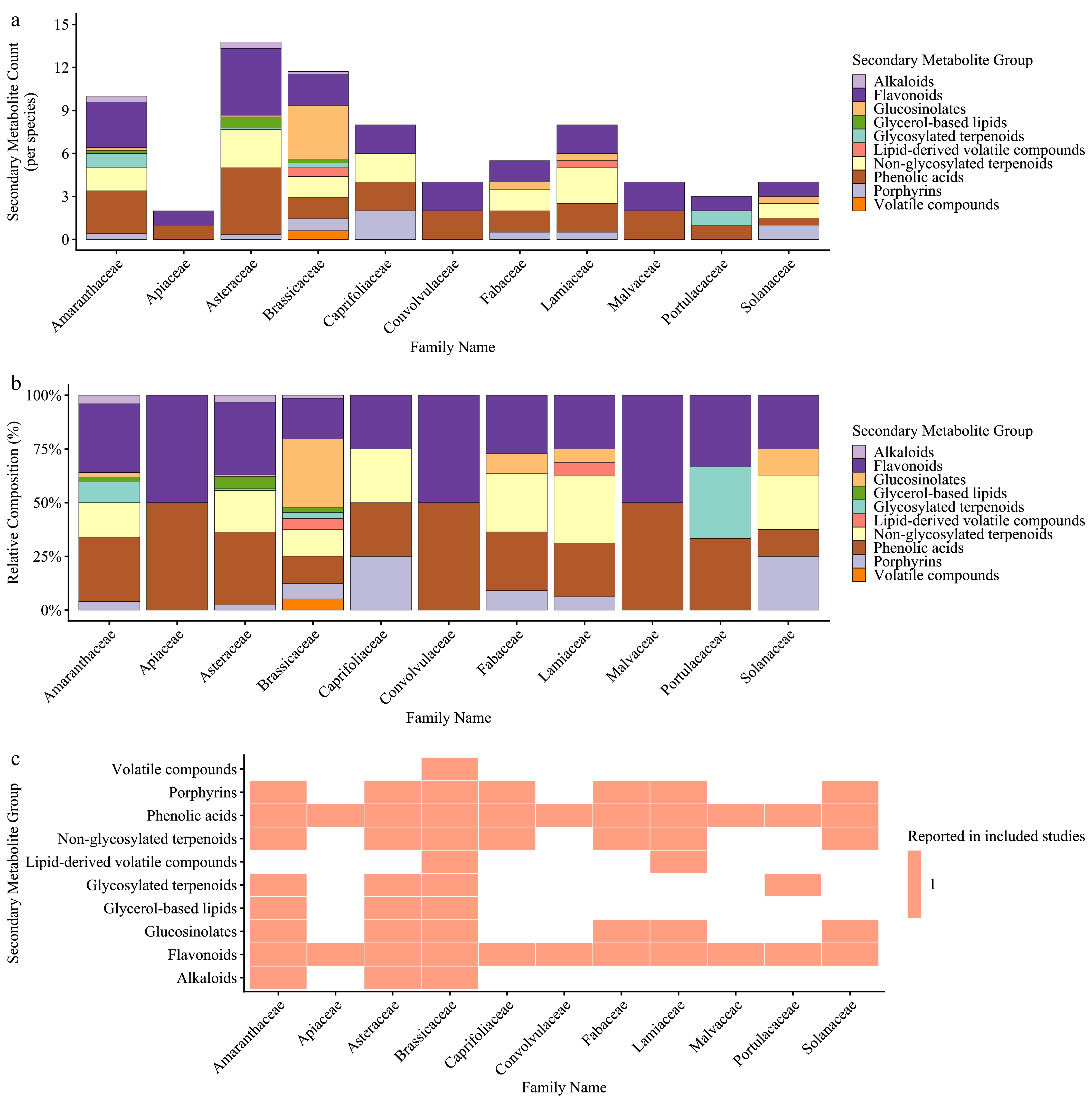
Figure 4.
Distribution and occurrence of secondary metabolite groups across leafy vegetable families. (a) Absolute counts of reported secondary metabolite groups across different families; (b) relative composition (%) of secondary metabolite groups within each family, illustrating proportional distribution independent of total counts; (c) presence-absence heatmap showing whether specific secondary metabolite groups were reported in each family.
In contrast, other metabolite groups exhibited uneven distribution patterns (Fig. 4a, b). For example, glucosinolates were predominantly reported in Brassicaceae species, consistent with their taxonomic specificity[97]. Similarly, terpenoids and glycerol-based lipids were only concentrated in specific families rather than uniformly distributed across all leafy vegetable families.
Family-level patterns were also evident in Fig. 4c. Brassicaceae species displayed the highest diversity of reported secondary metabolite groups, reflecting their strong representation in metabolomics studies. This was followed by Asteraceae and Amaranthaceae, which also displayed relatively wide metabolite coverage.
Overall, these patterns showcase a combination of shared metabolite targets across different leafy vegetable families and taxonomically driven specialization in secondary metabolite reporting. However, the observed pattern is also influenced by research bias, as well-studied bioactive compound classes and economically important leafy vegetable families are disproportionately represented in the literature.
Validation of bioactive effects and gaps in functional translation
-
Beyond summarizing reported metabolites, this review listed leafy vegetables with experimentally validated bioactive effects (Table 2). Among all reported bioactive effects, antioxidant activity was the most extensively studied across different leafy vegetables, predominantly evaluated using a range of in vitro bioassays. The prominent focus on antioxidant activity is further supported by Swallah et al.[98], who emphasized its significance in evaluating the therapeutic potential of plant-derived compounds. Moreover, the robustness and reliability of antioxidant bioassays have been demonstrated by Pisoschi et al.[99] and Lang et al.[100], highlighting their high accuracy and suitability for metabolomic studies.
Table 2. Bioactive effects reported in various leafy vegetables and corresponding validation methods.
Bioactive effect Leafy vegetable(s) Bioassay Anti-Alzheimer's Goosefoot leaves[75] In vitro enzymatic assay: (1) Anticholinesterase assay[75] Antibacterial Lettuce and red lettuce[104], spinach[77] In vitro cell-based assay: (1) Staphylococcus aureus DSM 346 strain[104] (2) Strain H. pylori 51 (HPKTCC B0006) culture assay[77] Anti-cancer Cowpea leaves[101], endive[24],
perilla leaves[73],
red lettuce[105]In vitro cell-based assay: (1) 3-(4,5-dimethylthiazol-2-yl)-2,5-diphenyl tetrazolium bromide (MTT) assay[24,105] (2) Cytotoxicity on skeletal muscle cell line[101] (3) Water-soluble tetrazolium Salt-1 (WST-1) assay (anti-prostate cancer activity)[73] (4) Trypan blue (TB) exclusion assay[105] In silico assay: (1) Network pharmacology[73] Antidiabetic Cosmos[106], cowpea leaves[101], ebolo[102], kangkung[66,67],
lettuce[6],
water mimosa[70]In vitro biochemical assay: (1) Dipeptidyl peptidase-4 (DPP-4) inhibitory activity assay[6] In vitro cell-based assay: (1) GLP-1 secretory response in pGIP/Neo STC-1 cells[6] In vitro enzymatic assay: (1) Alpha-glucosidase inhibition assay[6,66,67,70,101,106] (2) Alpha-amylase inhibition assay[101,102] In silico assay: (1) Network pharmacology[102] Anti-genotoxicity Turnip greens[103] In vitro cell-based assay: (1) Trypan blue (TB) exclusion assay[103] In vivo assay: (1) Somatic mutation and recombination test (SMART)[103] Anti-inflammatory Endive[24], fennel[107] In vitro enzymatic assay: (1) Cyclooxygenase (COX) inhibitor screening assay[107] In vitro cell-based assay: (1) Enzyme-linked immunosorbent assay (ELISA)[24] Anti-microbial Chinese cabbage[95] In vitro cell-based assay: (1) Pathogens: Bacillus cereus (KCTC 3624), Escherichia coli (KCTC 1682), Pseudomonas aeruginosa (KCCM 11803), Staphylococcus aureus (KCTC 3881), and Salmonella paratyphi C (KCCM 41577) culture assay[95] Antioxidant Abyssinian cabbage[68], amaranth[108], blackjack[78], Chinese cabbage[85,89,95,109], choisum[82], cosmos[80], cowpea leaves[101],
curly kale[2,3], endive[24], goosefoot leaves[75],
jew mallow[110], kangkung[66], lettuce[4,5,64,86,104,109,111], pak-choi[91], perilla leaves[65], purslane[69], radish leaves[109], red lettuce[4,5,64,86,104,105], spinach[78,88,109,112,113], water mimosa[70], watercress[84]In vitro chemical-based assay: (1) 2,2-diphenyl-1-picrylhydrazyl (DPPH) assay[2,4,5,24,66,69,70,75,80,82,84,87−89,91,95,105,108] (2) 2,2′-azino-bis(3-ethylbenzothiazoline-6-sulfonic acid) (ABTS) assay[2,3,5,24,64,65,78,86,89,104,105,108,111] (3) Ferric reducing antioxidant power (FRAP) assay[4,78,84,85,89,91,101,105,108] (4) Oxygen radical absorbance capacity[114] assay[78,82] (5) Hydrogen peroxide (H2O2) assay[3,4] (6) Cupric reducing antioxidant capacity (CUPRAC) assay[75] (7) Linoleic acid peroxidation inhibition assay[110] (8) Lipid peroxidation (LPO) inhibition assay[65] (9) Hydrophilic oxygen radical absorbance capacity (H-ORAC) assay[113] (10) Hydrogen peroxide–horseradish peroxidase (H2O2-HRP) assay[24] In vitro cell-based assay: (1) 2′,7′-dichlorodihydrofluorescein diacetate (DCFH-DA) assay[78] (2) Radioimmunoprecipitation assay[68] (3) OxiSelect cellular antioxidant activity assay[24] In vitro enzymatic assay: (1) Superoxide dismutase (SOD) assay[24,68,91,109,112] (2) Catalase (CAT) assay[24,68,109,112] (3) Peroxidase (POD) assay[109] (4) Ascorbate peroxidase (APX) assay[112] In contrast, other bioactive effects—such as anti-inflammatory, antimicrobial, and neuroprotective effects—were comparatively underexplored and less consistently validated, even in well-studied leafy vegetables such as lettuce and other members of the Brassicaceae family. Nonetheless, this uneven distribution highlights both a research bias toward antioxidant evaluation and the potential for underutilized leafy vegetables. For example, cowpea leaves have been reported to exhibit antidiabetic and anticancer effects[101], while goosefoot leaves have been shown to have potential anti-Alzheimer's activity[75].
A critical observation from this synthesis is that most bioactive validations were conducted using crude plant extracts instead of isolated metabolites. This represents a major bottleneck in the functional translation of metabolomics findings. While untargeted metabolomics enables the detection of a wide range of metabolites, the lack of compound-specific validation restricts the ability to establish causal relationships between individual metabolites and detected bioactive effects. As a result, reported associations between metabolite profiles and biological activity remain largely correlative, reducing the interpretability and translational value of these datasets.
Furthermore, most of the bioactive effects in these studies were validated in vitro, except for three studies: two were validated in silico[73,102], and only one was validated in vivo[103]. Both in silico studies employed network pharmacology[73,102], which offers valuable mechanistic insights by linking metabolites to biological pathways and disease targets, whereas the somatic mutation and recombination test (SMART) was employed as an in vivo bioassay that provides more physiologically relevant evidence by accounting for metabolism and systemic interactions[103]. The limited integration of these approaches further constrains the functional interpretation of metabolomics data.
Collectively, these findings highlight a substantial knowledge gap between metabolite detection and functional validation. Bridging this gap will require a shift toward targeted metabolomics, isolation of candidate compounds, and the integration of multi-level validation strategies. These efforts are essential to move beyond descriptive metabolite profiling toward a more mechanistic understanding of how specific metabolites contribute to the bioactive properties of leafy vegetables.
Sources of variation in metabolome composition
Metabolomics technical variation
-
Substantial variation in reported metabolite profiles across the included studies can be attributed to differences in metabolomics methodologies, including analytical methods, extraction solvents, and cultivation environments. Heatmap analyses revealed distinct clustering patterns associated with each technical factor, displaying that these choices systematically influence the diversity of metabolites detected (Fig. 5). For instance, LC-based methods exhibited broader metabolite coverage, while GC-based and NMR showed more limited detection. Similarly, polar solvents enabled diverse metabolite recovery, whereas non-polar solvents favored lipophilic compounds. On the other hand, open-field conditions were generally correlated with higher metabolite abundance, while controlled environments yielded more uniform profiles.
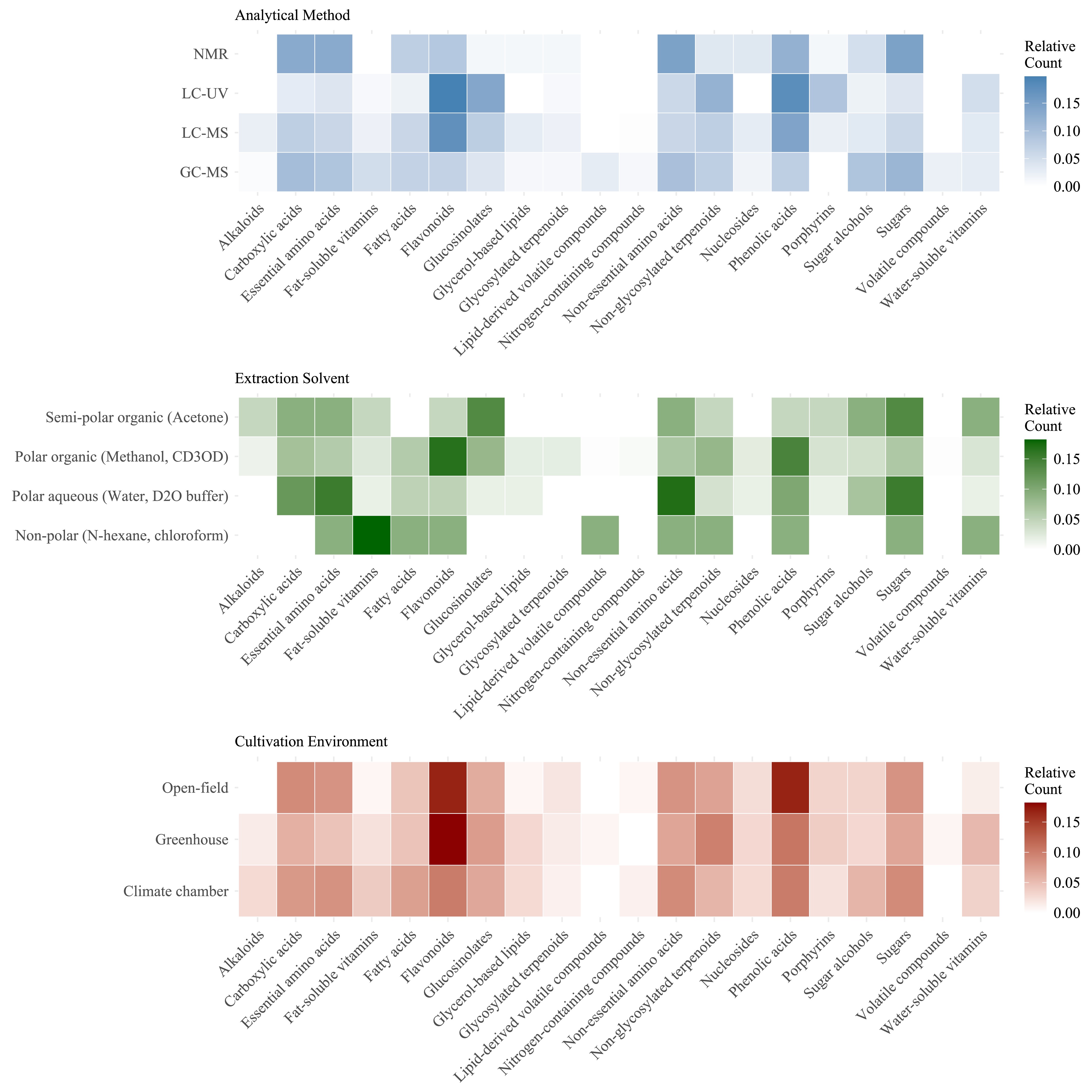
Figure 5.
Heatmap showing relative reporting frequency of metabolite groups across technical factors.
These patterns were further supported by principal component analysis (PCA) (Fig. 6), where samples were separated according to various technical factors, indicating their strong contribution to overall variation in metabolome composition.
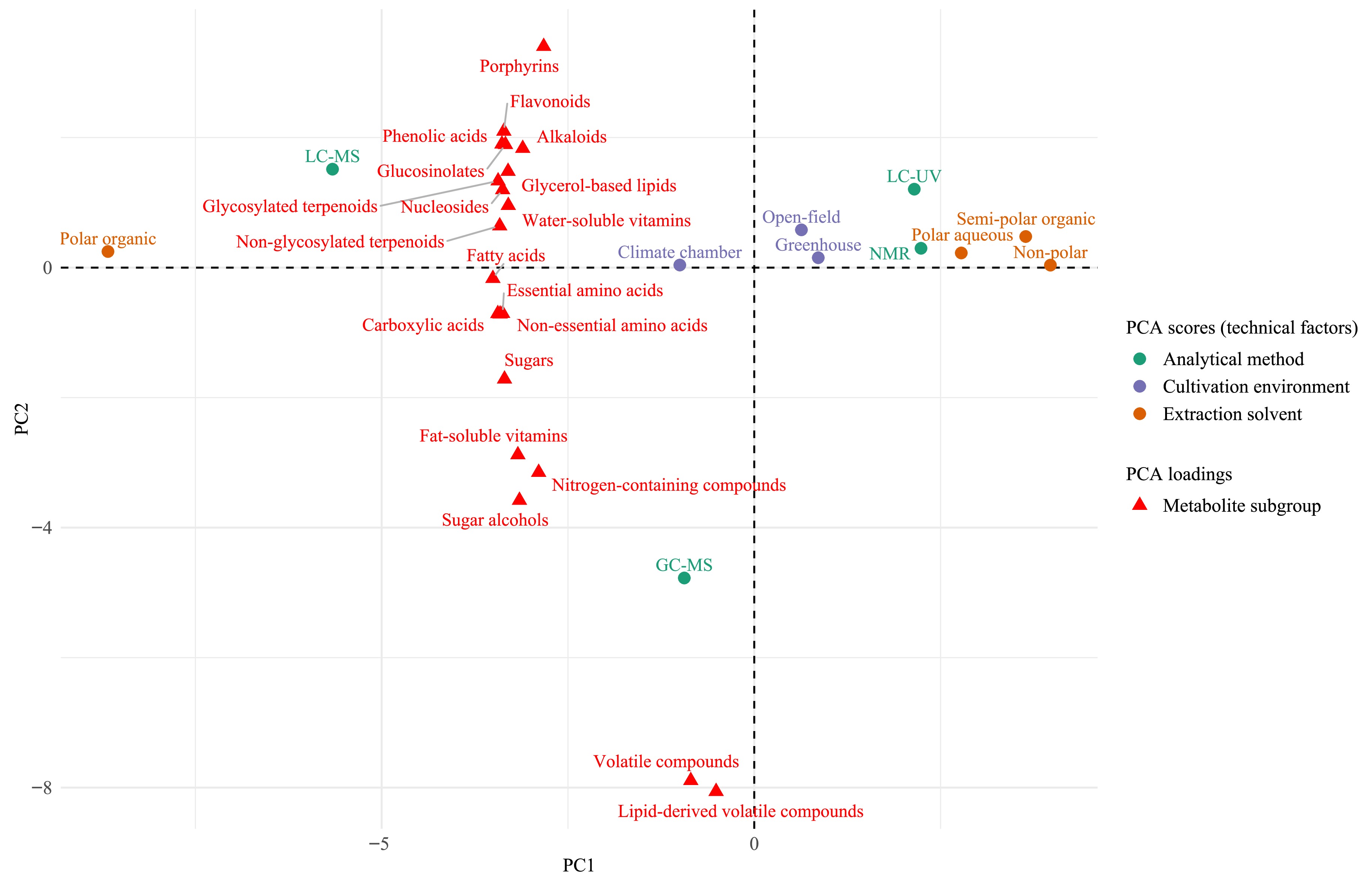
Figure 6.
Principal component analysis of metabolite reporting patterns across technical factors.
Among these factors, the choice of analytical method plays a central role in shaping metabolite coverage. Studies employing LC-MS predominantly reported a wider range of polar and non-volatile compounds, particularly phenolic compounds, whereas GC-MS-based approaches were highly associated with the detection of mostly volatile and primary metabolites. This analytical method-dependent bias reflects inherent differences in sensitivity, compound volatility, and ionization efficiency, which ultimately determine the detectable metabolite diversity.
Similarly, extraction solvent selection introduces an additional layer of variability. Polar solvents, including methanol and aqueous mixtures, were employed to extract hydrophilic metabolites, such as phenolic compounds and organic acids, whereas less polar solvents facilitate the extraction of lipophilic compounds such as terpenoids and lipid-derived metabolites.
In contrast, the cultivation environment contributed comparatively less to overall variation. PCA showed only partial separation between these different conditions, while heatmap patterns presented consistent metabolite group representation across environments. Overall, this suggests that their impact on metabolome composition is less pronounced than that of analytical methods and extraction solvents in shaping reported metabolite distributions.
Biological determinants (intrinsic factors)
-
Potential intrinsic factors contributing to metabolic variation were also listed (Supplementary File 5). From this, three key intrinsic factors—genetic variation, gene expression and transcriptional regulation, and metabolic network architecture—were highlighted for further discussion.
Genetic variation
-
Intrinsic regulation of metabolites in leafy vegetables is strongly influenced by genetic variation[115]. Natural genetic variation studies, including comparative analyses of accessions, cultivars, varieties, or species, have revealed substantial differences in metabolite composition and concentration. These genotype-dependent differences often contribute to variation in phenotypic traits such as nutritional quality, taste, and color. For example, in Brassica oleracea var. acephala, curly kale and lacinato types differ in metabolite composition, with curly kale generally showing higher glucosinolate levels and greater bitterness, while lacinato exhibits darker pigmentation and a milder taste.
To identify the genetic loci underlying these metabolic traits, approaches like quantitative trait locus (QTL) mapping[116−118] and genome-wide association studies (GWAS)[117] are widely applied. These strategies enable the discovery of candidate genes and allelic variants linked to key metabolic traits. Together, these genetic approaches provide valuable insights into the heritable basis of metabolic diversity and create opportunities for targeted breeding to accelerate crop improvement.
However, traditional comparative metabolomics approaches used to evaluate accessions and cultivars for breeding selection are often time-consuming[119] and may be confounded by various interacting biological and environmental factors, limiting their reliability. While modern strategies such as genetic modification and genomics-assisted breeding offer more targeted and efficient alternatives, the integration of metabolomics data with genetic information still remains restricted. As a result, the lack of integrative frameworks constrains the ability to predict desirable traits, highlighting a critical gap in translating metabolic variation into practical breeding outcomes.
Gene expression and transcriptional regulation
-
According to Yang et al.[120], transcriptomics is the most widely applied approach to study gene expression. Consistently, our review found that transcriptomics was the most frequently integrated omics platform with metabolomics among the included studies[90,92,121−128]. Transcriptomic analyses provide insights into how gene expression patterns correlate with metabolic traits.
Integrating transcriptomic and metabolomic datasets allows the identification of regulatory relationships involving transcription factors, biosynthetic genes, and coordinated gene modules that govern metabolic pathways[129]. Advances in high-throughput multi-omics technologies have further enabled the investigation of intrinsic regulatory mechanisms underlying plant metabolism[130]. However, other omics approaches, such as epigenomics and proteomics, were absent from the included studies, highlighting the limited attention to these molecular biology strategies.
Notably, while transcriptomics captures upstream regulatory signals, it does not reflect protein abundance or enzymatic activity[131], which are directly associated with metabolic outcomes. The lack of proteomics integration therefore constrains a comprehensive understanding of how transcriptional regulation is translated into metabolic phenotypes. Furthermore, the absence of multi-layer validation frameworks incorporating genomics, proteomics, metabolomics, and phenomics highlights a critical gap in establishing causal relationships across biological hierarchy. Addressing this limitation is crucial for advancing from correlative insights toward predictive and mechanistic understanding of metabolite regulation.
Metabolic network architecture
-
Beyond focusing on genes, metabolic network modeling enables a comprehensive framework for understanding intrinsic metabolic regulation. Pathway mapping[90,91,94,122,125,132−138] and network analysis[90,117,124,125,132,139] were commonly employed to predict metabolic fluxes and identify regulatory bottlenecks. These approaches revealed how intrinsic regulatory networks coordinate primary and secondary metabolism, linking biosynthetic pathways to physiological functions. By integrating experimental and computational data, metabolic network analyses generate predictive frameworks that can be applied in metabolic engineering or plant breeding to optimize metabolite profiles in leafy vegetables.
Nevertheless, despite their potential, most studies remain largely descriptive and are primarily used as exploratory tools rather than fully integrative systems. The complex interrelationships among metabolites, which play a central role in metabolic regulation, are not fully exploited in current frameworks. Furthermore, the integration of metabolic network models with multi-omics data remains restricted, limiting their potential for mechanistic interpretation and predictive applications. This highlights a gap in leveraging network-level information to move beyond single-metabolite or pathway-level analyses toward more holistic network-based and data-integrated approaches.
Biological determinants (environmental factors)
-
Among the 147 included articles, 74 focused solely on metabolite screening, while 73 additionally investigated metabolite responses to environmental factors (Table 1). This distribution shows that while metabolite profiling in leafy vegetables is well developed, only a subset of studies extend to environmental modulation of metabolic outcomes.
This subset of studies reveals that the current research focus is uneven, with a strong bias toward a limited set of environmental factors, particularly during cultivation, and comparatively less attention to post-harvest (Supplementary File 2: Tables S3–S7). Abiotic stress during cultivation is by far the most extensively studied environmental factor, with light-related treatments representing the dominant focus within this group. This likely reflects the relatively consistent and reproducible effects of light manipulation on secondary metabolite accumulation, particularly phenolic compounds[64,82,140−142] and pigments[82,140,141,143]. In contrast, other factors such as temperature and nutrients receive less uniform attention and yield more variable outcomes across species and experimental systems. This imbalance suggests that the current research trend is potentially overlooking more complex but agriculturally relevant environmental interactions.
The next knowledge gap concerns the heterogeneity and lack of comparability in metabolic responses across environmental conditions. While certain environmental factor such as light treatment, shows relatively consistent effects on metabolite accumulation[3,68,72,79,141,144−148], other factors potentially exhibit species- and context-dependent outcomes. For instance, lower nitrogen levels occasionally enhanced specific metabolites: in lettuce, phenolic compounds increased[83], whereas in mustard greens[149] and spinach[150], glucosinolates and primary metabolites were elevated, respectively. These findings indicate that environmental conditions should be tailored for each species accordingly to achieve the desired metabolite profile.
Another major concern is the fragmentation of research across the production continuum, where the majority of studies focus on isolated stages–either cultivation, harvesting period, post-harvest processing, or storage—without considering how environmental influences propagate across the entire system. This has resulted in a restricted understanding of how early-stage environmental conditions influence downstream post-harvest metabolite stability and transformation. Consequently, existing knowledge remains largely descriptive, and integrative frameworks capable of predicting metabolic outcomes across the full production chain are still lacking.
Overall, these gaps highlight the need to move beyond factor-specific investigations toward a systems-level framework that integrates environmental regulation across the full production chain. Such an approach would enable more robust prediction of metabolite outcomes and support the establishment of targeted strategies for optimizing nutritional and functional quality in leafy vegetables.
Underexplored metabolites in leafy vegetables
-
Among primary metabolites in leafy vegetables, nitrogen-containing compounds such as polyamines[135] and glycine betaine[151] have been reported less frequently than other primary metabolites. Both polyamines and glycine betaine reportedly act as plant stress responders and osmotic protectants, respectively, indirectly enhancing antioxidant activity under abiotic stress. Despite their potential biological significance, these compounds are often present at low concentrations and are metabolically labile, which may partly explain their underrepresentation in metabolomic studies.
For secondary metabolites, oleraceins represent a class of phenolic alkaloids found in Portulaca oleracea (purslane)[69], a leafy vegetable that has received limited metabolomic attention. Oleraceins have been highlighted for their antioxidant properties, with 11 distinct compounds identified in purslane, each exhibiting potential bioactive effects[69]. Despite these promising bioactivities, oleraceins remain largely underexplored in other leafy vegetables, and the regulatory mechanisms are poorly characterized. Investigating oleraceins across a broader range of leafy vegetables could uncover novel functional metabolites with both nutritional and therapeutic relevance.
-
Our analysis revealed a clear upward trend in research on the metabolomics of leafy vegetables, beginning in the late 2000s and showing a pronounced increase in the mid-2010s. Lettuce and Brassicaceae species were the most frequently studied leafy vegetables in metabolomics, revealing a research bias toward a limited number of model crops and highlighting the underrepresentation of other leafy vegetable species. While bioactive effects have been increasingly reported, most evidence remains based on crude extracts and in vitro assays, suggesting limited translation into functional validation. In addition, three intrinsic factors—genetic variation, metabolic network architecture, and gene expression and transcriptional regulation—were highlighted as key contributors to metabolic diversity. Technical factors, including analytical methods, extraction solvents, and cultivation environment, were also shown to influence reported metabolite variation. Approximately half of the included studies focused solely on metabolite profiling, while the remainder additionally investigated environmental influences, highlighting the combined impact of technical, intrinsic, and external factors in shaping metabolite outcomes.
Despite these advances, several limitations were identified. Reporting bias is evident, with studies often emphasizing well-characterized metabolites such as glucosinolates and phenolic compounds, while underreporting less-studied metabolites. The scope of this review was restricted to leafy vegetables, potentially overlooking metabolites relevant in other plant categories, such as roots, tubers, or legumes. Functional validation gaps remain, as many studies relied on in vitro assays. Furthermore, limited incorporation of metabolite regulation studies constrains understanding of how technical factors, intrinsic genetic variation, and environmental factors jointly regulate and shape metabolite accumulation. Overall, addressing these gaps through broader metabolite coverage and more comprehensive validation strategies will be essential for advancing the application of metabolomics in improving leafy vegetable quality.
The authors would like to acknowledge the help of Ting Xiang Neik, Adrian Ming Jern Lee, and Ethan Tze Cherng Lim from the Department of Biological Sciences, National University of Singapore, for their assistance in the review of the article. FTC received grants from the National University of Singapore (N-154-000-038-001 [E-154-00-0017-01]; C141-000-077-001 [E-141-00-0096-01]), the Singapore Ministry of Education Academic Research Fund (R154-000-191-112; R-154-000-404-112; R-154-000-553-112; R-154-000-565-112; R-154-000-630-112; R-154- 000-A08-592; R-154-000-A27-597; R-154-000-A91-592; R-154-000-A95-592; R154-000-B99-114), the Biomedical Research Council (BMRC) (Singapore) (BMRC/01/1/21/18/077; BMRC/04/1/21/19/315; BMRC/APG2013/108), the Singapore Immunology Network (SigN-06-006; SigN-08-020), the National Medical Research Council (NMRC) (Singapore) (NMRC/1150/2008; OFIRG20nov-0033; MOH-001636 [OFLCG23may-0038, A-8002641-00-00]), the National Research Foundation (NRF) (Singapore) (NRF-MP-2020-0004), the Singapore Food Agency (SFA) (SFS_RND_SUFP_001_04; W22W3D0006; NRF-SFSRND2SIH-0001), Singapore's Economic Development Board (EDB) (A-8002576-00-00), and the agency for Science Technology and Research (A*STAR) (Singapore) (H17/01/ a0/008; and APG2013/108). The funding agencies had no role in the study design, data collection and analysis, decision to publish, or preparation of the manuscript.
-
The authors confirm their contributions to the paper as follows: conceptualization, writing – review and editing: Law SC, Ong PW, Chew FT; methodology, investigation: Law SC, Ong PW; writing – original draft: Law SC; supervision: Chew FT. All authors reviewed the results and approved the final version of the manuscript.
-
All data generated or analyzed during this study are included in this published article (and its supplementary information files).
-
FTC reports grants from the National University of Singapore, Singapore Ministry of Education Academic Research Fund, Singapore Immunology Network, National Medical Research Council (NMRC) (Singapore), Biomedical Research Council (BMRC) (Singapore), National Research Foundation (NRF) (Singapore), Singapore Food Agency (SFA), Singapore's Economic Development Board (EDB), and the Agency for Science Technology and Research (A*STAR) (Singapore), during the conduct of the study, and consulting fees from Sime Darby Technology Centre; First Resources Ltd; Genting Plantation, Olam International, Musim Mas, and Syngenta Crop Protection, outside the submitted work. The other authors declare no other competing interests.
-
accompanies this paper online at: https://doi.org/10.48130/vegres-0026-0028.
- Supplementary File 1 Preferred Reporting Items for Systematic reviews and Meta-Analyses 2020 (PRISMA-ScR) reporting checklist.
- Supplementary File 2 FigureS1. PRISMA flow diagram illustrating the process used to identify and shortlist articles for systematic review. Table S1. Full search terms applied to the Scopus, Web of Science, and BIOSIS databases for the literature search. All three databases were limited to only English-language, research articles; Table S2. Investigated leafy vegetables with their subgroup name derived from 147 qualified articles; Table S3. Summary of light-related abiotic stresses influencing metabolite composition in leafy vegetables; Table S4. Summary of nutrient-related abiotic stresses influencing metabolite composition in leafy vegetables; Table S5. Summary of temperature, salinity, and water-related abiotic stresses influencing metabolite composition in leafy vegetables; Table S6. Summary of different cultivation conditions and harvesting periods influencing metabolite composition in leafy vegetables; Table S7. Summary of different post-harvest conditions influencing metabolite composition in leafy vegetables.
- Supplementary File 3 Customized Risk of Bias (RoB) checklist for assessing risk of bias in included studs.
- Supplementary File 4 GRADEpro checklist for assessing the certainty of overall evidence across all outcomes (reported metabolite groups) in 147 included studies.
- Supplementary File 5 Detailed extracted and compiled data from 147 included articles.
- Copyright: © 2026 by the author(s). Published by Maximum Academic Press, Fayetteville, GA. This article is an open access article distributed under Creative Commons Attribution License (CC BY 4.0), visit https://creativecommons.org/licenses/by/4.0/.
-
About this article
Cite this article
Law SC, Ong PW, Chew FT. 2026. Metabolomics of leafy vegetables: a systematic review of bioactive effects and factors influencing metabolic variation. Vegetable Research 6: e035 doi: 10.48130/vegres-0026-0028 

Metabolomics of leafy vegetables: a systematic review of bioactive effects and factors influencing metabolic variation
- Received: 24 February 2026
- Revised: 03 June 2026
- Accepted: 09 June 2026
- Published online: 12 October 2026
Abstract: Leafy vegetables are nutrient-dense foods that play a vital role in a balanced diet and in maintaining human health. Their nutritional value is largely attributed to an array of primary and secondary metabolites, which support plant growth and confer bioactive properties, respectively. To our knowledge, no large-scale review of metabolomic studies on leafy vegetables has been conducted. In this review, we synthesized past research on leafy vegetable metabolomics and revealed a clear upward trend beginning in the late 2000s, with a pronounced surge in the mid-2010s. Lettuce and members of the Brassicaceae family emerged as the most extensively studied leafy vegetables, revealing a research bias toward a limited number of model crops. Beyond summarizing reported metabolites across leafy vegetables, we highlighted leafy vegetables with experimentally validated bioactive effects. Three technical factors—analytical method, extraction solvent, and cultivation environment were examined for their influence on reported metabolic variation. In addition, we identified three intrinsic factors affecting metabolic variation: genetic variation, metabolic network architecture, and gene expression and transcriptional regulation. Approximately half of the included studies focused solely on metabolite profiling, while the rest additionally investigated metabolic responses to different environmental factors, including abiotic stress during cultivation, harvesting period, post-harvest processing, and post-harvest storage conditions. Overall, we emphasize that while quantifying bioactive metabolites is important, understanding the factors influencing metabolic variation is crucial for sustaining or enhancing the nutritional and functional quality of leafy vegetables. The study protocol was registered at the International Platform of Registered Systematic Review and Meta-analysis Protocols (INPLASY; INPLASY202590005).
-
Key words:
- Leafy vegetables /
- Metabolomics /
- Bioactive effects /
- Metabolic variation /
- Intrinsic factors /
- Environmental factors