-
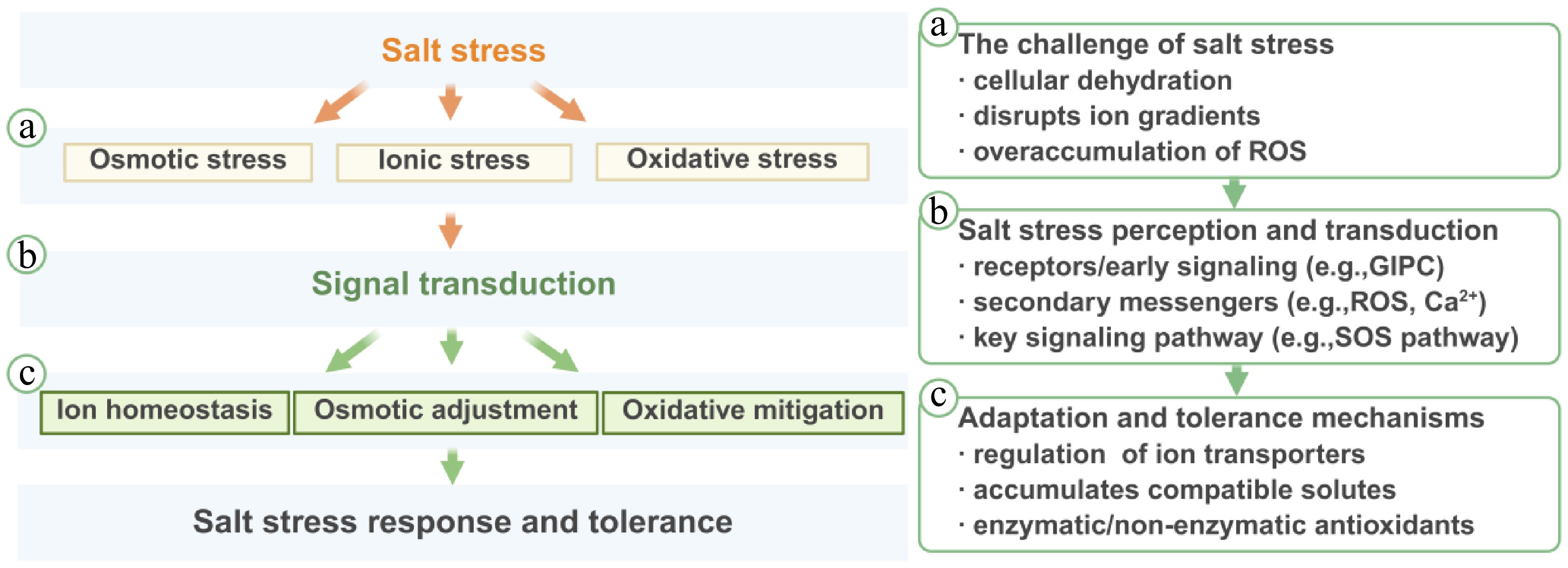
Figure 1.
A simplified overview of how plants perceive and respond to salinity. In the left panel, orange arrows indicate the process by which salt stress induces osmotic, ionic, and oxidative stress and affects the normal functioning of plants, while green arrows represent the perception, signal transduction, and adaptive responses of plants to salinity. The right panel details three key aspects: (a) the negative impacts of salt stress on plant growth and development; (b) the signal transduction pathway activated by salt stress. In the figure, GIPC refers to the sodium ion receptor glycosyl inositol phosphorylceramide; (c) multiple regulatory mechanisms operating at the transcriptional and protein levels to facilitate adaptive responses. This figure was created using
https://BioRender.com . -
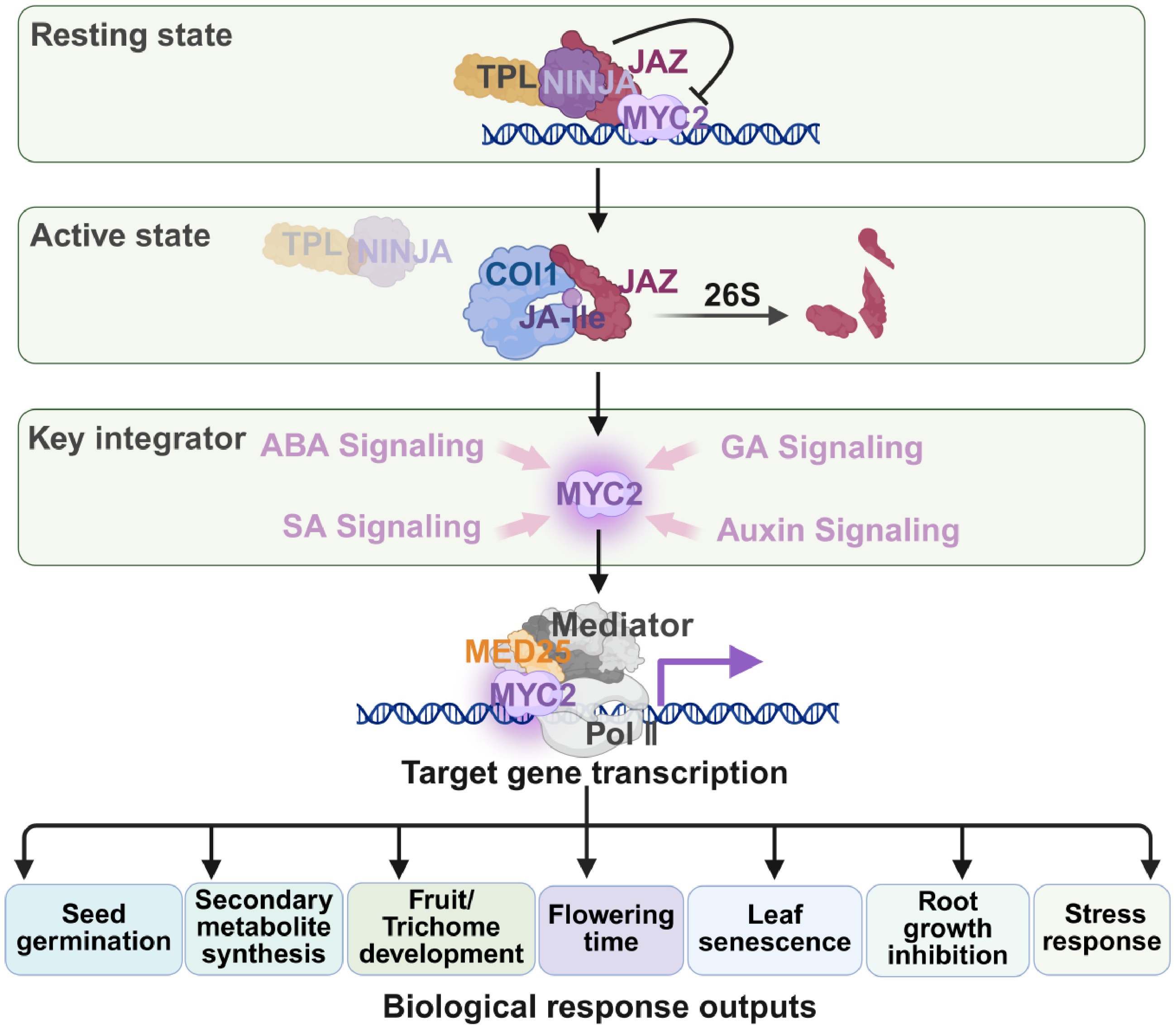
Figure 2.
A simplified overview of JA signaling transduction in plants. In the resting state, JAZ recruits a transcriptional repressor complex (JAZ–NINJA–TPL) to inhibit the activity of core transcription factors (e.g., MYC2). When plants sense specific developmental signals or experience stress conditions, the bioactive JA-Ile level increases. Upon binding to COI1, JA-Ile promotes the degradation of JAZ proteins via the 26S proteasome pathway, thereby activating the expression of downstream response genes. This process involves multiple proteins. For example, the key transcription factor MYC2 directly interacts with the Mediator subunit MED25 and recruits Pol II to initiate transcription. As indicated by the pink arrows, MYC2 acts as a key integrator that mediates crosstalk among multiple signaling pathways, including various phytohormone signaling pathways. The JA signaling pathway regulates diverse aspects of plant growth and development, as well as responses to both biotic and abiotic stresses. The seven colored boxes at the bottom of the figure represent processes regulated by JA signaling. '26S' is the abbreviation of the 26S proteasome degradation pathway. This figure was created using
https://BioRender.com . -
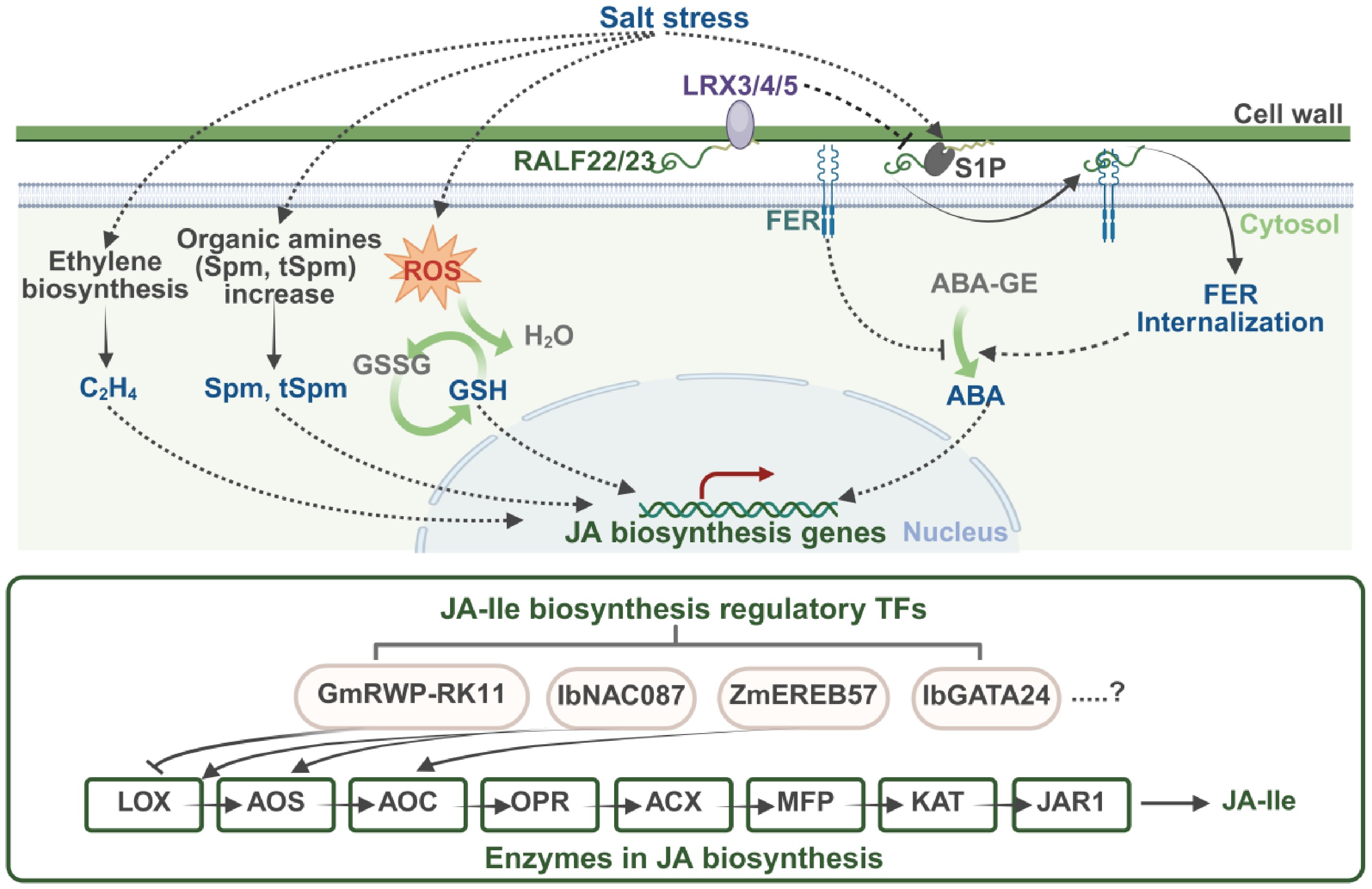
Figure 3.
Mechanisms of salt stress-induced JA biosynthesis in plants. Salt stress induces JA biosynthesis through multiple pathways, with ethylene, ABA, ROS, and polyamines acting as upstream regulators. Blue text marks known triggers/events that promote JA biosynthesis under salt stress. Among them, the membrane receptor FER inhibits the accumulation of the active form of ABA, but under salt stress, the RALF–LRX–S1P module triggers FER internalization. The accumulation of JA under salt stress is primarily achieved by upregulating the expression of enzymes involved in JA biosynthesis. Several transcription factors have been reported to directly participate in this process. Solid arrows indicate direct regulatory relationships between transcription factors and their target genes that are supported by evidence, while IbGATA24 is involved in this process but lacks identified direct target genes. Enzymes are presented in the order of the JA biosynthetic pathway to show the regulatory points of transcription factors. Dashed lines in the figure indicate a causal relationship that is not direct or lacks more concrete evidence, while solid lines represent well-established and more direct regulatory interactions. This figure was created using
https://BioRender.com . -
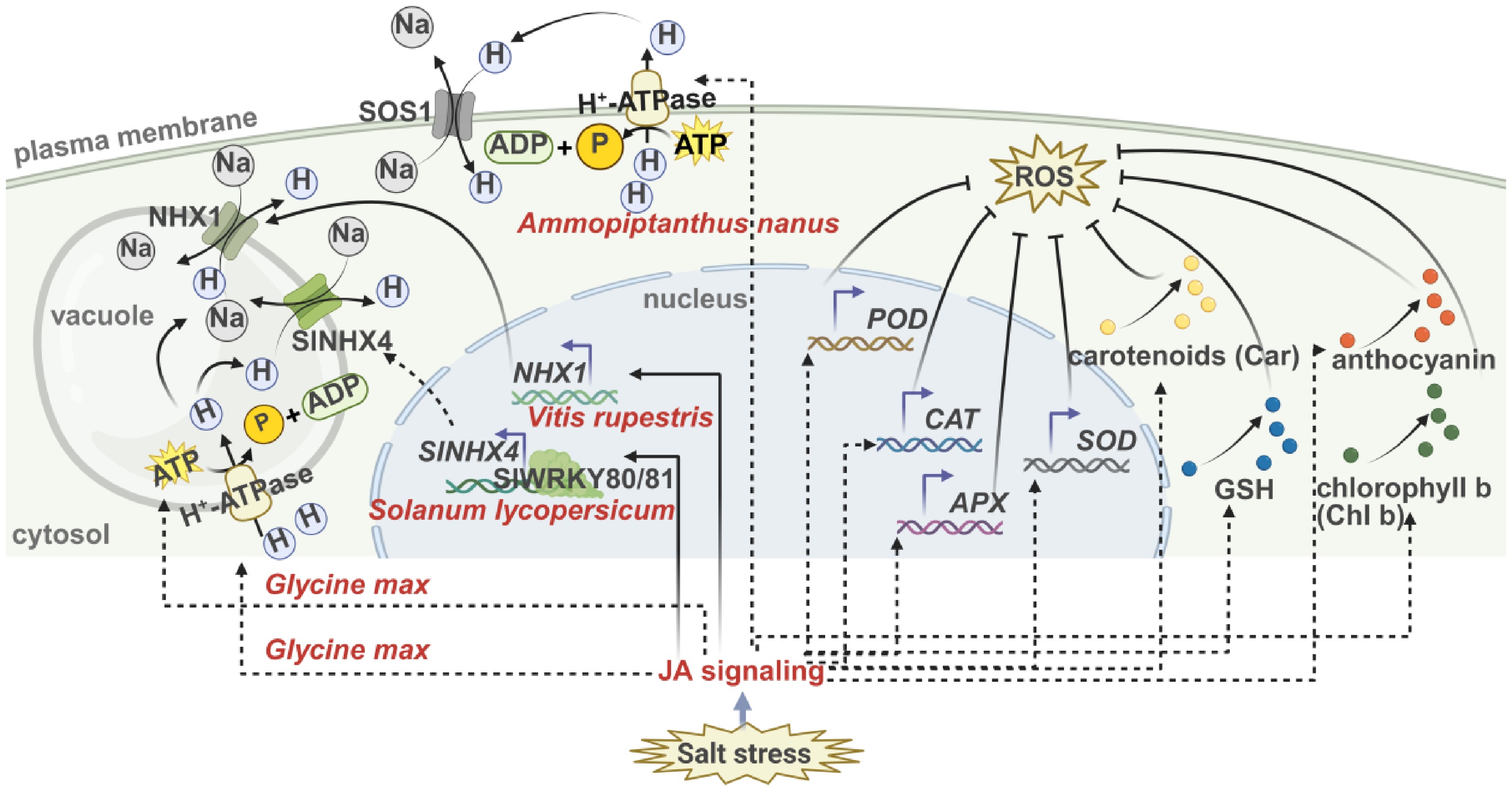
Figure 4.
Mechanisms of JA signaling in plant adaptation to salt stress. Salt stress induces JA signaling, which subsequently enhances plant salt tolerance. According to current reports, such tolerance mainly centers on responding to ionic and oxidative stress. The left panel shows JA-mediated regulation of ion homeostasis under salt stress, with red text indicating the species in which each pathway has been reported. Under salt stress, JA mainly regulates ion homeostasis by activating key transcriptional regulators (e.g., SlWRKY80/81), which in turn modulate the expression or activity of ion channels and proton pumps. JA signaling promotes the expression of the vacuolar membrane Na+/H+ antiporter NHX, enhances proton pump activity, and increases ATP accumulation, indirectly enabling the proton pump to provide more H+ ions required by NHX. The right panel shows the mechanisms by which JA regulates the antioxidant system under salt stress, mainly through upregulating the expression of antioxidant enzyme genes (POD, CAT, APX, SOD) and promoting the accumulation of antioxidant compounds (carotenoids, anthocyanin, chlorophyll b, GSH) to scavenge ROS. Dashed lines in the figure indicate a causal relationship that is not direct or lacks more concrete evidence, while solid lines represent well-established and more direct regulatory interactions. This figure was created using
https://BioRender.com . -
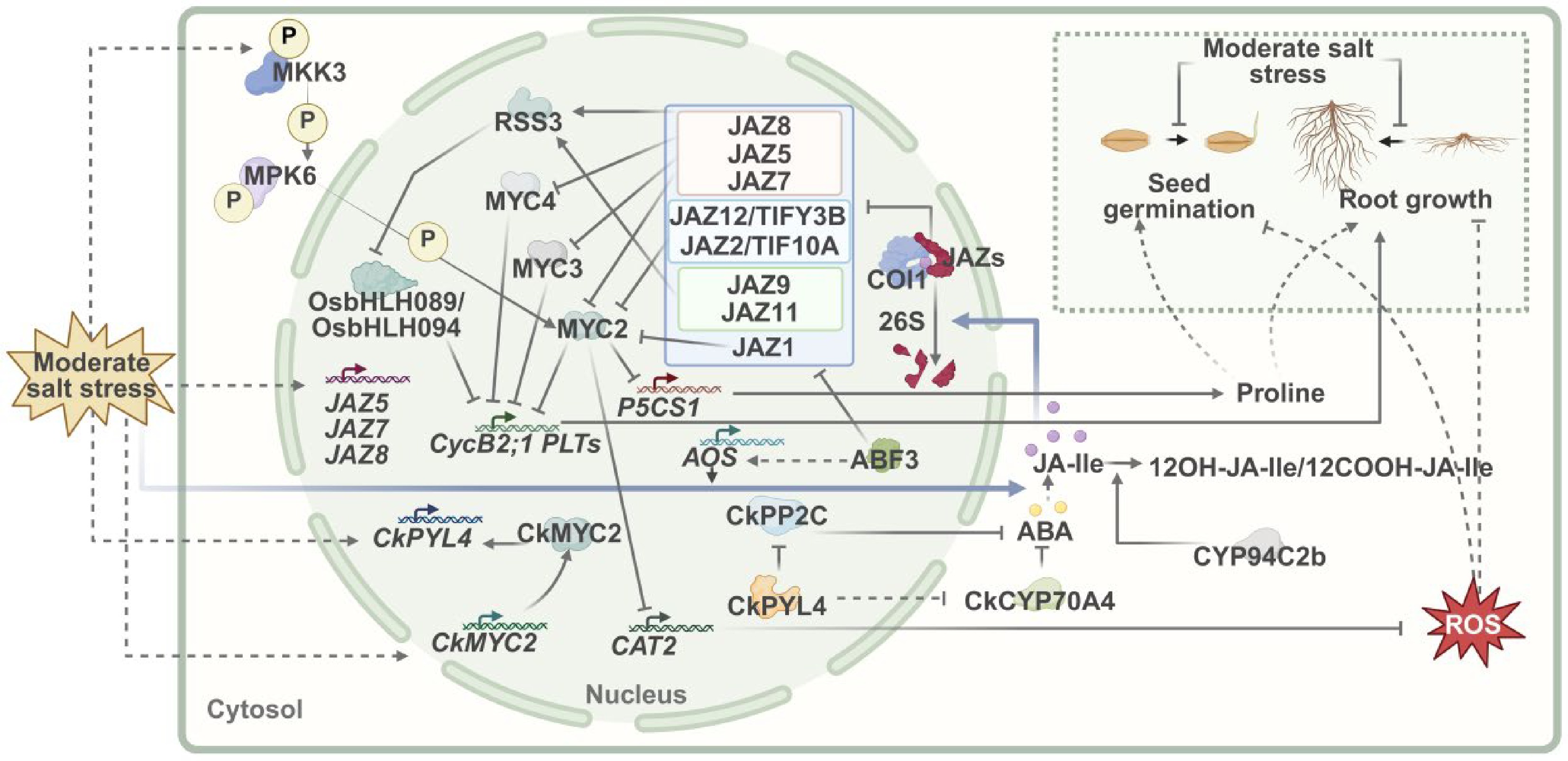
Figure 5.
Signal pathways and components involved in JA-mediated regulation of seed germination inhibition and root growth inhibition. Under moderate salt stress, JA reshapes root architecture and suppresses seed germination. Purple arrows indicate the core process of the JA-mediated salt stress response under moderate salt stress: salt stress induces JA-Ile accumulation, which further activates gene expression through degradation of JAZ proteins (JAZ1/2/5/7/8/9/11/12). JAZs inhibit the function of MYC2/3/4, but promote RSS3 to suppress the function of OsbHLH089/094. This leads to the suppression of genes regulating cell division and growth, such as CycB2;1 and PLTs, thereby inhibiting root growth. At the same time, MYC2 also suppresses the expression of P5CS1 (encodes a key enzyme in proline synthesis) and CAT2 (encodes a key enzyme in ROS scavenging). These events reduce proline accumulation and maintain ROS levels for signaling. Consequently, seed germination is inhibited, and root architecture is altered. In addition, salt stress also affects this main pathway through other signaling routes. For example, it activates the MPK cascade MKK3–MPK6, which phosphorylates MYC2 and enhances its function. Salt stress also promotes the expression of JAZ5/7/8, CkMYC2, and CkPYL4 (encodes ABA receptor CkPYL4) through mechanisms that are not yet fully understood. CkPYL4 inhibits the ABA signaling repressor CkPP2C and the key ABA metabolism enzyme CkCYP70A4, leading to ABA accumulation, which further promotes the accumulation of JA-Ile. Under salt stress, CYP94C2b catalyzes the conversion of the active form JA-Ile into the storage forms 12OH-JA-Ile/12COOH-JA-Ile, preventing overactivation of the signaling pathway. Dashed lines in the figure indicate a causal relationship that is not direct or lacks more concrete evidence, while solid lines represent well-established and more direct regulatory interactions. '26S' is the abbreviation of the 26S proteasome degradation pathway. This figure was created using
https://BioRender.com . -
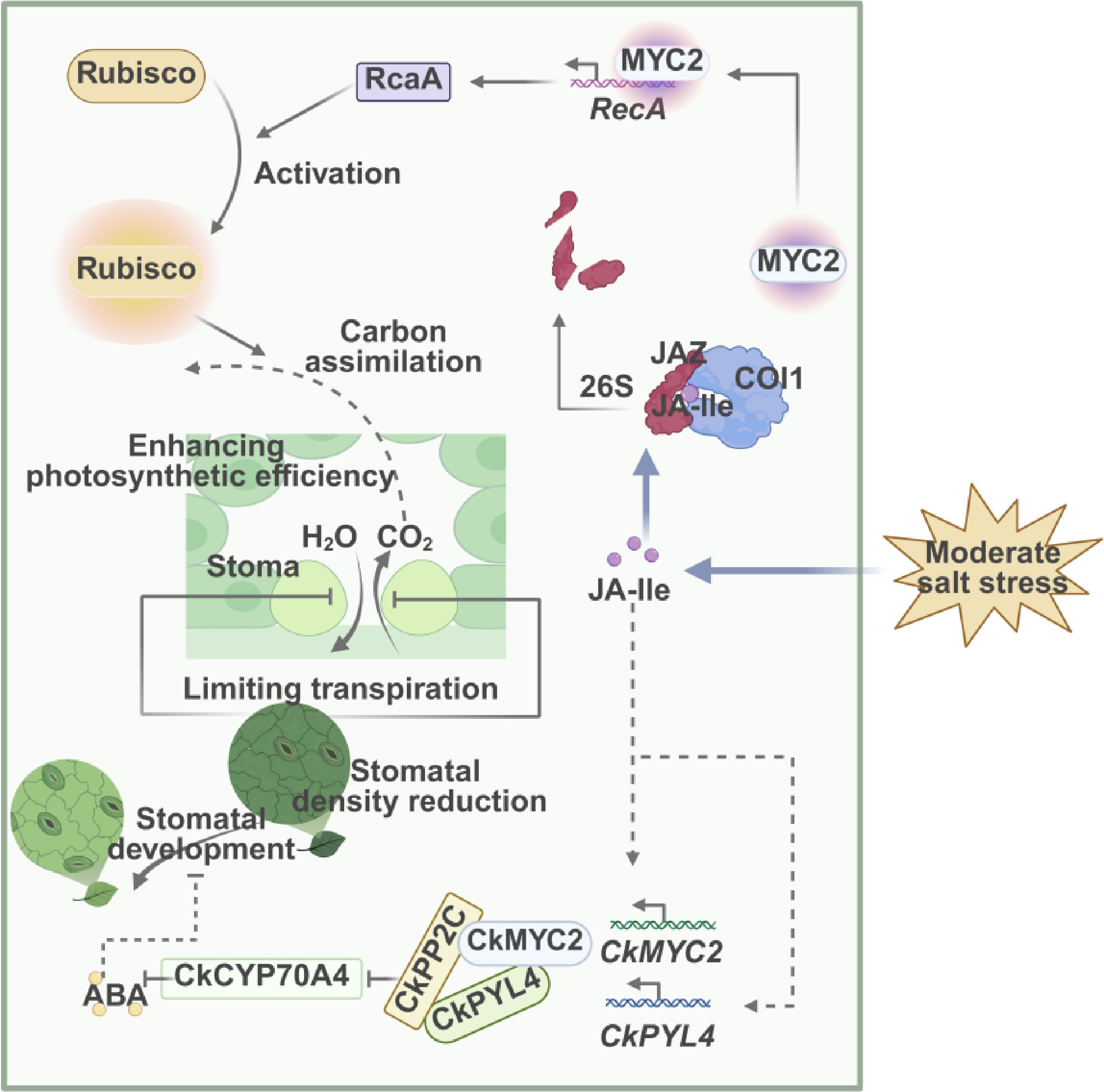
Figure 6.
Mechanisms of JA-mediated stomatal development and photosynthetic acclimation under salt stress. Under moderate salt stress, CO2 uptake and photosynthesis are limited. JA plays a dual role in this adaptive response: purple arrows indicate the core process of JA-mediated shoot physiological responses under salt stress. Salt stress induces JA accumulation, which further activates JA signaling by degrading JAZ proteins. JA signaling promotes the expression of CkMYC2 and CkPYL4. CkMYC2 and CkPYL4 facilitate the formation of the CkPP2C–CkMYC2–CkPYL4 complex. This complex inhibits the key ABA metabolism enzyme CkCYP70A4, leading to ABA accumulation. Elevated ABA levels then suppress stomatal development, reduce stomatal density, and consequently limit CO2 uptake and transpiration. Concurrently, JA enhances photosynthetic efficiency by upregulating Rubisco activase A (RcaA), illustrating a sophisticated balance between stress adaptation and growth maintenance. RcaA mediates the activation of Rubisco, the core enzyme responsible for CO2 fixation in photosynthesis, thereby facilitating efficient carbon assimilation. Dashed lines in the figure indicate a causal relationship that is not direct or lacks more concrete evidence, while solid lines represent well-established and more direct regulatory interactions. '26S' is the abbreviation for the 26S proteasome degradation pathway. A glow effect is added to elements to indicate JA-mediated activation of protein activity. This figure was created using
https://BioRender.com . -
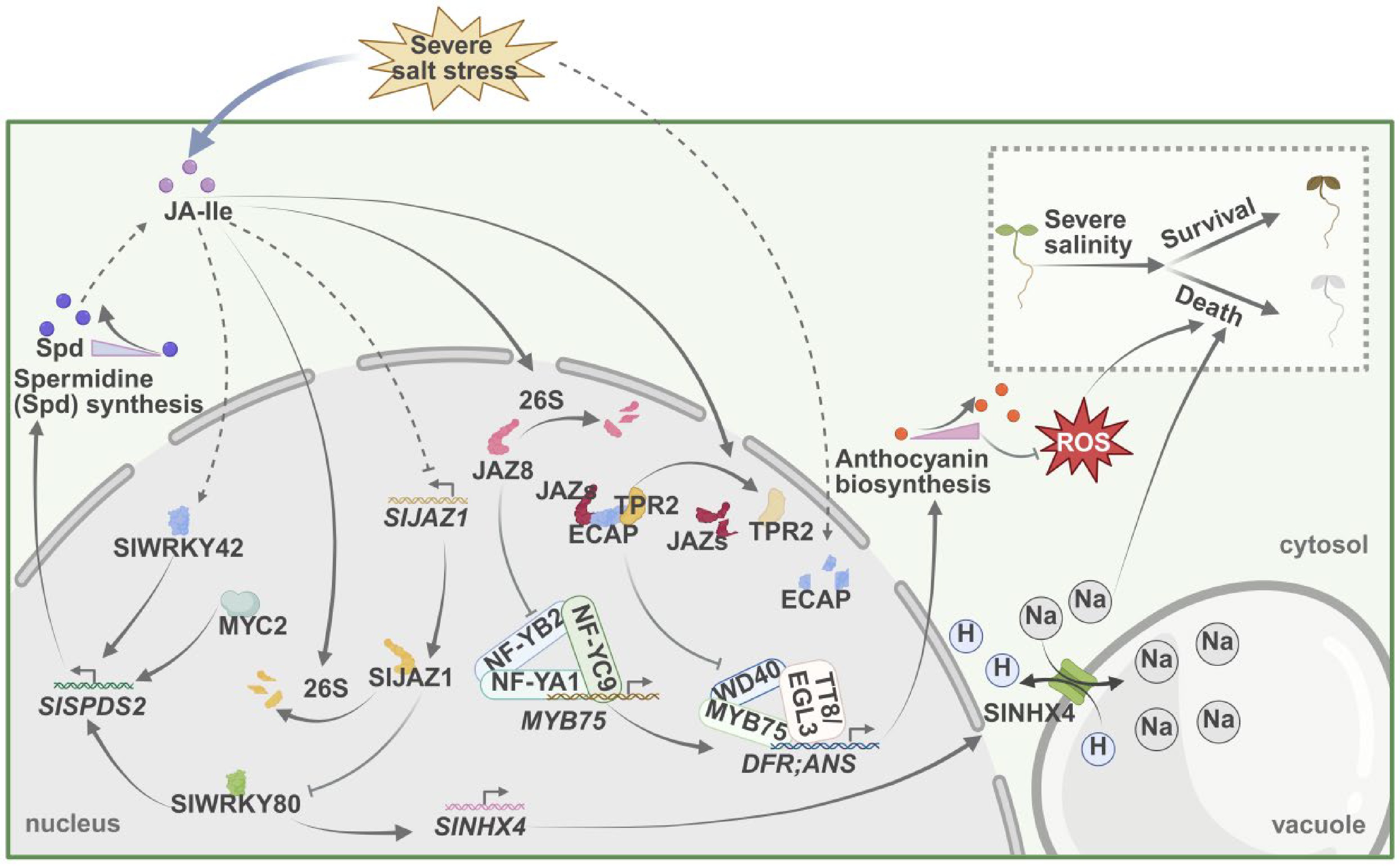
Figure 7.
Mechanisms of JA signaling in modulating plant survival under severe salinity. Under severe salinity stress, plants face a survival threat. Excessive ion accumulation and ROS production are major causes of plant death. JA promotes survival by countering ion toxicity and oxidative damage, primarily through transcriptional regulation involving the degradation pathway of JAZ proteins (JAZ8, SlJAZ1) and other poorly understood mechanisms (dashed lines from JA-Ile). On the left of this figure, JA forms a positive feedback loop with spermidine (Spd) to amplify signaling. JA signaling achieves this process by regulating the expression of the key Spd synthase SlSPDS2, which is controlled by the transcription factors MYC2 and SlWRKY42/80. SlWRKY80 is repressed by SlJAZ1; however, under salt stress, JA signaling suppresses SlJAZ1 expression and promotes SlJAZ1 degradation. On the right, JA activates JAZ8 degradation to regulate antioxidant defense and ion homeostasis, achieving multilayer regulation of anthocyanin accumulation. Degradation of JAZ8 relieves its repression on the NF-Y complex (NF-YB2–NF-YA1–NF-YC9), promoting the expression of MYB75. This facilitates the formation of the WD-repeat/bHLH/MYB complex (WD40–TT8–MYB75). Additionally, the degradation of JAZ8 also relieves the suppression of the JAZ–ECAP–TPR2 repressor complex on the WD-repeat/bHLH/MYB complex. These events collectively enhance the activation of transcription of anthocyanin biosynthesis genes by the WD-repeat/bHLH/MYB complex. '26S' denotes the 26S proteasome degradation pathway. This figure was created using
https://BioRender.com . -
Name Species Type Function Reference JAZs Arabidopsis thaliana
Salvia miltiorrhizaJasmonate-ZIM-domain protein Under salt stress, JAZ proteins are degraded via the 26S proteasome, thereby releasing transcription factors like MYC2 to activate JA-responsive genes. The expression of some JAZs are induced by salt stress. [9,29,73,76,
77,80,87,89]FER Arabidopsis thaliana receptor-like kinase Under salt stress, FER binding of RALF inhibits JA synthesis and signaling by accumulating active ABA. [25,57] RALF22/23 Arabidopsis thaliana Rapid alkalinization factor Peptide Under salt stress, they are cleaved from LRX and bind to FER to activate downstream responses that inhibit excessive JA synthesis. [25,57] LRX3/4/5 Arabidopsis thaliana Leucine-rich repeat/extensin Under salt stress, RALF release from LRX3/4/5 initiates downstream responses that affect JA synthesis. [25,57] MBW Complex (MYB75, TTG8/EGL3, WD40) Arabidopsis thaliana Transcriptional complex (MYB-bHLH-WD40) The complex is a crucial activator of anthocyanin biosynthesis under salt stress. [29] TPR2 Arabidopsis thaliana Transcriptional co-repressor TPR2 is recruited by ECAP to form a repression complex that suppresses the MBW complex, inhibiting anthocyanin biosynthesis. [29,45] COI1 Arabidopsis thaliana,
Nicotiana tabacum,
Oryza sativaF-box protein COI1 forms the core co-receptor complex with JAZ proteins for JA perception. Its activity leads to JAZ degradation and the initiation of JA signaling under salt stress. [29,35,38,43,74] ECAP Arabidopsis thaliana EAR motif-containing adaptor protein It interacts with JAZ6/8, TPR2 and MYB75 to suppress the MBW complex, fine-tuning anthocyanin biosynthesis under salt stress [29,45] MYC2 Arabidopsis thaliana,
Caragana korshinskii,
Solanum lycopersicumbHLH transcription factor MYC2, the core transcription factor of the JA signaling pathway, activates JA-responsive genes to suppress root growth under salt stress in Arabidopsis, promotes ABA accumulation and inhibits stomatal development in Caragana, and collaborates with SlWRKY42 in tomato to regulate downstream stress responses. [38,48,74,78,
80,84]PLTs Oryza sativa, Arabidopsis thaliana AP2-domain transcription factor JA signaling inhibits their expression,which is related to cell division and elongation, repressing root growth to adapt to salt stress. [38,74] ACX Arabidopsis thaliana Acyl-CoA oxidase Under salt stress, ACX is involved in JA biosynthesis to enhance JA signaling. [46] AOC Arabidopsis thaliana,
Zea maysAllene Oxide Cyclase Under salt stress, ZmEREB57 enhances tolerance by binding the ZmAOC2 promoter to regulate OPDA synthesis.. [46,53,54,62] AOS Arabidopsis thaliana,
Ipomoea batatasAllene Oxide Synthase AOS, a key JA biosynthetic enzyme, is directly activated by IbNAC087 and indirectly regulated by ABF3 to enhance JA signaling under salt stress. [46,60,77] LOX Arabidopsis thaliana,
Ipomoea batatas
Glycine maxLipoxygenase Under salt stress, it is a key enzyme, directly activated by IbNAC087 to enhance JA accumulation and salt stress tolerance. In soybean, the expression of GmLOX6 is suppressed by GmRWP-RK11. [46,52,60] CkCYP70A4 Caragana korshinskii Cytochrome P450 enzyme Under salt stress, the CkMYC2-CkPYL4-CkPP2C complex suppresses CkCYP70A4 activity, leading to ABA accumulation. [48] CkPP2C Caragana korshinskii Phosphatase Under salt stress, CkPP2C forms a complex with CkMYC2 and CkPYL4 to suppress the inhibitory function of CkPP2C, contributing to ABA accumulation. [48] CkPYL4 Caragana korshinskii ABA receptor Induced by JA, it forms a complex with CkMYC2 and CkPP2C to inhibit CkCYP70A4, leading to ABA accumulation under salt stress. [48] GmRWP-RK11 Glycine max RWP-RK TF family It is a transcriptional repressor of GmLOX6 under salt stress in soybean. [52] OPR Arabidopsis thaliana cis-12-oxo-phytodienoic acid reductase Under salt stress, OPR is involved in JA biosynthesis to enhance JA signaling. [53,54] PAO5 Arabidopsis thaliana Polyamine oxidase PAO5 catalyzes polyamine oxidation. Its loss-of-function increases tSpm levels, enhancing salt tolerance via promotion of JA biosynthesis. [59] IbNAC087 Ipomoea batatas NAC transcription factor It boosts JA accumulation by activating JA synthesis genes under salt stress, enhances ROS scavenging, and improves salt tolerance. [60] IbNIEL Ipomoea batatas E3 ubiquitin ligase It negatively regulates plant salt tolerance by weakening the activation of JA synthesis genes through the degradation of IbNAC087. [60] IbGATA24 Ipomoea batatas GATA zinc finger transcription factor Salt stress induces the expression of IbGATA24, which in turn affects JA accumulation. [61] ZmEREB57 Zea mays AP2/ERF transcription factor It is induced by salt stress and directly binds to the ZmAOC2 promoter, enhancing salt tolerance by regulating OPDA and JA synthesis. [62] GPX6 Arabidopsis thaliana Glutathione peroxidase Under salt stress, JA enhances the expression of GPX6, thereby aiding GSH-mediated ROS scavenging. [63] RBOH Glycine max NADPH oxidase JA activates these genes that induce H2O2 production in roots under salt stress, leading to growth inhibition. [70] TaTIFY3B Triticum aestivum Jasmonate-ZIM-domain protein Under moderate salt stress, its overexpression enhances seed germination and root growth, but intensifies germination inhibition under high salinity. [73] TaTIFY10A Triticum aestivum Jasmonate-ZIM-domain protein Its overexpression promotes root growth under salinity. [73] OsbHLH089/OsbHLH094 Oryza sativa Class C bHLH transcription factors They form a ternary complex with RSS3 and JAZ proteins to modulate JA responses and maintain root cell elongation under salt stress. [76] RSS3 Oryza sativa Transcriptional co-repressor RSS3 forms a ternary complex with class C bHLH factors and JAZ proteins, and its mutation enhances JA-responsive gene expression and inhibits root growth under salt stress. [76] ABF3 Arabidopsis thaliana bZIP transcription factor Under salt stress, ABF3 enhances JA signaling by competitively binding to JAZ1, thereby preserving MYC2 activity. [77] MKK3-MPK6 module Arabidopsis thaliana MAP kinase cascade Under salt stress, it cascade phosphorylates and activates MYC2 to suppress P5CS1, reducing proline accumulation and inhibiting growth. [78] P5CS1 Arabidopsis thaliana 1-pyrroline-5-carboxylate synthetase Under salt stress, the MKK3-MPK6 pathway-activated MYC2 suppresses its expression, reducing proline accumulation and inhibiting growth. [78] CYP94C2b Oryza sativa Cytochrome P450 enzyme It inactivates JA-Ile, reducing JA signaling to alleviate growth inhibition under salt stress. [79] RCA Arabidopsis thaliana Rubisco activase Under salt stress, JA signaling activates its expression via MYC2 to improve photosynthetic efficiency. [84] SlWRKY42 Solanum lycopersicum WRKY family transcription factor Under saline-alkali stress, it binds to the SlSPDS2 promoter with SlMYC2 to promote spermidine synthesis and enhance plant tolerance. [86] SlWRKY80 Solanum lycopersicum WRKY family transcription factor Released from SlJAZ1 inhibition, it activates the promoters of SlSPDS2 and SlNHX4 to regulate Spd synthesis and Na+/K+ homeostasis, enhancing salt tolerance. [87] NF-Y complex (NF-YA1-YB2-YC9) Arabidopsis thaliana NF-Y transcription factor complex Under salt stress, this complex is released, thereby regulating the expression of salt stress-related genes. [89] Table 1.
Summary of the components involved in JA-mediated responses to salt stress.
Figures
(7)
Tables
(1)