-
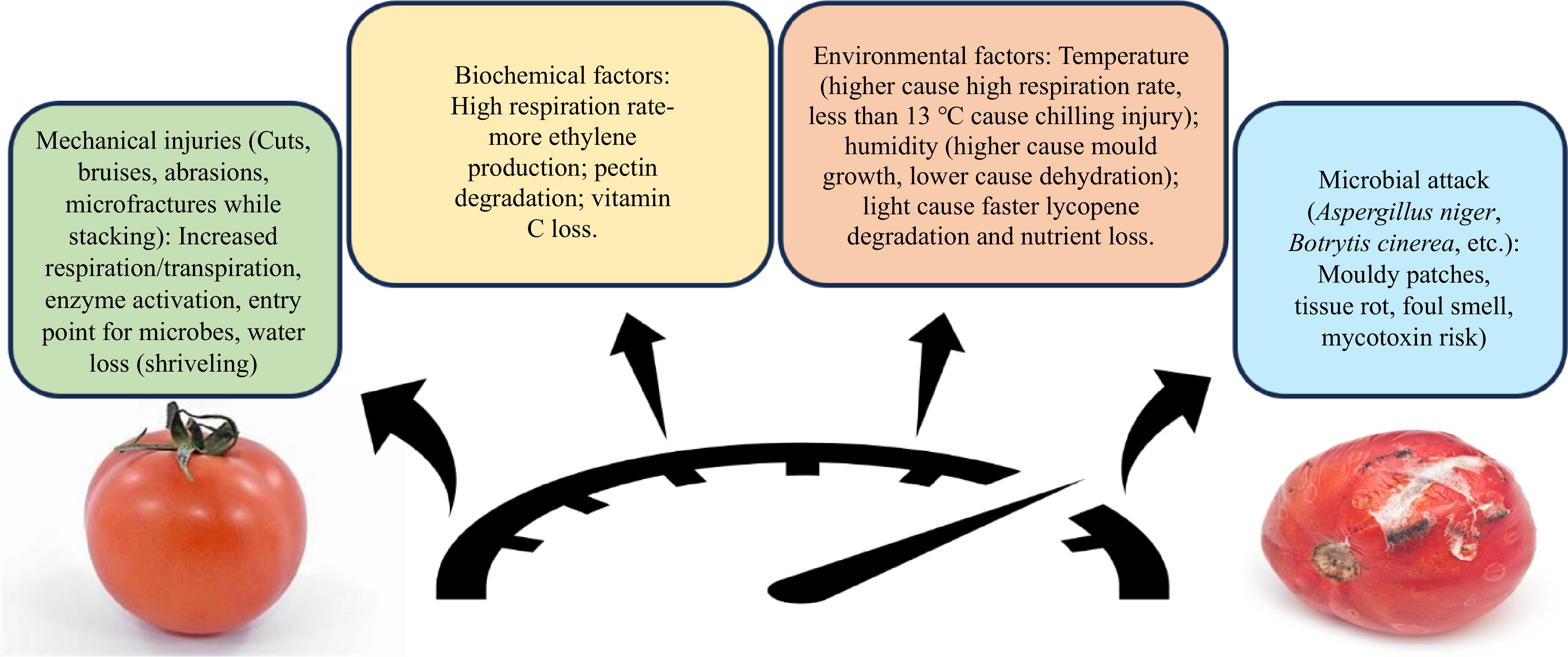
Figure 1.
The major factors responsible for the post-harvest deterioration of tomatoes.
-
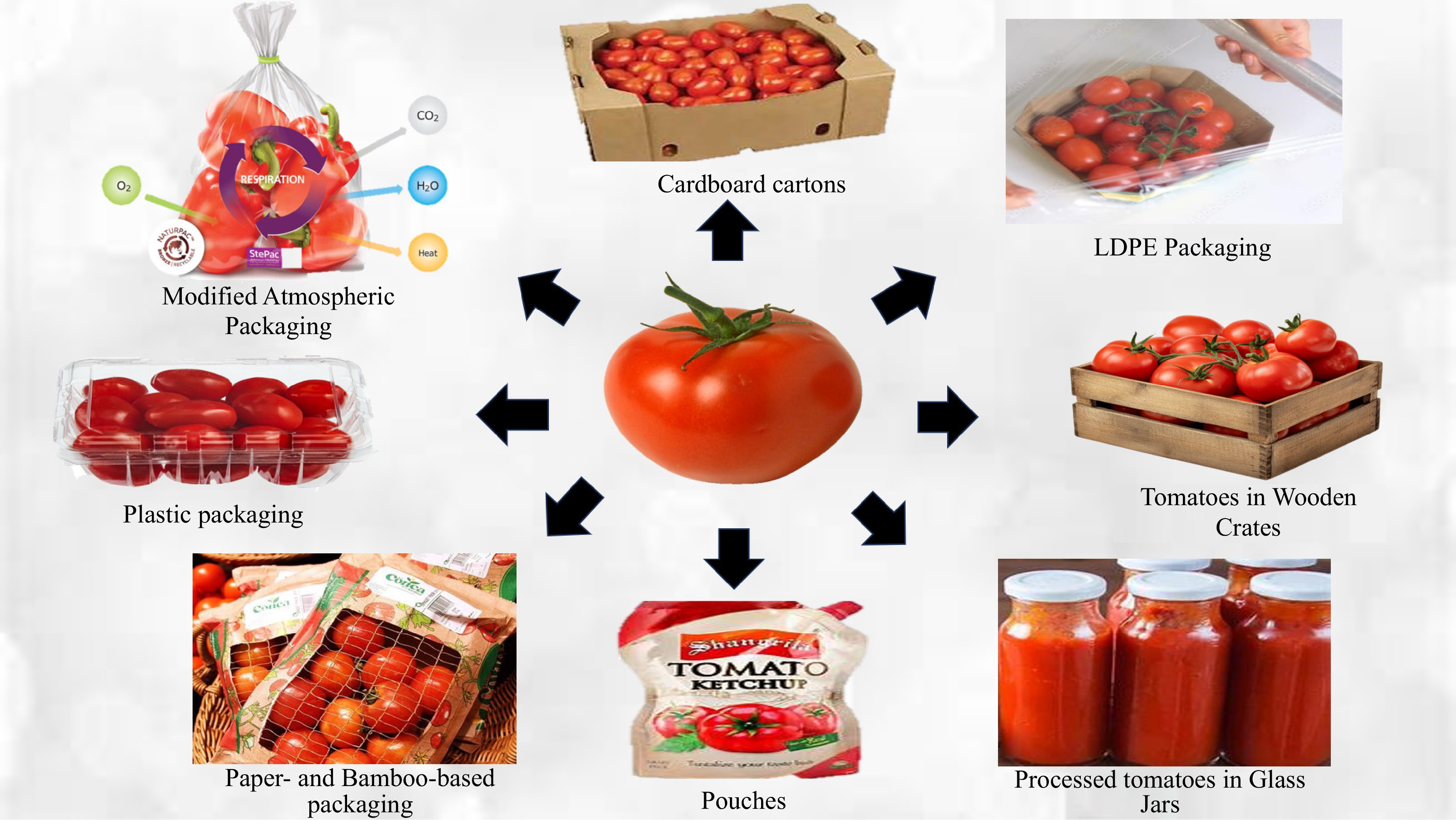
Figure 2.
Conventional packaging materials and systems used in tomato packaging, including plastic crates, trays, polyethylene films, corrugated fibreboards boxes, and MAP systems.
-
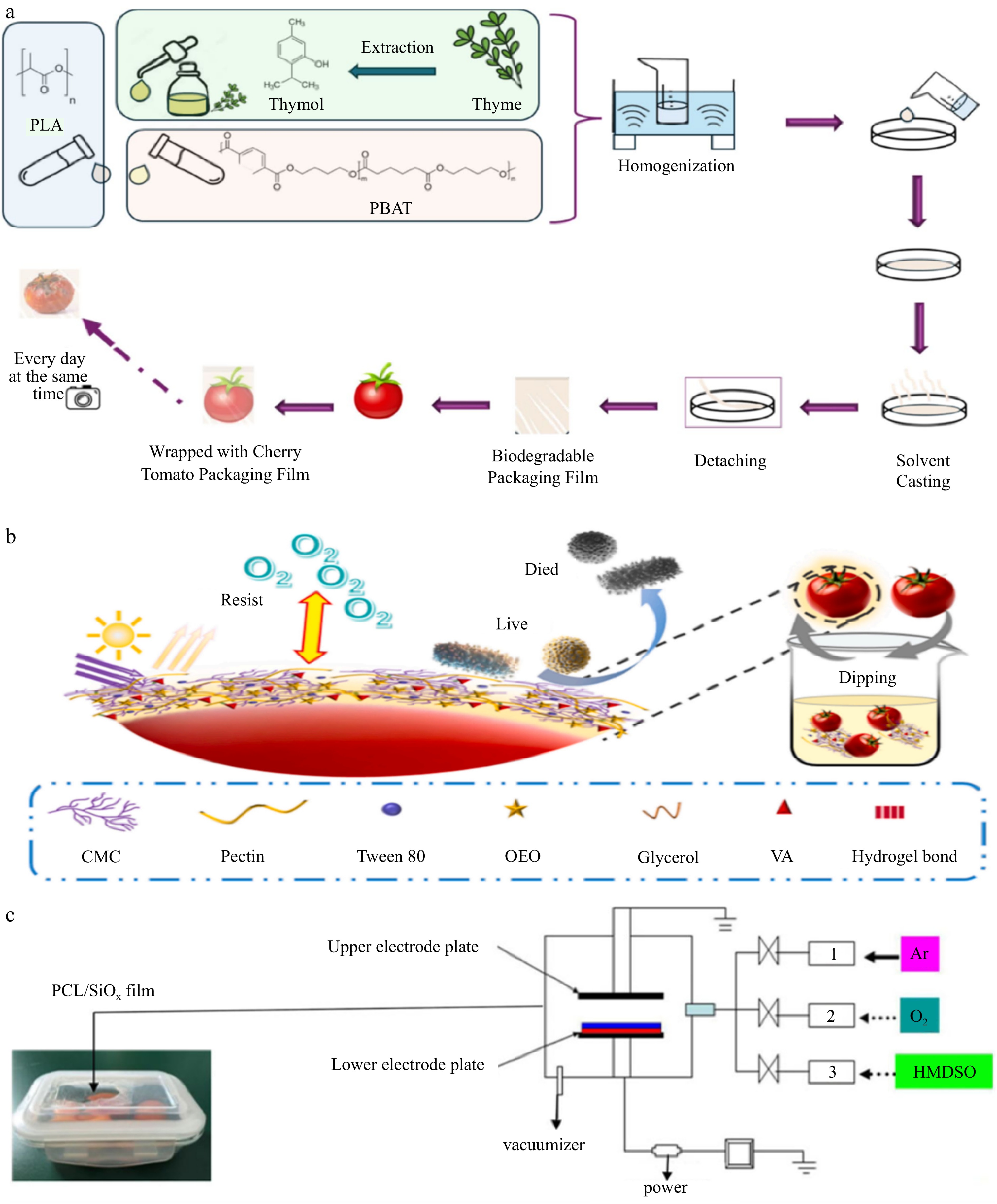
Figure 3.
Schematic illustration of different fabrication techniques used for biodegradable packaging films for preserving tomato. (a) Solvent casting method, using PLA and PBAT (Polybutylene adipate co-terephthalate) incorporated with thyme oil[28]; (b) dipping/coating method for CMC/pectin film incorporated with Oregano essential oil (OEO), illustrating radical scavenging activity and bacterial inhibition[29]; and (c) Plasma enhanced chemical vapor deposition (PECVD) for PCL/SiOx-coated film (PCL/SiOx, poly(e-caprolactone)/silicon oxide; Ar, Argon; O2, Oxygen; HMDSO, hexamethyldisiloxane)[30].
-
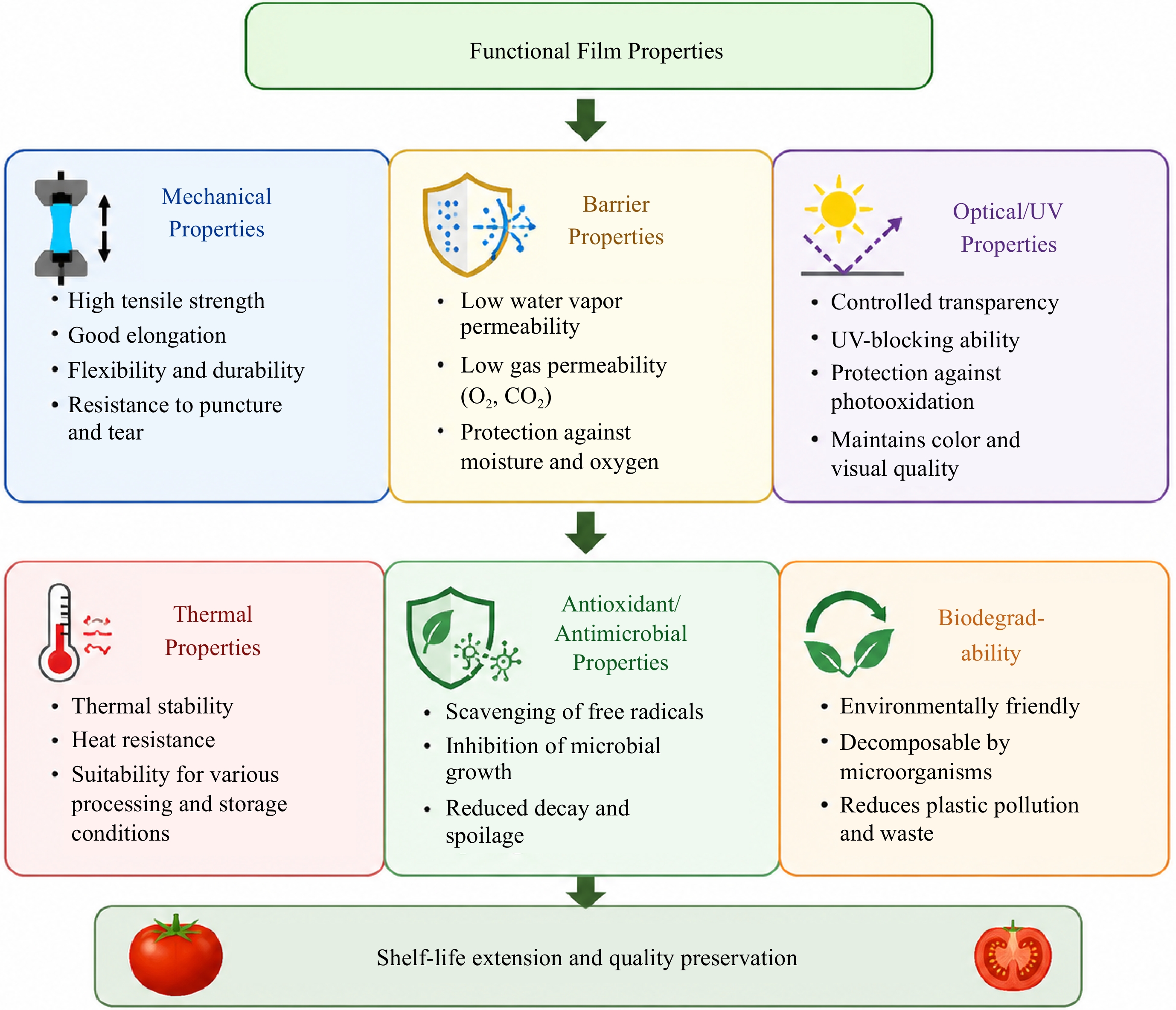
Figure 4.
Major functional properties of bio-based films used in tomato packaging and their roles in preserving shelf life.
-
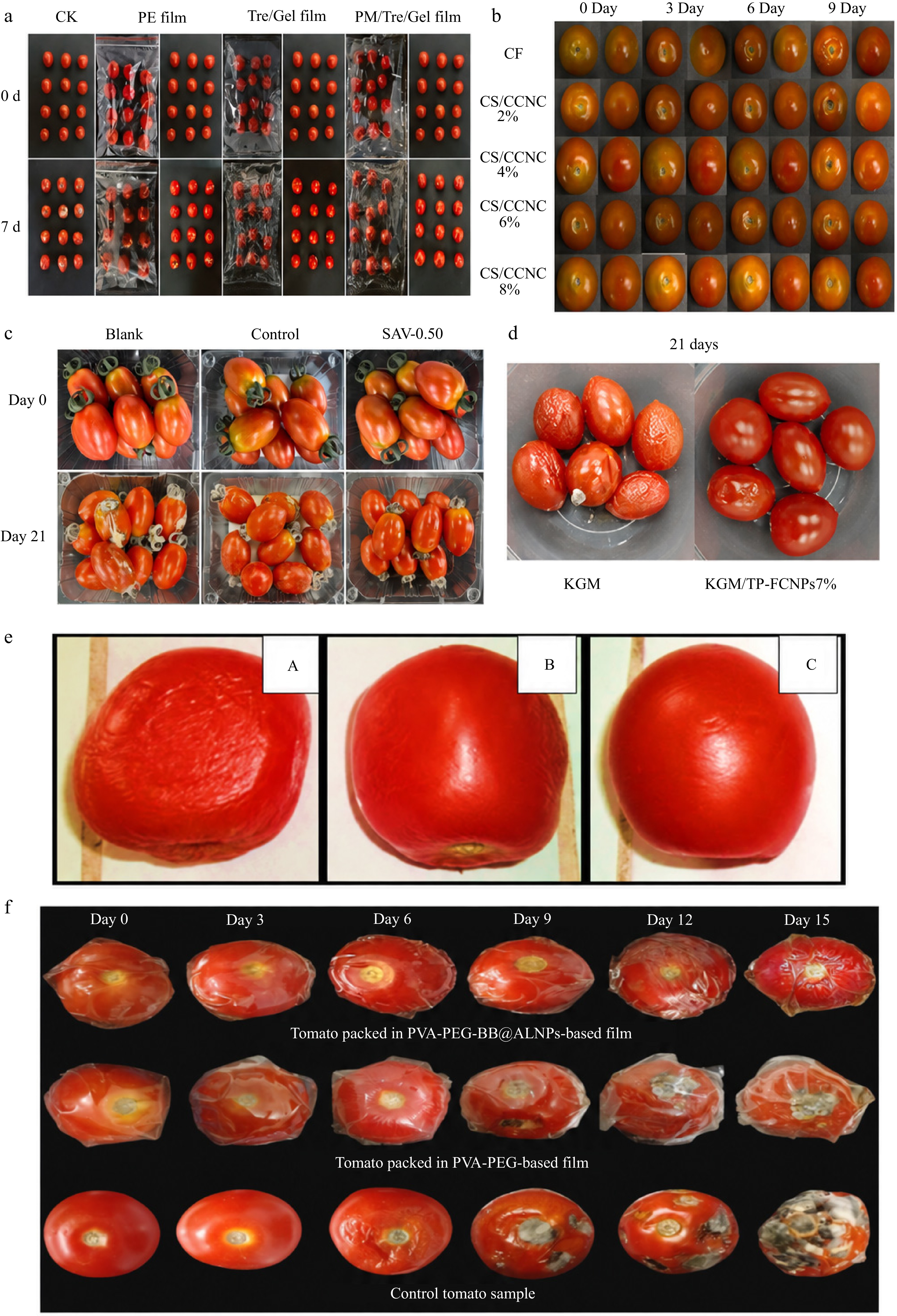
Figure 5.
Representative visual findings from different studies demonstrating the effect of bioactive and active packaging systems on extending the shelf life of tomato. (a) The effect of gelatin-based film incorporated with PM and 15% Tre preserved cherry tomatoes well[51]. (b) Cherry tomatoes coated with cornstarch-based film infused with 8% cellulosic nanocrystals gave the best results[54]. (c) The preservation of cherry tomatoes using 0.5% of vanillin incorporated into Soy protein alginate vanillin (SAV) foam[48]. (d) Visual appearance of tomatoes after 21 days of storage, comparing between Konjac Glucomannan (KGM) film and composite KGM film incorporated with 7% Tea polyphenol fucoidan chitosan nanoparticle (TP-FCNP)[35]. (e) Visual representation of tomatoes after 10 days of storage at 25 °C: [A] Uncoated tomatoes; [B] tomatoes coated with candelilla wax, and [C] tomatoes coated with candelilla wax biofunctionalized with Flourensia cernua extract[36]; (f) Visual assessment of tomatoes during 15 days of storage at room temperature, compared with the control, PVA–polyethylene glycol (PEG) films, and PVA–PEG films incorporated with 15% blueberry Anthocyanin loaded lignin nanoparticles (A-LNPs)[56].
-
Packaging type Reported advantages Challenges/limitation References Conventional plastic (perforated LDPE bags, PP, PVA wraps) Maintained moisture and reduced physiological weight loss; creates a modified atmosphere that delays ripening; reduced decay; highest marketability; transparent for visual quality. Nonbiodegradable; risk of condensation and microbial decay (especially with nonperforated films); microplastic pollution; limited active preservation. [19,23] Rigid plastic trays [PET, PP, high-density polyethylene (HDPE), EPS] Protection from mechanical damage during transit; improved marketability; suitable for retail display. Higher material use; limited gas exchange if not perforated, leading to decay; recycling-related challenges. [18] Paperboard/carton packaging Allows ventilation; reduces condensation; biodegradable; used for bulk transport. Poor moisture barrier, leading to higher weight loss; less protection against bruising; shorter shelf life than plastic. [18−19] Glass containers (used for processed tomatoes) Excellent barrier to gases and moisture; preserve color, flavor, and nutritional quality of peeled tomatoes and tomato puree; chemically inert. High weight leading to higher transit emissions; energy-intensive production; breakage risk. [24] Carton-based containers/stand up pouches (used for processed tomatoes) Reduce global warming; lightweight and
transport-efficient.Multilayered structure complicates recycling; heat resistance is limited. [24] Biodegradable polymer films (polylactic acid, starch-based, etc.) Environmentally friendly; appropriate for short-term storage; can regulate respiration. Moisture sensitive; less mechanical strength; when used without any active ingredient, these polymeric matrices themselves become susceptible to microbial growth; higher cost. [7,24] Novel/active bio-based (polymers like CS, starch, etc., alongside actives like antimicrobials, antioxidants, etc.) Biodegradable; compostable; carrying active agents (antimicrobials, antioxidants); inhibit microbial growth; reduce oxidative damage; delay ripening and decay; reduce post-harvest losses for fresh tomatoes. Lower mechanical strength; regulatory and cost constraints; shelf life varies by material; limited commercial availability [25−26] MAP using polymeric films such as LDPE, PP, PVC, and Ethylene vinyl acetate (EVA) Regulates oxygen and carbon dioxide levels; decreases respiration and ethylene production; lowers physiological weight loss; minimizes decay; delays ripening and senescence; improves firmness and colour retention. Requires careful balance of gases; risk of anaerobic respiration increases if oxygen level gets too low; effectiveness depends on film's permeability, temperature, and the tomatoes' maturity stage; higher initial cost. [7,18] Table 1.
Packaging materials used for fresh and processed tomatoes and their reported effects on quality, shelf life, and sustainability.
-
Base material Fabrication process Active Ingredients Key observations References Pichia membranifaciens/trehalose/gelatin- based film Solution casting Pichia membranifaciens killer toxin (PMKT) 72.41% of fungal infections from Botrytis cinerea were prevented.
Tomatoes stayed fresh longer with lowered weight loss, and maintained firmness.
The film lowered PPO (polyphenol oxidase) activity and increased POD (peroxide) activity[31] Ginger starch (GS) and feather keratin (FK) Solution casting Chia oil Extended shelf life (21 days), delayed ripening, preserved nutrients, and reduced enzymatic spoilage. [32] SAN (from seaweed) Solution castingg Vanillin (VAN) Tomatoes stayed fresh for 21 days, preserving color, texture, Total soluble solids (TSS), and pH and reducing microbial contamination, especially that of Staphylococcus aureus, Escherichia coli, and Botrytis cinerea [33] Poly(3-hydroxybutyrate) (PHB) Solution casting Grapeseed oil and MgO nanoparticles No signs of wrinkling, microbial spoilage or juice leakage until day 21 at ambient temperature, with minimal weight loss, stable titratable acidity and higher firmness [34] Konjac glucomannan (KGM) film Solution casting Fucoidan–CS nanoparticles (NPs) encapsulating tea polyphenols fucoidan chitosan nano particle (TP-FCNPs) Mass loss significantly reduced; better retention of firmness; microbial growth inhibited effectively; reduced respiration and ripening rate; oxidative degradation and rot rate reduced but shelf life extended to 21 days. [35] Candelilla wax + whey protein + glycerol infused with Fluorensia cernua (tarbush) extract Solution casting 7-O-rutinoside and 6-C-glucosyl-8-C-arabinosyl apigenin (from tarbush extracts Reduced weight loss and firmness loss in tomatoes during 10 days of storage at 25 °C.
Pathogenic fungi were inhibited.[36] Keratin–starch composite film Solution casting Avocado pear peel polyphenolic extract Conserved organoleptic and nutritional properties of tomatoes.
Enhanced antimicrobial properties[37] Triticale flour film Solution casting KMnO4 Delayed ripening through continued oxidation of ethylene by KMnO4 during 20 days of storage CMC Solution Casting Blackberry anthocyanin-rich extract Increased shelf life tomatoes for 15 days of storage, maintained constant weight and firmness [31,38] Cardboard boxes Spray coating Carvacrol, oregano, and cinnamon essential oils encapsulated in beta-cyclodextrin Decay incidences lowered, sensory properties remained intact; shelf life enhanced up to 22 days at 8 °C [38] Gelatin Solution casting Oil-in-water lavender essential oil nanoemulsions (LEONs) Reduced weight loss; delayed degradation of titratable acids and phenolic components; inhibited microbial growth (Staphylococcus aureus, Listeria monocytogenes, and E. coli). [39] Bilayer film of CS and alginate Solution casting Ascorbic acid, citric acid, and phytic acid Reduced oxidative damage in tomatoes. [40] Polyvinyl alcohol (PVA) Solution casting OEO Inhibited growth of microbes, retaining sensory properties [41] Solution casting Lactiplantibacillus plantarum A6 (probiotic strain) Inhibited Fusarium sp. and Rhizopus stolonifera
Reduced weight loss; firmness maintained; respiration rate slowed.[42] CS Solution casting Copper oxide NPs Inhibited Alternaria alternata and other tomato pathogens; prevented oxidative degradation of nutrients; maintained tomato quality parameters; delayed ripening. [43] Methylcellulose film Solution casting Gallic acid + ZnO NPs Shelf life of tomatoes extended up to 27 days under ambient conditions; lower microbial load; reduced weight loss; firmness and ascorbic acid maintained; slowed ripening. [34] CS Dip coating (immersion coating) Aloe vera gel Preserved firmness and color of tomatoes; maintained ascorbic acid content and acidity better than any other treatment; reduced weight loss by ~64% and microbial load by ~55% compared with uncoated tomatoes (control); extended freshness up to 12 days at 8 °C. [33] CS Solution casting with
in situ covalent crosslinkingTannin from black wattle extract Delayed lipid oxidation and color degradation; inhibited spoilage microbes (E.coli and S.aureus); enhanced ultraviolet (UV)-blocking ability, thus preventing photo-oxidation, interaction with CS, improving the film's strength and water resistance and prolonging tomato shelf life. [44] Soy protein isolate
(SPI)Solution casting Zanthoxylum bungeanum leaf extract (ZBLE) Lowered weight loss, decay rate, and respiration rate; firmness and Vitamin C were maintained longer; remained fresher and visually better than control samples ones or coated with pure SPI. [45] Zein + Polyethylene oxide (PEO) Coaxial electrospinning Resveratrol + AgNPs Reduced microbial load especially against E. coli and S. aureus; less weight/quality loss; extended shelf life up to 12 days. [46] CS paper Dip coating
(immersion coating)Bacteriocin-synthesized Ag NPs Maintained firmness and color for 10 days at 18–20 °C; inhibited spoilage bacteria, especially Bacillus cereus and S. aureus. [47] CMC and pectin Aqueous solution casting method OEO and Vanillic acid (VA) Extension of the shelf life of cherry tomatoes up to 19 days under ambient storage conditions; delayed softening and senescence of tomatoes; strong antimicrobial effect, particularly against E. coli and S. aureus; lowered oxidative reactions; limited light-induced quality deterioration. [48] Polypropylene (PP) Melt blending + twin screw extrusion + extrusion film forming Octadecane (OD) and ZL Higher TSS value and firmness; better color stability; delayed respiration and ripening. [49] Galactoglucomannan (GGM) Aqueous solution casting method Bioactive mucilage extract (BME) Decreased weight loss over 20 days; TSS declined more slowly than in uncoated tomatoes; more firmness was retained; reduced decay (~3.33% coated tomatoes deteriorated after 20 days, whereas ~96.67% of uncoated tomatoes deteriorated); overall highest acceptability. [50] Table 2.
Overview of base material, fabrication technique, active ingredients, and functional performance of active packaging films for tomatoes.
-
Film/coating Shelf life extension Major quality improvements Primary preservation mechanism References CS + aloe vera coating 12 days Firmness, color, acidity, reduced weight loss Moisture barrier + antimicrobial activity [25] CMC/pectin film + oregano EO + vanillic acid 19 days Delayed senescence, improved antimicrobial activity Antioxidant + antimicrobial [29] Guar gum matrix film + Butea monosperma 20 days Reduced decay, maintained firmness, lower weight loss Antioxidant barrier [50] Sodium alginate film + VAN 21 days Color, texture, TSS, microbial stability Antimicrobial + antioxidant [33] Methylcellulose + gallic acid + ZnO 27 days Reduced microbial load and ascorbic acid loss; delayed ripening, Antioxidant + antimicrobial + UV barrier [57] PCL/SiOx film 30 days Reduced respiration and oxidative deterioration Modified atmosphere/barrier properties [30] PHB + grapeseed oil + MgO nanoparticles 21 days Firmness, acidity, reduced weight loss Moisture barrier + antimicrobial [34] Ginger starch–keratin + chia oil 21 days Delayed ripening, nutrient preservation Hydrophobic barrier + antioxidant [52] Dragon fruit mucilage + UV-C 21 days Vitamin C, polyphenols, color,
firmnessAntioxidant + microbial control [68] Table 3.
Effects of various bio-based films and coatings on extending the shelf life and preserving the quality of tomatoes.
Figures
(5)
Tables
(3)