-
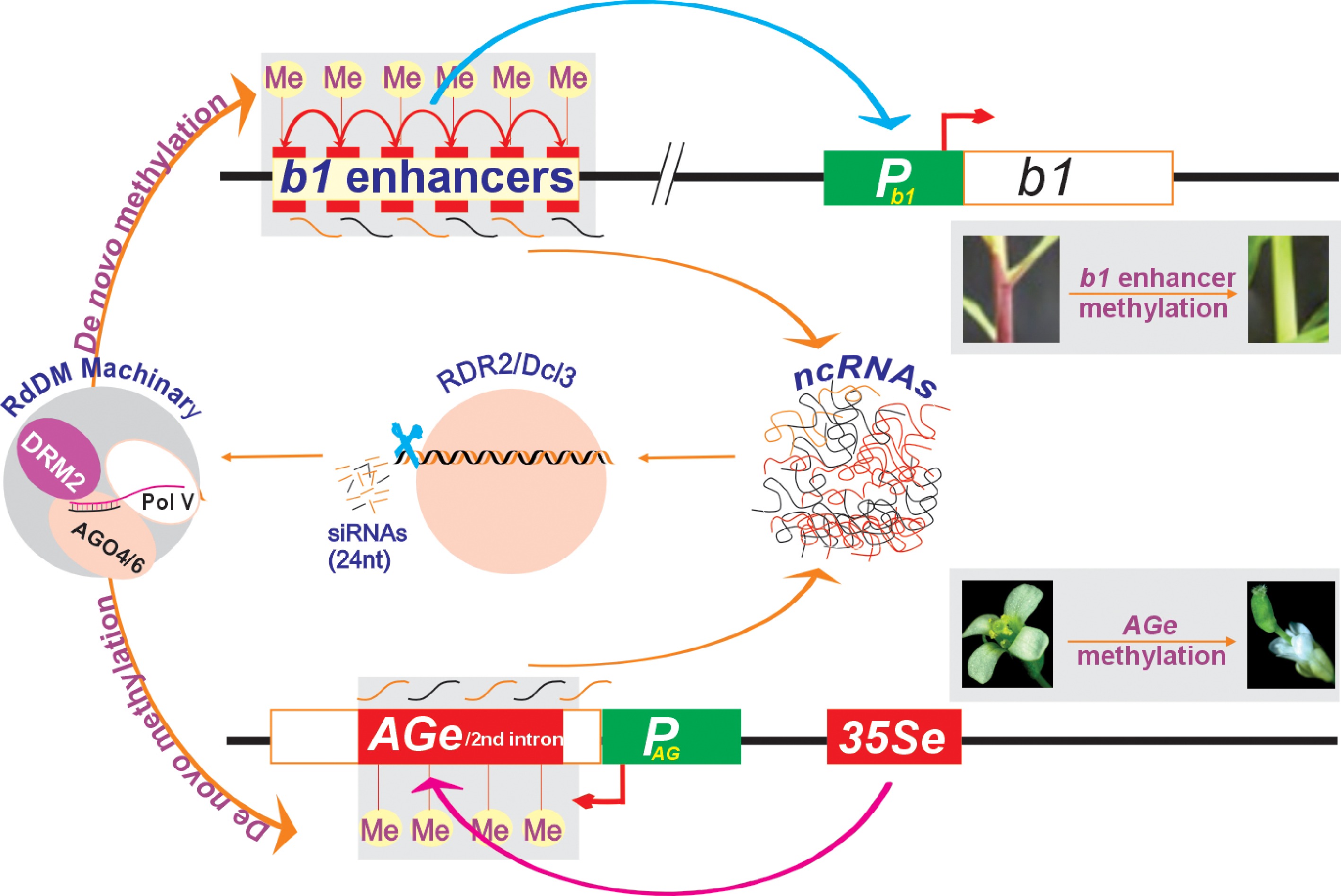
Figure 1.
The proposed CRE–CRE interaction-driven de novo methylation mechanism involves either the insertion of the 35S enhancer (35Se) near the AGAMOUS (AG) locus in A. thaliana[17] or the spontaneous duplication of six 841-bp enhancer copies approximately 100 kilobases downstream of the booster 1 (b1) locus in maize (Zea mays), which results in a dark red sheath phenotype[37,40−43]. In A. thaliana, 35Se interacts with the distal AG enhancer (AGe), while in maize, the duplicated b1 enhancers interact with each other. These interactions, through mechanisms that remain unclear, initiate ectopic transcription of ncRNAs. These RNAs are subsequently processed via the 24-nucleotide siRNA biogenesis pathway. The RDR2–DCL3 complex converts single-stranded ncRNAs into double-stranded RNAs, which are then cleaved into 24-nucleotide siRNAs. These siRNAs promote RNA-directed DNA methylation (RdDM), resulting in de novo methylation at the AGe and tandem b1 enhancers. This methylation event silences transcription of AG and b1, leading to mutant flowers in A. thaliana and a shift from dark red to green coloration in maize stems.
Figures
(1)
Tables
(0)