-
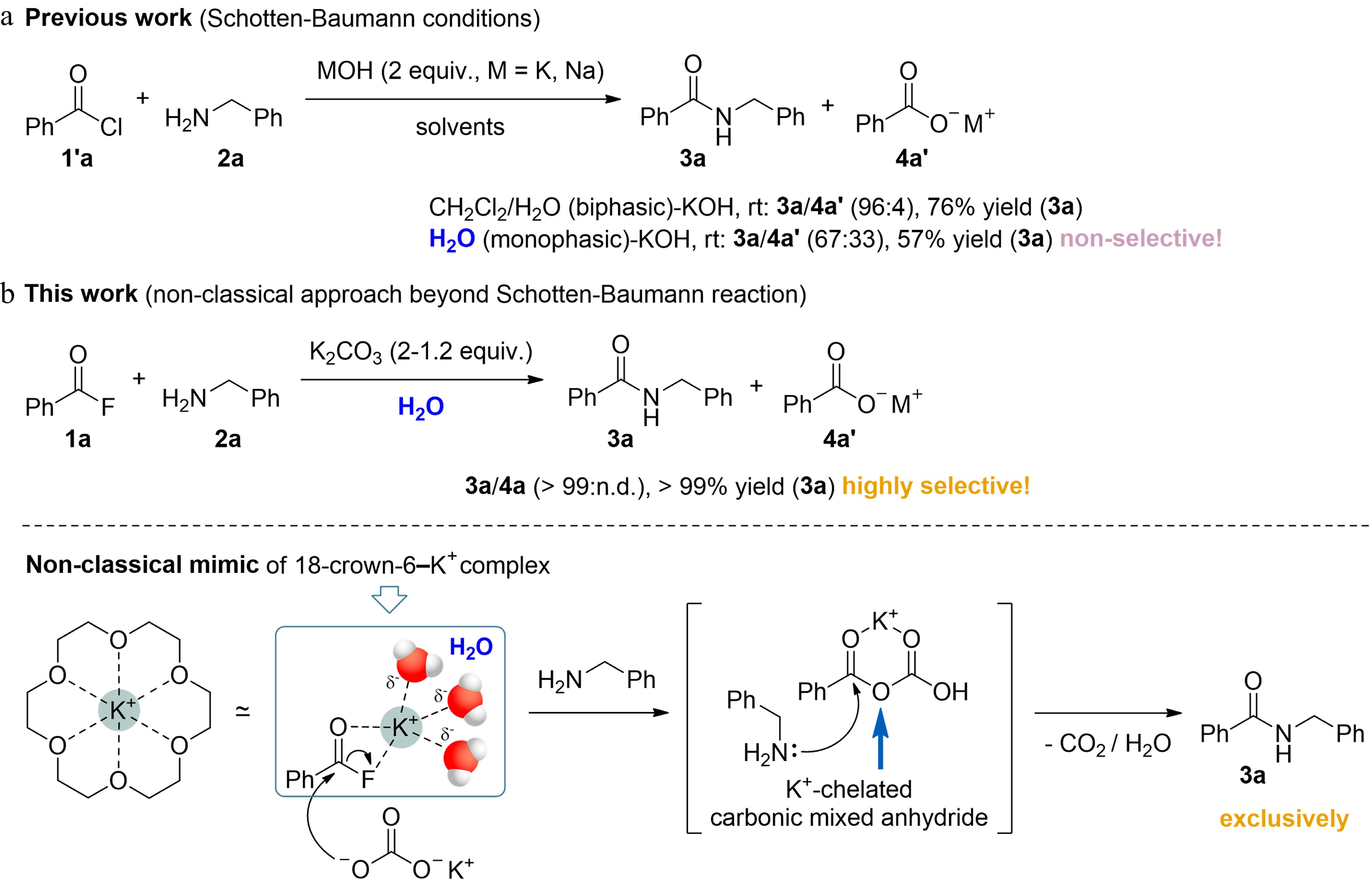
Figure 1.
(a) Classical Schotten–Baumann reaction employing a typical biphasic system (CH2Cl2/H2O, KOH). (b) Beyond Schotten–Baumann chemistry: a non-classical 18-crown-6–K+ mimic converts carbonate from a simple acid scavenger into a nucleophilic acyl-transfer partner, generating a hydrolytically stable carbonic mixed anhydride that redirects acyl-transfer reactivity toward productive N-functionalization while suppressing hydrolytic side reactions.
-
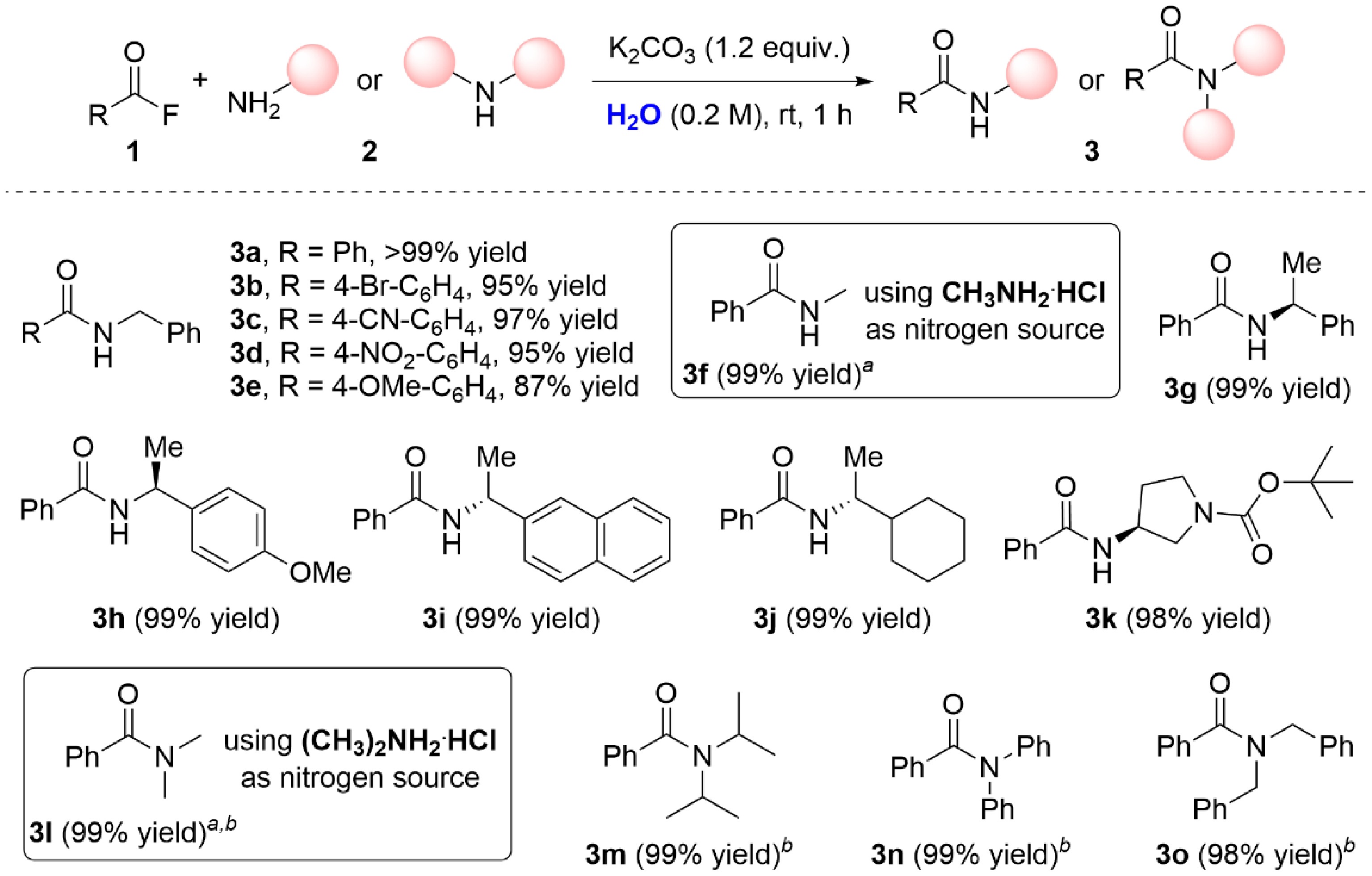
Figure 2.
Reaction scope and general conditions: acyl fluoride 1 (1 equiv.), amine 2 (1 mmol), K2CO3 (1.2 equiv.), H2O (0.2 M, 5 mL), rt, 1 h. Yields refer to isolated yields. a Using 2.2 equiv. of K2CO3. b Reaction time is 6 h.
-
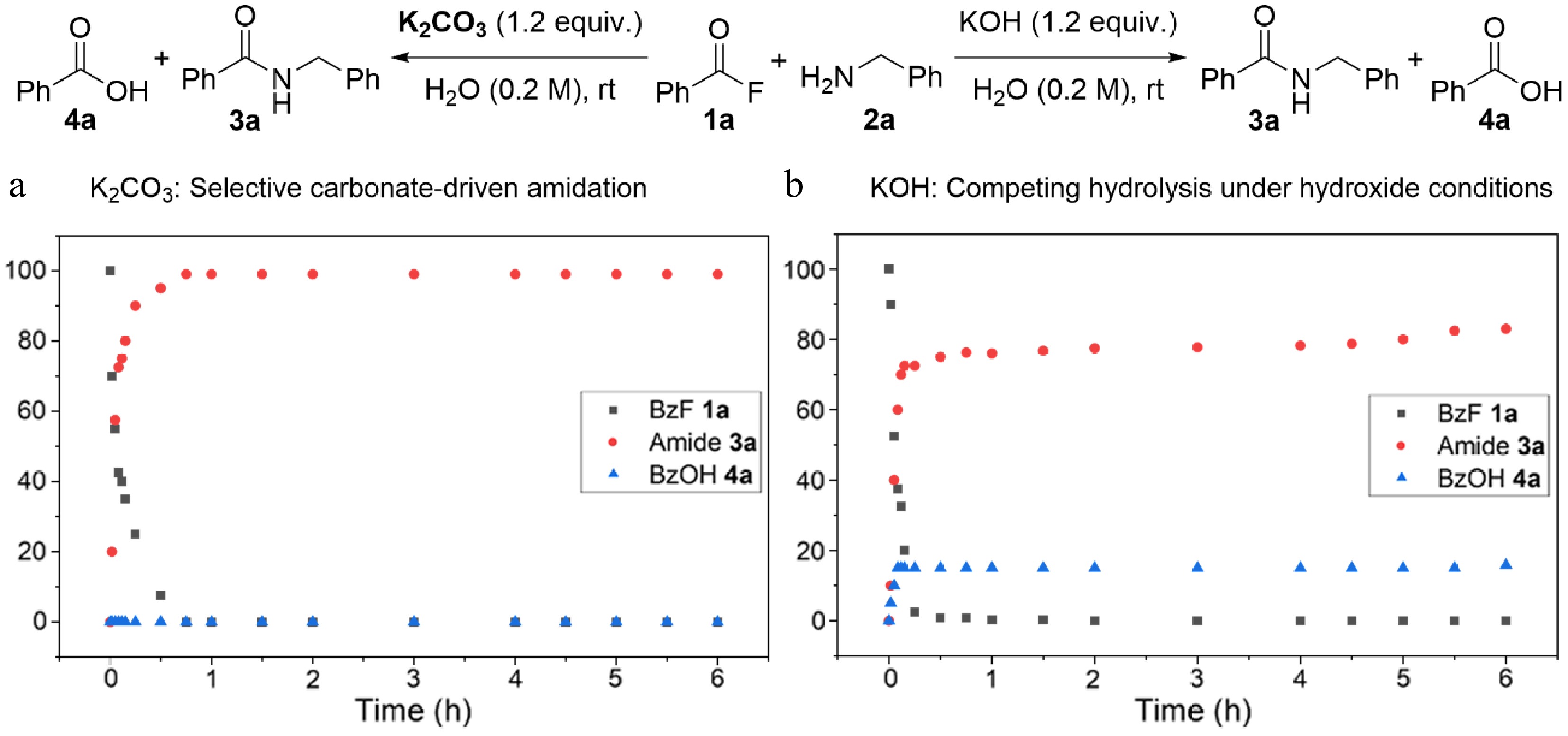
Figure 3.
Time-course profiles for the aqueous amidation of benzoyl fluoride 1a with benzylamine 2a using (a) K2CO3 or (b) KOH. The K2CO3-mediated reaction rapidly affords amide 3a in near-quantitative yield within 0.75–1 h without detectable formation of benzoic acid 4a, whereas the KOH-mediated reaction is accompanied by competing hydrolysis, leading to the accumulation of benzoic acid 4a and requiring approximately 2 h for complete conversion.
-
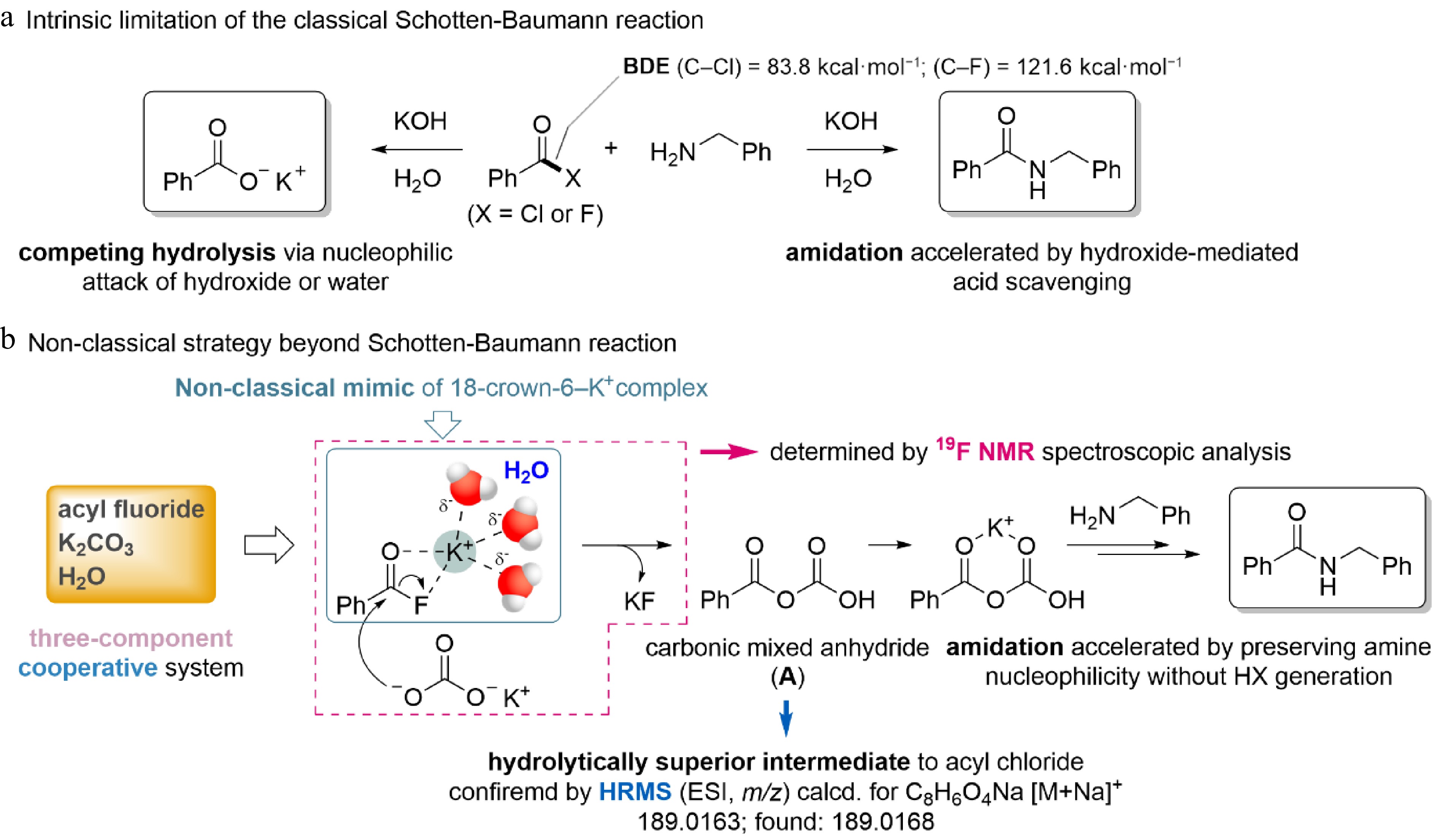
Figure 4.
Mechanistic distinction between the classical Schotten–Baumann reaction and the carbonate-mediated non-classical acyl-transfer pathway.
-
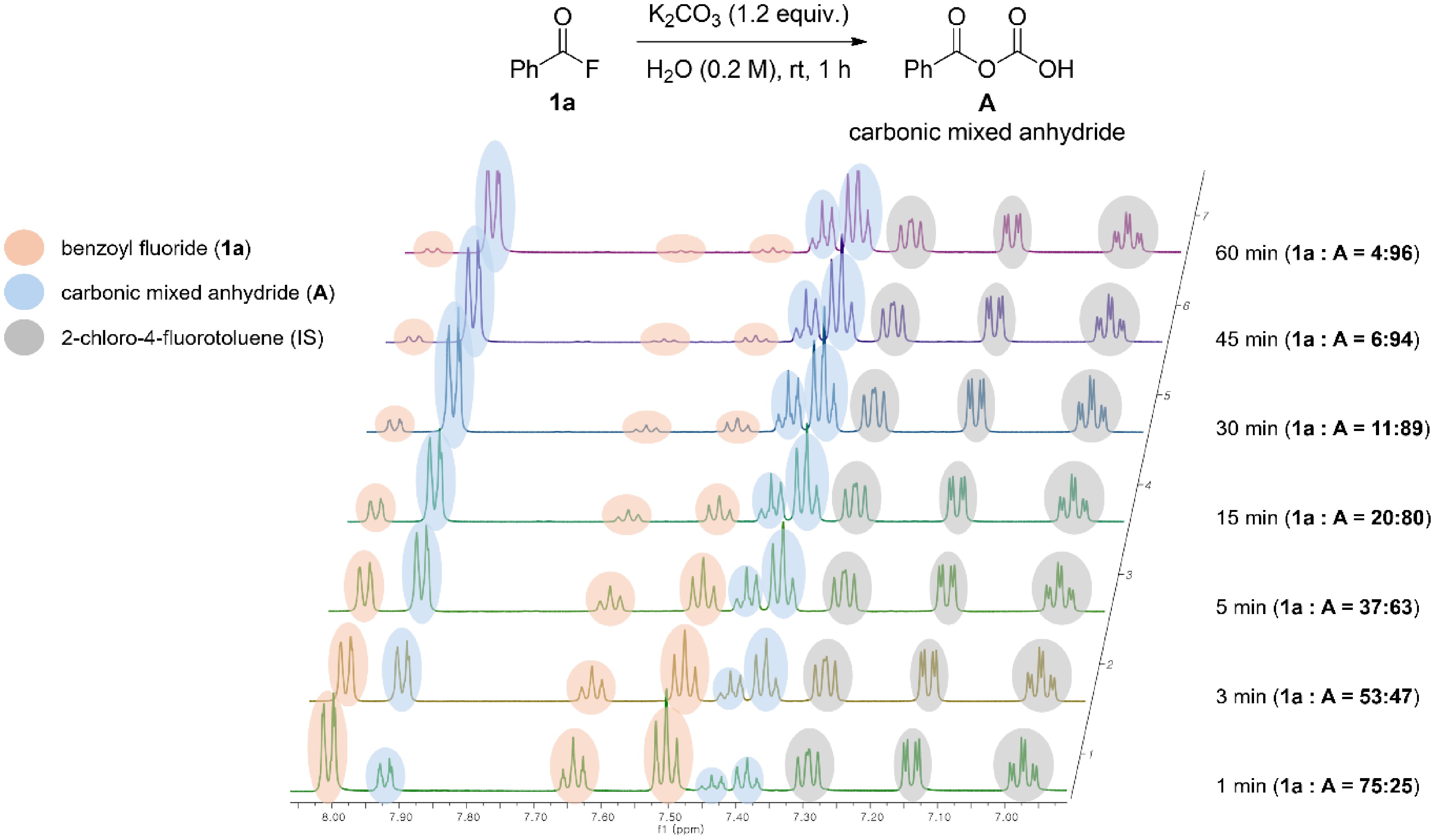
Figure 5.
1H NMR spectroscopic evidence for the formation of the carbonic mixed anhydride intermediate during the carbonate-mediated acyl-transfer reaction.
-
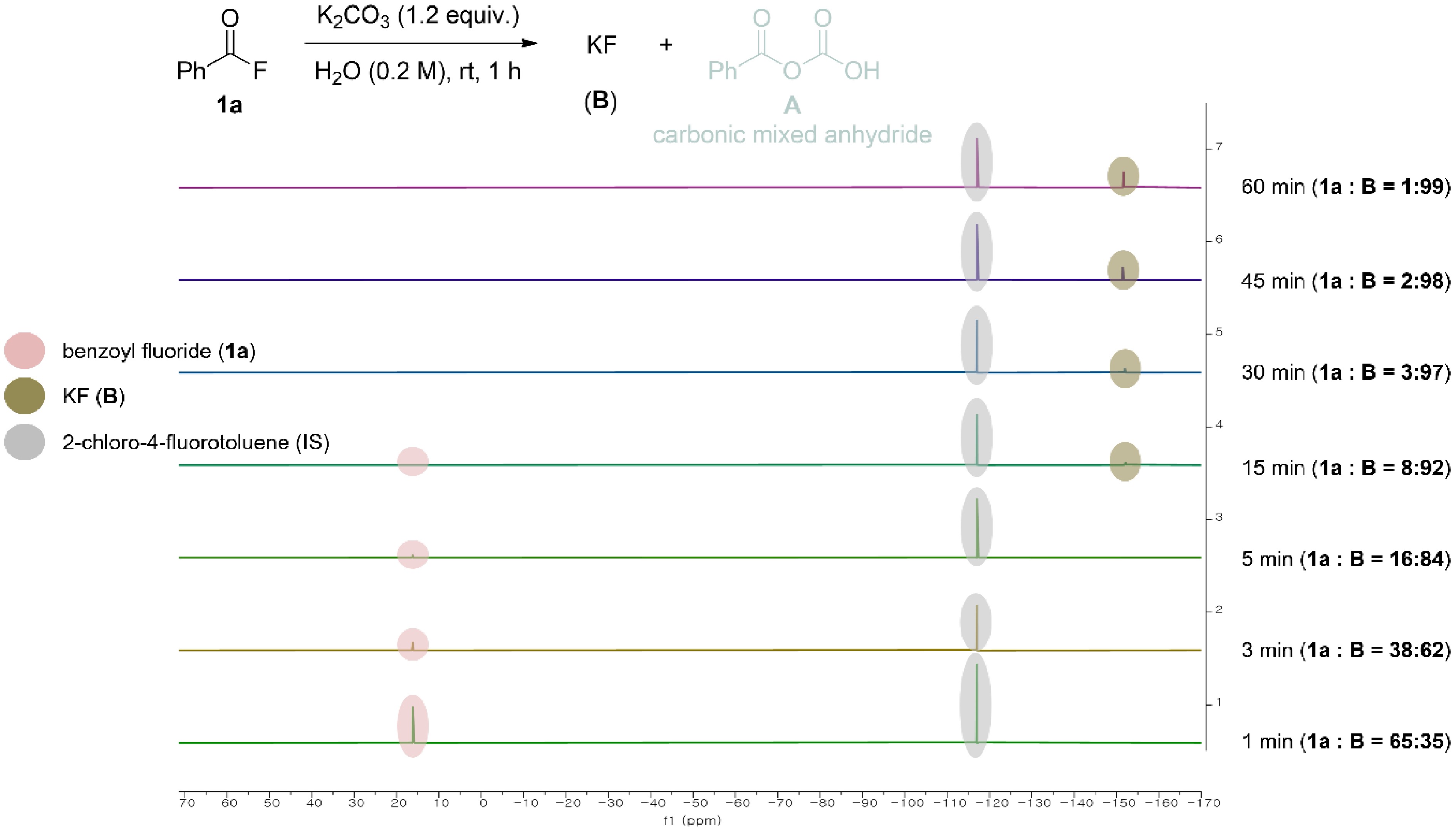
Figure 6.
19F NMR spectroscopic evidence for carbonate-mediated C–F bond cleavage through the concomitant consumption of acyl fluoride and formation of KF during the reaction.
-
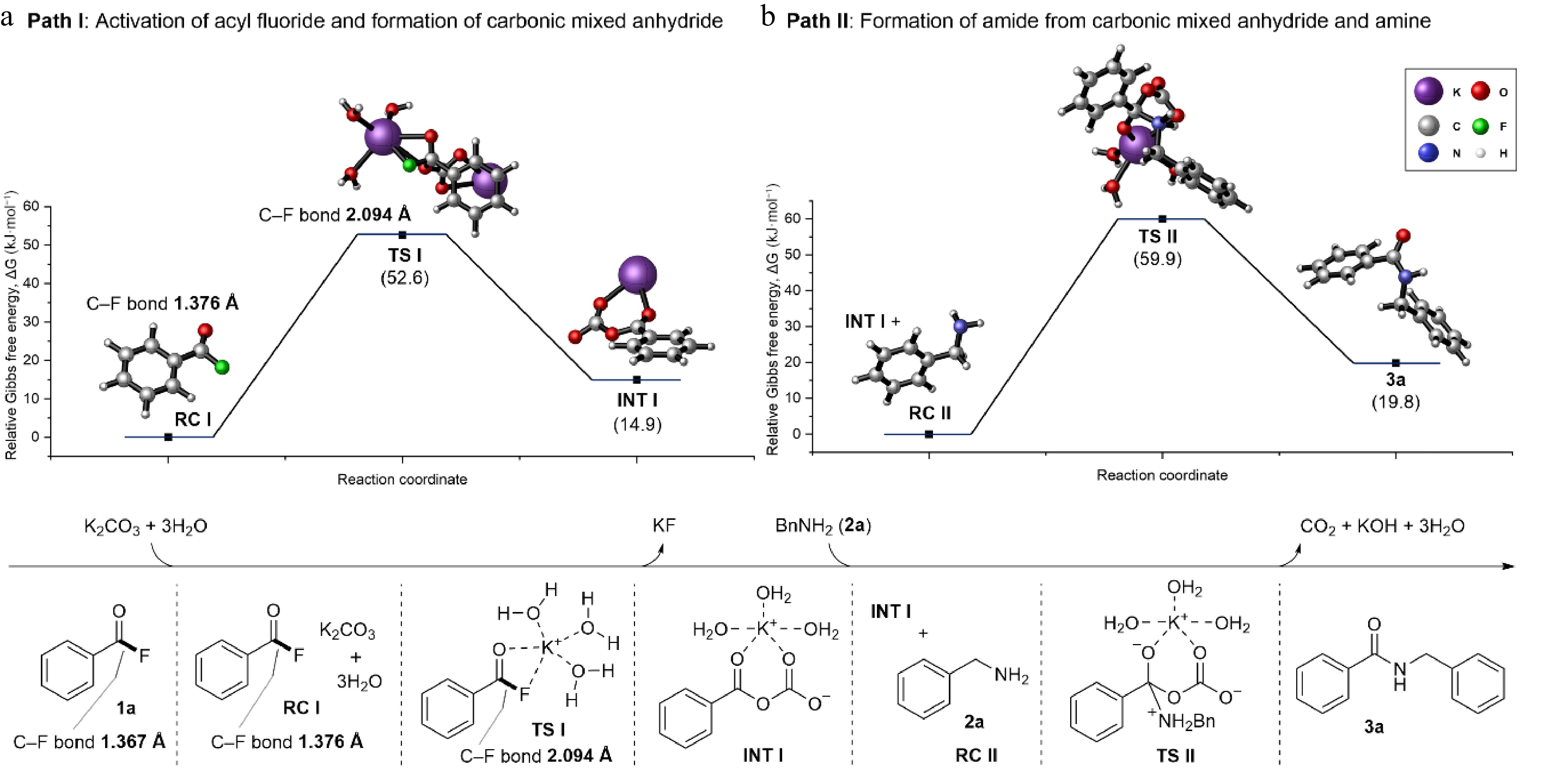
Figure 7.
DFT-calculated Gibbs free-energy profiles and representative optimized structures for the carbonate-mediated amidation of benzoyl fluoride. (a) Path I: carbonate-mediated activation of benzoyl fluoride within the non-classical 18-crown-6–K+ mimic incorporating three explicit water molecules, leading to C–F bond cleavage and formation of the K+–associated carbonic mixed anhydride. (b) Path II: amide formation via nucleophilic acyl substitution of the K+–associated carbonic mixed anhydride by benzylamine.
-
Entry Halide source Base (equiv.) Solvent Ratio of 3a : 4a Yield of 3a (%) 1 Cl (1′a) KOH (2.0) CH2Cl2/H2O (v/v = 1:1) 96:4 76 2 Cl (1′a) KOH (2.0) Et2O/H2O (v/v = 1:1) 90:10 61 3 Cl (1′a) KOH (2.0) H2O 67:33 57 4 F (1a) KOH (2.0) H2O 68:32 65 5c Cl (1′a) K2CO3 (2.0) H2O 80:20 72 6c F (1a) K2CO3 (2.0) H2O > 99:n.d. > 99d 7c F (1a) K2CO3 (1.2) H2O > 99:n.d. > 99d 8 F (1a) KOH (1.2) H2O 84:16 83 
a General conditions: benzoyl halide (1a or 1′a, 1 mmol), base (1.2–2 equiv.), solvent (0.2 M), rt, 6 h. b Yields and product ratios were determined by 1H NMR spectroscopy analysis using 1,3,5-trimethoxybenzene as an internal standard. c Reaction time: 1 h. d Isolated yield. Table 1.
Optimization of reaction conditionsa.
Figures
(7)
Tables
(1)