-
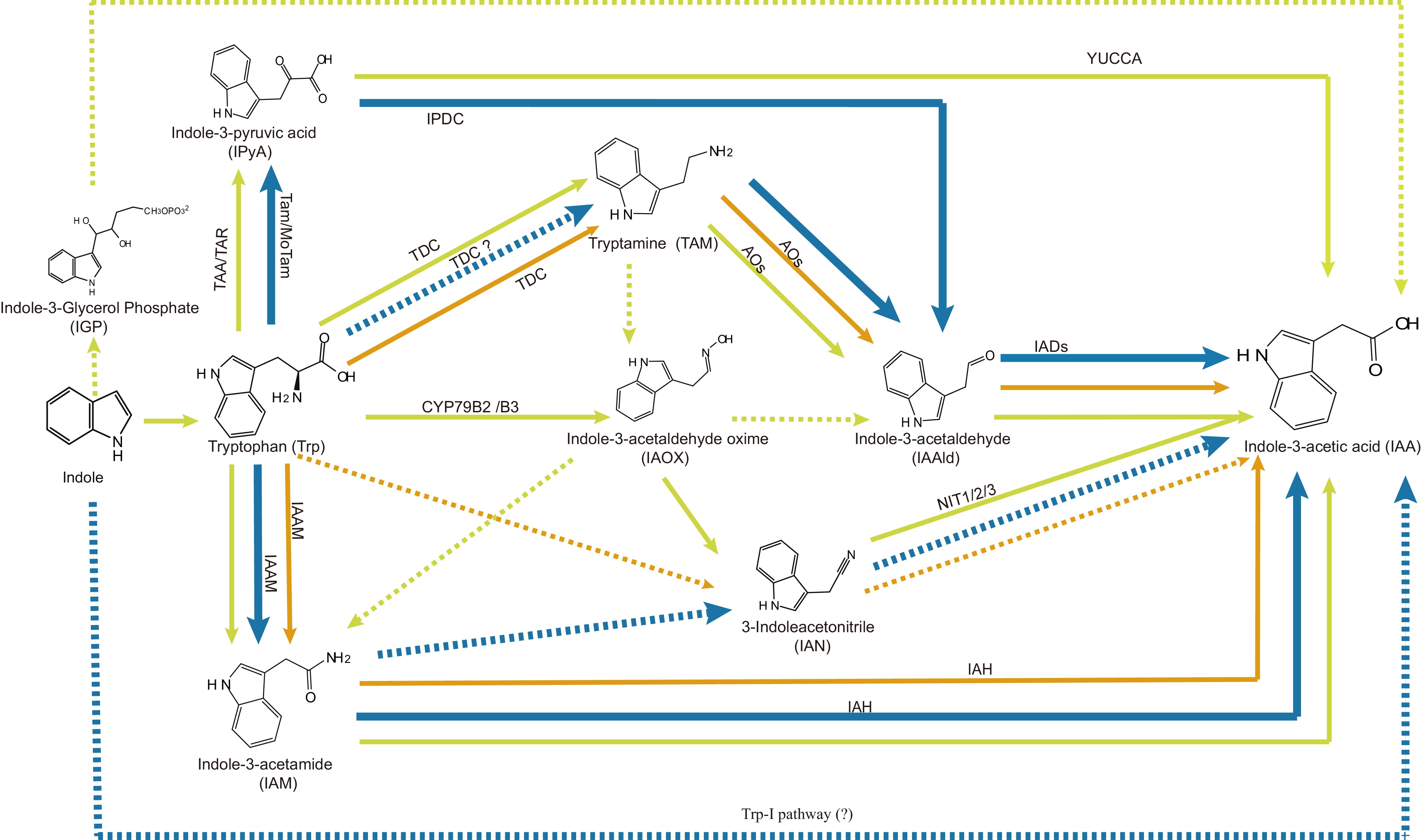
Figure 1.
IAA biosynthetic pathways in plants (green arrows), fungi (blue arrows), and bacteria (orange arrows). Solid and dashed arrows indicate experimentally validated pathways and hypothetical/unclarified routes (including the Trp-I route branching from indole/IGP), respectively; steps with unidentified enzymes are marked with question marks (?). Fungal-characterized enzymes include Tam/MoTam, IPDC, and IADs in the IPyA pathway, and IAAM and IAH in the IAM pathway. Abbreviations: Trp, tryptophan; IGP, indole-3-glycerol phosphate; IPyA, indole-3-pyruvic acid; IAM, indole-3-acetamide; TAM, tryptamine; IAOx, indole-3-acetaldoxime; IAN, indole-3-acetonitrile; IAAld, indole-3-acetaldehyde; TAA/TAR, tryptophan aminotransferase of Arabidopsis/related; TDC, tryptophan decarboxylase; AO, amine oxidase; IAAM, tryptophan-2-monooxygenase; IAH, indole-3-acetamide hydrolase; IPDC, indole-3-pyruvate decarboxylase; IADs, indole-3-acetaldehyde dehydrogenases; CYP79B2/B3, cytochrome P450 monooxygenases; NIT1–3, nitrilases; Tam/MoTam, fungal tryptophan aminotransferases; YUCCA, flavin monooxygenase.
-
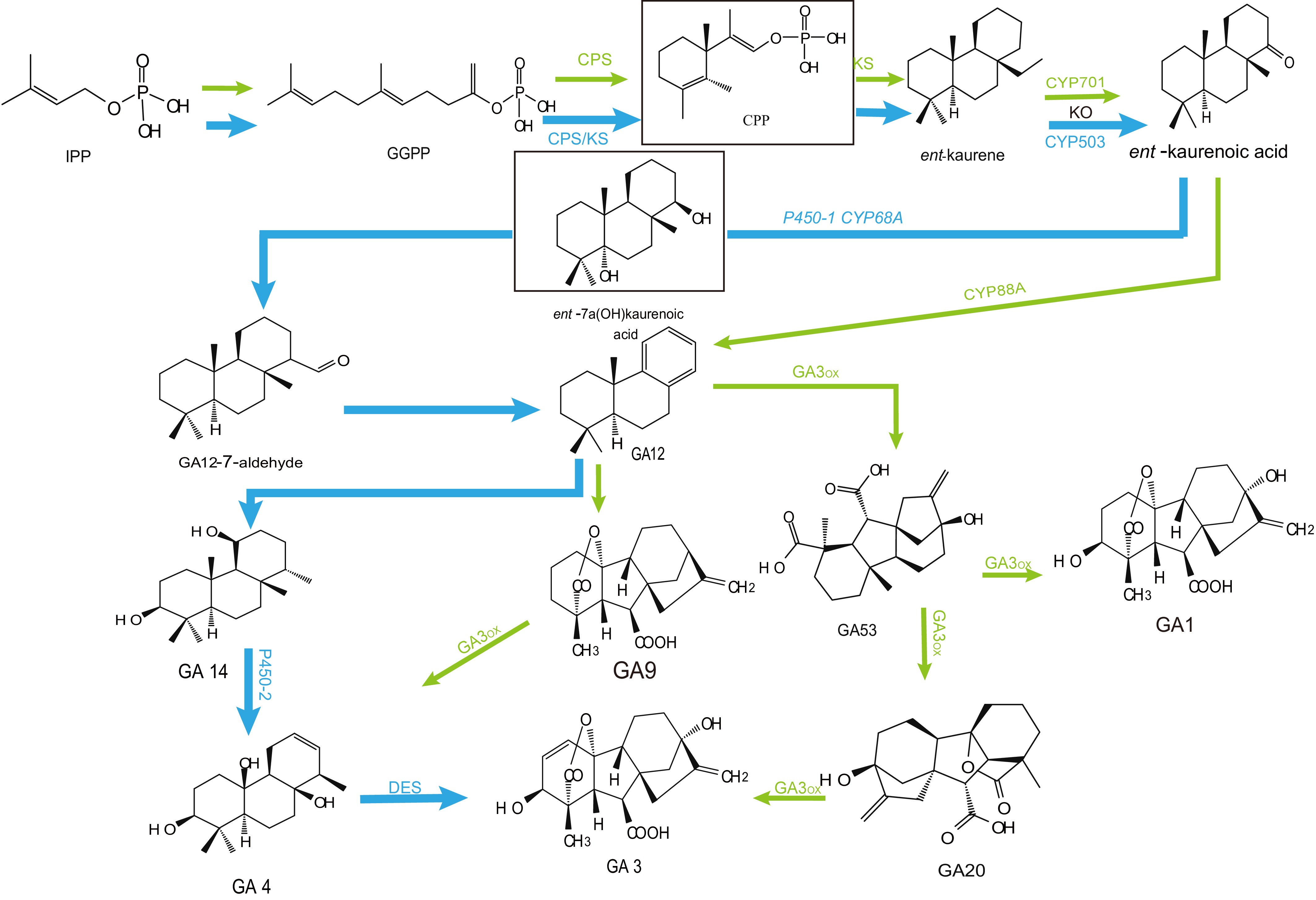
Figure 2.
An overview of GA biosynthesis, comparing pathways for higher plants (green arrows) and the fungus Fusarium fujikuroi (blue arrows). Fungi distinctively utilize a bifunctional CPS/KS enzyme for cyclization, whereas plants employ separate CPS and KS enzymes. Reaction steps for which the key enzymes have not been identified are shown without specific enzyme labels. Abbreviations: gibberellin (GA), isopentenyl diphosphate (IPP), dimethylallyl diphosphate (DMAPP), geranylgeranyl diphosphate (GGPP), ent-copalyl diphosphate synthase (CPS), ent-kaurene synthase (KS), gibberellin dehydrogenase (DES), cytochrome P450 (CYP701, CYP503, CYP68A, CYP88A), GA 13-oxidase (GA13ox).
-
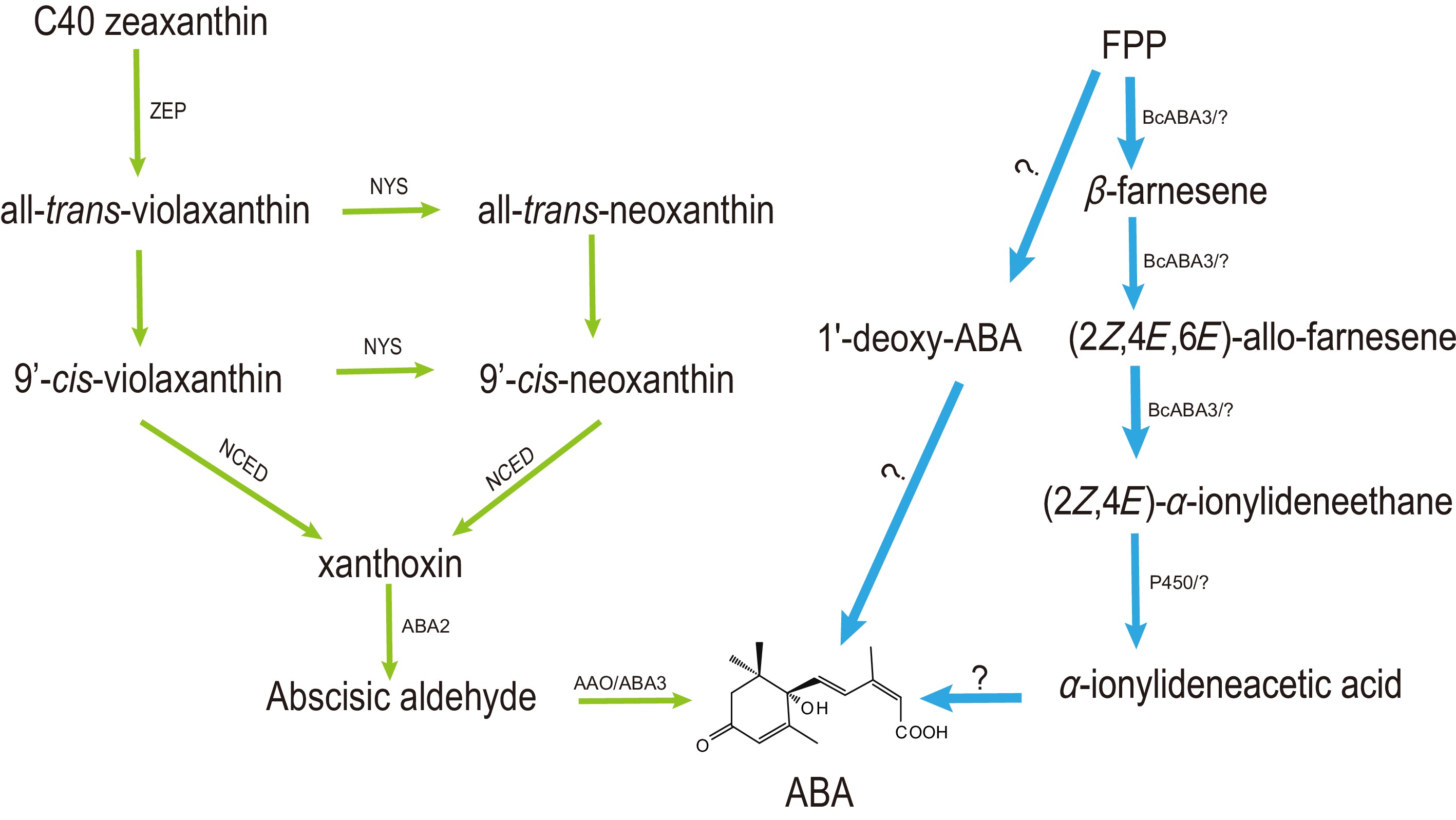
Figure 3.
Abscisic acid biosynthetic pathways in plants (green arrows) and fungi (blue arrows). Unlike the plant carotenoid cleavage pathway, fungi utilize a direct FPP-dependent sesquiterpene pathway governed by specific gene clusters. Reaction steps with unidentified key enzymes are marked with question marks (?). Abbreviations: FPP, farnesyl diphosphate; ABA, abscisic acid; 1'-deoxy-ABA, 1'-deoxy-abscisic acid; ZEP, zeaxanthin epoxidase; NSY, neoxanthin synthase; NCED, 9-cis-epoxycarotenoid dioxygenase; ABA2/3, short-chain alcohol dehydrogenase; AAO, abscisic aldehyde oxidase; BcABA3, sesquiterpene cyclase; P450, cytochrome P450 monooxygenase.
-
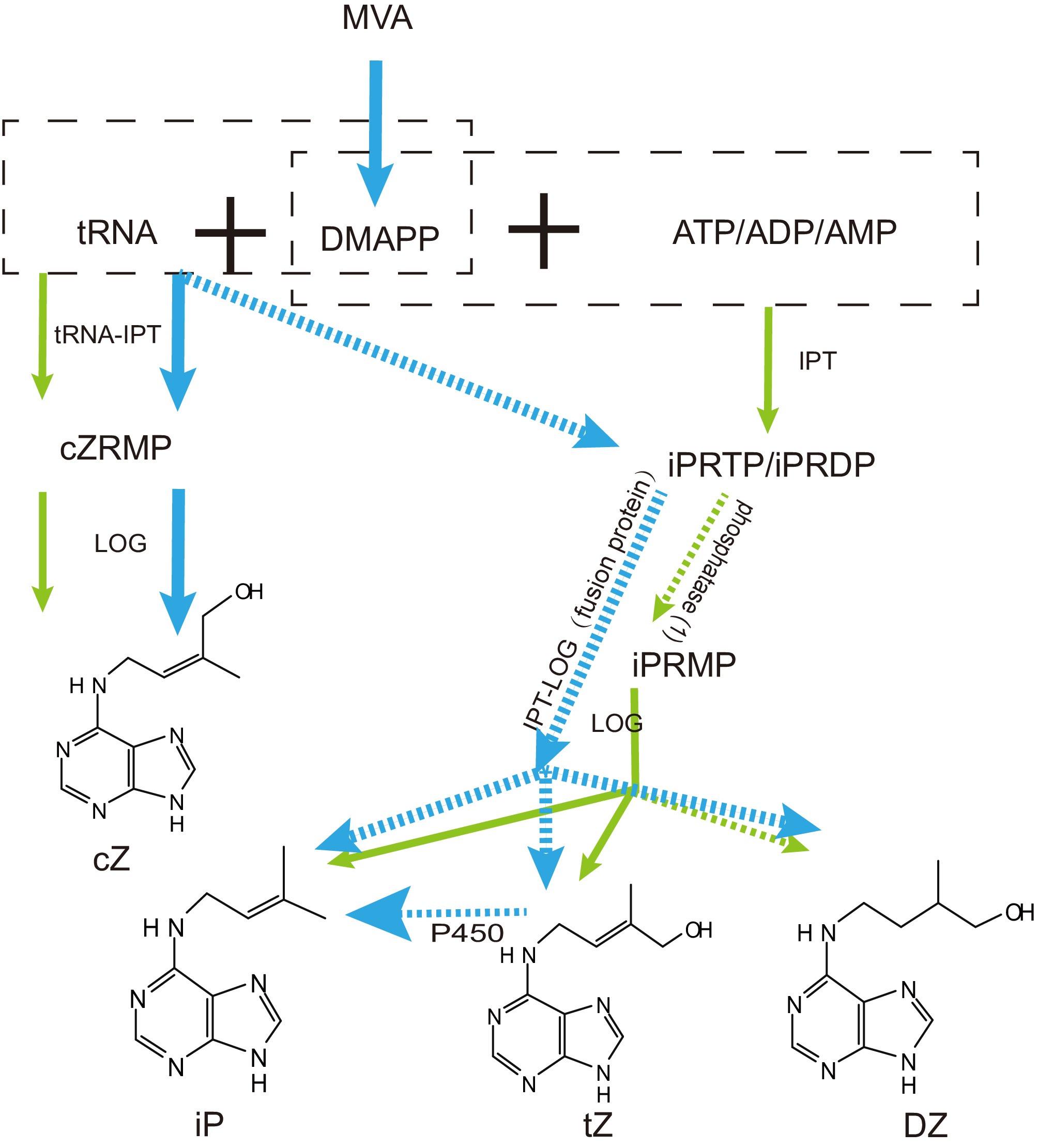
Figure 4.
Cytokinin biosynthetic pathways in plants (green arrows) and fungi (blue arrows). Unlike the decentralized plant pathways, fungi utilize highly compact biosynthetic gene clusters, characteristically employing a tRNA-dependent pathway and a bifunctional IPT-LOG fusion protein for efficient catalysis. Reaction steps with unidentified key enzymes are shown without specific labels. Abbreviations: mevalonate (MVA), dimethylallyl diphosphate (DMAPP), adenosine triphosphate (ATP), adenosine diphosphate (ADP), adenosine monophosphate (AMP), isopentenyltransferase (IPT), transfer ribonucleic acid (tRNA), tRNA-dependent isopentenyltransferase (tRNA-IPT), cis-zeatin riboside 5'-monophosphate (cZRMP), isopentenyladenosine 5'-monophosphate (iPRMP), isopentenyladenosine triphosphate (iPRTP), isopentenyladenosine diphosphate (iPRDP), cis-zeatin (cZ), isopentenyladenine (iP), trans-zeatin (tZ), dihydrozeatin (DZ), LONELY GUY phosphoribohydrolase (LOG), bifunctional IPT-LOG fusion protein (IPT-LOG), cytochrome P450 monooxygenase (P450).
-
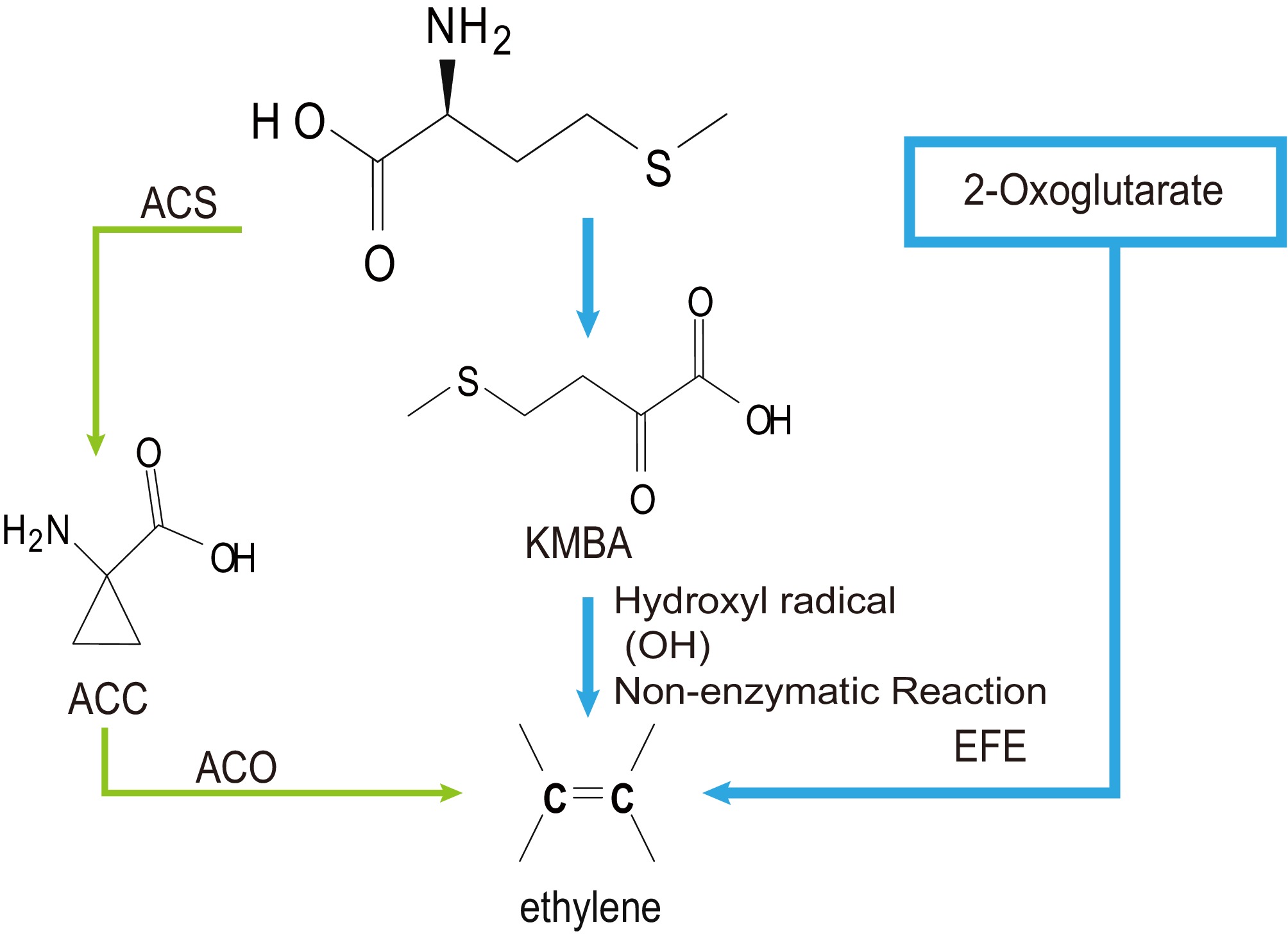
Figure 5.
Ethylene biosynthetic pathways in plants (green arrows) and fungi (blue arrows). While a minority of fungi possess the plant-like ACC-dependent pathway, most fungi synthesize ET via the unique KMBA non-enzymatic oxidation pathway or the EFE pathway. Reaction steps for which the key enzymes have not been identified are shown without specific enzyme labels. Abbreviations: ethylene-forming enzyme (EFE), 2-keto-4-methylthiobutyric acid (KMBA), 1-aminocyclopropane-1-carboxylic acid (ACC), 1-aminocyclopropane-1-carboxylic acid synthase (ACS), 1-aminocyclopropane-1-carboxylic acid oxidase (ACO).
-
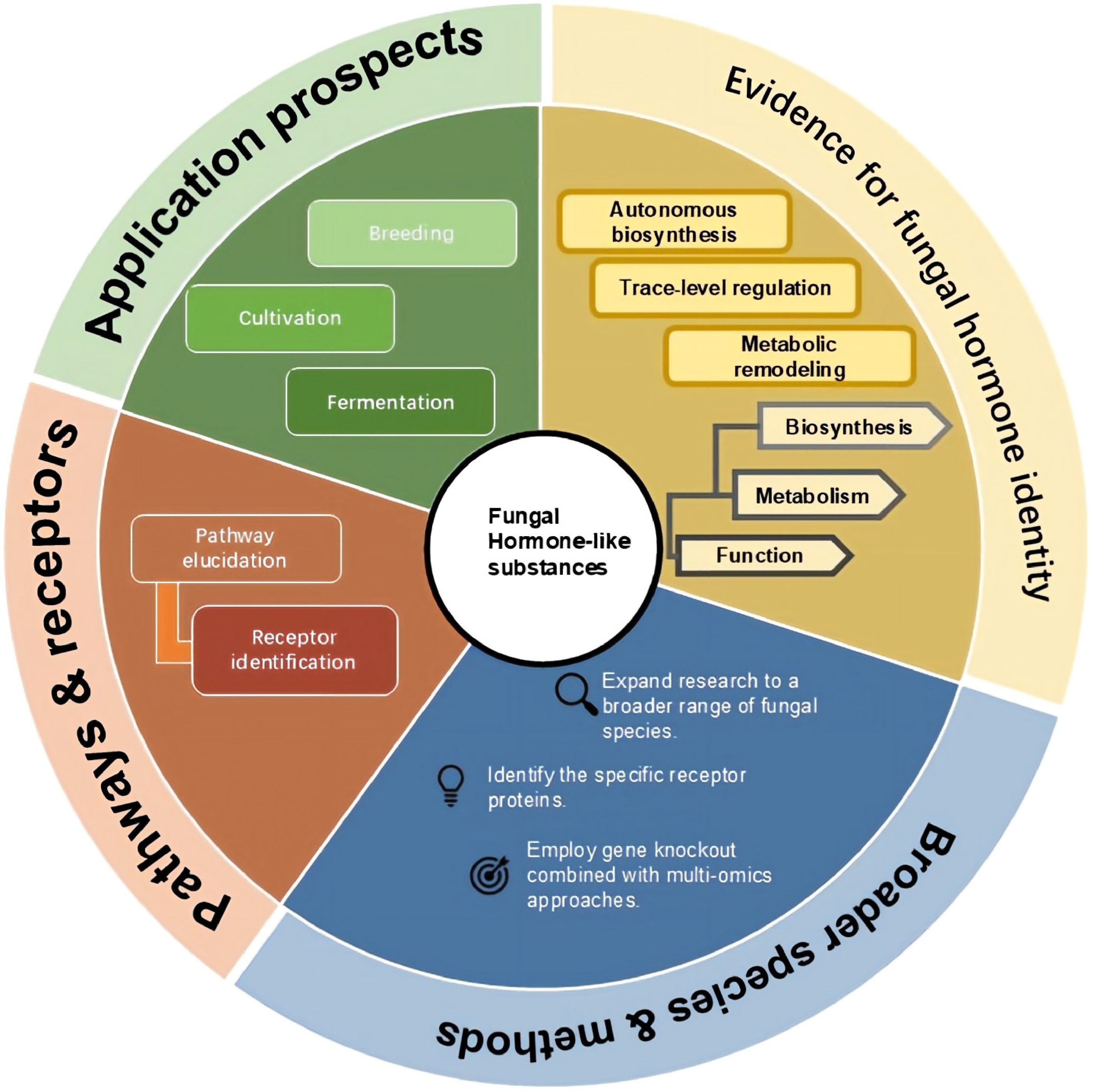
Figure 6.
Schematic framework summarizing current progress, unresolved questions, and future research directions of fungal plant hormone-like substances across four core dimensions.
Figures
(6)
Tables
(0)