










-
Hormone-like substances are trace signaling molecules synthesized and released by organisms to regulate their own physiological processes or those of other organisms[1]. The biological functions of diverse hormone-like substances isolated from fungi have been largely characterized based on their impacts on plant physiological processes. With advances in molecular biology and biochemistry, accumulating evidence shows that fungi possess a rich diversity of hormone-like substances. Meanwhile, they also play an indispensable role in fungal physiological processes, such as spore germination and specialized hyphal differentiation[2]. By definition, hormones are endogenous organic signaling molecules produced in trace amounts that coordinate cellular physiology and development without directly serving as energy sources or structural components. These fungal-derived molecules are synthesized at trace concentrations and function exclusively as signaling messengers. They are neither energy substrates nor components for cellular structure assembly, so they conform to the fundamental definition of hormones. Historically, however, the field of endogenous fungal hormones has received relatively little attention, primarily because early studies regarded these compounds merely as secondary metabolites or virulence factors in plant–pathogen interactions, coupled with the technical challenges of detecting trace endogenous metabolites and the lack of mature genetic manipulation systems in most non-model fungi[2,3].
However, compared to the well-established plant endocrine frameworks, current fungal research faces some limitations. First, existing research is largely limited to a few model fungi and phytopathogens, while the hormone-like substances in the vast majority of other fungi remain poorly characterized in terms of their categories, biological functions, biosynthesis, and metabolic pathways. Second, unlike highly differentiated plants, the synthetic sites, intracellular trafficking pathways, transporters, and receptors of hormone-like substances in fungi remain largely unclarified. In higher plants, hormone biosynthesis is highly tissue-specific, and intercellular distribution is tightly regulated by complex networks of specialized efflux and influx carriers, which are subsequently perceived by distinct receptor complexes[4−18]. In striking contrast, fungi lack such highly differentiated organs and vascular structures. Consequently, the specific cellular compartments for hormone biosynthesis, as well as the homologous or novel transporters and receptors mediating their internal translocation and perception, have yet to be identified. Third, the effects of these hormone-like substances in fungi are observed to be obviously concentration-dependent and species-specific through experiments. For example, exogenous IAA promotes hyphal elongation and branching in certain fungi at low concentrations, whereas high concentrations inhibit growth and even induce morphological abnormalities[19,20]. Similarly, ABA is reported to enhance the tolerance of some fungi to osmotic stress. CKs potentially influence sporulation or secondary metabolism regulation[21,22]. However, these observations are mostly based on exogenous application experiments. It cannot be distinguished whether the effects are derived from the endogenous hormone signaling system inherently possessed by fungi, or whether they are elicited by nonspecific responses to plant-derived hormones in the environment.
Are these endogenously produced substances merely secondary metabolites, or do they possess genuine fungal hormone functions? Addressing this question is of great significance for both basic science and industrial applications: fundamentally, it clarifies how fungi coordinate multicellular development, morphogenesis, and environmental adaptation via endogenous chemical signals[3]; industrially, it provides actionable strategies for regulating submerged fermentation and fruiting body cultivation[19,23]. It is necessary to sort out and summarize these substances. This article integrates current functional, genomic, and enzymological evidence to address this question directly. We propose that these molecules play dual physiological roles, finely balancing both internal developmental regulation and external ecological communication. By systematically reviewing the biosynthesis, metabolism, and multicellular functions of major fungal plant hormone-like substances, this study establishes a strong theoretical foundation for exploring fungal developmental biology. Ultimately, we aim to translate these fundamental mechanisms into precise application strategies, offering new perspectives to overcome the stubborn cultivation bottlenecks (such as difficulties in artificial domestication, failed primordium initiation, asynchronous fruiting body differentiation, and unstable yields) of recalcitrant macrofungi across modern agriculture and biotechnology. Specifically, recalcitrant macrofungi primarily consist of high-value edible and medicinal basidiomycetes and ascomycetes (such as mycorrhizal or wood-decaying species in the genera Tricholoma, Tuber, and Sanghuangporus); these fungi have complex life cycles, exhibit strong dependencies on host or environmental conditions, grow slowly, and lack efficient genetic transformation systems, making them difficult to study and manipulate.
-
Many hormone-like substances, including indole-3-acetic acid (IAA), ethylene (ET), abscisic acid (ABA), jasmonic acid (JA), and gibberellins (GAs), have been detected in fungi and plants[2,24,25]. Greater attention is currently devoted to their roles in regulating plant growth and development. Mounting evidence reveals that fungi could endogenously synthesize trace levels of these hormone-like substances and exert certain regulatory effects on the vegetative growth and morphogenesis of fungi themselves. Compared with the sophisticated frameworks established in plant systems, the specific synthesis sites, complete metabolic pathways, and targeted transport mechanisms of these hormones within fungi remain poorly understood. So, these endogenous substances are rarely applied to practical fungal cultivation and industrial production. Therefore, it is necessary to systematically summarize and clarify the composition, synthetic characteristics, and regulatory functions of the fungal endogenous hormone-like substances. This will facilitate the application and advancement of hormone-like substances in fungi.
Indole-3-acetic acid and its analogues
-
Indole-3-acetic acid (IAA) was confirmed to be the native endogenous auxin in plants in 1937. One year later, Thimann[26] reported the successful isolation of IAA from fungal tissues. Subsequent research has discovered and identified IAA in various fungi, such as Phanerochaete chrysosporium, Fusarium spp., Suillus grevillei, and Rhizopogon luteolus[27,28]. The chemical structure of IAA features an indole core bearing a carboxyl group at its C3 position, with a molecular formula of C10H9NO2. In addition, there are many other analogues of IAA that possess similar growth-promoting activities, such as indole-3-butyric acid (IBA), 1-naphthaleneacetic acid (NAA), and 2,4-dichlorophenoxyacetic acid (2,4-D), which are chemically synthesized auxin analogues. Notably, IBA was later verified to also exist as an endogenous auxin naturally produced within plant cells. Regarding the current state of the art, fungal IAA biosynthesis has been demonstrated to operate primarily via tryptophan-dependent routes, most notably the indole-3-pyruvic acid (IPyA) and indole-3-acetamide (IAM) cascades. Functionally, endogenous and secreted IAA acts both as an intrinsic regulator of hyphal morphogenesis and stress adaptation and as a pivotal cross-kingdom signal in plant–fungus interactions.
IAA biosynthetic pathways
-
IAA biosynthesis in organisms comprises the tryptophan-dependent (Trp-D) and tryptophan-independent pathways (Trp-I)[29]. The Trp-I pathway diverges from the upstream tryptophan biosynthesis cascade, using indole-3-glycerol phosphate (IGP) or indole as the core precursor[30]. The Trp-D pathway initiates with L-tryptophan (L-Trp) as the initial substrate. As the primary route for IAA production in fungi and most plants, it is divided into five sub-pathways based on characteristic intermediates: IPyA, IAM, tryptamine (TAM), indole-3-acetaldoxime (IAOx), and indole-3-acetonitrile (IAN) pathways. The IPyA pathway is universally conserved across many fungal species[31] (Fig. 1).
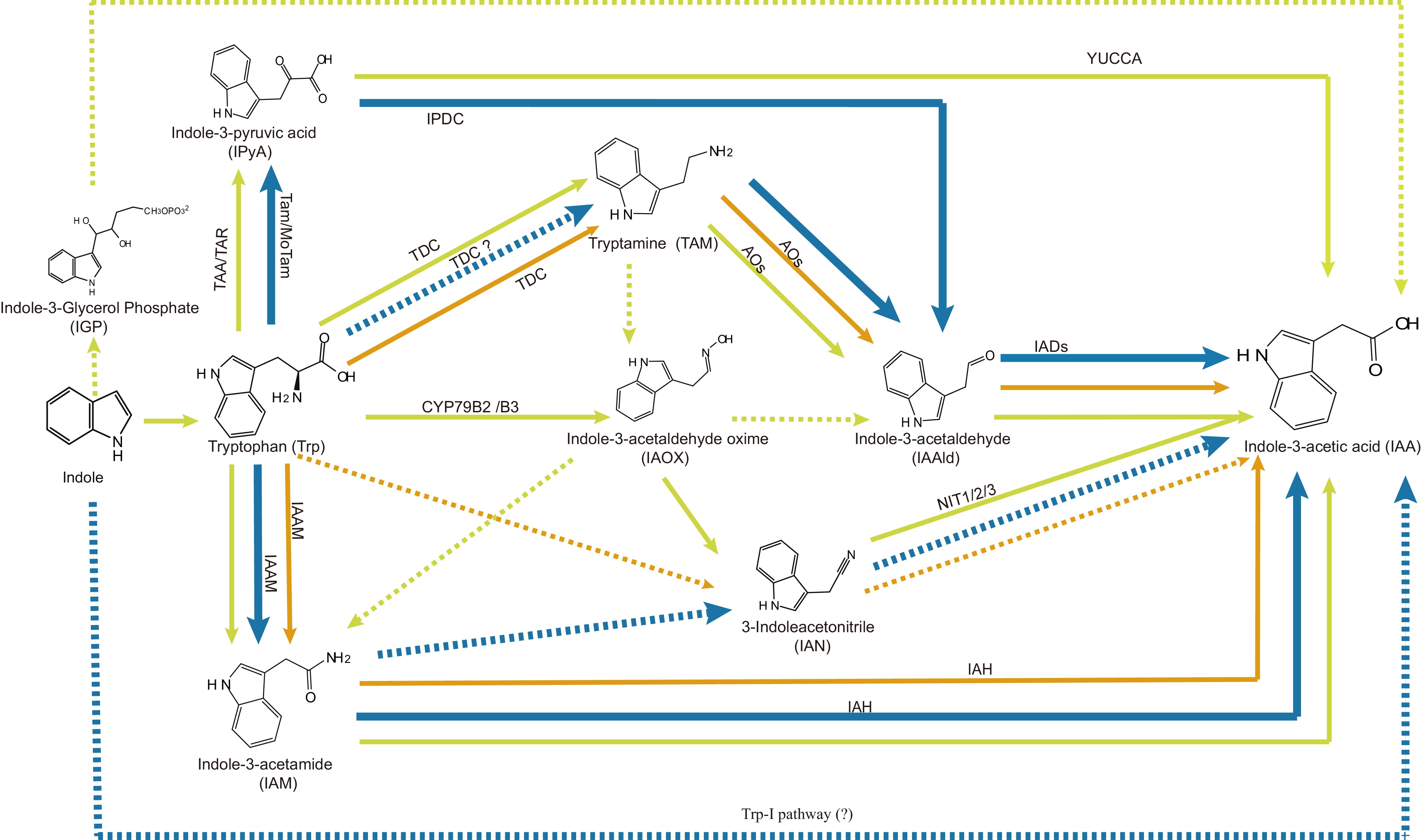
Figure 1.
IAA biosynthetic pathways in plants (green arrows), fungi (blue arrows), and bacteria (orange arrows). Solid and dashed arrows indicate experimentally validated pathways and hypothetical/unclarified routes (including the Trp-I route branching from indole/IGP), respectively; steps with unidentified enzymes are marked with question marks (?). Fungal-characterized enzymes include Tam/MoTam, IPDC, and IADs in the IPyA pathway, and IAAM and IAH in the IAM pathway. Abbreviations: Trp, tryptophan; IGP, indole-3-glycerol phosphate; IPyA, indole-3-pyruvic acid; IAM, indole-3-acetamide; TAM, tryptamine; IAOx, indole-3-acetaldoxime; IAN, indole-3-acetonitrile; IAAld, indole-3-acetaldehyde; TAA/TAR, tryptophan aminotransferase of Arabidopsis/related; TDC, tryptophan decarboxylase; AO, amine oxidase; IAAM, tryptophan-2-monooxygenase; IAH, indole-3-acetamide hydrolase; IPDC, indole-3-pyruvate decarboxylase; IADs, indole-3-acetaldehyde dehydrogenases; CYP79B2/B3, cytochrome P450 monooxygenases; NIT1–3, nitrilases; Tam/MoTam, fungal tryptophan aminotransferases; YUCCA, flavin monooxygenase.
The tryptophan-independent (Trp-I) pathway
-
This pathway was first verified using tryptophan auxotrophic mutants of maize and Arabidopsis[32,33]. Although these mutants are incapable of synthesizing Trp, they still accumulate relatively high levels of endogenous IAA, which confirms the existence of this alternative biosynthetic route.
Indirect evidence points to the operation of the Trp-I pathway within fungi. In Saccharomyces cerevisiae, mutants lacking key genes (ALD2 and ALD3) for the terminal steps of the Trp-dependent pathway produced IAA without exogenous tryptophan, reaching wild-type levels[34]. Sun et al. reported that two yeast strains produced similar IAA levels regardless of exogenous Trp[35].
The tryptophan-dependent (Trp-D) pathway
-
Most of the IPyA, IAM, TAM, IAOx, and IAN pathways have been experimentally validated in Arabidopsis thaliana, and numerous genes participating in IAA biosynthesis have been characterized in this model organism[30,36]. In the fungal kingdom, the IPyA and IAM pathways are the most frequently identified and best-characterized routes for IAA biosynthesis across studied species, whereas the TAM, IAN, and IAOx pathways remain poorly understood[34,37−40].
The IPyA pathway
-
In plants, the IPyA pathway is the main pathway for endogenous IAA synthesis. This reaction depends on two key enzyme families: tryptophan aminotransferase of Arabidopsis (TAA) and tryptophan aminotransferase-related (TAR) enzymes, which first convert L-Trp into IPyA. Then the YUCCA gene family encoding flavin monooxygenases (YUCCA) transforms IPyA into IAA. This pathway produces most intracellular IAA and controls plant growth and development[30].
In fungi, the conversion of IPyA to IAA proceeds through three enzymatic steps. Specific aminotransferases first turn L-Trp into IPyA. Indole-3-pyruvate decarboxylase (IPDC) further converts IPyA into indole-3-acetaldehyde (IAAld). Finally, aldehyde dehydrogenases (IADs) oxidize IAAld to form the terminal product IAA[37,38,41−43]. This IPyA synthesis pathway has been found in many fungi, such as Colletotrichum acutatum and Magnaporthe oryzae[41,44,45]. In M. oryzae, MoTam1 and MoIpd1 enzymes mediate the conversion of IPyA to IAA, which is cooperatively regulated by the YUCCA pathway[38]. In Ustilago maydis, the tryptophan aminotransferases Tam1 and Tam2, together with the IAAld dehydrogenases Iad1 and Iad2, mediate this metabolic route[46]. These observations indicate that fungal species harbor distinct enzymes for IPyA-to-IAA biosynthesis.
The IAM pathway
-
The IAM pathway is an IAA biosynthesis route that predominates in bacteria and does not act as a major metabolic pathway in higher plants. In Agrobacterium tumefaciens, two pivotal enzymes control this metabolic process[30]. Tryptophan-2-monooxygenase (IAAM), encoded by IaaM, transforms tryptophan into the IAM intermediate. Indole-3-acetamide hydrolase (IAH), encoded by encoding indole-3-acetamide hydrolase (IaaH), hydrolyzes this intermediate to produce IAA.
In fungi, IAAM acts as the core enzyme to trigger IAA synthesis via the IAM pathway. This enzyme mediates the conversion of tryptophan to IAM, which is further hydrolyzed to generate functional IAA. The IAM pathway is essential for fungal IAA production in Colletotrichum gloeosporioides[47−49]. In Fusarium proliferatum, knockout of the IAM pathway genes IaaM and IaaH caused a significant reduction in endogenous IAA production by the strain[39]. The distinct phenotypic defects observed following targeted gene disruption suggest that the IAM cascade may function as a major IAA biosynthetic pathway in these fungal strains.
The TAM pathway
-
The tryptamine (TAM) pathway is a recognized alternative route for IAA biosynthesis, with its specific molecular mechanisms well characterized in model plants and bacteria. For instance, in plants such as Solanum lycopersicum and Azospirillum brasilense, this biochemical cascade is clearly defined. L-tryptophan is first decarboxylated by an identified tryptophan decarboxylase (TDC) to form tryptamine. Subsequently, specific amine oxidases (AOs) catalyze the oxidation of tryptamine into indole-3-acetaldehyde (IAAld)[30].
In fungi, the TAM pathway may act cooperatively with other pathways to synthesize IAA[46,50−52]. Nevertheless, few studies have identified the key amine oxidase catalyzing the conversion of tryptamine to IAAld, rendering the TAM pathway in fungi largely unelucidated[40].
The IAN pathway
-
The indole-3-acetonitrile (IAN) pathway is another metabolic route for IAA biosynthesis, with its precise enzymatic cascade best characterized in specific model plants such as A. thaliana. In these well-defined plant systems, L-tryptophan is first converted into indole-3-acetaldoxime (IAOx) by specific cytochrome P450 monooxygenases (e.g., the CYP79B2 and CYP79B3 families). IAOx is then channeled into IAN either directly or via an indole-3-acetyl glucosinolate intermediate. Finally, dedicated nitrilases (such as the NIT1–NIT3 enzyme family) hydrolyze IAN to yield functional IAA[30].
The metabolic conversion of IAN to IAA in microbial systems remains severely fragmented. Even in bacteria, only a very limited set of key nitrilase genes mediating this terminal transformation have been successfully identified[42,53]. This pathway in fungi is essentially unelucidated. Although fungi are presumed to utilize IAN as a precursor, the specific fungal nitrilases responsible for its final hydrolysis to IAA lack robust functional validation. Thus, systematic elucidation of fungal IAA biosynthetic routes will be valuable to unravel the complete machinery underlying IAA production.
The IAOx pathway
-
The indole-3-acetaldoxime (IAOx) pathway represents a highly specialized route for IAA biosynthesis, primarily elucidated in specific plant lineages. In the model plant A. thaliana, this biochemical cascade acts as a crucial metabolic hub. Specifically, L-tryptophan is initially converted to IAOx by two dedicated cytochrome P450 monooxygenases, CYP79B2 and CYP79B3[30]. As a branched metabolic intermediate, IAOx can be converted to IAA primarily through the IAN intermediate.
At present, no empirical evidence confirms an IAOx-mediated auxin synthesis pathway in fungi. Although fungi contain abundant cytochrome P450 enzymes for secondary metabolism, no enzyme that specifically catalyzes IAOx formation from L-tryptophan has been found. The existence of this pathway in fungi is merely a hypothesis.
Metabolism of IAA and its analogues in organisms
-
IAA is not a stable end product in fungi. In Dictyophora indusiata, IAA undergoes multi-step metabolism into anthranilic acid, which is then converted into 2-aminophenol, quinolinic acid, and 2-oxoadipic acid before ultimately entering the glycolytic pathway[54]. Core enzymes in the IAA metabolic network, such as acetaldehyde dehydrogenase, perform both biosynthetic and aldehyde detoxification functions[23]. This integration of biosynthesis, degradation, signal transduction, and basal metabolism establishes the central role of the IAA regulatory system in fungal development and environmental adaptation.
Although IAA has been detected in the mycelia and fruiting bodies of several fungal species, the primary sites of its biosynthesis in fungi have not been pinpointed with the same precision as the apical meristems in plants. In addition, intercellular IAA transport within plant tissues is mediated by PIN transporters[55]. It remains unclear whether fungi rely on PIN transporters to mediate this process.
Role of IAA in fungal biological processes
Regulatory effects of fungal endogenous IAA on its development
-
Fungal species independently synthesize indole-3-acetic acid (IAA) to govern their own intrinsic physiological processes and drive bioactive metabolite production[23,56]. Endogenously synthesized IAA acts as an ATP-competitive inhibitor, modulating cell growth by inhibiting the TORC1 protein complex[57]. Intact IAA biosynthetic pathways appear to be crucial for fungal morphogenesis and reproduction. For instance, targeted knockout of biosynthetic genes (such as motam1∆ and moipd1∆) severely reduces endogenous IAA synthesis in the rice blast fungus Magnaporthe oryzae, directly disrupting hyphal growth and conidiation[38]. Fungi also dynamically calibrate these intracellular IAA concentrations to navigate environmental stress, as observed in Lentinula edodes, which modulates IAA levels to govern hyphal thermotolerance[58].
Apart from the regulation of intrinsic intracellular physiological activities, IAA serves as a cross-kingdom signaling mediator. Shaping diverse plant–fungus ecological associations through the modulation of host developmental programs[59]. In Piriformospora indica, secreted IAA was initially reported to elevate endogenous hormone levels in A. thaliana, thereby directly stimulating root development and boosting overall plant biomass[60,61]. However, Hilbert et al.[62] demonstrated through gene silencing that indole derivative (IAA) production in P. indica is not strictly required for promoting barley root growth, but is instead essential for successful biotrophic colonization of host roots, suggesting that fungal-derived IAA may primarily facilitate symbiotic compatibility rather than directly driving host growth promotion in certain interactions. In Aspergillus niger 129B, secreted IAA upregulates host SAUR32 and PP2C72 expression to drive the elongation of plant roots, stems, and leaves[63]. IAA secreted by infection hyphae of M. oryzae disturbs immune responses in DR5::GUS-transformed rice and ultimately enhances the virulence of fungi[64]. Extracellular IAA from the symbiotic Mycena purpureofusca actively promotes seed dormancy breakage and Gastrodia elata germination[65]. When chemical inhibitors such as TIBA and NPA are applied, they effectively block IAA distribution and consequently arrest fungal colonization processes in mycorrhizal associations[66].
Regulatory roles of exogenous IAA in fungal development
-
Pronounced sensitivity to exogenous IAA and its biosynthetic precursors is exhibited by fungi. Concentration-dependent dual effects are typically displayed during these treatments[67]. In Ganoderma lucidum, vigorous mycelial growth is supported by low IAA concentrations, whereas total biomass is suppressed and slender hyphae are produced by high doses[19]. Mycelial expansion and fruiting body formation are facilitated by moderate external IAA supplementation through the tuning of endogenous IAA homeostasis and oxidase enzymatic activity[68]. Hyphal elongation and lateral branching are accelerated in the ectomycorrhizal fungus Tricholoma vaccinum by the exogenous provision of the IAA precursors Trp and IPA[20]. In addition to the modulation of vegetative growth, specific secondary metabolite pathways are potently elicited by exogenous IAA, including the induction of drastic intracellular anthocyanin accumulation in Stropharia rugosoannulata[69].
Knowledge gaps in current research
-
Although the enzymatic reactions and genetic bases of the IPyA and IAM pathways have been relatively well characterized in fungi, substantial knowledge gaps still remain in other tryptophan-dependent branches, including the tryptamine, indole-3-acetonitrile, and indole-3-acetaldoxime pathways. Tryptophan-independent routes are also poorly understood. Consequently, some metabolic cascades remain at a purely hypothetical stage. Specifically, the diverse classes and biological functions of the crucial amine oxidases in the TAM pathway are not yet elucidated. Additionally, specific fungal nitrilases completely lack robust functional validation.
Spatial localization of active IAA biosynthesis within complex fungal architectures is also unknown. In plants, IAA synthesis is localized to specific tissues such as apical meristems[70]. The precise core sites for fungal IAA biosynthesis remain uncharacterized and may reside in specialized mycelial compartments or fruiting tissues.
Intercellular IAA transport in plants is mediated by PIN transporters with comprehensively documented mechanisms[4−6]. However, it remains entirely inconclusive whether structurally homologous transport systems are deployed by fungi or entirely novel efflux carriers are utilized to execute this critical transmembrane secretion process.
In practical production, the application of IAA and its analogues in fungal cultivation remains very limited. Their usage is scarce in edible mushroom cultivation, whereas they are widely adopted in the liquid fermentation of medicinal fungi, including G. lucidum and Phellinus igniarius. Most growers and production facilities still mainly rely on environmental regulation strategies. To date, IAA-related hormones have not been integrated into standard production technical systems; these compounds are mostly used only in laboratory settings. There is still a long way to go to achieve large-scale application covering the entire industry.
Gibberellin and its analogues
-
Gibberellins (GAs) were first recognized through investigations of rice 'bakanae' disease in Japan during the late 19th century. Abnormal elongation, lodging, and severe yield reductions were exhibited by infected plants. In 1926, this pathological hyper-elongation was confirmed by Eiichi Kurosawa to be induced by active substances from the fungus Gibberella fujikuroi (Fusarium fujikuroi)[71]. In 1934, active crystalline metabolites were successfully isolated and purified from the fungal culture filtrates by Yusuke Sumiki and colleagues. These compounds were formally named gibberellins[72].
At least 26 of the 84 known free gibberellins are synthesized by F. fujikuroi. Meanwhile, GA3 and GA4 are generated by A. niger. GA1, GA2, and GA3 are synthesized by Fusarium moniliforme. GA4 and GA9 are produced by Phaeosphaeria species[73−75].
Gibberellins are defined as tetracyclic diterpene carboxylic acids possessing an ent-gibberellane skeleton. The molecular formula of C19H22O6 is featured by GA3. Four fused rings (A, B, C, and D) are contained in the core structure. This structure is typically characterized by a γ-lactone bridge spanning rings A and B. Structural variations among individual gibberellins depend primarily on the number, position, and stereochemistry of specific functional groups. In this configuration, the β-hydroxyl group at the C-3 position is strictly required for high biological activity. While higher plants utilize a distinct spectrum of endogenous GAs, the major product of fungal synthesis is represented by GA3. This compound is the most widely used gibberellin derivative. Regarding the current state of the art, fungal GA biosynthesis is known to proceed via the mevalonate pathway utilizing distinctive bifunctional cyclases, while, functionally, endogenous GAs serve as critical regulators of reproductive development (such as fruiting body formation and stipe elongation) and as effector molecules during plant infection.
GA biosynthetic pathways
-
Fungi and plants share similar initial steps in the biosynthesis of gibberellins. However, distinct differences exist in their biosynthetic pathways and enzymatic systems. In fungi, the cytosolic mevalonic acid (MVA) pathway is utilized to generate the universal diterpene precursor geranylgeranyl pyrophosphate (GGPP). Conversely, higher plants rely on the plastidial methylerythritol phosphate (MEP) pathway[76].
Taking the model fungus F. fujikuroi as an example, fungal GA biosynthesis proceeds in three main stages[77]. Following the MVA-dependent synthesis of isopentenyl pyrophosphate (IPP) and dimethylallyl pyrophosphate (DMAPP), sequential condensation reactions form GGPP. In the critical third stage, GGPP undergoes a two-step cyclization to produce ent-kaurene. In plants, the formation of ent-kaurene is mediated by two independent enzymes, including ent-copalyl diphosphate synthase (CPS) and ent-kaurene synthase (KS)[78]. Conversely, fungi perform this reaction using a single bifunctional cyclase possessing both CPS and KS activities. Fungal gibberellin catalysis efficiency is hypothesized to be enhanced by this single protein[79]. Following successive oxidation steps, including C-19 oxidation, C-7β hydroxylation, and B-ring contraction, the key intermediate GA12-aldehyde is generated by the pathway. This intermediate is subsequently converted to GA14[79,80]. During the critical late-stage 3β-hydroxylation and 20-oxidation steps, fungi utilize cytochrome P450 monooxygenases, whereas plants primarily rely on 2-oxoglutarate-dependent dioxygenases (Fig. 2). Significantly, a total lack of homology at the molecular level between these two enzyme groups is indicated by sequence alignments despite the execution of identical oxidative catalysis[81].
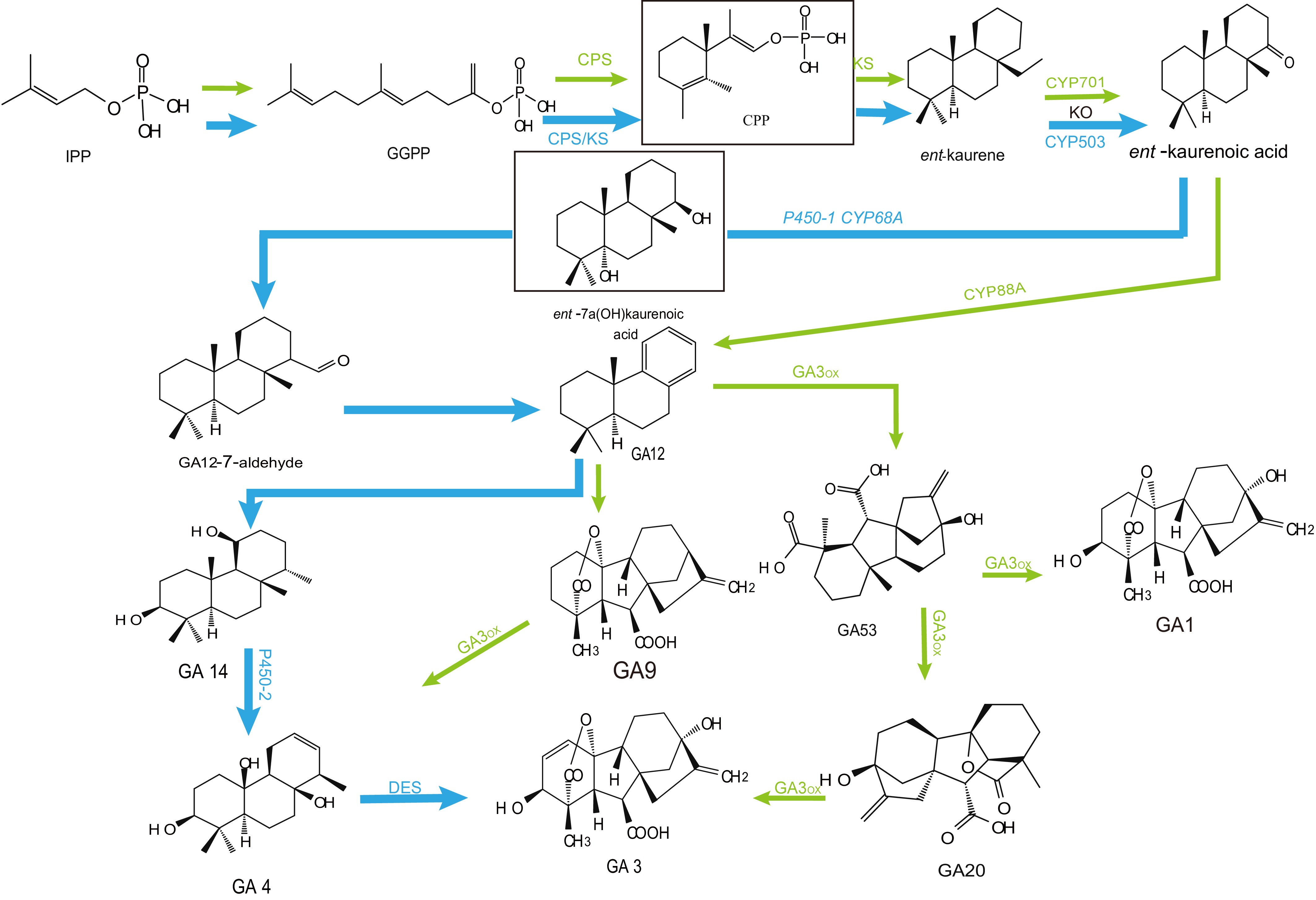
Figure 2.
An overview of GA biosynthesis, comparing pathways for higher plants (green arrows) and the fungus Fusarium fujikuroi (blue arrows). Fungi distinctively utilize a bifunctional CPS/KS enzyme for cyclization, whereas plants employ separate CPS and KS enzymes. Reaction steps for which the key enzymes have not been identified are shown without specific enzyme labels. Abbreviations: gibberellin (GA), isopentenyl diphosphate (IPP), dimethylallyl diphosphate (DMAPP), geranylgeranyl diphosphate (GGPP), ent-copalyl diphosphate synthase (CPS), ent-kaurene synthase (KS), gibberellin dehydrogenase (DES), cytochrome P450 (CYP701, CYP503, CYP68A, CYP88A), GA 13-oxidase (GA13ox).
After the formation of GA12-aldehyde, F. fujikuroi performs 3β-hydroxylation to generate GA14. Successive oxidation and dehydrogenation reactions subsequently yield GA3. This biosynthetic route is clearly differentiated from the GA12→GA9/GA20 pathway operating in plants. Conversely, the GA14 intermediate is entirely lacking in Phaeosphaeria sp. L487. A metabolic branch is employed by this strain to resemble the plant non-13-hydroxylation pathway more closely. Consequently, GA1 is ultimately produced by this alternative route as the primary end product[79,80].
Genomic studies reveal that this remarkable metabolic diversity is shaped by the dynamic evolution of GA biosynthetic gene clusters, including processes such as expansion, contraction, and gene loss. For instance, the F. fujikuroi species complex retains a structurally intact and functionally complete GA biosynthetic gene cluster. This functional cluster contains core catalytic elements, including a bifunctional ent-kaurene synthase, multiple cytochrome P450 monooxygenases, and gibberellin dehydrogenase (DES)[80]. The corresponding gene cluster in Sphaceloma sp. undergoes varying degrees of loss, which restricts its metabolic products to GA4[79]. Fusarium avenaceum possesses a GA cluster highly homologous to that of F. fujikuroi. However, this species is hypothesized to be incapable of synthesizing GA1 or GA3. The specific absence of 13-hydroxylation-related enzymatic modules causes this synthesis failure[82]. GA gene clusters in some distantly related fungi, such as Sphaceloma manihoticola and Phaeosphaeria sp. L487, often exhibit highly modular structures. Functional modules like diterpene cyclases, GGDP synthase, and P450 monooxygenases compose these structural networks[83,84]. This suggests that horizontal gene transfer and independent evolution play critical roles in fungal gibberellin biosynthesis and in shaping complex fungal secondary metabolic networks.
Role of GAs in biological processes
Roles of endogenous gibberellins in fungal biological processes
-
Endogenous GAs govern key developmental transitions in diverse plants. They promote internode elongation, break seed dormancy, and initiate germination. Earlier researchers held the view that endogenously produced gibberellins from Fusarium species act as secondary metabolites rather than indispensable substances required for basal fungal growth[80]. Recent studies indicate that GAs drive reproductive fruiting body development and longitudinal stipe elongation in fungi. Specific targeted accumulation of highly active GA4 dictates the developmental transition from primordia to mature fruiting bodies in Sanghuangporus baumii[85]. Dynamic metabolic fluxes involving 13 distinct GA variants accompany stipe elongation in Flammulina filiformis. Chemical inhibition of this endogenous gibberellin synthesis via paclobutrazol (PBZ) decisively restricts macroscopic stipe expansion, achieving an 83.72% inhibition rate and functionally validating their biological role[86]. Pathogenic fungi actively secrete these synthesized gibberellins into host tissues as virulence factors. This targeted secretion induces abnormal stem elongation in host plants, directly enhancing systemic fungal pathogenicity and optimizing the pathogen–host interaction[87,88].
Roles of exogenous gibberellins in fungal biological processes
-
Optimal exogenous GA concentrations promote vegetative hyphal growth in Flammulina filiformis, yet identical treatments inhibit hyphal expansion in Pleurotus ostreatus; synergistic application of GAs with appropriate cytokinin ratios improves both yield and overall quality during the cultivation of P. ostreatus[89,90]. Targeted exogenous GA treatment directly stimulates fruiting body formation in P. ostreatus[91] and elevates the total protein content within the fruiting bodies of Calocybe indica[92]. Exogenous gibberellin treatments may elicit species-specific physiological responses in fungal vegetative growth and reproductive development.
Knowledge gaps in current research
-
Existing work has mapped the core MVA pathway and discovered many fungal P450 clusters[80]. However, their multi-step oxidative catalytic mechanisms are still unclear. These systems also lack sufficient gene validation via multi-omics and heterologous expression. Full profiling of substrates and metabolic fluxes is urgently required to clarify fungal GA biosynthesis.
Endogenous GAs are regarded as putative virulence factors, while new evidence highlights their roles in general fungal growth and development[85]. However, it is unknown how GAs reshape metabolism during the shift from vegetative mycelia to reproductive structures. Characterizing related receptors and rewired metabolic pathways will explain divergent fungal developmental responses to GA signals.
Abscisic acid and its research progress
-
Initially discovered in the 1960s, ABA regulates various cellular and physiological processes in plants, including seed dormancy, germination, flowering, osmotic adjustment, and embryo development[93,94]. In 1977, researchers successfully isolated and identified ABA from the culture filtrates of the plant pathogen Cercospora rosicola[95].
Abscisic acid is a 15-carbon sesquiterpene compound with a molecular formula of C15H20O4. Its core structure features a cyclohexene ring system bearing a single hydroxyl group at the C-1' position and a ketone group at the C-4' position, which is conjugated to an unsaturated alkene side chain containing double bonds at C-2 and C-4 and terminating in a carboxyl group. The specific chiral configuration at the C-1' asymmetric center strictly dictates its biological efficacy, with naturally occurring fungal and plant ABA existing primarily in the active (S)-(+)-configuration that drives maximal physiological and signaling activities. To date, fungal ABA is known to be synthesized directly from farnesyl diphosphate (FPP) via a unique fungal-specific gene cluster, functioning both as a key developmental signal for morphogenesis and as a potent effector for host immune suppression during fungal infection.
ABA biosynthetic pathways
-
Plant and fungal ABA share similar chemical structures, yet their biosynthetic pathways are distinct[96]. In plants, zeaxanthin epoxidase (ZEP) first converts the C40 zeaxanthin into all-trans-violaxanthin. Then, all-trans-violaxanthin can be converted to 9’-cis-violaxanthin or 9’-cis-neoxanthin in two pathways catalyzed by neoxanthin synthase (NSY) and an unknown isomerase. The enzyme 9-cis-cyclocarotenoid dioxygenase (NCED) cleaves both 9’-cis-neoxanthin and 9’-cis-violaxanthin into xanthoxin. Eventually, xanthoxin is mainly converted into abscisic aldehyde and further forms ABA, which are catalyzed by a short-chain alcohol dehydrogenase (ABA2) and abscisic aldehyde oxidase (AAO/ABA3), respectively[97].
Fungi possess a direct sesquiterpene biosynthetic pathway that generates the C15 carbon skeleton from cytosolic farnesyl diphosphate (FPP). A compact biosynthetic gene cluster (bcaba1 to bcaba4) tightly regulates endogenous ABA biosynthesis in Botrytis cinerea[98]. Within this core genetic unit, the bcaba3-encoded sesquiterpene cyclase (BcABA3) acts as the critical rate-limiting enzyme[96]. Rather than undergoing a conventional one-step cyclization, BcABA3-catalyzed FPP proceeds through a multi-step cascade reaction: FPP first converts to β-farnesene, isomerizes into (2Z,4E,6E)-allo-farnesene, and ultimately cyclizes to form the key skeletal intermediate (2Z,4E)-α-ionylideneethane[99]. Immediately following this scaffold assembly, a dedicated suite of cytochrome P450 monooxygenases (bcaba1, bcaba2, and bcaba4) within the same cluster executes precise sequential oxidations. The α-ionylideneethane is oxidized to α-ionylideneacetic acid, followed by hydroxylation and ketonization at the C-1' and C-4' positions to yield fully bioactive ABA[95,100]. While this FPP-dependent pathway is evolutionarily conserved, downstream metabolic branching displays a certain degree of specificity across other fungal species. For example, Cercospora rosicola bypasses the allo-farnesene intermediate, utilizing 1'-deoxy-ABA to complete biosynthesis via C-1' hydroxylation[101,102] (Fig. 3).
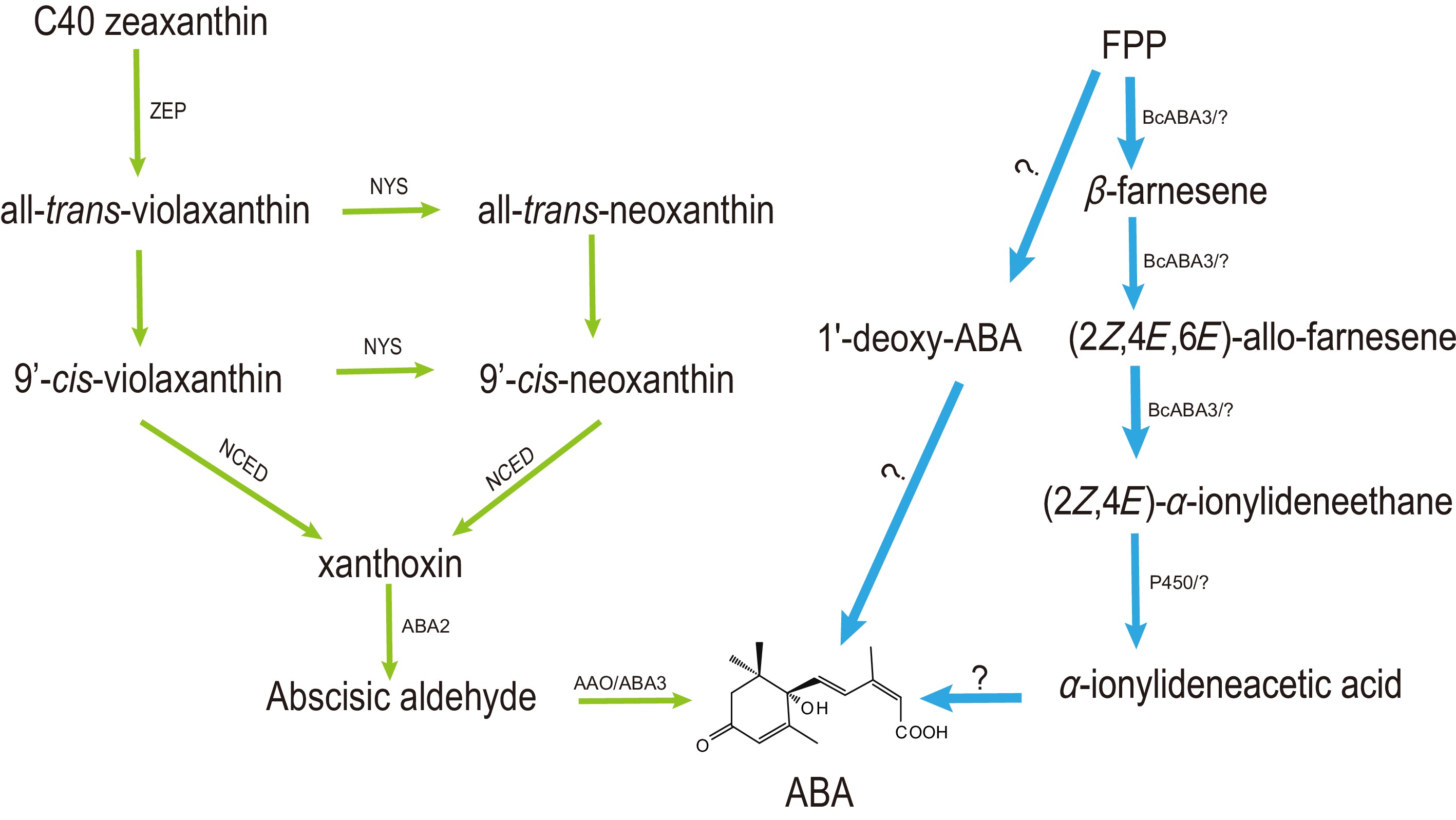
Figure 3.
Abscisic acid biosynthetic pathways in plants (green arrows) and fungi (blue arrows). Unlike the plant carotenoid cleavage pathway, fungi utilize a direct FPP-dependent sesquiterpene pathway governed by specific gene clusters. Reaction steps with unidentified key enzymes are marked with question marks (?). Abbreviations: FPP, farnesyl diphosphate; ABA, abscisic acid; 1'-deoxy-ABA, 1'-deoxy-abscisic acid; ZEP, zeaxanthin epoxidase; NSY, neoxanthin synthase; NCED, 9-cis-epoxycarotenoid dioxygenase; ABA2/3, short-chain alcohol dehydrogenase; AAO, abscisic aldehyde oxidase; BcABA3, sesquiterpene cyclase; P450, cytochrome P450 monooxygenase.
Beyond the enzymatic cluster itself, the fungal ABA biosynthetic machinery is governed by complex regulatory networks. The absolute sufficiency of this functional unit was proven through heterologous metabolic engineering. Co-expression of B. cinerea-derived FPP synthase (erg20), the sesquiterpene cyclase (BcABA3), and essential P450 oxidases (e.g., BcABA1) in Yarrowia lipolytica successfully reconstituted ABA biosynthesis[103].
Functions of ABA
-
Exogenous ABA directly regulates fungal vegetative growth and morphological differentiation. ABA treatments induce sustained hyphal elongation in Ceratocystis fimbriata. In Magnaporthe oryzae, ABA signaling triggers morphological transitions to induce appressorium formation, thereby initiating host infection[3]. Exogenous ABA directly affects spore development in Glomus mosseae[104]. In Ganoderma, ABA promotes the biosynthesis of high-value triterpenoids through the calcium signaling pathway; concurrently, it activates antioxidant defense responses, upregulates superoxide dismutase (SOD) and ascorbate peroxidase (APX) activities, and promotes glutathione (GSH) accumulation[105]. In endophytic fungi such as Aspergillus nidulans, exogenous ABA has been shown to promote mycelial biomass accumulation by globally reprogramming transcriptomes related to energy and secondary metabolism[106].
ABA likely functions as a communication factor mediating host recognition and rhizosphere colonization. Magnaporthe oryzae (synonymous with Pyricularia oryzae, referred to as M. grisea in the cited study) synthesizes and secretes free ABA at infection sites to suppress immune responses of rice that depend on SA[107]. Hijacking the host immune system via ABA signaling facilitates pathogen infection. Fungal-secreted ABA does not operate independently; it acts cooperatively with ethylene, strigolactones, jasmonic acid, and salicylic acid to shape arbuscular mycorrhizal infection dynamics and host systemic responses[108−111].
Knowledge gaps in current research
-
Fungal ABA biosynthetic cascades remain unresolved regarding key molecular details, including P450 catalytic properties, structural protein validation, evolutionary drivers of metabolic divergence, and FPP flux allocation among competing terpenoid pathways.
Although exogenous ABA can induce fungal physiological responses, endogenous ABA-governed developmental pathways remain insufficiently studied. Most current research focuses primarily on cross-kingdom signaling, with far less attention paid to fungal intrinsic ABA regulatory cascades.
Critically, researchers have characterized no fungal ABA receptors homologous to the plant PYR/PYL/RCAR complexes. It also remains unclear how uniform ABA signals generate contrasting developmental phenotypes across fungal species via distinct receptor activity.
Cytokinins and their research progress
-
Cytokinins (CKs) were first identified in plants during the 1950s as a major class of hormones that promote cell proliferation, shoot apical meristem, and senescence[112,113]. Chemical profiling has confirmed the endogenous synthesis and secretion of these adenine derivatives[114−116].
Cytokinins are N6-substituted adenine derivatives with a core purine ring, with the canonical active form, isopentenyladenine, possessing a molecular formula of C10H13N5. Based on the chemical structure of the side chain attached to the N6 position, natural CKs are classified into either isopentenyl-type or aromatic-type cytokinins. Targeted side-chain modifications, including hydroxylation, glycosylation, or reduction, strictly dictate overall compound stability and specific receptor binding affinities. Major bioactive species present in fungal secretomes are isopentenyladenine (iP), trans-zeatin (tZ), and cis-zeatin (cZ)[117]. Additionally, the synthetic aromatic analog 6-benzylaminopurine (6-BA) is widely applied in experimental laboratories to systematically analyze fungal receptor responsiveness and downstream signaling pathways. Regarding the current state of the art, fungal CK biosynthesis is uniquely characterized by tightly clustered tRNA-dependent pathways and bifunctional enzymes, while functionally, these molecules regulate fungal vegetative growth and alter host nutrient allocation and immunity.
CK biosynthetic pathways
-
In higher plants, CK production is primarily governed by a dispersed genomic architecture driving a de novo pathway: genetically independent adenylate isopentenyltransferases (IPT) transfer an isopentenyl group to free ATP/ADP/AMP, followed by activation via spatially separate LONELY GUY (LOG) phosphoribohydrolases to produce major bioactive CKs. The tRNA degradation pathway serves merely as a secondary source for cZ. Fungal CKs biosynthetic pathways do not simply parallel those of plants; rather, they exhibit specificity. Current knowledge primarily derives from the identification and comparative analysis of putative biosynthetic genes within fungal genomes[118,119].
Fungal cytokinin biosynthetic cascades are organized into highly compact, co-regulated secondary metabolite biosynthetic gene clusters (BGCs). Within these precise genetic units, fungi such as Fusarium utilize a clustered tRNA-IPT to transfer an isopentenyl side chain—derived from the cytosolic mevalonate (MVA) pathway—specifically to the adenosine residue (A37) of specific tRNAs to generate key bioactive CKs like cZ[120]. Subsequent tRNA degradation releases free CK precursors, demonstrating a profound shift in substrate preference and cellular localization compared to plant mechanisms[112,121,122]. The enzymatic systems encoded within these BGCs operate in a compact and efficient manner. For instance, rather than relying on two independent enzymes, the pathogen Claviceps purpurea utilizes a unique IPT-LOG fusion gene located within its tight BGC. The resulting bifunctional IPT-LOG protein directly couples the upstream isopentenyl transfer with downstream nucleotide hydrolysis, preventing the leakage of metabolic intermediates and driving efficient catalysis from precursors to active free CKs[123,124] (Fig. 4).
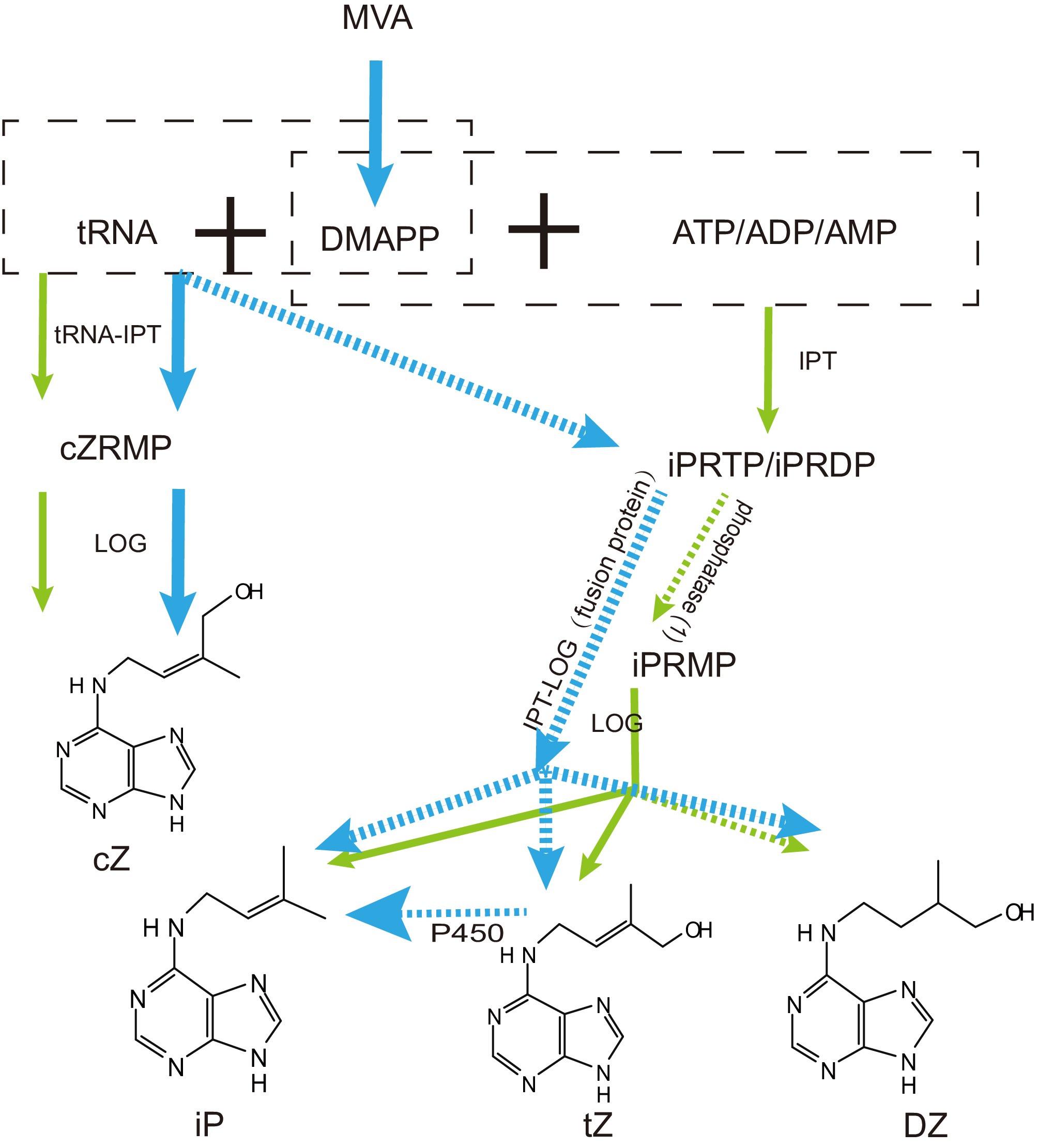
Figure 4.
Cytokinin biosynthetic pathways in plants (green arrows) and fungi (blue arrows). Unlike the decentralized plant pathways, fungi utilize highly compact biosynthetic gene clusters, characteristically employing a tRNA-dependent pathway and a bifunctional IPT-LOG fusion protein for efficient catalysis. Reaction steps with unidentified key enzymes are shown without specific labels. Abbreviations: mevalonate (MVA), dimethylallyl diphosphate (DMAPP), adenosine triphosphate (ATP), adenosine diphosphate (ADP), adenosine monophosphate (AMP), isopentenyltransferase (IPT), transfer ribonucleic acid (tRNA), tRNA-dependent isopentenyltransferase (tRNA-IPT), cis-zeatin riboside 5'-monophosphate (cZRMP), isopentenyladenosine 5'-monophosphate (iPRMP), isopentenyladenosine triphosphate (iPRTP), isopentenyladenosine diphosphate (iPRDP), cis-zeatin (cZ), isopentenyladenine (iP), trans-zeatin (tZ), dihydrozeatin (DZ), LONELY GUY phosphoribohydrolase (LOG), bifunctional IPT-LOG fusion protein (IPT-LOG), cytochrome P450 monooxygenase (P450).
This physical and genetic coupling extends to the terminal structural modifications, conferring full metabolic autonomy. The C. purpurea BGC includes not only the IPT-LOG fusion gene but also an immediately adjacent cytochrome P450 monooxygenase gene, which catalyzes the localized hydroxylation of the intermediate iP to yield tZ[124]. By encapsulating the entire catalytic cascade—from precursor selection to final enzymatic activation and modification—into a singular genetic unit, fungi attain high catalytic efficiency. Some Fusarium genomes carry two copies of the tZ biosynthetic gene cluster[125]. This strategic gene duplication suggests that fungi exploit functional redundancy and enhanced transcriptional capacity to rapidly synthesize and secrete large quantities of CK signals, which suppress host immune responses and promote infection.
Functions of CKs
-
Exogenous CK applications modify fungal asexual reproduction and vegetative growth. These regulators induce spore production and germination in specific fungal taxa[21,22]. In L. edodes cultivation, exogenous CKs stimulate vegetative mycelial growth and primordium formation[126]. However, these compounds inhibit mycelial expansion in the maize late wilt pathogen Harpophora maydis[127]. Host-derived or exogenous CKs, including zeatin and 6-BA, can suppress pathogen proliferation. Within specific concentration ranges, these compounds strongly inhibit mycelial expansion in phytopathogenic fungi, such as B. cinerea and F. oxysporum[128].
Cytokinins also alter cell membrane permeability to change resource utilization. Exogenous CKs promote the transmembrane absorption of K+, Ca2+, P, and Na+ in Suillus variegatus[129]. CK-mediated metabolic regulation depends on nutrient availability. Under low-sugar stress, exogenous CKs specifically activate glycolysis in B. cinerea to accelerate glucose utilization, whereas they inhibit growth in high-sugar environments[130].
Knowledge gaps in current research
-
Fungal CK biosynthesis relies on unique BGCs, yet the exact structure of these fusion enzymes remains uncharacterized. Certain fungi carry duplicated cytokinin BGCs to modulate host immunity, but the transcriptional cascades that sense host cues to upregulate these clusters remain undefined.
Endogenous CK signal transduction pathways are largely uncharacterized. The receptor specificity and downstream signaling pathways responsible for divergent phenotypic responses require systematic investigation.
Ethylene and its research progress
-
Ethylene (ET) was identified as a phytohormone in higher plants during the early 20th century. This gaseous hormone accelerates ripening and senescence while controlling seed germination, root initiation, and flowering[131]. In 1940, Biale reported that Penicillium digitatum isolated from citrus produced a volatile gas with ethylene-like biological activity[132]. Subsequent research has demonstrated that various fungal taxa synthesize this bioactive gas endogenously, utilizing it as a localized signaling molecule to regulate autonomous development and coordinate inter-organismal ecological interactions.
Ethylene is a hydrocarbon gas consisting of two carbon atoms linked by a rigid carbon–carbon double bond, with a molecular formula of C2H4. This double bond forms a completely planar molecular structure, providing chemical stability and acting as the catalytic site during enzymatic biosynthesis. Because of its small molecular weight and hydrophobic nature, ET penetrates cellular membranes (including the plasma membrane) without specialized transmembrane carriers, diffusing rapidly as a signaling molecule throughout fungal cells and host tissues to mediate biological functions. Currently, research demonstrates that most fungi synthesize ET via the KMBA pathway or EFE pathway, utilizing it to govern spore germination and infection structure differentiation, as well as to manipulate host immunity.
ET biosynthetic pathways
-
In plants, methionine is sequentially converted to 1-aminocyclopropane-1-carboxylic acid (ACC) via ACC synthase (ACS), followed by the decisive oxidation of ACC to ET via ACC oxidase (ACO). A minor subset of fungi possess a homologous ACC-dependent biosynthetic pathway. Fully independent metabolic machinery for synthesizing this hormone-like substance is adopted by the vast majority of fungi[2,133].
Fungal ET biosynthesis predominantly relies on two distinct alternative routes. First, the ethylene-forming enzyme (EFE) pathway uses 2-oxoglutarate as a substrate. This substrate is a core intermediate of the tricarboxylic acid (TCA) cycle. Catalyzed by EFE, this unique pathway directly links ET production with central energy metabolism[134].
In the KMBA-mediated pathway, the methionine derivative 2-keto-4-methylthiobutyric acid (KMBA) undergoes a non-enzymatic oxidation driven by hydroxyl radicals to release ET[135] (Fig. 5).
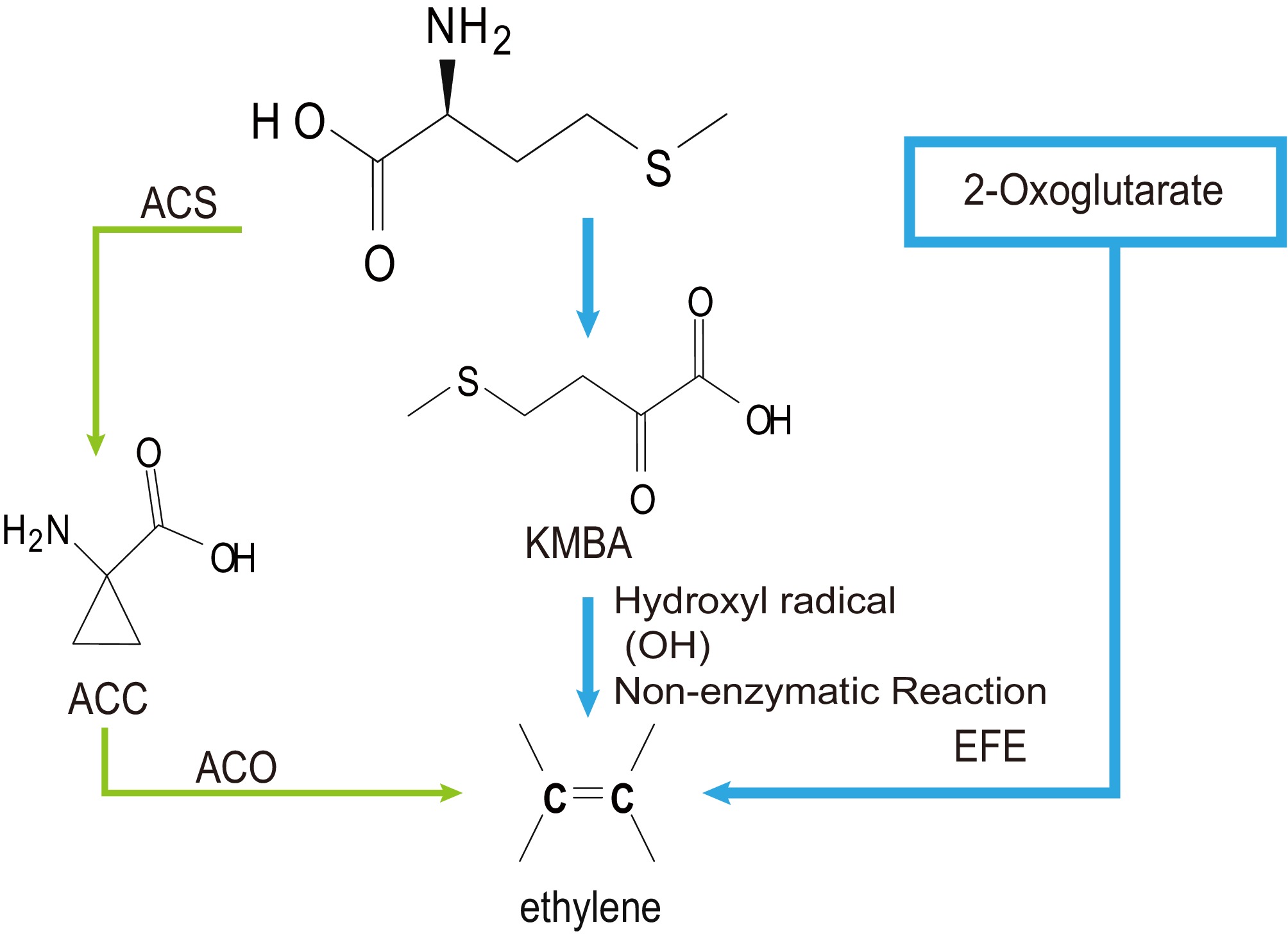
Figure 5.
Ethylene biosynthetic pathways in plants (green arrows) and fungi (blue arrows). While a minority of fungi possess the plant-like ACC-dependent pathway, most fungi synthesize ET via the unique KMBA non-enzymatic oxidation pathway or the EFE pathway. Reaction steps for which the key enzymes have not been identified are shown without specific enzyme labels. Abbreviations: ethylene-forming enzyme (EFE), 2-keto-4-methylthiobutyric acid (KMBA), 1-aminocyclopropane-1-carboxylic acid (ACC), 1-aminocyclopropane-1-carboxylic acid synthase (ACS), 1-aminocyclopropane-1-carboxylic acid oxidase (ACO).
Metabolic pathway of ET
-
The efficiency of fungal ET production is regulated by nutrient availability. For instance, high-glucose and low-ammonium conditions specifically induce the KMBA pathway[136]. Fungi do not merely function as unidirectional ET emitters; they reabsorb and metabolize approximately 30%–50% of the released gaseous hormone. Through the action of ethylene oxide dehydrogenase, recycled ET is converted into ethylene oxide, which subsequently conjugates with intracellular glutathione to form thiodiethanol. This compound is then seamlessly integrated into primary sulfur metabolism, providing essential reducing power that fuels the biosynthesis of complex secondary metabolites, including polyketide mycotoxins like fumonisins[137].
Physiological functions of ET
-
Fungal ethylene production represents a widely distributed metabolic trait that modulates both autonomous development and bidirectional signaling across diverse ecological niches[138,139].
Regulatory roles in fungal growth and development
-
Ethylene regulates key stages of the fungal life cycle through concentration-dependent mechanisms. This gaseous regulator modulates spore germination, germ tube elongation, and appressorium differentiation[2,140]. Phenotypic responses to ET exhibit species-specific variations among different fungal taxa. Exogenous high-concentration ET applications accelerate vegetative mycelial growth in Alternaria alternata, but inhibit mycelial accumulation and arrest fruiting body formation in Agaricus bisporus[141].
Dual functions in plant–fungus interactions
-
ET executes distinct symbiotic or virulent functions at the plant–fungus interface. In ectomycorrhizal systems, Tuber melanosporum and Tuber borchii utilize ET synergistically with indole-3-acetic acid[142]. This hormonal coordination alters fungal metabolic activity and induces architectural modifications in host root systems, facilitating functional mycorrhizal establishment.
In pathogenic interactions, ET signaling operates as a regular virulence determinant and developmental switch[143]. During early Colletotrichum infection cascades, ET perception drives the differentiation of specialized infection structures, serving as the required trigger for appressorium formation[140]. Targeted genetic disruption of ET biosynthesis in Cochliobolus miyabeanus decreases overall infection efficiency on host tissue[134]. Pathogenic fungi employ ET signaling networks to manipulate host immunity. By exploiting this gaseous hormone crosstalk, the infection process can trigger signaling antagonism between plant salicylic acid (SA) and jasmonic acid (JA) defense pathways, which suppresses systemic host immune responses to facilitate colonization[144].
Knowledge gaps in current research
-
The structural features of EFE and the molecular switches for enzymatic and non-enzymatic ET synthesis in fungal ET biosynthesis are unclear. Fungal ET receptors have not been identified, so the core mechanism of fungal ET signal perception remains unelucidated.
Molecular dissection of signaling crosstalk between ET and other phytohormones during fungus–plant interactions is incomplete. No systematic research clarifies how the microenvironment, gas exchange, and nutrients alter local ET concentrations to modify fungal developmental processes.
Jasmonates and their research progress
-
Jasmonates (JAs) are signaling molecules derived from oxygenated polyunsaturated fatty acids, collectively termed oxylipins. In 1962, methyl jasmonate (MeJA) was discovered in plant volatile profiles, and jasmonic acid (JA) was successfully isolated from the culture filtrates of the plant pathogenic fungus Lasiodiplodia theobromae[145].
JAs represent a group of structurally related compounds sharing a cyclopentanone ring system. For the specific member JA, the core skeleton bears an n-pentenyl side chain at the C-7 position and a carboxyl side chain at the C-3 position, possessing a molecular formula of C11H16O3. The two chiral centers located on the cyclopentanone ring yield multiple distinct stereoisomers, with (+)-7-iso-JA and (−)-JA representing the primary configuration coordinates examined in biochemical systems. In addition to free JA, the broader class of fungal JAs encompasses diverse metabolic derivatives, including volatile MeJA, the amino acid conjugate jasmonoyl-isoleucine (JA-Ile), 11-hydroxyjasmonic acid (11-OH-JA), 12-hydroxyjasmonic acid (12-OH-JA), and dihydrojasmonic acid, which display varying structural configurations and distinct biological activities. At present, fungal JA biosynthesis is known to follow an oxylipin cascade similar to the plant octadecanoid pathway but features distinct stereoselective reductions, while its biological roles span from reallocating intracellular secondary metabolites to suppressing host systemic immunity.
JA biosynthetic pathways
-
In higher plants, JA and its derivatives are canonical lipid-derived hormones, whose biosynthesis follows the well-characterized octadecanoid pathway. In plants, lipoxygenase (LOX), allene oxide synthase (AOS), and allene oxide cyclase (AOC) operate sequentially within chloroplasts to convert α-linolenic acid (α-LeA) into 12-oxo-phytodienoic acid (12-OPDA), followed by peroxisomal reduction and β-oxidation[146].
Metabolomics and isotope tracing studies confirm that fungi also synthesize JAs and related oxylipins[147]. In Lasiodiplodia theobromae, the upstream biosynthesis of JAs is analogous to the octadecanoid cascade. The precursor α-LeA is oxidized by fungal LOX to yield 13-hydroperoxyoctadecatrienoic acid (13-HPOT). Subsequently, the conversion of this intermediate into 12-OPDA is catalyzed by AOS and AOC enzymes[148].
Following 12-OPDA synthesis, a critical reduction phase is entered by the pathway. The reduction of double bonds on the cyclopentenone ring is catalyzed by OPDA reductase (OPR). Structural differences are found through biochemical tests. Stereoselectivity is shown by fungal OPRs, and the ring plane is attacked by hydrogen from the α-face. This nucleophilic attack is carried out from the β-face by plant OPRs[149]. Finally, three continuous rounds of β-oxidation are undergone by the produced intermediate, 3-oxo-2-([Z]-pent-2-enyl)-cyclopentane-1-octanoic acid (OPC-8:0). The carboxyl side chain is slowly shortened to form mature JA.
The production and metabolism of derivatives of JA
-
Extensive metabolic branches have evolved in fungi to synthesize a diverse array of JA derivatives. For instance, alternative routes are utilized by L. theobromae to yield iso-OPDA. Subsequent decarboxylation is undergone by this intermediate to generate the highly volatile cis-jasmone (CJ). Specific terminal modification networks are employed by fungi to rapidly oxidize JA derivatives into inactive forms, such as 11-OH-JA or 12-OH-JA[150,151]. Endogenous JA homeostasis is regulated, and autotoxicity is prevented during active secretion by this terminal hydroxylation acting as a metabolic mechanism. Intracellular JAs undergo enzymatic conversion to form MeJA. Alternatively, these molecules conjugate with specific amino acids to yield JA-Ile. These modified molecules directly mediate downstream metabolic redirections[152]. However, the specific gene clusters governing these fungal JA pathways remain unidentified. A critical mechanistic void is highlighted by this gap, and systematic multi-omics elucidation is necessitated by this void.
Physiological functions of JAs
Roles in fungal physiology
-
Kinetic modeling of L. theobromae strain 2334 demonstrates that dynamic JA accumulation lacks a direct linear correlation with absolute mycelial biomass growth[151]. But JAs may engage in the reallocation of cellular resources. Exogenous MeJA applications alter specific branches of secondary metabolism across different fungal taxa. For instance, these treatments activate targeted pathways to accelerate triterpene and flavonoid biosynthesis in Ganoderma sinense and G. lucidum[153,154]. In postharvest physiology, MeJA treatments modulate arginine metabolism and stimulate endogenous antioxidant enzyme systems in Agaricus bisporus. This metabolic reprogramming directly correlates with increased resistance to bacterial brown blotch during storage[155,156].
Functions in plant–pathogen interactions
-
Fungal JA secretion mediates host immune suppression during pathogen colonization. JAs secreted by Colletotrichum graminicola and L. theobromae antagonize salicylic acid (SA)-mediated defense pathways within host plants, such as black mustard[157]. This hormonal antagonism directly suppresses systemic plant immunity[149]. This suppression may facilitate subsequent hyphal colonization and tissue invasion[158].
Knowledge gaps in current research
-
Why fungal OPRs execute a unique α-face ring reduction opposite to plants remains an open question. Specific gene clusters driving terminal hydroxylation for autotoxicity prevention remain to be identified. Furthermore, specific fungal receptors and transcription factors responsible for binding and transducing JA signals to direct metabolic redirection are not yet fully characterized.
Finally, current research primarily focuses on plant–pathogen models. Consequently, the roles of JAs in fungal growth and development require deeper investigation, and the exact triggers activating endogenous JA signaling in non-pathogenic, saprophytic, or mutualistic niches remain less understood.
Salicylic acid and its research progress
-
Salicylic acid (SA) was initially isolated from willow (Salix) bark in the 19th century and was later recognized by White in 1979 as a critical signal inducing pathogen resistance in tobacco[159,160]. SA is not only a well-known signal molecule mediating plant immunity, but is also involved in plant growth regulation[161]. Fungi also synthesize this aromatic molecule endogenously[162].
Salicylic acid is ortho-hydroxybenzoic acid, possessing a molecular formula of C7H6O3. Its primary structure comprises a benzene ring skeleton bearing a carboxyl group at the C-1 position and a phenolic hydroxyl group at the C-2 position. This specific ortho configuration facilitates the formation of an intramolecular hydrogen bond, providing unique amphiphilic properties and high chemical stability to the molecule. Free SA undergoes chemical modifications via hydroxylation, methylation, glycosylation, or amino acid condensation to yield diverse structural derivatives, including volatile methyl salicylate (MeSA), salicylic acid β-glucoside (SAG), and salicyl glucose ester (SGE). The specific substituent types and spatial configurations distributed on the benzene ring strictly determine the overall macromolecular binding capacity and subsequent biological efficacy of these individual derivatives. Currently, while the precise fungal SA biosynthetic genes remain elusive, fungi are known to deploy potent SA-degrading enzymes (e.g., ShyA) to evade host immunity and utilize endogenous SA to modulate their own terpenoid metabolism.
SA biosynthetic and metabolism pathways
Salicylic acid biosynthetic pathways
-
In higher plants, endogenous SA biosynthesis proceeds mainly through two compartmentalized routes: the plastidial isochorismate synthase (ICS) pathway and the cytosolic phenylalanine ammonia-lyase (PAL) pathway[163]. Despite the critical role of SA in cross-kingdom interactions, endogenous SA pathways in fungi remain less understood. Current biochemical models suggest that fungi might utilize homologous PAL-mediated or ICS-mediated routes derived from chorismate[2]. However, the specific fungal genomic loci and catalytic enzymes driving these cascades lack definitive functional validation.
Salicylic acid metabolism pathways
-
During root colonization or infection, a massive influx of host-derived SA is faced by fungi. To counteract SA-mediated SAR, specialized enzymatic systems are deployed by fungi to actively metabolize this hormone. For instance, in A. niger, SA is degraded via two alternative pathways converging on catechol. In the primary route, SA is converted to catechol by salicylate hydroxylase (ShyA). In the alternative route, 3-hydroxylation is undergone by SA to yield 2,3-dihydroxybenzoic acid. Subsequently, this intermediate is decarboxylated into catechol by DhbA. Finally, the aromatic ring of catechol is cleaved by catechol 1,2-dioxygenase (CrcA) to yield cis,cis-muconic acid[164]. In Ganoderma boninense, the direct growth inhibition imposed by the host defense hormone can be alleviated through the ShyA-mediated degradation of SA into catechol. Catechol may be shunted directly into the biosynthesis of fungal melanin by this process[165].
Functions of SA
-
Exogenous SA regulates fungal vegetative growth through concentration-dependent mechanisms. Exogenous SA exerts a biphasic effect on G. boninense, where low concentrations accelerate growth, but high concentrations inhibit it[165]. High SA concentrations inhibit mycelial expansion and pathogenicity in Fusarium oxysporum[166].
Exogenous SA treatments increase intracellular flavonoid and terpenoid contents without altering absolute mycelial growth in Sanghuangporus baumii cultures[167]. Similarly, exogenous SA application can stimulate triterpenoid biosynthesis pathways in Athelia termitophila[168].
As an aromatic polyketide structurally related to SA, 6-methylsalicylic acid (6-MSA) is synthesized and released by the nematode-trapping fungus Duddingtonia flagrans. Caenorhabditis elegans can be attracted by the volatile release of 6-MSA, where subsequent fungal predation may be facilitated[169].
Knowledge gaps in current research
-
The specific genes and proteins driving SA synthesis in fungi remain unclear. In addition, whether PAL-mediated or ICS-mediated pathways are utilized by fungi is not yet known.
The factors controlling dual SA degradation pathways remain unknown. Fungal receptors for sensing SA signals have not yet been found. Meanwhile, the mechanisms driving growth changes and metabolic shifts remain unclear. Finally, the precise gene networks directing SA intermediates or controlling 6-MSA release lack evidence.
Other fungal hormone-like substances
-
Fungi synthesize diverse non-canonical secondary metabolites that exhibit endogenous, hormone-like properties to stringently govern autonomous reproductive lifecycles. For instance, Fusarium species utilize clustered pathways to generate zearalenone, a resorcyclic acid lactone that operates as a localized signaling determinant to control asexual sporulation and initiate perithecia formation. Beyond these internal reproductive roles, zearalenone and its primary stereoisomeric metabolite, alpha-zearalenol, cross cell membranes and bind to cytosolic 17β-estradiol receptors to form a ligand-receptor complex. This inter-organismal molecular mimicry activates downstream gene expression, inducing clinical symptoms such as persistent anestrus and pseudopregnancy in sensitive animal models[170]. Parallelly, a classic paradigm occurs in mucoralean fungi such as Mucor mucedo and Blakeslea trispora, which utilize the β-carotene pathway to synthesize trisporic acids. Functioning as canonical sexual hormones, these active apocarotenoids coordinate inter-thallial interactions between opposing mating types. Upon mutual biotransformation, trisporic acids act directly as the chemical determinants required to induce gametangia formation and initiate physical conjugation for sexual reproduction[171].
-
The substances outlined above have not been originally categorized as fungal hormones, but accumulating functional, genomic, and enzymological evidence indicates that hormone-like substances produced by fungi progressively fulfill the diagnostic criteria for endogenous fungal hormones.
Fungi possess autonomous biosynthetic capabilities
-
Fungal IAA production does not rely on a single precursor. Trp-D pathways are well supported in several fungal taxa, whereas Trp-I routes remain incompletely resolved. Fungi synthesize ET through the KMBA pathway. Fungi also produce ABA through an autonomous sesquiterpene pathway. A single bifunctional cyclase completes two steps of cyclization during fungal GA synthesis. In comparison, plants rely on two discrete enzymes for this process. These clear metabolic differences demonstrate a critical point: fungi synthesize these substances autonomously using their own encoded biosynthetic systems, rather than passively absorbing them from plant tissues.
Fungi remodel these molecules metabolically
-
These systems regulate intracellular levels of these substances and prevent overaccumulation of toxic byproducts. For example, fungi catabolize surplus IAA to anthranilic acid. This intermediate subsequently feeds into the glycolytic pathway. This sophisticated linkage synchronizes homeostasis of these substances and basal carbon metabolism. In addition, fungi eliminate surplus SA through two coordinated pathways mediated by ShyA and DhbA. To avert endogenous cellular damage during massive secretion of these compounds, fungi further derivatize JA. Site-specific 11- and 12-hydroxylation remodel this molecule and tightly modulate its intracellular bioactivity.
These substances serve no structural or energetic roles
-
These molecules act as chemical signals at trace concentrations. They dynamically regulate key developmental stages, including hyphal elongation, lateral branching, spore germination, and fruiting body formation. For instance, endogenous GAs drive stipe elongation and fruiting body maturation in F. filiformis and S. baumii[85,86], while IAA modulates hyphal branching and stress adaptation in T. vaccinum and L. edodes[20,58]. Based on cumulative evidence, these endogenously synthesized signaling molecules exert dual physiological roles. They govern internal physiological processes during autonomous growth and development. Additionally, they mediate intercellular communication during fungus–host interactions. So, these hormone-like compounds can be termed fungal hormones. As concrete examples, fungal-secreted ABA and JAs actively suppress host systemic immune responses to facilitate pathogenic colonization[107,157], whereas secreted IAA promotes host root development to aid symbiotic establishment in mycorrhizal associations[60,61].
The missing link: identification of specific fungal hormone receptors
-
Although the aforementioned evidence strongly supports the existence of an autonomous fungal endocrine-like system, a definitive categorization of these molecules as 'authentic hormones' requires the identification of their specific receptors. Currently, no fungal homologues to classical plant hormone receptors (such as the PYR/PYL/RCAR complexes for ABA or the TIR1/AFB receptors for IAA) have been functionally characterized. It remains to be elucidated how fungi perceive these trace chemical signals to trigger downstream transcriptional and phenotypic responses. Uncovering these undiscovered receptors and their corresponding signal transduction cascades represents the most critical knowledge gap and the ultimate determinant for formally establishing the fungal hormone paradigm.
Research limitations and future perspectives
Expanding fungal study species
-
Current studies mainly focus on a small number of model strains and plant-pathogenic fungi such as F. luteum and B. cinerea. Most existing conclusions are derived from these specific species, whose general applicability still requires more supporting evidence. Further investigations can be carried out on non-model fungi including endophytic fungi, mycorrhizal symbiotic fungi, parasitic fungi, and saprotrophic fungi. For some fungi with slow growth rates, complex life cycles, and immature genetic transformation systems, continuous optimization of experimental techniques and genetic manipulation platforms is needed to gradually supplement fundamental molecular data of these organisms.
Refining experimental validation strategies
-
Current functional evidence is mainly derived from exogenous treatments, which poorly reflect endogenous physiological activities. Greater emphasis should be placed on endogenous functional verification. The generation of biosynthetic enzyme knockout mutants, combined with multi-omics and mass spectrometry detection, helps uncover the genuine roles of these signal molecules. Integrating genetic and biochemical tools will improve the robustness of relevant functional investigations.
Pathway elucidation and receptor identification research based on modern omics
-
With a broader spectrum of investigated fungal species and optimized verification methods, future studies can further unravel the biosynthetic pathways and signaling molecular mechanisms of fungal hormones. Modern omics technologies offer high-throughput, systemic, and hypothesis-free global profiling capabilities that comprehensively capture the molecular landscape of biological systems under specific physiological conditions. We will employ these powerful tools to address fundamental questions surrounding fungal hormonal substances—namely, how these molecules are synthesized, what regulatory mechanisms govern their production, and through which receptors they exert their biological functions. For instance, by integrating genomic and transcriptomic data under hormone-deficient or hormone-overproducing conditions, we expect to pinpoint previously unrecognized genes essential for specific biosynthetic steps. Metabolomic profiling, in turn, will allow us to track dynamic changes in hormone intermediates, thereby reconstructing the complete enzymatic cascade. On the receptor side, we aim to resolve how hormonal signals are perceived and transduced, particularly by identifying proteins that physically interact with these molecules under physiologically relevant contexts. Ultimately, we envision that such knowledge will not only illuminate the molecular logic of fungal hormone action but also provide actionable targets for modulating fungal growth, development, and secondary metabolism in applied settings.
Translational perspectives and application landscapes
-
Advancing understanding of endogenously produced fungal hormone-like substances opens diverse translational avenues across biotechnology, agriculture, and medicine.
Fungal hormones in medicinal fungi: Hormone-like substances have seen partial applications in fermentation culture, while other associated research directions retain substantial value for pharmaceutical exploitation. Elucidating hormonal response mechanisms under oxidative, osmotic, and nutritional stress can facilitate the optimization of fermentation processes. Another research priority lies in resolving hormone-mediated regulatory networks governing the biosynthesis of bioactive secondary metabolites. Dissecting how endogenous signals shape metabolic flux helps uncover molecular switches controlling the accumulation of medicinal ingredients. Such mechanistic insights further underpin the development of targeted culture regulation strategies. For example, exogenous hormone supplementation and endogenous genetic modulation can be adopted to elevate yields of target active compounds during liquid fermentation or solid-state cultivation. Synthetic biology strategies can be utilized to remodel hormonal metabolic pathways. Precise modification of hormone biosynthetic genes enables rational tuning of fungal physiological status and secondary metabolism, supporting large-scale industrial fermentation and high-value active ingredient production.
Fungal hormones in edible mushrooms: Research on fungal hormones in edible mushrooms remains in its infancy yet holds great potential. Future investigations should focus on several key areas. First, systematic research is required to unravel the regulatory mechanisms of hormone action in edible mushrooms. In particular, it is critical to decipher how hormonal signals govern the pivotal developmental transition from vegetative mycelia to primordia and ultimately mature fruiting bodies across distinct growth stages. Second, cultivation optimization represents a vital route toward practical application. Quantitative application models for exogenous hormones, such as cytokinins and gibberellins, need to be established to raise yields, improve quality, and achieve more synchronized cropping. These studies should be integrated with multi-omics analyses to realize precision management of mushroom cultivation. Third, the roles of hormones in pathogen interactions merit further exploration. Researchers should characterize fluctuations in endogenous hormone levels during disease outbreaks and evaluate whether hormone-based priming strategies can effectively strengthen mushroom resistance against fungal pathogens. Fourth, synthetic biology brings transformative opportunities to this field. With CRISPR-Cas9 genome-editing technology, it is feasible to engineer hormone biosynthetic pathways in model edible mushrooms. This enables precise modulation of endogenous hormone titres and facilitates high-throughput screening of genes involved in mushroom development.
In summary, this underexplored field offers exciting opportunities to advance both fundamental knowledge and industrial cultivation practices, with far-reaching implications for edible and medicinal fungal industries. The overall framework for research on fungal hormone-like substances and prospective applications is summarized in Fig. 6.
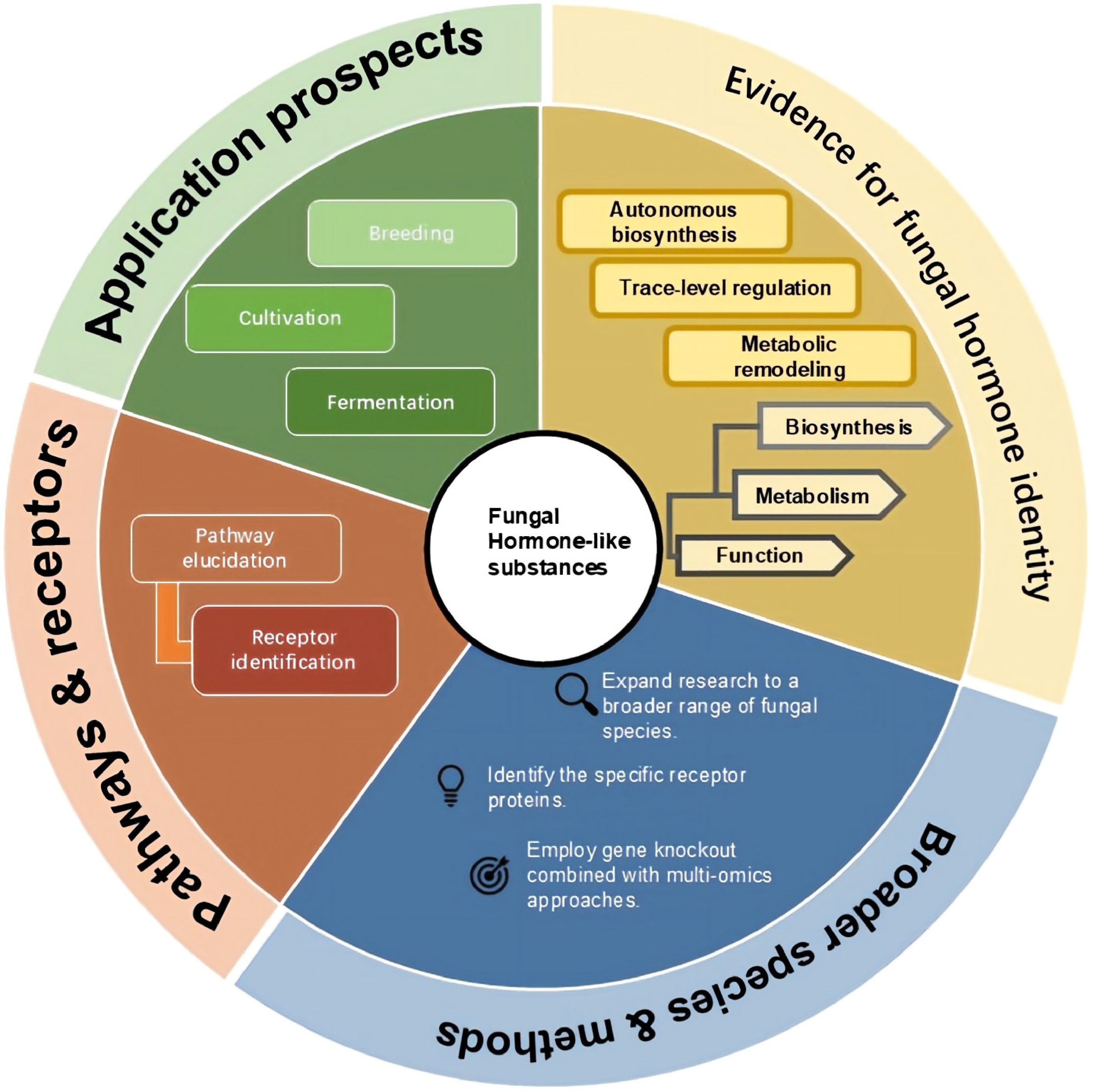
Figure 6.
Schematic framework summarizing current progress, unresolved questions, and future research directions of fungal plant hormone-like substances across four core dimensions.
-
During the preparation of this work, the authors used Gemini (Date: October 2026) for language translation and refinement. The author(s) reviewed and edited all content produced with the assistance of this tool, verified its accuracy, and take full responsibility for the integrity and originality of the final manuscript. This work represents the author(s)' own intellectual contribution, and no AI tool is credited as an author.
-
The authors confirm their contributions to the paper as follows: data curation: Li SH, Hu YZ, Wang ZY, Liu J, Zhou JJ; wrote the original draft, with subsequent review and editing: Li SH; proposed the primary framework and completed manuscript revision and editing: Ji RQ; contributed to the original draft preparation: Hu YZ. All authors reviewed the results and approved the final version of the manuscript.
-
Data sharing is not applicable to this article, as no datasets were generated or analyzed during the current study.
-
The authors declare that they have no conflict of interest.
- Copyright: © 2026 by the author(s). Published by Maximum Academic Press on behalf of Jilin Agricultural University. This article is an open access article distributed under Creative Commons Attribution License (CC BY 4.0), visit https://creativecommons.org/licenses/by/4.0/.
-
About this article
Cite this article
Li SH, Hu YZ, Wang ZY, Liu J, Zhou JJ, et al. 2026. Fungal-derived plant hormone-like substances: merely secondary metabolites or authentic fungal hormones? Panfungi 1: e014 doi: 10.48130/panfungi-0026-0009 

Fungal-derived plant hormone-like substances: merely secondary metabolites or authentic fungal hormones?
- Received: 23 July 2026
- Revised: 12 October 2026
- Accepted: 22 October 2026
- Published online: 09 November 2026
Abstract: Fungi are capable of endogenously synthesizing a diverse array of plant hormone-like substances, including indole-3-acetic acid (IAA) and its analogues, gibberellins (GAs), cytokinins (CKs), abscisic acid (ABA), ethylene (ET), jasmonic acid (JA), and salicylic acid (SA). Historically regarded merely as fungal secondary metabolites that modulate plant growth and plant–fungus interactions, these hormonal substances have attracted increasing attention for their intrinsic physiological roles in fungi themselves. Rather than serving as energy providers or structural components of cells, these trace compounds act as endogenous messenger molecules that regulate multiple fungal physiological processes, including mycelial growth, hyphal tip cell elongation, cell proliferation, spore germination, ion absorption, germ tube and appressorium formation in parasitic fungi, and pileus and stipe differentiation in macrofungi. Investigating these substances is therefore of great significance for both advancing fundamental fungal developmental biology and overcoming cultivation and fermentation bottlenecks in edible and medicinal fungi. However, whether these molecules should be categorized as genuine fungal hormones remains controversial due to several critical limitations in the current field. Specifically, existing studies are largely restricted to a few model and phytopathogenic fungi and rely heavily on exogenous application experiments; moreover, the precise synthesis sites, in vivo distribution, trafficking pathways, and specific signal receptors of these hormone-like substances in fungi remain largely unclarified. Herein, we systematically summarize the identification of plant hormone-like substances across various fungal species and analyze their biosynthetic pathways, metabolic routes, and biological functions, providing integrated evidence supporting the perspective that these substances function as genuine fungal hormones. Finally, we discuss future perspectives on integrating modern multi-omics and genetic tools to decipher endogenous hormone signaling networks and receptor identities, aiming to facilitate their practical application in modern agriculture and fungal biotechnology.