










-
Freshwater eels of the genus Anguilla have intrigued biologists for centuries because of their catadromous life history that includes spawning in the open ocean and growing in continental freshwaters and estuaries. After recruitment into rivers as early juvenile-stage glass eels and pigmented elvers, anguillid eels spend most of their lives in continental growth habitats as yellow eels before they migrate to sea as silver eels. While this growth stage is directly exposed to anthropogenic influences[1,2], it also represents the stage at which human intervention can most effectively contribute to eel conservation and management[3,4]. Protecting and enhancing habitat used by eels during the growth stages could help to increase the number and quality of adult eels that contribute to future spawning stocks.
Conservation and management of anguillid eels is challenging because of their catadromous life history and wide geographic distribution. For the Japanese eel, Anguilla japonica, its distribution ranges from southeastern China, Taiwan, and Korea to the Pacific coast of northern Japan, including Hokkaido Island[5−7]. The spawning area is located near the southern part of the West Mariana Ridge in the western North Pacific[8,9]. After hatching, larvae are transported westward by the North Equatorial Current and then carried by the Kuroshio Current, where they metamorphose into glass eels[10,11] before migrating toward coastal regions of East Asia. Some glass eels and elvers recruit into rivers, while others settle in estuarine and saline waters to grow[12]. After growing in rivers and estuaries for approximately 5–15 years as yellow eels and undergoing morphological changes to become silver eels[13], they migrate back to the southern part of the West Mariana Ridge to reproduce and then die.
The Japanese eel is a commercially important fish in East Asia and is harvested from the time when individuals recruit to rivers and estuaries as glass eels until their downstream migration as silver eels returning to the spawning area[2]. Glass eels in particular have been intensively exploited due to the high demand for aquaculture. However, fisheries catches of the Japanese eel, including glass, yellow, and silver eels, have declined since the 1970s[6,14] and are showing no signs of recovery[15]. Consequently, this species has been listed as Endangered on the International Union for Conservation of Nature Red List since 2014[16]. Three major factors have been proposed to explain the population decline of the Japanese eel: overfishing[6,17], degradation of growth habitats[18], and environmental fluctuations in the open ocean[19]. Given this severe decline, ecological information during the growth stage is urgently needed to develop effective stock management and conservation[20].
Over the past two decades, numerous studies have investigated the ecology of the Japanese eel during its continental growth stages, including habitat use[4,21], diet[22], and movement patterns[3,23]. Many of these previous studies have mainly focused on larger yellow eels inhabiting freshwater environments, but ecological information on smaller-sized juveniles such as glass eels, elvers, and small yellow eels remains comparatively limited. However, recently, some studies have investigated the ecology of the smaller-sized eels that have recruited to rivers to conserve and manage wild populations. For example, environmental conditions such as water depth, flow velocity, and substrate composition influence habitat use by small eels[24,25]. Their pigmentation stages and condition factors in freshwater areas were higher than those in estuarine areas[26]. These previous studies have improved the understanding of the ecology of the Japanese eel after recruitment into continental freshwaters and estuaries.
Because smaller-sized juvenile eels experience an environmental transition from marine and estuarine to freshwater habitats, they likely respond by varying their behavior, habitat use, and physiology during this transitional period[26,27]. Understanding such responses is important for enhancing their subsequent growth and survival in changing environments within continental growth habitats. However, little is known about the spatial distribution of small eels and cohort-level changes in their body size during the early post-recruitment stage. The objective of this study was to describe the temporal occurrence, spatial distribution, and cohort-level changes in total length (TL) of juvenile Japanese eels during the early post-recruitment stage in small coastal rivers of Japan.
-
This study was carried out in the three small rivers: Karasu, Ito-Naka, and Ito-Miya rivers in Shizuoka Prefecture, central Japan (Fig. 1). These three adjacent rivers are heavily channelized and flow through the small city of Usami. These are very small channels (Supplementary Fig. S1), so they are technically streams, but for convenience will usually be referred to as rivers due to their names in Japan. They were selected as study areas because no local fishery cooperatives manage these rivers under the Fishery Act of Japan, recreational angling is minimal, and no artificial release of eels has occurred. Their partially different environments allowed for a comparative study among the three rivers. They also have a low discharge of 0.2–0.5 m3/s, which made it easy to collect eels. The Karasu and Ito-Naka rivers received inflow of hot spring wastewater from further upstream of our survey area where we collected eels. In this study, we focused on small 'juvenile eels' that are considered to include glass eels, elvers, and small yellow eels (Supplementary Fig. S2) and operationally defined as individuals with a total length (TL) less than 20 cm, for which ecological knowledge remains substantially more limited than for larger yellow eels. Glass eels were approximately 5–7 cm in TL when they were collected soon after recruiting in estuaries of East Asia such as in Japan[15,28] and Taiwan[29].
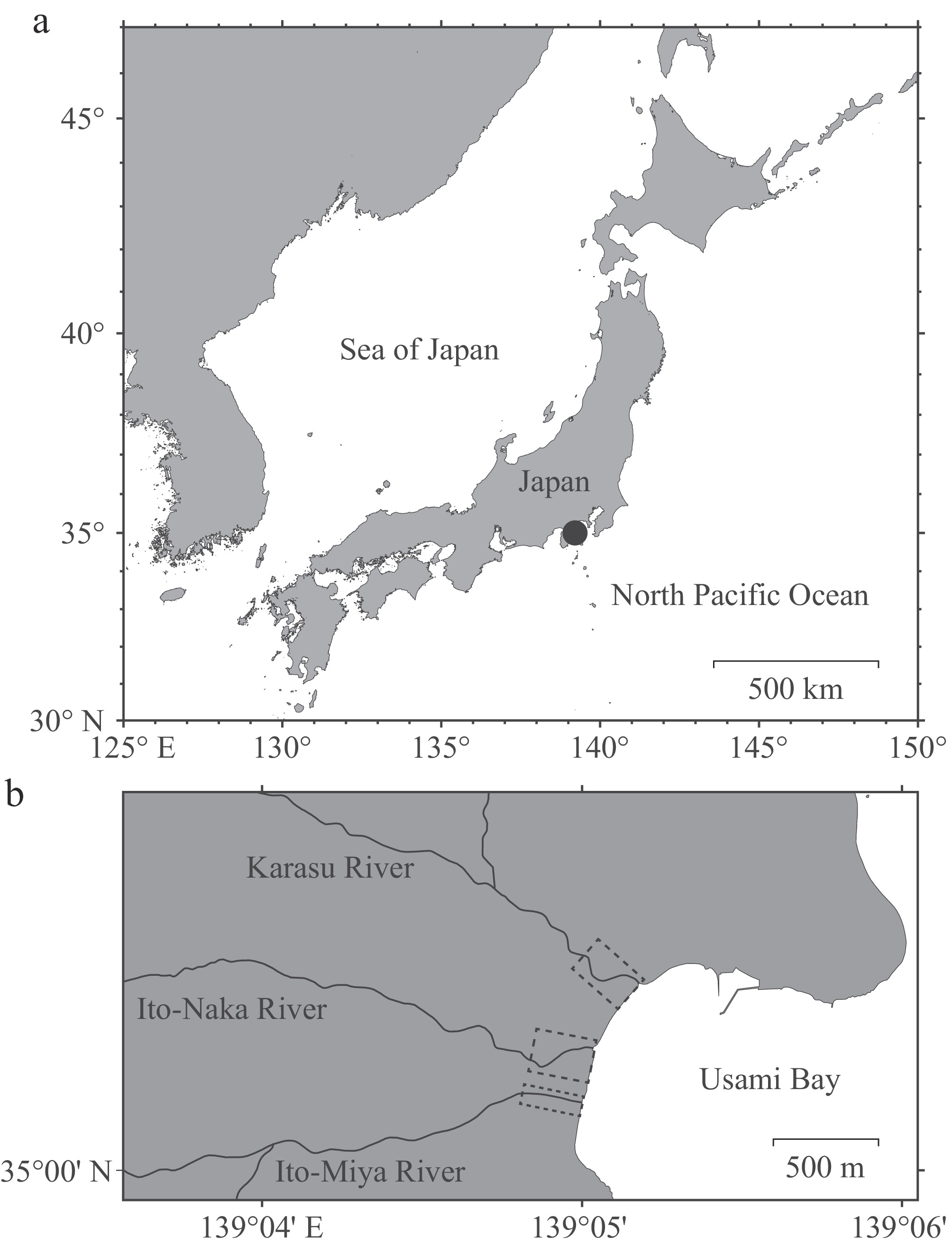
Figure 1.
(a) Map of the study area in Shizuoka Prefecture in central Japan and (b) the locations of the Karasu, Ito-Naka, and Ito-Miya rivers. Dashed rectangles represent the lower reaches of the rivers where juveniles of Anguilla japonica were collected using electrofishing from the river outlet to about 200–250 m upstream. The map was created by the authors.
Juvenile Japanese eels were collected from each river outlet to 200 or 250 m upstream using electrofishing (Model 12; Smith-Root Inc., Washington, USA) (Fig. 1b). The collections were conducted from May 2013 to October 2015, late in each month, but sampling had to be finished by April 2014 in the Karasu River due to local concerns. On each sampling date, electrofishing surveys in three rivers were conducted on the same day by the same number of personnel. Electrofishing was conducted during the daytime for safety and targeted low-tide periods to maximize capture efficiency. The collection team ranged from four to nine persons: one with the electrofishing system and the others assisting with collecting eels using hand nets. Collected juvenile eels were temporarily anesthetized using about 0.01% eugenol (FA100, DS Pharma Animal Health Co., Ltd, Japan), and then their TL and body weight were measured in the field. All collected juvenile eels were visually inspected for species identification based on body pigmentation. Because A. marmorata is rare near our sampling areas and no eels with marbled patterns were observed, all collected individuals were regarded as A. japonica. After the juvenile eels recovered from anesthetization in a bucket with freshwater, they were released as close as possible to their collection sites within the survey area of each river to minimize anthropogenic impacts on their spatial distribution during future sampling. Water temperatures were measured hourly at the lower part of each river using a data logger (TidBitv2; Onset Computer Corporation, USA). A thermometer was also used to record water temperature during the collection surveys at the lower part of each river.
Because juvenile eels were able to be collected continuously only in the Ito-Naka River (see Results), the change in their distribution and TL at a yearly-cohort level was examined using data from eels that were collected at the river outlet to about 250 m upstream in the Ito-Naka River in this study. A small weir (approximately 50 cm high from the riverbed) was located in this lower part where we conducted electrofishing surveys (Supplementary Fig. S3). Flow velocity was measured around the area just downstream of the weir because many juveniles were collected near the river outlet of the Ito-Naka River (see Results). To examine the temporal distribution of the juveniles, we recorded sites where they were collected in the Ito-Naka River during June 2014–October 2015. Exact positions of the juveniles were recorded on a river map at a 1:500 scale using surrounding buildings and river features as landmarks. The TL increment (mm/d) was calculated by subtracting the mean TL of the previous month from that of the current month and dividing the difference by the number of survey days between each month. Normality of the residuals was checked using the Shapiro–Wilk test. Because all datasets satisfied the assumption of normality (p > 0.05), Pearson’s correlation tests and linear regression analyses were performed to evaluate the relationships between the TL increment (mm/d) and mean water temperatures for each cohort. We acknowledge the limitation that temporal autocorrelation may be present because the TL increments were derived from successive monthly mean differences within the same cohort. The correlation and regression results should be interpreted with this limitation in mind. All statistical analyses were performed using RStudio (v2026.09.0) and Microsoft Excel v16.102.1 (Microsoft Corporation, WA, USA). Two-sided p < 0.05 was considered to be statistically significant.
-
The collection period in the Karasu River was 18 months shorter than that in the other two rivers, but the number of collected A. japonica juvenile eels greatly varied among the three rivers (Supplementary Table S1). There were 507, 1,871, and 114 A. japonica juveniles collected in the Karasu, Ito-Naka, and Ito-Miya rivers, respectively (Supplementary Table S1). Among those juveniles, there were 421, 473, and 67 that were glass eels with 5–7 cm TL collected in those three rivers, respectively (Supplementary Table S1). The water temperature (mean ± SD) recorded by the logger during sampling efforts was 17.5 ± 5.3 °C (range: 4.8–28.2 °C, n = 7,928), 21.7 ± 7.3 °C (10.8–35.1 °C, n = 20,299), 17.7 ± 4.7 °C (8.5–25.2 °C, n = 20,175) at each downstream reach of the same three rivers, respectively. The Ito-Naka River has a higher mean and range of water temperatures than the other two rivers.
There were also variations in the month when the smallest glass eels started to be collected among the three rivers. In the Karasu River, glass eels ≤ 7 cm TL were first caught in July 2013 and February 2014 (Supplementary Table S1). In the Ito-Naka River, glass eels were first caught in May 2013, April 2014, and January 2015 (Fig. 2). In the Ito-Miya River, 5–7 cm TL glass eels were first caught in September 2013, May 2014, and January 2015 (Fig. 2; Supplementary Table S1).
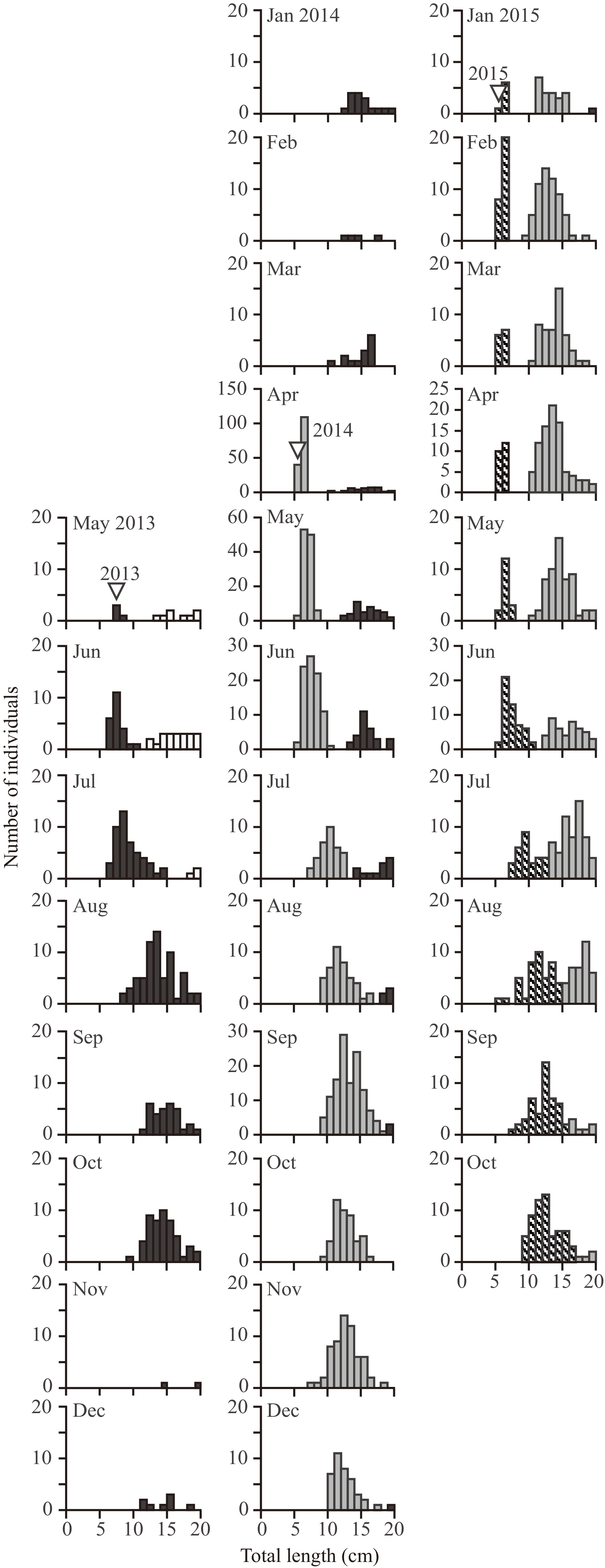
Figure 2.
Time series of the number of Anguilla japonica juveniles collected at the Ito-Naka River from May 2013 to October 2015. Light gray, black, gray, and striped bars represent 2012, 2013, 2014, and 2015 cohorts, respectively. White triangles indicate the first collection of individuals ≤ 7 cm TL in each year.
Distribution in the Ito-Naka River
-
We collected 863 and 315 A. japonica juvenile eels < 20 cm TL representing the 2014 and 2015 cohorts, respectively, from June 2014 to October 2015 in the Ito-Naka River. The records of their collection sites showed that many juveniles were initially captured near the outflow area in the lower reach of the river (Fig. 3). The area was located just downstream of the small weir and close to a channel bar, with a shallow water depth of less than 20 cm, and was composed of mud and sand (Supplementary Fig. S3). Flow velocity in the area was 0.13–0.27 m/s. We started to record the collection sites of each eel from June 2014, and so there were no location records during April and May 2014, but 129 and 87 eels were collected in those 2 months (Supplementary Table S1). Therefore, many juvenile eels were concentrated in the area close to the channel bar from April to August in 2014 and from January to June in 2015; the concentration disappeared in September 2014 and in July 2015, and subsequently a greater proportion of juveniles were caught upstream of the initial concentration area, while a few individuals were captured downstream (Fig. 3). The concentration was a common pattern in the 2014 and 2015 cohorts, but the timing of the change in juvenile distribution differed between the 2 year-cohorts.
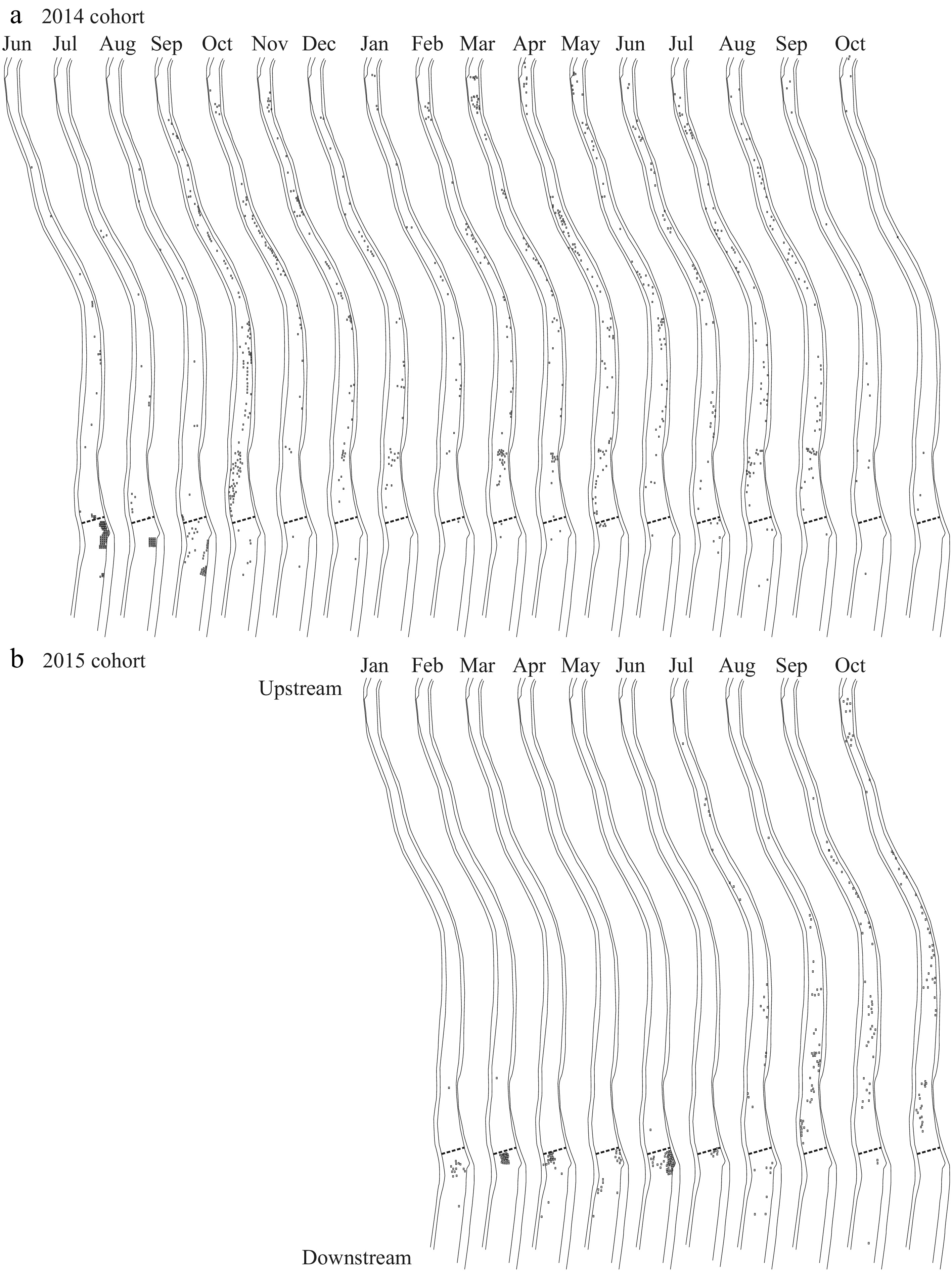
Figure 3.
Locations where Anguilla japonica juveniles were caught (open squares) within an about 250 m lower reach of the Ito-Naka River for the (a) 2014 and (b) 2015 cohorts. The 2014 cohort had likely arrived in the months before sampling started and was caught in the river for 17 months, but the 2015 cohort was caught for 10 months, starting with first arrival until the end of the study, and was not collected in November and December 2014. Dotted lines show the location of the small weir.
TL increment in the Ito-Naka River
-
The mean TL of juvenile eels that were collected in the Ito-Naka River increased from May to September for the 2013, 2014 and 2015 cohorts (Fig. 4a). During these months, the water temperatures remained above about 20 °C, peaking in August (Fig. 4b). In contrast, from October to April, when water temperatures dropped below 20 °C, the change of mean TL became relatively smaller and stagnant (Fig. 4). The mean TL of the smallest size classes in the juveniles was less than 7 cm at the time of their first collections. About 6 months later, the mean TL was approximately 10–15 cm TL and then approached about 20 cm TL after more than 1.5 years (Fig. 4a). In addition, the TL increment (mm/d) showed positive correlations with mean water temperature in the Ito-Naka River for each of the 2013 (r = 0.59, p = 0.0035), 2014 (r = 0.68, p = 0.0020) and 2015 (r = 0.81, p = 0.0045) cohorts (Pearson’s correlation tests) (Fig. 5). These significant relationships were supported by linear regression analyses (2013: 95% confidence interval (CI) [0.002, 0.006], R2 = 0.39, p = 0.0074; 2014: 95% CI [0.001, 0.005], R2 = 0.49, p = 0.0011; 2015: 95% CI [0.001, 0.005], R2 = 0.63, p = 0.0059). These results showed that the TL increment of each cohort was associated with water temperature.
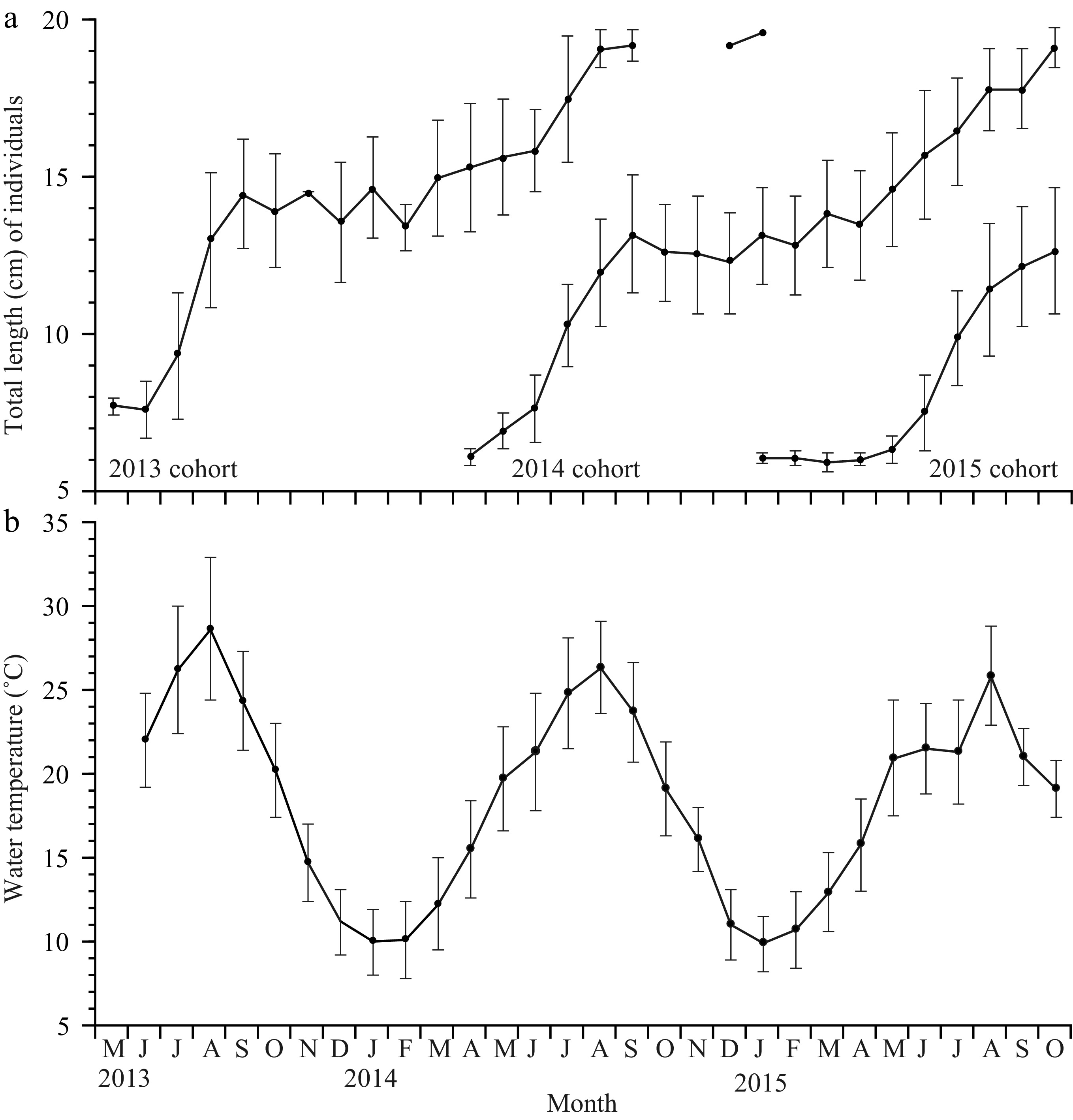
Figure 4.
Changes in (a) mean total length of Anguilla japonica juveniles < 20 cm for the 2013, 2014, and 2015 cohorts and (b) water temperature in the Ito-Naka River. Bars show standard deviations.
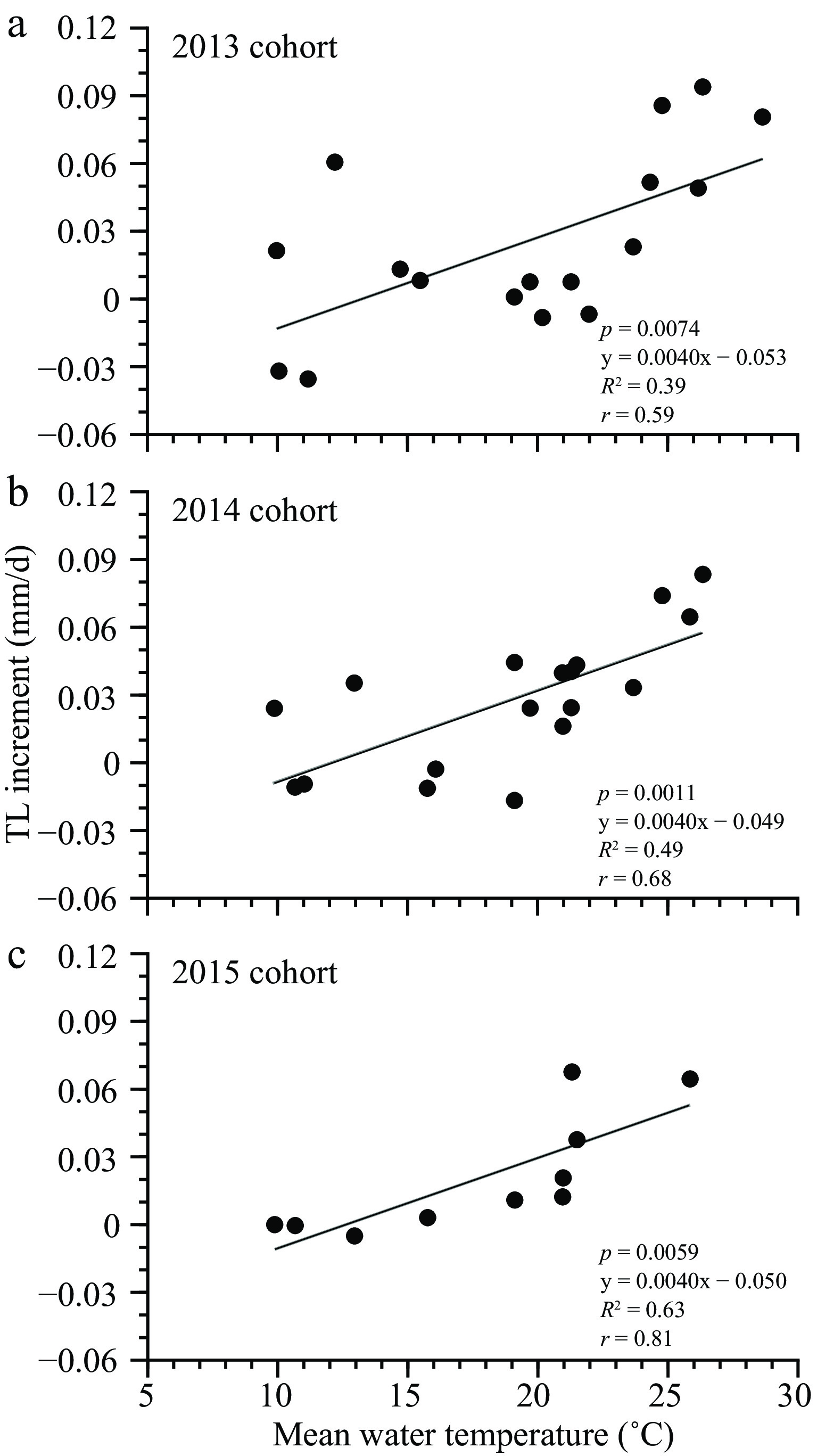
Figure 5.
Relationships between the monthly TL increment (mm/d) of Anguilla japonica juveniles collected each month for (a) 2013, (b) 2014, and (c) 2015 cohorts and the mean water temperature in the Ito-Naka River. p values (p), regression lines, coefficients of determination (R2), and Pearson’s correlation coefficients (r) are shown.
-
The collections of < 20 cm TL A. japonica juveniles from the river outlets to 200–250 m upstream showed variations in the numbers that were collected among the Karasu, Ito-Naka, and Ito-Miya rivers (Supplementary Table S1) even though the distance between the mouths of the three rivers was only about 800 m at most (Fig. 1). The Ito-Naka (Fig. 2) and Ito-Miya rivers were both sampled during the same period from May 2013 to October 2015, which enabled a direct comparison of the eel catches, but the Karasu River had a shorter period of sampling (Supplementary Table S1). A higher number of juveniles was collected in the Ito-Naka River (1,871 juveniles including 473 glass eels) compared to the Ito-Miya River (114 juveniles including 67 glass eels). Although the proportion of small eels that had moved farther upstream outside of these survey areas in the three rivers was not determined by our sampling, these collections suggested that a higher density of juvenile eels was distributed in the lower reach of the Ito-Naka River. A clear environmental difference between the two rivers is that the Ito-Naka River had higher temperatures. Although water temperature from hot spring wastewater could be a possible factor influencing the occurrence of juvenile eels, temperature is not the only differing environmental variable among the rivers.
This study did not provide quantitative data, but it seems possible that the geomorphological characteristics from river outlets and up through the lower reaches may influence glass eel recruitment and the subsequent habitat use of juveniles. While the Ito-Naka and Karasu rivers contain meandering reaches, the Ito-Miya River is characterized by a relatively straight channel (Fig. 1b). Meandering reaches typically show regular alternations between fast-flowing riffles and slow-flowing pools. In a previous study, the A. japonica juveniles < 20 cm TL preferred to use slow-flowing habitats that contained complex substrates with both smaller and larger particle sizes[24]. Juveniles may be able to remain within the slow-flowing areas that provide favorable environmental conditions for growth and survival[30]. The Ito-Naka River seems to have an area just below the first small weir that provides favorable habitat for the juvenile eels (Supplementary Fig. S3). Further study is needed to understand glass eel recruitment and habitat use of juvenile eels, combined with geomorphology from river outlets to downstream.
There was also variation in the timing of the first collections of the smallest A. japonica juveniles among months in the same river (Fig. 2) and across three rivers (Supplementary Table S1). Although the precise timing of the first occurrence is influenced by chance due to small initial sample sizes, the variation in this study may be explained by differences in the timing of when glass eels arrive in this part of Japan for recruitment. In Japan, previous studies have shown that A. japonica glass eels start to be caught in February in Fukuoka[31], November–December in Kanagawa[32], December–January in Shizuoka[33], and November–December in Miyazaki[34]. The glass eels have been well known to recruit in rivers during the fishing seasons from December to March or April, when license holders are able to catch them, depending on the prefecture. However, previous monthly sampling over a few years to over a decade with the same effort revealed that the glass eels recruited to rivers later in summer from May to July compared with the well-known recruitment season in Japan[32,34]. In other countries, the first collection of the glass eels was mainly in December in China[35], February in South Korea[36], and October in Taiwan[37], although the sampling periods were limited to fishing seasons in each country. The glass eels primarily start to recruit to rivers in East Asia during October–February, with some exceptions in peripheral areas. The recruitment abundance and timing of glass eels can likely be determined by multiple environmental factors[6,26] rather than a single one such as water temperature, but what caused the variations in timing in the present study is unclear. For example, micro-scale variations among adjacent rivers might be modulated by glass eel preferences for salinity conditions and river water cues. Understanding how recruitment processes from marine to freshwater areas are linked to the subsequent distribution and habitat use of juvenile eels in rivers remains an important topic for future research.
Distribution in the Ito-Naka River
-
This study showed a snapshot of the distribution of juvenile eels from the river outlet to the lower reaches of the small Ito-Naka River after they arrived from the sea (Fig. 3). A common pattern in both the 2014 and 2015 cohorts was that many juveniles temporarily concentrated near the channel bar that was located just downstream of the small weir (Fig. 3; Supplementary Fig. S3). In other studies on Japanese eels, weirs higher than 40 cm prevented small juveniles < 24 cm TL from moving further upstream, but small 6 to 14 cm TL juveniles were observed climbing a 165 cm height weir[38]. In addition, small eels about 20 cm in size have been captured upstream of a 46 m-high waterfall, which indicated small individuals are capable of ascending even high vertical waterfalls[39], although the height of an obstacle that juveniles can climb over depended not only on eel size, but also on the structural surface characteristics and environmental conditions[38]. Considering that the small weir in our survey area was up to about 50 cm high from the riverbed and the water surface level difference between upstream and downstream of the weir was about 10–20 cm, the weir was unlikely to have functioned as a complete physical barrier. Therefore, the small weir may have acted as a temporary barrier for the juvenile eels near the river mouth before they appeared to move over the weir over time because individuals were later collected further upstream. Continuous environmental measurements would be important to further understand the habitat use in the lower reaches of small rivers because environmental conditions that were created by weirs might be favorable for juvenile eels. Similar concentration patterns of the European eel A. anguilla were observed downstream of obstructions in small rivers after they recruited to freshwater areas from the sea[40], but such concentrations by Japanese eels were not found in the Pearl River, which is the largest river in southern China[41]. This discrepancy may be explained by differences in width, habitat heterogeneity, and sampling methodology between small and large river systems. Large rivers might provide multiple refuge areas in the lower reaches, which results in a more dispersed distribution rather than a localized concentration in small rivers.
The concentration areas observed in this study were characterized by shallow water depth and low flow velocity (Supplementary Fig. S3) and may function as refuge habitats for juvenile eels. Small-sized Japanese eels < 20 cm[21,24] and ≤ 25 cm TL[4] were primarily distributed at short distances from the sea and preferred shallow and low-velocity areas. A similar habitat preference was observed in small-sized eels of other Anguilla species such as A. australis, A. dieffenbachii[42], A. rostrata[43], and A. anguilla[44]. Because the smaller eels have lower swimming ability than larger eels[45], their use of shallow and low-velocity areas reduces exposure to strong water currents[4,25]. For example, small 6–7 cm TL A. anguilla cannot maintain their position and progress against flow velocity exceeding about 50 cm/s[46,47]. The concentration areas likely provide hydraulically benign conditions that reduce the energetic costs of position-holding for the juveniles and may have functioned as hiding habitats near the river outlet of the Ito-Naka River.
These concentration areas may be especially important to reduce predation risk from visual predators such as piscivorous fishes and birds. Because the ability to avoid predation in eels improves with their development[48], smaller juveniles may rely on the concentration area as refuges until their physical performance and predator-avoidance abilities have sufficiently matured. In this study, we observed the burrowing behavior of juvenile eels in the concentration areas that were composed of mud and sand during our electrofishing sampling, and the same behavior was found in other small rivers in Japan[24,25]. Unlike preference of juvenile eels to water current, there would be their flexible uses to substrates balancing the relationship between predation risk and food availability[49]. Juvenile eels emerged from fine and compact substrates such as mud and sand during sampling in our study, but they have also been reported to hide under stones larger than 10 cm[25]. Other field observations showed that young eels used more complex substrates[24,43,44]. Burrowing performance was highest in 1–2 mm fine gravels, but glass eels and elvers were able to use coarse gravel > 8 mm by moving through the interstitial spaces between substrates due to their small body sizes[50]. Unfortunately, the substrate sizes of the concentration areas were not measured in this study, but mud and sand substrates may be important refuges for juvenile eels, because eels are generally considered to bury to avoid predation[50,51]. Another possibility is that the areas where the juvenile eels concentrated may play a role as transitional habitats where they adjust to the change in salinity conditions during their shift from marine to freshwater environments.
TL increment in the Ito-Naka River
-
This study described cohort-level temporal changes in the mean TL of recruiting juvenile eels at the lower reach in the Ito-Naka River. These observed cohort-level TL changes may arise from multiple processes, including the recruitment of new glass eels, size-dependent movement, and turnover within the sampling area. It was difficult to distinguish these processes from individual growth because each eel was not tracked in this study. The observed changes in mean TL may have been under- or overestimated because the TL of juvenile eels overlapped among yearly cohorts. However, our data showed that the mean TL increased rapidly after glass eels entered freshwater, and this increase coincided with seasonal increases in water temperature across all cohorts of 3 years during 2013–2015 (Fig. 4).
The cohort level TL change appeared to be synchronized with seasonal changes in water temperature, because the mean TL clearly increased during warmer periods in spring to summer and then slowed down or became stagnant during the colder periods in autumn to winter (Fig. 4). This apparent trend was supported by positive correlations between the TL increments and mean water temperature in all cohorts of 3 years during 2013–2015 (Fig. 5). In previous laboratory experiments, glass eels began feeding at 15–30 °C, whereas no feeding occurred at 5 and 10 °C[52]. Also, previous water-choice experiments showed that the locomotor activity of glass eels increased with rising temperature[53]. These results indicated that higher temperatures enhance feeding motivation and behavioral activity of A. japonica juvenile eels. From a physiological perspective, high water temperature elevated oxygen consumption rates in A. japonica juveniles, indicating enhanced metabolic activity, although endogenous rhythms also influence metabolism[27]. Water temperature has widespread effects on locomotor activity, feeding rate, consumption, digestion, and metabolic functions[54], which may partially explain the seasonal increase in the mean TL observed in the lower reach of the Ito-Naka River. Furthermore, TL remains stable or decreases during the glass eel stage due to drastic morphological and physiological changes associated with metamorphosis[26,55]. Therefore, the rapid increase in mean TL in this study might be attributed not only to temperature-driven factors, but also to eels completing their metamorphosis and transitioning into an active juvenile growth phase after these body changes were fully established.
As an alternative interpretation, the consistent and rapid increase of the mean TL following recruitment seems biologically reasonable to reflect the growth of the cohort, when considering the onset of feeding. Glass eels may rely largely on endogenous energy reserves from just after metamorphosis to immigration in estuarine waters, and then their feeding activity increases after recruitment into freshwater environments[56]. Gut content analyses of A. japonica juveniles showed that glass eels feed on a type of particulate organic matter, whereas elvers prey on planktonic and benthic organisms[57]. It was also verified that elvers occupied a higher trophic position than glass eels by performing stable isotope analyses. In the field, after glass eel recruitment occurred at Lake Hamana, with the peak generally in January[33], the proportion of A. japonica juveniles with food in their guts gradually increased from February[26]. These previous data suggested that a marked change in diet occurred between the glass eels and elvers, and that the diet of elvers would expand to exogenous nutrition that originated from prey items inhabiting each river where they recruited. Moreover, the digestive organs started to be formed in glass eels after metamorphosis and were then completed by the elver stage[55], which indicated that elvers would be able to feed and digest exogenous prey items in freshwater environments. The rapid increase in the mean TL observed after recruitment in this study may reflect nutritional intake associated with the transition from glass eels to elvers.
-
This study addressed a knowledge gap in the ecology of the Japanese eel by focusing on juvenile eels that are < 20 cm TL and provided basic ecological information during their growth stages that has received relatively little attention compared with larger yellow eels. Japanese eel juveniles showed differences in occurrence in lower reaches among the three rivers; concentration was observed just below the small weir, and a cohort-level increase in the mean TL occurred in spring and summer from the river outlet to lower reaches. These basic types of ecological information in freshwater areas that eels use immediately after recruitment can be compared to other studies in large rivers and different regions in the future and can support the development of conservation and management of this endangered species. Future studies integrating otolith analyses, individual-based tracking, and environmental measurements are needed to determine the duration of habitat use by the juvenile eels in the lower reaches and to clarify how freshwater environments contribute to their post-settlement growth and survival at the individual level.
-
The study was conducted in strict accordance with the Guiding Principles for the Care and Use of Laboratory Animals of Kindai University. Institutional ethical approval was not required for this study because field studies of wild fish are exempt from animal care committee review under current national regulations. Instead, field sampling was conducted under a special fishing permit issued by Shizuoka Prefecture (Permit Nos. 25-21 in 2013, 26-07 in 2014, and 27-08 in 2015).
-
The authors confirm their contributions to the paper as follows: conceptualization, funding acquisition: Takeuchi A, Suzuki K, Matsuyama H, Kawai N, Watanabe S, Tsukamoto K; fish investigation and collection, manuscript review and editing: Takeuchi A, Suzuki K, Matsuyama H, Kinami R, Kawai N, Sato T, Suzuki M, Hirai K, Masumoto H, Watanabe S, Higuchi T, Tsukamoto K; data analysis: Takeuchi A, Suzuki K, Watanabe S; manuscript drafting: Takeuchi A. All authors reviewed the results and approved the final version of the manuscript.
-
All data generated or analyzed during this study are included in this published article and its supplementary information files.
-
The authors declare that they have no conflict of interest.
-
accompanies this paper online at: https://doi.org/10.48130/jai-0026-0012.
- Supplementary Table S1 Summary of the number of juvenile eels that were collected in the three rivers.
- Supplementary Fig. S1 Photographs showing the general characteristics of the three study rivers.
- Supplementary Fig. S2 Photographs of A. japonica glass eels, elvers and small yellow eels.
- Supplementary Fig. S3 Concentration areas where A. japonica juveniles temporarily stayed in the Ito-Naka River.
-
Copyright: © 2026 by the author(s).
Journal of Applied Ichthyology published by Maximum Academic Press on behalf of John Wiley & Sons Ltd. This is an open access article under theterms of the Creative Commons Attribution License, which permits use, distribution and reproduction in any medium, provided the original work is properly cited. -
About this article
Cite this article
Takeuchi A, Suzuki K, Matsuyama H, Kinami R, Kawai N, et al. 2026. Occurrence, distribution, and length changes of juvenile Japanese eels in the lower reaches of small coastal rivers in Japan. Journal of Applied Ichthyology 2026: e012 doi: 10.48130/jai-0026-0012 

Occurrence, distribution, and length changes of juvenile Japanese eels in the lower reaches of small coastal rivers in Japan
- Received: 28 June 2026
- Revised: 28 September 2026
- Accepted: 20 October 2026
- Published online: 13 November 2026
Abstract: Freshwater habitats used by the Japanese eel Anguilla japonica are important for the conservation of this endangered species, whose populations have declined severely. However, little is known about the early ecology of juvenile eels immediately after they recruit to rivers. The occurrence, distribution, and temporal changes in mean total length (TL) of juvenile eels < 20 cm were studied in three small coastal rivers of Japan during May 2013 to October 2015. A total of 2,492 juvenile eels were collected, but their abundance and timing of occurrence differed among the three adjacent rivers despite the short distance among river mouths. In the Ito-Naka River, where the greatest number of juveniles was collected, many individuals initially concentrated in a shallow, low-velocity area just below a small weir near the river mouth. The mean yearly-cohort TL rapidly increased after recruitment, and this rapid change was positively associated with seasonal water temperature across all cohorts. These findings suggested that juvenile eels temporarily concentrate when obstacles, including a small weir, are present but use favorable habitats in limited areas near river mouths after recruitment. Subsequently, juvenile eels were distributed further upstream while their mean TL increased during warmer periods. This study provides field-based descriptions of early post-recruitment ecology of juvenile Japanese eels and highlights the potential importance of lower reach habitats for them during the initial freshwater residency stage.
-
Key words:
- Anguillids;
- Early ecology;
- Elver;
- Glass eel;
- Life history;
- Temperature;
- Yellow eel