











-
Celery (Apium graveolens), also referred to as "hanqin" or "yaoqin", is a leafy vegetable of the Apiaceae family. The main vegetable crops of the Apiaceae family also include carrot (Daucus carota), coriander (Coriandrum sativum), water dropwort (Oenanthe javanica)[1−5], etc. Celery, which originated in the Mediterranean and the Middle East[6], has abundant nutrients including flavone apigenin[7], volatile oil, tocopherols[8], vitamins[9], dietary fiber, and beta-carotene[10]. In traditional medicine, celery is valued for an array of bioactive compounds with antibacterial, antifungal, antioxidant, and antidiabetic activities[11]. Owing to these properties, it finds broad application across the food, chemical, and pharmaceutical industries[12].
The Suqian and Huai'an regions lie in the central part of Jiangsu Province and the Yangtze River Delta, with a warm temperate monsoon climate. Renowned for its agricultural sector, the vegetable industry serves as a key pillar of agriculture in the Suqian–Huai'an region, playing a vital role in advancing the development of modern ecological agriculture[13].
The high-rack hydroponic cultivation of celery effectively conserves land resources and boosts yield per unit of area. This vertical farming model has increased fertilizer utilization efficiency to over 85% by precisely regulating the nutrient solution. Using soilless substrates and a closed environment, it has cut off the cycle of soilborne diseases, significantly reduced the problem of continuous cropping, and decreased pesticide usage by over 60%. Additionally, hydroponically grown celery has a growth cycle that is approximately 30 d shorter, enabling two or three crops per year and yielding substantial economic benefits. The application of this technology will contribute to the advancement of annual production of celery in the Suqian–Huai'an region, promote sustainable agricultural development, and increase farmers' incomes.
-
High-rack systems are generally categorized into H-type and A-type systems. The H-shaped elevated system usually adopts multi-layer suspended basket cultivation, which can effectively utilize space and increase yield. The A-type system, with an A-shaped structure, is easy to construct and allows sufficient light penetration, facilitating plant growth. In the Suqian–Huai'an region, celery cultivation mainly employs the A-type high-rack structure. The frame, mainly made of steel, stands 2–2.5 m in height and 2.5–3 min width, with polyvinyl chloride (PVC) pipes mounted on the rack (Fig. 1).
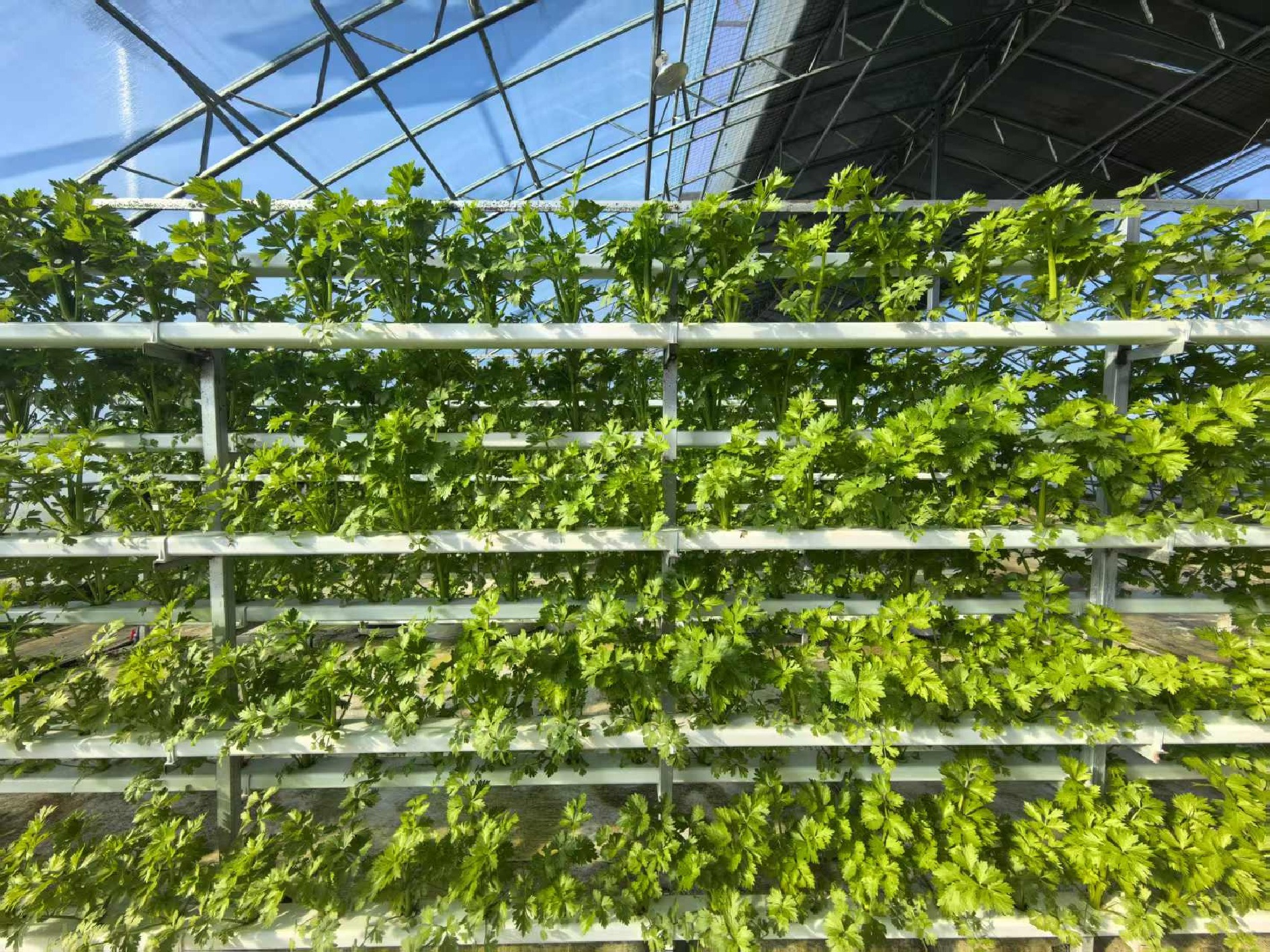
Figure 1.
A-shaped celery hydroponic high-rack facility in Suqian Research Institute of Nanjing Agricultural University (Facility Horticulture Research Institute of Suqian).
The nutrient film technique pipeline hydroponic circulation system
-
In the Suqian–Huai'an region, celery is grown above the ground using the nutrient film technique (NFT) pipeline system. This highly efficient hydroponic method continuously recirculates a thin film of nutrient solution through sloped pipelines, delivering water and essential nutrients directly to the plants' roots. Originally developed for crops such as lettuce, the cultivation bed comprises three key components: the NFT channels, planting cups, and cover panels. To prevent heat building up and to ensure unobstructed flow, the pipelines are set at a gradient of 2%–3%[14].
Hydroponic solution cultivation requires precise monitoring and control of the nutrient solutions to maintain optimal conditions for plant growth, ensuring efficient use of water and fertilizers[15]. Thus, nutrient solution formulations should account for the specific nutrient requirements and ratios of the leafy vegetables, including macronutrients (nitrogen, phosphorus, and potassium) and micronutrients (iron, zinc, manganese, etc.)[16]. Table 1 presents the general nutrient solution formula used for elevated celery cultivation, which is modified from Hoagland's solution.
Table 1. Formula of the hydroponic nutrient solution used for celery.
Nutrient Amount (mg/L) Calcium nitrate 950 Potassium nitrate 810 Magnesium sulfate 500 Ammonium dihydrogen phosphate 155 Ethylenediaminetetraacetic acid iron sodium salt 15–25 Boric acid 3 Manganese sulfate 2 Zinc sulfate 0.22 Copper sulfate 0.05 Sodium molybdate or ammonium molybdate 0.02 The nutrient solution circulation system, the core of pipe-type cultivation, consists of components such as a nutrient solution reservoir, a circulation pump, and a filter. The nutrient solution is pumped through the pipes, absorbed by celery roots, and then recirculated back to the reservoir. This cultivation method offers several advantages, including a simple structure, low cost, high automation, reduced labor intensity, and easy pest and disease control.
-
In the cultivation of celery, selecting an appropriate cultivar is the first step towards achieving high yield and good quality. According to the local climatic conditions and market demand, high-yielding, high-quality, and highly resistant celery cultivars should be selected. These celery plants are usually with tall stems and dark green leaves, and are characterized by being crisp and tender, drought-resistant, cold-resistant, highly resistant to diseases, and suitable for storage and transportation. Selection of the right cultivar can ensure the yield and guarantee the quality[17]. Suitable celery cultivars for the Suqian–Huai'an region include 'Sijixiqin', 'Imperial Celery', 'Ventura', and 'Ningqin No. 1'.
Seed soaking and sowing
-
Celery seeds typically have a low germination rate. It is generally difficult to get celery seedlings to grow. Soaking the seeds and promoting germination can increase the germination rate of celery seeds. Seven to eight days before sowing, celery seeds were soaked in warm water for 12–24 h, rubbing and rinsing them several times during this period. After soaking, the water was drained, then the seeds were wrapped in breathable gauze and placed in a shaded area at 15–20 °C for germination. During this period, it was essential to ensure good air circulation and keep the gauze moist. When 50% of the celery seeds had germinated and grown white radicles, it was time to sow them.
Seedling raising and management
-
Celery seedlings are generally raised in greenhouses (Fig. 2). A mixture of soil, vermiculite, and perlite at a volume ratio of 2:1:1 was used for sowing in 128-cell seedling trays. The substrate was kept consistently moist after sowing, and the celery seedlings emerged in about a week. The key points for summer–autumn celery seedling cultivation are shading and rain protection. After sowing, a shading net was set up over the seedling bed, and the soil was kept moist until the seedlings emerged. When the seedlings started to break through the soil, they were watered lightly once. After full emergence, they were watered lightly every 2–3 d. When the celery seedlings had grown one or two true leaves, the shading material was gradually removed to allow the seedlings to adapt to the bright light environment. During the growth stage of the seedlings, the daytime temperature was maintained at 15–25 °C (not exceeding 30 °C), and the nighttime temperature was no less than 10 °C to achieve the purpose of training the seedlings[18].
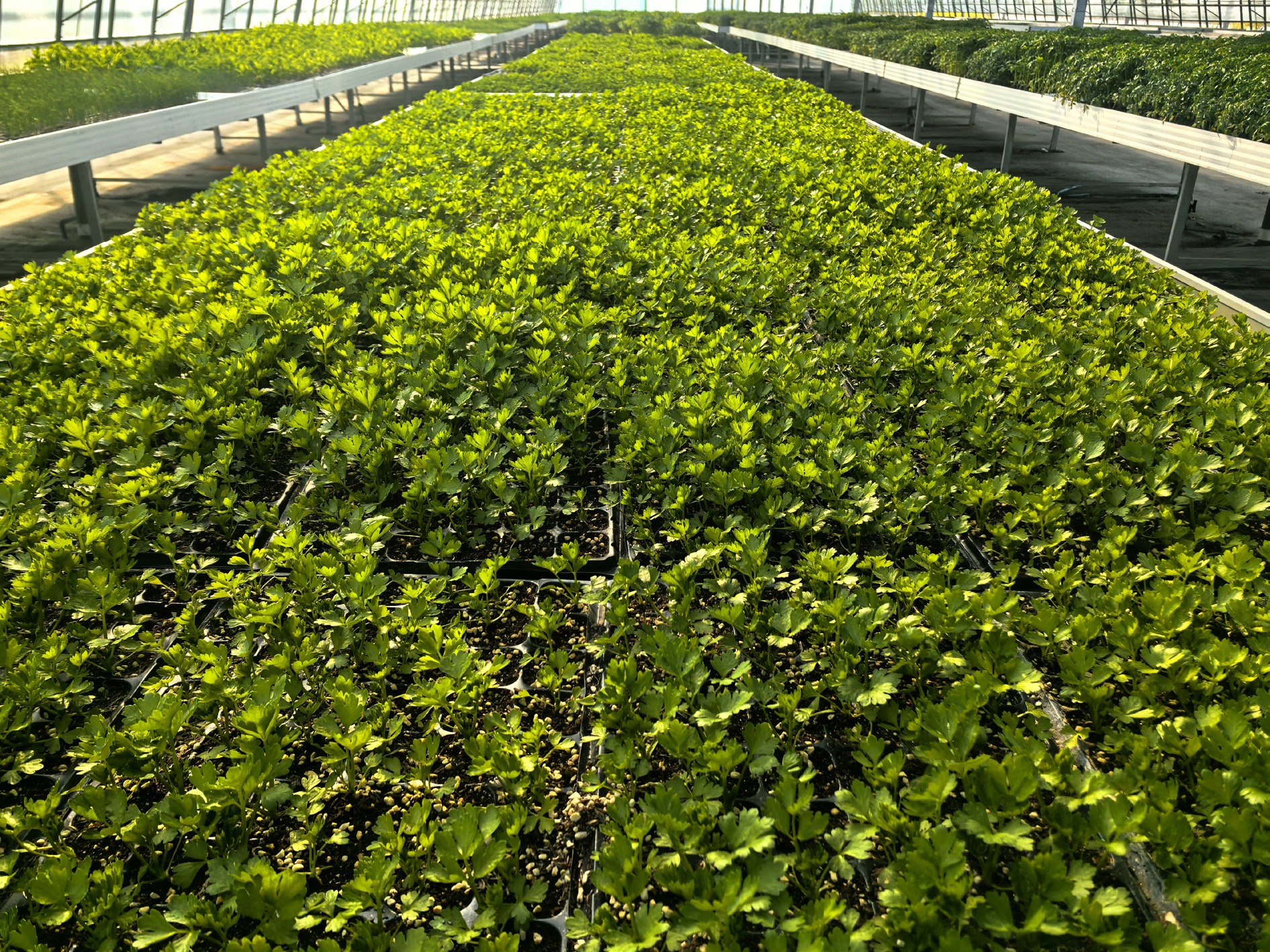
Figure 2.
Celery seedlings cultivated in cell trays in Suqian Research Institute of Nanjing Agricultural University (Facility Horticulture Research Institute of Suqian).
Transplanting and transplanting methods
-
Generally, when the celery seedlings had grown to about five leaves, they were transplanted to the hydroponic system. Healthy young seedlings with well-developed root systems were selected and gently pulled out. The roots were rinsed thoroughly, wrapped with a hydroponic sponge, and placed in the hydroponic tray. In this nutrient film technique hydroponic system, the recommended row and plant spacing is 15 cm × 15 cm.
-
Temperature management is a critical factor after transplanting celery seedings. The optimal daytime temperature is 25 °C, while the nighttime temperature should be around 15 °C, with relative humidity maintained between 60% and 80%. For a fertilizer specially formulated for leafy vegetables, the EC value was adjusted to around 2.0 mS/cm. When dissolving fertilizers, it is important to ensure that the fertilizers are completely dissolved. The pH value of the aqueous solution was adjusted to 6.0–6.5 using phosphoric acid. If the acidity or alkalinity is too high or too low, it can cause fertilizer precipitation, affecting the absorption of the fertilizer, and even leading to root rot. It was necessary to monitor the EC and pH of the return solution daily[19].
Temperature and humidity control
-
Celery is a shallow-rooted crop that thrives in cool, moist, and partially shaded conditions. The temperature inside the greenhouse was adjusted according to the climate. During the daytime, the optimal temperature range was 15–26 °C, while at night, it was be kept between 8 and 10 °C. Additionally, during celery's growing period, the relative humidity for hydroponic celery should remain below 80%. If the humidity became too high, appropriate ventilation was provided to prevent disease outbreaks that could adversely affect celery growth.
Nutrient solution management
-
A balanced nutrient supply is essential for the healthy growth of plants in hydroponic systems[20]. Celery has different nutrient solution requirements at different growth stages. During the peak growth period, the concentration of the nutrient solution was appropriately increased, with the pH maintained between 5.7 and 7.0 and the EC between 1.0 and 1.5 mS/cm. The temperature of the nutrient solution is an important factor determining plants' survival during root and shoot development in NFT hydroponics[21]. For most leafy vegetables, the nutrient solution's temperature should be kept below 28 °C in summer, with an optimal range of 20–24 °C. Meanwhile, suitable flow rates, acting as a eustress, give the roots appropriate mechanical stimulation to promote root growth so they can absorb more nutrients, thus increasing overall plant growth[22]. During the growth period, toxic substances can accumulate in the solution from both the fertilizer and the celery roots, so the nutrient solution was replaced periodically on a schedule: Approximately every 15 d in winter, and every 7–10 d in spring and summer due to higher transpiration rates[19].
Nutrient solution circulation control
-
The frequency of the nutrient solution recirculation determines both the frequency and duration of contact between celery roots and the solution. Proper circulation ensures that celery roots receive adequate nutrients and oxygen while preventing excessive evaporation and solution waste. In summer, the nutrient solution should generally be circulated from 6:00 AM to 6:00 PM—about 12 h in total. During the other seasons, running it from 8:00 AM to 6:00 PM (about 10 h a day) is sufficient for leafy greens. Night-time circulation is normally unnecessary[19].
-
Pest infestations are relatively rare in hydroponic systems. Common pests include aphids and whiteflies. Common diseases affecting hydroponic celery include bacterial soft rot of the inner leaves, gray mold, and Fusarium yellow. Given the short production cycle and relatively controllable growing conditions of hydroponic celery, pest and disease control should prioritize physical and biological methods, with chemical control as a supplementary measure in order to minimize chemical residues.
Diseases
-
Bacterial soft rot of the heart leaves is a common disease in celery, primarily characterized by rotting and blackening of the inner leaves or the appearance of water-soaked lesions—symptoms, which severely impair celery's quality and yield. The causes of celery disease are complex and usually involve nutrient deficiency as well as pathogen infection. Efficient preventive measures include maintaining a clean hydroponic environment, avoiding mechanical injury to the celery plants, and routinely replacing the nutrient solution to prevent pathogens' accumulation. Infected plants should be removed immediately upon detection, followed by spray treatments such as 72% agricultural streptomycin diluted 3,000× or 77% copper hydroxide diluted 500×.
Botrytis cinerea causes pre- and postharvest decay of many fruit and vegetable crops[23]. The hydroponic system used for growing celery has a high humidity level, which makes the celery plants particularly prone to diseases. The pathogen mainly attacks celery leaves and petioles. The initial symptoms include water-soaked spots on leaves, which gradually expand, turn grayish-white, and eventually cause leaf death. Under humid conditions, a gray mold layer forms on the lesions. Gray mold can be controlled by spraying a 600-fold dilution of 10% polyoxin wettable powder, a 1,200-fold dilution of 50% iprodione wettable powder, or a 1,000-fold dilution of 50% boscalid water-dispersible granules[24].
The pathogen of celery Fusarium yellows is Fusarium oxysporum f. sp. apii[25]. The pathogens invade celery plants through the roots, leading to leaf yellowing and wilting, and, in severe cases plant death. Heavily infected celery plants must be removed immediately to prevent the pathogens from spreading through the nutrient solution. To prevent disease, it is recommended to drench the plant core with a tank mix of hymexazol, metalaxyl-M 44% + chlorothalonil, difenoconazole, and thiodiazole–copper 3–5 d after transplanting.
Pests
-
Due to long-term reliance on chemical pesticides, aphid pests have evolved various biochemical and molecular mechanisms to resist or overcome the toxic effects of chemical insecticides[26,27]. These aphids, particularly the carrot aphid, often cluster on the undersides of young celery leaves to feed on plant sap. Their feeding activity causes leaf curling and yellowing, which can severely hinder celery's growth and reduce its quality. For physical control, hanging yellow sticky traps is an effective method. Biological control measures include releasing ladybugs (a natural predator of aphids) or spraying a 0.3% matrine solution. Chemical control can be achieved by foliar spraying of a 25% pymetrozine suspension diluted 2,000×.
Whiteflies feed on celery sap, leading to leaf yellowing and wilting. in severe infestations. They can impair the celery plant's overall development. Additionally, whiteflies secrete large amounts of honeydew, which adheres to the eaves, fostering the growth of sooty mold and thereby reducing celery's market value. Physical control can be implemented using yellow sticky boards to attract and trap whiteflies. Chemical control options include spraying 25% buprofezin wettable powder diluted 1,500×, 25% thiamethoxam wettable powder diluted 1,000–2,000×, or 70% imidacloprid water-dispersible granules diluted 7,000×.
-
Adopting scientific harvesting methods improves the yield and quality of hydroponic high-rack celery, and also extends its shelf life, better meeting market demands. Generally, hydroponic celery is ready for harvest approximately 50–60 d after transplanting, with an ideal plant height of 50–60 cm at this stage (Fig. 3). Harvesting is best conducted in the early morning or late evening to prevent excessive water loss due to high temperatures, which would otherwise reduce the celery's market value.
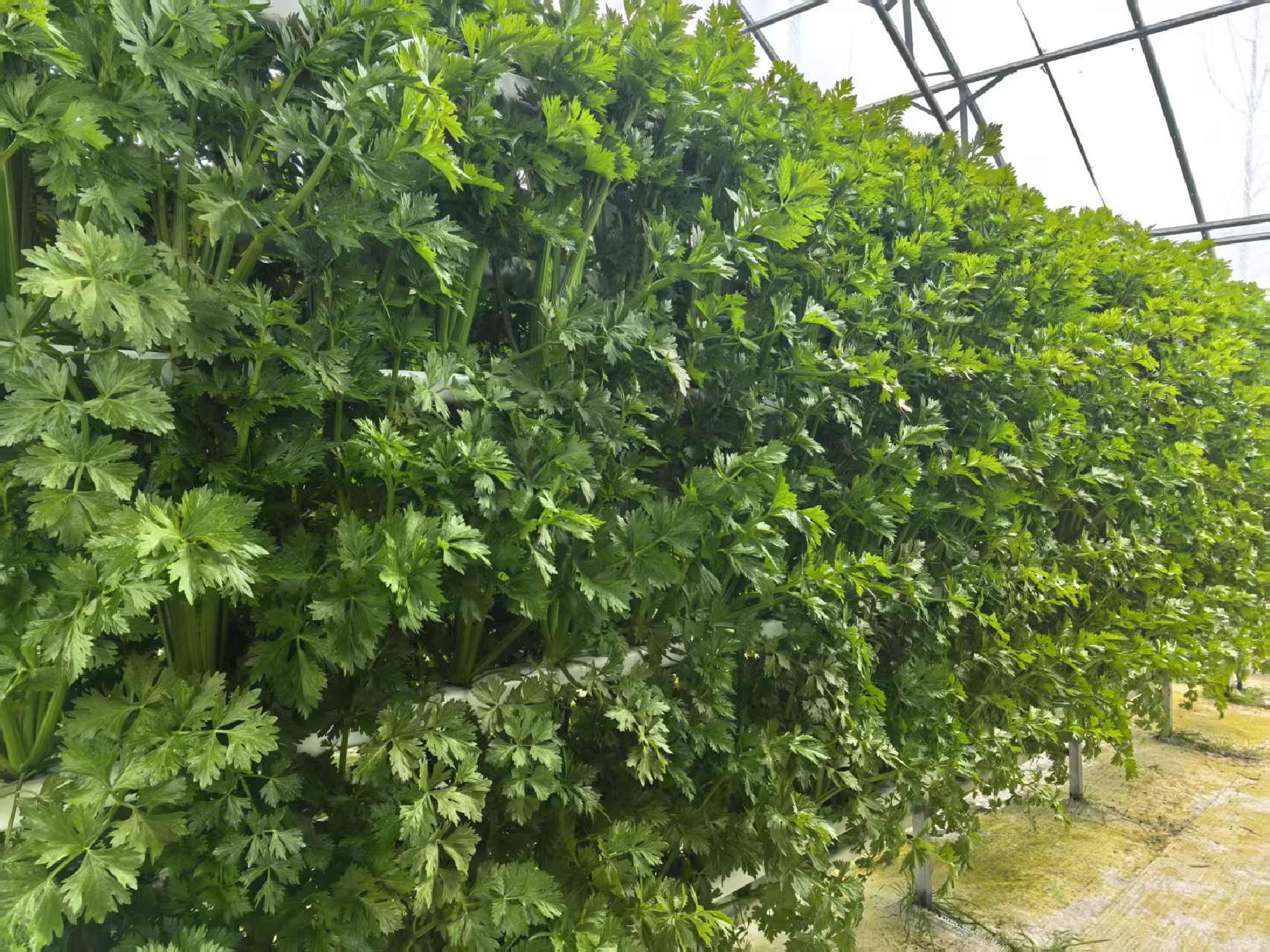
Figure 3.
Mature harvest period of elevated racks of celery in Suqian Research Institute of Nanjing Agricultural University (Facility Horticulture Research Institute of Suqian).
For harvesting the elevated racks of celery, sharp cutting tools were used to make precise cuts at the base of the celery plants, while being careful to avoid damaging the surrounding celery plants. Yellowed and aging celery leaves were removed to ensure that the harvested celery had a good appearance and quality. Postharvest losses of crops may be affected by preharvest factors, harvesting, and postharvest operations such as precooling, blanching, sorting, grading, packaging, transportation, and storage[28]. Precooling, as the first important step, removes the field heat from freshly harvested produce and is one of the most effective physical methods for slowing biological processes[29−31]. If immediate postharvest sorting and sale are not pressing concerns, proper celery storage becomes paramount. Once harvested, vegetables rely solely on their own stored nutrients to keep their cells alive, so quality hinges on carefully regulating temperature, humidity, and light—of which temperature is the single most critical factor[32]. Research shows that for every 10 °C increase in storage temperature, the spoilage rate of leafy greens increases by two- to three-fold[33].
Throughout the process of harvesting elevated racks of celery, maintaining the cleanliness of the hydroponic system is critical to avoid contamination and ensure the product's safety. As growth progresses, the essential micronutrients in the nutrient solution may be depleted, while the nonessential elements present in the water used to prepare the nutrient solution (such as sodium and chlorine) may accumulate[34]. Therefore, after harvest, it is recommended to add bleach to the nutrient solution tank and circulate it for 24 h to disinfect the entire pipe network, then let the pipes dry in the sun for one to two days before starting the next planting cycle[35].
-
The high-rack hydroponic production model implemented in the Suqian–Huai'an region effectively improved the growing environment for celery, reduced the incidence of soilborne diseases, and consequently lowered production costs while increasing yield by 45% compared with local soil-based cultivation. This approach can inject new vitality into the high-quality development of the celery industry and offers valuable experience for celery production in other regions of China or all the world.
Yield and output value per 667 m2
-
In the Suqian–Huai'an region, by adopting this three-dimensional cultivation method, hydroponic celery can be grown four to five times a year. Each growing cycle yields approximately 4,000 kg per 667 m2, resulting in an annual output of roughly 16,000–20,000 kg. Hydroponic celery is free from soilborne diseases and boasts superior quality, which enables it to command a relatively high market price, typically around CNY2.0 per kg.
Cost per 667 m2
-
In the Suqian–Huai'an region, the annual production cost per 667 m2 is itemized as follows: ~CNY1,000 for land rent, ~CNY1,500 for the nutrient solution, an annual amortized cost of ~CNY2,000 for the elevated hydroponic structures, ~CNY500 for seeds and other miscellaneous inputs, and ~CNY3,000 for labor (covering routine management, preparation of the nutrient solution, and harvesting). The total annual expenditure thus amounts to CNY8,000 per 667 m2.
Average profit per 667 m2
-
Due to its high yield and excellent quality, the three-dimensionally grown hydroponic celery can bring substantial economic benefits. At a market price of CNY2 per kg, a 667 m2 crop generates about CNY4,000 in profit. With four harvests per year, annual profit per 667 m2 reaches about CNY16,000.
This article was supported by Suqian Key Research and Development Program (L202302), Achievement Transfer and Transformation Project of Jiangsu Agricultural High-tech Zone (BE2024012), Fundamental Research Funds for the Central Universities (KYLH2025002), the Priority Academic Program Development of Jiangsu Higher Education Institutions Project, and Bioinformatics Center of Nanjing Agricultural University.
-
The authors confirm their contributions to the paper as follows: study conception and design: Xiong AS, Tan GF; data collection: Zhang WH; data curation: Zhang WH, Wang LX; formal analysis: Li MY, Yu HF, Li XB; writing – original draft: Zhang WH; writing – review and editing: Liu PZ, Xiong AS; supervision: Xiong AS, Tan GF. All authors reviewed the results and approved the final version of the manuscript.
-
The datasets generated during or analyzed during the current study are available from the corresponding author upon reasonable request.
-
The authors declare that they have no conflict of interest.
- Copyright: © 2025 by the author(s). Published by Maximum Academic Press, Fayetteville, GA. This article is an open access article distributed under Creative Commons Attribution License (CC BY 4.0), visit https://creativecommons.org/licenses/by/4.0/.
-
About this article
Cite this article
Zhang WH, Wang LX, Tan GF, Li MY, Yu HF, et al. 2025. Simple, rapid, efficient hydroponic cultivation technology on elevated racks of celery. Technology in Horticulture 5: e034 doi: 10.48130/tihort-0025-0029 

Simple, rapid, efficient hydroponic cultivation technology on elevated racks of celery
- Received: 29 July 2025
- Revised: 30 August 2025
- Accepted: 04 September 2025
- Published online: 24 October 2025
Abstract: In recent years, celery cultivation based on soil has been facing problems such as a low fertilizer utilization rate, continuous cropping obstacles, frequent occurrence of pests and diseases, and pesticide residues. As an innovative soilless vegetable cultivation method, hydroponics offers advantages including shorter growth cycles, fewer pests and diseases, lower pesticide residues, year-round multiple cropping, and high economic benefits. This article introduces a simple, rapid, and efficient hydroponic cultivation technique for celery on elevated racks. The facilities adopt the combination of a steel frame plus a polyvinyl chloride cultivation trough supporting a nutrient film technique circulation system. Before sowing, the celery seeds are soaked in warm water, and then they are planted in a 128-cell seedling substrate. When the celery seedlings have grown about five leaves, they are transplanted. After transplantation, the celery plants should be cultivated with a nutrient solution with an EC value of 1.0 to 1.5 mS/cm and a pH value of 5.7 to 7.0. For pest control, physical control should be the main approach, with chemical control used as a supplement. The harvest should be carried out once when the plant height reaches 50–60 cm. This technology can produce over 12,000 kg of celery per 667 m2 annually, with a net income of over CNY16,000 per year. It can increase the yield by 45% compared with local soil cultivation. This provides a technical reference for the simplified and efficient production of celery in protected areas in Jiangsu and other regions.
-
Key words:
- Apium graveolens /
- Hydroponics /
- Simplified cultivation /
- Vertical farming /
- Higher efficiency