













-
White tea is consumed globally, but it is mainly produced in China, India, Sri Lanka, Japan, Vietnam, and Indonesia[1,2]. The polyphenols, amino acids, soluble sugars, and glycoside aroma precursors contribute substantially to the biological activities of white tea, including its antioxidant, anti-inflammatory, and anti-cancer properties[1,3,4]. White tea is generally processed in two steps: Fresh leaves undergo prolonged withering, followed by drying. The prolonged withering phase is the key process for establishing white tea's quality[1]. The simplest manufacturing process gives white tea distinctive flavors, characterized by faint sweetness and an umami taste, accompanied by fresh and green odors[4]. The aroma compounds in white tea primarily derive from the endogenous biosynthesis of volatiles, which are classified into terpenoid derivatives, including carotenoid-derived volatiles, phenylalanine derivatives, fatty acid derivatives, and nitrogen-containing compounds, depending on the biosynthesis pathways[5,6]. A grassy aroma in white tea, attributed to hexanal, (Z)-4-heptenal, 1,2-dimethoxybenzene, and calamenene, serves as a negative quality indicator[1,7]. The contents of these grassy aroma compounds decrease during the prolonged withering and drying processes, which changes the aroma profile of white tea toward a floral fragrance[4,8].
Alongside withering techniques, the quality of the fresh tea leaves and the specific tea cultivars can also influence the scent character of white tea[6,8−10]. White teas are commonly classified into three subtypes according to the tenderness of the fresh tea leaves: "Baihao Yinzhen" (BHYZ, also called silver needle tea, containing only the buds), "Baimudan" (BMD, also called white peony, containing buds and one or two leaves), and "Shoumei" (SM, containing more than two leaves with or without buds)[1,11]. Comparative analysis reveals that the premium grades (BHYZ and BMD) contain higher proportions of floral-fruity aroma compounds, while SM-grade white tea exhibits elevated levels of aldehydes, ketones, esters, and lactones, which impart a harsh, woody, or herbal odor to the tea[12]. The tea cultivars 'Fuding Dabaicha', 'Zhenghe Dabaicha', and 'Fuan Dabaichacha' are considered ideal starting materials for producing high-quality white tea[11]. Nonetheless, it remains uncertain if the variations in the fragrance composition across various tissues during tea withering are affected by the tea cultivars. We propose that the tea cultivar is a crucial determinant influencing the tissue-specific fluctuations in the fragrance components throughout the withering process.
In the present investigation, fresh tea shoots of 'Fuding Dabaicha' (FD) and 'Zhonglong 22' (ZL22) at the one bud–three leaf stage were selected as the materials. Apical buds, first leaves, second leaves, third leaves, and tender stems of white tea were separated during the withering process. Changes in volatile aroma compounds (VACs) during withering were analyzed by headspace solid-phase microextraction coupled with gas chromatography–mass spectrometry (HS-SPME-GC-MS/MS), together with a sensory evaluation of the different tissues. Additionally, the study compared the dynamic changes and sensory variations in VACs in different organs (the bud and the three leaves) between the two cultivars to understand how different tissues influence the formation of characteristic aromas during the processing of white tea.
-
Fresh tea shoots (one bud with three leaves) of the FD and ZL22 cultivars were manually harvested in July 2024. In total, 3 kg of fresh leaves from each cultivar was evenly spread on perforated bamboo trays (1.2 m in diameter) at a thickness of 2–3 cm. Withering was conducted in a controlled chamber at 25–26 °C and 50–56% relative humidity for 56 h until the moisture content reached 20% ± 2%. The moisture content was monitored using a rapid moisture meter (Mide Ltd., Xiamen, China). During the withering process, samples were collected at 8-h intervals. At each sampling point, the withered shoots were separated into buds, first leaves, second leaves, third leaves, and stems. A 10-g aliquot of each separated component was immediately frozen in liquid nitrogen and stored in an ultra-low temperature freezer for subsequent analysis. Once the target moisture content (20% ± 2%) was achieved, the withered leaves were dried further in a hot-air oven at 80 °C for 8 h to obtain the final white tea products with a final moisture content of 5–7%. The moisture content of the tea leaves was determined following the Chinese National Standard method (GB 5009.3-2016) with modifications. During the tea withering process, samples were collected at 8-h intervals for determining the moisture content. Pan-fired tea leaves were sampled after cooling, and tea products were analyzed directly for moisture. The complete moisture determination protocol followed established methodologies described in published literature[13].
Sensory evaluation of the tea samples
-
All samples were freeze-dried using a vacuum freeze-dryer to achieve a moisture content of 7% and then thoroughly ground into powder. The resulting tea powder was subsequently subjected to a sensory evaluation according to the methodology described in the standard GB/T23776-2018: 3.0 g of each tea sample was placed in a 150-mL column cup, brewed in boiling water for 5 min, and then filtered. The aroma's quantitative evaluation index, which includes five attributes (downy aroma, floral, fruity, faint scent, and grass aroma) was determined, based on previous reports[2,7]. Quantitative descriptive analysis was used to assess the pleasantness of tea samples' aroma by utilizing a five-point scale (0: no intensity; 3: moderate intensity; 5: maximum intensity)[7]. Seven tea evaluation experts (four females and three males) with over 10 years of sensory evaluation experience independently assessed the tea samples. The sensory panelists involved in this study evaluated the white tea samples in accordance with the method specified in GB/T 23776-2018. The sensory panelists were recruited from the Tea Quality Supervision and Inspection Center of the Ministry of Agriculture, and the detailed procedure followed the method described in previous reports[14], according to the national standards of tea (GB/T 23776-2018 Tea Sensory Evaluation Method, GB/T 14487–2017 Tea Sensory Evaluation Terminology). After each panelist completed their individual scoring, the results were cross-verified and confirmed through a round-robin mutual assessment procedure.
Collection and analysis of the aroma compounds
-
The tea samples were powdered in liquid nitrogen, and 0.2-g tea samples were transferred into a 20-mL headspace bottle. Subsequently, 2 mL of a 25% sodium chloride solution containing 551 ng/mL n-octanol as the internal standard were added to the sample, and the cap of the headspace bottle was tightened immediately. The preparation procedure was as follows: 5.51 mg of the internal standard was dissolved in 1 mL of anhydrous ethanol until completely solubilized, after which the entire 1-mL solution was diluted into a 25% NaCl solution. The protective cap was pierced using a Divinylbenzene/Carboxen/Polydimethylsiloxane (DVB/CAR/PDMS) fiber tip with a manual handle (SPME, Supelco, PA, USA). Finally, the vial was placed on a heating dish with constant heating at 65 °C for 1 h to adsorb the aroma compounds.
Analysis of the aroma compounds
-
All aroma compounds were analyzed by gas chromatography–tandem mass spectrometry (GC-MS/MS) (7890B GC-MS/MS system, Agilent Technologies, Inc., CA, USA). The chromatographic column was an HP-5MS (30 m × 0.25 mm, 19091S-433UI, Agilent Technologies). For GC-MS/MS analysis, the injection temperature was 250 °C, with a temperature gradient of 5 °C/min from 40 °C (held for 3 min) to 250 °C. The electronic impact mode was operated at 70 eV. All mass spectrometry data were collected from 40 to 400 m/z[15]. Qualitative analysis was conducted using the Agilent MassHunter Unknowns analysis program to identify the compounds. The compounds were verified for similarity by using the NIST 17.0 standard library search. To quantify the tea aroma compounds, their relative concentrations were calculated using the internal standard (n-octanol) method. Differential aroma compounds were identified on the basis of three criteria: Variable importance of the projection (VIP) ≥ 1, |log2(fold change)| ≥ 1, and p ≤ 0.05. The differential analysis was performed using the Metware Cloud, a free online platform for data analysis (
https://cloud.metware.cn ).Odor activity value calculation
-
The odor activity value (OAV) was determined by dividing the concentration of the volatile compound by its odor threshold (OT) in water[16]. All OAV thresholds referenced in the present study are provided in Supplementary Table S3. Volatile molecules with an OAV greater than 1 were classified as aroma-active chemicals, which significantly contributed to the fragrance characteristics of the tea samples[17,18].
Statistical analysis
-
The quantitative data of the volatile compounds were processed and visualized using Microsoft Excel 2010. Statistical analysis of the data was performed using the Metware Cloud with the default parameters. Original figures were generated via the CNSknowall online platform (
www.cnsknowall.com ). Differential volatile compounds (DVCs) were identified on the basis of the following criteria: VIP ≥ 1, |log2(fold change)| ≥ 1, and p ≤ 0.05. -
Prior research on the assessment of white tea scent has primarily concentrated on a comprehensive evaluation of tea products[2,3,10,11,19,20]. Downy, floral, fruity, and faint aromas are deemed characteristic indications of premium white tea; however a grassy scent is regarded as a negative evaluative criterion for white tea[1,7,11,21,22]. The grassy scent score of the shoots and four tissues of FD and ZL22 varied at distinct intervals throughout the entire withering process (Fig. 1a, b). During the withering process, the grassy scent scores of both FD and ZL22 tea shoots, and of the five tissues (buds, first leaves, second leaves, third leaves, and stems) initially increased and subsequently dropped (Fig. 1a, b). In contrast, the positive evaluation indices, namely downy, fruity, flowery, and faint aromas, first diminished before subsequently rising in both FD and ZL22 shoots and in four of the tissues (Fig. 1a, b).
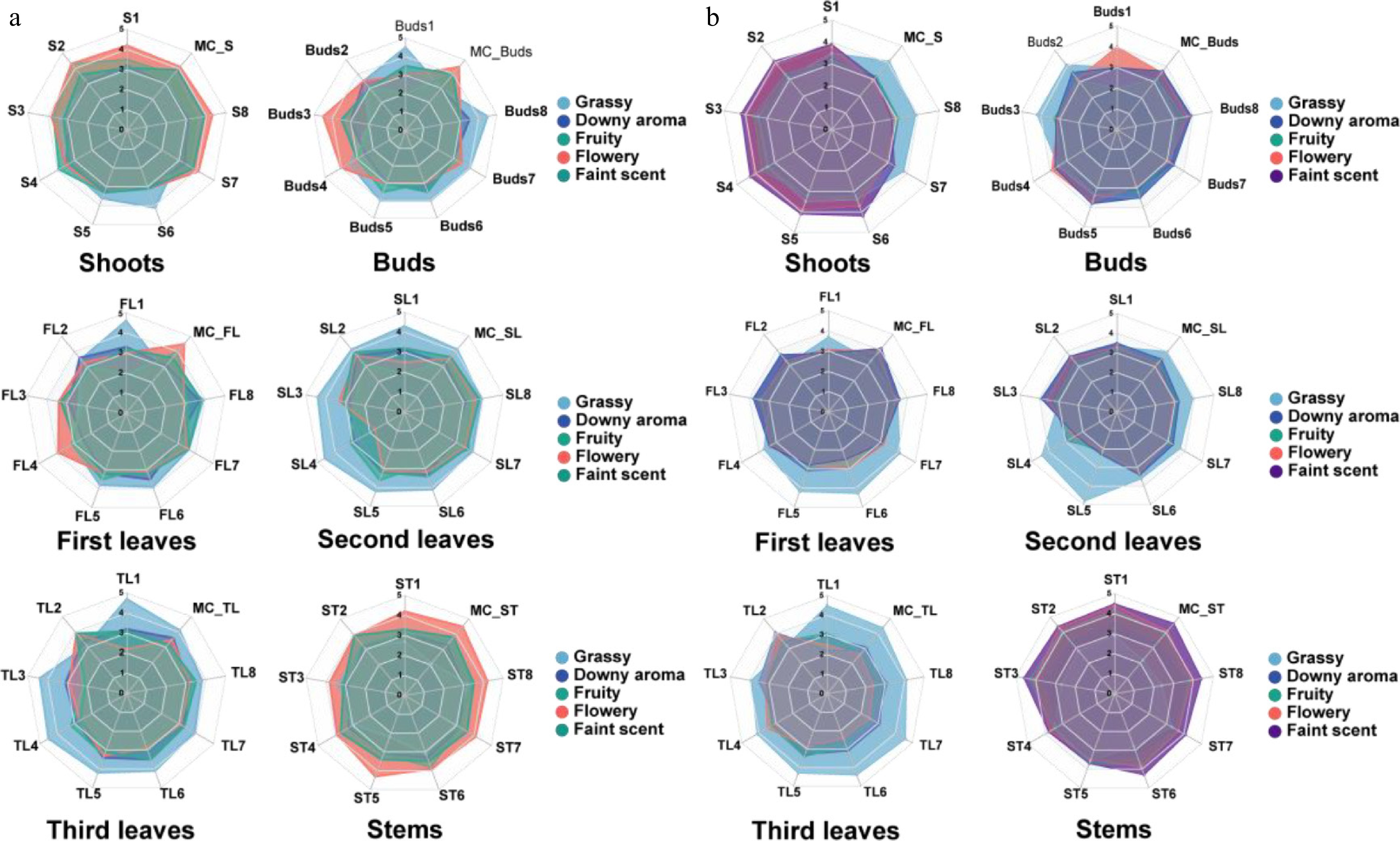
Figure 1.
The aroma sensory evaluation results for FD and ZL22 buds, first leaves, second leaves, third leaves, stems, and shoots. (a, b) The sensory evaluation results for the aromas of FD and ZL22, respectively. The fresh tea leaves are designated as 1, those withered for 8 h as 2, and so forth, with the leaves withered for 56 h designated as 8. FL1–8, the first leaf below the apical bud at different withering stages; SL, the second leaf below the apical bud at different withering stages; TL, the third leaf below the apical bud at different withering stages; ST, the stems at different withering stages; S, the intact tea shoots at different withering stages.
To define the exact tissue regions implicated in the production of tea aroma, we partitioned the tender shoots of FD and ZL22 into five components: apical buds, first leaf, second leaf, third leaf, and tender stems. A sensory examination was performed on these five components. The second and third leaves exhibited elevated grassy flavor ratings in comparison with the buds, first leaves, and stems (Fig. 1a, b). The scores for good flavor qualities (downy, fruity, flowery, and faint aromas) of the stems and apical buds of FD and ZL22 consistently exceeded the scores for grassy aroma during the observation period (Fig. 1a, b). Throughout the withering process, the grassy aroma scores of terminal buds, first leaves, second leaves, and third leaves initially rose and subsequently declined, aligning with the observed phenomenon during processing; this observation suggested a specific phase of pronounced grassy odor in the production of white tea (Fig. 1a, b)[4,10,22]. This study demonstrated asynchronous variations in grassy/green odor scores among these tissues at various withering stages. The second and third leaves achieved maximum odor ratings at Stage 4 and Stage 5 of withering (24−32 h), whereas apical buds and first leaves exhibited peak odor scores at Stage 6 and Stage 7 of withering (40−48 h) (Fig. 1a, b). This asynchrony indicates differing metabolic rates of grassy odor-related chemicals between the apical tissues (terminal buds and first leaves) and the lower leaves (second and third leaves)[10,23]. This metabolic alteration, possibly governed by the tissue-specific expression of genes associated with flavor compounds, such as LOX (lipoxygenase), PAL (phenylalanine ammonia-lyase), and TPS (terpene synthase), underscores the essential importance of prolonged withering in enhancing white tea's quality[10,24].
Overall view of the aromatic compounds
-
To analyze the profiles of the volatile compounds of FD and ZL22 during the entire manufacturing process, the compounds were statistically analyzed using unsupervised three-dimensional principal component analysis (3D-PCA) to investigate the overall sample distribution from different withering periods and different tissues within each group. According to the 3D-PCA plot, the first three principal components (PC 1, PC 2, and PC 3) accounted for 15.94%, 14.74%, and 7.55% of the variance for the FD shoots and tissues and for 14.4%, 11.39%, and 7.99% of the variance for ZL22 shoots and tissues, respectively (Fig. 2a, b). The 3D-PCA score plot revealed clear stepwise alterations and distinct differences in the volatile compounds from the four tissues and tea shoots of FD and ZL22 during the withering period (Fig. 2a, b). These findings indicated significant differences in the changes in the contents of volatile compounds between FD and ZL22 shoots and among the different tissues throughout the withering period.
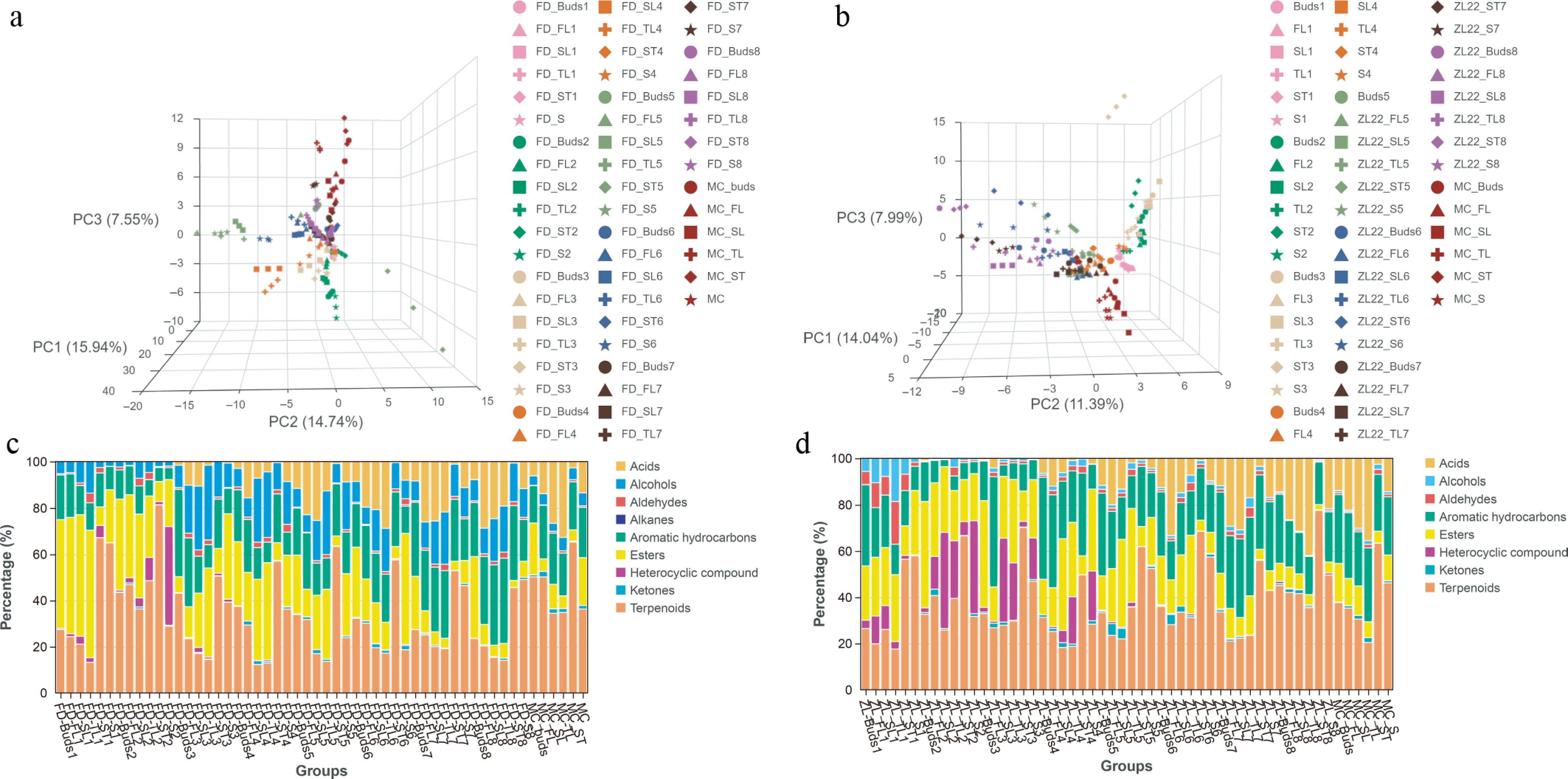
Figure 2.
Overall aroma profile analysis. (a, b) The 3D-PCA analysis of different tissues and shoots of FD and ZL22 during withering. (c, d) The percentage of nine types of compounds of different tissues and shootsof FD and ZL22 during the withering period. FL, first leaves; SL, second leaves; TL, three leaves; ST, stems; S, shoots; MC, tea products.
HS-SPME and GC-MS/MS analysis detected 145 and 119 VACs from all FD and ZL22 samples during the 56-h withering process and from the tea products (Supplementary Tables S1, S2). According to their chemical structures, these chemicals were terpenoids, ketones, heterocyclic compounds, esters, aromatic hydrocarbons, alkanes, aldehydes, and alcohols. These volatile chemicals' dynamic changes during withering were then examined. Significant spatiotemporal variations in the proportions of volatile compounds were observed as FD and ZL22 withered. Both FD and ZL22 tea shoots had more fatty acid derivatives and aromatic hydrocarbons from withering to the tea product's manufacture (Fig. 2c, d). The tender shoots of FD and ZL22 had sharp fluctuations in terpenoids and esters throughout withering. Early in withering, terpenoids and esters increased; later, they were close to those in new tea shoots and tea products (Fig. 2c, d). Despite variances in the fragrance components among terminal buds, first leaves, second leaves, third leaves, and tender stems in both cultivars, changes in VACs throughout withering were consistent with tender shoots' variation patterns (Fig. 2c, d)[9,10]. The steady reduction in green grass odor and the gradual production of pleasant floral smells as white tea withered are consistent with earlier studies[4,7,24]. This investigation found that the release of VACs in SM tissues during withering was spatiotemporal[4,10].
Variations in the distribution of VACs in fresh tea shoots and tea products
-
White tea is widely manufactured, including SM. It is made by withering and drying one bud and three to four mature tea leaves. SM is used to make aged white tea because it has beneficial ingredients. SM white tea is famous for the saying "One year for tea, three years for medicine, and seven years for treasure"[21,25,26]. At the first withering stage, fresh shoots of FD and ZL22 contained 41 and 43 volatile chemicals, respectively (Supplementary Figs S1a, S2a, and Supplementary Table S1). The stems and apical buds of FD tea shoots had many more VACs than the first, second, and third leaves (Supplementary Fig. S1a, S1d and Supplementary Table S1). The stems and apical buds of ZL22 emitted more volatile chemicals than the leaves early in withering, but this pattern reversed with time. The apical bud, first to third leaves, and shoot stems emitted distinct volatiles in different proportions. In fresh tea shoots and tea products, both cultivars' stems produced flowery and fruity terpenoids (Fig. 3a-d). Esters, alcohols, and aldehydes, which contribute to a grassy scent, accumulated in the second and third leaves of both cultivars in fresh tea shoots and products (Fig. 3a-d).
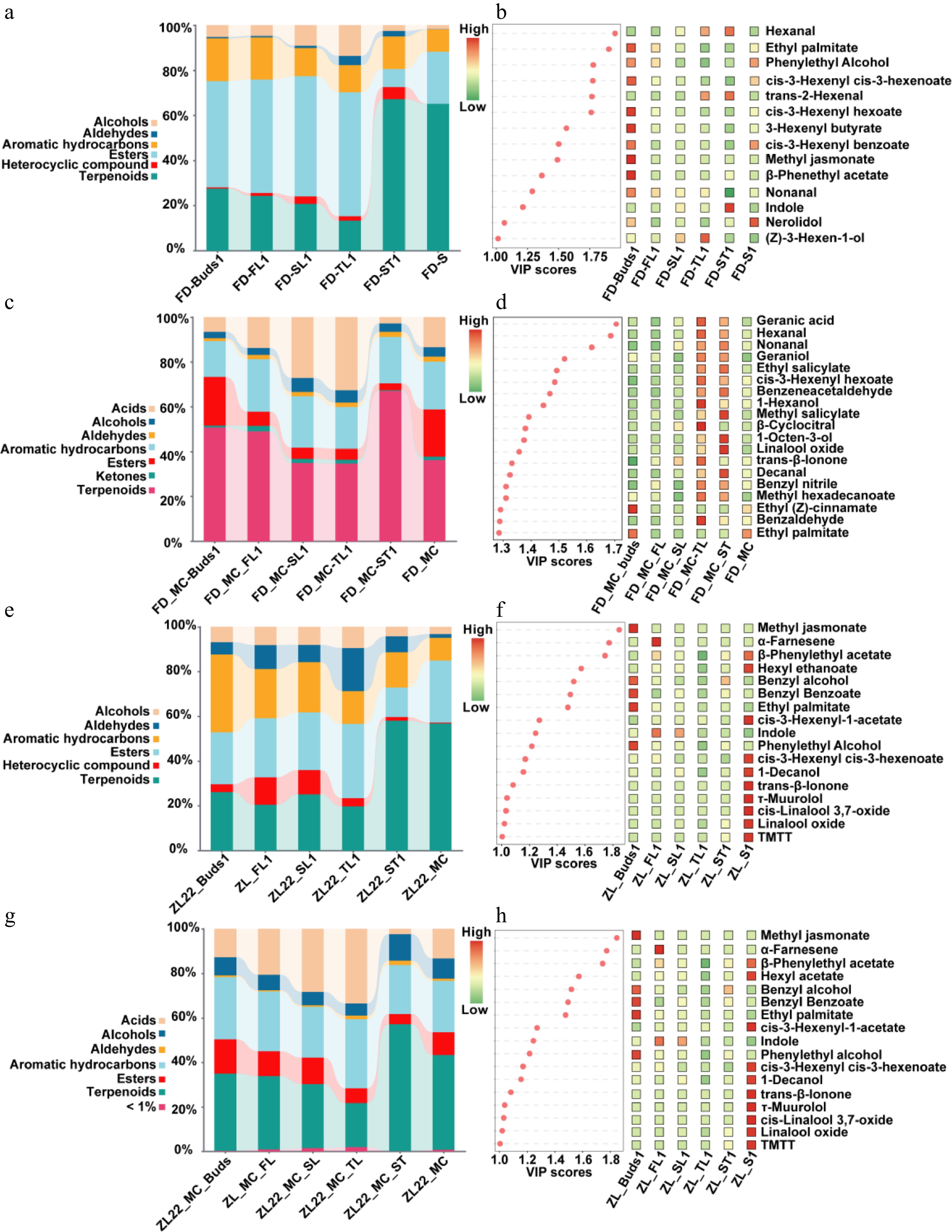
Figure 3.
The proportions of different aroma compounds and a relative content analysis of the fresh tea shoots and the tea products of FD and ZL22. (a, b) The proportions of different aroma compounds and a relative content analysis of the fresh tea shoots of FD. (c, d) The proportions of different aroma compounds and a relative content analysis of the tea products of FD. (e, f) The proportions of different aroma compounds and a relative content analysis of the fresh tea shoots of ZL22. (g, h) The proportions of different aroma compounds and a relative content analysis in the tea products of ZL22. Buds, apical buds; FL, the first leaves under the apical buds; SL, the second leaves under the apical buds; TL, the third leaves under the apical buds; MC, tea products. TMTT, (3E,7E)-4,8,12-trimethyltrideca-1,3,7,11-tetraene.
To determine the volatile chemical content, apical buds, first to third leaves, stems, and shoots were examined. This analysis found 14 and 17 aroma chemicals differing significantly in the apical buds and first to third leaves of fresh tea shoots of FD and ZL22 (t-test, VIP ≥ 1, p < 0.05). Compared with ZL22 tissues, FD tissues had more divergent metabolites. Hexanal, nonanal, (E)-2-hexenal, (Z)-3-hexen-1-ol, cis-3-hexenyl cis-3-hexenoate, (Z)-3-hexen-1-ol benzoate, and (Z)-hexanoic acid, 3-hexenyl ester[6,7] were distributed differently in the apical buds and first to third leaves of fresh tea shoots of FD (Fig. 3a and Supplementary Fig. S1b). Hexanal, (E)-2-hexenal, and (Z)-3-hexen-1-ol, which are strong grassy fragrance compounds, accumulated mostly in the third leaves of fresh tea shoots and tea products of FD (Fig. 3a, b, and Supplementary Fig. S1b, S1e)[6,7]. These three chemicals were mostly found in fresh tea shoot leaves and stems of ZL22 (Supplementary Table S1). Mostly in the first and second leaves, the grassy fragrance compounds of FD were (Z)-3-hexen-1-ol acetate, 1-decanol, and cis-3-hexenyl cis-3-hexenoate. Overall, grassy fragrance components were highest in the second and third leaves and lowest in the buds, first leaves, and stems (Fig. 3a, b). Water is transferred from the delicate stems to the leaves, and fatty acid precursors are translocated to the leaves during juvenile shoot dehydration, increasing the fatty acid concentration in the leaves. During leaf drying, expression of the LOX gene increases, leading to increased breakdown of linoleic/α-linolenic acid into grassy aldehydes and alcohols[10,27].
The accumulation patterns of floral fragrance chemicals, such as indole, nerolidol, methyl jasmonate, trans-β-ionone, and cis-pyran linalool oxide, varied throughout the tissues of tea shoots from both cultivars. Both types had various floral chemicals like indole and methyl jasmonate. Methyl jasmonate, which has a jasmine-like and floral aroma, was mostly found in the buds of fresh tea shoots of FD and ZL22 (Fig. 3a, c, and Supplementary Figs S1f, S2f) and the first leaves of both cultivars' tea products. Indole, which has fecal and mothball-like odors[20], were mostly found in the stems of fresh shoots of FD and the initial leaves of ZL22 shoots. Neither FD nor ZL22 teas had indole in their aromas (Supplementary Table S1). Methyl jasmonate and jasmine lactone fill the delicate stalks with perfume. Both cultivars' delicate stems had more floral scent components. The stems consistently contributed to the rich and complex scent profile of the finished tea products, unlike 'Jinxuan', 'Fuzao 2', and 'Huangdacha'[10,16,28]. These results show that SM tea stems are essential to its aroma.
Dramatic changes in the aroma profile of the five tissues during the withering process
-
The volatile compounds released by the five tissues—apical buds, first to third leaves, stems, and shoots—increased initially and then decreased during white tea withering (Supplementary Fig. S3a−S3f; Supplementary Fig. S4a−S4f). The relative concentration of volatile chemicals of these five tissues varied significantly throughout withering (Fig. 4a, b). The volatile compound content of all FD tea shoots' tissues reached a maximum at Stage 4 (24 h of withering). The third leaves and stems had the greatest volatile emissions at this stage, with 924.53 ± 169.02 and 846.25 ± 7.73 ng/g, respectively (Fig. 4a, b). Each tissue's volatile content changed significantly during withering. The buds, first to third leaves, and stems of FD and ZL22 shoots had the highest relative content of alcohols, aromatic hydrocarbons, and esters, including (Z)-3-hexen-1-ol, 1-hexanol, phenylethyl alcohol, methyl salicylate, benzoate, cis-3-hexenyl cis-3-hexenoate, methyl jasmonate, (Z)-hexanoic acid, and 3-hexenyl ester. The relative content of all chemicals in each tissue grew and then declined during withering (Supplementary Fig. S5a, S5b). In our research and earlier studies, the types and quantities released of fragrance compounds followed this pattern before becoming constant after high-temperature drying of the tea leaves, generating the characteristic white tea aroma (Fig. 4a, b and Supplementary Fig. S6a, S6b)[4,10]. This supports an earlier study on processing white tea, particularly the progressive shift from a green grass odor to pleasant floral scents during withering[4,7,24]. This is closely correlated with alterations in the type of compound during withering[24].
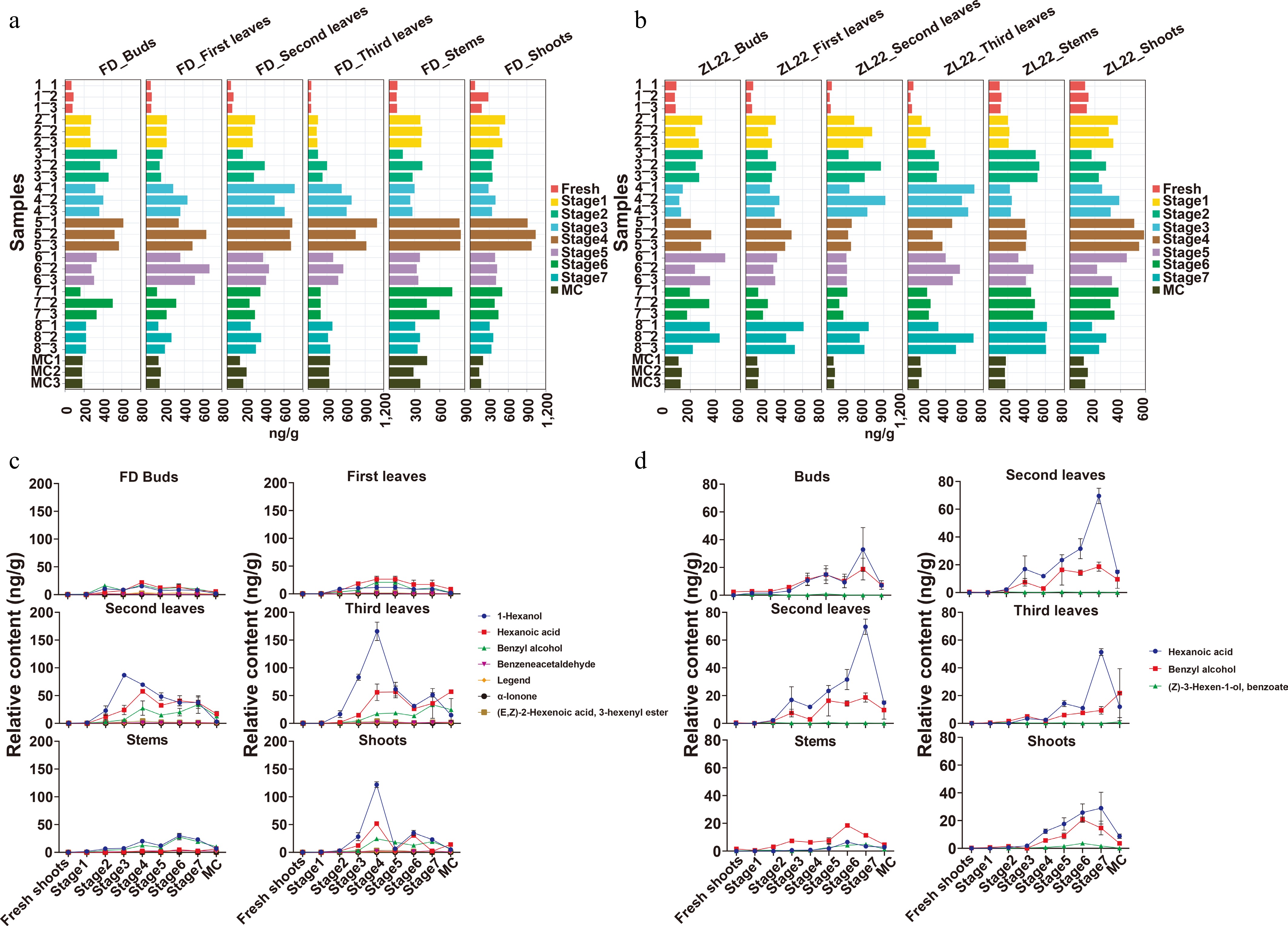
Figure 4.
The volatile compounds changed within different tissues of FD and ZL22 during the withering. (a, b) The relative variation in the content of total volatile compounds from different tissues of FD and ZL22 during the withering periods. (c, d) The DVCs in different tissues of FD and ZL22 during withering. MC, tea products.
The volatile analysis of FD and ZL22 tissues during withering showed substantial differences between cultivars and tissues (VIP > 1, |log2(fold change)| ≥ 1, and p < 0.05). Seven chemicals were found in all FD tissues as DVCs: 1-hexanol, hexanoic acid, benzyl alcohol, benzeneacetaldehyde, (Z)-3-nonen-1-ol, α-ionone, and (E,Z)-2-hexenoic acid, and 3-hexenyl ester (Fig. 4c, Supplementary Table S1). These chemicals increased during withering and decreased during drying (Fig. 4c). Hexanoic acid, benzyl alcohol, and cis-3-hexenyl benzoate were the only DVCs found in all five tissues of ZL22 (Fig. 4d, Supplementary Table S1). The relative content of these three DVCs increased early in withering and reduced subsequently (Fig. 4d). The only common DVC component in all five tissues of both cultivars after withering was hexanoic acid. The cultivars had different hexanoic acid concentration patterns: FD tissues peaked at 30 h of withering, whereas ZL22 tissues peaked at 50 h.
Aside from the DVCs, several compounds showed noteworthy changes during withering. For example, cis-3-hexenyl acetate and β-phenethyl acetate, comprising 25.24% ± 5.14% and 15.57% ± 0.07% of the total volatile chemicals in fresh shoots of FD and ZL22, were not found in the tea preparations (Supplementary Table S1). Some chemicals survived in all tissues of both cultivars during withering. All tissues and withering durations for FD showed five compounds: (Z)-3-hexen-1-ol, linalool, phenylethyl alcohol, 1-nonanol, and cis-3-hexenyl benzoate. During withering, all five tissues of ZL22 contained seven compounds: (Z)-3-hexen-1-ol, linalool, phenylethyl alcohol, methyl salicylate, geraniol, cis-3-hexenyl hexanoate, and ethyl hexadecanoate (Supplementary Figs S7−S9). White tea withers by dehydrating the shoots. The shoots preserve water transport capacity during early withering, translating moisture from the young stems to the leaves and volatilizing it. This transports stem-derived chemicals such fatty acids to the leaves, where hydrolases and oxidases produce aromatic volatiles[29−31]. Tissue-specific DVCs of fatty acid derivatives were found during withering, corroborating recent results that rgw inter-tissue transport of these chemicals greatly affects the formation of white tea's fragrance[32,33]. The DVC composition and peak formation times varied greatly during withering. Shoots' microstructure, water transport kinetics, and metabolic processes vary genotypically[33]. These data confirm the tea processing adage 'Observe tea to make tea—standards cannot be unified'[31,34]. Since standardized techniques cannot account for biological diversity in fresh tea shoots, artisanal changes based on shoot maturity and varietal characteristics are needed to produce high-quality tea with an optimal scent[35−37].
Comparison of volatile compounds in fresh tea shoots and tea products of FD and ZL22
-
Fresh ZL22 shoots had more volatile chemicals than FD shoots (Fig. 5a). However, FD tea products released 67 volatile chemicals and ZL22 released 63 (Fig. 5a). Tea products had more acids, alcohols, aromatic hydrocarbons, and ketones than fresh tea shoots but fewer terpenoids and esters (Fig. 5b). This suggests that withering changes white tea's volatile profile[38]. A comparison of the aroma compounds from fresh tea shoots and tea products showed that 11 of 15 DVCs were only found in ZL22 shoots but not in either cultivar's tea products. Except for eugenol, trans-linalool oxide (furanoid), methyl jasmonate, methyl salicylate, linalool oxide (pyranoid), and cis-linalool 3,7-oxide, each cultivar had unique differential chemicals (Fig. 5d, Supplementary Table S1). In addition, both cultivars' tender shoots and finished tea products had different fragrance constituents. Compared with ZL22 (Fig. 5b), tender shoots of FD had much higher terpenoid levels, explaining the different scent categories in white tea processed using identical procedures[11]. These compounds are released during withering through enzymatic glycoside hydrolysis or de novo synthesis[38−40]. Nonanal content increases during withering through lipid decomposition and aldehyde production, causing greasy, green, and oily odors[9,10,40,41]. This process involves the oxidation of oleic acid, catalyzed by enzymes such as lipoxygenase and hydroperoxide lyase[40,41]. Unique variation patterns of similar aromatic molecules during withering show metabolic variations among tea plant cultivars[11].
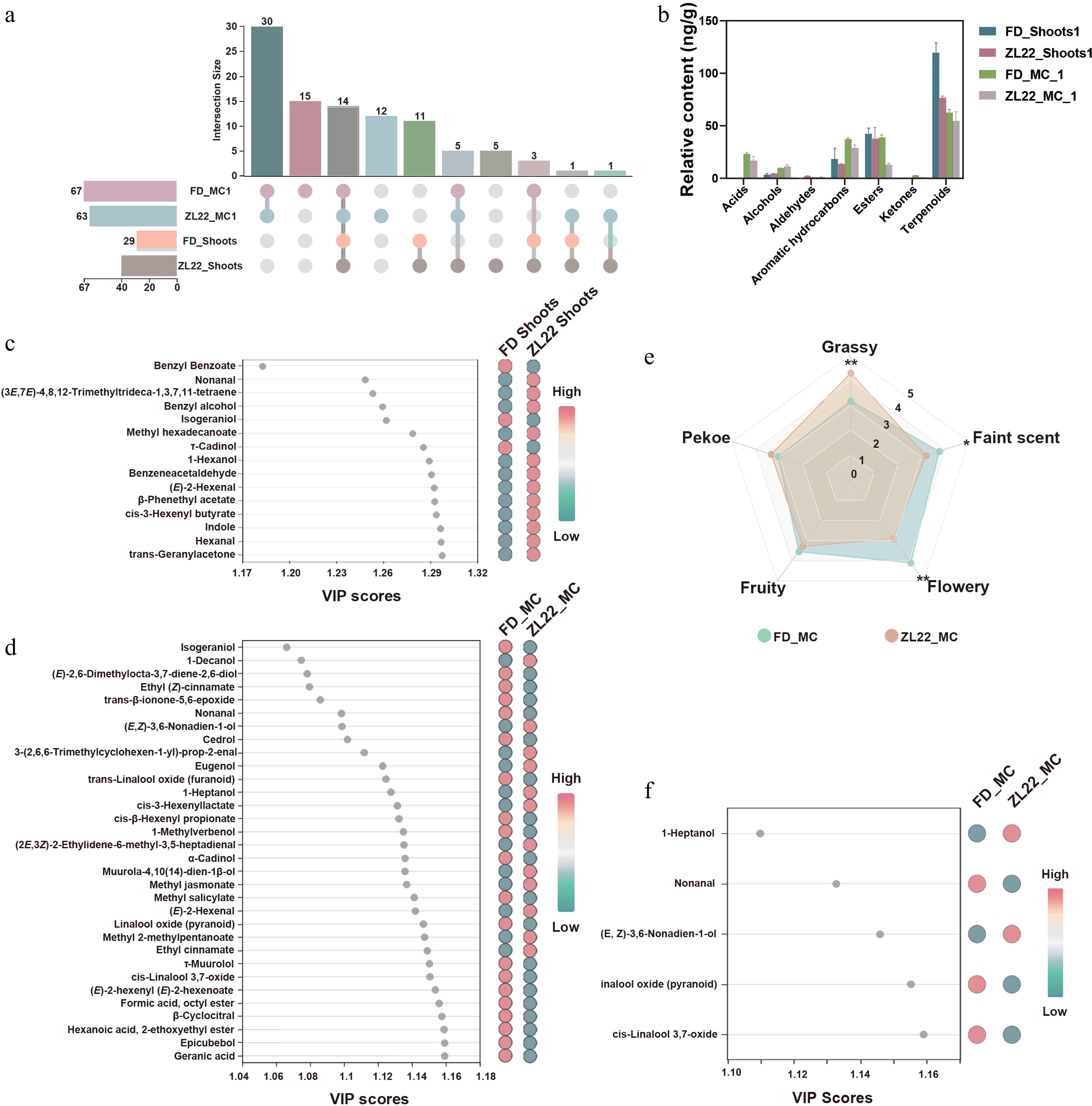
Figure 5.
Comparison of fragrance compounds for fresh tea shoots and tea products of ZL22 and FD. (a) The UpSet plots of the aroma compounds of fresh shoots and tea products of ZL22 and FD. (b) Relative contents of seven categories of aroma componenets in young shoots and tea products of FD and ZL22. (c, d) The different volatile compounds for fresh tea shoots and tea products of ZL22 and FD. (e) Sensory evaluation of ZL22 and FD tea products. (f) The OAVs of differentially volatile compounds for ZL22 and FD teas. MC, tea products.
ZL22 tea products had higher grassy aroma compounds than FD tea products (Fig. 5e), but FD tea products had a significantly higher flowery and faint scent score[1]. Volatile compounds with OAV > 1 were considered to be significant contributors to the overall aroma profile of tea[1,42]. The OAV values revealed 13 chemicals that contribute to the scent of ZL22 and FD teas (Supplementary Table S3). The OAV values of 1-heptanol and (E,Z)-3,6-nonadien-1-ol[7,22] in ZL22 were 33.31 ± 6.87 and 3.28 ± 0.95, respectively, but both compounds were missing in FD (VIP > 1, p < 0.01) (Fig. 5e, f, Supplementary Table S3). Compared with ZL22 shoots, FD shoots had considerably higher OAV values for flowery or pleasant flavor components such nonanal, linalool oxide (pyranoid), and cis-linalool 3,7-oxide[7,26]. 1-Heptanol and (E,Z)-3,6-nonadien-1-ol appear to be the main compounds responsible for ZL22's higher grassy aroma score compared with FD, whereas nonanal, linalool oxide (pyranoid), and cis-linalool 3,7-oxide appear to be responsible for FD's faint scent and flowery aroma.
Significant variations were observed in the accumulation of green grass and floral aroma compounds within the same tissues of different cultivars[9,10,40,41]. For instance, cis-linalool 3,7-oxide released from first leaves, second leaves, third leaves, and tender stems of ZL22 contributed significantly to the aroma of the finished tea product, whereas cis-linalool 3,7-oxide released from first leaves of FD showed no contribution to the aroma of the finished tea product. This observation aligns with previous studies indicating that the tender stem serves as the main contributor to white tea's aroma[10,43]. This study also demonstrates the varying aroma contributions of each leaf of SM tea, which has important implications for selecting appropriate tender shoot grades in the production of white tea[22,44].
Changes in grassy and flowery compounds during the withering process
-
The compounds 1-heptanol and (E,Z)-3,6-nonadien-1-ol were identified as the primary grassy aroma compounds in ZL22 in previous studies[7,22]. 1-Heptanol was only found in ZL22 tea products and was absent from new shoots and at all withering times (Fig. 6a). Interestingly, FD had 1-heptanol in withering Stage 3 only but ZL22 tea products had it, suggesting different metabolic pathways (Fig. 6a). The chemical (E,Z)-3,6-nonadien-1-ol was found significantly in the shoots and five tissues of both cultivars in withering Stage 4. Statistical investigation showed that ZL22's aroma increased with this chemical during withering, whereas FD aroma did not (Fig. 6b). Both cultivars increased in cis-linalool 3,7-oxide and linalool oxide (pyranoid) during withering, although ZL22 increased more than FD (Fig. 6c, d). Nonanal's emission patterns during withering varied greatly between the cultivars. In ZL22, the nonanal concentration gradually increased in all organs during withering, reduced rapidly from Stage 6 to Stage 7, and disappeared after high-temperature drying. However, nonanal gradually increased in FD throughout withering (Fig. 6f). In conclusion, ZL22 increased in grassy fragrance chemicals throughout withering and tea production, whereas these gradually decreased in FD. Tea plant genotypes influence fatty acid metabolism-generated 1-heptanol, (E,Z)-3,6-nonadien-1-ol, and nonanal[29,45,46]. The genotypic differences in chemical accumulation and biosynthesis between cultivars are noteworthy[29,46].
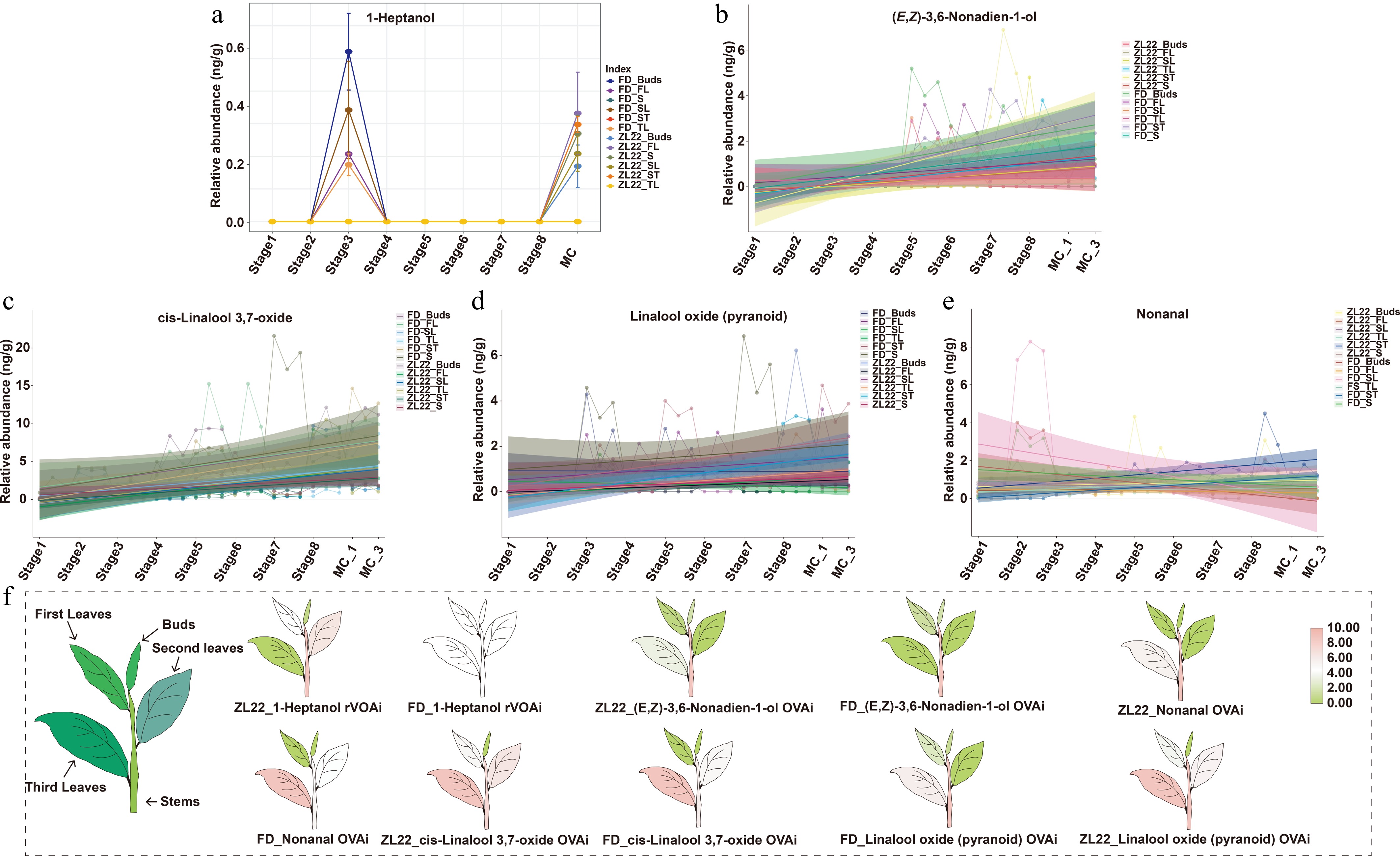
Figure 6.
The changes in grassy and flowery aroma compounds during the withering period and an OAV analysis of these compounds in the tea shoots. The dramatic changes in (a) 1-heptanol, (b) (E,Z)-3,6-nonadien-1-ol, (c) nonanal, (d) cis-linalool 3,7-oxide, and (e) linalool oxide (pyranoid) during the withering period. (f) The OAVs of 1-heptanol, (E,Z)-3,6-nonadien-1-ol, nonanal, cis-linalool 3,7-oxide, and linalool oxide (pyranoid) distributed in the tea shoots. FL, first leaves; SL, second leaves; TL, third leaves; ST, stems; MC, tea products.
Floral aroma compounds, including cis-linalool 3,7-oxide and linalool oxide (pyranoid)[7,26], increased gradually in FD during withering. These chemicals also rose in ZL22, but less than in FD. Insufficient release of grassy scents during withering and drying results in the higher grassy aroma in ZL22 tea products caused by the buildup of grassy aroma compounds and the decrease in floral volatile compounds. During withering, FD had more flowery and fresh scents in the rough tea caused by a decrease in green grass aroma compounds and an increase in floral aroma compounds (Fig. 6a-e). The mevalonate route produces cis-linalool 3,7-oxide and linalool oxide (pyranoid), derivatives of the floral fragrance monoterpene[47]. Genotype-dependent processes control plants' terpenoid accumulation[48]. These chemicals accumulate differently in processed tea made from the FD and ZL22 cultivars, indicating metabolic differences in their monoterpene production pathways.
More than 100 chemicals were found in FD and ZL22 tissues during withering, but only three were noteworthy. A differential analysis of the volatile components with OAV values above 1 was performed to identify the principal organs that emit green grassy and floral scents in SM white tea. Five chemicals were found to be responsible for the scent differences between ZL22 and FD rough teas. Further allocation calculations based on the OAV values of these five compounds in different tissues of the tea products, weighted by the tissue proportion, showed that tender stems contributed most to the green grassy aroma, and the third leaves and tender stems to the floral aroma (Fig. 6f). Tender buds and initial leaves contributed little to either grassy or flowery scents (Fig. 6f). Different tissues from the two cultivars contributed differently to the floral scent. In particular, cis-linalool 3,7-oxide and linalool oxide (pyranoid) were mostly found in the first leaves, second leaves, and tender stems of ZL22 and in the third leaves and tender stems of FD, where they contributed to the floral aroma. This investigation supports the idea that SM white tea's aroma is distinct even in its coarse and mature raw materials[45,46].
-
Sensory evaluation and HS-SPME–GC–MS/MS were used to examine the VACs in tender tea shoots (one bud and three leaves) from the FD and ZL22 cultivars during withering. The concentration of VACs in tea shoots and tissues grew and then fell during withering. White tea's characteristic fragrance profile emerged during high-temperature drying as the grassy odor compounds diminished during withering. According to the odor activity value (OAV) analysis, 1-heptanol and (E,Z)-3,6-nonadien-1-ol were the main chemicals responsible for the grassy scent in ZL22 tea, whereas nonanal, cis-linalool 3,7-oxide, and linalool oxide (pyranoid) contributed to the floral and fresh scent in FD tea. OAV research showed that tender stems were the main tissue contributing to the tea's smell. The scent contribution varied greatly between ZL22 and FD at different leaf locations. This study shows that tea shoots from ZL22 produce white tea with a grassier flavor, whereas those from FD retain their flowery aroma after processing. The findings explain tissue-specific aroma accumulation differences among tea cultivars and provide a chemical basis for understanding the optimal withering time.
This work was funded by the Zhejiang Science and Technology Major Program on Agricultural New Variety Breeding – Tea Plant (Grant No. 2021C02067-7-1) and the China Agriculture Research System, jointly managed by the Ministry of Finance (MOF) and the Ministry of Agriculture and Rural Affairs (MARA) (Grant No. CARS-19).
-
Ethical permission to conduct a human sensory study was granted by our institution. Participants gave informed consent by responding to the statement 'I am aware that my responses are confidential, and I agree to participate in this sensory evaluation', where an affirmative reply was required to participate in the sensory evaluation. They were able to withdraw from the sensory evaluation at any time without giving a reason. The raw materials used in this project were all food-grade and safe for people, animals, and the environment.
-
The authors confirm their contributions to the paper as follows: designed the research: Wang L, Lu W, Wei K, Liu G; performed the research: Liu G, Chen H, Wu L, Bao D, Zhang H, Wang Y, Wang L; analyzed the data and wrote the manuscript: Liu G, Wang Y; revised the manuscript: Wang L, Lu W, Wei K, Liu G. All authors reviewed the results and approved the final version of the manuscript.
-
All data generated in the present research are included in this published article and its supplementary information files.
-
The authors declare that they have no conflict of interest.
-
# Authors contributed equally: Guanhua Liu, Yueqi Wang
- Supplementary Table S1 The aroma compounds of 'FD' tea shoots during the withering periods.
- Supplementary Table S2 The aroma coumpounds of 'ZL22' tea shoots during the withering periods.
- Supplementary Table S3 The OAV value of 'FD' and 'ZL22' tea products.
- Supplementary Fig. S1 The upset Venn diagram illustrates the relative content analysis of certain compounds for ‘FD’ at the initial stage of withering and tea products.
- Supplementary Fig. S2 The upset Venn diagram illustrates the relative content analysis of certain substances for ‘ZL22’ at the initial stage of withering and tea products.
- Supplementary Fig. S3 The upset plot of 'FD' buds (a), first leaves (b), second leaves (c), third leaves (d), the stems (e), and tea shoots (f) during the withering period, respectively.
- Supplementary Fig. S4 The upset plot of 'ZL22' buds (a), first leaves (b), second leaves (c), third leaves (d), the stems (e), and tea shoots (f) during the withering period, respectively.
- Supplementary Fig. S5 The relative content analysis of nine types compounds from the buds, the first to third leaves, stems and shoots of 'FD' (a) and 'ZL22' (b) during the withering period.
- Supplementary Fig. S6 The upset plot of buds, first to third leaves, stems and shoots during the withering period of 'FD' (A) and 'ZL22' (B), respectively.
- Supplementary Fig. S7 The changes in the content of the five continuously emission compounds of 'FD' different tissues during the withering periods.
- Supplementary Fig. S8 The changes in the content of the three continuously emission compounds of 'ZL22' and 'FD' different tissues during the withering periods.
- Supplementary Fig. S9 The changes in the content of the five continuously emission compounds of 'ZL22' different tissues during the withering periods.
- Copyright: © 2026 by the author(s). Published by Maximum Academic Press, Fayetteville, GA. This article is an open access article distributed under Creative Commons Attribution License (CC BY 4.0), visit https://creativecommons.org/licenses/by/4.0/.
-
About this article
Cite this article
Liu G, Wang Y, Chen H, Wu L, Bao D, et al. 2026. Spatial distribution differences in volatile aroma compounds and the sensory evaluation of white tea. Beverage Plant Research 6: e018 doi: 10.48130/bpr-0026-0003 

Spatial distribution differences in volatile aroma compounds and the sensory evaluation of white tea
- Received: 18 November 2025
- Revised: 03 January 2026
- Accepted: 21 January 2026
- Published online: 06 May 2026
Abstract: The prolonged withering period collectively shapes the distinctive olfactory profile of tea. However, the contribution of different tissues in tea shoots of different tea cultivars to aroma development during the withering process of tea remains unexplored. This present research investigates the influence of various tissues in tea shoots on the aroma development of tea during the withering processing. The Camellia sinensis cultivars 'Fuding Dabaicha' (FD) and 'Zhonglong 22' (ZL22) were chosen as the material for aroma scores and compound analysis in the present research. The second and third leaves primarily exhibit a grassy fragrance, whereas the tender stems and first leaves display floral aromas. FD tea had higher flowery and fresh fragrance ratings in contrast to the more herbaceous ZL22. Different tissues also showed distinct volatile profiles: Tender stems mainly accumulated terpenoids, the leaves released fatty acid derivatives, and the terminal buds had balanced phenylpropanoid compounds. Key contributors to the grassy odor in ZL22 include 1-heptanol and (E,Z)-3,6-nonadien-1-ol, whereas the floral aroma of FD stems from nonanal, cis-linalool 3,7-oxide, and linalool oxide. In FD, volatile compounds primarily collect in tender stems and the third leaves; in ZL22, the aroma compounds mainly accumulate in tender stems and the second leaves. Our results demonstrate the tissue-specific differences in aroma accumulation among different tea plant cultivars and further indicate the physiological basis for the variability of withering duration across cultivars.
-
Key words:
- White tea /
- Aroma /
- Withering /
- Sensory evaluation /
- Spatial differential distribution