












-
Rice feeds more than half of the global population, but the conventional paddy cultivation techniques in the flooded paddies are a major source of methane (CH4), a potent greenhouse gas. Recent analyses estimate that rice farming is responsible for about 10% to 12% of all human- induced CH4 emissions due to the breakdown of organic matter in waterlogged oxygen-deprived soils[1]. The conventional paddy cultivation practices in continuous flooding create oxygen-deprived conditions that promote methane-producing microbes. As a result, any attempts to boost rice yields often lead to increased methane emissions. Meanwhile, rising demand for rice, driven by population growth and changing diets, especially in Asia, adds pressure to develop more climate-friendly ways of producing rice that also ensure food security.
Several strategies have been proposed to reduce methane emissions from rice fields. These include alternate wetting and drying (AWD), mid-season drainage, improved nitrogen use, organic amendments, and low-emission rice varieties[1]. AWD, for instance, can lower CH4 emissions by 40%–80% without sacrificing yields in many settings. However, adoption can be limited by infrastructure, labour demands, and risk concerns for smallholder farmers[2]. Given these challenges, there is growing interest in complementary or alternative approaches that work by directly altering the soil environment and microbial activity, such as mulching and biological treatments, that can be integrated into existing submerged rice systems. Plastic mulching is commonly used in crop fields to retain moisture, warm the soil, control weeds, and boost yields. Synthesis of literature found that plastic mulch in rice systems can increase grain output and water use efficiency, while reducing overall greenhouse gas emissions[3]. However, traditional polyethylene mulch creates persistent plastic waste and contributes to the accumulation of plastic fragments in the soil[4]. To address this, biodegradable film mulches (BDFMs) have been developed. These are designed to break down in the soil after use[5].
The main component used in BDFMs is polylactic acid (PLA), a biobased polyester made from starch-rich crops. PLA is industrially compostable and can be processed into durable, flexible mulch films suitable for agricultural applications[6]. Studies in paddy cultivation and other crops suggest these degradable mulches can change how carbon and nitrogen cycle in the soils, affect moisture and temperature conditions, and influence both greenhouse gas emissions and crop performance. In rice systems, they have been shown to reduce CH4 emissions by about 30% while maintaining yields and even improving soil carbon levels by harvest[7]. These mulches have also been linked to better root growth and higher yields in water-saving rice systems[8]. Yet concerns remain as BDFMs break down; they may release microplastics that alter soil structure, nutrient dynamics, or microbial life, potentially counteracting their benefits. The long-term impact on soil health and emissions is still unclear[4,9]. In flooded rice fields, where soil chemistry and microbes differ from dry systems, it's still uncertain how PLA-based mulches affect methane production and breakdown[10].
Meanwhile, microalgae and cyanobacteria are gaining attention as multipurpose biofertilizers and plant boosters in rice cultivation. These organisms can fix nitrogen, unlock phosphorus, produce plant hormones, and improve soil structure, resulting in yield gains of 7%–21% compared to conventional fertilizers[11,12]. In addition to promoting growth, some algae can reduce CH4 emissions by outcompeting methane-producing microbes for nutrients, releasing oxygen into the root zone, or supporting methane-consuming microbes[13,14]. Studies have highlighted that the potential of microbial and algal bio-stimulants to simultaneously boost yields and reduce emissions of both CH4 and nitrous oxide (N2O), showing promise as climate-smart inputs[15,16]. The integration of engineered bio-based materials into environmental systems reflects a broader transition toward circular resource valorisation, where agricultural residues and bio-derived feedstocks are transformed into functional materials for environmental remediation and sustainable applications[17,18].
Despite these advances, biodegradable PLA mulches and biofertilizers have mostly been studied separately. It is undetermined how they might interact in flooded rice paddies to influence CH4 emissions, soil chemistry, or crop productivity. Most studies on BDFMs focus on dry or water-saving systems, short-term yield effects, or total emissions (measured as CO2-equivalents) without isolating CH4 impacts. Similarly, algal fertilizer trials rarely examine interactions with surface mulches or biodegradable plastics[7,13]. This is a significant knowledge gap, especially considering that: (a) PLA mulches can strongly influence soil temperature, moisture, and redox conditions that control methane production; (b) Microalgal inoculants can shift nutrient cycling and methane-related microbial communities; and (c) flooded rice remains the dominant farming method across Asia, where any solution must work within local constraints and practices.
Furthermore, prior work has shown that biodegradable film mulching can influence rice field microclimate, crop performance, and greenhouse gas emissions, but most studies evaluate film mulching as a standalone intervention and often focus on water-saving rice systems rather than continuous flooding[3]. Similarly, microalgae-based fertilizers have been investigated primarily for their capacity to support rice growth and nutrient supply, yet their interaction with flooded-soil carbon cycling and methane dynamics remains insufficiently resolved under field conditions[19]. Moreover, many mitigation assessments rely mainly on seasonal cumulative emissions, whereas yield-scaled metrics such as GHGI are increasingly used to evaluate mitigation efficiency relative to productivity and to compare practices across systems[20].
Therefore, this study advances beyond previous work by jointly testing PLA biodegradable mulching and microalgal biofertilizer across two rice varieties under continuous flooding, while using stage-resolved CH4 and CO2 fluxes together with yield and GHGI to identify when emission peaks occur and how management and variety interactions translate into yield-scaled climate outcomes[21]. This integrated approach aims to determine whether these practices can jointly contribute to climate-smart, productive rice farming.
-
The experiment was conducted at Maejo University, Chiang Mai, Thailand, located at Latitude 18.895° N and Longitude 99.01° E. Soils at the site are alluvial, predominantly sandy loam to clay loam. The area receives a mean annual rainfall of 1,100–1,200 mm, with an average temperature of 26–28 °C during the rice-growing season[22]. All field operations were carried out according to standard agronomic practices for growing submerged rice in Northern Thailand.
Experimental design and treatments
-
The experiment followed a Randomized Complete Block Design (RCBD) with four replications. Eight treatments were evaluated as shown in Table 1: biodegradable PLA mulch, biofertilizer, a combined PLA mulch plus biofertilizer treatment, and an untreated control. To further elucidate variety-specific responses, two rice varieties, viz. New San Pa Tong (SP) and 888 were grown under each treatment. Identical agronomic management practices as standard for the submerged rice cultivation in northern Thailand were followed for all plots, ensuring any observed differences could be attributed to the imposed treatments.
Table 1. Experimental setup.
Treatments (T) Micro-Algal Bio- Fertilizer (888) PLA Mulch (T1) Micro-Algal Bio- Fertilizer (New San Pa Tong) PLA Mulch (T2) No Fertilizer (888) PLA Mulch (T3) No Fertilizer (New San Pa Tong) PLA Mulch (T4) Micro-Algal Bio- Fertilizer (888) No Mulch (T5) Micro-Algal Bio- Fertilizer (New San Pa Tong) No Mulch (T6) No Fertilizer (888) No Mulch (T7) (Control) No Fertilizer (New San Pa Tong) No Mulch (T8) (Control) Biodegradable PLA mulch characteristics and installation
-
A commercially available biodegradable plastic mulch made from polylactic acid (PLA) was used for this experiment. The mulch film had a thickness of 0.01 mm, and a width of 1,900 mm, and was manufactured according to the Chinese biodegradable mulch standard GB/T 35795–2017 Grade B, Category B. The product was acquired from Dahe Technology Co., Ltd, Nanjing, China, with a manufacturing date of 3rd of June, 2025. Rice seedlings were transplanted using a Kubota rice transplanter tractor. The machine was operated under standard field conditions for mechanized rice cultivation. A PLA (polylactic acid) biodegradable mulch film attachment was integrated with the tractor during transplanting. As the tractor advanced across the paddy field, the PLA mulch was simultaneously laid over the soil surface. The transplanter mechanism automatically perforated the mulch film, created planting holes at predetermined spacing, and inserted the rice seedlings through the mulch into the soil in a single operation. This integrated system enabled simultaneous mulch laying and rice transplanting, ensuring uniform plant spacing, proper seedling establishment, and efficient field operation.
Preparation and application of biofertilizer
-
A commercial liquid microbial biofertilizer (Difulai®, 200 mL; Dezhou Difulai Biotechnology Co., Ltd, Shandong, China) was used in this study. The product is registered in China as a microbial fertilizer and complies with the product standard Q/CPLQW0001-2017. The minimum viable microbial count declared on the label was ≥ 3.0 × 10⁶ cells mL−1. The biofertilizer is a liquid microbial formulation intended to enhance soil microbial activity, improve nutrient transformation and availability, stimulate root development, and promote crop growth and yield. The product was stored in a cool and dry place (5–25 °C) away from direct sunlight until use. Before field application, the biofertilizer was diluted with clean water at a rate of 200 mL in 10 L of water to obtain a uniform working solution. In the rice production system, the diluted suspension was applied foliar two times: first at one week after transplanting and again before the tillering stage. All treatments were implemented uniformly following standard agronomic practices for rice cultivation.
Gas sampling and greenhouse gas measurements
-
Methane and carbon dioxide emissions were measured using a LI-COR trace gas analyser (LI-COR LI-7810, USA) at three major growth stages: tillering, flowering, and post-harvest. Permanent four PVC collars (diameter 21.5 cm, height 25 cm, and thickness 0.5 cm) were established in each plot before the first sampling event, and measurements were made by placing the analyser chamber onto the collars to capture gas flux under field conditions. Wooden boardwalks were used to access the sampling points without disturbing the soil or water surface. Since CH4 and CO2 fluxes show diurnal cycles, sampling at different times across dates can introduce systematic bias into seasonal means and can confound treatment comparisons, so this study took the gas sampling consistently throughout the experiment cycle from early morning till completion, usually 12 pm[23,24].
Crop growth and yield measurements
-
Plant height, SPAD chlorophyll reading, soil pH, and soil moisture were measured at the same growth stages as the gas measurements. All the measurements were taken from representative points in each plot to accurately show the effects of the treatments. Grain yield was determined by harvesting an area of 1 m2 at the centre of each plot; afterward, the grains were cleaned and dried before calculating the yield.
Calculation of greenhouse gas intensity (GHGI)
-
Greenhouse gas intensity (GHGI) was derived from plot-level measurements by integrating stage-specific CH4 and CO2 fluxes over the rice growing season. Gas fluxes were measured at defined phenological stages using static chambers, and cumulative emissions were calculated by temporal integration of fluxes between sampling dates. Seasonal cumulative emissions were converted to CO2-equivalents using IPCC global warming potentials[25−27] and subsequently normalized by grain yield harvested from the same plots as shown in Fig. 1.
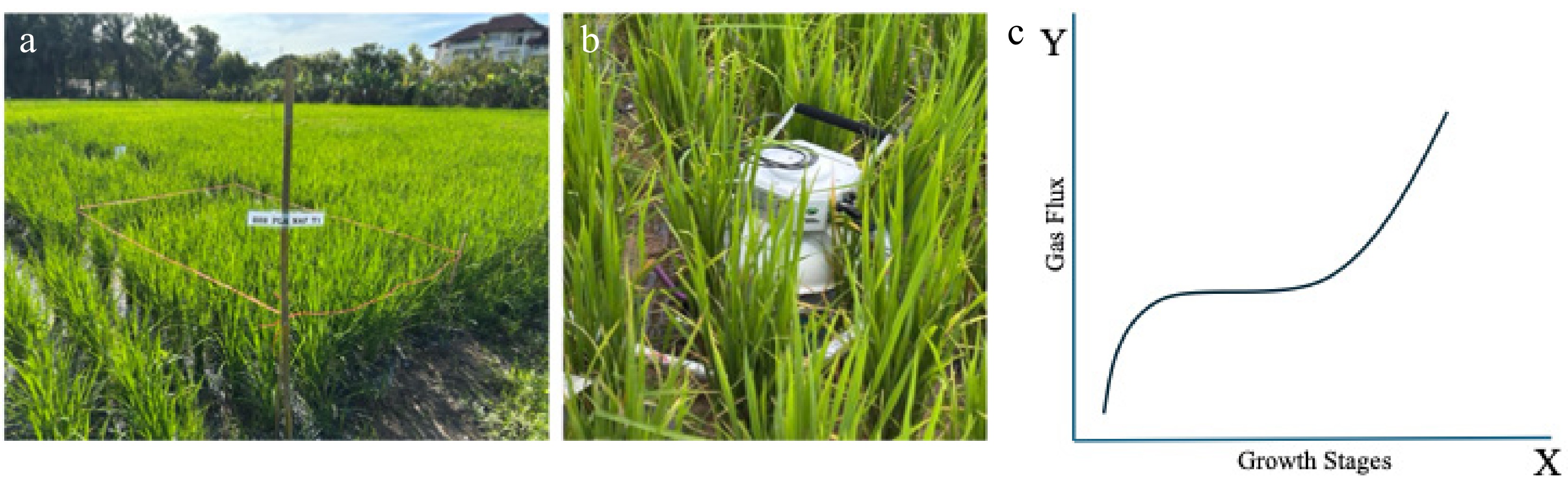
Figure 1.
Workflow illustrating greenhouse gas intensity (GHGI) data collection and calculation. (a) Experimental rice field showing plot layout used for greenhouse gas measurements, (b) static chamber system used for in situ measurement of CH4 and CO2 fluxes, and (c) temporal integration of stage-specific CH4 and CO2 fluxes.
In this study, both cumulative CH4 (converted to CO2-equivalents) and CO2 emissions were fully included in the GHGI calculation. This stepwise approach links greenhouse gas emissions directly with crop productivity and allows stage-based interpretation of emission efficiency. Standard flux time relationships were used to integrate cumulative seasonal CH4 and CO2 emissions, and GHGI was calculated as follows:
$ \mathrm{GHGI}=\dfrac{\mathrm{Cumulative}\; \mathrm{CH_4}+\mathrm{Cumulative}\; \mathrm{CO_2}}{Grain\; Yield} $ Expressed as kg CO2-eq. per kg of grain. Conversion to CO2-equivalent used the IPCC global warming[25,26].
Statistical analysis
-
Data were examined for normality and homogeneity of variance before analysis. For growth and soil parameters, treatment effects were evaluated using analysis of variance (ANOVA) within a randomized complete block design (RCBD), with block included as a random effect. Treatments were defined as combinations of mulch, biofertilizer, and variety. For greenhouse gas emissions, analyses were conducted separately for each growth stage (tillering, flowering, and after harvest). When significant effects were detected, treatment means were separated using Tukey's honestly significant difference (HSD) test at p < 0.05. All statistical analyses were performed using R statistical software.
-
Plant height differed significantly among treatments (p < 0.05). Treatments receiving bio-fertilizer generally produced taller plants compared to non-fertilized controls, with the lowest plant height observed in control treatments. Soil pH and soil moisture were significantly influenced by treatment (p < 0.05). Higher soil moisture levels were observed under bio-fertilizer and mulching treatments compared to control treatments. Chlorophyll content also differed significantly among treatments (p < 0.05), with higher values generally recorded in fertilized treatments (Table 2).
Table 2. Analysis of variance (ANOVA) for the effects of treatments (T1–T8) on plant height, soil pH, soil moisture, and chlorophyll content.
Treatment Plant height (cm) Soil pH Soil moisture (%) Chlorophyll Bio- Fertilizer: PLA Mulch (888) (T1) 102.71 ± 12.07a 6.72 ± 0.31a 1.79 ± 0.78a 27.72 ± 5.4a Bio- Fertilizer: PLA Mulch (New San Pa Tong) (T2) 100.74 ± 12.83b 6.68 ± 0.28ab 1.82 ± 0.26a 29.62 ± 7.81b No Fertilizer: PLA Mulch (888) (T3) 105.98 ± 10.66c 6.54 ± 0.35b 0.79 ± 1.04b 23.01 ± 8.91c No Fertilizer: PLA Mulch (New San Pa Tong) (T4) 98.12 ± 11.45d 6.49 ± 0.40bc 1.89 ± 1.64a 24.32 ± 8.60d Bio- Fertilizer No Mulch (888) (T5) 96.87 ± 13.02e 6.38 ± 0.29c 1.34 ± 0.92c 23.49 ± 9.14e Bio- Fertilizer No Mulch (New San Pa Tong) (T6) 99.56 ± 12.11f 6.35 ± 0.33c 0.88 ± 0.68d 27.20 ± 5.99f No Fertilizer: No Mulch (888) (T7) (Control) 92.44 ± 10.38g 6.21 ± 0.37d 0.69 ± 0.06e 24.82 ± 8.32g No Fertilizer: No Mulch (New San Pa Tong) (T8) (Control) 90.81 ± 9.96h 6.19 ± 0.41d 0.93 ± 0.87d 24.82 ± 8.32g Different superscript letters within the same column indicate significant differences among treatments at p < 0.05. The interaction plots (Fig. 2) revealed distinct and parameter-specific responses to PLA mulch and biofertilizer across the two rice varieties. Plant height showed a moderate interaction, with PLA mulch generally increasing height in the biofertilizer treatments but having weaker effects in non-biofertilized plots, particularly for variety 888.
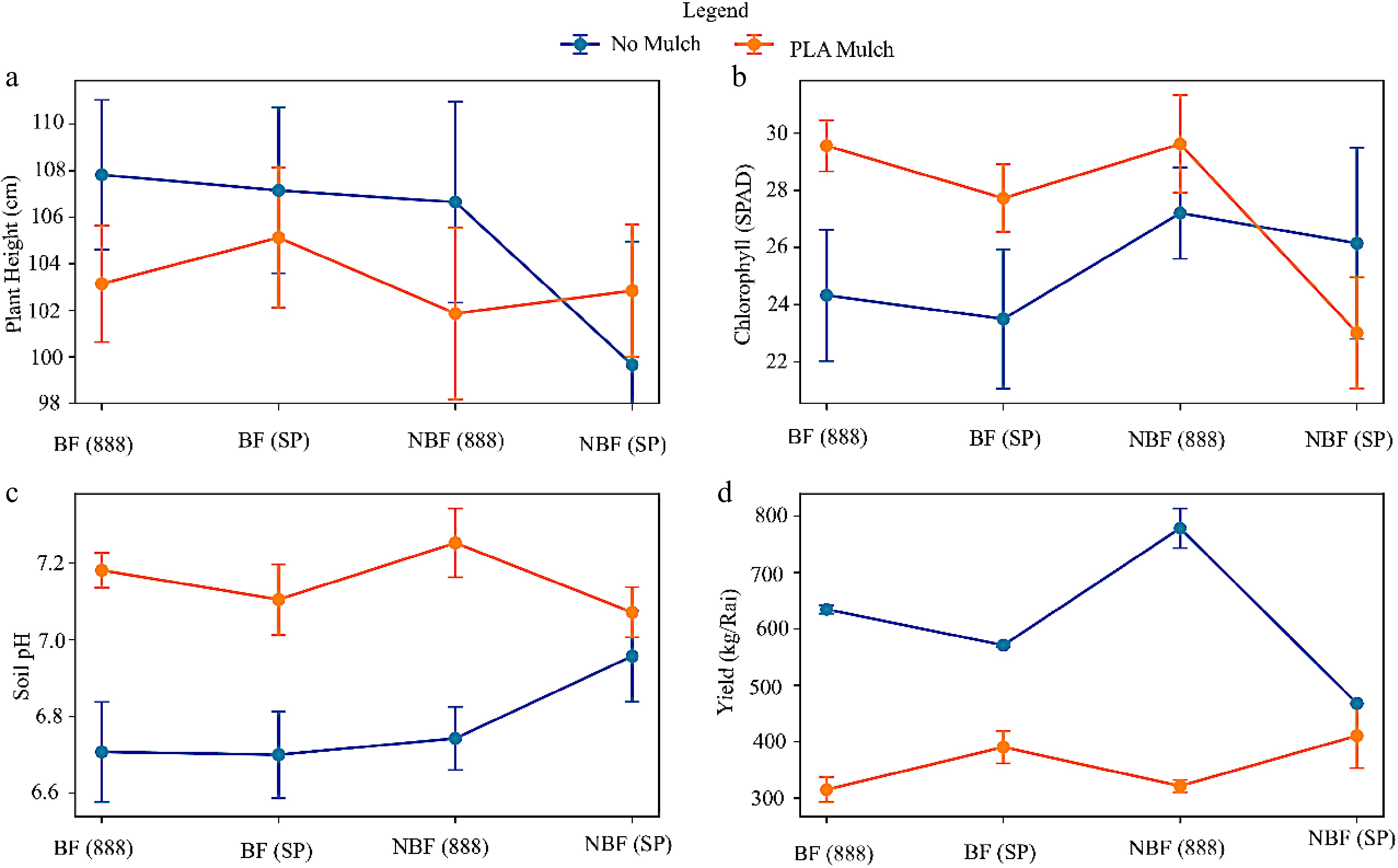
Figure 2.
Interaction plot. *** BF: Bio-fertilizer; NBF: No bio-fertilizer, (a) plant height, (b) chlorophyll (SPAD), (c) soil pH, and (d) yield.
Chlorophyll (SPAD) exhibited a clearer interaction, where PLA mulch consistently enhanced chlorophyll content in both varieties, especially when combined with biofertilizer, indicating improved leaf physiological status. Soil pH remained relatively stable across treatments, though PLA mulch maintained slightly higher pH values compared with un-mulched plots, suggesting minor but consistent soil microclimate modification. Yield displayed the strongest interaction, with variety 888 showing a marked increase under biofertilizer without mulch, while New San Pa Tong responded more positively to PLA mulch. Together, these patterns indicate that the effects of mulch and microalgal biofertilizer are variety-dependent and parameter-specific, producing complementary but non-uniform shifts in plant physiology and productivity.
Soil microclimate responses showed minimal treatment effects. Soil temperature remained stable across all fertilizer, variety, and mulch combinations, consistent with the non-significant ANOVA results (all p > 0.47). However, soil moisture exhibited a consistent decline under PLA mulch, with the ANOVA confirming a significant mulch effect (F1, 125 = 5.55, p = 0.020), while fertilizer and interaction terms were not significant (p > 0.86). These slope graphs (Fig. 3) patterns reinforce that PLA mulch modestly reduces soil moisture but does not influence soil temperature.
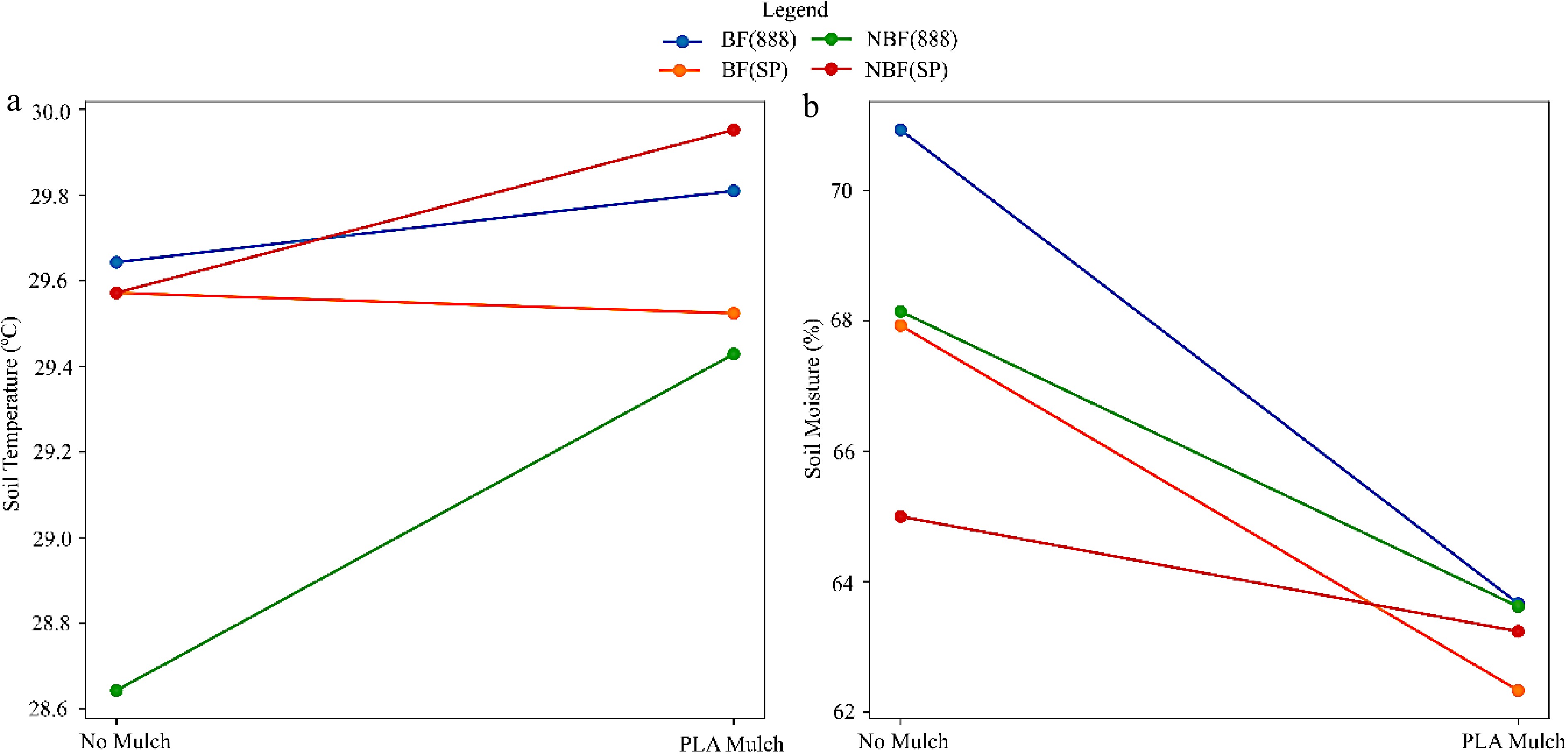
Figure 3.
Slope graph showing changes from No mulch to PLA mulch for (a) soil temperature and (b) moisture.
Since soil microclimate and plant physiological responses may impact microbial activity and carbon cycling, the investigation next addressed whether the observed changes in plant vigour and other physiological dynamics were linked with altered methane (CH4) and carbon dioxide (CO2) emissions.
Greenhouse gas emissions
-
Methane emissions showed significant treatment effects (p < 0.05), with markedly higher emissions observed under fertilized treatments during the cropping period. In contrast, carbon dioxide emissions varied less among treatments, although statistically significant differences were detected (p < 0.05) (Table 3).
Table 3. Analysis of variance (ANOVA) of treatment effects (T1–T8) on methane and carbon dioxide emissions.
Treatment Methane
(nmol m−2·s−1)Carbon dioxide
(nmol m−2·s−1)Bio- Fertilizer: PLA Mulch (888) (T1) 32.77 ± 18.41a 1.12 ± 0.80a Bio- Fertilizer: PLA Mulch (New San Pa Tong) (T2) 1,081.62 ± 412.55b 1.46 ± 0.68b No Fertilizer: PLA Mulch (888) (T3) 4.54 ± 2.11c 1.09 ± 0.71c No Fertilizer: PLA Mulch (New San Pa Tong) (T4) 41.32 ± 20.77a 1.16 ± 1.02d Bio- Fertilizer No Mulch (888) (T5) 58.41 ± 33.66d 2.02 ± 3.43e Bio- Fertilizer No Mulch (New San Pa Tong) (T6) 29.86 ± 14.22a 1.34 ± 1.37f No Fertilizer: No Mulch (888) (T7) (Control) 17.45 ± 8.91e 1.77 ± 1.95g No Fertilizer: No Mulch (New San Pa Tong) (T8) (Control) 12.64 ± 6.38e 0.96 ± 0.56h Different superscript letters within the same column indicate significant differences among treatments at p < 0.05. An overview of greenhouse gas dynamics across treatments and growth stages is shown in Fig. 4. Methane (CH4) exhibited substantial variability among treatment combinations, particularly during the flowering stage, whereas carbon dioxide (CO2) showed comparatively more uniform but stage-dependent patterns. The heatmaps suggest that growth stage plays an important role in shaping emission dynamics, with treatment-related differences becoming more apparent at specific growth stages.
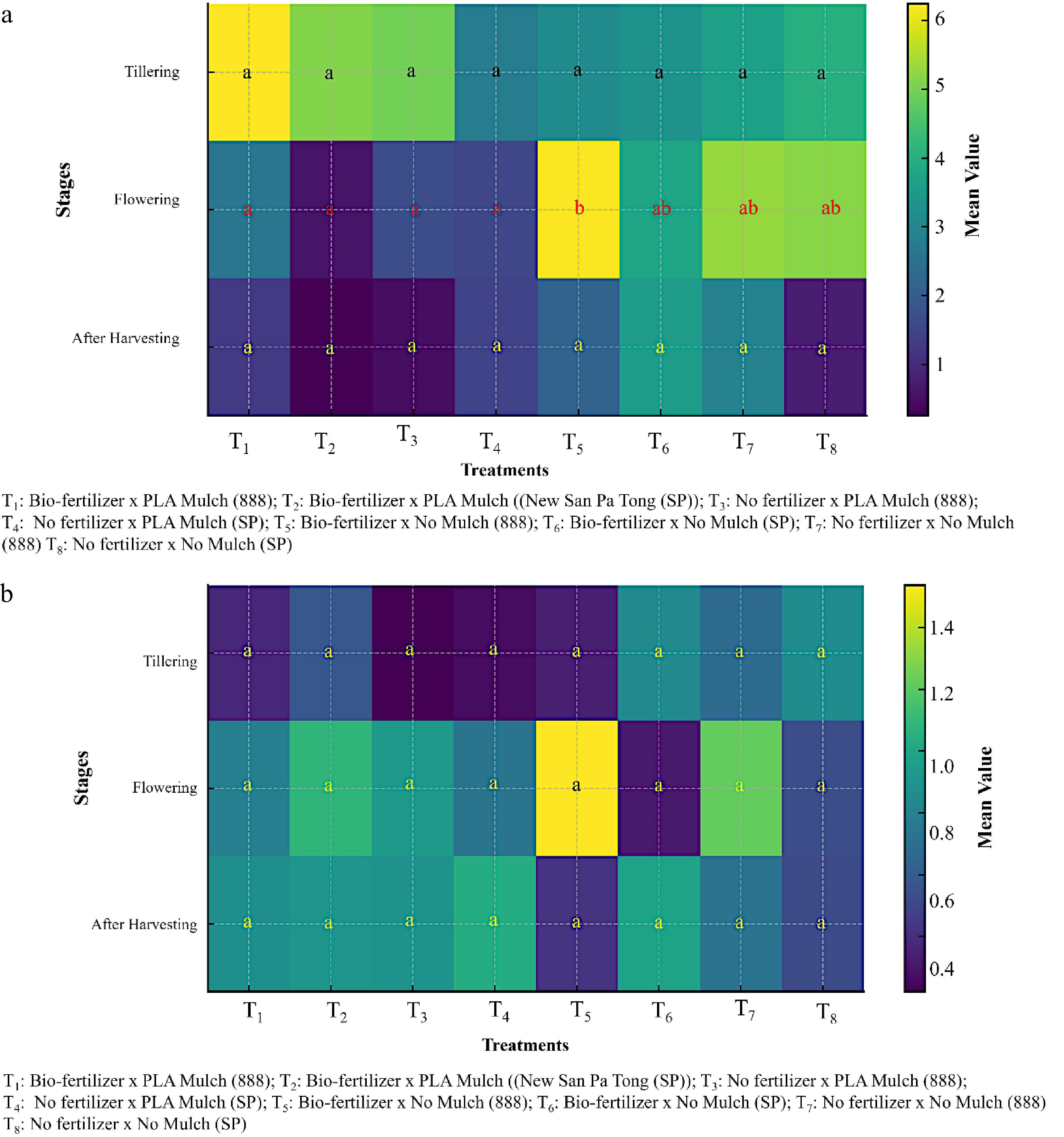
Figure 4.
(a) Illustrates methane (CH4) emission dynamics across treatments and growth stage, and (b) presents carbon dioxide (CO2) emissions, which displayed comparatively more uniform but still stage-related patterns across treatments.
To further contextualize the patterns observed in Fig. 3, greenhouse gas responses to biofertilizer application and PLA mulch are described below for different stages.
Methane (CH4)
-
Stage-wise CH4 emission trends (Fig. 5) revealed that emission patterns differed strongly by fertilizer x variety combinations. Biofertilizer in 888 showed a pronounced flowering stage CH4 peak under no-mulch conditions, while PLA mulch reduced this peak substantially. All other combinations (BF-SP, NBF-888, and NBF-SP) exhibited low and relatively stable CH4 fluxes across stages, indicating minimal mulch influence.
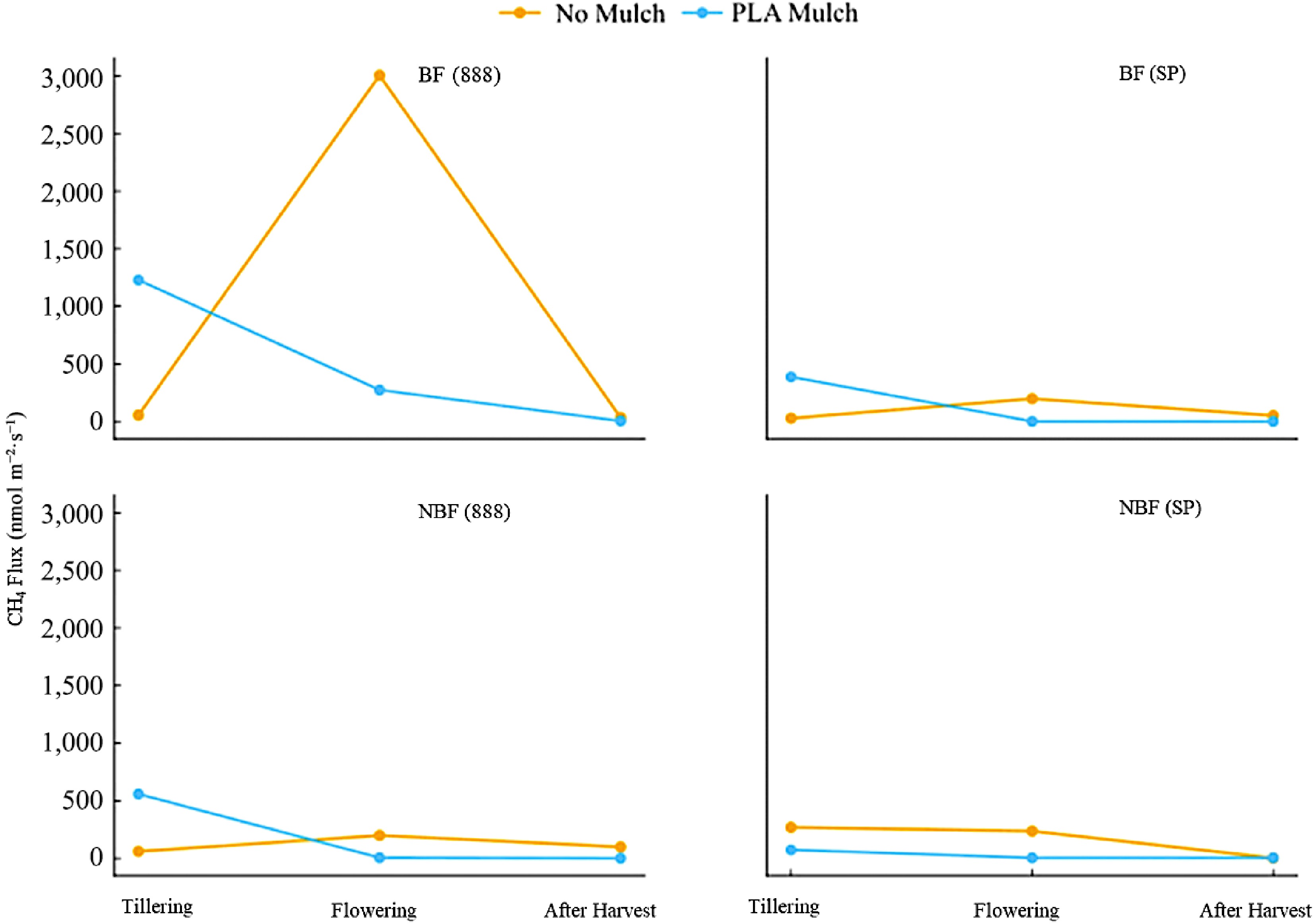
Figure 5.
Methane (CH4) emissions across growth stages under mulch treatments, faceted by fertilizer × variety.
Boxplot distributions revealed clear stage-dependent variation in methane (CH4) emissions across treatments (Fig. 6). During the flowering stage, CH4 emissions exhibited wider dispersion and higher median values for several treatments, indicating enhanced methane production at this stage. In contrast, emissions during tillering were more variable but generally lower, while post-harvest methane fluxes were consistently reduced across treatments. Within individual growth stages, treatments showed overlapping distributions, suggesting that treatment-related differences were more pronounced at specific stages rather than uniformly across the cropping cycle.
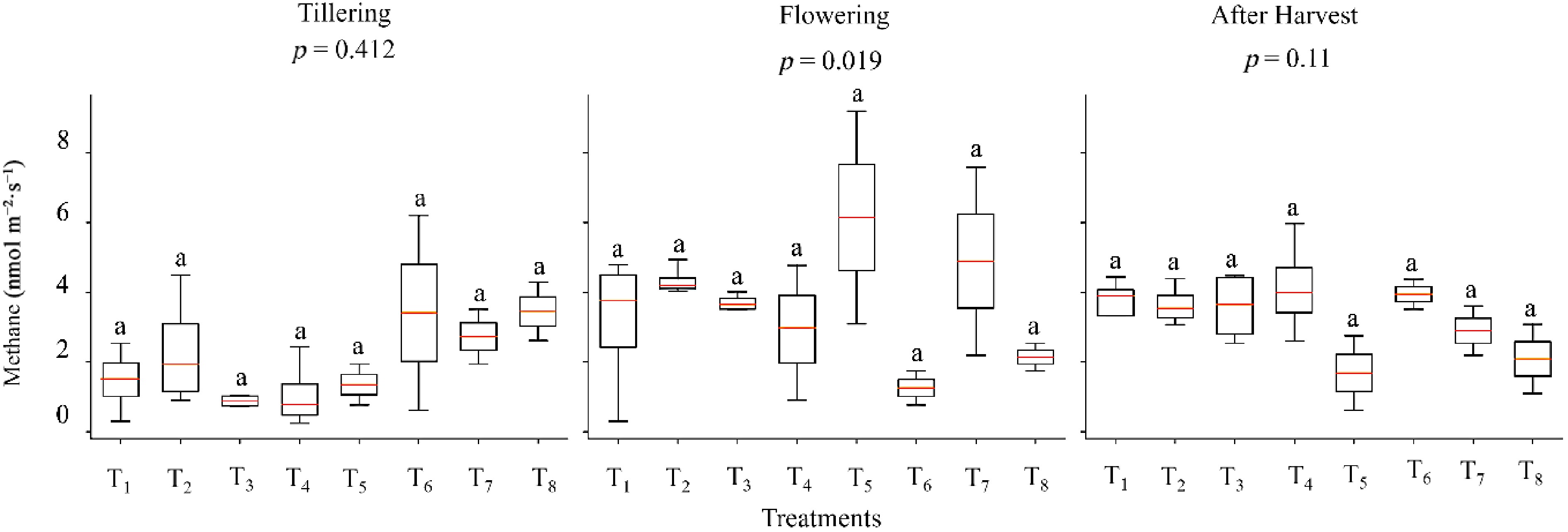
Figure 6.
CH4 emission distributions across growth stages × treatment combinations.
In addition to stage-specific CH4 fluxes, cumulative seasonal methane emissions were calculated by summing stage-resolved fluxes across tillering, flowering, and post-harvest stages for each replicate. Treatment means are reported together with associated uncertainty (mean ± SE), providing an integrated measure of total seasonal CH4 emissions and facilitating comparison with other rice greenhouse gas studies (Table 4).
Table 4. Cumulative CH4 emission across growth stages.
Treatments (T) Cumulative CH4 emission (Mean ± SE) Micro-Agal Bio- Fertilizer (888) PLA Mulch (T1) 1,506.0 ± 482.6 Micro-Agal Bio- Fertilizer (New San Pa Tong) PLA Mulch (T2) 388.2 ± 161.8 No Fertilizer (888) PLA Mulch (T3) 563.8 ± 438.7 No Fertilizer (New San Pa Tong) PLA Mulch (T4) 81.7 ± 55.9 Micro-Agal Bio- Fertilizer (888) No Mulch (T5) 3,093.1 ± 2,944.4 Micro-Agal Bio- Fertilizer (New San Pa Tong) No Mulch (T6) 278.0 ± 144.8 No Fertilizer (888) No Mulch (T7) (Control) 358.6 ± 144.9 No Fertilizer (New San Pa Tong) No Mulch (T8) (Control) 507.6 ± 422.1 The combined effects of growth stage and mulch treatment on methane emissions are further illustrated using a conceptual schematic (Fig. 7). This figure integrates the temporal patterns observed in the measured data, including the line plots, boxplots, and heatmaps, to summarize how PLA mulch and no-mulch conditions modify CH4 flux across the rice growth cycle. The stylized petal shapes represent the relative magnitude of CH4 emissions during tillering, flowering, and after harvest. Overall, the schematic highlights a stage-dependent shift in methane dynamics, whereby PLA mulch is associated with relatively higher emissions during early growth but reduced emissions during flowering and late-season stages compared with the no-mulch condition. This conceptual representation provides a visual synthesis of the stage-specific patterns observed in the empirical results. Petal shapes indicate the relative CH4 magnitude at tillering, flowering, and harvest, reflecting the observed pattern where PLA mulch increases early-season CH4 but reduces emissions during flowering and late growth stages. This graphic summarizes the significant stage × mulch interaction observed in the experimental dataset.
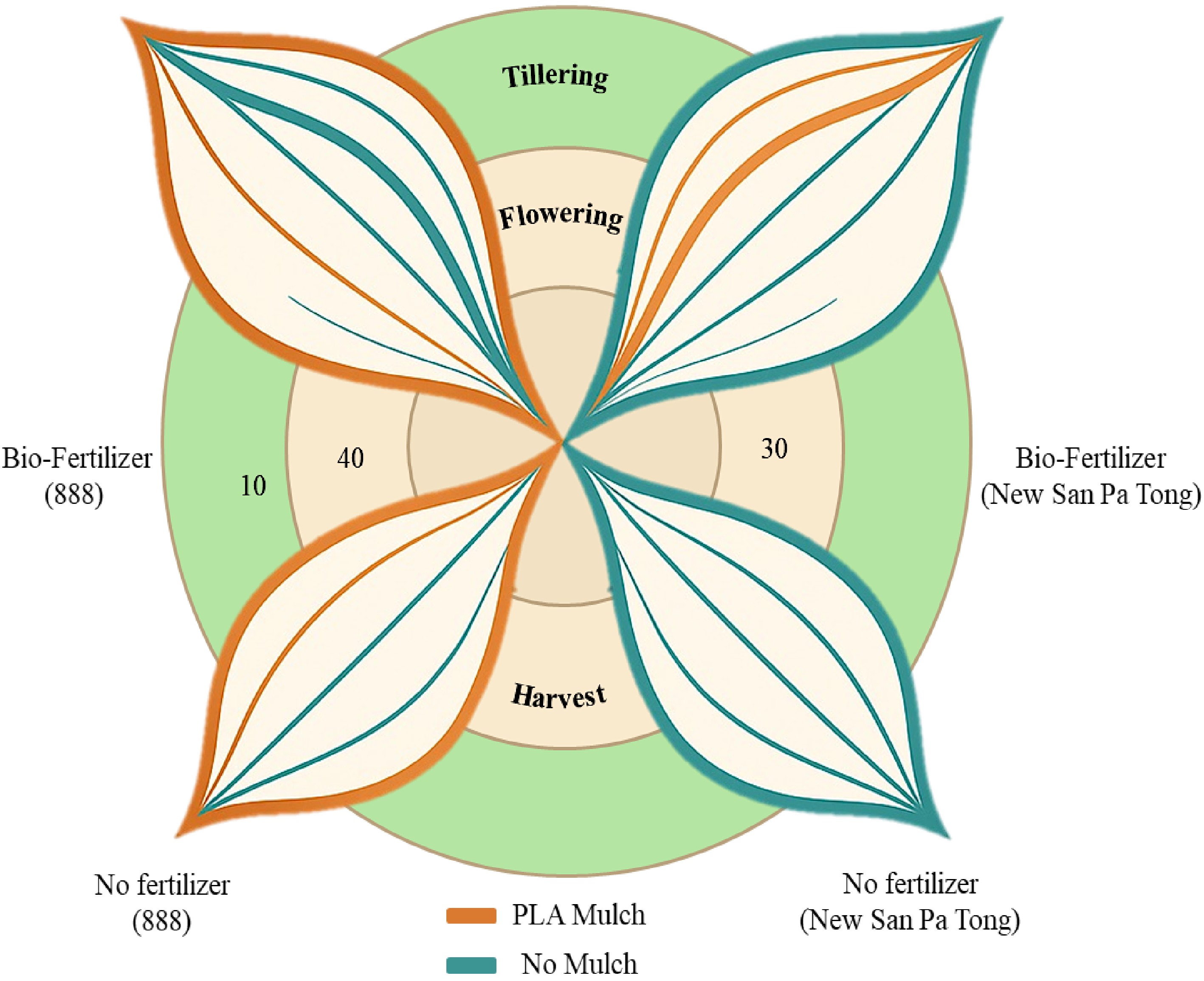
Figure 7.
Conceptual visualization of methane emission dynamics across rice growth stages under PLA mulch and No mulch conditions.
Carbon dioxide (CO2)
-
Stage-wise CO2 emission dynamics (Fig. 8) showed a consistent and predictable temporal pattern across all bio-fertilizer and variety combinations. CO2 emissions increased from tillering to flowering and declined after harvest in all four treatment groups. These trends were largely analogous between mulched and non-mulched conditions, with only minor treatment-dependent differences in scale. In the BF-888 panel, no mulch produced a stronger flowering peak than PLA mulch, whereas in BF-SP and NBF-SP varieties, the two mulch treatments followed closely overlapping trends. The line plots demonstrate that CO2 emissions are predominantly driven by crop growth stage rather than mulch, bio-fertilizer, or variety. The absence of definite treatment deviation indicates that physiological respiration and microbial activity associated with plant growth stages were the primary determinants of CO2 flux patterns.
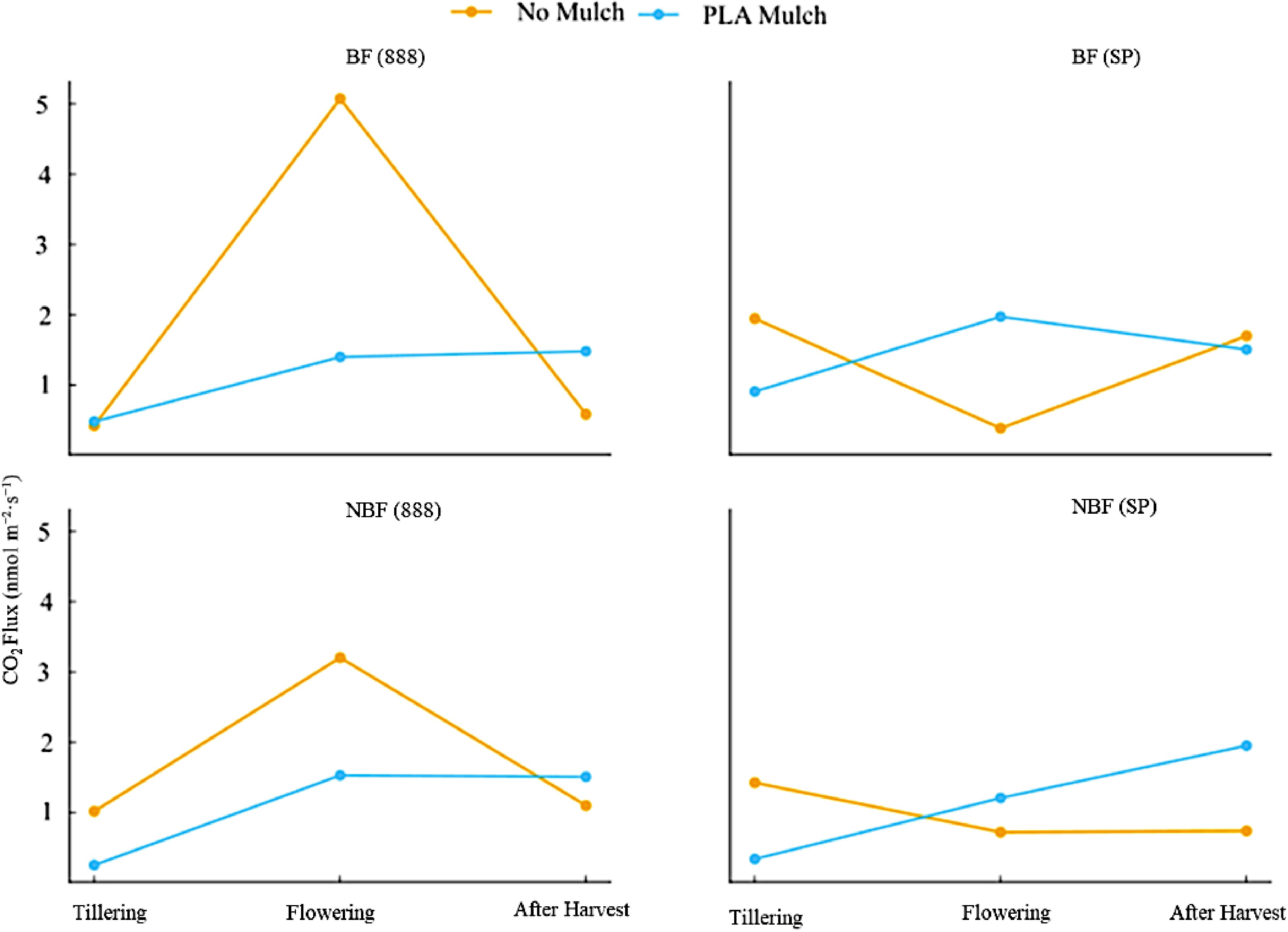
Figure 8.
Carbon dioxide (CO2) emissions across growth stages under mulch treatments, faceted by fertilizer × variety.
Boxplots of carbon dioxide (CO2) emissions showed substantial overlap among treatments within each growth stage (Fig. 9). Across tillering, flowering, and after-harvest stages, interquartile ranges and median values were broadly similar among treatments, indicating limited treatment-related differentiation within individual stages. Although minor shifts in median CO2 emissions were observed between growth stages, variability within stages was high, and no clear treatment-specific patterns were evident.
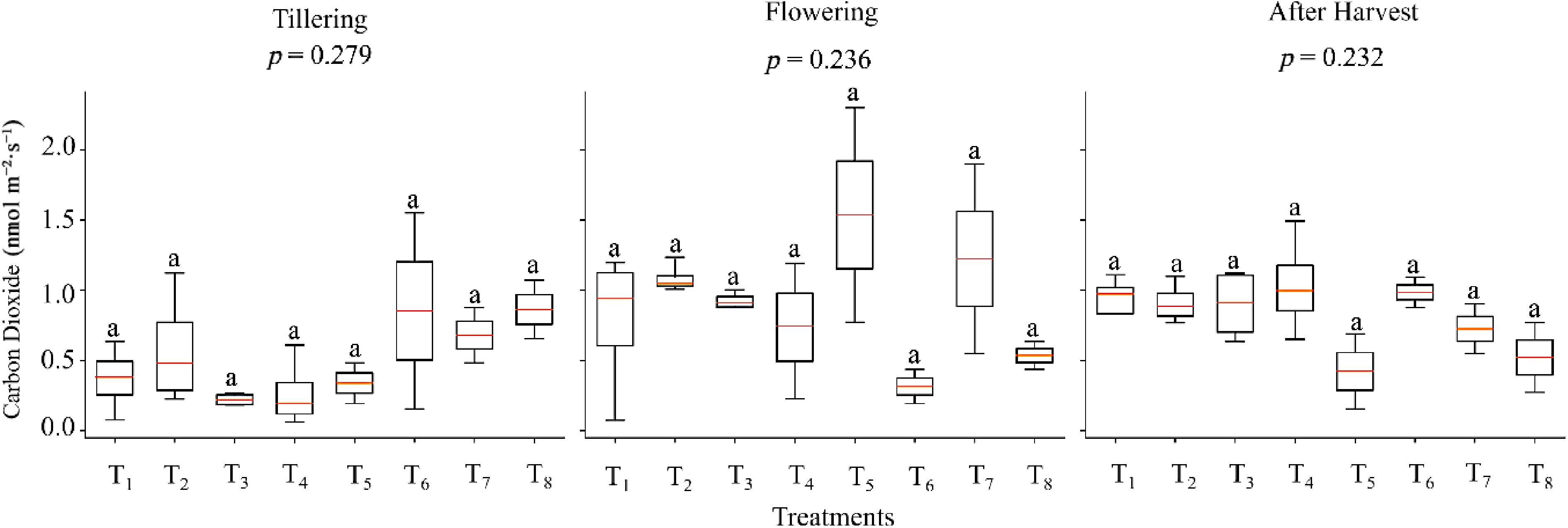
Figure 9.
CO2 emission distributions across growth stages × treatment combinations.
Cumulative seasonal CO2 emissions were similarly derived from stage-specific fluxes and are presented as treatment means ± SE. Consistent with stage-driven CO2 dynamics, cumulative emissions exhibited smaller treatment-related differences relative to CH4, reflecting the dominant influence of crop phenology on respiratory CO2 fluxes (Table 5).
Table 5. Cumulative CO2 emissions across growth stages.
Treatments (T) Cumulative CO2 emission (Mean ± SE) Micro-Agal Bio- Fertilizer (888) PLA Mulch (T1) 3.35 ± 0.86 Micro-Agal Bio- Fertilizer (New San Pa Tong) PLA Mulch (T2) 4.37 ± 0.60 No Fertilizer (888) PLA Mulch (T3) 3.28 ± 0.36 No Fertilizer (New San Pa Tong) PLA Mulch (T4) 3.49 ± 0.59 Micro-Agal Bio- Fertilizer (888) No Mulch (T5) 6.07 ± 4.12 Micro-Agal Bio- Fertilizer (New San Pa Tong) No Mulch (T6) 4.02 ± 1.65 No Fertilizer (888) No Mulch (T7) (Control) 5.32 ± 3.23 No Fertilizer (New San Pa Tong) No Mulch (T8) (Control) 2.88 ± 0.09 A conceptual illustration is provided in Fig. 10 to summarize the general carbon dioxide (CO2) emission patterns observed across rice growth stages. In contrast to methane (CH4), CO2 emissions exhibited relatively consistent stage-related trends, with only minor variation among mulch, bio-fertilizer, and variety combinations. The schematic highlights an increase in CO2 emissions from tillering to flowering, followed by a modest decline after harvest, a pattern that is evident in both the line plots and stage-wise boxplots. Given the absence of statistically significant treatment effects on CO2 emissions, this conceptual representation emphasizes the observed temporal patterns across growth stages rather than treatment-specific differences. The graphic summarizes the consistent stage-driven pattern observed in the experimental dataset, with CO2 fluxes increasing toward flowering and decreasing thereafter. Treatment effects were minimal, and the conceptual illustration emphasizes the dominant physiological influence of growth stage on CO2 emissions.
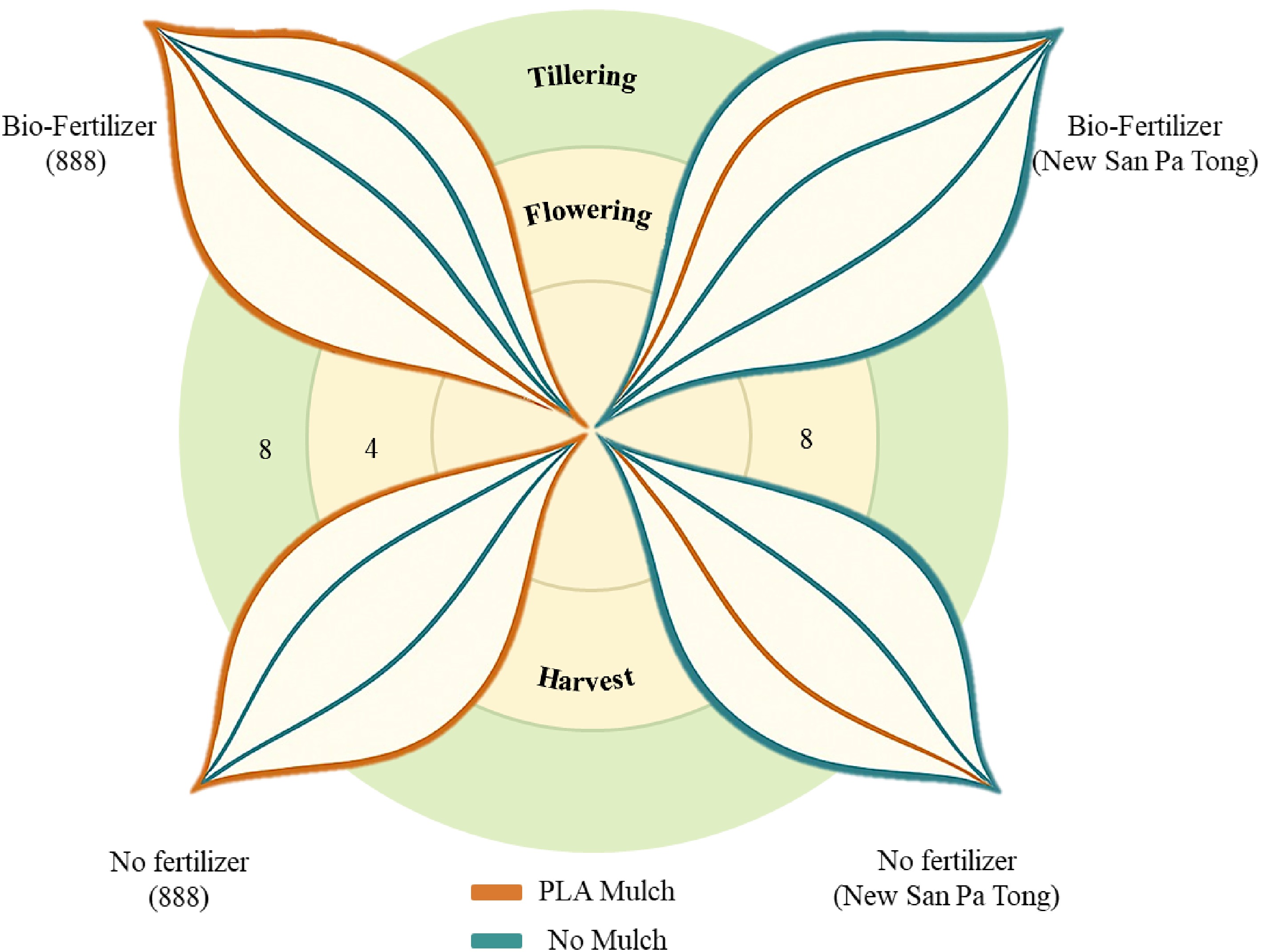
Figure 10.
Conceptual visualization of carbon dioxide (CO2) emission dynamics across rice growth stages under mulched and non-mulched conditions.
Greenhouse gas intensity (GHGI)
-
Greenhouse gas intensity (GHGI), calculated as cumulative CH4 and CO2 emissions per unit grain yield, provided an integrated measure of emissions relative to productivity. GHGI differed among treatments, reflecting the combined effects of emission magnitude and yield performance. Bio-fertilizer treatments grown without mulch exhibited relatively high GHGI values (e.g., BF-888: GHGI ≈ 8.15), largely attributable to elevated CH4 emissions during the flowering stage. In contrast, several mulches by variety combinations showed substantially lower GHGI values, particularly the no-mulch by no bio-fertilizer (New San Pa Tong) and PLA mulch by bio-fertilizer (New San Pa Tong) treatments, both with GHGI values below 1.0. These contrasts are illustrated in Fig. 11, which shows clear divergence in GHGI among fertilizer and mulch combinations. Importantly, PLA mulch did not consistently reduce GHGI across all treatments; reductions were observed primarily where mulch was associated with lower CH4 emissions while grain yield remained stable.

Figure 11.
Greenhouse gas intensity (GHGI) expressed as cumulative CH4 and CO2 emissions per unit grain yield, across mulch and fertilizer treatment combinations, (a) methane, (B) CO2, and (C) GHGI.
-
This study evaluated how biodegradable PLA mulch, biofertilizer, and rice variety interactively influence plant growth, soil microclimate, and greenhouse gas (GHG) emissions in a flooded rice system. Fundamentally, the findings reveal modest but consistent improvements in plant physiological status, limited changes in bulk soil microclimate, and a shifting rather than a simple reduction of methane (CH4) emissions under PLA mulch, leading to treatment-specific differences in greenhouse gas intensity (GHGI). These context-dependent responses are broadly consistent with recent evidence that biodegradable mulches and soil mulching technologies can alter microclimate and gas fluxes, but their net mitigation benefits depend strongly on management and environmental conditions[3].
Plant height showed no significant main or interaction effects of fertilizer variety and mulch, whereas SPAD chlorophyll responded positively to both biofertilizer and PLA mulch. Soil pH and moisture exhibited only small absolute changes, despite some statistically significant mulch effects. This pattern of physiological improvement without large structural growth changes or strong soil shifts matches the studies on biodegradable mulches in irrigated and humid systems, where yield and physiological traits often improve while soil temperature and moisture express only modest departures from bare soil or polyethylene mulch[28]. Bio-fertilizer likely enhanced chlorophyll by providing readily available nutrients, phytohormones, and bioactive compounds that stimulate photosynthesis and leaf metabolism. Contemporary reviews show that microalgae-based biofertilizers increase chlorophyll, nutrient uptake, and biomass across diverse crops through nutrient cycling and hormone-like signalling[14]. The absence of a strong height response in our flooded rice system suggests that microalgal inputs improved leaf-level physiological status more than structural growth, which is plausible under conditions where water and base nutrients are already adequate. PLA mulch produced slight increases in soil pH and small reductions in soil moisture. Biodegradable plastic mulches are known to create a relatively buffered microenvironment, slightly modifying evaporation, infiltration, and surface temperature while gradually decomposing in soil[28]. Meta-analyses indicate that biodegradable mulches generally approximate polyethylene mulch in terms of temperature and moisture regulation, but effects are more minor in systems that are already buffered by irrigation or flooding[29]. This helps explain why we observed statistically detectable, yet agronomically modest, changes in soil pH and moisture.
Methane fluxes in this experiment were strongly stage dependent, peaking during flowering and remaining lowest after harvest, with a significant stage x mulch interaction but no large mulch main effect. PLA mulch increased CH4 at tillering but reduced emissions relative to no-mulch at flowering and post-harvest. This indicates that PLA mulch shifted the timing of methanogenesis and/or transport rather than simply suppressing total CH4 output. Stage-linked methane peaks are well documented in rice systems and are associated with root exudation, plant aerenchyma development, and changing redox conditions over the season[30]. Film mulching can reduce CH4 emissions in some paddy systems, especially when combined with intermittent irrigation, but meta-analyses show very heterogeneous responses: plastic film mulching reduced CH4 from paddy fields by about 60% on average in Chinese studies. At the same time, effects on nitrous oxide (N2O) and total GWP were more complex[31]. Recent work on degradable or biodegradable film mulches in rice similarly reports substantial CH4 reductions under specific experimental conditions, particularly in greenhouse or dryland rice settings, but outcomes vary with film thickness, climate, and water management[7]. Methane emissions from flooded rice systems emerge from the coupled effects of carbon availability, soil redox conditions, microbial processes, and plant-mediated gas transport. During early growth stages, increased root exudation supplies labile carbon substrates to anaerobic soil layers, lowering redox potential and stimulating methanogenic activity[32−34]. Methane produced in the reduced bulk soil is then efficiently transported to the atmosphere through the rice aerenchyma, which represents the dominant pathway for CH4 release under flooded conditions[34]. As the season progresses, spatial redox gradients develop in the rhizosphere due to localized oxygen release from roots, promoting methanotrophic activity that partially offsets methane production[35]. The balance between methanogenesis, oxidation, and plant-mediated transport therefore shifts over time, providing a coherent mechanistic explanation for the observed stage-dependent methane emission patterns. Similarly, in the continuously flooded tropical field, PLA mulch appears to have subtly altered soil aeration and carbon substrate dynamics at different stages rather than strongly increasing oxygen availability throughout the season. The marginal effect of fertilizer (including bio-fertilizer treatments and variety) on CH4 suggests that organic inputs stimulated methanogenesis in some combinations, consistent with evidence that carbon-rich amendments can elevate CH4 from paddies if not balanced by improved aeration or drainage[36]. Variety-dependent responses in CH4 also align with recent findings that genotype and root traits significantly influence methane transport and emission intensity, offering scope for breeding[30].
Although stage-specific analysis provides insight into the timing of methane release, cumulative seasonal CH4 emissions remain the primary metric reported in most rice greenhouse gas studies and are essential for cross-study comparison[26]. Reporting cumulative emissions alongside stage-resolved patterns allows distinction between changes in total methane output and temporal redistribution of emissions, which may otherwise be overlooked when only seasonal sums are considered[37].
The temporal shift of methane emissions from flowering to earlier growth stages under PLA mulching can be explained by stage-dependent changes in substrate supply, redox development, and oxidation capacity. Early in the season, labile carbon availability in flooded rice soils is closely linked to methane emissions, supporting stronger methanogenic activity during early growth when substrate inputs are high[38]. As anaerobic conditions develop, the progression of redox processes controls the onset and intensity of methane production in paddy soils[39]. Later in the season, methane oxidation in the rice rhizosphere becomes more influential and is constrained by oxygen availability and plant growth stage, reducing net methane release during reproductive stages[40].
Carbon dioxide fluxes showed clearer temporal structure than CH4 but comparatively weak responses to mulch and fertilizer treatments, aside from a significant stage x bio-fertilizer x mulch interaction. In flooded rice, CO2 emissions are primarily driven by root and microbial respiration, which are strongly linked to plant growth stage and temperature but less sensitive to modest microclimate changes at the soil surface under a standing water layer[30]. Recent rice GHG syntheses emphasize that management levers such as water regime, straw handling, and nitrogen rate typically exert stronger control over total CO2-equivalent emissions than mulching alone does, especially under continuous flooding[36]. Our results, therefore, support the view that mulch-mediated changes in CO2 are secondary compared with water management in submerged rice and that biodegradable films are unlikely to deliver large CO2 mitigation benefits in isolation.
However, carbon dioxide emissions were primarily governed by crop phenology, reflecting changes in plant biomass, root respiration, and rhizosphere activity across growth stages[33]. Treatment-related differences were comparatively small, indicating that CO2 fluxes in flooded rice systems are largely controlled by plant physiological processes rather than surface management interventions. While mulching and biofertilization may subtly influence soil microbial activity, their effects on CO2 emissions are expected to remain secondary relative to the dominant phenological control exerted by crop development and should therefore be interpreted as biologically modest[41].
By combining cumulative CH4 and CO2 with grain yield, GHGI revealed trade-offs not evident from flux data alone. Treatments with biofertilizer but no mulch exhibited some of the highest GHGI values, driven by elevated CH4 during flowering, whereas specific PLA mulch by variety combinations achieved low GHGI values (< 1.0), indicating relatively low emissions per unit yield. This pattern is consistent with broader mulching meta-analyses, which show that soil mulching tends to increase crop yield but can also increase overall GWP unless CH4 and N2O are simultaneously controlled[42]. Similarly, the increase in GHGI observed under biofertilizer application in the absence of mulch suggests that added biological inputs enhanced greenhouse gas emissions more strongly than crop productivity. Organic and bio-based amendments can increase the availability of labile carbon substrates in flooded rice soils, which preferentially stimulate methanogenic activity under anaerobic conditions[39]. Enhanced carbon availability may also intensify microbial competition for electron acceptors, reducing the effectiveness of methane oxidation and favouring net CH4 production[43]. In the absence of mulching, fluctuating soil redox conditions and limited buffering of carbon inputs likely amplified these effects, leading to increased cumulative methane emissions without proportional yield gains and consequently higher GHGI[26]. Conversely, degradable or biodegradable mulches in some rice and dryland systems have been shown to reduce CH4 and CO2 while maintaining yield, thereby lowering GHG intensity when combined with appropriate water management[7]. Our GHGI results demonstrate that biofertilizers are not intrinsically climate favourable in flooded rice systems; when supplementary carbon stimulates methanogenesis to a greater extent than it enhances grain yield, the overall GHGI deteriorates. This agrees with recent reviews showing that organic amendments can either mitigate or exacerbate CH4 emissions depending on their composition, application timing, and integration with drainage or alternate wetting and drying (AWD)[36]. At the same time, the low GHGI observed in some PLAs by variety combinations suggests that targeted pairing of biodegradable mulch, suitable varieties, and biofertilizer inputs can deliver productivity with relatively low emissions, even under continuous flooding.
Further, stage-based GHGI provides additional insight beyond cumulative emissions by identifying growth stages where greenhouse gas release is poorly synchronized with yield, thereby revealing temporal inefficiencies and management leverage points that seasonal totals alone cannot capture[26]. The effects of PLA mulch are not static throughout the growing season. Mulch films alter soil microclimate and reduce soil atmosphere exchange, leading to enhanced anaerobic conditions that promote methane production beneath the film early in the season[44,45]. As biodegradable mulch degrades and becomes more permeable, increased soil air exchange can enhance methane oxidation[32], which may help explain the observed temporal shift in CH4 emissions from later to earlier growth stages under PLA mulching. Figure 12a shows the PLA mulch during the initial application phase, while Fig. 12b shows gradually degraded PLA mulch.
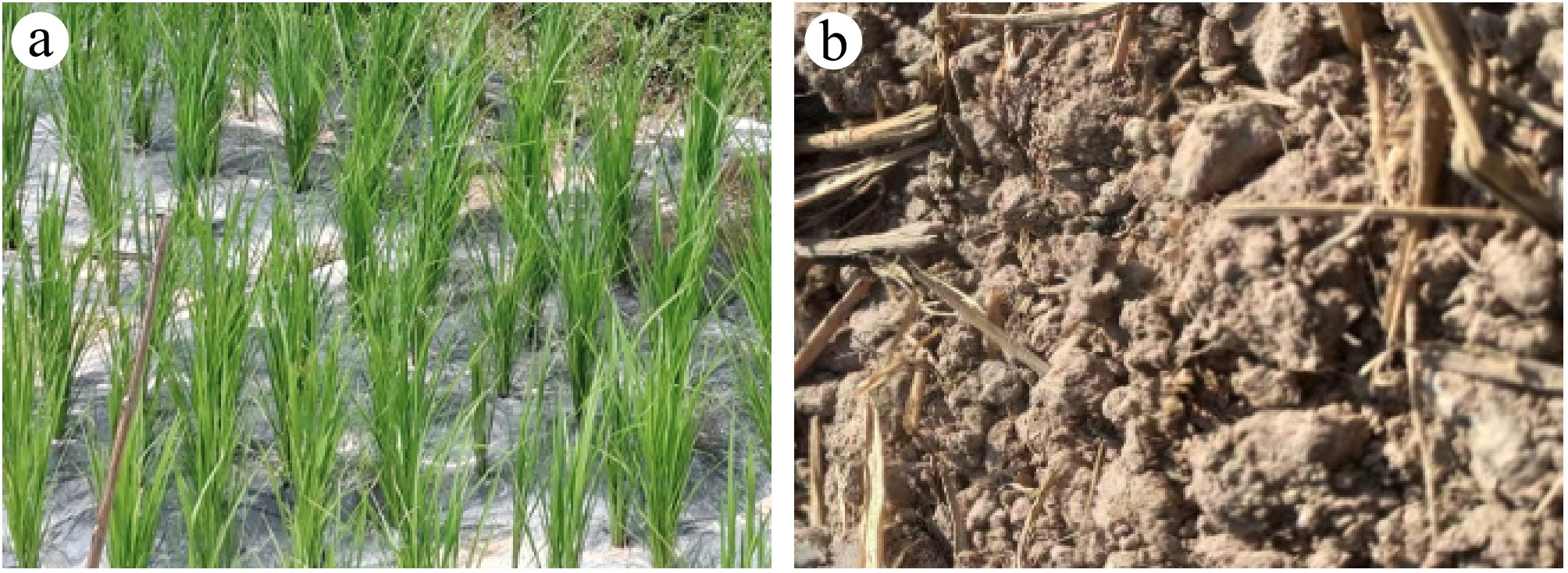
Figure 12.
Degradation of PLA Mulch (a) shows the PLA mulch during the initial application phase, and (b) are gradually degraded PLA mulch.
Although this study provides new insights into the combined effects of PLA mulch and biofertilizer on greenhouse gas dynamics in submerged rice systems, several limitations should be acknowledged. First, the experiment was conducted over a single growing season, which may not capture the interannual variability in climate, soil conditions, and crop responses that influence methane production. Second, only two rice varieties were evaluated, limiting the generalizability of the observed variety-specific responses, particularly the strong flowering stage CH4 peak in variety 888. Third, while PLA mulch is biodegradable, its degradation rate and long-term effects on soil structure, carbon turnover, and potential microplastic release were not assessed. Additionally, mechanistic measurements of soil microbial communities, redox potential, and carbon substrate availability, which underpin CH4 and CO2 fluxes, were beyond the scope of this study. Finally, nitrous oxide (N2O), an important component of total global warming potential in rice systems, was not quantified. These limitations provide important context for interpreting the results and guide future experimental refinements.
The findings of this study have practical relevance for developing low-emission and productivity-enhancing rice production strategies. PLA mulch demonstrated its strongest mitigation benefit when paired with varieties or fertilizer regimes that produce high flowering stage CH4 peaks. Thus, farmers adopting high-yielding but high-emission varieties such as 888 may achieve meaningful reductions in late-season methane emissions by integrating PLA mulch into their management practices. Biofertilizer consistently improved chlorophyll content and, in some cases, yield, but its application without mulch increased GHGI due to elevated CH4 emissions. This suggests that bio-fertilizers should ideally be applied in combination with mulch or other water management interventions to prevent methane enhancement. Since CO2 emissions were primarily stage-driven and insensitive to treatment, management decisions should focus on synchronizing biological inputs with critical phenological periods, particularly the flowering stage, when methane suppression yields the largest climate benefit. As biodegradable mulch technologies evolve, their feasibility in smallholder systems will depend on cost, labour requirements, and environmental safety across multiple seasons.
Synthesising these findings, the study demonstrated that biodegradable PLA mulch and biofertilizer do not operate as uniform mitigation tools but instead exert stage specific, variety dependent and interaction-mediated effects on methane emissions and GHGI. The central finding that PLA mulch reshapes the timing rather than the total amount of CH4 emissions highlights the importance of coupling mulch use with crop phenology and emission hotspots. While bio-fertilizer inputs improved crop vigour, their potential to elevate methane emissions when used without mulch underscores the need for integrated nutrient, water, and mulch strategies. Future research should expand on the systematic basis of these interactions by examining microbial pathways, soil carbon fractions, and long-term impacts of PLA degradation. Multi-season trials, variety screening, and comparisons with other biodegradable mulches would further strengthen recommendations for sustainable adoption. Eventually, this work contributes to a growing body of evidence that climate-smart rice production requires aligned combinations of biological, physical, and agronomic interventions, rather than reliance on single-factor solutions.
-
This study demonstrated that the mitigation potential of biodegradable PLA mulch and biofertilizer in flooded rice systems lies not in absolute suppression of greenhouse gas emissions, but in their capacity to reshape the timing and efficiency of emissions relative to crop productivity. The stage-dependent nature of methane emission indicates that management interventions can influence when, rather than how much, methane is produced, highlighting the importance of aligning biological inputs with crop phenology and soil redox dynamics. From a scalability perspective, it can be noted that PLA mulch represents a potentially transferable intervention for rice-based systems where plastic residue management and labour efficiency are growing concerns. However, its climate benefits are contingent on varietal selection and complementary nutrient management, underscoring that single-input solutions are unlikely to deliver consistent mitigation outcomes at larger spatial or temporal scales. Further, long-term sustainability will depend on how biodegradable mulches interact with soil processes over repeated seasons, including degradation dynamics, carbon cycling, and microbial adaptation. These interactions warrant further multi-season evaluation to assess whether early-season emission shifts observed here translate into durable reductions in greenhouse gas intensity without compromising soil health or yield stability. Notably, the findings suggest that the effectiveness of PLA mulch and biofertilizer should be evaluated within integrated water management frameworks. Practices such as alternate wetting and drying, which directly regulate soil redox conditions, may amplify or modify the emission-shifting effects observed under continuous flooding. As such, future climate-smart rice strategies should therefore prioritize the combined optimization of biodegradable mulching, biological inputs, varietal choice, and water management rather than isolated interventions. In general, this study supports a systems-based approach to low-emission rice production, in which mitigation benefits emerge from coordinated management of soil, water, and crop processes. Such integration offers a more realistic pathway for scaling climate-smart practices across diverse rice-growing environments while balancing productivity, environmental performance, and long-term sustainability.
This research is funded by the Dahe Technology Co., Ltd., Nanjing, China (Grant No. DTDN Co., Ltd-68-001) to carry out the research project. The authors would like to acknowledge the Faculty of Soil Sciences and International College, Maejo University, for conducting the research. The authors would also like to acknowledge Mr. Yu Zeng, Chairman of Dahe Technology Co., Ltd., Nanjing, China, for supporting the PLA mulch and the transplanting machine to carry out this project.
-
The authors confirm contribution to the paper as follows: study conception and design: Penjor T, Bhuyar P; field experiment and data collection, greenhouse gas measurements, statistical analysis, and draft manuscript preparation: Penjor T; soil analysis supervision and methodological refinement: Inthasan J; greenhouse gas interpretation and statistical validation: Dechjiraratthanasiri C; manuscript revision and editing, supervision, funding acquisition: Bhuyar P. All authors reviewed, contributed to revisions, and approved the final version of the manuscript.
-
All data generated or analyzed during this study are included in this published article. Further information may be obtained from the corresponding author upon reasonable request.
-
The authors declare that they have no conflict of interest.
- Copyright: © 2026 by the author(s). Published by Maximum Academic Press, Fayetteville, GA. This article is an open access article distributed under Creative Commons Attribution License (CC BY 4.0), visit https://creativecommons.org/licenses/by/4.0/.
-
About this article
Cite this article
Penjor T, Inthasan J, Dechjiraratthanasiri C, Bhuyar P. 2026. Mitigating methane and enhancing rice productivity: an integrated assessment of biodegradable PLA mulch and microalgal biofertilizers in submerged rice cultivation. Circular Agricultural Systems 6: e010 doi: 10.48130/cas-0026-0010 

Mitigating methane and enhancing rice productivity: an integrated assessment of biodegradable PLA mulch and microalgal biofertilizers in submerged rice cultivation
- Received: 27 December 2025
- Revised: 21 February 2026
- Accepted: 02 March 2026
- Published online: 30 April 2026
Abstract: Rice paddies are a significant source of methane (CH4), yet mitigation options that maintain yield under continuous flooding remain limited. This study evaluated the effects of biodegradable polylactic acid (PLA) mulch and biofertilizer on greenhouse gas emissions, plant performance, and greenhouse gas intensity (GHGI) in a factorial field experiment with eight different treatments combined across two rice varieties. Stage-integrated assessment of CH4 and CO2 fluxes was measured at tillering, flowering, and harvest. CH4 emissions were strongly growth-stage dependent, with the highest emissions occurring during the flowering stage, particularly in the high-emitting BF-888 no-mulch treatment. The PLA mulch reduced flowering stage CH4 emissions by 40%–70% relative to no-mulch in several treatment combinations, despite causing a modest increase during tillering. CO2 fluxes exhibited a relatively uniform temporal pattern across growth stages, with limited variation among treatments and no significant effects of mulch or biofertilizer. GHGI varied sharply across treatments, with the highest value (GHGI ≈ 8.1) occurring in Microalgal 888 without mulch due to elevated flowering-stage CH4 emissions. On the contrary, PLA Mulch x biofertilizer (New San Pa Tong) and No Mulch by No Fertilizer (SP) treatments produced GHGI values below 1.0, indicating more efficient emissions per unit yield. Generally, PLA mulch did not uniformly suppress CH4 but redistributed emissions across growth stages, reducing late-season peaks and improving GHGI when paired with suitable fertilizer variety combinations. The outcomes demonstrate that PLA mulch and biofertilizers can contribute to low-emission rice production when applied in conjunction with context-specific management strategies.