













-
Chromium (Cr), as the 12th most abundant metal in Earth's crust, has been widely applied in a variety of industrial processes. Particularly, global Cr consumption has closely matched steel production over the last decades, which may lead to an accumulation of Cr in freshwaters[1−3]. The biogeochemical cycle of Cr has recently received considerable academic attention, and the oxidized Cr species of Cr(VI) has been classified in the List of Toxic and Hazardous Water Pollutants (First Batch) in China due to significant concerns about environmental impacts and health risks[4]. In natural environments, Cr(III) and Cr(VI) are the primary stable states of Cr, in which Cr(III), as a micronutrient element, is generally present in forms as insoluble and inert complexes at circumneutral pH with a strong affinity for different mineral or organic surfaces due to very slow water-exchange kinetics[5]; whereas Cr(VI), commonly existing in oxyanion states such as Cr2O72-, CrO42-, and HCrO4-, is highly soluble with high mobility, weak affinities for most surfaces, and high toxicity, leading to serious risks to ecosystems[6]. Thus, the reduction of Cr(VI) to Cr(III), as an essential biogeochemical process of Cr, not only shapes the distribution, mobility, and bioavailability of Cr in surficial environments, but also provides a practical strategy to remove and detoxify Cr(VI) in aquatic environments.
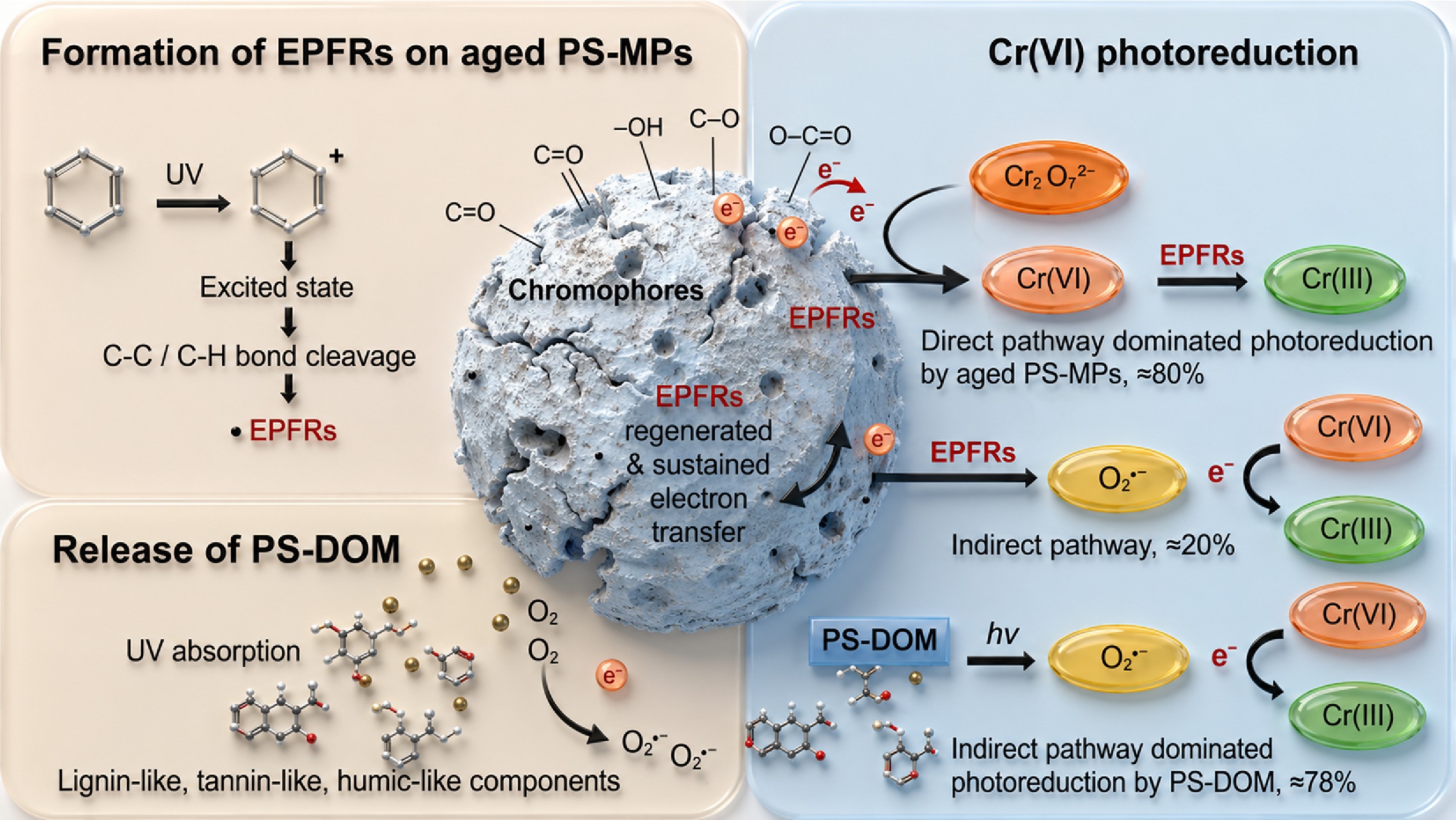
Due to the stabilization effect via resonance of delocalized unpaired electrons in conjugated aromatic π-electron systems, environmentally persistent free radicals (EPFRs) are a category of organic radicals that can remain stable in the environment for a prolonged period and have a great influence on Cr(VI) reduction[7,8]. EPFRs can directly donate a single electron to Cr(VI) to reduce it to Cr(III) or indirectly reduce Cr(VI) by triggering the formation of superoxide radical (O2•-), since the redox potential of O2/O2•- (−0.33 V vs NHE) is comparably lower than that of Cr(VI)/Cr(III) (1.33 V vs NHE)[9]. It has been documented that EPFRs on biochar facilitated Cr(VI) reduction via direct electron transfer[10], whereas in soil humin, the reduction of Cr(VI) by EPFRs was generally mediated by the production of O2•- as the indirect pathway[11].
Additionally, natural organic matter (NOM), as a representative chemically heterogeneous mixture of redox-active organic molecules, plays a significant role in Cr(VI) reduction[12]. NOM can function critically in modulating chemical speciation, ecotoxicity, environmental processes, and fate, which not only serves as an electron donor to reduce Cr(VI) directly over a wide pH range (2–7) under aerobic conditions, but also influences Cr(VI) reduction indirectly by inducing the formation of O2•- under solar irradiation[13,14]. Cr(VI) reduction by NOM is influenced by the components, origin, and functional groups. Generally, microbially derived organic matter may show a much lower reduction rate than terrestrial organic matter, while aromatic molecules with phenol, hydroxyl, quinone, and thiol groups may play essential roles in Cr(VI) reduction[15−18].
Currently, due to the huge production and consumption quantities and the unique properties, including small particle size, resistance to degradation, low density, and strong hydrophobicity, microplastics (MPs) have been widely distributed in different environmental media and possess great potential to be involved in and affect elemental biogeochemical cycles directly or indirectly as an emerging carbon-based geomaterial[19−23]. As reported previously, EPFRs can form on MPs when they are exposed to solar irradiation, especially those with aromatic structures such as polystyrene microplastics (PS-MPs). The formation of surface-bound EPFRs enables the generation of reactive oxygen species (ROS), such as O2•-, which can further mediate redox reactions[24−26]. Moreover, as one of the most abundant MPs in aquatic systems, PS-MPs exhibit a high interfacial activity and photochemical reactivity due to the presence of aromatic structures and EPFRs, which may amplify their role in Cr(VI) photoreduction[27,28]. Additionally, due to long-term water contact and extensive solar exposure, MPs continuously release a quantity of dissolved organic matter, including additives, monomers, and oligomers of the polymers, and low molecular weight organic compounds into aquatic systems, as microplastic-derived dissolved organic matter (MP-DOM), which annually introduces 23,600 tons of carbon into the ocean and becomes a ubiquitous anthropogenic source of global DOM[19,29−31]. MP-DOM is commonly characterized by highly labile organic compounds with notable bioavailability depending on the polymer type, and due to the existence of aromatic ketones, quinones, and chromophores with high π-electron density, MP-DOM, particularly that derived from MPs with aromatic structures, shows unique photochemical reactivity and can induce the formation of ROS (e.g., O2•-) under irradiation, which enables it to have the potential to mediate the biogeochemical processes and environmental fate of contaminants in aquatic systems[32−35]. Thus, for MPs, the formation of EPFRs and the release of MP-DOM during photoaging processes may participate in Cr(VI) photoreduction. Furthermore, as plastic production and utilization rise constantly without mandatory controls on their recycling, their roles as redox reaction mediators are expected to increase further. However, the exact roles of EPFRs in MPs and MP-DOM in Cr(VI) photoreduction are still uncertain, and the photoreduction mechanisms and the electron transfer paths remain unclear.
Therefore, PS-MPs were selected to (1) characterize photo-aged PS-MPs and dissolved organic matter leached from PS-MPs (PS-DOM); (2) investigate Cr(VI) reduction by PS-MPs and PS-DOM; and (3) reveal the relevant photoreduction mechanisms and electron transfer paths.
-
PS-MPs used in this study had an average particle size of approximately 0.5 mm and were purchased from Shanghai Aladdin Biochemical Technology Co., Ltd. Photoaging of PS-MPs was conducted in a UV-H2O2 aging system. The pristine PS-MPs were added to the H2O2 solution and irradiated by a 500 W mercury lamp with a main wavelength of 365 nm, and were aged with continuous magnetic stirring at 25 °C. PS-MPs were collected at photoaging times of 0, 6, 12, 24, 48, and 96 h. Control groups were conducted under the same conditions but in the dark. The photoaged PS-MPs were rinsed with ultrapure water, dried, and stored in a vacuum dryer.
Photoreduction experiments of Cr(VI) by PS-MPs were conducted in quartz tubes under a 300 W mercury lamp. A 25 mg PS-MP amount with different photoaging times was added to 50 mL of Cr(VI) solution with an initial concentration of 10 mg/L (pH = 5.0 ± 0.1) at 25 °C, stirred at 800 rpm. Samples were collected at 1, 2, 4, 6, 8, and 10 h, and filtered through 0.45 μm polyethersulfone (PES) membranes. The concentrations of Cr(VI) and Cr(III) in solution were determined by HPLC-ICP-MS (NexION 5000, PE, US), and the distribution of Cr(VI) and Cr(III) on PS-MPs was analyzed by XPS (ESCALAB 250xi, Thermo Fisher Scientific, USA). Dark control groups were conducted under the same conditions without irradiation. Cr(VI) photoreduction experimental data were fitted with a pseudo-first-order kinetic model (Supplementary Text S1).
PS-DOM leaching and Cr(VI) photoreduction experiments by PS-DOM
-
To obtain PS-DOM, 50 mg PS-MPs were added to 50 mL of ultrapure water in quartz reactors equipped with magnetic stirrers. Leaching experiments were conducted under the same conditions as the photoaging processes of PS-MPs. Samples were collected at 1, 2, 4, 6, 8, and 10 h, and filtered through Whatman GF/F membranes (GE Whatman, UK), which were pre-washed with ultrapure water and pre-combusted at 450 °C for 5 h. The filtrates were stored in glass bottles in the dark at 4 °C for further analysis.
Cr(VI) photoreduction experiments by MP-DOM were conducted using 25 mL of the obtained PS-DOM solution, which was mixed with 25 mL of a 20 mg/L Cr(VI) solution (pH = 5.0 ± 0.1). The experiments were carried out under the same conditions as photoreduction by PS-MPs.
Electron transfer pathways
-
To distinguish the direct and indirect electron transfer pathways during Cr(VI) photoreduction, aerobic and anaerobic control systems were established. The aerobic system was conducted under air conditions, while the anaerobic system was purged continuously with high-purity N2 to remove dissolved oxygen and inhibit O2•− generation. The contribution of the indirect pathway was evaluated by the difference in photoreduction efficiencies between these two conditions.
Characterizations of PS-MPs and PS-DOM
-
PS-MPs were characterized by SEM (XL30ESEM-FEG, FEI, USA), FT-IR (Nicolet 6700, Thermo Fisher Scientific, USA), XPS (ESCALAB 250xi, Thermo Fisher Scientific, USA), and Py-GC/MS (pyrolyzer EGA/PY-3030D, Frontier Laboratories, Japan; GC-MS, GCMS-QP 2010 Ultra, Shimadzu, Japan). The carbonyl index (CI) was calculated accordingly (Supplementary Text S2). EPFRs on PS-MPs were detected by EPR (ESR 5000, Bruker, Germany). O2•− was trapped with DMPO, and photo-induced electrons were trapped with TEMPO, which were further detected by EPR (ESR 5000, Bruker, Germany). Optical absorption properties of PS-MPs were measured using UV-Vis-NIR (UV-Vis-NIR, Lambda 1050+, PerkinElmer, USA); transient photocurrent responses were recorded to evaluate the generation and transfer capability of photo-induced electrons under UV irradiation using an electrochemical workstation (CHI 660E, Shanghai Chenhua Instrument Co., Ltd, China), using 0.1 mol/L Na2SO4 as the electrolyte.
The dissolved organic carbon (DOC) of PS-DOM was determined using a TOC analyzer (TOC-V CPN, SHIMADZU, Japan); PS-DOM was characterized using a UV-visible spectrophotometer (UV-5500PC, Shanghai Metash Instruments Co., Ltd, China), an excitation-emission matrix–fluorescence regional integration (EEM-FRI, F-2700, HITACHI, Japan), and FT-ICR-MS (ESI FT-ICR-MS, Arix 2xR 7.0T, Bruker, Germany), with details provided in Supplementary Text S3. Fluorescence regional integration was performed according to the conventional five-region classification, and the region definitions are provided in Supplementary Table S1. According to the ratios of H/C and O/C, the molecular formulas of PS-DOM were further categorized into seven clusters (Supplementary Table S2).
Density functional theory calculations
-
Density functional theory (DFT) calculations were performed using Gaussian 09. The molecular geometries were optimized using the B3LYP/6-31g method to obtain stable ground-state configurations. Single-point energy calculations were then conducted to generate electrostatic potential (ESP) maps.
Data analysis
-
All experiments were conducted with three replicates, and the results are expressed as mean ± standard deviation. One-way analysis of variance (ANOVA) was performed using SPSS 25.0 (IBM Corporation, Armonk, NY, USA) to determine the significance of the parameters using Duncan's multiple range test with a threshold of p < 0.05. Kinetic fitting was performed using Origin (OriginLab, Northampton, MA, USA). XPS data were analyzed and fitted using Avantage (ThermoFisher Scientific, USA).
-
SEM (Fig. 1a) demonstrated that the pristine PS-MPs exhibited a smooth, intact spherical morphology. With increasing photo-aging time, pronounced cracks, loose pores, surface roughness, and fragmentation into irregular flake-like debris appeared gradually, which may further enhance the specific surface area and light absorption capability[36,37].
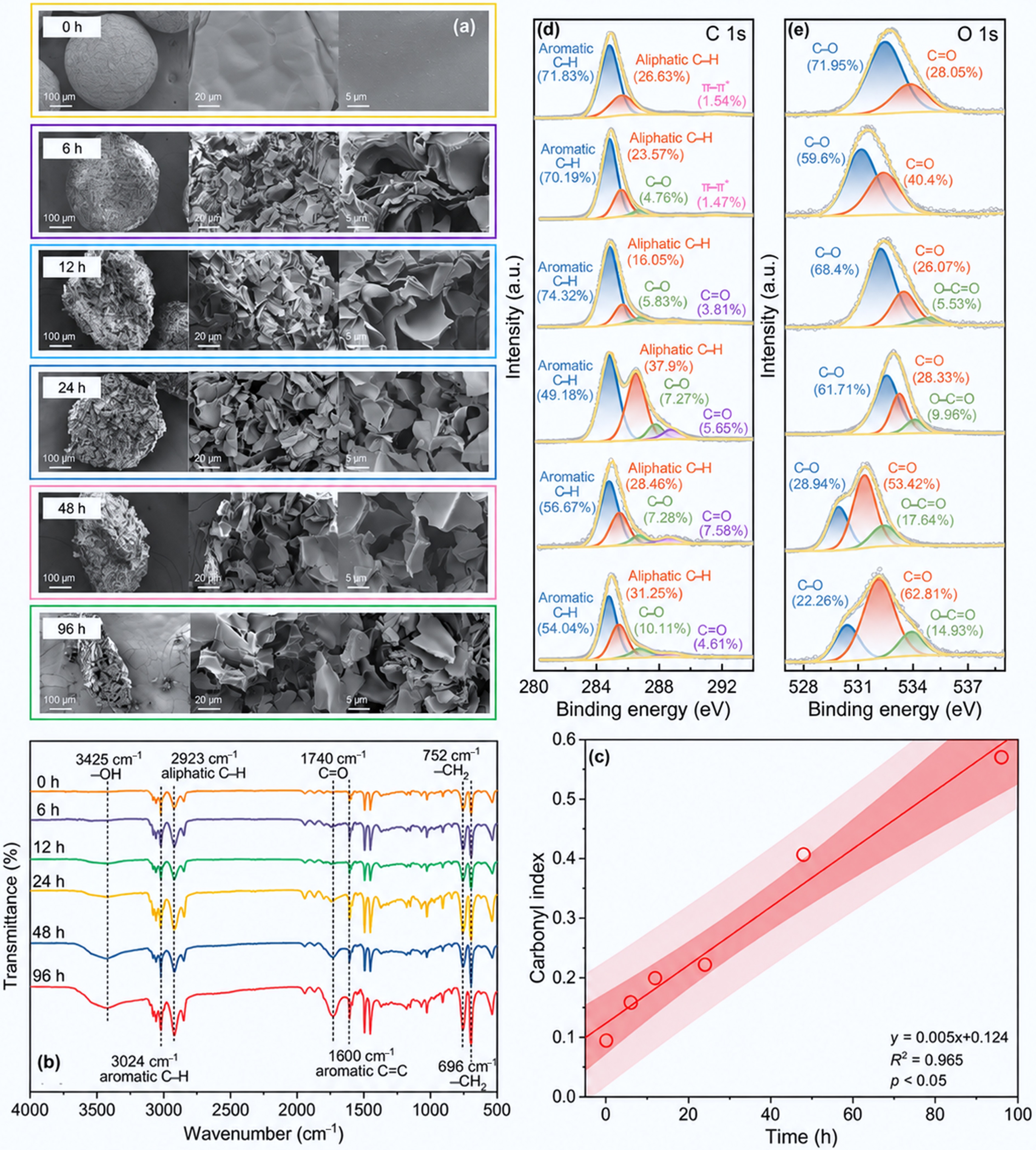
Figure 1.
SEM images of PS-MPs under different photoaging times; (a) FT-IR spectra of PS-MPs under different photoaging times; (b) linear fitting of carbonyl index vs photoaging time; (c) high-resolution XPS spectra of (d) C 1s and (e) O 1s for PS-MPs under different photoaging times.
According to FT-IR (Fig. 1b), the surface functional groups also changed significantly. The peaks at 3,024 cm−1 (the vibration of C–H on the aromatic ring), 2,923 cm−1 (the asymmetric stretching vibration of –CH2 in aliphatic chain), 1,600 cm−1 (the skeletal vibration of aromatic ring), and 696 cm−1/752 cm−1 (the out-of-plane bending vibration of C–H on aromatic ring) were related to polymer structures of PS-MPs, while two peaks assigned to stretching vibration of C=O and –OH emerged and strengthened with photoaging time, indicating that oxygen-containing functional groups were formed on the polymer surface via photooxidation. The CI was significantly positively correlated to photoaging time (Fig. 1c), which is in line with previous studies[38,39]. Furthermore, the peaks related to aliphatic –CH2 (2,923 cm−1) and aromatic C–H (696 cm−1, 752 cm−1) also increased due to the occurrence of ring-opening reaction and the substitution on the aromatic ring, respectively. XPS further exhibited that for the C 1s spectrum (Fig. 1d), the peaks at the binding energies of 284.5, 285.2, and 291.4 eV corresponded to aromatic C–C/C=C, aliphatic C–C/C–H, and π–π* shake-up, respectively. During aging, the π–π* shake-up satellite peak disappeared, and the peaks assigned to C–O (286.6 eV) and C=O (288.1 eV) emerged, accompanied by a decline in aromatic structures but an increase in aliphatic chains. For O 1s (Fig. 1e), the peaks related to C–O (531.9 eV) and C=O (533.1 eV) were observed, and the peak of O–C=O (535.4 eV) appeared on the aged PS-MP. These results also suggested the occurrence of ring-opening reactions with the formation of oxygen-containing functional groups on the surface of aged PS-MPs.
According to Py-GC/MS, in addition to the monomer (m/z = 104) and dimer (m/z = 196) of PS polymer, extra pyrolysis products and molecular fragments were detected in aged PS-MPs (Supplementary Table S3), including aromatic carboxylic acid (P10, m/z = 180; P20, m/z = 306), aromatic ester (P8, m/z =180; P11, m/z = 234; P12, m/z = 254; P15, m/z = 266; P16, m/z = 272; P17, m/z = 346; P19, m/z = 390), and tetralone (P14, m/z = 216). These products can be precursors to phenolic radicals and/or carbonyl radicals due to the presence of a benzene ring and oxygen-containing functional groups. Additionally, a variety of aliphatic compounds were also detected. These results further confirmed the occurrence of ring-opening and photooxidation reactions.
Formation of EPFRs on the aged PS-MPs
-
EPR was conducted to detect EPFRs on the surface of aged PS-MPs. No signal (Fig. 2a) was observed on the pristine PS-MPs (0 h) or on PS-MPs aged in the dark (Supplementary Fig. S1) due to the absence of EPFRs, whereas with photo-aging, distinct EPR signals with hyperfine splitting were obtained. The type of EPFRs can be identified by g-factor: g-factors < 2.0030 represent carbon-centered free radical species, g-factors > 2.0040 reflect oxygen-centered radical species, and for those between these values, it is considered a mixture of carbon- and oxygen-centered radicals or carbon-centered radicals with an adjacent heteroatom such as oxygen or halogen[24]. The values of g-factors detected on the aged PS-MPs fluctuated between 2.0043 and 2.0047 (Supplementary Table S4), indicating that EPFRs were formed on the surface of PS-MPs during photoaging processes, which were dominated by the oxygen-centered radical species. These results are consistent with previous reports[27,40]. Moreover, the concentration of EPFRs increased from 2.45 × 10¹¹ spins/g to 6.71 × 10¹¹ spins/g (Supplementary Table S4) with a significant positive correlation with the photoaging time (R2 = 0.99, p < 0.001) (Fig. 2b), suggesting that UV irradiation was critical for the yields of EPFRs.
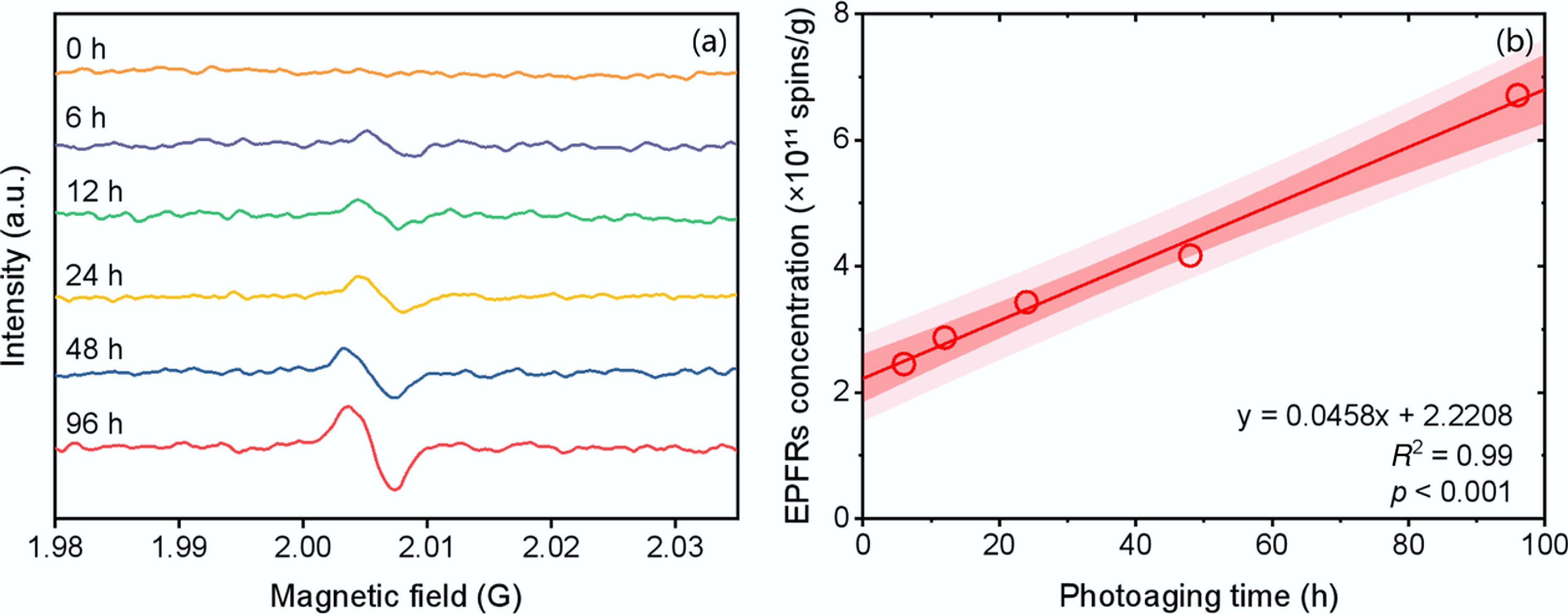
Figure 2.
(a) EPR spectra of PS-MPs with different photoaging times; (b) linear fitting of EPFRs concentration and photoaging time.
The formation processes of EPFRs on aged PS-MPs are demonstrated in Fig. 3. The benzene ring in PS-MPs acted as a chromophore to absorb UV light. Subsequently, intersystem crossing (ISC) occurred to excite and form a triplet state, and the energy transferred from a photoexcited benzene ring to the bonds of methylene C–H and C–C, leading to the cleavage of these bonds to generate the carbon-centered radicals (e.g., tertiary alkyl radicals). The presence of the adjacent benzene ring facilitated the delocalization of the unpaired electron, enabling it to rapidly react with ambient oxygen molecules to form peroxy radicals, which further interacted with polymer molecules to generate the hydroperoxides via hydrogen extraction. Such radicals were inherently unstable; the unpaired electron subsequently cleaved to produce tertiary alkoxy radicals via spin delocalization with an adjacent benzene ring. Consequently, the initially formed reactive intermediates were stabilized as EPFRs predominantly consisting of tertiary alkyl, tertiary alkoxy, peroxy, and carbonyl radicals. The abundance and diversity of EPFRs increased with the aging degree, since the chromophores (e.g., C=O, –O–C=O, hydroperoxides) accumulated on the surface of highly aged PS-MPs, which further promoted the light-absorbing property and sustained radical chain reactions.
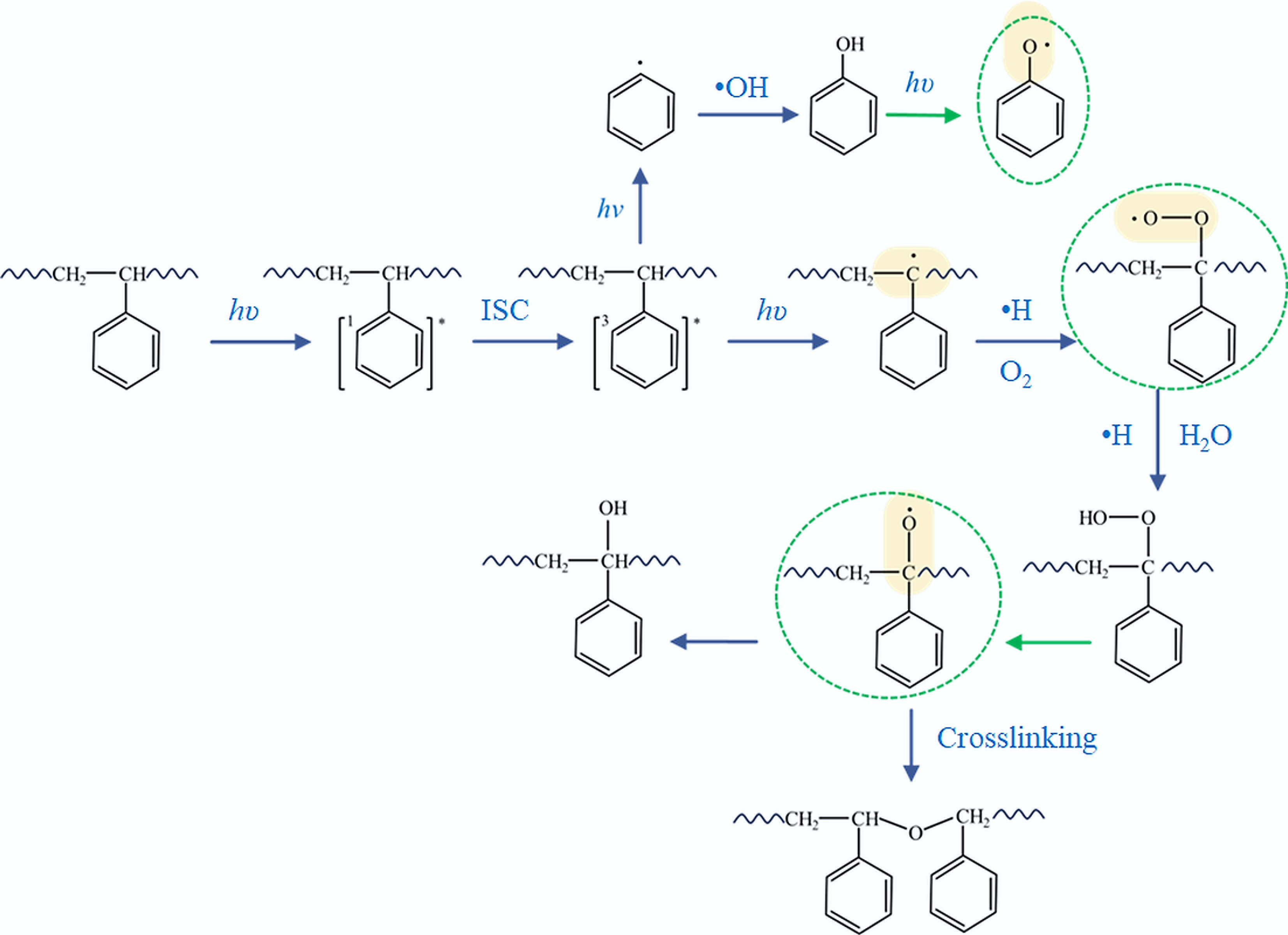
Figure 3.
Formation processes of EPFRs during photoaging of PS-MPs.
Characterization of PS-DOM
-
Under conditions of darkness and UV irradiation, DOC of PS-DOM shared a similar pattern (Supplementary Fig. S2), as the values increased with derivation time, with a significantly positive correlation (p < 0.01). UV irradiation significantly enhanced DOC of PS-DOM (3.17–29.78 mg/L) in comparison with the dark condition (1.54–2.20 mg/L), which is in line with a previous report[32].
According to EEM-FRI (Fig. 4), PS-DOM was dominated by the protein-like substances (Regions I and II), which is consistent with previous reports[41]. However, the relative abundance of humic-like compounds (Regions III and V) increased from 23.71% to 43.79% along with increasing extraction time (Supplementary Table S5). FT-ICR-MS showed that after 10 h of extraction, PS-DOM was governed by lignin-like and tannin-like components based on the van Krevelen diagram (Supplementary Fig. S3; Supplementary Table S6), which was similar to terrestrial plant-derived DOM. The lignin-like and tannin-like molecules were characterized by cross-linked aromatic skeleton structures and polyhydroxy condensed aromatic structures with abundant polar oxygen-containing functional groups, including hydroxyl, phenolic hydroxyl, carbonyl, and carboxyl groups, and photochemical activity to induce the generation of different reactive species such as O2•-[22,35,42].
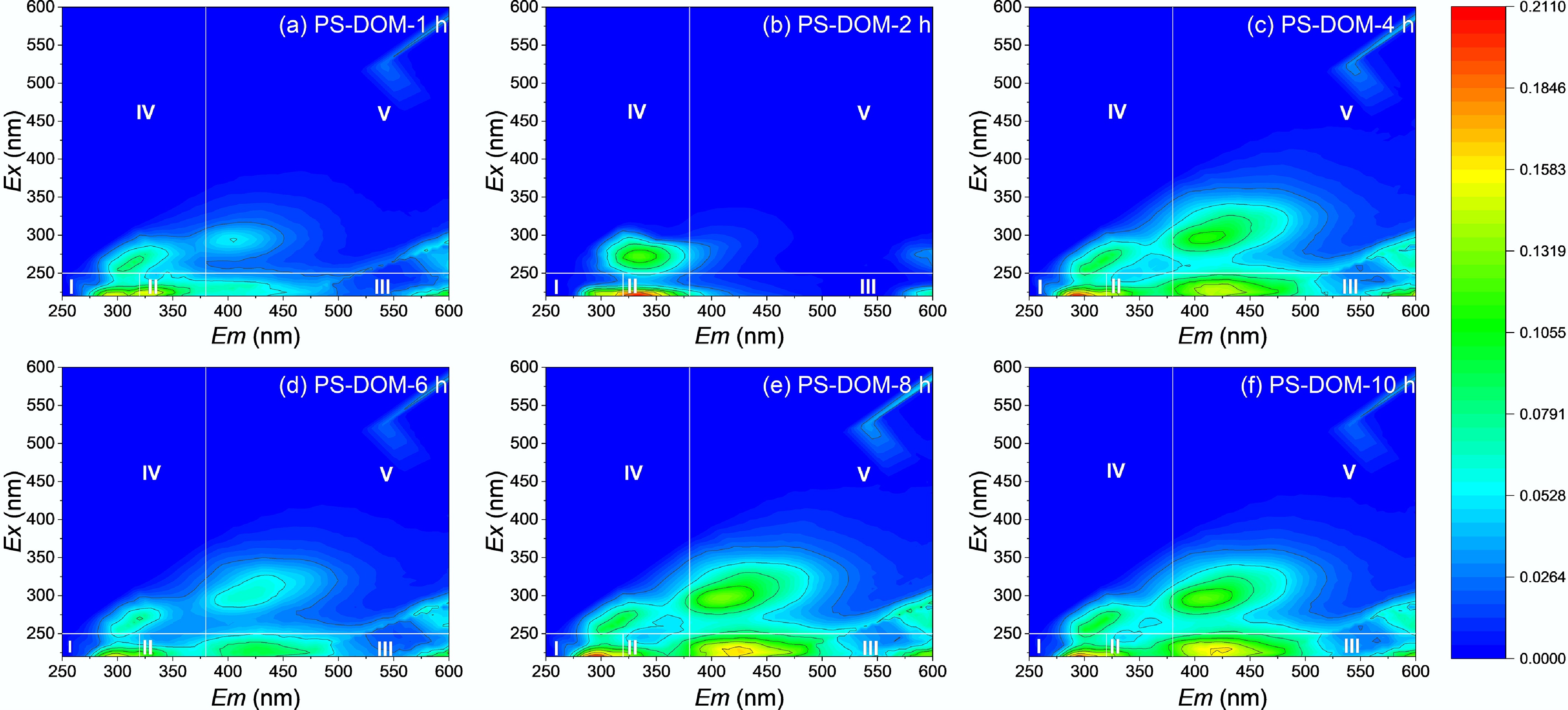
Figure 4.
EEM-FRI of PS-DOM derived for (a) 1, (b) 2, (c) 4, (d) 6, (e) 8, and (f) 10 h.
Photoreduction of Cr(VI) by aged PS-MPs
-
To investigate the effects of aged PS-MPs on the photoreduction of Cr(VI), photoreduction kinetics experiments were conducted using PS-MPs with different aging times. Under dark conditions, the concentrations of Cr(VI) in the solution were stable for all treatments (Supplementary Fig. S4), indicating that adsorption and reduction of Cr(VI) by PS-MPs were negligible. In contrast, Cr(VI) could be effectively reduced by both pristine and aged PS-MPs under UV irradiation, whereas this was not the case for the treatment without PS-MPs (Fig. 5a). The photoreduction efficiency of Cr(VI) increased consistently with aging time, from 38.11% for pristine PS-MP to 89.90% for PS-MP aged for 96 h, with reduction capacities ranging from 7.6 to 17.98 mg/g. The reduction data were fitted to a pseudo-first-order kinetic model (Supplementary Table S7, R2 ≥ 0.85, p < 0.05); the kinetics constant (k) increased consistently with photoaging time, and a maximum value of k could be expected (Supplementary Fig. S5). The pristine PS-MPs without EPFRs also showed some capacity for Cr(VI) photoreduction, indicating that PS-DOM may play a critical role in Cr(VI) photoreduction. The results of Cr(VI) photoreduction experiments with PS-DOM showed that Cr(VI) could not be reduced in the dark, whereas its reduction efficiency reached 31.81% under UV irradiation (Fig. 5b), which was comparable to that observed for pristine PS-MP (38.11%). The photoreduction kinetics were also fitted to a pseudo-first-order kinetic model (R2 > 0.95, p < 0.01), with k = 0.0038 h−1 in the dark and k = 0.0433 h−1 under UV irradiation.
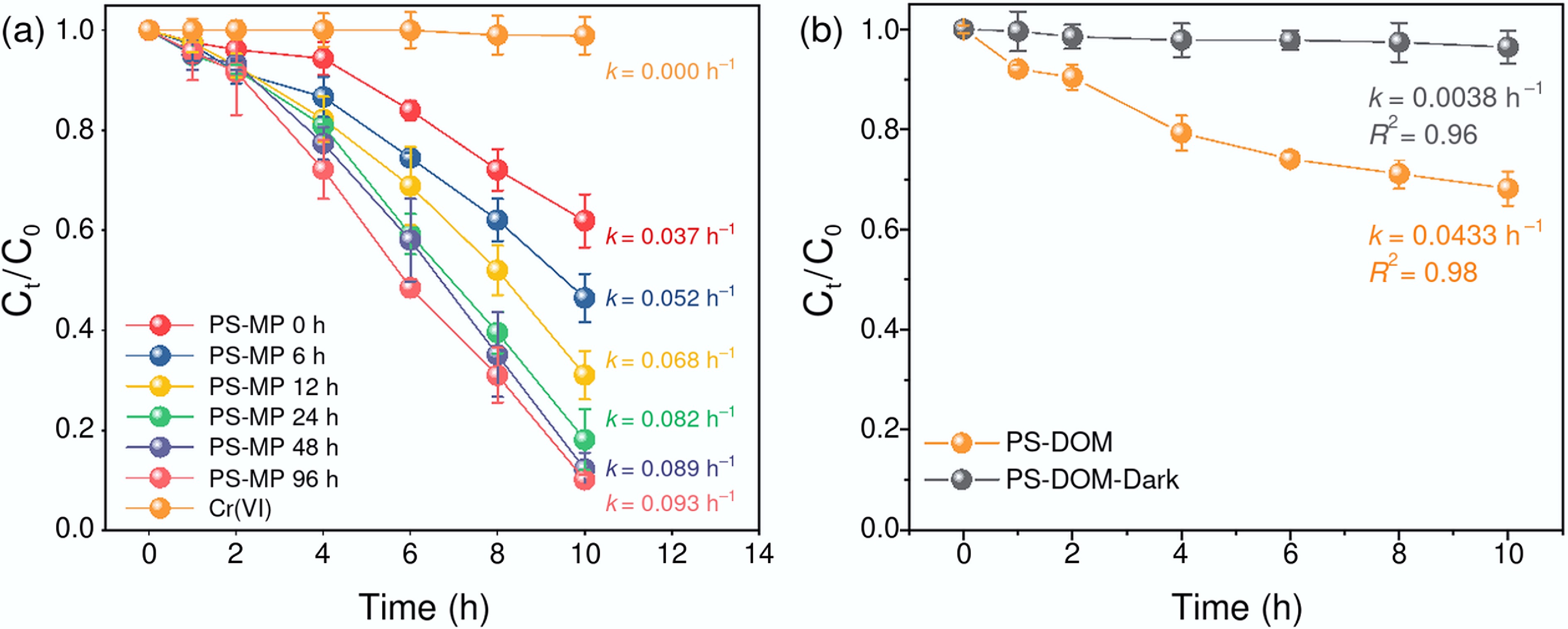
Figure 5.
(a) Cr(VI) photoreduction by PS-MPs under different photoaging times; (b) Cr(VI) photoreduction by PS-DOM under UV irradiation and dark conditions.
The distribution of Cr species in solution and on the surface of PS-MPs was further investigated. In the solution, the concentration of Cr(VI) consistently decreased during the photoreaction process, and 88.90% of Cr(VI) was removed, whereas Cr(III), as the reduction product of Cr(VI), increased and reached 0.91 mg/L after the reaction, accounting for 10.24% of the total Cr (Fig. 6a). XPS was conducted to reveal the species distribution of Cr on the surface of PS-MPs. The results showed that for Cr 2p, the peaks assigned to Cr(III) were detected at 577.51 and 587.28 eV, accounting for 90.31% of the total Cr, while the peaks at 580.44 and 589.66 eV corresponded to Cr(VI), accounting for 8.81%, confirming that Cr(VI) was effectively reduced to Cr(III) by aged PS-MPs under UV irradiation (Fig. 6b).
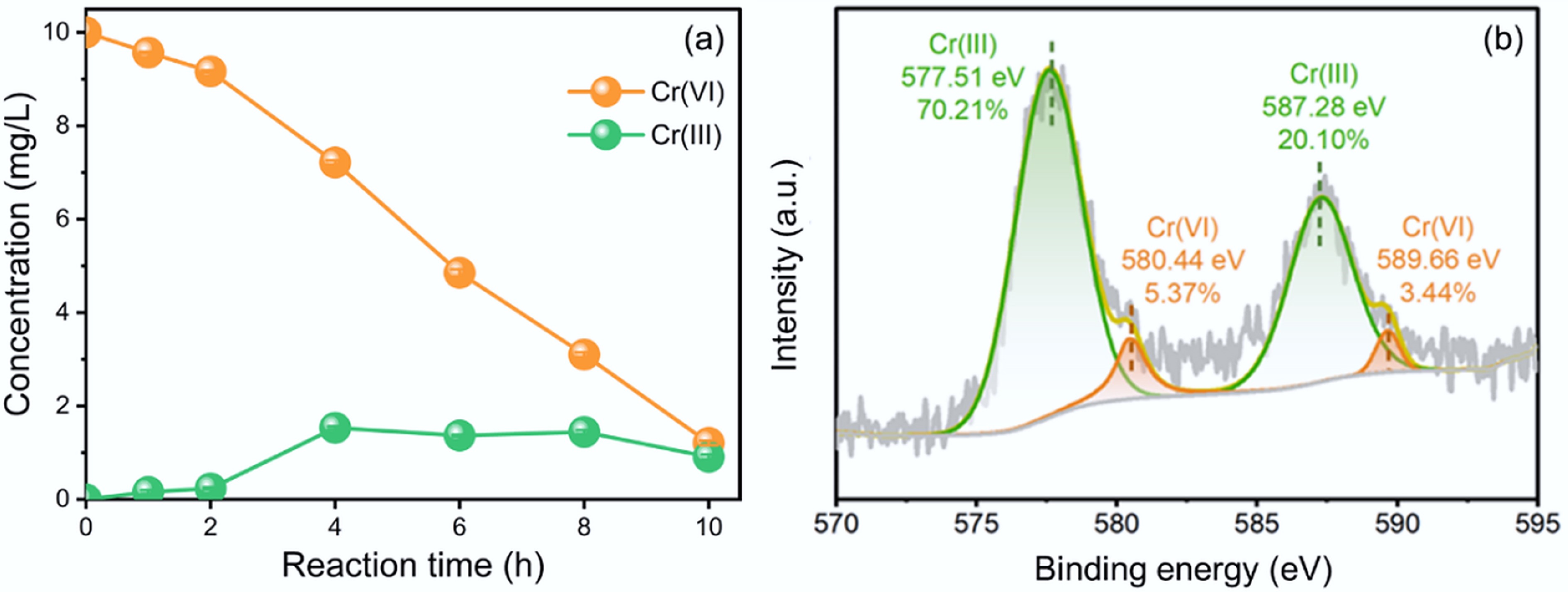
Figure 6.
(a) Concentrations of Cr(VI) and Cr(III) in solution during photoreaction; (b) high-resolution XPS spectrum of Cr 2p on PS-MPs after photoreaction.
Cr(VI) photoreduction capacities by the combination of PS-MPs and PS-DOM were comparable to biochar and generally higher than the dark reduction capacity of humic substances (Supplementary Table S8). Biochar and PS-MPs shared similar trends in Cr(VI) photoreduction. In comparison with dark conditions, the reduction capacity of Cr(VI) was largely enhanced by biochar under UV and/or simulated solar irradiation, since UV irradiation promoted the formation of EPFRs, which directly reduced Cr(VI) to Cr(III) as electron donors, in particular those with the oxygen-centered species[43]. Furthermore, Cr(VI) indirect reduction was significantly promoted under irradiation due to the quantity of photoproduced O2•-[44]. Thus, due to the large quantity and wide distribution, MPs and their derived MP-DOM can collectively function as significant mediators in Cr(VI) photoreduction.
The mechanisms of Cr(VI) photoreduction by aged PS-MPs
-
EPR was performed to detect the types and contents of EPFRs on 96 h-aged PS-MPs in Cr(VI) solution and in pure water during the photoreaction process (Fig. 7a). The results showed that the values of the g-factor remained above 2.004 in both treatments, indicating that the type of EPFRs on aged PS-MPs remained oxygen-centered radicals during the photoreaction process[24]. EPFR concentrations were consistently lower in the Cr(VI) solution in comparison with pure water, indicating that EPFRs directly participated in the photoreduction of Cr(VI). The signal of DMPO- O2•- was detected on aged PS-MP under UV irradiation, and the intensity also increased along with the photoaging time (Fig. 7b), which was in line with the trends of Cr(VI) photoreduction rate and efficiency, demonstrating that the increase in EPFRs promoted the yield of O2•- and contributed to Cr(VI) reduction indirectly via photogeneration of O2•-. To further quantify the contribution of direct and indirect pathways, the reduction efficiency of Cr(VI) by 96 h-aged PS-MPs was compared under aerobic and anaerobic conditions (Fig. 7c). Under anaerobic conditions, the photoreduction efficiency decreased by approximately 20%, suggesting that the direct pathway was the dominant way for reducing Cr(VI), accounting for 80% of the total reduction capacity.
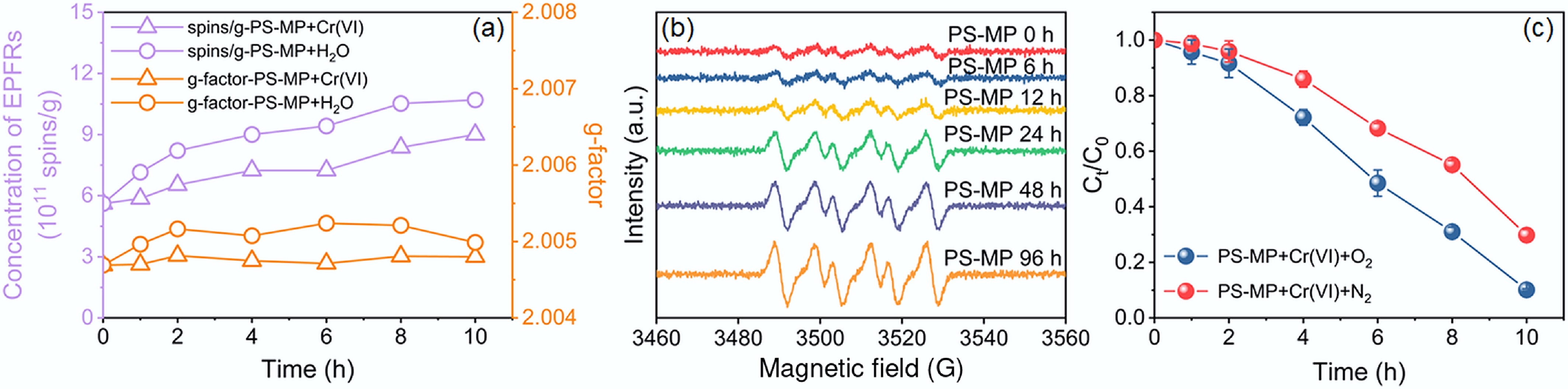
Figure 7.
(a) EPFRs concentration and g-factor of PS-MPs during Cr(VI) photoreduction in Cr(VI) solution and pure water; (b) EPR spectra of PS-MPs under different photo-aging times; (c) Cr(VI) photoreduction by PS-MPs under O2 and N2 conditions.
Likewise, under UV irradiation, the signal of DMPO-O2•- was detected in PS-DOM (Fig. 8a), whereas it was not observed under dark conditions, confirming that PS-DOM can reduce Cr(VI) via photogenerated O2•-. The reduction efficiency decreased by 24.75% under anaerobic conditions (Fig. 8b), indicating that the indirect pathway governed Cr(VI) photoreduction, accounting for 77.81% of the total reduction.
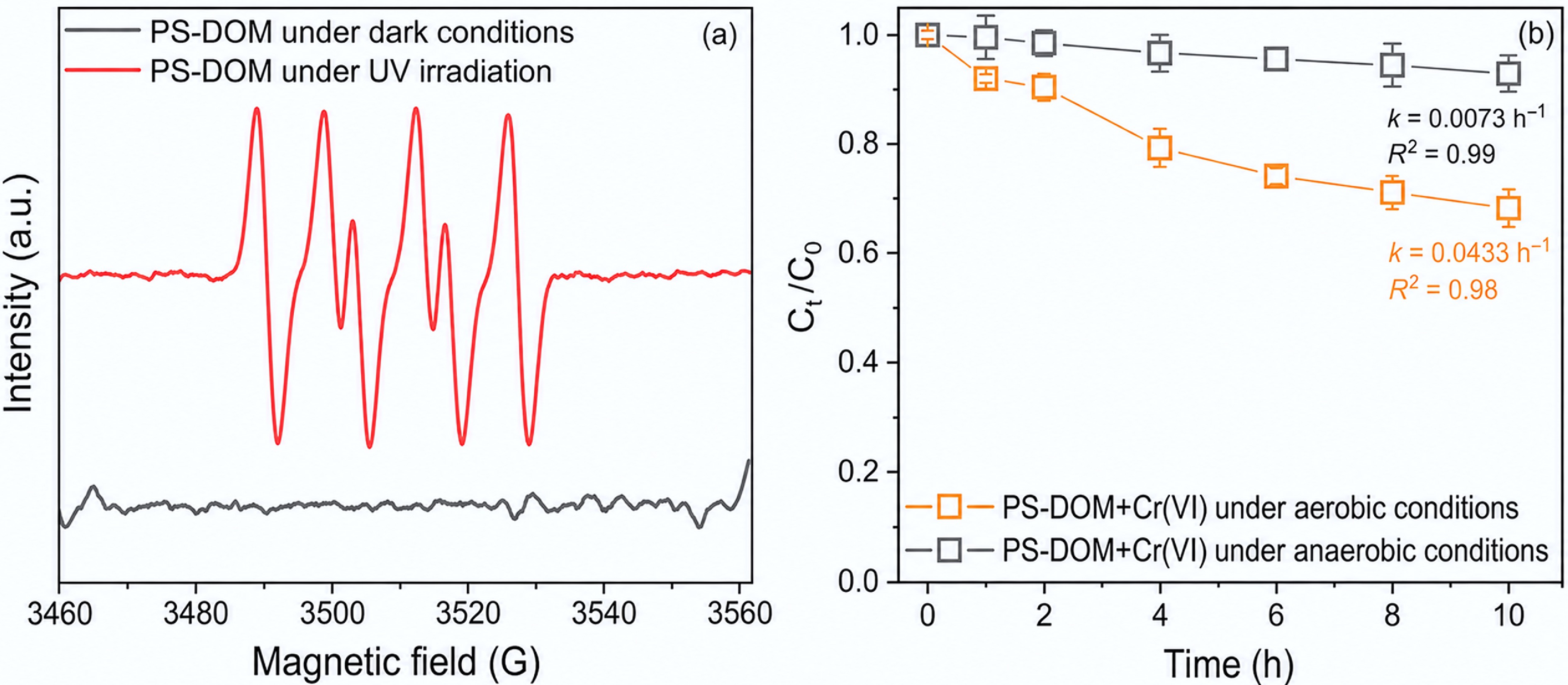
Figure 8.
(a) EPR spectra of DMPO-O2•- adducts generated by PS-DOM under dark and UV irradiation conditions; (b) Cr(VI) photoreduction by PS-DOM under aerobic and anaerobic conditions.
UV-Vis-NIR spectroscopy (Fig. 9a) showed that pristine PS-MP exhibited absorption in the region of 200–300 nm, corresponding to the aromatic π–π* transition. Along with the photoaging time, the absorbance of the B-band (200–400 nm) increased continuously for aged PS-MPs, and the absorption range extended to over 400 nm, indicating the formation of conjugated chromophores on the benzene ring, such as aromatic ketones or aldehydes. Furthermore, the absorbance of the reverse absorption band (R-band) in the region of 400–650 nm also increased with photoaging time, suggesting that photoaging broadened the light-response range, which further promoted their photoactivity. Transient photocurrent response measurements (Fig. 9b) demonstrated that the photocurrent was detected under UV irradiation, and the current density increased with the photoaging time, suggesting that the sufficiently aged PS-MPs may possess an enhanced capacity for photo-generated electrons. Furthermore, EPR spectra (Fig. 9c) showed that the signals of e− were observed under UV irradiation, and the intensity declined with the photoaging time, indicating the formation of photo-generated electrons and that their amount increased with the aging degree of PS-MPs. These results confirmed that UV irradiation was the essential trigger for PS-MPs to reduce Cr(VI).
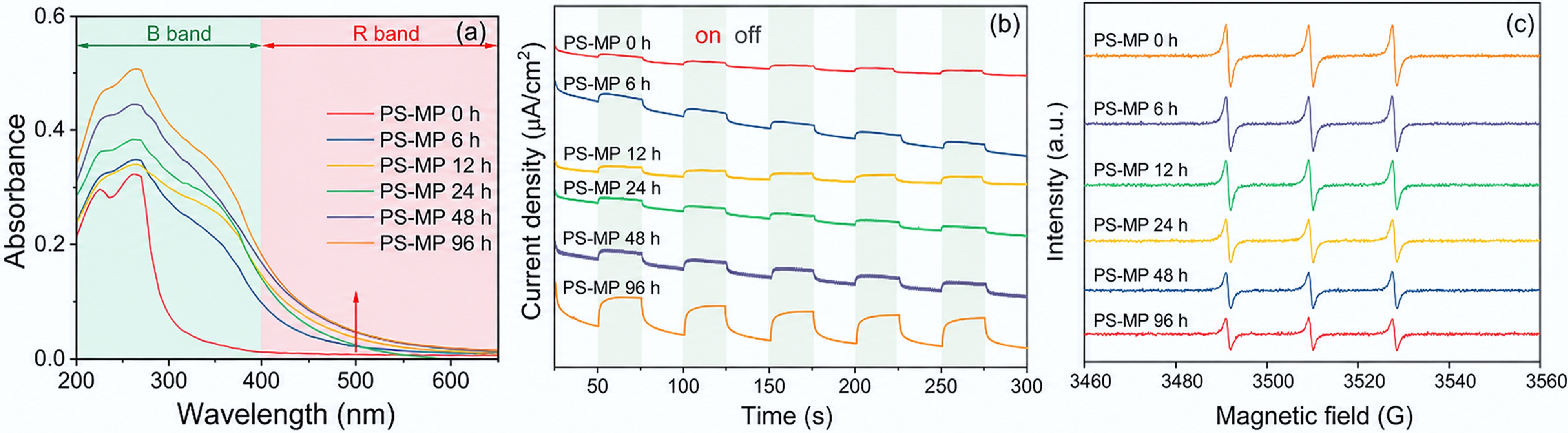
Figure 9.
(a) UV-vis absorption spectra of PS-MPs with different photoaging times; (b) transient photocurrent responses of PS-MPs with different photoaging times; (c) EPR spectra of photoinduced electrons generated by PS-MPs under irradiation.
Electrostatic potential (ESP) of the main aged products of PS-MPs identified by Py-GC/MS was further calculated (Supplementary Fig. S6). Accordingly, an uneven distribution of electrons was created on the surface of aged PS-MPs, which may fix Cr(VI) onto the electron-deficient sites on aged PS-MPs, and the electrons may directly transfer from EPFRs and/or the electron-donating functional groups, such as hydroxyl and phenolic hydroxyl groups, to reduce Cr(VI)[10,44]. Furthermore, ester and polyol derivatives (e.g., 2-octyl benzoate and 3-benzyloxy-1,2-diacetyl-1,2-propanediol) may undergo photohydrolysis or photodegradation to produce reactive alcohols or carboxylic acids, which subsequently participate in Cr(VI) reduction. Moreover, due to the existence of conjugated π-systems, the aged PS-MPs possess photochemical reactivity. Under UV irradiation, the aromatic carboxylic acids, such as 4-dodecyloxybenzoic acid, can generate O2•- to mediate Cr(VI) reduction[45].
-
In the current study, photoaging induced the formation of oxygen-centered EPFRs and enhanced the derivation of PS-DOM, accompanied by the modification of the morphologies and physicochemical properties of PS-MPs. UV irradiation triggered Cr(VI) reduction by PS-MPs. Under UV irradiation, aged PS-MPs efficiently reduced Cr(VI) into Cr(III) via the combined effects of EPFRs and PS-DOM. The direct electron transfer pathway was predominant in Cr(VI) photoreduction by EPFRs, whereas the indirect pathway through photogenerated O2•- governed the reduction process by PS-DOM. Future studies can further explore the effects of microplastic types and the differences between natural materials and microplastics on Cr(VI) photoreduction. Additionally, the effects of environmental factors in actual aquatic systems, such as pH, coexisting substances (e.g., inorganic ions, natural dissolved organic matter), irradiation conditions, etc., on the formation of EPFRs in MPs and Cr(VI) photoreduction by MPs can be further investigated, particularly at field scale with MP concentrations in actual environmental conditions. Furthermore, given the vast diversity of polymer types, it is critical to establish AI-based approaches, such as machine learning, to predict the relevant effects of MPs on environmental and biogeochemical processes.
No acknowledgements are applicable for this work.
-
It accompanies this paper at: https://doi.org/10.48130/ebp-0026-0015.
-
Not applicable. This study did not involve human participants, human-derived materials or data, animals, clinical trials, or identifiable personal information; therefore, ethical approval and informed consent were not required.
-
The authors confirm their contributions to the study as follows: Xinyue Wang: investigation, visualization, writing – original draft; Xianjie Tang: visualization, writing – original draft; Donglin Wang: investigation; Lingqing Gu: investigation; Xi Zhang: investigation; Yujie Tai: investigation; Chao Ma: investigation; Jingjie Zhang: funding acquisition, writing – review & editing; Rongdi An: investigation; Jiunian Guan: conceptualization, funding acquisition, supervision, writing – review & editing. All authors reviewed the results and approved the final version of the manuscript.
-
The datasets generated during and/or analyzed in the current study are available from the corresponding author upon reasonable request.
-
The authors declare that they have no conflict of interest.
-
Full list of author information is available at the end of the article.
- The supplementary files can be downloaded from here.
- Copyright: © 2026 by the author(s). Published by Maximum Academic Press, Fayetteville, GA. This article is an open access article distributed under Creative Commons Attribution License (CC BY 4.0), visit https://creativecommons.org/licenses/by/4.0/.
-
About this article
Cite this article
Wang X, Tang X, Wang D, Gu L, Zhang X, et al. 2026. Microplastics as emerging mediators of Cr(VI) reduction: roles of environmentally persistent free radicals and microplastic-derived dissolved organic matter. Environmental and Biogeochemical Processes 2: e020 doi: 10.48130/ebp-0026-0015 

Microplastics as emerging mediators of Cr(VI) reduction: roles of environmentally persistent free radicals and microplastic-derived dissolved organic matter
- Received: 17 June 2026
- Revised: 27 July 2026
- Accepted: 08 September 2026
- Published online: 09 October 2026
Abstract: As an essential biogeochemical process of chromium (Cr), the reduction of Cr(VI) to Cr(III) shapes the distribution, mobility, and ecotoxicity of Cr in surficial environments. Currently, microplastics (MPs) are widely distributed in the environment, possessing great potential to affect elemental biogeochemical cycles, including Cr(VI) reduction. Thus, polystyrene microplastics (PS-MPs) were selected to investigate their effects on Cr(VI) photoreduction and the relevant mechanisms. The results showed that photoaging induced the formation of environmentally persistent free radicals (EPFRs) on PS-MPs and enhanced the derivation of polystyrene microplastics-derived dissolved organic matter (PS-DOM). Cr(VI) reduction by PS-MPs was triggered by UV irradiation. Under UV irradiation, aged PS-MPs efficiently reduced Cr(VI) into Cr(III) via the combined contribution of EPFRs and PS-DOM. The direct electron transfer pathway was predominant in Cr(VI) photoreduction by EPFRs, whereas the indirect pathway through photogenerated superoxide radical (O2•-) governed the reduction process by PS-DOM. Therefore, MPs may become emerging contributors in Cr(VI) reduction and provide extra pathways in Cr biogeochemical cycles. In the future, the effects of MPs' photochemical activity can be further investigated at the field scale with concentrations under actual environmental conditions, and it is critical to establish artificial intelligence (AI)-based approaches, such as machine learning, to predict the effects of MPs on environmental and biogeochemical processes.