











-
Climate change represents one of the most pressing global challenges and poses a serious threat to human and ecological systems. Fossil fuel combustion, deforestation, and intensive industrialisation are the primary sources of greenhouse gas emissions, which have risen drastically since the Industrial Revolution and are now approaching critical atmospheric concentrations[1]. These changes resulted in severe environmental and socio-economic impacts, particularly on the agri-food sector, thereby pressing for the adoption of effective and sustainable strategies to mitigate their effects.
In response to these challenges, Climate-Smart Agriculture (CSA) has emerged as a comprehensive and adaptive framework designed to enhance the sustainability and resilience of food systems. It aligns with global frameworks like the Sustainable Development Goals (SDG) and the Paris Agreement[2], emphasising various strategies to enhance agricultural and aquacultural practices. These strategies also support Carbon-Winnable Innovative Solutions for the Environment (WISE) agriculture, which focuses on reducing emissions and increasing carbon storage in farmlands and waters to lessen the impact of climate change[3].
In addition to the challenges posed by climate change, food loss and waste (FLW) has become a critical global concern. Furthermore, FLW contributes to a serious moral and socio-economic crisis as an estimated 28% of the global population was food insecure in 2024, and up to 720 million people were affected by hunger[4]. This relates to 1 billion meals of edible food being thrown away by households every single day[5]. As a result, it creates an economic burden, with USD 1 trillion worth of losses recorded[6]. Investment in green technologies, water reuse, and circular economy principles is essential to promote resource efficiency and long-term sustainability. In the field, approaches that support both CSA and WISE principles will provide solutions to these problems[1]. In food manufacturing, these issues are managed using sustainable food processing techniques, with a focus on energy efficiency, zero waste, and without chemicals.
Non-thermal food processing technologies, particularly high-pressure processing (HPP), could not only reduce FLW and emissions, but also promote safer and close-to-fresh food product quality to consumers. HPP is a versatile non-thermal technology that subjects foods to pressures typically 100−600 MPa, inactivating spoilage and pathogenic microorganisms without the need for heat or chemical preservatives. Therefore, HPP is an ally to clean-label efforts. HPP also retains the nutrients and organoleptic properties of food close to the characteristics of fresh, untreated products. This aligns with the preference of the younger adult population, which anticipates premium, natural, and convenient food products. From a sustainability perspective, HPP supports waste reduction and the valorisation of food by-products, as well as reducing the environmental impact caused by traditional food preservation methods. Consequently, this green technology supports the principles of both the CSA and WISE frameworks, serving as a viable strategy for promoting sustainability, and climate change mitigation in the food industry[7].
HPP has been successfully commercialised in many parts of the world, particularly within developed countries, where consumers demand safe, minimally processed, and high-quality foods[8]. However, its adoption across Southeast Asia remains limited. In this region, ASEAN member countries lost and wasted approximately 17% of the total food production[5]. Technology adoption in this area may need some time, as awareness of HPP as a sustainable technology is still relatively low. Although market growth and the economy in this region are mainly driven by demands from the younger adult population, technology acquisition is governed by the ecosystem and existing infrastructures. On the other hand, the biodiversity of food in Southeast Asia is undeniable, especially with the numerous indigenous plants and herbs available, ready to be tapped as functional products. Therefore, this region is perfect for adopting and embracing HPP.
This review examines the potential role of HPP as a strategic tool to mitigate FLW and minimise environmental impacts within the agri-food sector. To our knowledge, few studies have applied the Carbon-WISE framework to HPP adoption in the ASEAN context. While similar frameworks may have been considered in other studies, this approach provides a structured perspective on regional food security and carbon-reduction benefits. Additionally, it presents a descriptive assessment of HPP adoption trends across the 11 ASEAN nations, including the newly minted Timor-Leste, identifying early adopters, emerging markets, untapped potential, and associated opportunities, barriers, and policy directions.
-
Informal discussions with selected researchers and industry contacts through personal communications were used to contextualise and validate key issues identified from the literature. Contacts were selected based on their expertise in HPP applications in ASEAN countries. These engagements were not part of a formal interview study, and were not analysed as primary qualitative data.
Commercial HPP adoption information
-
Commercial adoption of HPP in ASEAN countries was assessed using information from official company websites of organisations that own HPP equipment or market HPP-treated products. 'HPP users' were defined as stakeholders involved in HPP application, including food and beverage manufacturers, research institutions, and tolling or original equipment manufacturer (OEM) service providers. As some companies do not publicly disclose their use of HPP, the reported number of users may underestimate actual adoption levels. Nevertheless, these figures provide a general estimate of current commercial adoption across ASEAN countries. The number of HPP users was used as an indicator of commercial production activity, as each active user typically represents ongoing production of HPP-treated products for domestic or export markets. Data from literature and commercial sources were cross-checked to ensure consistency.
Literature search and selection
-
A systematic literature search was conducted using the Scopus database to quantify HPP-related scientific research activity across ASEAN countries. Scopus was chosen for its broad coverage of peer-reviewed journals in food science and engineering disciplines. The search covered publications from 2000 to 2026, with an additional subset analysis for the period 2016–2026 to assess recent trends. Search terms were applied in the title, abstract, or author keywords fields and included: 'high-pressure processing', 'high-pressure processing', and 'high hydrostatic pressure'.
The initial search returned 10,603 records. Further screening was performed to focus on publications relevant to this review. Only research articles with at least one author affiliated with an ASEAN country (Brunei, Cambodia, Indonesia, Laos, Malaysia, Myanmar, Philippines, Singapore, Thailand, Vietnam or Timor Leste) were included. Publications not related to food applications of HPP were excluded. After screening titles and abstracts to remove unrelated topics (e.g., geological or materials science applications), 206 records were retained for the period 2000–2026, with 170 records published after 2016. Figure 1 illustrates the PRISMA-style flow diagram for literature selection. Subsequently, the retained Scopus records were analysed to quantify research output across countries, assess publication trends over time, and evaluate patterns of collaboration between institutions and ASEAN nations.
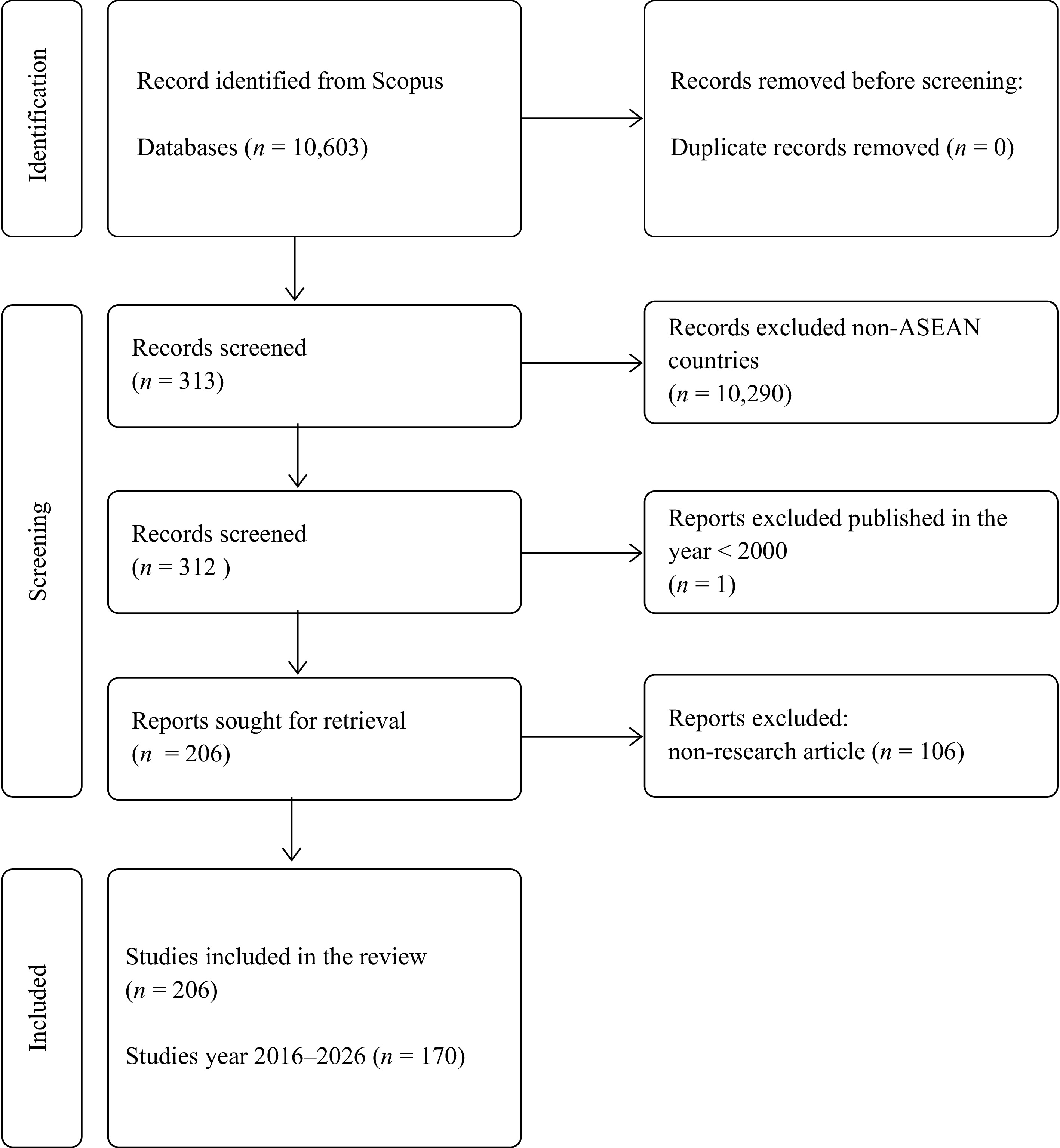
Figure 1.
PRISMA flow diagram on literature search and selection for HPP-related scientific research activity across ASEAN countries.
-
FLW occurs at multiple stages throughout the food supply chain, with varying magnitudes and economic impacts depending on the type of activity and the nature of the commodity. Regardless of development status, both developing and developed countries record FLW on different dimensions[9]. Developing countries experience higher losses at the earlier stages of the supply chain, which include postharvest and processing. This is attributed to poor infrastructure, handling, technology, or storage conditions. On the contrary, developed countries record food being wasted at the other end of the supply chain, particularly retail, and consumption. At this point in the chain, food waste is often related to the consumer's perception of the food product quality[9].
At the farm level, losses occur due to factors like pests, diseases, and extreme weather conditions, including droughts or floods. Sometimes, the occurrence of ugly, undersized, or oversized produce may also lead to increased postharvest losses. By not meeting certain usual cosmetic standards, these products may not be fit for commercial use, especially when a grading system based on appearance and size is in place. Although lesser in appeal, such imperfect produce can be effectively utilised as raw materials or ingredients in processed foods, where aesthetic characteristics are less critical, thereby supporting waste reduction and promoting circular economy practices within the agri-food sector.
During the postharvest stage, losses often occur due to poor storage conditions and infrastructure, or errors in human handling of the products[10]. Inadequate storage facilities can lead to spoilage from mould, rot, or pests. Similarly, deficiencies in transportation infrastructure, such as poor road conditions, can lead to physical damage that renders food products unsuitable for sale. In addition, mishandling of food crops during collection, sorting, or initial packaging can cause bruising, crushing, or other imperfections that reduce their quality and shelf life.
In the later stages of the food supply chain, FLW often results from human error and operational inefficiencies. Improper trimming, inaccurate portioning, or incorrect packaging can lead to unnecessary product losses. Although by-products such as peels, seeds, and trimmings can be repurposed for value-added applications, they are frequently discarded as waste. FLW also occurs during distribution due to mechanical damage, storage temperature fluctuations, and long travel distances. Nearing the end of the supply chain, FLW at the retail level is caused by the perishable nature of products, equipment failure leading to spoilage, and product surplus. At the consumption level, food waste begins from consumer rejection of sub-optimal products, overstocking, excessive cooking, poor purchasing plans, and misunderstandings regarding expiry or 'best-before' dates[9].
Figure 2 illustrates the relationship between food waste and losses in the food supply chain, with stages from production to consumption, acting as the foundational mechanism supporting the four pillars of food security. Globally, approximately 13% of food is lost during pre-consumer stages such as harvesting, processing, and distribution, while an estimated 60% of total wastage occurs at the retail and household levels, placing considerable strain on the efficiency and resource utilisation of the food system. This loss and waste diminishishes the efficiency and resource allocation of the food supply chain, thereby directly causing stress to global food security. The percentages are illustrative and represent global estimates[5].
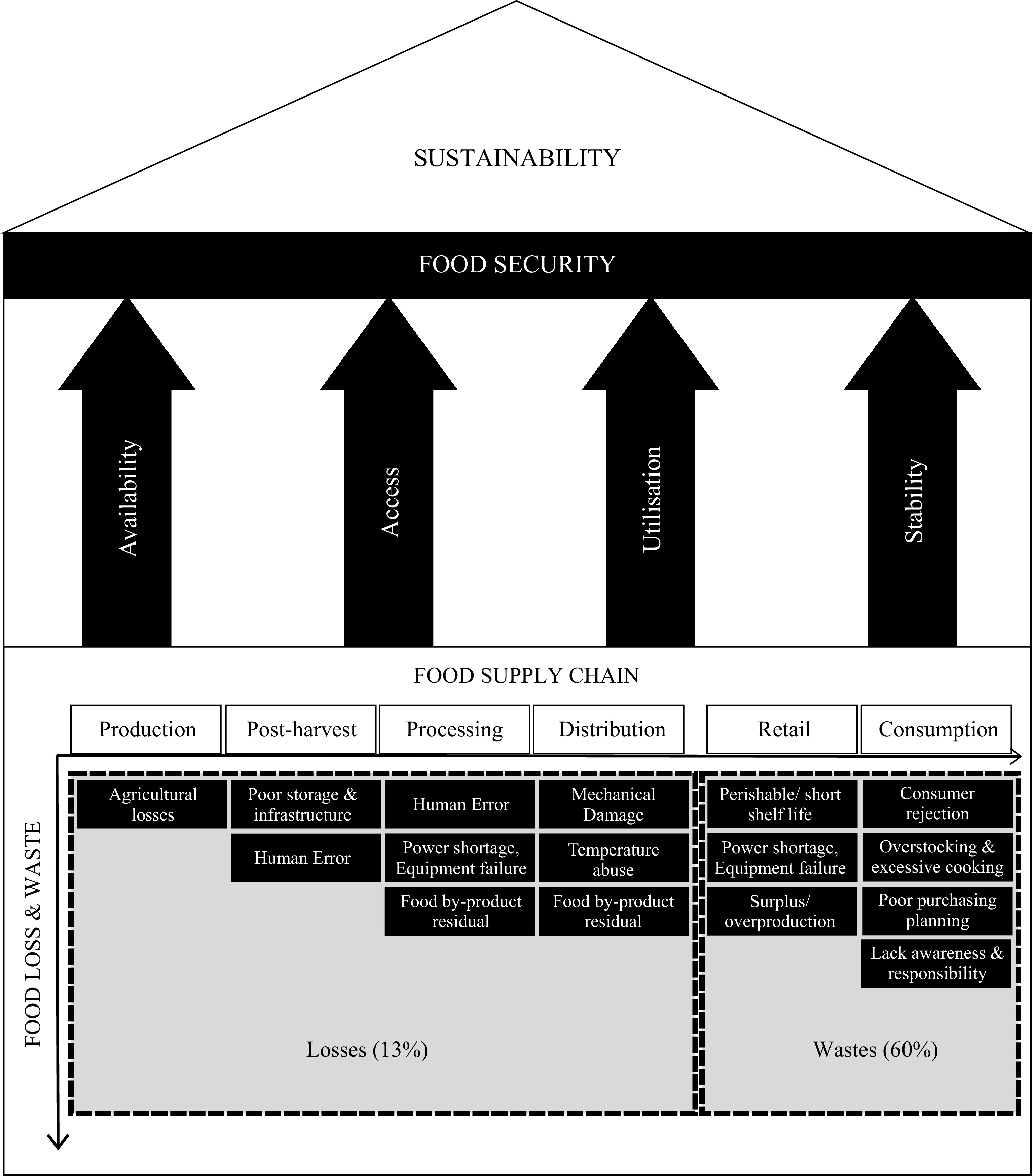
Figure 2.
Food loss and waste association across the food supply chain, and their impact on food security and sustainability.
To mitigate the issue of FWL, efforts that align with CSA and WISE approaches are needed, including prevention, reuse, and rescue strategies to improve food security. Among these strategies, the adoption of sustainable technologies such as high-pressure processing (HPP) offers a promising approach to reducing FLW while maintaining food quality and safety.
-
HPP employs water as the pressure-transmitting medium to achieve levels between 100 and 600 MPa for the modification and preservation of foods[11]. This intense pressure is held over specific durations depending on the physicochemical properties of the food being processed. Pressure treatment (compression, holding and decompression) is done within enclosed vessel by isostatic pressure. The isostatic principle allows for uniform food treatment and retains the original product dimension such those before processing. Commercial HPP systems are typically designed for in-pack processing, although in-bulk configurations have been developed for applications requiring treatment before packaging. In-bulk systems offer higher filling capacity and improved production efficiency. HPP achieves microbial inactivation at ambient temperatures. Despite this, spore inactivation is not achievable via HPP unless combined with thermal treatment. The non-thermal nature of HPP technology preserves colour, flavour, and nutritional quality close to that of fresh products[11]. Consequently, shelf life can be extended, enabling distribution to more distant markets while maintaining product quality.
A mathematical model-based analysis indicates that energy consumption in HPP systems remains relatively low across different holding times under the same pressure conditions, reflecting its energy-efficient operation[12]. However, a previous cost analysis reported that in commercial orange juice production, electricity uses for HPP (1,000,000 kWh/year) and associated CO2 emissions (773,000 kg/year) were higher than for conventional thermal pasteurisation (38,100 kWh/year, 90,000 kg CO2/year) and pulsed electric fields (920,000 kWh/year, 700,000 kg CO2/year), demonstrating potential environmental drawbacks. Despite this, total processing costs per L for HPP could be reduced by 50%–75% when production output was increased two- to six-fold, highlighting the influence of scale on efficiency[12]. HPP generally uses electricity rather than steam, avoiding some impacts of thermal processing, and has been shown to outperform modified atmosphere packaging in both environmental and economic terms[13]. Collectively, these findings suggest that while HPP may have higher energy and emissions in certain scenarios, optimised operations, and increased production scale can render it environmentally and economically favourable.
-
HPP prevents FLW by extending the shelf life of food and preserving its quality. This is done mainly by inactivating spoilage and pathogenic vegetative microorganisms[11]. Commercial-scale HPP systems typically operate under an adiabatic process, resulting in a slight internal temperature increase during a holding period of several minutes. The effectiveness of HPP on enzymes and microorganisms in food varies, as some are pressure sensitive, while others are pressure resistant. Among microorganisms, bacteria are more tolerant to pressure than mould or yeast, and gram-positive bacteria are also more tolerant to pressure than gram-negative bacteria[14]. Enzymatic inactivation also varies with process parameters. For instance, pressures up to 500 MPa at moderate temperatures have been shown to deactivate enzymes such as peroxidase and polyphenol oxidase, both of which contribute to undesirable quality changes in foods[15,16].
HPP functions primarily as a pasteurisation technology rather than a sterilisation method. It could inactivate modest pressure-thermal-resistant spores, but could not inactivate high-pressure-thermal-resistant spores of type A/B (commonly referred to as Clostridium botulinum spores type A and B). Spores of this type may be inactivated through high temperature (90 °C), coupled with pressure to leverage adiabatic effects, reaching 120 °C while under pressure. This technique is known by many names, such as thermal-assisted pressure sterilisation (TAPS) or pressure-assisted thermal sterilisation (PATS)[17]. More recently, a canister was designed to allow spore inactivation via High-Pressure Thermal Processing[18].
The usage of HPP allows for foods to remain in market circulation for longer periods[8]. For instance, during the peak season for fruits and vegetables, the supply can overwhelm the demand, creating a surplus. Converting these commodities into juices helps prevent losses. Fresh juice, if kept refrigerated, lasts only 4−5 d, but HPP-treated juices could last longer, with 30−60 d, with some keeping safe and stable even after 120 d[19]. The length depends on pH, water activity, and soluble solid content of the juice. By prolonging product freshness, HPP contributes to an estimated 15% reduction in juice waste, preventing premature disposal of raw fruits due to spoilage or expiration[20]. Moreover, the extended stability lessens the urgency for rapid transportation and facilitates broader market distribution.
Another advantage of HPP is that the extended stability and safety of the HPP products create new markets. HPP treatment prevents microbial spoilage without heat, which causes flavour and colour changes[21]. Based on these known facts that HPP preserves the colour and flavour of plant materials, HPP as a unit operation has been integrated as a method in food upcycling and by-product valorisation strategies. Imperfect colourful fruits and vegetables, either ugly-looking or not complying with a typical commercial size or characteristics, have been converted into puree and juices[17]. Therefore, HPP adds value to these nutritious, functional, and colourful products by making them safer and more stable with enhanced colour[22]. Further, food wastes such as pomace and peels, when subjected to HPP, can enhance the release of bioactive compounds such as phenolics and carotenoids. Such products often qualify as a premium product for an upscale market.
In the meat industry, HPP is applied to improve the colour and visual appeal of dark or discoloured meat, therefore reducing unnecessary wastage from unsold meat[23]. In the seafood sector, shellfish shucking using HPP helps detach the adductor muscle from the shell, therefore enabling 100% meat recovery and increasing yield by more than 25%. Besides, by extending the shelf life and freshness of seafood using HPP, this can improve export readiness and long-distance domestic distribution, to a larger land coverage. Hence, these applications demonstrate how HPP effectively mitigates FLW while transforming rejected or underutilised commodities into high-value products.
-
The sustainability and economic benefits of HPP have been widely reported and extensively discussed in previous studies[8]. Although factors such as batch processing, low filling ratios, lack of integrated utilities, and limitations in energy or pressure recovery can influence environmental outcomes, these can be optimised to reduce the impact of HPP-treated foods. In general, HPP reduces food waste by extending the shelf life of perishable products and minimising spoilage. These benefits are achieved through modern systems that optimise energy use per cycle, eliminate energy-intensive heating and cooling by operating at ambient or low temperatures, and reduce processing time and energy loss via isostatic pressure principles[24].
Life-cycle assessment (LCA) studies provide key insights into the environmental performance of HPP. A study reported that the HPP stage contributes only 5%–30% of total life-cycle impacts, with electricity consumption being the primary source, whereas water and compressed air have comparatively minor effects[25]. The largest environmental burden arises from the agricultural production of raw materials, consistent with other literature. Comparative LCA analyses also indicate that non-thermal technologies, including HPP generally require less energy, generate lower carbon emissions, and consume less water than conventional thermal processing[26].
Insights from these LCA studies also highlight operational strategies to further reduce environmental impacts. The use of water as a recirculating pressure medium enhances HPP's water efficiency, with potential savings of up to 75% compared with alternative processes[27], and discharged water can be reused for cleaning. Packaging was found to contribute more substantially to environmental impacts than the HPP process itself, averaging four times the impact of the HPP step[25]. Most in-pack HPP units treat pre-packaged foods, reducing handling and post-processing cleaning steps[28], whereas in-bulk units can achieve a filling capacity of 90%, maximising efficiency[21]. Using recycled PET (r-PET) bottles or polylactic acid bottles instead of virgin PET can further reduce the overall environmental footprint of HPP-treated products[25].
Economically, HPP enables companies to reduce product returns, expand into new markets, and deliver fresh, natural products with extended shelf life. Longer product shelf life enhances supply chain efficiency, mitigates the risk of costly recalls, and allows access to more distant markets, reducing the need for carbon-intensive, high-speed transportation. HPP-treated products also support brand reputation and provide premium pricing opportunities. In certain cases, evidence of HPP treatment as part of risk mitigation can reduce quarantine times for exports, offering additional cost savings.
Historically, HPP has rejuvenated dying food industries by reducing FLW and introducing new food segments to the market. In a way, HPP offers a solution for preserving certain foods that traditional methods cannot. A notable example is the shelf-life extension of highly perishable fruits such as avocado and durian, particularly during periods of harvest surplus. For instance, if not treated, the fresh pulp of durian lasts only 3−4 d due to spoilage[29]. Similarly, in avocados, approximately 49% of fruit may be rejected prior to processing due to ripening variability and disease, while an additional 30%–35% of the fruit weight is discarded during industrial processing as peel and seed residues[30,31].
Both fruits are highly perishable, high in fat content, and have a unique aroma with a delicate texture. The pulp quality deteriorates easily after cutting or opening, due to enzymes naturally present in the fruit[32,33]. Conventional thermal treatments are unsuitable for these products, as heat adversely affects their aroma, texture, and colour. A viable approach is therefore to inactivate these enzymes using non-thermal methods such as HPP. Through this, avocados and guacamole can achieve a shelf life of 6 to 8 weeks without altering any of their organoleptic characteristics[32]. Similar benefits were reported for durian pastes[34].
Table 1 summarises the effect of HPP treatment vs thermal treatment on Durian and avocado products. With HPP, a new market has emerged for these two fruits, providing greater economic benefits. Indeed, HPP has facilitated the creation of value-added avocado and durian products with extended shelf life, offering opportunities for enhanced market utilisation. With reduced FLW, this technology has added value to the products produced by farmers, allowing them to enjoy the economic benefits while leveraging its export potential[35].
Table 1. Effect of high-pressure processing vs thermal treatment on durian and avocado products[33−39].
Attributes Application High-pressure processing Thermal treatment Colour Avocado Colour largely preserved and relatively stable over time Significant colour changes; enzymatic browning Durian Colour largely preserved No major change reported Aroma Avocado Fruity, floral, and creamy aroma retained Substantial loss of key aroma compounds Durian Aroma compounds largely retained; no 'off' odour reported Minor changes in aroma compound; no 'off' odour was reported Texture Avocado Microstructural integrity maintained Denser structure and cohesiveness reduced Durian Texture integrity maintained Firmness reduced Enzyme activities Avocado Peroxidase and polyphenol oxidase activity slowed down Accelerate peroxidase activity Durian Pectin methyl esterase and polygalacturonase slowed down; delayed softening Pectin methyl esterase activity accelerated while polygalacturonase slowed down; does not delay softening -
Southeast Asia, with its tropical climate, rapid urbanisation, and growing middle class, faces a dual challenge in the food sector. These challenges are reducing food waste while ensuring food safety and quality. HPP offers a promising solution that aligns with the region's push toward improved food security and low-carbon agri-food systems under frameworks such as carbon-WISE. Despite this potential, adoption of HPP in ASEAN remains limited due to insufficient knowledge about its applications and suitability within the regional context, with many stakeholders perceiving it as primarily applicable in developed countries[40].
The assessment of HPP adoption across ASEAN is based on several key indicators. Commercial activities, including products marketed and voluntary disclosure of system installation by companies on official websites, provide insights into HPP technology adoption. The presence of tolling facilities offering HPP services to multiple businesses further indicates market penetration, as these services make the technology accessible to companies that cannot afford in-house units. Engagement with researchers and industry contacts adds a complementary perspective, highlighting pilot-scale trials, R&D activities, and training programs that signal future industry readiness and product innovation potential within the region.
The HPP adoption landscape across ASEAN demonstrates varied trends, which can be categorised into four distinct groups (A, B, C, and D) based on market penetration and relative start time (Fig. 3). Singapore, as an 'early adopter', implemented HPP over a decade ago and has transitioned to an optimised, integrated phase. Several companies installed in-house HPP units, while tolling facilities and research partnerships supported specialised, high-value, clean-label production. Unfortunately, some operations have ceased or relocated (P. Govindharajulu, personal communication, August 7, 2025). Malaysia and Thailand, in the 'early majority' group, are experiencing growth but have yet to reach full maturity. Malaysia commenced with durian pastes for export and now offer a diverse range of products, including coconut water, cold-pressed juices, soy milk, jackfruit pastes, seafood, meat, herbal products, and ready-to-eat meals. Thailand's industry focuses on coconut water and cold-pressed beverages, with other products emerging more gradually (J. Marraud, personal communication, August 28, 2025).
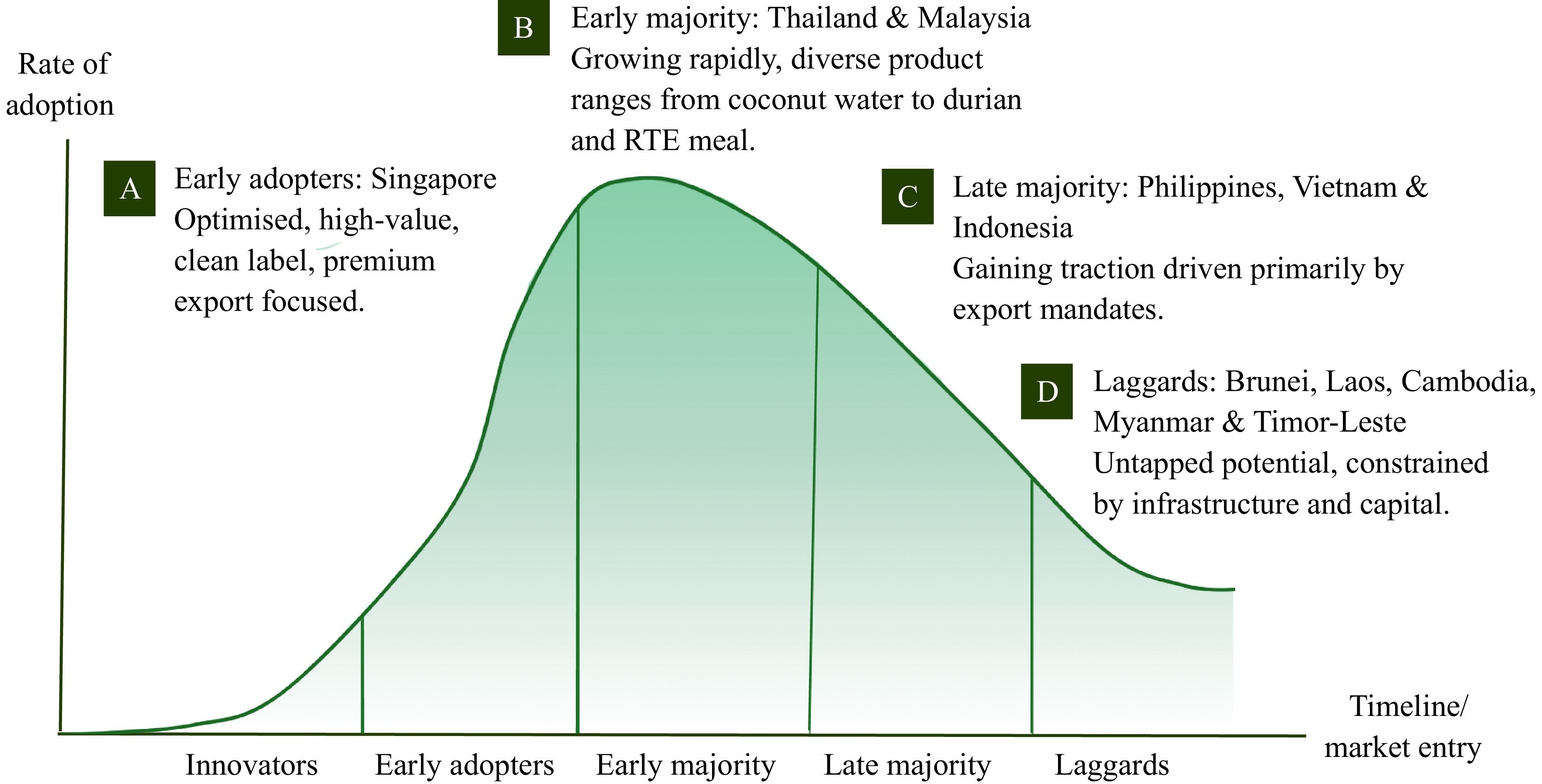
Figure 3.
The ASEAN adoption landscape for High-Pressure Processing technology.
Countries in group C, including Indonesia and Vietnam, are gaining traction mainly due to export market drivers. Indonesia has only one pioneering industrial adopter since 2019, while Vietnam shows growing adoption focused on tropical juices. Other countries, such as the Philippines, remain largely at the research and development stage. Group D countries, including Brunei, Laos, Cambodia, Myanmar, and Timor Leste, represent untapped potential, particularly in beverages, seafood, and meat, but adoption is constrained by infrastructure, capital, or limited market demand[41,42]. Timor Leste joined ASEAN only recently, during the ASEAN summit. Therefore, no information on HPP adoption in Timor Leste is currently available at this point. Effective implementation of HPP in these regions further depends on the availability of reliable electricity, clean water, and robust logistics networks.
A key factor facilitating adoption across multiple countries, particularly in Singapore, Thailand, and Malaysia, is access to tolling services which are coupled with research support. Food companies in Malaysia benefit from a research-backed, tolling-centric model via entrepreneur-development programs at Universiti Putra Malaysia, while companies in Singapore leverage their national initiatives including A*STAR, FIRC, and WLNA, integrating commercial access, infrastructure, and export-focused strategies. Thailand's adoption is supported by integrated tolling and logistics services, which reduce entry barriers for smaller or medium-sized enterprises, following a successful model observed in China. In Indonesia, the recent acquisition of a commercial HPP unit at IPB University is expected to accelerate adoption. Collectively, these examples highlight how market access, research support, and infrastructure shape the HPP landscape in ASEAN.
Table 2 summarises the estimation of HPP adoption, common commercial products, the number of HPP users, and related publications across ASEAN countries. The term 'HPP users' encompasses all stakeholders, including the food and beverage industry, research institutions, and tolling or original equipment manufacturer (OEM) service providers. Based on the gathered data, Malaysia and Indonesia showed strong interest in HPP-related research, and the commercialisation of HPP products. Thailand demonstrates robust research activity, with a high number of HPP users and recent scientific publications reflecting strong university–industry collaboration, followed by Malaysia. In contrast, Singapore exhibits significant commercial adoption despite a limited number of scientific studies, suggesting a greater focus on commercialisation rather than research. Overall, these trends highlight the varying levels and modes of engagement with HPP adoption across ASEAN countries.
Table 2. High-pressure processing adoption status, common commercial products, and the number of relevant scientific publications.
Country Adoption status Common commercial products No. of known HPP users No. of scientific relevant scientific publication to HPP* Thailand Established, high Cold-pressed juices, fruit/dairy beverages, coconut water, shelf-stable sauces, RTE meals, herbal teas, herbal extracts, functional ingredients, seafood 11 85 (69) Malaysia Established, moderate Cold-pressed juices, herbal shots, sauces, soymilk, coconut water, seafood, meat, durian paste, ready-to-eat/ready-to-cook meals 5 54 (48) Indonesia Established, emerging Juices, herbal shots 2 23 (20) Singapore Established, specialised High-value, specialised convenience-driven products:
clean-label cold-pressed juices, cold brew coffee, durian, artisanal teas, export-oriented RTE meals for central kitchens and markets in Hong Kong and China10 22 (15) Vietnam Emerging, initial Juices for export markets ND 16 (12) Philippines Emerging, initial ND ND 4 (4) Cambodia Minimal ND ND 2 (2) Laos, Brunei, Myanmar,
Timor LesteNone ND ND 0 * Number of articles documented 2000–2026 (number in parentheses for 2016–2026); ND: not documented. -
The key opportunities and barriers for HPP adoption in ASEAN are summarised in Fig. 4. Beyond highlighting HPP's opportunities and barriers, the figure illustrates how HPP adoption can support climate-smart agriculture, promote carbon-wise practices, and contribute to broader SDGs.
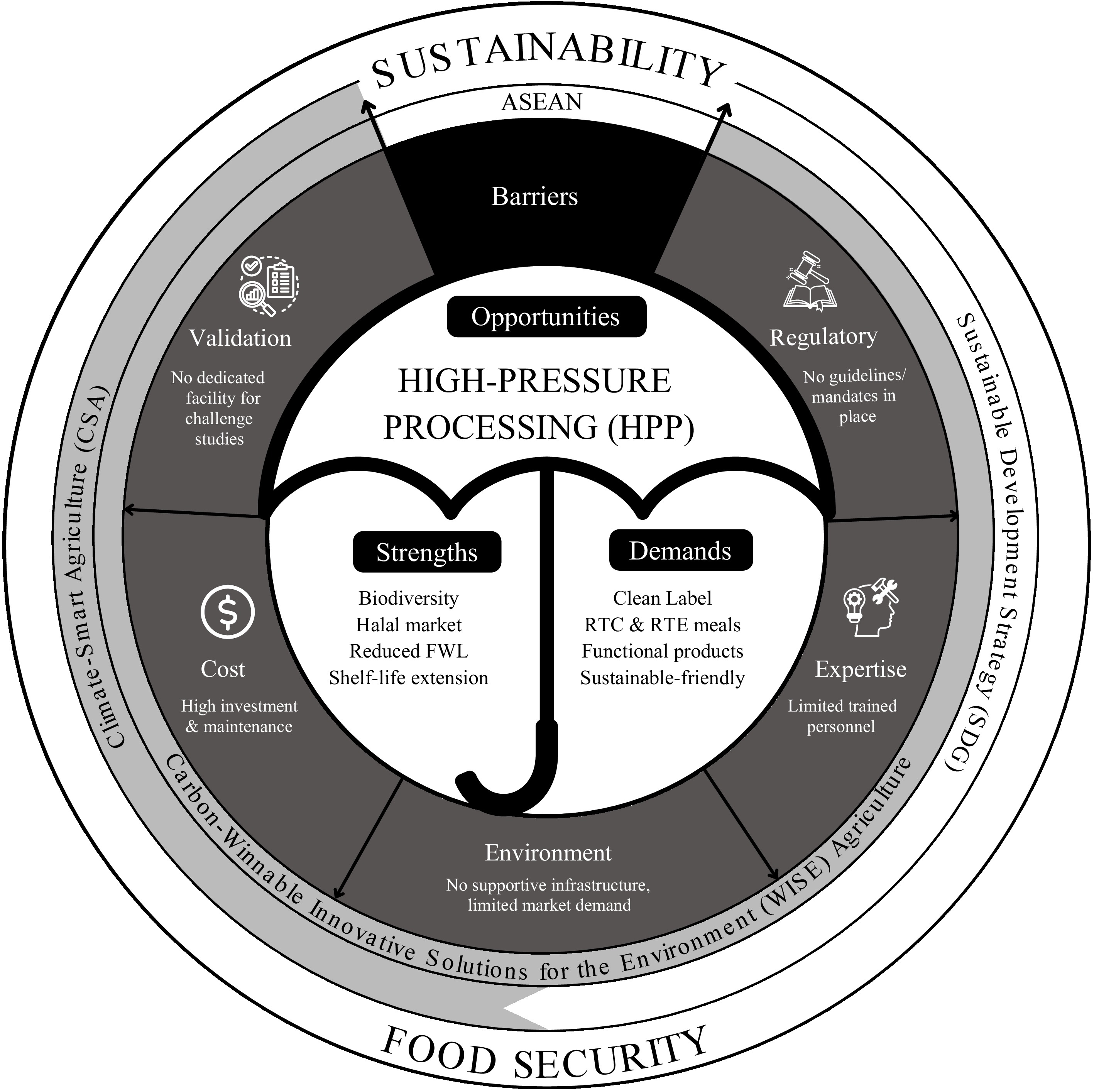
Figure 4.
HPP adoption opportunities and barriers towards food security and sustainability goals.
Opportunities for HPP in this region are primarily driven by two factors, namely strengths and demands. Strengths refer to the inherent advantages ASEAN possesses, including abundant agricultural and seafood resources, rich biodiversity, and cultural significance of commodities such as coconut, tropical fruits, and seafood. Demands relate to market needs, both domestically and internationally, for fresh-like, safe, clean-label, premium, and Halal-certified foods.
ASEAN countries are highly dependent on agriculture and food exports, yet continue to experience significant food loss due to postharvest spoilage. Coconut water represents one of the region's fastest-growing beverage categories, with Indonesia and the Philippines among the world's leading producers[43]. Coconut palms are cultivated across most ASEAN countries, except Laos, and all components of the plant are utilised commercially. Tender coconut water on the market typically undergoes high-temperature sterilisation, which alters flavour and reduces nutrients[42]. HPP allows preservation of the delicate flavour, aroma, and nutrients while ensuring microbial safety. Thailand leads in this regard, producing HPP-treated tender coconut water with a 120-d shelf life without 'off' odours, preservatives, or flavour loss[44,45].
Southeast Asia, characterised by its unique and diverse culinary landscape that drives gastro-tourism activities, has many untapped potentials for HPP technology. Among these opportunities, beverages such as fruit juices and traditional herbal shots are highly adaptable candidates for commercial HPP implementation. Chilli pastes, a staple ingredient in daily cuisine across the region, are often formulated with high levels of preservatives. Through HPP, these products can be reformulated as clean-label alternatives with vibrant red colour and enhanced spiciness[46]. Ready-to-eat (RTE) meals are another opportunity, aligning with fast-growing convenience and e-commerce markets. HPP ensures microbial safety while preserving fresh flavour, offering consumers convenient alternatives without time-consuming preparation. Additional opportunities include aquaculture applications such as shucking shellfish (e.g., oysters, clams) and producing value-added, ready-to-consume seafood products. Given the extensive maritime boundaries of most ASEAN member states, the region's abundant seafood resources represent a significant and valuable opportunity for leveraging HPP technology.
Despite no documented evidence of commercial HPP use in the Philippines, this country should leverage its young, highly urbanised, and expanding middle-class population with a strong preference for premium and clean-label products, which aligns with the capabilities of HPP. Ultimately, it is worth replicating the success of tolling service models practised in Singapore, Thailand, and Malaysia to prepare for co-operative HPP tolling centres in major agricultural hubs. These impactful models could serve hundreds of smaller, local processors efficiently, especially in Indonesia, with a population exceeding 280 million.
Halal certification represents another major opportunity for the region, with Malaysia, Thailand, and Indonesia already possessing well-established Halal certification systems. HPP provides a valuable platform for ASEAN countries to expand their Halal food production and satisfy the increasing demand for close-to-fresh, safe, clean-label, and premium Halal food products. Halal certification is a key competitive edge and crucial for economic development in the region. HPP, as a technology, allows these countries to produce and package Halal-certified products with an extended shelf life without compromising their Halal integrity. As a clean-label ally, HPP is often linked to avoiding the use of preservatives in products[46]. Based on the Sharia law in Islam, anything harmful to health is forbidden. Therefore, HPP is seen as a process friendly to the Halal industry. The integration of HPP into Halal food systems also contributes to the United Nations Sustainable Development Goals (SDGs), particularly SDG 12 (Responsible Consumption and Production), by promoting safe, sustainable, ethical, and value-added food manufacturing practices.
As mentioned earlier, the HPP process eliminates the need for chemical preservatives, reducing the risk of contamination with Haram (forbidden) materials. In a way, the HPP method relates to Halal compliance and consumer trust. By using extreme pressure instead of heat or chemicals, the HPP process eliminates the need for artificial or chemical preservatives. This is critical because chemical additives often introduce a significant, unavoidable risk of cross-contamination with ingredients derived from Haram sources. HPP, therefore, serves as a powerful, non-chemical sterilisation barrier that guarantees a purer product and provides strong assurance against the contamination of food with non-Halal materials. In addition, food items loaded into the HPP unit are already packaged, protecting the food from further contamination by Haram materials or microorganisms before distribution. This ensures the product remains halal and thoyyiban (safe, wholesome, nutritious), while enhancing its suitability for export to international markets.
In Singapore, HPP represents an ideal technology to enhance its competitive advantage in the high-value, premium food export market. The nation's reputation for quality and high standards is already a strong selling point. Given its role as a major trading hub, export readiness is key. HPP enables food producers to create premium products with a clean-label process. This aligns with the demands of markets such as the EU, Japan, China, and Korea, which are destinations where consumers seek healthy, minimally processed foods.
One of the most significant yet underappreciated opportunities that stakeholders across the ASEAN region should realise is the fact that this region lies right in the centre of a strong HPP 'ring'. The ASEAN bloc is uniquely surrounded by China, Japan, Korea, New Zealand and Australia, countries known to be the leaders in HPP technology. These nations collectively represent a stronghold of HPP expertise, manufacturing capability, and market demand, positioning ASEAN as a strategic bridge for technological collaboration and trade expansion within the Asia-Pacific region.
What this means for the ASEAN stakeholders is that the region has access to technology and expertise. Proximity to these HPP leaders facilitates easier and more cost-effective access to the latest equipment, spare parts, and specialised technical expertise, accelerating the adoption of the technology within ASEAN. Geographically, ASEAN could be an attractive and practical destination for foreign investment and joint ventures from companies in these surrounding countries looking to expand their production or services into new markets; providing opportunities for significant investment and partnership. By recognising and capitalising on this strategic HPP 'ring,' ASEAN countries can accelerate HPP adoption through strategic partnerships to produce higher-value food production, enhance food safety standards, and significantly boost their competitiveness in the global export market.
HPP is well established in many parts of the developed world. For instance, in Europe and Oceania, its regulation is integrated within general food safety requirements under frameworks such as the European Union's food law, and Food Standards Australia New Zealand. HPP-treated products are typically evaluated using the same microbiological safety criteria as pasteurised foods, particularly achieving at least a 5-log reduction of the targeted pathogen. Four critical aspects govern HPP compliance: the determination and optimisation of pressure–time parameters; adherence to Hazard Analysis and Critical Control Point (HACCP) plans; microbiological and sensorial validation trials; and conformity with relevant regulations[47].
However, fulfilling these regulatory and operational requirements remains challenging in the ASEAN context due to variations in industrial capacity, technical expertise, and regulatory infrastructure across regional countries. Key barriers include the high capital costs of HPP equipment, limited availability of validation facilities, lack of trained personnel, market uncertainty, and inconsistent regulatory frameworks. These disparities in readiness and motivation have contributed to uneven technology adoption across the region.
The disparity in the rate of technology adoption is likely a function of country-specific factors and motivational rationales. The adoption of HPP technology in Myanmar, Cambodia, and Laos remains limited compared to major markets like Singapore and Thailand. The primary barriers include high initial investment costs and the market's focus on traditional food processing. The capital expenditure of HPP technology is a real barrier to entry that prevents the very SMEs responsible for high FLW from adopting it. On the contrary, Brunei's limited adoption is attributed to its small market size and low food export activity, despite its focus on premium food and Halal assurance.
The lack of standardised guidelines for HPP equipment installation, process validation, and final product labelling creates considerable regulatory uncertainty. Therefore, sourcing HPP equipment from manufacturers with established technical expertise and extensive operational experience is essential. Brands with a good track record frequently enable reliable food safety, longer equipment lifespan, easier maintenance, ongoing after-sales support, and most importantly, safe HPP operations. It must be emphasised that the combination of frequent mechanical failures (due to equipment unreliability), and the high costs involved in both initial investment and ongoing maintenance results in intolerable operational friction. This situation is likely to force stakeholders to abandon HPP adoption. Additionally, labelling requirements for HPP-treated products differ across countries, adding further complexity to regulatory compliance.
In general, most ASEAN members have no specific regulations or guidance on the use of novel alternative food processing technologies, such as HPP[47]. These regulatory and technical gaps are being proactively closed through the formation of joint university-authority-industry technical committees, which are tasked with developing HPP guidelines and standards. In Malaysia, the National Centre for Food Safety, a centre under the Ministry of Health, plays a leading role in overseeing the HPP industry and has already successfully implemented training initiatives for its food safety auditors to ensure robust enforcement and monitoring, while eliminating the prospect for any regulatory oversight. China represents an exemplary case of rapid HPP adoption and regulatory advancement. The time to have HPP-related legislation approved by the Chinese government took only 8 years, as compared to the United States and Europe, which took about 15 years. This demonstrates both high awareness and strong institutional support for HPP adoption. Moreover, HPP development in China is supported by six government ministries, reflecting a coordinated, cross-sectoral commitment to advancing the technology[48].
Another major barrier to HPP adoption is a lack of validation centres, which could assist the stakeholders and authorities. Manufacturers are responsible for providing scientific proof (validation data) that the HPP parameters applied achieve the required lethality for their specific product. The model implemented by Cornell University in the United States as a validation centre is highly recommended to promote a supportive environment and appropriate regulatory guidance to the HPP industry. It is a commercial-scale HPP validation facility with Biohazard Level 2 (BSL-2), which allows the facility to conduct realistic pathogen challenge studies that are required to meet strict regulatory compliance standards. To foster a similar environment in ASEAN, national authorities should establish clear guidelines and technical frameworks to support food producers in process validation and shelf-life determination.
The presence of a supportive ecosystem in assisting a technology adoption rate is critical. In China, for instance, the support from ministries, as well as regulations and guidelines, is already in place. Consumer awareness of HPP is also high, and Chinese consumers readily purchase HPP-treated products. One striking observation was that the label for HPP products was written in Chinese characters, except for the HPP lettering, which was in the alphabet. Several brands of HPP products in China displayed the lettering HPP larger than other fonts on the product label, indicating that HPP is widely known by the local consumers, and the large font lettering could be part of a product branding strategy. Such a strategy may not work in ASEAN countries, as the HPP acronym is not yet a popular buzzword among consumers. On October 11, 2025, the China HPP Food Industry Technology Collaborative Innovation Platform was established in Beijing, China. Through this initiative, HPP industry players and universities will collaborate to push this technology forward, allowing for a healthy and competitive environment for the HPP technology in China[48]. This same strategy could be suitable for adoption by countries in ASEAN.
Overall, HPP adoption in ASEAN is shaped by the interplay of opportunities and barriers. While the region has abundant raw materials, strong export potential, and proximity to technology leaders, overcoming financial, regulatory, and technical challenges is crucial. These challenges may be mitigated through greater awareness and coordinated action across all levels of society, including policymakers, industries, researchers, and consumers. Strengthening regional understanding of HPP's advantages is important, as it represents an underexplored sustainable technology in ASEAN. By reducing spoilage and extending shelf life, HPP promotes carbon-WISE agricultural practices and CSA, lowering emissions associated with food production, transport, and disposal. In this way, HPP adoption contributes to multiple SDG goals, including SDG 2 (zero hunger), SDG 3 (good health and well-being), SDG 9 (industry, innovation and infrastructure), SDG 12 (responsible consumption and production), and SDG 13 (climate action), providing a consolidated framework linking food technology, environmental sustainability, and resilient food systems.
-
This review is based on publicly available information, including commercial reports, company websites, and published scientific studies. As not all companies publicly disclose their use of HPP, the reported figures may underestimate actual adoption levels, and the assessment should be considered indicative rather than comprehensive. In addition, the availability and quality of data vary across ASEAN countries, which reduces potential bias. Therefore, the trends described here are intended to provide a preliminary overview of HPP adoption patterns, rather than a definitive evaluation.
-
The findings presented in this work confirm that HPP technology is a strategic tool capable of delivering economic, safe, and environmental benefits across the diverse food landscape of ASEAN nations. HPP serves as a potent mechanism for FLW mitigation, consequently supporting the principles of WISE agriculture. Our analysis of the regional adoption curve demonstrates a wide disparity in implementation, with Thailand, Malaysia, and Singapore leading market integration, while the Philippines, Vietnam, and Indonesia show rapid acceleration. By effectively extending product shelf-life and embracing the clean label culture, HPP guarantees product integrity for halal, premium markets, and enhanced food safety for a rapidly urbanising population. Full commercialisation requires closing regulatory gaps, establishing sound guidelines, and creating a positive environment for technology acceptance and growth. This process requires the urgent development of a database to meet validation requirements for various HPP applications, ensuring safety and export compliance. Leveraging ASEAN's strategic geographical position within the global 'HPP ring' through active collaboration with neighbouring technology leaders such as China, Japan, Korea, New Zealand, and Australia will further accelerate the adoption of HPP, boost the demand for this sustainable technology, reduce food losses, and provide high-value products to the nation.
This work is funded by the Southeast Asian Regional Center for Graduate Study and Research in Agriculture (SEARCA) through the Regional Professorial Chair Award for Academic Year 2025–2026. The authors wish to express their sincere gratitude to SEARCA for supporting this research project. We are also deeply indebted to the experts and industry contacts who provided invaluable technical and market insights through personal communication regarding the adoption status of High-Pressure Processing (HPP) technology. Their valuable feedback on country-specific market dynamics was crucial in shaping the information presented in this work. We particularly thank these individuals for dedicating their time and expertise, which significantly strengthened the practical relevance of this work.
-
During the preparation of this work, the authors used ChatGPT to enhance the readability and language clarity of the manuscript. The authors did not use the tools to analyse and draw insight from data as part of the research process. After using this tool, the authors reviewed and edited the content as needed, and take full responsibility for the content of the published article.
-
The authors confirm contribution to the paper as follows: study conception and design, data collection: Noranizan M, Iman-Saliha J; analysis and interpretation of results: Iman-Saliha J, Noranizan M, Yazid SNE; draft manuscript preparation: Iman-Saliha J, Azman EM, Noranizan M, Yazid SNE, Purnamo EH. All authors reviewed the results and approved the final version of themanuscript.
-
The datasets generated during and/or analysed during the current study are available from the corresponding author on reasonable request.
-
The authors declare that they have no conflict of interest.
- Copyright: © 2026 by the author(s). Published by Maximum Academic Press on behalf of China Agricultural University, Zhejiang University and Shenyang Agricultural University. This article is an open access article distributed under Creative Commons Attribution License (CC BY 4.0), visit https://creativecommons.org/licenses/by/4.0/.
-
About this article
Cite this article
Iman-Saliha J, Azman EM, Noranizan M, Yazid SNE, Purnomo EH. 2026. High-pressure processing as a potential opportunity for reducing food loss and environmental impact in the ASEAN region. Food Innovation and Advances 5(2): 240−250 doi: 10.48130/fia-0026-0020 

High-pressure processing as a potential opportunity for reducing food loss and environmental impact in the ASEAN region
- Received: 05 December 2025
- Revised: 06 March 2026
- Accepted: 19 March 2026
- Published online: 15 May 2026
Abstract: Global crises like climate change and food insecurity demand sustainable food systems. A major contributor to these issues is food loss and waste (FLW), which generates greenhouse gases, worsens hunger, and causes massive economic loss. High-Pressure Processing (HPP) is a promising non-thermal technology that can address this problem. This review explores how HPP contributes towards reducing food waste and its environmental footprint, aligning with the principles of Carbon-Winnable Innovative Solutions for the Environment (WISE) agriculture. By using high pressure instead of heat, HPP extends product shelf-life, reduces the need for chemical additives, and maintains food quality. We evaluate its environmental benefits, including lower energy use compared to traditional thermal methods, and its role in creating a more circular, low-carbon food economy. The article specifically analyses the adoption of HPP in ASEAN (Association of Southeast Asian Nations) countries. While nations such as Singapore, Thailand, Malaysia, and Indonesia have begun using HPP, its wider adoption remains limited due to the high initial costs. We highlight the opportunities and challenges for expanding HPP in the region, considering local markets and regulatory frameworks. Collectively, this review highlights that HPP is a key strategy for improving food security by reducing waste sustainably, directly supporting the goals of Carbon-WISE agriculture in ASEAN.