











-
Sea cucumber, a marine echinoderm, is a significant functional food owing to its varied nutrient composition[1]. The body wall protein content reaches 63.6%, while fat and cholesterol levels are minimal[2]. Collagen constitutes approximately 70% of the total protein composition[3]. Studies indicate that sea cucumbers possess anti-fatigue, hypolipidemic, and neuroprotective attributes that could enhance memory[4]. Sea cucumbers, owing to their elevated protein and collagen levels, exhibit significant allergenic potential and are considered potential sources of food allergens. The allergenic potential of proteins is chiefly dictated by their epitopes, which are distinct molecular structures identifiable by the immune system. Various food processing techniques can modify the conformational stability and immune accessibility of these epitopes[5]. In recent years, there has been a steady annual increase in reported cases of sea cucumber allergy in the Asia-Pacific region[6]. Research has identified collagen as the primary allergenic protein, with its allergenic potential primarily determined by specific linear epitope configurations[7].
Average life expectancy has risen due to advancements in socioeconomic conditions and healthcare, thereby expediting population aging[8]. The progressive deterioration of physiological functions due to aging heightens susceptibility to both acute and chronic illnesses[9]. A principal factor in this functional decline is immunosenescence, characterized by a persistent state of low-grade chronic inflammation and a gradual decline in the immune system's ability to respond effectively to external threats[10,11]. As a result, older adults exhibit heightened sensitivity to food allergens or manifest atypical clinical symptoms of allergic reactions[12]. The D-galactose-induced aging model is a significant preclinical model for anti-aging and neuroprotective research[13]. It swiftly induces distinct aging-related pathological changes (oxidative stress, neuroinflammation, cognitive decline, etc.) within 6–8 weeks, circumventing the prolonged breeding cycle, substantial expenses, and considerable individual variability associated with natural aging models. This model more accurately simulates physiological aging by mimicking galactose metabolic disorder and the accumulation of advanced glycation end products, which are essential features of natural aging, while circumventing non-specific tissue damage caused by high-toxicity inducers[14], thereby enhancing the evaluation of the neuroprotective effects of low-toxicity, food-derived active compounds in this study. Food processing, particularly thermal treatment, influences protein structure and allergenic potential[15]. The physicochemical conditions generated during processing, such as elevated temperature and pressure, can jeopardize protein structural integrity, resulting in molecular modifications including denaturation, aggregation, and cross-linking[16]. These modifications directly modify, eliminate, or obscure essential IgE-binding epitopes, potentially diminishing protein allergenicity[17]. Notwithstanding the extensive accessibility of ready-to-eat sea cucumber products, post-processing procedures like rehydration and boiling continue to be common in both household and industrial contexts[18]. Such treatments can alter the three-dimensional conformation of sea cucumber allergens, thereby exposing, restructuring, or eliminating epitopes and influencing the allergenic properties of the processed product[19].
While numerous studies have demonstrated the allergenic properties of sea cucumbers, the impact of thermal processing on their allergenicity, particularly in relation to the aging of the immune system, remains unexamined. The current allergenicity risk assessment framework primarily employs healthy young animal models, thus hindering the precise representation of the immune function status in the elderly population. Sea cucumbers may safeguard the nervous system. Diverse processing techniques significantly influence the retention rate and bioavailability of these active compounds, thereby affecting their neuroprotective efficacy in the elderly population. This study employed a D-galactose-induced aging mouse model to investigate the impact of various processing methods on sea cucumber allergenicity and cognitive functions related to learning and memory. The functional properties and allergenic traits of desalinated sea cucumber (DSC), boiled sea cucumber (BSC), and rehydrated sea cucumber post-boiling (RSC) were assessed by investigating their effects on memory, learning performance, and allergic reactions in an aging animal model. Behavioral experiments, inflammatory factor assessment, histopathological examination, and allergen epitope prediction were employed to investigate the structural alterations of sea cucumber protein epitopes under various processing methods and elucidate their mechanism of action. Our research will establish the foundation for safer, low-allergen sea cucumber products for the elderly.
-
Sea cucumbers were purchased from the Dalian Changhai County Sea Cucumber Shop, and D-galactose was purchased from Maclin. BCA detection kits were available from Solarbio (Beijing, China). The TMB ELISA substrate (high sensitive) (ab171523), Goat anti-mouse IgG1 (HRP) pre-adsorbed (ab98693), and the monoclonal anti-mouse IgE epsilon chain in rats (23G3) (Biotin) (ab99585) were acquired from Abcam (Cambridge, UK). The malondialdehyde (MDA) determination kit and the Superoxide Dismutase (SOD) determination kit were purchased from Nanjing Jiancheng Institute of Bioengineering (Nanjing, China). The mouse monocyte chemotactic protein 1 (MMCP-1) ELISA kit and the general histamine (HIS) ELISA kit were provided by Jianglai Biological (Shanghai, China). The mouse IL-4 ELISA kit, IFN-γ ELISA kit, and IL-10 ELISA kit were purchased from Mlbio (Shanghai, China). All remaining chemicals were of analytical grade.
Animals
-
Fifty 12-week-old female BALB/c specific pathogen-free (SPF) mice were obtained from Liaoning Changsheng Biotechnology Co., Ltd. (Liaoning, China). All animal experiments were conducted in accordance with the principles outlined in the Declaration of Helsinki and received formal approval from the Animal Ethics Committee at Dalian Polytechnic University (Approval number: DLPU2024089). The mice were maintained on a 12-h light/dark schedule with unrestricted access to food and water. All experimental procedures were designed to reduce the number of animals used and to minimize any potential distress.
Preparation of sea cucumber
-
In this experiment, the sea cucumbers were subjected to three treatment modalities. Immersing dried sea cucumbers in water at 4 °C for 48 h yielded desalted products devoid of hard cores. Subsequent to desalting, the sea cucumbers were immersed in cold water within an oil-free vessel. Following a vigorous boil, the temperature was decreased to 80 °C, and the sea cucumbers were simmered for 30 min to ensure they were cooked. The processed sea cucumbers exhibited a soft and elastic texture. Following cooling, sea cucumbers were extracted and combined with 10 times their volume of ice water. Sea cucumbers were rehydrated by being submerged in water, with ice replaced every 12 h, for a duration of 24 h[20].
Animal experimentation procedure
-
Following a 7-day period of adaptive feeding, the mice were randomly assigned to five different groups (n = 10): the blank control group (Con), aging model group (D-gal), desalted sea cucumber group (DSC), boiled sea cucumber group (BSC), and rehydrated sea cucumber group (RSC). The control group was subcutaneously injected with 0.9% sodium chloride solution in the neck, while the remaining groups received daily injections of D-galactose (150 mg·kg−1·d−1) at the same location for 8 consecutive weeks to induce an aging model. During the experiment, the general behavioral manifestations of the animals were observed and recorded daily, including food intake, spontaneous activity ability, and hair condition. The experimental process was divided into two stages: the aging model establishment stage (Fig. 1a) and the sensitization stage (Fig. 2a). In the aging model establishment stage, the body weight of the mice was measured on days 0, 15, and 30. Behavioral assessments, including water maze and passive avoidance tests, were performed on days 0 and 30. Serum levels of SOD and MDA were determined on day 30. Body composition was also analyzed on day 30. In the sensitization phase, body weight was monitored every 7 d. Intraperitoneal injections were administered on days 30, 37, 44, 51, and 58. The protocol for the animal sensitization experiment was developed based on the methods of Lin et al. and Laly et al., with only minor modifications. The mice in the control group and the D-galactose group were injected with 200 microliters of normal saline each time, while the other three groups were injected with 250 micrograms of the same concentration of the protein test sample, respectively[21,22]. Body composition was analyzed on day 30 and day 58. From days 58 to 63, a series of behavioral tests, including water maze, passive avoidance, and radial arm maze tests, were conducted. On day 73, the mice were administered a high dose (1.25 mg) of the corresponding protein. Allergic responses were monitored and evaluated using a standardized scoring system, while ear temperature was recorded. Plasma samples were gathered for the assessment of inflammatory mediators and cytokine concentrations. Albumin concentrations within the peritoneal cavity were evaluated as an indicator of vascular permeability. Following euthanasia, tissue samples of the spleen, lungs, and jejunum were harvested for histopathological examination.
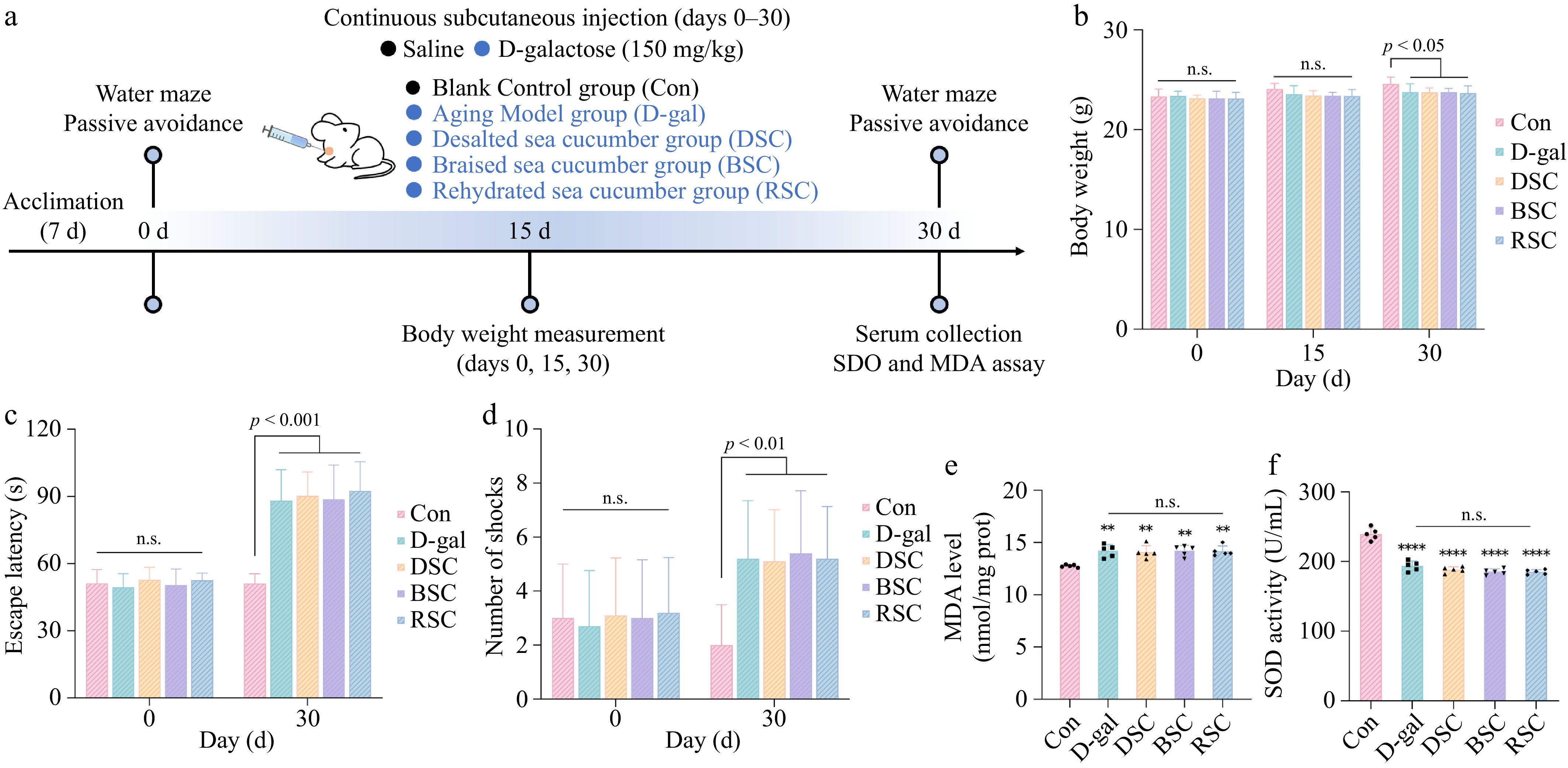
Figure 1.
Changes in mouse body weight, oxidative indicators in serum, and behavioral experiments over 0−30 d. (a) Schematic diagram of the experimental design for BALB/c mice from 0 to 30 d. (b) Changes in body weight over 0−30 d. (c) Escape latency in the water maze on day 0 and day 30. (d) Number of electric shocks in the passive avoidance test on day 0 and day 30. (e) MDA levels (n = 5). (f) SOD levels (n = 5). Different symbols '*' indicate significant differences compared to the Con group (p < 0.05).
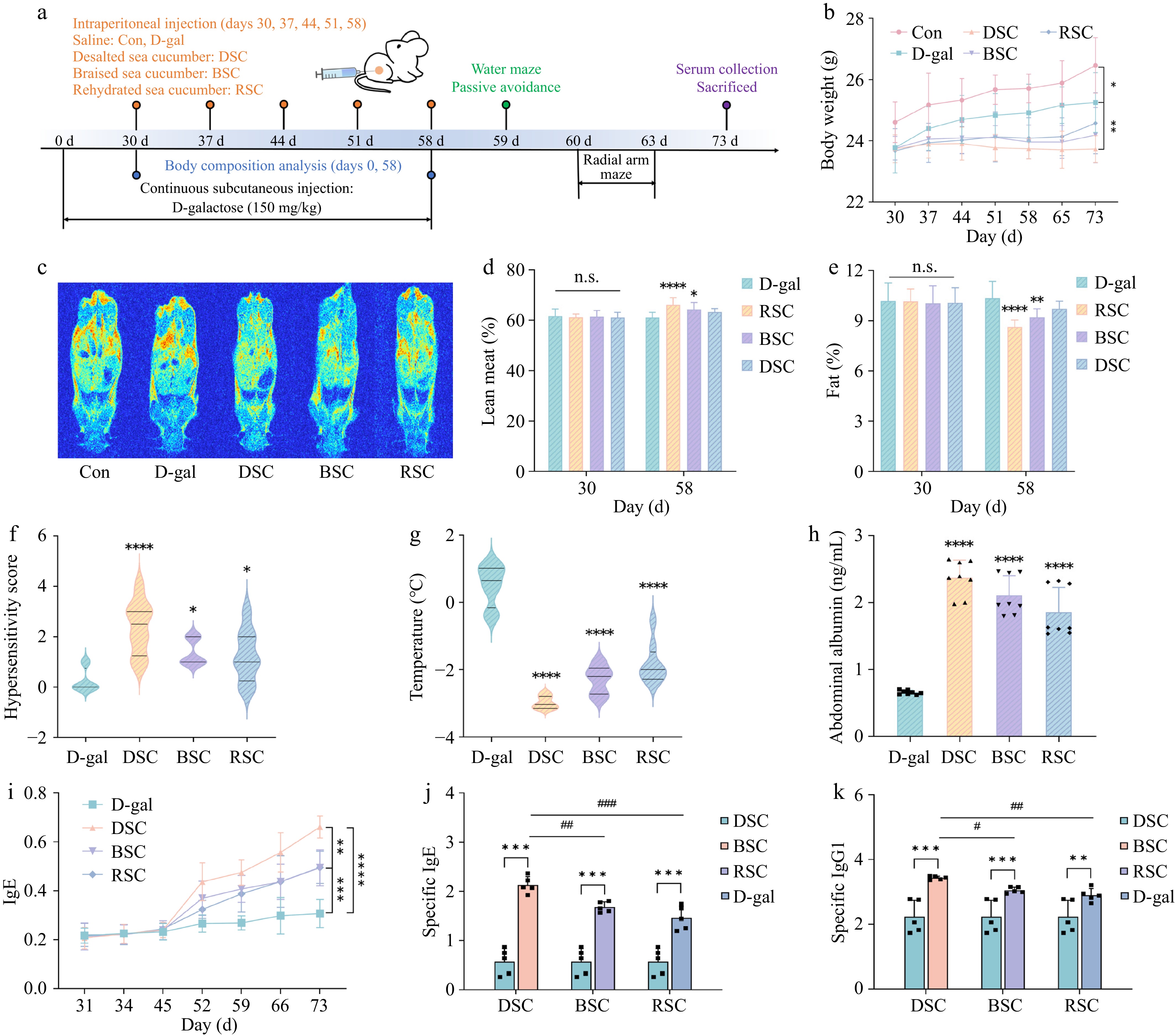
Figure 2.
Analysis of body composition, allergic reactions, and serological analysis and detection in mice. (a) Schematic diagram of the experimental design for BALB/c mice from 0 to 73 d. (b) Changes in mouse body weight (n = 10) from 30 to 73 d. (c) MRI images. (d) Relative content of lean meat in mice (n = 10). Different symbols '*' indicate significant differences (p < 0.05) between 30 and 58 d for the same group. (e) Relative content of fat in mice (n = 10). Different symbols '*' indicate significant differences (p < 0.05) between 30 and 58 d for the same group. (f) Allergy symptom scores after high-dose stimulation (n = 10). (g) Ear temperature after high-dose stimulation (n = 10). (h) Abdominal albumin (n = 10). (i) Trend of specific IgE. (j) Specific IgE. (k) Specific IgG1. Different symbols '*' indicate significant differences compared to the D-gal group (p < 0.05). Different symbols '#' indicate significant differences compared to the DSC group (p < 0.05).
In vivo imaging and assessment of body composition in mice
-
Body composition was assessed via magnetic resonance imaging (MRI) (Shanghai Electronic Technology Co., Ltd., Shanghai, China), following the procedures described by Zhao et al.[23]. The mice were positioned in a measurement tube equipped with a 60 mm coil to evaluate the distribution and quantities of lean mass, fat, and water throughout the body.
Water maze test
-
Before the experiment, the water maze apparatus was filled with water maintained at approximately 22 °C. The mice were initially positioned at the exit to acclimate to the environment. They were subsequently returned to the original position and navigated through the maze to acclimate themselves to its concealed areas. The animals were instructed to swim toward the exit, and this was reiterated until 80% successfully accomplished the task within the allotted time. In the formal experiment, mice were positioned at the starting point, and their swimming duration in the water maze was documented. The duration each mouse required to arrive at the target platform is referred to as escape latency.
Passive avoidance test
-
The methodology was improved by incorporating insights from previous research[24]. The passive avoidance test consists of an illuminated chamber and a dim chamber linked by a narrow corridor. The illuminated box is made of translucent material, producing a brightly lit space. The dark box is made of opaque material and includes a 0.5 mA electric shock grid at the bottom for stimulation purposes. The mouse is positioned in the illuminated enclosure, and the timer commences for 1 min. The number of electric shocks delivered to the mouse during this minute is recorded, and the rodent's cognitive and memory functions are evaluated.
Radial arm maze
-
The radial arm maze comprises a central octagonal region with eight uniform, opaque arms extending from each side[25,26]. The experiment comprises three phases: adaptation, training, and testing. Mice are allowed to acclimate to the maze prior to the experiment. At this moment, food is distributed into each arm, and the mice are allowed to feed freely for 5 min. Three to four mice are processed concurrently. To mitigate environmental alteration during training, sustenance is positioned at the distal end of one of the maze's four arms (1, 2, 4, 7), designated as food arms (blue boxes represent these, while the four green boxes signify non-food arms). The mice are placed in the central area of the maze and permitted to navigate independently. Duration: Five minutes, or until the completion of food arm foraging for one training session. Training continues for 3 d. To prevent test interference, the entire experiment was conducted in silence. The Small Animal Behavior Recording and Analysis System Smart 3.0 documented working memory errors (re-entering an arm previously visited for food), reference memory errors (entering an arm devoid of food), arm entries, and completion time (the duration until all food was consumed).
Measurement of SOD, MDA, HIS, MMCP-1, and inflammatory factors
-
The assay methods for mouse biochemical indices were adapted from prior experiments with certain modifications[27]. Mouse blood samples were centrifuged at 4,000 revolutions per min under refrigerated conditions (4 °C). The resulting supernatant was carefully collected and utilized for the measurement of SOD, MDA, HIS, MMCP-1, and inflammatory factor levels. All assays were performed following the manufacturer's protocol as specified in the respective kit instructions.
Assays to measure the specific binding capacity of antibodies
-
The ability of the samples to bind specific IgE and IgG1 was assessed using the method described by Ding et al., with minor modifications[28]. The binding affinities to specific IgE and IgG1 were assessed by incubating with ab99585 (1:500) and ab7403 (1:1,000).
Evaluation of degranulation of splenic mast cells
-
Mast cell degranulation in the spleen of mice was evaluated following the protocol established by Liu et al. Microscopic examination of toluidine blue-stained paraffin sections of splenic tissue was conducted to identify mast cells across various fields of view from the same specimen. The proportion of degranulated mast cells in each sample was determined by dividing their quantity by the total mast cell count[29].
Histopathological changes of HE staining and toluidine blue staining
-
The experimental procedure was refined according to the approach described by Liu et al.[29]. Tissue sections of the spleen, lungs, and jejunum, embedded in paraffin, were subjected to hematoxylin and eosin (HE) staining to assess histological and pathological alterations. In addition, spleen sections were stained with toluidine blue for further analysis. All microscopic evaluations were conducted using a 100x inverted microscope.
Prediction of antigenic linear epitopes
-
The amino acid sequence of the main allergenic sea cucumber collagen was retrieved from the UniProt Knowledgebase (
www.uniprot.org/uniprotkb ) under accession number KAJ8032882 (collagen alpha-1[XX] chain). Antigenic linear epitopes were predicted using four bioinformatics online tools: SVMTriP (http://sysbio.unl.edu/services/SVMTriP/index.php ), IEDB B-cell epitope prediction (http://imed.med.ucm.es/Tools/antigenic.pl ), ABCpred (https://webs.iiitd.edu.in/raghava/abcpred/ABC_submission.html ), and SOPMA (https://npsa-prabi.ibcp.fr/cgi-bin/npsa_automat.pl?page=npsa_sopma.html ). Consecutive sequences of no less than five amino acids predicted by three or more tools were considered potential linear epitopes. In addition, the tertiary structure of the sea cucumber allergen was constructed using the SWISS-MODEL online server (https://swissmodel.expasy.org ), and changes in linear epitopes were visualized using PyMOL software.Statistical analysis and basis for sample size
-
Data were processed with IBM SPSS Statistics 22.0 and graphics generated using GraphPad Prism 9.5. Statistical analyses were conducted using one-way ANOVA and Duncan's post-hoc multiple comparison tests. Data are presented as mean values ± standard deviation, with differences considered statistically significant at a significance level of p < 0.05. The sample size was established via a preceding power analysis utilizing GPower software. Based on an effect size from previous studies (Cohen's d = 1.2), behavioral experiments necessitated eight animals per group to attain 80% statistical power at a significance level of 0.05. To avert further losses, 10 animals were allocated to each group[30]. For subsequent serum indicators, a sample size of five animals per group is adequate to identify significant differences, as effect sizes are typically larger and test power exceeds 0.9[31].
-
The appearance, physical condition, and behavior of the mice were meticulously observed throughout the experiment. The control mice exhibited normal growth, possessed thick, lustrous fur, and displayed alertness. Conversely, 15 d post D-galactose administration, the mice exhibited lethargy, curled posture, and dry, yellowish, lackluster fur[32]. Figure 1b illustrates that 1 month post-injection, food consumption diminished, weight gain decelerated, and spinal protrusion manifested. Figure 1c and d from the water maze and passive avoidance experiments demonstrate that the five mouse groups exhibited comparable learning and memory performance prior to D-gal administration. Following 30 d of uninterrupted treatment, mice in the D-gal group exhibited prolonged escape latency (p < 0.001) and endured a greater number of electric shocks (p < 0.01) compared to the control group. MDA and SOD levels serve as biochemical markers for the efficacy of the D-gal-induced aging model. Figure 1e and f demonstrate that following 30 d of D-gal administration, mice exhibited an elevation in MDA content (1.44 ± 6.00, 1.32 ± 6.28, 1.44 ± 5.10, and 1.42 ± 4.90) nmol/mg, and a marked reduction in SOD activity (45.93 ± 7.16, 51.43 ± 4.27, 54.31 ± 4.27, and 54.51 ± 3.45) U/ml in comparison to the Con group (p < 0.05)[32]. This model continues to exhibit instability. Continuous subcutaneous administration of D-gal is necessary to sustain the induced aging state[33].
Impact of different processing techniques of sea cucumber on allergic reactions in BALB/c mice
-
Utilizing a sensitized mouse model, the allergic reactions to desalted sea cucumbers and those subjected to various processing methods were assessed by observing alterations in body weight, clinical manifestations, vascular permeability, and serum antibody levels after a high-dose challenge. Figure 2b demonstrates that body weight diminished in all treated groups (DSC, BSC, RSC) relative to the D-gal group, with a statistically significant decrease noted in the DSC group (p < 0.01). The MRI images depict areas of varying proton concentration, with darker shades indicating higher density (red) and lighter shades indicating lower density (blue). Figure 2c illustrates that following five intraperitoneal administrations, the DSC group exhibited a markedly distinct body composition compared to the Con group, whereas the D-gal group did not. Figure 2d and e indicate that the D-gal, DSC, BSC, and RSC groups exhibited comparable lean and fat mass on day 30. On day 58, the DSC and BSC groups exhibited a marked increase in lean mass and a reduction in fat mass relative to the D-gal group (p < 0.05). The DSC group exhibited a propensity for increased lean mass and decreased fat mass; however, these differences were not statistically significant (p > 0.05). We performed a thorough evaluation of allergic symptom severity, ear temperature, and vascular permeability in aged mice to elucidate the impact of sea cucumber processing on allergic responses. Figure 2f indicates that DSC mice exhibited more pronounced allergic reactions compared to D-gal mice, primarily characterized by dyspnea, agitation, and pruritus. In contrast, the BSC and RSC cohorts exhibited less severe symptoms, primarily characterized by periorbital and nasal edema, along with increased respiratory rates. Figure 2g illustrates negligible ear temperature fluctuations in the D-gal group, whereas the DSC and RSC groups exhibited marked hypothermic responses, with the DSC group demonstrating the most pronounced decrease (p < 0.0001). Figure 2h indicates that serum albumin concentrations were markedly elevated in the DSC, BSC, and RSC groups relative to the D-gal group (p < 0.0001), with the RSC group exhibiting the smallest increment. Figure 2i depicts the trend of IgE levels in mice following five intragastric administrations. No significant change was observed in the D-gal group, while the other groups exhibited a gradual and then more marked increase. The DSC group exhibited the most significant alteration in IgE levels (p < 0.0001). Figure 2j and k illustrate an elevated binding capacity of specific IgE and IgG1 in DSC, BSC, and RSC relative to the D-gal groups (p < 0.001). The binding capacity of specific IgE and IgG1 was markedly diminished in the BSC and RSC groups relative to the DSC group (p < 0.001). No substantial difference was observed between BSC and RSC (p > 0.05). The findings indicate that heat-processed sea cucumber diminishes allergen-induced allergic responses, whereas desalinated sea cucumber exacerbates them. The RSC group demonstrated the most substantial decrease in allergic reactions among the groups analyzed.
Influence of sea cucumber processing methods on learning and memory abilities in senescent mice
-
We conducted behavioral and biochemical experiments to assess the impact of sea cucumber processing on learning and cognition in aging mice. Figure 3a displays exemplary locomotor trajectories from the eight-arm maze assessment. Figure 3b and c demonstrate that D-gal displayed markedly elevated instances of both reference memory errors and working memory errors relative to the control group (p < 0.0001), thereby validating the successful creation of the aging model. DSC did not enhance either error type relative to D-gal (p > 0.05), whereas BSC and RSC exhibited significant reductions, with RSC demonstrating the most pronounced effect. In comparison to the control group, the escape latency in the D-gal group was markedly extended, whereas it decreased from (101.49 ± 11.36 s) to (82.99 ± 8.74 s) in the RSC group (Fig. 3d). The number of foot shocks received by the RSC group diminished from (7.80 ± 2.15) to (5.10 ± 1.91) (Fig. 3e) (p < 0.0001), signifying compromised spatial learning and memory capabilities. The parameters exhibited substantial enhancement with BSC and RSC treatments, with RSC demonstrating the most pronounced therapeutic advantage. Figure 3f and g indicate that the D-gal group exhibited elevated MDA levels and diminished SOD activity compared to the Con group. The DSC group exhibited no notable differences compared to the D-gal group, whereas the BSC and RSC groups demonstrated significantly reduced MDA levels and enhanced SOD activity, with the RSC group displaying the most substantial improvement. The results indicate that processing sea cucumbers enhances learning and memory in aged mice, with RSC treatment exhibiting the most significant impact.
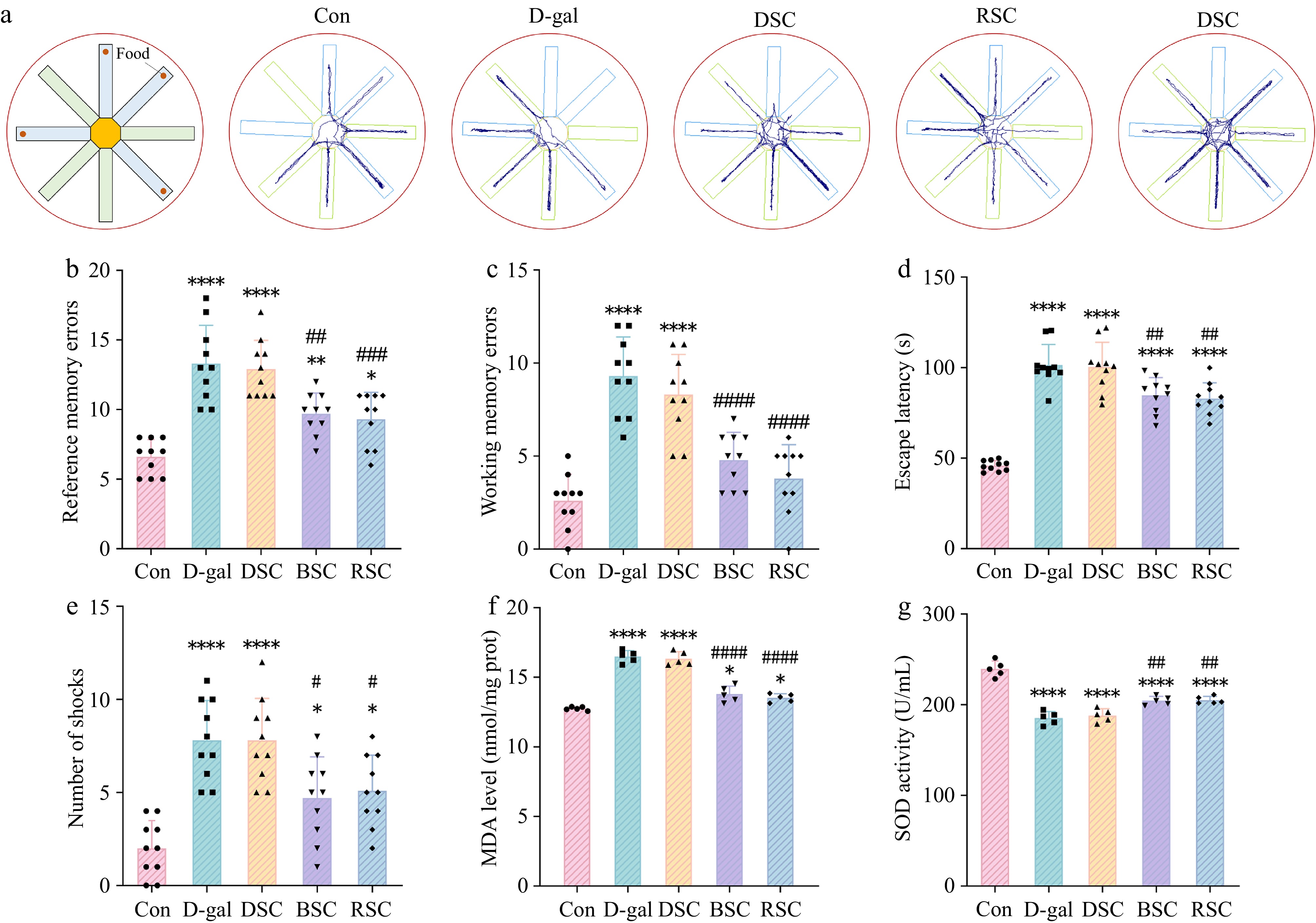
Figure 3.
Behavioral experiments on aged mice (n = 10). (a) The movement trajectory of the mice in the eight-arm maze. (b) The number of reference memory errors in the eight-arm maze test. (c) The number of working memory errors in the eight-arm maze test. (d) The escape latency of the mice in the water maze test. (e) The number of electric shocks in the passive avoidance test. (f) MDA levels (n = 5). (g) SOD levels (n = 5). Different symbols '*' indicate significant differences compared to the Con group (p < 0.05). Different symbols '#' indicate significant differences compared to the D-gal group (p < 0.05).
The process of mast cell degranulation and the subsequent secretion of inflammatory mediators following stimulation
-
To evaluate the sensitization effects of dried sea cucumber resulting from various processing methods, we measured mast cell degranulation in murine spleens and assessed plasma concentrations of inflammatory mediators, including histamine, MMCP-1, interleukin-4, interferon-gamma, and interleukin-10. The findings are depicted in Fig. 4. Mast cells, as effector cells, undergo degranulation upon exposure to antigens in sensitized individuals, releasing cytokines and inflammatory mediators into the bloodstream, thereby eliciting allergic reactions[34]. Figure 4a and b indicate that the D-gal group exhibited a reduced number of splenic mast cells and diminished degranulation. The DSC group exhibited markedly elevated degranulation rates compared to the D-gal group (p < 0.05). Compared to the DSC group, both the BSC and RSC groups demonstrated a reduced quantity of mast cells and significantly diminished degranulation rates (p < 0.05). These results demonstrate that thermal processing markedly diminishes the allergenicity of sea cucumber in the aging murine model. A primary indicator of allergy severity is the histamine production by mast cells or basophils[35]. Figure 4c indicates that the DSC group exhibited significantly elevated HIS levels compared to the D-gal group (p < 0.001), whereas the BSC and RSC groups demonstrated reduced HIS levels. In sensitized mice, MMCP-1 assesses intestinal barrier integrity, mucosal mast cell proliferation, and mast cell activation[36]. Figure 4d illustrates that the distribution of MMCP-1 concentration among the groups corresponded with that of HIS. The BSC and RSC groups exhibited markedly reduced MMCP-1 levels compared to the DSC group (p < 0.05), suggesting that thermal treatment diminishes plasma MMCP-1 levels. Allergic reactions can disrupt the Th1-Th2 equilibrium. Interleukin-4, synthesized by T helper 2 cells, facilitates inflammation. Figure 4e demonstrates that, in comparison to the D-gal group, IL-4 levels in the DSC, BSC, and RSC groups were significantly increased (p < 0.0001), with the DSC group exhibiting the highest levels and the RSC group the lowest. IFN-γ is a quintessential Th1-type pro-inflammatory cytokine, while IL-10 serves as a primary anti-inflammatory cytokine predominantly synthesized by regulatory T cells (Tregs), with negligible contributions from Th2 cells and macrophages. Decreased IFN-γ levels in the RSC group signify a diminished Th1-mediated pro-inflammatory response, whereas elevated IL-10 levels reflect augmented Treg immunosuppression; the concurrent alteration of these two cytokines modulates the immune microenvironment, mitigates chronic low-grade inflammation associated with aging, and provides a neuroprotective effect. Figure 4f and g demonstrate that IFN-γ and IL-10 concentrations were markedly reduced in all three experimental groups, displaying a trend opposite to that of IL-4. Among the three experimental groups, RSC demonstrated the highest levels of IFN-γ and IL-10 in plasma. These findings demonstrate that thermal processing suppresses cytokine release and modulates Th1-Th2 balance, thereby diminishing allergic responses induced by sea cucumbers.
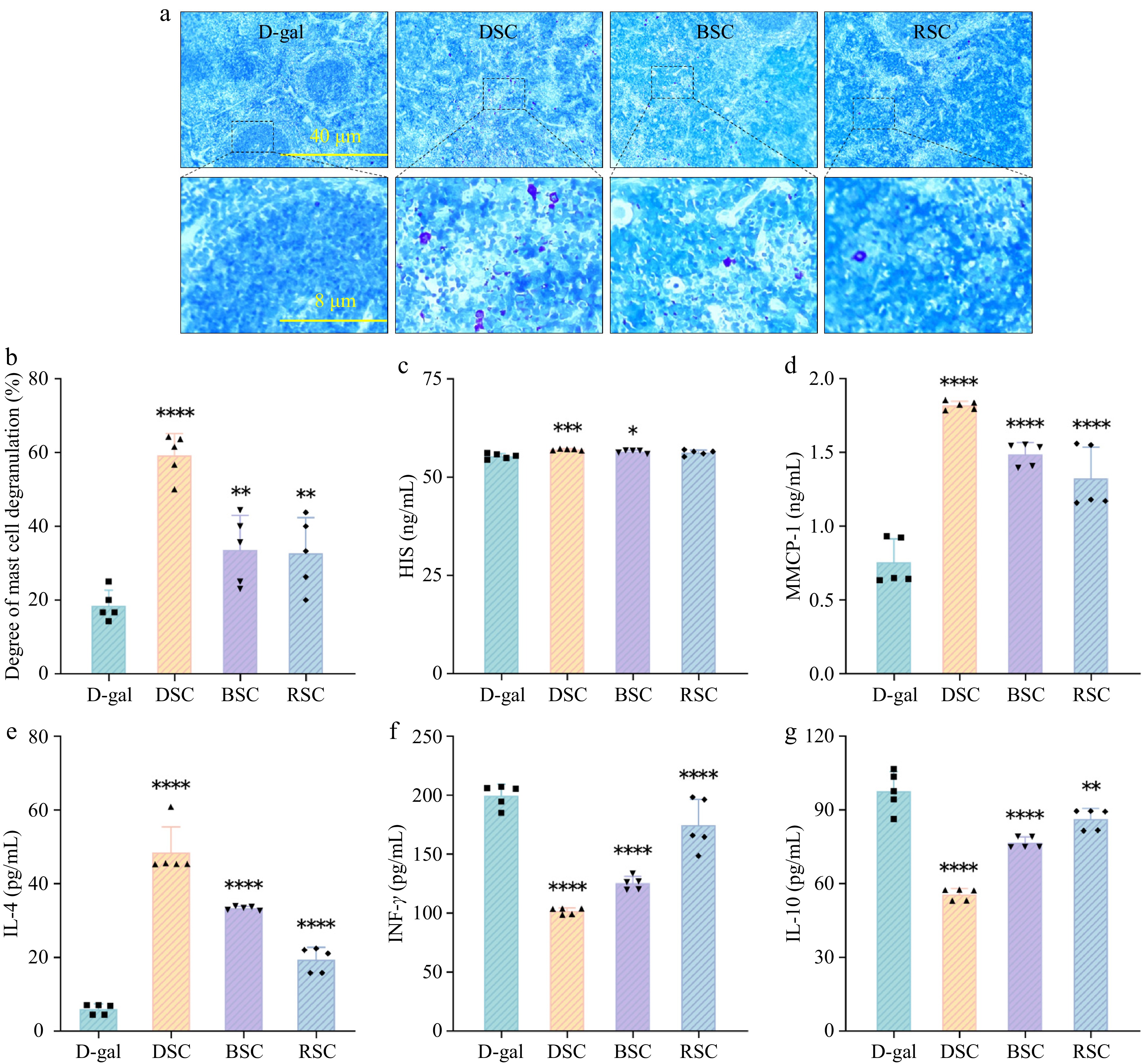
Figure 4.
Basophils degranulate and release inflammatory mediators. (a) Toluidine blue staining section of splenic basophils. (b) Degree of basophil degranulation in mouse spleen (n = 5). (c) Histamine (n = 5). (d) MMCP-1 (n = 5). (e) IL-4 (n = 5). (f) IFN-γ (n = 5). (g) IL-10 (n = 5). Different symbols '*' indicate significant differences compared to the D-gal group (p < 0.05).
Histopathological examination of sensitized mice
-
Histopathological evaluations were performed to determine the impact of various processing methods of sea cucumbers on pathological alterations in sensitized mice. Figure 5 illustrates that the spleen, lung, and jejunum tissues of the D-gal group exhibited normal histological characteristics. Conversely, the DSC group exhibited the most pronounced tissue damage, characterized by a significant elevation in splenic megakaryocytes. The pulmonary blood vessels displayed congestion, along with thickened alveolar septa of differing sizes. Villous atrophy and shedding of villus tips transpired in the jejunum. The BSC and RSC cohorts exhibited notable histopathological enhancements. The spleen exhibited a reduced number of megakaryocytes, the alveolar septum was diminished in thickness, jejunal damage was lessened, and inflammatory responses were attenuated. This indicates that thermal processing of dried sea cucumbers diminishes mouse sensitization and histopathological alterations.
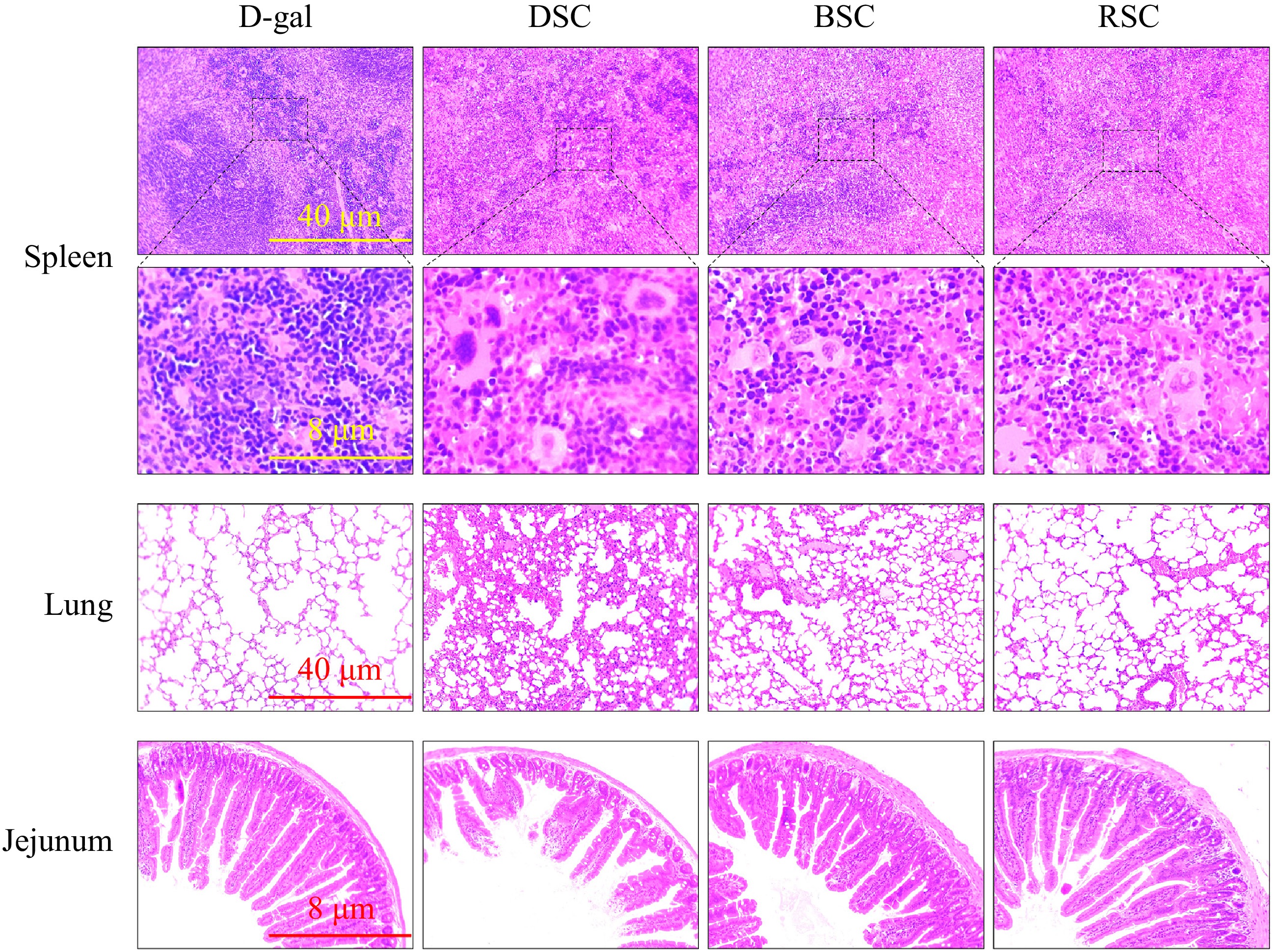
Figure 5.
Histopathological study of the spleen, lungs, and jejunum of sensitized mice. HE-stained sections of the spleen, lungs, and jejunum.
The prediction results of linear epitopes of sea cucumber allergic proteins
-
Allergen sensitization is associated with the structure of linear epitopes. Figure 6a and b depict the amalgamation of four bioinformatics tools—SVMTriP, Immunomedicine group, SOPMA, and the ABCpred online server—to predict the potential linear epitopes of collagen in sea cucumbers. The overlapping sequences, consisting of 5 to 25 amino acids and predicted by a minimum of three online tools, are regarded as potential linear epitopes for both entities. Figure 6c and Table 1 illustrate that eight epitopes were predicted from sea cucumber collagen (KAJ8032882). Amino acids on protein surfaces and irregular curls bind to antibodies to create epitopes. Consequently, we elucidated the tertiary structure of allergenic proteins in sea cucumbers and delineated linear epitope alterations in dried sea cucumbers subjected to various processing methods. The findings are illustrated in Fig. 6d. The study indicated that, among the eight linear epitopes of KAJ8032882 after desalination treatment, WMIMHCDA was missing, and three were completely cut off (DQPDSSNVVKVIQ, SSLFPEGIP, and LAVRLIGGQKVLQFIYIDRS). HDISA, GNEPVPFEL, and PMRDECSELP were severed, whereas DPSGVP remained intact.
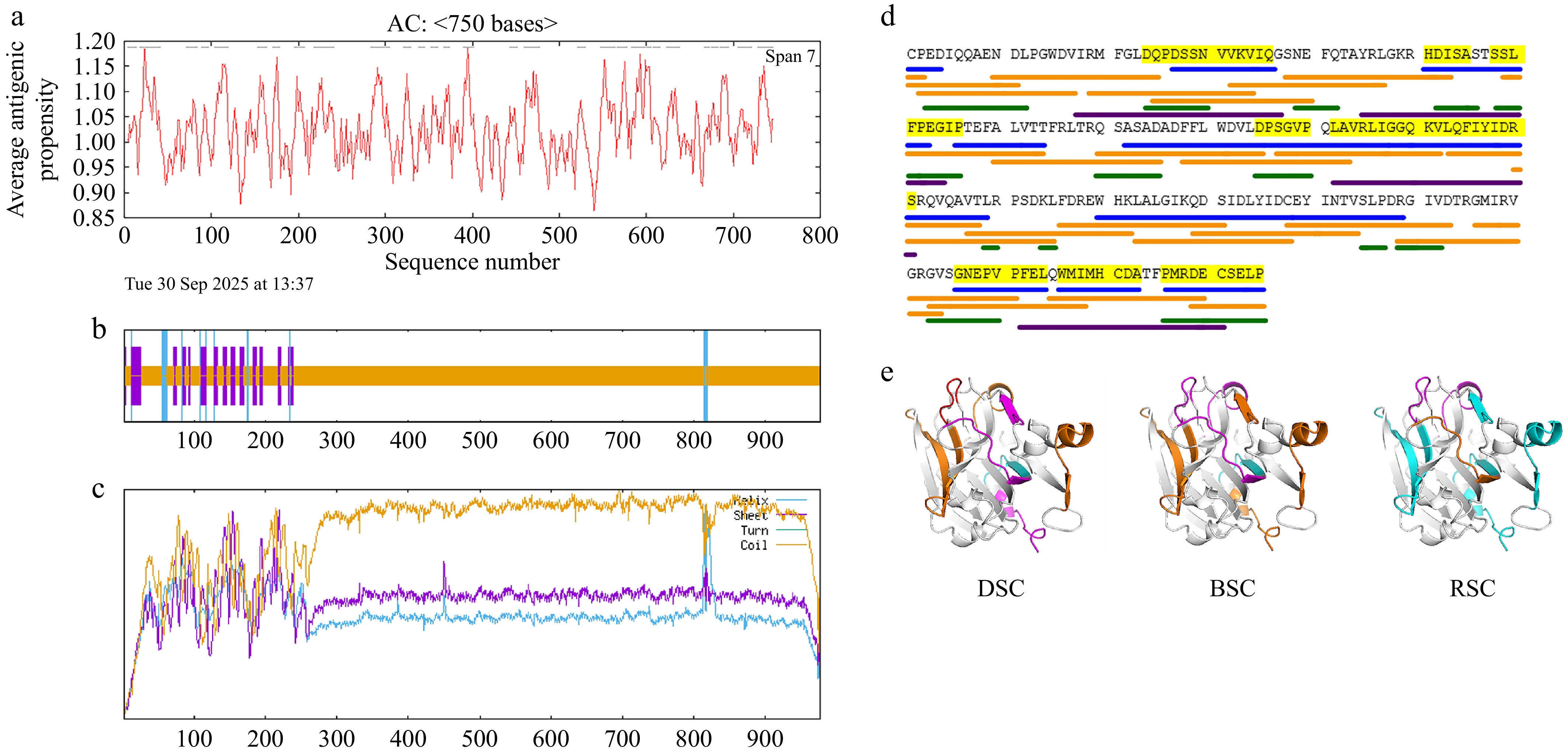
Figure 6.
Prediction results of antigen linear epitopes and their visual localization. (a) Immunomedicine group. (b) SOPMA. (c) KAJ8032882. Yellow represents linear epitopes. (d) KAJ8032882 in DSC, BSC, and RSC.
Table 1. Prediction of linear epitopes of the main allergens of sea cucumbers.
KAJ8032882 SVMTriP 18–37, 45–64, 102–121, 192–211 Immunomedicine group 1–4, 27–36, 51–63, 66–74, 82–129, 140–169, 186–194, 196–203, 206–215 SOPMA 3–12, 24–30, 39–42, 52–56, 58–66, 80–85, 95–100, 129–130, 134–135, 165–167, 169–172, 183–190, 206–215 ABCpred 1–2, 1–11, 2–17, 10–25, 19–24, 25–40, 32–47, 38–53, 59–74, 60–75, 80–95, 88–103, 97–112, 113–128, 120–135, 127–142,
136–151, 143–158, 149–164, 158–173, 169–184, 176–191, 183–198, 195–210, 209–215Four of the eight linear epitopes of processed KAJ8032882 were entirely cleaved (DQPDSSNVVKVIQ, HDISA, LAVRLIGGQKVLQFIYIDRS, and PMRDECSELP), while three were partially cleaved (SSLFPEGIP, DPSGVP, and GNEPVPFEL); WMIMHCDA was not detected. Following soaking and processing, five of KAJ8032882's eight linear epitopes were undetected (DQPDSSNVVKVIQ, HDISA, LAVRLIGGQKVLQFIYIDRS, WMIMHCDA, and PMRDECSELP), GNEPVPFEL was eliminated, and two were partially truncated (SSLFPEGIP and DPSGVP). The peptide segments in KAJ8032882 may vary due to thermal processing, which modifies the conformation of the allergenic protein, thereby masking or exposing sensitization sites and altering peptide generation in digestive products, ultimately impacting its allergenicity.
-
Sea cucumbers possess antioxidant properties and enhance cognitive function. Nonetheless, collagen and other macromolecules may induce allergic reactions. Food allergy research predominantly employs healthy young adult mice; however, infants, the elderly, and individuals with immune dysregulation are at heightened risk. A significant proportion of consumers of nutritious food are elderly individuals. Immunosenescence results in compromised immune regulation. This study investigated the impact of various processing methods on the efficacy of sea cucumber in ameliorating age-related memory deficits and allergenic potential. In an aging murine model, we employed behavioral phenotyping, biochemical assays, immunological profiling, histopathological evaluation, and allergenic epitope prediction to investigate the effects of sea cucumber processing on memory enhancement and allergenicity reduction. Our research indicates that processing significantly influences the allergenicity of sea cucumbers. Desalinated sea cucumbers exhibit the highest allergenicity; however, boiling and rehydration diminish their allergenic properties. Furthermore, RSC therapy enhances memory.
This research employed a D-galactose-induced aging mouse model to investigate the impact of sea cucumber processing on cognitive functions, memory, and allergenicity in aged mice. Mice treated with D-gal exhibited lethargy, alopecia, diminished food consumption, and progressive weight gain, signifying accelerated aging[37]. Prior research has demonstrated that extended exposure to D-galactose can induce physiological alterations akin to aging[13]. Measurements of MDA and SOD, along with behavioral evaluations, corroborated the aging model.
D-galactose induces oxidative stress and hastens aging in mice. Prolonged administration of D-galactose can lead to the accumulation of advanced glycation end-products (AGEs), resulting in an elevation of reactive oxygen species (ROS) production that exceeds the cell's antioxidant capacity[13]. The experimental findings corroborated this perspective. Mice exhibited elevated MDA levels, signifying lipid peroxidation, alongside diminished SOD activity, indicating antioxidant depletion[27]. Oxidative stress diminishes synaptic plasticity and mitochondrial function, thereby impairing learning and memory in mice. Previous studies indicate that sea cucumber peptides enhance memory impairments[38]. This study demonstrated that processing techniques for sea cucumbers significantly influence memory enhancement. The RSC group of mice excelled in spatial learning, long-term memory retention, and associative fear memory tasks, indicating that sea cucumbers enhance memory following boiling and rehydration. Nonetheless, desalted sea cucumbers did not enhance the memory or learning capabilities of aging mice. This study validates the capacity of sea cucumbers to alleviate age-associated cognitive deficits and illustrates that specific processing techniques can effectively influence their cognitive functions, thereby improving learning and memory.
This research utilized the BALB/c allergic induction model to methodically evaluate the impact of different processing techniques on the allergenicity of sea cucumbers in aged mice. The DSC group exhibited weight loss, respiratory distress, frequent scratching, and a notable reduction in ear temperature, indicating that desalted sea cucumbers may exacerbate systemic allergic reactions in aged mice. Serum concentrations of specific IgE and IgG1 binding capacity exhibited a significant increase in DSC mice. Research indicates that IgE releases potent mediators such as histamine, which induces mast cell degranulation[39]. Histamine-induced vasodilation enhances albumin extravasation and vascular permeability. Inflammation releases numerous mediators that enhance metabolism and facilitate fat degradation, resulting in weight loss and fat reduction. This phenomenon is closely linked to allergic reactions[40]. The RSC group exhibited the least allergic symptoms and demonstrated the greatest stability. The transition from the DSC group to the BSC group and subsequently to the RSC group indicated a reduction in specific IgE/IgG1 binding capacity, implying that heat treatment, especially rehydration post-boiling, modifies the immune characteristics of sea cucumber protein. Denaturation and degradation of allergenic proteins may reduce their ability to cross-link with mast cell IgE antibodies, consequently lowering allergenicity[41]. In summary, desalted sea cucumbers elevate sensitization risk, whereas heat treatment diminishes allergenicity via immune responses and physiological effects, with RSC presenting the lowest risk.
We found that mast cell degranulation was most pronounced in the DSC mice, suggesting that desalted sea cucumbers exhibit heightened sensitivity. The BSC and RSC groups exhibited diminished mast cell degranulation rates, with the RSC group demonstrating a more pronounced reduction. This indicates that heat treatment of sea cucumbers may decrease the degranulation rate of mast cells, thereby reducing sensitization. MMCP-1, a marker for mucosal mast cells, was markedly diminished in both the BSC and RSC groups, suggesting that thermal treatment of sea cucumbers can inhibit mast cell activation. The primary functional subtypes of Helper T cells, Th1 and Th2, must be equilibrated for optimal immune system health. Th1 cells predominantly secrete inflammatory cytokines such as IFN-γ and IL-10, enhancing macrophage function, facilitating immunity, and exacerbating inflammation[42]. Conversely, Th2 cells release inflammatory mediators like IL-4, which fosters allergic conditions[43]. IL-4 levels in the DSC group suggest a Th2 bias, demonstrating that desalted sea cucumbers significantly stimulate Th2 activation. The heat-treated groups, particularly the RSC group, exhibited increased IL-4 levels, albeit significantly lower than those of the DSC group, indicating that thermal processing may have partially degraded the Th2-stimulating epitopes of sea cucumber. Moreover, the RSC group produced elevated concentrations of IFN-γ and IL-10. IFN-γ, a Th1 cytokine, impedes Th2 cell differentiation[44], whereas IL-10 modulates excessive immune responses by inhibiting T cell activity[45]. In aged mice, boiled and rehydrated sea cucumbers suppress Th2 and enhance Th1 immune responses, achieving a balance between Th1 and Th2. DSC preserves allergen structure more effectively, promoting mast cell degranulation and a Th2-dominated immune polarization, thereby augmenting sensitization potential. Conversely, the thermal processing of sea cucumbers denatures and modifies allergenic proteins, thereby diminishing mast cell activation. This transition fosters a more balanced immune response encompassing Th1, Th2, and regulatory pathways, consequently diminishing the risk of sensitization. Among these, RSC may more effectively diminish allergenicity owing to its comprehensive thermal denaturation and rehydration processes. Heat-treated processed sea cucumber (RSC group) diminishes pro-inflammatory cytokines and elevates anti-inflammatory cytokines to equilibrate the Th1/Th2 immune response. This result relates to heat processing altering allergen epitopes: Modifications in epitopes reduce allergen-induced inflammatory responses, such as mast cell degranulation and histamine release, thereby alleviating chronic low-grade inflammation related to aging, decreasing inflammation-related neuronal damage and synaptic impairment, and improving cognitive decline associated with aging. Heat processing enhanced SOD activity in the RSC group and diminished MDA levels, thereby affirming its role in augmenting antioxidant capacity and alleviating oxidative stress. Moreover, diminishing allergen epitopes can mitigate immune-mediated oxidative bursts, safeguard the antioxidant defense system, and alleviate oxidative stress in brain tissue, thereby preserving neuronal integrity and synaptic plasticity while enhancing cognitive protection. In the RSC group, MMCP-1 is diminished and intestinal tissue pathology is ameliorated, suggesting that epitope modification can maintain intestinal barrier integrity, diminish systemic translocation of inflammatory mediators and allergens, attenuate peripheral inflammation transmission to the CNS, mitigate neuroinflammation, and indirectly enhance the stability of the brain's internal milieu. It offers empirical evidence that processed food products influence cognitive aging through the intestinal–brain axis.
The histopathological examination results offered clear morphological evidence for assessing the variations in sensitization among various processing methods of sea cucumbers. The DSC group exhibited the highest incidence of pathology in the spleen, lung, and jejunum. The spleen, an extrapulmonary immune organ, exhibits an elevation in megakaryocyte counts, frequently signifying heightened immune system activation[46]. This additionally corroborated the elevated IgE levels and mast cell degranulation observed in the DSC group. Allergic inflammation resulted in pulmonary vessel congestion and thickening of the alveolar septum, leading to increased vascular permeability and tissue edema[47], which elucidates the reduction in body temperature and plasma albumin extravasation in the ears. The atrophy and desquamation of the intestinal villi in the jejunum corroborated the intestinal mucosal barrier impairment suggested by the elevation of MMCP-1[48]. This indicated that dehydrated sea cucumbers could further intensify systemic allergic reactions by undermining intestinal immune tolerance. Nevertheless, the heat-treated groups, particularly the RSC group, exhibited markedly diminished pathological injuries across all assessed organs. The concurrent enhancement of various organs strongly indicates that heat processing diminishes sea cucumber sensitization, safeguards the intestinal barrier, mitigates inflammatory infiltration, and consequently obstructs the pathological progression of allergic reactions from the immune system to the terminal organs. Furthermore, a robust intestinal barrier can diminish the systemic translocation of inflammatory mediators and allergens, thereby indirectly promoting brain health via the gut–brain axis.
We conducted linear epitope prediction and visualization analysis to thoroughly investigate the molecular mechanisms by which various processing techniques influence the allergenic properties of sea cucumbers. The experimental findings demonstrate that RSC markedly reduces allergenicity, closely correlating with the epitope prediction outcomes. Specifically, five of the eight predicted epitopes by the RSC were undetectable. The relationship between epitope reduction and diminished allergenicity offers molecular evidence that heat treatment mitigates allergic reactions induced by sea cucumbers. Two mechanisms may eradicate epitopes following thermal processing: cleavage of peptide bonds and structural masking resulting from conformational alterations in proteins[49]. Specific epitopes (such as SSLFPEGIP and DPSGVP) demonstrate only partial cleavage under diverse processing conditions, suggesting that conformational changes substantially affect epitope accessibility. Thermal denaturation of proteins can result in the concealment of initially exposed molecular surface epitopes within the protein, thus evading recognition by the immune system[50]. Our findings indicate that desalination did not modify the DPSGVP epitope. Nonetheless, under thermal treatment conditions, only partial severance occurred. The remarkable stability of the DPSGVP epitope is primarily attributed to its location within the protein's tertiary structure, an internal rigid region firmly anchored by multiple chemical interactions, as indicated by PyMOL's predicted model. This optimizes structural integrity during desalination and heating processes. Epitopes such as WMIMHCDA were absent in all three treatment protocols, indicating that the sequence may reside in disordered coiled regions, flexible loop regions, or protein domain linkages. These regions exhibit a highly dynamic conformation owing to their unstable secondary structures, inadequate hydrogen bond networks, and fully exposed amino acid side chains. They exhibit considerable sensitivity to processing and treatment, resulting in their elimination or concealment across all methods. The heat treatment primarily impacts these unstable regions by disrupting the delicate bonds that uphold the protein's tertiary structure. Consequently, it may unveil previously hidden epitopes or alter stable epitopes, ultimately influencing their recognition efficacy by IgE through changes in overall conformation. Thermal processing of sea cucumbers reduced allergenic potential by disrupting linear epitopes and modifying protein conformation, thus hindering the efficacy of allergen processing and presentation. The reduction in tissue inflammation and Th1/Th2 balance in aged mice corroborates this molecular insight. In conclusion, the allergenicity of sea cucumbers is closely associated with alterations in epitopes resulting from processing techniques. Thermal treatment diminishes allergenicity by denaturing proteins and disrupting conformational epitopes. This modified product offers a safer nutritional alternative for the elderly, who face age-related immune deterioration and increased vulnerability to food allergies. Processed sea cucumbers are preferred over unprocessed or minimally processed options as a superior protein source for the elderly, enhancing nutritional intake and reducing allergy risk. To optimize the health advantages of this dietary intervention and facilitate healthy aging, the selection of scientific products, judicious meal combinations, and stringent dosage regulation must be customized to individual health conditions.
This study aims to provide a comprehensive overview and initial analysis of the allergen epitope characteristics of processed sea cucumber samples and their association with neuroprotective effects in aged models. Future research will concentrate on ELISA utilizing synthetic peptides, dot blot techniques, and cell-based binding assays to authenticate the predicted epitopes. To augment credibility and facilitate practical applications, forthcoming initiatives will concentrate on the following measures. The sensitized mouse serum obtained in this study enables the direct measurement of the decrease in allergenic potential by comparing the binding affinity of native proteins to modified protein IgE[51]. Secondly, circular dichroism spectroscopy will be employed to directly associate functional modifications with structural changes by examining the variations in the secondary and tertiary structures of both natural and modified proteins, with particular emphasis on alterations in regions that constitute the conformational epitopes[52]. The expected outcomes will be subsequently validated through animal experiments. The study is anticipated to last for a duration of 3 to 6 months.
-
This research represents the first systematic investigation into how various processing techniques of sea cucumbers influence memory deficits in mice under a D-galactose-induced aging model, while also uncovering the underlying molecular mechanisms related to allergenic sensitization. We found that desalted sea cucumbers preserve certain intact linear epitopes, which trigger a shift in the Th1/Th2 immune balance toward Th2 dominance, enhance mast cell degranulation, and subsequently induce pathological damage across multiple organs. In contrast, boiling combined with rehydration induces protein thermal denaturation and conformational masking, effectively disrupting these sensitizing epitopes. This dual treatment restored immune equilibrium, markedly reduced levels of IgE and IgG1, and suppressed the release of MMCP-1. Furthermore, rehydrated sea cucumber (RSC) significantly enhances antioxidant capacity in aged mice, thereby ameliorating cognitive decline and improving learning and memory functions. These findings indicate that the rehydration and heat treatment process enables sea cucumbers to achieve both reduced allergenic potential and enhanced neuroprotective benefits, offering a scientific foundation for designing functional sea cucumber-based foods tailored for elderly populations.
-
Animal experiments were approved by the Animal Experiment Ethics Committee of Dalian Polytechnic University (Approval No. DLPU2024089).
-
The authors confirm their contributions to the paper as follows: data curation, investigation: Wang Y, Xu X; formal analysis, validation: Wang Y; writing − original draft: Wang Y, Zhang X; writing − review and editing: Wang Y, Xu X, Jiao J, Lin S; visualization: Wang Y, Xu X, Zhang X; supervision, funding acquisition, conceptualization, resources: Lin S. All authors reviewed the results and approved the final version of the manuscript.
-
All data produced or examined in this study are incorporated in this published article.
-
The authors declare no conflict of interest.
-
Authors contributed equally: Yifei Wang, Xiaomeng Xu
- Copyright: © 2026 by the author(s). Published by Maximum Academic Press on behalf of China Agricultural University, Zhejiang University and Shenyang Agricultural University. This article is an open access article distributed under Creative Commons Attribution License (CC BY 4.0), visit https://creativecommons.org/licenses/by/4.0/.
-
About this article
Cite this article
Wang Y, Xu X, Zhang X, Jiao J, Lin S. 2026. Conformational epitope alterations in ready-to-eat sea cucumber reduce allergenic responses and confer neuroprotective benefits in aging mice. Food Innovation and Advances 5(3): 394−405 doi: 10.48130/fia-0026-0033 

Conformational epitope alterations in ready-to-eat sea cucumber reduce allergenic responses and confer neuroprotective benefits in aging mice
- Received: 20 October 2025
- Revised: 13 March 2026
- Accepted: 11 June 2026
- Published online: 20 August 2026
Abstract: With advancing age, the human immune system gradually declines, increasing susceptibility to allergic reactions to protein-rich foods such as sea cucumbers. Consequently, identifying appropriate processing methods to reduce their allergenicity has become an urgent research priority. This study systematically evaluated the potential effects of sea cucumbers processed by desalination (DSC), boiling (BSC), and rehydration after boiling (RSC) on sensitization and improvement of memory impairment by constructing a D-galactose-induced aging mouse model. The results revealed that mice in the DSC group displayed the most pronounced allergic response, accompanied by a significant increase in serum levels of specific IgE and IgG1. In contrast, the allergic symptoms of the RSC group mice were significantly alleviated, and the degranulation of mast cells was effectively inhibited. Additionally, this treatment approach helped regulate the dynamic balance of Th1/Th2 immune responses and reduce histopathological damage. Modification of epitopes affects the structural properties of allergens, thereby diminishing or abolishing the immune system's identification and binding of these allergens, ultimately mitigating the incidence of allergic reactions. The prediction of allergenic sites indicated that RSC significantly altered the linear epitope structure of sea cucumber allergens, resulting in five epitopes becoming undetectable, one being entirely cleaved, and two being partially cleaved. Meanwhile, the learning and memory abilities of mice in the RSC group were also significantly enhanced. In conclusion, the functional characteristics and allergenicity of sea cucumbers are largely influenced by processing methods. RSC not only effectively reduces the allergenic risk of sea cucumbers in aging individuals but also has the potential to improve cognitive dysfunction.
-
Key words:
- Sea cucumber /
- Rehydration after boiling /
- Older population /
- Allergy /
- Neuroprotection /
- Conformational epitope