












-
Luzhou-flavor Baijiu (LFB), one of the world's oldest spirits, is a traditional fermented and distilled liquor with significant cultural importance. Among its variants, LFB, also known as strong-flavor Baijiu, constitutes over 70% of total Baijiu production in China[1]. LFB contains more than 1,300 distinct flavor compounds, imparting its characteristic fragrant aroma, smooth mouthfeel, and lingering aftertaste[2,3]. Beyond its sensory attributes, moderate consumption of LFB has been reported to reduce liver damage and alleviate cold, fatigue, and damp-phlegm symptoms[4]. Baijiu comprises a group of distinctive distilled spirits typically produced from sorghum or mixed grains (e.g., barley, corn, rice, wheat, and sorghum) and is rich in volatile constituents such as esters and organic acids[3]. These non-ethanolic components may be involved in biological processes relevant to cardiovascular disease prevention[3]. Additionally, low ethanol concentrations have demonstrated potential neurobiological relevance in experimental settings, including counteracting Aβ toxicity in brain slices, restoring synaptophysin levels, and protecting hippocampal neurons from Aβ-induced synaptotoxicity[5,6]. Epidemiological studies have also reported associations between light-to-moderate alcohol consumption and mood-related outcomes[7].
Major depressive disorder (MD{Lu, 2021 #78}D) is a pervasive mental illness characterized by persistent depressed mood, diminished energy, and loss of interest, posing a serious threat to individuals' quality of life and overall health. In China, the lifetime prevalence of MDD exceeds 6.9%[8]. Despite the availability of pharmacological treatments, such as tricyclic antidepressants and norepinephrine–dopamine reuptake inhibitors, clinical outcomes remain variable, and remission is achieved in only a subset of patients[9,10]. Emerging evidence indicates that alcohol consumption within low-risk thresholds, no more than two drinks daily for males and one drink daily for females, may be associated with changes in emotional experience and perceived psychological state in some contexts[11]. Population-based studies further suggest that moderate alcohol intake is related to differences in positive and negative affect[12]. During the early phase of the COVID-19 pandemic, alcohol use was reported as a coping strategy by some individuals experiencing psychological distress[13]. Although light-to-moderate alcohol consumption has been linked to mood-related outcomes in observational research[7], whether LFB exposure can modulate stress-related emotional state and behavioral outcomes is unclear.
Emerging research highlights a strong correlation between cerebral lipid profiles and mood-related states, suggesting that lipidomic dysregulation in MDD may serve as a potential biomarker[14]. Interventions targeting behavioral outcomes have been shown to modulate lipidomic profiles in rodents, primates, and humans, underscoring the role of lipid metabolism in neurobiological processes relevant to emotional regulation[14]. However, the influence of LFB on brain lipid alterations and its potential association with stress-related emotional behaviors remains underexplored and warrants further investigation.
In this study, we employed bioinformatic approaches to identify potential bioactive compounds and explore the mechanisms underlying the regulatory effects of LFB on emotional state in a chronic restraint stress (CRS) mouse model. The CRS model was established to induce stress-related emotional disturbances in mice. To evaluate the effects of LFB on behavioral outcomes, we conducted a series of behavioral tests, including the forced swimming test, sucrose preference test, and open field test, which assessed behavioral despair-like responses, anhedonia-like behavior, and anxiety- or locomotor-related activity, respectively. Accumulating evidence indicates that depression is associated with alterations in brain lipid composition, particularly involving glycerophospholipids and sphingolipids, which are essential for membrane integrity, synaptic plasticity, and signaling. Therefore, profiling hippocampal lipid changes may reveal novel molecular correlates of stress-induced emotional disturbances. To further explore the molecular basis of LFB's effects, we measured hippocampal mRNA expression levels of inducible nitric oxide synthase (iNOS) and neuronal nitric oxide synthase (nNOS), and performed lipidomic profiling using LC–MS/MS in control, CRS, and LFB-treated groups. Collectively, this study provides preliminary insights into the potential neurobiological effects of LFB in CRS-exposed mice, highlighting its involvement in nNOS-related signaling and lipid metabolic regulation.
-
LFB (52% ABV) and edible alcohol were purchased from Luzhou Pinchuang Technology Co., Ltd. Volatile compounds in LFB were analyzed using headspace solid-phase microextraction coupled with gas chromatography–mass spectrometry (HS-SPME–GC–MS). Briefly, 1 mL of LFB was mixed with distilled deionized water containing 2.0 g NaCl in a headspace vial. 2-Octanol (10 μL, 942.7 mg/L) was added as the internal standard. The mixture was equilibrated at 45 °C for 5 min and then extracted for 45 min at 45 °C with agitation at 450 rpm by exposing a 50/30 μm DVB/PDMS/Carbon WR fiber (2 cm; 5,610−5,874; Agilent, USA).
GC–MS analysis was performed on a GC–MS-QP2020 NX system (Shimadzu, Japan) equipped with a DB-WAX capillary column (60 m × 0.25 mm i.d., 0.25 μm film thickness). Helium (purified) was used as the carrier gas at a flow rate of 0.8 mL/min. Injection was performed in splitless mode. The oven temperature program was as follows: 40 °C for 1 min; increased to 75 °C at 2.5 °C/min; raised to 162 °C at 3 °C/min; increased to 230 °C at 6 °C/min and held for 5 min. For MS detection, electron ionization was performed at 70 eV. The interface and ion source temperatures were set to 250 °C and 230 °C, respectively. Mass spectra were acquired over an m/z range of 30–500 with a scan time of 0.3 s. Volatile compounds were identified by matching mass spectra to the NIST14s library and by comparing Kovats retention indices (RI). Relative abundances were calculated by peak area normalization and expressed as the ratio of the peak area of each compound to the total peak area.
Network pharmacology analysis
-
Candidate compounds in LFB were collected from the TCMSP database using oral bioavailability (OB) and drug-likeness (DL) as screening parameters. Potential targets of the selected compounds were predicted via the SwissTargetPrediction platform (
www.swisstargetprediction.ch ). All retrieved targets were standardized using official gene symbols from the UniProt database (www.uniprot.org/uniprot ), and duplicates were excluded. Depression-associated genes were compiled from GeneCards (www.genecards.org ) and OMIM (https://omim.org ) databases. After integration and de-duplication, all gene entries were also normalized using UniProt. The intersection between predicted compound targets and depression-related genes was determined and visualized using the jvenn online tool, identifying potential molecular targets of LFB associated with depression-related emotional regulation. Compounds were selected based on two criteria: (i) they were identified in LFB by GC-MS with concentrations > 0.1 mg/L; and (ii) they are known to be orally bioavailable (OB ≥ 30%) and drug-like (DL ≥ 0.18) according to TCMSP screening, which are standard parameters for network pharmacology studies.To explore protein interactions among the shared targets, a protein-protein interaction (PPI) network was constructed using the STRING 11.0 database (
https://cn.string-db.org ) with a confidence score threshold of > 0.4. The interaction data were exported in TSV format and imported into Cytoscape 3.10.2 for network visualization. For functional enrichment analysis, overlapping targets were submitted to the DAVID database (https://davidbioinformatics.nih.gov/summary.jsp ) for Gene Ontology (GO) and KEGG pathway annotation, using Homo sapiens as the reference species. Pathways and biological processes with a p-value < 0.01 were considered significant and were visualized via the bioinformatics online platform (www.bioinformatics.com.cn ). To illustrate the multi-level relationships among LFB, its active compounds, molecular targets, and depression, a 'Sample–Component–Target–Depression' network was constructed using Cytoscape 3.10.2. Network pharmacology analysis was performed using human-based databases (GeneCards, OMIM, TCMSP) and a human protein interaction network (STRING). While this approach is standard for target prediction, it may introduce species-translation bias because the subsequent experimental validation was conducted in mice.Animals
-
SPF male C57BL/6 mice (eight to 12 weeks old; 22.0–26.0 g) were obtained from Chengdu Lilai Biotechnology Co., Ltd. All procedures were approved by the IACUC of Sichuan University (Protocol No. S2023040). A total of 85 mice were used in this study. No other animals were excluded. Exclusion criteria were predefined as death, obvious injury, or weight loss exceeding 25% of initial body weight. Mice were acclimated for 7 d in an SPF facility under controlled conditions (20–24 °C, 40%–60% humidity, and a 12 h light/dark cycle).
Chronic restraint stress
-
Sixteen mice were randomly assigned to the control group and were housed under standard conditions with ad libitum access to food and water and unrestricted activity. The CRS group was subjected to restraint stress for 6 h per day for 14 consecutive days (Fig. 1a). For restraint, mice were placed individually into 50 mL centrifuge tubes with five small ventilation holes from 10:00 to 16:00 each day. Tubes were rinsed with clean water after each session to maintain hygiene and minimize potential confounding olfactory cues.
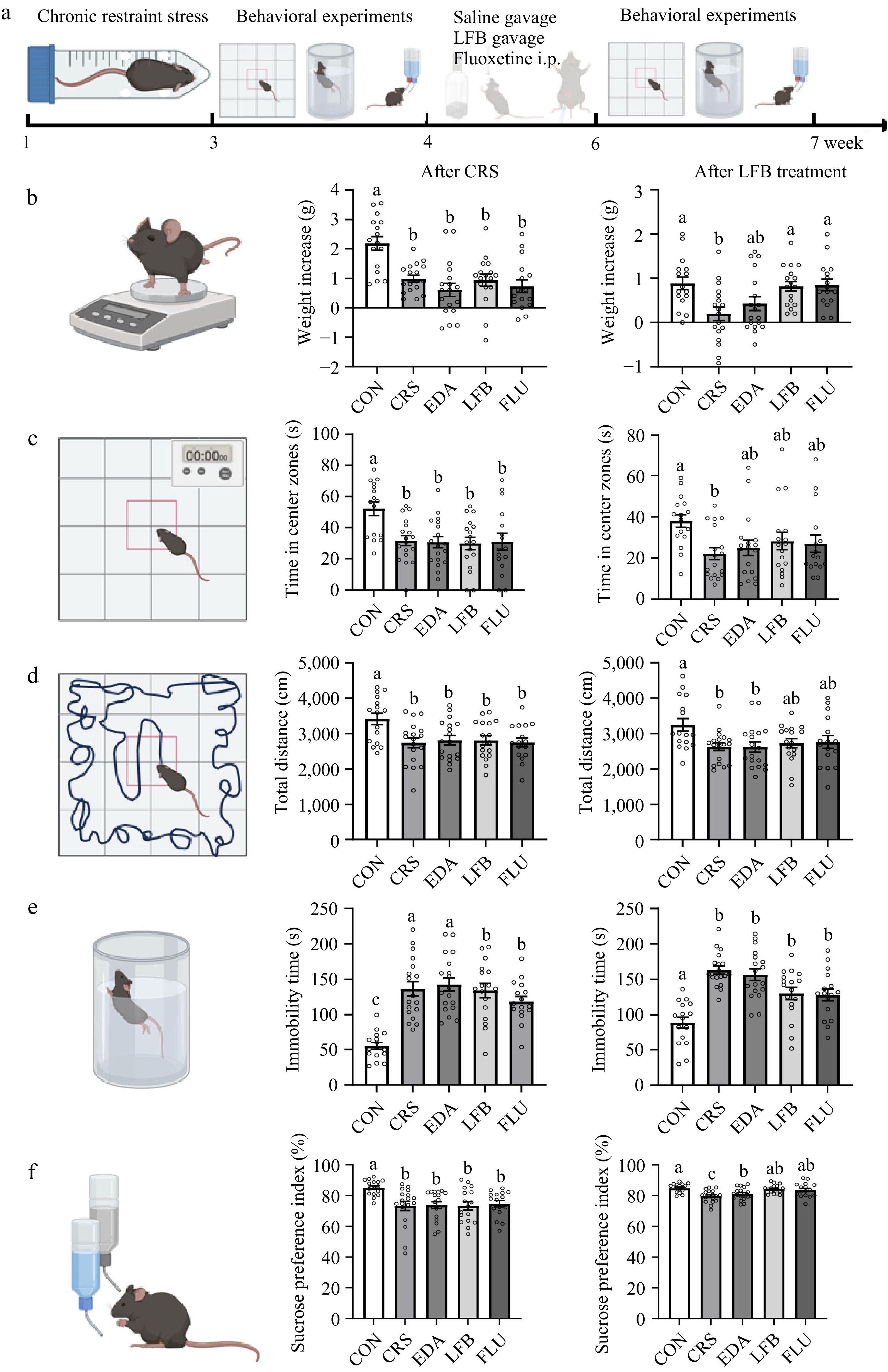
Figure 1.
Effects of LFB on body weight and behavioral outcomes under chronic restraint stress. (a) Schematic timeline of the experimental design illustrating chronic restraint stress (CRS) exposure, subsequent interventions, and behavioral assessments used to evaluate stress-associated behavioral outcomes. (b) Changes in body weight following CRS exposure and subsequent interventions. (c) Time spent in the center zone during the open field test, reflecting exploratory behavior under stress conditions. (d) Total distance traveled in the open field test, indicating locomotor activity. (e) Immobility time in the forced swim test, representing stress-associated behavioral despair-like responses. (f) Sucrose preference index in the sucrose preference test, reflecting reward-related behavioral responsiveness. Control group (CON), chronic restraint stress group (CRS), edible alcohol group (EDA), Luzhou-flavor Baijiu group (LFB), and fluoxetine group (FLU) (n = 16 per group). Different superscript letters (a, b, c) indicate statistically significant differences between groups (p < 0.05), while groups sharing at least one common letter are not significantly different. Illustrations were created using BioRender.com (
https://BioRender.com/0yqfv7d ).Subjects and drug treatment
-
After CRS modeling, mice were allocated into the following groups: a CRS model group without intervention, a CRS + saline group (n = 18), a CRS + edible alcohol group (CRS + EDA, n = 18), a CRS + LFB group (n = 17), and a CRS + fluoxetine group (CRS + FLU, n = 16). Based on preliminary experiments and previous reports on low-risk alcohol exposure[15], EDA and LFB were administered once daily by oral gavage at a dose of 1.5 g/kg (calculated as ethanol) for 14 consecutive days. The dose of 1.5 g/kg was selected following previous studies that have established this dose as appropriate for examining the effects of low-to-moderate alcohol exposure on stress-related emotional behaviors in rodents. Specifically, Doremus-Fitzwater and Spear employed 0.5, 1.0, and 1.5 g/kg ethanol to investigate anxiety-related behavioral responses (fear-potentiated startle) in mice, demonstrating that the 1.5 g/kg dose significantly modulated stress-sensitive behavioral expression[16]. Mice in the CRS + saline group received 0.2 mL saline by oral gavage, whereas mice in the CRS model group did not receive any intervention. For the positive control, mice in the CRS + FLU group received a daily intraperitoneal injection of fluoxetine (2.0 mg/kg; F131623), as previously reported[17]. Mice in the control and CRS + saline groups received 0.2 mL saline by oral gavage. All administered substances were dissolved in or diluted with 0.9% saline and delivered for 14 d.
Open field test
-
Behavioral tests were conducted in the following order from least to most stressful: open field test (OFT, Day 1), sucrose preference test (SPT, Day 3), and forced swim test (FST, Day 5). A 48 h interval was maintained between tests to minimize carryover effects and allow physiological recovery, as commonly recommended for rodent emotionality assessments[18]. All procedures were performed during the animals' dark phase under dim red light. OFT was used to evaluate locomotor activity and anxiety-related behavior. Each mouse was placed in the left rear corner of a PVC arena (48 × 48 × 30 cm) and allowed to explore freely for 10 min. The arena was virtually divided into 16 equal squares, with the central zone defined as the four squares in the middle and the peripheral zone as the remaining 12 squares. Behavior was recorded and analyzed using EthoVision XT13 (Noldus Information Technology, Netherlands). Outcome measures included total distance traveled, movement velocity, active time, number of entries into the central zone, time spent in the central zone, and time spent in the peripheral zone.
Forced swimming test
-
The FST was performed to assess stress-associated behavioral despair-like responses and to examine the effects of different interventions on this behavioral domain[19]. Briefly, each mouse was individually placed in a transparent cylinder (20 cm height, 15 cm diameter) containing fresh water (23–27 °C). Immobility time during a 5 min test session was recorded and quantified using EthoVision XT13. Between each mouse, the water in the cylinder was completely replaced with fresh water to avoid any odor cues from previous animals that could affect behavior. The forced swim test (FST) was conducted last in the sequence to prevent any potential carryover effects on the other behavioral assays, as it is the most stressful procedure. 'Behavioral despair' is defined as passive floating (immobility) in an inescapable stressful environment (e.g., forced swimming), reflecting a stress-related negative coping state.
Sucrose preference test
-
The SPT was used to assess anhedonia-like behavior, a reward-related behavioral domain commonly altered under chronic stress[20]. Briefly, mice were habituated to a 1% (w/v) sucrose solution for 24 h by providing sucrose solution as the only drinking fluid. During the next 24 h, mice were first habituated to 1% sucrose for 24 h (single bottle). Then, for the next 24 h, they were given a choice between water and 1% sucrose (two bottles). Subsequently, mice were deprived of food and water for 12 h. Finally, two pre-weighed bottles (water and 1% sucrose) were provided for 24 h, and consumption was measured. Sucrose preference was calculated as (sucrose intake / [sucrose intake + water intake]) × 100%. 'Anhedonia-like behavior' is defined as reduced preference for a rewarding stimulus (e.g., sucrose), assessed by the sucrose preference test.
Sample preparation and tissue isolation
-
After completion of the behavioral assays, mice were euthanized by cervical dislocation. Brain tissue was rapidly collected, and the prefrontal cortex and hippocampus were isolated, snap-frozen on dry ice, and stored at −80 °C until analysis.
qRT-PCR assay
-
Total RNA was extracted from the hippocampus using an Animal Total RNA Isolation Kit (RE-03011, FOREGENE) according to the manufacturer's instructions. RNA concentration and purity were determined using a NanoDrop 2000 spectrophotometer (Thermo Fisher Scientific). Reverse transcription was performed using RevertAid™ premix (M1632, Thermo Fisher Scientific). Quantitative PCR was carried out using Power SYBR™ Green PCR premix (A25741, Thermo Fisher Scientific) on a QuantStudio 3 Real-Time PCR System (Thermo Fisher Scientific). Relative mRNA expression levels of nNOS and iNOS were calculated using the 2−ΔΔCᴛ method and normalized to β-actin. Primer sequences were as follows: iNOS (forward, 5′-CAGCTGGGCTGTACAAACCTT-3′; reverse, 5′-CATTGGAAGTGAAGCGTTTCG-3′); nNOS (forward, 5′-CGCTACGCGGGCTACAAGCA-3′; reverse, 5′-GCACGTCGAAGCGGCCTCTT-3′); β-actin (forward, 5′-AGAGGGAAATCGTGCGTGAC-3′; reverse, 5′-CAATAGTGATGACCTGGCCGT-3′).
Lipid extraction
-
Hippocampal tissues were extracted using a methyl tert-butyl ether (MTBE)-based method. Briefly, samples were mixed with 150 μL pre-cooled methanol (34860, Sigma-Aldrich) followed by 450 μL MTBE (34875, Sigma-Aldrich). The mixture was homogenized, incubated for 10 min, and sonicated in ice water. Phase separation was induced by adding 300 μL of 25% aqueous MTBE–methanol solution. Samples were vortexed and centrifuged at 14,000 × g at 4 °C for 10 min. The upper organic phase was collected, dried under a gentle nitrogen stream, and stored at −80 °C until analysis.
MS-Based lipidomic analysis
-
Lipid extracts were reconstituted in 400 μL acetonitrile (34851, Sigma-Aldrich):isopropanol (PX1838, Sigma-Aldrich):water (13:6:1, v/v/v), vortexed, sonicated in ice water, and centrifuged at 14,000 × g at 4 °C for 10 min. Lipidomic profiling was performed using an LC–MS system equipped with an ACQUITY UPLC HSS T3 column maintained at 55 °C. Gradient elution was applied according to the instrument method. MS data were acquired on a Q-TOF mass spectrometer in both positive and negative ionization modes. Lipid identification and quantification were conducted using LipidSearch software. Differential lipids were screened using variable importance in projection (VIP) scores > 1.0 and p < 0.05. Multivariate and pathway analyses, including PLS-DA, heat map visualization, and pathway analysis, were performed using MetaboAnalyst 6.0.
Determination of total nitric oxide
-
Given the labile nature of nitric oxide (NO), it is rapidly oxidized to nitrite (NO2−) and nitrate (NO3−). Therefore, NO levels were estimated by measuring total nitrite/nitrate and expressed as μmol/mg protein. Hippocampal tissues were dissected and homogenized for analysis. Total nitrite/nitrate was quantified using a Total Nitric Oxide Assay Kit (Cat. No. S0023, Beyotime) based on the Griess reaction. Briefly, 50 μL of each sample or standard was added to a 96-well plate, followed by sequential addition of 50 μL Griess Reagent I and 50 μL Griess Reagent II. After incubation for 5 min at room temperature, absorbance was measured at 540 nm. A standard curve was generated to calculate total nitrite/nitrate concentrations in samples.
Statistical analysis
-
All data are presented as mean ± standard error of the mean (SEM). Statistical analyses and data visualization were performed using GraphPad Prism 8. Normality and homogeneity of variance were assessed using SPSS 23.0. Data from behavioral tests, organ coefficients, and RT-qPCR were analyzed by one-way ANOVA followed by Tukey's multiple-comparisons test. Body weight measured at the same time point between two groups, as well as individual lipid levels compared with the CRS + saline group, were analyzed using an unpaired two-tailed Student's t-test. A p-value < 0.05 was considered statistically significant.
-
Volatile compounds in LFB were analyzed using HS-SPME–GC–MS, and a total of 74 volatile compounds were identified (Supplementary Table S1). Esters (1,010.5 ± 21.1 mg/L, 92.53%), acids (41.0 ± 0.7 mg/L, 3.75%), and alcohols (36.6 ± 1.1 mg/L, 3.34%) constituted the predominant chemical classes (Fig. 2a, b). The most abundant esters were ethyl hexanoate, ethyl butanoate, ethyl octanoate, ethyl heptanoate, and ethyl pentanoate, accounting for 71.37%, 6.22%, 5.12%, 3.91%, and 3.25% of total esters, respectively (Fig. 2c). Six organic acids were detected, with hexanoic acid and octanoic acid as the major components. In addition, ten alcohols were identified, among which ethanol and 1-hexanol were the most abundant. Minor classes included hydrocarbons (2.6 ± 0.2 mg/L), ketones (0.7 ± 0.1 mg/L), aldehydes (0.6 ± 0.1 mg/L), and phenols (0.2 ± 0.0 mg/L) (Supplementary Table S1). Collectively, the volatile profile of LFB, characterized by a high ester content and diverse minor constituents, provides a chemical basis for exploring its potential neurobiological relevance to emotional state.
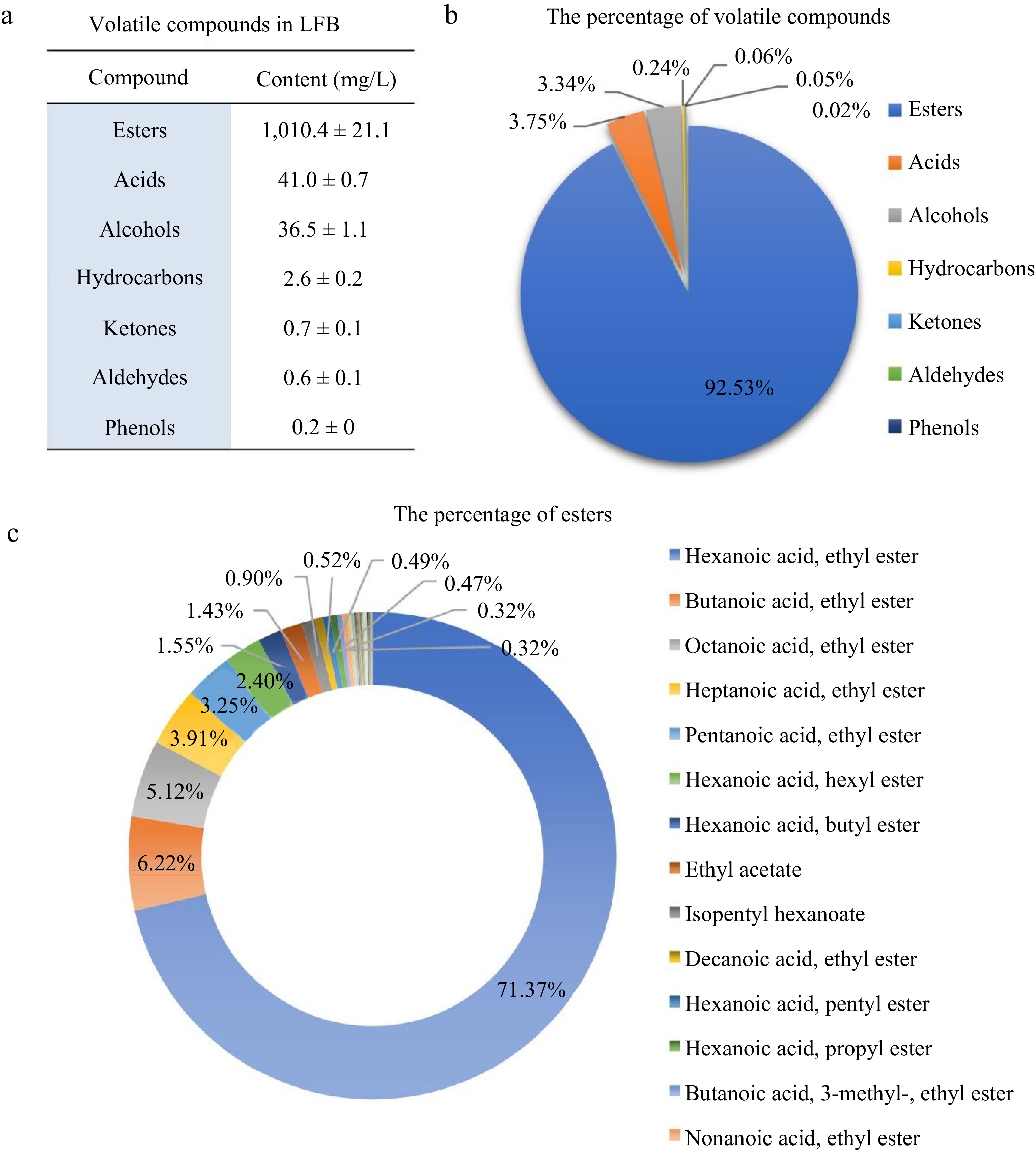
Figure 2.
Chemical composition of volatile constituents in Luzhou-flavor Baijiu (LFB). (a) Quantitative analysis of volatile compounds in LFB, classified into seven chemical categories, including esters, acids, alcohols, hydrocarbons, ketones, aldehydes, and phenols. Data are expressed as mean ± standard deviation (mg/L). (b) Relative proportion of volatile compounds across the seven chemical categories identified in LFB. (c) Relative distribution of the major ester compounds in LFB, showing the top 14 esters based on their proportional abundance.
Network pharmacology suggests multi-target and multi-pathway mechanisms potentially relevant to the effects of LFB on emotional state
-
A total of 13 compounds were screened from LFB as candidate bioactive components (Fig. 2c), including 1-butanol, 3-methyl-, acetate; 2H-pyran-2-methanol, tetrahydro-; ethyl acetate; butanoic acid, ethyl ester; heptanoic acid, ethyl ester; hexanoic acid; isopentyl hexanoate; nonanal; nonanoic acid, ethyl ester; octanoic acid, ethyl ester; p-cresol; pentanoic acid; and propanoic acid, 2-methyl-, ethyl ester. Target prediction indicated that these 13 components were associated with 240 putative targets (Fig. 3a). In parallel, 2,204 genes related to mood/emotional phenotypes were retrieved from the GeneCards and OMIM databases using the keyword 'depression'. Venn analysis identified 113 overlapping targets between the predicted compound targets and the mood-related gene set (Fig. 3b), suggesting potential mechanistic links relevant to emotional regulation. A PPI network of the 113 shared targets was constructed using STRING and visualized in Cytoscape. Network topology analysis identified 22 hub targets, with AKT1, EGFR, PTGS2, ESR1, CASP3, and PPARA among the most connected nodes (Fig. 3c).
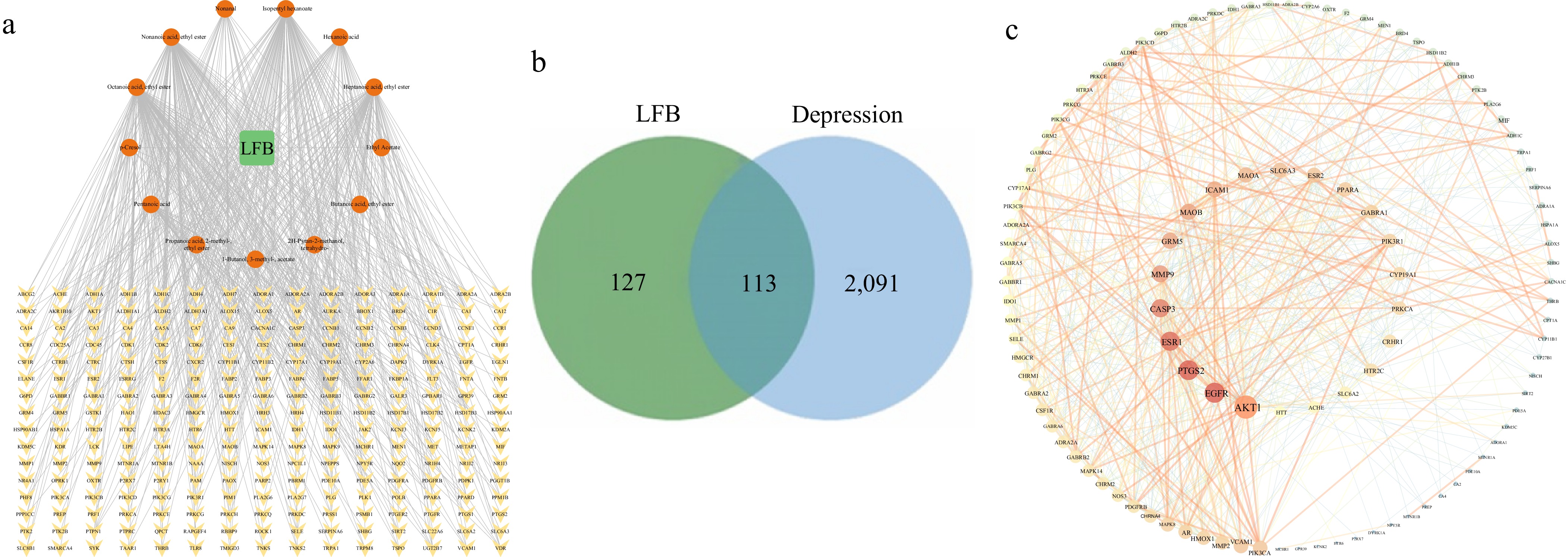
Figure 3.
Network pharmacology analysis of candidate targets associated with LFB. (a) Compound–target network illustrating candidate bioactive volatile components of LFB and their predicted molecular targets. Target genes were obtained from public databases and integrated for network construction. (b) Venn diagram showing the overlap between predicted LFB-associated targets (n = 240) and an emotion/mood-related gene set curated from GeneCards and OMIM databases. A total of 113 shared targets were identified and selected for subsequent analysis. (c) Protein–protein interaction (PPI) network constructed from the 113 shared targets. Network topology highlights highly connected nodes, representing hub targets potentially involved in LFB-associated biological processes.
GO enrichment analysis indicated that these 22 hub targets were associated with 79 biological process terms, 15 cellular component terms, and 33 molecular function terms. The top 10 terms in each category (p < 0.01) were visualized according to ascending p-values (Fig. 4a). Enriched biological processes included dopamine metabolic process, response to estradiol, and positive regulation of nitric oxide biosynthetic process. Major cellular components included plasma membrane- and synapse-related terms, while key molecular functions included nuclear receptor activity, enzyme binding, monoamine oxidase activity, and nitric oxide synthase regulatory activity. Alterations in reward-related behavior and dopaminergic signaling are commonly implicated in stress-related emotional disturbances and mood phenotypes. In rodent models, reduced spontaneous firing of dopamine neurons has been linked to circuit-level dysregulation involving the infralimbic prefrontal cortex, basolateral amygdala, and ventral pallidum[21]. In addition, the NO system has been implicated in neurobiological processes relevant to emotional regulation, including effects on neuronal morphology and synaptic plasticity. Pharmacological modulation of NO synthesis has been reported to influence stress-associated behavioral outcomes in preclinical studies[22]. Notably, NO can also interact with the dopaminergic system, for example by affecting dopamine transporter function and dopamine availability, suggesting a potential convergence between NO-related signaling and dopamine circuits. KEGG pathway enrichment analysis identified 94 pathways, and the top 20 were plotted based on −log(p-value) (Fig. 4b). Both KEGG and GO analyses highlighted enrichment in pathways related to dopaminergic signaling and NO-associated processes, suggesting that LFB may influence emotional state through coordinated modulation of these systems. As shown in Fig. 4c, the 'LFB–component–target–phenotype' network highlighted five compounds, octanoic acid, ethyl ester; isopentyl hexanoate; heptanoic acid, ethyl ester; nonanoic acid, ethyl ester; and p-cresol, as key constituents with high network connectivity, providing candidate chemical drivers for subsequent experimental validation of LFB-associated effects on emotional state.
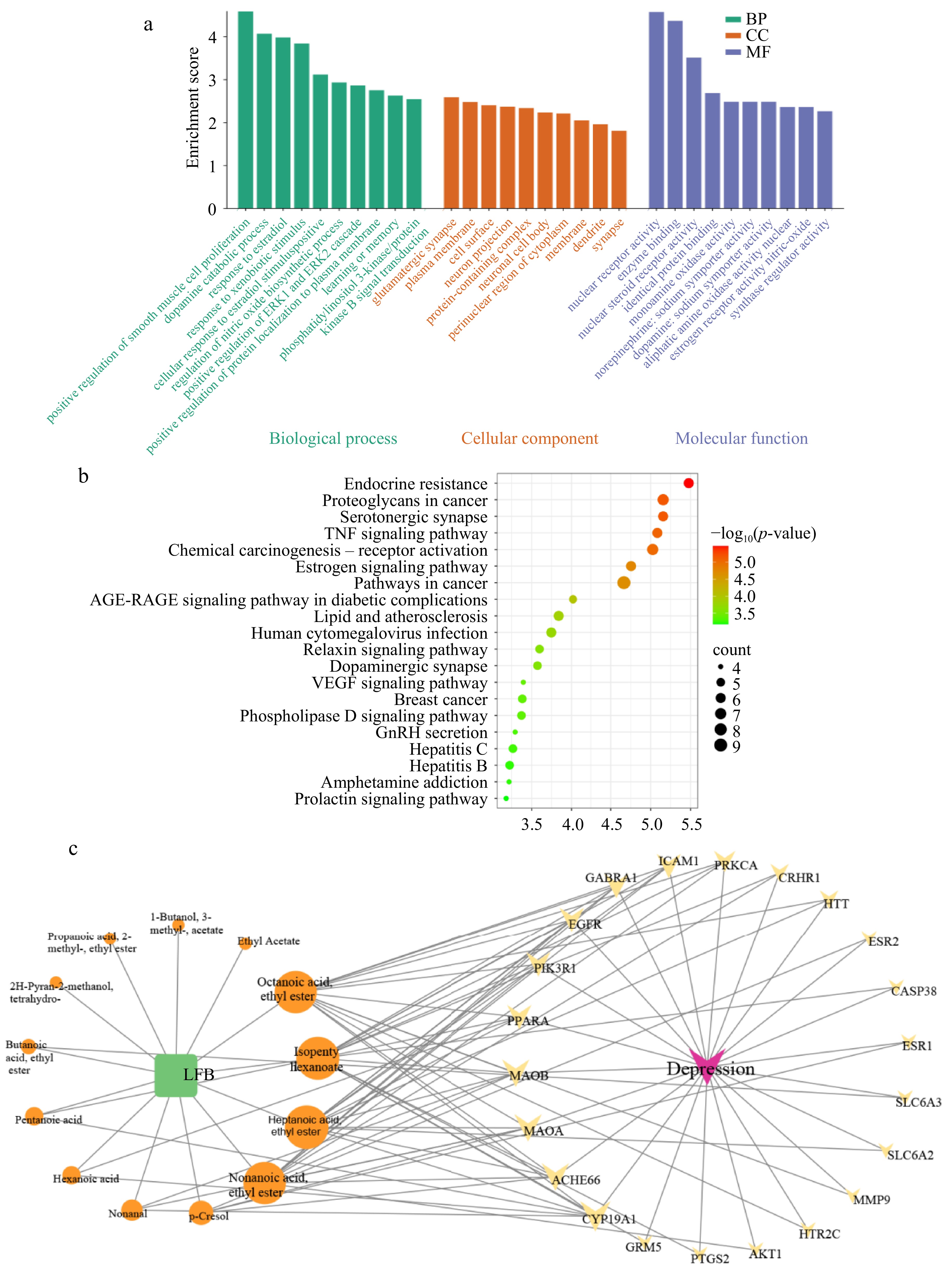
Figure 4.
Functional enrichment and network analysis of shared targets associated with LFB. (a) Gene Ontology (GO) enrichment analysis of shared targets, including biological processes (BP), cellular components (CC), and molecular functions (MF). The top enriched terms in each category are shown based on enrichment scores. (b) Kyoto Encyclopedia of Genes and Genomes (KEGG) pathway enrichment analysis of shared targets. The top 20 enriched pathways are displayed according to −log10(p-value), with node size representing the number of genes involved in each pathway. (c) Integrated 'LFB–component–target–phenotype' network illustrating relationships among LFB, its candidate volatile components, predicted molecular targets, and an emotion/mood-related phenotype. Node size reflects the degree value, indicating the relative importance of individual components or targets within the network.
Associations of LFB on stress-induced emotional disturbances in CRS mice
-
A chronic restraint stress paradigm was established in C57BL/6 male mice for 14 d to induce stress-associated physiological and behavioral alterations (Fig. 1a). Decreases in body weight and appetite are recognized as classic symptoms of depression[23]. In the CRS modeling group, the body weight of the mice was decreased compared to the control in week three (Fig. 1b). In contrast, the mice in the LFB and fluoxetine groups reverted to levels comparable to those of the control group. Interestingly, the edible alcohol did not elicit a similar weight-enhancing effect. Behavioral assessments were then used to evaluate intervention-associated changes in behavioral outcomes (Fig. 1c–f). In OFT, total distance did not differ significantly among CRS groups (Fig. 1d); however, LFB and fluoxetine increased time spent in the center zone compared with CRS + saline (Fig. 1c), suggesting attenuation of stress-associated anxiety-like behavior. In SPT, LFB and fluoxetine significantly increased sucrose preference relative to CRS + saline (Fig. 1f), indicating improvement in stress-associated anhedonia-like behavior. In FST, LFB and fluoxetine partially reversed the CRS-induced increase in immobility time (Fig. 1e), consistent with reduced behavioral despair-like responses. Although EDA increased sucrose preference compared with CRS + saline, sucrose preference remained below control levels (Fig. 1f). Together, these findings suggest that LFB modulates multiple domains of stress-associated emotional behaviors in CRS mice.
The relationship between alcohol exposure and mood-related outcomes is complex and depends on dose, duration, and beverage composition. Chronic heavy alcohol exposure has been reported to exacerbate anxiety- and stress-related behavioral changes in animal models[24], whereas observational studies have described associations between low-to-moderate alcohol intake and mood-related outcomes in humans[7]. Most prior studies have focused on ethanol per se or Western beverages, while traditional Chinese Baijiu contains abundant non-ethanolic volatile constituents (e.g., esters and aromatic compounds) that may contribute to its neurobiological effects. In the present study, LFB at a low ethanol-equivalent dose was associated with improved performance across several stress-sensitive behavioral assays, supporting the hypothesis that the chemical composition of LFB may be relevant to its effects on emotional state.
LFB modulated hippocampal nNOS/iNOS expression and NO levels in CRS mice
-
Because NO is implicated in neurobiological processes relevant to emotional regulation in the central nervous system, hippocampal tissues were collected after behavioral testing to quantify nNOS/iNOS mRNA expression and NO-related metabolites. Previous studies have reported that modulation of iNOS activity can influence stress-associated behavioral outcomes[25]. In addition, nNOS signaling has been implicated in multiple neurological and neuropsychiatric processes[26]. CRS increased iNOS and nNOS mRNA expression compared with the control group. In contrast, LFB and fluoxetine—rather than EDA—attenuated the CRS-induced upregulation of iNOS and nNOS, restoring expression levels toward those observed in the control group (Fig. 5a, b). Consistently, EDA, LFB, and fluoxetine reduced total nitrite/nitrate levels relative to the CRS group (Fig. 5c). Together, these results suggest that LFB is associated with modulation of hippocampal NO-related signaling in CRS-exposed mice, providing a mechanistic link between the nNOS/NO pathway and LFB-related effects on stress-associated emotional behaviors. Our findings support the involvement of the nNOS/NO axis in the neurobiological effects of LFB. Prior work indicates that NMDA receptor modulation can influence nNOS/NO signaling[27], and that altering the Ca2+/NMDA/NO/cGMP cascade affects stress-sensitive behavioral phenotypes in preclinical studies[28,29]. Notably, LFB represents a complex mixture in which low-dose ethanol coexists with diverse volatile constituents, raising the possibility of multi-component interactions rather than a single-target mechanism. Further studies are warranted to clarify upstream drivers (e.g., NMDA receptor subunits or co-agonists) and downstream effectors (e.g., cGMP-related signaling and neurotrophic pathways) that may connect nNOS/NO modulation to changes in emotional state.
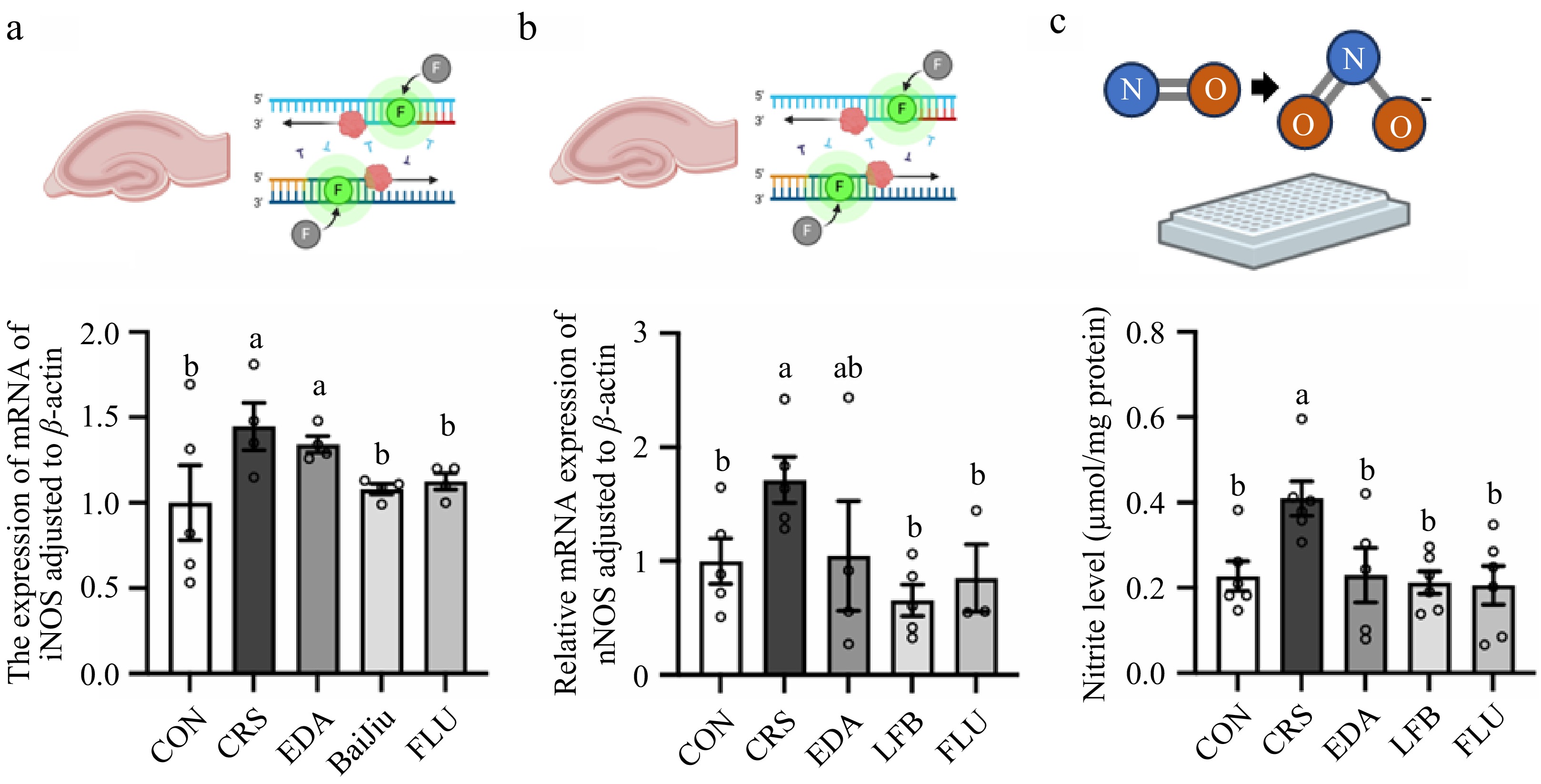
Figure 5.
Effects of LFB on hippocampal nitric oxide synthase expression and nitric oxide levels under chronic restraint stress. (a) Relative mRNA expression of inducible nitric oxide synthase (iNOS) in the hippocampus, normalized to β-actin. (b) Relative mRNA expression of neuronal nitric oxide synthase (nNOS) in the hippocampus, normalized to β-actin. (c) Total nitric oxide–related metabolite levels (nitrite/nitrate) in the hippocampus. Control group (CON), chronic restraint stress group (CRS), edible alcohol group (EDA), Luzhou-flavor Baijiu group (LFB), and fluoxetine group (FLU) (n = 5 per group). Different superscript letters (a, b, c) indicate statistically significant differences between groups (p < 0.05), while groups sharing at least one common letter (e.g., ab) are not significantly different. Illustrations were created using BioRender.com (
https://biorender.com/vn7vc01 ).LFB altered lipid profiles in the hippocampus of CRS mice
-
Lipidomic analysis was performed to investigate whether LFB was associated with alterations in hippocampal lipid composition in the control, CRS, and LFB groups. Hippocampal lipids were extracted using methanol and MTBE and analyzed by UPLC–MS in both positive and negative ionization modes, followed by lipid annotation and downstream analyses (Fig. 6a). Principal component analysis (PCA) revealed a clear separation between the control and CRS groups, indicating pronounced lipidomic alterations induced by chronic stress. Samples from the LFB group exhibited a partial shift toward the control cluster, suggesting an overall trend of lipid profile modulation following LFB administration (Fig. 6b). In total, 1,603 lipid species were detected, with major classes including phosphatidylcholine (PC, ~20%), phosphatidylethanolamine (PE, ~18%), Hex1Cer (~11%), phosphatidylserine (PS, ~9%), and ceramide (Cer, ~7%) (Fig. 6c).
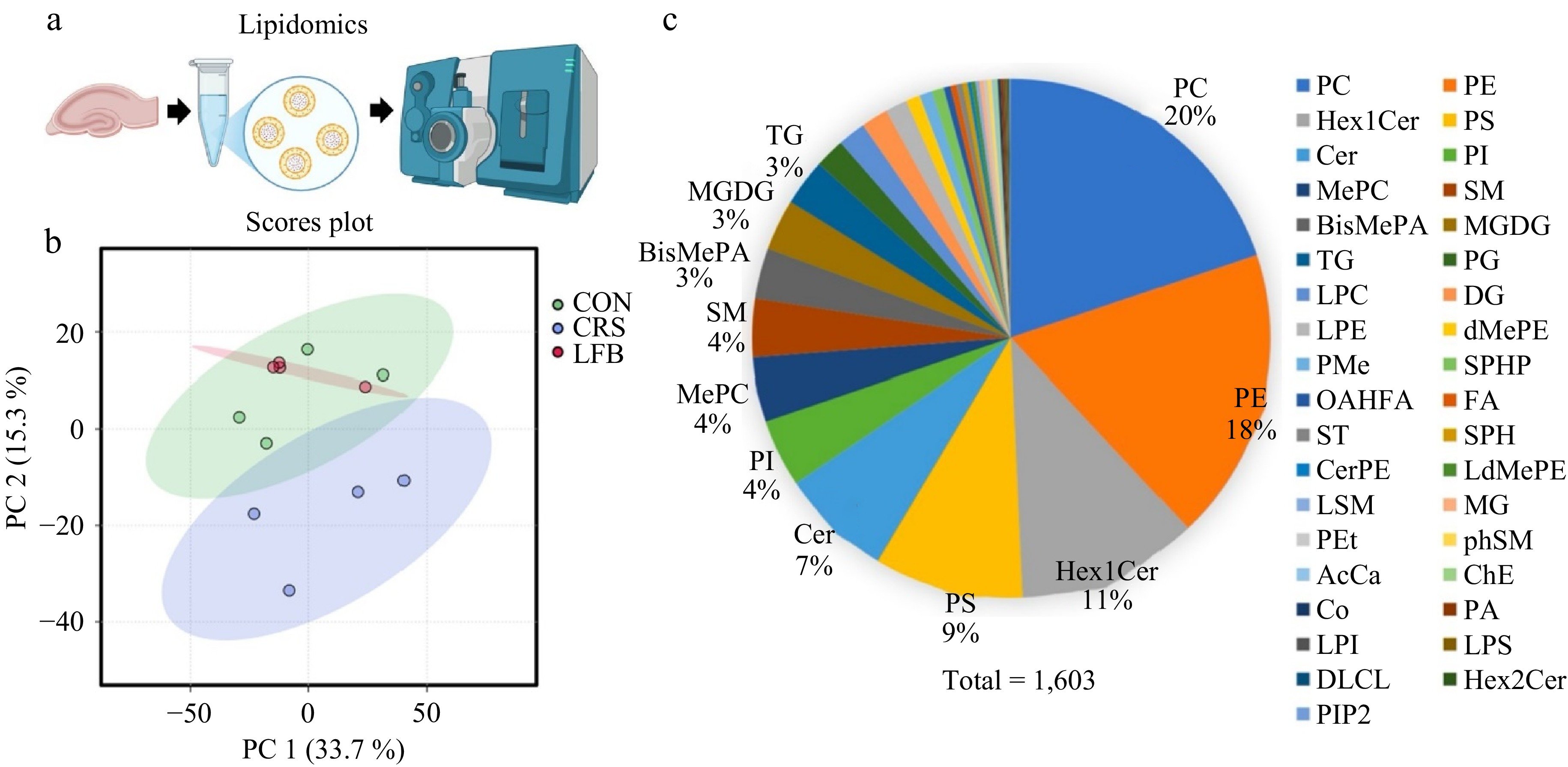
Figure 6.
Hippocampal lipidomic profiling in control, CRS, and LFB groups. (a) Schematic overview of the lipidomic workflow using hippocampal tissue from mice. (b) Principal component analysis (PCA) score plot based on hippocampal lipidomic data, illustrating overall differences in lipid profiles among the control (CON), chronic restraint stress group (CRS), and Luzhou-flavor Baijiu group (LFB). (c) Relative distribution of lipid subclasses identified in mouse hippocampal tissue, showing the proportional composition of major lipid categories. A total of 1,603 lipid species were detected. Illustrations were created using BioRender.com (
www.biorender.com/9wkgq1h ).Orthogonal partial least squares discriminant analysis (OPLS-DA) further confirmed pronounced lipidomic differences between the CRS and control groups, as well as between the CRS and LFB groups, in both positive and negative ionization modes (Fig. 7a–d), supporting the discriminatory capacity of LFB-associated lipid alterations. A heat map highlighted a subset of shared differential lipids across the three groups (Fig. 7e). Overall, CRS exposure was associated with decreased levels of multiple glycerophospholipid and sphingolipid species in the hippocampus, whereas LFB administration was associated with a restoration trend for these lipid classes toward control levels.
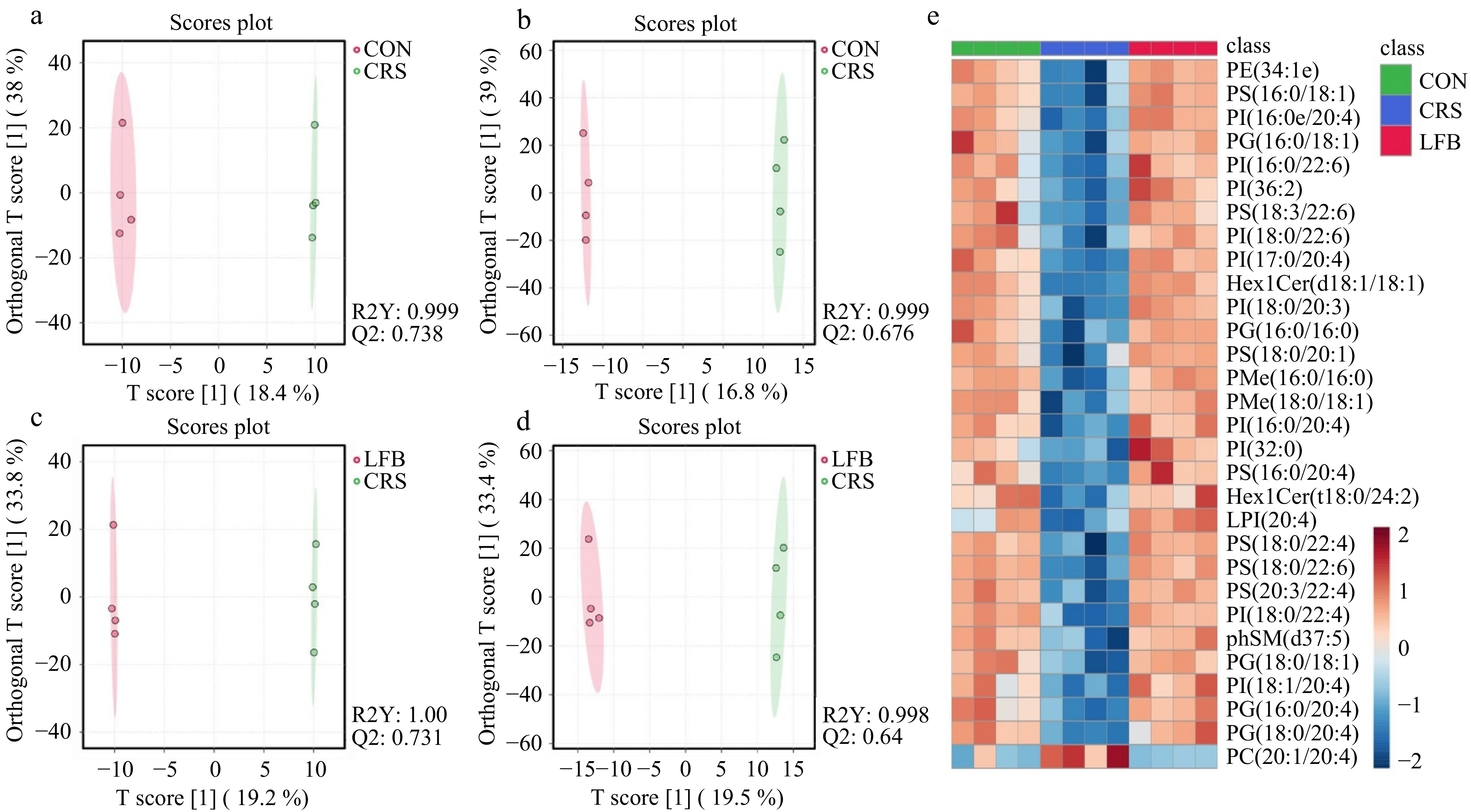
Figure 7.
Multivariate discrimination and hierarchical clustering analysis of hippocampal lipidomic data. (a) Orthogonal partial least squares discriminant analysis (OPLS-DA) score plot comparing the control (CON) and CRS groups under electrospray ionization (ESI) negative mode. (b) OPLS-DA score plot comparing the CON and CRS groups under ESI positive mode. (c) OPLS-DA score plot comparing the LFB and CRS groups under ESI negative mode. (d) OPLS-DA score plot comparing the LFB and CRS groups under ESI positive mode. (e) Heatmap of hierarchical cluster analysis showing lipid metabolites with significant differences among the control (CON), chronic restraint stress group (CRS), and Luzhou-flavor Baijiu group (LFB) groups (n = 4 per group). Color intensity represents relative abundance patterns across samples.
Hippocampal lipidomic analysis revealed pronounced alterations induced by CRS exposure and subsequent modulation following LFB administration (Fig. 8). Compared with the control group, CRS resulted in 152 differential lipid species, including 28 upregulated and 124 downregulated lipids, indicating broad lipidomic perturbation under chronic stress conditions (Fig. 8a). Relative to the CRS group, LFB administration was associated with significant changes in 201 lipid species, with 139 upregulated and 62 downregulated lipids, suggesting extensive modulation of stress-related lipid alterations (Fig. 8b). Venn analysis identified 105 lipid species shared between the CRS vs control and LFB vs CRS comparisons, representing lipid species responsive to both CRS exposure and LFB treatment (Fig. 8c). Pathway enrichment analysis based on the RaMP database showed that these differential lipids were mainly enriched in pathways related to phospholipid biosynthesis, glycerolipid metabolism, calcium-associated signaling, and membrane-related molecular transport, indicating that LFB-associated lipid modulation under CRS conditions primarily involved membrane lipid metabolic processes (Fig. 8d).
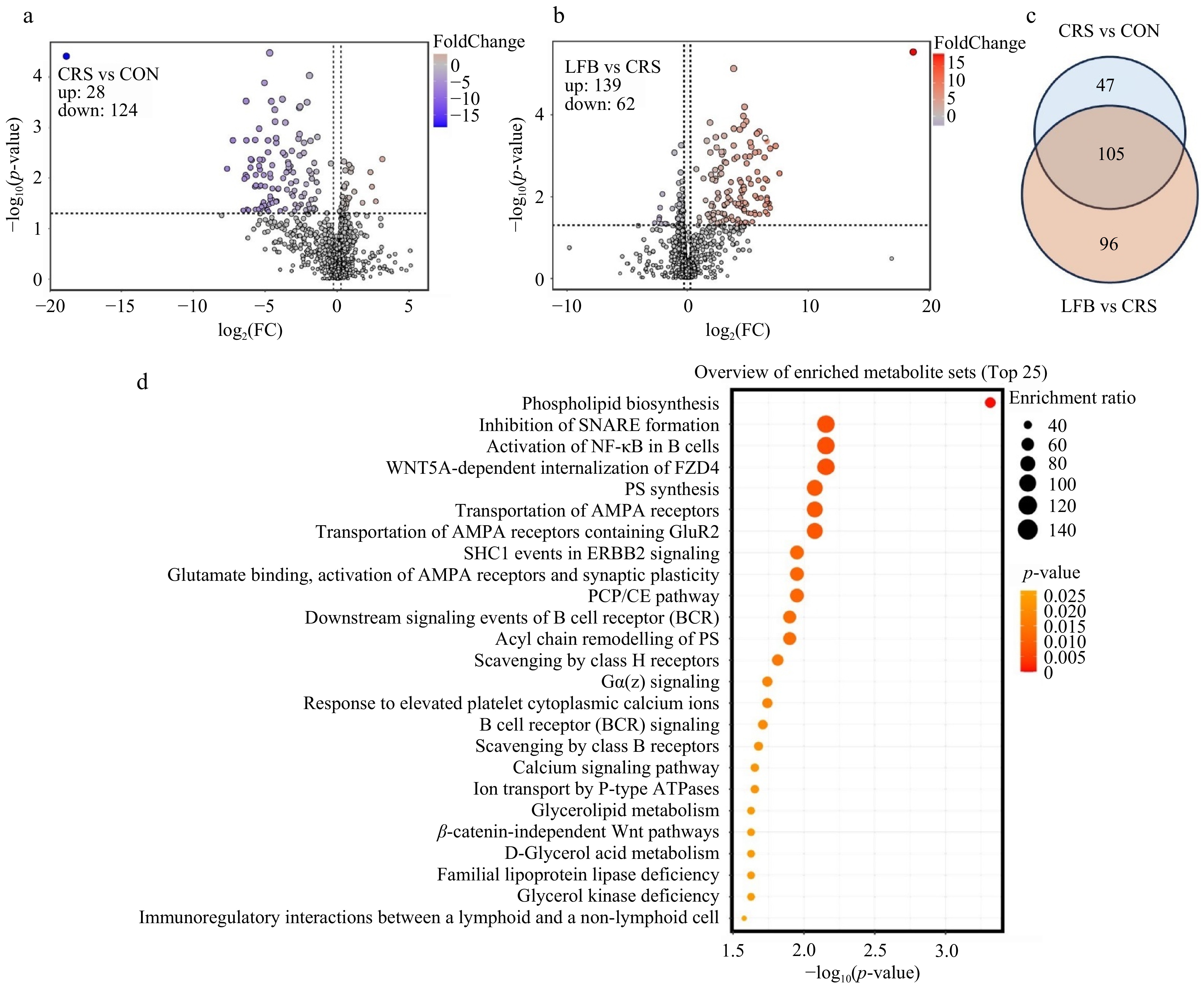
Figure 8.
Differential lipidomic features associated with CRS exposure and LFB administration. (a) Volcano plot showing differential lipid metabolites between chronic restraint stress group (CRS) and control (CON) groups. Lipid species meeting the selection criteria are highlighted. (b) Volcano plot showing differential lipid metabolites between the Luzhou-flavor Baijiu group (LFB and CRS group. (c) Venn diagram illustrating the overlap of differential lipid metabolites identified in the CRS vs CON and LFB vs CRS comparisons. A total of 105 lipid species were shared between the two comparisons. (d) Pathway enrichment analysis of the 105 shared differential lipid metabolites based on the RaMP database. The top enriched metabolic pathways are displayed according to −log10(p-value), with enrichment ratio indicated by dot size.
Lipids constitute a large fraction of brain dry weight and are essential for membrane structure, signaling, and energy homeostasis[30]. Alcohol exposure has been associated with lipid metabolic alterations in the brain, including changes in sphingolipids, fatty acids, lysophosphatidylcholines, and other glycerophospholipids in preclinical studies[31]. In parallel, stress exposure and mood-related phenotypes have been linked to altered lipid profiles across species, including changes in glycerophospholipid and sphingolipid classes[32−36]. In the present study, LFB was associated with lipidomic remodeling in the hippocampus of CRS-exposed mice, particularly within glycerophospholipids and sphingolipids, suggesting a potential metabolic component to LFB-related effects on emotional state under chronic stress.
Integrating the lipidomic findings with the observed nNOS/NO changes, we propose that modulation of specific lipid classes may interact with NO-related signaling under CRS exposure. Reactive nitrogen species derived from NO (e.g., peroxynitrite) can promote oxidative and nitrative stress and contribute to lipid peroxidation, particularly involving polyunsaturated fatty acids, thereby perturbing membrane lipids and myelin-rich structures[37−39]. Although our data indicate concurrent shifts in hippocampal sphingolipids/glycerophospholipids and nNOS/NO-related measures following LFB exposure, the directionality and causality of these relationships remain to be determined. Future work will be required to clarify how NO-related signaling interfaces with sphingolipid metabolism and other lipid pathways in stress-exposed brain tissue, and how these molecular changes relate to behavioral outcomes.
Abbreviations: FA, fatty acyls; GL, glycerolipids; GP, glycerophospholipids; SP, sphingolipids; ST, sterol lipids; PR, prenol lipids; SL, saccharolipids; PK, polyketides; PC, phosphatidylcholine; PE, phosphatidylethanolamine; PS, phosphatidylserine; PI, phosphatidylinositol; LPI, lysophosphatidylinositol; Hex1Cer, hexosyl-1-ceramide; Cer, ceramide.
-
This study shows that LFB, a traditional Chinese solid-state fermented spirit rich in volatile constituents, is associated with modulation of behavioral outcomes and neurobiological processes in a CRS mouse model. Behavioral assessments indicated that low-dose LFB exposure influenced reward-related and stress-sensitive behavioral domains, as reflected by changes in sucrose preference and behavioral immobility, suggesting an overall regulatory effect on emotional responsiveness under chronic stress conditions. At the molecular level, LFB exposure was associated with attenuation of CRS-induced alterations in hippocampal nNOS expression and nitric oxide–related metabolites. In addition to nNOS, we observed that LFB also attenuated CRS-induced upregulation of iNOS in the hippocampus. iNOS is an inducible enzyme that produces high levels of NO under inflammatory conditions and has been implicated in stress-related neuroinflammation and depressive-like behaviors. Thus, the downregulation of iNOS by LFB may contribute to its antidepressant-like effects by reducing neuroinflammatory responses. In parallel, lipidomic profiling revealed extensive remodeling of hippocampal lipid composition following LFB administration, particularly involving glycerophospholipids and sphingolipids that are closely linked to membrane structure and cellular signaling. These findings suggest that LFB-related modulation of emotional state may involve coordinated regulation of nitric oxide–associated signaling and lipid metabolic pathways, rather than direct engagement of a single neurotransmitter system. In contrast to LFB, edible alcohol (EDA) contains only ethanol and water, lacking the abundant esters, acids, and other volatile compounds present in LFB. The weaker effects of EDA on emotion-related behaviors suggest that the non-ethanolic constituents of LFB may cooperatively contribute to the modulation of nNOS/NO signaling and lipid metabolism. Notably, NO-derived reactive nitrogen species (e.g., peroxynitrite) can induce lipid peroxidation, particularly affecting polyunsaturated fatty acid-containing glycerophospholipids. In this study, LFB concurrently modulated nNOS/NO levels and glycerophospholipid/sphingolipid profiles, suggesting a potential functional crosstalk. Several previous studies have reported that moderate intake of Baijiu or its volatile components (e.g., ethyl hexanoate, ethyl acetate) may influence oxidative stress and neuroinflammation in rodent models. For instance, Wu et al. showed that Nongxiangxing Baijiu alleviated mild alcoholic liver injury via metabolomic remodeling. However, to our knowledge, no study has directly linked LFB or its esters to emotional regulation via nNOS and lipid pathways. The present findings therefore represent a novel contribution, and future comparative studies using purified esters or synthetic mixtures are warranted. The weaker effects of EDA on behavioral outcomes suggest that the non-ethanolic constituents of LFB may cooperatively contribute to the modulation of nNOS/NO signaling and lipid metabolism. Collectively, this work integrates behavioral, molecular, and lipidomic evidence to highlight the potential relevance of LFB as a multicomponent fermented beverage in the regulation of emotional state. The present findings emphasize the importance of considering complex fermented alcoholic products as chemical systems capable of influencing emotion-related biological processes, providing a foundation for future studies on diet- and fermentation-derived modulators of emotional regulation.
The mouse dose of 1.5 g/kg ethanol corresponds to a human-equivalent dose of approximately 0.12 g/kg (about 7.2 g ethanol for a 60 kg adult), which is roughly one standard drink (e.g., ~18 mL of 52% ABV Baijiu). This falls within light-to-moderate intake. In Chinese culture, Baijiu is traditionally consumed in small amounts with meals, similar to the low-dose regimen used here. However, our findings do not endorse alcohol consumption for health benefits, and the risks of alcohol use remain.
However, this study still has some limitations. Behavioral tests such as FST, SPT, and OFT are widely used as proxies for emotion-related states in rodents, but they do not directly measure subjective emotional experience. Moreover, we did not directly measure neurotransmitter levels (e.g., serotonin, dopamine). Only male mice were used, and sex differences were not examined. Second, LFB intervention was sub-chronic (14 d), and the effects of long-term or lifelong consumption were not evaluated. Long-term safety data are not provided. Therefore, our findings should be interpreted as associations rather than definitive causal mechanisms. It is important to emphasize that alcohol consumption carries well-established health risks, including liver disease, addiction, and certain cancers. Our findings do not advocate for unsupervised or excessive alcohol intake. Instead, they suggest that at a low, ethanol-equivalent dose (approximately one standard drink per day for humans), the non-ethanolic components of LFB may be associated with certain behavioral and molecular changes in a mouse model of stress. Any translation to human consumption must be weighed against the known harms of alcohol, and no clinical recommendation can be made based on this preclinical study alone.
-
For investigations involving animal experimentation: All experimental procedures were conducted according to the guidelines provided by the IACUC of Sichuan University. The IACUC approved all experiments for the Experimental Use of Animals at Sichuan University (IACUC Issue No: S2023040, Approved Date: 2023.12.20). The research followed the 'Replacement, Reduction, and Refinement' principles to minimize harm to animals. This article provides details on the housing conditions, care, and pain management for the animals, ensuring that the impact on the animals is minimized during the experiment.
-
The authors confirm their contributions to the paper as follows: study conception and design: Huang Y; methodology: Xu L, Huang Z, Yang P, Shen C; formal analysis: Wu Y; validation: Wu Y, Xiong L; data curation: Chen X, Xu L, Wu Y, Xiong L, Huang Z, Yang P, Shen C; resources: Gao H; writing − draft manuscript preparation: Chen X; writing − review and editing: Gao H, Zhang W, Huang Y; supervision: Huang Y; project administration: Xu L; funding acquisition: Huang Z, Yang P, Shen C, Huang Y. All authors reviewed the results and approved the final version of the manuscript.
-
All data generated or analyzed during this study are included in this published article and its supplementary information files. Figures were created, in part, with BioRender.com, and the access link for the graphical abstract is https://biorender.com/s3iw5nt.
-
The authors declare that the research was conducted in the absence of any commercial or financial relationships that could be construed as a potential conflict of interest.
-
accompanies this paper online at: https://doi.org/10.48130/fia-0026-0047.
- Supplementary Table S1 Content of volatile compounds identified in LFB.
- Copyright: © 2026 by the author(s). Published by Maximum Academic Press on behalf of China Agricultural University, Zhejiang University and Shenyang Agricultural University. This article is an open access article distributed under Creative Commons Attribution License (CC BY 4.0), visit https://creativecommons.org/licenses/by/4.0/.
-
About this article
Cite this article
Chen X, Xu L, Wu Y, Xiong L, Huang Z, et al. 2026. Regulatory effects of solid-state fermentation Baijiu on emotional state and lipid metabolism via the nNOS pathway. Food Innovation and Advances 5(4): 578−590 doi: 10.48130/fia-0026-0047 

Regulatory effects of solid-state fermentation Baijiu on emotional state and lipid metabolism via the nNOS pathway
- Received: 07 April 2026
- Revised: 18 May 2026
- Accepted: 25 May 2026
- Published online: 30 October 2026
Abstract: Solid-state fermentation Baijiu is a traditional Chinese liquor, among which Luzhou-flavor Baijiu (LFB) is one of the most widely consumed varieties. In this study, LFB was investigated to elucidate its chemical composition and its association with behavioral outcomes in mice. Chemical analysis identified abundant esters (1,010.4 mg/L) and minor acids/hydrocarbons in LFB. Behavioral assays showed that LFB (1.5 g/kg, ethanol-equivalent) increased sucrose preference and reduced immobility time in CRS mice. Mechanistically, LFB attenuated CRS-induced upregulation of hippocampal nNOS/iNOS and NO metabolites, and remodeled glycerophospholipid/sphingolipid profiles. These findings suggest that LFB modulates emotional state via nNOS/NO signaling and lipid metabolism. A chronic restraint stress (CRS) mouse model was employed to examine LFB-associated effects on stress-related emotional behaviors. Behavioral assays, RT-qPCR, and lipidomic analyses were conducted to assess behavioral outcomes and underlying molecular features. Administration of a low dose of LFB (1.5 g/kg) was associated with increased sucrose preference and reduced immobility time in the forced swimming test, reflecting modulation of stress-sensitive behavioral responses. At the molecular level, LFB exposure was accompanied by attenuation of CRS-induced nNOS upregulation, reduced NO-related metabolites, and marked remodeling of hippocampal lipid profiles, particularly involving glycerophospholipids, glycerolipids, and sphingolipids. Collectively, these findings indicate that LFB is associated with coordinated modulation of behavioral outcomes, nNOS-related signaling, and lipid metabolism in CRS-exposed mice, providing insights into the potential neurobiological relevance of traditional Chinese Baijiu.
-
Key words:
- Solid-state fermentation /
- Luzhou-flavor baijiu /
- Lipidomics /
- Emotion-related behaviors