











-
Swimming performance is a key determinant of survival in fish, underpinning essential behaviors such as foraging, predator avoidance, social interactions (including mate searching), territorial defense, and reproduction[1–4]. It is particularly critical in anadromous species such as salmonids, which must integrate sustained, burst, and leaping swimming modes to complete energetically demanding spawning migrations[5,6]. Consequently, swimming performance is widely regarded as a central component of Darwinian fitness[3,7].
Fish swimming performance is typically categorized as sustained, prolonged, and burst swimming, reflecting differences in speed, duration, physiology, and behavior[3,6,8]. Sustained swimming refers to aerobic movement that can be maintained for more than 200 min without fatigue[8,9]. It is primarily powered by red muscle, with energy supply matching demand, and supports routine activities such as foraging as well as long-distance migration[1,10]. Prolonged swimming occurs at intermediate levels, lasting from about 20 s to 200 min and eventually ending in fatigue[8]. In natural environments, fish rarely maintain a constant speed long enough to reach clear fatigue, making it difficult to distinguish this mode from sustained swimming[3]. However, under controlled laboratory conditions, fatigue can be more reliably defined, and prolonged swimming is therefore widely used in experimental assessments[11,12]. Both sustained and prolonged swimming rely primarily on aerobic metabolism. In contrast, burst swimming is short and intense, typically lasting less than 20 s[8,13]. It is mainly driven by white muscle and fueled by anaerobic metabolism[12], and is commonly associated with behaviors such as prey capture, predator avoidance, and rapid escape responses[3,14].
Since its introduction by Brett[15], critical swimming speed (Ucrit) has been widely used to assess prolonged swimming performance in fish[11]. It is widely used because it can typically be completed in a few hours and is widely regarded as a practical proxy for maximal aerobic swimming performance[2,7]. However, Ucrit should be interpreted as a relative performance index rather than a direct measure of aerobic capacity, because it can also be influenced by behavioral motivation, fatigue criteria, and experimental conditions. Substantial progress has been made in understanding Ucrit, including its measurement methods, influencing factors, and underlying physiological and molecular mechanisms. However, several challenges remain. The lack of standardized measurement protocols limits comparisons across studies. In addition, its application in aquaculture and fisheries management is still underdeveloped. How to translate Ucrit into practical strategies for these fields remains an open question. Although previous reviews have discussed the ecological relevance and interpretation of Ucrit[3] or summarized swimming performance in specific taxa such as salmonids[6], a comprehensive synthesis specifically focusing on Ucrit, from measurement protocols and influencing factors to physiological and molecular mechanisms and applications in aquaculture and fisheries management, remains limited. This review summarizes current knowledge of Ucrit, including measurement approaches, environmental and biological influences, and its potential genetic and molecular basis. We also examine its applications in aquaculture and fisheries management, discuss existing limitations, and highlight future research directions. A better understanding of Ucrit will support the development of effective management strategies. This is particularly important for stock enhancement[16], fish passage design[17], and offshore aquaculture[18], and will contribute to the sustainable development of fisheries and aquaculture.
-
Accurate phenotypic measurement is essential for studying swimming performance in fish. Many experimental systems take advantage of the natural tendency of fish to orient and swim against water flow, allowing them to maintain their position in a controlled current[3,8]. This behavioral response forms the basis of most swimming performance devices. Water velocity within a confined swim chamber is generated by motors driving propellers or pumps. Fish are forced to swim against the current to hold position until fatigue. A wide range of systems have been developed. Among them, the tunnel respirometers designed by Blazka et al.[19] and Brett[15] are the most representative. These systems were originally developed to measure metabolic rate. Later designs were built upon these principles. The Blazka-type system consists of two concentric cylinders (Fig. 1a). Water is driven by a propeller and circulates between the inner and outer chambers. This creates an adjustable flow within the inner chamber. The design is space-efficient and suitable for respirometry in relatively small volumes. However, the rotating propeller generates spiral flow, which can introduce turbulence and vortices. Brett developed the first swim tunnel specifically for measuring Ucrit (Fig. 1b). In this system, water is driven by an external pump through a closed-loop channel. The design includes flow straighteners to reduce turbulence. Compared with the Blazka system, this linear configuration is better suited for high flow speeds and provides more stable hydrodynamic conditions. It has become the basis for most modern swimming performance systems[2,7,20,21].
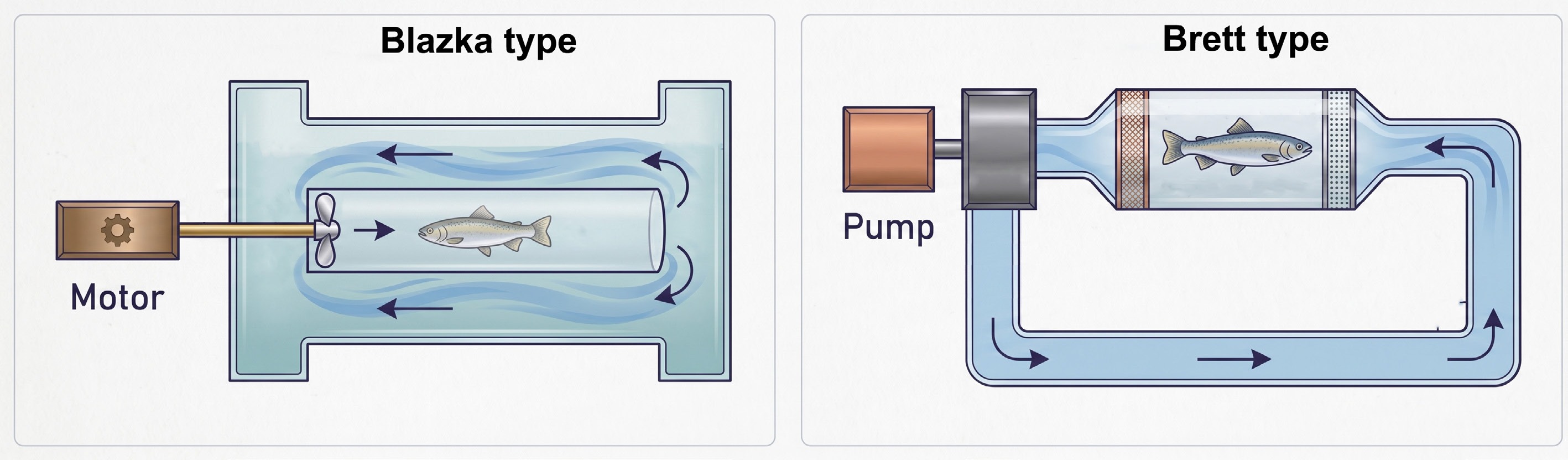
Figure 1.
Schematic representation of two classical swimming flume designs: (a) Blazka-type, and (b) Brett-type.
Measurement protocols and sources of variation
-
Methods for measuring Ucrit have evolved from step tests to ramp protocols. The step-Ucrit test was first introduced by Brett[15]. In this approach, water velocity is increased at fixed intervals of 60 min, with increments of about 7% to 9% of Ucrit, until the fish reaches fatigue. Using this method, Brett measured Ucrit in sockeye salmon (Oncorhynchus nerka), but each trial required 5 to 7 h. Later, Jones showed that Ucrit in rainbow trout (Oncorhynchus mykiss) was not affected when velocity increments were set at 11% to 17% of Ucrit, or when time intervals ranged from 20 to 40 min[22]. This finding provided a basis for reducing test duration. However, subsequent work by Farlinger & Beamish demonstrated that, in largemouth bass (Micropterus salmoides), Ucrit estimates could vary substantially under different combinations of time and velocity increments, in some cases nearly doubling[23]. To improve efficiency, Jain et al. proposed the ramp-Ucrit test[24]. In this method, flow velocity is first increased to about 75% of Ucrit within 5 to 6 min, and then gradually increased in steps until fatigue. This approach reduces the total testing time required to measure Ucrit in rainbow trout (O. mykiss), with results not significantly different from the step test. Later studies further refined ramp protocols by adjusting time intervals and velocity increments for different species, improving both efficiency and applicability[7,25,26].
These results indicate that the measurement of Ucrit is strongly influenced by protocol design, including time intervals, velocity increments, and testing schemes (Table 1), and can be further affected by factors such as recovery time and sample size, and even by differences in experimental apparatus (including swim flume length)[21,24,27−29]. Ideally, Ucrit should be measured under conditions where fatigue is caused by swimming itself rather than by the testing protocol. In practice, however, no universally standardized protocol exists across studies. Although consistent protocols within individual laboratories or research groups allow reliable within-study comparisons, substantial variation in testing procedures among studies limits direct comparisons of Ucrit values. Experimental settings vary widely in both time and velocity increments. As a result, Ucrit values are often difficult to compare, even within the same species, and comparisons across species are even more limited.
Table 1. Summary of reported critical swimming speed (Ucrit) and measurement protocols across fish species.
Species Length (cm) Water
temperature (°C)Acclimation Protocol Time increment Velocity increment Reported Ucrit Apparatus Ref. Sockeye salmon Total length: 18.8 cm 15 12–14 h at 0.1 ft·s−1 Step-Ucrit 60 min 0.3 ft·s−1 2.5 ft·s−1 Brett tunnel Brett, 1964[15] Sockeye salmon Total length: 18.5 cm 24 12–14 h at 0.1 ft·s−1 Step-Ucrit 60 min 0.3 ft·s−1 2.3 ft·s−1 Brett tunnel Brett, 1964[15] Rainbow trout 12.5 cm (not specified) 22.6 2–20 h at 2-4 cm·s−1 Step-Ucrit 20 min 9 cm·s−1 79.3 cm·s−1 Brett type Jones, 1971[22] Largemouth bass Fork length: 10.4 cm 25 12 h at 20 cm·s−1 Step-Ucrit 60 min 20 cm·s−1 30.0 cm·s−1 Brett type Farlinger & Beamish, 1977[23] Largemouth bass Fork length:10.4 cm 25 12 h at 20 cm·s−1 Step-Ucrit 5 min 10 cm·s−1 50.0 cm·s−1 Brett type Farlinger & Beamish, 1977[23] Rainbow trout Fork length: 38.9 cm 5.5−8 21 h at 10 cm·s−1 Ramp-Ucrit 5–6 min to 75% Ucrit, then 30 min
at 7.8 cm·s−1 (0.2 BL·s−1)63.8 cm·s−1 Brett type Jain et al., 1997[24] Rainbow trout Not given
(body mass 446.0 g)11−13 1 d before test Ramp-Ucrit Every 1 min increments of 5 cm·s−1 to ramp
fish to 50% Ucrit, then 20 min at 10 cm·s−163.5 cm·s−1 Brett type Farrell, 2008[25] Atlantic salmon Fork length: 35.8 cm 3 Overnight at 15 cm·s−1 (~0.45 body lengths·s−1) Step-Ucrit 30 min 15 cm·s−1 74.8 cm·s−1 Brett type Hvas et al., 2017[30] Atlantic salmon Fork length: 35.1 cm 13 Overnight at 15 cm·s−1 (~0.45 body lengths·s−1) Step-Ucrit 30 min 15 cm·s−1 91.3 cm·s−1 Brett type Hvas et al., 2017[30] Atlantic salmon Fork length: 36.0 cm 23 Overnight at 15 cm·s−1 (~0.45 body lengths·s−1) Step-Ucrit 30 min 15 cm·s−1 84.9 cm·s−1 Brett type Hvas et al., 2017[30] Rainbow trout Total length: 20.4 cm 12.2 Overnight at 3.60 cm·s−1 Ramp-Ucrit Every 5 min increments of 5 cm·s−1 to
50% Ucrit, then 5 cm·s−1 every 15 min67.8 cm·s−1 Brett type McCaffrey, 2020[26] Nile tilapia Body length: 7.2 cm 28.3 1 h at 0 cm·s−1 Step-Ucrit 30 min Not given 69.1 cm·s−1 Brett type Mengistu, 2021[31] Large yellow croaker Body length: 4.3 cm 26 30 min at 3 cm·s−1 Ramp-Ucrit Every 5 min increments of 3 cm·s−1 to
50% Ucrit, then 5 cm·s−1 every 15 min10.8 cm·s−1 Circular swimming arena Zeng et al., 2022[7] Spotted sea bass Body length: 7.3 cm 18 30 min at 10 cm·s−1 Ramp-Ucrit Every 5 min increments of 5 cm·s−1 to
50% Ucrit, then 10 cm·s−1 every 15 min41.8 cm·s−1 Flow-controlled recirculating flume Li et al., 2025[11] This methodological variability not only complicates the interpretation of published Ucrit values but also hinders meaningful comparisons across studies, thereby limiting our ability to synthesize evidence and evaluate swimming performance under different experimental conditions. In some cases, variation introduced by testing protocols may confound genuine biological differences, making it difficult to distinguish interspecific, population-level, or treatment-related variation from methodological effects. Consequently, caution should be exercised when directly comparing Ucrit values obtained using different experimental protocols. Although protocol optimization may need to be tailored to the biological characteristics of different species, the adoption of a consistent and standardized protocol for the same species would substantially improve the comparability and reproducibility of future studies. Equally important is the comprehensive reporting of experimental conditions, including acclimation procedures, test apparatus, water temperature, time increment scheme, and velocity increment scheme, to ensure transparency and facilitate reliable comparisons among studies. Such efforts will provide a stronger foundation for interpreting Ucrit data.
-
Ucrit is widely used to evaluate how environmental factors such as temperature, dissolved oxygen, ocean acidification, and salinity affect fish swimming performance[30−35]. These responses provide insight into the ecological suitability of habitats. For example, Ucrit in rainbow trout (O. mykiss) acclimated to low temperature (5 °C) is significantly lower than in fish acclimated to 15 °C. Metabolic rate and ammonia excretion also differ significantly between these groups[32]. In Atlantic salmon (Salmo salar), swimming performance is highest between 13 and 18 °C. Ucrit declines at both lower and higher temperatures, with a stronger reduction at low temperatures[30]. In the euryhaline fish Aphanius dispar, Ucrit decreases steadily during adaptation to high salinity[33]. The effects of ocean acidification are more variable. Some studies report negative effects at early life stages. However, most studies find no significant change in juveniles or adults. In some adults, Ucrit has been reported to increase under ocean acidification. Yoon et al. proposed that this response may be related to enhanced oxygen uptake, although this hypothesis remains to be experimentally validated[36]. These patterns suggest complex physiological compensation and metabolic adjustment under environmental stress[37,38]. In natural environments, fish are rarely exposed to a single stressor[39]. Instead, multiple factors such as warming and hypoxia often act together[35]. More studies are needed to understand how these combined stressors influence Ucrit under ongoing climate change.
Biological factors
-
In addition to environmental influences, Ucrit shows substantial variation both within and among species and is shaped by intrinsic physiological traits, including body size, body shape, sex, cardiorespiratory function, muscle fiber composition, and metabolic enzyme activity[2,3,6,40,41]. Ucrit is closely related to body size and generally increases with body length[41]. Accordingly, Ucrit is frequently expressed in body lengths per second (BL·s−1), which partially accounts for differences in body size and facilitates comparisons among individuals or species, although body-size normalization cannot completely remove the influence of morphology and other biological factors. Streamlined body forms are typically associated with higher swimming performance[42,43]. Sex differences may also arise from sexual dimorphism and variation in the energetic costs of gonadal development and maintenance. For example, female mosquitofish (Gambusia holbrooki) have larger fins, which increase hydrodynamic drag at high flow speeds and may explain the higher Ucrit observed in males of similar body mass[44]. In pink salmon (Oncorhynchus gorbuscha), sex has a significant effect on absolute Ucrit (p < 0.01), with females showing values approximately 0.2 m·s−1 lower than males; however, this difference is not significant after correcting for body length[45]. In contrast, no significant sex differences have been reported in adult coho salmon (Oncorhynchus kisutch)[46] or sockeye salmon (O. nerka)[47]. These apparently inconsistent findings suggest that the influence of sex on Ucrit is highly context-dependent rather than universal. Differences among studies may arise from variation in sexual dimorphism, reproductive investment, body-size correction, maturity stage, and species-specific life-history strategies. Standardized testing protocols and explicit consideration of these biological factors will be essential to determine whether sex exerts an independent effect on swimming performance across fish species.
To better understand the relationship between physiological traits and swimming performance, controlled training protocols have been widely used, in which fish are exposed to defined flow conditions and subsequently assessed for physiological responses. These studies consistently associate improved swimming performance with muscle remodeling, enhanced cardiorespiratory function, increased enzyme activity, greater energy reserves, and more efficient clearance of metabolic by-products[20,48−51]. Despite these advances, the extent and causes of variation in Ucrit remain incompletely understood. Further studies are needed to clarify the underlying physiological mechanisms.
-
Although previous studies have provided insights into the physiological mechanisms underlying variation in fish swimming performance, a systematic understanding from a genetic perspective remains limited. As a typical quantitative trait, swimming performance has been relatively understudied at the genetic level, and knowledge of key genes and loci remains scarce. Early genetic investigations can be traced back to the late 20th century, when heritability of swimming performance was estimated in half-sib families of brown trout, demonstrating the presence of heritable variation[52]. Since then, heritability has been reported in several species, including Atlantic salmon (S. salar)[53], guppy (Poecilia reticulata)[54], threespine stickleback (Gasterosteus aculeatus)[55], European sea bass (Dicentrarchus labrax)[56], Nile tilapia (Oreochromis niloticus)[31], large yellow croaker (Larimichthys crocea)[7], and rainbow trout (O. mykiss)[57]. Notably, a moderate heritability (h2 ≈ 0.48) for Ucrit in Nile tilapia was first reported[31], and subsequent work by the same research group identified quantitative trait loci associated with this trait using genome-wide association analysis[58]. These findings suggest that swimming performance has potential for genetic improvement, although its molecular basis remains largely unresolved.
Transcriptomic approaches have also been used to explore the molecular responses associated with swimming performance. For example, studies in zebrafish (Danio rerio) showed that swimming training induces widespread changes in gene expression across the brain, muscle, and digestive tissues[59,60]. Similarly, analyses of red and white muscle in rainbow trout identified candidate genes related to skeletal muscle function, providing initial clues to the molecular basis of swimming adaptation[61]. In large yellow croaker, heritability of Ucrit has been estimated at approximately 0.26[7], and a genomic selection framework based on Ucrit has been established, leading to the development of selected lines with improved swimming performance[62]. Genome-wide association studies have identified loci associated with this trait, indicating a polygenic genetic architecture[7]. Further transcriptomic analyses of white muscle from individuals with contrasting swimming performance revealed enrichment of pathways related to oxidative phosphorylation, particularly involving mitochondrial NADH dehydrogenase subunits and solute carrier family genes[16]. These findings highlight the central role of mitochondrial function and energy metabolism. More recently, in spotted sea bass (Lateolabrax maculatus), whole-genome resequencing combined with association analysis identified multiple loci linked to Ucrit, many of which are involved in muscle function and energy metabolism[11]. Integrated transcriptomic analyses further supported the importance of pathways such as the tricarboxylic acid cycle and oxidative phosphorylation in shaping variation in swimming performance[63]. Despite these advances, the genetic basis of Ucrit in fish remains poorly understood. Current studies using genome-wide association and transcriptomic approaches are still limited, and key genes and regulatory pathways have not been fully resolved. Future studies integrating multi-omics approaches will be essential to achieve a comprehensive understanding of the genetic architecture of swimming performance, which is critical for advancing both fundamental research and selective breeding in aquaculture.
-
In intensive nearshore cage aquaculture systems, disease remains a major constraint on the development of the fish farming industry[62,64]. Under such conditions, fish with strong swimming performance may have a competitive advantage[7]. Studies have shown that individuals with higher swimming performance often exhibit greater disease resistance and stress tolerance than those with lower performance[62,64,65]. However, current evidence is largely correlational, and it remains unclear whether enhanced swimming performance directly improves disease resistance or whether both traits are influenced by shared physiological characteristics, such as overall physiological condition or aerobic capacity. For example, in Atlantic salmon (S. salar), the innate swimming performance of juveniles is positively correlated with disease resistance. Following infection with infectious pancreatic necrosis virus (IPNV), individuals with higher swimming performance showed an 8.5% higher survival rate than those with lower swimming performance[64]. Similarly, in large yellow croaker infected with Cryptocaryon irritans, individuals with higher Ucrit had significantly greater survival[62]. Field studies in nearshore aquaculture further indicate that lines selected for Ucrit through genomic selection exhibit higher survival rates than unselected controls[65]. However, whether this improvement is directly attributable to enhanced swimming performance requires further experimental validation. In recent years, nearshore aquaculture has faced increasing challenges, including disease outbreaks and spatial limitations. As a result, offshore aquaculture is expected to expand into more exposed environments[18,66,67]. However, these environments are characterized by stronger currents and more complex hydrodynamic conditions[18,66,68,69] (Fig. 2). In this context, selecting for improved swimming performance, using Ucrit as a key criterion, may represent a promising strategy for enhancing fish resilience. However, this hypothesis remains to be validated under diverse commercial offshore farming conditions. As a widely used indicator of prolonged swimming performance, Ucrit provides valuable information on aerobic swimming performance[2,7]. Nevertheless, its interpretation should be made with caution because behavioral motivation, experimental protocols, and hydrodynamic conditions may all influence measured values. It can also provide an important reference for site selection in offshore aquaculture and for defining acceptable current velocities in cage systems to ensure fish welfare (Fig. 2). Nevertheless, additional field validation across farming environments is needed before broad implementation. Overall, current evidence supports Ucrit as a promising physiological indicator for aquaculture applications. However, additional experimental studies are required to distinguish causal relationships from correlation before Ucrit-based selection strategies can be broadly generalized across aquaculture systems.
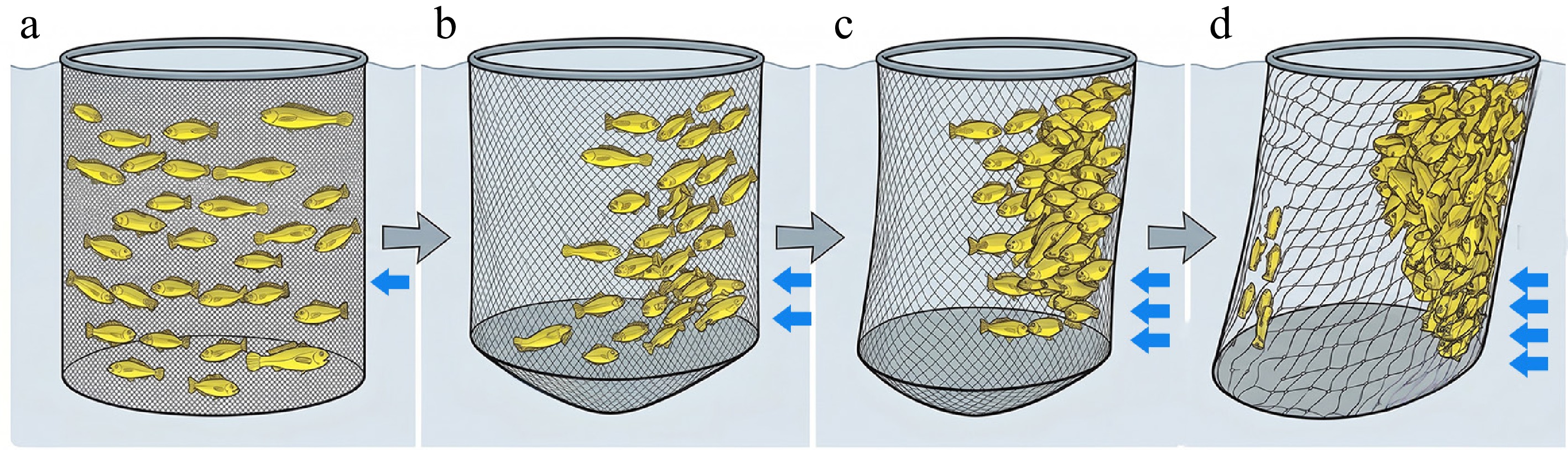
Figure 2.
Conceptual framework illustrating the potential application of critical swimming speed (Ucrit) in offshore aquaculture. Ucrit-based applications include site selection and adaptation to offshore farming environments, where swimming performance should be considered together with hydrodynamic conditions to optimize farming environments and ensure fish welfare.
Ucrit provides an important physiological reference for designing exercise training protocols in aquaculture by helping define appropriate training intensities for different species and developmental stages. Moderate aerobic exercise is also considered beneficial for fish, producing effects similar to those observed in other vertebrates, including improved health and increased stress resistance[64,70]. Exercise training can reduce variability in growth rates and promote more uniform body size, and it has been used as a practical tool to enhance growth performance[51,71]. From an energetic perspective, moderate exercise may reduce spontaneous or exploratory activity, allowing more energy to be allocated to growth[72]. However, the effects of exercise on growth are species-specific and depend on multiple factors, including training type, swimming speed, duration, body size, and environmental conditions[51,72,73]. Excessive training intensity can negatively affect growth and may compromise welfare[70,74,75]. Therefore, future studies should further refine Ucrit-based training protocols by accounting for species- and individual-specific differences to maximize the benefits of exercise while avoiding excessive training intensity that may compromise growth and welfare.
Fisheries management and conservation
-
In modern fisheries resource management, swimming performance, as represented by Ucrit, has emerged as a key indicator linking fish physiology with ecological conservation. The effectiveness of fish passage structures largely depends on the match between hydraulic conditions and the swimming capacity of target species[76]. In fish passage design, Ucrit is essential for ensuring passage efficiency[77,78], while other components of swimming performance, such as burst speed and endurance, should also be considered[78−80]. In addition, environmental factors influencing upstream migration, including flow regime, velocity, water level, temperature, and dissolved oxygen, should be integrated into fish passage design to improve passage success for target species[81−84]. There is also a need for quantitative data on swimming performance and migratory requirements in under-studied species, as well as a better understanding of variation within and among species and across life stages. Poorly designed connectivity measures based on limited data may be ineffective or even lead to unintended ecological consequences[85]. For example, studies on Pseudochondrostoma polylepis and Squalius carolitertii have shown that Ucrit, measured across individuals differing in sex, body size, and condition, can define thresholds of tolerance to flow velocity[78]. These thresholds provide a scientific basis for optimizing flow conditions in fish passage design.
Ucrit also serves as a valuable tool for ecological risk assessment and stock enhancement. As an integrative physiological indicator, it reflects the impacts of environmental stressors such as pollution and habitat degradation[3,86] and can be used to predict individual performance in the wild. Restocking programs based on hatchery-reared juveniles are widely used to restore fish populations[42], but these individuals often show reduced survival after release. This is largely attributed to their lower swimming performance, which limits their ability to cope with variable natural environments[20,42,87]. Improving Ucrit may therefore enhance post-release survival. This can be achieved through exercise training, phenotypic selection based on Ucrit, or selective breeding for enhanced swimming performance. Increasing Ucrit in released individuals may represent an effective strategy for improving restocking outcomes. Overall, management strategies that incorporate Ucrit as a reference can support multiple aspects of fisheries conservation, from optimizing fish passage systems to improving the quality of released stocks, ultimately enhancing the resilience of fish populations.
-
Ucrit remains one of the most practical and non-invasive metrics for quantifying swimming performance in fish. It is widely regarded as an ecologically relevant indicator and a practical proxy for prolonged aerobic swimming performance. However, Ucrit should be interpreted as a relative performance index rather than a direct measure of maximum aerobic capacity. In addition to physiological capacity, measured Ucrit values can be influenced by behavioral motivation, fatigue criteria, swimming protocol, and the hydrodynamic characteristics of the experimental apparatus. Consequently, although Ucrit provides valuable insights into swimming performance and ecological adaptation, its interpretation should be considered within the context of experimental design and biological characteristics.
However, several key challenges still limit its broader application and interpretation. First, the lack of standardized measurement protocols reduces comparability within and among species. Second, Ucrit testing remains time-consuming and labor-intensive, which constrains large-scale phenotyping. In addition, the physiological and molecular mechanisms underlying variation in Ucrit are not fully understood, particularly the integration of metabolic, muscular, and neural processes. Addressing these challenges requires coordinated efforts across multiple disciplines. Standardized protocols are essential for improving data consistency and enabling cross-study comparisons. At the same time, emerging technologies, including sensor technologies, artificial intelligence-assisted tracking, and automated phenotyping platforms, offer promising opportunities to increase throughput, enable continuous monitoring of physiological and behavioral responses during swimming, improve phenotyping accuracy, and reduce measurement bias. Integrating physiological approaches with multi-omics strategies, including genomics, transcriptomics, and metabolomics, will be critical for resolving the complex biological networks underlying swimming performance[88].
Beyond methodological advances, future research should expand the ecological and functional interpretation of Ucrit. Current applications remain relatively limited, but with the development of modern aquaculture practices and increasing ecological awareness, Ucrit is expected to play an increasingly important role in both fisheries science and aquaculture. A more integrative framework is needed to link Ucrit with ecological adaptation, behavioral strategies, and environmental responses. In addition, future studies should incorporate multiple dimensions of swimming performance, including sustained and burst swimming, and clarify their relationships with group behavior, feeding efficiency, and growth.
An important future challenge will be to determine whether Ucrit measured in individual fish accurately reflects swimming performance under group conditions, where schooling behavior and social interactions may influence swimming performance. Developing reliable, high-throughput group-based phenotyping methods while maintaining consistency with conventional individual Ucrit measurements will therefore be essential for large-scale breeding and aquaculture applications. Such advances will broaden the ecological relevance and practical application of Ucrit and support the sustainable development of fisheries and aquaculture.
-
This review provides a comprehensive overview of current research on Ucrit in fish, covering measurement approaches and experimental systems, environmental and biological determinants, physiological mechanisms, and emerging genetic and molecular insights. We also summarize its applications in aquaculture and fisheries management, including selective breeding, optimization of farming systems, fish passage design, and stock enhancement. Collectively, current evidence indicates that Ucrit is a valuable but context-dependent indicator that links individual swimming performance with physiological capacity, ecological adaptation, and practical applications. However, its interpretation requires careful consideration of methodological variation, biological characteristics, and the complexity of natural swimming environments. Future advances should therefore focus not only on improving measurement and mechanistic understanding, but also on expanding the ecological and production relevance of Ucrit. Establishing a more integrated framework will help position Ucrit as a bridge connecting physiology, ecology, and aquaculture practice, ultimately supporting more efficient and sustainable fisheries and aquaculture systems.
Not applicable.
-
During the preparation of this work, the authors used Google Gemini (Gemini 3.5 Flash, 2026) for image enhancement. The AI-assisted processing was limited to improving the visual quality and presentation of the figures, such as graphical clarity and readability. No new scientific elements, experimental data, quantitative information, or biological interpretations were generated or modified by the AI tool. All AI-assisted modifications were manually reviewed by the authors to ensure accuracy, consistency, and compliance with the original content. The authors take full responsibility for the integrity, originality, and final presentation of all figures and the manuscript.
-
The authors confirm their contributions to this paper as follows: study conception and design: Xu P, Liu W; draft manuscript preparation, table and figures preparation: Liu W; valuable feedback before the final version was completed: Zeng J, Li N, Zhou T, Xu P. All authors reviewed the results and approved the final version of the manuscript.
-
Data sharing does not apply to this article, as no datasets were generated or analyzed during the current study.
-
The authors declare no competing or financial conflict of interest.
- This is an open access article under the terms of the Creative Commons Attribution License, which permits use, distribution and reproduction in any medium, provided the original work is properly cited.
-
About this article
Cite this article
Liu W, Zeng J, Li N, Zhou T, Xu P. 2026. Critical swimming speed in fish: measurement, determinants, and applications in aquaculture and fisheries management. Journal of Applied Ichthyology 2026: e008 doi: 10.48130/jai-0026-0007 

Critical swimming speed in fish: measurement, determinants, and applications in aquaculture and fisheries management
- Received: 11 May 2026
- Revised: 10 August 2026
- Accepted: 12 August 2026
- Published online: 24 September 2026
Abstract: Critical swimming speed (Ucrit) is widely used as a non-invasive and practical metric for quantifying swimming performance in fish. This review summarizes current advances in Ucrit research, focusing on measurement methods, environmental and biological determinants, and the underlying genetic and molecular mechanisms. We highlight key methodological developments, including step and ramp protocols, while addressing ongoing challenges such as the lack of standardized procedures and the limited comparability across studies. Environmental factors, including temperature, dissolved oxygen, salinity, and ocean acidification, strongly influence Ucrit, while intrinsic traits such as body size, sex, and physiological capacity further shape its variation. Recent studies have begun to uncover the genetic architecture of Ucrit, with evidence from heritability estimates, genome-wide association studies, and transcriptomic analyses pointing to a polygenic basis and a central role of energy metabolism and mitochondrial function. We further discuss the applications of Ucrit in aquaculture and fisheries management, including selective breeding, exercise training, fish passage design, and stock enhancement. Finally, we outline future research directions, emphasizing the need to establish standardized measurement frameworks, develop high-throughput phenotyping technologies integrated with artificial intelligence, and achieve multi-omics integration. Advancing these approaches will deepen our understanding of swimming performance and facilitate the development of more efficient and sustainable aquaculture, while promoting continued innovation in fisheries science.
-
Key words:
- Critical swimming speed (Ucrit) /
- Phenotyping /
- Aquaculture /
- Fisheries management