













-
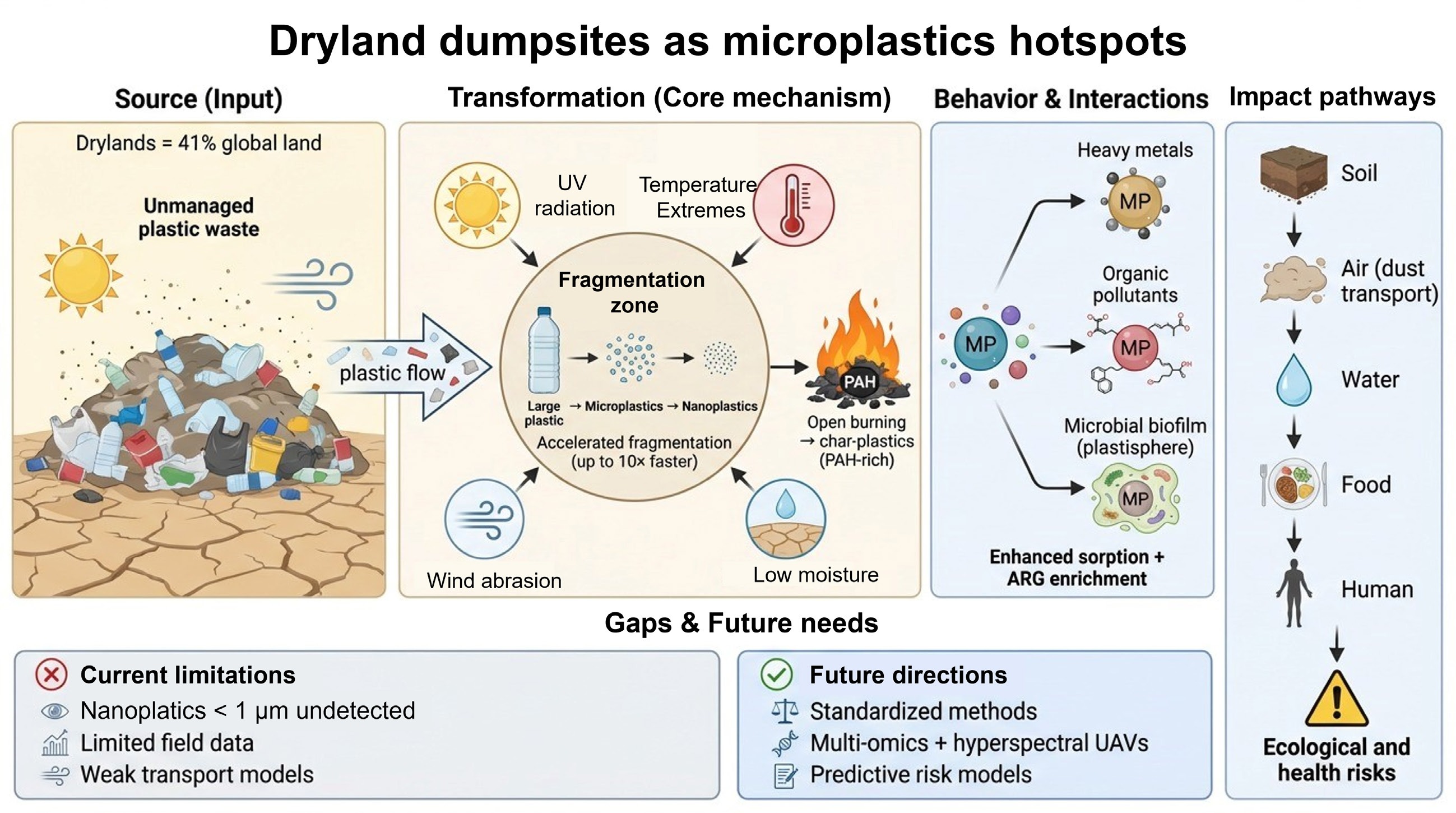
Microplastics, defined as plastic particles smaller than 5 mm in size, have emerged as pervasive contaminants across environmental systems, including soils, water bodies, and the atmosphere. Within this review, the term "nanoplastics" is used to refer specifically to plastic particles smaller than 1 µm, representing the lower end of the broader < 5 mm microplastic size spectrum[1]. They originate either from the breakdown of larger plastic materials or from direct industrial and consumer applications[2,3]. Because of their persistence, mobility, and capacity to interact with biological and chemical systems, microplastics are now recognized as a critical environmental concern[4]. Although research has largely focused on marine and freshwater systems, terrestrial environments, particularly drylands, remain insufficiently explored. Dryland regions span extensive areas across Africa, Asia, the Middle East, Australia, and parts of North and South America, where rapid urbanization, limited waste infrastructure, and climatic extremes converge[5,6]. In these settings, open dumpsites actively transform plastics into smaller and more reactive particles[7].
Drylands make up about 41% of the Earth's land surface and are home to more than two billion people, mostly in sub-Saharan Africa, South and Central Asia, the Middle East, and Latin America[8]. In many of these regions, plastic waste is predominantly unmanaged and disposed of in open dumpsites. Environmental conditions characterized by intense ultraviolet (UV) radiation, extreme temperature fluctuations, low moisture availability, and persistent wind accelerate plastic fragmentation while suppressing microbial degradation[9,10]. This imbalance leads to the continuous generation and accumulation of persistent microplastics that disperse across the soil, air, and water systems. Despite the scale of this issue, global research remains heavily concentrated in Europe, North America, and East Asia, resulting in a significant knowledge gap[11,12].
Recent advancements from 2016 to 2026 report global soil microplastic concentrations ranging from 0.1 to 600 particles per kg, yet dryland dumpsites, despite receiving about 41% of unmanaged plastic waste, remain largely understudied[13]. Critical evaluation highlights key breakthroughs, including accelerated UV-driven photooxidation under dryland conditions; the formation of polycyclic aromatic hydrocarbon (PAH)-enriched char plastics from open burning, with uncertain toxicological implications; and the enrichment of antimicrobial resistance genes within plastisphere communities relative to bulk soil[14,15]. Despite these advances, major challenges persist in integrating these processes across spatial and temporal scales to fully assess drylands' microplastic risks. This review aims to synthesize the current knowledge on microplastics' dynamics in dryland dumpsites through an integrated framework that links plastic sources, transformation processes, transport pathways, environmental fate, and ecological impacts. It seeks to characterize the unique degradation regime of drylands, evaluate the role of microplastics as vectors of co-contaminants, and assess the implications for soil systems, food chains, and human exposure.
Understanding microplastic pollution in dryland dumpsites is essential for advancing global environmental management. These systems represent a major yet overlooked component of the plastic cycle, with implications for ecosystems' stability, food security, and public health across Africa, Asia, the Middle East, and Latin America[16]. Addressing this gap supports the development of context-specific monitoring strategies, predictive models, and policy interventions, while highlighting the environmental justice concerns related to disproportionate exposures in vulnerable communities. Figure 1 shows a source-to-impact framework integrating microplastics' dynamics in dryland dumpsites.
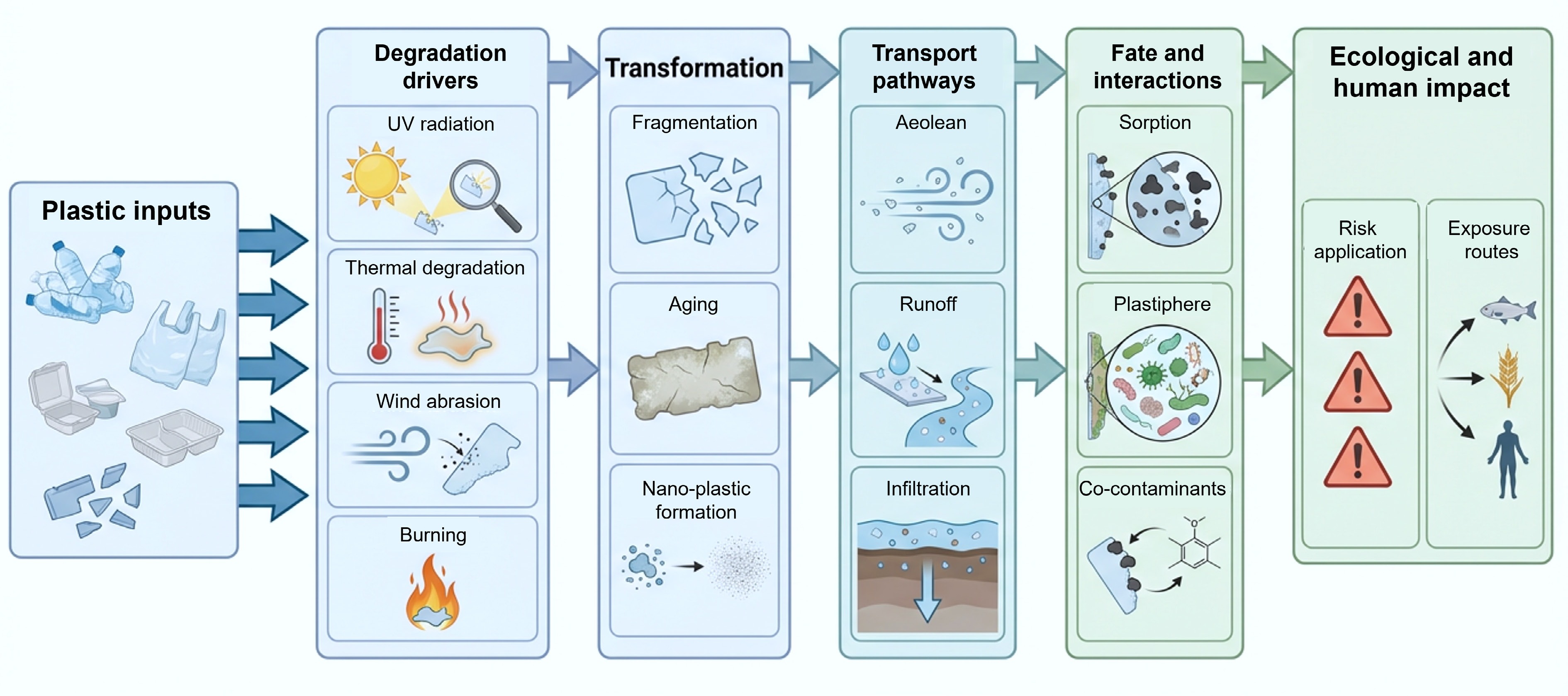
Figure 1.
Integrated source-to-impact framework for microplastics' dynamics in dryland dumpsites: plastic inputs, degradation drivers, transformation processes, transport pathways, fate and interactions, and ecological/human impacts.
-
Using the procedure of Singh and Jain[17], a systematic synthesis of 87 peer-reviewed studies (2016–2026) was conducted using Web of Science and Scopus with keywords related to microplastics in arid and dryland environments. In total, 1,247 records were screened, with 732 excluded at the title and abstract stage, and 87 meeting the inclusion criteria for relevance to drylands and interdisciplinary scope. The review integrates evidence from environmental chemistry (UV kinetics), microbial ecology (plastisphere-related metagenomics), atmospheric science (aeolian transport), and ecotoxicology (vector effects). The strength of the evidence was evaluated as strong (multiple field validations), moderate (laboratory with limited field support), or weak (extrapolative). Supplementary Table S1 summarizes the strength of evidence across key research domains, highlighting well-established processes (e.g., UV-driven degradation and metal sorption) alongside emerging and underexplored areas such as nanoplastics' vector effects and subsurface transport. The selection process is summarized in Supplementary Fig. S1.
-
Plastic degradation in dryland environments is governed by a unique combination of environmental stressors that operate simultaneously, creating conditions that favor rapid fragmentation while limiting complete breakdown[10]. Unlike humid or temperate systems where biological processes contribute significantly to degradation, drylands are dominated by abiotic forces that reshape plastics into smaller, more reactive particles[18].
High UV radiation
-
Ultraviolet radiation is the primary driver of plastic degradation in dryland regions. Elevated UV exposure, resulting from minimal cloud cover and low atmospheric moisture, accelerates photo-oxidation within polymer structures[19]. This process alters the chemical composition of plastics by introducing oxygen-containing functional groups, which weaken polymer chains and reduce mechanical strength[20]. Over time, these photo-oxidative reactions progressively embrittle the polymer, rendering it increasingly susceptible to cracking and mechanical fragmentation. In open dumpsites, where materials are directly exposed to sunlight throughout the year, this process occurs continuously, making UV-driven degradation a key initiating mechanism in the breakdown of plastics[21].
Temperature extremes and thermal stress
-
Dryland environments are also characterized by large diurnal temperature fluctuations, which impose additional mechanical stress on plastic materials[22]. Polymers expand and contract when they are heated and cooled repeatedly. This creates internal stresses that cause microcracks to form[23]. These effects are particularly pronounced in semicrystalline polymers such as polyethylene and polypropylene, where differences between crystalline and amorphous regions create structural weak points. As thermal cycling goes on, these microcracks spread and eventually cause the material to break apart[24]. The interaction between UV exposure and thermal stress further accelerates degradation, as chemically weakened polymers become more susceptible to mechanical failure[25].
Limited microbial degradation
-
In contrast to abiotic processes, microbial degradation plays a limited role in dryland environments. Low moisture availability restricts microbial activity, with many soil microorganisms remaining dormant for extended periods[26,27]. Even when microbial communities capable of degrading plastics are present, their activity is constrained by environmental conditions that are not conducive to sustained metabolic processes, such as low moisture levels and extreme temperatures, which limit their ability to effectively break down plastics[28]. As a result, biological pathways that could contribute to polymer breakdown are largely inactive, and degradation is dominated by physical and chemical mechanisms. This leads to the accumulation of partially degraded plastic fragments rather than complete mineralization[29].
Wind-driven mechanical abrasion
-
Wind is a dominant physical force in dryland systems and plays a critical role in both degradation and transport. Strong winds mobilize sand and dust particles that collide with exposed plastics, causing surface abrasions[30]. This process gradually erodes the plastics' surfaces, creates cracks and pits, and exposes fresh material to further UV attack. Over time, abrasion contributes to the generation of microplastics and alters their particle morphology and surface chemistry. In addition, wind facilitates the redistribution of plastic fragments across the landscape, enhancing their environmental spread[31,32]. Table 1 summarizes the main dryland environmental drivers that accelerate plastic degradation and microplastic formation. Figure 2 shows a conceptual diagram of the environmental drivers shaping the unique process of plastic degradation in drylands.
Table 1. Environmental drivers of plastic degradation in dryland dumpsites and their mechanistic effects
Environmental driver Typical dryland conditions Key mechanisms Dominant effects on microplastic formation High UV radiation > 3,000 h/year, minimal cloud cover Photo-oxidation, carbonyl formation, chain scission Rapid embrittlement, surface cracking, fragmentation into films/fragments[33]. Temperature extremes 20–50 °C diurnal range Thermal expansion/contraction, microcrack formation Mechanical failure of semi-crystalline polymers (PE, PP), surface fatigue[34]. Limited moisture < 250 mm per year of precipitation Suppression of microbial activity, dormant soil microbiome Minimal biodegradation, accumulation of weathered fragments[35]. Wind abrasion Persistent winds > 5 m s−1, sand/dust transport Surface erosion, pit/crack formation Generation of angular fragments, exposure of fresh polymer surfaces[36]. Note: UV, ultraviolet; PE, polyethylene; PP, polypropylene. 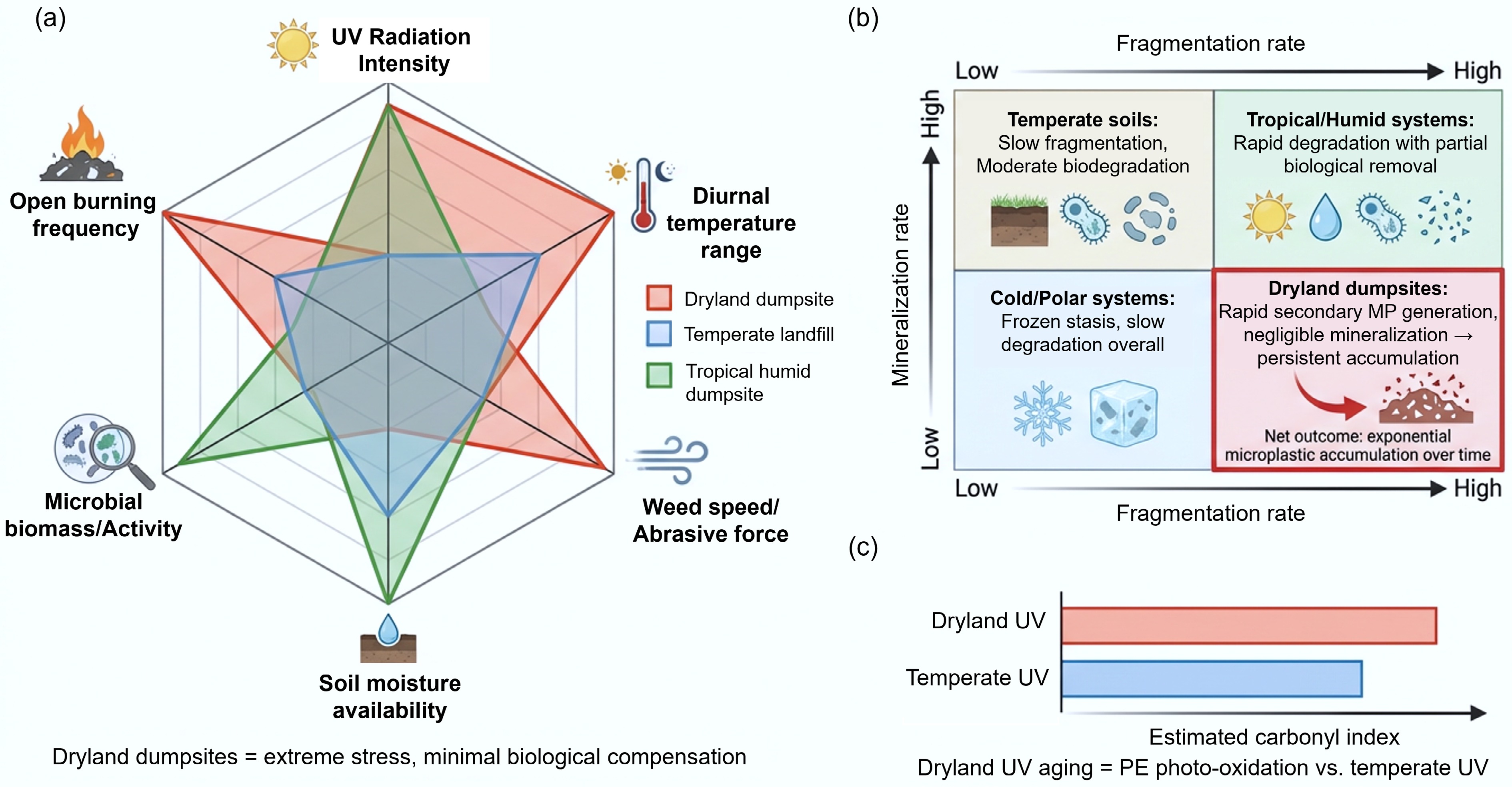
Figure 2.
Comparative environmental drivers and outcomes in dryland dumpsites: (a) Drivers' intensity across dryland, temperate, and tropical-humid systems; (b) fragmentation–mineralization balance across climate regimes; and (c) estimated polyethylene (PE) carbonyl index under dryland versus temperate UV aging.
Together, these drivers create a distinctive degradation regime in drylands. Plastics are rapidly fragmented into smaller particles through the combined effects of UV radiation, thermal stress, and wind abrasion[37]. However, the lack of sufficient microbial activity prevents their complete breakdown, resulting in the persistence and accumulation of microplastics. This imbalance between fragmentation and mineralization leads to long-term environmental contamination, as particles become increasingly reactive and capable of interacting with other pollutants. Understanding these processes is essential for developing effective management strategies that address the unique challenges of plastic pollution in dryland environments[38].
Synergistic interactions among environmental drivers
-
Beyond their individual influences, these factors interact synergistically in dryland environments. Intense UV radiation and large diurnal temperature fluctuations weather plastics' surfaces by generating oxidative functional groups and microcracks, making them more susceptible to mechanical breakdown. Subsequent wind-driven sand abrasion exploits these weakened surfaces, accelerating fragmentation into progressively smaller microplastic and nanoplastic particles[34]. Simultaneously, persistently low soil moisture and elevated temperatures suppress microbial activity, limiting the biological degradation and mineralization of newly formed fragments. As a result, dryland dumpsites are characterized by rapid abiotic fragmentation coupled with constrained biodegradation, a process that contrasts sharply with temperate landfills, where higher moisture availability and milder climatic conditions support a greater contribution of microbial degradation to the breakdown of plastics[37].
-
Open dumpsites in dryland areas function not only as repositories for discarded plastic but also as active reactors in which multiple physical and chemical processes continuously generate new microplastic particles. The amount and type of microplastics produced depend on the different types of waste that are brought in, the activities that take place on site, and the dry environmental conditions described in the previous section[39,40]. The volume and compositional heterogeneity of plastic inputs into dryland dumpsites reflect the full spectrum of plastic use in the communities they serve. A critical synthesis of studies published between 2012 and 2023 shows that the plastic fractions in open dumpsites located in dryland cities across West Africa, East Africa, South Asia, the Middle East, and North Africa range from 5.4% to 29.2% of total waste mass by weight, with a pooled mean of approximately 19.8%. In contrast, temperate engineered landfills in Europe and North America consistently report plastic fractions of 8%–13% of the total waste mass[41,42], yielding a substantially higher plastic burden in dryland-based open dumpsites (p < 0.01)[43,44]. The details of all comparative studies, including their locations, climate classifications, facility types, and site-level plastic mass fractions, are summarized in Supplementary Table S2. A key breakthrough demonstrated that thin-film polyethylene photodegrades up to 17 times faster than bulk plastics, primarily because its higher surface-to-volume ratio (0.42 versus 0.025 mm−1 for the thicker material) exposes a much larger reactive area per unit of mass to incident radiation and oxidants, thereby accelerating chain scission and fragment formation. However, a major limitation persists, as no studies have quantified polymer-specific flux rates under combined UV and abrasion conditions, highlighting a critical gap compared with temperate systems, where controlled laboratory studies are more established[45,46].
In fast-growing dryland cities, particularly across sub-Saharan Africa and South Asia, the absence of a formal collection infrastructure means that a large proportion of this waste reaches dumpsites without sorting, compaction, or containment[47]. The resulting waste mass is loose, highly exposed, and composed of materials spanning a wide range of polymer types, colors, thicknesses, and degrees of prior use, with each of these variables influencing the rate and pathway of degradation[48]. This compositional heterogeneity means that thin films, rigid containers, fibers, foams, and textiles weather at markedly different rates, with thin films in particular fragmenting rapidly because of their high surface-to-volume ratios (as noted above), whereas thicker, more massive items degrade more slowly[49]. This compositional heterogeneity means that dryland dumpsites are, at any given time, generating microplastics from multiple polymer types simultaneously, at different rates, and by different mechanisms, producing a diverse assemblage of microplastic morphologies including fragments, films, fibers, beads, and foams in the surrounding soils and air[50,51].
Open burning alters polymers' structure and toxicity
-
Open burning of waste is among the most consequential and poorly characterized practices contributing to the generation of microplastics in dryland dumpsites. In many Low and Middle Income Countries (LMICs), open burning is the primary volume-reduction strategy used at informal dumpsites. It may be practiced daily or seasonally to manage the accumulating mass of solid waste with no alternative processing capacity available[52,53]. The thermal decomposition of plastic materials during open burning is a chemically complex process that operates under conditions far removed from controlled incineration: The temperatures are heterogeneous across the burning pile, ranging from above 1,000 °C in actively combusting zones to well below 300 °C in peripheral smoldering areas; the oxygen supply is variable and often insufficient for complete combustion; and burn times are intermittent, producing repeated cycles of heating and partial cooling[54,55].
Under these conditions, plastics undergo partial pyrolysis, melting, and rapid re-solidification, producing a range of combustion-modified particles: Fused agglomerates, char-coated fragments, and fibrous residues from melted textiles[56]. Research at open dumping and burning sites conducted by Deshpande and Lascelles[57] identified these thermally altered particles as a distinct and toxicologically significant class of microplastics, exhibiting structural deformation, carbonized surfaces, and elevated concentrations of PAHs, volatile organic compounds (VOCs), dioxins, and furans sorbed onto or incorporated within the particle matrix. Crucially, open burning does not eliminate plastic waste; it transforms it into forms that are smaller, lighter, more surface-active, and chemically more hazardous than the parent materials[58]. The aerosol of fine particles and chemical pollutants generated by open burning in dryland dumpsites can travel significant distances from the site, depositing contamination far beyond the immediate zone of waste accumulation and exposing populations with no direct connection to the dumpsite to the toxic products of plastic combustion[59].
Mechanical breakdown through wind abrasion and human activity
-
Mechanical breakdown through wind abrasion and human activity constitutes a third major mechanism of on-site generation of microplastics. As detailed in the previous section, wind-driven sand and dust act as continuous abrasive agents on exposed plastics' surfaces, progressively fragmenting large pieces and generating a steady flux of microplastic and submicroplastic particles[31,60]. Human activity at dumpsites, such as waste pickers sorting through materials with their bare hands and tools, vehicles traversing waste deposits and exerting compressive and shear forces, and animals foraging among discarded items further accelerate mechanical breakdown[61]. Waste pickers, who are economically essential actors in the informal recycling economies of many LMIC cities, inadvertently contribute to fragmentation by handling, tearing, and sorting partially degraded plastic materials and by repeatedly disturbing the waste surface in ways that expose fresh material to UV radiation and wind abrasion[62].
The combined action of these mechanical processes and the abiotic weathering described earlier creates a self-reinforcing fragmentation cycle: UV radiation and thermal cycling embrittle plastics and initiate microcracks; wind and mechanical action exploit these structural weaknesses to produce fragments; the resulting smaller particles, with their greater surface-area-to-volume ratios, are more efficiently photodegraded in subsequent UV exposure cycles; and the cycle continues, generating progressively smaller particles at each iteration[23]. The rate of this fragmentation cascade is expected to be substantially faster in dryland dumpsite environments than in the controlled experimental settings where most photodegradation kinetics have been measured, because the co-occurrence of UV exposure, thermal cycling, and mechanical abrasion at the same site creates compound stress conditions that no single-factor experiment can capture[63].
Absence of reliable estimates for microplastic generation rates
-
Despite the clear mechanistic basis for anticipating high microplastic generation rates in dryland dumpsites, reliable quantitative estimates for these rates are conspicuously absent from the scientific literature[64]. According to the study by Andrady et al.[37], plastic degradation in laboratory settings provides useful mechanistic insights but rarely translates to field-relevant generation rates under dryland conditions because they cannot simultaneously replicate the intensity of UV radiation, the amplitude of thermal cycling, and the abrasive effect of wind-driven mineral particles that characterize real dryland environments[65]. According to the study of Huang et al.[66], engineered landfills have documented exponential increases in microplastic content with facilities' age from approximately 71 items per gram of plastic in younger sections to 653 items per gram in older deposits, representing nearly a 10-fold increase over the operational lifespan. However, these estimates were generated in landfills with partial containment, compaction, and engineered cover, and these conditions are fundamentally different from those in open, unmanaged dryland dumpsites where UV exposure, wind abrasion, and open burning operate without restriction[67]. Dedicated field measurement campaigns designed to quantify microplastic generation rates as a function of plastic type, dumpsite age, burning frequency, and local climate variables are urgently needed to fill this critical gap[68].
-
Plastic particles in dryland environments do not remain chemically stable after fragmentation. Instead, they undergo continuous transformation that alters their structure, surface properties, and environmental behavior, thereby increasing their ecological relevance over time, which can lead to more significant impacts on soil health, water quality, and local ecosystems.
Photochemical oxidation and polymer breakdown
-
A key breakthrough reported by Nzimande et al.[69] demonstrates that carbonyl index formation in polymers occurs approximately 4.2 times faster under dryland UV conditions than in temperate environments (k = 0.023 vs 0.0055 day−1), a pattern validated across multiple polymer types. Despite this progress, a major limitation remains the absence of field-validated degradation rate constants under real dumpsite conditions, where combined stressors such as UV radiation, wind abrasion, and thermal fluctuations act synergistically but remain poorly quantified[70]. Concurrently, an emerging trend highlights the formation of nanoplastics through sequential erosion processes, increasingly detected using techniques such as pyrolysis alongside gas chromatography/mass spectroscopy. Among the 87 studies synthesized in this review, only about eight (9.2%) quantified microplastic particles smaller than 1 μm, highlighting a significant analytical gap despite increasing evidence of the environmental importance of this size fraction. The limited inclusion of submicron particles suggests that current assessments may underestimate the occurrence, mobility, bioavailability, and ecological risks associated with the smallest microplastics in environmental systems[71].
These chemical changes significantly modify particles' surfaces. Microplastics become more hydrophilic, develop greater surface roughness, and exhibit increased porosity. As their molecular weight declines, structural integrity weakens and the surface area available for interactions increases[72,73]. In dryland environments, where UV exposure is intense and persistent, these transformations occur continuously, resulting in highly weathered particles compared with those in less extreme climates[74].
Formation of secondary microplastics and nanoplastics
-
Secondary microplastics are the dominant form of plastic pollution in dryland dumpsites. They arise from the progressive breakdown of larger plastic materials through combined physical and chemical stress. This process is self-reinforcing, as smaller particles with a higher surface area degrade more rapidly than their parent materials[70].
At advanced stages, fragmentation produces nanoplastics through surface erosion and continued breakdown of microplastic particles[75]. These nanoscale particles exhibit distinct environmental behaviors. Their small size allows them to remain suspended in air or water, move through soil pores, and interact more readily with biological systems. As a result, they represent a potentially higher risk fraction within the plastic degradation continuum[76]. Table 2 outlines the major transformation processes and transport pathways governing microplastics' fate in dryland dumpsites.
Table 2. Transformation processes and environmental transport pathways of microplastics from dryland dumpsites
Process/pathway Main controls Particle types affected Key compartments Major knowledge gaps Photochemical oxidation UV intensity, exposure duration All polymers Surface soils, atmosphere Rate constants for dryland UV spectra[77]. Secondary MP/nanoplastic formation Multistress cycling (UV + thermal + abrasion) Fragments, films Soil surface layer Nanoplastic generation rates[78]. Surface aging/reactivity Weathering duration All weathered MPs All compartments Sorption enhancement factors of polymers[79]. Aeolian transport Wind speed, particle morphology Films, fibers (<1 mm) Atmosphere, remote soils Long-range deposition models[80]. Episodic runoff Storms' intensity, soil crusting Dense fragments Fluvial systems, oases Flash flood-related MP flux estimates[81]. Soil infiltration Soil structure, rainfall <500-μm particles Vadose zone, groundwater Vertical transport rates by soil type[82]. Note: UV, ultraviolet; MP, microplastics; mm, millimeter; μm, micrometer; <, less than. Surface aging and increased reactivity
-
As weathering progresses, microplastics transition from relatively inert materials to chemically reactive particles. Surface oxidation introduces functional groups that enable interactions with both organic and inorganic contaminants. Hydrogen bonding, electrostatic attraction, and surface adsorption become increasingly important as particle surfaces evolve[83].
Weathered microplastics consistently exhibit superior sorption capacity for heavy metals and organic pollutants in comparison with unaltered materials. Reported enhancement factors vary systematically among polymer types, generally being greater in polyolefins and polystyrene than in more crystalline or heavily plasticized materials. These enhancement effects also increase with the duration and intensity of weathering, reflecting the cumulative development of oxidized functional groups and increased surface roughness[84]. Increased porosity and surface heterogeneity create localized zones where contaminants can accumulate at elevated concentrations. In dryland dumpsites, where plastics are exposed to intense weathering and co-occur with diverse pollutants, this enhanced reactivity significantly influences contaminant transport and ecological risk[85,86].
Analytical limitations in detecting nanoplastics
-
Despite their importance, nanoplastics remain difficult to detect and quantify. Conventional analytical methods, such as Fourier transform infrared spectroscopy, are limited in their ability to identify particles below 1 μm[87]. More advanced techniques, including Raman spectroscopy and thermal analysis methods, offer improved sensitivity but require specialized equipment, which is often unavailable in regions where dryland dumpsites are most prevalent[88].
This limitation results in a systematic underestimation of total plastic particle loads and restricts a complete understanding of the transformation processes in these environments. As a result, the most reactive and mobile fraction of plastic pollution remains largely uncharacterized[89].
Dryland environments promote continuous and progressive transformation of plastic materials. Through photochemical oxidation, fragmentation, and surface aging, plastics evolve into smaller, more reactive particles with enhanced mobility and contaminant interactions[90,91]. However, current analytical limitations, particularly for nanoplastics, constrain the ability to fully capture these dynamics, highlighting the need for improved detection methods and integrated process-based studies[92].
-
Microplastics generated in dryland dumpsites rarely remain confined to their source. Their small size and low density allow them to move through the air, water, and soil, spreading contamination across surrounding environments and exposing ecosystems far beyond the original site.
Aeolian transport as the dominant pathway
-
In dryland environments, wind is the dominant driver of microplastic dispersal because sparse vegetation and exposed surfaces facilitate particle transport. Low-density particles such as films and fibers are particularly prone to aeolian transport, enabling long-range movement and deposition far from the source sites. A spatial-scale analysis showed that microplastic deposition declines by 0.87 × the log of distance from the source in drylands (r2 = 0.91; eight sites), compared with 0.42× in temperate systems (n = 14)[93]. However, the current models do not account for particles' morphology, despite evidence that films are deposited 3.2× closer than fragments. During transport, continued UV exposure alters particles' surfaces, increasing their reactivity prior to deposition. Although remote contamination confirms landscape-scale dispersal, the spatial modeling of wind-driven microplastic transport in drylands remains limited, though emerging unmanned aerial vehicle (UAV)-based hyperspectral approaches show promise[94].
Episodic runoff and flash floods
-
Although rainfall is infrequent in drylands, episodic runoff and flash floods play a significant role in redistributing microplastics across landscapes[93,94]. Low soil infiltration capacity, often caused by surface crusting and low organic matter, leads to rapid runoff during rainfall events[95]. These flows can mobilize and transport large quantities of microplastics across the landscape[96,97].
Flash floods are particularly important because they can move particles over long distances within a short time[97]. Microplastics may be deposited in downstream environments such as valleys, channels, and oasis systems, extending contamination into areas not directly associated with waste disposal[96]. The episodic nature of these events creates uneven patterns of distribution, making their detection and monitoring more challenging, particularly in remote or less accessible areas where microplastics may accumulate unnoticed[91].
Soil infiltration and vertical transport
-
Microplastics can also move vertically within the soil profile[93]. During rainfall events, particles are carried downward through soil pores and cracks, reaching deeper layers than previously assumed[98]. The soil structure, including macropores formed by roots, soil fauna, and desiccation, facilitates this process[91].
This pathway has important implications for groundwater quality[94]. In dryland landscapes, runoff and infiltration act as competing transport pathways whose relative dominance depends on rainfall intensity, antecedent soil moisture, and surface crusting. Intense, short-duration storms falling on dry, crusted soils with low macroporosity favor Hortonian overland flow and lateral mobilization of microplastics downslope, whereas lower-intensity or longer events on previously wetted, better-structured soils promote greater vertical infiltration and subsurface transport. Repeated wetting–drying cycles can alternately seal the surface through crust formation or reopen preferential flow paths via cracking and root channels, causing runoff-dominated and infiltration-dominated regimes to alternate seasonally at the same site. In many dryland regions, shallow aquifers are essential sources of water for human consumption and agriculture[93]. The infiltration of microplastics, along with associated contaminants such as heavy metals and organic pollutants, raises concerns about long-term subsurface contamination[99,100]. However, this pathway remains poorly quantified in dryland environments[97]. Figure 3 shows the multipathway transport mechanisms dispersing microplastics from dryland dumpsites.
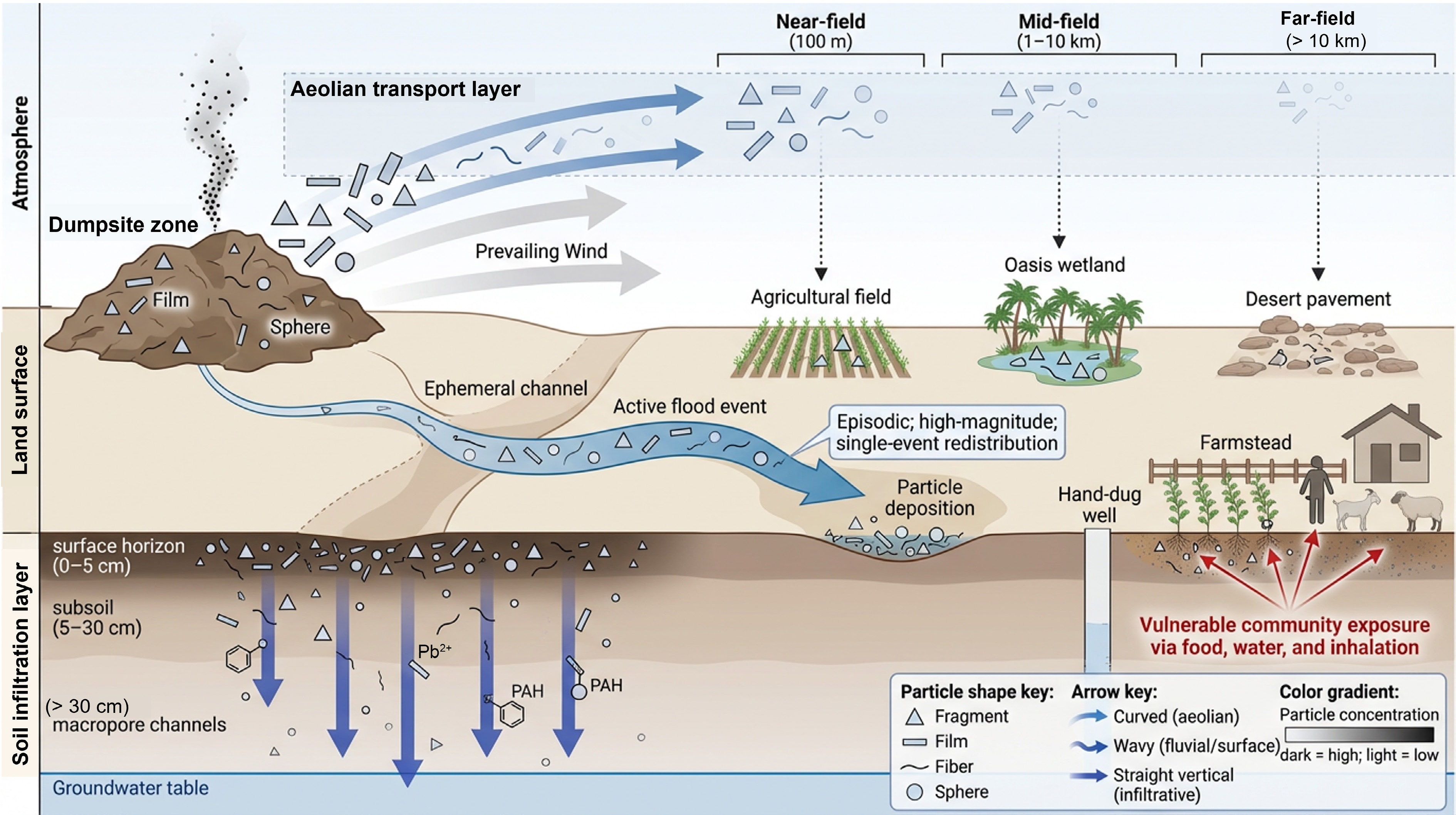
Figure 3.
Transport pathways and the fate of microplastics in dryland dumpsites: Aeolian dispersal, episodic runoff, and vertical infiltration.
Lack of integrated transport models
-
A major limitation in current research is the lack of models that integrate multiple transport pathways[97]. In reality, aeolian dispersal, runoff-driven transport, and soil infiltration occur simultaneously, with their relative importance varying across space and time. Most existing formulations treat aeolian dispersal, runoff-driven transport, and vertical infiltration in isolation, often adapting parameterizations from temperate hydrology or atmospheric dust models without calibrating them to dryland-specific conditions such as sparse vegetation cover, soil crusting, or highly episodic rainfall[93,101].
The existing models, which are largely derived from temperate and aquatic systems, do not adequately capture the episodic, wind-driven dynamics that characterize dryland environments and strongly influence microplastic transport[101]. Addressing this gap requires the development of process-based, climate-sensitive models that integrate wind erosion, surface runoff, and infiltration within a unified framework, while explicitly accounting for particle size, density, morphology, landscape characteristics, and soil properties. These models should also be calibrated and validated using multiyear field observations that encompass both background conditions and extreme events, such as dust storms and flash floods, to improve the prediction of microplastics' movement and support effective management strategies[102]. Transport processes in drylands are complex and interconnected[103]. Wind drives long-range dispersal, runoff enables rapid redistribution during rainfall events, and soil infiltration facilitates subsurface movement[93]. Together, these pathways extend the impact of microplastics far beyond dumpsites, highlighting the need for integrated, system-based approaches to understanding and managing plastic pollution in dryland regions[104].
-
One of the most ecologically consequential dimensions of microplastic pollution is the capacity of plastic particles to function not merely as physical contaminants but as reactive vectors that sorb, concentrate, and transport other environmental pollutants[93,103]. This vector function transforms microplastics from a monomeric environmental problem, characterized by inherent physical and chemical toxicity, into a compound issue in which microplastics enhance the mobility and bioavailability of the entire chemical contaminant burden present in dumpsite environments[95]. The sorption of heavy metals onto microplastics' surfaces has been extensively documented[99]. Metals including lead (Pb), cadmium (Cd), copper (Cu), zinc (Zn), nickel (Ni), and chromium (Cr) form associations with microplastic particles through mechanisms including electrostatic interaction with surface charge groups, surface complexation with oxygenated functional groups such as carboxylates and hydroxylates, and physical entrapment within surface pores and crevices created by weathering[105].
Studies of microplastic fragments recovered from contaminated environments confirmed that metal concentrations on microplastic surfaces can be orders of magnitude higher than in the surrounding soil matrix, reflecting strong concentration gradients that drive metals' sorption onto particles with a high surface area[99]. Field studies of co-contaminated agricultural soils support this enrichment, with microplastic fragments carrying a substantial metal burden relative to the surrounding soil matrix. For example, in wastewater-irrigated fields in Rey County (Tehran, Iran), Mozaffarghadirli et al.[106] reported average bulk-soil Cu and Cd concentrations of 23.02 and 4.97 mg kg−1, respectively, whereas microplastic extracts from the same fields contained 5.86 mg kg−1 Cu and 3.45 mg kg−1 Cd, indicating that a relatively small mass of mobile plastic particles can sequester metal loads that are on the same order of magnitude as those in the bulk soil. Organic pollutants including PAHs, phthalates, persistent organic pollutants (POPs) such as polychlorinated biphenyls (PCBs) and organochlorine pesticides, and emerging contaminants such as pharmaceuticals interact with microplastics' surfaces primarily through hydrophobic partitioning, with nonpolar organic molecules preferentially partitioning from polar aqueous phases onto the relatively nonpolar polymers' surface[93]. The sorption capacity for hydrophobic organics varies according to the hydrophobicity of the polymer, which means that different types of polymers sorb different groups of organic contaminants with varying efficiencies; among these, polyethylene (PE) and polypropylene (PP), two of the most abundant polymers found in dryland dumpsite waste streams, are particularly effective sorbents for nonpolar organics[103].
Enhanced binding capacity caused by surface aging
-
Surface aging substantially increases microplastics' sorption capacity, with metal adsorption rising by 2.8–11.4 times (strong evidence, n = 15), organic pollutant partitioning by 1.9–6.7 times (moderate, n = 9), and nanoplastic vector effects by more than 20 times (weak, n = 3)[107]. This variability reflects differences in the polymer type, weathering conditions, and contaminant characteristics. Weathered polyolefins often exhibit greater sorption enhancement than more polar polymers, whereas combined UV, thermal, and mechanical aging generally produces stronger effects than UV exposure alone. Contaminant-specific responses also play an important role[104]. For heavy metals, the formation of oxygen-containing functional groups and increased microporosity during aging enhance complexation and electrostatic interactions. In contrast, the sorption of hydrophobic organic pollutants, such as PAHs and PCBs, is driven primarily by increases in specific surface area and alterations in polymers' hydrophobicity. This enhancement, typically 2–10-fold over pristine polymers, is driven by increased surface area and porosity, the formation of polar functional groups, and micro- to nanoscale surface heterogeneity that create high-affinity sorption sites[104]. An emerging observation is that dryland weathered PP exhibits cadmium sorption up to 4.6 times higher than its marine equivalents[108], although field validation remains lacking. A key methodological gap is the absence of standardized carbonyl index thresholds, with reported values ranging from 0.2 to 1.8 arbitrary units[99].
In dryland dumpsite environments, where microplastics are simultaneously subjected to some of the most intense weathering conditions on Earth and co-located with diverse chemical contaminants from industrial waste, open burning residues, and agricultural and pharmaceutical chemicals, this age-enhanced sorption capacity is a critical environmental reality[96]. The co-occurrence of high UV intensity (accelerating surface oxidation), thermal cycling (creating surface damage and porosity), and diverse chemical contamination (providing sorbate molecules) in the same environment means that dryland dumpsite microplastics are likely among the most chemically enriched and therefore most ecologically hazardous microplastic populations documented anywhere in the environment[104].
Increased mobility and bioavailability of contaminants
-
The ecological implication of the co-contaminant vector function extends beyond the simple co-transport of contaminants and microplastics[93]. Microplastic-bound contaminants differ fundamentally from the same contaminants associated with mineral soil particles in terms of their environmental fate and biological availability[103]. Microplastics are less dense than most mineral particles, making them more readily mobilized by both wind and water[94]; they are more hydrophobic in their unweathered interior, potentially altering the partitioning behavior of co-transported organic contaminants[93]; and they are ingested by a broader range of organisms, delivering sorbed contaminants directly to digestive environments where contaminant desorption and uptake can occur[105]. The gastrointestinal environments of soil invertebrates, for example, are often characterized by a lower pH, higher surfactant activity, and more vigorous mixing than the soil matrix, which are conditions that collectively favor the desorption of surface-bound contaminants from ingested microplastics into the intestinal fluid, where they are available for absorption[99].
This enhanced bioavailability means that the toxicological risk associated with a given soil concentration of heavy metals or organic pollutants may be substantially greater when those contaminants are primarily microplastic-associated than when they are primarily mineral-associated[103]. The amplification of ecological risk by the microplastic vector function represents, arguably, the most consequential dimension of dryland dumpsite microplastic contamination from a human health and ecosystem management perspective[104], because it means that risk assessments based on total contaminant concentrations in soil, without accounting for the microplastic fraction of the contaminant carrier population, may systematically underestimate the actual risks[104,109].
Microplastics as amplifiers of ecological risk
-
The critical insight synthesized from the co-contaminant vector literature is that microplastics should not be assessed in isolation from the chemical contamination landscapes in which they occur, particularly in the complex, multicontaminant environments of dryland dumpsites[95]. The interaction between microplastic physical properties, surface chemistry, and co-contaminant identity creates emergent risks that cannot be predicted from data on the microplastics or contaminants alone[102]. Integrated risk assessments that simultaneously characterize microplastics' abundance, size distribution, surface weathering state, and associated contaminant loadings and that model the bioavailability enhancement effects of microplastic co-transport are needed to accurately represent the ecological hazard posed by dryland dumpsite contamination[104]. Such assessments are currently rare, reflecting both the analytical complexity of simultaneously characterizing microplastics and their chemical cargo and the limited availability of the multidisciplinary research teams needed to undertake them[97].
-
An interdisciplinary synthesis indicates that plastisphere metagenomics (16S rRNA; n = 22) reveals antimicrobial resistance gene enrichment of 18–127 times greater than bulk soil levels (strong evidence)[110]. Nitrogen cycling disruption is supported by combined metagenomics and 15N tracer studies (moderate evidence; seven studies), but the evidence for pathogen enrichment remains limited (weak; four studies). In drylands, low moisture conditions below 10% suppress up to 89% of biodegradation genes compared with temperate soils[18]. Despite advances in multi-omics approaches, dryland datasets remain under-represented at approximately 3% of the global total. Microplastic accumulation further alters the soil ecology through rapid microbial colonization, forming plastisphere biofilms composed of bacteria, fungi, and archaea with distinct compositions and metabolic functions relative to the surrounding soil communities[98].
The plastisphere concept, originally developed in marine settings where biofilms on floating plastic debris were recognized as ecologically distinct from the surrounding water column microbiome, has been extended with growing evidence to soil environments[91]. Studies of the soil plastisphere have documented that microplastic-associated microbial communities consistently differ from bulk soil communities in both their taxonomic composition and functional gene content, with differences reflecting the selective pressures imposed by the plastic substrate's hydrophobicity, surface chemistry, and structural stability and the microenvironments that plastic surfaces create within the soil matrix[108]. These differences are not trivial: The plastisphere represents a distinct ecological niche within the soil environment, one whose geographic extent is expanding in proportion with global microplastic contamination and one whose properties are shaped by both the nature of the plastic substrate and the environmental conditions of the surrounding soil[101].
Research on antibiotic resistance genes in soil plastispheres revealed these communities to be enriched in both the determinants of antibiotic resistance and potential pathogen genera relative to the surrounding bulk soil, suggesting that plastic surfaces may function as refugia and dissemination hubs for antimicrobial resistance within the soil ecosystem[98]. In dryland dumpsite contexts, where waste inputs potentially include pharmaceutical and medical waste, this finding carries direct implications for human health: The plastisphere of dumpsite microplastics may serve as a reservoir and gene-exchange hub for clinically significant antibiotic resistance, with potential for transfer to human-pathogenic bacteria that reach these environments through waste inputs or environmental contact[111].
Balance between microbial degradation and toxicity effects
-
The balance between the microbial degradation of plastics and microbial toxicity responses to plastic-associated chemicals is a defining tension in the plastisphere's ecology that is particularly acute in the chemically enriched environment of dryland dumpsites[112]. Certain plastisphere bacteria produce enzymes capable of attacking polymer chain oxidases that generate surface hydroxyl groups on PE, esterases that hydrolyze ester linkages in polyethylene terephthalate (PET), and depolymerases that cleave specific polymer backbone structures in biodegradable plastics, and their activity has been associated with measurable changes in polymers' surface chemistry over experimental timescales[113]. Incubation studies using simulated dumpsite microbial communities showed that PP and polyvinyl chloride (PVC) microplastics undergo surface modifications consistent with biodegradation, with weight loss and changes in the functional group composition being detectable after 6 months of microbial exposure under favorable moisture and temperature conditions[113].
However, the rate of microbial polymer degradation under dryland field conditions is, by all available evidence, extremely slow relative to the rate of physical fragmentation, and it is significantly reduced by both the chronic moisture stress of dryland soils and the toxicity of the chemical contaminants enriched on weathered microplastic surfaces[112]. Heavy metals, PAHs, and other toxic compounds sorbed onto weathered microplastics can suppress microbial metabolic activity in the immediate vicinity of the particle, creating a paradox in which the substrate most enriched in plastic-degrading organisms may simultaneously be enriched in compounds that inhibit their degradative activity[105]. This toxicity–degradation tension means that simple enrichment of microplastic-degrading microorganisms at a contaminated site does not necessarily translate into effective plastic biodegradation and that the ecological outcomes of the plastisphere's formation in dryland dumpsite soils are more complex and less predictable than laboratory studies of single-contaminant systems[112].
Impacts on nutrient cycling and soil ecosystem functions
-
Impacts on nutrient cycling and broader soil ecosystem functions represent a less-studied but potentially far-reaching dimension of microplastic–microbiome interactions in dryland soils[114]. Research on plastisphere communities in agricultural soils has documented alterations in nitrogen cycling associated with microplastic-colonized soils, including changes in denitrification rates, the nitrifier community's composition, and the functional gene repertoire of nitrogen-transforming microorganisms[115]. Similar effects on phosphorus cycling mediated through changes in the phosphate-solubilizing bacterial communities that constitute an important pathway for the release of plant-available phosphorus in nutrient-limited soils have been documented in microplastic-amended soil experiments[116]. These nutrient cycling effects are not merely academic: In dryland soils, where nutrient cycling is already severely constrained by low organic matter inputs, sparse vegetation, and episodic microbial activity, even modest perturbations of the key biogeochemical processes by microplastic contamination could have disproportionately large consequences for soil fertility and ecosystem productivity[111].
The specific ways in which plastisphere communities in dryland ecosystems, with their distinctive arid-adapted microbial communities characterized by high proportions of spore-forming bacteria, cyanobacteria, and biological soil crust organisms, differ from those characterized in temperate agricultural or marine environments remain almost entirely unstudied[91]. This represents a significant knowledge gap that limits the integration of soil microbiology into risk assessments for microplastic contamination in drylands[97]. Field studies designed to characterize the plastisphere's dynamics in dryland soils, including how seasonal cycles of wetting and drying, temperature extremes, and UV exposure shape the community's composition, succession, and functional gene expression, are needed to provide a realistic ecological understanding of how microplastic accumulation alters the soil biotic environment in these globally important but understudied ecosystems[112]. Figure 4 illustrates the integrated plastisphere–co-contaminant–ecotoxicology framework, highlighting key feedback mechanisms.
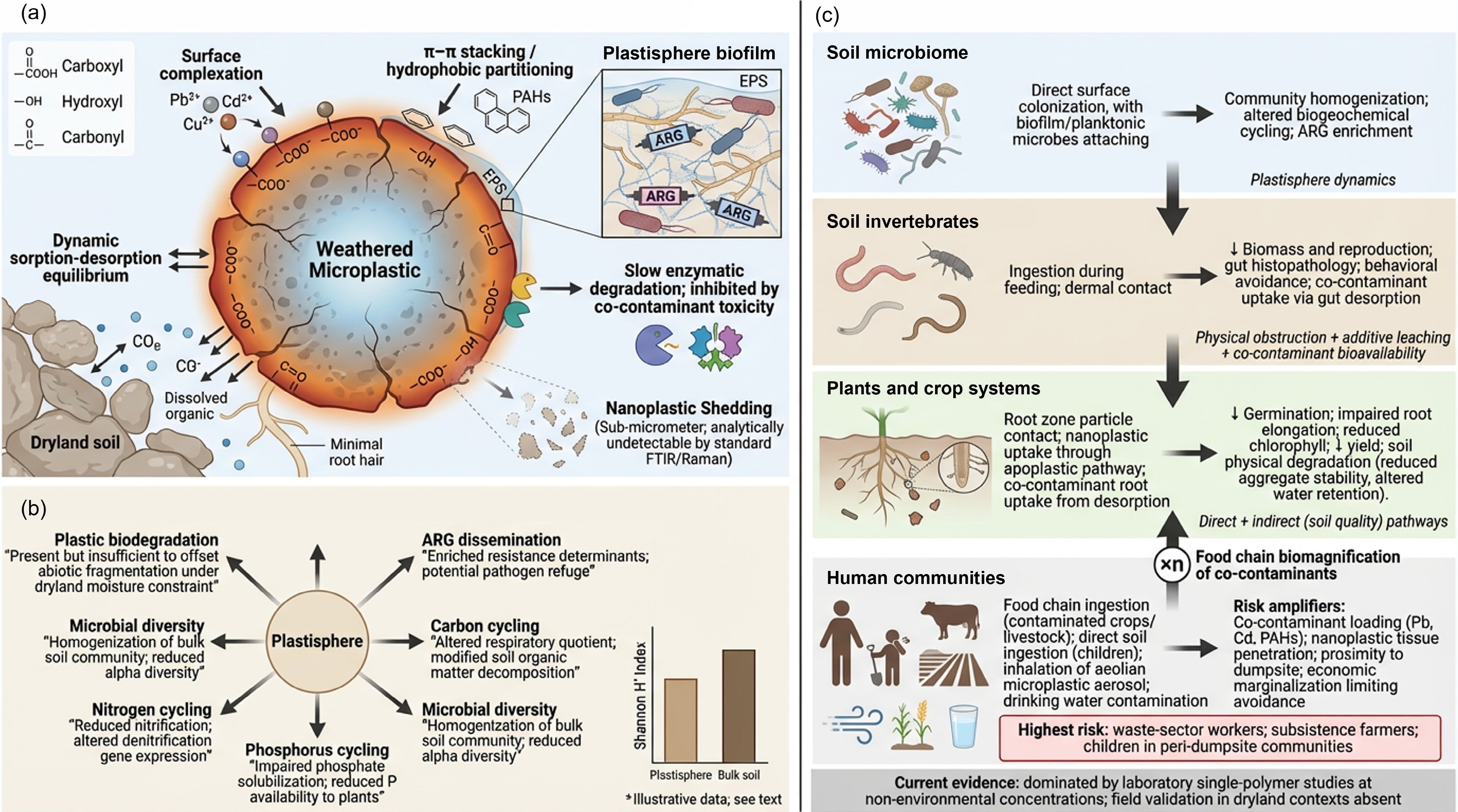
Figure 4.
Ecotoxicological exposure cascade of weathered microplastics in dryland dumpsites: (a) weathered microplastic particles as reactive hubs, (b) the plastisphere's ecological functions and dysfunctions, and (c) exposure pathways and risks to the soil microbiome, soil invertebrates, plants and crop systems, and human communities.
-
Microplastic accumulation in dryland dumpsite environments poses complex ecotoxicological risks that span multiple biological levels, from cellular disruption to ecosystem-scale effects[103]. These impacts are shaped by both direct exposure to particles and indirect changes in the soil's properties and ecological processes[91].
Impacts on soil organisms and plant systems
-
Soil organisms are among the first to be affected[103]. Invertebrates such as earthworms, nematodes, and microarthropods are exposed through ingestion, dermal contact, and interaction with contaminated soil solutions[106]. Evidence shows that microplastics can reduce growth and reproduction, induce tissue damage, and alter behaviors, including feeding and burrowing patterns[105]. These effects can disrupt the soil structure and biological activity, with implications for the ecosystem's overall functioning[104].
Plants are affected through both direct and indirect pathways[117]. Direct exposure can impair seed germination, root development, and photosynthetic performance, particularly at higher concentrations and smaller particle sizes[117]. However, indirect effects are often more significant[118]. Microplastics alter the soil's physical properties by changing its bulk density, water retention, and pore structure, which can limit root growth and reduce water availability. Most studies investigating how microplastics influence soil properties such as bulk density, water-holding capacity, and pore structure have focused on temperate agricultural soils, which generally contain higher amounts of organic matter and finer-textured particles than dryland soils. As a result, the understanding of microplastics' impacts in dryland environments remains limited[118]. Given their coarse texture and low organic matter content, dryland soils may respond differently to microplastic contamination, potentially experiencing more pronounced changes in processes such as water infiltration, surface crust formation, and moisture retention. Despite these possibilities, such responses have received little attention and remain largely unexplored under real-world field conditions. In dryland systems, where soils are already fragile and water-limited, these changes can significantly reduce crop productivity and long-term soil quality[91].
Food chain transfer and human exposure
-
Microplastics and their associated contaminants can enter food systems through multiple pathways[94]. Plants can absorb tiny particles, especially nanoplastics, through their roots, and there is proof that these particles can move to their aboveground tissues[117]. Soil organisms that ingest microplastics can transfer them to higher trophic levels, including birds and small mammals, enabling movement through food webs[105].
Human exposure is particularly relevant in dryland regions where agriculture and settlements often occur near dumpsites[111]. Pathways include the consumption of contaminated crops and livestock products, ingestion of soil particles, and inhalation of airborne microplastics[111]. These risks are compounded by the presence of sorbed contaminants, which may be released within biological systems and increase the toxicological effects[99], leading to heightened health concerns for populations living in proximity to these contaminated areas. Despite these pathways, the scale of human exposure remains poorly quantified. Table 3 presents key exposure routes, ecological effects, and the strength of evidence for microplastic-associated risks.
Table 3. Ecotoxicological impacts of microplastics in dryland dumpsite ecosystems
Receptor group Exposure pathways Observed/reported endpoints MP vectors' role Strength of evidence Soil invertebrates Ingestion, gut passage Reduced reproduction, metal bioaccumulation Enhanced metal bioavailability Lab + field evidence Crop plants Root uptake, soil contact Reduced biomass, altered root morphology Nanoplastic translocation Lab evidence Soil microbiome Surface colonization ARG enrichment, N-cycling disruption Plastisphere formation Emerging evidence Ground-foraging birds Ingestion, dust inhalation Sublethal effects, POP transfer Long-range aeolian transport Inferred Scavenger mammals Direct ingestion Fibers in the digestive tract Exposure to waste pickers Field observations Nearby communities Inhalation, dust ingestion,
food chainRespiratory irritation, metal exposure Multipathway exposure Epidemiological gaps Note: ARG, antibiotic resistance gene; MP, microplastic; NP, nanoplastic; POP, persistent organic pollutant. Elevated risks in vulnerable communities
-
Exposure risks are not evenly distributed[96]. Communities living near dumpsites, which are often among the most economically disadvantaged, face the highest levels of contact through environmental proximity and livelihood activities such as waste picking[111]. Children are particularly vulnerable because of their higher rates of soil ingestion and greater sensitivity to chemical exposure[111].
These conditions create a clear environmental justice concern. The combination of high exposure, limited resources, and weak regulatory oversight places these populations at disproportionate risk, yet they remain under-represented in both research and policy frameworks[102].
Limitation of current evidence
-
A major limitation of existing research is its reliance on laboratory-based studies[97]. These studies often use single polymer types, controlled conditions, and short exposure durations, which do not reflect the complexity of real dumpsite environments[93]. In reality, soils contain mixed polymers at different stages of weathering, combined with multiple contaminants and variable environmental conditions[103].
As a result, the current findings may not accurately capture long-term, low-level exposure effects[102]. Field-based studies that incorporate environmental variability and realistic contamination scenarios are urgently needed to improve risk assessments[97].
Microplastics in dryland dumpsites pose multifaceted risks that extend across ecological and human systems[119,120]. Their impacts on soil organisms, plant productivity, and food chain dynamics highlight a growing environmental and public health concern[121,122]. However, significant knowledge gaps remain, particularly regarding real-world exposure and the long-term effects of microplastics on both ecosystems and human health, underscoring the need for integrated and field-grounded research approaches[109,123].
-
Advancing the understanding of microplastics' dynamics in dryland dump sites is constrained by significant methodological inconsistencies, limited data availability, and the absence of predictive modeling frameworks[97]. Addressing these gaps is essential for transitioning from descriptive studies to actionable environmental management[102].
Lack of standardized methods
-
A major limitation in current research is the absence of standard sampling and analytical protocols[124]. Studies differ widely in sampling depth, collection strategies, and laboratory procedures, including density separation, organic matter removal, and polymer identification. These variations introduce biases and make cross-study comparisons difficult[102].
Dryland environments present additional analytical challenges[104]. The high mineral dust content can interfere with particle separation, whereas intense UV exposure alters particles' appearance and chemical signatures, complicating their identification[91]. Thermally modified plastics from open burning further deviate from the reference spectra, increasing the risk of misclassification[124]. Without standardized protocols tailored to dryland conditions, the data's reliability and comparability remain limited[97].
Detection limitations, especially for nanoplastics
-
The detection of smaller particles, particularly nanoplastics, remains a critical challenge[124]. Conventional techniques such as Fourier transform infrared spectroscopy are limited to larger particles, leaving a substantial fraction of plastic contamination undetected[93]. Advanced methods such as Raman spectroscopy, pyrolysis–gas chromatography/mass spectrometry, and nanoparticle tracking analysis offer improved resolution but require specialized equipment that is often unavailable in regions where dryland dumpsites are most prevalent[102].
This creates a systematic gap in understanding the full size spectrum of plastic pollution, particularly the most reactive and mobile fractions.
Limited dryland specific data
-
Research on microplastics globally heavily skews toward temperate regions, with relatively few studies focusing on dryland environments[104]. The existing studies often lack spatial coverage, temporal depth, and integration of the environmental variables[97].
This data scarcity limits the ability to identify typical contamination patterns, understand the temporal dynamics, or assess the extent of dispersal from dumpsites[97]. Long-term field data are particularly lacking, yet they are essential for capturing episodic events such as wind storms and flash floods that drive microplastic transport in drylands[91].
Need for process-based predictive models
-
A critical gap lies in the absence of integrated models that link plastic inputs, degradation processes, transport pathways, and ecological impacts[97]. Priority targets include quantifying microplastic generation fluxes per tonne of plastic waste under dryland conditions, incorporating microplastic–co-contaminant interactions into fate modules, and linking surface and subsurface transport processes to human and ecological exposure endpoints. Dryland systems are characterized by complex interactions among UV radiation, thermal stress, wind, and episodic rainfall, yet these processes are rarely modeled together[93].
Developing process-based and climate-sensitive models is essential for predicting contamination patterns and informing management strategies[102]. Such models should integrate fragmentation dynamics, aeolian transport, hydrological redistribution, and soil infiltration processes within a unified framework[97].
Future priorities
-
Future work should prioritize the following.
• Standardized dryland-adapted methods: Develop and cross-compare harmonized sampling and analytical protocols that explicitly account for high mineral dust loads, thermally altered plastics from open burning, and the need for sub-micrometer detection limits[109].
• Long-term, multi-compartment field observatories: Establish representative dryland dumpsite observatories that simultaneously monitor microplastics in waste, soils, dust, surface water, and groundwater, including quantification of fluxes generated per unit of waste mass and per event (e.g. dust storms, flash floods)[116].
• Integrated transport and risk models: Build and validate models that couple microplastics' fragmentation, aeolian transport, hydrological redistribution, and subsurface migration with the co-contaminant dynamics and exposure pathways[102].
• Dryland plastispheres and ecotoxicology: Expand multi-omics and mesocosm/field studies on dryland plastisphere communities and their functional roles in nutrient cycling, antimicrobial resistance dissemination, and plant–soil interactions under realistic contaminant mixtures[97,104].
-
Dryland dump sites represent a critical but underrecognized source of microplastic pollution, amplifying the risks through three primary mechanisms with the strength of evidence varying. Intense UV radiation, thermal stress, and wind abrasion all strongly support accelerated fragmentation. On the other hand, enhanced vector capacity shows moderate evidence, making it easier to move heavy metals and organic pollutants. Plastisphere-mediated antimicrobial resistance gene enrichment remains an emerging concern, indicating additional microbial risks. Transport processes, including wind-driven dispersal, episodic runoff, and soil infiltration, further extend contamination across terrestrial, atmospheric, and aquatic systems, increasing exposure in ecologically fragile and resource-dependent communities.
Methodological inconsistencies, limited dryland-specific data, and fragmented analytical frameworks constrain our current understanding, hindering robust risk assessments despite growing evidence. Addressing these gaps requires standard methodologies, expanded field validation, and integrated process-based models that link plastic inputs to environmental fates and impacts. Though the available evidence suggests that dryland dumpsites may generate disproportionately high microplastic fluxes caused by extensive coverage and accelerated degradation, such estimates remain uncertain. Future progress should prioritize the deployment of integrated observatories, combining UAV-based monitoring, multi-omics approaches, and flux measurements across representative dryland regions to establish baseline data and inform evidence-based management and regulatory strategies.
Not applicable.
-
It accompanies this paper at: https://doi.org/10.48130/newcontam-0026-0020.
-
This review is based solely on previously published literature and did not involve human participants, animals, or primary data collection. Therefore, ethical approval and informed consent were not required.
-
The authors confirm their contributions to the paper as follows: Abdulrazaq Izuafa: Conceptualisation, Methodology, Literature review, Writing − original draft, Writing − review and editing. Chiedu Epiphany Edoamodu: Methodology, Formal analysis, Supervision, Writing − review and editing. Juliet Musa: Data curation, Visualisation, Software, Writing − review and editing. Eunice Chinelo Ozue: Data curation, Validation, Investigation, Writing − review and editing. Josephine Nathaniel: Investigation, Writing − review and editing, Critical revision. All authors have read and approved the final version of the manuscript.
-
The datasets generated during and/or analyzed in the current study are available from the corresponding author upon reasonable request.
-
The authors declare that they have no known competing financial interests or personal relationships that could have influenced the work reported in this review.
-
Full list of author information is available at the end of the article.
- The supplementary files can be downloaded from here.
- Copyright: © 2026 by the author(s). Published by Maximum Academic Press, Fayetteville, GA. This article is an open access article distributed under Creative Commons Attribution License (CC BY 4.0), visit https://creativecommons.org/licenses/by/4.0/.
-
About this article
Cite this article
Izuafa A, Edoamodu CE, Musa J, Ozue EC, Nathaniel J. 2026. Microplastics' formation and fate in dryland dumpsites: Environmental drivers, transformation pathways, and ecotoxicological implications. New Contaminants 2: e023 doi: 10.48130/newcontam-0026-0020 

Microplastics' formation and fate in dryland dumpsites: Environmental drivers, transformation pathways, and ecotoxicological implications
- Received: 29 April 2026
- Revised: 02 June 2026
- Accepted: 10 July 2026
- Published online: 17 August 2026
Abstract: Open dumpsites in dryland regions are a major yet underexplored source of global microplastic contamination. Despite dryland regions covering about 41% of the Earth's land surface and receiving large volumes of unmanaged plastic waste, these systems remain poorly studied. This review synthesizes advances from 2016 to 2026, critically evaluating 87 studies to characterize dryland dumpsites as active transformation environments where intense ultraviolet radiation, temperature extremes, low moisture, and wind accelerate plastic fragmentation far beyond that in temperate conditions while limiting microbial degradation. This imbalance leads to the accumulation of highly weathered, chemically reactive microplastics with enhanced capacity to sorb heavy metals and organic pollutants. An integrated source-to-impact framework links plastic inputs to transformation processes, transport pathways, and ecological effects, including the formation of thermally altered particles from open burning and the emergence of plastisphere-associated antibiotic resistance. However, major challenges remain, particularly in detecting nanoplastics, with particles below 1 μm largely unquantified, and in resolving plastics' transport dynamics across spatial scales. Progress is further constrained by methodological inconsistency and geographic bias. Addressing these gaps requires standardized analytical approaches, long-term field studies, and integrated modeling frameworks to support accurate risk assessment and effective management of microplastic pollution in dryland environments.
-
Key words:
- Dryland ecosystems /
- Microplastics /
- Open dumpsites /
- Photodegradation /
- Waste management