












-
Seed germination represents the metabolic reactivation of a biological system from a metabolically inactive and dehydrated state, characterized by a definitive developmental shift from quiescence to active growth[1]. During this stage, the embryo must complete the transition from heterotrophic to autotrophic metabolism within an extremely limited time window, while simultaneously coping with potential extreme physical and chemical challenges in the external environment of the seed[2]. Given the limited carbon and energy reserves in seeds, the allocation of phenylpropanoid flux between lignin and flavonoid biosynthesis represents a critical trade-off between structural investment and signal perception.
This process involves a series of fundamental physiological events, beginning with rapid water uptake, during which the seed undergoes physical imbibition and membrane integrity is repaired to reduce electrolyte leakage. Subsequently, basal energy metabolism is activated, with glycolysis and the tricarboxylic acid (TCA) cycle rapidly activated to provide ATP for cellular resuscitation[3,4]. This is followed by physical remodeling of the cell wall and the re-establishment of the endogenous hormonal balance.
In the macroscopic network of hormonal regulation, the dynamic interplay between gibberellin (GA) and abscisic acid (ABA) has long been regarded as the primary determinant of seed fate. GA is responsible for breaking dormancy, initiating cell elongation, and promoting germination, whereas ABA maintains dormancy and inhibits germination[5]. Intriguingly, recent evidence suggests that the GA/ABA balance may exert its regulatory influence by modulating phenylpropanoid metabolism, thereby positioning this pathway as a downstream effector of hormonal signals[6]. Further direct experimental validation of the effector role during germination would be valuable. However, traditional seed biology has primarily focused on hormonal regulation, with the complex regulatory contributions of specialized metabolic networks often receiving less attention than warranted.
In particular, a systemic investigation into whether the two major branches, lignin (structural) and flavonoids (signaling), operate as an integrated system to coordinately regulate germination is currently lacking. Emerging studies have highlighted the involvement of phenylpropanoid-derived compounds in modulating reactive oxygen species (ROS) homeostasis and hormone sensitivity during germination[7]. We hypothesize that successful seed germination largely depends on how the embryo allocates limited carbon sources to achieve a survival balance between constructing rigid physical supports and maintaining sensitive environmental perception. Resource-constrained metabolic competition and allocation strategy are the main focus of this report.
Phenylpropanoid metabolism: a natural structure and signal bifurcation system
-
As the secondary metabolic pathway with the highest flux in land plants, phenylpropanoid metabolism is a quantitatively important source of specialized metabolites[6]. Cross-species conservation suggests a central role for phenylpropanoid metabolism in terrestrial plant adaptation; however, it also raises a key question: during the brief and highly dynamic process of seed germination, how is this conserved biochemical framework flexibly regulated to achieve specific functional outcomes? This pathway commences with three enzymatic steps: phenylalanine ammonia-lyase (PAL), cinnamate 4-hydroxylase (C4H), and 4-coumarate: coenzyme A (CoA) ligase (4CL)[8].
PAL acts as the primary gatekeeper, catalyzing the deamination of L-phenylalanine to generate trans-cinnamic acid (CA). In addition to its MIO-group-initiated catalytic mechanism, PAL activity is subject to multi-layered 'safety valve' regulation, being transcriptionally regulated and subjected to rapid post-translational control via the ubiquitin-proteasome system, a multi-layered regulatory mechanism crucial for prompt environmental responses during early germination[9].
Following PAL, C4H hydroxylates cinnamic acid at the 4-position to generate p-coumaric acid, facilitating the spatiotemporal organization and metabolic channeling of downstream enzymes. 4CL catalyzes the ligation of p-coumaric acid with CoA to generate the high-energy thioester compound p-coumaroyl-CoA. This step consumes ATP, activating the phenylpropanoid backbone and enabling it to participate in subsequent polymerization and condensation reactions[10]. Notably, the functional diversity of 4CL isozymes is not merely genetic redundancy but provides a critical molecular basis for precise carbon flux allocation. Different 4CL isoforms may possess substrate preferences or spatial associations with specific downstream branches, thereby enabling rapid metabolic rerouting before transcriptional changes occur[11].
p-Coumaroyl-CoA acts as a pivotal branch-point intermediate, directing carbon partitioning between two functional hubs for various downstream branches of the entire pathway, where carbon flow undergoes a diversion[12]. Flux partitioning at this critical juncture is dynamically regulated by factors such as the relative activity and abundance of committing enzymes (e.g., hydroxycinnamoyl transferase [HCT] vs. chalcone synthase [CHS]), transcriptional activation of downstream branch-specific genes, and metabolic feedback, determining the resource investment strategy between structural fortification and signaling modulation[13].
At this node, HCT and CHS directly compete for the same substrate[14]. At the transcriptional level, HCT genes are part of the lignin biosynthesis program and are activated by the secondary wall regulatory network, whereas CHS genes are regulated by MYB-bHLH-WD complexes that are responsive to light and various stresses (e.g., Arabidopsis PAP1/MYB12 interacting with bHLH transcriptional factors)[15,16]. Downstream metabolite feedback further modulates branch allocation. Flavonoid pathway intermediates (e.g., naringenin and dihydroflavonols) can inhibit CHS activity in vitro[17]. Collectively, these mechanisms—enzyme kinetic competition, divergent transcriptional regulation, and metabolic feedback—establish the decision logic at the p-coumaroyl-CoA branch point, quantitatively determining carbon partitioning between the lignin and flavonoid pathways.
We define the lignin branch as the Structural Hub because of its role in providing a physical barrier through cell wall deposition and the flavonoid branch as the Signal Hub for its involvement in signaling networks via modulating redox homeostasis and hormone distribution.
The Structural Hub (lignin branch) is primarily guided by hydroxycinnamoyl-CoA shikimate/quinate HCT and subsequent enzyme systems (such as C3H, CCoAOMT, CCR, and CAD), and enters the lignin monomer biosynthesis pathway. Lignin is exported and deposited in the cell wall, providing physical support and a hydrophobic barrier[6]. In addition to supporting root xylem, lignin deposition in the root base (new root system) also promotes root hair development and deep root extension[18]. Although HCT is a major entry point for G and S lignin units, the structural hub encompasses a branched pathway that supports cell wall reinforcement.
The Signal Hub (flavonoid branch) is primarily guided by CHS, which directs the flux toward the biosynthesis of thousands of flavonoids[12]. Rather than being simple antioxidants, these compounds function as indirect signaling modulators. Although flavonoids are often broadly termed signaling molecules, direct evidence demonstrating their function as bona fide signal transducers remains limited, with more robust evidence supporting their role as indirect modulators of cellular signaling networks, primarily by regulating ROS homeostasis and influencing hormone transport[19]. This role as an indirect signaling modulator may be a more accurate description.
In this framework, we refer to the lignin branch as the Structural Hub, which dynamically regulates the physical barrier of the seed coat, and the flavonoid branch as the Signal Hub, which fine-tunes the germination threshold by integrating ROS homeostasis and hormone transport regulation. Crucially, although conceptually separated, these two hubs are metabolically interconnected. For instance, some phenylpropanoid precursors or derivatives may influence both structural integrity and signaling capacity, and lignin deposition may physically compartmentalize or modulate the activity of signaling molecules. Their dynamic interactions, through substrate competition, metabolic crosstalk, and potential physical compartmentalization, form the core of the structure–signal dual hub model.
The conceptual framework of the structure–signal dual hub model
-
Although the metabolic branching of phenylpropanoids is well established, the structure–signal dual hub model seeks to integrate these classical pathways into a coordinated regulatory circuit that is specifically tailored to the unique physiological constraints of seed germination. Historically, research on phenylpropanoid metabolism during seed germination has been characterized by separate approaches. Traditional seed biology has primarily focused on hormonal regulation (e.g., GA/ABA balance), with the complex regulatory contributions of specialized metabolic networks often receiving less attention until recently[20,21].
The central argument of this report is that the two major branches of phenylpropanoid metabolism function as an integrated, co-regulated metabolic circuit in plants. Through spatiotemporal division of labor, substrate competition, and dynamic interactions, they may constitute an integrated regulatory framework, referred to here as the structure–signal dual hub model. This interaction could manifest, for instance, under osmotic stress, where ABA signaling prioritizes the Structural Hub for water retention while transiently suppressing the Signal Hub; upon stress relief, the reactivated Signal Hub helps scavenge accumulated ROS and promote growth recovery. This model defines the lignin branch as the Structural Hub that dynamically regulates the physical barrier of the seed coat and the flavonoid branch as the Signal Hub that metabolically fine-tunes the germination threshold by buffering ROS homeostasis and indirectly influencing hormone transport. Figure 1 provides a comprehensive overview of the phenylpropanoid pathway, highlighting the shared precursor pool at p-coumaroyl-CoA and the divergent routes into the structural (lignin) and signal (flavonoid) hubs, along with the key regulatory enzymes discussed herein.
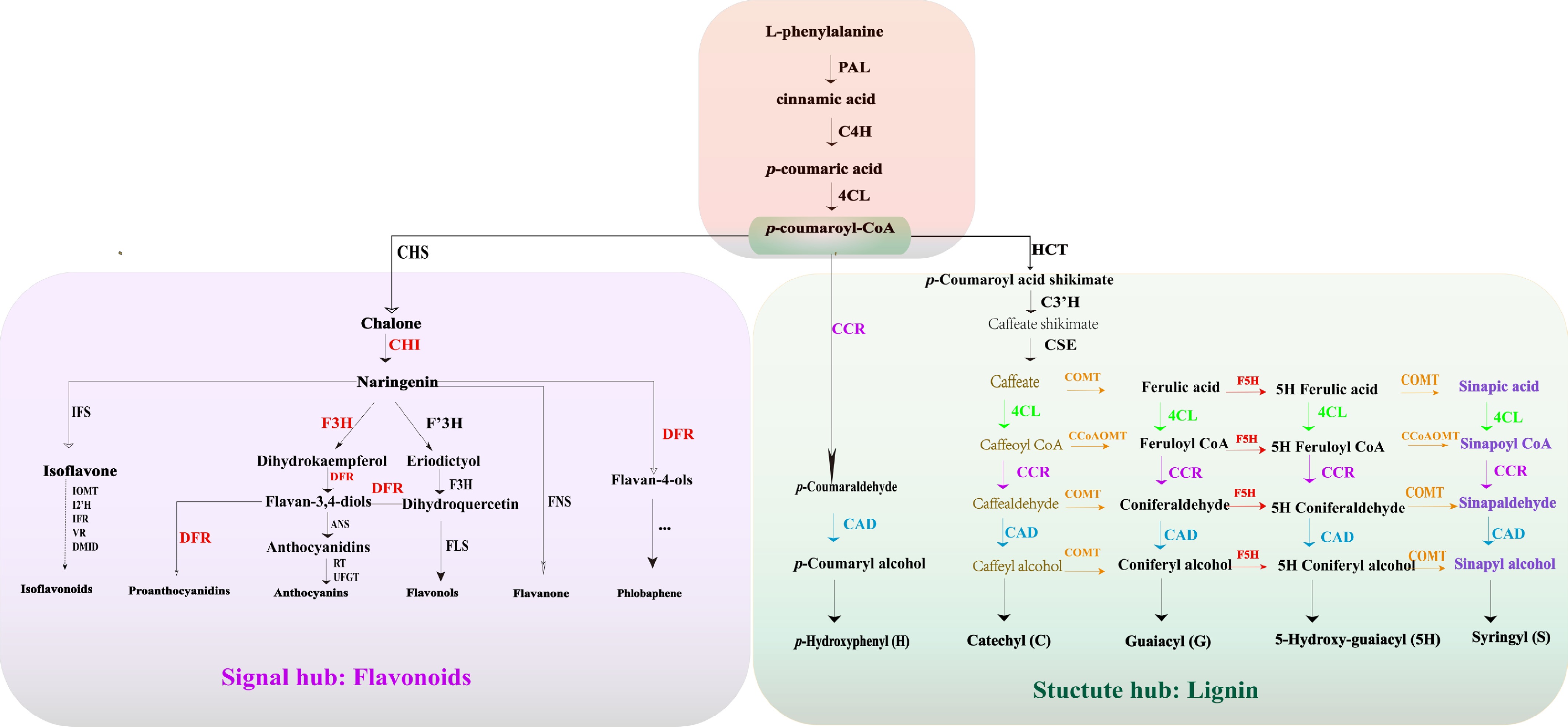
Figure 1.
Structure–signal dual-hub model of phenylpropanoid metabolism.
A central prediction of this model is that any stress affecting the seed's perception of environmental or internal resource status is hypothesized to lead to a quantifiable shift in carbon flux allocation between the two hubs, which is expected to directly impact germination potential and stress tolerance. This regulation is finely controlled at multiple levels, including the transcriptional, post-translational, and epigenetic levels. The dual-hub system dynamically regulates metabolic flow through synergistic dual-node control; this adjustability relies on complex metabolic flux redirection (MFR) mechanisms and the dynamic reallocation of carbon flow between the two hubs in response to developmental and environmental cues, enabling seeds to adopt specific adaptive strategies based on environmental pressure. However, this model represents a conceptual framework that requires further experimental validation. Key questions, such as the extent to which carbon competition operates under different physiological contexts and whether the model applies equally to all seed types, remain to be answered.
-
The initial stage of the phenylpropanoid metabolic pathway is highly conserved and energy-intensive. This process involves the structural rearrangement of precursor molecules, energy influx, and carbon skeleton activation, providing the material foundation for subsequent dual-hub differentiation[6].
L-Phenylalanine is the starting point of the entire pathway and connects primary and secondary metabolism. The initial crucial step is facilitated by PAL, the enzyme that limits the rate of phenylpropanoid metabolism. This deamination reaction serves as a checkpoint for carbon flow, marking its formal entry into the secondary metabolic network from the shikimate pathway[22]. Structural biology research has revealed that the PAL enzyme contains an electrophilic center, the MIO (4-methylidene-imidazole-5-one) prosthetic group, arising from an autocatalytic intramolecular cyclization of the polypeptide backbone. This group initiates a nucleophilic attack on the substrate's amino group to achieve efficient non-oxidative deamination[23]. From a molecular evolution perspective, this key enzyme in land plants is thought to be closely associated with the adaptation of ancestral plants to terrestrial environmental pressures, such as UV radiation and drought[24], thereby laying the biochemical foundation for the germination of their descendants' seeds in complex environments.
Following PAL and C4H, 4CL continues the flavonoid biosynthesis pathway. The cytochrome P450 enzyme C4H hydroxylates cinnamic acid to p-coumaric acid, which is dependent on NADPH and oxygen. Subsequently, 4CL utilizes the energy from ATP hydrolysis to ligate coenzyme A (CoA) to the carboxyl group of p-coumaric acid, forming a high-energy thioester compound, p-coumaroyl-CoA[25]. This step activates the relatively inert phenylpropanoid backbone, placing it in a high-energy state capable of participating in complex downstream polymerization and condensation reactions. Notably, multiple 4CL isozymes typically exist in different species with varying substrate affinities, and this genetic redundancy provides a genetic framework for refined control over the flux partitioning of pathway flow into different branches[22].
At this point, p-coumaroyl-CoA is formally established as the common starter unit for the entire pathway. Although this pool is shared, it is inherently limited, which sets the stage for metabolic competition between the two hubs, which are critical nodes where carbon flow diverges and chooses to enter either the structural or signal hub.
Entry into the structural hub is primarily mediated by hydroxycinnamoyl-CoA shikimate/quinate hydroxycinnamoyl transferase (HCT). HCT conjugates p-coumaroyl-CoA with shikimic acid or quinic acid, a step that allows the substrate to be recognized by downstream C3 hydroxylases. Lignin monomers are generated through a complex series of reactions catalyzed by C3H, CCoAOMT, CCR, and CAD. This pathway generally leads to long-term structural deposition, effectively incorporating carbon into the cell wall over developmental timescales.
Entry into the signal hub is controlled by CHS. CHS, belonging to the polyketide synthase superfamily, catalyzes the condensation of one molecule of p-coumaroyl-CoA with three molecules of malonyl-CoA to form chalcone. Chalcone is the parent skeleton of all flavonoid compounds, marking the formal entry of carbon flow into the realm of signal regulation and chemical defense.
This biochemical bifurcation provides a plausible biochemical basis for the proposed structure–signal dual hub model.
The structural hub: mechanical strength and rigidity maintenance of the seed coat
-
The structural hub is represented by the lignin biosynthesis branch. Lignin is the second most abundant biopolymer on Earth and is primarily deposited in the secondary cell walls of vascular plants. During seed germination, the function of the structural hub is far more complex than simple structural support.
During the late stages of seed maturation, the structural hub is highly active and deposits lignin, which establishes the physical basis for dormancy[26]. Upon imbibition, the function of this pre-existing hub shifts from deposition to dynamic modulation, including localized softening at the micropylar end and controlled permeability, rather than large-scale de novo synthesis. Lignin is mainly composed of guaiacyl (G) and syringyl (S) units; the stoichiometric ratio of S/G units determines the degree of intermolecular cross-linking and mechanical hardness of the lignin polymer. S-type lignin contains more methoxy groups, which sterically hinder the formation of certain crosslinks, resulting in a relatively linear polymer structure compared to G-type lignin. In contrast, G-type lignin can form highly cross-linked networks. Therefore, by finely regulating the activities of enzymes, such as ferulate-5-hydroxylase (F5H) and caffeic acid O-methyltransferase (COMT), to adjust the S/G ratio, plants can precisely set the seed coat hardness parameters.
Interestingly, a unique C-lignin (catechyl lignin) has been discovered in the seed coats of species such as Cleome hassleriana[27]. This lignin is entirely polymerized from caffeoyl alcohol, possessing extremely high structural homogeneity and special physicochemical properties, providing the seed coat with superior structural integrity and defensive resistance. These observations suggest considerable evolutionary flexibility in the structural hub, which may enable adaptation to diverse environmental pressures via changes in monomer composition[28].
During the later stages of seed germination (hypocotyl elongation phase), lignin deposition in the hypocotyl is not solely for structural reinforcement; it also supports the upright growth of seedlings (preventing lodging) and maintains the internal water balance through hydrophobic vessels. In addition to mechanical hardness, the structural hub controls seed coat permeability via oxidative polymerization mediated by laccase (LAC) gene clusters. For example, mutants of genes related to hypocotyl lignification in Arabidopsis (such as the LAC family, e.g., LAC3/5/12/13) exhibit traits such as 'brittle hypocotyls and impaired water transport'[29]. Highly lignified cell walls not only restrict the rapid entry of water (preventing imbibition damage) but also block the free diffusion of oxygen, creating a hypoxic environment inside the seed that is crucial for maintaining seed dormancy. Furthermore, this structural barrier prevents the leakage of valuable solutes from the seeds. Thus, the structural hub may function as an important physical interface that modulates chemical and physical exchanges in the rhizosphere. In Arabidopsis, research has indicated that this gene cluster precisely controls water uptake rates, thus influencing the physical and chemical signals that initiate germination[30].
During seedling establishment, the function of the structural hub shifts again. Lignin synthesis begins to provide mechanical support for the xylem of the new root system and constructs hydrophobic vessel walls, ensuring long-distance transport of water and mineral nutrients, which is fundamental for plant survival on land[22].
The signal hub: metabolic modulation of redox and hormone response networks
-
The signal hub, as defined in this framework, does not imply that flavonoids function as classical signal transducers. Rather, this hub refers to a metabolically responsive branch that indirectly modulates cellular signaling environments through redox buffering, hormone transport regulation, and stress-associated metabolic adjustments[31,32].
During early germination, as the seed absorbs water, the mitochondrial electron transport chain is rapidly restored, and metabolic rebooting inevitably triggers a transient surge of reactive oxygen species (ROS). This ROS burst is double-edged: appropriate amounts of ROS act as signal molecules necessary to break dormancy and soften cell walls (e.g., hydroxyl radicals OH attacking polysaccharide chains), termed the oxidative window[33]. However, excessive ROS production leads to lipid peroxidation, protein oxidation, and DNA damage. The primary function of the signal hub is to maintain this balance. The ortho-diphenolic hydroxyl structure on the B-ring of flavonoids (such as quercetin and kaempferol) can efficiently scavenge reactive oxygen species, including superoxide anions (O2−), hydrogen peroxide (H2O2), and hydroxyl radicals[34]. More ingeniously, they can prevent the occurrence of the Fenton reaction at the source by chelating transition metal ions, such as iron and copper, thereby preventing the generation of the most destructive hydroxyl radicals. This represents a synergy between chemical scavenging and systemic regulation of cellular redox potential[35,36].
In plants, polar auxin transport relies on the asymmetric distribution of PIN proteins on the cell membranes. Specific flavonols have been identified as endogenous auxin transport regulators. Their mechanism is not simply the physical blockage of transport channels but rather the modulation of PIN protein vesicle trafficking dynamics and alteration of membrane lipid microenvironment fluidity, thereby affecting the stability of PIN protein localization on the plasma membrane[37]. For instance, flavonoid subclasses exhibit specificity in modulating auxin transport; in flavonoid-deficient mutants tt3 and tt7, root auxin transport is abnormally enhanced, leading to disordered gravitropism, whereas in the tt4 mutant, which is deficient in flavonols, auxin transport is inhibited[38,39]. These seemingly contradictory effects highlight the specificity of different flavonoid subclasses in modulating auxin transport, where the absence of specific compounds can lead to either hyper- or hypo-active PIN trafficking, implying that the signal hub, by synthesizing specific chemical molecules, finely controls the spatial distribution of auxin in plant tissues, thereby potentially influencing the direction of radicle protrusion and early seedling morphogenesis. In Arabidopsis, studies have shown that endogenous flavonols can modulate the kinetic stability and plasma membrane localization of PIN efflux complexes, acting similarly to the artificial auxin transport inhibitor NPA[40].
Multi-omics analysis has revealed that flavonoid compounds (particularly quercetin), which coordinate ROS homeostasis and hormone signaling, are associated with enhanced starch hydrolysis, suggesting an intriguing link between antioxidant defense and energy mobilization that warrants further functional validation[41].
Notably, not all functions of the signal hub should be interpreted strictly as signaling events. Many flavonoid-associated processes, including ROS scavenging and membrane protection, likely represent broader protective metabolic functions that indirectly influence signaling outputs. In this context, the term 'signal hub' is used primarily to distinguish this branch from the structurally oriented lignin pathway, rather than to imply exclusive signaling functionality.
The buffer zone: soluble phenolics and specialized metabolites
-
In addition to the two main branches of lignin and flavonoids, the phenylpropane metabolic pathway includes soluble phenolic compounds. These metabolites are not static endpoints but rather a highly dynamic resource pool that can dynamically regulate the final destination of carbon flow based on environmental feedback during germination.
During the early stages of germination, soluble phenolic esters (such as chlorogenic acid) accumulate in large quantities[42]; once metabolic activity begins, these stored esters can be rapidly mobilized and redirected, either re-entering the lignin synthesis pathway to reinforce the structure or being converted into flavonoid molecules to counteract oxidative stress[43,44]. Hydroxycinnamic acid derivatives (e.g., ferulic acid) serve as a bridge between structure and signaling. For instance, ferulic acid directly participates in the covalent cross-linking of cell wall polysaccharides, acting as a core component in maintaining the mechanical strength of seed coats[45]. Concurrently, its potent antioxidant activity enables it to directly scavenge free radicals generated during germination[46]. Additionally, defense molecules, such as coumarins, play a key role in allelopathy and germination inhibition (e.g., scopoletin)[47].
-
Seed germination is a continuous dynamic process that can be divided into three typical phases based on water uptake kinetics and changes in metabolic activity: imbibition (Phase I), lag phase (Phase II), and radicle protrusion (Phase III)[48]. As shown in Fig. 2, the dual-hub functions of phenylpropanoid metabolism exhibited continuous dynamic characteristics across these stages, reflecting precise temporal control of metabolic flux.
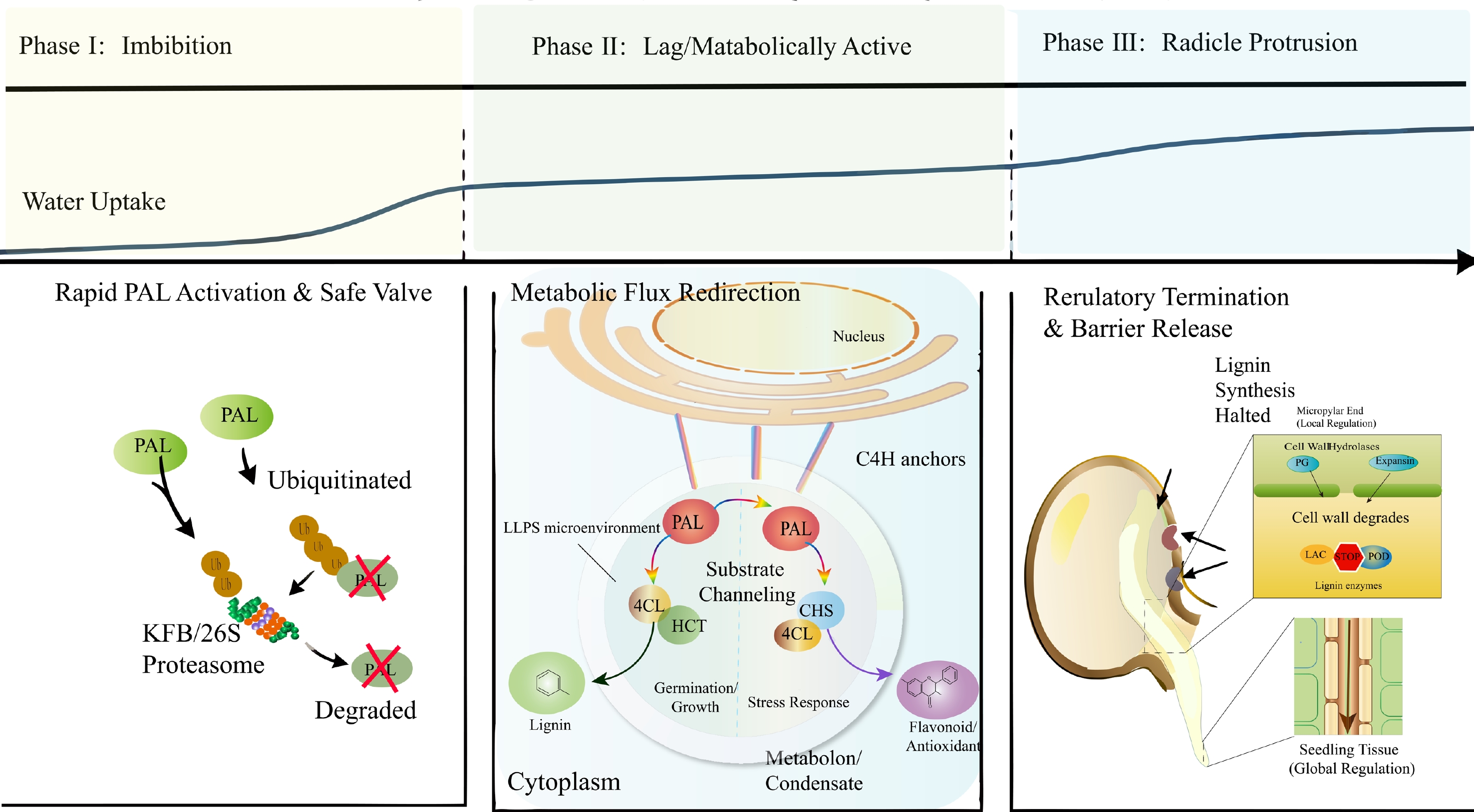
Figure 2.
Spatiotemporal cascade regulation of phenylpropanoid metabolism during seed germination. Phase I (imbibition stage): initiation of the switch mechanism occurs. Phase II (stagnation/metabolically active stage): metabolic flux redirection (MFR) occurs. Phase III (radicle emergence stage): radicle emergence-associated regulated cell wall loosening occurs.
Phase I (Imbibition): rapid activation and the safety mechanism
-
Phase I is characterized by a dramatic transition from a dry state to a hydrated state. Major events during this phase include physical water uptake, membrane system repair, aquaporin activation, and restoration of basal transcription and translation[49].
At this stage, gene transcription and enzymatic activity of PAL, the gateway enzyme of phenylpropanoid metabolism, are significantly activated within hours of water uptake[50]. This rapid activation prepares the substrates for the subsequent synthesis of both metabolites. This establishes an initial precursor pool of p-coumaroyl-CoA; however, the cells face significant environmental uncertainty at this stage (e.g., potential moisture fluctuations).
To avoid excessive resource investment in secondary metabolism triggered by false signals, plants have evolved a regulatory mechanism dependent on the ubiquitin-proteasome system. The Kelch domain F-box (KFB) protein family, which is a specific recognition component of E3 ubiquitin ligases, can precisely target PAL proteins. Upon KFB binding, PAL is tagged with ubiquitin and degraded via the 26S proteasome[51−53]. This mechanism provides a switch to rapidly shut down the phenylpropanoid pathway. This indicates that although genes are transcribed early during germination, protein levels are closely monitored. KFB activity is inhibited when environmental signals are definitive, and the energy supply is stable (possibly via phosphorylation), allowing PAL protein to accumulate and formally initiate metabolic flow, a mechanism that ensures that costly secondary metabolism is activated only when conditions are truly favorable.
In the late Phase I, PAL activation is accompanied by a KFB-mediated safety mechanism; however, the signaling hub (CHS) lacks similar pre-activation, and its initiation relies more on the perception of stress signals and metabolic flux redirection in Phase II.
Dynamic enzyme organization during Phase II: a speculative biophysical perspective
-
Phase II is a critical decision-making period for seed germination. During this phase, although water uptake reaches a plateau, internal metabolic activity increases markedly, and the seed integrates environmental and internal resource conditions to determine whether germination should be initiated[54].
On the endoplasmic reticulum surface, phenylpropanoid enzymes form a metabolon to mediate substrate channeling[55−57]. This significantly enhances catalytic efficiency while avoiding metabolic interference. C4H serves as both the 'membrane anchor' and 'nucleation platform' for this complex[58]. The prion-like protein FLOE1 senses environmental moisture through liquid–liquid phase separation (LLPS), whereby proteins and nucleic acids condense into concentrated, cytosolic droplets without membranes[59,60]. LLPS generates membrane-less condensates distinct from traditional organelles, characterized by rapid (µs) component exchange and substrate enrichment. C4H recruits soluble PAL and 4CL to the ER via its transmembrane domain, forming localized enrichment zones[61]. Furthermore, KFB-mediated dynamic regulation of PAL stability primes these enzymes for phase separation. Therefore, we propose the hypothesis, 'LLPS Assembly of Phenylpropanoid Metabolic Enzymes': the rapid metabolic activation observed in Phase II may be partly mediated by dynamic enzymes assembling into transient metabolon-like complexes, potentially via phase-separation-related mechanisms.
Currently, the evidence supports the existence of phenylpropanoid metabolons and LLPS-related regulatory phenomena independently in plants. A direct demonstration that phenylpropanoid enzymes undergo LLPS-mediated assembly during seed germination is lacking. Therefore, the framework proposed herein should be regarded as a conceptual and testable hypothesis rather than an experimentally established regulatory mechanism.
Phase III (radicle protrusion): regulatory termination of barrier release
-
This is the execution phase of germination, in which the radicle breaks through the seed coat. At this time, the function of the structure hub is suppressed.
Radicle protrusion depends on the local softening of the seed coat at a specific site (the micropylar end). Lignin is a highly recalcitrant polymer that is difficult for plant endogenous enzymes to rapidly degrade; therefore, this softening relies more on the enzymatic hydrolysis of cell wall polysaccharides, such as polygalacturonase (PG) hydrolyzing pectin and expansins relaxing cellulose microfibrils[62,63].
To coordinate with seed coat structural relaxation, the regulatory function of the structural hub must be inhibited. This implies that in the predetermined breakthrough region, the activity of lignin synthesis-related enzymes (e.g., LAC/POD) must be strongly suppressed through mechanisms that are poorly understood but likely involve transcriptional repression by factors such as MYB4 and MYB7[64]. The mechanical strength of the seed coat must sufficiently decrease to be breached by the turgor pressure of radicle growth, which only occurs when lignin synthesis is halted and cell wall softening/depolymerization begins[65]. While the structural hub is locally shut down, the signaling hub may continue to operate, supporting seedling establishment by managing oxidative stress during the heterotrophic-autotrophic transition.
-
The operation of dual hubs is coordinated by complex molecular interactions, redox signals, and hormonal networks. This section details how they crosstalk through ROS and hormonal signals (Fig. 3).
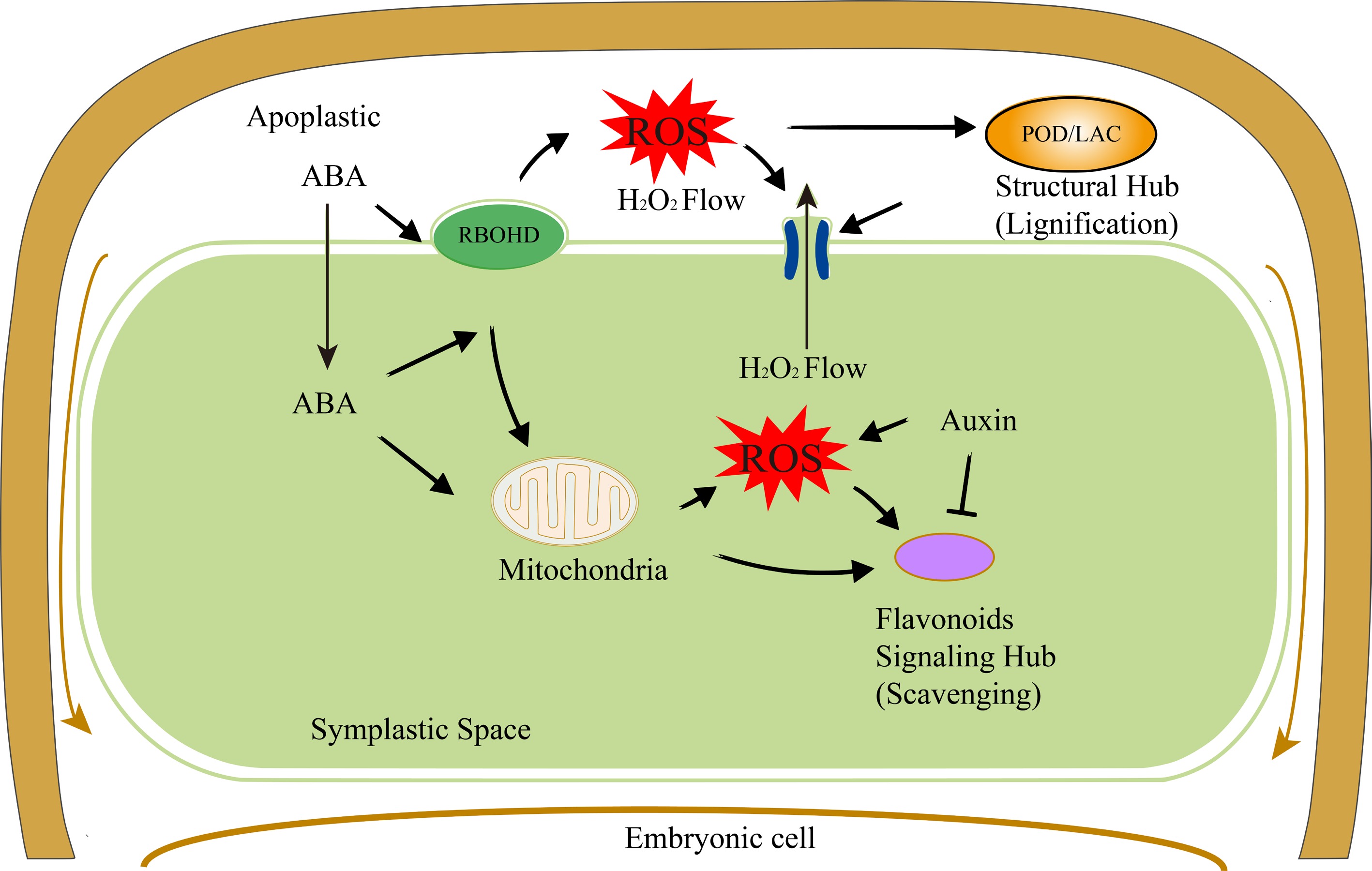
Figure 3.
Compartmentalized flow and hub interactions of ROS in seed cells. Structural hubs primarily operate in the apoplastic space. The signal hub (flavonoids) functions within the symplastic space.
Structural hub: barrier remodeling and the redox environment
-
As described above, LAC and POD utilize ROS for lignin polymerization. Here, we focus on the dual role of ROS: while high concentrations serve as substrates for POD to enhance cell wall rigidity, precisely regulated low concentrations (H2O2 flux) can directly participate in wall loosening[66].
The functional output of ROS depends on the precise regulation of its concentration threshold. High concentrations of flux primarily serve as substrates for peroxidase (POD), driving the oxidative cross-linking of lignin monomers and thereby increasing the mechanical rigidity of the cell wall. Conversely, a steady state at extremely low and controlled concentrations tends to act as a signaling molecule, inducing subsequent physiological responses[67]. This concentration-dependent shift determines whether the structural hub moves toward physical reinforcement or maintains plasticity.
Importantly, the contribution of lignin during germination likely depends on species-specific seed coat architecture and may primarily reflect the regulation of pre-existing structural barriers, rather than extensive de novo lignin biosynthesis. This suggests that the relative importance of de novo lignin synthesis versus pre-existing barrier modulation may vary considerably across species, which is an important consideration for the generalizability of the dual-hub model that warrants systematic comparative investigation.
Signal hub: fine intervention in redox homeostasis and hormone signaling
-
The signal hub, centered on flavonoids, directly or indirectly influences cellular signal transduction through its chemical properties.
Flavonoid biosynthesis genes (CHS, chalcone isomerase [CHI], and F3H) were significantly upregulated during early germination. Genetic evidence has shown that overexpression of these genes (e.g., CHS and dihydroflavonol 4-reductase [DFR]) significantly reduces intracellular ROS accumulation[68]. Specifically, flavonoids inhibit excessive lignification by scavenging excess H2O2, thereby competing for the substrate of the structural hub (POD enzyme) and maintaining cell wall extensibility. This competition also protects membrane systems from oxidative damage. For instance, in rice and tobacco, the upregulation of F3H and DFR genes enhances tolerance to salt and drought stress by boosting flavonoid biosynthesis[69,70]. These findings strongly suggest that activation of the signal hub is a crucial defense mechanism for maintaining ROS homeostasis during germination and stress conditions. Different flavonoid classes (e.g., flavonols, anthocyanins, and proanthocyanidins) likely exert distinct and sometimes opposing effects on ROS homeostasis and hormone transport.
Hormonal regulation by flavonoids occurs systemically. Key phosphatase (PP2C) and kinase (SnRK2) proteins in the ABA signaling pathway contain redox-sensitive cysteine residues[71]; thus, flavonoids can indirectly affect the activity of these enzymes by altering cytoplasmic redox potential. Although this indirect regulatory mechanism is biochemically plausible and supported by in vitro studies demonstrating the redox sensitivity of these enzymes, its in vivo significance during seed germination remains to be demonstrated directly. In contrast, the mechanisms by which flavonoids modulate ABA signaling remain poorly understood and represent a key area for future investigation. In addition, specific flavonols control auxin flow by regulating PIN proteins[37]. This functional diversity adds another layer of regulatory complexity. For instance, while flavonols, such as quercetin, are potent antioxidants and auxin transport regulators, proanthocyanidins may primarily contribute to oxidative polymer deposition. Deciphering this chemical question represents a major challenge for future studies. This means that the signal hub, by regulating auxin distribution, guides the direction of radicle breakthrough and may maintain the necessary dormancy depth via the auxin-ABI3 loop, preventing premature germination under unripe conditions[37].
These intracellular functions of the signal hub set the stage for a critical question: How does this cytoplasmic redox regulation interface with apoplastic ROS dynamics, which control the structural hub of the cell?
Hub interaction: spatial compartmentalization of ROS and transmembrane signaling
-
The operation of the two hubs forms a regulatory loop via ROS signals. First, ROS functions are spatially distinguished. The structural hub (lignin polymerization) relies primarily on ROS in the extracellular space (apoplast). In the cell wall, ROS produced by Respiratory Burst Oxidase Homolog D (RBOHD) drives the oxidative cross-linking of lignin monomers catalyzed by POD and LAC, constructing a physical barrier. In contrast, the signal hub (flavonoids) acts primarily within the intracellular continuum (symplast). These flavonoid systems scavenge excess ROS generated by mitochondrial respiration, preventing damage to lipids and DNA. Interestingly, this internal-external compartmentalization is not isolated completely. The signal hub may indirectly regulate the flux of ROS flowing into the apoplast by modulating the transmembrane transport capacity of aquaporins for H2O2, thereby remotely influencing the cell wall lignification process. This hypothesis, grounded in evidence for aquaporin-mediated H2O2 diffusion[72], predicts that genetic or pharmacological inhibition of specific plasma membrane aquaporins (e.g., PIP2;1) should disrupt the coordination between flavonoid accumulation and seed coat lignification patterns during germination. Thus, H2O2 acts not only as a substrate but also as a transmembrane messenger connecting the intracellular signal hub with the extracellular structural hub.
Research on rice has provided excellent molecular evidence that the glutathione S-transferase family gene OsGSTT3 is highly expressed in seeds and directly participates in the regulation of ROS homeostasis. Studies have shown that both overexpression and knockout lines of this gene lead to delayed germination, and this phenotype is closely related to abnormal fluctuations in H2O2 levels[73]. This highlights that plants employ multiple synergistic systems, including both GST-mediated conjugation and phenylpropanoid-derived flavonoid antioxidants, to maintain ROS within the narrow window required for successful germination. The distinction and management of ROS signaling (promoting softening/transduction) vs. stress (causing oxidative damage) is the core of the dual-hub model's synergy[74].
Under nutrient-limited conditions, where carbon skeletons for phenylpropanoid synthesis are scarce, competition for shared resources may prevail, prioritizing the structural hub for physical protection. Conversely, under combined stress (e.g., salinity combined with pathogen attack), the signaling and structural hubs may synergize, with flavonoids simultaneously fine-tuning ROS signals for stress gene activation and contributing to the localized reinforcement of the cell wall. In addition to ROS, hormonal hubs may serve as integrators[75]. ABA not only promotes dormancy but also suppresses flavonoid biosynthesis through specific MYB transcription factors(TFs), thereby coordinately enhancing the structural hub while repressing the signaling hub under stress conditions. Conversely, GA signaling may antagonistically promote the signaling hub to facilitate seed germination.
-
A central premise of the structure–signal dual hub model is that carbon allocation between lignin (structural hub) and flavonoid (signal hub) branches may represent an important regulatory axis of seed germination and stress adaptation. Although upstream signals are diverse, their functional convergence lies in modulating metabolic flux at the shared precursor level. Here, we propose that MFR may represent an integrative outcome of multilayer regulatory systems, linking environmental perception to biochemical allocation decisions, as shown in Fig. 4.
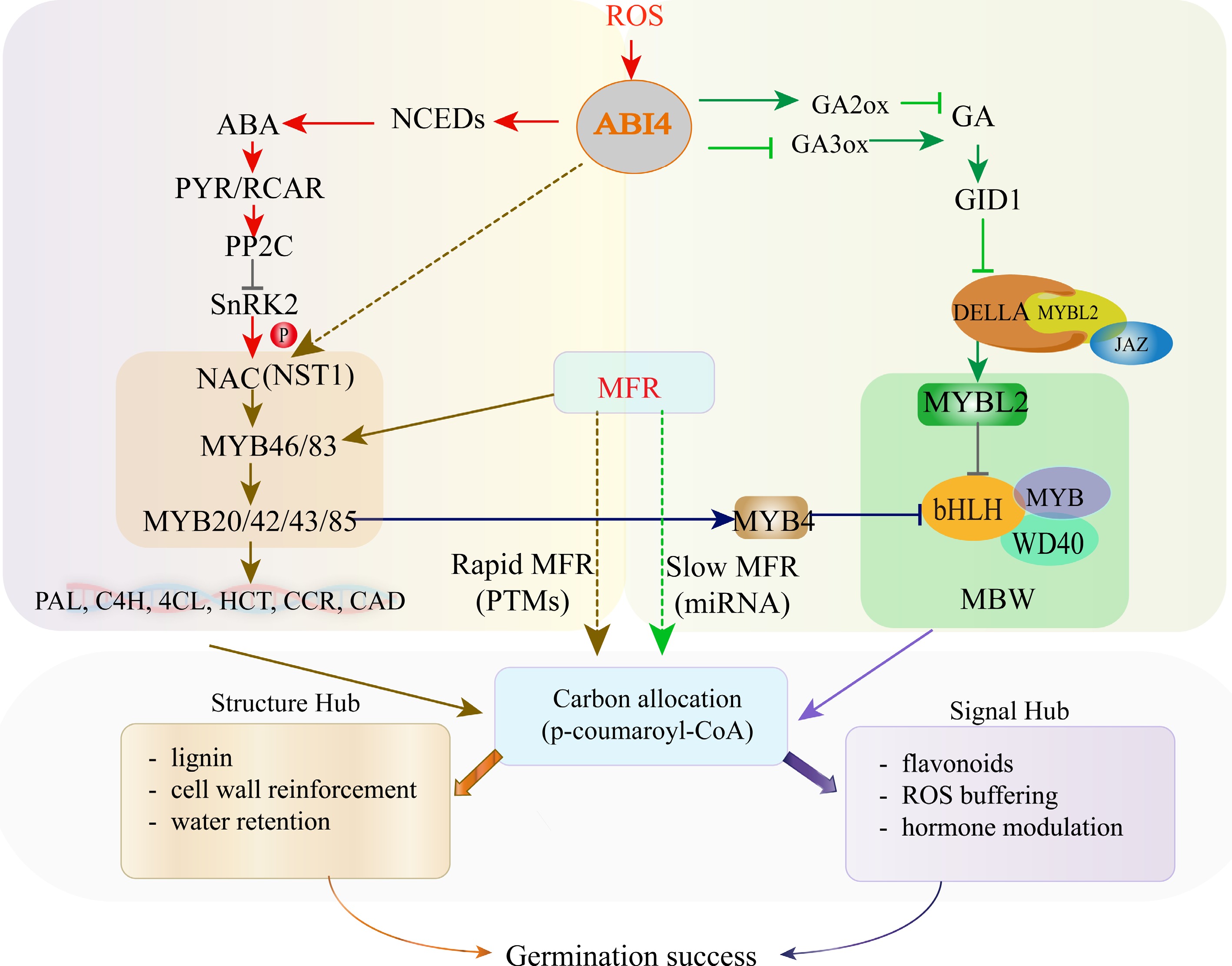
Figure 4.
Multilayer regulation of carbon allocation between lignin and flavonoid branches. The ABA–lignin axis: ABA triggers the PYR/RCAR-PP2C-SnRK2 cascade, leading to the phosphorylation of NST1. This activates the NAC-MYB46/83 regulators, which induce third-tier MYBs to drive the expression of lignin biosynthesis genes. The GA–flavonoid axis: GA promotes the degradation of DELLA proteins, releasing MYBL2 to inhibit the MBW complex, thereby fine-tuning flavonoid accumulation. Cross-regulation: Transcriptional repressors, such as MYB4 and MYBL2, provide negative feedback to balance the flux between the two hubs. Rapid MFR is further fine-tuned by PTMs, whereas slow MFR is stabilized by miRNAs and epigenetic modifications. The proposed carbon allocation relationships are conceptual and may differ substantially depending on the species, developmental stage, and environmental context.
MFR as resource competition and enzymatic switches
-
The partitioning of carbon flux between the structural hub (lignin) and signal hub (flavonoids) originates at the shared precursor level but is dynamically regulated across multiple temporal scales. To better conceptualize this process, we propose that MFR operates in two distinct but coordinated modes: rapid MFR and slow MFR. Rapid MFR occurs on short timescales (seconds to minutes) and is primarily mediated by post-translational mechanisms, including enzyme phosphorylation, redox-dependent conformational changes, and dynamic assembly of metabolons, which together enable the immediate rerouting of intermediates without requiring new gene expression[76]. Under salt stress, the rice allosteric enzyme GSA (UDP-glucosyltransferase) actively guides metabolic flow from lignin precursors (such as coniferyl alcohol) to flavonoid glycoside synthesis via conformational changes[32]. This dynamic allocation of carbon flow, mediated by allosteric enzymes, is termed MFR. Such mechanisms allow plants to respond quickly to transient environmental fluctuations, particularly oxidative stress, where rapid adjustment of flavonoid-mediated ROS buffering or lignin polymerization is required.
In contrast, slow MFR operates over longer timescales (hours to days) and is dependent on transcriptional and epigenetic regulation. In Arabidopsis, silencing of the structural hub entry gene HCT leads to metabolic flow into flavonoid biosynthesis, experimentally confirming MFR[77]. Conversely, mutations in the UGT72B1 gene lead to a shift in metabolic flow from anthocyanins to lignin monomers[78]. This mode involves coordinated changes in the expression of pathway enzymes, transporters, and regulatory proteins, thereby reshaping metabolic capacity rather than resulting in an instantaneous flux change. This highly plastic regulatory capability enables seeds to adopt different strategies in the face of adverse conditions.
Importantly, these two modes are not independent. We propose that rapid flux redistribution may occur on short timescales, whereas longer-term transcriptional regulation may stabilize newly established metabolic states. Together, these processes may constitute a multi-timescale regulatory continuum that governs carbon allocation. This temporal stratification also implies that metabolic regulation must be anchored in transcriptional control mechanisms, which define the long-term directionality of flux allocation. Therefore, understanding how TFs coordinate the two hubs is essential, as discussed in the following section.
Although the dual-hub framework emphasizes potential competition for shared phenylpropanoid precursors, the physiological importance of this competition likely varies across developmental stages, seed types, and environmental conditions. In many species, germination-associated structural changes may predominantly rely on remodeling of the pre-existing cell wall architecture rather than extensive de novo lignin biosynthesis. Therefore, carbon competition between lignin and flavonoid branches should currently be viewed as a context-dependent regulatory possibility rather than a universally dominant mechanism.
Transcriptional hierarchical regulation of carbon allocation
-
In germinating seeds, a core set of TFs orchestrates carbon partitioning between the lignin (structural) and flavonoid (signaling) branches of the phenylpropanoid pathway. The phenylpropanoid pathway is regulated in a clear hierarchical structure. The structural hub (lignin) regulation follows a clear NAC-MYB-GRN three-tier regulatory network model[79]. NAC TFs (e.g., SND1, NST1, and VND) are master regulators of secondary wall synthesis and are responsible for receiving signals from developmental programs or environmental stresses and initiating downstream transcriptional cascades[80]. MYB46 and MYB83 are directly activated by first-tier NAC factors. They are considered secondary regulators in the regulatory network. In the myb46/myb83 double knockout mutants, the synthesis of the three major components of the secondary cell wall (cellulose, hemicellulose, and lignin) was severely inhibited, leading to seedling lethality. These two MYB factors directly bind by recognizing the secondary wall MYB-responsive element (SMRE) motif in the promoters of downstream genes. The SMRE motif highly overlaps with the traditional acid cascade (AC) element, enabling the secondary master regulators to both directly induce the expression of synthase genes and activate the third-tier functional executors[81]. The third tier consists of a series of functionally specialized TFs responsible for refining broad signals from the secondary switches into specific biochemical outputs. In Arabidopsis, MYB20, MYB42, MYB43, and MYB85 act as positive regulators, directing phenylpropanoid metabolic flux toward lignin[82], whereas MYB58 and MYB63 focus on the specific activation of genes involved in lignin biosynthesis[83,84]. Research indicates that the four MYB factors not only directly bind to the promoters of lignin synthase genes (such as PAL, C4H, 4CL, HCT, CCoAOMT, CCR, and CAD) but also directly activate genes in the phenylalanine biosynthesis pathway, such as ADT6 (the arogenate dehydratase/shikimate dehydrogenase-related gene). This dual regulation ensures that during peak lignin demand, the supply of precursor substances is synchronized with the enhanced activity of downstream synthases. When MYB20/42/43/85 induces MYB4, the flavonoid biosynthesis pathway is shut down, thereby diverting more phenylalanine flux into the lignin biosynthesis branch via the phenylpropanoid pathway[64].
Signal hub (flavonoid) regulation relies mainly on the classic MYB-bHLH-WD40 (MBW) complex[16]. The MYB component (R2R3-MYB proteins) determines the type of synthesis. For example, when MYB factors from the SG6 subgroup (including AtMYB75 [PAP1], AtMYB90 [PAP2], AtMYB113, and AtMYB114) participate in the complex, plants tend to accumulate anthocyanins; in contrast, when TT2 (AtMYB123) from the SG5 subgroup is involved, it primarily drives the accumulation of proanthocyanidins in the seed coat[85]. The bHLH component (e.g., TT8, GL3, and EGL3) provides the scaffold for transcriptional activation and binds to R2R3-MYB proteins through their N-terminal domains, while physically interacting with WD40 proteins, thereby forming a stable ternary complex[86,87]. The WD40 component (e.g., TTG1) is responsible for complex localization and stabilization. TTG1 exhibits significant pleiotropy in plant development. In addition to flavonoid synthesis, it is also involved in trichome development, root hair formation, and seed coat mucilage secretion.
To prevent excessive accumulation of metabolic products or accumulation at the wrong time/location, the network is further regulated by transcriptional repressors. For example, MYBL2 (a type of R3-MYB) and MYB4 can inhibit the activity of the MBW complex (MYB-bHLH-WD40 complex) by competitively binding to bHLH proteins (basic helix-loop-helix proteins) or directly suppressing promoters, acting as negative regulators of signal hubs[85,88]. More interestingly, certain TFs, such as ZmMYB31, can directly inhibit lignin biosynthesis genes, thereby indirectly redirecting carbon flux from the lignin synthesis pathway to the anthocyanin pathway[89].
The AP2-domain transcription factor ABI4 appears to be an important regulatory node linking environmental signals, plant hormones (ABA/GA), and metabolic output. ABI4 positively regulates ABA synthesis (NCEDs) and signaling (ABI5) genes, while directly binding to and inhibiting GA synthesis genes (GA3ox) and activating GA metabolic genes (GA2ox)[90]. This suggests that ABI4 may influence carbon partitioning toward downstream phenylpropanoid branches. Meanwhile, WRKY (WRKY40/ WRKY75) and NAC (NST) family TFs integrate ABA, GA, and stress signals to finely regulate downstream metabolic genes, transducing signals into metabolic flux[91].
Thus, this hierarchical and cross-regulatory transcriptional network integrates environmental and developmental signals to determine carbon allocation priorities, thereby governing the metabolic flux redistribution strategy between the two hubs in the plant.
Hormonal antagonism and resource optimization
-
Translated MFR patterns optimize resource allocation by employing hormonal antagonism to coordinate carbon allocation between growth and stress adaptation. GA-mediated growth promotion entails the proteasomal degradation of DELLA proteins, key repressors of the GA signaling pathway[92]. When GA binds to its soluble receptor, GIBBERELLIN INSENSITIVE DWARF1 (GID1), the resulting GA-GID1-DELLA complex is targeted for degradation by the 26S proteasome[93]. This degradation facilitates the upregulation of genes encoding expansins, xyloglucan endotransglucosylase/hydrolases (XTHs), and pectin methylesterases (PMEs). Expansins disrupt the non-covalent bonds between cellulose microfibrils and hemicelluloses, whereas XTHs catalyze the cleavage and rejoining of xyloglucan chains, effectively loosening the wall matrix to allow for cellular expansion[94]. Under low-pH apoplastic conditions often induced by GA in the apoplast, PODs and LACs can catalyze the production of OH from H2O2 and O2−[95]. These highly reactive radicals cause the non-enzymatic scission of wall polysaccharides, a process known as oxidative loosening, which is a critical component of GA-induced cell elongation[96]. Simultaneously, GA signaling serves as a negative regulator of the signal hub; by degrading DELLA proteins that normally sequester the repressors MYBL2 and JAZ, under specific developmental conditions, GA signaling may inhibit flavonoid biosynthesis, likely by disrupting the MBW complex to conserve cellular resources[97,98]. DELLA proteins typically bind to and sequester the repressors MYBL2 and JAZ, targeting them for degradation.
Conversely, ABA signaling is often associated with stress acclimation and reinforcement of structural traits, particularly under water deficit or salinity conditions, where continued expansion would be deleterious[80]. The core ABA signaling pathway involves the perception of ABA by PYR/RCAR receptors, which then inhibit group A protein phosphatase 2Cs (PP2Cs). This inhibition releases SnRK2 kinases (SnRK2.2, 2.3, and 2.6) from repression[99]. These kinases physically interact with and phosphorylate the transcription factor NST1 at the highly conserved Ser316 residue. NST1 is a master regulator that orchestrates the expression of a suite of genes involved in the synthesis of cellulose, xylan, and lignin[80]. In this ABA-dominated state, peroxidases and laccases are diverted from the loosening pathway to monolignol polymerization.
This negative regulation minimizes metabolic competition between the structural and signal hubs, ensuring that when GA promotes germination, carbon flow is prioritized and efficiently allocated to the structural hub (for cell wall softening/remodeling) rather than signaling.
In addition to GA–ABA antagonism, other hormones add further layers of regulatory complexity. For instance, auxin inhibits seed germination by maintaining the expression of ABI3, a core transcription factor in ABA signaling[92]. The signal hub (e.g., AP2 family TFs) indirectly regulates auxin transport by coordinating the ABA/GA balance, for instance, by inhibiting GA synthesis genes or activating ABA metabolic genes to influence dynamic auxin distribution. The synergy between auxin, ABI3, and the signal hub forms a dormancy homeostasis regulatory network in which auxin reinforces dormancy signals by maintaining ABI3 expression, whereas the signal hub optimizes auxin efficacy through metabolic reprogramming[100]. Jasmonic acid (JA) activates its signaling pathway when plants experience biotic or abiotic stress, leading to the degradation of JAZ proteins via the 26S proteasome. The degradation of JAZ releases sequestered bHLH and MYB TFs, facilitating the formation of the active MBW complex, which then specifically binds to the promoters of key anthocyanin biosynthesis genes (e.g., DFR, UFGT), activating the transcriptional program[101]. This cascade, triggered by JA signaling (dependent on photoreceptor phyA and involving MYB75 in Arabidopsis), achieves efficient mobilization of the signal hub, synthesizing large amounts of anthocyanins with antioxidant stress functions, serving as a critical physiological strategy for coping with environmental crises.
Therefore, hormonal antagonism and synergy are translated into specific MFR patterns, optimizing resource allocation for survival under conflicting conditions.
Multi-layer fine-tuning of metabolic flux redirection
-
In addition to transcriptional control, the dual hubs are regulated by mechanisms operating at different timescales and serving distinct purposes: protein post-translational modifications (PTMs; for example, ubiquitination) rapidly modulate key enzyme activity, such as PAL[51]; miRNAs provide a layer of post-transcriptional fine-tuning for pathway components, such as LAC; and epigenetic modifications, such as H3K27me3 demethylation by REF6, can establish a form of 'stress memory' by modulating hormone sensitivity across generations[102]. The regulatory network extends beyond transcription to include faster and more durable mechanisms.
PTMs: The fastest and most direct control of metabolic flux occurs at the post-translational stage. As mentioned earlier, PAL, the key enzyme in the entire pathway, is strictly regulated by ubiquitin-mediated degradation. KFB E3 ligase-mediated PAL degradation is a crucial switch that allows plants to rapidly shut down phenylpropanoid metabolic flow in response to signals (such as light changes or stress)[53].
miRNA Regulation: miRNAs play a key role in regulating dual hubs. For example, miR397 directly regulates the construction strength of the structural hub by targeting LAC (laccase) transcripts[103]. Conversely, this has been observed in Arabidopsis, where miR858a overexpression leads to increased anthocyanin accumulation, likely through downregulation of repressive MYB factors[104].
Epigenetics: Epigenetic modifications provide a mechanism for rapid responses and environmental memory. For instance, the histone H3K27me3 demethylase REF6 targets ABA catabolism genes CYP707A1 and CYP707A3. Seeds of ref6 mutants exhibit enhanced dormancy because ABA cannot be effectively degraded[105]. REF6 indirectly promotes signal hub function by activating the expression of ABA catabolism genes, thereby lowering endogenous ABA levels.
Collectively, these rapid (PTMs) and persistent (epigenetic) mechanisms provide the necessary agility and memory to fine-tune the MFR in response to transient cues or past experiences.
-
Seed germination is a high-risk transition in which success depends on the plastic allocation of limited carbon resources between the structural and signal hubs. The structure–signal dual hub model posits that various stresses trigger specific MFR patterns to optimize survival, as summarized in Fig. 5.
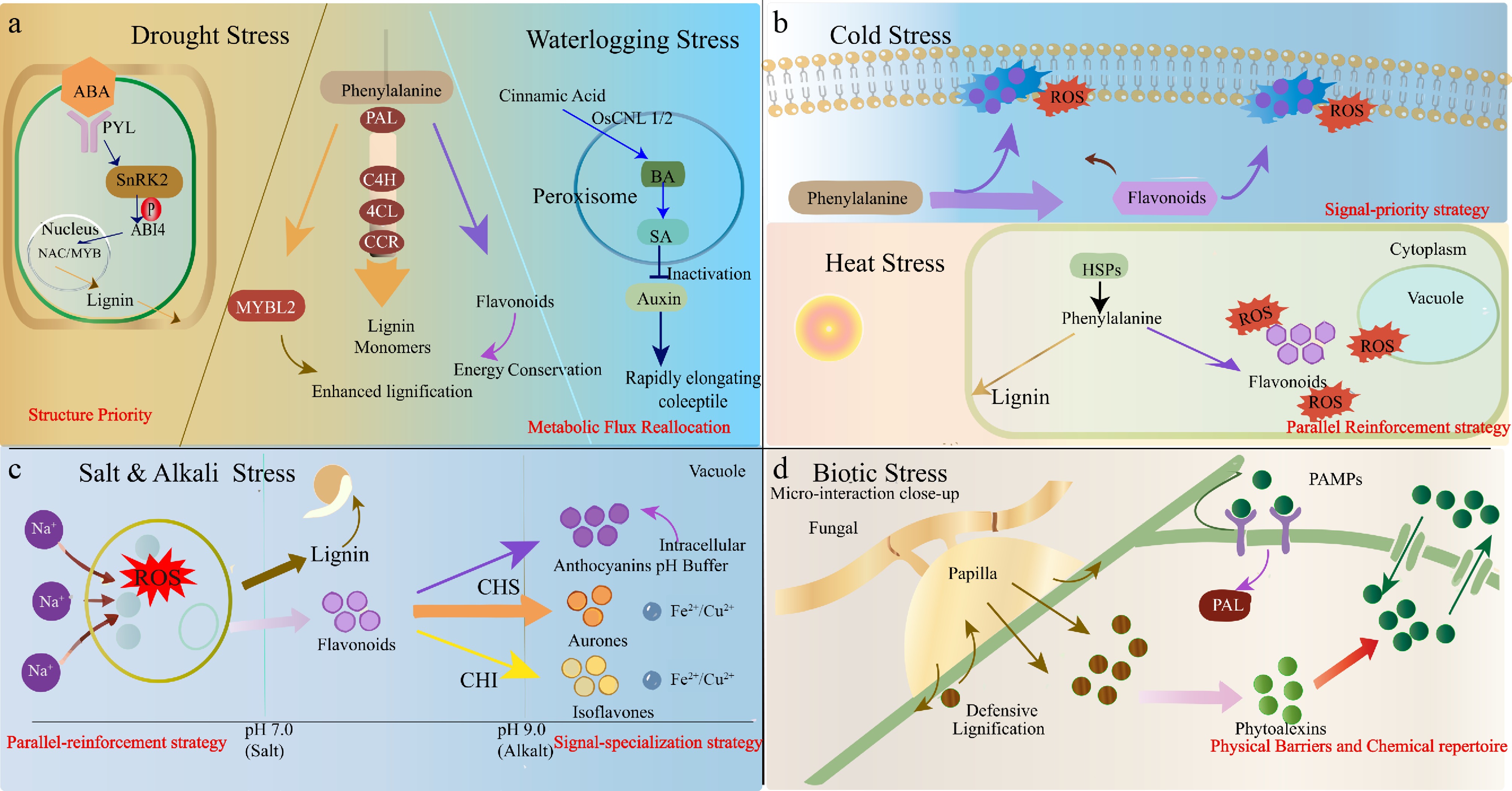
Figure 5.
Metabolic flux strategies of seeds in response to multiple biotic and abiotic stresses. (a) Structure priority (drought) vs. upstream reallocation (waterlogging). Under drought, ABA prioritizes lignin synthesis for water retention. Under flooding, rice redirects flux upstream at cinnamic acid via OsCNL1/2 to produce SA, inactivating auxin to promote rapid coleoptile elongation. (b) Signal priority (cold) vs. parallel reinforcement (heat). Cold stress triggers flavonoid accumulation to protect membranes and scavenge ROS. Heat stress requires simultaneous activation of both hubs to prevent structural collapse and manage thermal ROS bursts. (c) Parallel reinforcement (salt) vs. signal specialization (alkali). Salt stress induces lignification to block Na+ entry while producing flavonoids for ionic ROS buffering. High pH (alkali) shifts flux toward specialized signals like isoflavones and aurones. (d) Dual-defense (biotic stress). Pathogen attack triggers defensive lignification to create physical barriers (papillae) while simultaneously synthesizing phytoalexins (e.g., flavonoids and stilbenes) to chemically poison invaders.
Prioritization strategies: resource polarization
-
Under stresses in which a single threat dominates, seeds often adopt a polarization strategy to maximize fitness. To counter dehydration, ABA-driven signaling (via NAC and MYB factors) directs carbon flux toward lignin biosynthesis to reinforce the seed coat and root xylem[106]. Under cold stress, plants prioritize signaling to boost antioxidant capacity and sustain membrane integrity during germination. Cold stress impairs membrane fluidity and elevates oxidative stress via ROS accumulation[107]. In response, plants activate the phenylpropanoid pathway, diverting carbon flow to accumulate phenolic acids and flavonoids[108]. These flavonoids function dually: scavenging ROS to protect macromolecules and embedding within lipid bilayers to preserve membrane fluidity and structural integrity at low temperatures[109]. During submerged imbibition, rice seeds upregulate peroxisome-localized OsCNL1and OsCNL2, which divert the phenylpropanoid pathway upstream of the canonical p-coumaroyl-CoA node. OsCNLs convert cinnamic acid to benzoic acid, driving salicylic acid (SA) biosynthesis[110]. Although this temporarily weakens physical barriers, it allows the seedling to rapidly elongate to reach the water surface and acquire oxygen by lifting auxin repression.
Integrative strategies: parallel reinforcement and dual defense
-
When environmental challenges involve both physical and oxidative damage, the dual hubs operate synergistically.
Heat and salinity impose combined threats of cytoskeletal disruption and oxidative burst. Thermally, a coordinated response is triggered: the signal hub activates MBW complexes to synthesize flavonoids for ROS scavenging, while the structural hub employs NAC/MYB networks to reinforce lignin deposition, maintaining wall rigidity and preventing collapse[111−113]. Under salinity, the structural hub restricts apoplastic Na+ influx and water loss via lignification, whereas the signal hub produces flavonoids (e.g., rutin) to mitigate ion toxicity and sustain redox homeostasis[114,115].
Biotic stresses (pathogens/pests) activate the phenylpropanoid pathway primarily through cell wall perturbation[116]. Plants deploy a dual-defense strategy via coordinated hub activation: the structural hub initiates localized lignification, forming hydrophobic physical barriers that impede pathogen ingress or herbivore feeding. Simultaneously, the signal hub redirects carbon flux toward phytoalexins—including flavonoids, isoflavonoids, stilbenes, and coumarins[117]—which exert direct antimicrobial/insecticidal effects, inhibit virulence enzymes, or amplify immune signaling[118].
Mixed strategy and survival-first strategy against combined stresses
-
In nature, seeds frequently encounter concurrent stresses (e.g., drought-heat or salinity-biotic stress)[119]. When conflicting metabolic demands arise—such as drought requiring 'structural priority' vs. heat demanding 'signaling priority'—seeds must resolve resource competition under limited carbon availability[120]. Rather than linearly summing individual responses, plants employ signal integration hubs to prioritize survival. The master regulator ABI4 integrates ABA/GA balance, sugar, redox, and mitochondrial retrograde signaling to arbitrate flux allocation between central pathways[121]. Concurrently, the MPK3/6 cascades rapidly coordinate flavonoid accumulation and cell wall remodeling via phosphorylation events[122,123]. Under combinatorial stress, ABA-mediated abiotic responses typically dominate; for instance, salt-induced ABA suppresses Botrytis immunity via JA/ET antagonism, exemplifying a 'survival-first' hierarchy[124]. To cope with unpredictability, seeds adopt mixed strategies. These include spatial partitioning (e.g., reinforcing radicle structure while prioritizing plumule signaling) or bet-hedging at the population level. Within a seed cohort, heterogeneity in phenylpropanoid gene expression ensures phenotypic diversity: some individuals prioritize structural endurance for extreme drought, while others favor signaling for rapid germination upon rainfall[125,126]. Such stochasticity guarantees that at least a subset of the population survives regardless of environmental contingencies.
-
The structure–signal dual hub model provides a unifying framework linking phenylpropanoid metabolism to seed germination by positioning carbon flux allocation as a central regulatory axis. By integrating structural investment (lignin) and signaling modulation (flavonoids), the model reframes germination not merely as a hormone-controlled process, but as a resource-allocation decision under metabolic constraints. However, this framework remains largely conceptual and requires rigorous experimental validation.
Several critical limitations constrain its current explanatory power. First, the assumption of active carbon competition between hubs depends on the relative contribution of de novo lignin biosynthesis vs. remodeling of pre-existing structures, which likely varies across species and developmental contexts. If lignin function during germination is dominated by structural modification rather than synthesis, the core 'flux competition' premise may be overstated. Second, the classification of flavonoids as signaling molecules remains functionally ambiguous: current evidence more strongly supports roles in redox buffering and hormone transport modulation rather than direct signal transduction. Third, the generality of the model across seed types is uncertain, particularly for systems with low phenylpropanoid activity or distinct carbon economies (e.g., oil vs. starch seeds). Finally, while the conceptual framework offers a novel integration, specific mechanistic underpinnings, such as proposed mechanisms such as enzyme clustering or phase separation, remain speculative, lacking direct in vivo evidence in germinating seeds and representing a key area for future validation to fully establish their novelty.
Despite these constraints, the model generates clear, testable predictions. It predicts that flux partitioning at the p-coumaroyl-CoA node is dynamically regulated beyond enzyme abundance, potentially involving post-translational control and spatial enzyme organization. It further predicts that successful radicle emergence requires coordinated spatial decoupling of the two hubs—localized suppression of lignification coupled with targeted activation of flavonoid-mediated redox control. At the genetic level, this implies that variation in flux-regulating components (e.g., 4CL isoforms, KFB-mediated PAL turnover) underlies natural diversity in seed vigor and stress tolerance.
Future progress depends on directly measuring flux allocation with spatial and temporal resolution. Approaches such as single-cell metabolomics, spatial transcriptomics, and live-cell imaging will be essential to determine whether dual-hub coordination operates at the predicted scales. It is equally important to transition from descriptive to causal validation using genetic perturbations and flux quantification.
From an applied perspective, the model suggests that engineering phenylpropanoid flux partitioning, rather than simply increasing the pathway output, may be a viable strategy for improving seed performance. Targeted manipulation of pathway entry (e.g., PAL stability) or branch selection (e.g., 4CL isoform accumulation) offers concrete entry points for crop improvement; however, trade-offs between structural integrity and signaling capacity must be carefully managed.
Although several components remain hypothetical, the framework organizes fragmented evidence into testable predictions regarding carbon allocation, metabolic plasticity, and stress-responsive germination.
-
During the preparation of this work, we used Paperpal for language refinement and figure enhancement. We have reviewed and edited all content produced with the assistance of this tool, verified its accuracy, and take full responsibility for the integrity and originality of the final manuscript. This work represents the authors' own intellectual contribution, and no AI tool is credited as an author.
-
The authors confirm their contributions to the paper as follows: study conception and design, funding acquisition: Li Y; data collection and manuscript preparation: Shi F, Wang X, Song X. All authors reviewed the results and approved the final version of the manuscript.
-
Data sharing not applicable to this article as no datasets were generated or analyzed during the current study.
-
The authors declare that they have no conflict of interest
- Copyright: © 2026 by the author(s). Published by Maximum Academic Press on behalf of Hainan Yazhou Bay Seed Laboratory. This article is an open access article distributed under Creative Commons Attribution License (CC BY 4.0), visit https://creativecommons.org/licenses/by/4.0/.
-
About this article
Cite this article
Shi F, Wang X, Song X, Li Y. 2026. The structure−signal dual hub: remodeling phenylpropanoid metabolism for seed germination. Seed Biology 5: e021 doi: 10.48130/seedbio-0026-0019 

The structure−signal dual hub: remodeling phenylpropanoid metabolism for seed germination
- Received: 26 February 2026
- Revised: 09 June 2026
- Accepted: 22 June 2026
- Published online: 24 August 2026
Abstract: Seed germination is a critical developmental transition during which stored reserves are mobilized, and metabolic networks are rapidly reprogrammed in response to environmental cues. Phenylpropanoid metabolism plays a central role in this process by supplying both structural components, such as lignin, and signaling molecules, including flavonoids and phenolics. Here, we synthesize the current knowledge of phenylpropanoid metabolism during seed germination and propose the structure–signal dual hub model, which hypothesizes that carbon flux at the p-coumaroyl-CoA branch point is functionally partitioned between a structural hub supporting cell wall reinforcement and a signaling hub acting as an indirect metabolic modulator of hormone and redox environments. We further discuss how stress conditions may bias carbon allocation toward distinct hub-associated outputs, thereby contributing to metabolic plasticity during the germination period. We present a framework that links metabolic flux control to environmental responsiveness and may serve as a conceptual scaffold for future studies.
-
Key words:
- Phenylpropanoid metabolism /
- Seed germination /
- Lignin /
- Flavonoids /
- Abiotic stress