











-
The coconut (Cocos nucifera L.) is a member of the palm family (Arecaceae) and is the only species in the genus Cocos[1]. It is a large, palm-like tree that can grow up to 30 m tall, with pinnate leaves that are 4–6 m long[2]. The coconut fruit is a drupe, consisting of three layers: the exocarp (outer skin), the mesocarp (fibrous husk), and the endocarp (hard shell)[3]. Inside, it contains coconut water and a white, fleshy endosperm, known as coconut meat[4]. Biologically, the coconut palm is well-adapted to thrive in tropical coastal environments, where it can tolerate high salinity and poor soil conditions[5]. The tree is propagated mainly through its seeds (the coconuts), which can float and disperse over long distances via ocean currents, allowing them to colonize coastal regions across the world[6].
Coconuts are used extensively for their meat, water, milk, and oil in cooking and baking across various cuisines, and the husks and shells are utilized for fuel, crafts, and as construction materials, while the leaves are often woven into mats and roofing thatch[7]. Additionally, coconut oil is a key ingredient in cosmetics, soaps, and pharmaceuticals due to its moisturizing and antibacterial properties[8]. Coconuts are also vital in traditional agricultural systems. In many tropical countries, they form the basis of intercropping systems, contributing to soil fertility and providing shade for other crops[3]. In addition, the coconut palm plays a crucial role in coastal protection, helping to prevent soil erosion and acting as a natural barrier against storms and tsunamis[9]. In summary, the coconut is a versatile and resilient plant with considerable ecological, economic, and cultural significance worldwide.
-
China's tropical regions are primarily located in the southern part of the country[10] (as demonstrated in Fig. 1), particularly in Hainan, southern Guangdong, southern Guangxi, a small part of Fujian, Taiwan, and parts of Yunnan[11]. These regions are characterized by high temperatures and abundant rainfall throughout the year, making them ideal for cultivating a variety of tropical and subtropical crops. Hainan Province, the southernmost province in China, accounts for 99% of the country's coconut cultivation area[12].
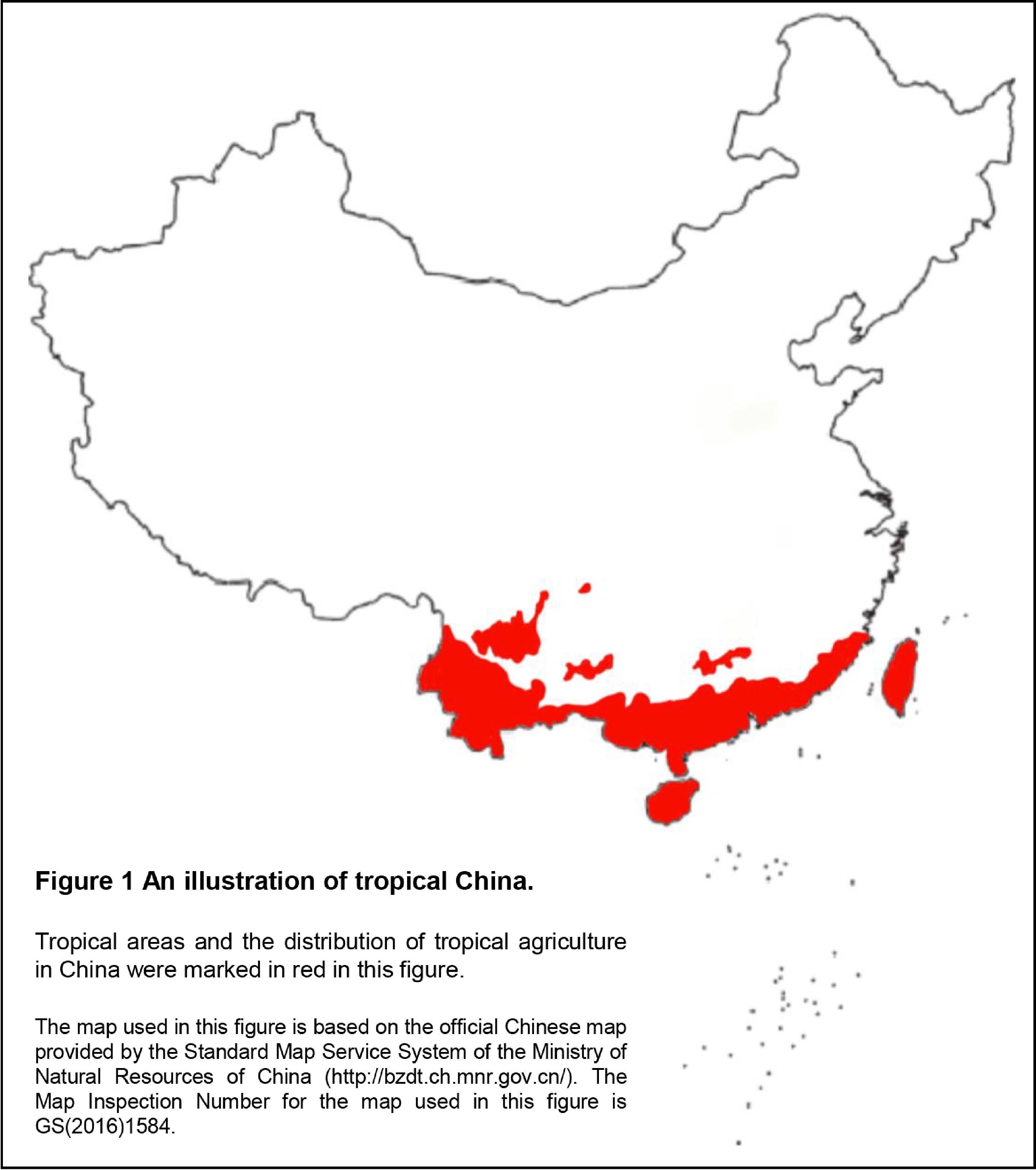
Figure 1.
An illustration of tropical China. Tropical areas and the distribution of tropical agriculture in China were marked in red in the figure. The map used in this figure is based on the official Chinese map provided by the Standard Map Service of the Ministry of Natural Resources of China (
http://bzdt.ch.mnr.gov.cn/ ). The Map Inspection Number for the map used in this figure is GS(2016)1584.In recent years, China's economy has experienced significant growth, leading to an increased willingness among consumers to invest in premium products. High-end fruits such as blueberries, strawberries, raspberries (representing small berries), clementines (representing citrus fruits), and apples (representing temperate fruits) have become popular choices among Chinese consumers[13]. Coconut products, previously unfamiliar to Chinese consumers, have also gained traction, with high-value items like coconut oil being regarded as luxury goods. These products are particularly popular among the middle class[14]. This growing demand has resulted in increased sales and profits for coconut producers, positioning China as the world's largest importer of coconut products[15]. The rapid expansion of the coconut market in China became a prominent news topic in 2023. The surge in coconut water prices was a key factor driving the market's growth[4]. Once considered a byproduct, coconut water gained immense popularity in China's summer beverage market, transforming it from an obscure product to a sought-after commodity[16]. Consumers, increasingly focused on natural ingredients and health benefits, were drawn to coconut water for its refreshing taste, natural appeal, and rich content of vitamins and potassium, establishing it as a leading health beverage[17]. Remarkably, 92.5% (37 out of 40) of China's top new beverage brands included coconut-based drinks in their offerings, leading to a 66% year-on-year increase in the number of coconut-themed beverage stores in 2022[18]. Beyond coconut water, the versatility of coconut products is evident in the popularity of coconut milk, dense coconut cream, powdered forms, functional blends, and coconut-infused fruit and vegetable juices, securing its status as a top ingredient in 40 Chinese freshly made beverage brands, as reported in the 2022 Report on the Beverage Industry of China[18]. The development of the coconut industry is supported at both national and provincial levels, with the central government emphasizing its importance as a vital oil crop[19].
-
China has been cultivating coconuts for over 2,000 years, particularly in the southernmost regions where the tropical climate provides ideal conditions for coconut palm growth. Areas such as Hainan, southern Yunnan, and western Guangdong have proven viable for coconut production, as shown in Fig. 2 and Table 1. However, most of China's coconut germplasm is located in Hainan, with only a few found in southern Yunnan and western Guangdong China has been cultivating coconuts for over 2,000 years, particularly in the southernmost regions where the tropical climate provides ideal conditions for coconut palm growth. Areas such as Hainan, southern Yunnan, and western Guangdong have proven viable for coconut production. However, most of China's coconut germplasm is located in Hainan, with only a few found in southern Yunnan and western Guangdong[20]. To sum up, in Hainan, the coconut industry focuses on fresh drinking coconut, processing coconut milk and meat, along with producing tourist souvenirs, supported by an integrated industrial chain. Guangdong primarily cultivates introduced varieties using urban landscaping and tourism. Yunnan, rich in coconut varieties, directs its industry towards unique coconut beverage products. In Guangxi, Dwarf Coconut is commonly grown, with an emphasis on advanced processing, especially for coconut oil.
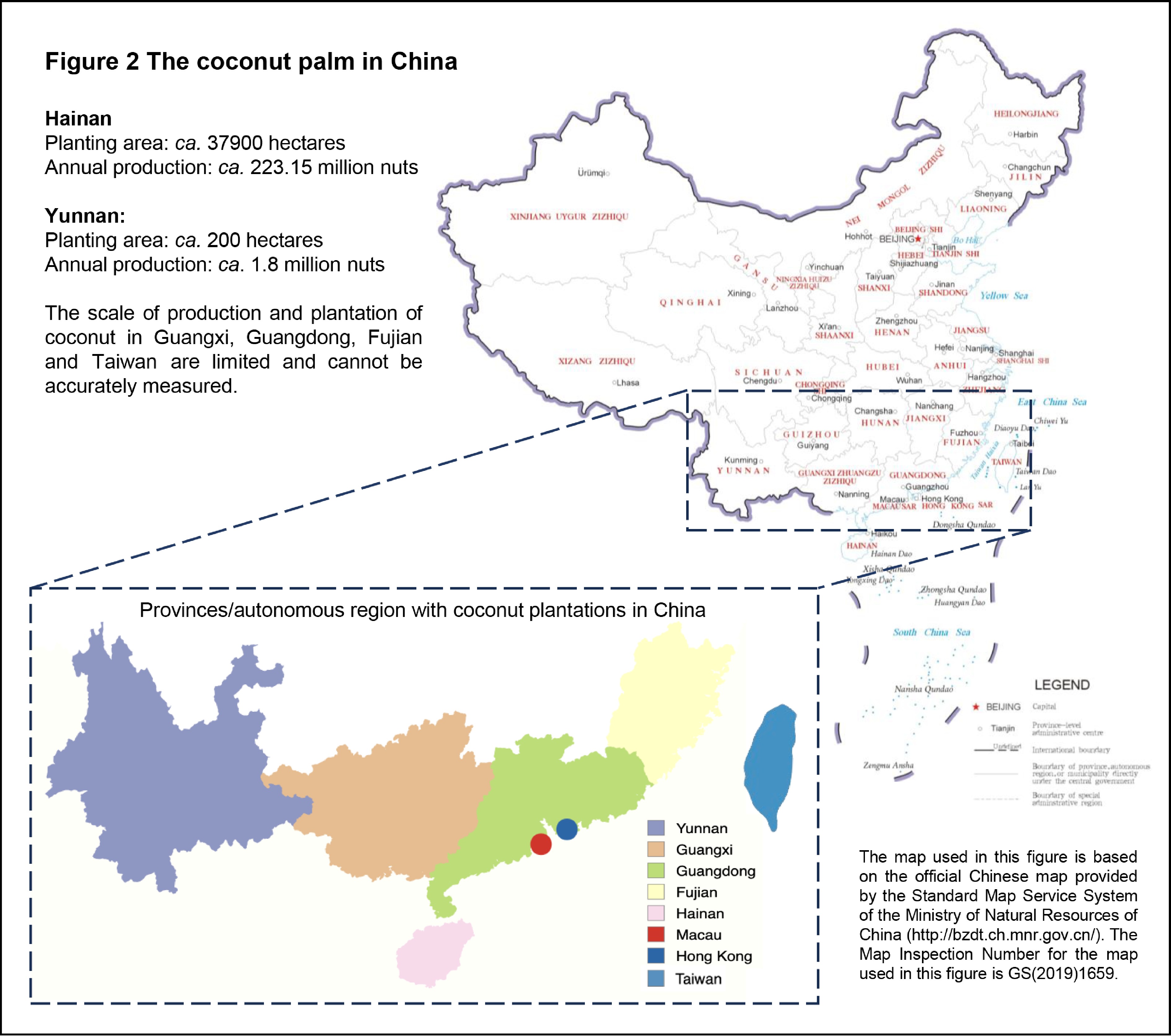
Figure 2.
The coconut palm in China. Hainan: planting area: ca. 37,900 hectares, annual production: ca. 223.15 million nuts. Yunnan: planting area: ca. 200 hectares, annual production: ca. 1.8 million nuts. The scale of production and plantation of coconuts in Guangxi, Guangdong, Fujian and Taiwan are limited and cannot be accurately measured. The map used in this figure is based on the official Chinese map provided by the Standard Service System of the Ministry of Natural Resources of China (
http://bzdt.ch.mnr.gov.cn/ ). The Map Inspection Number for the map used in this figure is GS(2019)1659.Table 1. Survey of coconut producing areas in China.
Province Origin Main growing
area (city)Variety Planting
area (hm2)Yield (million) Application Hainan Philippines; Malaysia; Wenchang, Hainan Haikou Yellow Dwarf; Red Dwarf; Wenye 78F1; Laguna Tall 2, 609 12.20 Food, industrial products, medicine, wind and sand control, ornaments Thailand Qionghai Aromatic Green Dwarf 6, 876 49.80 Fiji Wanning Tall; Red Dwarf; Yellow Dwarf 2, 045 15.85 Wenchang, Hainan; Malaysia Wenchang Wenye 78F1; Wenye No.2;
Wenye No.3; Wenye No.4; PB12115, 298 53.63 Fiji Lingshui Tall; Red Dwarf; Yellow Dwarf; Wenye 5, 488 18.36 Guangdong Malaysia Zhanjiang Green; Red; Brown; PB121 130 1.53 Food, industrial products, medicinal use, wind and sand control, cultural symbols Malaysia Xuwen, Zhanjiang Green; Red; Yellow; Brown Malaysia Leizhou Green; Red; PB121 Not available Not available Guangxi Malaysia; Hainan Dongxing Green; PB121 Not available Not available Food, industrial products, medicinal, wind and sand control, cultural symbols Malaysia; Hainan Beihai Green; Red; Yellow; Brown; Red-Brown; Red Dwarf; Yellow Dwarf Not available Not available Yunnan Mengla; Jinghong; Thailand; Wenchang, Hainan Xishuangbanna; Jinghong; Yuxi; Yuanjiang; Hekou; Honghe; Baoshan; Dehong Yunye; Jinghong Yellow; Dypsis leptocheilos; Aromatica Green Dwarf; Wenye 78F1; Yellow Dwarf; Red Dwarf; Hainan Tall 200 1.80 Food, wind and sand control Taiwan Thailand; Malaysia; Laos Pingtung; Kaohsiung; Taitung; Tainan; Hualien Laos; Green; Red; Yellow; Aromatic Green Dwarf 4, 840 24.72 Edible, medicinal, windbreak and sand fixation Fujian Cuba Fuzhou Roystonea regia Not available Not available Edible; Ornamental; purify the air; windbreak and soil fixation Specifically, a recent study shows that Hainan Province accounted for 99% of the coconut production area in China, primarily in Wenchang City (11,038 hm², 39.25%) and Qionghai City (5,962 hm², 21.20%)[21]. Beyond Hainan, there are only a few reported successful coconut production areas in China, such as parts of Guangdong, Guangxi (near northern Hainan), southern Yunnan, and Taiwan, due to their tropical climates[11]. However, coconut production in these regions remains much smaller than in Hainan due to geographical and climatic differences. Regarding economic importance, the coconut production market size was estimated to grow significantly, reaching CNY¥17 billion in 2022 with an annual compound growth rate of 35.6% in China[22]. Furthermore, the coconut industry reached CNY ¥200 billion, including the production of by-products like coconut husks and shells[21]. Coconut shells and fibers are valuable by-products in China, finding diverse applications that contribute to sustainable practices. Coconut fibers, with their resilience and elasticity, are commonly used in the production of eco-friendly mattresses, cushions, and upholstery, offering a biodegradable and durable alternative to synthetic materials. Coconut shells, on the other hand, are widely utilized to produce activated charcoal, a highly effective filtration material used in air and water purification systems. Leveraging these residues not only minimizes waste but also adds economic value to the coconut industry in China[21]. Despite this dramatic growth, previous studies have identified challenges, such as insufficient value addition and poor management in China's coconut industry, which hinder its development[23]. In conclusion, while many regions in China are suitable for coconut production, the industry is mainly concentrated in Hainan. The coconut market in China has immense potential, but there are significant challenges to overcome for the industry's continued development.
Hainan
-
The Hainan Tall coconut is the predominant variety on Hainan Island, known for its resilience, wind resistance, and adaptability to high-latitude environments. This cultivar belongs to the Pacific group A3[24], and phylogenetic studies have revealed that the Hainan Tall population was domesticated independently and earlier than other coconut varieties. It was introduced to China from Southeast Asia around 2,000 years ago[25]. These coconut palms are traditionally planted near villages, along roads, and in urban areas, with larger plantations found in specific regions[26]. With an annual yield of 5.63 billion coconuts over 1.2 million hectares, there is enormous potential for coconut-based products, attracting stakeholders due to the economic and health benefits[27]. By 2020, Hainan Province contributed the bulk of China's coconut production, cultivating 58,000 hectares and yielding 220,000 tons[28]. Hainan's favorable climate, soil conditions, and diverse resources make it ideal for coconut cultivation[29]. Hainan, which hosts 99% of China's coconut farms, plays a pivotal role in the country's coconut industry, achieving an annual production value of CNY¥20 billion[22]. The establishment of the Hainan Free Trade Zone and China's national rural revitalization strategy is expected to significantly boost the coconut industry.
However, several challenges remain for Hainan's coconut industry. Qiu et al.[30] identified issues such as inadequate field management and low-value addition in coconut by-products. Despite contributing 99% of China's coconut production, Hainan accounts for only 10% of the industry's value[29]. Furthermore, pests and pathogens continue to affect almost 100% of 1-year-old golden coconut seedlings at the nursery base in Qionghai, Hainan[31]. Although Hainan produces the vast majority of China's coconuts, the thriving processing industry still depends heavily on imported raw materials, importing 20 billion coconuts annually[29]. While Hainan plays a crucial role in China's coconut production, it has great potential to become a global leader in the industry, provided issues related to limited development and inadequate crop management are addressed.
Yunnan
-
Coconut cultivation in Yunnan has a long history, but most coconuts are grown as ornamental plants, and there is no large-scale industry. Historical records indicate that coconuts have been cultivated in Yunnan since the Three Kingdoms period[32], with the Tang Dynasty's 'Man Shu' also documenting coconut cultivation in the Xishuangbanna region[33]. Research by He et al. on coconut genetic diversity suggests that Yunnan has abundant germplasm resources, though ISSR analysis shows they are relatively distinct from other regions[34]. However, the scale of coconut cultivation in Yunnan is limited by temperature and precipitation[20]. Mao reported that attempts to establish coconut farming in Hekou, Lujiangba, and Luxi in the 1970s were unsuccessful, leaving only a few coconut palms in southern Yunnan, including in the Lancang River and Yuanjiang Valley[20]. Currently, Yunnan's coconut planting area covers around 200 hectares, producing approximately 1.8 million coconuts annually. Although small and scattered, this distribution prevents large-scale outbreaks of diseases and pests. However, coconut leaf spot and sooty mold diseases occur in varying degrees in different areas of Yunnan. The coconut heart leaf beetle (Brontispa longissimi) is particularly damaging, killing seedlings and threatening mature trees, and the threat is increasing yearly[35]. In conclusion, Yunnan has rich germplasm resources and the potential to create new coconut varieties, but environmental and climatic constraints limit large-scale industry development.
Guangxi
-
Guangxi has been historically recognized as a traditional coconut-producing region in China. Studies show that the climate in Yulin City was particularly favorable for coconut cultivation in the 14th and 15th centuries, leading to abundant coconut fruit production[36]. Today, diverse coconut species such as green coconuts, yellow dwarf coconuts, red dwarf coconuts, Mawa coconuts, yellow coconuts, and brown coconuts are found in both Guangxi and Guangdong provinces, mainly in coastal, plain, and hilly areas at altitudes ranging from 2 to 50 m[37]. However, coconuts in Guangxi are more often cultivated for ornamental purposes than food production, unlike in Hainan[37]. Areas such as Beihai City, Fangchenggang City, and Dongxing City have been identified as suitable for coconut production due to their favorable climates, indicating potential for industry growth in Guangxi[38]. However, the production scale remains significantly smaller than in Hainan, with only 27 hectares recorded in 2015[39]. To address this, researchers suggest applying potassium (K), magnesium (Mg), and sulfur (S) fertilizers to improve crop yield and quality in Guangxi's red acid soil, showing significant improvements in coconut cultivation[40]. Similar to Hainan, pests pose a threat to the coconut industry in Guangxi, with several species of pests identified as damaging to coconut palms[41], including the newly discovered pests that are critical for local agriculture management[42]. One of the most notable is the black-headed caterpillar (Opisina arenosella), a devastating invasive pest that causes severe defoliation and occasional plant death[43]. Further research is needed to develop effective pest management strategies[44]. In summary, Guangxi holds significant potential for coconut production due to its favorable climate, but appropriate crop management is essential for successful industry development.
Guangdong
-
Guangdong benefits from a warm winter climate conducive to the year-round growth of tropical crops, including coconuts, pepper, and rubber[45]. However, coconut cultivation in Guangdong is minimal compared to Hainan, and the region is not a major coconut producer due to its more temperate climate[46]. The coconuts grown in the northern Leizhou Peninsula, such as in Suixi, suffer from insufficient heat and large diurnal temperature variations, leading to low yields and thin flesh. Similarly, coconuts grown in Yangjiang generally do not bear fruit properly due to climatic constraints. Additionally, pests and diseases, such as coconut leaf spot, anthracnose, and sooty mold, further limit production, while serious pests include the coconut heart beetle (Brontispa longissimi), rhinoceros beetle (Oryctes rhinoceros), red palm weevil (Rhynchophorus ferrugineus), and green thorn moth (Parasa lepida)[47]. Despite limited cultivation, Guangdong has a significant demand for coconut and its processed products. Coconut-based beverages like coconut water and coconut milk are popular, particularly in the food and beverage industry. Although the coconut cultivation area of Guangdong province is not large, as a large economic province, Guangdong Province has a large demand for coconut and its processed products[48]. Coconut products such as coconut water and coconut milk have a good market in Guangdong Province, especially in the catering and beverage industry. With the increasing consumer demand for healthy food, the market potential of coconut and its products is expected to further expand.
Taiwan
-
The coconut industry in Taiwan is relatively small compared to other major coconut-producing regions globally, but it plays a crucial role in the country's agricultural sector, particularly in the southern areas. Coconut cultivation is primarily concentrated on the east coast and in regions south of Taichung on the west. Since the 1960s, the number of coconut trees has seen a significant increase, growing from 12,000 trees in 1960 to around 60,000 by 1984[49]. Key areas of cultivation include Pingtung and Taitung, where coconut trees are commonly found along highways and near fish ponds. However, the industry faces significant challenges from pests like the coconut leaf beetle (Brontispa longissima), which has caused widespread damage to the trees. In response, biological control measures, such as introducing the parasitoid wasp Tetrastichus brontispae, have been employed with notable success[49]. Additionally, since 2005, southern Taiwan has been affected by fruit basal rot disease caused by Ceratocystis paradoxa, which is particularly severe during the warmer months, leading to significant fruit damage[50]. Economically, the industry produces valuable products like desiccated coconut, which is widely used in bakery items and sauces, contributing to an estimated 11,700 tons of dried coconut meal produced in 2012[51]. To ensure the sustainability and potential growth of the coconut industry, ongoing pest and disease management efforts, along with increased product diversification and processing improvements, are essential. The coconut industry in Taiwan, though small, is important for local agriculture, especially in southern regions. Efforts in pest and disease management are crucial for sustaining and potentially expanding the industry. Enhanced processing and diversification of coconut products can further boost the economic viability of the industry[38].
-
The coconut palm is a diploid species with 32 chromosomes (2n = 2x = 32)[52], classified into two distinct morphological types, Tall and Dwarf, based on their height and significant reproductive strategies[53]. Genomic analysis of coconut has identified genes for key traits, aiding in the development of disease-resistant and adaptable cultivars[54]. The extensive coconut genome exhibits genetic variation within the species, potentially linked to domestication, with tall cultivars demonstrating greater diversity than dwarf cultivars[55]. A preliminary genome size estimation for the coconut palm was conducted using HiSeq sequencing technology, resulting in an estimated genome size of approximately 2.6 Gb, with 50% to 70% of repetitive sequences[56]. According to evolutionary studies, the vast growth of transposable elements in the coconut genome was caused by changes in sea level throughout the Pleistocene glaciations[57].
De novo sequence assembly allowed access to the entire draft genome of the Hainan Tall coconut variety. It contained mapping data for six QTLs and 97 kb of association mapping data produced by Illumina HiSeq 2000 for the predicted genome of 2.42 Gb[58]. Long terminal repeats (LTRs) account for a large proportion of transposable elements (TEs) in the annotated coconut genome, and the number of projected genes (28,039) is significantly smaller than in other palm genomes[59,60]. The 119 antiporter genes found in the coconut genome can be categorized into 12 different functional classes based on their evolutionary links, similar to those found in the genome of the model plant Arabidopsis[58].
The coconut cultivar 'Catigan Green Dwarf' (CATD) was sequenced using advanced technologies (Illumina Miseq, PacBio SMRT, and Dovetail Chicago technologies), resulting in a high-quality genome assembly. This genome analysis identified thousands of genetic markers linked to important traits, revealing the potential for whole genome duplication events in the evolution of palms[61]. Using the Pacific Biosciences RSII and Illumina Hiseq 4000 platforms, the Chowghat Green Dwarf (CGD) coconut genome was sequenced, unveiling six types of resistance genes and the potential for developing disease-resistant coconut varieties through genomics-assisted breeding[62]. Tall (2.4 Gb) and Dwarf (2.39 Gb) coconut cultivars were sequenced using nanopore sequencing, high-throughput chromosome conformation capture (Hi-C), and Illumina technology, resulting in high-quality genome assemblies. Annotated assemblies revealed thousands of protein-coding genes and a higher contig N50 compared to previously reported coconut genomes[58,63]. Backcross mapping [MYD × (MYD × WAT)] was used to place 77% of coconut genes onto 16 linkage groups. They found segregation distortion on chromosome Cn15 and identified osmotic adjustment signaling pathways related to salt stress response[57].
Research in coconut genomics has greatly enhanced our comprehension of this vital economic palm. Insights gained from genomic studies have deepened our understanding of the coconut's nature and history. By combining cutting-edge biotechnologies with high-throughput phenotyping and accelerated breeding methods, there is substantial potential to speed up genetic improvements in coconut breeding. This approach offers a promising solution to the industry's longstanding challenges[54]. China has made significant strides in coconut genome research, focusing on various aspects of genomics and molecular breeding. Chinese researchers have developed molecular markers and high-throughput sequencing techniques to assess genetic diversity and population structure in coconuts[26]. This includes the assembly of coconut genomes and the identification of genes related to important traits such as salt tolerance and disease resistance[57]. Recently, Yang et al. established a database that includes information about coconuts and other palms. This database is a valuable resource for researchers studying the genetics of these plants and for developing new coconut varieties[1]. These efforts have provided valuable resources for coconut breeding and conservation, aiding in the improvement of this economically important crop. As research advances, these developments are anticipated to play a crucial role in boosting the sustainability and productivity of the coconut industry not only in China but also in the whole tropical world.
Coconut germplasm conservation via advanced in vitro biotechnologies
-
Traditionally, coconut germplasm has been preserved in field collections since typical seed banks have not been able to preserve the recalcitrant coconut seed[64]. However, maintaining these collections is costly, and they are constantly threatened by various environmental stressors. Therefore, the preservation of coconut germplasm requires alternative methods, including cryopreservation[65]. Cryopreservation involves the use of ultra-low temperatures (−196 °C), at which biochemical and most physical processes of the plant tissues are completely arrested[66]. The cryopreservation protocol for coconut embryos has been developed with rapid tissue dehydration before storage, followed by rapid warming after recovery and subsequent acclimatization[67].
Cryopreservation research began in 1984, using immature zygotic embryos and employing classical chemical dehydration with slow freezing, but this approach was unable to produce plants, as shown in Fig. 3[68,69]. Later, the focus shifted to plumule tissue extracted from mature embryos[70]. The method used to transport and store embryos before the excision of plumules for cryopreservation also affects the recovery of plumules[71]. Storage of zygotic embryos and their recovery from low (−20 °C) and ultra-low temperatures (−80 °C) was reported[65]. Medium-term storage (for 26 weeks) at −80 °C resulted in the recovery of 28% of normal plants, which were ready for field planting[65]. Long-term cryo-storage of coconut pollen was successfully tested, allowing the possibility of establishing pollen cryobanks[72]. Moreover, cryopreserved tissues facilitate the disease-free transfer of germplasm[73].
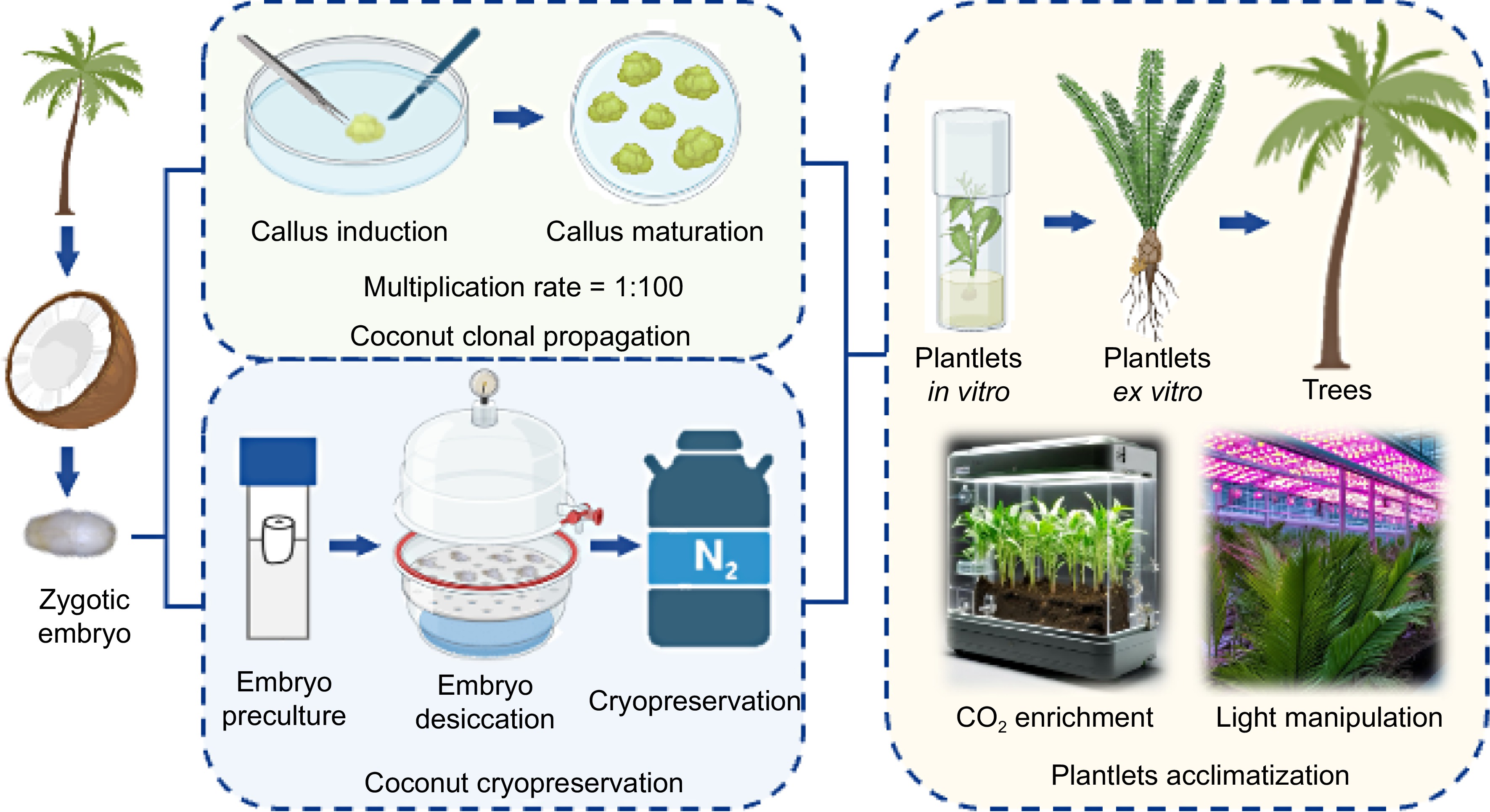
Figure 3.
Coconut in vitro technologies used to protect and propagate coconut. Zygotic embryos were generally used for exchange and tissue culture. External environmental factors were studied to enhance the establishment of plantlets.
Coconut varieties with abnormal non-germinating embryos, such as Dikiri from Sri Lanka, Macapuno from the Philippines, Thairu Thengai from India, and Kopyor from Indonesia, cannot be conserved by conventional methods[67]. The embryo culture technique is used to rescue embryos of such varieties and for safe germplasm movement, allowing long-distance delivery of germplasm[74]. This technique is most commonly used for the collection, transfer, and conservation of such non-germinating varieties[75]. Additionally, embryo culture is used to duplicate unique accessions housed in certain genebanks to minimize the risk of losing them. Coconut embryo transfer provides a feasible way of safely sharing coconut germplasm[76]. The technique of meristem culture, coupled with thermotherapy or cryotherapy, can eliminate pathogens in coconut meristems during the germplasm exchange process[77]. To improve the quality of the seedlings, an in vitro photoautotrophic step based on the supply of CO2-enriched air was used for efficient germplasm exchange[78].
China has made significant progress in the conservation of coconut germplasm resources in recent years. By establishing germplasm repositories, conducting genomic research, and applying modern biotechnology, China has collected and preserved a wealth of coconut germplasm resources[79]. These resources provide a valuable genetic foundation for breeding high-yielding, high-quality, and disease-resistant coconut varieties. However, due to factors such as climate change and pest and disease infestation, coconut germplasm resources still face certain threats in China[25]. Therefore, strengthening the protection and utilization of coconut germplasm resources is of great significance for ensuring the sustainable development of China's coconut industry.
Coconut tissue culture via clonal propagation
-
The characterization of high-yielding and high-quality coconut varieties plays a critical role in the sustainable development of the coconut industry and benefits coconut farmers[80]. Currently, the annual production of coconut seedlings only meets 20% of market demand, as coconut growers require more seedlings to replace aging and diseased trees[81]. Seed propagation has been the traditional method for coconut seedling production, but this approach is limited due to its low multiplication coefficient. Moreover, cross-pollination in seed propagation leads to phenotypic segregation among offspring, resulting in significant individual differences and making it difficult to maintain the superior traits of the parent plants. Additionally, the large size of seeds and the short dormancy period of coconuts pose challenges for the transport of coconut germplasm, particularly when moving large quantities over long distances[82]. Furthermore, vegetative propagation methods have been reported to be ineffective for coconut due to certain characteristics, including its unbranched stem, vegetative apical bud, and unbranched lateral buds, which differentiate into inflorescences[12]. The coconut production process is estimated to take 5−6 years from seed to first fruiting[83], and up to 8 years in some cases[84]. Therefore, traditional coconut propagation methods are unable to provide a stable supply of high-yielding, high-quality seedlings, nor can they sufficiently support the development of the global coconut industry[85]. To address these bottlenecks, tissue culture techniques have been applied to coconut propagation and are rapidly advancing, as demonstrated in Fig. 3[85]. Over the past 60 years, research on coconut tissue culture has focused on embryo culture, somatic embryogenesis, anther culture, cryopreservation, and genetic transformation of germplasm. These technologies offer an effective approach to producing large numbers of coconuts with superior traits or resistance in a short period at a low cost, thereby increasing the income of coconut farmers[73,85].
Before 1998, inflorescences were commonly used as explants to induce callus in coconut tissue culture. However, in 1998, Mexican scientists reported that embryonic buds obtained from somatic embryos were more suitable explants for producing embryogenic callus and somatic embryos[86]. These embryonic buds were found to be more sensitive to induction conditions and had higher induction efficiency compared to immature inflorescences[87,88]. Following this, protocols for coconut somatic embryogenesis were improved by optimizing the composition of the basic medium and using plant growth regulators such as auxins, brassinosteroids[89], and gibberellins[90]. Despite the early start of coconut tissue culture research, progress has been limited due to the poor responsiveness of coconut somatic tissues to in vitro culture conditions, making coconut one of the most challenging plants to propagate in the laboratory[81,91]. Coconut tissue culture is also a critical component of the coconut genetic transformation system. Therefore, it is essential to optimize tissue culture techniques, particularly for somatic embryogenesis, to enable the mass production of superior coconut seedlings[92].
China has made significant progress in coconut tissue culture, with major contributions in the mechanism of somatic embryogenesis[93,94], and the development of clonal propagation techniques[8]. In recent years, scientists have utilized coconut embryo culture to enhance the efficiency of germplasm exchange and preservation, and have developed technologies for embryo cryopreservation and regeneration[12]. Additionally, tissue culture is being used to address the limitations of low seed production and inefficiencies in traditional propagation methods. The application of these technologies, particularly micropropagation through somatic embryogenesis, helps rapidly propagate high-quality coconut varieties for plantation renewal. However, despite some successes, major bottlenecks such as the low conversion rate of somatic embryos and acclimatization remain[7]. Further optimization of clonal propagation techniques, such as the temporary immersion system (TIS) is needed in the future[95].
-
In summary, the coconut palm genome research has identified crucial genes for disease resistance, adaptability, and other key traits, distinguishing tall and dwarf types with notable genetic diversity. The genome of the Hainan Tall variety was assembled, revealing QTLs, resistance genes, and evolutionary links to Arabidopsis. Notably, recent high-quality genome assemblies for various coconut cultivars using advanced sequencing technologies, such as Illumina and PacBio, have enabled the mapping of genetic markers for salt tolerance and disease resistance. These advancements hold promise for accelerated breeding efforts, contributing to sustainable improvements in coconut productivity and resilience globally. Genetic and biotechnological advances in coconut genomics could significantly boost the Chinese coconut industry's resilience to climate change and pests, directly addressing sustainability challenges. By identifying genes linked to salt tolerance, drought resistance, and pest resilience, researchers enable targeted breeding of robust, high-yield varieties adaptable to shifting climate conditions[5]. High-throughput sequencing and trait mapping accelerate these efforts, promising faster development of resilient cultivars. These improvements not only ensure consistent coconut supplies but also reduce reliance on pesticides and resource-intensive farming practices, contributing to environmental sustainability. Such innovations benefit the global coconut industry, promoting a more resilient, sustainable crop economy. Future efforts could prioritize the following strategies.
Regarding germplasm collection and precision breeding, a broader collection of diverse coconut varieties from different regions can preserve genetic diversity and uncover unique traits, such as extreme climate resilience and resistance to local pests, which can be crucial for breeding. Molecular breeding of coconut for climate adaptation can be conducted using gene-editing techniques like CRISPR, researchers could directly enhance traits related to climate adaptation—such as salt tolerance, drought resistance, and pest resilience—addressing the need for coconuts to thrive in harsher conditions. Meanwhile, with more rapid phenotyping technologies, breeders could more quickly assess how specific genetic markers manifest as desirable traits in different environments, optimizing the process of selecting and breeding resilient coconuts. In terms of biotechnologies, further development of somatic embryogenesis techniques could allow large-scale production of disease-free, genetically identical plants, essential for maintaining desirable traits in mass propagation. Then developing reliable methods to ensure genetic stability in cloned plants is vital to avoid unwanted mutations and maintain the genetic integrity of key traits during tissue culture. Incorporating genomic data can help identify elite genotypes and improve cloning success by tailoring culture conditions to specific genetic requirements. Finally, efforts to reduce the costs and technical demands of tissue culture could enable larger-scale adoption by farmers, ensuring widespread access to high-quality coconut planting material.
-
In conclusion, the coconut industry in China, while currently modest in scale compared to leading coconut-producing nations, shows considerable growth potential through the use of genomic and biotechnological advancements. China's southern provinces, with their rich variety of coconut cultivars, represent a valuable genetic resource pool adaptable to diverse environmental conditions. The application of tools such as sequencing, marker-assisted selection, and genome-wide association studies (GWAS) offers specific, practical benefits: enhancing traits like increased yield, pest resistance, and drought tolerance directly improves crop performance and resilience. For Chinese coconut growers, these advancements translate into higher productivity and profitability by reducing crop losses, lowering dependency on chemical pest control, and enabling cultivation in marginal environments. Biotechnological techniques, including cryopreservation, in vitro conservation, and somatic embryogenesis, are essential for conserving genetic diversity, ensuring that these resources are available for future breeding and environmental adaptation. As China's coconut industry strives for sustainable growth, continued investment in these genomic and biotechnological innovations will be crucial to supporting growers, boosting local agricultural economies, and preserving essential genetic resources for long-term resilience in the face of climate change.
This paper was sponsored by the Technology and Innovation Project for Talent (KJRC2023L09), Hainan Provincial Natural Science Foundation (324QN360), Science and Technology Innovation Special Project of Sanya City (2022KJCX53), Innovation and Entrepreneurship Training Program of School of Breeding and Multiplication, Hainan University (NFCX2024ZD-15), Hainan Yazhou Bay Seed Lab. (JBGS + B21HJ0903), the Project of National Key Laboratory for Tropical Crop Breeding (No. PT2400008492) and '111' Project (No. D20024) and supported by Hainan Seed Industry Laboratory and National Key Laboratory for Tropical Crop Breeding. Some graphs were created with BioRender.com.
-
The authors confirm contribution to the paper as follows: study design and writing: Mu Z, Peng H, (contributed equally); draft manuscript preparation: Jayarathna SPNC, Indrachapa MTN, Yang C; figure and table modification: Yang S, Zhou J, Xu W, Jiang Y; manuscript review and editing: Vidhanaarachchi VRM, Xiao Y, Luo J. All authors reviewed and approved the final version of the manuscript.
-
All data used in this review paper were derived from the Hainan University and Hainan Seed Industry Laboratory institutional repository. All data were freely available and accessible without restrictions.
-
The authors declare that they have no conflict of interest.
-
# Authors contributed equally: Zhihua Mu, Hui Peng
- Copyright: © 2025 by the author(s). Published by Maximum Academic Press, Fayetteville, GA. This article is an open access article distributed under Creative Commons Attribution License (CC BY 4.0), visit https://creativecommons.org/licenses/by/4.0/.
-
About this article
Cite this article
Mu Z, Peng H, Jayarathna SPNC, Indrachapa MTN, Yang C, et al. 2025. The coconut palm in China: distribution, germplasm, and sustainable development through genomic and biotechnological approaches. Technology in Horticulture 5: e005 doi: 10.48130/tihort-0025-0001 

The coconut palm in China: distribution, germplasm, and sustainable development through genomic and biotechnological approaches
- Received: 10 October 2024
- Revised: 03 December 2024
- Accepted: 06 January 2025
- Published online: 24 February 2025
Abstract: Coconut palms are integral to several provinces in China, notably Hainan, Yunnan, Guangxi, Guangdong, and Taiwan, where diverse environmental conditions foster a wide range of coconut varieties. These regions contribute significantly to the nation's coconut genetic resources. Although the coconut industry in China is relatively small, there is increasing emphasis on identifying and evaluating coconut germplasm through advanced genomic tools. These tools are crucial for improving the genetic understanding of current varieties, allowing the selection of desirable traits such as drought tolerance, pest resistance, and enhanced yield. Techniques like genomic sequencing, marker-assisted selection, and genome-wide association studies (GWAS) are being applied to assess the genetic diversity within coconut populations in these provinces. Advanced genomic tools are being used for identifying and evaluating coconut germplasm, focusing on how these techniques can enhance the genetic traits of existing varieties. Additionally, the conservation of coconut germplasm using biotechnological methods were developed, such as cryopreservation, in vitro conservation, and somatic embryogenesis. In this article, discussion has been made about conserving the coconut germplasm in China, with emphasis on the distribution, collection, characterization, and preservation of diverse genetic resources. These efforts contribute to safeguarding genetic diversity, supporting sustainable coconut production, and enhancing the resilience of coconut cultivars to environmental challenges.
-
Key words:
- Coconut palm /
- China /
- Distribution /
- Germplasm