












-
Sweet potato (Ipomoea batatas [L.] Lam.) belongs to the Convolvulaceae family and is classified as an annual or perennial dicotyledonous plant[1]. It ranked as the seventh most important food crop globally and is primarily cultivated in tropical and subtropical regions[2]. In 2023, global production reached approximately 102 million tons, with China contributing over 50.8 million tons, accounting for about 55% of worldwide output[3]. Sweet potato storage roots are rich in starch and widely utilized as staple foods. However, the leaves, which are significant sources of dietary fiber, protein, vitamins, minerals, and antioxidants, were often overlooked, typically used as animal feed or discarded[4]. In recent years, increasing emphasis on healthy diets and food security has led to a growing recognition of sweet potato leaves as a valuable leafy vegetable resource. These leaves demonstrated high yields, strong regenerative capacity, and remarkable drought tolerance, enabling stable growth in diverse climatic and ecological conditions. This adaptability provided notable advantages for addressing food shortages and expanding plant-based food resources.
The stems of sweet potato plants exhibit a creeping growth habit, facilitating nutrient transport, vegetative propagation, and rapid population expansion[5]. Due to variations in leaf shape, color, and growth habit (whether climbing or creeping), sweet potato plants are also regarded as ornamental plants with significant economic potential[6]. Vegetable-type sweet potato cultivars were defined by their leaves, tender stems, and petioles, which were suitable for vegetable use. Specifically, 'sweet potato vine tips' refers to the fresh, tender stems and leaves located 10 to 15 cm below the growth point, known for their mild flavor and direct edibility. Vegetable-type sweet potatoes are characterized by abundant branching, rapid growth, strong regenerative capacity, and high yields, allowing for seven to eight harvests within 100 d, with total yields reaching 2,500 to 3,000 kg.
Previous studies demonstrated that the aboveground biomass of sweet potato was comparable to its belowground biomass, and under multiple harvesting conditions, the yield of aboveground parts sometimes exceeded that of the storage roots, highlighting their potential as a leafy crop[7]. As fresh leafy vegetables, sweet potato leaves depended heavily on cold-chain systems, requiring continuous low-temperature storage at 5−8 °C during harvesting, precooling, transportation, packaging, retail, and household storage to maximize quality retention, delay senescence, and preserve nutrients. Traditionally, sweet potato leaves have been cultivated and consumed for hundreds of years in Asia[2]. In China, sweet potato stems and leaves are widely distributed as vegetables in provinces such as Guangdong, Fujian, Hubei, Jiangsu, and Hainan, leading to steadily increasing economic benefits.
Sweet potato stems and leaves are nutritionally rich, offering both dietary and medicinal benefits. The green leaves are rich in dietary fiber, polyphenols, and carotenoids, providing antioxidant, anti-obesity, antidiabetic, and cardiovascular protective effects[8−10]. In contrast, the purple leaves were characterized by a high accumulation of anthocyanins, flavonoids, and vitamins, playing significant roles in skin photoprotection, eye health, liver protection, hair growth, and the protection of the reproductive system, particularly in tissue repair processes[11]. Studies reveal that sweet potato leaves contain a broader range of nutrients than the storage roots, with higher levels of protein, dietary fiber, calcium, iron, chlorogenic acid, isochlorogenic acid, and caffeic acid[12−14]. The processing and extraction of nutritional components from sweet potato leaves involved pretreatment techniques such as sun drying, hot-air drying, and freeze-drying[15]. Analytical methods, including HPLC, UPLC, GC-MS, AAS, and spectrophotometry, were used to investigate nutrients and phytochemicals[16,17]. Furthermore, essential oils from sweet potato leaves and stems have been extracted and applied in agricultural disease management and food preservation packaging[18]. In recent years, the processing and utilization of sweet potato leaves has developed rapidly, leading to the development of a complete industrial chain encompassing food, feed, and green agricultural formulations. In the food sector, sweet potato leaves have emerged as a versatile and promising ingredient. They were commonly consumed fresh through boiling, soups, and stir-frying, offering essential dietary benefits from their rich polyphenols, dietary fiber, and vitamins. For further processing, the leaves were transformed into teas, vegetable juices, and fermented drinks, which enhanced their antioxidant properties and visual appeal. Dried and powdered leaves were incorporated into noodles, baked goods, and meal replacements, improving nutritional value while imparting natural green or purple colors. Additionally, sweet potato leaves served as an excellent source of plant protein and vitamins, making them valuable as animal feed in the pork, poultry, and aquaculture industries[19]. Sweet potato leaves are rich in polyphenols, flavonoids, and specific volatile compounds, exhibiting antibacterial, antifungal, insecticidal, and antioxidant properties. These characteristics enabled their use in developing biopesticides, biofungicides, and natural antimicrobial coatings, positioning them as viable alternatives to chemical pesticides and preservatives[20].
This review explores the diverse nutritional and health benefits of sweet potato leaves, highlighting their potential in food and agricultural applications. By emphasizing their antibacterial, antifungal, and antioxidant properties, this study reinforces sweet potato leaves as sustainable alternatives to chemical pesticides and preservatives. Ultimately, these insights aim to promote the broader utilization and cultivation of sweet potato leaves, contributing to enhanced food security and sustainable agricultural practices.
-
Sweet potato leaves were recognized not as by-products of root production[21], but as a valuable leafy vegetable resource with independent nutritional and health benefits. Green-leaf varieties were rich in phenolics, flavonoids, and minerals, whereas purple-leaf varieties were distinguished by high anthocyanin content alongside other polyphenols[2,22] (Supplementary Table S1). Nutrient accumulation and stability are influenced by environmental factors, leaf age, and cultivation management. However, a critical examination revealed that cultivar and growth stage remained the dominant determinants of nutrient profiles. The tendency to prioritize varietal screening over mechanistic studies of environmental regulation limited the development of evidence-based cultivation strategies for optimizing nutritional quality.
Nutrients in green leaves of sweet potato
Phenolics in green sweet potato leaves
-
Green sweet potato leaves were widely recognized as a rich source of polyphenols[2]. Phenolic compounds play crucial roles in plant defense and exhibit multiple bioactivities, including antioxidant, anti-inflammatory, and antimicrobial effects. The core compounds identified include chlorogenic acid, caffeic acid derivatives, and various chlorogenic acid isomers, supporting the potential of green sweet potato leaves as high-antioxidant vegetables. However, a critical review of the literature revealed that the reported total phenolic content varied dramatically, ranging from 4.47 to 284.64 mg/g DW[17,23]. This extensive range is not merely a reflection of genetic diversity; instead, it primarily stems from methodological discrepancies. Common extraction solvents, including 70%–80% methanol[23−25], or ethanol[26,27], often acidified, could inflate measured values from 4–10 mg/g DW to 20–50 mg/g DW. While cultivars like 'Jishu No. 16'[4], 'Pushu 53/116'[27], and 'Zhecaishu 726'[28] showed higher content under optimized conditions, the fundamental issue remained that the choice of analytical and extraction techniques often overshadowed the genuine biological differences between varieties. Although environmental factors such as light, temperature, and water conditions were known to influence phenolic acid biosynthesis[29], existing studies were largely limited to correlational analyses. A systematic investigation into the regulation of key transcription factors and enzyme activities under varying environments was lacking, thereby constraining our ability to precisely modulate phenolic compound accumulation.
Flavonoids in green sweet potato leaves
-
Flavonoids, alongside phenolic acids, constituted the two major polyphenol systems in sweet potato leaves, contributing significantly to their bioactivity and nutritional value[2,30]. These secondary metabolites were recognized for their roles in antioxidant and anti-inflammatory responses, as well as their influence on metabolic homeostasis, including glucose and lipid balance[22]. Green sweet potato leaves were generally rich in flavanols such as quercetin, kaempferol, and myricetin, which predominantly existed as glycosides and co-occurred with phenolic acids like chlorogenic acid[31]. This co-occurrence formed a complex phenolic network with substantial buffering capacity. However, the functional significance of this diversity was often overlooked. Different flavonoid classes exhibited distinct anti-inflammatory, antioxidant, and glucose-regulating targets. Consequently, simply increasing the total flavonoid content—a common goal in extraction optimization—was a reductionist approach with limited nutritional relevance. Extraction techniques, such as ultrasound-assisted extraction (UAE) and ultrasound-microwave synergistic extraction (UMSE), were employed to improve recovery efficiency, as seen in 'Zhecaishu 726'[32]. Yet, a critical question remained whether such physical disruption forced the release of flavonoid conjugates that were not naturally bioaccessible. This issue required validation through in vitro digestion models and in vivo experiments to ensure that enhanced extractability translated to actual nutritional benefit.
Minerals in green sweet potato leaves
-
Green sweet potato leaves were exceptionally rich in both macro and micronutrients, including potassium (K), calcium (Ca), magnesium (Mg), iron (Fe), and zinc (Zn)[11,26,33]. This combination supports their role in maintaining electrolyte balance and bone health. A critical analysis of the literature indicated that genotypic differences in mineral content were far more pronounced than those induced by extraction or analytical methods. For instance, the leaf-use cultivar 'Koya Koso' demonstrated superior accumulation of nearly all mineral elements compared to traditional root-use cultivars[16]. This suggested a genetic predisposition linked to breeding history, where leaf-use types were selected for higher foliar mineral content. Furthermore, green leaves exhibited greater thermal stability than purple varieties, retaining more minerals after heat treatments such as steaming[33]. However, the field has largely focused on quantifying total mineral content, which does not equate to nutritional impact. The actual absorption of these minerals in the human intestine remained unclear. Future investigations must therefore move beyond simple compositional analysis and integrate in vitro digestion models with human absorption studies to accurately evaluate the nutritional contribution of minerals from different sweet potato leaf varieties.
Other nutrients in green sweet potato leaves
-
Beyond polyphenols and minerals, green sweet potato leaves contain abundant vitamins and dietary fiber, which form the basis of their multilayered nutritional value[34]. Key micronutrients included vitamin C, vitamin E, vitamin K, and β-carotene. A comparative analysis revealed a functional trade-off where purple leaves contained significantly higher vitamin C, whereas green leaves exhibited higher β-carotene content[34]. This difference likely reflected the higher demand for photosynthetic pigments in green leaves, which upregulates the carotenoid biosynthetic pathway. For dietary fiber and polysaccharides, green leaves generally contained moderate crude fiber levels (approximately 2–5 g/100 g FW). Notably, cultivars like 'Zhecaishu 726' maintained high soluble polysaccharide content, indicating their potential for functional ingredient development[32]. A critical factor often underemphasized was the dynamic change in nutrient composition with leaf age. Components such as chlorophyll, carotenoids, and lutein were better retained in young leaves, highlighting that harvest timing was a critical determinant of final nutritional quality[35]. Overall, while green sweet potato leaves offer considerable advantages in micronutrient supplementation, a more nuanced understanding of how processing, harvest time, and genetic factors interact was needed to fully realize their potential as a functional food source.
Nutrients in purple leaves of sweet potato
-
Purple sweet potato leaves were nutritionally distinguished by their high levels of anthocyanins and phenolic compounds, which contribute to their potent antioxidant, anti-inflammatory, and cytoprotective properties[35]. While the nutritional profile of purple leaves overlapped with that of green leaves in terms of general phenolics, vitamins, and minerals, the presence of anthocyanins, the pigments responsible for their purple coloration, introduced an additional layer of chemical complexity and functional specificity. However, a critical examination of the literature revealed that much of the research remained descriptive, focusing on compositional analysis rather than mechanistic understanding. Key scientific questions concerning the chemical diversity, stability under physiological conditions, bioavailability, and variety-specificity of these components remain inadequately addressed. Moving beyond simple content quantification toward an understanding of how these compounds behaved in vivo is essential for establishing the true nutritional and therapeutic potential of purple sweet potato leaves.
Anthocyanins in purple sweet potato leaves
-
Anthocyanins are a class of flavonoids synthesized via the phenylpropanoid pathway and are primarily responsible for the red, purple, and violet hues in various plant tissues[30]. Anthocyanin was reported to be highest in leaves, followed by apical buds, petioles, and stems in purple sweet potato leaves[36]. All naturally occurring anthocyanins exist as glycosides, with their aglycones referred to as anthocyanidins. Variations among anthocyanidins arose from differences in hydroxyl group numbers and methylation degree[29]. In purple sweet potato leaves, anthocyanins were regarded as the defining functional components, consisting mainly of cyanidin and peonidin derivatives[4]. Unlike green varieties, which contain negligible amounts, purple leaves accumulate these pigments in significant quantities. However, the reported anthocyanin content varied widely, with Torres et al.[37] reporting concentrations between 0.05 and 0.98 mg TAC/g DW across 200 Mexican cultivars. This variability was not merely a reflection of genotypic differences, but was also influenced by dynamic factors such as growth stage and season. For instance, Jyothi et al.[30] demonstrated that anthocyanin levels peak 20 d after planting, decline by day 35, and fluctuate thereafter, indicating that harvest timing was a critical determinant of final anthocyanin yield.
A critical issue that emerged from the literature was the inherent instability of anthocyanins. Although Jyothi et al.[30] reported that anthocyanins from purple sweet potato leaves exhibited greater stability than those from grape pomace within a pH range of 3.2–3.4, attributed to the predominance of diacylated forms[38], they were still susceptible to degradation. Freezing and thawing led to significant losses due to enzymatic degradation[39]. This instability raised important questions about the retention of anthocyanins during typical food processing, storage, and domestic cooking practices. Furthermore, while extraction solvents such as 70% ethanol were identified as optimal for maximizing yield[12], the emphasis on recovery efficiency often overshadowed the need to understand the bioaccessibility of these acylated anthocyanins, which might behave differently in the gastrointestinal tract compared to their non-acylated counterparts.
Phenolics in purple sweet potato leaves
-
Phenolic compounds in purple sweet potato leaves have been extensively investigated for their biological and antioxidant properties, with evidence supporting their antimutagenic, anticancer, antimicrobial, and antidiabetic effects[7,40]. Truong et al.[41] and Ooko Abong et al.[42] reported that total phenolic content in sweet potato leaves was approximately eight times higher than in peels and 18 times higher than in flesh, underscoring the leaves' significance as a concentrated source of these bioactives. A recent study further identified seven phenolic compounds in European cultivars, with concentrations ranging from 148.2 to 14,038.6 mg/100 g, demonstrating substantial variation by cultivar and leaf developmental stage[43]. Notably, purple leaves contained higher levels of total phenolic acids and quercetin glycosides than green leaves[44].
Environmental factors such as temperature and light intensity influenced phenolic accumulation[45,46], but the interplay between these factors and genetic regulation remained poorly characterized. From a methodological standpoint, the field had progressed toward greener extraction techniques, such as the use of microporous resin XAD-7HP[8], which offered advantages over conventional methods like maceration and Soxhlet extraction. However, a more fundamental scientific gap persisted. The overwhelming majority of efficacy studies relied on activity assays of crude extracts, which made it impossible to attribute observed bioactivities to specific phenolic compounds. High total phenolic content did not equate to high efficacy, and the potential synergistic or antagonistic interactions among individual components were almost entirely unexplored. This lack of mechanistic resolution severely limited the ability to develop targeted applications for purple sweet potato leaves in functional foods or nutraceuticals.
Other nutrients in purple sweet potato leaves
-
Beyond anthocyanins and phenolic acids, purple sweet potato leaves contained a diverse array of other flavonoids and micronutrients. Luo et al.[47] identified compounds such as astragalin, quercitrin, isoquercitrin, and tiliroside, all of which exhibited relatively strong antioxidant capacities. Flavonoid levels in leaves were consistently higher than those in storage roots[42], a trend also observed for vitamin C. However, the recovery of these compounds was highly dependent on extraction solvent polarity, with 70% ethanol yielding the highest recovery[12]. This suggested that a significant proportion of flavonoids in the leaves were of low polarity, a factor that had implications for their solubility and bioaccessibility.
The nutritional profile of purple leaves also included chlorophylls, carotenoids, and lutein, which showed dynamic changes with leaf age. These compounds increased rapidly during early leaf development but stabilized or declined after 15–18 d[35]. Processing methods exerted a profound influence on nutrient retention. Vitamin C, being highly susceptible to oxidation and water-soluble, was largely lost during boiling but better retained in dehydrated leaves[48]. Lutein was identified as the predominant carotenoid in leaves, followed by total β-carotene and zeaxanthin[49]. Carotenoid retention varied markedly, with boiled leaves retaining over 100%, while dehydrated leaves retained only 22%−48%[50]. Ranteallo et al.[16] demonstrated that the purple cultivar 'Koya Koso Jayapura' contained exceptionally high levels of minerals and vitamins, exceeding those of many leafy vegetables. Compared with green leaves, purple leaves had lower mineral contents and experienced greater mineral losses during steaming. This finding challenged the assumption that the higher anthocyanin content in purple leaves conferred superior overall nutritional value. Instead, it highlighted the need for a balanced evaluation that considered the stability and retention of all nutrient classes under realistic processing and cooking conditions, rather than focusing solely on raw compositional data.
-
Sweet potato leaves serve as a multifunctional plant-based resource with significant physiological regulatory potential, supported by the synergistic actions of polyphenols, flavonoids, anthocyanins, quinic acid derivatives, dietary fiber, and other phytochemicals[21]. In vitro studies indicated that green leaf cultivars primarily excelled in antioxidant, anti-mutagenic, and cytoprotective activities[51,52], whereas purple leaf cultivars, characterized by significantly higher anthocyanin content, displayed pronounced anti-tumor, anti-inflammatory, anti-angiogenic, and adipocyte-modulating functions[7,40]. In vivo findings further validated these mechanisms, demonstrating that diverse cultivars showed clear potential in metabolic regulation, cardiovascular protection, and enhancement of endogenous antioxidant defense systems. Green leaf cultivars typically exert anti-obesity and lipid regulatory effects by upregulating hepatic lipoprotein lipase expression and reducing adipose accumulation[53]. In contrast, the high anthocyanin levels in purple leaf cultivars confer superior efficacy in improving insulin sensitivity, lowering blood glucose concentrations, and mitigating diabetes related tissue injury[7]. Emerging research additionally identified specific physiological roles for purple leaf sweet potato leaves, including photoprotection, immunomodulation, skeletal metabolism, and antimicrobial activity (Fig. 1, Supplementary Table S2), further enhancing their potential as a natural source of multifunctional bioactive compounds. However, a critical assessment of the literature revealed that current evidence was predominantly derived from in vitro or rodent studies. Human data on the bioavailability, metabolic fate, and translational potential of these compounds remained conspicuously lacking. Future advancements would depend on systematic human clinical studies to elucidate the absorption, dose-response relationships, and comparative functional outcomes between green and purple cultivars. These efforts will be essential for integrating sweet potato leaves into food innovation and evidence-based preventive nutrition strategies.
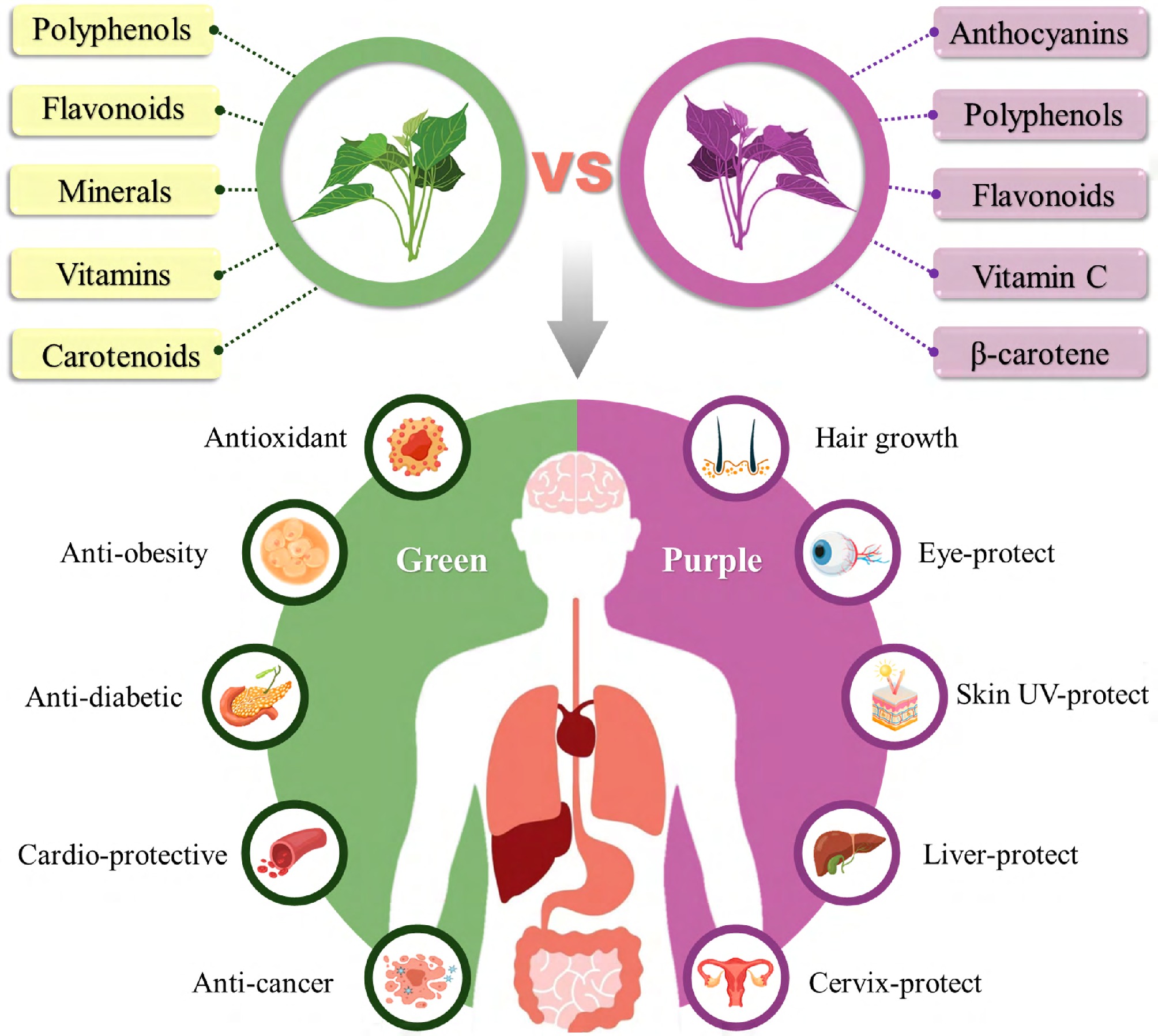
Figure 1.
Nutritional compositions and health benefits of bioactive compounds in sweet potato leaves.
Health benefits of green sweet potato leaves
In vitro health benefits of green sweet potato leaves -
In vitro studies on green sweet potato leaves employ a range of experimental approaches to evaluate their health-promoting properties. Dried leaf materials, typically processed through freeze drying or hot air dehydration, were commonly used, with bioactive compounds extracted using aqueous ethanol systems often coupled with ultrasound-assisted extraction[32,51,52,54]. Accumulating evidence indicates that sweet potato leaves serve as a potent source of antioxidants, protecting cells against oxidative damage and inhibiting the growth of specific bacterial and fungal pathogens[55]. Leaf blades consistently exhibited stronger antioxidant capacity than petioles, while thermal processing, such as blanching, significantly reduced antioxidant levels[54].
Numerous green leaf cultivars displayed pronounced radical scavenging activity and effectively inhibited mutagen formation from tryptophan pyrolysates in Salmonella typhimurium TA98[52], an effect largely attributed to abundant caffeoylquinic acid derivatives. Extracts from 'Tainung No. 10' and 'Tainung No. 57' enhanced the viability of H2O2-injured human dermal fibroblasts by lowering intracellular reactive oxygen species (ROS) and reducing malondialdehyde (MDA) accumulation[51]. Marked inter-cultivar variation was observed in physiological functionality. Studies in Japan reported that sweet potato leaf extracts inhibited low-density lipoprotein (LDL) oxidation, suggesting potential cardioprotective effects[56]. Investigations from multiple countries further revealed that cultivars enriched in 3,4,5-tri-O-caffeoylquinic acid downregulated aldose reductase activity, thereby attenuating the conversion of glucose to sorbitol and offering a promising dietary adjunct for glycemic control[53].
Beyond antioxidant activity, diverse phytochemicals exhibited broader therapeutic potential. Molecular docking analyses indicated that leaf compounds could bind to the NS2B/NS3 protease complex of dengue virus, highlighting their promise as antiviral candidates[57]. Extracts also inhibited the proliferation of pancreatic cancer cells (Panc-1)[58], suppressed tumor progression[59], and restrained metastatic potential[60]. Sweet potato leaf powder was investigated as a functional food ingredient with putative anti-leukemic effects in snack formulations[61], and bioactive compounds were explored as natural anti-inflammatory additives in foods or fortified beverages[62].
Despite the diversity of bioactive constituents and associated biological activities identified in vitro, a critical limitation must be acknowledged. The anti-cancer and anti-viral effects were pharmacologically validated using concentrated extracts, but whether these findings translated to nutritional dietary advice remained questionable. The concentrations required to achieve observable effects in vitro often far exceeded what could be realistically obtained through normal dietary intake. Furthermore, whether these bioactive compounds could be effectively absorbed and reach target tissues in humans remained unclear. These limitations underscore the need for caution when extrapolating in vitro findings to real-world nutritional recommendations.
In vitro health benefits of green sweet potato leaves -
In vivo studies served as a critical bridge linking experimental findings to practical applications, providing a more physiologically relevant assessment of the health effects of green sweet potato leaves. Current in vivo research encompasses metabolic regulation, cardiovascular protection, anti-tumor activity, and micronutrient supplementation, relying primarily on rodent models. These investigations elucidated the relationships between cultivar-specific phytochemicals and their systemic functional outcomes.
Studies demonstrated that rats fed a high-fat diet gained less weight and accumulated less adipose tissue when supplemented with the 'Koganesengan' cultivar, an effect likely attributed to its abundant polyphenols and dietary fiber, which attenuated obesity and improved lipid metabolism[63]. Similar metabolic benefits were observed with the 'IRAD-tib1' and 'IRAD-1112' cultivars, both characterized by high total phenolic and dietary fiber contents. These cultivars enhance hepatic lipoprotein lipase (LPL) activity, facilitating lipid catabolism and mitigating high-fat diet-induced metabolic disturbances[64].
Beyond metabolic regulation, sweet potato leaves contribute significantly to micronutrient intake. A 12-week quasi-experimental study in Kenya incorporated an iron-rich sweet potato leaf vegetable into the diets of women of reproductive age. The intervention significantly increased dietary iron intake and improved indicators of nutritional status, suggesting that routine consumption of sweet potato leaves might serve as an effective dietary strategy to combat iron deficiency anemia[65]. Cardiovascular protection was reported in cultivars rich in polyphenols, such as 'Suioh' and 'Tainung 57', both of which suppressed LDL oxidation and thereby reduced the risk of atherosclerosis[56,66].
Notably, distinct bioactive molecules within the same cultivar could exert divergent biological functions. In 'Suioh', polyphenols prevented LDL oxidation, while caffeic acid and 3,4,5-tri-O-caffeoylquinic acid exhibited potent anti-cancer properties, inhibiting the proliferation of gastric, colon, and leukemia cells and inducing apoptosis[67]. Additional cultivars, such as 'Whatley', also displayed anti-carcinogenic potential, particularly in suppressing prostate cancer cell growth[59,60].
These findings illustrated the substantial health-promoting potential of sweet potato leaves across cultivars. However, a critical gap remained that most of the evidence was derived from rodent models, with limited human clinical trials available to confirm these effects. The increasing need to clarify mechanistic pathways, synergistic interactions, and optimal application conditions for cultivar-specific compounds became evident. Future research, including well-designed clinical trials and dose-response evaluations, would be crucial for effectively integrating sweet potato leaves into functional food development and dietary interventions.
Health benefits of purple sweet potato leaves
In vitro health benefits of purple sweet potato leaves -
In vitro studies on purple sweet potato leaves provided insights into the molecular mechanisms by which these leaves might aid in the prevention and management of diabetes, cancer, and cardiovascular diseases. The 'Pin 375' cultivar demonstrated significant anti-diabetic effects by enhancing glucose uptake through the activation of the Glut4 transporter and modulating the PI3K/AKT signaling pathway[9]. This cultivar also supported adipocyte health and reduced inflammation, contributing to metabolic homeostasis[68]. Other cultivars similarly showed anti-inflammatory activity and reduced lipid accumulation, potentially helping to prevent atherosclerosis[69].
Cultivars rich in anthocyanins displayed strong antioxidant and anti-cancer properties. The Indian cultivar 'S-1467' effectively suppresses the proliferation of breast (MCF-7), colon (HCT-116), and cervical cancer (HeLa) cell lines[40]. 'Churakoi' reduced adipogenic differentiation in human bone marrow-derived mesenchymal stem cells, suggesting its potential in obesity management[70]. 'Xuzi No.8' reduced inflammatory cytokine production, such as IL-1β, IL-6, and TNF-α under urate crystal stimulation[71]. Moreover, Chen et al. reported that sweet potato leaf extracts inhibited angiogenesis in human umbilical vein endothelial cells (HUVECs), emphasizing their role in vascular health[10].
The US cultivar 'Suioh' exhibited multiple bioactivities, including reducing oxidative stress, regulating blood glucose, and enhancing immune responses[72]. It also lowered the incidence of breast and lung cancer and showed potential in reducing cholesterol levels and preventing chronic diseases[73]. Sweet potato leaves were even incorporated into snack formulations to support children experiencing stunting or wasting[74], emphasizing their value as functional food resources.
Despite the promising findings, a critical methodological limitation emerged. The crude extracts of sweet potato leaves contained many types of compounds, which could easily exhibit multiple bioactivities in in vitro experiments. This made it difficult to attribute observed effects to specific compounds. Moreover, in vitro experiments could not simulate the complex environment of the human body, including digestion, absorption, metabolism, and excretion. Whether the abundant anthocyanins in purple leaves could truly enter the blood circulation system and act on target organs remained unverified. The variation among cultivars, such as the glucose-regulating capacity of 'Pin 375' and the anti-cancer activity of 'S-1467', highlighted the importance of phytochemical composition, but also underscored the need for mechanistic studies that moved beyond descriptive screening.
In vitro health benefits of purple sweet potato leaves -
In vivo studies on purple sweet potato leaves provided a more relevant perspective on their functional benefits compared to in vitro assays. Polyphenols and flavonoids were identified as the main bioactive compounds responsible for these effects, influencing metabolic pathways, immune responses, and redox balance. Research on Chinese cultivars showed their ability to modulate immune functions[75], enhance antioxidant defenses, reduce oxidative stress as indicated by lower urinary 8-hydroxydeoxyguanosine (8-OHdG) levels, and improve LDL resistance to oxidation[76]. In athletes, consuming sweet potato leaves improved antioxidant status, aiding recovery and reducing oxidative injury[77].
Polyphenols also promoted peripheral blood mononuclear cell (PBMC) proliferation, enhanced natural killer (NK) cell activity, increased interferon (IFN)-γ secretion, and strengthened specific immune responses[73,78]. Korean studies reported that sweet potato leaf extracts reduced liver enzymes (ALT, AST) and liver injury in mice[79], while Indonesian studies found that the leaves lowered blood glucose levels in diabetic rats[80]. Sweet potato leaves improved glucose and lipid metabolism in animal models, reducing blood glucose and total cholesterol levels, which offered a natural dietary strategy for managing diabetes and dyslipidemia[9]. Indonesian studies further demonstrated that sweet potato leaves reduced hyperglycemia and ameliorated complications related to diabetes, including retinal degeneration[81]. Combinations of purple sweet potato leaf extract with red yeast rice significantly lowered cholesterol and triglyceride levels in high-fat diet rats, reduced MDA, and enhanced glutathione peroxidase (GPx) activity, indicating anti-hyperlipidemic and antioxidant effects[82].
In addition to metabolic regulation, bioactive components in sweet potato leaves protected skin from ultraviolet (UV) damage through antioxidant mechanisms and scavenging of UV-induced reactive oxygen species, suggesting potential use in natural sunscreen formulations[83]. Flavonoids such as hyperoside and quercetin also promoted hair growth and inhibited Malassezia furfur, the fungus linked to dandruff and scalp inflammation, revealing their application in natural hair care[84].
Despite the impressive benefits attributed to sweet potato leaves, a critical evaluation revealed that the exact modes of synergy, target pathways, and dose response relationships remain poorly understood. The combined action of multiple phytochemicals often results in greater bioactivity than individual compounds, but the mechanisms underlying this synergy have not been systematically investigated. Most evidence came from rodent studies, and the limited number of human clinical trials hindered assessments of bioavailability and physiological efficacy. Furthermore, the doses used in animal studies often did not reflect realistic human consumption levels. Further studies, including clinical trials and metabolic tracing, would be essential to clarify the mechanisms of action and improve the application of purple sweet potato leaves in preventive nutrition and functional food development.
-
Vegetable-type sweet potatoes were harvested once they produced about 10–12 fully expanded tender shoot leaves, after which yields increased progressively[85]. Typically, harvest began 40–50 d after planting, when vines had formed about 7–8 nodes, and tender stems, and leaves were cut 10–12 cm from the shoot tip. Because juvenile stems were delicate, picking was ideally conducted before sunrise when tips were most tender and crisp[86]. After each harvest of stem tips, field management was intensified. Growers avoided immediate irrigation or fertilization on the day of picking to allow wound closure and to reduce pathogen entry. They pruned remaining long vines, retained only branches within 10 cm of the plant base, and ensured regrowth did not exceed 20 cm in length[85]. Once cut surfaces had partially dried (usually by the next day), timely fertilization was applied to supply nutrients and promote branch development and new leaf emergence. Harvested stems and leaves were washed thoroughly and, when necessary, disinfected with food-grade sanitizers to remove soil, dust, and pesticide residues. To prevent browning and preserve color, leaves were immersed briefly in citric-acid or ascorbic-acid solutions, then rapidly cooled and drained[87]. Pre-cooling treatments were applied to reduce respiration and enzymatic activity and thereby to preserve quality and nutritional integrity (Fig. 2). These harvest and immediate postharvest practices collectively aimed to maximize leaf quality, reduce losses, and support subsequent handling, storage, and processing.
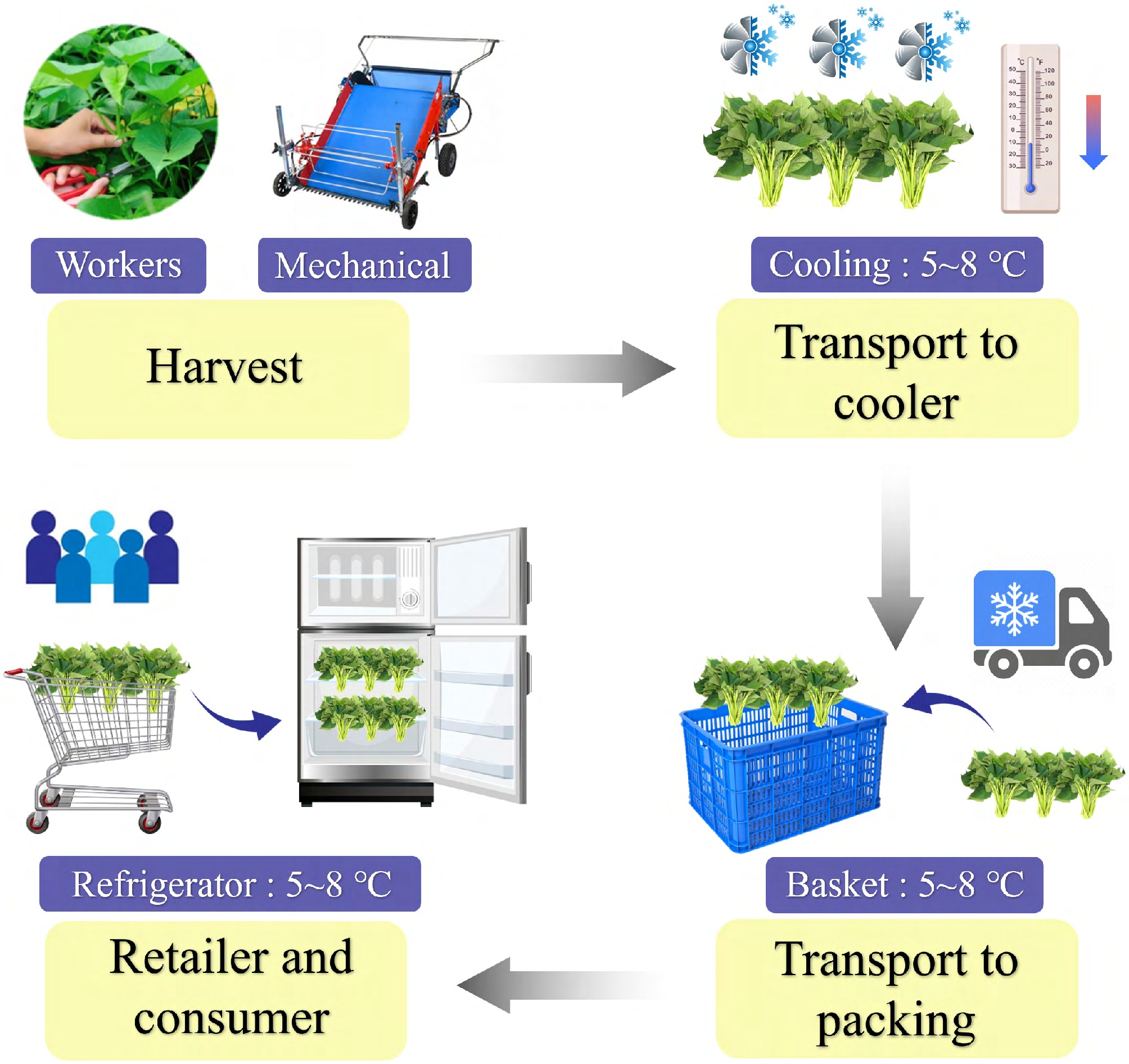
Figure 2.
Harvest, transportation and postharvest handling of sweet potato leaves.
Postharvest management of sweet potato leaves
-
Vegetable-type sweet potato leaves had large surface areas, high water content, and tender tissues, which made them prone to rapid moisture loss and mechanical damage[88]. Their vigorous respiration produced substantial heat, which accelerated yellowing, decay, and tissue senescence, and rendered storage challenging[89]. Consequently, they ranked among the most perishable fresh agricultural products, and improving storage stability to reduce peak-season spoilage was a critical issue for commercial cultivation[90]. Leaves were therefore best consumed soon after harvest. When storage was necessary, low-temperature preservation served as the primary method[91]. Under cooled conditions, nutrient decline slowed significantly[92]. By reducing physiological metabolism, lowering material consumption, delaying senescence, and preserving flavor and nutrients, low-temperature storage effectively improved postharvest quality[93].
Low-temperature treatments help curb nutrient losses, delay aging, and extend shelf life to some extent. For short-term handling, harvested stems and leaves were commonly bundled, placed upright in plastic turnover crates, and held at 4–8 °C until sale, typically not exceeding 4 d; for larger distribution, refrigerated transport was used to ensure timely wholesale. For longer storage, blanching followed by rapid freezing at −18 °C or below preserved leaf color and nutrients, while vacuum dehydration reduced moisture, yet retained color, flavor, and nutritional composition to the greatest extent possible[94]. These postharvest measures supplied higher-quality raw materials for deeper processing and high-value product development, and promoted more efficient resource use and industry sustainability (Fig. 3). Pang et al.[95] treated leafy sweet potato with tea polyphenols and microporous packaging, and validated a tea-polyphenol-based modified atmosphere packaging (MAP) approach for preserving postharvest quality. Edible coatings formed films that blocked oxygen and moisture, inhibited microbes, and slowed flavor loss, achieving preservation in other produce. However, despite the demonstrated benefits of MAP and edible coatings for many fresh products, their application to sweet potato leaves remained limited and warranted further investigation.
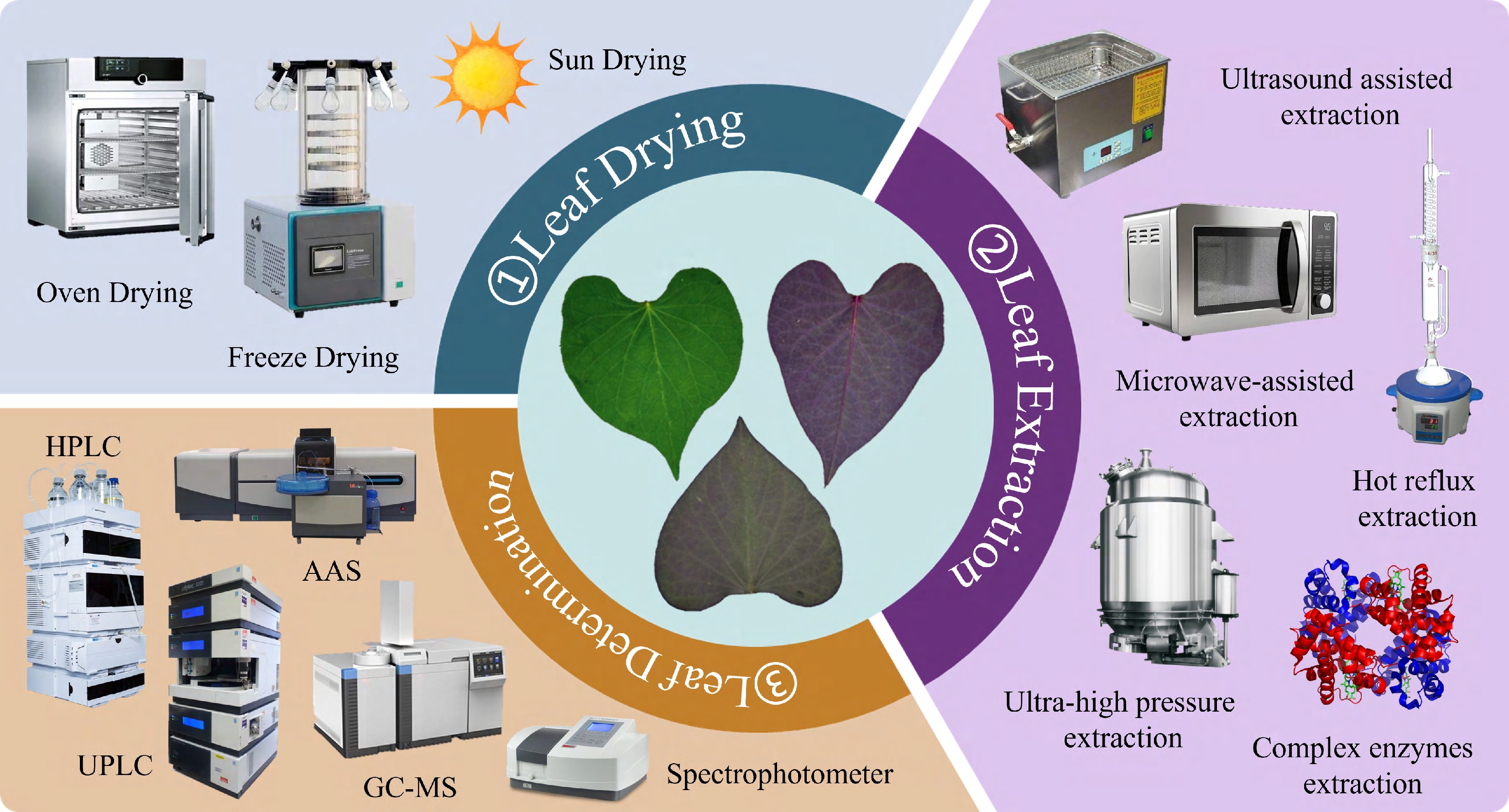
Figure 3.
Drying, extraction and component determination of sweet potato leaves.
Research on processing and products of sweet potato leaves
-
Sweet potato leaves contain various high-value components, demonstrating significant potential for use in the food, agricultural, pharmaceutical, and environmental sectors (Fig. 4). Their rich nutrients and bioactive compounds support their role as nutritional fortifiers and functional ingredients in food products. The high dietary fiber and phenolic content allow for applications as film matrices and functional agents in packaging. A summary of experimental studies on sweet potato leaf cultivars highlights diverse processing methods, application areas, and research findings (Table 1).
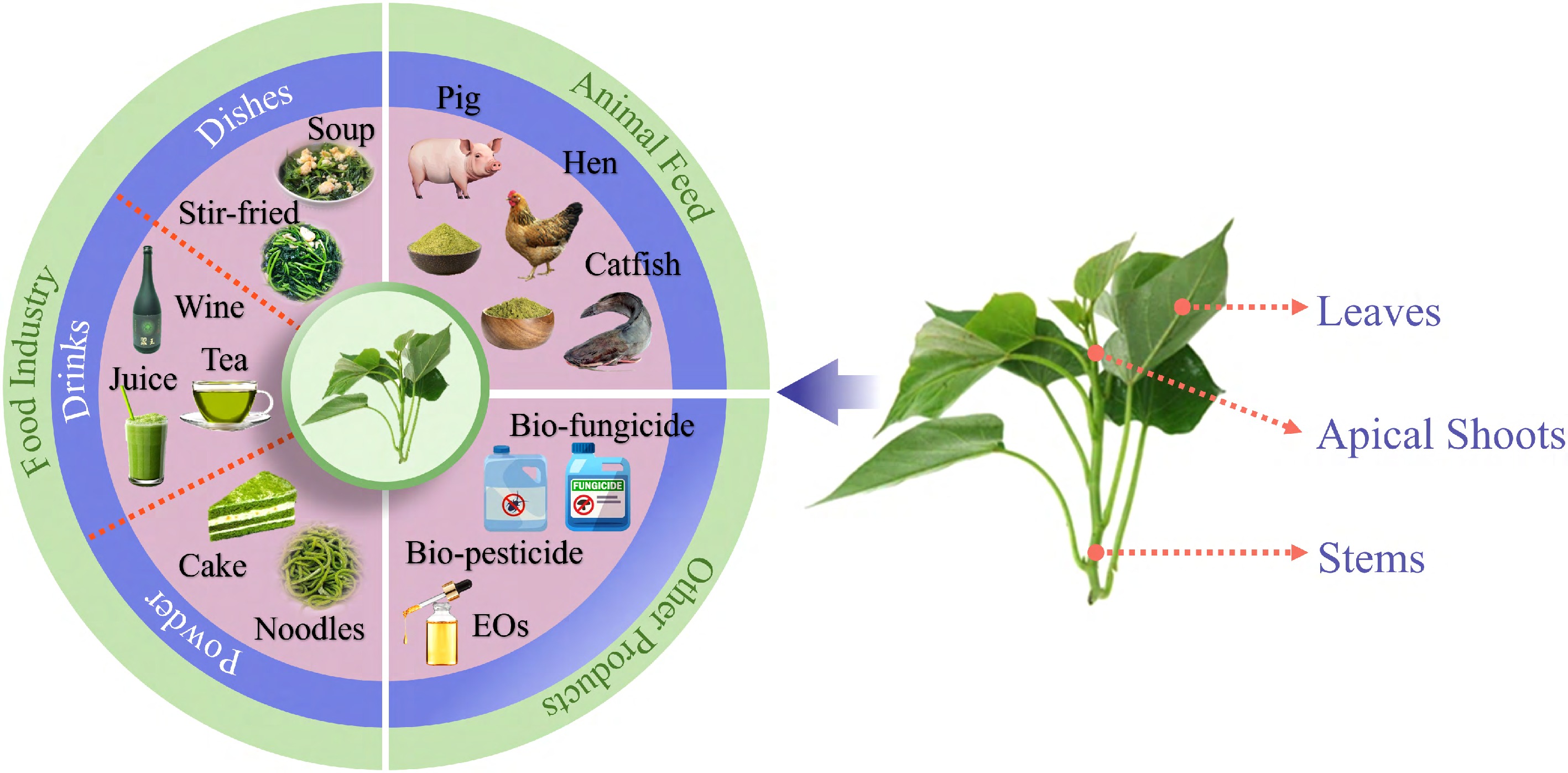
Figure 4.
Diverse edible parts and processed products of sweet potato leaves.
Table 1. Food applications and processing uses of sweet potato leaves.
Theme Processing methods Application fields Main components Core effects Ref. Biopesticide Ethanol extraction, brine shrimp test Biopesticides Flavonoids, tannins, alkaloids, saponins Moderate toxicity, natural pesticide [20] Essential oils Steam distillation, GC-MS with chemometric analysis Pharmaceuticals, functional foods Germacrene D, caryophyllene, β-caryophyllene Identified oil components with bioactivities [18] Biochar for dye removal CaCl2 activation, microwave pyrolysis Environmental remediation High surface area biochar High dye adsorption for wastewater treatment [96] Superfine powder noodles Superfine grinding, incorporation into starch noodles Functional foods Polyphenols, chlorogenic acid, flavonoids Improved noodle texture and nutrition [97] Antioxidant Drying, milling Functional foods Phenolic, carotenoids Enhanced antioxidant, acceptability [98] Vine hydrolysate for single cell oils Enzymatic hydrolysis, co-fermentation Biofuel Carbon sources High lipid yield for biofuel [99] Powder in steamed bread Drying, milling Functional staple foods Polyphenols, fiber Improved nutrition, sensory quality [100] Leaf-based beverage Blanching, freeze-drying Functional drinks Polyphenols, antioxidants, vitamins Nutritious, acceptable beverage [101] Extract for corrosion inhibition Ethanol extraction Corrosion prevention Flavonoids, tannins 93% steel corrosion inhibition [102] Antibacterial gel Ethanol extraction, gel formulation Antibacterial materials Flavonoids, tannins Strong activity against Staphylococcus aureus [103] Leaf tea Drying, brewing Herbal teas Polyphenols, flavonoids, tannins, phytosterols High antioxidative activity with no cytotoxicity [104] Corrosion inhibitor Ethanol extraction, HCl test Corrosion prevention Flavonoids, tannins, alkaloids, saponins 96.7% iron corrosion inhibition [105] Vine for bio-butanol Pretreatment, hydrolysis, fermentation Biofuel Glucose, lignocellulose Good bio-butanol yield [106] Ensiled for pigs Ensiling Animal feed Protein, amino acids, dietary fiber Lower cost without affecting pig performance [107] Fermented smoothies Lactic acid fermentation Functional beverages Antioxidants, carotenoids, polyphenols Enhanced antioxidants, acceptability [55] Biodiesel catalysts Calcination Renewable energy Potassium-rich carbonates and oxides 99.5% biodiesel conversion [108] Phenolics and peroxidase Column chromatography Food additives Phenolic acids, flavonoids, peroxidases High phenolics, enzyme activity [109] Meal for rabbits Drying, mixing Animal nutrition Protein, vitamins (A, B, C, E) Optimal performance, lower cost [19] Pigment stability in microwave cooking Microwave treatment Functional foods Chlorophylls, carotenoids Rapid cooking preserves pigments [48] Green coagulant Distilled water Water treatment Carbon, oxygen, potassium, phosphorus 96% wastewater turbidity removal [110] Incorporating plant byproducts into dough was considered a promising strategy for enhancing nutritional value and functional characteristics in baked products[111]. JAMU herbal biscuits prepared from a mixture of sweet potato leaves and tilapia exhibited a green color, improved flavor, and crispy texture, receiving positive consumer feedback. Hu et al.[100] found that adding sweet potato leaves to bread increased the height-to-diameter ratio from 0.44 to 0.96 after steaming, while specific volume decreased from 2.44 to 1.47. The leaves also changed color from white to dark green, and enhanced hardness, adhesiveness, and chewiness. Nutritional content, including protein, fat, dietary fiber, minerals, vitamin B2, and niacin, also increased significantly. Li et al. found that adding ultra-finely ground sweet potato leaf powder to starch noodles improved texture, nutritional value, and cooking performance[97]. Sweet potato leaves have been prepared in various ways, including in stir-fry and in soups, as well as being used as food additives. Adding sweet potato leaf powder to Edikang Ikong soup also significantly boosted antioxidant activity while maintaining high consumer acceptance[98].
Sweet potato leaf extracts were rich in bioactive compounds that enhance nutritional quality and consumer acceptance. These extracts were applied in functional beverages, offering favorable flavor and health benefits[98,101]. Manasathien and Khanema[104] prepared sweet potato leaf tea using solid-state fermentation, resulting in distinctive aromas. Luo optimized a beverage formulation with sweet potato leaf powder combined with xanthan gum, calcium lactate, ascorbic acid, maltodextrin, xylitol, and apple flavoring, yielding a product with high nutritional value and acceptable sensory properties[101]. Sweet potato leaves have also been utilized in ice cream and milkshakes[55].
Rich in phenolic compounds, sweet potato leaves exhibit antioxidant properties that scavenge reactive oxygen species (ROS), promote animal growth and immune function, with anthocyanins further enhancing immune responses. Studies showed that sweet potato leaf extracts improved hematological parameters, enhanced immune function, and alleviated oxidative stress in mahseer fish exposed to ammonia[112]. Obakanurhe et al. indicated that the presence of antioxidant and antinutritional factors in sweet potato leaf powder significantly improved intestinal health, overall performance, and meat quality in broilers while reducing production costs[113]. Van et al. found that sweet potato leaves could replace fish meal and peanut cake in traditional Vietnamese pig diets, lowering costs[107]. Fermentation treatments further enhanced the nutritional quality of sweet potato leaves as animal feed, with microbial agents like Aspergillus niger and Saccharomyces cerevisiae increasing protein content and digestibility[19,107]. Incorporating fermented sweet potato leaves enhanced feed efficiency and provided a cost-effective alternative to conventional feed sources, emphasizing their potential as a sustainable resource.
Steam distillation combined with gas chromatography-mass spectrometry effectively identifies essential oil components in sweet potato leaves. Analyses reveal significant anti-inflammatory and antioxidant activities, highlighting key bioactive components such as germacrene D, caryophyllene, and β-caryophyllene[18]. Flavonoids, tannins, alkaloids, and saponins also proved effective for pest control and antibacterial material development. Ethanol extraction is commonly used for obtaining bioactive compounds due to its simplicity and efficiency[102]. Grebla-AI-Zaben et al.[114] evaluated purple sweet potato leaf extracts as biopesticides against Fusarium spp. and found that a 40% extract concentration effectively reduced disease severity. Additionally, exposure of Artemia larvae to purple sweet potato leaf extract resulted in an LC50 value of 120.75 mg/L, indicating moderate toxicity and potential for biopesticide use[20]. Incorporating ethanol extracts into poly (lactic-co-glycolic acid) (PLGA) submicroparticles for antimicrobial testing against Staphylococcus aureus demonstrated enhanced antibacterial activity[103].
Recently, agricultural leaf residues have been bioconverted into fuels and chemicals. Sweet potato leaves and vines provide abundant carbon, nitrogen, and energy sources, indicating their substantial potential in biotechnology. Zhan et al. reported that sweet potato vines served as effective raw materials for lipid production by Trichosporon fermentans, achieving a lipid yield of 9.6 g/L and a lipid content of 35.6%[99]. He et al. converted agricultural waste from sweet potato vines into biobutanol using alkaline reagents, achieving a yield of 6.4 g/L and a conversion efficiency of 23%[106]. Eldiehy et al. produced a green heterogeneous catalyst (CSPL) from sweet potato leaves for biodiesel production, achieving a conversion rate of 99.5%[108].
Industrial wastewater represented a major global environmental challenge, and sweet potato leaf biochar, with its high adsorption capacity, has emerged as a promising solution[106,108]. Sweet potato leaves were converted into biochar through calcium chloride activation combined with microwave pyrolysis. The resulting biochar exhibited excellent performance in wastewater treatment, with adsorption capacities for reactive dyes reaching 750.8 mg/g[96]. Kusuma et al. found that sweet potato leaf extracts, used as a green coagulant, removed over 90% of turbidity from synthetic wastewater[110]. Furthermore, sweet potato leaf extracts served as corrosion inhibitors for mild steel in phosphoric acid, forming a protective film that reduced corrosion rates[102].
-
For many years, sweet potato leaves were treated as agricultural by-products or animal feed, but rising interest in healthy diets prompted renewed attention to their nutritional and functional value. Studies demonstrated that the leaves contained abundant protein, dietary fiber, vitamins A, C, and K, minerals such as iron, calcium, and magnesium, and diverse bioactives including polyphenols and flavonoids. They exhibited antioxidant and anti-inflammatory activities and showed promise against chronic disease risk factors[11], with an essential amino acid balance that reinforced their status as a medicinal-food homolog[2]. Their nutritive profile made them attractive as supplements in food-insecure regions and for vulnerable groups such as children, pregnant women, and the elderly[114].
Sweet potato leaves were recognized as a resilient crop resource because they tolerated stress, had short growth cycles, and grew on varied soils with low water and fertilizer inputs[5], which suited a changing climate and extreme weather[102]. Markets and uses are diversified. Fresh consumption remained dominant in Asia, where leaves were also processed into teas and powders. In Africa, they were valued primarily as nutritional supplements. In Europe and the Americas, research and industry emphasized extracts and functional ingredient uses. Processed forms emerged, including dehydrated powders, teas, and bioactive extracts for health products and cosmetics. These processed forms pointed to full chain valorization potential[15]. At the same time, industrial development lagged because of short shelf life, inefficient cold-chain logistics, no standardized processing, weak coordination across cultivation–processing–distribution, and limited food-safety and market standards.
To unlock market potential, the sector needed coordinated technical and institutional responses. Postharvest losses were reduced by optimizing harvest-to-processing timing and deploying mild preservation methods such as low-temperature handling, vacuum or freeze drying, edible coatings, and improved packaging[115]. Breeding and selection emphasized high leaf yield, nutrient density, and storage tolerance, while standardized processing protocols ensured nutrient retention and safety[116]. Product differentiation in color-specific extracts, plant-based protein ingredients, and nutraceuticals was promoted alongside certification (organic, fair-trade) and consumer education to raise acceptance. Alternative valorization pathways, including animal feed, biopesticides, cosmetic antioxidants[83], and biochar for environmental remediation[105], were pursued to diversify revenue streams. These combined measures aimed to address supply-chain weaknesses, expand markets, and move sweet potato leaves from a regional staple toward broader, sustainable food and ingredient use.
-
This review synthesized recent progress on vegetable-type sweet potato leaves and compared green and purple varieties in terms of composition, bioactivity, postharvest handling, processing, utilization, and market potential. Its main contribution was a systematic linkage of pigment chemistry to functional niches. Purple leaves were rich in acylated anthocyanins, total phenolics, and vitamin C, and showed stronger antioxidant, anti-inflammatory, hepatoprotective, glycemic-regulating, antitumor, and tissue-repair activities, although their anthocyanins were thermally labile and faded during heat processing. Green leaves were dominated by chlorophyll, carotenoids, phenolic acids, flavanols, and minerals, performing better in hypoglycemic, antibacterial, vision-protective, cardiovascular, and anti-obesity effects, retained color under traditional cooking, and were favored in many Asian diets.
We found that geographic research and market patterns diverged. Studies in Europe and the Americas emphasized purple varieties for natural pigments and functional ingredients, while research in Asia prioritized green varieties for culinary use, nutrition profiling, breeding, and processing. Purple varieties were emerging in Asia but remained less accepted. Applications had expanded beyond fresh consumption into processed foods, animal feed, biopesticides, functional packaging, bioenergy, and remediation, demonstrating full-chain valorization potential and offering sustainable alternatives to synthetic additives. However, major barriers limited commercial scalability, including very high moisture, high respiration rates, and rapid postharvest senescence. Most evidence for health benefits remained preclinical with scarce human trials.
Based on these gaps, we recommended targeted research and translational actions including multi-omics mapping (metabolomics, transcriptomics and phenotyping across color, morphology and growth stages) to identify biosynthetic pathways and markers that distinguished purple acylated anthocyanins from green carotenoids and phenolic acids; precision breeding to convert those markers into cultivars optimized for pigments, functional ingredients, fresh-market quality or shelf-stable processing; standardized human intervention trials to determine bioavailability, metabolism, dose-response and long-term safety; and postharvest and processing innovations such as low-temperature supply chains, mild drying, anthocyanin-protective formulations, edible coatings and standardized protocols to preserve color and bioactivity. We also argued that product development, pilot value chains, and regulatory and consumer research were needed to establish quality standards, stabilize anthocyanins, scale cold chain handling, and create economically viable processing. Translating multi-omics into breeder-ready markers, prioritizing randomized human trials, and implementing pilot supply chains would be the key levers to shift sweet potato leaves from a regional staple to a globally valuable, sustainable food and ingredient resource.
-
The authors confirm contribution to the paper as follows: study conception and design: Kou J, Wu G, Fan C; data collection: Zhang Y, Zhao Y, Wang B; analysis and interpretation of results: Wang Y, Liu Y, Zhu G; draft manuscript preparation: Kou J, Wu G, Fan C, Liu Y. All authors reviewed the results and approved the final version of the manuscript.
-
The datasets generated during and/or analyzed in the current study are available from the corresponding author on reasonable request.
-
This research was supported by the Project of Sanya Yazhou Bay Science and Technology City (Grant No. SKJC-JYRC-2024-20), the National Natural Science Foundation of China (32260443), the National Natural Science Foundation of China (31760579), the Earmarked Fund for CARS-10-Sweetpotato, National Tropical Plants Germplasm Resource Center, Specific Research Fund of the Innovation Platform for Academicians of Hainan Province (YSPTZX202206), and the Scientific Research Start-up Fund Project of Hainan University (KYQD(ZR)22125).
-
The authors declare that they have no conflict of interest.
-
accompanies this paper online at: https://doi.org/10.48130/tp-0026-0021.
-
Received 22 December 2025; Accepted 17 April 2026; Published online 31 July 2026
-
# Authors contributed equally: Guangwei Wu, Chenqi Fan
- Supplementary Table S1 Nutritional compositions and extractions from sweet potato leaves1.
- Supplementary Table S2 Health benefits of bioactive compounds in sweet potato leaves (N/S not specified in the study).
- Copyright: © 2026 by the author(s). Published by Maximum Academic Press on behalf of Hainan University. This article is an open access article distributed under Creative Commons Attribution License (CC BY 4.0), visit https://creativecommons.org/licenses/by/4.0/.
-
About this article
Cite this article
Wu G, Fan C, Zhang Y, Zhao Y, Wang B, et al. 2026. Sweet potato leaves as a vital leafy vegetable: a review of nutritional value, health benefits, and recent developments. Tropical Plants 5: e026 doi: 10.48130/tp-0026-0021 

Sweet potato leaves as a vital leafy vegetable: a review of nutritional value, health benefits, and recent developments
- Received: 22 December 2025
- Revised: 02 April 2026
- Accepted: 17 April 2026
- Published online: 31 July 2026
Abstract: Sweet potato (Ipomoea batatas) is a crucial food crop worldwide, and its leaves have recently attracted considerable attention due to their exceptional nutritional composition and numerous health benefits. China is the leading producer and consumer of sweet potato leaves as a widely used leaf vegetable in traditional diets. Research indicated that sweet potato leaves contain a broad spectrum of nutrients and bioactive compounds. This review provided a comparative analysis of the nutritional composition and health effects of both green and purple sweet potato leaves, which could reveal the correlation mechanism between leaf color and function, guided differentiated and precise development and utilization, and provided personalized dietary recommendations. Current research on sweet potato leaves focuses on their nutritional values, biological activities, processing methods, and potential for product development. By highlighting their significance as a leafy vegetable, this paper aimed to promote further research and explore practical applications of sweet potato leaves in enhancing human health. Ultimately, this review advocates for the recognition of sweet potato leaves as a valuable resource for improving global nutritional quality.
-
Key words:
- Sweet potato /
- Leaf vegetable /
- Nutrition /
- Health /
- Application