












-
Cucumber (Cucumis sativus L.) is an annual climbing herbaceous plant belonging to the genus Cucumis in the family Cucurbitaceae. It is an important vegetable crop worldwide, with Food and Agriculture Organization of the United Nations (FAO) statistics showing that the global cucumber cultivation area in 2022 was 0.21 million hectares, with a total yield of 94.7 million tons. China ranks first in the world in both cultivation area and yield per unit area of cucumber, with the planting area accounting for over 50% of the global total and the yield representing more than 70% of the world's total output[1]. Since the edible fruit is the economic product organ of cucumber, fruit growth and development are closely related to cucumber's yield and quality[2]. Fruit set, and fruit expansion are core processes of fruit development and directly affect cucumber's yield and quality. Fruit set is the first step of fruit growth and determines the final fruit yield[3]. Fruit set can be divided into sexual and parthenocarpic types, with parthenocarpy occurring without fertilization and ensuring stable fruit yield and quality under conditions that are unfavorable for fertilization[4]. Cucumber is monoecious with unisexual flowers, and its parthenocarpic capacity has long been recognized[5].
Cucumber originates from the southern foothills of the Himalayas and favors warm conditions while being intolerant to low temperatures[6]. In northern China, cucumber is mainly cultivated inside protected facilities. However, the low-temperature, low-light and limited-pollinator environment in greenhouses can affect the normal pollination and fertilization of North China-type cucumbers[7]. Therefore, greenhouse-grown cucumbers often require artificial pollination or exogenous application of plant growth regulators (PGRs) to promote parthenocarpic fruit set[8]. PGRs, also known as exogenous plant hormones, are recognized as key regulators of plants' growth and development[9], and can exert significant effects at various stages of plant growth even at low concentrations[10]. Forchlorfenuron (CPPU), a phenylurea-type cytokinin, was first shown to possess plant growth-regulating activity by the Sandoz Corporation in the United States[11]. It has been widely and effectively used in China and was officially approved for agricultural use as early as 1992[12]. CPPU exhibits strong physiological activity and can effectively promote the division, differentiation, and expansion of plant cells[13]. CPPU has been widely used in kiwifruit (Actinidia chinensis) and other plant species, and is considered to promote cell division and significantly increase fruit yield[14,15]; in experiments with cucumber and grape (Vitis vinifera), it has been found to induce parthenocarpy and increase fruit set[16,17].
Numerous studies have shown that CPPU regulates plant growth primarily by modulating endogenous hormone levels. In kiwifruit, CPPU treatment was found to significantly enhance the biosynthesis and signaling pathways of gibberellins and cytokinins, while simultaneously inhibiting the biosynthetic pathways of auxin and abscisic acid[18]. In muskmelon (Cucumis melo), CPPU promoted the accumulation of gibberellins and auxin, and reduced abscisic acid levels during fruit set[19]. In addition, other studies have suggested that CPPU can also regulate plant growth by affecting enzyme activity[20]. Transcriptome analysis has also revealed that CPPU treatment upregulates starch metabolism-related genes such as β-amylase and α-glucan phosphorylase, which may be directly associated with CPPU-mediated regulation of fruit sink strength[21]. Although the effects of applying CPPU on plant growth and fruit development in cucumber have been relatively well documented, the underlying mechanisms—especially the molecular mechanisms—remain poorly understood. This is not conducive to controlling the various problems caused by the abuse of CPPU in agricultural applications, such as the deterioration of fruit quality and potential threats to food safety[22,23].
In this study, two successive experiments were conducted in spring and autumn. On the day of flowering, cucumber fruitlets were treated by immersion in a 10 mg/L CPPU solution to investigate the effects of this treatment on fruit expansion and commercial quality. Furthermore, transcriptome analysis was performed to explore the molecular mechanisms through which CPPU influences cucumber fruits' development. Key candidate genes were identified and subjected to expression analysis. This study aimed to elucidate the molecular mechanisms underlying CPPU-mediated fruit development and provide potential genes targets for breeding cucumber.
-
The cucumber cultivar used in this study was a commercial hybrid of the North China type, provided by Hebei Xinleda Seed Co., Ltd. It exhibits typical characteristics of North China-type cucumber, including monoecious, long fruit, and spiny tubercles on the fruits' surface.
This experiment was conducted in the experimental field located in Tang County, Baoding City, Hebei Province (38.748° N, 114.983° E). The seeds were germinated in a seedling greenhouse, with the daytime temperature maintained at 25 °C, the nighttime temperature at 20 °C, and the light-dark cycle set by natural daylight conditions. The seedlings were transplanted to the solar glass greenhouse or plastic greenhouse when they developed four to six true leaves. For both the spring and autumn crop experiments, a double-row planting pattern on high ridges was adopted, and conventional field management practices, including fertilization, irrigation, and pest and disease control, were implemented in accordance with standard operating procedures. Biological replicates were established in this experiment. Both the control and treatment groups each contained three rows with five cucumber plants per row. The cultivation conditions and management practices were consistent across all replicate plants.
CPPU treatment
-
Fruits were allowed to set, starting from the 8th to 10th nodes, and all female flowers before this node range were removed. At 10:00 a.m. on the day of anthesis, cucumber fruits with uniform plant vigor, fruit-bearing positions, and sizes were selected. In the treatment group, the fruitlets were subjected to a 3-s soaking treatment with a 10 mg/L CPPU solution (the CPPU was a commercial product named "Haomeide" produced by Lanyue Biotechnology Co., Ltd., formulated as a soluble liquid with an active ingredient content of 0.1%). In the control group, the fruitlets were treated by soaking in distilled water for 3 s. After the treatment, each fruit was labeled with a tag indicating the experimental group and treatment time.
Determination of fruit phenotypic traits
-
For the spring crop experiment, the treated fruits from both the treatment and control groups were measured on the day of anthesis, 3 days post anthesis (DPA), 6 and 9 DPA. For the autumn crop experiment were conducted on the day of anthesis, 3, 6, 9, and 12 DPA.
Fruit length was defined as the distance from the calyx to the fruit apex and was measured using a flexible ruler with a maximum range of 150 cm (accuracy: 0.1 cm). Fruit diameter was measured at the position one-third of the distance from the apex using a vernier caliper (accuracy: 0.01 cm). The increments in fruit length and diameter within a 3-day period were calculated as the difference between the second measurement and the first measurement.
Statistical analysis was performed using SPSS. One-way analysis of variance (ANOVA) was used to test significant differences between the treatment and control groups, and the least significant difference (LSD) was applied for multiple comparisons, with the significance level set at p < 0.05.
Determination of fruit curvature and marketable fruit rate
-
After harvest, the stalk length, locular diameter, flesh thickness, weight, and curvature of cucumber fruits were measured. The harvest time was set at 9 DPA for the spring crop experiment and 12 DPA for the autumn crop experiment.
The fruit stalk length, defined as the distance from the fruit apex to the tip of the stalk, was measured using a flexible ruler with a measuring range of 150 cm (accuracy: 0.1 cm). The locular diameter and flesh thickness were determined at the position one-third of the distance from the fruit apex to the base; the flesh thickness was calculated as the average value of the flesh thickness on both the convex and concave sides of the fruit, with measurements conducted using a vernier caliper (accuracy: 0.01 cm). The weight was measured with an electronic balance (accuracy: 0.1 g). For determining fruit curvature, the fruits were first photographed, and then the slicing method[24] was applied for measurement using CAD software. According to the measurement results, the fruit shape index (length/diameter), curvature rate, secondary curvature rate, and straightness rate were calculated. The grading criteria for fruit straightness and curvature referred to the standards proposed by Ge[24].
Determination of fruit set rate and yield
-
During the growth period of cucumber plants, the number of female flowers and fruit set per plant were investigated and recorded in real time. The number of harvested fruits per plant was recorded at harvest, and the fresh weight of each cucumber fruit was measured using an electronic balance (accuracy: 0.1 g) immediately after harvest. The fruit set rate, average number of fruits per plant, and total yield were calculated from the survey data.
RNA extraction, transcriptome sequencing, and quality control
-
Samples of mixed flesh and peel were collected from the control group and the treatment group at three developmental stages: 3, 6, and 9 DPA. Each group had three biological replicates, resulting in a total of 18 samples for sequencing (3 developmental stages × 2 treatments × 3 replicates).
Total RNA extraction, cDNA library construction, and RNA sequencing of the cucumber fruit samples were performed by Lanjing Kexin Co., Ltd. (Hebei, China). RNA was extracted using a mich RNA Extraction Kit (mich, Cat#RL3696), and RNA purity was checked using the microvolume spectrophotometer (AllSheng, Cat#Nano-300). Library preparation was performed with 1 μg of total RNA as the input material, strictly following the protocols provided by the Hieff NGS® Ultima Dual-mode mRNA Library Construction Kit (Yeasen, Cat#12309). The data generated by high-throughput sequencing were stored in the FASTQ (fq) format and preprocessed using fastq software (v0.23.4). During this step, reads containing adapters, reads with poly-N sequences, and low-quality reads were removed from the raw data to produce high-quality clean data. Additionally, quality statistics such as the Q20, Q30, GC content, and filter ratio were calculated.
Differential gene analysis and functional enrichment analysis
-
The reference genome and gene annotation files were downloaded from the Cucumber Multi-omics Database (index of/ftp/genome/cucumber/Gy14/v2), and the genome index was constructed using STAR software (v2.7.10b). The number of reads mapped to each gene was counted using featureCounts (v2.0.3), and fragments per kilobase of transcript per million mapped reads (FPKM) was calculated to normalize the gene expression levels. Prior to conducting the differential gene expression analysis, the read counts of each sequencing library were normalized using the R package edgeR (v3.36.0), and the p-values were adjusted using the Benjamini–Hochberg (BH) method. The criteria for screening significantly differentially expressed genes (DEGs) were as follows: adjusted p-value < 0.05 and absolute value of log2 fold change (|log2FC|) ≥ 0.58. GO (Gene Ontology) and KEGG (Kyoto Encyclopedia of Genes and Genomes) enrichment analyses of DEGs were performed using the R package clusterProfiler (v4.2.2). The hypergeometric distribution test was used for statistical analysis, and p < 0.05 was set as the threshold for significant enrichment. The background gene set was derived from the aforementioned Cucumber Multi-omics Database.
Machine learning
-
The machine learning analysis pipeline was developed using an in-house R package. Redundant genes were eliminated using lasso regression. Subsequently, the discriminative ability of core genes for the phenotypes was verified using Support Vector Machine-Recursive Feature Elimination (SVM-RFE), and the importance of the genes was ranked.
Real-time quantitative polymerase chain reaction analysis
-
Samples of flesh and peel were collected from the control group and treatment group at five developmental stages: Day of anthesis, 3, 6, 9, and 12 DPA. Each group included 3 biological replicates, resulting in a total of 60 samples (5 developmental stages × 2 treatments × 2 tissue parts × 3 replicates) for real-time quantitative polymerase chain reaction (qRT-PCR) analysis.
Total RNA was extracted from each sample using the Quick RNA Isolation Kit (Huayueyang Biotechnology (Beijing) Co., Ltd.). The qRT-PCR analyses were performed in triplicate (n = 3 biological replicates × 3 technical replicates) using the UltraSYBR One Step RT-qPCR Kit (Cowin Biotech, China) on a QuantStudio 6 Flex Real-Time PCR system (Applied Biosystems, USA). The UBI gene was used as an endogenous reference for normalization. Specific primers for the candidate genes were all designed using the Primer-BLAST program from the National Center for Biotechnology Information (NCBI;
www.ncbi.nlm.nih.gov/tools/primer-blast ) and synthesized by Sangon Biotech Co., Ltd. All primer sequences utilized in this study are detailed in Supplementary Table S1. Gene expression levels were quantified through comparative CT (2−ΔΔCᴛ) analysis. Statistical analysis was performed using two-way ANOVA and LSD post-hoc test. Differences were considered significant at p < 0.05. -
In the spring crop trial, fruit length and diameter exhibited similar increasing trends with DPA in both the control and CPPU-treated groups, with no significant differences in these two traits between groups on the day of anthesis. Moreover, from 3 to 9 DPA, fruit length and diameter were consistently higher in the CPPU-treated group than in the control, accompanied by smaller variation in the treated group (Fig. 1a, b). The growth rates of fruit length and diameter in the CPPU-treated group were significantly greater than those of the control during 0–3 and 3–6 DAA, but lower during 6–9 DAA (Fig. 1e, f). These results indicate that CPPU treatment promotes cucumber fruit expansion at 0–6 DAA, accelerates fruit development, induces earlier fruit maturation, and improves fruit uniformity.
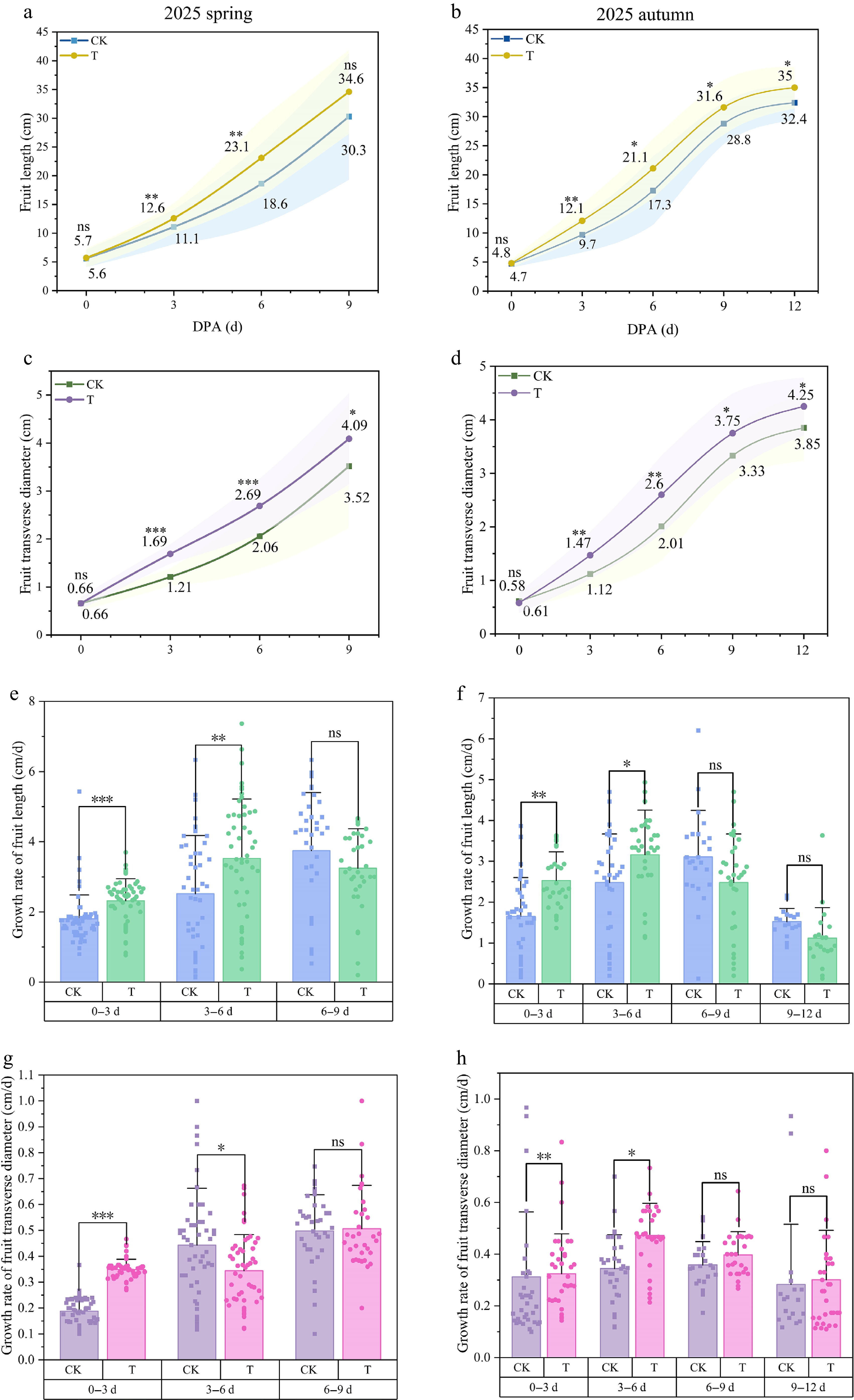
Figure 1.
Results of investigating cucumber phenotypes.
In late spring (May and June), the daily average temperature in the greenhouse reached 28 °C, with a maximum daily temperature of up to 42 °C. In contrast, the daily average temperature in late autumn (September and October) was only 23 °C, and the average daily sunshine duration was 1.5 h shorter than that in late spring. Consequently, the fruit expansion rate of autumn-sown cucumbers slowed markedly at 9 DPA, which differed from the unobvious slowdown throughout fruit development in the spring crop, and fruit length and diameter at the same developmental stage were slightly smaller in the autumn crop than in the spring crop. Otherwise, the autumn trial's results were highly consistent with those of the spring trial: From 3 to 12 DPA, fruit length and diameter remained higher in the treated group with smaller variation compared with the control (Fig. 1c, d). The growth rates of fruit length and diameter in the CPPU-treated group were higher than in the control during 0–3, 3–6, and 6–9 DPA, with statistically significant differences only at 0–3 and 3–6 DPA. Furthermore, the intergroup difference gradually diminished with increasing DPA, showing no significant difference between the treated and control groups at 6–9 DPA, although the growth increase of the treated group was lower than that of the control at 9–12 DAA (Fig. 1g, h). These findings further confirm that CPPU accelerates cucumber fruit development, promotes early ripening, and enhances fruit uniformity.
Notably, in both the spring and autumn cropping experiments, the maximum difference in fruit length between the control group and the treatment group occurred at 6 DPA. Additionally, the increases in fruit length and transverse diameter showed significant differences between the two groups during the 0–3 and 3–6 DPA stages. These findings indicated that the period from 0 to 6 DPA is the critical stage for CPPU to promote cucumber fruit enlargement.
Cucumber fruit yield is determined by the weight of single fruits and the number of fruits. Since the fruit length, transverse diameter, and single-fruit weight of the treatment group were significantly greater than those of the control group after harvest, and the fruit setting rate and average number of fruits per plant in the treatment group were also higher than those in the control group (Table 1), the application of CPPU can increase cucumber fruit yield.
Table 1. Results of investigating postharvest yield-related traits of cucumber.
2025 spring 2025 autumn Control group Treatment group Control group Treatment Group Fruit length (cm) 30.3 ± 10.95 34.6 ± 7.3* 32.36 ± 3.04 34.95 ± 3.63* Fruit transverse (cm) 3.52 ± 1.29 4.09 ± 0.95* 3.85 ± 0.62 4.25 ± 0.54* Single fruit weight (g) 421.47 ± 145.133 483.70 ± 83.32* 394.72 ± 123.45 468.32 ± 81.83* Fruit setting rate (%) 83.3 93.2* 68.4 95.7* Average fruit number per plant 2.1 2.5* 2.1 2.6* Yield (kg) 11.66 17.06* 12.43 18.26* Note: * indicates p ≤ 0.05 CPPU can inhibit the curvature of cucumber fruits and improve their marketability
-
In both the spring and autumn cropping experiments, the fruit length and transverse diameter of cucumbers in the treatment group were significantly greater than those in the control group after harvest, whereas fruit curvature was significantly smaller than that in the control group (Fig. 2; Table 2). According to the grading standard for fruit straightness proposed by Ge, both the curvature rate and subcurvature rate of fruits in the treatment group were lower than those in the control group, whereas the straightness rate was higher than that in the control group. These results indicated that the application of CPPU could reduce the fruit curvature of cucumbers and improve their marketability.
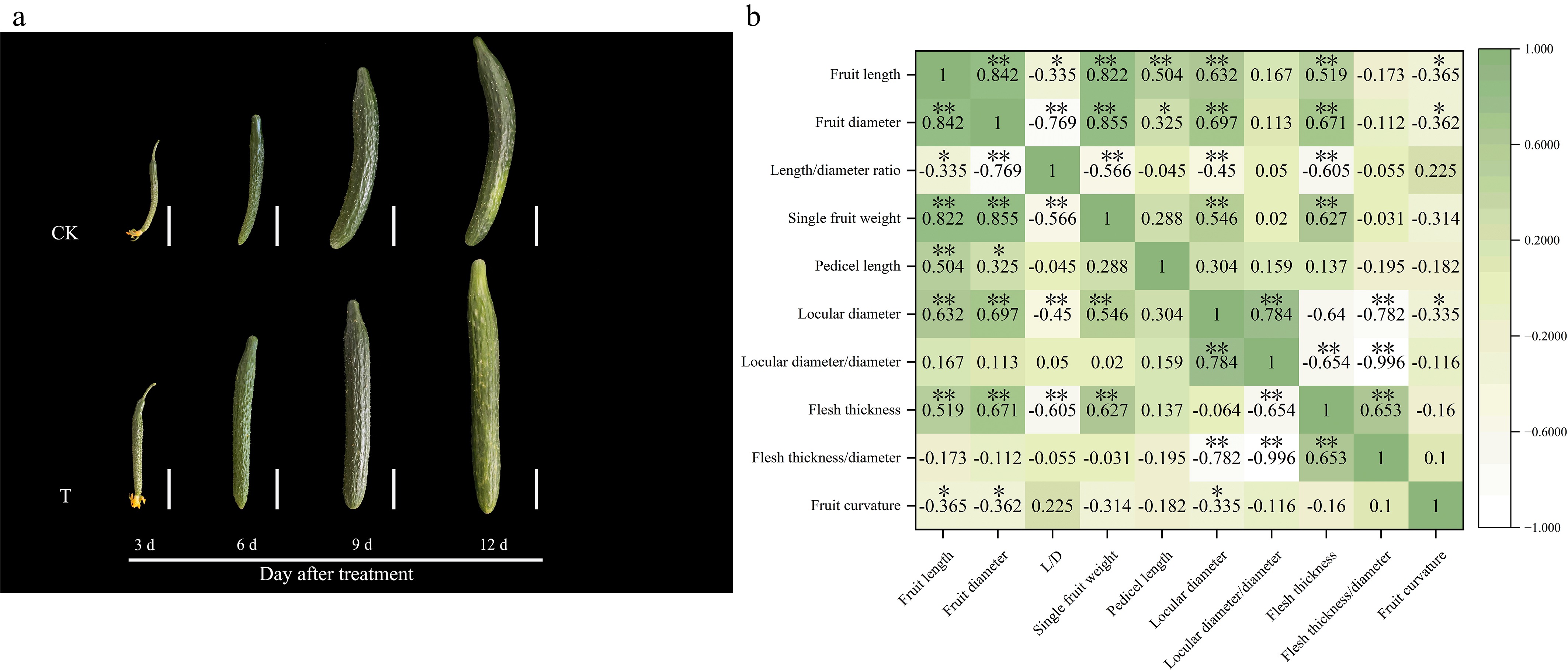
Figure 2.
Commercial quality of cucumber fruit.
Table 2. Results of investigating postharvest commercial traits of cucumber.
2025 spring 2025 autumn Control group Treatment group Control group Treatment group Peduncle length (cm) 3.67 ± 0.50 3.53 ± 0.79 2.74 ± 0.36 2.93 ± 0.66 Locular diameter (cm) 1.64 ± 0.33 1.94 ± 0.50* Locular diameter/fruit diameter 0.42 ± 0.07 0.45 ± 0.09 Fruit flesh thickness (cm) 1.11 ± 0.26 1.16 ± 0.18 Fruit flesh thickness/fruit diameter 0.28 ± 0.04 0.27 ± 0.04 Curvature index (°) 27.98 ± 20.31 5.32 ± 6.43*** 21.24 ± 17.17 3.76 ± 4.63*** Fruit bending rate (%) 25.6 0 16.7 0 Fruit secondary bending rate (%) 43.6 25.7 55.6 15 Fruit straightness rate (%) 30.8 74.3 27.8 85 Note: * indicates p ≤ 0.05 In the autumn cropping experiment, two additional measurement indicators, namely core cavity diameter and flesh thickness, were introduced for assessing the fruits after harvest. Among these, the core cavity diameter of the fruits in the treatment group was significantly larger than that in the control group (Fig. 2a, b). Since there was a significant negative correlation between fruit curvature and the core cavity diameter in cucumbers (Table 2), these results indicated that CPPU reduces fruit curvature by increasing the core cavity diameter and decreasing the ratio of core cavity diameter to the fruits' transverse diameter.
The number of DEGs reached a peak at 6 DPA following CPPU treatment
-
To clarify the characteristics of gene expression responses to CPPU treatment at different growth stages of cucumber fruits, DEGs were screened separately by developmental stage. The results showed that at 3 DPA, 2,723 DEGs were identified in total, including 1,248 upregulated DEGs and 1,475 downregulated DEGs (Fig. 3a, d). The number of downregulated genes was slightly higher than that of upregulated genes, suggesting that CPPU treatment might temporarily repress certain basic metabolic pathways in the early stage to initiate stress. At 6 DPA, 7,003 DEGs were identified in total, with 4,222 upregulated DEGs and 2,781 downregulated DEGs (Fig. 3a, e). This represents the highest number of DEGs across the three developmental stages, and the number of upregulated genes was significantly greater than that in the other stages. Combined with the field experimental observation that the fruit enlargement rate at 6 DPA was significantly higher than that in other stages, it was inferred that this period represents the critical response stage of cucumbers to CPPU treatment, during which gene expression regulation is most active. At 9 DPA, 1,039 DEGs in total were identified, comprising 258 upregulated DEGs and 781 downregulated DEGs (Fig. 3a, f). The number of DEGs decreased significantly, accounting for only 14.8% of that at 6 DPA. It is speculated that cucumber fruits might gradually attenuate their response to CPPU treatment through metabolic adaptation and enter a stage of homeostatic regulation.
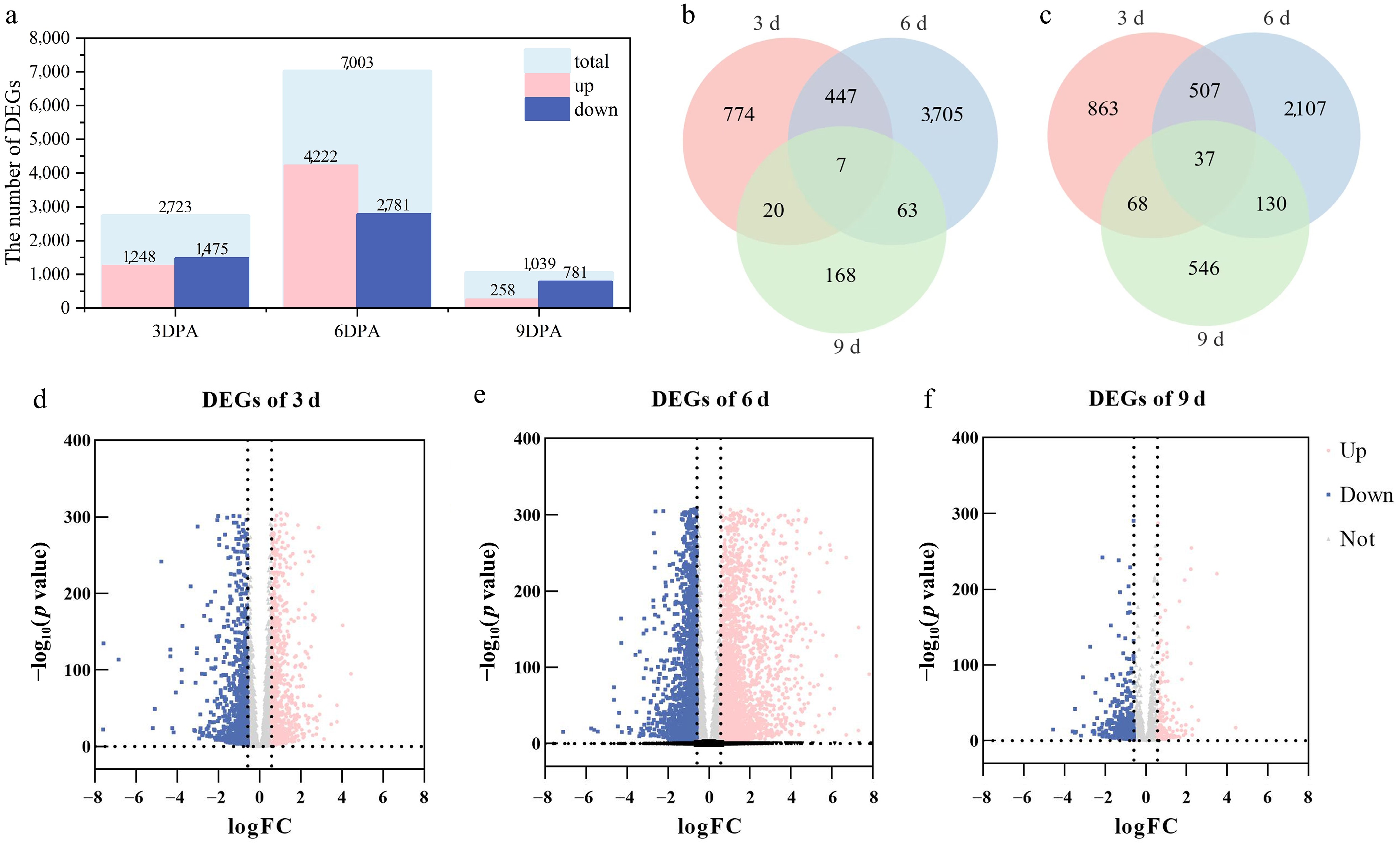
Figure 3.
Results of the differential gene expression analysis of the transcriptome data.
Through intersection analysis, 44 core DEGs that exhibited consistent responses at 3, 6, and 9 DPA were further screened out. This approach was used to eliminate the interference of inherent fluctuations across different growth stages and to focus on the specific gene response to CPPU treatment. Among these, seven core DEGs were consistently upregulated across all stages (Fig. 3b), accounting for a low proportion of the upregulated DEGs at each individual stage. This indicated that the persistently upregulated genes induced by CPPU treatment possess high specificity, which may serve as key candidates for regulating the traits associated with applying CPPU. However, 37 core DEGs were consistently downregulated across all stages (Fig. 3c), the number of which was higher than that of the consistently upregulated ones. This suggested that the repressive effect of CPPU on certain genes is more stable, which may be associated with the moderate regulation of fruit growth and development. The expression trends of the core DEGs were consistent across 3, 6, and 9 DPA, which could minimize the interference from developmental stage-specific variations to the greatest extent. These genes thus represent a core dataset for subsequent functional characterization and screening of key regulatory genes.
DEGs were significantly enriched in plant hormone-related regulatory pathways following CPPU treatment
-
First, GO enrichment analysis was performed separately on the commonly and significantly upregulated DEGs and downregulated DEGs across the three developmental stages of 3, 6, and 9 DPA. In total, 85 terms were enriched among the upregulated DEGs (Supplementary Table S2), with biological processes (BPs) accounting for 73%, cellular components (CCs) for 15%, and molecular functions (MFs) for 12%. Forty-seven terms were significantly enriched, all of which were concentrated at the BP level. Among these 47 BP terms, four exhibited the highest significance and the largest proportions: Positive regulation of seed germination, regulation of seed germination, regulation of seedling development, and positive regulation of postembryonic development. Each of these four terms was annotated with exactly two genes (Fig. 4a). In total, 264 terms were enriched among the downregulated DEGs (Supplementary Table S3), with BPs accounting for 74%, CCs for 11%, and MFs for 15%. Thirty-eight terms were significantly enriched, all of which were also concentrated at the BP level. Among these 38 BP terms, response to auxin had the largest proportion, with six annotated genes. Cellular response to auxin stimulus was the next most abundant, with four annotated genes. Additionally, a relatively large proportion of terms included the jasmonic acid-mediated signaling pathway, cellular response to jasmonic acid stimulus, cellular response to fatty acid, and auxin-activated signaling pathway, each annotated with three genes (Fig. 4b).
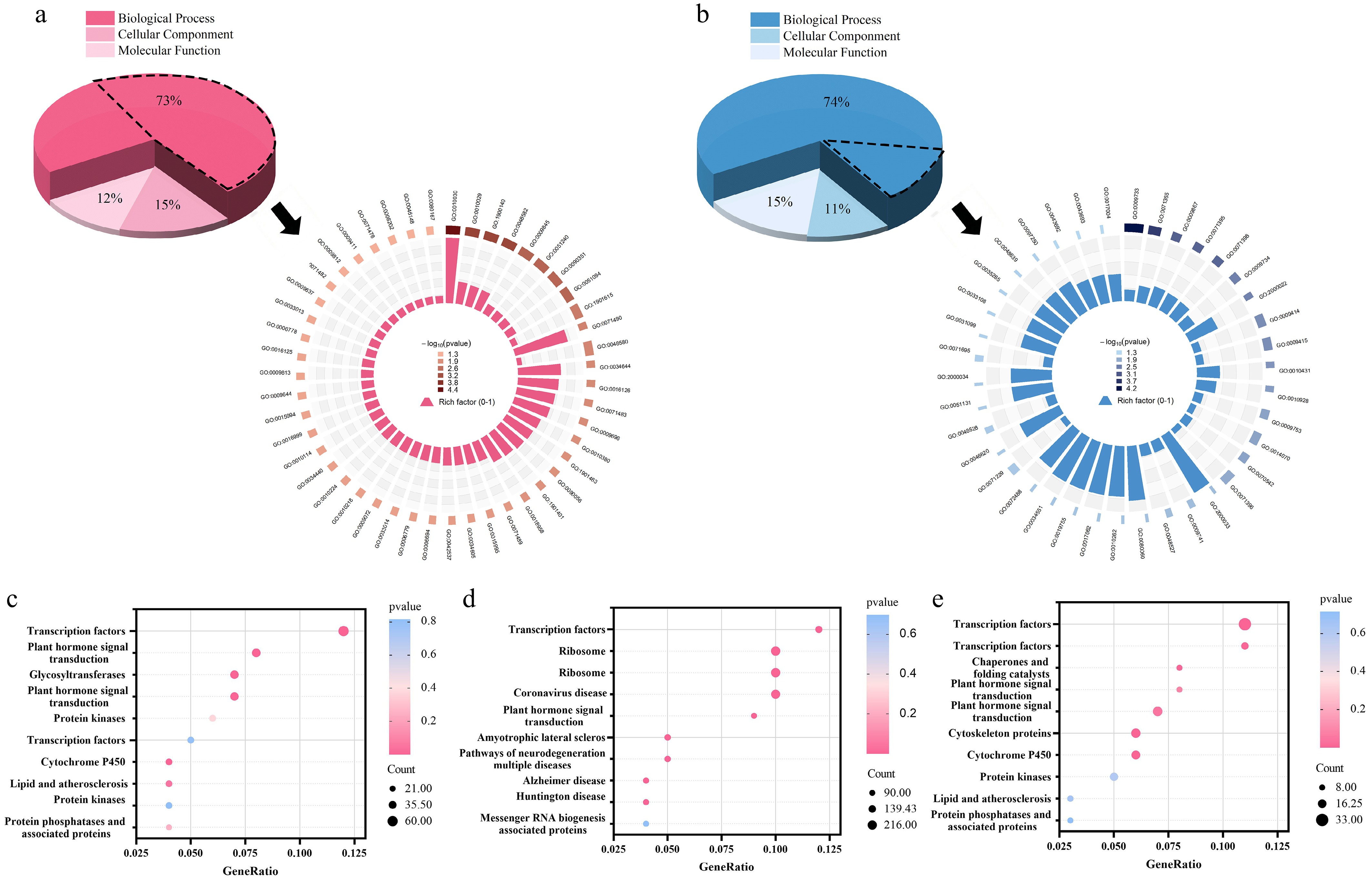
Figure 4.
Results of the functional enrichment analysis of transcriptomic data.
From these results, we conclude that CPPU regulates the perception and initial response of plant cells and tissues to both endogenous and exogenous auxin, thereby activating the expression of genes involved in cell cycle regulation and cell wall synthesis and influencing fruit set, fruit enlargement, and other developmental processes in cucumber. Meanwhile, the regulation of jasmonic acid-related pathways by CPPU may affect fruit ripening, secondary metabolism, and stress resistance. Fatty acids, as essential components of cell membranes, are associated with fruit cells' division and expansion; additionally, acting as signaling molecules, they regulate hormone signal transduction pathways. Both jasmonic acid and fatty acid pathways can indirectly affect the quality of fruit development.
Subsequently, KEGG enrichment analysis was performed on the commonly and significantly DEGs across the three developmental stages of 3, 6, and 9 DPA. Among the upregulated DEGs, only one pathway was enriched, and it was not statistically significant. This could be attributed to the low coverage of upregulated genes within the pathway or the dispersion of their functional annotations. However, four pathways were enriched among the downregulated DEGs, of which only one reached a significant level, namely the transcription factors pathway. Given the low significance of KEGG enrichment results for the common DEGs across the three stages, KEGG enrichment analysis was also performed on the DEGs of each individual stage (3, 6, and 9 DPA) separately (Supplementary Table S4). At 3 DPA, the DEGs were mainly enriched in transcription factors, plant hormone signal transduction, and glycosyltransferases (Fig. 4c); at 6 DPA, the DEGs were mainly enriched in transcription factors, ribosomes, and plant hormone signal transduction (Fig. 4d); and at 9 DPA, the DEGs were mainly enriched in transcription factors, plant hormone signal transduction, cytoskeleton proteins, and cytochrome P450 (Fig. 4e).
These results collectively demonstrate that the transcription factor and plant hormone signal transduction pathways are the core and persistently acting molecular pathways underlying CPPU-mediated regulation of fruit development in cucumber. The specific enrichment of DEGs in the glycosyltransferase pathway at 3 DPA implies that fruit development during this period may be dominated by processes such as hormone activity modulation and primary metabolite synthesis. At 6 DPA, the significant enrichment of DEGs in the ribosome pathway suggests that active protein synthesis in fruit cells is a key physiological process supporting rapid cell proliferation. In contrast, the specific enrichment of DEGs in the cytoskeleton proteins and cytochrome P450 pathways at 9 DPA indicates that the focus of fruit development shifts to cell expansion, cell wall remodeling, and secondary metabolite synthesis during this stage, which drives morphogenesis and quality formation in the fruit.
Five core DEGs were identified via machine learning-based screening
-
Given the results of the GO and KEGG enrichment analyses, it was evident that the 44 cross-stage core DEGs screened in the early stage still contained information redundancy. Therefore, machine learning models were used to further identify core genes with higher specificity and reliability.
Cross-validation revealed that the model achieved the lowest cross-validation (CV) error and optimal stability (minimum standard error) when the number of selected genes was set to 5 (Fig. 5a). Lasso regression identifies genes with significant contributions to phenotypic variation through L1 regularization, which gradually penalizes the regression coefficients of redundant genes to zero. As the regularization parameter log(λ) increased, the regression coefficients of most genes progressively shrank to zero. When log(λ) increased to the point where only five genes remained with nonzero coefficients (Fig. 5b), this indicated that these fivegenes exhibit the most stable contributions to the CPPU treatment phenotype, free from redundant information. These five core genes were identified as CsWIP2, CsPILS7, CsJOX2, CsGIR1, and CsAAA18193.
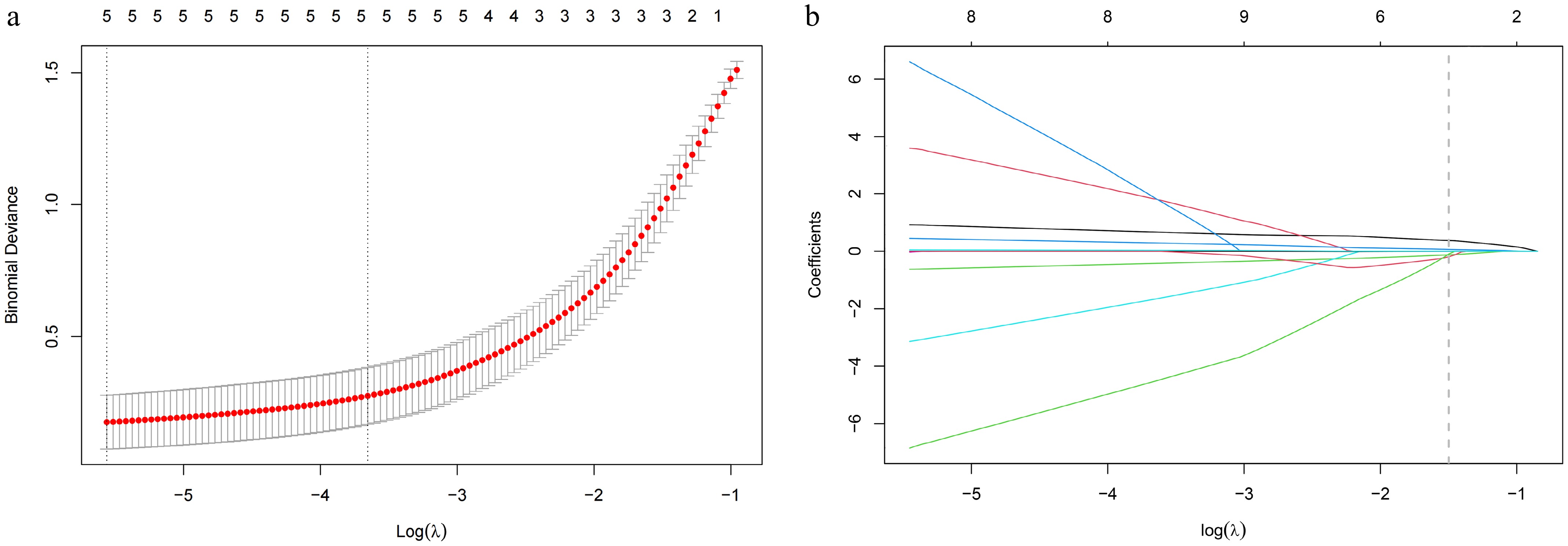
Figure 5.
Establishment of the machine learning model.
The quantitative polymerase chain reaction results of CsWIP2 and CsPILS7 were highly consistent with those of the transcriptome analysis
-
To further verify the effect of CPPU treatment on fruit development in cucumber, real-time fluorescence quantitative PCR (qPCR) analysis was performed on the five initially screened key candidate genes, and the qPCR results were compared with those of transcriptome sequencing. The results showed that the expression patterns of CsWIP2 and CsPILS7 were highly consistent between the results of qPCR and transcriptome sequencing, whereas the expression trends of CsJOX2, CsGIR1, and CsAAA18193 exhibited certain differences compared with the transcriptome data.
The expression trends of WIP domain protein 2 (CsWIP2) and PIN-Like protein 7 (CsPILS7) were highly consistent with those from the transcriptome analysis, indicating that they are less affected by subtle seasonal and environmental variations and display stronger expression stability. These two genes should be regarded as key candidate genes for the regulatory mechanism of CPPU during cucumber fruit development and subjected to in-depth analysis. CsWIP2 is a C2H2-type zinc finger transcription factor belonging to the WIP gene family. The qPCR results showed that the relative expression level of CsWIP2 peaked at 9 DPA and then declined. In the peel, expression levels in the treatment group were significantly lower than those in the control group at 6 and 12 DPA (Fig. 6a). In the flesh, expression levels in the treatment group were significantly lower than those in the control group at 0, 6, and 9 DPA (Fig. 6b). This is highly consistent with the expression patterns in the transcriptome characterized by significant downregulation and a peak at 9 DPA. PILS7 is a plant-specific auxin transport protein localized to the endoplasmic reticulum and belongs to the PILS family. The qPCR results revealed that the relative expression of CsPILS7 reduced after CPPU treatment, with a more pronounced decrease in the flesh, and the overall expression level increased over time (Fig. 6c, d). This trend is highly consistent with the transcriptome pattern of significant upregulation and a time-dependent increase.
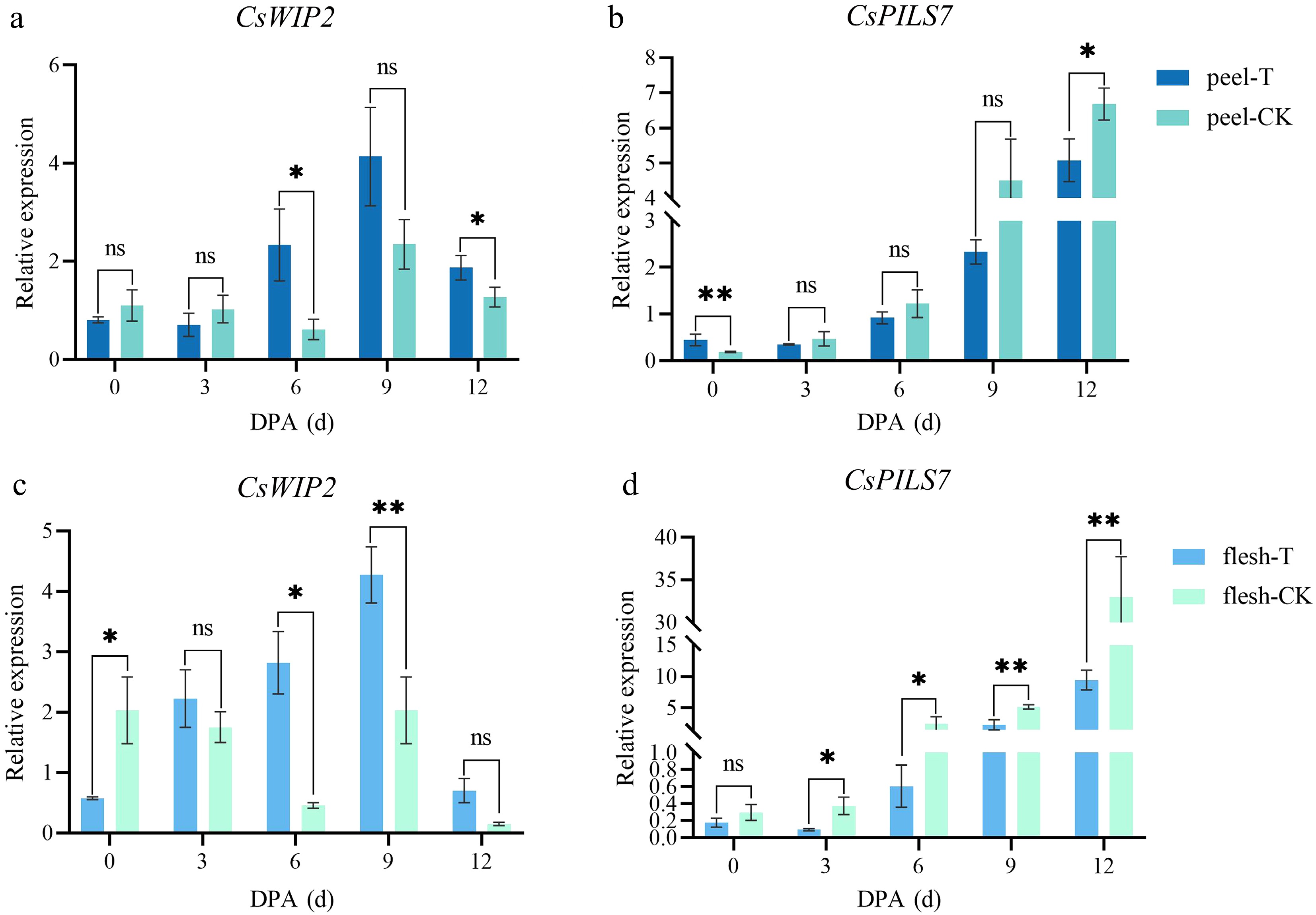
Figure 6.
Relative expression levels of CsWIP2 and CsPILS7 revealed by qPCR.
However, the inconsistent expression trends of CsJOX2, CsGIR1, and CsAAA18193 between the qPCR and transcriptome analyses may be attributed to differences in the planting seasons and growing regions of the samples used for RNA-seq and qPCR (Supplementary Fig. S1). In cucumber, fruit development is comprehensively regulated by environmental factors such as light, temperature, and photoperiod. Although samples were collected at the same number of days after treatment, their actual developmental stages might still be asynchronous. Previous studies have reported that JOX2 in Arabidopsis thaliana is highly sensitive to environmental changes[25], and high temperature significantly induces its expression[26]. In cotton (Gossypium hirsutum), the promoter regions of GIR1 contain cis-acting elements that are responsive to light, plant hormones, defense responses, and stresses[27]. Although no public functional characterization is currently available for CsAAA18193, its family member, AaFRAT1, is strictly regulated by photoperiod[28], and HSP101, a key factor in plants' thermotolerance, is also modulated by temperature[29].Taken together, we suggest that it is normal for the expression patterns of some genes to be altered by the application of CPPU under different environmental conditions. In addition, inherent technical differences between transcriptome sequencing and qPCR may also lead to discrepancies in gene expression levels.
-
Cucumber is a globally important vegetable crop with high economic value. Owing to its crisp taste and abundant nutrients, including protein, calcium, phosphorus, iron and Vitamin C, it is highly favored by consumers[30]. With changing consumer demands, the market requirement for high-quality cucumbers has increased annually[31]. As an exogenous plant growth regulator, CPPU promotes cell division and expansion in fruit, thereby increasing individual fruits' weight[13]. It is widely used in fruits and vegetables to improve yield[32]. However, under various cultivation conditions, cucumbers are susceptible to adverse effects such as low temperature and weak light[33], which can lead to fruit abortion and poor fruit expansion, thereby reducing their economic benefits[34]. Moreover, curved cucumber fruits are classified as malformed[35], and such curvature often occurs during fruit development, thereby reducing the marketable yield of cucumber. CPPU is extensively applied in cucumber production because of its significant effects on improving fruit set, modifying fruit shape, and increasing yield[36]. Despite its widespread use as a fruit expansion regulator in horticultural crops, the molecular mechanisms and key regulators involved in CPPU-mediated fruit expansion in cucumber remain unclear. This study focuses on the effects of CPPU on cucumber fruit development and its underlying molecular regulatory mechanisms, aiming to provide a theoretical basis and technical targets for improving fruit size in cucumber. Through field experiments, we confirmed the application value of CPPU in high-quality cucumber production. On the basis of the transcriptome analysis, we identified DEGS and their functional pathways following CPPU treatment, laying a foundation for deciphering the molecular network of CPPU-regulated fruit development. On this basis, five key candidate genes were precisely screened using machine learning, providing important references and targets for subsequent in-depth research.
In this study, we observed the phenotypic characteristics of cucumber fruits following exogenous application of CPPU. Compared with the control group, the CPPU-treated group exhibited a significantly increased rate of fruit expansion, which is consistent with previous studies showing that CPPU application promotes fruit enlargement[13]. Through investigations of fruit set rates, we also found that applying CPPU also enhances parthenocarpic fruit set in cucumber, which aligns with the findings in other horticultural crops such as grape[37] and watermelon (Citrullus lanatus)[38]. Collectively, these results indicate that exogenous CPPU can increase cucumber yield by promoting fruit expansion and improving the efficiency of fruit set. Although research on the effects of CPPU on fruit enlargement and fruit set has been relatively comprehensive, studies on its impact on fruits' marketability have mostly focused on nutritional quality and sensory attributes[37,39], whereas the curvature and pedicel length of cucumber, which are critical commercial traits[40,41], have received little attention. Therefore, we also evaluated these two characteristics in the CPPU-treated fruits. Our results showed that CPPU had no effect on pedicel length but significantly inhibited fruit bending. Although this finding is not entirely consistent with the conclusion of Li Su[42] that "CPPU does not alter cucumber fruit shape", their study only measured fruit length and diameter without accurately evaluating curvature. Thus, we conclude that exogenous application of CPPU not only promotes fruit expansion and increases yield but also suppresses bending in the fruit, thereby improving the commercial fruit rate. In addition, because the two field experiments were conducted in different seasons, we inadvertently observed that the promotive effect of CPPU on fruit expansion differed between spring and autumn. This suggests that the regulatory effect of CPPU on fruit development in cucumber is influenced by external environmental conditions. On the basis of relevant studies on the environmental regulation of fruit development[43,44], we hypothesize that temperature and light may be key factors affecting CPPU-mediated fruit expansion, which could serve as a new direction for future research.
Although the effects of CPPU application on plant growth and fruit development in cucumber have been relatively well documented, the underlying mechanisms—especially the molecular mechanisms—remain poorly understood. In this study, we used transcriptome analysis to investigate how CPPU influences cucumber fruit development. Differential gene expression analysis revealed that the largest number of DEGs appeared at 6 DPA, which is consistent with our field observations. In the cucumber cultivar 'Lvbazhu No. 6', significant differences in fruit length and diameter between the CPPU-treated and control groups also began at 6 DPA[45], suggesting that this time point is critical for CPPU's action. GO functional enrichment analysis of the common DEGs at 3, 6, and 9 DPA showed that the most significantly enriched category was related to auxin responses. KEGG pathway enrichment analysis of DEGs at each timepoint further indicated that transcription factors and plant hormone signal transduction pathways are the major molecular pathways continuously involved in CPPU-regulated fruit development. These results are consistent with previous studies. In muskmelon[22] and grape[46], genes involved in cell proliferation and plant hormone pathways were found to be enriched in fruits following exogenous application of CPPU application. RNA sequencing of pear (Pyrus sp.) also revealed that genes related to the auxin pathway were significantly differentially expressed in CPPU-treated fruits[17]. We also used machine learning to screen five candidate key genes from the transcriptome data and validated their expression patterns using qRT-PCR. These five genes are CsaWIP2, CsPILS7, CsJOX2, CsGIR1, and CsAAA18193. WIP proteins belong to a plant-specific subfamily of C2H2 zinc finger (ZF) proteins[47]. The C2H2 ZF motif in this family has been shown to bind RNA and mediate protein–protein interactions[48]. In Arabidopsis thaliana, the WIP2 gene is expressed in the pistil and regulates female sterility[49]. The PILS gene family is primarily involved in regulating intracellular auxin homeostasis and polar distribution, determining auxin accumulation in the endoplasmic reticulum[50], and modulating cellular sensitivity to auxin[51]. The JOX2 gene has been shown to be involved in jasmonic acid regulation in both A. thaliana[52,53] and cotton[54]. Consistent with our enrichment analysis results, we speculate that CsPILS7 and CsJOX2 may regulate cucumber fruit development by modulating auxin and jasmonic acid signaling, respectively, in response to CPPU. The GIR1 gene is a core negative regulator of epidermal development and metabolic regulation in plants. Studies have linked it to the control of epidermal traits, such as root hair differentiation in A. thaliana[55] and leaf trichome initiation in cotton[56]. Its role in fruit development, however, has not been previously reported. CsAAA18193 belongs to the AAA-ATPase gene family, which encodes a class of protease complexes that rely on hydrolysis of adenosine triphosphate (ATP) to drive protein remodeling, degradation, and other essential cellular processes[57]. However, the specific function of CsAAA18193 remains to be further investigated.
This study clarified the significant effects of CPPU on promoting fruit enlargement in cucumber and increasing the marketable fruit rate and identified the key pathways and five core genes involved in CPPU-regulated fruit enlargement through the combination of transcriptome analysis and machine learning. These findings provide a theoretical basis for the scientific application of CPPU and the exploration of its regulatory mechanisms, as well as potential gene targets for the molecular breeding of cucumber fruit-related traits. However, this study has certain limitations: The key genes screened by machine learning have not undergone in-depth functional verification, and their specific regulatory mechanisms and interaction relationships with the key pathways remain unclear. In the future, further experiments can be conducted to clarify the regulatory functions of core genes and the intergenic interaction relationships, decipher the molecular network underlying CPPU-regulated fruit development in cucumber, promote the transformation of basic research achievements, cultivate elite varieties, and contribute to the improvement of economic benefits in the horticultural industry.
-
In conclusion, this study systematically explored the regulatory effects and molecular mechanisms of CPPU on cucumber fruit development. CPPU significantly promoted fruit expansion and increased the commercial fruit rate, confirming its value in high-quality cucumber production. Transcriptome analysis revealed that plant hormone transduction was the key pathway underlying CPPU-regulated fruit expansion. Using machine learning, we identified five critical CPPU-responsive genes, providing candidate targets for regulating fruit development. These results enrich the regulatory theory of CPPU in horticultural crops and offer a theoretical basis for molecular breeding and high-yield cultivation in cucumber.
This study was supported by the National Natural Science Foundation of China (32573049) and the 2115 Talent Development Program of China Agricultural University. The authors would like to thank Hebei Xinneda Seed Industry Co., Ltd. for providing support for this experiment. We also thank all individuals who contributed to this research.
-
The authors confirm contribution to the paper as follows: study conception and design: Zhao Y; data collection: Zhao Y, Shan L; writing the first version of the manuscript: Zhao Y; manuscript revision: Wang Y, Fan S, Pei T, Shi Y, Tang Z, Zhu X, Ren H, Liu X. All authors reviewed the results and approved the final version of the manuscript.
-
All data generated or analyzed during this study are included in this article and its supplementary information files.
-
The authors declare that they have no conflict of interest.
-
This accompanies this paper online at: https://doi.org/10.48130/vegres-0026-0023.
-
# Authors contributed equally: Yibing Zhao, Li Shan
- Supplementary Table S1 Primer sequences and gene IDs.
- Supplementary Table S2 Enriched GO Terms of Upregulated Genes.
- Supplementary Table S3 Enriched GO Terms of Downregulated Genes.
- Supplementary Table S4 KEGG Enrichment Terms and Gene IDs Across Stages.
- Supplementary Fig. S1 Relative expression levels of CsWIP2 and CsPILS7 by qPCR.
- Copyright: © 2026 by the author(s). Published by Maximum Academic Press, Fayetteville, GA. This article is an open access article distributed under Creative Commons Attribution License (CC BY 4.0), visit https://creativecommons.org/licenses/by/4.0/.
-
About this article
Cite this article
Zhao Y, Shan L, Wang Y, Fan S, Pei T, et al. 2026. CPPU promotes cucumber fruit development: phenotypic effects and transcriptomic insights. Vegetable Research 6: e027 doi: 10.48130/vegres-0026-0023 

CPPU promotes cucumber fruit development: phenotypic effects and transcriptomic insights
- Received: 02 March 2026
- Revised: 17 May 2026
- Accepted: 27 May 2026
- Published online: 30 July 2026
Abstract: Cucumber (Cucumis sativus L.) is a Cucurbitaceae plant that often suffers from fruit drop and deformity caused by excessive fruiting, poor growth, and unfavorable environmental conditions during cultivation.Forchlorfenuron [N-(2-chloro-4-pyridyl)-N'-phenylurea (CPPU)] is a plant growth regulator that has been widely used in the production of cucumbers and other horticultural plants because of its significant effects in promoting fruit set and enlargement. However, the underlying mechanism through which CPPU regulates cucumber fruit development remains unclear. To verify the role of CPPU in regulating cucumber fruit development, field experiments were conducted in both spring and autumn. The results confirmed that CPPU application significantly promoted fruit enlargement, shortened the time from flowering to harvest of marketable fruits, reduced fruit curvature, and increased the marketable fruit rate. Interestingly, we found that environmental conditions influence the regulatory effect of CPPU on fruit expansion. To investigate the molecular basis underlying CPPU-mediated regulation of fruit development, transcriptome analysis was performed. Firstly, 44 cross-stage differentially expressed genes (DEGs) were identified through differential gene analysis. Subsequent Gene Ontology (GO) and Kyoto Encyclopedia of Genes and Genomes (KEGG) functional annotation revealed that plant hormone signaling pathways are the key pathways mediating CPPU-regulated fruit expansion. Furthermore, five key candidate genes (CsaWIP2, CsPILS7, CsJOX2, CsGIR1, and CsAAA18193) responding to the CPPU signal were screened and preliminarily validated using machine learning and real-time quantitative polymerase chain reaction techniques. This study clarified CPPU's effect on cucumber fruit development, and the selected genes provided theoretical support for molecular breeding of cucumber and high-quality, high-yield cultivation optimization.
-
Key words:
- Cucumber /
- Fruit development /
- CPPU /
- Molecular mechanisms