












-
With the rapid development of the economy and society, the large-scale movement and aggregation of population has brought about serious traffic congestion problems[1]. This has brought great inconvenience to people's lives and work, and seriously hindered the healthy and green development of cities. As a modern means of transportation, the subway has the characteristics of small space occupation, large passenger capacity, low pollution, and is fast and on time, which could effectively alleviate traffic congestion problems[2,3]. With the continued maturation of subway system technology, we have enjoyed the convenience of subway systems, but have also noted that subway processes due to electrical lines and equipment aging, mechanical failure, carriage goods spontaneous combustion and a series of reasons, have led to fire and other safety accidents. Fire hazards can susequently cause serious adverse effects on society and economic losses[4]. In recent years, the demand and growth of subways in large- and medium-sized cities has been dominated by developed countries, which has led to an explosive growth in the number and mileage of subways, and fire hazards increase. Moreover, the tunnel space where the subway is located has the characteristics of being narrow and closed. Once a fire occurs, it will cause serious harm and loss to the economy, society, personal health, and life safety. Therefore, the prevention and control of subway fires has become a primary research task[5].
At present, researchers around the world have conducted many explorations on subway internal fires from full-scale experiments[6], shrinkage size model experiments[7], and numerical simulations[8], among other methods[9]. Full-scale fire experiments usually involve liquid and solid fuels with specific chemical properties, which are often used to simulate the real fire behavior in subway tunnels. For example, in 2020, Yang et al.[10] used methanol as fuel in a full-scale subway fire experiment, while Palm et al.[11] used heptane for tunnel fire tests, and a heptane-toluene mixed-fuel fire scenario for the full-scale experiment of a highway tunnel in the Netherlands[12]. Although these experiments were relevant, they were expensive and dangerous, prompting researchers to seek more cost-effective alternatives. Therefore, researchers began to carry out experiments with low experimental cost, stable fire scales, which are easy to control[13]. It had been proven that the reduced-size model was helpful in studying the influence of ventilation on smoke distribution and heat propagation in subway tunnels. For example, Cong et al.[14] employed a reduced-scale model to investigate how airflow velocity, induced by longitudinal ventilation, influences the thermal distribution of ceiling smoke and the smoke overflow behavior at the side doors of the train carriage. Through scaled-down experimental simulations, Zhang et al.[15] investigated the phenomenon of dark smoke recirculation within subway train tunnels, with findings indicating a significant correlation between train presence and reverse smoke propagation distance. However, these experimental methods still have limitations in simulating real fire dynamics, so researchers are increasingly relying on predictable, operable, and reusable computer simulations for more accurate and flexible modeling[16]. Computer simulation has become an important tool to study subway fire. Park et al.[17] used virtual reality (VR) technology to train individuals on fire safety procedures, highlighting the growing importance of emergency response training. Wang et al.[18] used Fire Dynamics Simulator (FDS) to simulate the fire scene in subway tunnels. Long et al.[19] conducted several numerical simulations on subway platforms under natural ventilation conditions using FDS software to investigate the effects of fire location and heat release rate. Wu et al.[20] reported smoke overflowing features under various longitudinal ventilation speeds and used numerical simulation to examine the impact of longitudinal ventilation on the effectiveness of the fire smoke escape mechanism in the multi-window compartment of the subway tunnel. Wang et al.[21] used numerical modeling to examine how slope affects the fire risk of train compartments with numerous lateral exposures in subterranean tunnel fires. Some review articles with unique insights have also been published. For example, Tang et al.[22] used the theory of system elasticity to propose the idea of fire elasticity. The findings demonstrated that the primary causes of inadequate fire resistance were passenger escape abilities and safety pilots, security-related operations, inspections of equipment and repair, and access to emergency services. Among the above fire causes, man-made arson and luggage fire usually occurred at the intersection, or in the center of the carriage. The fire caused by equipment factors usually occurred in the corner of the carriage. The spreading law of the tunnel's temperature field was examined to theoretically support the tunnel vault structure and personnel evacuation route safety judgment. The aforementioned study demonstrated that the researchers have extensively studied the specific application of the subway fire field.
The research currently covers a number of aspects, including personnel evacuation, smoke dispersion, and ventilation mode. Even though these studies have significantly advanced our knowledge of the dynamics of subway fires, thorough and systematic analysis in this area is still lacking. In the meantime, bibliometric techniques have emerged as a crucial instrument for assessing and analyzing scientific research accomplishments in certain domains. The multidisciplinary field of bibliometrics employs statistical and mathematical techniques to statistically examine all sources of knowledge[23]. In addition to offering theoretical support and direction for future scientific study, researchers can gain a thorough understanding of the state of research, development trends, hotspots, and frontiers in a particular topic by conducting a quantitative analysis of pertinent literature. A systematic synthesis and quantitative analysis of the literature in this area has remained lacking, despite the fact that numerous studies have concentrated on various aspects of subway fires. Based on this, this study adopted the bibliometrics approach and conducted a thorough analysis of the relevant research in the area of subway fire with the aid of the knowledge mapping software CiteSpace[24] and VOSviewer[25]. To provide a clear research framework and information reference for future research, this paper will analyze the current state of knowledge in the field of subway fire, identify the major research hotspots and frontiers, describe the development trend in the area of subway fire, and identify the influential countries, institutions, and journals in the area.
-
The databases Science Direct, Engineering Village, and Web of Science (WOS) were chosen, and literature retrieval was done using the same formula. Table 1 displays the findings. Comparatively, we discovered that the literature obtained from Engineering Village and Science Direct overlapped with that obtained from WOS. The WOS database is widely regarded as one of the most reputable, extensive, and influential databases in English literature[26].
Table 1. Databases search status.
No. Database Search range Period No. of articles 1 Science Direct Title, abstract, or keywords 2008–2024 291 2 Engineering Village Title, abstract, or subject 2008–2024 503 3 Web of Science Topic (title, abstract, and indexing) 2008–2024 656 Therefore, the Science Citation Index Expanded (SCI-EXPANDED) 2008–2024 and the Social Sciences Citation Index (SSCI) 2011–2024 of the WOS Core Collection were chosen as the target databases for this paper to fully comprehend the research status and development trends in the field of subway fire. VOSviewer and CiteSpace were utilized for creating the relevant knowledge mapping. By using the method of bibliometric analysis, this paper analyzed the research state and development trend associated with the whole subway fire research area[27,28]. It included the time distribution, location distribution, core literature analysis, research knowledge base, and keyword co-occurrence analysis. As shown in Table 2, none of the first five strategies was used. After a comprehensive analysis, the search formula was (TS = (fire) OR TS = (fire disaster)) AND (TS = (metro) OR TS = (subway) OR TS = (railway)) as the final search formula. Five hundred and seventy five articles published from 2013 to 2024 were analyzed.
By selecting the literature from 2013 to 2024 for analysis, the latest progress and development trends in subway fire research could be effectively captured. This period not only covered the rapid innovation of subway fire prevention and control technology, but also reflected the impact of changes in urbanization, subway construction, and emergency management policies. After 2013, the number of research papers published in the field of subway fire safety increased significantly. This resulted from the ongoing urbanization and the global expansion of subway systems over the past decade, leading to increased research on subway safety. Between 2008 and 2012, only 12.3% of the total papers published from 2008 to 2024 were released, with limited methodological diversity. Since most of the highly cited papers were published after 2013, more relevant and significant research was included. This period saw a large number of high-quality documents, providing stable and representative data for bibliometric analysis.
Table 2. WOS database retrieval strategy.
No. Search strategy Date set Search radar set record Period Data application 1 TS = (metro) A 10,003 2008−2024 − 2 TS = (subway) B 5,726 2008−2024 − 3 TS = (railway) C 31,263 2008−2024 − 4 TS = (fire) OR TS = (fire disaster) D 160,228 2008−2024 − 5 TS = (metro) OR TS = (subway) OR TS = (railway) A∪B∪C 44,609 2008−2024 − 6 (TS = (fire) OR TS = (fire disaster)) AND (TS = (metro) OR
TS = (subway) OR TS = (railway))(A∪B∪C)∩D 656 2008−2024 Time distribution of literature 7 (TS = (fire) OR TS = (fire disaster)) AND (TS = (metro) OR
TS = (subway) OR TS = (railway))(A∪B∪C)∩D 575 2013−2024 Spatial distribution of literature
Research knowledge base
Research hotspots and frontier analysisA∪B: The data set contains all the literature in A or B; A∩B: Data sets containing A and B. Research methods and tools
-
Given the substantial volume of scholarly works in this domain, the systematic quantification and visualization of subway fire research outputs necessitated the application of advanced bibliometric tools and analytical frameworks. Bibliometrics refers to the interdisciplinary science of quantitative analysis of all knowledge carriers using mathematics and statistics. Bibliometrics took literature as the research object, analyzed the quantitative characteristics of literature, studied the structural distribution, internal quantitative relationship, and change rule of information, which could effectively determine the research trend of a certain field, evaluate and predict the development of the discipline.
Co-occurrence analysis, cluster analysis, co-citation analysis, and keyword cluster analysis were performed on 575 articles that were extracted from the WOS core database using visualization tools VOSviewer and CiteSpace. To comprehend the structure of the research field, find research hotspots and trends, and cluster and group relevant research topics, VOSviewer may produce visualizations of citation networks and co-occurrence data. CiteSpace makes it easier to visualize citation networks and analyze co-citations, which makes it possible to carry out temporal analyses. This study seeks to explore how research on subway fires has developed over time. Through burst detection, the software can identify new trends and knowledge frontiers, which are essential for determining the research focus between 2013 and 2024. These traits are highly consistent with our research objective, which is to perform a thorough examination of the field of subway fire research and its development over time.
The theoretical foundation for clustering analysis was betweenness centrality calculation. It was calculated how frequently any two keywords occurred in the identical paper. The more the times, the greater the centrality value. CiteSpace menu Centrality meant mediated centrality, or centrality for short, and was a metric used to quantify a node's significance inside a network[29]. The steps and methods of subway fire research were shown in Fig. 1. We examined the global time distribution of articles in the first section. We mapped the geographic distribution of papers in the field of subway fires, including active national regions, major source journals, and major research institutions in the second section. The research knowledge base in the area of subway fires was examined in the third section, which included a cluster analysis of core authors, core literature, and highly co-cited journals. Subway fire research hotspots and frontiers were examined in the fourth section, which also included an examination of evolution paths, high-frequency keywords, and research frontiers.
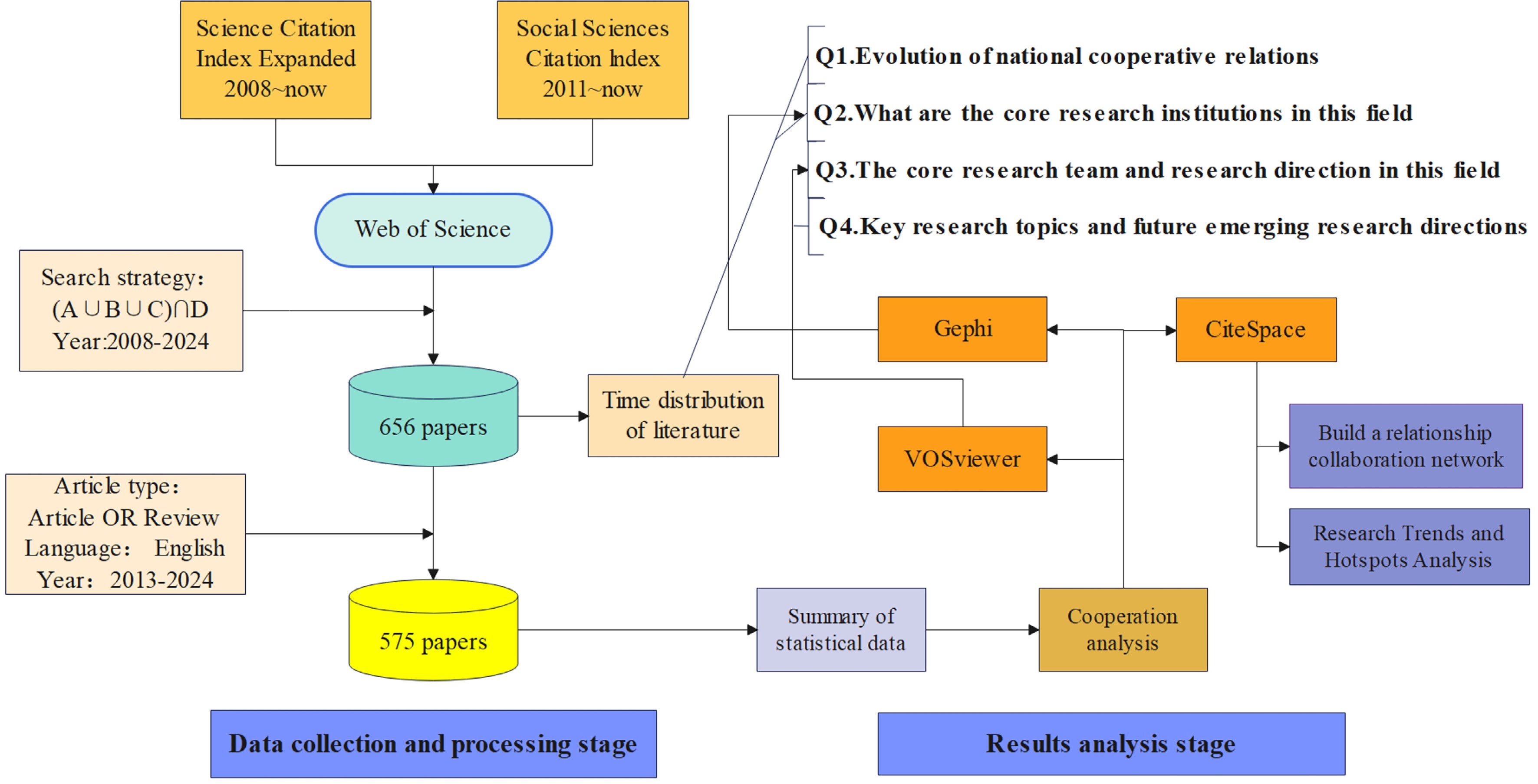
Figure 1.
The procedures and methods used in subway fire research.
-
By searching the WOS core collection database, 575 articles with the research topic of (TS = (fire) OR TS = (fire disaster)) AND (TS = (metro) OR TS = (subway) OR TS = (railway)) from 2013 to 2024 were analyzed for time distribution, which was helpful to know the time distribution characteristics and attention degree of subway fire research in the field of subway fires. The annual distribution statistics of the literature are shown in Fig. 2. With the application of computer simulation technology in subway fire simulation research provided potential for mastering the characteristics and laws of subway fires. From 2008 to 2024, the number of papers on subway fires showed an overall upward trend. It can be seen from Fig. 2 that the research trend on subway fires could be roughly divided into three stages:
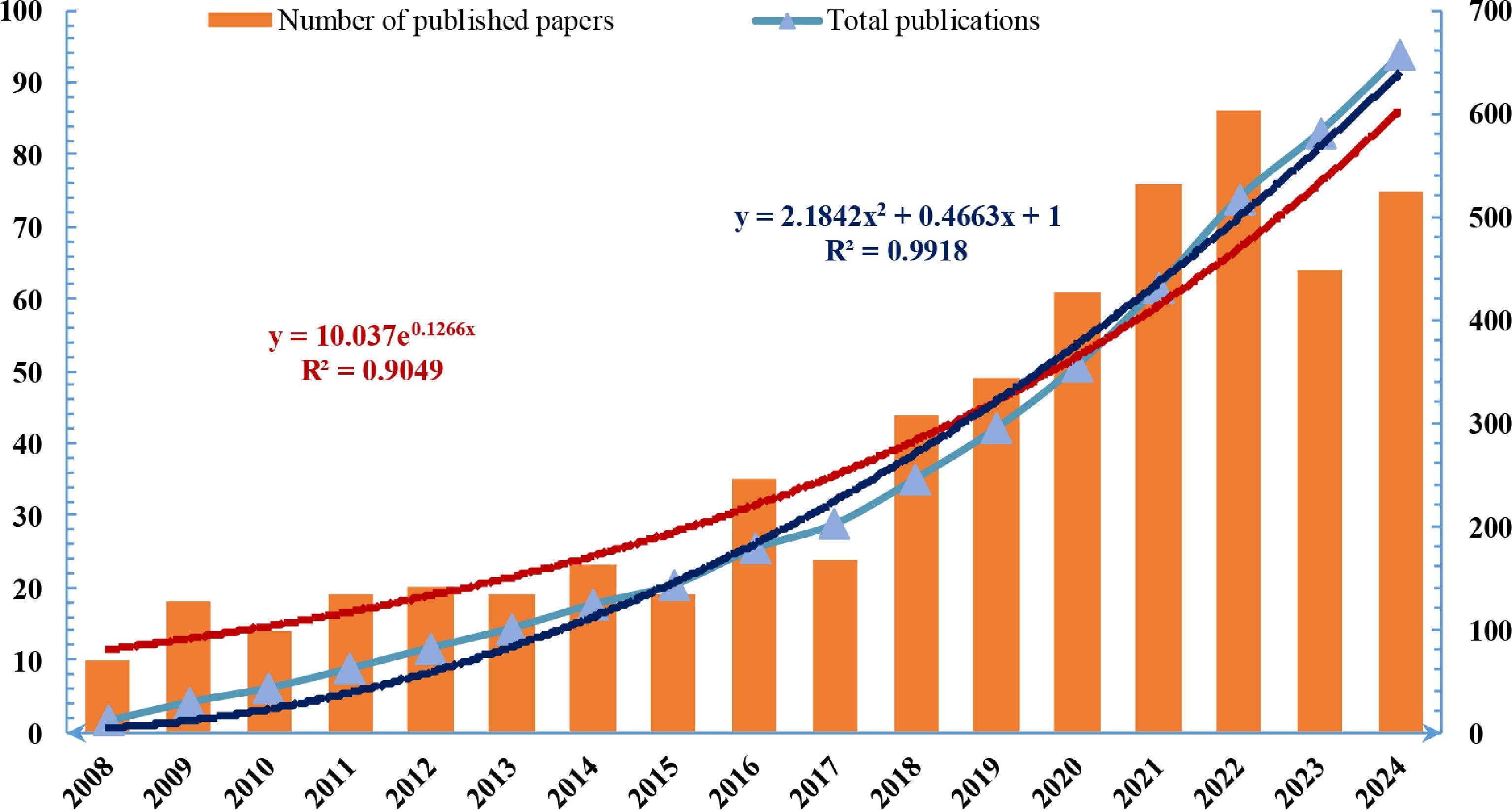
Figure 2.
Year distribution map of subway fire research literature.
The first stage (oscillation development period 2008–2015): At this point, there were fewer than 30 publications worldwide each year, and the annual growth in publications was minimal. In early 2008, the subway had not been widely used, and only some large cities had subways. Therefore, articles published in these years mainly focused on testing the fire status and potential hazards of subways under different experimental conditions. For example, Roh et al.[30] used fire and evacuation simulations to investigate the impact of platform screen doors (PSDs) and evacuation facilities on passenger safety during subway station fires. The results showed that the presence of PSDs increased the available evacuation time by approximately 100 s. However, turnstiles significantly delayed evacuation due to congestion, posing a threat to passenger safety and highlighting the need for barrier-free exits in emergency situations. The number of citations of the literature before 2013 was high, indicating that the previous articles had high reference value and provided a basis for subsequent research.
The second stage (rapid growth period 2016–2020): From 2016, the quantity of articles rose quickly by 40 per year between 2017 and 2019, indicating that the subway has been widely used in recent years, and its fire hazard attracted wide attention.
The third stage (stable growth period 2021–2024): In 2021, the number of citations exceeded 600, and the growth rate from 2020 to 2024 tended to be stable due to the large base. In 2021, it reached 86 articles per year. It can be seen that from 2021, the research on subway fires gained popularity. The area of subway fires will continue to grow steadily with a high degree of attention in the future, and the degree of related research will be more in-depth.
Spatial distribution of literature
National and regional distribution of literature
-
Researchers were able to rapidly determine the global distribution of significant research forces thanks to the geographical distribution of paper results, which was very beneficial for both scientific research collaboration, and the assimilation of research findings. Furthermore, the geographic distribution of a particular area also demonstrated the level of focus on the subject. Fourty seven nations and regions were gathered for this study from papers on subway fires in the WOS core database. Table 3 lists the nations with the top 10 published papers, and Fig. 3 shows the number of published articles on a global map. The frequency of collaboration between the nation and other nations is indicated by the total link strength. Although the average amount of references was only 18.02, Table 3 shows that China had the most publications and total link strength among the top 10 nations, suggesting that China was more active in the area of subway fire research. Although China had the most publications, their average citation count was only 18.02, far less than that of Canada (28.91), and Australia (30.77). Australia ranked top with an average citation count of 30.77. Europe, USA, and Australia were early contributors to subway fire research, with an emphasis on foundational theoretical development. As a result, their outcomes tend to be broadly applicable and maintain long-term academic value. The number of linked articles increased dramatically as China's subway system expanded quickly and subway safety became more of a priority. China, on the other hand, started studying subway fires later; the majority of these studies were exploratory and focused on technical application scenarios. Despite their relevance, these investigations were rarely acknowledged by scholars worldwide and made less of a theoretical contribution. While China exhibited a high total link strength, this largely stemmed from internal institutional partnerships, with limited engagement at the international level. Conversely, Australia demonstrated strong cross-border cooperation, particularly with Europe and the USA, facilitating its integration into the global research community.
Table 3. The top 10 countries in the field of subway fires from 2013 to 2024.
No. Country Region Number of publications Proportion Total link strength Total citations Average cited times 1 China East Asia 353 49.93% 89 6,397 18.02 2 USA North America 59 8.35% 30 1,382 23.42 3 Australia Australia 31 4.38% 24 954 30.77 4 UK Western Europe 28 3.96% 21 346 15.65 5 Canada North America 23 3.25% 14 665 28.91 6 South Korea East Asia 18 2.55% 1 90 5.00 7 Spain Western Europe 16 2.26% 10 267 16.69 8 Sweden Nordic 16 2.26% 12 424 26.50 9 Germany Western Europe 14 1.98% 9 199 14.21 10 France Western Europe 13 1.84% 5 244 18.77 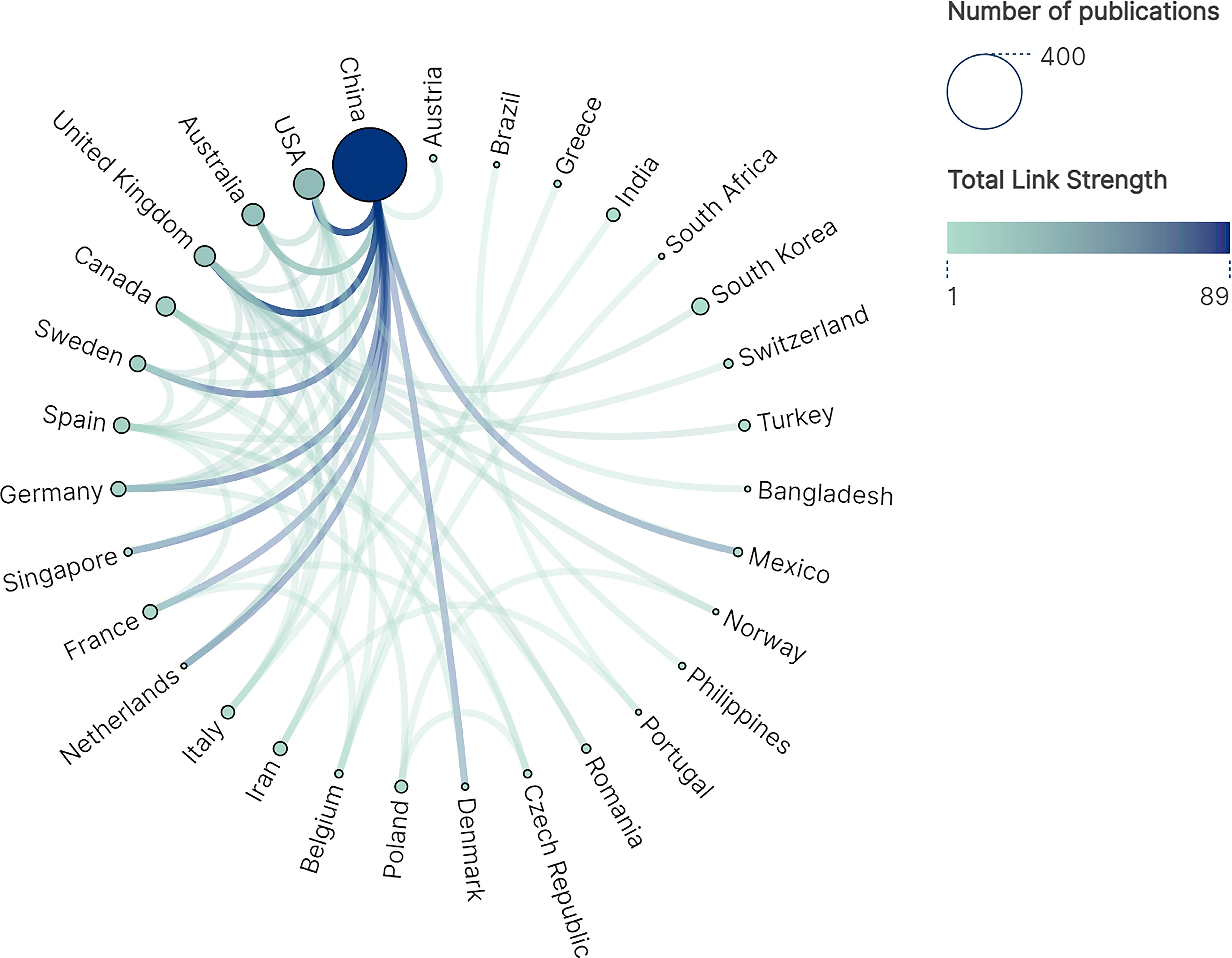
Figure 3.
National distribution map of the field of subway fires.
The total quantity of articles in the top 10 nations and regions represented 80% of the total published papers, according to the analysis of these high-yield nations and regions. At present, the world's major research forces in this sector were comparatively uneven, with the majority of research findings coming from a small number of nations or regions. These nations or regions were primarily made up of industrialized nations or major global economies. The primary cause was that these nations started early industrialization, and the subway was widely used. People paid attention to subway fires. Therefore, research on subway fires has been conducted earlier than in many other countries.
The retrieved 575 data were imported into VOSviewer software, and the analysis category was determined as the collaborative connection. As seen in Fig. 4, the nation/region cooperation network diagram was generated with a nation field category selected. Various nations were represented by each node in the figure. The number of documents issued increased with the size of the node. The degree of international cooperation was indicated by the depth of the links between nodes. It was evident that the research in the field of subway fires in China and the USA contributed the most. Furthermore, from the standpoint of geographic distribution, cooperation between nations was closer, even if European nations had fewer papers than China, the USA, and other nations.
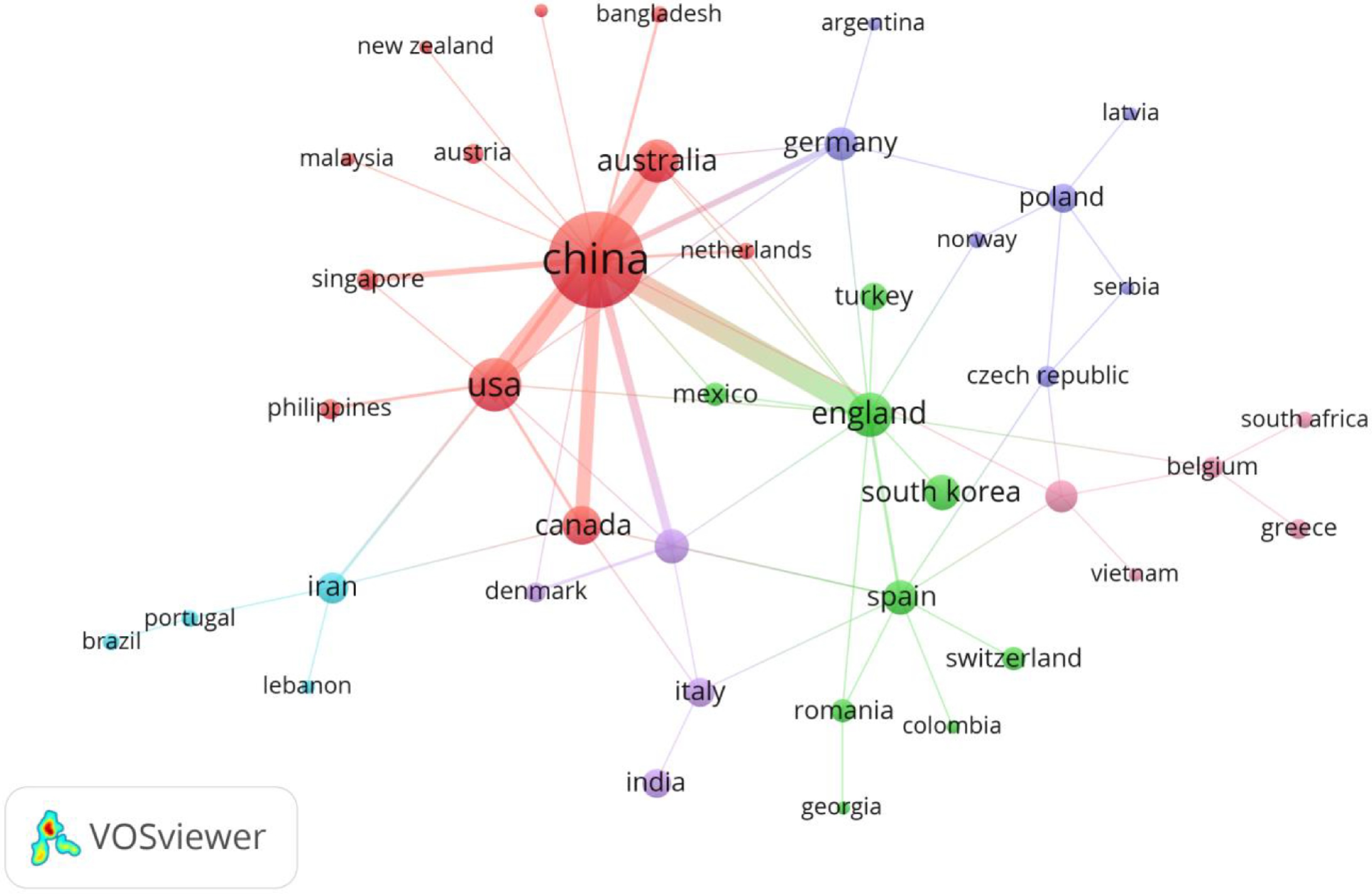
Figure 4.
Cooperative distribution of active countries in the field of subway fires.
Distribution of research institutions of literature
-
According to the data of the core database of WOS, a total of 691 institutions published literature. Table 4 lists the detailed information of the top 10 institutions according to the number of published papers. The country, total number of connections, total number of citations, and average number of citations are also listed in Table 4. China was the dominant power in the area of subway fire research, as evidenced by the fact that nine of the top 10 institutions in terms of the quantity of articles were from China. Among the 10 institutions, the institutions with the highest number of publications were the University of Science and Technology of China (37 times), Southwest Jiaotong University (29 times), and Tsinghua University (29 times). The parameter that reflected the cooperative relationship of an institution was the total number of connections. The greater the number, the higher the connection strength of the institution. The institutions with the highest total number of connections were the University of Science and Technology of China (34 times), Chongqing University (26 times), and Tsinghua University (25 times). Although Chinese institutions started their research in the field of subway fires later than European and American countries, the number of publications increased rapidly in recent years. This is because China has a large population base, and people were paying more and more attention to safety issues such as subway fires. However, the relevant research was still in the stage of learning from the early developed countries, and there was still a gap between them and the world's advanced level. The subway application market had a bright future due to the rapid expansion of China's economy, and it would eventually emerge as an important institution in the area of subway fire research.
Table 4. Top 10 research institutions in the field of subway fire.
No. Institution Country Total number of connections Number of publications Total citations Average cited times 1 University of Science and Technology of China China 34 37 952 25.7 2 Southwest Jiaotong University China 8 29 338 11.7 3 Tsinghua University China 25 29 675 23.3 4 Chongqing University China 26 25 666 26.6 5 Central South University China 8 21 264 12.6 6 Nanjing Tech University China 5 17 224 13.2 7 Beijing Jiaotong University China 3 16 213 13.3 8 Beijing University Of Technology China 4 14 192 13.7 9 Royal Melbourne Institute of Technlolgy (RMIT) University Australia 18 13 222 17.1 10 China University of Mining & Technology China 6 11 92 8.4 All the literature were imported into VOSviewer for institutional cooperation analysis. The size of nodes in the graph represent the number of published papers, the color of nodes represent similar research clusters, and the connection between nodes represent the degree of cooperation between the two institutions. The thicker the link, the closer the intensity of cooperation. Figure 5 shows four main clusters, with the University of Science and Technology of China, Southwest Jiaotong University, Chongqing University, and China University of Mining & Technology as the core teams, representing the primary research contributors in this sector. Institutional cooperation elements in Fig. 5 were mainly disciplinary and regional.
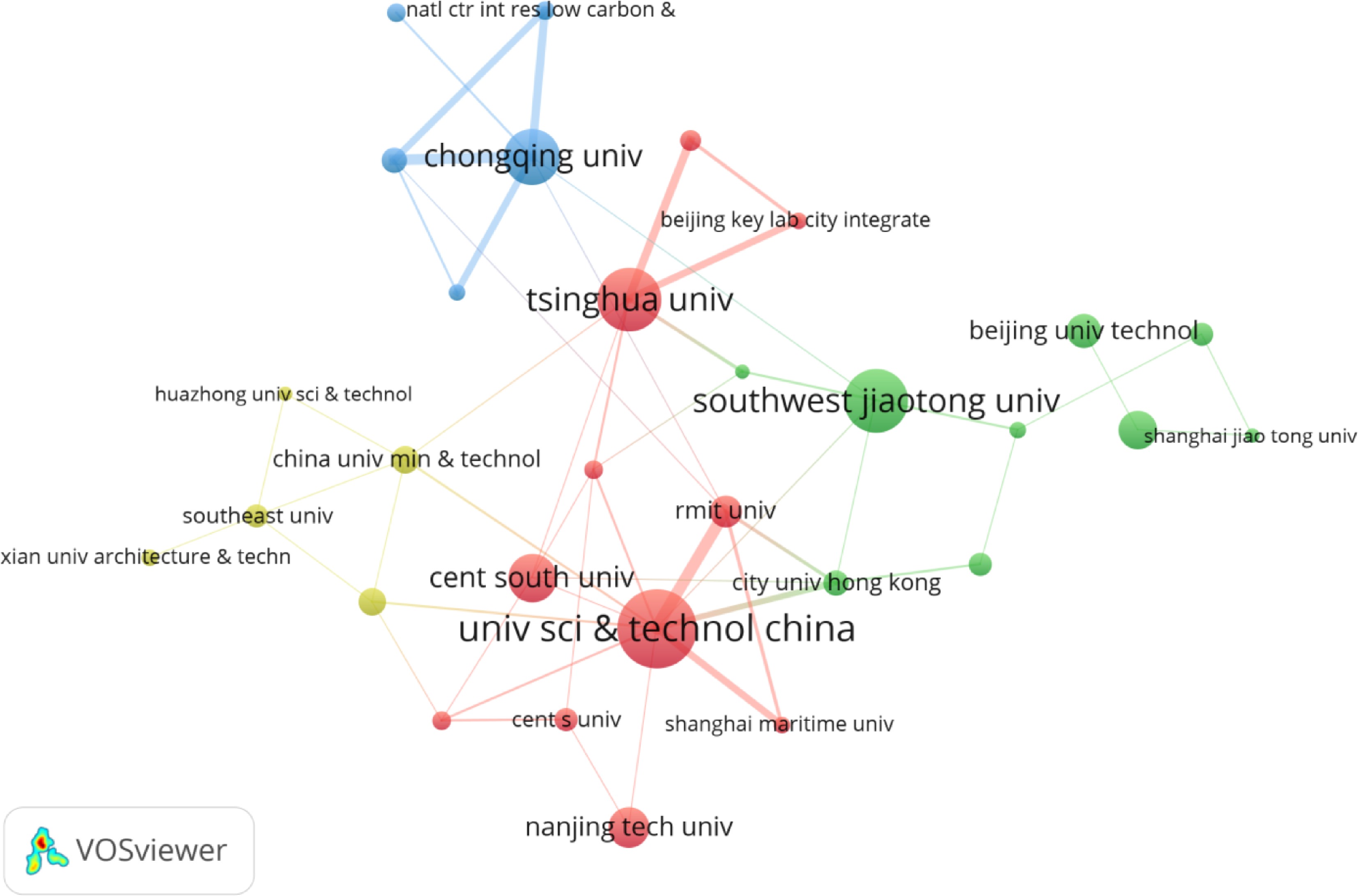
Figure 5.
Collaboration diagram of major research institutions in the field of subway fires.
There were 11 research institutions in the red cluster, which were the largest clusters. The University of Science and Technology of China, Central South University, and Tsinghua University were the main research institutions, all of which were universities in China. These types of research institutions had in-depth research on the spread of subway fire smoke. To study the influence of different fire locations on the smoke propagation characteristics in curved tunnels, Zhou et al.[31] carried out a numerical analysis and found that when a fire occurred in a train running in a tunnel, the piston wind caused the longitudinal motion of the smoke. Zhang et al.[32] used numerical simulation technology to simulate subway train fires under different working conditions, and discussed the effects of different fire scales, subway train lengths, and blockage ratios on the critical ventilation speed of long tunnels. The simulation results showed that the subway train length had a greater impact on the smoke back layer, and the blockage ratio had a significant effect on the critical ventilation velocity[33]. Zhang et al.[15] and Zhou et al.[34] discussed the influencing factors of the smoke back layer in the subway tunnel fire through a small simulation test. It was found that the inertia force and heat loss would greatly reduce the length of the smoke back layer. Through numerical simulation based on a full-scale subway station model, the temperature field, CO concentration, and smoke layer height were analyzed to compare the performance of traditional and lateral ventilation layouts. The results showed that the lateral vent layout led to slower smoke diffusion and more stable smoke layers[35]. Li et al.[36] studied the slipstream characteristics induced by a single train and two trains passing each other in a tunnel. The results showed that the slipstream was mainly composed of longitudinal flow, and the pressure wave effect remained consistent across positions in the same cross-section. Compared to the single-train case, the crossing-trains scenario produced a stronger piston effect, with the maximum peak value increasing by 34% due to spatial constraints. Xu et al.[37] conducted a numerical simulation of two adjacent pipelines in an ultra-long railway tunnel in case of fire to determine the optimal air flow rate. The results showed that the edge air supply in the cross channel was beneficial to the reduction of air temperature and the diffusion of smoke, but had no significant effect on thermal radiation.
The main research institution of green clustering was Southwest Jiaotong University. The clustering research direction was based on safe evacuation and sought ways to reduce subway fire hazards. Cai et al.[38] proposed a security hazard decision-making method for secondary incidents in subway fires, and analyzed the fire probability of secondary accidents to protect fire protection design and the safe operation of subway stations. Through small-scale model experiments, Yang et al.[39] investigated the effects of longitudinal ventilation velocity, heat release rate, and fire source location on smoke back-layering length. The results showed that as the ventilation velocity increased and the fire source moved farther from the junction, the smoke back-layering length decreased. Zhang et al.[40] developed a virtual reality (VR) crowd evacuation modeling technique based on the improved societal factor model (ISFM), examined the impact of 'environmental effect' and 'subjective initiative' on crowd evacuation, and created an evolving pedestrian evacuation route planning approach under various limitations. The findings demonstrated that the intensity of the crisis had an impact on ISFM's crowd movement for evacuation.
Distribution of main source journals
-
Journals are an important carrier of knowledge. Numerous significant scientific advancements and discoveries are disseminated through journals, and scientific research institutions consider the quantity of articles published in reputable journals to be a significant metric for assessing the outcomes of scientific studies. The top 10 journals on the subject are included in Table 5 along with comprehensive information about them, such as the number of publications, average citations, journal type, 2023 impact factors, and total link strength. In Table 5, Tunnelling and Underground Space Technology, Case Studies in Thermal Engineering, and Fire Technology were the top three in the field of subway fire research, with impact factors of 6.7, 6.4, and 2.3, respectively, reflecting that subway fire experiments were carried out in a closed space of the tunnel. Technical theory was closely related to fire dynamics and combustion theory. Among them, the International Journal of Thermal Sciences had the highest average citation number of 33.0, indicating that subway fire research was closely related to thermal science. Tunnelling and Underground Space was the core journal in the field of subway fires. It not only had the largest number of publications, but also ranked first in its impact factor and total link strength. In the future, the top 10 journals in the table will become the core journals of subway fire research.
Table 5. Top 10 journals in the field of subway fire research from 2008 to 2024.
No. Journal title Number of publications Average cited times Citation index 2023 impact factor Total link strength 1 Tunnelling and Underground Space Technology 92 25.7 SCIE 6.7 642 2 Case Studies in Thermal Engineering 16 11.1 SCIE 6.4 115 3 Fire Technology 15 15.8 SCIE 2.3 112 4 International Journal of Thermal Sciences 11 33.0 SCIE 4.9 131 5 Applied Sciences-Basel 10 5.1 SCIE 2.5 44 6 Fire and Materials 10 7.1 SCIE 2.0 69 7 Fire-Switzerland 10 2.4 SCIE 3.0 57 8 Safety Science 10 19.0 SCIE 4.7 92 9 Sustainability 10 10.3 SSCI, SCIE 3.3 82 10 Fire Safety Journal 9 14.2 SCIE 3.4 50 Research knowledge base
-
The knowledge repository can be obtained from literature co-citation and journal co-citation. Co-citation denotes that two documents form a co-citation connection and that they are included within the third referenced document's reference list[41]. The study area's knowledge base was made up of co-cited literature, and the journals that host co-cited literature served as its carriers. In addition, the primary journals at the forefront of the area's research were represented by the highly co-cited journals[42]. To find the knowledge base and carrier in the subject of subway fire studies, the co-cited literature and its sources were analyzed using VOSviewer.
Core author analysis
-
Using VOSviewer to analyze data exported from WOS, Table 6 lists the top 10 authors who published the most articles, all from China, which showed that Chinese authors made important contributions in the field of subway fires. The remaining 55 authors had a collaborative connection and were naturally portrayed by clustering to create a cooperative network diagram (Fig. 6) of high-volume authors after the authors with fewer than three articles in VOSviewer were eliminated. In Fig. 6, the node represents the author, and the node size represents the number of papers released. The author-author cooperative relationship is represented by the link among nodes, and the degree of collaboration is indicated by the connection's width. Five cooperative clusters were identified in the subway fire research field: red cluster (16 authors), blue cluster (11 authors), green cluster (11 authors), yellow cluster (nine authors), and purple cluster (eight authors). The authors in each cluster were closely linked, and 16 authors in the red cluster were the largest cluster. From Fig. 6, we can see that the clusters of more than 10 authors were:
Table 6. 2013−2024 top 10 authors in the field of subway fires.
No. Institution Country Author(s) Quantity ACI TLS 1 University of Science and Technology of China China Cheng, XuDong 20 27.7 86 2 Chongqing University China Liu, Fang 19 30.9 53 3 Tsinghua University China Zhong, MaoHua 18 19.2 53 4 Royal Melbourne Institute of Technology China Shi, Long 14 22.8 61 5 Chongqing University China Weng, MiaoCheng 14 18.2 40 6 Nanjing Tech University China Jiang, JunCheng 13 14.2 30 7 University of Science and Technology of China China Peng, Min 13 15.1 51 8 Chongqing University China Wang, Fei 12 21.0 37 9 Shanghai Maritime University China Zhang, ShaoGang 12 39.2 55 10 University of Science and Technology of China China Cong, Wei 11 15.1 51 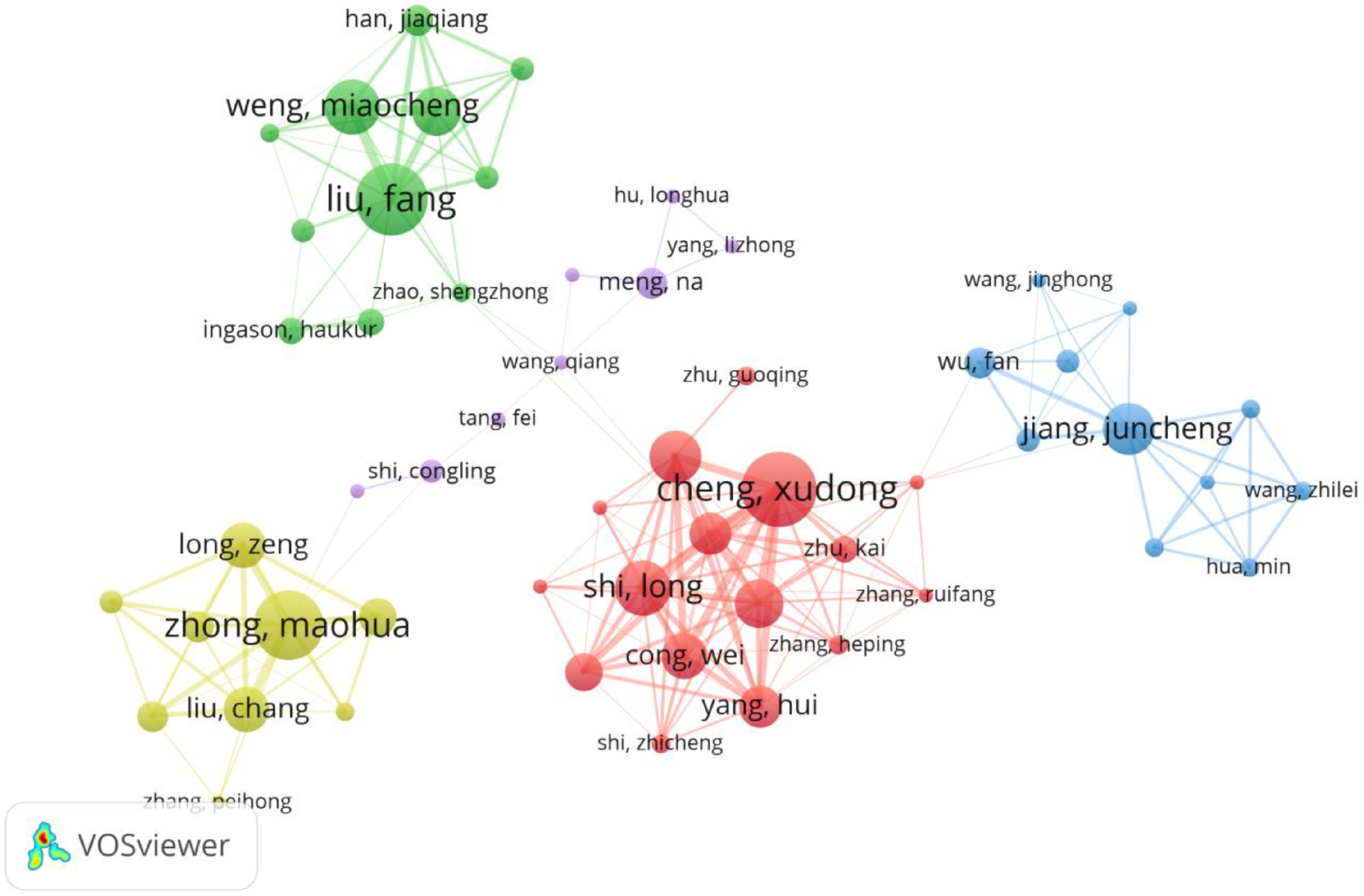
Figure 6.
Author cooperation network diagram.
Green clustering (Liu, Fang as the core team): The thermal hazards features of subway fires under various wind speed conditions, such as surface temperature, time, critical wind speed, and heat release rate, were usually investigated using this clustering[43]. Zhao[44] investigated the fire temperature distribution beneath the subway tunnel's ceiling by conducting a small tunnel model test, and compared and analyzed the various temperature distributions under different longitudinal ventilation speeds and fire sizes in the upper and lower reaches. The findings demonstrated that the smoke temperature distribution in the upstream back layer was more responsive to the ventilation speed than that in the downstream airflow. An enhanced thermal decay model applicable to the upstream region of fire sources was formulated[45]. Liu et al.[46] studied the critical speed at the stairs to stop smoke from spreading through the stairs to the higher layer if the platform caught fire. The power law function of 1/3 was found to have an excellent correlation with the critical speed and heat release rate of the two stairs. Wang et al.[47] systematically analyzed the unsteady piston wind behavior in metro tunnels with and without ventilation shafts, focusing on the influence of shaft design parameters. The results showed that ventilation shafts enhanced both the maximum piston wind speed and ventilation rate compared to tunnels without shafts. It was further demonstrated that shaft location and cross-sectional area significantly affected airflow characteristics, while shaft height had minimal influence. A centrally located shaft with a larger cross-section was found to optimize piston wind performance.
Red clustering (with Cheng, Xudong as the core team): This clustering was primarily utilized to study the underlying reasons of subway fire thermal runaway, explaining the mechanism of subway fire risk, and offers a theoretical foundation for other clustering studies[48]. Yan et al.[49] provided a summary of the reasons behind common large subway fire incidents over the last 20 years. Combined with system dynamics, the influencing factors of these reasons were further extracted. Peng et al.[50] carried out experimental research on the fire characteristics and spread inside the subway train, and proposed a numerical model to forecast the two-dimensional temperature under the ceiling. To prevent and control the malignant impact of subway fire on sustainable development, Ju et al.[51] determined each subway station's risk value using the TOPSIS method's idea of relative closeness.
Blue clustering (with Jiang, Jun Cheng as the core team): This clustering was based on the actual situation of subway fire smoke spread in different environments[52], studying the thermal hazard of environmental factors on subway fires. Wang et al.[53] numerically analyzed the effectiveness of emergency ventilation strategies in a large-scale interchange station under three multisource fire scenarios. The results showed that improper coordination between ventilation systems in different lines intensified smoke spread. When fires occurred on the same floor, adopting uniform ventilation modes yielded better control, whereas fires on different floors made it difficult to balance exhaust capacity. Zhao et al.[54] suggested an optimal ventilation mode after utilizing the FDS to examine the effects of various ventilation modes on smoke reduction in the Nanjing subway transfer station.
Core literature analysis
-
An area's knowledge base consists of cited literature. We examined highly cited literature to investigate the fundamentals of a subject of study. To examine the substance of the most interesting literature on the subject of subway fires, the literature in statistical form was ordered using the sum of the times cited (STC) as the assessment criterion, and the 15 publications with the greatest quantity of citations are shown in Table 7. Table 7 shows STC, article type, title, author, journal, year, number of institutions (IN), and number of countries (CN) of the literature. The same literature which had more than three authors is only shown by the first author.
Table 7. 2013–2024 top 10 most cited papers in the field of subway fires.
No. STC Publication title Author(s) Journal title Year IN CN 1 161 A study on the maximum temperature of ceiling jet induced by rectangular source fires in a tunnel using ceiling smoke extraction Tang, F, et al. International Journal of Thermal Sciences 2018 2 2 2 135 Overview of research on fire safety in underground road and railway tunnels Li, YZ, et al. Tunnelling and Underground Space Technology 2018 1 1 3 128 Smoke spread characteristics inside a tunnel with natural ventilation under a strong environmental wind Fan, CG, et al. Tunnelling and Underground Space Technology 2018 3 1 4 107 Study on the critical velocity in a sloping tunnel fire under longitudinal ventilation Weng, MC, et al. Applied Thermal Engineering 2016 3 1 5 97 Prediction of backlayering length and critical velocity in metro tunnel fires Weng, MC., et al. Tunnelling and Underground Space Technology 2015 3 1 6 95 Do people follow the crowd in building emergency evacuation? A cross-cultural immersive virtual reality-based study Lin, J, et al. Advanced Engineering Informatics 2020 2 2 7 94 Numerical investigation on the maximum ceiling temperature and longitudinal decay in a sealing tunnel fire Huang, YB, et al. Tunnelling and Underground Space Technology 2018 3 1 8 90 An experimental study on critical velocity in sloping tunnel with longitudinal ventilation under fire Yi, L, et al. Tunnelling and Underground Space Technology 2014 3 1 9 89 Numerical study on the optimization of smoke ventilation mode at the conjunction area between tunnel track and platform in emergency of a train fire at subway station Meng, N, et al. Tunnelling and Underground Space Technology 2014 1 1 10 89 Simulation on fire emergency evacuation in special subway station based on Pathfinder Qin, JW, et al. Case Studies in Thermal Engineering 2020 1 1 Table 7 shows that the most frequently referenced literature was Tang et al.[55]. A study on the maximum temperature of the ceiling jet induced by rectangular-source fires in a tunnel using ceiling smoke extraction was published in 2018 in the International Journal of Thermal Sciences, it was cited 161 times, and ranked first. It can be seen that this article was crucial to subway fires. The second most frequently referenced paper was an article on fire safety in tunnels published in Tunnelling and Underground Space Technology by Li & Inganson in 2018, which was cited 135 times[56].
Among the other eight articles, there were five articles analyzed from numerical simulations. Fan et al.[57] simulated tunnel fires under natural ventilation conditions using the big eddy simulation approach. The transport of smoke under the stacking effect in the well was examined, taking into account variables like wind speed and heat release rate. The effect of the ventilation system on passenger life security and evacuation in a subway train fire was evaluated using fire and evacuation simulations[58]. The ventilation system's effectiveness in controlling smoke was enhanced when the air supply system was properly turned on, and the reverse was true. Evacuation stress was mainly at the entrance to the staircase, and the exits' breadth had minimal impact in reducing it[59]. Individuals under mental stress were urged to comply with the majority of the people during evacuation due to the unequal distribution of the flow of people[60].
Huang et al.[61] simulated tunnel fires with varying heat release and sealing rates using Computational Fluid Dynamics (CFD). Because of the heat accumulation inside the tunnel, it was discovered that while the heat release rate was comparatively low, the ceiling temperature rose as the sealing rate increased. During the initial phase, the longitudinal ceiling temperature exhibited an inverse correlation with the sealing ratio at the tunnel portal. As thermal release rates intensified, the temperature profile stabilized progressively due to oxygen deprivation, while the peak temperature along the tunnel crown demonstrated an exponential attenuation pattern.
Weng et al.[62] utilized the dimensional analysis approach to determine the dimensionless expressions of the back layer length and critical velocity of tunnel fire smoke. The hydraulic diameters of nine concrete tunnels with different shapes were numerically simulated, and the back layer length and critical speed of smoke in tunnel fire were calculated by the size analysis method. Finally, two models for predicting the duration of the smoke back layer and the critical velocity in subway tunnel fire was established[63]. There was a high-quality review article, from the perspective of fire security design, Li[56] outlined the fire safety research of underground highways and railway tunnels. The design of fires, structure protection, smoke management, and the application of water-based fire extinguishing systems were the primary areas of concentration. Important fire features were also covered, such as smoke stratification, heat flux, flame length, and fire spread. Yi et al.[64] investigated the flow of smoke in a simulation tunnel with varying slope and longitudinal ventilation velocity combinations. The findings demonstrated that the critical velocity nearly dropped with the fire source's heat release rate as the tunnel's slope rose from downhill to uphill.
The co-citation relation reflected the association between the literature. The greater the association between the academic study directions of the two studies, the higher the quantity of co-citation between them[65]. The co-citation literature network diagram of 70 nodes was produced using VOSviewer's literature co-citation analysis to filter out data with less than 40 words of co-citation (Fig. 7). The magnitude of the correlation between the literature is shown by the distance between the nodes, while the dimension of the node indicates the quantity of citations in the co-cited literature. The literature's co-citation association was stronger at closer distances. A general indicator of a paper's influence was its citation frequency. To determine the effect distribution of subway fire research themes, the citation of a paper set made up of various keywords showed the impact of particular research topics. Figure 7 shows that there were four main classifications in the literature citation knowledge base for subway fires from 2013 to 2024: the maximum number of red cluster analysis nodes was eight, followed by the blue cluster analysis of seven nodes, the green cluster had seven nodes, and the yellow cluster had four nodes.
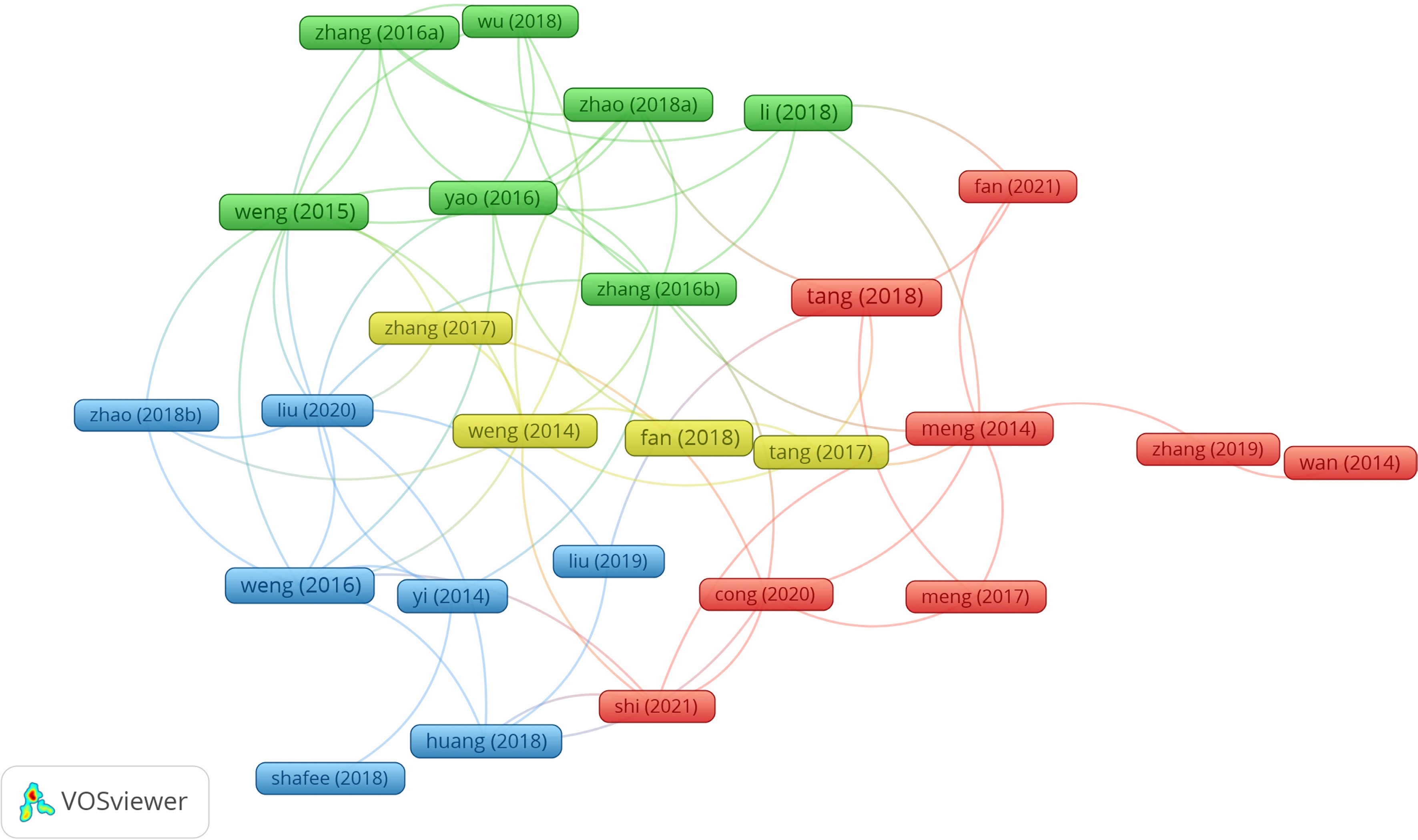
Figure 7.
High co-citation literature cooperation network.
The main clusters were analyzed: among the blue clusters, Liu et al's research[66] on the critical ventilation rate of smoke in subway connecting tunnels published in 2020 was the core article, which was related to all the other clusters in some way, and was closely linked to the scholar's research on the prediction model of maximum smoke temperature and longitudinal temperature profile for fires in connecting subway tunnels under natural ventilation, which was published in 2019[3].
In the red clustering, Meng[58] published in 2014 'On the optimization of smoke exhaust mode in the intersection area of tunnel track and platform under the emergency of train fire in subway station' as the core article. Employing numerical modeling methodologies, this research systematically investigated the efficacy of distinct ventilation strategies during railcar combustion incidents in underground transit facilities, with particular emphasis on conducting a comparative analysis between different ventilation modes with fully sealed platform screen door or semi-high safety doors. On this basis, Meng et al.[67] published 'A platform-tunnel connecting door considering two types of fully sealed platform screen doors and fully high safety doors' in 2017. The maximum smoke temperature and the longitudinal temperature distribution under the tunnel roof were studied. The results showed that the maximum temperature of the fully high safety door was lower than that of the completely sealed platform screen door, and the longitudinal temperature decayed faster. These two articles had a strong correlation and also paved the way for later scholars to study the evacuation and escape of subway fire personnel.
Analysis of highly co-cited journals
-
The journal co-citation analysis method is a quantitative study technique in bibliometrics and scientometrics. Scholars both domestically and internationally use it extensively in a variety of fields. By means of the analysis of journal co-citation, journals can be placed and categorized, and the main or edge position of journals within the discipline ascertained, to assess academic journals. By choosing the analysis type as 'co-citation' and the node kind as 'cited sources', the journal co-citation network diagram was created using VOSviewer. After screening more than 40 nodes, a co-cited journal network diagram with 70 nodes was produced (Fig. 8). The number of citations for the co-cited journals is indicated by the node's size. The distance among the nodes represents the strength of the relationship among the journals. The greater the co-cited link between the journals, the closer the distance. Three primary clusters—the red, green, and blue clusters—were created from the 70 journals.
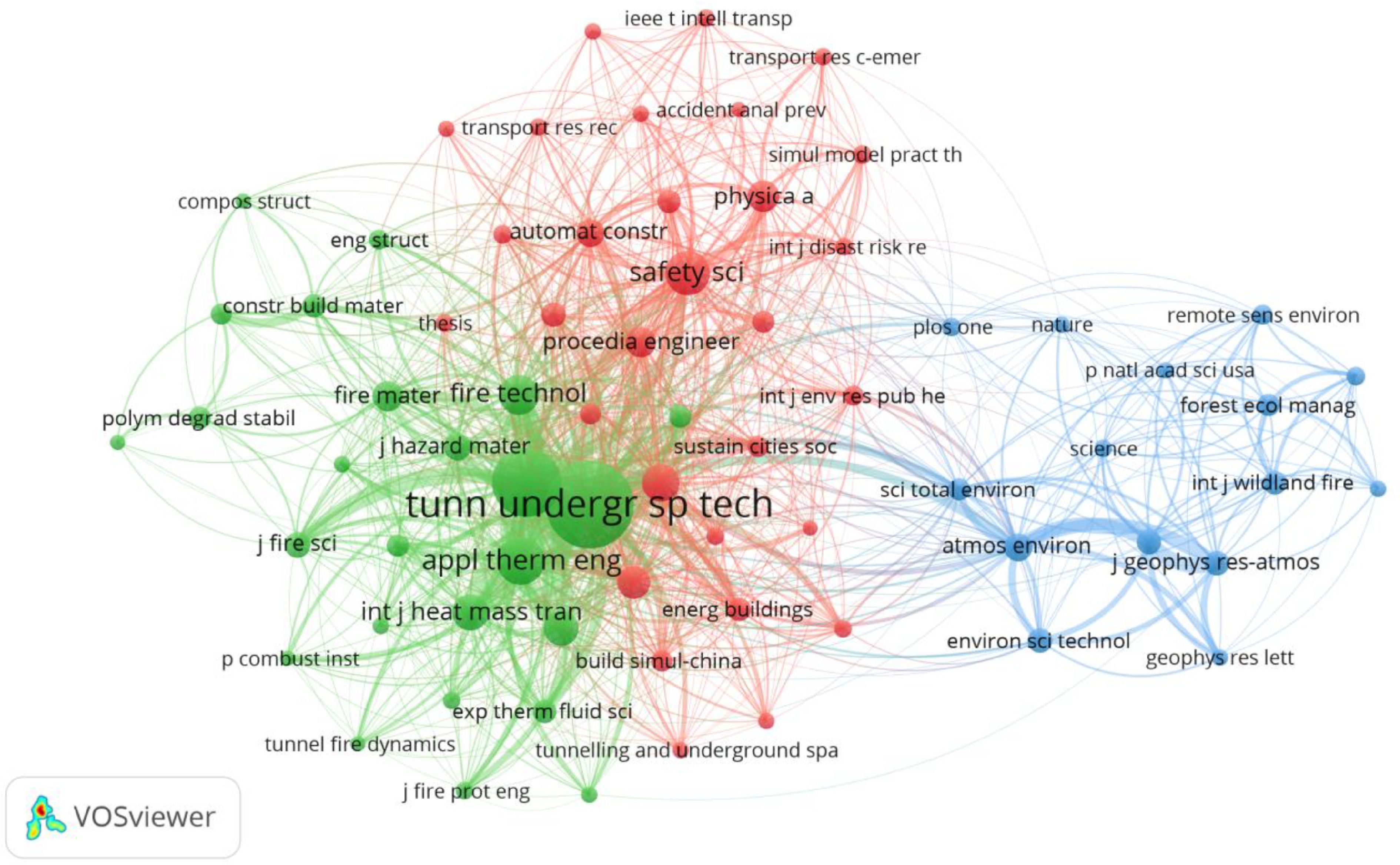
Figure 8.
Journal cooperation co-citation network.
Red clustering was a journal of engineering technology and application category based on Safety Science (cited 485 times), Building and Environment (cited 320 times), and Journal of Wind Engineering and Industrial Aerodynamics (cited 246 times). Blue clustering was a journal of environmental science category represented by Atmospheric Environment (171 citations), Atmospheric Chemistry and Physics (127 citations), and Environmental Science & Technology (117 citations). Green clustering was a tunnel and fire safety journal with Tunnelling and Underground Space Technology (cited 2,388 times), Fire Safety Journal (cited 1,392 times), and Applied Thermal Engineering (cited 588 times) as the core. Among them, the number of green clustering citations was the largest, indicating that the early subway fire research was dominated by tunnel fires and underground space fires. After a period of development, the safe operation of the subway was the main research content. Therefore, it can be seen in Fig. 8 that most of the red clustering journals were based on safety science and ventilation engineering, and were also the most closely related to other clustering journals. In the stage of stable development, as people paid increasing attention to environmental safety, the number of journals in the category of environmental protection has gradually increased, but the current blue clustering has not formed a strong correlation. Core journals in the field of subway fire research in the future will likely change from traditional construction engineering journals to environmental materials journals.
Research hotspots and frontier analysis
High-frequency keywords
-
The author or the paper's database chose or generated keywords that could symbolize the main idea of the article. An aggregate of 2966 keywords was discovered when the literature on subway fires from 2013 to 2024 was examined using VOSviewer. Keywords that appeared at least 13 times were selected and examined. Twenty representative keywords were selected to generate Table 8 following the necessary adjustments. With a total of 93 times, fire was the most frequently occurring keyword. Critical velocity, longitudinal ventilation, and flow were the three keywords with the highest total connection times, which were 476, 472, and 470 times respectively. It showed that the research on longitudinal ventilation and mechanical ventilation environment was the focus of subway fire research. Thirdly, tunnel fire, simulation, temperature, and other tunnel fires, fire simulation, temperature characteristics, etc., indicated that to realize the safety of subways, computer simulation technology has been applied to fire research, and offers crucial theoretical backing for real-world implementation.
Table 8. Top 20 key words in the field of subway fire research from 2013 to 2024.
No. Keyword Frequency of appearance Total number of connections 1 Critical velocity 70 476 2 Longitudinal ventilation 71 472 3 Flow 84 470 4 Tunnel fire 62 389 5 Fire 93 358 6 Simulation 81 351 7 Temperature 42 239 8 Subway tunnel 33 233 9 Natural ventilation 36 228 10 Tunnel 45 222 11 Back-layering length 29 213 12 Ventilation 48 211 13 Metro tunnel 31 204 14 Blockage 29 200 15 Optimization 39 196 16 Temperature distribution 31 196 17 Back-layering length 24 195 18 Movement 32 188 19 Subway station 42 186 20 Maximum temperature 27 183 Evolution path combing
-
CiteSpace software's Timeline View analysis was selected, and the keyword timeline view was created after making the necessary keyword edits (Fig. 9). To illustrate the historical evolution of various research hotspots, the timeline view primarily concentrated on the connections among clusters and the temporal span of terms in a cluster. The vertical dimension of the keyword sequence diagram represents the clustering of various keywords, while the horizontal dimension represents the time dimension. Each node represents a distinct keyword, and the co-occurrence connection is represented by the link among nodes, whose width indicates the degree of co-occurrence. The connection between two nodes could be described using it as a quantitative index[68]. The more times a keyword occurred in the relevant year, the bigger the node. The node's color revealed how abrupt the keyword was. The higher the suddenness, the deeper the color of the node. The red node indicated the mutation of its keyword frequency, which represented a new research trend. The dark blue node meant that its centrality was at least 0.1; then the keyword served as a hub to link other keywords, and 'model' had the highest centrality (0.16). Visible simulation is still an important method for subway fire research.
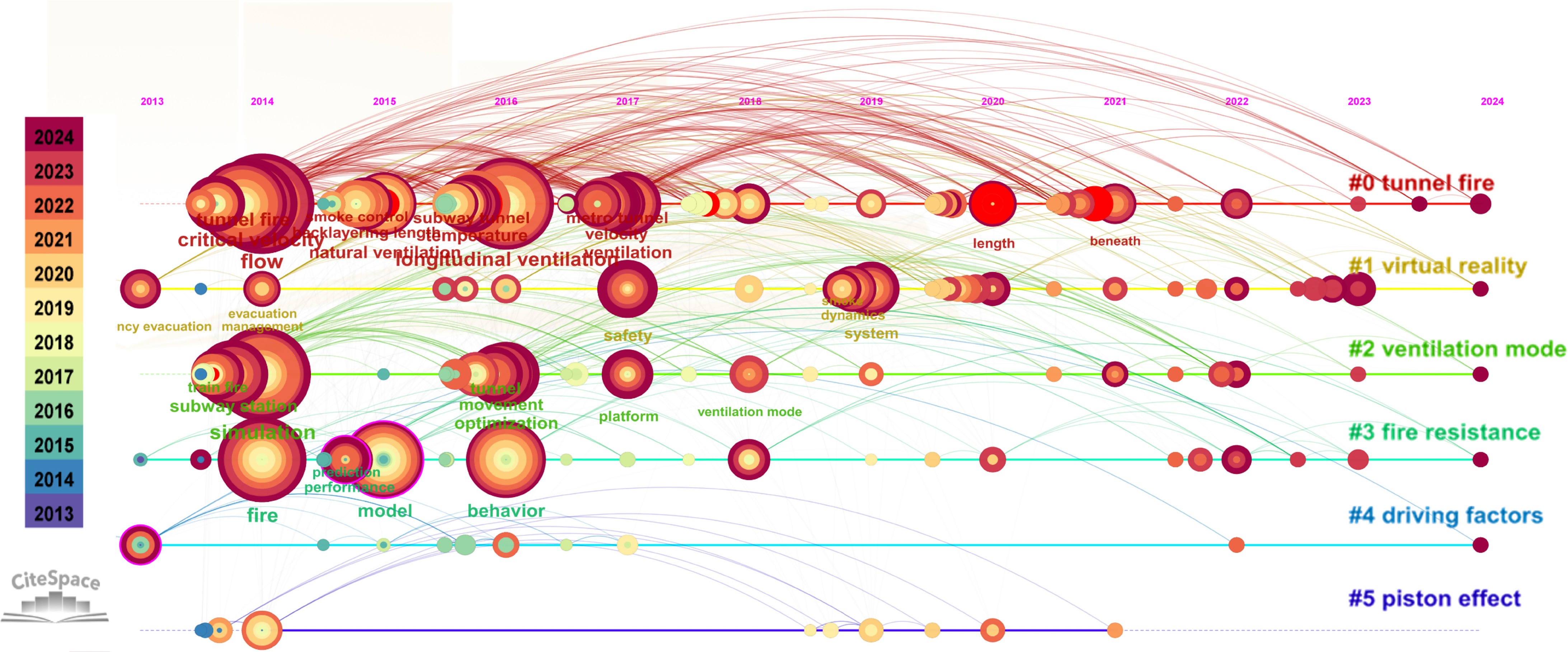
Figure 9.
Keyword time axis view.
Figure 9 shows that there were three phases to the average appearance period for keywords in the subway fire research sector. The first phase was the initial phase from 2013 to 2015. This stage took 'simulation', 'fire', 'tunnel fire', and 'flow' as the main research keywords. It served as the foundation for subsequent studies and was the initial phase of subway fire research. The second phase was the subway fire field's slow ascent between 2015 and 2019. The keywords related to fire scene such as 'smoke', 'longitudinal ventilation', 'natural ventilation', and 'blockage ratio' emerged as the research direction, which reflected the rise of longitudinal ventilation and mechanical ventilation in subway fire research. The total citation frequency of keywords was low since their average period of appearance was a little late. Designing hybrid ventilation systems that could handle several challenges at once became more crucial as tunnels grew longer and more intricate. The third phase was the emerging development stage. From 2019 to 2024, keywords such as 'length', 'smoke movement', 'emergency ventilation', 'flame retardancy', 'crowd evacuation', 'virtual reality', and 'air quality' appeared in the field of subway fire. In the studies of subway fire avoidance and management, researchers paid attention to optimizing the experimental conditions to achieve the optimal solution. The third stage carried out extensive research on emergency ventilation, smoke diffusion, and fire prevention effectiveness based on earlier subway fire studies. Improving the materials used in tunnel construction and vehicles, as well as fire extinguishing systems, will continue to be crucial given the continual rise in the scale and complexity of subway systems. More thorough study in the future will concentrate on developing fire detecting technologies that facilitate early warning and on novel fire protection coatings and materials that can tolerate extended high temperatures. Additionally, passenger behaviors during fires and emergency evacuations will receive more scrutiny. The research emphasis is likely to shift toward optimizing evacuation procedures and analyzing human behavior in fire scenarios. The trend in evacuation-related keywords has been further influenced by the emergence of social force models and virtual reality (VR) in evacuation simulation, emphasizing multidisciplinary approaches that combine the social sciences and engineering. Related keywords have emerged in the area of subway fire research in recent years as a result of growing awareness of environmental safety and climate change. The research focus has also shifted toward understanding how climate change may affect temperature and humidity conditions, fire behavior, and evacuation time in subway tunnels, as a result of the effects of extreme weather events and changing environmental conditions on the underground environment of subway systems, as well as on the design of ventilation and fire safety systems.
Over time, evolving keywords reflect the ongoing progression of subway fire studies, driven by improvements in technology, environmental transformations, and enhanced insights into human responses during emergency evacuations. To address the issues presented by the changing subway system and climate change, future research is anticipated to continue concentrating on improving evacuation and fire simulations, developing advanced fire protection materials, and optimizing ventilation systems. Cross-disciplinary collaboration will be crucial for improving safety in subway fire research.
Research frontier identification
-
As shown in Fig. 10, the 20 keywords with the highest outbreak magnitude, together with the corresponding keywords' mutation and end times, were obtained using CiteSpace software's Burst Detection option. The mutation intensity of keywords could be obtained by keyword size, and the larger the font, the stronger the mutation intensity. The findings demonstrated that the study hotspots were continuously shifting each year, and that the keywords' outbreak times also varied. The early development phase, the transformation mutation phase, and the emerging mutation phase were the three general phases that the subway fire research identified.
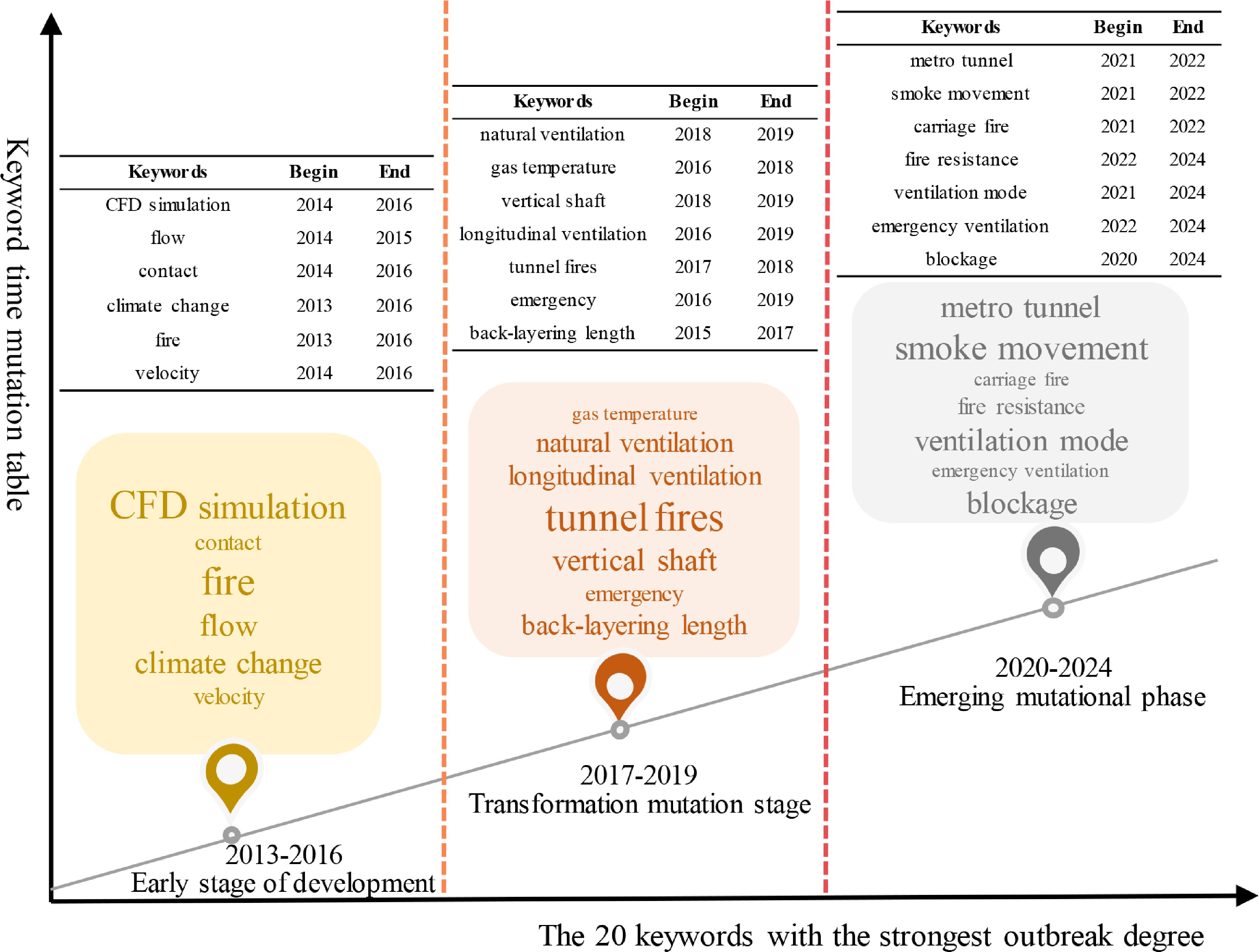
Figure 10.
The top 20 keywords with the strongest outbreak intensity in the field of subway fires.
2013−2016 was the early stage of development. At this time, the keywords were fluctuating. Among them, 'cfd simulation', 'fire', and 'flow' were representative. Among them, 'cfd simulation' had the largest mutation intensity and was also the core mutation word at this stage. Simulating fire behavior in subway tunnels was the main area of research during this period. Due to the extensive use of numerical simulation in subway fire research, CFD simulation was particularly prevalent at this point. More sophisticated simulations were added to the research as computing power and technology increased, which encouraged the evolution of keywords in this direction. This method improved the subway's ventilation and emergency response while simulating the behavior of smoke and fire.
During 2017−2019, the number of keywords rose dramatically as a result of the increased attention being paid to subway fires, and early keywords underwent certain transformations and mutations. Representatives included 'natural ventilation', 'vertical shaft', 'back-layering length', etc. Among them, the mutation intensity of the 'longitudinal ventilation' keyword was larger, and the mutation duration was the longest from 2016 to 2019. This is because longitudinal wind was a key factor affecting the development of subway fires. Researchers focused more on enhancing ventilation methods, such as longitudinal and natural ventilation, to reduce smoke spread and improve fire safety as subway systems grew and the difficulty of managing smoke in longer tunnels became evident. The back layer's length emerged as a crucial research factor. During this period, research shifted from focusing on the fundamentals of fire dynamics to examining how ventilation systems might help mitigate smoke and enhance fire safety. To stop smoke from diffusing in tunnels, longitudinal ventilation became crucial and attracted special attention. The practical necessity for efficient smoke management, which was crucial for improving fire safety and facilitating a smooth evacuation during that period, motivated this shift in research priorities.
2020−2024 was an emerging mutation stage, which was more obvious, extending from 'natural ventilation' to 'blockage ventilation' and 'ventilation mode'. These two keywords were in an emerging mutation state. During this period, the emphasis switched to tackling problems including blocked ventilation and optimizing ventilation modes. Research on the utilization of emergency ventilation systems and their impact on smoke flow in tunnels grew significantly. In the field of subway fire safety, new research areas, including blocking ventilation and ventilation modes have become important subjects. This demonstrated the necessity for more precise simulations of smoke and thermal dynamics in complicated subway environments, as ventilation systems had grown more sophisticated. It also demonstrated an increasing recognition of the need to implement varied ventilation approaches to tackle the difficulties of smoke management in intricate subway settings.
-
The associated literature of subway fire field study in the WOS Core Collection from 2013 to 2024 was subjected to an informetrics analysis during this study using the data visualization tools CiteSpace and VOSviewer. Its primary components included the distribution of countries and regions, the distribution over time, cooperation relationships, the research knowledge base, research hotspots, and the study of research frontiers. The findings of the analysis can serve as a valuable resource for understanding the research status and future directions in the field of subway fires. The main conclusions are as follows:
(1) Unlike previous studies on subway fire safety, we categorized the development of subway fire research into three phases: oscillation (2008−2015), rapid growth (2016−2020), and stable growth (2021−2024). This classification would help us better grasp how the field of study has changed throughout time. In terms of the total number of papers published globally, China, the USA, and Australia ranked among the top three. Their dominant positions in subway fire research were further demonstrated by their high levels of international cooperation, which also ranked among the top three. However, compared to the USA and Australia, China had a lower average number of citations. Due to their earlier entry into the field of subway fire research and more emphasis on core theoretical innovation, the USA, Europe, and Australia produced more broadly applicable discoveries with lasting citation value. China, on the other hand, began studying subway fires later, and the majority of the research was exploratory and focused on engineering applications. Despite being current, these works featured limited international collaboration and provided fewer theoretical advances. Since 2010, China has emerged as a leading force in subway fire research. The rapid urbanization and expansion of the metro network in China have driven a significant increase in studies on subway fire safety.
(2) Tunnelling and Underground Space Technology, Case Studies in Thermal Engineering, and Fire Technology are journals with a high number of publications in this research field, which are closely related to the theories of fire dynamics, safety science, and combustion science. It could be concluded that subway fire research was a research field supported by multiple disciplines. The research institutions were mainly based in China, which showed that a cooperative group dominated by geographical proximity factors was formed. From 2013 to 2024, the knowledge base of subway fire research mainly included three categories: core authors, core literature, and highly co-cited journals; the top 10 authors in the field of extraction were found to be from China, and China made large contributions to the field of subway fires. In the core literature, most of the articles were about the numerical simulation of subway fires. It can be seen that numerical simulation was still the core method to study subway fires. Three types might be used to group the journals with high co-citation literature: environmental science, engineering technology and application, and tunnel and fire safety. The main journal and most co-cited journal in the subway fire area was Tunnelling and Underground Space Technology, suggesting that the fundamental theory and research framework in the area had essentially been established.
(3) According to the subway fire knowledge base, research is concentrated on optimizing ventilation and fire control systems, analyzing temperature distribution and fire simulation, and optimizing personnel evacuation. Subway fire research hotspots can be categorized into six sectors: climate change and control systems, evacuation and personnel safety, fire tolerance and fire protection materials, ventilation and smoke management, fire behavior and smoke control, and simulation and modeling technology. Future studies will concentrate more on improving fire and evacuation modeling, developing novel fire protection materials, improving simulation technologies, and optimizing ventilation systems. Moreover, climate and environmental changes may become critical factors affecting subway fire safety. Several emerging research frontiers in subway fire safety are anticipated, including the integration of various ventilation approaches, the development of novel fire-resistant materials and coatings capable of withstanding prolonged high temperatures, advanced early-warning fire detection technologies, evacuation modeling enhanced by virtual reality and artificial intelligence, and real-time simulation tools for fire and smoke dynamics. Subway fire research is increasingly intersecting with social science, environmental science, material engineering, and artificial intelligence. To tackle complicated challenges, future research will benefit from greater interdisciplinary collaborations.
This research was supported by Zhejiang Provincial Natural Science Foundation of China (LY24E080009), and the Student Research Project of China Jiliang University (2025X28061).
-
The authors confirm their contributions to the paper as follows: study conception and design, study performed: Kong J, Zhao Y; data collection: Wang X, Cao Y; data analysis: Zhao Y, Kong J, Liu H, You W; draft manuscript preparation: Zhao Y. All authors reviewed the results and approved the final version of the manuscript.
-
The datasets generated during and/or analyzed in the current study are available from the corresponding author on reasonable request.
-
The authors declare that they have no conflict of interest.
- Copyright: © 2025 by the author(s). Published by Maximum Academic Press on behalf of Nanjing Tech University. This article is an open access article distributed under Creative Commons Attribution License (CC BY 4.0), visit https://creativecommons.org/licenses/by/4.0/.
-
About this article
Cite this article
Zhao Y, Kong J, Wang X, Cao Y, You W, et al. 2025. Bibliometric analysis of subway fire under longitudinal ventilation. Emergency Management Science and Technology 5: e015 doi: 10.48130/emst-0025-0013 

Bibliometric analysis of subway fire under longitudinal ventilation
- Received: 01 April 2025
- Revised: 13 June 2025
- Accepted: 09 July 2025
- Published online: 21 August 2025
Abstract: A bibliometric analysis of relevant literature was conducted using co-occurrence, clustering, co-citation, and other analysis techniques to understand the state of research in areas related to subway fires. According to the research findings, the primary areas of focus for subway fire research hotspots include fire behavior and smoke control, ventilation and smoke management, evacuation and personnel safety, fire tolerance and fire protection materials, simulation and modeling technology, climate change, and control systems. The optimization of ventilation modes, the development of simulation technology, the advancement of fireproof materials, the integration of artificial intelligence and social force models in evacuation models, and the impact of environmental and climate change on subway fires are the current research frontiers. The disciplines of environmental science, material engineering, social science, and artificial intelligence are increasingly intersecting with the research of subway fires. More cross-disciplinary cooperation will be beneficial for future research. These findings help researchers in rapidly comprehending the general state of situations regarding subway fires.
-
Key words:
- Subway fire /
- Limit space /
- Longitudinal ventilation /
- Bibliometric analysis /
- Knowledge mapping