












-
With the acceleration of global urbanization, cities are facing increasingly complex security challenges, including frequent natural disasters, exacerbated environmental problems, and rapid socioeconomic changes[1]. These factors pose a threat to urban security, and the construction of an urban security development framework faces multiple challenges[2,3]. All member states of the United Nations adopted the "Sendai Framework for Disaster Risk Reduction" and shifted the focus from "disaster relief" to "disaster prevention", emphasizing the prevention of risks through good governance, multi-hazard early warnings, and the "build better" standard[4]. This framework complements the Paris Agreement and the 2030 Sustainable Development Goals (SDGs): Sendai covers all disasters, Paris focuses on climate impacts, and the SDGs provide socioeconomic pathways for reducing vulnerability. Translating this nexus into practice is still challenging—reporting channels remain parallel, financing streams are misaligned, and many national plans continue to treat disaster-risk reduction, climate adaptation and urban policy as separate tracks. Against this backdrop, it is particularly important to establish a framework for safe urban development. This involves all aspects of urban planning, construction, and management, and is also linked to the quality of life of urban residents and the long-term development of cities. In response to the challenges posed by rapid urbanization, and as an important strategy for enhancing the overall competitiveness of cities, ensuring the wellbeing of the people, and achieving the SDGs, the Chinese government has incorporated the construction of safe development-oriented cities into its national strategy and has clarified the overall requirements and specific measures through policy documents[5]. The aim is to establish a systematic and modern urban safety assurance system through scientific planning and the improvement of regulations and standards, strengthening the infrastructure of safety management, and enhancing emergency management and rescue capabilities. Therefore, this paper uses CiteSpace to introduce the development process of safe development-oriented cities. On the basis of the current status of the urban development framework that integrates resilience, intelligence, and sustainability, we establish a framework for building safe development-oriented cities. Clarifying the direction of future safe development-oriented cities in urban construction can provide guidance for urban development.
-
The relevant literature was retrieved from the Web of Science (WoS) database and the China National Knowledge Infrastructure (CNKI) database. As a globally recognized authoritative English academic database, the WoS Core Collection includes a large number of high-quality journals across various disciplines, which can comprehensively reflect the research progress in the field of safe urban development at the international level[6]. The CNKI database is the largest and most comprehensive Chinese academic database in China, which can help us understand the current research status and characteristics of Chinese scholars in this field. In 2011, the State Council of China proposed to establish several safety culture demonstration enterprises and safe development-oriented demonstration cities, constantly enhance the level of safety culture in construction, and effectively leverage its role in guiding and promoting the work of safe production. Safe development has beguns to integrate with urban development. Therefore, by limiting the search scope to the period from 2011 to 2025, we were able to capture the evolutionary trajectory of the research over a period of more than 10 years, thereby better grasping the long-term development trend of this field. In the WoS core collection, the retrieval strategy was TS = ("resilient cities") AND TS = (" safety development" OR "safety and development" OR" safety development" OR "safety-oriented development" OR "urban resilience", which resulted in 666 articles. In total, 137 articles were retrieved from the CNKI database with the search strategy of subject = ("safe development-oriented city") and limited to core and high-ranked journals.
After the initial search was completed, duplicate literature, nonacademic literature and irrelevant records were excluded. First, we used the built-in deduplication function of the database to remove duplicate documents. Two researchers then independently screened and retrieved the titles, abstracts, and keywords of the literature. They excluded duplicates, non-peer-reviewed articles, papers unrelated to urban safety development, or those lacking relevant information, and removed non-academic and irrelevant documents. Finally, the full texts of the eligible documents were reviewed. According to the research topic, papers related to the three dimensions of resilience, intelligence, and sustainability were selected. In the end, 650 valid documents were screened for subsequent analysis.
Theoretical basis
-
Safe development of cities in China has clear institutionalized evaluation criteria, namely the "Evaluation Criteria for National Safe Development Demonstration Cities (2023)", which stipulates six primary indicators: source control, safety risk monitoring and early warnings, major hazard inspection and rectification, safety supervision and management, security guarantee capability, and safety status. A complete assessment framework is established with first-level, second-level, and third-level indicators, as shown in Fig. 1. This reflects the overall requirements for urban safety at the national level in China.
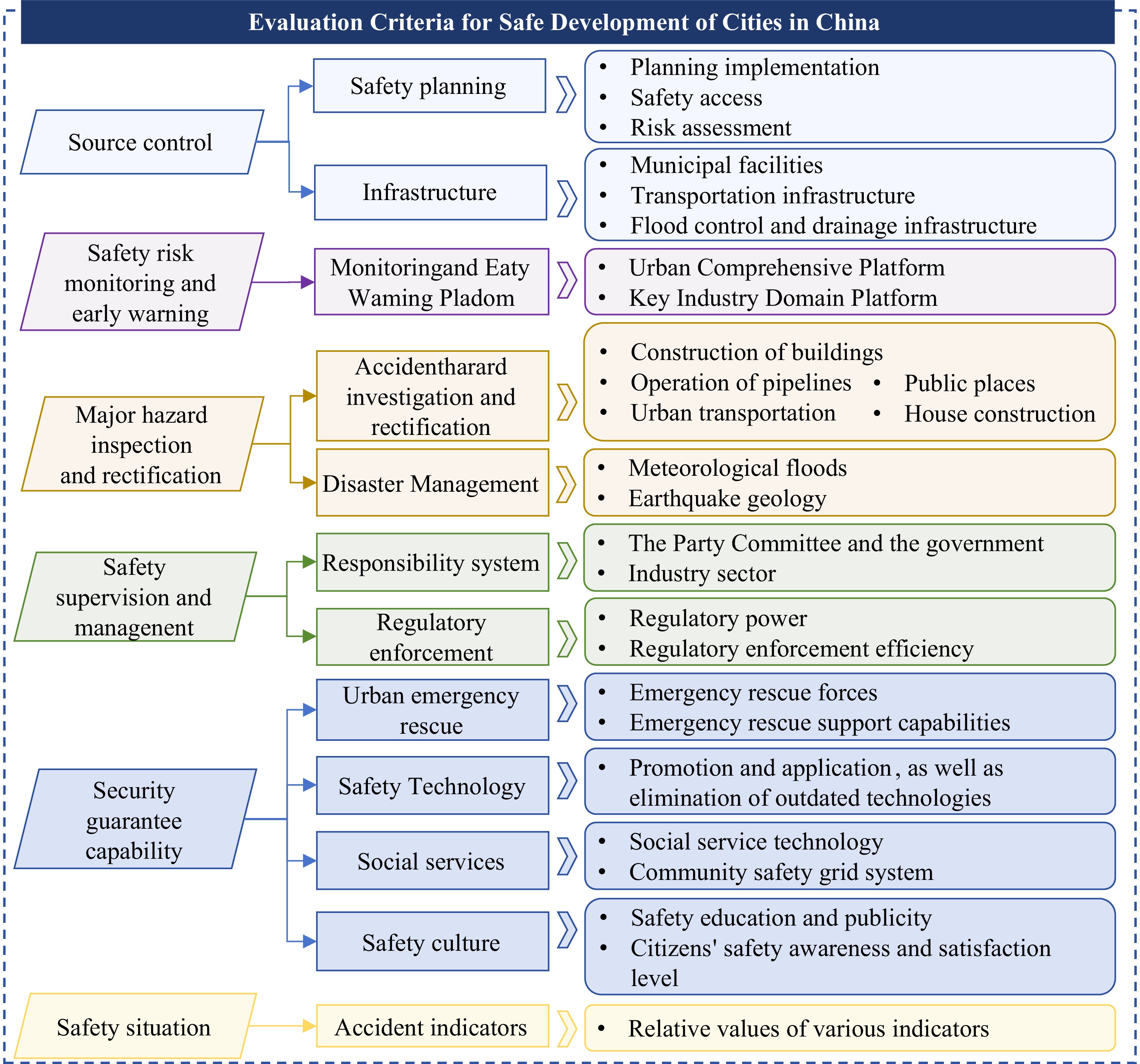
Figure 1.
Evaluation indicators for the safe development of cities.
Resilient cities focus on the city's ability to resist and recover from external shocks. They should not only pay attention to disaster risk prevention, but should also integrate social, ecological, and technological systems[7]. In the evaluation criteria, indicators such as source control, safety risk monitoring and early warnings, major hazard inspection, and capacity to guarantee safety all emphasize the identification and prevention of risks, covering aspects of society, ecology, and technology. This ensures that safe development-oriented cities have the ability to continuously withstand risks, which is highly consistent with the core concept of resilient cities.
Sustainable development is fundamentally guided by the goal of achieving balance among the three dimensions of the environment, society, and economy[8]. In the evaluation criteria, indicators such as safety status and capacity to guarantee security not only focus on short-term accident control, but also emphasize satisfaction with public safety, reductions in accident rates, and improvements in emergency response levels. These requirements actually incorporate the long-term logic of urban development, which is that security must be integrated with economic development, social equity, and environmental improvement. This is in line with the fundamental value orientation of sustainable cities, indicating that safe development of cities is not only the outcome of risk management but also a systematic arrangement for long-term sustainable development.
The indicators for safety risk monitoring and early warnings, and safety supervision and managenent fully reflect the significance of informatization and intelligence in safety-related governance. This is precisely the core content of the smart city theory, which is to enhance the perception, analysis and response capabilities of safety-related governance through technologies such as the Internet of Things, big data, and artificial intelligence[9]. Therefore, the perspective of smart cities provides technical support and governance tools for the construction of safe development-oriented cities.
The construction of a safe city development framework requires addressing the issue of urban safety-related resilience in the face of sudden shocks, while also considering value orientation and institutional arrangements for long-term development. It must also rely on the support of modern governance tools. Combining all three elements not only aligns with the policy orientation at the national level of China, but also forms a systematic framework with theoretical depth and practical feasibility for the construction of safe development-oriented cities.
Research methods
-
This study, based on the literature samples from the WoS and CNKI databases, applied the bibliometric method to conduct cluster analyses of keyword co-occurrence, evolution of research hotspots, and high-frequency citation networks using CiteSpace[10,11]. The goal was to identify the core issues and research trends in the fields of urban resilience, sustainability, and intelligence that international scholars have been focusing on over the past 15 years. By applying the qualitative comparative analysis method and the comprehensive review approach, a comparative evaluation of the relevant research results was conducted from three major perspectives. This involved extracting the cross-relationships and coupling relationships between the three types of urban theories and the concept of safe development, and forming a systematic path model for the construction of safe development-oriented cities.
-
Security and development are two independent core academic fields and concepts, which have undergone a process of mutual promotion and high integration from the perspectives of policy and ideology[12]. In 2014, China proposed the basic norms and assessment indicators for safe urban development, marking the first time that the concept of safe urban development was transformed into quantifiable and assessable policy tools. In 2019, China released evaluation guidelines, further detailing the evaluation procedures and scoring criteria, marking the maturity of the construction system. In 2020, the first safe development-oriented demonstration cities in China were named, marking the entry of the concept of safe development into the arena of demonstration, promotion, and in-depth practice.
To explore the evolution patterns of research hotspots in safe development-related cities, this study constructed a knowledge graph based on CiteSpace's keyword clustering analysis, as shown in Fig. 2. The keywords have gradually shifted from earlier terms such as "urban safety", "ecological safety" and "traffic safety" to themes like "urban governance", "resilient cities", "coupling coordination", and "emergency management", reflecting the evolving logic of academic research from basic safety protection to the governance of systems and then to the integration of concepts. On the basis of the development process and the findings in the knowledge graph, the academic research on safe urban development can be divided into three stages: the early exploration stage (2011–2014), the comprehensive improvement stage (2015–2019), and the deep integration stage (2020 to present).
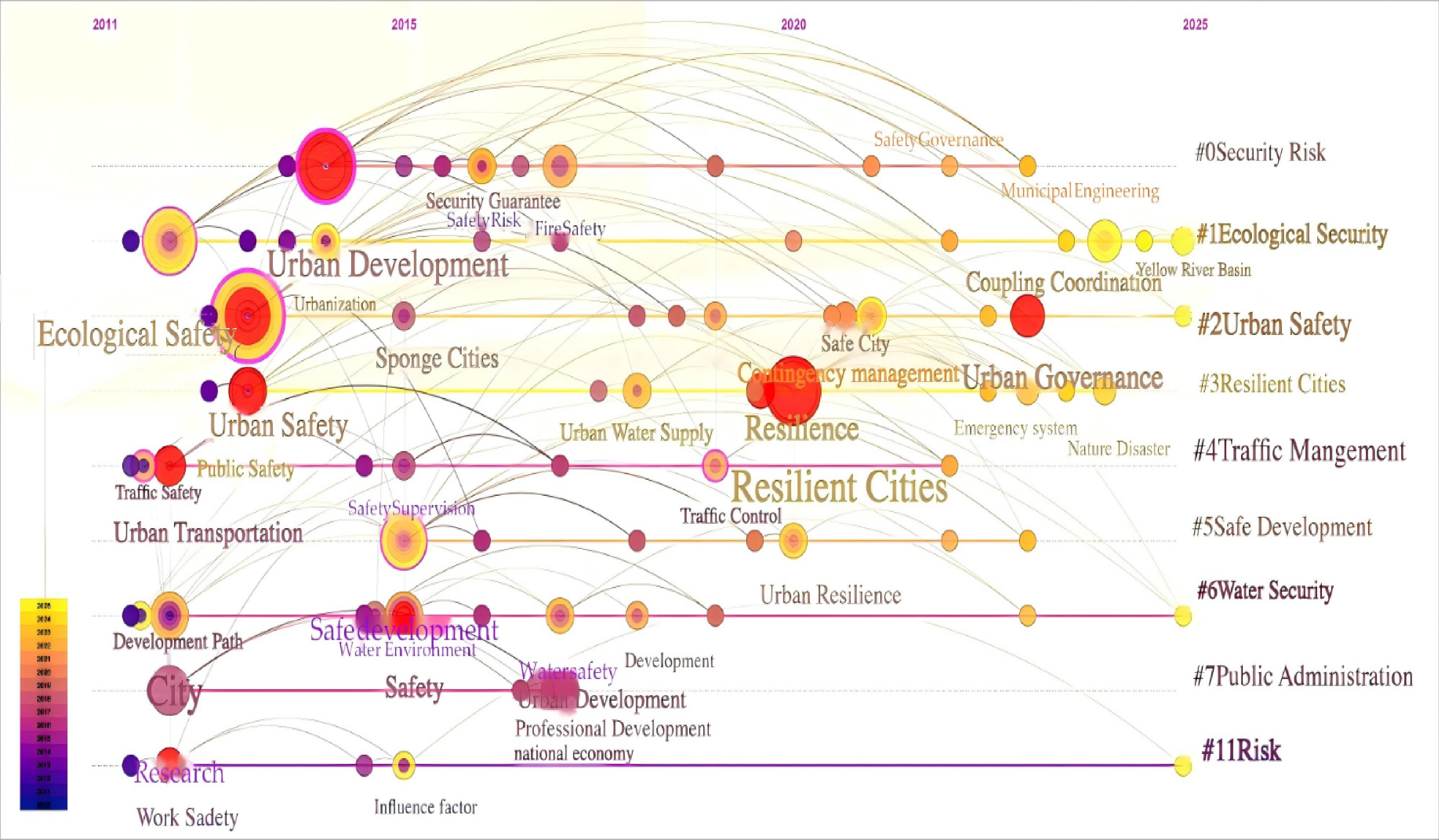
Figure 2.
Knowledge map of keywords' distribution across time.
The early exploration stage
-
At present, the construction of safe and developed cities is still in the exploratory and initial stages. The research focuses on the fundamental safety elements in urban development, which are the core conditions for ensuring the normal operation of the city and the safe living of its residents. These involve issues such as ecological security, urban security, traffic safety, public safety, and urban transportation[13−15]. From a general perspective, the related research is rather scattered and lacks a systematic framework, but it has begun to gradually reveal the initial coupling relationship between safety and urban development[16,17]. The typical feature of this stage is to focus on addressing the actual safety hazards in cities as the core objective, rather than conducting analyses from a macro-theoretical perspective. The main focus was on the prominent safety hazards and environmental issues that emerged during the rapid urbanization process, emphasizing that safety must be regarded as the bottom line in urban construction.
The comprehensive improvement stage
-
The construction of safe urban development gradually entered a stage of integration and expansion, and research hotspots began to extend to topics such as sponge cities, security assurance, fire safety, and urban water supply[18−21]. Compared with the early exploration stage, this research period's focus showed multi-dimensional expansion characteristics. In the spatial dimension, research shifted from the safety of a single facility to the overall systematic safety of a city, such as "urban lifeline projects", "water supply safety", "flood control and drainage systems", etc. This reflects the expansion of the spatial hierarchy of the research object from points to surfaces, and from the local to the system level. In the governance aspect, key terms such as "safety governance", "coordinated development", and "safety supervision" frequently appeared, and discussions began on the intrinsic relationship between safe development and the urban governance system, as well as the social management mechanism. In the technical aspect, research topics such as "sponge cities", "smart monitoring", and "risk early warning systems" promoted the integration of informatization and construction of the security infrastructure, facilitating the intelligent transformation of the security governance model. Overall, during this stage, a comprehensive research framework integrating governance systems, information technology, and risk management began to take shape. The connection between security issues and urban development also became increasingly close.
The deep integration stage
-
After 2020, the construction of safe development-oriented cities entered a deep integration stage centered on resilient cities, and the research focus has gradually shifted from traditional safety protection to a full-cycle safety governance model of "resistance–recovery–adaptation". The core issues at this stage include resilient cities, urban governance, emergency response systems, risk management and control, and coupled coordination, demonstrating that safe development is gradually evolving into a systems engineering project[22−24]. The integration of urban emergency management and risk governance has driven the rapid development of emergency systems, emergency mechanisms, and resilient governance. Moreover, concepts such as "coupled coordination" and "emergency management" indicate that the academic community is attempting to examine issues of security development from the perspectives of systems theory and complexity, emphasizing coordinated cross-departmental and cross-system responses[25]. A prominent feature of this stage is that the research framework is increasingly systematic and comprehensive. Safe development no longer exists in isolation but is closely coupled with resilience, governance, and emergency response.
In conclusion, the evolution of safe development-oriented cities not only reflects the deep integration of safety and development, but also gradually resonates with the mainstream international concepts of urban development. Resilient cities, sustainable cities, and smart cities all provide support for the safety and development of cities from different dimensions. Below, we compare the three with safe development-oriented cities.
Research on safe development-oriented cities from a resilience perspective
-
In the international academic community, the concept of safe development-oriented cities is often closely associated with "resilient cities"[26]. Research on resilient cities emphasizes a city's ability to absorb, recover from, and adapt to shocks[27]. Its core lies in achieving overall safety and sustainable development through systematic integration of multiple dimensions such as society, economy, institutions, and infrastructure. China's concept of safe development cities places greater emphasis on institutionalization and policy-making regarding the safety concept, integrating urban safety into the national security strategy, and establishing an institutionalized path centered on systematic governance and risk control. The underlying concepts of the two are similar, but their practical focuses differ: the former emphasizes bottom-up social self-organization and learning mechanisms, whereas the latter reflects top-down national strategic guidance and institutional support.
Figure 3 shows a comparison of the frameworks of resilient cities and safe development-oriented cities. It can be seen that resilient cities emphasize the cyclical process of recovery and adaptation after facing risks, and enhance the resilience and adaptability of the urban system through multiple dimensions such as society and the economy. The safe development-oriented cities are guided by the national security perspective as the overall planning framework. Through both engineering and nonengineering means, it ensures the safety of urban operations and social stability. The two complement each other in terms of philosophy: resilient cities focus on the restoration–adaptation–learning mechanism, emphasizing social self-organization and endogenous resilience. Safe development-oriented cities take prevention, control, and guarantee as their core approach. Through institutionalization, policy-making, and innovative practices, the overall level of safety is enhanced. The former represents the theoretical foundation; the latter is the institutional expression for the implementation of policy.
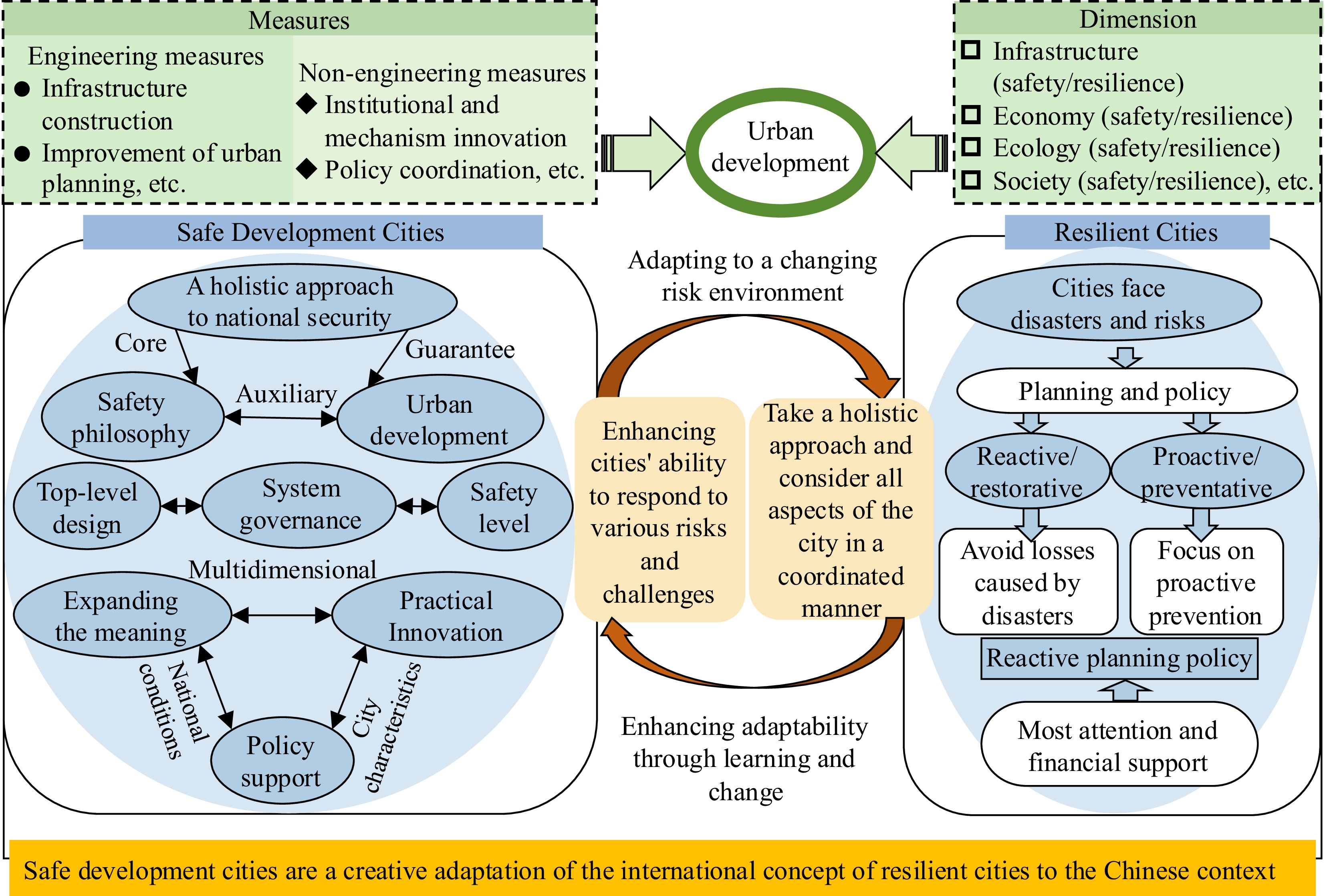
Figure 3.
Comparison of the safe development-oriented city and resilient city frameworks.
From the perspective of elements, the construction framework of resilient cities can be summarized as having five core dimensions: society, economy, system, environment, and infrastructure. These dimensions also provide direct concepts for the safe development of cities.
In the social dimension, resilient cities emphasize community participation, the construction of a safety culture, and the enhancement of public risk awareness. Shahpari Sani et al.[27] conducted a spatial assessment of social resilience in Sarpol-e Zahab City, Iran, through a multi-criteria decision-making model (MCDM). The results indicated that social capital, risk awareness, and public participation were the key variables influencing differences in resilience.
PricewaterhouseCoopers (PWC) defined a safe city as an integrated system whose goal is to protect its citizens, enterprises, assets, organizations, and institutions from internal and external threats in order to maintain overall wellbeing. The construction of safe cities should not only focus on basic engineering and emergency response capabilities, but should also consider the ecological environment and quality of life, thereby enhancing the efficiency of safety processes, reducing the threats of crime and terrorism, and ensuring a healthy and livable urban environment. Huizenga et al.[26] cautioned that resilience is not an abstract concept, as it needs to be tested and implemented in specific governance practices, and its meaning is reflected in daily policies and management activities. Wang et al.[28] emphasized that resilient cities are typical social–ecological–technological coupled systems that can restore themselves to their original or new equilibrium levels in both time and space when damaged. The "triple framework" proposed by Lycon[29] reveals the coupling relationship between social structure and security culture from the perspectives of the residents' activity space, cultural identity, and social networks. The core of the social dimension lies in establishing a disaster prevention system that involves collaboration among the government, society, and the public through education, social organizations, and risk communication mechanisms. Safe development-oriented cities can draw on the concept of social resilience to promote safety education and public participation mechanisms and thus enhance the initiative of the public in disaster prevention and mitigation, thereby accumulating the drive for social safety from the bottom up.
In the economic dimension, resilient cities focus on the diversification and sustainability of the industrial system. Through policy guidance, industrial collaboration, and capital investment, they form a cycle of economic resilience. Sedita et al.[30] pointed out that policy incentives can enhance the resilience of the economic system in responding to risks through the mechanism of industrial vitality–stable employment–risk tolerance. Yang et al.[31] conducted a study in the Three Gorges Reservoir Area of China, revealing that the regional economic structure is closely related to resilience. Their research pointed out that the enhancement of economic resilience is not only reflected in resource allocation and policy support, but also requires institutionalized risk-buffering mechanisms and long-term adaptive investments. On this basis, safe development-oriented cities can propose an assessment of the industrial resilience index and a capital investment mechanism. Through industrial collaboration and policy guidance, the stability and resilience of the economic system can be enhanced, achieving economic security and growth under risky conditions.
In the institutional dimension, attention is paid to the government's capacity for security governance. The city resilience framework (CRF) jointly developed by the Rockefeller Foundation and Arup Group Limited (ARUP) is a landmark achievement in this field[32]. Roostaie et al.[33] also proposed an integrated assessment framework that combines sustainability and resilience, covering multiple dimensions such as society, economy, institutions, and environment, emphasizing the crucial role of institutional synergy in the integration of urban resilience and sustainable development. Safe development of cities focuses on enhancing the resilience of critical infrastructure projects, such as municipal, transportation, flood control, and drainage systems. This involves redundant design and risk-inclusive management of these infrastructure systems to ensure the stability of the city's operation during extreme events.
The environmental dimension focuses on the ecosystem's resilience and resource-carrying capacity. Osman[34] proposed an environmental resilience assessment framework for local governments. This framework constructs an urban environmental governance system with three aspects, namely policy implementation, data management, and resource allocation, and emphasizes the core role of local governments in ecological risk prevention and control. Qin et al.[35] proposed a dynamic resilience framework that integrates climate scenarios with node–link perturbation simulations, which was used to assess the evolution of resilience in the ecological space network under future climate and land use changes. According to the simulations, safe development-oriented cities should promote the integration of ecological security patterns with national territorial spatial planning. By establishing a dynamic adjustment mechanism for ecological buffer zones, it is possible to drive the coupled development of ecological security and urban spatial governance.
The infrastructure dimension focuses on the continuous operational capacity of key facilities during disasters and emergencies. The infrastructure resilience guidelines proposed by the United Nations Office for Disaster Risk Reduction (UNDRR)[36] explicitly require that the concept of risk mitigation to be integrated throughout the entire life cycle management of infrastructure. Huizenga et al.[37] also pointed out that infrastructural resilience serves as material support for the safety of urban systems, and the infrastructure's long-term stable operation should be guaranteed through policy and funding mechanisms. Safe development of cities emphasizes the enhancement of resilience in critical infrastructure projects, including redundant design and risk-inclusive management of municipal, transportation, flood control, and drainage systems to ensure the operational stability of the city during extreme events.
In conclusion, resilient cities and safe development-oriented cities share a high degree of overlap in their goals and paths[38]. Safe development-oriented cities can be regarded as the outcome of China's localized practice and institutionalized expression of the concept of resilient cities within the framework of national security strategy and sustainable development concepts[39]. Under the guidance of the concept of resilience, safe development of cities can also be carried out in the five core dimensions: Society, economy, system, environment, and infrastructure. Figure 4 shows the construction path of safe development-oriented cities according to the concept of resilience: (1) assess the industrial resilience index to improve the capital and policy investment mechanism; (2) form a multi-level emergency management and safety governance system; (3) dynamically adjust the ecological buffer zone to enhance the adaptability of ecological space; and (4) improve resilience in the design of life support systems, integrating the concept of risk mitigation.
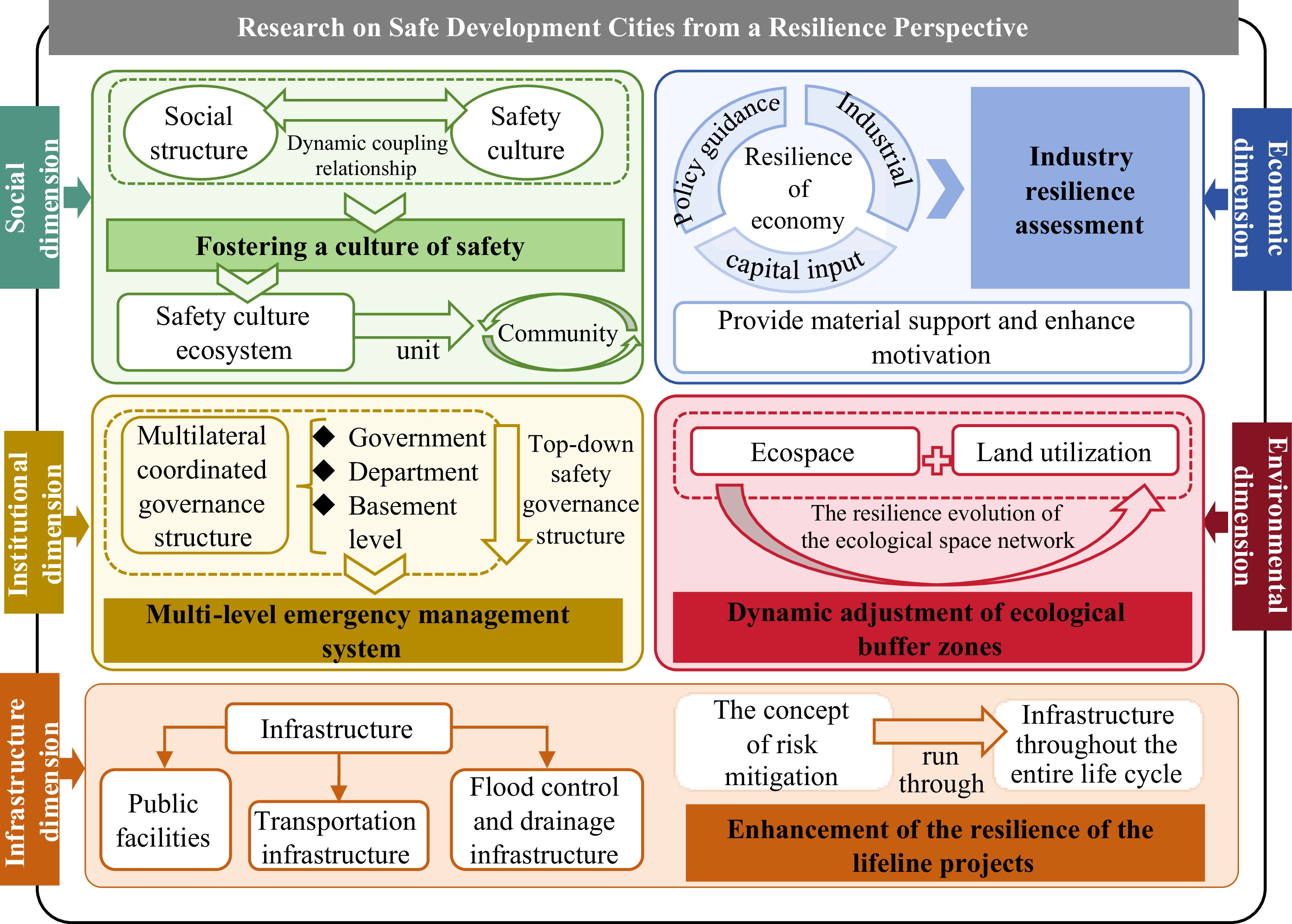
Figure 4.
Research on safe development-related cities from a resilience perspective.
Research on safe development-oriented cities from an intelligence perspective
-
The rise of smart cities is attributed to the rapid development and widespread application of information and communication technology (ICT). Relying on cutting-edge technologies such as the Internet of Things (IoT), big data, and cloud computing, deep integration has been achieved among different levels and elements of the city.
Compared with safe development-oriented cities, smart cities exhibit greater dynamism, intelligence and multi-source collaboration characteristics in terms of environmental risk perception and governance methods. Figure 5 shows a comparison of the frameworks of safe development-oriented cities and smart cities. Safe development-oriented cities emphasize institutional norms and risk prevention. The core lies in reducing urban operational risks through policy design and standard systems. Although smart cities are centered on data-driven approaches, they rely on technologies such as the IoT, big data, and artificial intelligence to establish an environmental risk governance system that features real-time perception, intelligent early warning, and precise response. The two functions are in a synergistic relationship: safe development provides institutional guarantees and basic prevention capabilities, whereas the smart city concept enhances risk identification, dynamic monitoring, and intelligent decision-making support, jointly improving the systematic, forward-looking nature and adaptability of urban environmental risk management.
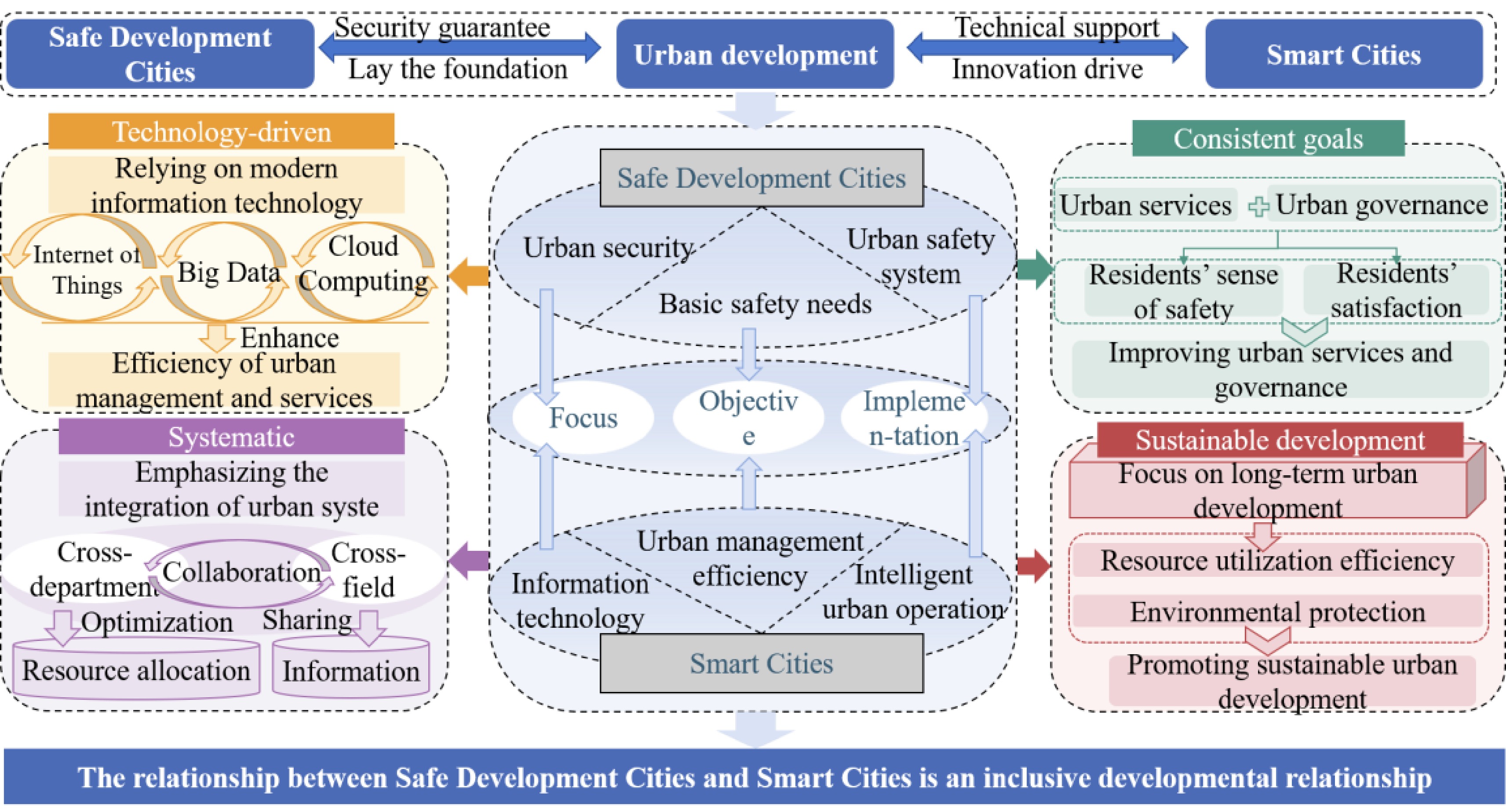
Figure 5.
Comparison of the safe development-oriented city and smart cities framework.
The construction of smart cities focuses on smart citizens, smart education, and smart life. Through data-driven decision-making support and service optimization, it enhances the community's collaborative capabilities and the public's risk awareness[40,41], demonstrating the supportive role of smart technologies in urban construction from the social perspective. Pavani[42] explored the application trends and challenges of deep learning in disaster management using social media data. Fischer-Preßler et al.[43] constructed the core conceptual framework of digital transformation (DT) in disaster management based on five key areas revealing the key digital capabilities required for formulating authority-driven or public-driven disaster management plans. Sharifi[44] pointed out that traditional smart city assessment tools often neglect community participation, and proposed the dual-axis resilience–inclusiveness assessment principle, incorporating social inclusiveness into the smart city evaluation system. On the basis of indicators such as social services' technology and the community's safety grid system in the Chinese evaluation criteria, smart cities provide technical support for safe development-oriented cities. They can achieve the popularization of safety knowledge at the social level through a grid-based digital governance platform.
Smart cities, through means such as intelligent monitoring, data analysis, and information sharing, can significantly enhance the efficiency and accuracy of various stages, including disaster prevention, emergency response, and recovery within a city[31,45]. Vitalij et al.[46] integrated information from multiple institutions to create a unified information space, and utilized visualization technology to integrate and interact with information, providing panoramic and intelligent support for managing urban security events. Visvizi et al.[47] proposed the Smart City Competitiveness Index (SMCI), considering resilience, greenness, and innovation as exogenous factors, and governance, talent, and finance as endogenous factors. The research showed that the score of the resilience dimension was significantly correlated with the growth of foreign direct investment (FDI), indicating that the construction of smart cities is conducive to the synergy of economic development and security governance. Combining the indicators of the comprehensive urban platform and the key industry domain platform according to China's evaluation criteria, safe development-oriented cities can be achieved through the blockchain government collaboration platform and the supply chain's intelligent early warning system, thereby establishing a cross-departmental and cross-level security governance system. This institutional transformation can realize the precision and traceability of urban risk governance, and also provides a foundation for the digitalization and intelligence of the industrial structure.
The environmental dimension of a smart city focuses on monitoring environmental quality, resource utilization efficiency, and the ecosystem's health. Nguyen et al.[48] proposed an urban environmental monitoring system that combines low-cost sensor networks with deep learning models for real-time perception and prediction of urban air quality and pollution risks. A framework for the safe development of cities can be constructed through a secure environmental risk perception network. Drawing on this idea, safe development-oriented cities can expand smart environmental monitoring to an ecological security perception network. By deploying environmental sensing nodes, establishing a data sharing platform, and developing intelligent analysis models, these cities can achieve dynamic monitoring of and risk warning related to elements such as the air, water, and soil.
Smart cities focus on the continuity of operation and the intelligent management capabilities of key urban facilities. Li et al.[49], based on the Enhanced Metanetwork model, coupled the physical facility network, communication network, and organizational decision-making network in three layers, and used percolation theory and a simulation of recovery to quantify the impact of infrastructure-related disruptions on the emergency network. Combining municipal facilities, the transportation infrastructure, and other indicators in the Chinese evaluation criteria, safe development-oriented cities can achieve real-time state perception and risk prediction for systems such as transportation, water supply, and electricity by building a digital twin platform for infrastructure.
In conclusion, from the perspective of wisdom and in combination with Maslow's Hierarchy of Needs Theory[50], it can be seen that there is a mutually reinforcing relationship between safe development-oriented cities and smart cities[51]. Safe development-oriented cities are the foundation for the further development of smart cities, whereas smart cities expand the depth and breadth of urban governance and public services for safe development-oriented cities. Safe development-oriented cities use intelligent means to prevent and monitor criminal activities, natural disasters, and human calamities. Figure 6 shows the framework of safe development-oriented cities, which aim to enhance the efficiency of urban safety efficiency leveraging the smart city concept through a complex monitoring network and big data analysis.
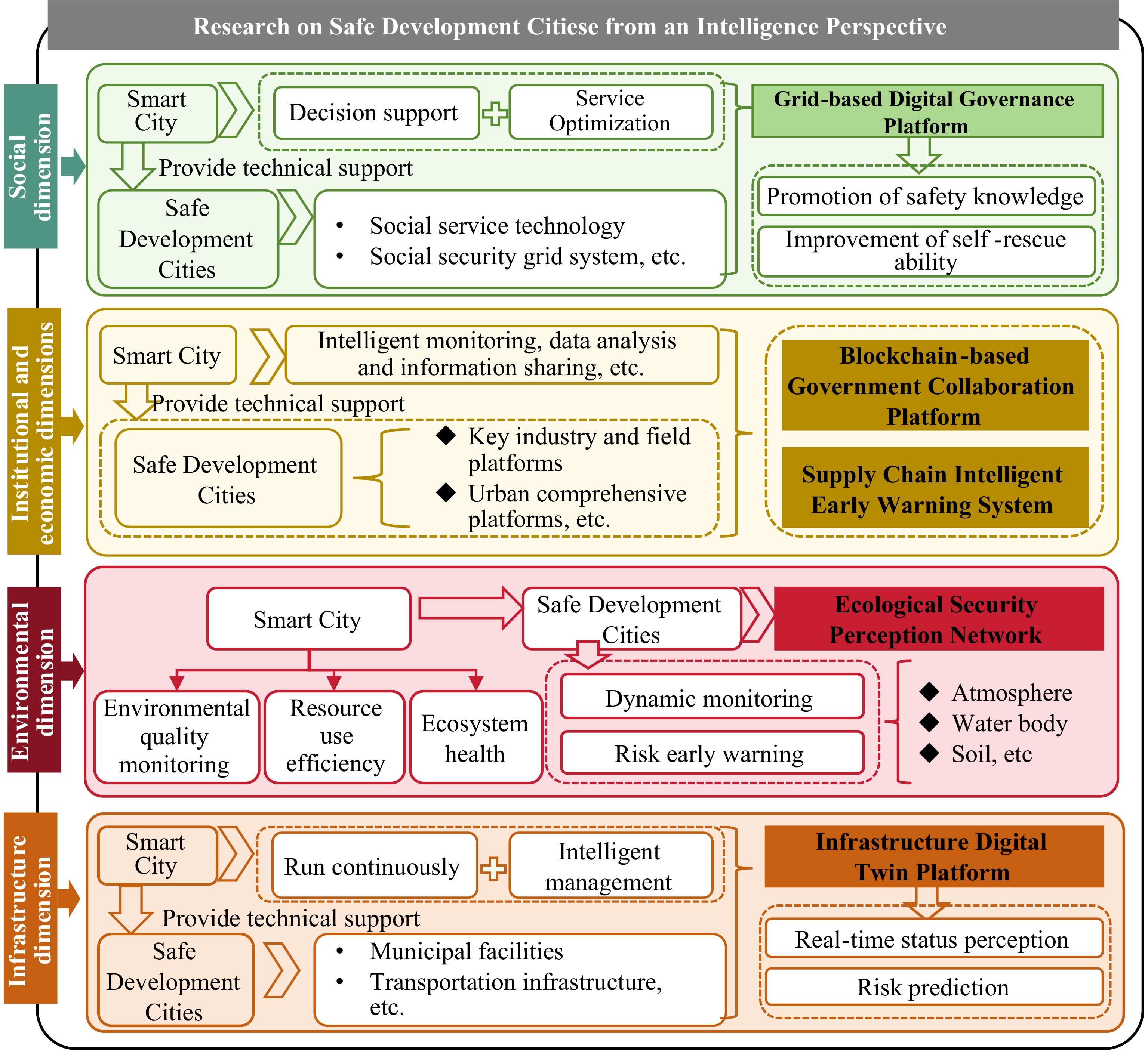
Figure 6.
Research on safe development-oriented cities from an intelligence perspective.
Research on safe development-oriented cities from a sustainability perspective
-
The International Council for Local Environmental Initiatives (ICLEI) states that sustainable urban goals aim to provide contemporary residents with environmentally, socially, and economically healthy and resilient living spaces, without undermining the ability of future generations to enjoy the same standard of living[52]. This concept not only clarifies the intrinsic connection between sustainability and safe development, but also provides a value orientation for building safe development-oriented cities. Tripathi[53] proposed to achieve a comprehensive framework for sustainable cities by building safe development-oriented cities, emphasizing the important roles of enhancing resilience and adaptability, promoting economic growth, social progress, and ecological protection. Hassan, through a literature review and case analysis[54], proposed a conceptual framework to provide guidance for safety management practices in sustainable construction projects. Promoting the deep integration of sustainable concepts and safe urban development has led to the fact that the environment and ecology have become the cornerstone for building sustainable and safe cities.
As shown in Fig. 7, safe development-oriented cities and sustainable cities have a high degree of synergy in terms of their goals and functions. The common goal of both types of cities is to enhance the overall quality of the city and the living standards of its residents: The former focuses on disaster prevention and mitigation as well as building resilience building, whereas the latter emphasizes efficient resource utilization, environmental protection, and economic growth. These two types of cities have been simultaneously advanced in urban planning, jointly strengthening the foundation of resilience and development potential of a city.
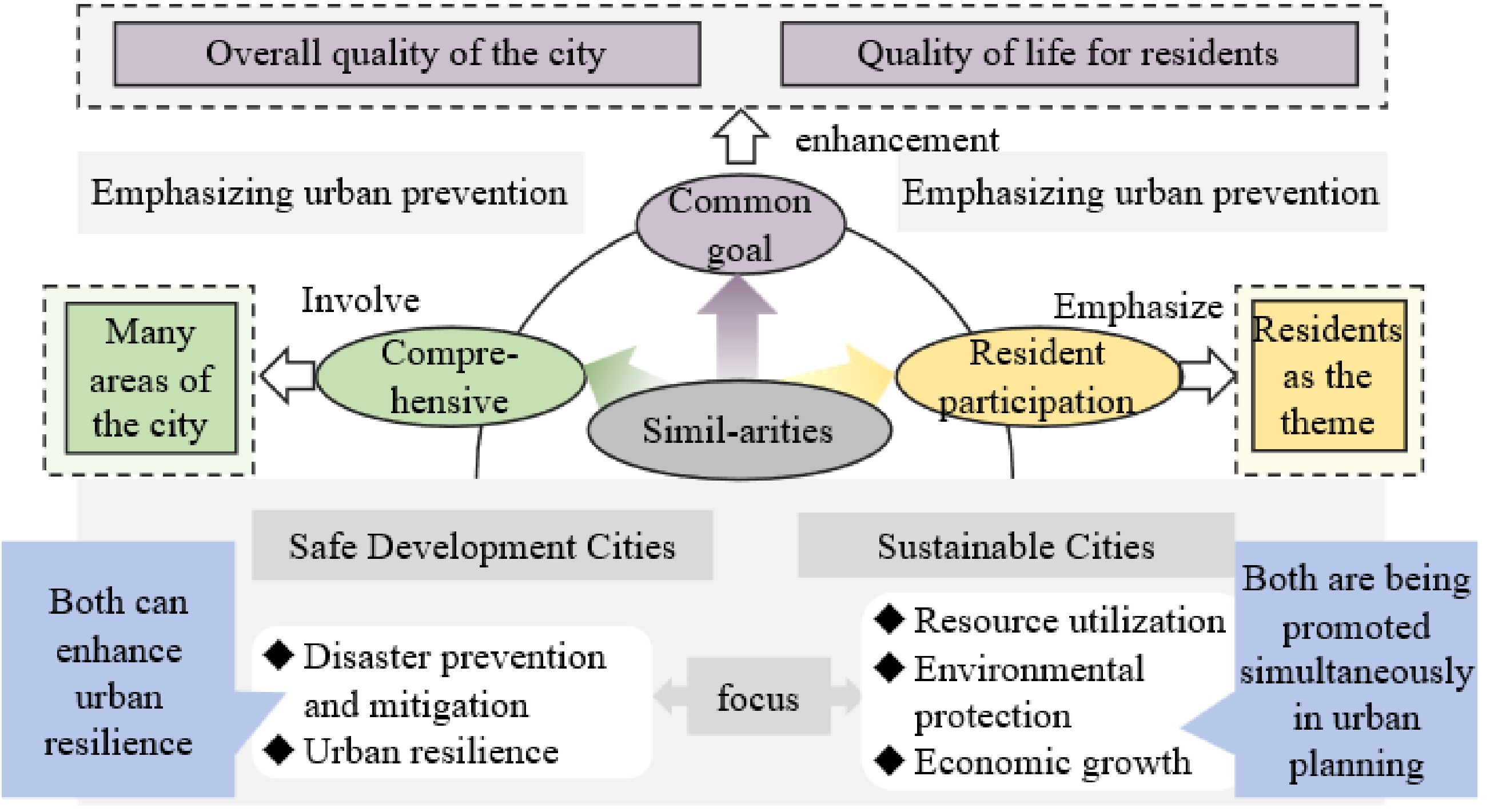
Figure 7.
Comparison of the safe development-oriented city and sustainable city frameworks.
The system is the top-level design and provides a fundamental guarantee for safe development. Scientific and reasonable institutional arrangements determine the systematic and sustainable nature of cities in risk prevention and control. Elmqvist et al.[55] pointed out that the key to urban resilience and sustainable transformation lies in the effective combination of institutional innovation and policy implementation. Through the strengthening of the institutional dimension, the governance of urban safety will shift from emergency response to risk prevention, and from departmental division to system-wide collaboration. In line with the concept of sustainable cities, safe development-oriented cities can be achieved through an auditing system for performance in terms of safe development, incorporating safety indicators into local legislation and the city's performance assessment system, and establishing a governance mechanism involving systems, policies, and implementation.
Economic security serves as the material foundation for the safe development of cities. Hassan[54] proposed that in sustainable construction projects, safety management should be regarded as an important component of the economic system. Through economic incentive mechanisms, insurance systems, and risk-sharing systems, the overall ability to resist risks can be enhanced. Alexandrov and Yablonev[56] pointed out that a high-quality ecological and safety-focused environment can enhance the attractiveness of investment, promote high-quality economic growth, and thereby achieve a positive interaction between safety and development. In line with the concept of sustainable cities, safe development-oriented cities can establish a linkage mechanism between investment in safety and economic performance, and build a green economic safety assessment system. Such a system aims to optimize the structure of safe development-oriented cities, cultivate safety-oriented industrial chains, and promote the coordinated development of industrial safety, financial safety, and infrastructural safety.
The social dimension provides fundamental support for safe urban development. Urban safety encompasses not only technology and systems, but also stems from public awareness and social networks. Wu and Chen[57] argued that the fairness and accessibility of green infrastructure directly affect the social resilience of a city, and social participation is a key mechanism for promoting fairness, safety, and health. Derickson et al.[58] also pointed out that the integration of social justice and environmental justice is a crucial direction for the evolution of resilient cities towards sustainably developed cities. Therefore, in line with the concept of sustainable development, safe development-oriented cities enhance overall safety awareness and disaster prevention capabilities through education, public participation, and social collaboration. This can be achieved by establishing a multi-level community safety network and encouraging the participation of social organizations, volunteers, and residents in risk governance, as well as by ensuring the equalization of public safety services through strengthening social capital, trust mechanisms, and information disclosure, which would enhance the city's mutual assistance and recovery capabilities in the face of disasters.
The environmental dimension serves as a lifeline for urban security and sustainable development. Liu et al.[59] took the perspective of the coupling of human and natural systems, and proposed that the balance between the supply and demand of ecosystem services plays a decisive role in ensuring urban ecological security. In line with the concept of sustainable cities, safe urban development should strengthen the control of ecological spaces control and risk zoning plans, and establish a disaster prevention plan based on natural systems. Through intelligent supervision of ecological security redlines, environmental risks can be reduced, providing sustainable safety support for the city and achieving the symbiotic and harmonious coexistence of humans and nature.
Infrastructure is the key carrier for the safe operation of a city. The research by Sharifi[60] and Liu et al.[61] showed that digital technology and data-driven decision-making systems can significantly improve the efficiency of cities in responding to emergencies. Yuan et al.[62] proposed the food–energy–water urban system synergy model, revealing the cross-system characteristics of infrastructural security. Combined with the concept of sustainable cities, safe development-oriented cities can build a green infrastructure network by strengthening redundant design, risk assessment, and dynamic management of the infrastructure. In disaster scenarios, the city can maintain continuity and the resilience of key functions.
In China, the integration of safe development-oriented cities and sustainable cities has become increasingly close[38]. Successive policy documents have been issued, clearly stating that the concept of sustainability should be systematically integrated into urban construction and management. This has pushed cities to shift from a single economic growth model to a coordinated multi-target development path that includes ecological protection, social equity, and public safety. This transformation not only expands the scope of safe development-oriented cities but also injects practical impetus into safety governance in terms of sustainability. The two should achieve organic integration in the construction of the urban framework. Figure 8 shows the framework for building safe development-oriented cities from a sustainable perspective, combining enhanced resilience, efficient resource utilization, environmental protection, and economic growth to achieve the dual goals of safety and sustainability.
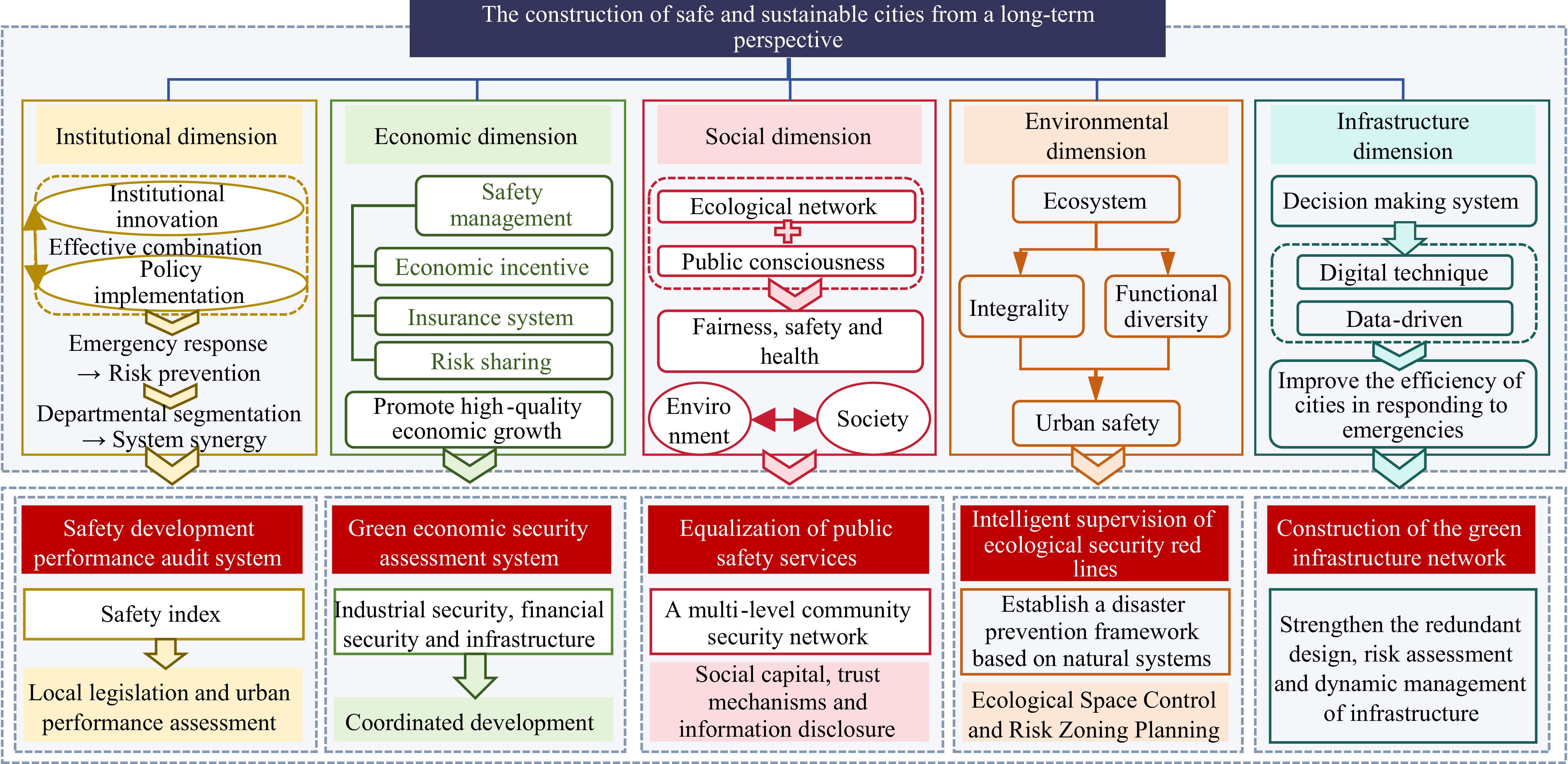
Figure 8.
Comparison of the safe development-oriented city and sustainable city frameworks.
Framework for the safe development of urban construction
-
On the basis of the integrated innovation of resilient cities, smart cities and sustainable cities, this paper constructs a "trinity" framework for the construction of safe development-oriented cities, as shown in Fig. 9. This framework, with a systems thinking approach, coordinates the demands of developing urban safety, lays a safe foundation through resilient governance, empowers efficient management with smart technologies, and anchors long-term goals with sustainable development, thus forming a dynamically balanced urban safety ecosystem.
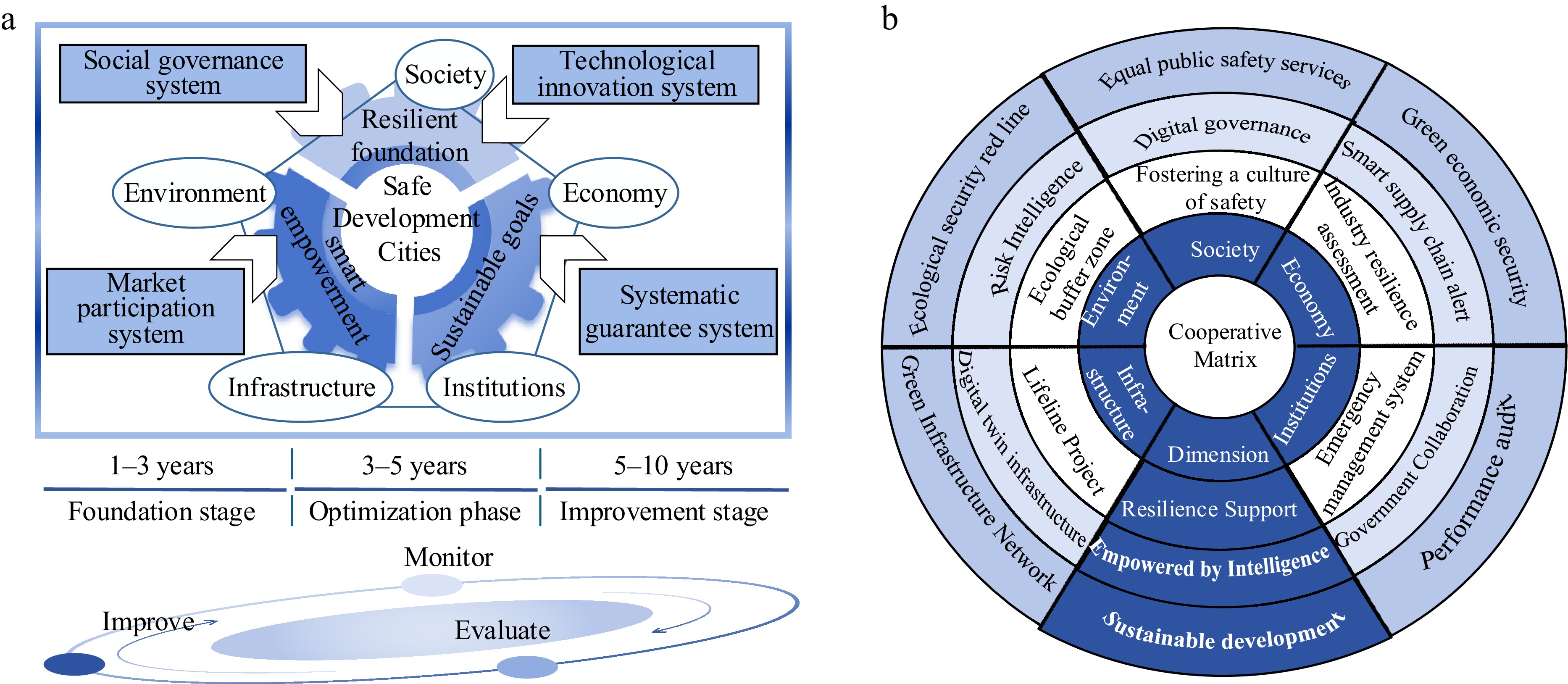
Figure 9.
The "Trinity" framework for safe development-oriented cities (a) Urban safety development system; (b) resilience–intelligence–sustainability cooperation matrix.
At the top level of the design, a full-circle resilient governance chain of "prevention–monitoring–response–recovery" should be established as the strategic position. Taking the urban information model as the intelligent decision-making hub, it emphasizes the dynamic balance among safety, efficiency, economic benefits, and ecological value. At the same time, it establishes a value orientation that is people-oriented, risk-controllable, and intergenerationally fair. It also deeply embeds the safety needs of residents into the urban governance structure. Furthermore, it builds a core matrix for the coordinated development of resilience, intelligence, and sustainability.
The supporting system of this framework is driven by four dimensions: technological innovation, institutional guarantees, market participation, and social co-governance. The implementation path adopts a three-stage progressive model: the foundation-building stage, the optimization stage, and the improvement stage. This forms a dynamic closed-loop guarantee mechanism of monitoring, assessment, and improvement, and builds continuous optimization capability in combination with pressure testing and facility renewal plans. At the same time, it will promote the project to enhance the safety literacy of all citizens and the certification of corporate culture to cultivate a safe ecosystem.
Furthermore, the successful implementation of the safe development-oriented city strategy also depends on the establishment of a diversified funding framework. Multi-channel financing should integrate public fiscal investment and private-sector participation, as well as contributions from society and the international community. Governments should allocate dedicated funds for disaster resistance infrastructure, intelligent monitoring systems, and safety education projects. Public–private partnerships can mobilize private capital and professional expertise for large-scale projects and obtain additional support from social organizations, insurance mechanisms, and international development agencies. Issuing disaster resistance or green bonds can further attract long-term investment to support sustainable safety measures. At the same time, fiscal incentive measures and risk-sharing tools, such as tax deductions, subsidies, and catastrophe bonds, should be adopted to encourage enterprises to participate and more fairly share the risk of disasters.
This framework highlights three innovative aspects: (1) achieving resilient coupling between physical space and virtual space through digital twins; (2) establishing linkage mechanism between safety performance assessments and carbon footprint accounting; and (3) forming a self-organizing evolution model for urban safety based on the theory of complex systems. Ultimately, we hope to achieve a paradigm shift from "passive defense" to "active immunity", from "fragmented governance" to "systematic governance", and from "experience-based decision-making" to "data-driven decision-making".
-
This study systematically reviews the research progress and theoretical framework of safe development-oriented cities from three perspectives, namely esilience, intelligence, and sustainability, revealing the different development paths and internal logic in this field. Research shows that the three are both relatively independent and interwoven in practice, jointly forming the overall picture of a safe and developing city. In terms of macro- research methods for the construction of safe development-oriented cities, a corresponding theoretical framework has been established. From a macro perspective, research results have begun to emerge. However, from the meso and micro perspectives, the research is still somewhat insufficient. Looking to the future, research on the safe development of cities can move in the following four main directions.
Exchanges and cooperation among different disciplines such as urban planning, public administration, environmental science, information science, and sociology should be encouraged to form comprehensive research teams. Through the integration of multiple disciplines, the complexity of urban safety can be understood more comprehensively. We should establish interdisciplinary research platforms and collaborative innovation mechanisms to promote the exchange of knowledge and technology, and thus jointly promote theoretical innovation and the practical application of safe development-oriented cities.
We need to conduct empirical research by leveraging big data and artificial intelligence technologies, especially at the meso and micro levels. Through in-depth analyses of a large amount of data, problems can be identified more accurately, risks can be evaluated, and targeted solutions can be proposed to enhance the precision and effectiveness of urban safety management.
Policies and funds are key factors in promoting the safe development of cities. We should deepen research into policy systems and the financial guarantee mechanism for safe urban development, and explore how to guide this through policies and provide financial support. Moreover, we need to research and formulate policies and measures to promote the safe development of cities, as well as to establish a stable and sustainable financial guarantee mechanism.
This work was supported by the National Key R&D Program Special Project of China (No. 2023YFC3010905) and the Inner Mongolia Natural Science Foundation (2025QN07008).
-
The authors confirm their contributions to the paper as follows. study conception and design, and performing the study: Zheng X, Tong X; data collection and analysis: Ren J, Tong X; draft manuscript preparation: Ren J. All authors reviewed the results and approved the final version of the manuscript.
-
The datasets generated during or analyzed in the current study are available from the corresponding author on reasonable request.
-
The authors declare that they have no conflict of interest.
- Copyright: © 2025 by the author(s). Published by Maximum Academic Press on behalf of Nanjing Tech University. This article is an open access article distributed under Creative Commons Attribution License (CC BY 4.0), visit https://creativecommons.org/licenses/by/4.0/.
-
About this article
Cite this article
Zheng X, Ren J, Tong X. 2025. Towards a systematic framework for the safe development of cities: resilience, intelligence, and sustainability perspectives. Emergency Management Science and Technology 5: e020 doi: 10.48130/emst-0025-0018 

Towards a systematic framework for the safe development of cities: resilience, intelligence, and sustainability perspectives
- Received: 05 September 2025
- Revised: 14 October 2025
- Accepted: 04 November 2025
- Published online: 27 November 2025
Abstract: Under the combined influence of globalization and urbanization, cities are facing increasingly complex security challenges, which have attracted widespread attention from the international academic community. Research on resilient cities has been continuously deepened. In response to this trend, China has proposed the concept of building safe development-oriented cities. This paper employs CiteSpace to explore the development trajectory of safe development cities, examining current research progress from three perspectives: resilience, smart cities, and sustainability. It aims to establish a long-term vision, form a dynamic balance in the urban safety ecosystem, propose a "Trinity" framework for the construction of safe development-oriented cities, and outline future prospects for the development of safe cities.
-
Key words:
- Safe development cities /
- Urban management /
- Theoretical connotation /
- Research framework