












-
Agricultural waste, livestock manure, and household waste collectively constitute a substantial portion of organic solid waste resources[1]. Improper handling of organic solid waste may give rise to environmental issues, such as air and soil contamination[2,3]. The transformation of organic material into a stable fertilizer makes it a feasible choice for the safe disposal of organic solid waste[4,5]. Organic solid waste plays a crucial role in environmental restoration when it is converted into compost products through humification[6].
The rapid development of industrialization, and the expansion of agricultural land have led to a continuous decline in soil health, including reduced organic matter content and heavy metal pollution[7−10]. The stability of soil carbon and the effectiveness of nutrients are, to some extent, regulated by the composition and function of microbial communities. By incorporating organic fertilizers into the soil, supplementary carbon sources and nutrient-rich organic matter can be provided to stimulate microbial activity. These constituents can be stabilized through microbial C pumps, or redistributed to plants[11,12]. Furthermore, organic fertilizers effectively mitigate the mineralization of carbon by microorganisms and facilitate the formation of soil networks, thereby enhancing the overall carbon content of the soil[13,14]. Excess organic nutrients, whether absorbed by plants or immobilized in soil organic matter, have a positive impact on soil ecological function. Heavy metals exert a detrimental influence on the physical and chemical reactions in soil by influencing the growth and morphology of microorganisms, suppressing essential metabolic processes and cellular functions (such as protein synthesis and cell membrane integrity). Organic fertilizer can alter the soil pH, enhance the degree of aromatic composition of organic matter, raise the concentration of humus in the soil, and induce adsorption, precipitation and complexation reactions[15]. These processes effectively reduce the migration rate and bioavailability of toxic metal pollutants in soil.
Based on the carbon market and atmospheric CO2 removal frameworks, carbon flow plays a crucial role in providing essential ecosystem services that support soil functionality and resilience. A life cycle assessment analysis of an Italian composting plant reveals that the total net savings of −434 kg and −12 kg CO2 equivalent are attained respectively by the production and utilization of 1 mg of municipal organic waste digested compost and municipal organic waste compost[16]. Studies on the application of organic fertilizers in grazing grasslands have shown that the extensive use of organic fertilizers can result in a net reduction of more than 8 million tons of carbon dioxide equivalent within 15 years[17]. Soils treated with pure vegetable compost exhibited higher plant coverage and carbon dioxide fixation rates, thereby making it the optimal treatment for atmospheric CO2 storage during the process of soil restoration[18]. Globally, aside from carbon dioxide, landfill emissions can be effectively reduced by converting organic waste into organic matter. Studies reveal that landfill emissions constitute 8%–11% of global greenhouse gas emissions[19].
Key predictors of compost (C/N ratio, pH, and electrical conductivity), management (nitrogen supply), and the biophysical environment (crop type, soil organic carbon content, pH, temperature, and rainfall) collectively account for 80% of the influence on crop yield, soil organic carbon, and nitrous oxide emissions[20]. There exists a contradiction between the changing and increasingly diverse regional needs and compost production. Current compost products are frequently regarded as generic substances that have not been optimized to meet the requirements of specific crops or biophysical environments. Simultaneously, the preparation process of compost lacks a standardized model, leading to inconsistent quality. This disparity in quality could lead to ecological hazards and facilitate the transmission of pollutants, such as heavy metals and antibiotics, into the human body through the food chain, thereby presenting potential health risks[21]. Currently, the precise and scientific regulation of compost product application based on soil requirements continues to be a significant obstacle to efficient agricultural production.
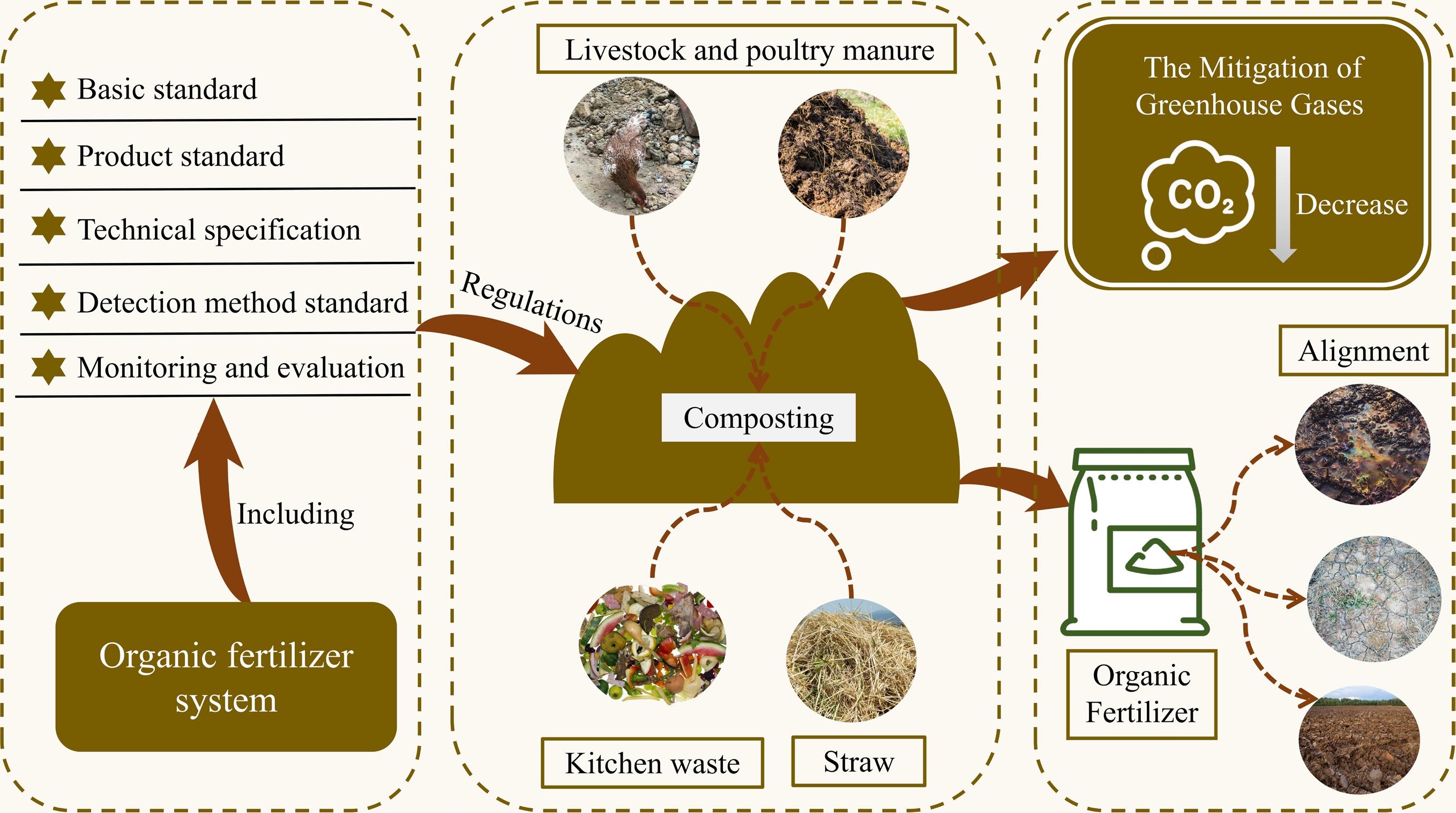
This paper illustrates the effect of compost on improving soil ecosystem function by summarizing the practical relationship between compost products and cultivated land. The development process, standard framework in China, and management of compost in developed countries are discussed simultaneously. Based on the current issues and challenges encountered by China's standard system, this paper proposes some recommendations and anticipates the future development directions.
-
Chemical fertilizer has become the preferred method for growers due to its remarkable and rapid effectiveness. The escalating utilization of chemical fertilizers has resulted in substantial environmental repercussions[22,23]. Compost is increasingly recognized as a vital nutrient source in sustainable ecological agriculture for meeting food security and enhancing environmental quality. The humus, which consists of a class of organic substances with aromatic and lipid rings in organic fertilizer, can enhance soil quality and influence the fate and transport of metals[24]. The utilization of compost in China currently stands at less than 50%, but there is a notable and increasing trend in its utilization[25,26].
The North China Plain is a significant hub for grain production and livestock farming, with its grain yield and the production of meat, eggs, and milk collectively constituting over 30% of the national total[27]. However, the North China Plain is characterized by elevated land use intensity, with a significant increase in the scale of livestock and poultry farming. The decrease in the rate of manure and urine recycling from livestock and poultry leads to issues of the ecological environment, including degradation of cultivated land quality and greenhouse gas emissions[28,29]. The North China Plain was the second-largest nitrogen application area in the world[30]. Excessive nitrogen application promotes soil nitrate leaching, ammonia volatilization, and N2O emissions, thereby accelerating the decline in both soil fertility and crop productivity[31]. Research demonstrates that the partial substitution of nitrogen fertilizer with organic amendments facilitates the attainment of sustainable yield objectives in a maize–wheat double-cropping system[32]. In the maize–wheat rotation system, a 50% substitution of organic nitrogen resulted in a significant reduction in both ammonia volatilization and N2O emissions[33]. In the process of replacing inorganic nitrogen with organic nitrogen, a lower substitution rate (< 50%) is more conducive to synergistic improvements in economic and environmental benefits than a higher substitution rate (50%–100%)[34]. Further integration of the organic substitution model with livestock manure composting shows substantial benefits in boosting crop productivity and enhancing carbon sequestration.
As the predominant agricultural soil in China's Sichuan Basin, purple soil is critically important for regional crop production[35]. Based on pH values, purple soils can be classified into three categories: acidic (pH < 6.5), neutral (pH 6.5–7.5), and calcareous (pH > 7.5). Some studies have reported acidification in certain neutral purple soils, with the proportion of acidic purple soils among all purple soils showing an increase[36]. The progressive acidification of purple soils poses a potential constraint on crop growth and yield. Balanced fertilization practices are acknowledged as the optimal strategy for preserving soil productivity and maximizing agricultural yields[37]. Research demonstrates that a combination of biochar and compost effectively mitigates acidification by reducing soil pH and exchangeable acid (H+, Al3+) content, while enhancing the concentration of alkaline cations[38]. Additionally, composting animal manure can effectively and evenly enhance the levels of soil organic matter, as well as available nitrogen, phosphorus, and potassium. Moreover, it demonstrates a clear economic advantage compared to biochar. The application of compost, such as livestock manure, represents an effective strategy for improving the fertility of acidic purple soils. Compost can promote the proliferation of beneficial microbes in the soil and mitigate the detrimental effects of soil aggregate disruption caused by tillage[39].
In Northeast China, up to 42.3% of Mollisols have been cultivated as agricultural land, making them a vital soil resource for ensuring national food security[40,41]. Despite the high level of agricultural industrialization and abundant organic fertilizer resources in Northeast China, soil degradation has become increasingly severe as a result of the extensive expansion of farmland[42−44]. Research demonstrates that microbial activity during straw composting modifies the composition of labile organic carbon[45]. Six consecutive years of compost application significantly enhanced soil nutrient content and availability, concomitant with an upward trend in crop yield. This improvement can be largely attributed to the beneficial role of a specific fraction of the soil organic carbon pool in promoting crop productivity through the regulation of nutrient supply[46]. Meanwhile, the results also showed that the long-term application of manure compost over 16 years significantly increased soil phosphorus reserves, raising total phosphorus by 1.2–3.8 Mg P ha−1 and available phosphorus by 0.8–1.9 Mg P ha−1[47]. Long-term studies have further demonstrated that a decade of manure application can enhance crop productivity by 27.7%[48]. These findings indicate that compost application represents an effective management strategy for improving soil quality and increasing agricultural yield.
In the Guanzhong Plain, winter wheat cultivation predominates as the primary agricultural system, which is largely rain-fed[49]. Water scarcity and the imbalance between supply and demand contribute to elevated inputs of synthetic nitrogen[50,51]. Studies demonstrate that compost can serve as an effective nitrogen source by enhancing soil microbial activity, which facilitates the conversion of soil nitrogen into microbial biomass[52]. This microbial-derived nitrogen is more susceptible to mineralization than its original form, thereby offering a more abundant and readily available nitrogen supply for wheat growth. The sustained application of compost strengthened the intrinsic linkage between soil microbial functionality and crop productivity. Moreover, the application of chemical nitrogen fertilizers and manure offers significant long-term agronomic benefits, contributing not only to a sustained supply of soil nutrients but also to the improvement of soil physical properties[53,54]. One study demonstrated that a fertilization strategy involving partial substitution of chemical fertilizer with organic fertilizer increased wheat yield by 5.9% while reducing total N2O emissions by 33%–77%[55]. Based on the agronomic conditions for dryland winter wheat cultivation in the experimental region, the application of 30 t ha−1 of organic manure combined with 150 kg ha−1 of nitrogen fertilizer is recommended as the optimal fertilization strategy[56]. This strategy is anticipated to reliably safeguard yield while effectively mitigating environmental impacts, representing a preferred approach for achieving sustainable development in local dryland winter wheat production.
In the Jianghan Plain, rice cultivation occupies approximately 59.8% of the total cultivated land area, establishing it as the predominant crop in the region[57]. However, the region is challenged by excessive nitrogen fertilizer application, which induces considerable ammonia (NH3) volatilization, thereby contributing to significant nitrogen losses and detrimental impacts on the local ecological environment[58]. Replacing inorganic fertilizer with organic fertilizer during the basal application stage significantly reduces NH3 volatilization in rice cultivation[59]. Research demonstrates that employing a relatively low substitution rate of organic fertilizer for chemical fertilizer nitrogen (25%) reduces NH3 volatilization by 48.8%. At a higher substitution rate (50%), the mitigation of NH3 volatilization reaches 56.9%[60]. However, elevating the proportion of organic fertilizer substitution could result in diminished rice yields. Therefore, it is recommended to appropriately reduce the substitution ratio of organic fertilizer during basal fertilizer application to minimize nitrogen loss from NH3 volatilization.
Considerable heterogeneity in soil properties, predominant cropping systems, and environmental stressors exists across China's major agricultural zones. Consequently, the application strategies and prioritization of composting practices must be guided by the principle of regional specificity. In the North China Plain and the Northeast Black Soil Region, efforts should prioritize augmenting soil organic matter and enhancing carbon sequestration potential. Compost products selected for these areas should be characterized by high levels of stable organic carbon and a low mineralization rate, thereby supporting long-term carbon storage and improvements in soil fertility. In the Sichuan Basin and Guanzhong Plain, the pH-regulating capacity and nutrient slow-release properties of compost should be regarded as principal evaluation metrics. For increasingly acidified purple soils, the application of neutral to alkaline mature compost is recommended to counteract soil acidity. In rain-fed dryland agricultural regions, compost that significantly improves soil water retention and nutrient-holding capacity ought to be prioritized. By enhancing microbial activity, such compost facilitates a slow-release nitrogen supply, thereby partially substituting for fast-acting nitrogen fertilizers. In the Jianghan Plain, the principal goal should be the mitigation of nitrogen losses to the environment. To achieve a balance between emission mitigation and production stability, compost should be selected based on sufficient maturity, an appropriate C/N ratio, and effectiveness in suppressing ammonia volatilization. Additionally, the concentrations of key nutrients (N, P, K) along with their bioavailable forms and heavy metal content, should be integrated into a mandatory regulatory framework. Such measures will facilitate precise nutrient management and reduce the risks posed by phosphorus surplus and heavy metal contamination. Concurrently, the optimal substitution ratio of organic nitrogen for synthetic nitrogen fertilizers should be determined for distinct regional cropping systems.
-
To tackle challenges including soil degradation and agricultural non-point source pollution, China has progressively integrated the promotion and application of composting into its national policy framework. In 1988, the State Council issued a directive emphasizing that all regions should give priority to the development and application of compost products and also promote their increased use among farmers. The Ministry of Agriculture launched the 'Fertile Soil Program' in 1995, aiming to actively advance the production and application of compost across the country. Since 2004, China's annual No. 1 Central Documents have consistently emphasized composting as a vital element in promoting sustainable and modern agricultural development. The advent of a new developmental phase has led to a more focused and concrete articulation of policy objectives. In 2015, the Ministry of Agriculture introduced the 'Zero-Growth Action Plan for Fertilizer Use by 2020', and initiated the promotion of compost as a substitute for traditional chemical fertilizers[61]. This was followed in 2017 by the issuance of the 'Action Plan for Organic-Substitute-Chemical-Fertilizer for Fruits, Vegetables, and Tea'[62], which focused on fruit, vegetable, and tea production to promote the application of compost products. In the span of two years, a total of 150 pilot counties were established, yielding noteworthy outcomes. Statistical data indicate that the application of chemical fertilizers in the project areas of the demonstration counties was reduced by 18% year-on-year. The usage of organic fertilizer reached 3.02 million tons, and the soil organic matter content increased by an average of over 0.1 percentage points. The 'Action Plan for Resource Utilization of Livestock and Poultry Manure (2017–2020)' was also released, with a target of achieving a comprehensive utilization rate of livestock and poultry waste exceeding 90%[63]. In 2021, the State Council released the 'Action Plan for Carbon Dioxide Peaking Before 2030', which included measures aimed at expediting the utilization of high-value straw and manure resources to facilitate emission reduction and carbon sequestration in rural agriculture. The 'Action Plan for Fertilizer Reduction and Efficiency Enhancement by 2025', launched in 2022, reinforced initiatives to reduce fertilizer use, thereby providing new impetus for the comprehensive green transformation of agriculture. These policies (Supplementary Table S1) are formulated to synergistically accomplish a range of objectives, such as decreasing dependence on chemical fertilizers, promoting the efficient use of organic resources, enhancing soil ecological health, and mitigating climate change.
Subsidy policies and land management systems have collectively driven the widespread adoption of compost products[64−66]. Farmers, in their dual roles as producers and consumers, typically opt for inputs that offer a combination of low cost and high yield. Government subsidies for composting have enhanced the adoption of composting practices among farmers[67−69]. Land fragmentation complicates the process of achieving higher profits through composting[70]. However, policies promoting land transfer and agricultural cooperatives have facilitated the implementation of large-scale farming operations[71,72], which has had a positive impact on the application of compost products.
The current policy framework still primarily focuses on promoting composting technologies, failing to effectively guide farmers in selecting functional compost products tailored to specific soil issues such as salinization and acidification. It is necessary to integrate soil monitoring data, identify the types of soil barriers in different regions, and establish a functional classification system for compost products based on soil properties and their application specifications. Concurrently, policy orientation should be aligned with soil improvement outcomes, and an outcome-based incentive mechanism should be established.
-
Based on a three-tiered framework consisting of 'principles set by laws and regulations, guidance provided by policies and plans, and norms established through specific standards', a compost standard system has been established in China. This system includes four tiers of standards based on the entities responsible for their development: national, industry, local, and group standards. According to their attributes and functions, these standards are further divided into five categories: basic standards, product standards, technical specifications, detection method standards, and monitoring and evaluation standards (Fig. 1). The objective is to systematically standardize key aspects of compost, including the definitions of terms, product specifications, and usage restrictions. With the aim of promoting the safe application of compost products on farmland, more than 400 existing relevant standards have been integrated. National and industry standards together form the foundation of the composting standard system, establishing the essential benchmarks for composting technologies and product quality. Meanwhile, the significant number of technical specifications in local and association standards highlights their emphasis on regional adaptability and responsiveness to market dynamics in standard development.
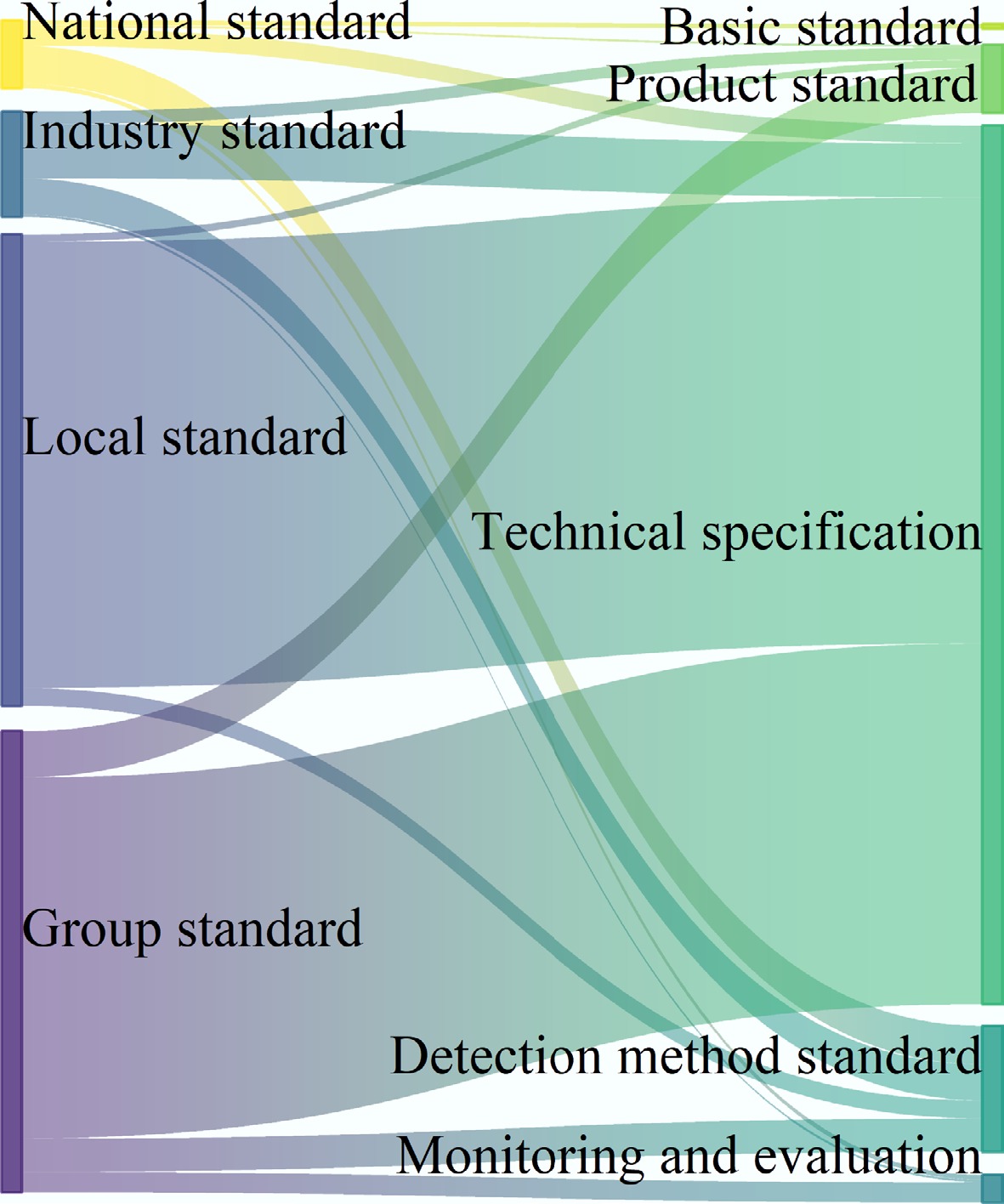
Figure 1.
Flow paths from composting standard levels to attribute functions.
The status of the standard specification
-
The analysis covers the entire process from the production of compost products to their application in farmland (Table 1), and summarizes the representative national and industry standards. In terms of raw material and process control, the current standard system has limitations in the diversity of material types and process models. Existing standards mainly address the treatment of livestock manure and certain types of vegetable waste, but lack specialized process specifications for bulk agricultural residues such as crop straw. Current standards for straw, including GB/T 42679-2023 and NY/T 3020-2016 (Table 2), acknowledge composting as a utilization pathway but lack detailed regulations for key technical aspects such as feedstock formulation, maturity control, and product grading. This lack of systematic guidance hinders the standardized adoption of straw composting. Similarly, standards for food waste (CJJ 184-2012) treat composting merely as an optional method rather than establishing a dedicated technical method. Current process standards predominantly restrict key parameter settings for raw material treatment to basic physicochemical indicators, such as the C/N ratio and moisture content. This constraint hinders the ability to develop customized feedstock compositions and processing methods aimed at specific soil problems, such as salinization, contamination by heavy metals, and desertification. As a result, the precision and efficacy of compost products in soil improvement applications are compromised. The existing standard NY 609-2002 primarily emphasizes accelerating material decomposition, falling under the category of additive specifications for the composting process. Standards for specialized microbial additives that improve ecological functions (soil disease resistance, nitrogen fixation, and phosphorus solubilization) are still underdeveloped. This gap limits the transition of compost products toward functional and high-value applications.
Table 1. Representative national and industry standards for each stage of the composting process
Process Category National standard Industry standard Current standard and soil matching bottleneck Standard number and name Standard function Standard number and name Standard function Raw material and process control (raw material pretreatment, composting process) GB/T 36195-2018 technical specification for sanitation treatment of livestock and poultry manure Specifies the general technical requirements and hygiene indicators for harmless treatment (composting). NY 609-2002 organic matter-decomposing inoculant Standardized compound microbial preparations for accelerating compost maturation. 1. Lack of process standards for bulk raw materials.
2. Raw material standards are disconnected from soil requirements.
3. Lack of functional microbial agents.NY/T 3442-2019 technical specification for animal manure composting Specific regulations on the process flow, operation, and quality requirements for livestock and poultry manure composting. NY/T 3441-2019 technical code of practice for non-hazardouse treatment of high temperature composting of vegetable wastes Specific composting process regulations for designated vegetable waste feedstocks. Product and quality (product type, safety limits, detection) GB 38400-2019 limitation requirements of toxic and harmful substance in fertilizers Mandatory safety thresholds set limits for heavy metals
and other contaminants in fertilizers, including compost products.NY/T 525-2021 organic fertilizer The regulations specify the technical and limit requirements for products derived from composting organic waste, such as livestock manure and crop straw. 1. Product standards lack indicators for soil functions.
2. The methodology system for detecting soil security and function assessment is inadequate.
3. The lack of standards for soil-adapted products.GB/T 40462-2021 determination of 19 veterinary medicines in organic fertilizer-liquid chromatography-tandem mass spectrometry Advanced detection methods for multiple veterinary drug residues in compost products. NY 884-2012 microbial organic fertilizers Technical specifications and heavy metal limits for organic fertilizer products containing functional microorganisms. GB/T 32951-2016 determination of oxytetracyline, tetracyline, chlortetracycline and doxycycline content for organic fertilizers-HPLC method Key detection methods for antibiotic residues in compost products. NY/T 3618-2020 biochar-based organic fertilizer Technical specifications for organic fertilizer products with standardized biochar addition. HG/T 6082-2022 bio-humic acid organic fertilizer Technical specifications for functional organic fertilizers based on composted biomass. NY/T 3167-2017 determination of sulfonamides in organic fertilizer-liquid chromatography-tandem mass spectrometry Specific testing methods for sulfonamide residues in compost. Application and agronomy (soil, crop applications) GB/T 25246-2025 technical specification for land application of livestock and poultry manure fertlizer General requirements and application rates for the standardized use of compost products (manure) in land application. NY/T 1334-2007 regulation regarding the safe use of livestock and poultry manure Regulations on the safety, hygiene requirements, and application principles that compost products must meet before being returned to farmland. Refined application standard blank. NY/T 1868-2021 rule of rational fertilization-organic fertilizer Principles and key points for the scientific and rational application of organic fertilizers. Emissions and the environment (process monitoring, impact assessment) GB/T 25169-2022 technical specification for monitoring livestock and poultry manure Specify the monitoring methods for characteristics and pollutants during the collection, treatment, and resource utilization of livestock and poultry manure. HG/T 6026-2022 technical specification for green-design product assessment-organic fertilizers Assessing the 'green' attributes of organic fertilizers from a life cycle perspective (resource consumption, environmental impact). 1. The lack of technical standards for soil carbon sequestration and greenhouse gas accounting.
2. The evaluation system for the long-term ecological effects of soil health is inadequate.GB/T 26622-2011 criteria for environmental impact assessment of the animal manure land application Stipulate the procedures, methods, and other requirements for environmental impact assessment of the utilization of livestock and poultry manure (compost) in agricultural land. Table 2. Relevant and extended standards within the composting standard system
Standard number Standard name Correlation description GB/T 42679-2023 Resource utilization of agricultural wastes—comprehensive utilization of biomass resources The regulations include the technical requirements for straw decomposition and composting. GB 14554-1993 Emission standards for odor pollutants Mandatory emission limits for odorous gases from centralized composting facilities must be strictly followed. GB 15618-2018 Soil environment quality risk control standard for soilcontamination of agriculture land This provides the environmental foundation for evaluating and ensuring the long-term safety of compost application. GB/T 42819-2023 General technical code of practice for immobilization of heavy metal contaminated soil in agriculture production area To provide a framework for the process of passivating and remediating heavy metal-contaminated soil with compost products. GB/T 42817-2023 Technical specification for the use of soil conditioners in agricultural production areas Provide technical guidance on the use of compost products for soil fertility enhancement. NY/T 3343-2018 Criterion for effectiveness evaluation of pollution control of cultivated land To provide a unified method and a standard framework for evaluating the final effectiveness of cultivated land pollution remediation, including the application of compost. CJJ 184-2012 Technical code for food waste treatment Providing engineering guidelines for composting food waste. NY/T 3020-2016 Technical guideline on comprehensive utilization of crop straw Composting is categorized as a method for the fertilizer utilization of crop straw, with general requirements proposed accordingly. CJ/T 369-2011 Equipment for automatic monitoring and control of composting Key equipment standards for achieving precise control, stable operation, and compliant emissions in composting processes. In terms of product and quality, existing standards for compost products suffer from insufficient functional orientation, incomplete testing methods, and a lack of adaptability to specific application scenarios. NY/T 525-2021 primarily focuses on basic nutrient content and safety limits, failing to establish differentiated functional indicators tailored to different soil types or improvement objectives (Table 1). Although NY 884-2012 introduces the concept of 'functional microorganisms', it only specifies the 'effective viable count', without providing quantitative assessments of their colonization capacity in soil or actual functional performance. Furthermore, specialized standards such as NY/T 3618-2020 and HG/T 6082-2022 also omit functional attributes that directly influence soil structure, such as 'humus composition and stability' and 'aggregate formation potential'. At the same time, relevant detection methods are fragmented and predominantly focused on pollutants and antibiotics, with no unified and systematic testing standards established for the key functional attributes of compost products related to soil. More importantly, there is still a lack of specialized product standards tailored to specific application scenarios, such as saline-alkali soil improvement and acidification regulation. This has resulted in insufficiently clear guidance for the industry, making it difficult to develop functional compost products adapted to different soil issues.
In terms of application and agronomic practices, standards such as GB/T 25246-2025, NY/T 1334-2007, and NY/T 1868-2021 primarily stipulate general techniques, safe application rates, and fundamental principles for the use of organic or manure fertilizers (Table 1). However, they fail to provide differentiated and refined application strategies tailored to specific soil constraints such as compaction, salinization, low fertility, and heavy metal contamination. As a result, compost products face challenges in achieving 'precision application' in practical use. It is noteworthy that GB/T 42819-2023 establishes a systematic national-level procedure for the passivation and remediation of heavy metal contamination using materials such as organic fertilizers. GB/T 42817-2023 specifies the technical requirements and verification methods for selecting soil amendments, including organic fertilizers, based on specific soil constraints (Table 2). Together, these two standards provide a crucial foundation for linking organic fertilizer products with targeted soil improvement needs. Nevertheless, standardized or systematic guidelines for detailed and operable application techniques that are tailored to diverse ecological zones, cropping systems, and complex soil constraints remain inadequately established. This gap hinders the practical implementation and widespread adoption of the 'customized compost solution' model for precision fertilization.
In terms of emissions and environmental impact, there remains a lack of systematic carbon management and long-term ecological benefit quantification. On one hand, GB/T 25169-2022 specifies the monitoring of organic matter, heavy metals, and antibiotics during the treatment of livestock and poultry manure (Table 1). As a mandatory standard, GB 14554-1993 sets baseline constraints for odor pollutant emissions (Table 2). Meanwhile, CJ/T 369-2011 regulates key parameters of the composting process and the automatic monitoring of harmful gases at the equipment level, reflecting the application of intelligent monitoring technologies. HG/T 6026-2022 provides an evaluation framework for the green design of organic fertilizer products from a life cycle perspective. There is still a lack of unified technical standards for accounting for soil carbon sequestration and greenhouse gas emissions throughout the entire process of compost application. This gap hinders the quantification of compost's actual impact on soil carbon pools and climate change, thereby limiting the realization of its ecological value. On the other hand, GB/T 26622-2011 provides an evaluation framework for assessing the environmental impact of agricultural land use, incorporating evaluation factors such as major heavy metals, N, and P. Additionally, NY/T 3343-2018 provides standards for evaluating the effectiveness of compost in remediating contaminated soil. There is a lack of standardized, routine monitoring and quantitative evaluation methods for key long-term ecological indicators, such as soil microbial diversity, community succession following compost application, and the resulting ecosystem service functions.
The current composting standard system has shortcomings in four areas: specificity in feedstock processing, functionality-oriented product design, precision in application techniques, and quantifiability of environmental benefits. To enhance the systematic and practical nature of these standards, future efforts should focus on the core objective of precise soil health management. Key gaps to address include establishing specifications for processing bulk raw materials, developing standards for functional compost products, creating application-specific fertilization guidelines, and formulating carbon accounting and long-term ecological impact monitoring methods. Through these improvements, composting can evolve from its traditional role as a 'qualified waste treatment by-product' into a customized 'comprehensive soil health solution'.
-
Since the 1980s, developed countries have been making necessary adjustments to address the negative externalities resulting from the excessive use of chemical fertilizers in agricultural production. Developed countries such as the Netherlands, Germany, and the United Kingdom, in line with the 'Nitrate Directive', impose restrictions on the use of nitrogen and phosphate fertilizers from agricultural sources[73,74]. The United States and other countries have implemented best agricultural management practices, which not only ensure the economic viability of agricultural production but also effectively reduce adverse environmental impacts[75]. The implementation of optimized agricultural management practices can enhance farmers' adaptive capacity, boost agricultural productivity, and improve the cost-effectiveness of fertilizer application. These measures transition fertilizer regulation from a total quantity-based approach to one governed by ecological carrying capacity, thereby facilitating the integration of compost as an alternative nutrient source into agricultural systems.
The analysis of legislation for compost in developed countries
-
Developed nations are progressively enhancing compost quality through the implementation of relatively comprehensive legal, regulatory, and policy frameworks. The European Union's 'Fertilizer Management Regulation' (EU 2019/1009) defines compost as a standardized product and imposes stringent safety and quality criteria[76]. The United States has established a two-tier regulatory system at the federal and state levels, with its fertilizer laws creating a framework that ensures comprehensive government oversight of the fertilizer industry and its use. Additionally, a notable provision in the 'Farm Security and Rural Investment Act of 2002' promotes research into agricultural production protection technologies and advocates for precision fertilization techniques based on soil testing. Germany has implemented a series of regulations and policies, such as the 'Circular Economy Law', the 'Organic Waste Regulation', and the 'Fertilizer Regulation', in response to the pollution caused by livestock and poultry farming. The 'Fertilizer Application Regulations' specify permissible application rates, timing, and minimum storage periods for livestock and poultry manure, thereby enabling precise management of compost inputs[77]. The Japanese 'Fertilizer Management Law, was enacted in 1950, and was revised in 2000 to oversee the registration and sale of compost products and related processes. In addition, the 'Fertility Promotion Law' was established in Japan, emphasizing the reliance on compost products for soil nutrition, while also advocating for the judicious use of chemical fertilizers. These legislations help ensure compost quality and guides its alignment with soil requirements.
Comparison of compost standards in developed countries
-
Organic matter content serves as a crucial indicator for assessing soil fertility. Soil organic matter represents a continuum of gradually decomposed organic compounds, and understanding the cycle of organic matter can be applied to agroforestry to sustain the biotrophic cycle[78]. Agricultural soil erosion leads to the instability of soil nutrients and carbon pools. The precision of soil management is crucial for ensuring that crops receive essential nutrients from the soil[79,80]. The standards for organic matter content in compost products reflect the differences in agricultural environments and resource conditions among countries. Specifically, Japan recommends that the organic matter content in compost should not be less than 40%, while China, Germany, and the United States require it to exceed 30%[81−83]. In contrast, Australia does not impose a unified lower limit for organic matter content, with its regulatory framework focusing more on pollutant limits and labeling management[84]. These differences intuitively reflect the adaptive strategies adopted by various countries in response to their specific soil types, climatic conditions, and rates of organic matter decomposition.
With the widespread use of trace elements in the intensive animal production industry, metals in manure (such as arsenic, copper, and zinc) have emerged as an important source of soil input. The excessive use of antibiotics in the breeding of livestock and poultry will lead to the accumulation of residual antibiotics and antibiotic resistance genes (ARGs) in manure, posing a threat to human health and soil safety[85−89]. Therefore, compost products not only prioritize limitations on heavy metal content, but also regulate the presence of pathogens.
The concentration of eight primary heavy metals (Cu, Pb, Zn, Cd, Cr, As, Hg, and Ni) is limited in both domestic and international compost standards. The limits for heavy metal content in compost vary across different product types according to EU regulations. This is a risk classification management system based on raw material source and process. The 'Organic fertilizer' (NY/T525-2021) in China only specifies the maximum limits of lead (≤ 50 mg kg−1), cadmium (≤ 3 mg kg−1), chromium (≤ 150 mg kg−1), arsenic (≤ 15 mg kg−1), and mercury (≤ 2 mg kg−1) in organic fertilizers. The pathogen residues in compost are also restricted in developed countries, mainly consisting of the residual amounts of roundworm eggs, Escherichia coli, Salmonella, and other pathogenic bacteria. For instance, the UK standard specifies that E. coli counts must not exceed 1,000 CFU per gram, while the German standard mandates the absence of Salmonella in a 50-g sample. The Russian standard is the most rigorous among all nations, explicitly stating that no pathogenic bacterial groups are detectable. The restrictions on pathogen residuals in China are relatively strict compared to other developed countries, requiring a mortality rate for ascaris eggs exceeding 95%.
Based on the analysis of fertilizer management systems in developed countries, China can optimize its legislation, technical standards, and application practices. Specifically, the 'Fertilizer Registration Management Measures' can gradually shift from a single-product registration management model to a regulatory framework covering the entire chain from raw materials to production and distribution. This model transformation provides an institutional guarantee for standardization and safe application of composting. It is suggested that the threshold for pollutants in compost should be differentiated based on the soil's environmental background value and the ecological sensitivity of the land use, to enhance the ecological adaptability of compost products. Furthermore, composting application strategies and cultivated land protection measures should be implemented in a complementary manner. Efficient compost products with specific functions ought to be tailored to the physicochemical properties and nutrient demands of different soil types, thereby promoting the sustainable utilization of agricultural resources.
-
According to China's cultivated land quality classification system, agricultural soils graded 4 through 10 exhibit constraints including diminished soil fertility, shallow topsoil depth, acidification, salinization, and contamination by heavy metals[90]. To effectively enhance soil health, it is imperative to shift from generalized compost application practices to precisely tailored compost products and technical specifications based on regional soil types, constraints, and cropping systems.
Regarding the imbalance in nutrient and carbon pools, in low organic-carbon soils, applying compost with a low C/N ratio can effectively supplement nitrogen sources, alleviate microbial nitrogen limitation, and thereby enhance crop yield and increase the content of dissolved organic carbon in the soil[20]. Conversely, the application of compost with a high C/N ratio will accelerate the mineralization of the original organic carbon in the soil, resulting in a net carbon loss[91]. For soils characterized by elevated organic carbon content, the principal objective is to preserve stable carbon pools. Compost with a high C/N ratio should be used to promote a fungal-dominated microbial community, which facilitates the long-term accumulation of organic carbon[92]. The application of compost with a low C/N ratio stimulates the rapid reproduction of microorganisms and accelerates the mineralization of organic carbon[91].
Regarding enhanced acidification and salinization, the primary challenge associated with acidic soils is the accumulation of H+ ions, which leads to the mobilization of aluminum, manganese, and other metal oxides and phosphates[93]. Compost (typically alkaline) serves as a natural amendment for acidic soil, but its application rate must be precisely calculated based on the soil's pH buffering capacity and crop characteristics to avoid over-amendment or the activation of heavy metals. Saline-alkali soils are characterized by elevated levels of exchangeable sodium and high pH values[94]. Compost applications can increase the content of soil organic matter and cation exchange capacity, thereby competitively inhibiting sodium ion adsorption and enhancing the absorption of cations such as potassium, magnesium, and calcium[95]. In practical applications, it is advisable to prioritize compost products with lower salt content (lower electrical conductivity) to avoid the introduction of excessive salts.
Regarding the control and mitigation of heavy metal pollution and its bioavailability. Agricultural soils often exhibit characteristics of contamination with multiple heavy metals. After the application of compost, different metal elements exhibit distinct migration and transformation behaviors. For example, the addition of aged compost to heavy metal-contaminated soil resulted in the immobilization of Cu, Zn, and Cd and a reduction in their exchangeable fraction[96]. Arsenic (As) exhibits unique environmental behavior that is distinct from other cationic metals, such as Cu, Cd, Pb, and Cr. The soluble organic matter derived from green waste composting can increase the concentration and mobility of As in pore water by competing for adsorption sites and promoting the reductive dissolution of iron oxides[97]. Furthermore, compost applications may increase the bioavailability of heavy metals[98]. Therefore, when formulating soil management strategies related to compost application, it is necessary to conduct specific assessments based on the types and chemical forms of heavy metals.
Shifting the focus of composting standards: from product-centric to function-driven approaches
-
Constrained by the limitation of taking single organic matter content as the main index, the current compost standard is too rough to be tailored to match the soil. By establishing a compost standard system that aligns with soil demands and cropping system properties to improve soil quality, protect the environment, and promote the development of the industry.
Transition from a single standard to a tiered and categorized system. Specialized product standards should be established according to the distinct properties of various raw materials, including kitchen waste, biogas residue, and straw. Based on the degree of maturity, stabilization efficiency, and permissible pollutant limits, multi-tiered product standards, such as agricultural grade and remediation grade, should be established. The system is designed to enable precise matching of compost products to specific soil constraint types.
Transition from production control to comprehensive risk management across the entire supply chain. The scope of the standard system extends from the source of raw materials to the point of application. The source end establishes standards for raw material classification and pretreatment, while the terminal end develops guidelines for precise application based on soil constraint factors and long-term ecological monitoring standards. This establishes a risk management system that covers the entire chain from 'raw materials–processes–products–application–monitoring'.
Transition from conventional metrics to dimensions that encompass emerging contaminants and functional indicators. On the basis of the existing conventional pollutant control system, it is necessary to further strengthen the systematic management of risks posed by bioavailable heavy metals and salinity (as represented by electrical conductivity). Meanwhile, it is essential to establish a standard system for the detection and assessment of emerging pollutants such as microplastics, per- and polyfluoroalkyl substances, and antibiotic resistance genes. Additionally, efforts should be made to explore the establishment of functional indicators based on the chemical structure of organic matter and the characteristics of functional microorganisms.
The proposal of innovation and development in the compost field
-
The current standard system has limitations in terms of raw material requirements, functional adaptability, control of emerging pollutants, regional applicability, and monitoring, necessitating targeted adjustments within the composting industry. Specifically, a transition is warranted from a single-product output model to the development of a functionally adaptive system. The following suggestions are proposed for additional exploration in future studies, aiming to establish a foundation for the development and continuous improvement of China's compost standard system (Fig. 2).
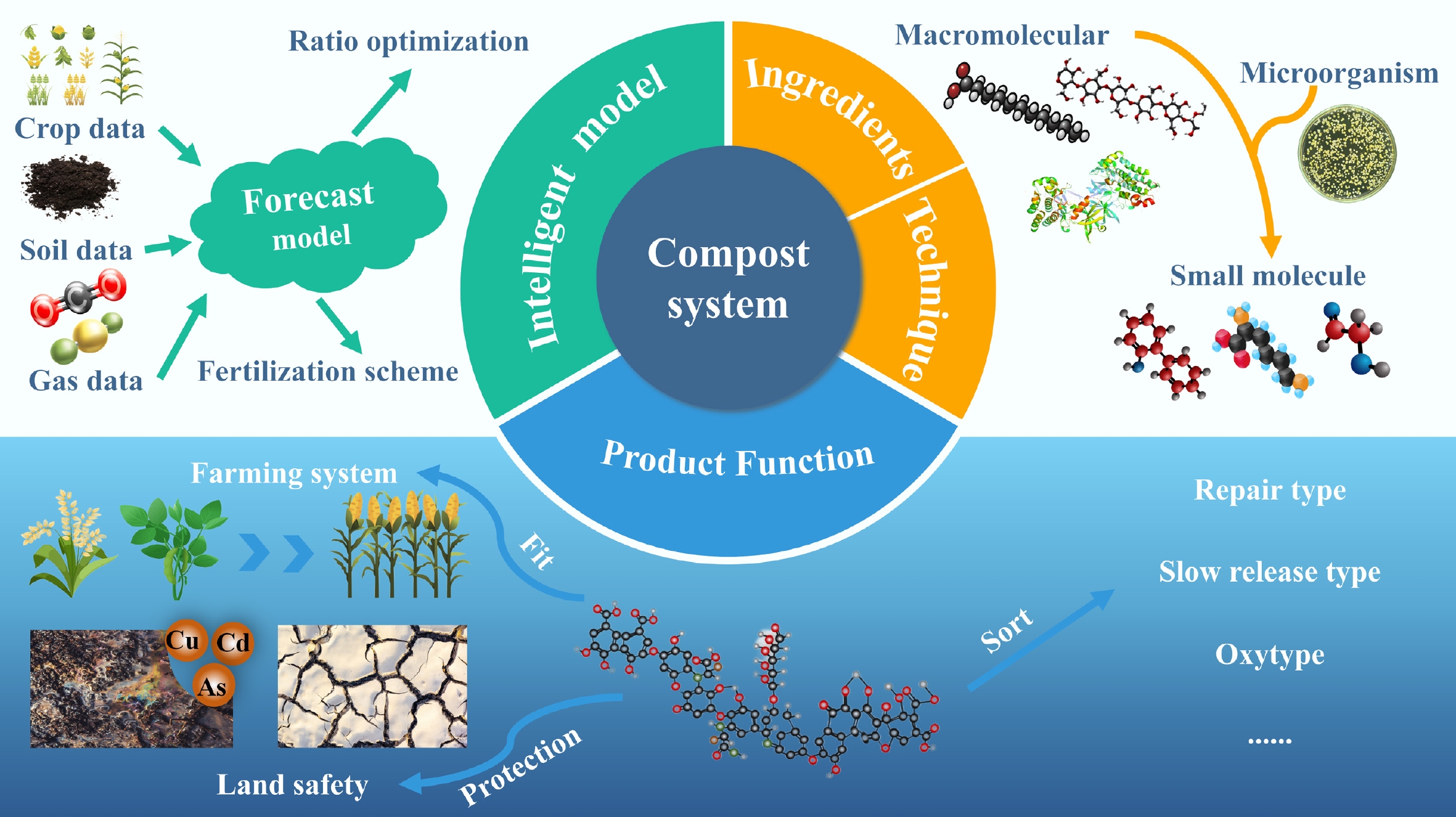
Figure 2.
Conceptual framework for the future development of compost standard system. The framework envisages compost standard ingredients-technology-plant-soil-intelligent management to design a compost standard system that conforms to the organic solid waste cycle and precise soil fertilization.
The poor implementation of garbage classification leads to the mixing of organic solid waste with hazardous waste, which significantly reduces the quality of compost feedstock. Standardized protocols must be established for the classification, impurity removal, and pretreatment of key raw materials, such as food waste and livestock manure, to enable source-level mitigation of heavy metals and emerging contaminants. Simultaneously, grading and classification standards for raw materials should be established based on their nutrient content, pollutant risks, and physicochemical properties to enable precise alignment with soil remediation needs.
To achieve precise control of the composting process for enhanced product quality. It is necessary to strengthen guidance on the use of functional microbial agents and to establish standards for efficacy evaluation. Building upon existing composting agents, the focus should be on developing specialized microbial inoculants designed to address specific soil constraints, such as nitrogen fixation, phosphorus solubilization, and growth promotion[99−101]. Standardized inoculation methods and operational protocols should also be developed to facilitate their effective application.
An intelligent monitoring model[102] integrates crop types, nutrient requirements, soil physicochemical properties, constraints, and parameters such as temperature and humidity in the target area to establish a precise decision-making system. Based on specific agricultural production needs, it can recommend optimal composting formulations and application plans, thereby enabling refined management throughout the entire process–from raw material selection to field application.
A functional grading standard for compost products should be established. Based on their organic matter functional group structure, degree of stabilization, and abundance of specific functional microorganisms, products should be categorized into types such as conservation type, activation type, slow release type, and repair type. The applicable soil constraint types and expected efficacy for each category should also be defined.
To formulate technical specifications for the evaluation of functional compost products, a qualitative and quantitative analysis of the chemical structure and redox characteristics of organic matter in compost should be conducted at the molecular level[103,104].
Technical specifications for precision compost application based on soil constraint factors should be developed. Clarify the principles for selecting compost products, determining safe application rates, and identifying application methods for different grades of cultivated land (acidified, salinized, and heavy metal-contaminated soils).
A standard for the ecological risk assessment of soil following compost application should be formulated. This standard should extend beyond the conventional monitoring scope of traditional pollutants (heavy metals) and systematically incorporate detection methods for emerging contaminants, such as antibiotic resistance genes and microplastics. Additionally, a long-term evaluation system should be established to continuously monitor soil microbial community structure, diversity, and phytotoxicity in the application areas. This system should also include standardized accounting methods for soil carbon sequestration effects and greenhouse gas emissions. By integrating these multi-dimensional indicators, a dynamically responsive assessment mechanism will be established to provide a scientific basis for risk management and the continuous optimization of agricultural practices.
-
The study has demonstrated that, despite the establishment of a compost standard system framework, there remains a mismatch between soil requirements, compost product functionality, and precise application strategies for different cropping systems. Establishing a tailored compost standard that aligns with agriculture and food systems, soil ecosystems, and climate change is therefore both urgent and of practical significance. More complex requirements need to be taken into account in the actual construction of compost standards. The transition from a singular compost standard system to a holistic approach that integrates raw materials, product functions, and soil–crop ecological cycles represent an imperative strategic necessity.
-
Not applicable.
-
The authors confirm their contributions to the paper as follows: conceptualization, data curation: Yun Lu, Yan Wang, Jialin Yu, Zihan Wang; writing-original draft: Yun Lu; writing-review and editing: Xinyu Zhao, Beidou Xi, Yan Wang; supervision and funding acquisition: Xinyu Zhao, Beidou Xi. All authors reviewed the results and approved the final version of the manuscript.
-
The datasets used or analyzed during the current study are available from the corresponding author on reasonable requests.
-
This work was supported by the National Natural Science Foundation of China (No. 52270142).
-
The authors declare that they have no known competing financial interests or personal relationships that could have appeared to influence the work reported in this paper.
-
Full list of author information is available at the end of the article.
- The supplementary files can be downloaded from here.
- Copyright: © 2026 by the author(s). Published by Maximum Academic Press, Fayetteville, GA. This article is an open access article distributed under Creative Commons Attribution License (CC BY 4.0), visit https://creativecommons.org/licenses/by/4.0/.
-
About this article
Cite this article
Lu Y, Wang Y, Yu J, Zhao X, Wang Z, et al. 2026. Advancing the refinement of compost standards: tailoring composting and fertilization protocols to align with specific soil requirements. Agricultural Ecology and Environment 2: e008 doi: 10.48130/aee-0026-0005 

Advancing the refinement of compost standards: tailoring composting and fertilization protocols to align with specific soil requirements
- Received: 29 October 2025
- Revised: 06 January 2026
- Accepted: 20 January 2026
- Published online: 04 March 2026
Abstract: The transformation of organic solid waste resource disposal into compost is in alignment with the principles of sustainable development, enhancing the recycling rate and facilitating the attainment of the dual-carbon goal. However, constrained by a disregard for other functions of compost, and the specific requirements of the soil, current compost standards continue to facilitate the development of unrestrained industries with a sole focus on high organic matter content. Therefore, refining the rough classification and single compost standard into tailored composting and fertilization protocols is necessary to meet the specific requirements of the soil. This review begins by examining the interrelationship among compost, soil, and agricultural crops by exploring the practical application and development of compost in agricultural settings. The study critically evaluates the deficiencies in the existing compost standards, focusing on raw material selection, preparation techniques, application methodologies, risk assessment, and management oversight.