











-
Soil is increasingly recognized as a nonrenewable resource on a human timescale, given that its formation or regeneration occurs extremely slowly[1]. Beyond supporting food, fiber, and bioenergy production, soil provides essential ecosystem services, including nutrient cycling, water regulation, biodiversity conservation, and climate mitigation through carbon storage[2]. Consequently, maintaining the soil's quality and health has become a global priority under the pressure of agricultural intensification and climate change. The growing world population, expected to reach between 9.4 and 10 billion people by 2050, further intensifying the need for increased agricultural productivity[3]. However, this intensified agricultural demand often accelerates soil degradation and pollution, threatening the soil's biodiversity and ecological functioning[4].
Pesticides have been widely used to sustain crop yields by reducing pest-related losses and damage[5]. As a result, agricultural soils have become a major sink for pesticide residues, whose fate is strongly influenced by the soil's physicochemical properties, including pH, organic matter content, texture, and mineral composition[6]. Global pesticide use has increased substantially over recent decades, reflecting the intensification of modern agriculture[7,8]. This trend raises growing concerns about long-term contamination and chronic risks to soil organisms, microbial communities, and ecosystem services[9]. Among the most relevant contaminants in agricultural soils, particular attention has been given to copper (Cu), which is widely applied as a fungicide in perennial crops, and to glyphosate (Gly) and its main degradation product, aminomethylphosphonic acid (AMPA), which are frequently detected in both agricultural and urban soils[10].
Copper is an essential element for plants and microorganisms, as it is involved in key metabolic processes such as photosynthesis, respiration, enzymatic regulation, and lignin synthesis[11]. However, repeated and long-term application of Cu-based fungicides (e.g. Bordeaux mixture and other formulations) has led to accumulation of Cu in soils, particularly in vineyards, orchards, and horticultural systems. When present at elevated concentrations, Cu becomes toxic and may induce oxidative stress, disrupt cell membranes, inhibit enzyme activity, and cause substantial shifts in soil microbial communities and functions[12]. Beyond direct effects on plants and microorganisms, the accumulation of Cu in soils compromises the survival and behavior of soil organisms such as earthworms, which play crucial ecosystem engineering roles, including the incorporation of organic matter, the formation of stable aggregates, and the regulation of soil porosity[13]. In the long term, this accumulation may drastically reduce the soil's biodiversity, limiting its resilience to external stresses and ultimately impairing its quality and capacity to sustain essential ecosystem services[14].
In parallel, Gly is currently the most widely used herbicide worldwide because of its broad-spectrum action and extensive application in herbicide-tolerant crops and conventional farming systems, as well as in nonagricultural settings[15]. Because of its high solubility in water and affinity for soil minerals, Gly may initially be retained in mineral fractions; however, continuous application leads to its accumulation, mainly in the form of AMPA, a highly persistent metabolite[16]. The action of Gly is not restricted to target plants, as it also exerts antimicrobial effects by inhibiting mycorrhizal fungi and beneficial soil bacteria, thereby altering the dynamics of microbial communities[17]. Furthermore, its presence can negatively affect larger soil organisms, such as earthworms, inducing behavioral changes that manifest as avoidance responses and reduced biological performance[18].
Despite the high relevance of these contaminants, the co-occurrence of Cu and Gly in agricultural soils remains insufficiently explored. In many cropping systems, Cu-based fungicides and Gly are applied in the same areas and within overlapping time windows, increasing the likelihood of combined exposure for the soil biota[19]. Their interaction may result in complex and nonadditive effects, in which Gly can chelate metal ions such as Cu, potentially altering its mobility and bioavailability, whereas elevated Cu levels may suppress microbial activity and slow Gly's degradation, increasing its persistence in soil[20]. However, most studies still focus on single-compound exposure, leaving a critical knowledge gap regarding mixture toxicity and its implications for soil health and ecosystem services[21].
In recent years, increasing attention has been given to mixture toxicity in soil ecotoxicology, particularly under realistic agricultural scenarios where multiple contaminants co-occur. Behavioral ecotoxicology has emerged as a sensitive approach to detect early stress responses before lethal or reproductive effects become evident. Avoidance assays, standardized by International Organization for Standardization (ISO) 17512-1, have been increasingly used to evaluate oboth contamination and the effectiveness of remediation, including biochar amendments. Despite this progress, studies integrating heavy metals and herbicides in controlled artificial soils remain limited, particularly under mixed Cu–Gly exposure affecting soil macrofauna.
Among several sustainable strategies to mitigate soil contamination, biochar has gained increasing attention as a carbon-rich material produced via pyrolysis of biomass under limited oxygen conditions[22]. Biochar typically exhibits a high surface area, high porosity, and many reactive functional groups, supporting its capacity to adsorb and immobilize a range of contaminants while improving the soil's physicochemical properties[23]. In contaminated soils, biochar may reduce Cu's bioavailability through mechanisms such as surface complexation, ion exchange, precipitation, and pH-driven immobilization[24]. It may also decrease Gly's mobility via adsorption onto porous surfaces and interactions with functional groups, potentially reducing soil organisms' exposure to Gly[25]. Additionally, biochar amendments can enhance the soil structure, water retention, cation exchange capacity, and the microbial habitat quality, supporting the soil's biological recovery and resilience[26]. These improvements may also benefit soil fauna, as earthworms often exhibit reduced avoidance and increased residence time in amended soils, reflecting enhanced habitability and lower toxic pressure[27].
Earthworm avoidance tests are a rapid and ecologically relevant tool to assess soil contamination and the effectiveness of remediation, providing early behavioral responses that reflect the habitat's suitability[28]. These assays are sensitive, reproducible, and ethically advantageous compared with long-term survival or reproduction tests, allowing the detection of sublethal effects that may precede population-level impacts[29]. When applied in remediation studies, avoidance responses can capture both contaminants' toxicity and the functional improvement promoted by amendments such as biochar, supporting decision-making for sustainable soil management[30].
In the present study, the impact of increasing concentrations of Cu and Gly, applied individually and in combination, was assessed using earthworm avoidance tests. For the two highest combined concentrations, the potential of biochar applied at an agronomic dose to mitigate avoidance responses was evaluated, aiming to determine if biochar can restore soil's habitability under mixed contamination scenarios. This approach was chosen because of the practical relevance of the two contaminants studied, which are frequently applied simultaneously in agricultural soils but have rarely been evaluated together. Therefore, this work aims to fill an important gap in scientific knowledge by providing novel data on the combined effects of Cu and Gly on soil fauna and on the potential of biochar as a mitigating tool. By integrating widely used contaminants, an emerging remediation material, and sensitive bioindicators, the study seeks to advance the understanding of environmental risks and support the development of sustainable soil quality management strategies.
-
For the avoidance test, a standardized artificial soil (AS) was used, prepared according to established guidelines to ensure uniformity[19]. The use of AS has proved to be a valuable tool in experimental contexts, allowing strict control of substrate variables and ensuring the reproducibility of the results[20]. The AS was prepared by mixing 70% sand, 20% kaolin, and 10% peat (Ø 2 mm) on a dry weight basis. After homogenizing the AS mixture, a composite sample was collected for the purpose of initial physicochemical characterization. The results reveal initial pH (KCl 1M) values of 4.9, organic matter of 57.9 g kg−1, electrical conductivity of 0.2 dS m−1, phosphorus at 58 mg P2O5 kg−1, potassium at 90.1 mg K2O kg−1, a cation exchange capacity of 6.1 cmolc kg−1, sand at 830 g kg−1, silt at 60 g kg−1, and clay at 110 g kg−1. A second composite sample was also considered for determination of the maximum water-holding capacity, with the purpose of adjusting the corresponding values of the AS to the recommended range of 40%−60%, in accordance with international standards[19]. Soil pH was adjusted to 6.0 ± 0.5 in accordance with ISO 17512-1[19] to ensure optimal earthworm performance and to minimize any confounding effects of pH on the contaminants' bioavailability and avoidance behavior. This adjustment was achieved through the addition of 10–30 g CaCO3 (pa) for each kg of peat[21].
Biological model
-
Eisenia fetida was selected as the biological model because of its widespread use in ecotoxicology[19], ease of laboratory culture, rapid life cycle, high reproductive rates, and suitability as a representative soil organism and bioindicator of contaminant exposure[22]. A synchronized culture of E. fetida was commercially obtained from a certified national producer. A stock of 1,000 adults (4 months old) was maintained at 20 ± 1 °C with a 16:8 h light : dark photoperiod, in Organisation for Economic Co-operation and Development (OECD) AS (60% moisture) and fed with organic oats, following OECD Guideline 222. For the avoidance test, 800 adults with a developed clitellum (300–600 mg) were selected and acclimated for 24 h in OECD AS within aerated plastic containers.
Compounds
-
For the study of the different substances and compounds, copper was applied as copper (II) sulfate monohydrate (CuSO4·H2O, ≥ 97% purity, analytical grade; Sigma-Aldrich, Germany). Glyphosate was applied as a commercial formulation (Satelite®, 31.18% w/w isopropyl ammonium salt), according to the manufacturer's specifications. Stock solutions (1,000 mg L−1) were prepared using ultrapure water (resistivity ≥ 18.2 MΩ·cm), and appropriate volumes were added to the AS to obtain the target nominal concentrations. A carbonaceous material (biochar), produced by IberoMassaFlorestal company, commercially marketed as Ecochar®, was used as a soil conditioner. This product is derived from the pyrolysis of forestry residues (Acacia dealbata) at temperatures ranging from 400 to 600 °C, with a 2-h retention time. According to the manufacturer, Ecochar® is an environmentally friendly solid material that functions as both a soil amendment and conditioner, exhibiting alkalizing properties (pH H2O 9.0), with a particle diameter of ≥ 1 and < 20 mm, fixed carbon at > 90%, a density of 400 kg m−3, and a specific surface area of 22 m2 g−1. The material also presents a relatively high cation exchange capacity (CEC) (40 cmolc kg−1), reflecting the presence of oxygen-containing functional groups on the biochar's surface. Its electrical conductivity is generally low (2.0 dS m−1), indicating a limited concentration of soluble salts. The nutrient content is typically low, with total nitrogen concentrations ranging from 0.6% to 0.8% (w/w) and total phosphorus between 0.05% and 0.30% (w/w), which is consistent with highly carbonized materials characterized by a fixed carbon content exceeding 90%. In addition, Ecochar® generally contains very low concentrations of potentially toxic elements, remaining well below the threshold limits established for soil amendments. The concentrations include Cd < 0.3, Pb < 0.9, Cu < 20, Zn < 20, Ni < 10, Cr < 4 mg kg−1, and Hg < 0.3 μg kg−1. These values indicate a low environmental risk associated with its agricultural application. Collectively, these physicochemical characteristics support the suitability of Ecochar® for soil improvement, enhanced nutrient retention, carbon sequestration, and environmental remediation applications.
Experimental assay
-
An avoidance test was selected to evaluate the effects of the different compounds on soil's habitability, using the behavior of E. fetida as the endpoint. This type of experiment is recognized as a standard method and is recommended by international organizations such as the OECD and ISO (ISO 17512-1) because of its simplicity[19], efficiency, and capacity to deliver rapid and reliable results. The experimental design comprised four blocks related to the effects of (1) Cu concentration, (2) Gly concentration, (3) their combined application, and (4) the addition of biochar at the agronomic dose of 1% (w/w) for the two highest concentrations of Cu and Gly combined. The addition of biochar was performed at an agronomic rate of 1% (w/w), corresponding approximately to 20 t ha−1. This rate falls within the range widely used in soil amendment and ecotoxicological studies evaluating the effects of biochar on contaminants' mobility and the soil's biological responses. Application rates between 0.5% and 2% (w/w) have been widely reported to significantly influence contaminant sorption, soil pH, and microbial activity without causing unrealistic alterations to the soil's properties. For both the individual and combined assessments of the compounds, a range of concentrations was evaluated, as detailed in Table 1.
Table 1. Range of concentrations for the individual and combined effects of the compounds under study
Compound Concentration range (mg kg−1) Cu 0, 50, 100, 200 GFs 0, 25, 50, 100 Cu : GFs 0, 50:25, 100:50, 200:100 Cu : GFs_1% BioC 100:50_1% BioC, 200:100_1% BioC The concentration ranges were defined on the basis of literature thresholds for ecological risk. Copper levels above 50 mg kg−1 are known to induce lethal or sublethal effects on soil fauna[24], whereas our Gly concentrations exceeded those tested by Batista et al.[25], who reported no significant impacts at 20 mg kg−1. Each concentration was replicated five times, resulting in 70 transparent plastic containers (19 cm × 14 cm) specifically designed with perforated lids to allow gas exchange, maintain moisture, and prevent the earthworms escaping. Each test container was divided into two equal sections, containing 250 g of AS preadjusted for pH and moisture (Fig. 1).
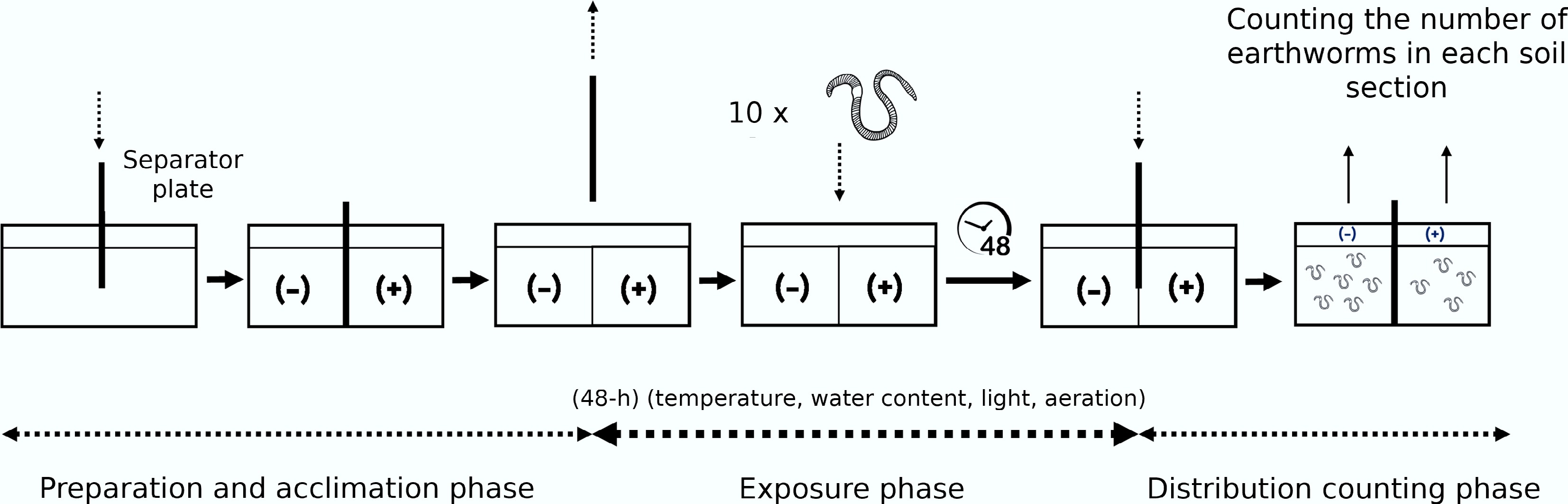
Figure 1.
Schematic representation of the avoidance test assessing the effects of copper and glyphosate individually and in combination on earthworms' behavior in the presence and absence of biochar (0% and 1%).
The sections were marked with (–) for the control soil and (+) for the test soil, following ISO 17512-1[19]. A negative control, with both sections filled with uncontaminated soil (–), was also included for assay validation. After section preparation, the partition was removed, and 10 adult earthworms, each with a well-developed clitellum and a fresh mass of 300–600 mg, were placed along the central line of each container test (Fig. 1). All containers were sealed and incubated for 48 h under controlled conditions with a temperature of 20 ± 2 °C, moisture at 60% water-holding capacity, and a photoperiod of 16 h light : 8 h dark. At the end of the exposure period, the partitioning plate was reinserted, and the number of earthworms in each compared section, the control soil (–), and the test soil (+), was counted. For counting, individuals on the central line were scored as 0.5 per section.
Behavioral responses were evaluated by comparing the distribution of earthworms between the control and test soils. Avoidance percentage (A%) was calculated (A% = ((nc – nt)/N) × 100), where nc and nt are the number of individuals in control and test sections, respectively, and N is the total number of earthworms (10). Positive A% values indicate avoidance, whereas negative values suggest no response or attraction to the test soil[26]. Data were checked for normality (Shapiro–Wilk) and homogeneity of variance (Bartlett), followed by one-way analysis of variance (ANOVA) and the least significant difference (LSD) post hoc test (α = 0.05). Analyses were performed using Excel (Windows® 10) and Statistix 10.
-
The double-control test confirmed the validity of the assay, as the earthworms showed no significant distribution differences between the two uncontaminated soil sections (p > 0.05). The absence of mortality and the neutral response indicate that the AS matrix itself did not exert any intrinsic stress or directional bias on earthworms' movements, fulfilling the acceptability criteria established in ISO 17512-1[19]. Comparable outcomes have been reported in studies using the same standardized AS composition[27,28], supporting the reproducibility, reliability, and suitability of this matrix for behavioral ecotoxicological assessments.
For the individual Cu treatments, statistically significant differences (p < 0.05) in avoidance behavior were observed among the concentrations (Fig. 2). The negative avoidance registered in the control (Cu0, –13.3%) indicates the absence of directional preference and confirms the normal distribution in uncontaminated soil. In contrast, addition of Cu induced a marked and concentration-dependent increase in avoidance, with responses ranging from 40% to 87%. These findings confirm E. fetida as a sensitive bioindicator of Cu contamination and highlight the strong influence of metal bioavailability on these earthworms' habitat selection behavior. The increase in avoidance with rising Cu concentrations clearly demonstrates a dose–response relationship (Fig. 2), suggesting that elevated Cu levels impair the soil's habitability and directly affect the spatial distribution patterns of soil-dwelling organisms such as earthworms.
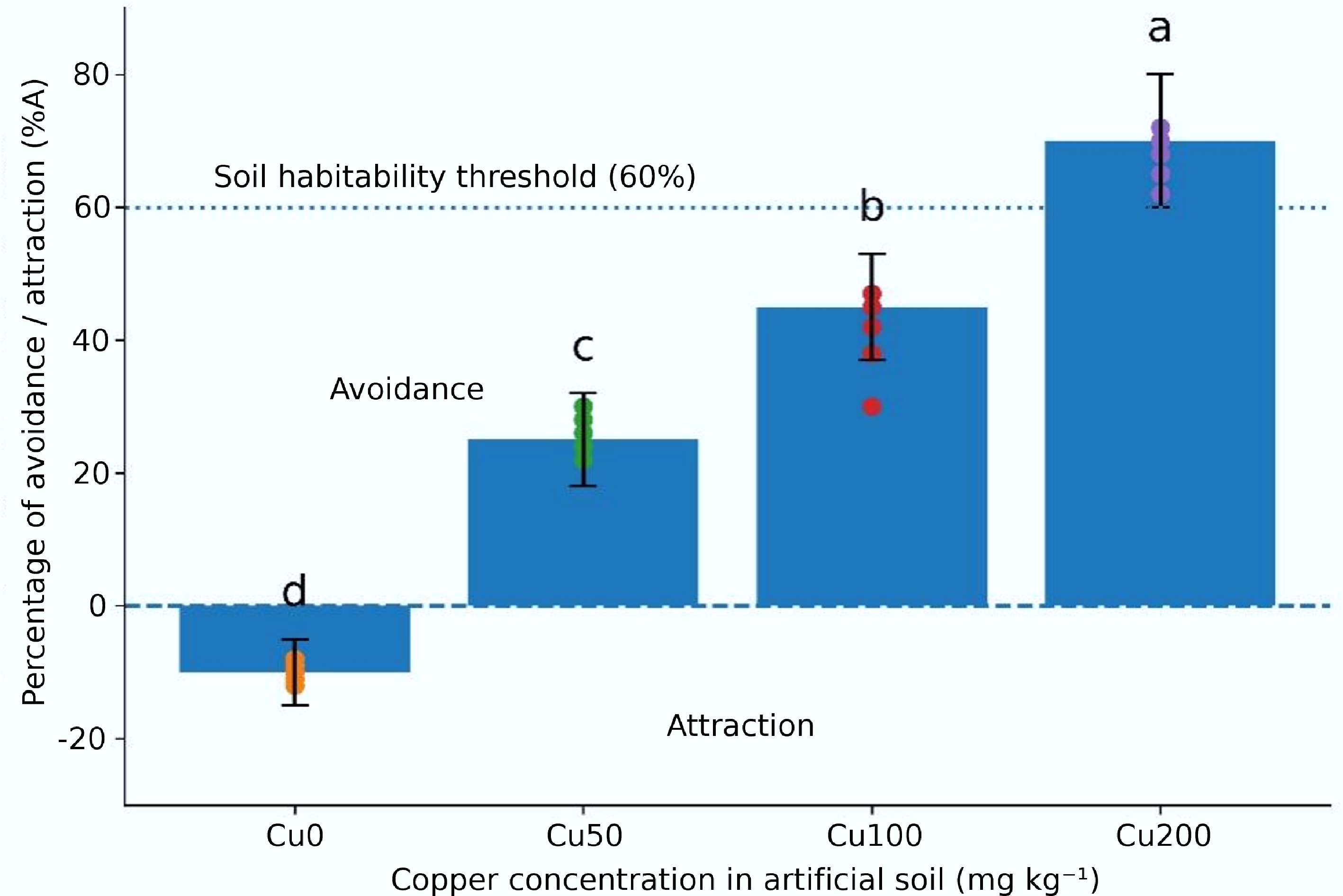
Figure 2.
Percentage of avoidance/attraction (A%) in the behavioral test with E. fetida in the treatments without (Cu0) or with copper (Cu50, Cu100, Cu200) in the AS. Bars for each treatment followed by the same letter do not differ significantly according to the LSD test at the 5% probability level; vertical bars indicate standard errors (n = 5).
In the presence of Gly, a progressive and statistically significant (p < 0.05) increase in the avoidance response was observed with increasing soil concentrations (Fig. 3). At 25 mg kg−1, mean avoidance reached 40%, indicating that even moderate exposure levels were sufficient to impair the soil's habitability and trigger avoidance behavior. This response intensified at higher concentrations, with avoidance values approaching the commonly accepted habitability threshold at 50 and 100 mg kg−1. At the highest tested concentration, avoidance reached 60%, reflecting a marked decline in the habitat's suitability. These findings demonstrate the high sensitivity of E. fetida to Gly-contaminated soils and confirm avoidance behavior as a rapid adaptive response to chemical stress. The observed dose–response pattern suggests that increasing Gly availability alters soil conditions in a manner detectable by earthworms, prompting spatial redistribution to minimize exposure.
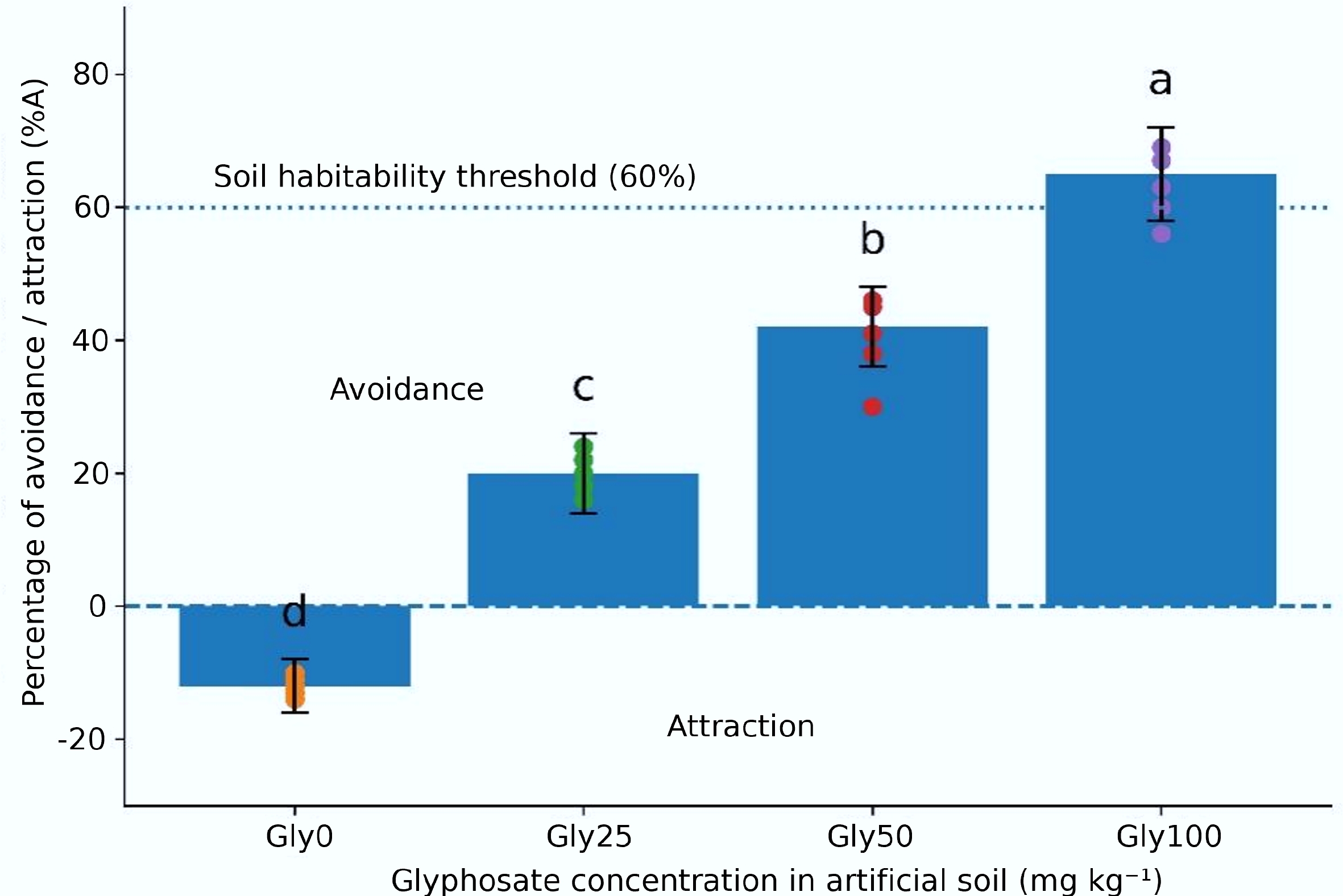
Figure 3.
Percentage of avoidance/attraction (A%) in the behavioral test with E. fetida in the treatments without (Gly0) and with glyphosate (Gly25, Gly50, Gly100) in the AS. Bars for each treatment followed by the same letter do not differ significantly according to the LSD test at the 5% probability level; vertical bars indicate standard errors (n = 5).
The combined exposure to Gly and Cu resulted in a markedly enhanced avoidance response compared with the single-compound treatments, indicating interactive toxicity effects. Avoidance increased significantly (p < 0.05), ranging from 60% to 100% across combined concentrations (Fig. 4). At higher mixture levels, complete avoidance (100%) was observed, reflecting severe impairment of the soil's habitability. Avoidance values exceeding 60% are commonly interpreted as indicative of substantial habitat disturbance, potentially compromising essential ecological functions such as bioturbation, decomposition, and nutrient cycling. The amplified behavioral responses observed under exposure to the mixture suggest that the co-occurrence of heavy metals and herbicides may intensify the ecological risk beyond that predicted for individual exposures. These findings highlight the environmental relevance of Cu–Gly co-contamination as a critical scenario for soil fauna in agricultural systems[29].
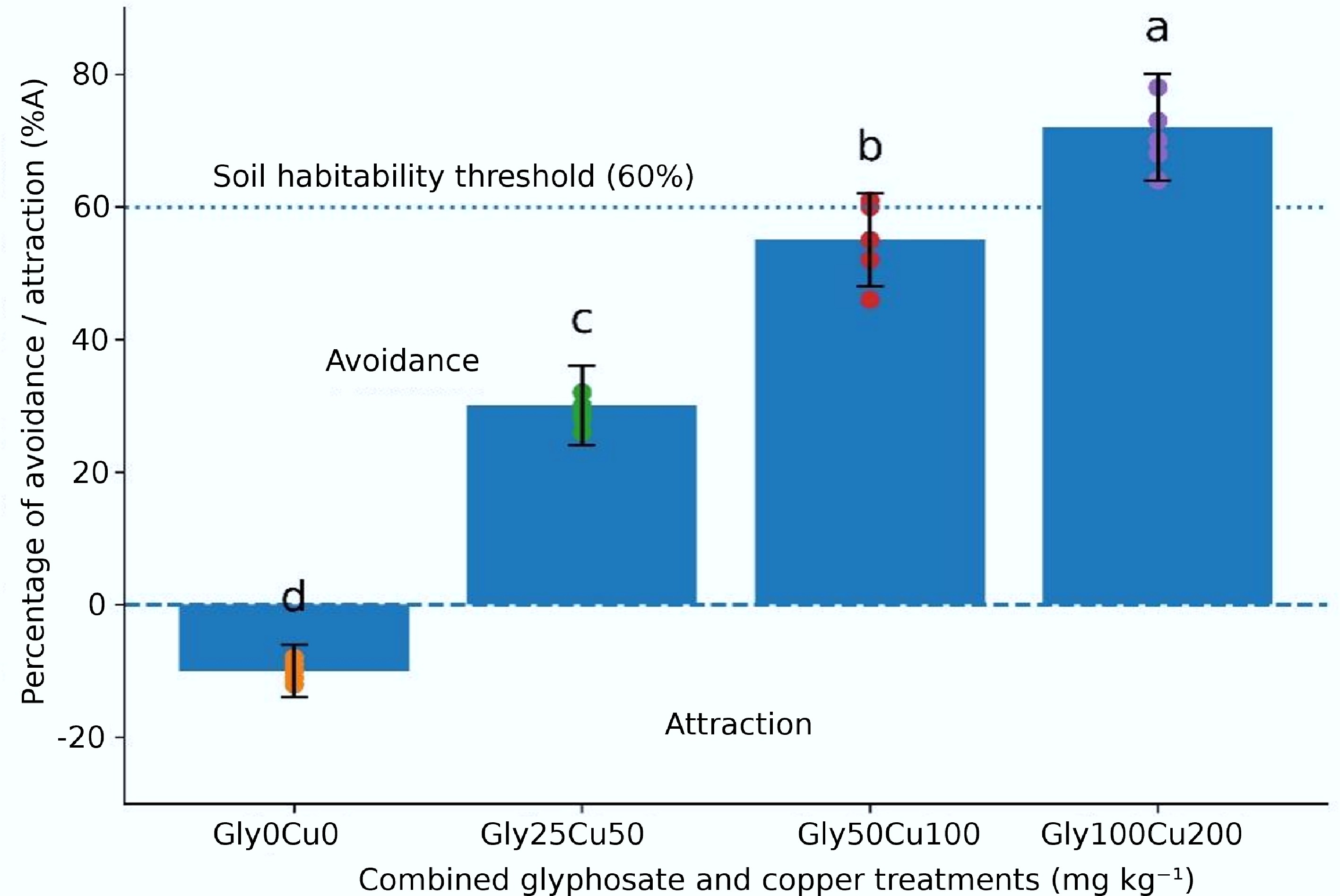
Figure 4.
Avoidance/attraction (A%) in the behavioral test with E. fetida in the treatments without (Gly0Cu0) or with glyphosate and copper (Gly25Cu50, Gly50Cu100, Gly100Cu200) in the AS. Bars for each treatment followed by the same letter do not differ significantly according to the LSD test at the 5% probability level; vertical bars indicate standard errors (n = 5).
Given the pronounced avoidance observed under the combined Cu–Gly exposure, particularly at levels exceeding 90%, which indicates severe impairment of the soil's habitability (Fig. 4), the mitigation potential of biochar applied at 1% (w/w) was subsequently evaluated (Fig. 5). Biochar amendment significantly reduced avoidance responses compared with unamended contaminated soil (p < 0.05). Specifically, avoidance decreased by approximately 29% and 27% in the Gly50Cu100 and Gly100Cu200 treatments, respectively. In the lower mixture treatment (Gly50Cu100), avoidance was reduced to values close to 60%, approaching the commonly accepted soil habitability threshold. These results demonstrate the capacity of biochar to partially restore the soil's ecological suitability under mixed contamination conditions. The observed mitigation likely reflects reduced contaminant bioavailability mediated by adsorption, surface complexation, and modification of the soil's physicochemical properties. Although complete remediation was not achieved at the highest contamination level, the significant reduction in behavioral stress highlights the functional role of biochar as a mitigation strategy in multicontaminant agricultural soils.
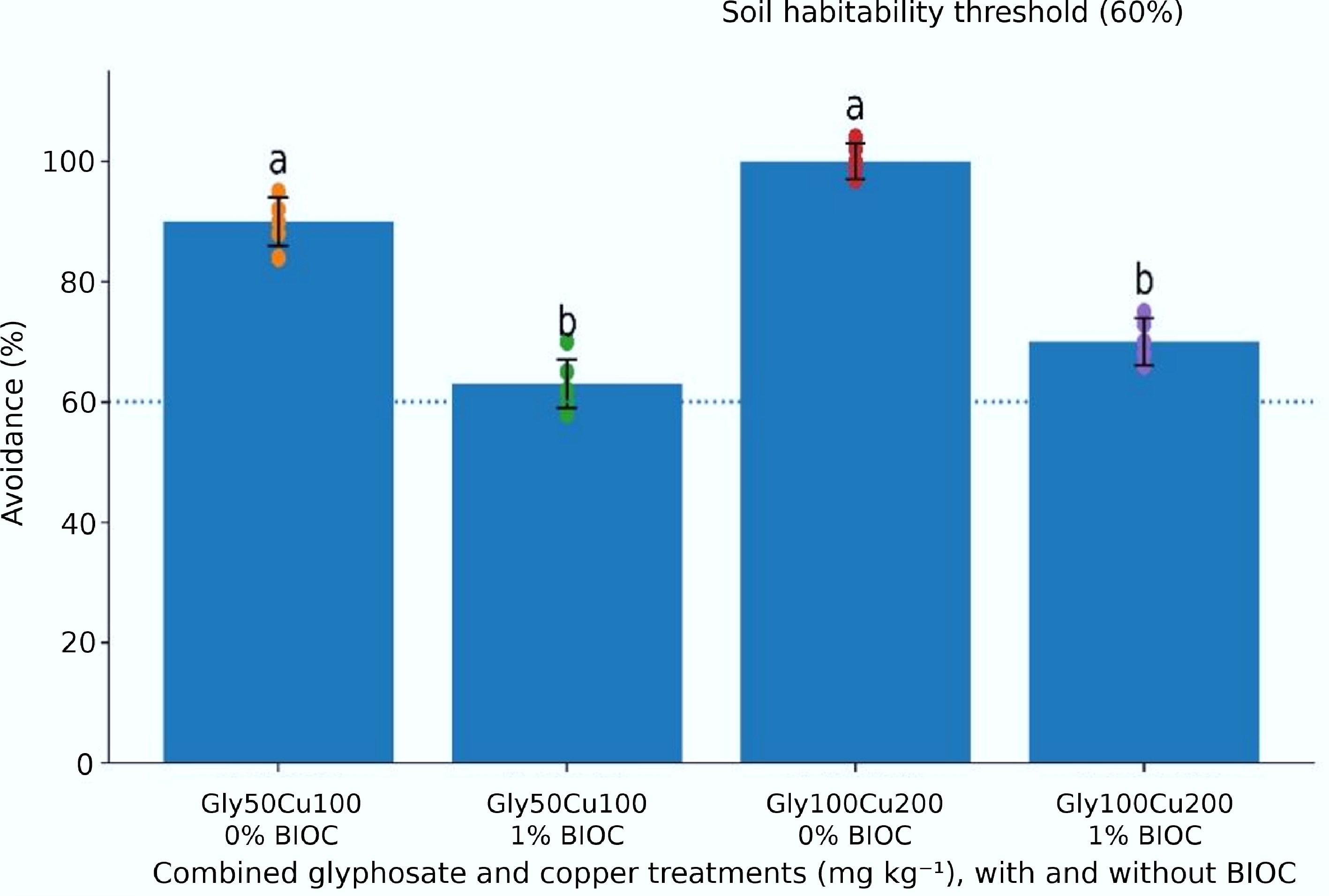
Figure 5.
Avoidance (%) of E. fetida in the behavioral test under combined glyphosate and copper treatments (Gly50Cu100 and Gly100Cu200), with or without biochar 1% (w/w), in AS. Bars for each treatment followed by the same letter do not differ significantly according to the LSD test at the 5% probability level; vertical bars indicate standard errors (n = 5).
These findings are particularly relevant in the context of ecological risk assessments, as the presence of Cu, even at moderate concentrations, may compromise the soil's biological integrity and ecosystem functioning. Previous studies reported similar dose-dependent avoidance responses in E. andrei, reinforcing the sensitivity of earthworms to Cu exposure in standardized assays[30,31]. Importantly, these studies emphasized that avoidance behavior is more strongly associated with the bioavailable fraction of Cu than with its total concentration. In soils characterized by low cation exchange capacity and organic matter content, such as the AS used in the present study, Cu remains weakly complexed and therefore was more readily bioavailable. This enhanced bioavailability likely explains the pronounced behavioral responses observed even at relatively low concentrations[32].
At 100 mg kg−1, the soil's habitability was clearly compromised, with avoidance reaching 66%, exceeding the threshold proposed by Loureiro et al.[33] (Fig. 2). This result is consistent with previous studies reporting 60% avoidance at the same concentration using E. andrei as a biological model[30], reinforcing the reproducibility of behavioral sensitivity across closely related species. At the highest tested concentration (200 mg kg−1), avoidance reached 87%, surpassing the OECD criterion for severe contamination[19] and indicating pronounced ecological stress. Such elevated avoidance levels are consistent with documented Cu-induced physiological disturbances, including reactive oxygen species (ROS) overproduction, oxidative stress, mitochondrial dysfunction, and damage to cellular membranes, proteins, and DNA[34−36]. In earthworms, these disruptions may impair cutaneous respiration, nutrient absorption, and osmotic regulation, ultimately triggering escape behavior or, under prolonged exposure, mortality. A comparable dose-dependent behavioral pattern was observed for Gly treatments. Increasing soil concentrations resulted in a progressive and statistically significant rise in avoidance (Fig. 2), further confirming that both contaminants independently reduce the soil's habitability and induce adaptive redistribution responses in E. fetida.
Existing literature supports this pattern, indicating that Gly-based formulations can adversely affect nontarget soil organisms. Although Gly is widely applied as a herbicide, studies have demonstrated both acute and sublethal effects on earthworms, including alterations in their behavior, physiological performance, and reproductive parameters (Fig. 3)[37]. Reported mechanisms include disruption of the gut microbiota's composition, interference with microbial-mediated amino acid synthesis associated with the shikimate pathway, and reduced activity of digestive and immune-related enzymes[38]. Importantly, pure Gly is generally considered to exhibit relatively low acute and chronic toxicity to earthworms at field-relevant concentrations, since its primary herbicidal target, the shikimate pathway, is absent in animals[39,40]. However, the increased toxicity frequently observed in experimental studies is largely attributed to co-formulants, including the adjuvants and surfactants present in commercial products[16]. These compounds may enhance membrane permeability, increase contaminant uptake, or exert independent toxic effects. Studies on commercial formulations such as Roundup® have shown that these co-formulants substantially contribute to the overall toxicity observed in soil organisms, even at relatively low concentrations of the active ingredient[41].
Therefore, the behavioral responses observed in the present study likely reflect the combined influence of the active ingredient and the formulation's additives, reinforcing the need to evaluate commercial products rather than isolated compounds when assessing ecological risk.
The observed response pattern suggests cumulative and potentially interactive toxicity effects under combined exposure (Fig. 4). Notably, even at moderate concentrations (Gly25-Cu50), avoidance exceeded the commonly accepted soil habitability threshold, indicating that co-exposure intensified behavioral stress beyond that observed under single-compound treatments. This behavior highlights the potential environmental impact of agricultural practices involving the combined application of these compounds, a common scenario in intensive farming systems[42]. In contrast, the corresponding individual treatments elicited avoidance responses below 40%, suggesting that at these concentrations, the isolated toxicity of each contaminant was insufficient to markedly compromise the soil's habitability. Together, these findings indicate that Cu and Gly interact in a manner that amplifies behavioral disruption in E. fetida. Interactions between heavy metals and organic compounds, including pesticides, are known to influence contaminants' speciation, bioavailability, and biological responses in soil organisms[43]. Glyphosate possesses phosphonate and carboxyl functional groups that are capable of chelating divalent metal cations such as Cu2+, leading to the formation of organometallic complexes[44,45]. These complexes may alter the metal's mobility, modify its persistence dynamics, and affect exposure pathways[46]. At the soil level, such interactions may influence nutrient availability, soil pH, and the microbial community's structure, potentially increasing ecological stress[47]. The resulting modifications to the soil's chemical and biological properties may create unfavorable habitat conditions that intensify avoidance behavior in soil fauna[48]. Moreover, Cu-induced suppression of microbial degradation may prolong glyphosate's persistence, whereas Gly-mediated complexation may modify Cu's bioavailability, creating a feedback loop that enhances ecological disturbance under mixed contamination scenarios[49].
In addition to the direct toxicity of each contaminant, interactions among Gly, its degradation products, and copper may further influence the contaminants' behavior in soil systems. Glyphosate possesses phosphonate, carboxyl, and amine functional groups that provide a strong capacity to chelate divalent metal ions such as Cu2+, promoting the formation of relatively stable organometallic complexes. These complexes can alter Cu's speciation, mobility, and bioavailability, potentially modifying exposure pathways for soil organisms[43−45]. Furthermore, degradation of Gly in the soil commonly produces AMPA, a persistent metabolite that retains similar functional groups that are capable of interacting with metal ions and mineral surfaces. Consequently, both glyphosate and AMPA may participate in complexation reactions with Cu or compete for sorption sites in soil particles, influencing the partitioning of the metal between the soil's solution and solid phases. In addition, elevated Cu concentrations may suppress the microbial communities responsible for degrading Gly, thereby slowing the transformation of Gly into AMPA and prolonging its persistence in soil environments[16]. These reciprocal interactions among metal speciation, herbicide persistence, and microbial activity may contribute to the enhanced ecological effects observed under combined Cu-Gly exposure in the present study.
The mitigating effect of biochar can be attributed to its well-documented capacity to immobilize contaminants in the soil[50−53]. This functionality is largely associated with its high specific surface area, porous structure, and negative surface charge and the presence of oxygen-containing functional groups capable of interacting with both metal cations and polar organic compounds[54]. In the case of Cu, immobilization primarily occurs through surface complexation, chemisorption, ion exchange, and interactions with carboxylic and phenolic groups, leading to a reduction in bioavailable metal fractions and, consequently, lower toxicity[55,56]. For Gly, adsorption onto biochar can be substantial, particularly in materials with higher aromaticity and well-developed microporosity, which enhance retention and reduce mobility within the soil matrix[57,58]. However, under the highest combined contamination level (Gly100Cu200), avoidance values remained above the soil habitability threshold even after biochar amendment (Fig. 5). This suggests that the applied rate (1% w/w) may not have been sufficient to fully mitigate the contaminants' bioavailability under severe co-contamination. Under elevated Cu and Gly concentrations, greater biochar application rates may be required to achieve more effective ecological restoration. Additionally, under mixed contamination scenarios, competitive adsorption processes may occur, whereby Cu ions and Gly molecules compete for reactive sites on the biochar's surface. Such competition can reduce the effective immobilization capacity of biochar, particularly at high contaminant loads, thereby limiting its mitigation efficiency. Previous studies have demonstrated that multicontaminant systems may alter the sorption dynamics and binding site availability in biochar-amended soils[49,52]. These interactions highlight the importance of considering contaminant mixtures, the biochar's characteristics, and application rates when designing remediation strategies for complex agricultural pollution scenarios.
The co-occurrence of Cu and Gly in agricultural soils represents an environmentally relevant yet still insufficiently explored contamination scenario. Both compounds are frequently applied within the same cropping systems and often during overlapping periods, increasing the likelihood of simultaneous exposure in soil ecosystems. Glyphosate possesses functional groups capable of chelating divalent metal ions such as Cu2+, potentially modifying metal speciation and influencing its mobility and bioavailability. Conversely, elevated Cu concentrations may inhibit the microbial activity responsible for Gly's degradation, thereby extending its persistence in the soil[59]. Such reciprocal interactions can alter the exposure pathways and amplify the ecological risk to soil biota. Despite this relevance, most ecotoxicological assessments still focus on single-contaminant exposure, limiting the ecological realism of risk evaluation frameworks. Mixed contamination by Cu and Gly may impair essential soil functions, including nutrient cycling, organic matter turnover, carbon sequestration, and maintenance of biodiversity. Progressive chemical degradation reduces the soil's resilience, compromises its agronomic productivity, and weakens its capacity to function as a biogeochemical buffer against environmental pollution. These considerations underscore the need for mitigation strategies capable of addressing multicontaminant scenarios, particularly in intensively managed agricultural systems. In this context, carbon-based amendments such as biochar have emerged as promising tools for addressing co-contamination scenarios, given their ability to modulate contaminants' bioavailability and enhance the soil's physicochemical stability and biological resilience under complex exposure conditions.
Among several emerging solutions, biochar has gained prominence as a carbonaceous material produced through the pyrolysis of plant residues or other types of biomass under limited-oxygen conditions[60]. Its high specific surface area, well-developed porosity, and abundance of reactive functional groups underpin its strong capacity to interact with both inorganic and organic contaminants[57]. These properties enable biochar to reduce the bioavailability of heavy metals such as Cu through surface complexation, ion exchange, and precipitation processes, while simultaneously decreasing the mobility of herbicides like Gly via adsorption onto porous carbon surfaces[58]. Beyond contaminant immobilization, biochar amendments can modify key soil properties, including its pH, cation exchange capacity, and physical structure, thereby creating a more favorable environment for soil organisms[59]. In addition to its chemical remediation effects, biochar also contributes to the biological restoration of soils by stimulating microbial activity, enhancing enzymatic processes, and promoting soil microbial diversity[60]. Earthworms, in particular, often benefit from reduced soil toxicity and improved structural conditions, exhibiting increased residence time and reduced avoidance behavior in biochar-amended soils[61]. This multifunctional role positions biochar as an effective contaminant immobilizer and a tool for enhancing the soil's biological quality and supporting the delivery of essential ecosystem services. This multifunctionality is particularly relevant under mixed contamination scenarios, where simultaneous immobilization of metals and organic pollutants is required to effectively restore the soil's ecological function.
Earthworm avoidance tests have emerged as a rapid and reliable tool for assessing the ecological impacts of soil contamination and the effectiveness of mitigation strategies, including biochar amendments[51,52]. Standardized according to ISO 17512, these assays evaluate the ability of earthworms to detect and avoid contaminated soils over short exposure periods, typically 48 h[33]. Their short duration, high reproducibility, and sensitivity allow the detection of early behavioral responses to chemical stress, providing a practical and ethically advantageous alternative to longer-term toxicity endpoints[62]. When applied in soil remediation contexts, avoidance assays deliver ecologically relevant insights into the soil's habitability, reflecting both the organism's perception of environmental risk and the functional improvement promoted by the soil amendments. Moreover, these tests can capture subtle interactions between soil amendments and soil fauna, highlighting the dual role of biochar in immobilizing contaminants and enhancing the soil's biological quality, thereby supporting ecosystem restoration and long-term sustainability[63]. In this study, avoidance behavior proved particularly effective in capturing both mixture toxicity effects and biochar-mediated mitigation under controlled conditions.
Although standardized AS ensures reproducibility and comparability across studies, it does not fully replicate the physicochemical and biological complexity of natural agricultural soils. AS lacks heterogeneous organic matter fractions, structured aggregates, diverse microbial communities, and dynamic pH buffering capacity. In natural soils, Cu may be strongly complexed by humic substances or occluded within mineral fractions, potentially reducing its immediate bioavailability[64]. Glyphosate's behavior is influenced by clay mineralogy, iron and aluminum oxides, and microbial degradation capacity[65]. Therefore, the magnitude of the observed avoidance responses may differ in field soils with contrasting texture, organic matter content, and microbial activity. Future studies should validate these findings in natural agricultural soils to improve their environmental extrapolation and ecological realism.
-
This study demonstrates that both Cu and Gly significantly affect the soil's habitability for E. fetida, inducing clear concentration-dependent avoidance responses. Even at moderate concentrations (25 mg kg−1 for Gly and 50 mg kg−1 for Cu), behavioral alterations were detected, highlighting the sensitivity of avoidance assays as early indicators of ecological stress. More importantly, combined exposure to Cu and Gly resulted in markedly amplified effects, with avoidance reaching up to 100%, indicating severe impairment of the soil's habitability. These findings provide strong evidence that mixture toxicity may exceed the effects observed under single-compound exposure, reinforcing the ecological relevance of considering contaminants' interactions in agricultural risk assessments. Biochar applied at 1% (w/w) significantly mitigated avoidance behavior under mixed contamination, reducing responses by approximately 27%−29%. Although mitigation was partial at higher contamination levels, the results confirm the capacity of biochar to reduce contaminants' bioavailability and improve the soil's ecological quality. This highlights biochar as a promising strategy for managing soils simultaneously exposed to metals and herbicide residues. Nevertheless, it is important to recognize that the study was conducted under standardized AS conditions to ensure reproducibility and mechanistic interpretation. Natural agricultural soils present greater physicochemical and biological complexity, including heterogeneous organic matter fractions, mineral diversity, microbial communities, and dynamic buffering capacity, all of which may influence contaminants' speciation, mobility, degradation, and biological effects. Therefore, future research should validate these findings under more realistic environmental conditions, including field or semi-field experiments using contrasting soil types and long-term exposure scenarios. Integrating biochemical biomarkers, reproduction endpoints, and aged contaminant–biochar systems will be essential to confirm the ecological relevance and long-term effectiveness of biochar-based remediation strategies. Overall, this study demonstrates the usefulness of earthworm avoidance assays as a sensitive ecotoxicological tool to detect behavioral stress under single and mixed contamination, while also showing that biochar amendment can potentially restore the soil's habitability under co-contamination.
-
Not applicable.
-
The authors confirm their contributions to the paper as follows: João Ricardo Sousa, Carolina Matos, Tiago Azevedo, Elisabete Nascimento-Gonçalves: conceptualization, design, and performing the experimental framework; Vishnu D. Rahput, Abhishek Singh, João Ricardo Sousa, Tao Zhang, Karen Ghazaryan, Francisco Saraiva, Rupesh Kumar Singh: draft manuscript preparation, data analysis, critically review, and refine it into its final form. All authors reviewed the results and approved the final version of the manuscript.
-
The authors confirm that all data generated or analyzed during this study are included in this published article.
-
The authors declare that they have no conflicts of interest.
-
Full list of author information is available at the end of the article.
- Copyright: © 2026 by the author(s). Published by Maximum Academic Press, Fayetteville, GA. This article is an open access article distributed under Creative Commons Attribution License (CC BY 4.0), visit https://creativecommons.org/licenses/by/4.0/.
-
About this article
Cite this article
Sousa JR, Matos C, Azevedo T, Gonçalves EN, Rajput VD, et al. 2026. Mitigating the effects of copper and commercial glyphosate formulations with biochar: insights from Eisenia fetida avoidance assays. Biochar X 2: e015 doi: 10.48130/bchax-0026-0013 

Mitigating the effects of copper and commercial glyphosate formulations with biochar: insights from Eisenia fetida avoidance assays
- Received: 30 December 2025
- Revised: 11 March 2026
- Accepted: 20 April 2026
- Published online: 13 May 2026
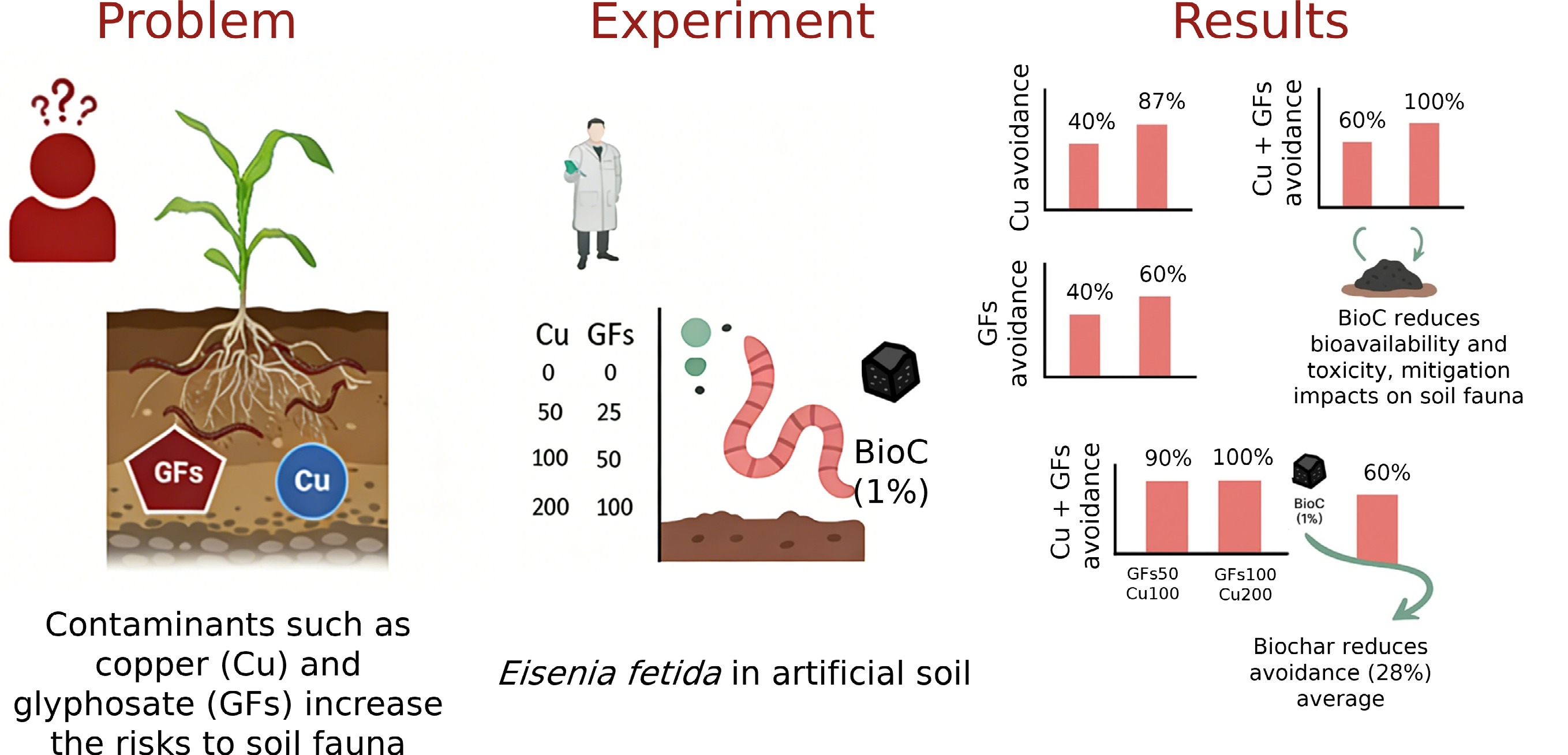
Abstract: Intensive application of pesticides based on glyphosate (Gly) and copper (Cu) in agricultural systems has raised environmental concerns regarding their accumulation in soils and potential ecotoxicological effects on soil-dwelling organisms, thereby increasing the risks to soil fauna. The use of compounds with a high adsorption capacity, such as biochar, may promote the immobilization of these contaminants, reducing their bioavailability and toxicity in the soil. To assess the individual and combined effects of Gly and Cu in soil, as well as the mitigating potential of biochar, an avoidance test was conducted using Eisenia fetida in artificial soil, following International Organization for Standardization standard 17512-1. Treatments were distributed across three experimental blocks, involving four concentrations of Gly (0, 25, 50, and 100 mg kg−1) and Cu (0, 50, 100, and 200 mg kg−1), applied either individually or in combination. A fourth block included the two highest combined concentrations, with the addition of 1% (w/w) BioC. Avoidance behavior was observed in response to Gly or Cu exposure, with concentration-dependent responses. Avoidance rates ranged from 40% to 60% for Gly and from 40% to 87% for Cu. In the combined treatments, avoidance responses were more pronounced, ranging from 60% to 100%, also displaying a clear dose–response effect. In the treatments with the highest combined concentrations of Gly and Cu (Gly50-Cu100 and Gly100-Cu200), the application of biochar significantly reduced avoidance behavior by 29% and 27%, respectively. Biochar represents a promising strategy for mitigating soil pollution by reducing these pollutants' bioavailability and toxicity to edaphic organisms. Although standardized artificial soil enhances experimental control, validation under more realistic soil conditions is warranted.
-
Key words:
- Copper /
- Glyphosate /
- Biochar /
- Eisenia fetida /
- Avoidance test /
- Ecotoxicology