











-
Sweet pepper (Capsicum annuum L.) is a representative fruit and vegetable crop with high added value in domestic and international markets, containing various antioxidant components such as ascorbic acid, carotenoids, tocopherol, and flavonoids, making it a highly sought-after functional vegetable for health benefits[1,2]. In Korea, it was introduced as a fresh vegetable in the early 1990s and has since been intensively cultivated as a strategic export crop; as of 2024, the cultivation area has reached approximately 776 ha[3]. For stable production and high-quality fruit harvests, uniform germination and high seed quality, which determine early growth, are essential, especially under extreme environments such as summer high temperatures in southern regions and winter low temperatures in central and northern regions. Seed quality is closely related to germination rate, germination speed, seedling performance, and storage life, and these characteristics are significantly influenced by the point at which the seed reaches physiological maturity[4,5]. Generally, seeds reach physiological maturity after the seed-filling period, at which point dry weight and physiological functions reach their maximum, and seed quality is often maximised around this time[6]. However, if harvesting is delayed after physiological maturity, increased respiration, accumulation of reactive oxygen species (ROS), and enzyme inactivation can occur, leading to seed cell damage, accelerated ageing, and reduced germination capacity[7]. The physiological and morphological changes observed during seed maturation vary among species, and the timing of physiological maturity does not necessarily coincide with the maximum germination capacity. Considerable research has been conducted on seed development in solanaceous species, including tomato (Solanum lycopersicum)[8], pepper (Capsicum annuum)[9], and eggplant (Solanum melongena)[10], documenting changes in seed dry weight, germination capacity, and seedling performance across developmental stages. In sweet pepper, several studies have shown that harvest time and fruit maturity stage influence seed germination, seedling performance and longevity, but most of this work has relied on external indicators such as fruit colour and end-point germination tests[11,12]. Detailed information on how internal seed morphology, storage-reserve accumulation, and hormone balances change during development, and how these changes relate to the acquisition of germination capacity, remains limited. Recently, studies evaluating seed viability using physiological indicators such as moisture content, dry weight, morphological characteristics, electrical conductivity, tetrazolium (TTC) staining, enzyme activity, and ROS accumulation have been actively conducted in relation to seed maturity. However, analyses that explicitly integrate endogenous hormone dynamics and seed internal structure with germination behaviour are still scarce, particularly in horticultural species such as sweet pepper. Furthermore, most previous studies have focused on a single cultivar or fruit colour, leaving open the question of whether seed maturation patterns are conserved across genotypes with different ripening physiologies[5,13].
Therefore, this study was conducted to characterise morphological and anatomical changes in sweet pepper seeds, together with endogenous hormone dynamics and germination behaviour, between 10 and 50 d after anthesis (DAA), using two cultivars with contrasting fruit colors (red and yellow). The objectives were to characterise morphological and anatomical changes in sweet pepper seeds, together with endogenous hormone dynamics and germination behaviour, between 10 and 50 DAA, and to determine which of these three stages (10, 30, or 50 DAA) is associated with structurally mature seeds that express high germination and a high proportion of normal seedlings under standard laboratory conditions.
-
This study was conducted to characterize the developmental traits and vigor changes of sweet pepper (Capsicum annuum L.) seeds at 10, 30, and 50 DAA. Two cultivars with contrasting fruit colors were selected: the yellow-fruited 'Volidano' (Enza Zaden, Netherlands) and the red-fruited 'Lyker' (Monsanto, USA), to assess whether seed maturation patterns are conserved across genotypes with different ripening physiologies. Seedlings were raised in commercial peat-based plugs and transplanted at the 4–5 true-leaf stage on 8th February 2023. The experiment was conducted in a Venlo-type glass greenhouse located at the Gyeongnam Smart Farm Innovation Valley (Miryang, Republic of Korea). Flowers were tagged at anthesis (defined as the day when petals fully opened) on three staggered planting cohorts to enable collection of fruit at 10, 30, and 50 DAA on the same harvest date (4th May 2023). Plants were grown in a 7.2 m high Venlo-type glass greenhouse using cocopeat-based slab substrates (100 cm × 15 cm × 12 cm; Happy Farmers, Korea) at a spacing of 30–40 cm per plant and trained into a two-stem system. During cultivation, a nutrient solution was supplied at an electrical conductivity (EC) of 3.0 dS·m−1 and pH 5.5, with 80–200 mL applied per plant. Day and night temperatures were maintained at 24–25 °C and 21–22 °C before fruit set, and 21–24 °C and 17–19 °C after fruit set, respectively. CO2 concentration was maintained at 600 μmol·mol−1. All plants were grown under identical environmental conditions, and fruit from each DAA cohort was harvested on the same calendar date (4th May 2023) to ensure uniform environmental conditions across all developmental stages at the time of harvest. While multi-season replication would further strengthen generalizability, the controlled greenhouse conditions minimized environmental variability, allowing focused analysis of stage-dependent changes. Seeds were extracted from the harvested fruit, air-dried to 7% moisture content, and stored at 5 °C until analysis.
Seed development and germination characteristics
-
To examine seed developmental characteristics, fruit was harvested at 10, 30, and 50 DAA. These sampling points were chosen to represent early seed formation (10 DAA), mid-maturation with visible embryo and endosperm differentiation (30 DAA), and late maturation with fully coloured fruit (50 DAA) under the greenhouse conditions used. For each DAA and cultivar, five independent fruits (n = 5) were collected, and fruit fresh weight, seed number per fruit, seed size, 1,000-seed weight, and total seed weight per fruit were recorded. For each DAA and cultivar, 1,000-seed weight was estimated by weighing eight replicates of 100 seeds from the pooled seed lot of five fruits and multiplying the mean by 10. Extracted seeds were air-dried to 7% moisture and stored at 5 °C until use.
Germination tests were conducted by placing 50 seeds per replicate (three replicates per DAA per cultivar) on two layers of filter paper (ADVANTEC No. 2) in 9 cm Petri dishes moistened with 5 mL distilled water. They were incubated in darkness at 25 °C for 14 d (incubator model, Jeiotech, Korea). Seeds were considered germinated when the radicle protruded ≥ 1 mm. Germination was recorded every 24 h, and time to 50% germination (T50) was calculated following Coolbear et al.[14]. Standard germination and normal seedling proportions were evaluated according to the International Rules for Seed Testing (ISTA, 2022)[15], and the proportion of normal seedlings was used as a practical indicator of seedling quality under optimal laboratory conditions.
Standard germination and normal seedling assessment
-
Seedling quality was further assessed using the Between Paper (BP) method according to ISTA (2022) as a complementary evaluation to the standard germination test described in section 'Seed development and germination characteristics'. One hundred seeds per replicate (three replicates per DAA per cultivar) were arranged at regular intervals on moistened heavy paper, covered with regular paper, rolled, and placed vertically in a 25 °C incubator for 14 d. On the 7th and 14th days of germination, the seedlings were removed and classified as normal seedlings, abnormal seedlings, or non-germinated seeds. Normal seedlings were defined as those with a complete embryo structure and well-developed major organs such as radicles and cotyledons, in accordance with ISTA (2020) standards, indicating the potential for normal growth; criteria included straight and sufficiently long radicles and clearly differentiated cotyledons. Abnormal seedlings were defined as those unable to grow normally because of abnormalities in the radicle or cotyledons, tissue necrosis, decay, discolouration or deformation, including curvature of the radicle, node formation, brown spots or delayed development. Non-germinating seeds were considered to be seeds that did not germinate at all or did not develop an embryo.
Observation of internal seed structure
-
To qualitatively observe morphological changes during seed development, tissue samples were prepared from seeds of the sweet pepper cultivar 'Lyker' (red-fruited) as a representative genotype. Because sweet pepper seed quality and developmental progression have been shown to change in a broadly similar manner during maturation, and because red and yellow cultivars showed comparable germination at 50 DAA in the present study, a single cultivar was used for detailed ultrastructural analysis[16]. The collected seeds were immersed in 4% paraformaldehyde prepared in 0.1 M phosphate buffer (pH 7.2) and fixed at 4 °C for 12 h. After fixation, samples underwent a graded ethanol dehydration series (50%, 85%, 95%, and 100%), with each step lasting 30 min, and were preserved in 100% ethanol for 12 h. The dehydrated samples were transferred to Histoclear (National Diagnostics, USA) and embedded in Paraplast Plus (Sigma-Aldrich, USA) at 60 °C for 12 h. Embedded seeds were sectioned at 10 μm thickness using a rotary microtome (HistoCore BIOCUT, Leica, Germany) and mounted on glass slides. To observe surface and internal microstructures, sections were mounted directly on a scanning electron microscope (SEM, S-3400N, HITACHI, Japan) stub without metal coating and examined at 30× magnification with an accelerating voltage of 10–15 kV under vacuum. The development status of the seed coat, endosperm tissue, and embryo was compared among stages, and at least 10 seeds per stage were observed to ensure representativeness. Future studies may extend SEM comparisons to additional genotypes, including yellow-fruited cultivars.
Quantitative analysis of plant hormones
-
For the quantitative analysis of plant hormones in seeds, seeds from both red ('Lyker') and yellow ('Volidano') cultivars collected at different stages of maturity (10, 30, and 50 DAA) were freeze-dried, ground, and used as samples (50 mg per biological replicate; n = 3 per DAA per cultivar). The sample was placed in a 2.0 mL microtube with 1.0 mL of extraction solution (80% methanol, 1% acetic acid, 0.1% butylated hydroxytoluene [BHT]), and shaken at 4°C for 2 h. The supernatant was then separated by high-speed centrifugation at 13,000 rpm for 20 min and filtered through a 0.22 μm PTFE syringe filter. Hormones were quantified using an HPLC system (1260 Series, Agilent Technologies, USA) equipped with an Eclipse Plus C18 column (4.6 mm × 50 mm, 3.5 μm; Agilent) at 30 °C. The mobile phase consisted of solvent A (water with 0.1% formic acid) and solvent B (acetonitrile with 0.1% formic acid), and separation was performed using a gradient elution at 0.5 mL·min−1 with a 10 μL injection volume. The hormones measured were abscisic acid (ABA), gibberellic acid (GA3), indole-3-acetic acid (IAA), jasmonic acid (JA), salicylic acid (SA), and zeatin. Standard compounds (≥ 98%, Sigma-Aldrich) were used to prepare calibration curves in the range 0.01–10.0 μg·mL−1; linearity was evaluated by 1/x-weighted linear regression, with coefficients of determination (R2) ≥ 0.998. The limits of detection (LOD) and quantification (LOQ) were calculated from signal-to-noise ratios (S/N) of 3 and 10, respectively. All samples were analysed in triplicate, and data are presented as means ± standard deviation (SD).
Statistical analysis
-
All significance tests for the experimental results were performed using SAS software (v9.4, SAS Institute Inc., Cary, NC, USA). Differences among means were evaluated at the 95% confidence level using Duncan's multiple range test (DMRT) and least significant difference (LSD) tests at p < 0.05. For hormone and vitamin data comparing both cultivars, two-way ANOVA was conducted to evaluate the main effects of cultivar, DAA, and their interaction (cultivar × DAA) to assign significance.
-
Significant differences in flesh weight, seed weight, total fruit weight, and seed ratio were observed in both red (Lyker) and yellow (Volidano) sweet peppers during maturation (Table 1). Flesh and seed weights increased steadily, with a particularly sharp increase after 30 DAA. As a result, the seed content relative to total fruit weight decreased substantially—by approximately 85%−90% from 10 to 50 DAA in both cultivars. Seed dry weight (1,000-seed weight) continued to increase up to 50 DAA, the last sampling point (Fig. 1). Seed dimensions (length and width) increased rapidly during early development, roughly doubling between 10 and 50 DAA, before plateauing in later stages; yellow-fruited seeds remained consistently slightly larger than red-fruited seeds, although stage-related differences were more pronounced than colour-related differences (Fig. 2, p < 0.05). The number of seeds per fruit was largely established by 10 DAA, increasing by only about 20% thereafter (Table 2). Taken together, these results show that while most structural traits (seed number, length, width) reach near-maximum values by 30 DAA, seed dry weight continues to accumulate until 50 DAA, indicating that physiological maturation extends beyond morphological completion.
Table 1. Effect of fruit maturation stage on flesh weight, seed weight, and proportion of seed weight to total fruit weight in sweet pepper cultivars 'Lyker' (red-fruited) and 'Volidano' (yellow-fruited).
Cultivar DAAz Fresh weight (g·fruit−1) Ratio of seed on total weight (%) Flesh Seed Total weighty Red sweet pepper 10 3.71cx 0.50b 4.21c 11.87a 30 58.14b 1.61b 59.75b 2.69b 50 204.77a 3.51a 208.28a 1.68b Yellow sweet pepper 10 5.48c 1.22c 6.70c 18.20a 30 53.70b 1.91b 55.61b 3.43b 50 176.62a 3.38a 180.00a 1.87b x Means within a column followed by different letters differ significantly at p ≤ 0.05 (Duncan's multiple range test). y Flesh weight refers to the weight of the fruit excluding the seeds located in the placental tissue. z Days after anthesis. 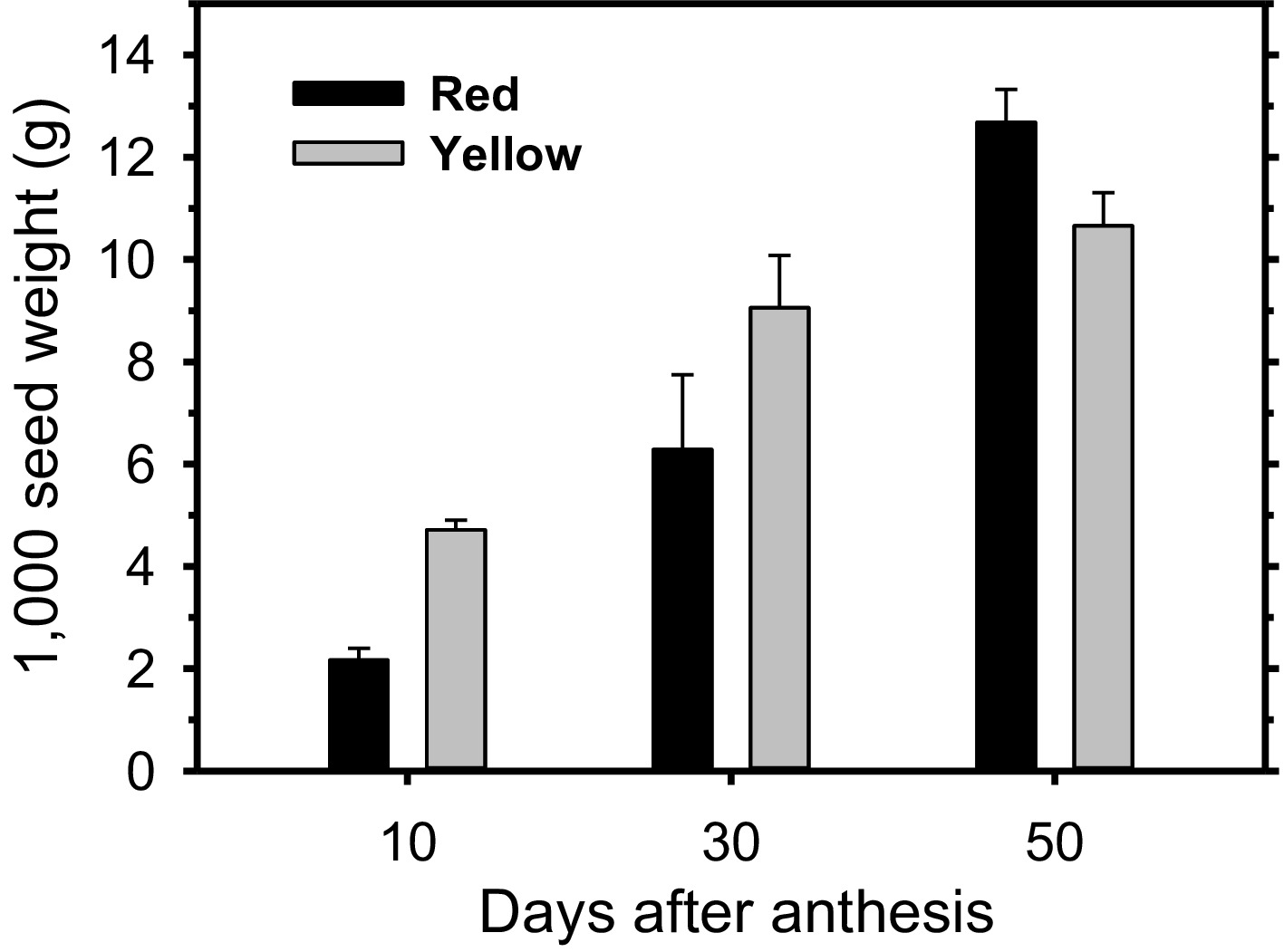
Figure 1.
Changes in seed dry weight during fruit development stages in sweet pepper cultivars 'Lyker' (red-fruited) and 'Volidano' (yellow-fruited). Error bars represent the standard deviation of three biological replicates (n = 3).
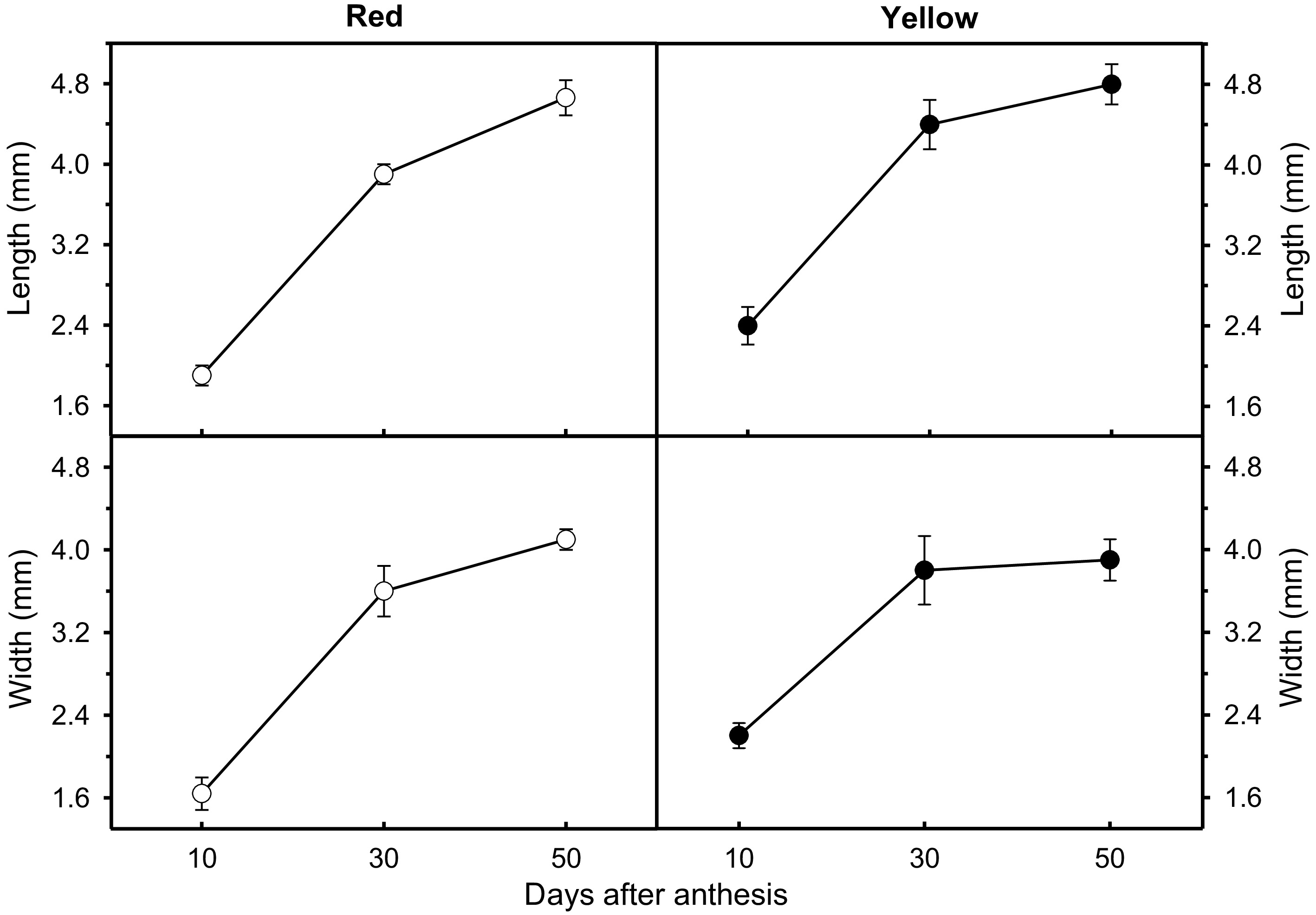
Figure 2.
Changes in seed length and width during fruit development stages in sweet pepper cultivars 'Lyker' (red-fruited) and 'Volidano' (yellow-fruited). Error bars represent the standard deviation of three biological replicates (n = 3).
Table 2. Effect of days after anthesis (DAA) on fruit weight and number of seeds in sweet pepper cultivars 'Lyker' (red-fruited) and 'Volidano' (yellow-fruited).
Cultivar DAAz Fruit weight (g) No. of seeds Red ('Lyker') 10 7.0cy 237.6a 30 69.7b 268.0a 50 234.5a 289.0a Yellow ('Volidano') 10 10.4c 259.6b 30 65.4b 243.2b 50 201.2a 317.6a y Means within a column followed by different letters differ significantly at p ≤ 0.05 (Duncan's multiple range test). z Days after anthesis. DAA effects on germination and seedling quality
-
Seeds harvested at 10 and 30 DAA did not germinate under standard conditions, indicating that developmental stages prior to 50 DAA are insufficient for the acquisition of germination capacity. In contrast, seeds harvested at 50 DAA achieved high germination (88%) for both red and yellow cultivars, with mean times to 50% germination (T50) of approximately 2–2.5 d (Table 3). Seedling quality, assessed using the between paper (BP) method, improved markedly between 7 and 14 d of incubation. At 7 d, normal seedling percentages were 59% for the red cultivar and 78% for the yellow cultivar; by 14 d, both cultivars reached 81% normal seedlings, indicating that a short additional period allows full expression of seedling vigour (Table 3). The germination characteristics of seeds were also assessed based on their position within the fruit at 50 DAA (see Table 4). Seeds were classified by their horizontal (top, middle, or bottom) and vertical (left, centre, or right) positions (Fig. 3). In red sweet peppers, the germination percentages were 98.0%, 100.0%, and 99.3% for seeds from the top, middle, and bottom, respectively, with no significant differences observed. Similar results were observed for the yellow cultivar. However, T50 values indicated a slightly faster germination rate of seeds from the top and middle sections than the bottommost part of the placenta.
Table 3. Effect of DAA on germination percentage, median germination time (T50), and seedling quality of red ('Lyker') and yellow ('Volidano') sweet pepper at 25 °C.
Cultivar DAAz Germination (%) T50 (d) Viability Normal (%) Abnormal (%) Red sweet pepper 50 88.0 2.1 7 d 59.0 0.0 14 d 81.0 7.0 Yellow sweet pepper 50 88.0 2.5 7 d 78.0 0.0 14 d 81.0 7.0 Seeds harvested at 10 and 30 DAA did not germinate; data are shown only for 50 DAA. Table 4. Effect of seed position on the placenta, on germination percentage and median germination time (T50) of sweet pepper cultivars 'Lyker' (red-fruited) and 'Volidano' (yellow-fruited) at 25 °C.
Seed position Red cultivar Yellow cultivar Germination (%) T50 (d) Germination (%) T50 (d) Horizontal Top 98.0az 3.48b 94.6a 2.01b Middle 100.0a 3.48b 98.0a 1.98b Bottom 99.3a 3.70a 96.3a 2.42a Vertical Left 100.0a 2.92a 100.0a 2.01a Center 99.3a 2.98a 96.3a 2.10a Right 100.0a 2.75a 96.0a 2.08a z Mean separation within each column was performed using Duncan's multiple range test at p ≤ 0.05. 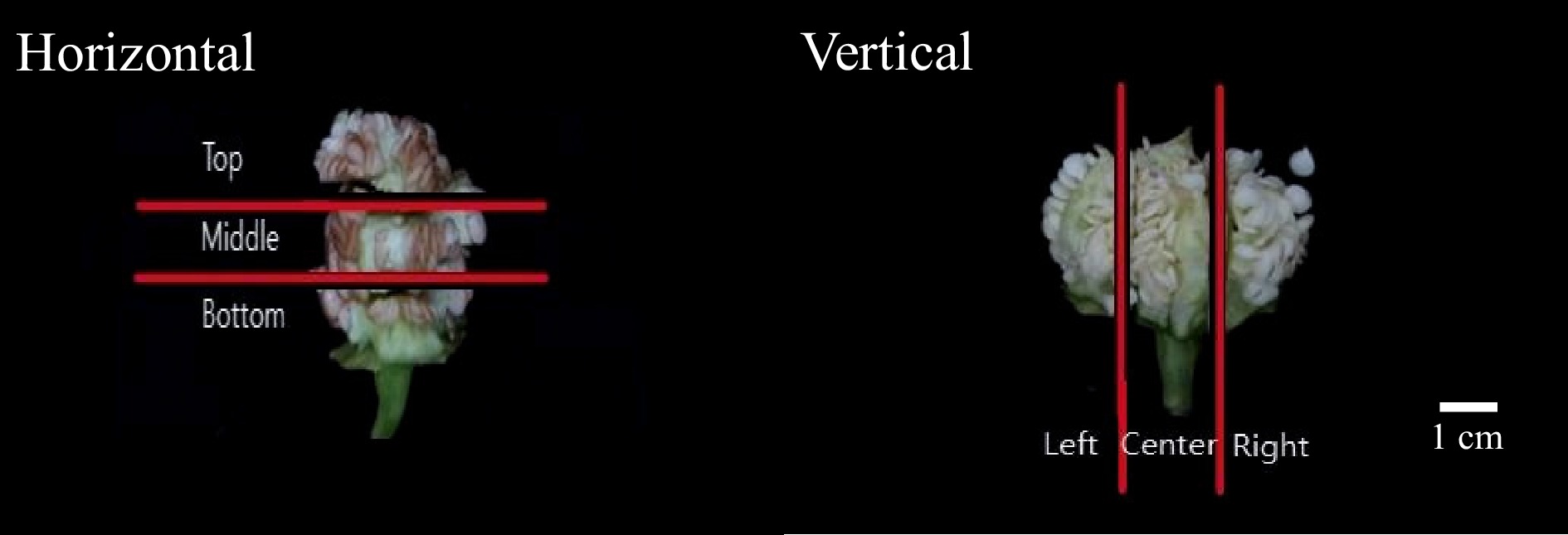
Figure 3.
Schematic diagram illustrating the horizontal and vertical sectional classification of seeds attached to the placental tissue in fully mature sweet pepper fruit (cultivars 'Lyker' and 'Volidano') at 50 DAA, designed to investigate the effect of seed positional attachment on germinability.
Structural and hormonal changes during seed maturation
-
Scanning electron microscopy (SEM) revealed clear structural differences among seeds harvested at various stages after anthesis (Fig. 4). At 10 DAA, the seeds had an undifferentiated internal structure, with poorly defined embryos and endosperm. There was also low cell density and no evidence of storage material accumulation. By 30 DAA, the embryo and endosperm had become distinguishable, with a more organised arrangement of cells and increased tissue density, indicating progression of structural maturation. Some storage compound accumulation was observed, but the seeds remained physiologically immature. By 50 DAA, the seeds displayed a highly dense cellular structure, clearly demarcated regions of the embryo and endosperm, and a fully developed seed coat. This dense packing of cells corresponded with the high germination rate observed in these seeds (Table 3).
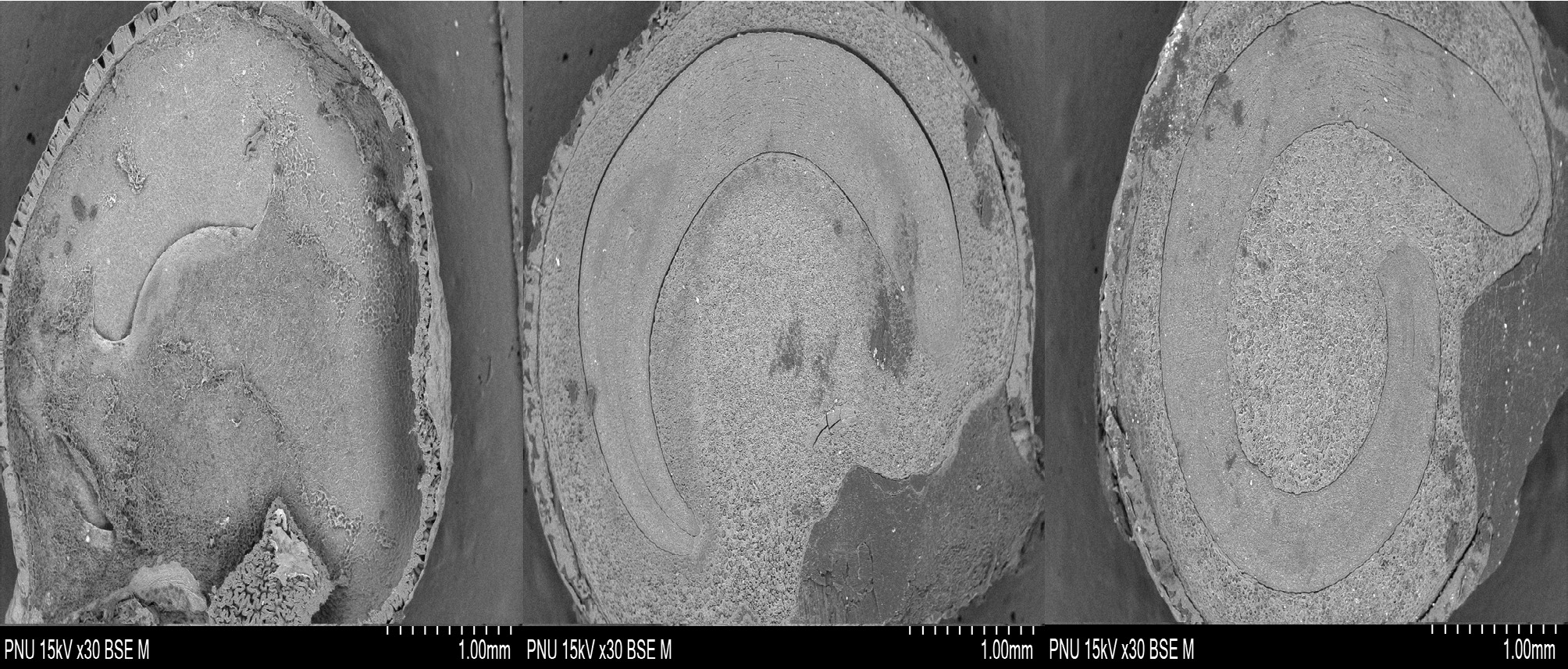
Figure 4.
Scanning electron microscopy (SEM) images showing ultrastructural changes in the internal morphology of sweet pepper seeds ('Lyker', red-fruited) at 10, 30, and 50 d after anthesis (DAA). The images illustrate progressive developmental transitions during seed maturation.
The physiological maturation of sweet pepper seeds was closely associated with dynamic changes in endogenous hormone concentrations, with both cultivars showing distinct temporal patterns (Table 5, Fig. 5). Abscisic acid (ABA) levels increased markedly during maturation in both cultivars, reaching highest levels at 50 DAA; however, the increase occurred earlier in the red cultivar than in the yellow cultivar. The significant cultivar × DAA interaction (p = 0.002) confirmed that the timing of ABA accumulation differed between cultivars.
Table 5. The changes in abscisic acid (ABA), zeatin, indole-3-acetic acid (IAA), jasmonic acid (JA), and salicylic acid (SA) in seeds of red ('Lyker') and yellow ('Volidano') sweet pepper at 10, 30, and 50 DAA.
Cultivar DAAz ABA (ng·g−1) Zeatin (ng·g−1) IAA (ng·g−1) JA (ng·g−1) SA (ng·g−1) Red sweet pepper 10 437 ± 0.007 27.82 ± 0.003 40.9 ± 0.002 11,999 ± 0.817 366 ± 0.012 30 1,339 ± 0.212 10.02 ± 0.001 67.7 ± 0.019 1,078 ± 0.165 290 ± 0.054 50 1,338 ± 0.041 6.191 ± 0.001 −y 200 ± 0.021 454 ± 0.049 Yellow sweet pepper 10 316.1 ± 19.0 18.23 ± 0.02 139.1 ± 17.7 7,161.7 ± 0.817 610.8 ± 6.0 30 428.4 ± 316.3 8.40 ± 0.01 400.9 ± 23.2 1,842.3 ± 0.165 831.7 ± 19.1 50 1,220.5 ± 21.1 5.1 ± 0.01 − 63.2 ± 46.2 151.3 ± 110.4 C × D significancex ** * *** *** ** x C × D = cultivar × DAA interaction (two-way ANOVA), where * is p < 0.05; ** is p < 0.01; and *** is p < 0.001. y Not detected. Below the limit of quantification (LOQ). Gibberellic acids (GA3, GA1, GA4, GA7) were analysed but were below the LOQ at all stages in both cultivars; therefore, those columns are not shown. z Days after anthesis; n = 23, data are shown as means ± standard deviation. 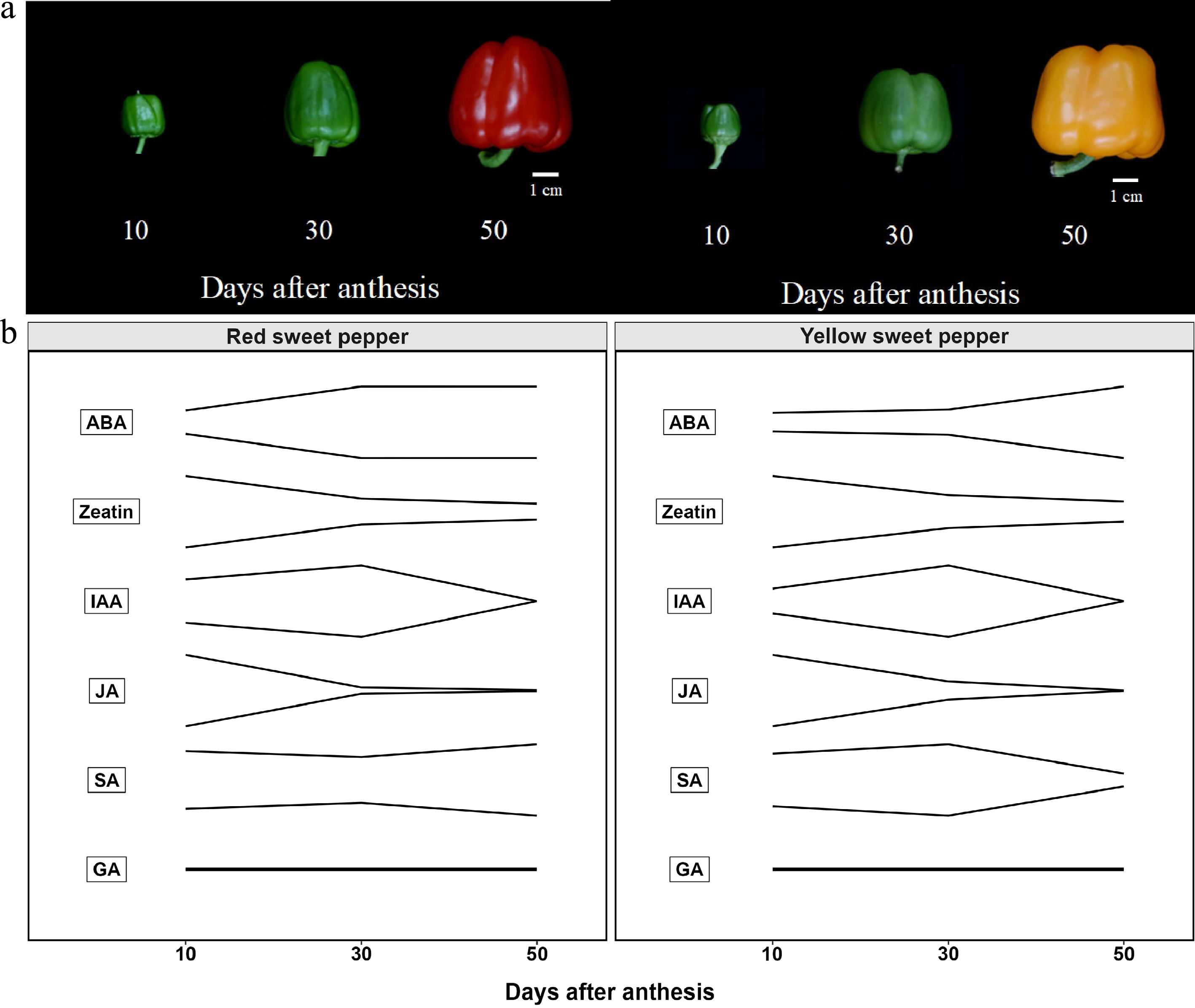
Figure 5.
Fruit development stages and schematic hormone dynamics in sweet pepper cultivars 'Lyker' (red-fruited) and 'Volidano' (yellow-fruited). (a) Representative fruit images at 10, 30, and 50 DAA showing developmental progression from immature to mature stage. (b) Schematic illustration of relative changes in major phytohormone levels (ABA, zeatin, IAA, JA, SA, and GA) during fruit and seed development at corresponding stages.
Zeatin decreased progressively in both cultivars during late maturation. Two-way ANOVA revealed a significant interaction (p = 0.031), indicating that the rate of decline differed between cultivars.
Indole-3-acetic acid (IAA) was detected at 10 and 30 DAA in both cultivars but became undetectable by 50 DAA. Notably, the yellow cultivar showed much higher IAA levels at 30 DAA, contributing to a highly significant cultivar × DAA interaction (p < 0.001).
Jasmonic acid (JA) was abundant only at early stages. In red seeds, JA decreased sharply from 11,999 ng·g−1 at 10 DAA to 200 ng·g−1 at 50 DAA. The yellow cultivar followed a similar trend but with lower initial levels (7,162 ng·g−1 at 10 DAA), resulting in a significant interaction (p < 0.001). Salicylic acid (SA) showed contrasting patterns between cultivars: it increased in the red cultivar but decreased in the yellow cultivar over the maturation period. This opposing trend was reflected in a significant cultivar × DAA interaction (p = 0.006). Gibberellins (GA3, GA1, GA4, GA7) were not detected in either cultivar at any stage of development, indicating suppression of GA-associated growth pathways during seed maturation.
Changes in fruit colour and water-soluble vitamin content during fruit maturation
-
As shown in Table 6 and Fig. 6, fruit colour and water-soluble vitamin content exhibited significant changes during sweet pepper fruit maturation, with strong associations between red pigmentation and vitamin accumulation.
Table 6. Changes in vitamin contents (B1, B2, B5, B6, folic acid, and vitamin C) in the pericarp of sweet pepper cultivars 'Lyker' (red-fruited) and 'Volidano' (yellow-fruited) at 10, 30, and 50 DAA.
Cultivar DAAz Vitamin B1 (mg·kg−1) Vitamin B2 (mg·kg−1) Vitamin B5 (mg·kg−1) Vitamin B6 (mg·kg−1) Folic acid (mg·kg−1) Vitamin C (mg·kg−1) Red pepper 10 0.46 ± 0.01 0.8 ± 0.03 17.2 ± 1.6 0.89 ± 0.11 −y 51 ± 5.5 30 0.34 ± 0.002 0.5 ± 0.02 9.3 ± 0.6 1.24 ± 0.07 − 428 ± 14.2 50 0.29 ± 0.001 2.6 ± 0.3 8.8 ± 0.6 0.05 ± 0.01 0.22 ± 0.01 657 ± 74.8 Yellow pepper 10 0.13 ± 0.02 0.46 ± 0.036 5.58 ± 0.66 − − 0.02 ± 0.002 30 0.07 ± 0.005 0.13 ± 0.022 4.52 ± 0.10 − − 1.95 ± 0.077 50 0.07 ± 0.01 0.21 ± 0.018 8.82 ± 0.65 − − 1.41 ± 0.106 C × Dx * *** * *** *** *** x C × D = cultivar × DAA interaction (two-way ANOVA), where * is p < 0.05; ** is p < 0.01; and *** is p < 0.001. y Below the limit of quantification (LOQ). z Days after anthesis; n = 23, Values are expressed as means ± standard deviation. 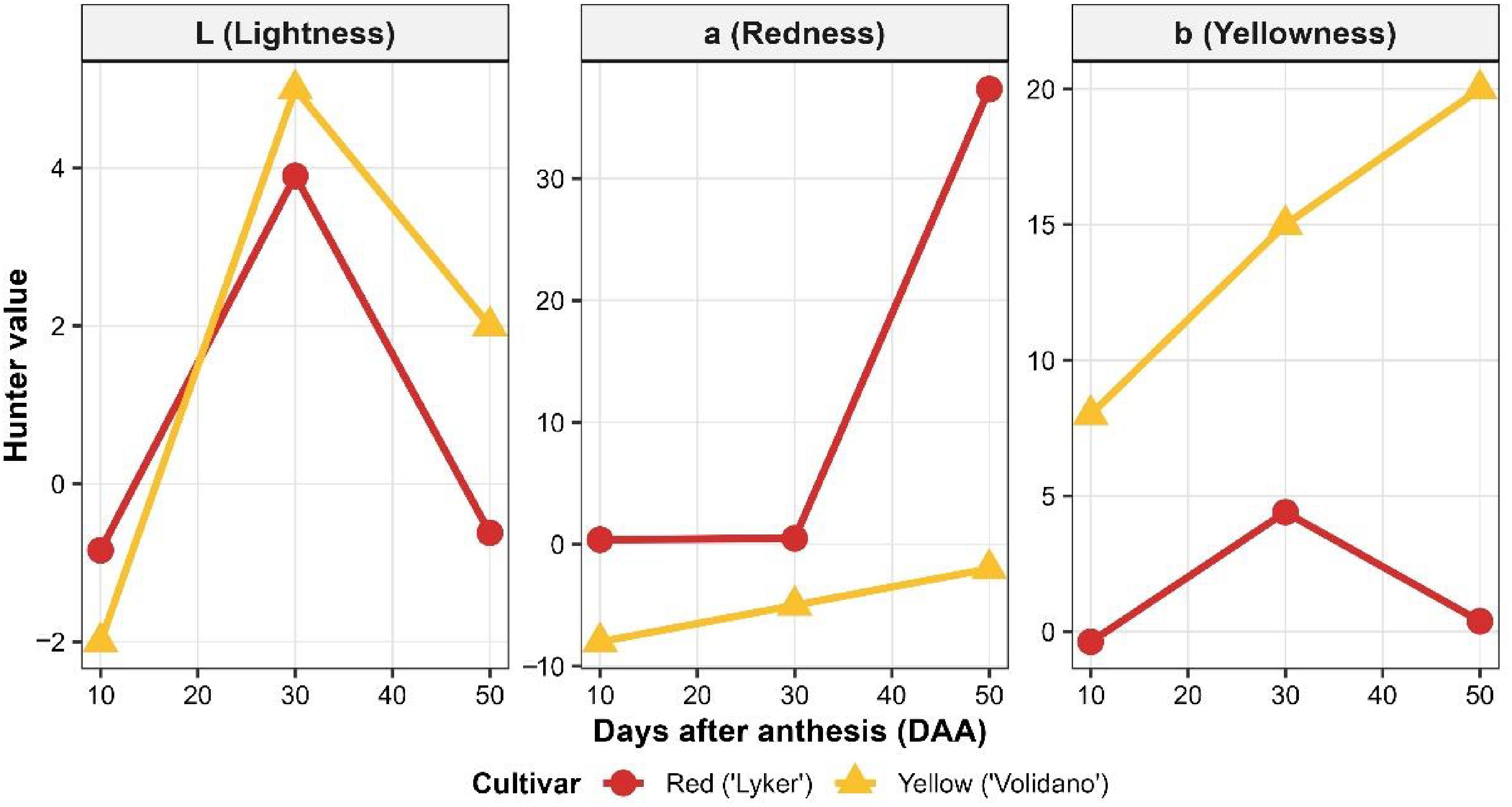
Figure 6.
Developmental changes in Hunter L* (lightness), a* (redness), and b* (yellowness) values in the pericarp of red-fruited 'Lyker' and yellow-fruited 'Volidano' sweet pepper fruits at 10, 30, and 50 DAA.
In the red cultivar (Lyker), the a* value (redness) increased progressively during ripening, rising sharply after 30 DAA and reaching full red colour by 50 DAA (Fig. 6). L* values (lightness) remained relatively stable, while b* values (yellowness) showed a moderate increase during early ripening before stabilising. In contrast, the yellow-fruited cultivar ('Volidano') showed a markedly different colour trajectory (Fig. 6). L values (lightness) increased during early development and remained higher than those of the red cultivar throughout maturation. Importantly, a* value (redness) remained low and near-zero across all stages (ranging from 0.0 to 1.0), never exceeding 1.0, confirming that the fruit did not develop red pigmentation. The b* values (yellowness) were consistently higher than those of the red cultivar, reflecting the characteristic yellow colour of this genotype.
Vitamin C showed the most striking difference between cultivars. In the red cultivar, vitamin C increased dramatically during ripening, particularly after 30 DAA, and peaked at 50 DAA when fruit reached full red colour. In the yellow cultivar, which lacked red pigmentation, vitamin C remained minimal throughout development (Table 6). This contrasting pattern was confirmed by a highly significant cultivar × DAA interaction (p < 0.001), indicating that the ripening-associated surge in vitamin C is specific to red-fruited genotypes and tightly linked to red pigment biosynthesis.
Thiamine (B1) decreased during maturation in both cultivars, with consistently lower levels in the yellow cultivar (significant interaction, p = 0.045). Riboflavin (B2) showed a U-shaped pattern in both cultivars, decreasing by 30 DAA and increasing by 50 DAA; however, the late increase was much more pronounced in the red cultivar, coinciding with full red colour development (strong interaction, p < 0.001). Pantothenic acid (B5) decreased in the red cultivar but showed a decline followed by recovery in the yellow cultivar (significant interaction, p = 0.012). Vitamin B6 and folic acid were detected only in the red cultivar: B6 peaked at 30 DAA before declining sharply, while folic acid appeared only at 50 DAA, coinciding with full red fruit colour. Both vitamins remained below the limit of quantification in yellow fruit at all stages (p < 0.001 for interactions). Taken together, in red-fruited cultivars, the accumulation of vitamin C, riboflavin, and folate increased during ripening and was associated with increasing a* values, whereas in yellow-fruited cultivars, a* values remained near zero and these vitamins did not show similar increases.
-
The maturation process of sweet pepper fruit and seeds was comprehensively analysed in this study from morphological, physiological, anatomical, hormonal, and functional perspectives, providing an integrated view of seed developmental status between 10 and 50 DAA. The developmental patterns observed in this study are consistent with previous reports on solanaceous species, including tomato, pepper, and eggplant, which have documented that seed morphological maturity precedes the acquisition of germination capacity and that maximum seed quality is achieved at or near physiological maturity[8−10,17].
During the early stage of fruit development (10 DAA), seed formation predominated, whereas fruit growth accelerated during 30–50 DAA, and the seed-to-fruit ratio was highest at 10 DAA and decreased thereafter. This developmental pattern is consistent with previous reports on Capsicum spp., in which seed formation is completed early, followed by rapid pericarp expansion during later stages of fruit development. Seed dry weight increased up to 50 DAA, indicating continued assimilate accumulation over this period, consistent with the concept that physiological maturity is a key indicator of seed harvest timing[18]. Seed length and width increased rapidly during the early maturation phase (10–30 DAA), reaching morphological maturity before the end of dry-weight accumulation. However, seeds harvested at 10 and 30 DAA did not germinate, whereas those harvested at 50 DAA were viable, confirming that in sweet pepper, morphological maturity precedes the acquisition of germination capacity, as reported for other species.
Within the 10–50 DAA window examined, the appearance of high germination and a high proportion of normal seedlings at 50 DAA suggests that this stage represents the earliest point at which structural maturation and physiological competence for germination coincide. This optimal harvest timing at 50 DAA is consistent with recent reports in related Capsicum species. Dzib-Ek et al.[19] reported that seeds from fully ripe maax pepper fruits achieved 85%–86% germination, while Pola et al.[20] found that chili seeds harvested at 50 d after flowering exhibited maximum germination and seed weight. The acquisition of rapid and uniform germination at 50 DAA is likely to depend on physiological factors such as the balance between growth-promoting and maturation-associated hormones, sufficient storage-reserve accumulation, and the completion of desiccation–tolerance mechanisms[21]. Minor differences in germination behaviour were observed within the same fruit depending on placental position; seeds from the upper and middle regions germinated slightly faster than those from the lower region, which may reflect subtle differences in fertilisation timing or assimilate and hormone supply through the placenta[22]. However, the overall high germination and normal seedling percentages across all positions at 50 DAA indicate that seed developmental stage, rather than placental position, was the primary determinant of seed performance under optimal conditions.
Scanning electron microscopy revealed distinct structural changes during seed development. At 10 DAA, the seeds were structurally immature, with undifferentiated embryos and endosperm and low cell density, consistent with the absence of germination. By 30 DAA, the embryo and endosperm were clearly differentiated, and tissue density increased, but germination was still not observed, indicating that structural differentiation alone was insufficient for the expression of germination capacity. By 50 DAA, the seeds exhibited fully developed embryos, a dense cellular structure, and a well-formed seed coat. These anatomical features coincided with high germination and high normal seedling proportions, reinforcing the view that both structural and physiological maturation are required before seeds can germinate rapidly and uniformly[23].
Hormonal analysis further elucidated the mechanisms underlying seed maturation. ABA levels increased markedly between 10 and 30 DAA and remained high at 50 DAA, consistent with its central role in promoting late maturation, desiccation tolerance, and the establishment of primary dormancy[24]. Elevated ABA at later stages may thus serve as a biochemical marker of physiological maturity and potential storability[25]. In contrast, zeatin and IAA were higher at early stages and declined during late maturation, reflecting the transition from active cell division and organ growth to reserve accumulation and maturation[26]. JA levels were extremely high at 10 DAA and decreased sharply thereafter, which is consistent with its proposed role in providing early tissue protection and modulating developmental processes during seed formation. Salicylic acid showed a moderate increase by 50 DAA, suggesting activation of protective and defence-related pathways during late development[27].
The vitamin dynamics observed in this study also align with established literature. Early studies on germinated pulses documented the presence of B vitamins, including pantothenic acid[28]. More recently, folate biofortification strategies have been reviewed for various food crops, highlighting the nutritional importance of folate accumulation during fruit ripening[29,30]. Comparison of vitamin dynamics between red and yellow cultivars revealed both conserved and divergent features. The striking difference in vitamin C accumulation at 50 DAA (657 vs. 1.4 mg·kg−1) and the contrasting SA patterns likely reflect the divergence in ripening pathways between genotypes; yellow-fruited cultivars typically lack the full complement of carotenoid and ascorbate metabolic surges induced in red-fruited cultivars[31]. Despite these significant metabolic differences, both cultivars achieved high germination (88%) and normal seedling percentages (81%) only at 50 DAA, confirming that the 50 DAA threshold for seed physiological maturity is independent of fruit pigmentation. Yellow-fruited sweet pepper cultivars typically lack the full complement of carotenoid and ascorbate metabolic pathways that are induced during ripening in red-fruited cultivars[32]. Despite these differences, both cultivars achieved high germination (88%) and normal seedling percentages (81%) only at 50 DAA, confirming that the 50 DAA threshold for seed maturity is independent of fruit pigmentation.
Several limitations of this study should be acknowledged. First, the experiment was conducted in a single growing season under controlled greenhouse conditions. While this minimized environmental variability and allowed focused analysis of stage-dependent changes, multi-season replication would be required to confirm the temporal stability of the 50 DAA maturity threshold across different growing environments. Second, SEM analysis was performed only on the red cultivar; however, the functional equivalence in germination between cultivars strongly suggests that structural maturation follows a conserved timeline. Future studies may extend ultrastructural comparisons to additional genotypes. Third, the low vitamin C levels in yellow fruit (≤ 1.95 mg·kg−1) may reflect genotypic variation or, alternatively, possible variations in detection sensitivity; regardless, this does not alter our primary conclusion based on integrated germination and hormone data.
Taken together, these results indicate that, within the developmental interval studied, 50 DAA represents the earliest stage at which sweet pepper seeds combine structurally mature embryos and endosperms with a hormone profile characteristic of late maturation and desiccation tolerance, and with high germination and normal seedling percentages under standard laboratory conditions. Rather than relying solely on chronological age, the present data suggest that internal indicators such as embryo and endosperm structure, ABA-dominated hormone status and the disappearance of GA, together with external fruit colour and vitamin C accumulation, can be used to characterise seed developmental status and readiness for germination. This integrative approach links morphological, anatomical, and hormonal markers with functional germination traits in sweet pepper seeds and provides a framework for future studies on how these maturation processes influence longevity, dormancy, and performance under stress.
-
Within the 10–50 DAA interval examined, sweet pepper seeds first combined fully differentiated embryos and endosperms with high germination and a high proportion of normal seedlings at 50 DAA. The concomitant shift to an ABA-dominated hormone profile, decline of IAA, zeatin and JA, and absence of detectable GA3, together with the structural consolidation observed by microscopy, indicates that among the three stages studied (10, 30, and 50 DAA), 50 DAA was the stage at which structural and physiological maturation were synchronised to achieve high germination. These results show that integrating internal morphology and endogenous hormone status with germination behaviour provides a robust framework for characterising seed developmental status in sweet pepper and can guide future studies on the relationships between maturation, longevity, and stress tolerance.
Future studies should investigate: (1) whether the pattern observed at 50 DAA (high germination and normal seedlings) is stable across different growing seasons and greenhouse systems, noting that additional sampling time points would be needed to determine the precise shape of the germination acquisition curve; (2) how the observed ABA-dominated hormone profile influences seed longevity during storage; (3) the physiological basis for the striking difference in vitamin C accumulation between red and yellow cultivars; and (4) whether fruit colour and vitamin C content can be developed as rapid, non-destructive predictors of internal seed maturity for commercial harvest scheduling.
-
The authors confirm their contributions to the paper as follows: study conception and design: Bae EY, Kang JS; data collection: Bae EY, Choi YJ, Lee JG; analysis and interpretation of results: Bae EY, Choi YJ, Kim SR, Kang JS; draft manuscript preparation: Bae EY, Mohammad FA, Charles Emparang MCS, Kang JS. All authors reviewed the results and approved the final version of the manuscript.
-
All data generated or analyzed during this study are included in this published article, further inquiries are available from the corresponding author on reasonable request.
-
This work was supported by the Korea Institute of Planning and Evaluation for Technology in Food, Agriculture and Forestry (IPET) through the Cutting-edge Precision Breeding Development Program, funded by the Ministry of Agriculture, Food and Rural Affairs (MAFRA)(RS-2025-02220080).
-
The authors declare that they have no conflict of interest.
- Copyright: © 2026 by the author(s). Published by Maximum Academic Press, Fayetteville, GA. This article is an open access article distributed under Creative Commons Attribution License (CC BY 4.0), visit https://creativecommons.org/licenses/by/4.0/.
-
About this article
Cite this article
Bae EY, Choi YJ, Kim SR, Mohammad FA, Charles Emparang MCS, et al. 2026. Morphological and physiological changes during seed development and maturation in sweet pepper (Capsicum annuum L.). Technology in Horticulture 6: e018 doi: 10.48130/tihort-0026-0011 

Morphological and physiological changes during seed development and maturation in sweet pepper (Capsicum annuum L.)
- Received: 14 January 2026
- Revised: 08 June 2026
- Accepted: 25 June 2026
- Published online: 04 August 2026
Abstract: Seed development involves coordinated changes in morphology, hormone balance, and germination capacity, yet these processes remain incompletely characterised in many horticultural species. This study examined seed development and maturation in sweet pepper (Capsicum annuum L.) at 10, 30, and 50 d after anthesis (DAA) by integrating internal seed morphology, endogenous hormone profiles, germination behaviour, and seedling quality with fruit colour and water-soluble vitamin content. Seeds harvested at 10 and 30 DAA failed to germinate, whereas seeds harvested at 50 DAA showed high germination (88%) and a high proportion of normal seedlings (81%) under standard conditions, coinciding with fully developed embryos and endosperms. Abscisic acid (ABA) levels increased from 10 to 30 DAA and remained high at 50 DAA, while jasmonic acid (JA) was abundant only at 10 DAA; indole-3-acetic acid (IAA) and zeatin declined towards 50 DAA, and gibberellic acid (GA3) was not detected at any stage. Fruit maturation was accompanied by a strong increase in red chromaticity and a peak in vitamin C content at 50 DAA, providing external and nutritional indicators that paralleled internal seed maturation. Within the 10–50 DAA interval investigated, these findings identify 50 DAA as the stage at which sweet pepper seeds combine structurally mature embryos and endosperms with high germination and normal seedling percentages, and illustrate how coordinated changes in seed morphology, hormone status and fruit physiology can be used to characterise seed developmental status.
-
Key words:
- Capsicum annuum /
- Germination /
- Plant hormones /
- Physiological maturity /
- Seed development /
- Seed morphology /
- Seed quality