












-
Polygonatum spp. are perennial herbs belonging to the Asparagaceae family[1]. These plants serve as medicinal materials and possess therapeutic effects, including strengthening the spleen and benefiting the lungs and kidneys[2]. Polygonatum plants prefer humid conditions and exhibit strong adaptability[3]. According to data from the IPNI (International Plant Names Index) website, more than 300 species of Polygonatum are distributed across Eastern Europe, Northern Europe, North America, Central Asia, and worldwide. Among these, 31 Polygonatum species are native to China, with the northeastern, northwestern, and southwestern regions serving as their primary distribution areas, and the southwest region acting as the diversity center for Polygonatum in China[2,4].
Tea (Camellia sinensis) is a globally significant economic crop, extensively cultivated in the mountainous regions of China, where it plays a pivotal role in rural livelihoods and regional economies. Both domestic and export markets for tea have demonstrated steady growth, driven by increasing consumer demand for beverages with recognized health benefits[5]. The tea industry is labor-intensive and highly commercialized, with high added value. It not only provides employment for local farmers in planting and harvesting but also increases their income through processing and value-added activities, thereby contributing to income growth and wealth enhancement for people in mountainous areas[5]. Beyond its economic role, tea is valued for its medicinal properties, which include polyphenols, catechins—most notably epigallocatechin gallate—flavonoids, and free amino acids such as L-theanine. These bioactive compounds exhibit potent antioxidant, anti-inflammatory, lipid-lowering, and cardiovascular-protective properties, and may reduce the risk of chronic diseases including diabetes mellitus and neurodegenerative disorders[1,6]. Among the numerous cultivars, Xiangxi golden tea No. 2—from western Hunan Province—is esteemed within the industry as a valuable genetic resource for tea plant breeding. It contains exceptionally high levels of catechins and amino acids, which enhance its fresh, mellow taste and its health-promoting potential. With its unique characteristics and excellent taste, it represents a 'green gold mine' for farmers, positioning it as a strategic agricultural asset for local development and a central component of rural revitalization initiatives[1].
Research on tea cultivation systems has predominantly focused on elucidating the relationships among soil physicochemical properties, plant growth dynamics, and tea quality determinants. Key soil parameters—including pH, organic matter content, available nitrogen, phosphorus, potassium, and cation exchange capacity—directly influence nutrient acquisition efficiency and secondary metabolic pathways in C. sinensis, thereby regulating the biosynthesis of quality-associated compounds such as amino acids, polyphenols, and aromatic precursors. However, intensive monoculture combined with excessive chemical fertilizer application has led to widespread soil acidification, compaction, and nutrient imbalances in many tea-producing regions, negatively impacting plant vigor, photosynthetic performance, and flavor profiles. In response, diversified cultivation strategies—particularly intercropping—have been proposed as sustainable alternatives capable of restoring soil health and enhancing crop productivity[6−8].
Our previous experimental research developed a novel technology for understory economic crops, specifically intercropping P. cyrtonema Hua with Xiangxi golden tea No. 2 in western Hunan province, China, tailored to local climate and terrain characteristics. This new intercropping system has yielded important social, ecological, and economic benefits. In this study, we aim to investigate the effects of this intercropping system on soil chemical properties, soil aggregate structure, and tea quality components.
-
P. cyrtonema and the Xiangxi golden tea No. 2 materials were collected in Changsha, at the Hunan Academy of Agricultural Sciences, Hunan Province, China. Seedlings were subsequently transplanted to experimental fields located in Jishou City, Hunan Province (109°45′16″ E, 28°50′14″ N). Planting density for P. cyrtonema was established at 32 cm × 17 cm (row × plant spacing). Given the insufficient natural shade cover for the tea seedlings, artificial modulation of light availability was achieved by gently drawing the foliage of adjacent P. cyrtonema plants from the forest edge toward the tea rows using tensioned ropes, thereby maintaining a shading coefficient of 0.6–0.7 throughout the experimental period. The experimental layout followed a randomized complete block design (RCBD), comprising three independent biological replicates (n = 3 plots per treatment). Each replicate consisted of a discrete field plot; data were recorded from representative samples within each plot and averaged prior to statistical analysis to ensure robustness and reproducibility.
Intercropping cultivation
-
We began the tea garden land preparation by plowing, weeding, and leveling the bed surface in the winter of 2018. The following spring in 2019, we planted the P. cyrtonema seedlings after adding fertilizer, then covered the soil, compacted it, and watered thoroughly. Field management included weed control, fertilization, monitoring seedling growth, irrigation, drainage, and pest control using insecticidal devices[9]. This interplanting cultivation lasted for 5 years, from 2018 to 2022. The average output benefits per acre were calculated from 2019 to 2022 (Fig. 1). In this study, the term 'output benefit' is defined as the gross income derived from total production value. The average output benefit per acre was calculated according to the following formula:
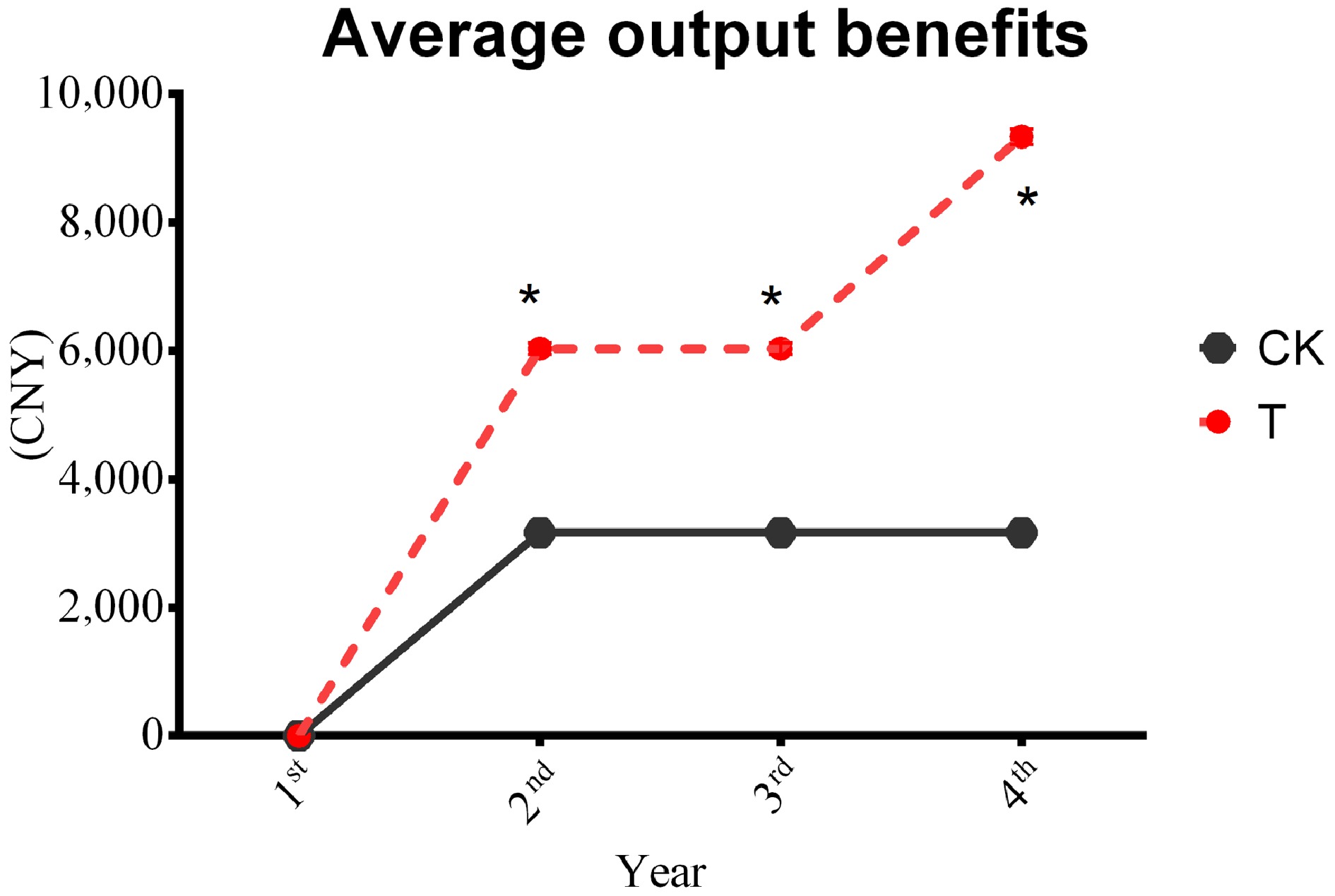
Figure 1.
Comparison analysis of average output benefits under different cropping system. The calculation formula is: Average Output Benefit per Acre = Yield × Price; where Yield represents the physical output per acre obtained from 2019 to 2022; and Price represents the unit market price of the agricultural product in the corresponding year. Production costs were analyzed separately in our study and are not deducted from this specific indicator. We have updated the text to clearly state that this value represents gross income. CK: continuous golden tea monocropping. T: intercropping Polygonatum cyrtonema Hua in golden tea plantations. Student's t-test (* p ≤ 0.05).
Average Output Benefit per Acre = Yield × Market Price.
Rhizosphere soil samples were collected from 5-year-old clonal tea plants (Xiangxi golden tea No. 2), and three-leaf-one-bud shoots (no lignification) were harvested on April 25, 2022. These flush tea plant samples were collected in three biological replicates, and each biological replicate consisted of samples from three randomly selected healthy tea trees. The samples were frozen in liquid nitrogen for metabolomics analysis.
Determination of tea plant quantification indexes
-
We obtained tea leaves according to the external standard method for drying Xiangxi golden tea No. 2 leaves in China[1]. Then, we used the weight method (GB/T 8305-87) to determine the water extract content, and the ferreous tartrate colorimetric method to determine the tea polyphenols content (GB/T 8313-2018). We also measured the content of free amino acids (FAA) (GB/T 8314-2013) and caffeine (GB/T 23193-2017) using the ninhydrin colorimetric method and lead acetate colorimetric method, respectively. Dried leaf samples were pulverized into a homogeneous fine powder using a stainless-steel grinder and subsequently sieved through a 0.5 mm mesh. Total nitrogen (TN) content was quantified using the Kjeldahl digestion method. For total phosphorus (P) determination, samples were subjected to wet digestion with a sulfuric–perchloric acid mixture (H2SO4–HClO4) and analyzed via the molybdenum-blue colorimetric method using a UV–Vis spectrophotometer. Total potassium (K) concentrations were determined following digestion with a nitric–perchloric acid mixture (HNO3–HClO4), with quantification performed using flame photometry (or alternatively, atomic absorption spectroscopy where specified).
Determination of soil chemical properties
-
The soil total nitrogen (TN) and hydrolytic nitrogen (HN) were determined by the Kjeldahl method and the alkali diffusion method (LY/T1228-2015), respectively. The total phosphorus (TP) (GB9837-88), total potassium (TK) (GB9837-88), available phosphorus (AP) (NY/T1121.7-2014), and available potassium (AK) (NY/T889-2004) concentrations of soil were determined by ICPAES (PerkinElmer 2100DV, PerkinElmer, Waltham, MA, USA) after the soils were digested using concentrated HNO3-HF-HClO4. The soil organic matter (SOM) was determined by oxidation with potassium dichromate using a DF-101S heat-collecting constant-temperature magnetic stirrer (Gongyi Yuhua Instrument Co., Ltd, Gongyi, HN, China). Then, we used a pH meter (BPH220, Bell Instrument Equipment Co. Ltd, Dalian, LN, China) to measure the soil pH value. Each sample had three biological replicates, and each biological replicate had three technical replicates.
Determination of tea nutrient uptake
-
The BCF was calculated using the following formula:
$ {\text{BCF}}_{\text{above}}=\dfrac{{C}_{\text{above}}}{{C}_{\text{soil}}} $ (1) where, BCFabove is the bioconcentration factor of the nutrient uptake,
$ {C}_{\text{above}} $ $ {C}_{\text{soil}} $ Normality was assessed using the Shapiro–Wilk test (p > 0.05), and homogeneity of variance was assessed using Levene's test (p > 0.05). Since both assumptions were satisfied, we proceeded with the two-way ANOVA and multiple t-tests. Statistical data analysis was performed using GraphPad Prism v7 (La Jolla, CA, USA). The results are displayed as the means ± standard deviations.
Soil DNA extraction and microbe community structure detection
-
The PowerSoil DNA isolation kit was used for the extraction of genomic DNA according to the manufacturer's instructions (Omega Bio-Tek, Inc., Norcross, GA, USA). The DNA concentration was determined by a Nanodrop 2000 UV spectrophotometer (Thermo Scientific, Wilmington, DE, USA), and the quality was checked by 1% agarose gel electrophoresis. Distinct regions of the 16S rRNA gene (V3–V4) and ITS1 were amplified by PCR using specific primers, separately. The purified amplicons were pooled in equimolar amounts and sequenced on an Illumina MiSeq platform (Illumina, San Diego, CA, USA) according to the standard protocols of the Majorbio Bio-Pharm Technology Co. Ltd. (Shanghai, China). The raw reads were deposited into the NCBI Sequence Read Archive (SRA) database (Accession Number: SUB14812650).
The raw data were demultiplexed, quality-filtered by Trimmomatic, and merged by FLASH. Operational taxonomic units (OTUs) were clustered with a 97% similarity cut-off using UPARSE, and chimeric sequences were identified and removed using UCHIME. The taxonomy of each 16S rRNA gene sequence was analyzed by the RDP Classifier algorithm against the Silva (SSU123) 16S rRNA database using a confidence threshold of 70%. The taxonomy of each ITS region sequence was analyzed by the RDP Classifier algorithm against the UNITE (8.0) ITS rRNA database using a confidence threshold of 70%. The sequencing data were analyzed on the platform of Majorbio Cloud Platform (
www.majorbio.com ). -
Comparative analysis revealed that fresh tea leaves grew faster under the intercropping system, as evidenced by a greater number of samples with three fully expanded leaves (Fig. 2a). The dried tea leaves from the intercropping system exhibited greater plumpness and a greener color compared to those from the monoculture system (Fig. 2b). Notably, tea leaves derived from the intercropping system exhibited a significant accumulation of polyphenolic compounds compared to those from the monoculture control (Fig. 3). These findings indicate that integrating P. cyrtonema into Xiangxi golden tea No. 2 plantations enhances polyphenol concentrations, thereby improving the functional and nutraceutical quality profile of the tea.
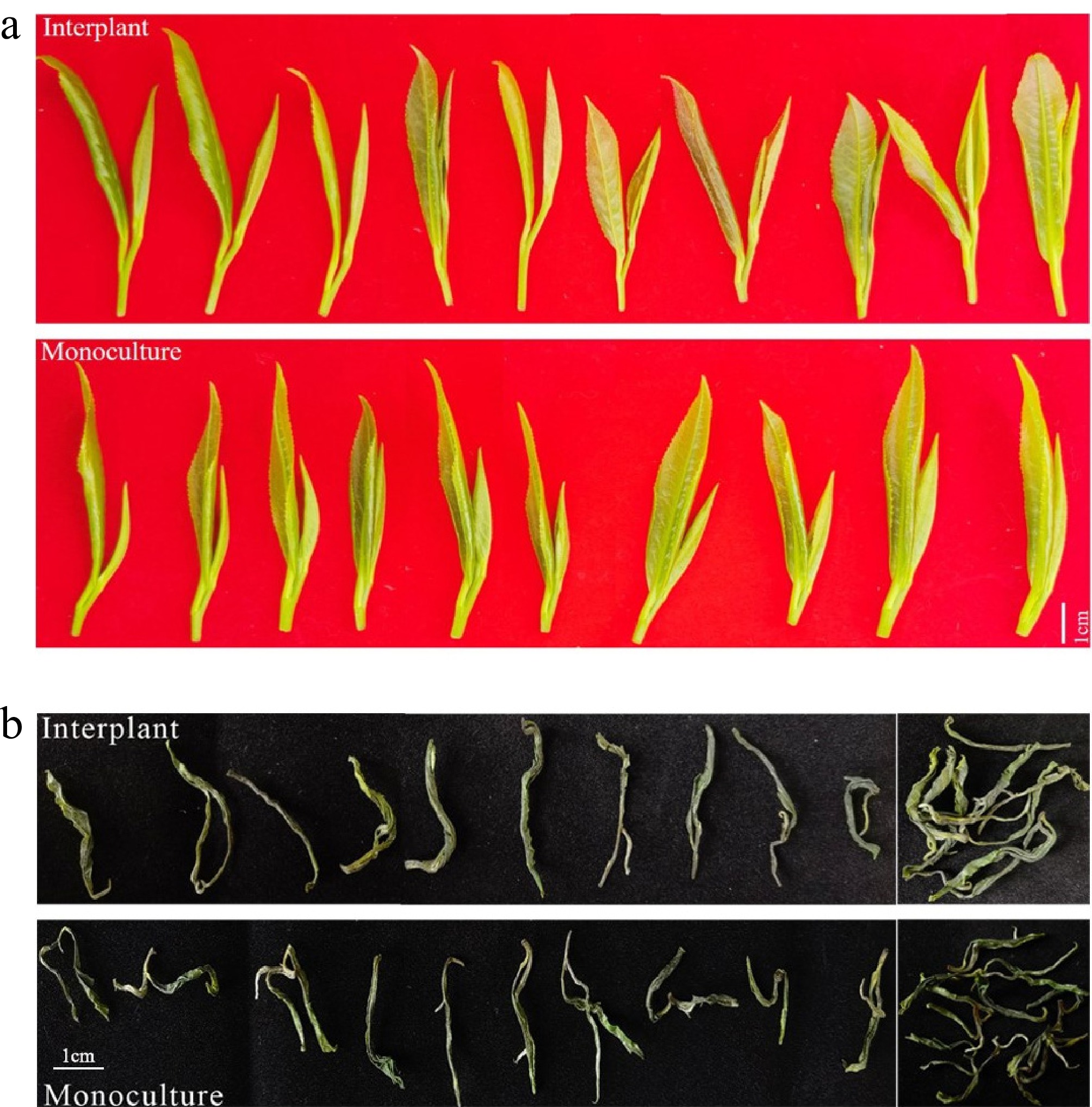
Figure 2.
Comparison of the (a) fresh, and (b) dried tea leaf morphologies under different cropping systems.
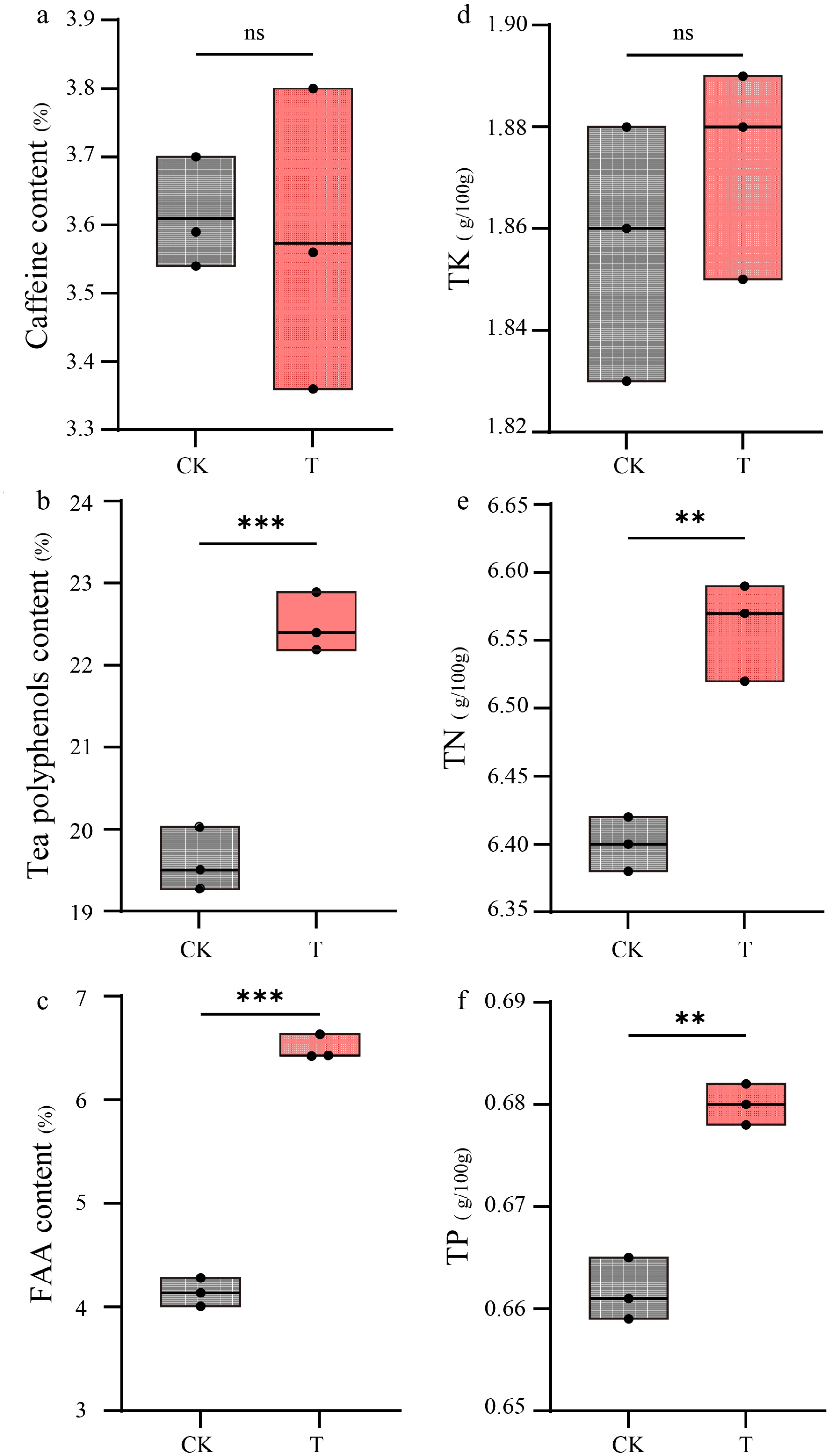
Figure 3.
Comparison analysis of golden tea quality indices under different cropping system. (a) Comparison analysis of caffeine content. (b) Comparison analysis of tea polyphenols content. (c) Comparison analysis of free amino acid (FAA) content. (d) Comparison analysis of tea leaf total potassium (TK). (e) Comparison analysis of tea leaf total nitrogen (TN). (f) Comparison analysis of tea leaf total phosphorus (TP). Three biological replicates per samples were analyzed. CK: continuous golden tea monocropping. T: intercropping Polygonatum cyrtonema Hua in golden tea plantations. Student's T-test (* p ≤ 0.05; ** p ≤ 0.01; *** p ≤ 0.001). Error bars represent mean ± SEM (n = 3).
Analysis of soil physicochemical properties revealed a significantly lower level of hydrolysable nitrogen (HN), available phosphorus (AP), and available potassium (AK) in the intercropping system (Fig. 4). To determine whether these declines resulted from intensified plant nutrient uptake rather than losses from the system, we assessed nutrient concentrations in three-leaf-one-bud shoot tissues. As illustrated in Fig. 4, intercropping with P. cyrtonema significantly elevated total nitrogen (N) and phosphorus (P) contents in tea leaves relative to the monoculture control. Specifically, the nitrogen bioconcentration factor (BCF) in the intercropping group was 12.83% higher, whereas the phosphorus BCF increased by 3.08%. The inverse relationship between declining soil nutrient availability and increased foliar nutrient status provides robust evidence supporting the hypothesis that the intercropping system enhances nutrient translocation from the soil to the tea plants[10,11].
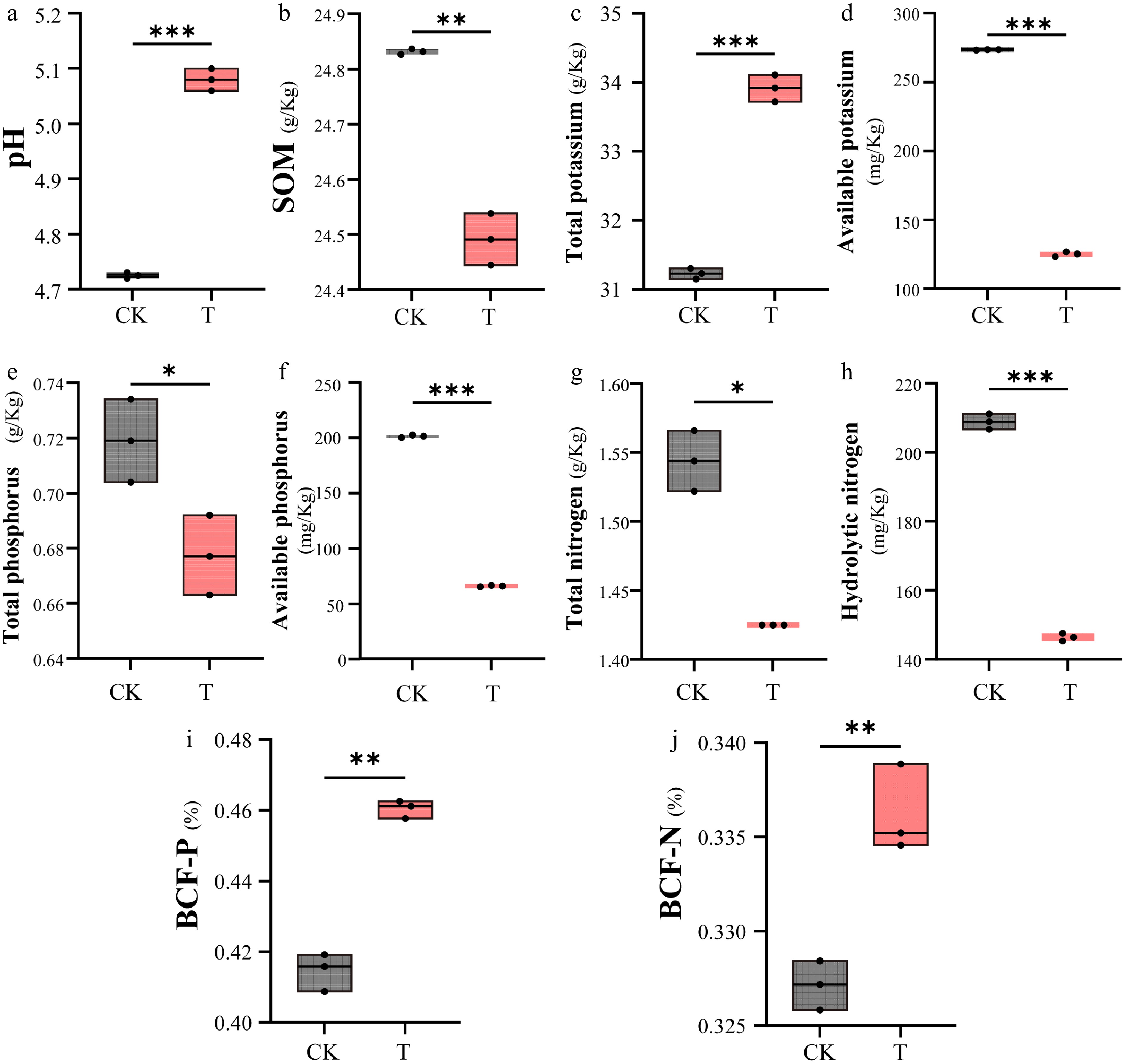
Figure 4.
Comparison analysis of soil property indices under different cropping system. (a) Comparison analysis of soil pH. (b) Comparison analysis of soil organic matter content (SOM). (c) Comparison analysis of soil total potassium content. (d) Comparison analysis of soil available potassium content. (e) Comparison analysis of soil total phosphorus content. (f) Comparison analysis of soil available phosphorus content. (g) Comparison analysis of soil total nitrogen content. (h) Comparison analysis of soil hydrolytic nitrogen content. (i) Bioconcentration Factor (BCF-P) leaf/soil phosphorus. (j) Bioconcentration Factor (BCF-N) leaf/soil nitrogen. Three biological replicates per samples were analyzed. CK: continuous golden tea monocropping. T: intercropping Polygonatum cyrtonema Hua in golden tea plantations. Student's t-test (* p ≤ 0.05; ** p ≤ 0.01; *** p ≤ 0.001). Error bars represent mean ± SEM (n = 3).
To investigate changes in microbial community structure underlying these observations, we performed amplicon sequencing using the Illumina MiSeq platform. Alpha diversity (Shannon index, assessed by Student's t-test) and beta diversity (nonmetric multidimensional scaling [NMDS] with ANOSIM statistical analysis) were compared between treatments at the OTU level (Figs 5a, 6a). Significant differences in microbial community composition between groups were evaluated using the Kruskal–Wallis H test at the OTU, phylum, and genus levels (Figs 5b, 6b). Multiple test corrections were performed using the false discovery rate (FDR) and Tukey's method. One-way ANOVA was used to analyze significant differences between groups, and pairwise comparisons were further assessed using Student's t-test. Our results revealed significant differences in alpha diversity between the two sample groups (Supplementary Figs S1, S2).
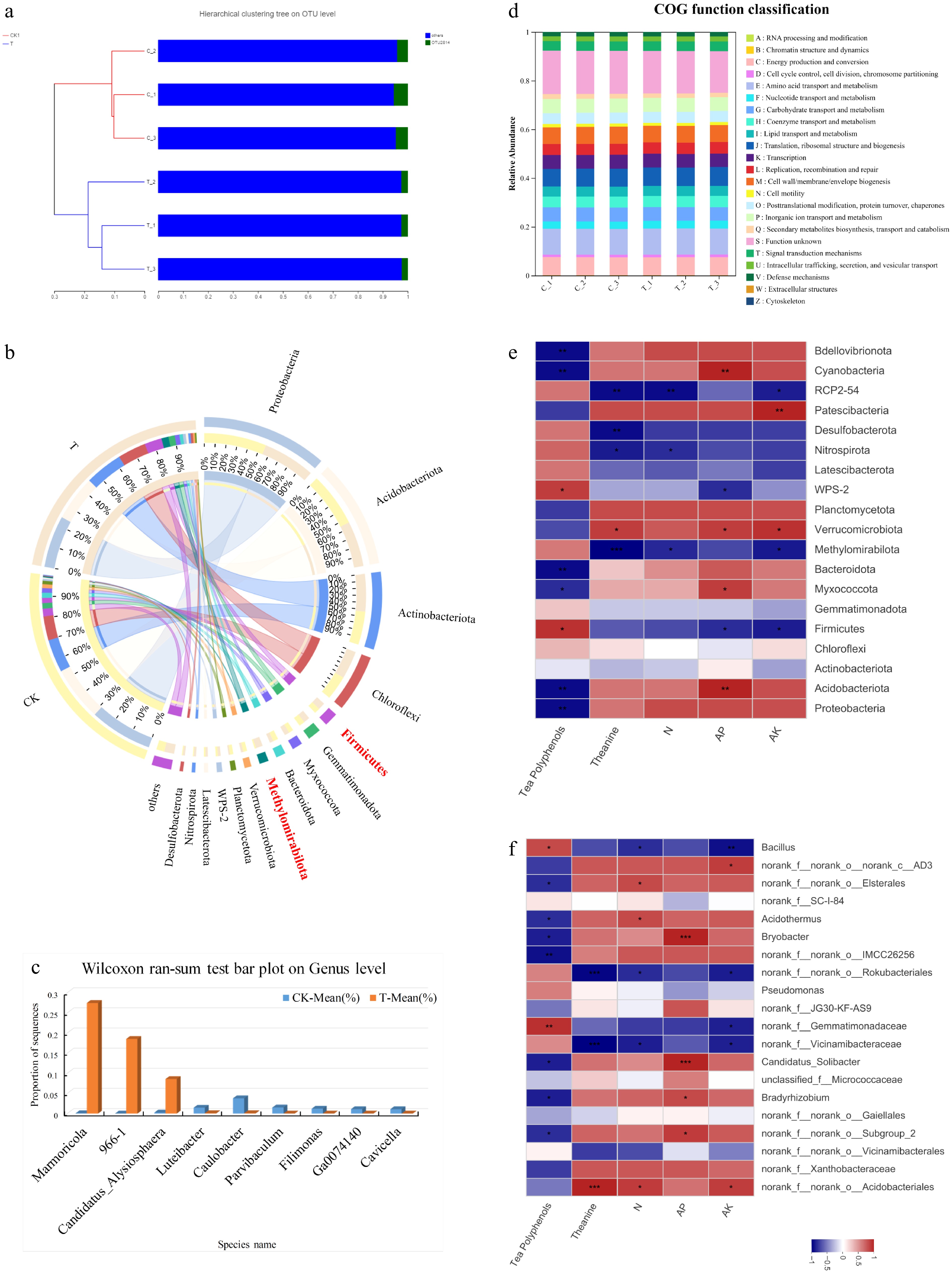
Figure 5.
Differential relative abundance of soil bacterial communities. (a) The hierarchical clustering tree at the OUT level. (b) The circus diagram to describe the abundance relationship between samples and species at the phylum level. (c) The Wilcoxon rank-sum test bar plot at the genus level. (d) The COG function classification. (e) The Spearman correlation heatmap between environment factors and soil bacterial communities at the phylum level. (f) The Spearman correlation heatmap between environmental factors and soil bacterial communities at the genus level. C: continuous golden tea monocropping. T: intercropping Polygonatum cyrtonema Hua in golden tea plantations. Three biological replicates per samples were analyzed. Data were expressed as mean ± SE (n = 3). Student's t-test (* p < 0.05; ** p ≤ 0.01).
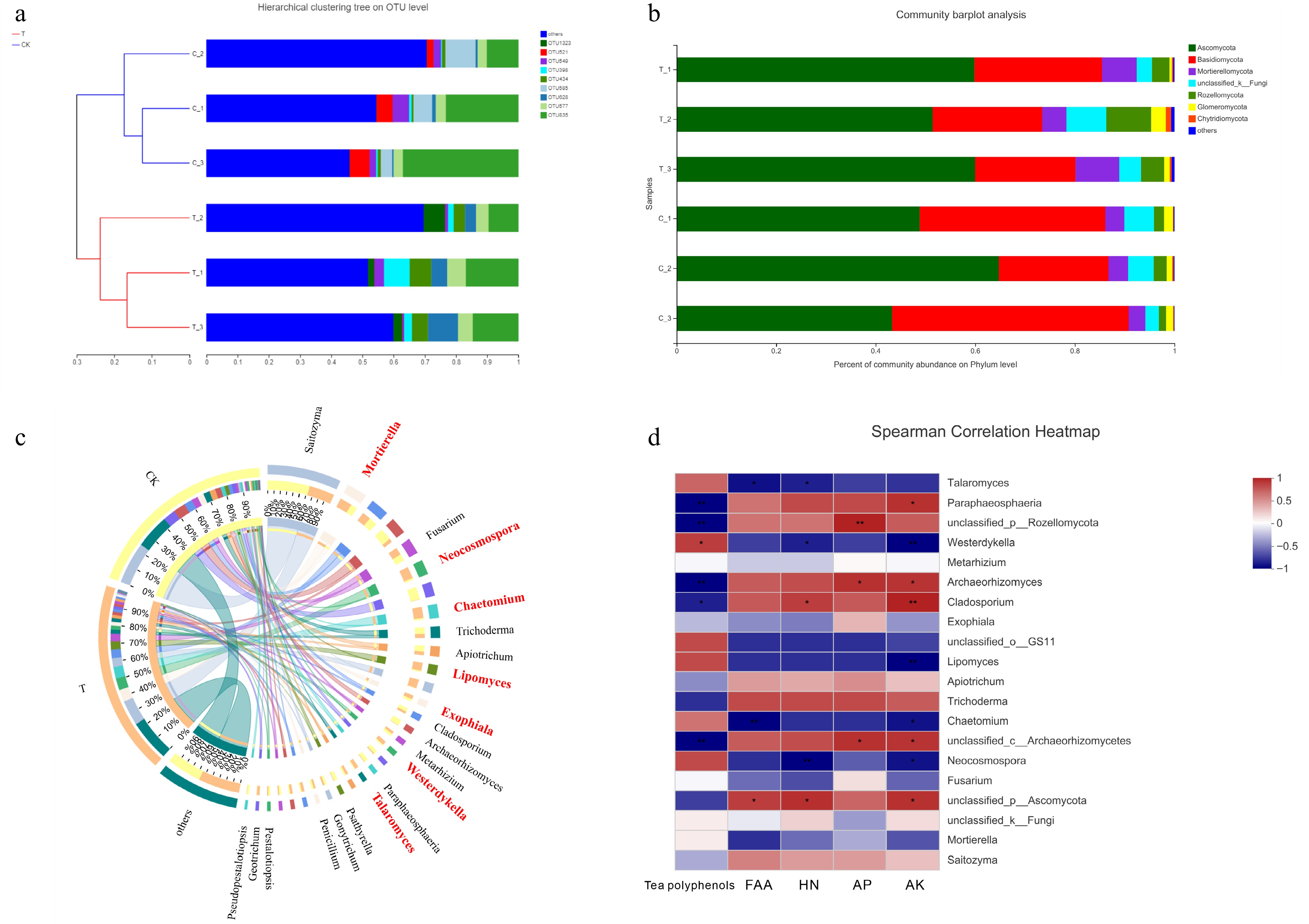
Figure 6.
Differential relative abundance of soil fungal communities. (a) The hierarchical clustering tree at the OUT level. (b) The community bar plot analysis at the phylum level. (c) The circus diagram to describe the abundance relationship between samples and species at the genus level. (d) The Spearman correlation heatmap between environment factors and soil fungi communities at the genus level. C: continuous golden tea monocropping. T: intercropping Polygonatum cyrtonema Hua in golden tea plantations. Three biological replicates per sample were analyzed. Data were expressed as mean ± SE (n = 3). Student's t-test (* p ≤ 0.05; ** p ≤ 0.01).
Bacterial 16S rRNA gene sequencing showed a significantly increased relative abundance of OTU 2814 (p_Proteobacteria, c_Alphaproteobacteria, o_Rhizobiales, f_Xanthobacteraceae), Firmicutes, Methylomirabilota (at the phylum level), and Marmoricola, 966-1, and Alysiosphaera at the genus level under intercropping compared to the monoculture (Fig. 5a−c). COG functional classification revealed significant enrichment of bacteria associated with cytoskeleton function (e.g., Firmicutes[12], Bacillus[13,14], Alysiosphaera[15]) and RNA processing and modification (Proteobacteria[16], Methylomirabilota[17], Marmoricola[18]) in intercropping systems, which facilitate plant nutrient uptake from soil (Fig. 5d). Fungal ITS sequencing revealed that the most abundant phyla were Ascomycota, Basidiomycota, Rozellomycota, Glomeromycota, and Chytridiomycota (Fig. 6b). Under intercropping, we observed a significantly increased relative abundance of genera of Mortierella, Lipomyces, Talaromyces, Neocosmospora, Westerdykella, and Exophiala (Fig. 6c). Intercropping effectively altered the photosynthetic physiological indices of tea plants in the tea garden. Tea plants could gradually modify their leaf morphology to adapt to different intercropping environments[6].
Therefore, we further performed correlation analysis using a heatmap to visualize the correlation coefficients between environmental factors. The selected species were analyzed using MeV (Multi Experiment Viewer) software. The correlation analysis results showed that Acidothermus[9] was positively correlated with soil HN uptake, Bryobacter[19] and Bradyrhizobium[18] were positively correlated with soil AP cycling, and Cladosporium[20] was positively correlated with both soil HN and AK cycling. Meanwhile, Archaeorhizomyces[21] was positively correlated with soil AP and AK cycling. Notably, we found positive relationships between the Firmicutes (specifically the genus Bacillus) and Westerdykella with the increasing content of tea polyphenol (Figs 5e, f, 6d).
Based on this research backdrop, this study, through systematic field trials and molecular biological analysis, has for the first time clearly revealed that under the intercropping cultivation model with P. cyrtonema, specific beneficial microbial genera—including Bacillus[13,22,23] and Westerdykella[24,25]—exert significant promoting effects on the growth and metabolism of Xiangxi golden tea No. 2. These microorganisms play key regulatory roles in the quality formation and yield enhancement of Xiangxi golden tea No. 2 by improving soil nutrient cycling and enhancing plant stress resistance, among other mechanisms.
-
In conclusion, the findings of this study demonstrate that intercropping P. cyrtonema with Xiangxi golden tea No. 2 plantations enhances tea quality not solely through direct competition for resources, but through the coordinated restructuring of the rhizosphere microbial community. This reorganization strengthens the coupling between nutrient cycling efficiency and plant metabolic performance. Notably, the increased relative abundance of Rhizobiales—a taxonomic order associated with biological nitrogen fixation—and saprotrophic fungi such as Mortierella and Talaromyces, known for their roles in phosphorus solubilization and organic matter decomposition, indicates the establishment of a functionally synergistic rhizosphere microbiome. Furthermore, the concurrent elevation of tea polyphenols—key determinants of both beverage quality and plant stress resilience—suggests that microbial modulation may induce secondary metabolic pathways in the tea plant (Fig. 7). Thus, this study shifts the paradigm from viewing intercropping as a simple agronomic practice to understanding it as a system-level biological intervention. Collectively, this work provides a foundation for the development of microbiome-informed strategies aimed at optimizing intercropping systems to simultaneously improve productivity, product quality, and ecological sustainability within agricultural ecosystems.
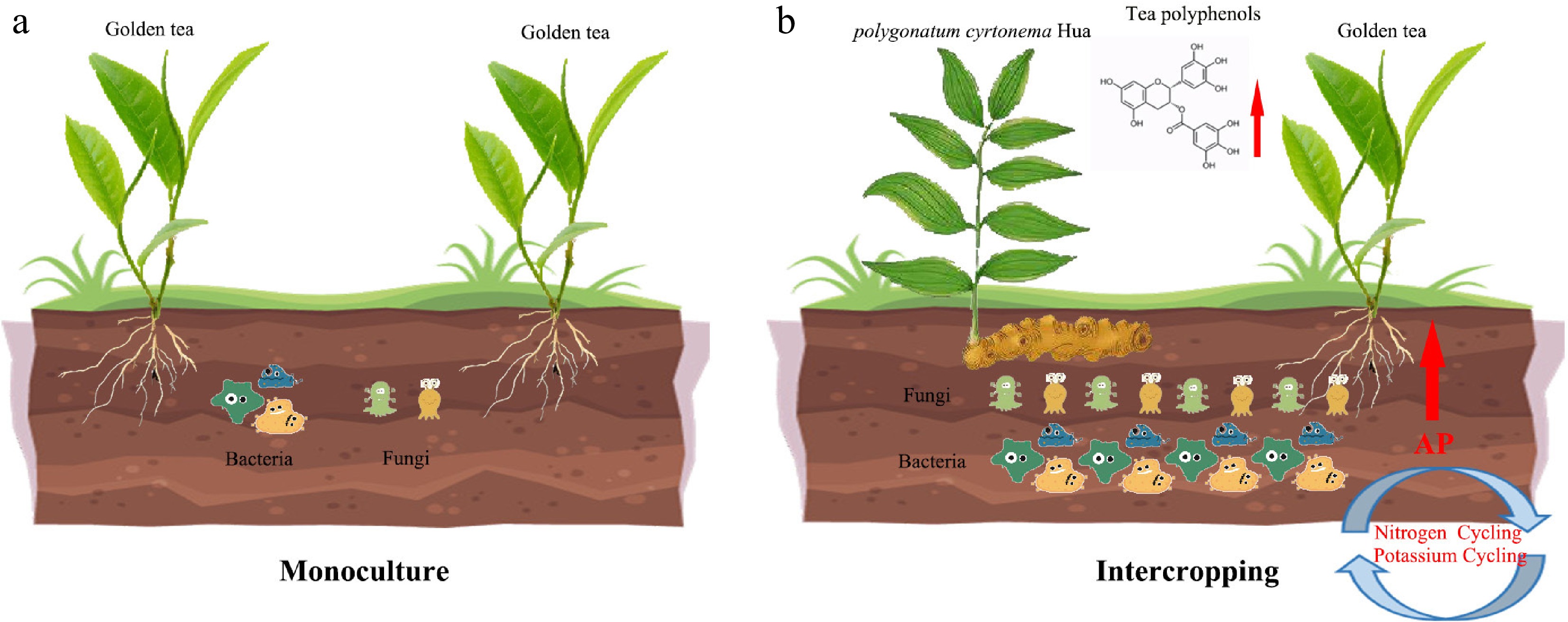
Figure 7.
Schematic diagram of monoculture and intercropping. (a) Monoculture of golden tea. (b) Intercropping of polygonatum cyrtonema Hua and golden tea.
-
The authors confirm their contribution to the paper as follows: study conception and design: Zhu FY, Fang Y, Song R; data collection: Yang KK, Xie P; analysis and interpretation of results: Yang KK, Zhu FY, Luo ZL, Peng XY; draft manuscript preparation: Yang KK, Fang Y. All authors reviewed the results and approved the final version of the manuscript.
-
The datasets generated during and analyzed during the current study are available from the corresponding author upon reasonable request.
-
This study was supported by the Funds of Hunan Province Science and Technology Plan Project, China (2022NK4182) to FZ, the Agricultural Science and Technology Innovation Project of Hunan Province (2023CX63), HARS Chinese Medicinal Materials (HARS-11), and the Yuelushan Laboratory Seed Industry Special Project (YLS-2025-ZY02031) to RS.
-
The authors declare that they have no conflict of interest.
-
accompanies this paper online at: https://doi.org/10.48130/mpb-0026-0014.
- Supplementary Fig. S1 Diversity analysis of bacteria at the operational taxonomic unit (OTU) level in all samples.
- Supplementary Fig. S2 Diversity analysis of fungi at the operational taxonomic unit (OTU) level in all samples.
- Copyright: © 2026 by the author(s). Published by Maximum Academic Press, Fayetteville, GA. This article is an open access article distributed under Creative Commons Attribution License (CC BY 4.0), visit https://creativecommons.org/licenses/by/4.0/.
-
About this article
Cite this article
Yang KK, Fang Y, Luo ZL, Xie P, Peng XY, et al. 2026. Intercropping tea plantation with Polygonatum cyrtonema Hua improves the tea quality and rhizosphere diversity. Medicinal Plant Biology 5: e018 doi: 10.48130/mpb-0026-0014 

Intercropping tea plantation with Polygonatum cyrtonema Hua improves the tea quality and rhizosphere diversity
- Received: 26 March 2026
- Revised: 18 June 2026
- Accepted: 22 June 2026
- Published online: 27 July 2026
Abstract: Polygonatum cyrtonema Hua is a medicinal plant valued for its dried, fleshy rhizomes. Market demand for Rhizoma Polygonati has surged due to its widespread use in health supplements and treatments for conditions such as diabetes and aging. Our field experiments demonstrated that intercropping P. cyrtonema in Xiangxi golden tea No. 2 gardens can increase farmers' income, achieving a dual harvest with enhanced yield and economic returns. This novel intercropping system has delivered improved social, ecological, and economic benefits. Therefore, we further explored the scientific mechanisms by comparing the rhizosphere microbiome diversity and its correlation with soil properties and tea quality under traditional monoculture and intercropping systems. Rhizosphere metagenomics revealed an altered microbial community structure, notably enriched abundances of Bacillus and Westerdykella, which correlated positively with a 15% increase in tea polyphenol content relative to monocultures. Intercropping also enhanced soil nutrient use efficiency for nitrogen, phosphorus, and potassium. These findings indicate that integrating P. cyrtonema into tea production systems improves both product quality and ecosystem function, offering an evidence-based strategy for sustainable agriculture.
-
Key words:
- Polygonatum cyrtonema Hua /
- Golden tea /
- Intercropping /
- Rhizosphere /
- Agricultural sustainability