













-
Liver transplantation is an effective method to treat acute liver failure, chronic cirrhosis, hepatocellular carcinoma, etc.[1]. According to data from the China Liver Transplant Registry, the average annual number of liver transplantation patients in China from 2015 to 2020 was about 6,000[2]. Early complications such as pain, sleep disorders, and emotions after liver transplantation have gradually attracted attention[3]. Liver transplantation surgery often causes pain, including incision injury, nerve damage, ischemia-reperfusion injury, and postoperative inflammatory response[4]. The incidence of pain in patients undergoing abdominal surgery at 5 h, 2 d, and 3 d after surgery is reported to be 84.2%, 92.5%, and 96.7%, respectively. Through pain education, comprehensive pain management methods, and medication control, the effect of reducing postoperative pain in patients can be achieved[5]. Another study has shown that the incidence of difficulty falling asleep after liver transplantation surgery is very high, even up to 92.2%, accounting for the second highest incidence of postoperative discomfort symptoms in liver transplantation recipients[6]. Wound pain, immunosuppressive agents, corticosteroids, preoperative liver function, infections, etc., can all affect sleep quality. The emotion-related symptom groups of organ transplant recipients include anxiety, depression, etc. Severe emotional symptoms can increase the incidence of cardiovascular disease and greatly affect postoperative quality of life[7].
Comprehensive nursing intervention refers to multimodal analgesia, sleep intervention, psychological counseling, etc., that targets postoperative discomfort management in liver transplantation patients to improve their quality of life. This study aims to explore the effect of a comprehensive nursing intervention on pain, sleep quality, and emotions in liver transplantation patients.
-
This was a retrospective, non-randomized, single-center cohort study. Outcome assessors were blinded to group allocation, but patients and nursing staff could not be blinded due to the nature of the intervention. The patients were divided into a control group and a comprehensive nursing group based on whether they had received comprehensive nursing intervention. The retrospective analysis was of clinical data from patients with liver transplantation admitted to the organ transplant center of Hunan Provincial People's Hospital from January 2018 to December 2024. Inclusion criteria are as follows: (1) age over 18 years old; (2) receiving allogeneic liver transplantation for the first time; (3) able to understand and comply with study procedures. Exclusion criteria: (1) severe extrahepatic organ dysfunction independently affecting prognosis (e.g., severe heart failure, end-stage renal disease on dialysis, or severe respiratory failure); (2) pre-existing severe psychiatric disorders or cognitive impairment that would interfere with psychological interventions or outcome evaluations; (3) deaths within 1 week after liver transplantation to avoid bias from perioperative fatal events unrelated to the nursing intervention. Clinical data were obtained from electronic medical records, and sociodemographic information was collected via patient questionnaires. This study was approved by the Ethics Committee of Hunan Provincial People's Hospital (No. [2025]-182). The Department of Hepatobiliary Surgery of Hunan Provincial People's Hospital conducted the study.
Intervention methods
-
In this retrospective study, group allocation was determined by actual ward assignment based on bed availability at admission: patients on one floor received the comprehensive nursing protocol as part of routine practice, while those on another floor received standard care. Nurses on both floors had comparable qualifications, and the physical separation between floors minimized contamination. Details of the comprehensive protocol are described below. All patients underwent liver transplantation.
The control group implemented routine nursing interventions, including dietary care, drainage tube care, medication guidance, pain management, postoperative exercise collaboration, health education, psychological care, and life advice.
The comprehensive nursing group included the following nursing interventions in addition to routine nursing; the comprehensive nursing intervention flow chart is shown in Fig. 1.
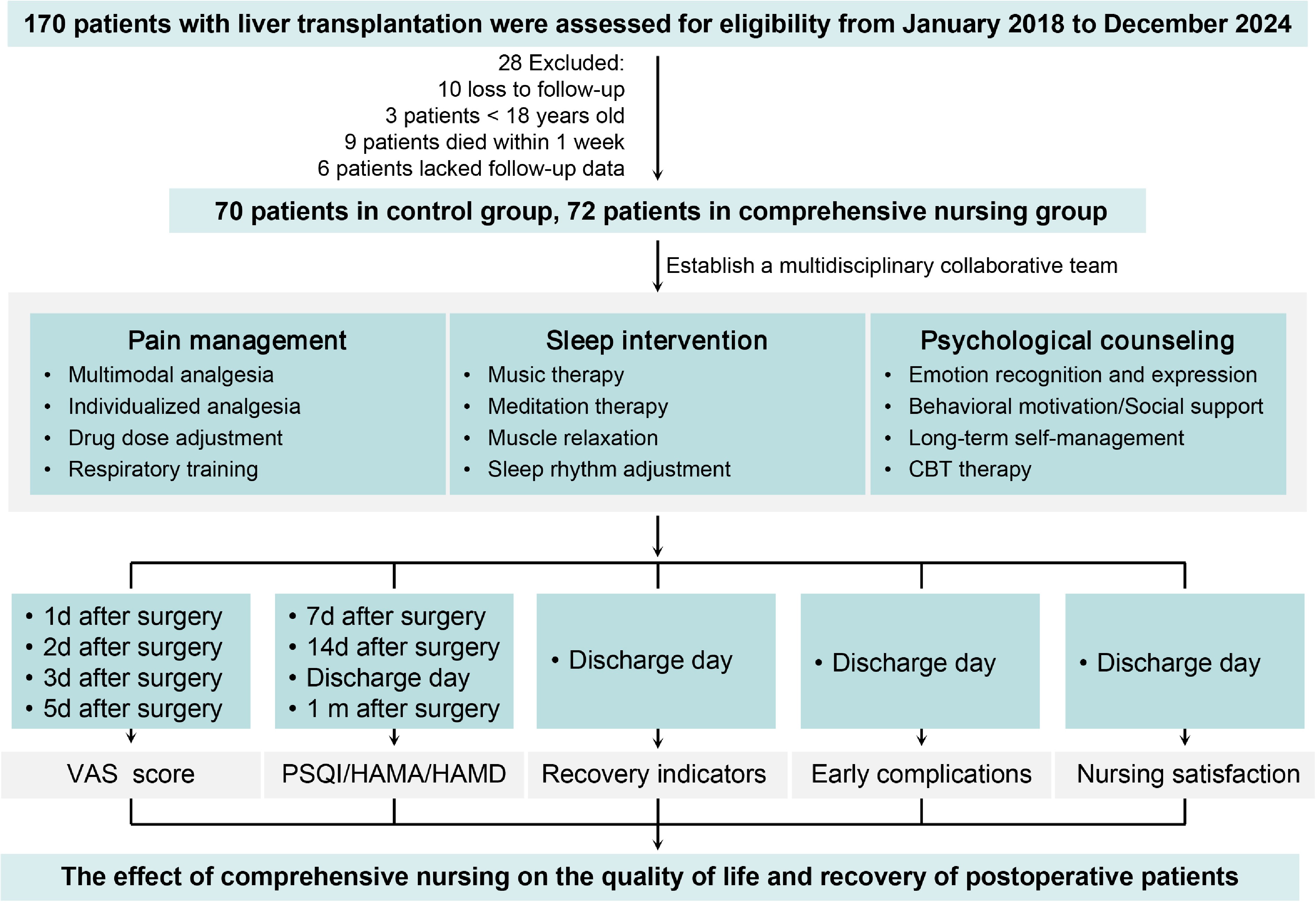
Figure 1.
The flow chart of comprehensive nursing intervention. Of 170 liver transplantation patients assessed (2018–2024), 28 were excluded, leaving 70 controls and 72 in the comprehensive nursing group. The intervention comprised pain management (multimodal/individualized analgesia, dose adjustment, respiratory training), sleep intervention (music/meditation, muscle relaxation, sleep rhythm adjustment), and psychological counseling (emotion recognition, behavioral motivation/social support, self-management, CBT). Outcomes were assessed on days 1–5 (VAS); days 7 and 14, at discharge, and at 1 month (PSQI/HAMA/HAMD); and at discharge (recovery indicators, complications, satisfaction).
Pain management
-
Personalized analgesia was achieved through a combination of rational analgesic plans and pharmacological and non-pharmacological interventions. The principle of personalized analgesia was 'controlling pain and reducing side effects'. Common analgesic drugs include non-steroidal anti-inflammatory drugs (NSAIDs), opioids, local anesthetics, etc. For patients with severe pain, a multimodal analgesic intervention could be adopted, and for those with persistent pain, infusion or analgesic pumps could be used to maintain the analgesic effect. After liver transplantation, patients need to receive immunosuppressive therapy; there may be an interaction between analgesics and immunosuppressive drugs. The dosage had to be adjusted according to the degree of pain. Deep breathing exercises were guided to reduce the excitability of the sympathetic nervous system and relieve pain. Deep breathing exercises involved inhaling for 4 s each time, holding for 7 s, exhaling for 8 s, and repeating three to five times.
Sleep intervention
-
A structured sleep intervention was implemented incorporating sleep restriction, stimulus control, and relaxation techniques. For sleep restriction, baseline total sleep time (TST) was estimated using a 2-d sleep diary, and initial time in bed (TIB) was set as TST + 30 min (range 5–8 h), with weekly adjustments of 15–20 min based on sleep efficiency (target ≥ 85%). For stimulus control, patients were instructed to leave the bed if unable to fall asleep within 20 min. For relaxation, guided meditation and progressive muscle relaxation were delivered once daily, 30 min before lights out, for 20–30 min per session, with each muscle group tensed for 5 s and released for 10 s, repeated twice.
Psychological counseling
-
The first topic of treatment was the recognition and expression of emotions. Nurses used structured open-dialogue techniques to help patients identify negative emotions such as psychological anxiety and depression and express their expected treatment goals. In addition, nurses guided patients to master emotional focus therapy, relaxation therapy, and stimulus control therapy. The second topic of treatment was behavioral motivation and social support. Nurses introduced typical cases to patients, guided them to complete psychological logs, and used positive motivation methods to help patients establish a positive recovery attitude. The nurses then supported the patient and his family in holding mutual aid groups, promoting communication and support between the patients and the outside world. The third topic of treatment was long-term psychological maintenance and self-management. Nurses guided patients to use psychological resilience training, which helped them improve their ability to self-regulate emotions through relaxation training and mindfulness meditation. The fourth topic of treatment was to evaluate the effectiveness of cognitive therapy. The Cognitive Behavioral Therapy for Insomnia (CBT-I) intervention was adopted for psychological counseling[8]. Patients who undergo liver transplantation during the perioperative period are prone to comorbid anxiety and depression due to significant surgical trauma, complex immunosuppressive regimens, and a high risk of postoperative complications. Studies have reported that comorbid anxiety and depression not only increase the psychological burden of patients and affect treatment adherence, but also can disrupt immune regulation, increase the risk of infection, and delay postoperative physiological and functional recovery by activating the hypothalamic–pituitary–adrenal axis and continuously raising cortisol levels. Cognitive behavioral therapy (CBT) is a goal-oriented psychological intervention.
The CBT nursing procedures, including three steps, were as follows (Fig. 2):
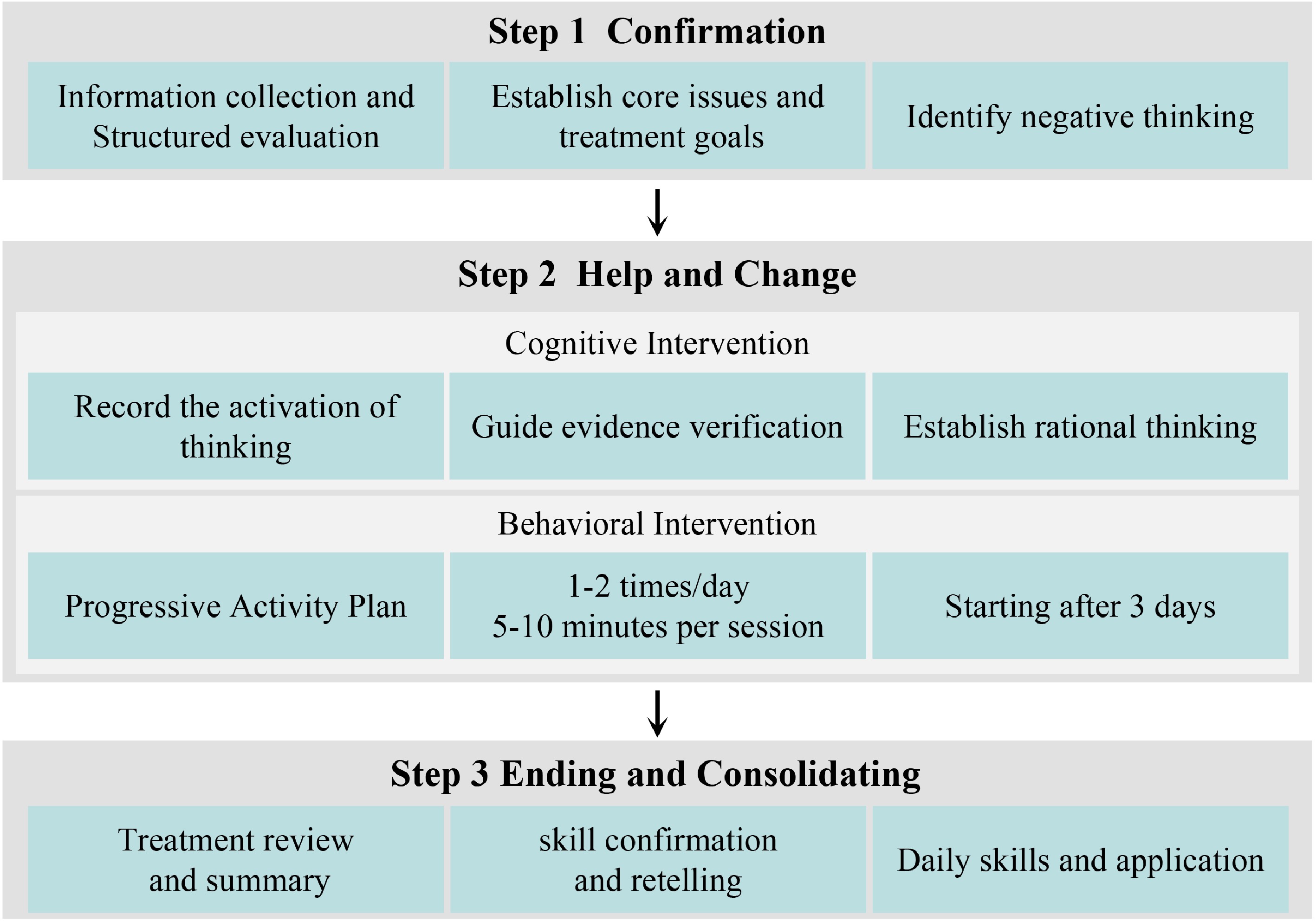
Figure 2.
Implementation steps of cognitive behavioral therapy (CBT). There were three sequential steps: the confirmation step, the help and change step, and the ending and consolidating step.
Step 1: Confirmation stage: collect information, analyze problems, establish goals, provide psychological education, explain the rationale and intervention steps, analyze the actual situation, and develop the corresponding strategies for each day of the week. Conduct structured discussions to help patients identify negative perceptions related to surgery.
Step 2: Assistance and the stage of change, including cognitive intervention and behavioral intervention.
(1) Cognitive intervention: Use a three-column recording method to assist patients. In the left column, patients record automatic thoughts that occur before negative emotions—these represent incorrect cognitions. The middle column records the patient's analysis of incorrect cognitions under the direction of the nurse, and the right column records rational thinking, representing correct cognition. Guide patients to use evidence to test their thoughts and establish positive cognition (Supplementary Table S1).
(2) Behavioral intervention: Adopt a progressive activity plan that mainly includes passive and active full-range joint exercises, limb muscle strength training, and respiratory function training. From the third day after surgery, evaluate the patient's vital signs, muscle strength, and complications. The frequency of activity is 1–2 times per day, lasting 5–10 min per session.
Step 3: Conclusion stage: Maintain the current state of mind and provide psychological preparation for situations that may trigger negative cognitions, such as fluctuations in test results, the burden of lifelong medications, and the stress of returning to work or school. Through continuous practice, solidify the CBT nursing approach into a healthy psychological coping habit, thus maintaining long-term emotional stability and preventing the recurrence of previous cognitive patterns. Specific approach: the nurse and patient jointly review the basic aspects of CBT nursing, highlight the progress the patient has made and the issues that require attention, and ask the patient to reiterate which erroneous cognitions have been corrected and what the correct cognitions are, to determine whether the patient has accurately understood the information provided by nursing staff.
The patients were treated with CBT nursing once on postoperative days 7 and 14, on the discharge day, and on the 1-month follow-up day. Each session lasted approximately 30–45 min and included cognitive restructuring, behavioral activation, and relapse prevention. Before each treatment, the Hamilton Anxiety Scale (HAMA) and the Hamilton Depression Scale (HAMD) were used to assess the patient's psychological status[9].
Comprehensive multidisciplinary collaborative nursing
-
A comprehensive multidisciplinary collaborative nursing team was established, consisting of transplant center physicians, anesthesiologists, psychological counselors, rehabilitation physicians, transplant center nurses, etc. The comprehensive multidisciplinary collaborative nursing team provides health education to patients and their families prior to surgery. At the same time, psychological counselors actively provided psychological counseling and evaluated the patient's psychological state, cognition, and behavior toward early postoperative recovery, in order to guide patients to establish positive beliefs. Rehabilitation physicians developed personalized functional exercise plans to guide early postoperative activities, including encouraging patients to move their limbs in bed and sitting training for 15–20 min each time, three times a day.
Observation indicators and judgment criteria
-
These were recorded, including gastric tube retention time, urinary catheter retention time, time to first postoperative flatus, time to first ambulation out of bed, and total length of hospital stay. The visual analogue scale (VAS) was used to assess the degree of postoperative pain in patients[10]. The VAS score ranged from 0 (painless) to 10 (severe pain), with higher scores indicating more severe pain. Pain levels were recorded on postoperative days 1, 2, 3, and 5. These time points were selected to capture the typical pain trajectory following major abdominal surgery: day 1 captured peak pain immediately after surgery; days 2 and 3 reflected the transition from patient-controlled analgesia to oral analgesics and the initiation of early mobilization; and day 5 represented pain status before discharge. To minimize confounding by recent analgesic intake, all VAS assessments were performed between 8:00 and 9:00 AM, approximately 12 h after the last scheduled analgesic dose; for patients using patient-controlled analgesia (PCA), assessments were conducted during the early morning period when PCA demand was lowest. The Pittsburgh Sleep Quality Index (PSQI) scale was applied to assess sleep quality[11]. The total PSQI score ranged from 0 to 21 points, with higher scores indicating poorer sleep quality. Sleep status was recorded on postoperative days 7 and 14, on the discharge day, and after 1 month.
HAMA and HAMD were used to evaluate the psychological state. The HAMD score of 8 to 17 indicated possible depression, 18 to 24 indicated moderate depression, and > 25 indicated severe depression. HAMA scores of 8 to 14 indicated possible anxiety, 15 to 21 indicated moderate anxiety, and > 22 indicated severe anxiety. Psychological state on postoperative days 7 and 14, on the discharge day, and 1 month after the operation was recorded.
The incidence of early postoperative complications was observed in two groups, including pleural effusion, ascites, postoperative infection, and hyperglycemia.
Nursing satisfaction
-
We conducted a nursing satisfaction survey among 142 patients who had undergone liver transplantation. The self-made nursing satisfaction survey was rated from 0 to 100 points. A score > 80 points indicated very satisfied, 60 to 80 points indicated satisfied, and < 60 points indicated dissatisfied[12]. Nursing satisfaction was categorized into three levels: very satisfied, satisfied, and dissatisfied. The total satisfaction rate (%) was calculated using the following formula: total satisfaction rate (%) = (very satisfied + satisfied)/total × 100%. Patients completed the survey on the day of discharge.
Statistical methods
-
All data analysis was performed using statistical product and service solutions (SPSS) (v23.0) statistical software. All measurement data underwent normality testing first. The mean ± standard deviation (x ± S) was used to represent the metric data that corresponded to the normal distribution, and the t-test was used for the comparison of two groups. The count data were represented by frequency, and the comparison between groups was performed using the chi-square test. The differences in VAS, PSQI, HAMA, and HAMD between the two groups at different times were retested using a linear mixed model test (LMM). The details of the specific method of LMM can be found in Supplementary Material 1. p < 0.05 indicated that the difference was statistically significant. As a retrospective study, a prospective sample size calculation was not performed; however, the consistently significant differences across multiple primary outcomes suggest adequate power to detect clinically meaningful effects.
-
A total of 142 liver transplantation patients were enrolled in this study, with 70 patients in the control group and 72 patients in the comprehensive nursing group. The patients in the control group were between 21 and 64 years old, with an average of 48.60 ± 4.24 years, including 54 males and 16 females. The patients in the comprehensive nursing group were between 25 and 68 years of age, with an average of 49.50 ± 7.78 years of age, including 60 men and 12 women. The baseline characteristics of the two groups of patients include age, level of education, monthly income, healthcare payment methods, employment, etc. There were no statistically significant differences in baseline data between the two groups of patients (p > 0.05), as shown in Table 1. From this table, it was also seen that liver transplantation surgery was more common in men over the age of 45 years and was not closely related to education level, monthly income, or employment status. Most of the indications for liver transplantation were hypertension and diabetes. The main type of disease was cirrhosis, representing more than half of the patients.
Table 1. The baseline of two groups of patients undergoing liver transplantation surgery (N, %).
Parameters Control group
(N = 70)Comprehensive nursing group
(N = 72)χ2 p-value Gender 0.86 0.354 Male 54 (77.1) 60 (83.3) Female 16 (22.9) 12 (16.7) Age (years) 48.60 ± 4.24 49.50 ± 7.78 0.50 0.619 Education level 0.13 0.938 Junior high school or lower 37 (52.9) 40 (55.6) Senior high school 20 (28.6) 20 (27.8) College or higher 13 (18.6) 12 (16.7) Employment 1.53 0.216 Yes 24 (34.3) 32 (44.4) No 46 (65.7) 40 (55.6) Payment method 0.314 0.575 Self-funded 12 (17.1) 15 (20.8) Medical insurance 58 (82.9) 57 (79.2) Monthly income (CNY) 0.68 0.713 ≤ 3,000 10 (14.3) 14 (19.4) > 3,000 ~ ≤ 5,000 20 (28.6) 19 (26.4) > 5,000 40 (57.1) 39 (54.2) Hypertension 0.546 0.640 Yes 14 (20.0) 11 (15.3) No 56 (80.0) 61 (84.7) Diabetes 0.287 0.592 Yes 12 (17.1) 10 (13.9) No 58 (82.9) 62 (86.1) Coronary heart disease 0.131 0.717 Yes 6 (8.6) 5 (6.9) No 64 (91.4) 67 (93.1) Indications for liver transplantation 0.68 0.410 Liver cirrhosis 42 (60.0) 48 (66.7) Cirrhosis with primary liver cancer 28 (40.0) 24 (33.3) Comparison of recovery time indicators
-
Gastric tube retention time, urinary catheter retention time, anal exhaust time, first time out of bed activity, and hospitalization time in the comprehensive nursing group were 29.07 ± 6.46 h, 46.87 ± 5.48 h, 60.10 ± 9.26 h, 57.23 ± 7.46 h, and 24.22 ± 4.71 d, respectively. These were shorter than those in the control group, with 34.57 ± 5.40 h, 49.58 ± 6.72 h, 63.10 ± 10.60 h, 60.10 ± 7.94 h, and 27.48 ± 8.59 d, respectively (p < 0.05, Fig. 3).
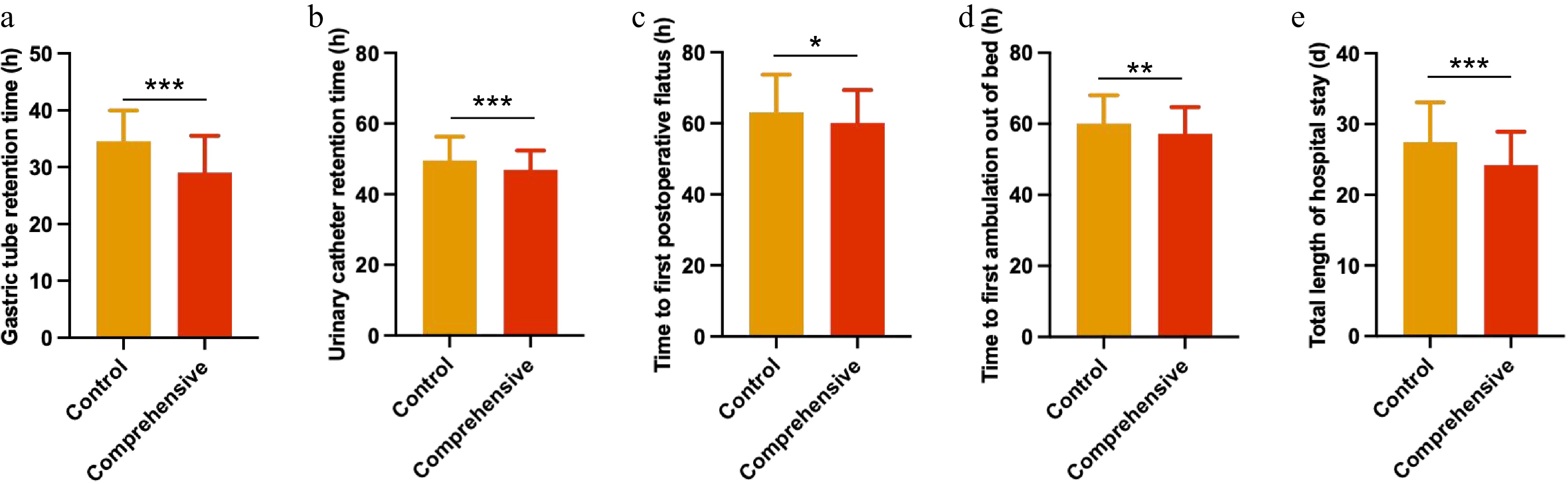
Figure 3.
Comparison of perioperative recovery indicators between the control group (orange bars) and the comprehensive nursing group (red bars). Error bars denote the standard deviation (SD). (a) Gastric tube retention time (h); (b) urinary catheter retention time (h); (c) time to first postoperative flatus (h); (d) time to first ambulation out of bed (h); (e) total length of hospital stay (d). Statistical significance: * p < 0.05, ** p < 0.01, *** p < 0.001 vs the control group.
Comparison of pain between two groups
-
Compared with the first day after surgery, the VAS scores of both the control group and the comprehensive nursing group gradually decreased (p < 0.001), but the VAS score of the comprehensive nursing group was lower than that of the control group (p < 0.001) (Table 2). The results were confirmed by LMM analysis (Supplementary Table S2).
Table 2. Comparison of pain between two groups.
N 1 d 2 d 3 d 5 d F-value p-value Control group 70 7.50 ± 0.93 6.38 ± 0.79 5.25 ± 0.65 2.52 ± 0.44 503.16 < 0.001 Comprehensive nursing group 72 7.17 ± 0.80 5.73 ± 0.64 4.66 ± 0.52 1.63 ± 0.41 935.84 < 0.001 t-value 2.23 6.19 6.00 10.15 p-value 0.024 < 0.001 < 0.001 < 0.001 Comparison of postoperative sleep quality
-
Compared with the seventh day after surgery, the PSQI scores of both the control group and the comprehensive nursing group gradually decreased (p < 0.001), but the PSQI score of the comprehensive nursing group was lower than that of the control group (p < 0.001) (Table 3). The results were confirmed by LMM analysis (Supplementary Table S2).
Table 3. Comparison of PSQI scores between the two groups.
N 7 d 14 d Discharge day 1 month F-value p-value Control group 70 8.71 ± 1.58 7.84 ± 1.42 5.49 ± 0.10 2.47 ± 0.45 381.07 < 0.001 Comprehensive nursing group 72 8.62 ± 1.63 6.90 ± 1.31 4.14 ± 0.78 1.66 ± 0.31 532.36 < 0.001 t-value 0.31 4.10 8.97 12.53 p-value 0.754 < 0.001 < 0.001 < 0.001 Comparison of postoperative psychological states
-
Compared with the seventh day after surgery, the HAMA scores and HAMD scores of both the control group and the comprehensive nursing group gradually decreased (p < 0.001), but the HAMA scores and HAMD scores of the comprehensive nursing group were lower than those of the control group (p < 0.001) (Table 4). The results were confirmed by LMM analysis (Supplementary Table S2).
Table 4. Comparison of HAMA and HAMD scores between the two groups.
N 7 d 14 d Discharge day 1 month F-value p-value HAMA Control group 70 19.76 ± 3.3 17.19 ± 2.6 15.01 ± 2.5 9.34 ± 1.9 145.24 < 0.001 Comprehensive nursing group 72 18.62 ± 2.9 14.71 ± 2.5 13.24 ± 2.3 7.18 ± 1.4 292.56 < 0.001 t-value 2.19 5.81 8.97 7.65 p-value 0.030 < 0.001 < 0.001 < 0.001 HAMD Control group 70 22.33 ± 3.26 14.15 ± 5.25 12.23 ± 2.96 6.15 ± 2.15 336.23 < 0.001 Comprehensive nursing group 72 20.30 ± 5.32 13.50 ± 5.57 10.80 ± 4.46 4.64 ± 1.92 145.31 < 0.001 t-value 12.25 2.26 2.30 4.67 p-value < 0.001 0.026 0.023 < 0.001 Comparison of early postoperative complications
-
The incidence of early postoperative complications was observed in two groups. Early postoperative complications included pleural effusion, ascites, postoperative infection, and hyperglycemia. The most common complication was postoperative infection, with 28.57% in the control group and 15.28% in the comprehensive nursing group (p = 0.055). The incidence of pleural effusion was lower in the comprehensive nursing group (p = 0.028) (see Table 5 for details).
Table 5. Comparison of early postoperative complications between two groups (N, %).
Early postoperative complications Control group
(N = 70)Comprehensive nursing group
(N = 72)χ2 p-value Pleural effusion Yes 15 (21.4) 6 (8.3) 4.83 0.028 No 55 (78.6) 66 (91.7) Ascites Yes 6 (8.6) 4 (5.6) 0.49 0.483 No 64 (91.4) 68 (94.4) Postoperative infection Yes 20 (28.6) 11 (15.3) 3.68 0.055 No 50 (71.4) 61 (84.7) Hyperglycemia Yes 14 (20.0) 12 (16.7) 0.26 0.608 No 56 (80.0) 60 (83.3) Comparison of the nursing satisfaction rate
-
We investigated the nursing satisfaction of the comprehensive nursing group and the control group during hospitalization. In the control group, 48 cases were very satisfied, 15 cases were satisfied, and seven cases were dissatisfied. In the comprehensive nursing group, 62 cases were very satisfied, seven cases were satisfied, and three cases were dissatisfied. The results showed that nursing satisfaction was higher in the comprehensive nursing group (95.83%) than in the control group (90.00%) (p = 0.044) (Fig. 4).
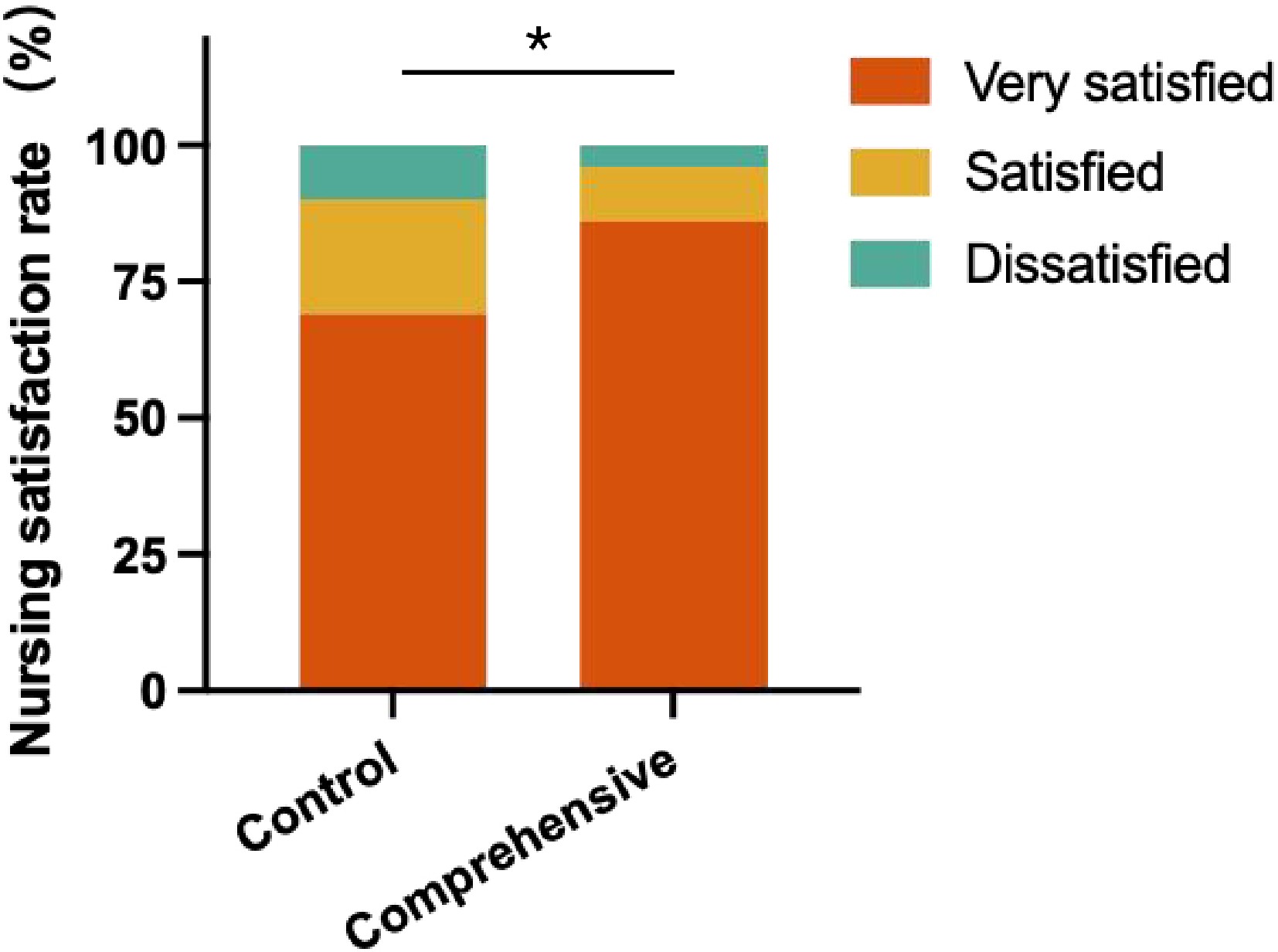
Figure 4.
Stacked bar chart comparing patient nursing satisfaction proportions between the control group and the comprehensive nursing group. Dark orange = very satisfied; Golden yellow = satisfied; Teal green = dissatisfied. Each stacked bar represents the percentage distribution of satisfaction levels within one study group on the vertical axis (nursing satisfaction rate, %). Pearson's chi-squared test was applied to compare overall satisfaction rates between groups; * p < 0.05 indicates a statistically significant difference vs the control group.
-
Based on the established evidence that liver transplantation surgery imposes significant physical trauma and predisposes patients to early postoperative complications[13], this study analyzed the effects of comprehensive nursing intervention on pain, sleep quality, and psychological status of patients after liver transplantation. Our findings demonstrate that this nursing model could effectively alleviate postoperative pain, improve sleep quality, and reduce anxiety and depression levels in patients compared to conventional nursing. These results underscore the multifaceted benefits of a holistic nursing approach in the perioperative setting. Hepatocellular carcinoma is a major indication for liver transplantation, and the favorable outcomes observed in our overall cohort may provide insights for postoperative care in this subgroup, though future studies specifically focusing on this population are warranted.
Goyal et al. proposed the concept of 'overall pain' and suggested that physicians alleviate patients' symptoms from a holistic perspective[14]. In line with this view, our intervention integrated several evidence-based components. There was a study showing that cognitive behavioral therapy, mainly consisting of cognitive restructuring and relaxation training, could effectively improve sleep quality and alleviate anxiety in patients after liver transplantation[15]. Similarly, postoperative depression was reported to be positively correlated with the postoperative unemployment rate, and alleviating depression had a significant effect on postoperative resumption of work[16,17]. Furthermore, respiratory training may improve sleep quality, prolong sleep duration, and enhance emotional self-management in patients after liver transplantation, as similar benefits have been demonstrated in patients with fibromyalgia[18]. The physiological rationale is supported by evidence that voluntary slow breathing modulates autonomic function and promotes relaxation[19]. Thus, our comprehensive nursing intervention, including personalized pain management, deep breathing exercises, CBT, and multidisciplinary teamwork, was designed to simultaneously address pain, sleep, and psychological distress.
This study showed that the comprehensive nursing group was significantly better than the control group in terms of VAS score, PSQI score, and psychological status, indicating the important role of comprehensive nursing intervention in postoperative pain, sleep quality, and mental health improvement. The personalized analgesic plan effectively alleviated postoperative pain, and deep breathing, as a nonpharmacological intervention, increased parasympathetic nervous activity, improved blood circulation, and alleviated anxiety and discomfort caused by pain[20]. The results were consistent with those of other studies. In terms of sleep quality, CBT-I improved sleep cognition and habits and helped restore normal sleep patterns. Meditation and progressive muscle relaxation training reduced psychological stress and promoted sleep improvement[21]. In terms of psychological state, the anxiety and depression scores of the comprehensive nursing group were significantly lower than those of the control group, indicating that the comprehensive nursing intervention effectively alleviated postoperative psychological pressure. Cognitive behavioral therapy helped patients change irrational cognition, reduce anxiety and depression, and provide comprehensive support for family participation and emotional recognition. Additionally, the comprehensive nursing group had significantly shorter gastric tube retention time, urinary catheter retention time, and hospitalization time compared to the control group, indicating that early activity, pain management, and teamwork could help reduce early postoperative complications and promote recovery, thus reducing hospitalization time, which, in turn, contributed to higher nursing satisfaction scores[22]. Despite these promising outcomes, several methodological limitations must be acknowledged. First, the non-randomized design may introduce selection bias; therefore, causal inferences cannot be firmly drawn. Second, the lack of a prospective sample size calculation is inherent to the retrospective design, and for secondary endpoints such as ascites and hyperglycemia, the study was underpowered; the non-significant results for these rare events should be interpreted with caution. Future randomized controlled trials with larger sample sizes are warranted to confirm our primary findings and to adequately assess these secondary outcomes.
-
In summary, comprehensive nursing intervention was associated with significantly better pain, sleep quality, and psychological outcomes in patients after liver transplantation. However, due to the non-randomized design, causation cannot be inferred. This intervention model deserves further evaluation in well-designed randomized controlled trials prior to widespread clinical application.
None to declare.
-
The study was conducted in accordance with the Declaration of Helsinki, and the protocol was approved by the Ethics Committee of Hunan Provincial People's Hospital and the First Affiliated Hospital of Hunan Normal University (No. [2025]-182) on June 17, 2025.
-
The authors confirm their contributions to the paper as follows: conceptualization: Wu Q, Xie H; data curation: Wu Q, Wang L; formal analysis: Tang H, Luo X; investigation: Wu Q, Wang L, Luo X; methodology: Xie H; validation: Tang H, Xie H; writing − original draft: Wu Q, Xie H. All authors reviewed the results and approved the final version of the manuscript.
-
All data generated or analyzed during this study are included in this published article and its supplementary information files.
-
The authors declare that they have no financial or commercial conflict of interest.
-
accompanies this paper online at: https://doi.org/10.48130/ejcc-0026-0017.
- Supplementary Table S1 Example of three column recording method.
- Supplementary Table S2 The LMM analysis of HAMA, HAMD, PSQI and VAS.
- Supplementary Material 1 Linear mixed-effects model analysis of repeated-measures outcomes.
-
Copyright © 2026 by the author(s).
European Journal of Cancer Care published by Maximum Academic Press on behalf of John Wiley & Sons Ltd. This is an open access article under the terms of the Creative Commons Attribution License, which permits use, distribution and reproduction in any medium, provided the original work is properly cited. -
About this article
Cite this article
Wu Q, Wang L, Tang H, Luo X, Xie H. 2026. The effect of comprehensive nursing intervention on liver transplantation patients. European Journal of Cancer Care 2026: e016 doi: 10.48130/ejcc-0026-0017 

The effect of comprehensive nursing intervention on liver transplantation patients
- Received: 07 April 2026
- Revised: 02 September 2026
- Accepted: 16 September 2026
- Published online: 12 October 2026
Abstract: This study evaluated the effects of comprehensive nursing intervention on pain, sleep quality, and emotional status in patients with liver transplantation. It was a retrospective and non-randomized study. A total of 142 patients who underwent liver transplantation at Hunan Provincial People's Hospital between January 2018 and December 2024 were divided into a comprehensive nursing group (n = 72) and a control group (n = 70). The comprehensive nursing group received multimodal analgesia, sleep intervention, and psychological counseling alongside routine care, while the control group received routine care only. The primary outcomes included visual analogue scale (VAS), Pittsburgh Sleep Quality Index (PSQI), Hamilton Anxiety Scale (HAMA), and Hamilton Depression Scale (HAMD) scores, and the other results included gastric tube retention time, urinary catheter retention time, hospitalization duration, anal exhaust time, and first mobilization time. The comprehensive nursing group showed significantly shorter retention times and hospital stays, earlier anal exhaust and mobilization, and greater reductions in VAS, PSQI, HAMA, and HAMD scores compared to the control group (p < 0.05). The incidence of pleural effusion was also significantly lower in the comprehensive nursing group (p < 0.05), while no significant differences were found in postoperative infection, ascites, or hyperglycemia. These findings suggest that comprehensive nursing intervention could improve pain management, sleep quality, and emotional well-being in liver transplantation recipients, providing a potential strategy for postoperative care.
