












-
Soil acidification significantly hinders crop productivity and represents a problem of global proportions. Acidic soils are characterized by low pH, nutrient inactivation, and disrupted microbiomes, imposing substantial constraints on crop productivity[1,2]. Acidification directly inhibits microbial and enzyme activity involved in biochemical reactions, further diminishing available soil nutrient content and disrupting element cycling within the soil system[2,3]. Consequently, there is an urgent need for measures to mitigate acidification, enhance SOC, and improve N and P availability to promote sustainable agriculture.
Native core microorganisms refer to microbial populations that establish stable community structures through prolonged natural selection and evolution[4]. These microorganisms exhibit high colonization abilities and promote plant growth[5]. An increasing number of studies have utilized native core microorganisms to construct SynComs, which are particularly effective at colonizing soil and providing essential functions, especially in infertile soils, thereby enhancing plant growth and health[5−7]. For instance, Pseudomonas saponiphila in the rhizosphere produces IAA and solubilizes phosphate[8]. Microbial inoculants composed of native soil microorganisms not only enhance the colonization of strains but also increase the expression of genes associated with C metabolism, N cycling (nifH, amoA), and phosphorus metabolism (phoA, phoB), while simultaneously enriching functional microorganisms[5]. This evidence indicates that SynComs are particularly adept at colonizing soil and supporting ecological functions. In acidic soils, it is imperative to simultaneously improve and restore soil acidity. Alkali-secreting microorganisms provide a range of essential biological functions, such as metabolizing ammonia to improve the pH of acidic microenvironments[9]. The SynComs established from core microbiota can regulate the restoration and dynamic stability of microbial populations[10]. They promote beneficial microbe aggregation and accelerate nutrient element cycling, especially C, N, and P[11,12]. Plant growth-promoting rhizobacteria secrete indole-3-acetic acid (IAA), activate inorganic P and K, and improve plant nutrient acquisition and stress tolerance[10,13]. However, substantial benefits of microorganisms in acid modification remain overlooked, potentially revealing new opportunities for alleviating soil acidification and enhancing productivity. The discovery of alkali-secreting and growth-promoting bacteria has inspired our exploration of potential strategies to enhance soil service functions under acid stress and nutrient deficiencies through microbial combination materials[14]. Can this improvement strategy effectively ameliorate acidity and enhance soil productivity? What are the potential mechanisms? Addressing these questions is the first step toward designing a functional SynCom that offers persistent protection for soil acidification improvement and plant growth.
Considering low SOC and poor elemental cycling functions in acidic soils, we hypothesized that assembling and applying an appropriate alkali-secreting and PGRP SynCom, combined with organic materials, could enhance soil productivity by increasing pH, SOC, and improving soil nutrient availability. We aimed to (1) identify alkali-secreting and PGRP bacteria and develop an efficient SynCom, (2) evaluate the effectiveness of SynCom combined with organic materials in improving soil performance, and (3) elucidate the potential mechanisms by which SynCom enhances SOC and elemental cycling.
-
Rhizosphere soil samples were collected from the Jinguang Farm agroecological planting field in Guangxi Chongzuo (107°59'20" E, 22°48'4" N) (Supplementary Fig. S1). This region is characterized by strongly acidic red soil. Three healthy plants at the tillering stage, along with their roots and rhizosphere soil, were excavated, sealed in sterile polyethylene packaging, and transported to the laboratory on ice.
To cultivate a microbial community capable of withstanding low-C stress, low-C culture media were designed based on SOC. Rhizosphere soil (2 g) was co-cultured in 100 mL of medium containing 0.1% C (w/v) (Supplementary Table S1) to enrich microorganisms tolerant to low-C stress. Subsequently, a stepwise decreasing C-source culture method was employed (0.1% C [D1]–0.07% C [D2–D3, two generations of inoculum repeated]–0.05% C [D4–D6, three generations of inoculum repeated]) for continuous cultivation, aiming to isolate microbial strains resistant to low-C stress from the enriched flora samples. Each generation of enrichment was cultured for 72 h, and each enrichment was repeated three times. A schematic of the experimental design is illustrated in Fig. 1a. The purpose of stepwise decreasing C-source culture was to create an environment with reduced diversity, thereby concentrating on flora that are tolerant to low C levels. Microbial strains isolated from the enriched medium in D6 samples were cultured using a low-C medium plate method and incubated for 24 h at 25 ± 0.1 °C[2]. Microbial diversity analysis was performed on the field soil and enriched samples from D3 and D6, with the relative abundance of each species determined through 16S rRNA correlation analysis.
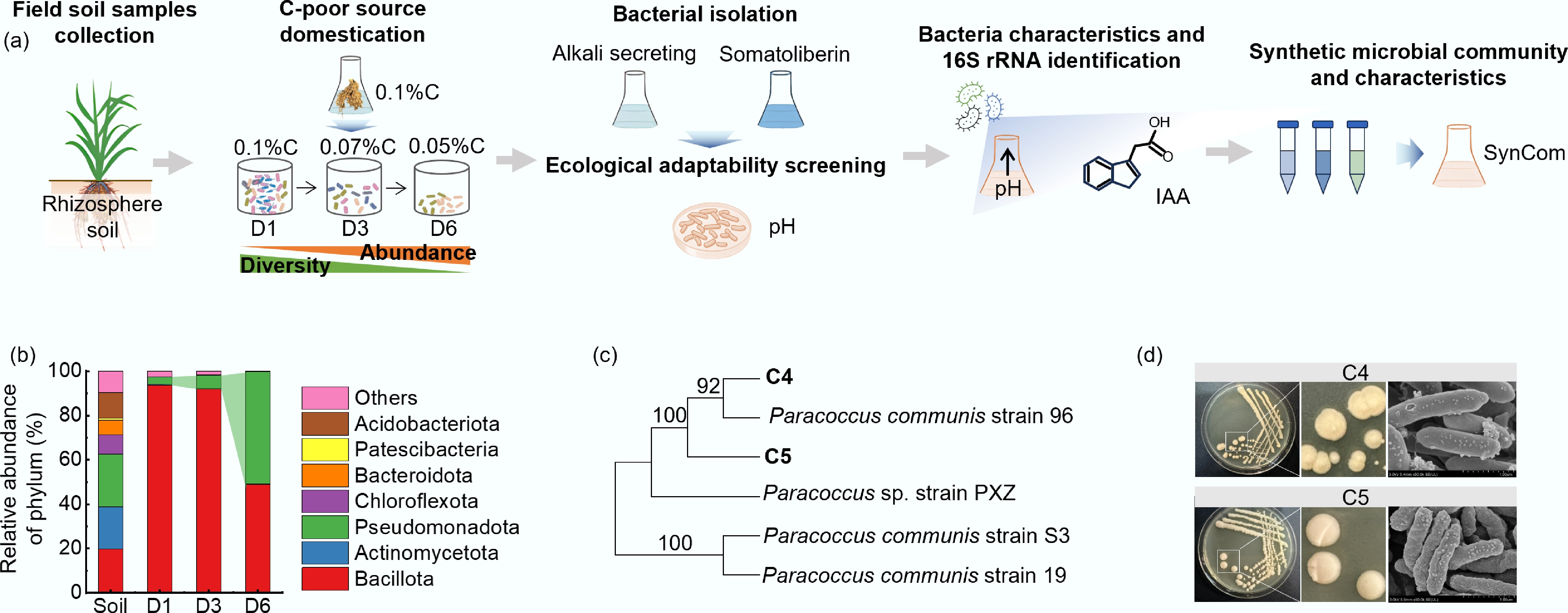
Figure 1.
Screening of candidate strains for synthetic communities based on acidic red soil. (a) Schematic of alkali-producing and growth-promoting SynCom obtained from rhizosphere soil. (b) Microbial diversity and abundance of rhizosphere soil microorganisms cultured after acclimation with low C sources. (c) Evolutionary tree. (d) Community morphology, and SEM of dominant species isolated from D6 culture. D1, D3, and D6 represent soil microorganisms of rhizosphere soil acclimated by 0.1%, 0.07%, and 0.05% (w/w) C sources, respectively.
Evaluation of alkali secretion, growth promotion ability, and identification
-
Based on isolated single strains, each strain was independently cultured in liquid medium, and the pH and IAA of the solution were quantified. The adaptability of individual strains to different pH values was studied, focusing on the alkali-secreting characteristics and growth-promoting potential of the dominant bacteria. The initial pH of the medium was adjusted to a range of 4 to 9 using hydrochloric acid or sodium hydroxide (NaOH). Samples were collected to determine optical density at 600 nm (OD600) and the pH of the medium, and plate experiments were also conducted for verification. Ultimately, two strains exhibiting strong pH resistance, high alkali secretion capacity, and significant growth promotion potential were identified. Subsequently, the pure culture of the selected strain was incubated overnight in 20 mL of low-C medium. Exactly 0.5 mL of each bacterial suspension (1 × 10⁸ cfu/mL) was inoculated into 50 mL of 0.05% C medium, with each treatment replicated three times. At 25 °C, OD600, pH, and IAA levels were measured over a period of 0 to 144 h to evaluate the potential of each strain to inhibit alkali secretion and promote growth.
Bacteria were sent to Shanghai Majorbio Technology Co., Ltd for biological identification. The bacterial 16S rRNA genes were amplified using the extracted DNA as a template. The forward primers used were 27F (5'-AGAGTTTGATCCTGGCTCAG-3') and 1492R (5'-TACGGCTACCTTGTTACGACTT-3')[15]. Microbial isolates were then identified by comparing the full-length 16S rRNA gene obtained from Sanger sequencing against the National Center for Biotechnology Information Database. A maximum likelihood phylogenetic tree was constructed using the neighbor-joining method in MEGA 7.0 (Mega Co., Ltd., Auckland, New Zealand).
Preparation of SynCom and its alkali-secreting and growth-promoting ability evaluation
-
A SynCom was established from two efficient alkali-secreting probiotic strains: Paracoccus communis C4 and Paracoccus communis C5. Both strains belong to the same genus, exhibit no antagonistic effects towards one another (Supplementary Fig. S2), and are classified as nonhuman opportunistic pathogens. Exactly 0.5 mL each from bacterial suspensions of both strains, stored at −80 °C, was cultured in 50 mL of low-C liquid medium and incubated at 25 °C with a shaking speed of 180 rpm. When the OD600 of cultures reached 0.6−0.8 during the exponential growth phase, the SynCom was formed by mixing equal volumes of the two prepared bacterial suspensions. IAA levels and pH characteristics of the SynCom in low-C liquid medium were evaluated using the same culture method.
Pot experiment
-
Soil samples (0−20 cm) were collected from Jinguang Farm in Chongzuo City, Guangxi, China, where vegetables were mainly grown. The ambient temperature in this region was approximately 25/19 °C (day/night). The soil was collected and air-dried naturally in the greenhouse. It was then sieved to a particle size of < 2 mm for determination of pH, organic matter, SOC, and nutrients, including available N, P, and K. The soil properties were as follows: pH 4.56, organic matter 11.36 g/kg, organic carbon (SOC) 6.59 g/kg, available N 21.68 mg/kg, available P 28.54 mg/kg, and available K 70.62 mg/kg.
The plants utilized in the pot experiment were consistent with those in actual cultivation. Lettuce seeds (Lactuca Sativa L.) (Kunjun Seed Industry Co., Ltd) were surface sterilized in 75% ethanol for 30 s and in 2.5% sodium hypochlorite three times for 15 min, and germinated in the nutrient medium. The sterilized seeds were then cultivated at 25 °C under a 16-h light/8-h dark cycle for 7 d until they developed three true leaves.
Liquid microbial inoculants often encounter challenges in adapting to new environments, resulting in low survival rates. Consequently, integrating microbial communities with organic materials and their subsequent application can significantly enhance the survival efficiency of these strains. Filter mud (FM) is a solid residue produced during the sugar extraction process from sugarcane, primarily comprising plant fibres and residual sugars, which renders it rich in carbohydrates. It was identified as an optimal carrier for microbial proliferation. The basic properties of FM are presented in Supplementary Table S2 and Supplementary Fig. S3. In previous incubation experiments, the impact of a single strain on the improvement of acidic soil has been quantified and is presented in Supplementary Text S1. Before utilization, FM underwent natural composting and air-drying for 3 months, followed by grinding into powder (< 0.25 mm) using a mill. Subsequently, FM was subjected to high-temperature sterilization, after which C4, C5, and SynCom (C4-C5) were evenly sprayed onto its surface twice, respectively. The moisture content was maintained at 40%, and the mud was stored in an incubator for 7 d to facilitate aging. The microbial cell count was then measured, revealing that it exceeded 6 × 10⁹ cfu/g. Commercially available Bacillus was used as a comparison for the microbial agents.
The pot experiment was designed based on incubation experiment results (Supplementary Fig. S4). Dry soil was homogenized with the base compound fertilizers (N-P-K, 25-10-16, 0.3 g/kg dry weight of soil). Then, 2 kg of soil (< 2 mm) was mixed with the microbial agent, balanced for 10 d, and divided into each pot (20 cm in top diameter and 13 cm bottom diameter, 11 cm in height). The amendment effect of a single microbial agent on pH and SOC from a previous incubation experiment was quantified and is presented in Supplementary Fig. S5. A single FM group was established as the control of the microbial agent to exclude the effect of FM as a carrier on soil treatment. All treatments were as follows: (1) control, untreated soil; (2) FM, 3% (wt.%) FM to soil; (3) Bacillus, 3% (wt.%) FM + Bacillus sp. (> 6 × 10⁹ cfu/g); (4) C4-C5, 3% (wt.%) FM + C4 and C5 (SynComs number > 6 × 10⁹ cfu/g). When the seedlings reached a height of 2.5 cm (three true leaves), they were transferred to pots. Each pot involved three replicate pots, and each pot had three plants. Subsequently, the pots were taken to a greenhouse with natural lighting at 25/19 °C (day/night). During this process, deionized water was applied daily to dripping trays to maintain the maximum soil moisture content at about 70% by the weighing method (Fig. 2a).
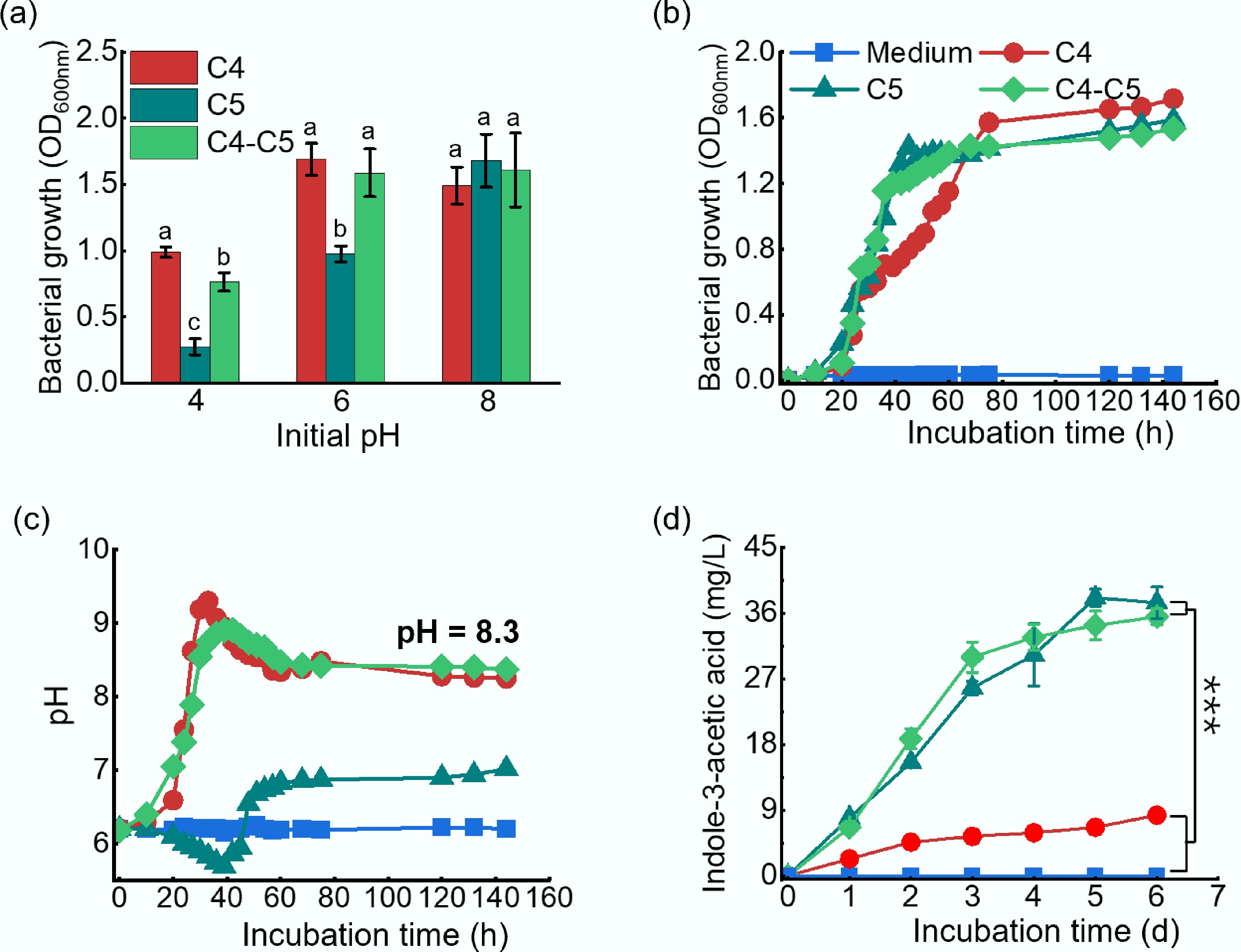
Figure 2.
Characteristics of SynComs. (a) Cell optical density (OD600) of C4, C5, and SynCom (C4-C5) cultured at different initial pH at 96 h; (b) growth curves; (c) pH; and (d) indole-3-acetic acid concentration in cultures of C4, C5, and C4-C5. Total cell number of C4-C5 was consistent with C4 or C5. Values are mean ± SD (n = 3). Lowercase letters indicate significant differences at the same pH for different treatments (p < 0.05). *** p < 0.001
After a 50-d cultivation period, the roots were dug out carefully, and rhizosphere soil was collected. Some fresh rhizosphere soil samples were preserved at −80 °C for total bacterial count and dehydrogenase and microbial omics analysis. Another sample was naturally dried by spreading in shade and ground to < 2 mm particles for analyses of pH, TOC, available N, P, and K, cation exchange capacity (CEC), and microbial biomass carbon (MBC). The roots and leaves were separated and washed using deionized water. The fresh leaf weight of each plant was recorded in different treatments. The roots were retained, and surface moisture was removed for root morphology analysis (WinRHIZO, V850, EPSON, Japan), recording surface area and total root length. Fresh leaves were crushed into a homogenate for chlorophyll content determination.
Chemical analysis
-
IAA secretion by strains C4, C5, and SynCom was measured using colorimetry. Indole compounds react with Salkowski reagent to form a pink chromophore with absorbance at 530 nm using a spectrophotometer (UV 3200, Shanghai, China). IAA concentrations were determined using a standard curve made from commercial IAA (Sigma), with a sterile medium as the blank[16].
A specific amount of soil was suspended in 1 mL of dd-H2O and centrifuged at 4,000 × g for 5 min. The supernatant was obtained, and dehydrogenase was assessed using enzyme-linked immunosorbent assay kits. CEC was determined using cobalt hexamine[17]. Chlorophyll was extracted using 80% acetone and analyzed using UV spectrophotometry. Bacterium suspension and soil pH (soil : CO2-free water, 1:2.5) were determined using a glass electrode (UB-10, Denver Instrument, USA). The TOC was extracted and determined using the K2Cr2O7-H2SO4 solution method[17]. Soil MBC was determined by chloroform fumigation–extraction[18]. Soil available N, P, and K were determined using NaOH-hydrolyzed-H3BO3 absorption, HCl-H2SO4 extraction, Mo-Sb anti-spectrophotometry, and NH4OAc extraction flame photometry, respectively[19]. Bacterial colonization on the root was quantified using the spread plate count method[20].
Analysis of root microorganism
-
We analyzed the diversity of rhizosphere soil microorganisms and quantitatively analyzed C, N, and P cycle genes[21]. Metagenomic analysis was conducted by Biomarker Technologies, beginning with nucleic acid isolation from samples. DNA fragments of 200−500 bp were generated and assessed for quality. Subsequent steps included end repair, 3' A-tailing, and adapter ligation. Selected fragments were amplified to construct sequencing libraries, which were then sequenced on the Illumina platform. Raw data underwent quality control to generate clean reads for bioinformatics analysis. Clean reads were initially assembled to predict coding genes and construct a non-redundant gene set. Functional annotation, taxonomy analysis, and abundance statistics were performed using established databases based on this gene set. For analysis of cbbL gene expression, an absolute quantification method was used[22]. Details and quality control can be found in Supplementary Text S2 and Supplementary Fig. S6.
Data analysis
-
All the data were represented as means ± standard deviation (SD). The differences between the groups were analyzed using one-way ANOVA and post hoc Tukey test (ns; p > 0.05; * p < 0.05; ** p < 0.01; and *** p < 0.001) (IBM SPSS Statistics 22.0). Figures were drawn with Origin Pro 8.0.
-
To identify dominant indigenous microorganisms that are tolerant to acidity and adapted to low SOC conditions, we developed an efficient SynCom that secretes alkali and promotes growth. Soil pH was approximately 4.56 with an SOC content of 6.59 g/kg. These species from diverse habitats were probably evolutionarily beneficial to crops in acidic and low-SOC stress soils and could be SynCom candidates. We utilized a poor-C source to cluster core taxa with efficient C utilization and reproduction capabilities, while assessing alkali secretion abilities and growth-promoting effects of individual strains, as well as their pH tolerance fluctuations (Fig. 1a).
Core microbial communities were prominently clustered in strongly acidic and poor SOC lateritic red soil (Fig. 1b). Pseudomonadota, Actinomycetota, and Bacillota were significantly enriched, with total abundance exceeding 60%, indicating their dominance in acidic and low SOC niches[2]. C source limitation altered community structure and abundance. After the sixth enrichment cycle, Pseudomonadota emerged as the core group, with its abundance increasing from 3.28 (D1) to 50.50 (D6) owing to selective pressures (Fig. 1b; Supplementary Table S3), suggesting that niche adjustment induced by poor C source enables adaptation to environmental stress[23]. In contrast, Bacillus decreased from 93.59 (D1) to 49.05 (D6) (Supplementary Table S3). The limited SOC effectively clustered significantly advantageous groups. Bacillus is known as a primary agent for enhancing agricultural soil and soil–plant interactions[24].
Plate experiments were conducted on the sixth enriched taxon; individual strains were characterized by alkali-secreting capabilities and highly efficient growth-promoting properties. Interestingly, both strains were identified as P. communis based on full-length 16S rRNA gene sequence homology (Fig. 1c). However, community characteristics and morphological maps of the strains revealed significant differences (Fig. 1d).
Evaluation of alkali production and growth promotion of the SynCom
-
Before initiating the SynCom based on C4 and C5, it was essential to determine its baseline pH tolerance. Strain C4 exhibited a more rapid reproduction rate, whereas C5 experienced slight inhibition under low pH conditions (Fig. 2a). The SynCom (C4-C5) demonstrated a more significant growth advantage, inheriting pH tolerance and proliferation rates from both strains, indicating no significant trade-off in growth during the tolerance process (Fig. 2b). While slight variations in growth rates were observed among C4-C5 and individual strains during the logarithmic phase, their growth converged in stationary phase. This observation indicates the establishment of mutualistic relationships within the community, which help counteract adverse factors and promote overall growth[25]. Therefore, C4-C5 was selected as a representative for further application owing to its more tolerant and fertile phenotype.
The pH and IAA production of the microbial community throughout the growth cycle were measured to assess its potential for alkalization and growth promotion. Microflora inoculum pH was ultimately maintained at 8.3 (Fig. 2c). Microbial metabolism generates alkaline substances, such as carbonate ions (CO32−, HCO3−), by oxidizing C sources, which ultimately maintains the pH at 8.0[26]. As the alkalisation effect is more likely to occur in environments with limited C availability, this may represent one of the important alkalization mechanisms identified in this research[26]. Pseudomonas exhibit a significant growth advantage in poor C environments, competing for C sources and proliferating effectively[20]. The SynCom had a high IAA content (35.53 ± 1.10 mg/L) on the sixth day of cultivation, significantly higher than the levels observed in C4 (8.33 ± 0.78 mg/L) (Fig. 2d; Supplementary Table S4). This indicates the adaptability of SynCom under acidic conditions and limited C source stress, as well as its potential for promoting plant growth.
SynCom promoted plant growth and alleviated acid stress
-
To investigate whether SynCom-related phenotypes are transferable to soil conditions, four treatment groups were established under greenhouse conditions to evaluate the efficacy of SynCom in enhancing soil pH, SOM, and plant growth post-treatment (Fig. 3a). The height, fresh weight, and chlorophyll content increased by 120.60%, 527.83%, and 33.80%, respectively, under the C4-C5 treatment compared to control (Fig. 3b–d; Supplementary Table S5). Furthermore, the C4-C5 treatment conferred pronounced stress resistance on plant growth. This improvement can primarily be attributed to the interaction between FM and SynCom, which increased soil organic matter and available N, P, and K[27]. Nutrient elements, particularly N, significantly influence plant photosynthesis. Following treatment with C4-C5 and Bacillus, the available N in the rhizosphere increased, surpassing levels observed in the FM and control treatments (p < 0.05) (Fig. 3e). This increase may explain the significantly higher chlorophyll a + b content in C4-C5 and Bacillus treatments compared to FM and the control. The enhancement of plant photosynthesis facilitates organic matter accumulation[28]. Notably, both C4-C5 and Bacillus treatments resulted in increased available P and K; however, no significant difference was observed compared to the FM treatment. C4-C5 notably improved root growth and development. Specifically, total root length and root surface area significantly increased (Fig. 3f; Supplementary Fig. S7) relative to the control after 50 d of cultivation, contributing to improved material transport efficiency. The main root length in the C4-C5 treatment was shorter than that of the control and FM (Fig. 3f; Supplementary Table S6), indicating that P. communis inhibited the elongation of main roots while promoting lateral root growth. Lateral root development has also been observed when plants are treated with PGPR that synthesises IAA[28,29]. This observation is consistent with the plant phenotype noted in this study. Overall, microbial preparations optimize the development of the vascular system, enabling plants to transport nutrients and photosynthetic products more effectively, thereby promoting plant growth and yield.
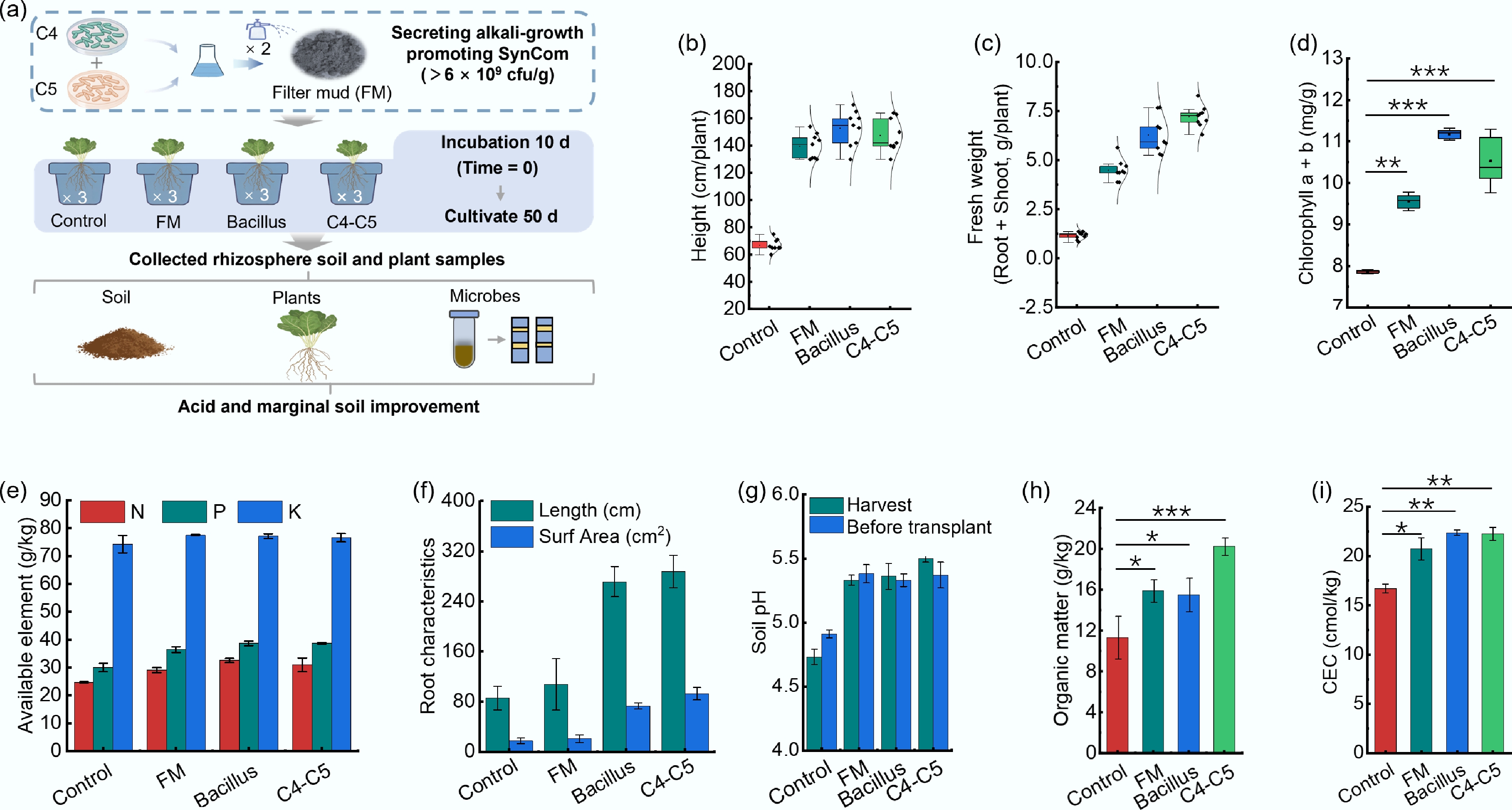
Figure 3.
Consortium improved acidic red soil and promoted plant growth. (a) Schematic of pot experimental design, methods, and objective; Lactuca Sativa L. growth characteristics of (b) height, (c) biomass, and (d) chlorophyll. (e) Rhizosphere soil available N, P, and K content; (f) root characteristics; (g) pH; (h) organic matter, and (i) CEC at harvest. Values are mean ± SD (n = 3). * p < 0.05; ** p < 0.01; *** p < 0.001.
The soil pH of the C4-C5 treatment was 0.46 units higher than that of controls before transplantation (Fig. 3g; Supplementary Table S7). Notably, the pH in the controls decreased by 0.18 at harvest. A complex mixture of organic acid anions, such as carboxylic acids, secreted by roots during plant developmental processes, can significantly lower the rhizosphere pH[19]. The liming effect of FM effectively raises soil pH levels. Although the pH of FM itself is not sufficiently high, its organic matter content, which reaches up to 262.90 g/kg (Supplementary Table S2), indicates that organic matter contributes to mitigating the decline in pH. All treatments resulted in a significant increase in soil organic matter and CEC content (p < 0.05) (Fig. 3h, i). The hydrolysis of weak acid groups in organic matter facilitates protonation of organic anions (e.g., –COO–) to form neutral molecules (e.g., –COOH)[19]. This process is the dominant mechanism by which organic amendments enhance buffering and acid-resisting capacities. This enhancement occurs because FM alters the soil's pore structure and surface characteristics of oxygen-containing functional groups. Concurrently, microbial agents facilitate activation of cations, leading to their re-adsorption and redistribution, ultimately benefiting the soil's pH buffering performance[30]. Notably, soil pH significantly increased (p < 0.05) in the C4-C5 treatment compared to the FM treatment. This increase is primarily attributed to the ability of C4-C5 to enhance rhizosphere soil pH through alkali secretion, which aligns with results of incubation flora and rhizosphere colonization. Previous studies have observed a significant liming effect from alkali-producing bacteria[20,31]. An increase in pH is beneficial for alleviating microbial stress and improving soil nutrient cycling. Notably, designing SynComs based on native core microbiomes, which are common across soils and provide critical support to plant communities, often does not result in poor application[2,4].
SynCom accelerates C, N, and P cycling
SynCom colonization and accelerated C sequestration
-
No significant changes in microbial diversity were observed in Bacillus and C4-C5 groups compared to the control (Fig. 4a). However, a shift in dominant species was noted. The Shannon and Simpson indices decreased (Supplementary Fig. S8), indicating an alteration in the balance of the biological network and a reduction in species evenness, with Pseudomonadota identified as the dominant phylum. Conversely, both richness and Chao indices showed significant increases, suggesting a rise in microbial species diversity (Supplementary Fig. S8). The FM after composting exhibited a high concentration of soluble organic carbon, which serves as an easily accessible nutrient source for microorganisms. Consequently, the organic carbon significantly activates indigenous microorganisms, enhancing their abundance and diversity. Notably, the lignin present in FM is resistant to rapid decomposition and can act as a persistent carbon source for C4 and C5. Research indicates that P. communis can secrete hydrolases that depolymerize lignocellulose, thereby facilitating its reproduction and colonization[32]. Genus-level annotation revealed a significant increase in the abundances of Paracoccus members after SynCom inoculation (Fig. 4b). The relative abundance of Paracoccus in the C4-C5 treatment group was 17.23%, significantly higher than that in other treatment groups. The total number of bacteria in rhizosphere soil after SynCom inoculation was significantly higher than that of FM and control (Fig. 4c), responding to the colonization of C4 and C5 in rhizosphere soil. The bacterial agent maintained a favorable growth curve in acidic medium, and plate experiments verified that SynCom could resist acidic environments (Supplementary Fig. S9). These results revealed that C4 and C5 dominantly colonized the rhizoplane; however, other strains were at a relative disadvantage in colonization.
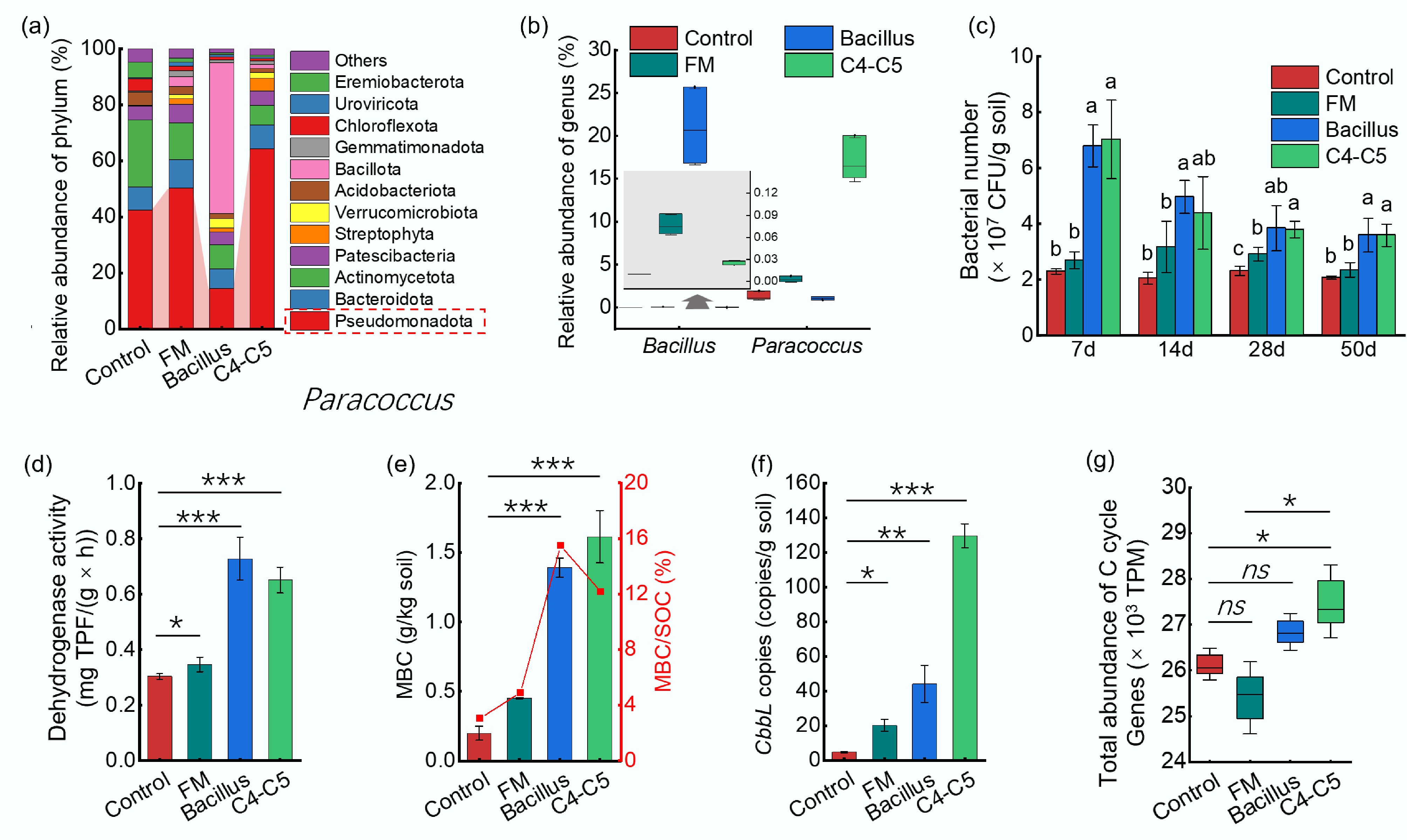
Figure 4.
(a) Diversity and abundance at the phylum level; (b) Bacillus and Paracoccus abundance; and (c) variation of bacterial numbers in rhizosphere soil. (d) Soil microbial biomass carbon (MBC); (e) dehydrogenase; (f) cbbL gene abundance; and (g) all genes involved in the C cycle. Values are mean ± SD (n = 3); lowercase letters indicate significant differences at the same time for different treatments (p < 0.05). ns, no significant difference; * p < 0.05; ** p < 0.01; *** p < 0.001.
A notable increase in dehydrogenase activity was observed under Bacillus and C4-C5 treatments (Fig. 4d). Bacillus subtilis reportedly enhances the activities of dehydrogenase and decarboxylase, consumes acid, and produces alkalinity under acidic stress[33]. Some growth-promoting microbiota regulate the accumulation of auxin at the root tip by secreting indole, and this method improves the metabolic activity and antioxidant capacity of plants[34]. Additionally, dehydrogenase accelerates the decomposition and transformation of soil organic matter as well. Microbial residues, as a crucial component of stable soil organic C, significantly enhanced the soil MBC content through the C sequestration effect resulting from the input and proliferation of exogenous microorganisms. MBC in C4-C5 and Bacillus treatments significantly increased (p < 0.001; Fig. 4e) compared to the control, whereas the MBC content in FM treatment only slightly increased without a significant difference. Notably, MBC/SOC also increased significantly (Fig. 4e), reflecting the vital role of microbial residues as a key factor in enhancing SOC. Typically, CbbL bacteria utilize CO2 for growth and metabolism, thereby increasing the soil MBC content[22]. The high MBC contents observed in Bacillus and C4-C5 treatments may be attributed to the colonization of Bacillus and C4 and C5 bacteria in soil and their potential sequestration effect on soil C. Additionally, the field tillage system optimized soil aeration, promoted the growth and colonization of aerobic microorganisms, and created a suitable atmosphere for MBC proliferation. Soils may contain more obligate autotrophic microorganisms owing to the low SOC, providing a driving force for soil C increase[35]. Additionally, microorganisms promote rapid proliferation and decomposition of soil organic matter, effectively facilitating the conversion of organic matter to MBC and significantly increasing MBC content and the MBC/SOC ratio.
CbbL is a biomarker for acceleration of the C cycle, CO2 assimilation rates, and C fixation potentials[36]. CbbL copies were significantly enriched and increased by 25-fold compared with the control (Fig. 4f), indicating that in red soil, the retained bacteria exhibit stronger environmental adaptability. The total abundance of C cycle genes was significantly higher than that of FM (1.08-fold), control (1.05), and Bacillus (1.03) in the C4-C5 treatment (Fig. 4g; Supplementary Table S8). Hence, the former retained more cbbL bacteria with a high C sequestration capacity, such as Pseudomonadota, Bacteroidota, and Actinomycetota[37]. As cbbL is used as a functional marker to analyze the diversity of autotrophic bacteria in farmland ecosystems[38], MBC was highest in C4-C5 among all treatments. However, the MBC/SOC ratio with the C4-C5 treatment was lower than that of the Bacillus treatment. This indicates that Paracoccus exhibits a low dependency on intrinsic SOC during its proliferation, which may enhance the survival chances of Paracoccus under poor SOC conditions and promote C retention in soil.
Superior genes and hosts of C cycling
-
To elucidate the potential mechanism of action underlying the improvement effects of SynCom, the rhizosphere microbial community compositions and genomic profiles of soil C sequestration in all treatments were compared. Five representative genes involved in C cycling were identified (Fig. 5a), as well as the microorganisms distributed in rhizosphere soils responsible for C cycling (Fig. 5b). The dominant genes were acdA, carB, atpA, accC, and atpD. The relative abundance of acdA declined following the treatments, implying that acdA was inhibited by FM and the microbial agents. acdA is a crucial regulator of pyruvate metabolism. Since pyruvate is an important hydrocarbon metabolite that provides cells with energy and C sources as it enters the tricarboxylic acid (TCA) cycle, a significant enrichment of acdA suggests that microorganisms are integrating various C sources into the TCA cycle[39]. This central metabolic pathway facilitates the complete oxidation of organic C and energy generation[40]. In this study, the abundance of the downregulated acdA gene related to pyruvate metabolism in FM, Bacillus, and C4-C5 treatments was 25.79%, 27.17%, and 30.03% lower than that in the control (Fig. 5a; Supplementary Table S9). This indicates that downregulation of the acdA gene can inhibit the complete oxidation of organic C to a certain extent, which is conducive to the retention of organic C in the soil. Conversely, a significant upregulation of the carB gene was observed in the FM and C4-C5 treatment groups, with increases of 19.68% and 18.00% compared to the control (Fig. 5a; Supplementary Table S9). carB encodes carbamoyl phosphate synthase, whose increase enhances the metabolic capacity of microorganisms, allowing them to more effectively utilize organic C in soil[41]. This process facilitates the breakdown of organic matter into CO2, accelerating turnover and loss of SOC. It was noted that the gene abundances of atpA, accC, and atpD increased significantly in all treatments. These genes were found to accelerate C cycling and sequestration, owing to their ability to efficiently utilize available C sources and increase their abundance in soils with ample nutrients. Microbial diversity associated with soil C cycling significantly increased (Fig. 5b), indicating accelerated soil C cycling. Although acidic and oligotrophic stresses reduced the network connectivity among microbial groups, they still retained dominant species and increased their ecological niche width, thereby maximizing C retention in soil for utilization by plants and microorganisms. The primary microbial phyla included Pseudomonadota, Actinomycetota, Eremiobacterota, Patescibacteria, Bacteroidota, and Bacillota (Fig. 5c). This indicates that after microbial agent treatment, the original ecological functions were preserved rather than completely altered. A significant increase was observed in the abundance of Pseudomonadota in FM and C4-C5. Pseudomonadota was recognized as a copiotrophic taxon, characterized by its ability to efficiently utilize available C sources and increase its abundance[42,43], as Pseudomonas is a key biological driver of the soil nutrient cycle. Conversely, the relative abundance of Actinomycetota gradually declined following improved treatments, implying a preference for oligotrophic conditions by these autotrophs. Soil quality improved with SynCom combined with organic materials, which may explain the increase in relative abundance of Pseudomonadota.
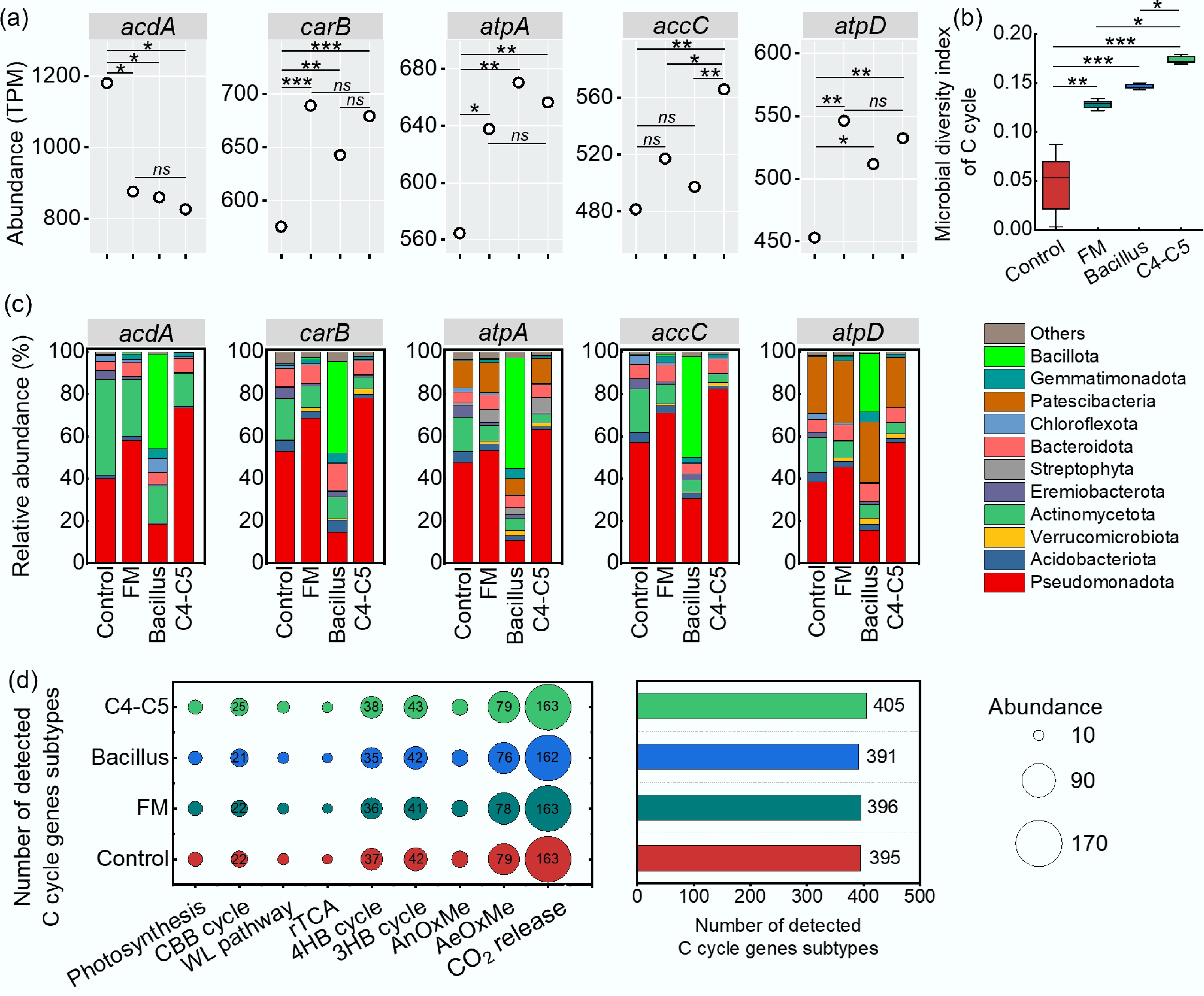
Figure 5.
Comparison of related genes, microbial species, and metabolic pathways of soil autotrophic microorganisms involved in C sequestration under different improver treatments. (a) Abundances of the top five genes involved in C cycling, and (b) their corresponding species. (c) Bubble maps depicting the number of genes involved in C cycling across various soil microorganisms. Based on the known C sequestration pathways, the modules involved in the C cycle are as follows: photosynthesis, CBB cycle, WL pathway, rTCA, 4HB cycle, 3HB cycle, AnOxMe, AeOxMe, and CO2 release. ns, no significant difference; * p < 0.05; ** p < 0.01; *** p < 0.001.
Soil samples involved in C cycling genes were analyzed, revealing that the highest number of identified genes was involved in CO2 release, followed by the aerobic oxidation of methane (AeOxMe), the 3-hydroxypropionate (3HB) cycle, the 4-hydroxybutyrate (4HB) cycle, and the Calvin–Benson–Bassham (CBB) cycle. Conversely, the reductive TCA cycle pathway had the lowest number of associated genes (Fig. 5d). These results indicate that CO2 release is an important C cycle pathway in this study, responding to the strong microbial activity involved in C release in acidic red soil, which may explain the deficiency of the soil C pool. Low pH and C scarcity are critical soil variables that restrict plant productivity in red soil ecosystems[35]. Variations in pH foster diverse habitats for these microorganisms, resulting in the selection of specific C sequestration pathways that align with the niche preferences of different microbial communities. In this study, the formulation of organic materials significantly influenced the diversity and composition of soil autotrophic microbial communities engaged in C sequestration within the native soil (Fig. 5c). The relative abundance of CBB cycle-associated genes increased by 13.6% with the C4-C5 treatment compared to the control (Fig. 5d). The increase in CBB cycle genes indicates an upregulation in ribulose-1,5-bisphosphate carboxylase/oxygenase activity. This upregulation serves as a biological driving force for soil C sequestration via the CBB pathway by facilitating CO2 isolation[44]. This finding corresponds to variations in gene abundance and an increase in cbbL genes observed across all metabolic pathways (Figs 5a and 4f). Interestingly, the relative abundances associated with photosynthesis, the WL pathway, rTCA, 4HB cycle, 3HB cycle, AnOxMe, AeOxMe, and the CO2 release pathway did not change significantly during the improvement process. In summary, SynComs have the potential to enhance the CBB cycle for C sequestration.
SynCom affects soil N and P cycling
-
The effect of inoculation with SynCom on the diversity in the N and P cycles in the rhizosphere microbial community was observed from a soil microecological perspective. All treatments significantly increased this diversity, with extremely significant increases observed in C4-C5 treatments (p < 0.001) (Fig. 6a, c). This indicates that microbial agents enrich microorganisms related to N and P fixation in the soil. Pseudomonas reportedly exhibits significant N fixation capabilities, demonstrating remarkable effects on soil ecology and plant growth in acidic soils[20]. Enhanced dehydrogenase activity suggested improved N recycling and antioxidative properties in the soil (Fig. 4d). This heightened enzyme activity likely stemmed from N fixation and P release from C4 and C5 cells[20]. The growth of the C4 and C5 were also observed on nitrogen-free media and plates (Supplementary Fig. S10).
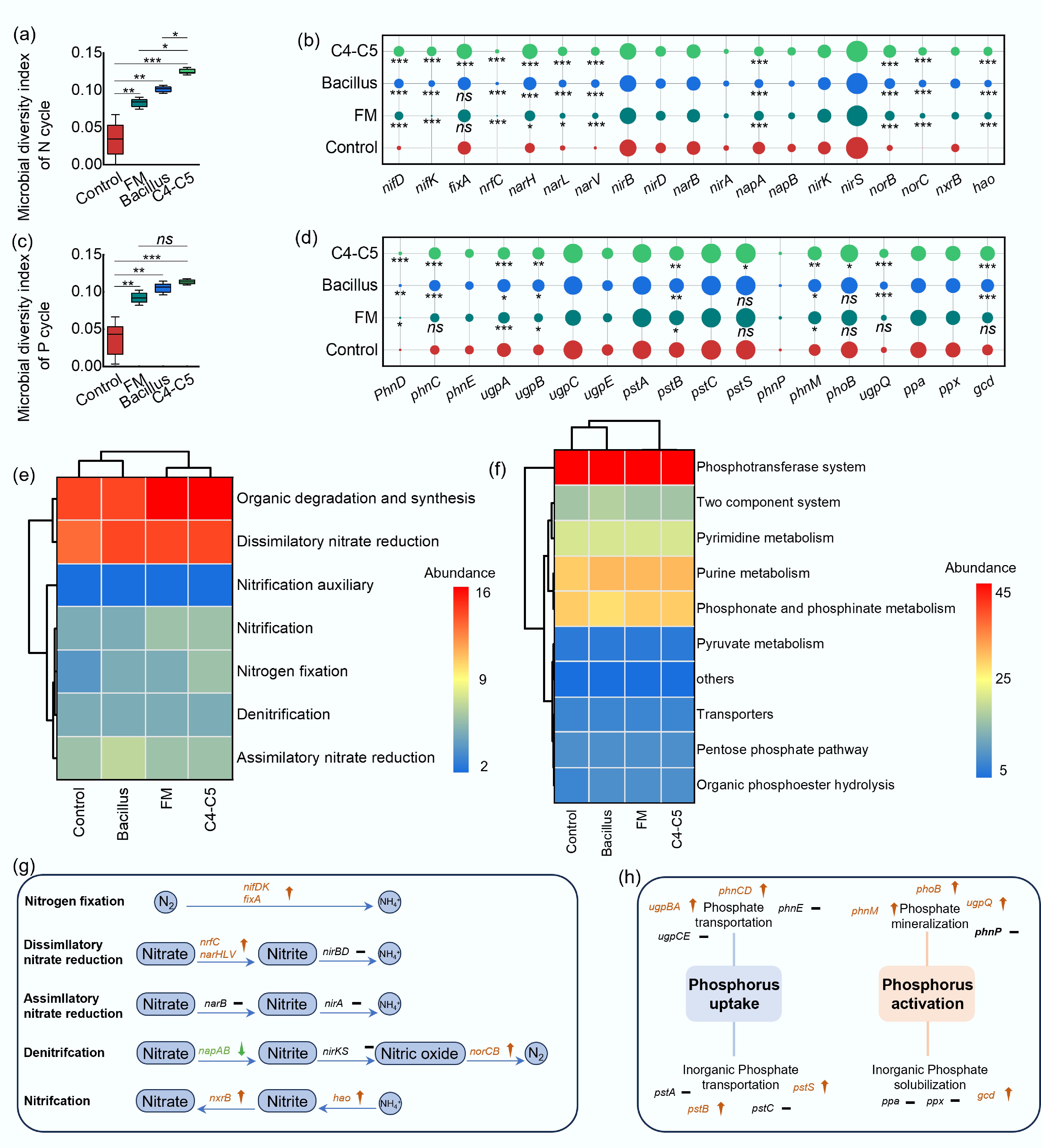
Figure 6.
Microbial agents modulate genes related to P and N cycles. Microbial diversity indices of (a) N-cycling and (c) P-cycling genes. Bubble plots of (b) N-cycling and (d) P-cycling genes in rhizospheric soil; significant differences were determined in amendment treatment compared with the control. Hot maps of (e) N-cycling and (f) P-cycling metabolic pathways. Microbial agents alter the genes and metabolic pathways of (g) N-cycling and (h) P-cycling. Values are mean ± SD (n = 3). ns, no significant difference; * p < 0.05; ** p < 0.01; *** p < 0.001.
C4-C5 modulated the gene composition related to the N cycle, enhancing organic degradation and synthesis, dissimilatory nitrate reduction, and N fixation and nitrification processes (Fig. 6e; Supplementary Table S10). These modifications promoted N fixation and increased NH4+ accumulation, as the organic combination of dominant bacteria (i.e., Pseudomonadales) and tillage would increase the NH4+ content in soil[45,46]. Compared to control and FM, C4-C5 elevated genes related to N fixation (NifD, NifK, fixA), nitrate reduction (nrfC, narH, narL, narV), and nitrification (nxrB, hao), and suppressed denitrification genes (napA, napB), boosting NH4+ production and plant growth (Fig. 6b, g). Notably, while norC and norB were enhanced, the abundance of nirS and nirK exhibited no significant differences. Additionally, napA and napB were diminished, suggesting that soil denitrification may not undergo substantial changes.
Rhizosphere microorganisms are involved in the P cycle, contributing to organic P mineralization, inorganic P dissolution, and absorption. Changes in microbial diversity affected the composition of P cycle genes (Fig. 6d). C4-C5 stimulated several P cycle pathways, including purine metabolism, phosphonate and phosphinate metabolism, two-component systems, and organic phosphoester hydrolysis (Fig. 6f). In contrast, no significant changes were observed in other pathways such as the phosphotransferase system, pyruvate metabolism, pentose phosphate pathway, and pyrimidine metabolism (Supplementary Table S11). Genes associated with P absorption and activation, including phosphate transfer genes phnD, phnC, upgA, and upgB, inorganic phosphate transporter genes pstS and pstB, phosphate mineralisation genes phnM, phoB, and ugpQ, and inorganic phosphate solubilisation gene gcd, exhibited a notable increase in C4-C5 (Fig. 6d, h). This result likely arose from the combined effects of soluble P and cells on phosphonate absorption and transport, thereby increasing bioactive content in soil and promoting P uptake[47]. Studies have demonstrated that phosphate biominerals anchored on the surface of Pseudomonas stutzeri A1501 can be dissolved and released through metabolic processes, enhancing plant P absorption and activating related genes, subsequently improving plant growth in acidic soils[20]. This phenomenon may elucidate the observed increase in available soil P and the enhanced gene activity reported in this study. Overall, microbial agents, particularly C4-C5, facilitate improved N and P cycling in soil, enhancing the production and transport of soluble NH4+ and P and accelerating plant growth.
Rhizosphere IAA-related tryptophan metabolism affected by SynCom
-
Based on the potential advantages of IAA production (Fig. 2d), several genes related to the tryptophan operon in rhizosphere soil were analyzed (Fig. 7). Abundance differences of trp genes in plant root systems reflect a modular division of labor within the IAA biosynthesis pathway. trpE, trpD, and trpC genes are responsible for synthesizing precursor substances of indole-3-glycerol phosphate and anthranilate, while trpA and trpB primarily catalyze indole production[48]. trpF and trpS regulate tryptophan transport. Following treatment with microbial agents, trpE and trpD were upregulated, whereas trpA and trpB only slightly changed, with the presence and abundance varying across different treatments. Notably, trpS significantly increased, indicating the activation of genes responsible for tryptophan transport, which may provide additional promoters for root growth and branching[49]. Conversely, trpC was suppressed, suggesting a restriction in the synthesis of precursor substances necessary for growth factor production, as this gene is crucial for regulating primary root elongation[50]. Despite these genetic changes, no significant alterations in primary root morphology were observed; however, notable differences in lateral root formation and root hair development were evident (Fig. 3f; Supplementary Fig. S7), correlating with trpC suppression. Because IAA can promote the growth of lateral roots and alter the root diffusion barrier[34], tryptophan secreted by plant roots serves as a crucial substrate for microorganisms to synthesize IAA[51]. As a plant hormone, IAA can be degraded by certain members of the microbial community, thereby maintaining the homeostasis of rhizosphere hormones. For instance, Variovorax and Curvibacter are core constituents of the plant microbial community, regulating plant hormone levels by degrading IAA to balance the microbiota's effect on root growth[52]. Observations indicate that in soils treated with microbial agents, these species remain dominant at the phylum level (Fig. 4a), effectively preventing the excessive accumulation of IAA in the soil. Pseudomonas exhibits a significant capacity to utilize tryptophan for IAA synthesis, which may represent an important mechanism underlying the observed promotion of plant growth by C4 and C5 in this study.
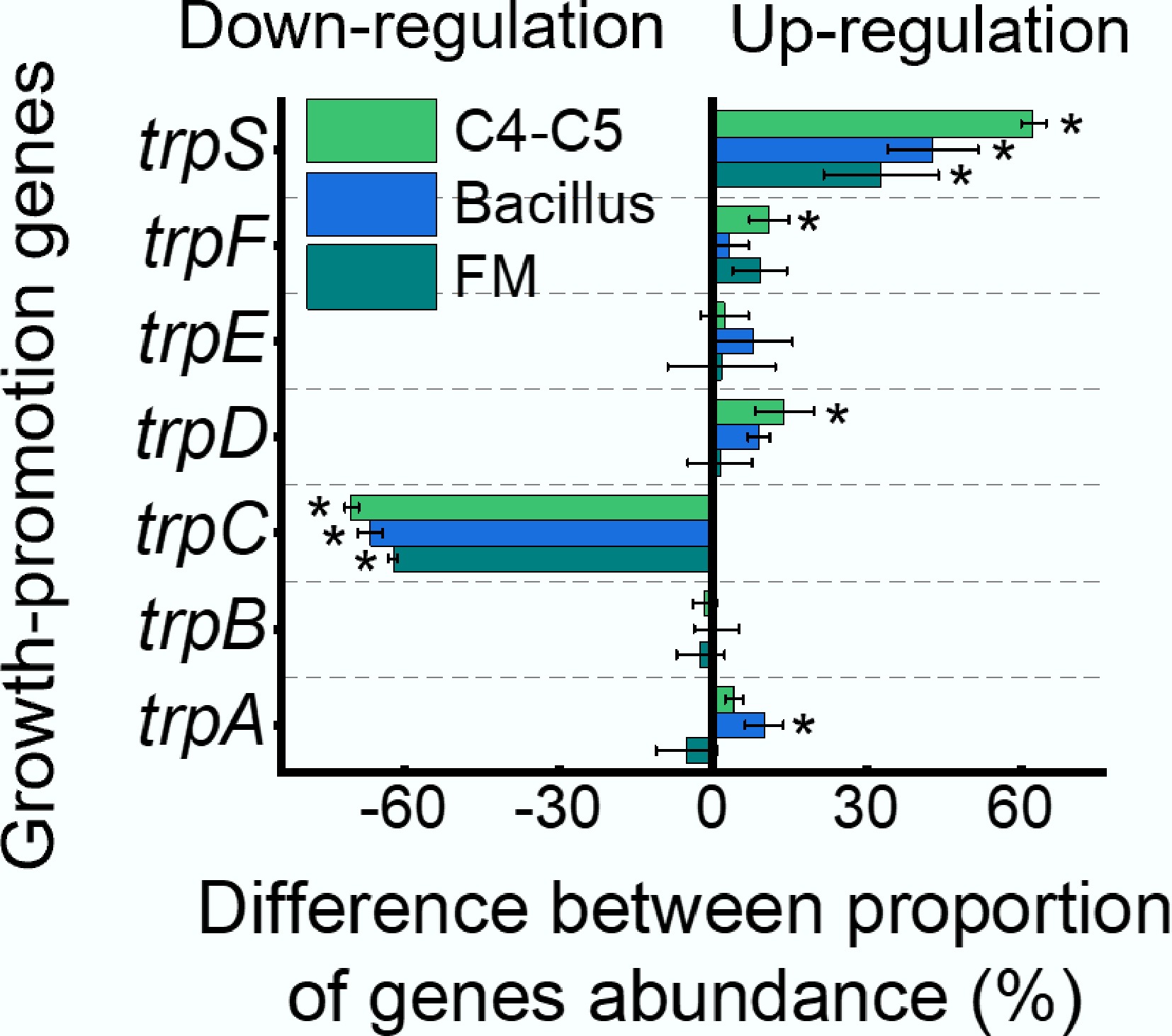
Figure 7.
Proportion of upregulated or downregulated genes associated with growth promotion in FM, Bacillus, and C4-C5 treatments compared to the control. An abundance ratio > 0 indicates gene upregulation, and < 0 indicates gene downregulation. Values are mean ± SD (n = 3). * p < 0.05; ** p < 0.01; *** p < 0.001.
Mechanisms of SynCom in improving acidic soil quality and promoting element cycling
-
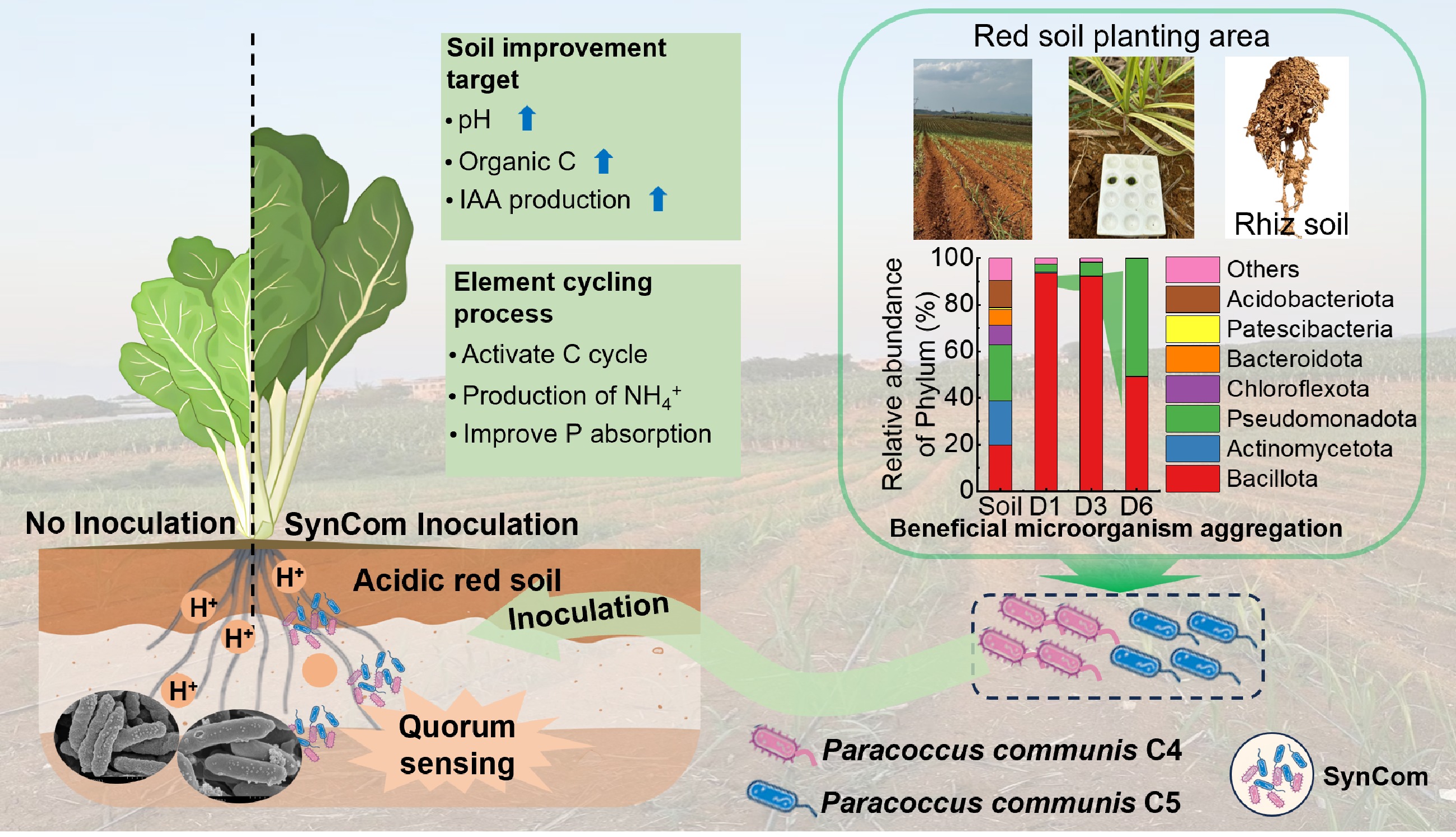
This study demonstrates that microbial agents derived from SynCom not only enhance soil pH and promote C sequestration through secretion but also regulate plant hormone metabolism and element uptake, thereby improving the quality of acidic soils and restoring productivity (Fig. 8). The mechanisms underlying these improvements can be explained as follows: (i) the alkalization effect of SynCom directly influences rhizosphere pH, ameliorating slightly acidic conditions and mobilizing soil nutrients; (ii) IAA produced by microbial metabolism stimulates root growth, including increased root length and surface area, and improved spatial nutrient acquisition; (iii) several genes related to C sequestration and one cbbL gene encoding RubisCO, which were found to be significantly enriched in the rhizosphere soil, may promote soil C sequestration and organic C accumulation; (iv) genes associated with ammonium N accumulation are significantly upregulated, potentially facilitating sufficient ammonium N uptake by plants, enhancing photosynthesis, and supporting growth, while also promoting the activation and uptake of phosphate by plants.
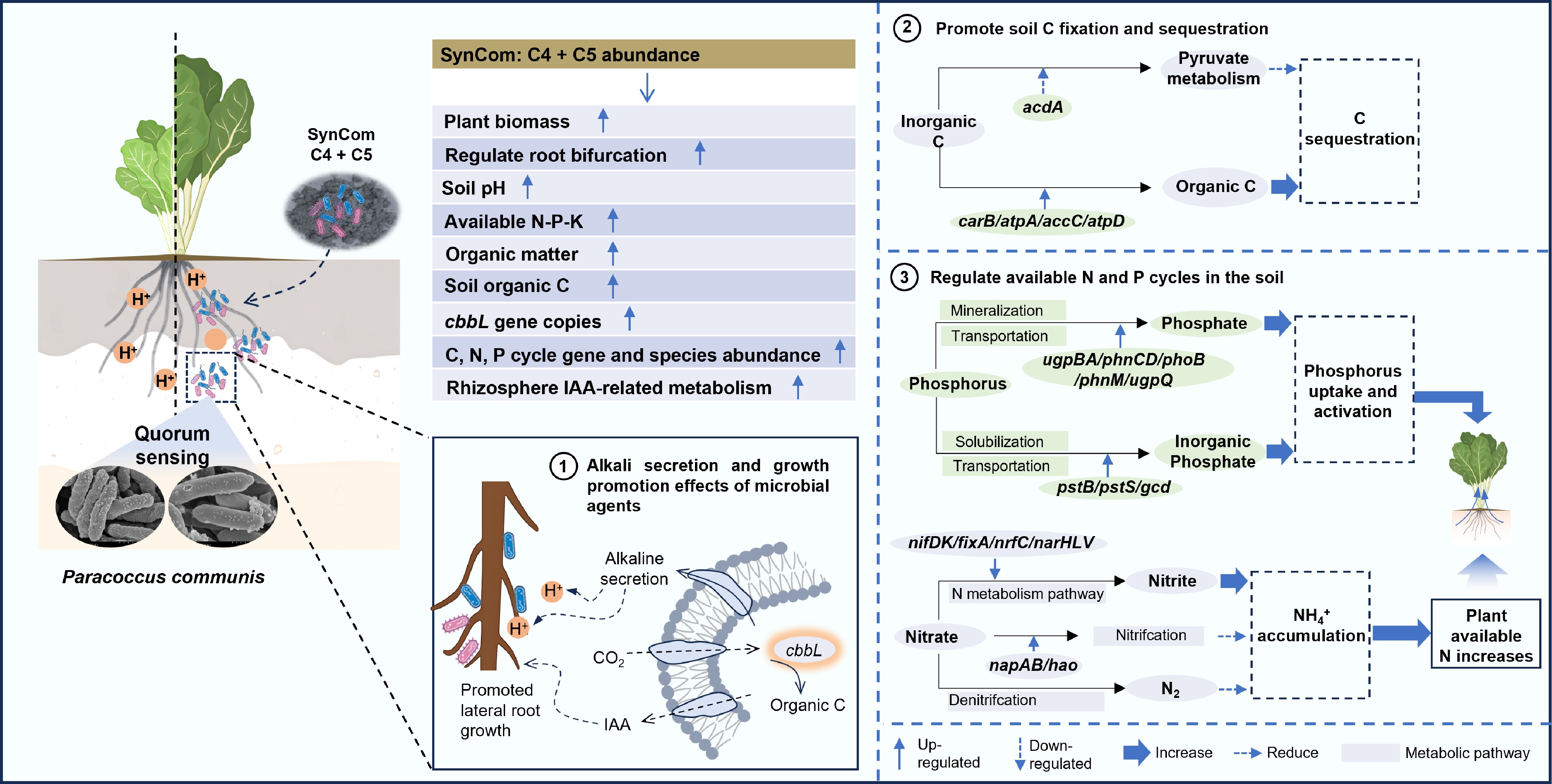
Figure 8.
Schematic diagram summarizing the mechanism of acidic soil quality improvement and elemental cycling enhancement by using microbial agents.
-
In summary, we utilized a SynCom to develop a microbial amendment specifically designed to improve agricultural soil, enhancing beneficial traits within biological systems. This amendment, functioning as a biofertilizer, has multiple applications, including soil pH regulation, increasing organic matter, modulating soil microbial communities, and enhancing nutrient cycling, all of which contribute to improved plant growth in acidic red soils. Our findings provide a promising framework based on SynComs aimed at promoting crop yield in acidic and nutrient-deficient fields. Future research will explore the effects of SynComs at actual field scales and their broader implications for regulating soil ecology.
-
It accompanies this paper at: https://doi.org/10.48130/aee-0026-0018.
-
Not applicable.
-
The authors confirm their contributions to the paper as follows: Qun Rong: conceptualization, methodology, writing original draft, funding acquisition; Siting Lu: methodology, visualization; Jingyun Huang: writing – review and editing, methodology; Junrong Wei: methodology; Zengyu Zhang: investigation; Shu Yang: supervision, funding acquisition; Chaolan Zhang: supervision, investigation, funding acquisition; Xiaofeng Li: conceptualization, methodology, supervision, investigation. All authors reviewed the results and approved the final version of the manuscript.
-
This study was supported by the National Key Research and Development Program (2023YFD1901300), the National Natural Science Foundation of China (42267001, 32360320), the Guangxi Youth Talents Program (to Qun Rong), and the China Postdoctoral Science Foundation (2024MD753916).
-
The authors declare that they have no known competing financial interests or personal relationships that could have appeared to influence the work reported in this paper.
-
# Authors contributed equally: Qun Rong, Siting Lu
Full list of author information is available at the end of the article. - The supplementary files can be downloaded from here.
- Copyright: © 2026 by the author(s). Published by Maximum Academic Press, Fayetteville, GA. This article is an open access article distributed under Creative Commons Attribution License (CC BY 4.0), visit https://creativecommons.org/licenses/by/4.0/.
-
About this article
Cite this article
Rong Q, Lu S, Huang J, Wei J, Zhang Z, et al. 2026. Mechanism of synthetic communities in improving acidic soil and promoting crop growth. Agricultural Ecology and Environment 2: e020 doi: 10.48130/aee-0026-0018 

Mechanism of synthetic communities in improving acidic soil and promoting crop growth
- Received: 12 April 2026
- Revised: 01 June 2026
- Accepted: 07 July 2026
- Published online: 30 July 2026
Abstract: Native core microbiomes represent a unique opportunity to support soil health and enhance plant quality. However, these microbiomes are often neglected in the development of synthetic communities (SynComs) aimed at improving agricultural ecology. Herein, by low-carbon enrichment, combination, and functional analysis, two strains of Paracoccus communis capable of improving soil acidity and promoting crop growth were identified and utilized to construct a SynCom. A microbial agent was prepared using filter mud as a carrier, and its ameliorative effect on acidic soil was investigated. The SynComs exhibited significant in vitro secretion of alkali and indole-3-acetic acid (IAA), with pH and indole acid production values recorded at 8.3 and 35.53 mg/L, respectively. Pot experiments demonstrated that SynComs effectively colonized the rhizosphere, resulting in a rhizosphere soil pH increase from 4.73 to 5.50. Application of the microbial agent led to a substantial enrichment of C-related genes, with the cbbL gene increasing by 25-fold, alongside enhanced dehydrogenase activity. Genes associated with ammonium N production and P solubilization were activated. Furthermore, key microbial species that drive C, N, and P dynamics were significantly enriched. Genes involved in rhizosphere-regulated production of indole-3-acetic acid were notably upregulated. The fixation of carbon and nitrogen, solubilization of P, and production of IAA collectively promoted plant growth, alleviating the stress of acidic soil on plants. These findings underscore the potential of microbial tools for advancing sustainable agriculture in acidic and infertile soils.