












-
Fertilizer use has played a crucial role in advancing global agriculture and addressing the food needs of an expanding population. However, only part of the nitrogen (N) is absorbed and utilized by crops, while close to 40% of the N is lost in the form of ammonia (NH3) volatilization, nitrous oxide (N2O) emission, and water-soluble N leaching[1], which causes atmospheric pollution, accelerates global warming, and leads to eutrophication of water bodies, endangering human health[2]. In agricultural production, N loss through NH3 can even account for the total N of fertilizer application of 10%–60%[3], and N2O is recognized as one of the greenhouse gases[4]. To reduce the loss of N in agricultural production and increase the efficiency of plant uptake and utilization, the current common method is to reduce the amount of inorganic N fertilizers through organic and inorganic fertilizer blending[5], and to promote the resource utilization of agricultural wastes to further achieve the sustainable development of the agricultural system.
Globally, a large amount of agricultural waste is generated, including crop residues, animal manure, and other biomass waste, which can be converted into organic fertilizer through aerobic composting and applied to farmland to achieve agricultural N recycling and reuse[6]. The advantage of combining organic and inorganic fertilizers lies in the fact that inorganic fertilizers, as quick-acting sources, provide readily available N to meet the short-term N demand of crops. Organic fertilizers not only enhance the ability to retain water and nutrients by improving the physicochemical properties of soil[7] but also gradually decompose and release N through mineralization to meet the long-term N requirements of crops. However, some studies indicated that conventional organic fertilizers, when combined with inorganic fertilizers, do not significantly reduce NH3 volatilization or N2O emissions[8]. Other research has indicated that the use of organic fertilizers can expedite urea hydrolysis, thereby increasing NH3 volatilization[5]. To retain more N in agricultural fields and further improve the benefits of organic fertilizer in reducing emissions, new optimization methods need to be explored to obtain higher benefits.
Biochar (BC), derived from biomass through high-temperature pyrolysis, is commonly utilized in agriculture for its high specific surface area, rich surface functional groups, and superior adsorption capacity[9]. Previous studies confirmed that BC addition can effectively reduce N loss during composting and enhance compost fertilizer[10,11]. Notably, some studies have suggested that the direct application of BC to soil can enhance NH3 volatilization[1], possibly due to the increase in soil pH resulting from BC addition, which facilitates NH3 release. The effect on N loss of adding BC to compost and applying it to farmland requires further investigation.
Dicyandiamide (DCD) is widely applied in agriculture as a slow-release N fertilizer and nitrification inhibitor. By suppressing nitrifying microorganisms, DCD alters the rates of nitrification and denitrification, thereby mitigating N2O emissions, and its incorporation into compost has been reported to be similarly effective[12]. However, previous research demonstrated that applying DCD alone, or in combination with BC, during composting reduced NH3 volatilization but failed to significantly decrease N2O emissions[6]. The effectiveness of DCD in mitigating N2O emissions in soils is largely dependent on soil properties, particularly acidity and organic matter (OM) content[13]. Specifically, DCD tends to be less effective under conditions of low pH and high OM[14].
Most existing studies have examined the direct application of BC and DCD to farmland, whereas the effects of incorporating them into compost and applying it after maturation remain largely unexplored. In this study, BC- and DCD-amended organic fertilizers were applied in combination with a 30% reduction in chemical N fertilizer within a rice-wheat rotation system. This approach is expected to mitigate N loss by lowering soluble inorganic N inputs, enhancing ammonium nitrogen (NH4+-N) adsorption and controlled release through BC, inhibiting nitrification via DCD, and reshaping the soil bacterial community, thereby achieving seasonal emission reductions. Specifically, the objectives were: (1) to compare the effects of different fertilizer combinations and types on N dynamics in rice-wheat rotations; (2) to assess the impacts of fertilization on crop growth and yields; and (3) to conduct a preliminary evaluation of the potential economic benefits of integrating organic and inorganic fertilizers in the rice-wheat system. This study employed a 2-year soil-column experiment under greenhouse conditions to investigate nitrogen transformation processes, aiming to validate and optimize this strategy and offering a reference for waste utilization and sustainable agricultural practices in rice and wheat production.
-
Soil for the column experiment was collected from the experimental station of the Jiangsu Academy of Agricultural Sciences in the Tangshan area of Nanjing (32°01' N, 119°08' E), which has a subtropical monsoon climate with an annual mean temperature of approximately 15.4 °C and a mean annual precipitation of about 1,106 mm. Soil samples were obtained from the 0–60 cm profile and divided into three layers: 0–20, 20–40, and 40–60 cm. The soil was air-dried naturally, passed through a 2 mm sieve, and stored for subsequent rice-wheat rotation experiments. The soil was classified as Mollisols, and the key properties of the 0–20 cm tillage layer were as follows: pH 6.8, total N 1.4 g kg−1, available phosphorus 10.3 mg kg−1, available potassium 81.2 mg kg−1, and soil organic matter (SOM) 11.3 g kg−1.
The organic fertilizers used in this experiment were obtained from previously prepared materials[6,10], and their properties complied with the Chinese agricultural industry standard 'Organic Fertilizer (NY/T 525-2021)'. The treatments included conventional organic fertilizer (OF), organic fertilizer amended with 15% biochar (BC-OF), and organic fertilizer amended with 15% biochar and 0.5% dicyandiamide (BC + DCD-OF). To simulate the proportion of the cultivated soil layer under field conditions, organic fertilizers were applied at a rate equivalent to 1% of the surface soil mass in each soil column, corresponding to 100 g (dry weight) of organic fertilizer mixed thoroughly with 10 kg of surface soil prior to transplanting and planting. The physicochemical properties of the organic fertilizers are provided in Supplementary Table S1 (Electronic Supplementary Information).
Four fertilization treatments were established: (1) conventional fertilization without N reduction using urea only (CKU); (2) conventional organic fertilizer with 70% mineral N input (OF); (3) biochar-amended organic fertilizer with 70% mineral N input (BC-OF); and (4) biochar- and dicyandiamide-amended organic fertilizer with 70% mineral N input (BC + DCD-OF). Each treatment was replicated three times.
Chemical fertilizers, including urea (46% N), calcium dihydrogen phosphate (Ca[H2PO4]2·H2O), and potassium chloride (KCl), were of analytical grade and supplied by the laboratory. Fertilizer application rates for each crop season are detailed in Supplementary Tables S2 and S3 of the Electronic Supplementary Information. BF, SF1, and SF2 represent the basal, first, and second supplementary N fertilization periods, respectively.
Soil column experimental design for rice-wheat rotation
-
A 2-year soil column experiment based on a rice-wheat rotation system was conducted in a greenhouse at the Jiangsu Academy of Agricultural Sciences (Supplementary Fig. S1), China (32°0.0' N, 119°4.51' E). The experiment aimed to monitor NH3 and N2O emissions, soil and overlying water physicochemical properties, crop growth, and yield responses throughout consecutive rice-wheat rotations. Polyvinyl chloride (PVC) columns (30 cm in diameter and 50 cm in height) were used for all treatments. The column system was designed to simulate key features of field soil profiles while allowing controlled investigation of nitrogen dynamics.
Rice (Oryza sativa L., cultivar Nanjing 46) and wheat (Triticum aestivum L., cultivar Ningmai 13) were cultivated sequentially following local agronomic practices. Rice seedlings with uniform growth were transplanted at nine plants per column (three plants per hill) at the beginning of each rice season, while wheat seeds were broadcast and thinned to 30 seedlings per column after basal fertilization. Two complete rice-wheat rotation cycles were conducted, comprising the 2022 rice season, 2023 wheat season, 2023 rice season, and the 2024 wheat season.
During the rice-growing periods, a flooded water layer of 3–5 cm was maintained by supplementing tap water as needed, whereas soil moisture during wheat-growing periods was maintained near field water-holding capacity. Throughout the experiment, irrigation, pest and disease control, and general crop management were carried out according to local field management practices and prevailing weather conditions to ensure field-relevant growing environments.
Sampling and analytical measurements
Ammonia volatilization
-
Using the continuous gas-flow enclosure method described in the literature[15], NH3 volatilization during the fertilization period following urea application was monitored. Air was continuously drawn through the chamber by a vacuum pump twice daily (08:00–10:00 and 13:00–15:00), and NH3 was quantified by acid titration at the end of each sampling interval. NH3 fluxes were calculated based on the measured concentrations.
Nitrous oxide emissions
-
N2O emissions were measured using the static chamber method with cylindrical polyvinyl chloride (PVC) chambers (30 cm in diameter and 100 cm in height) placed on the soil columns. Each chamber was equipped with an internal fan to ensure air mixing, a thermometer for temperature recording, and gas sampling ports sealed with rubber stoppers. The chamber base was sealed with water to prevent gas leakage. Gas samples were collected at 10-min intervals and analyzed using gas chromatography (Agilent 7890, USA). N2O fluxes and cumulative emissions were calculated according to the methods described in the literature[6].
Determinations of ammonium nitrogen, nitrate nitrogen, pH, and urease in overlying water and soil samples
-
During the rice-growing periods, overlying water samples were collected on days 2, 4, and 6 after fertilization for pH determination, with additional sampling on days 10 and 14 in the 2023 rice season due to the extended basal fertilization period. Topsoil samples (0–10 cm) were collected on the final day of each fertilization period, while soil samples during the wheat seasons were collected on days 4 and 12 after fertilization. All samples were stored at 4 °C prior to analysis, and subsamples were air-dried for physicochemical measurements.
Soil pH was determined using a soil-to-water ratio of 1:2.5. Soil NH4+-N and Nitrate nitrogen (NO3−-N) were extracted with 2 mol L−1 KCl and quantified using a continuous flow analyzer (SAN++ SYSTEM, Skalar, Netherlands). Soil urease activity was determined using the sodium phenol-sodium hypochlorite colorimetric method[16].
Soil bacteria
-
Following the manufacturer's instructions (Shanghai Meiji Biotechnology Co., Ltd), DNA was extracted from frozen soil samples using the E.Z.N.A.® Soil DNA Kit (Omega Bio-tek, Norcross, GA, USA). DNA concentration and purity were evaluated using a NanoDrop 2000 spectrophotometer (Thermo Fisher Scientific, USA) and 1.0% agarose gel electrophoresis. The bacterial 16S rRNA gene was amplified with primers 515F (GTGCCAGCMGCCGCGG) and 806R (GGACTACHVGGGTWTCTAAT) on an ABI GeneAmp® 9700 thermal cycler. PCR products were checked by 2% agarose gel electrophoresis, purified using a PCR purification kit (YuHua, Shanghai, China), and quantified with a Qubit 4.0 fluorometer (Thermo Fisher Scientific, USA). Purified amplicons were pooled in equimolar concentrations and sequenced using paired-end chemistry on an Illumina NextSeq 2000 platform (Illumina, San Diego, USA). High-quality sequences were clustered into operational taxonomic units (OTUs) at 97% similarity using UPARSE v7.1, with the most abundant sequence in each OTU selected as the representative sequence.
Measurements of crop growth indicators, yield, nitrogen content, and quality of seeds
-
Plant height and SPAD were measured at the end of SF1 (2022 rice), BF (2023 rice), and SF (2023, 2024 wheat) stages. Rice and wheat were manually harvested after maturity, and spikes were separated from above-ground parts, then dried in an oven at 105 °C for 30 min, followed by 60 °C until constant weight. Seed weight was recorded, and dried seeds were crushed for N and protein content determination using the Kjeldahl method. Total starch content was measured by acid hydrolysis-DNS, amylose and amylopectin by dual-wavelength colorimetry, crude fat by Soxhlet extraction, and dry matter content by direct drying.
Data analysis
-
Raw data were preprocessed using Microsoft Excel 2021. Statistical analyses were performed with SPSS 26.0 (IBM, USA) using one-way analysis of variance (ANOVA), followed by Duncan's multiple comparison tests, with significance set at p < 0.05. Data were analyzed separately for each crop season and year to evaluate treatment effects under specific experimental conditions. It should be noted that the number of replicates in this study was relatively limited (n = 3), which may influence the statistical power to detect treatment differences, particularly for variables with high variability such as gas emissions and microbial community composition. Therefore, non-significant results should be interpreted with caution.
Soil bacterial community analyses were conducted on the Majorbio Cloud Platform. Data visualization was performed using GraphPad Prism 10.1. Beta diversity was assessed using Bray-Curtis distances and visualized by principal coordinate analysis (PCoA).
Methodology for calculating potential economic benefits
-
Based on previous research, the methods for calculating ecological costs (Ecost) and health costs (Hcost) are as follows[40]:
$ \begin{split}\rm Ecost =\;&\rm (1.12 \times NO_{3}^{-}{\text-} N + 0.24\times NH_{3}{\text-} N+0.0018\times N)\;+\\&\rm(1.87NH_{3}{\text-} N+0.021\times N)\end{split} $ $ \mathrm{Hcost=(0.3\times N}_{ \mathrm{2}} \mathrm{O}_{ \mathrm{total}} +\mathrm{0.2\times NO}_{ \mathrm{3}}^{-}{\text-} \mathrm{N+3.3\times NH}_{ \mathrm{3}}{\text-} \mathrm{N)} $ Potential economic benefits were assessed using 10,000 Monte Carlo simulations with the formula: potential economic benefit = (A + B + C) − D. Here, A is the difference in Ecost and Hcost between treatments and CKU; B is the premium for organic seeds; C is savings from 30% reduced urea use; D includes machinery, irrigation, pesticides, seeds, and other expenses[40]. Detailed parameters are in Supplementary Tables S4 and S5 (Electronic Supplementary Information).
-
The combination of biochar-based organic fertilizers with inorganic fertilizers effectively reduced NH3 volatilization during the first year of the rice-wheat rotation. However, in the second year of continuous application, only the BC + DCD-OF treatment maintained the aforementioned effect. Furthermore, both BC-containing treatments exhibited greater emission reductions compared with the OF treatment. Compared with CKU, the three organic fertilizer treatments showed different emission performances throughout the crop growing season (Fig. 1a). In the 2022 rice season, OF, BC-OF, and BC + DCD-OF reduced the total amount of NH3 volatilization during each sampling period by 10.5%, 15.2%, and 33.4%, respectively. In the 2023 wheat season, NH3 volatilization did not differ significantly from CKU, but organic fertilizers reduced emissions by 10.2%–13.8%. In the 2023 rice season, OF and BC-OF increased NH3 volatilization by 38.9% and 34.7%, respectively, while BC + DCD-OF reduced it by 28.0%. In the 2024 wheat season, OF increased NH3 by 10.1%, while BC-OF and BC + DCD-OF reduced it by 12.6% and 8.5%.
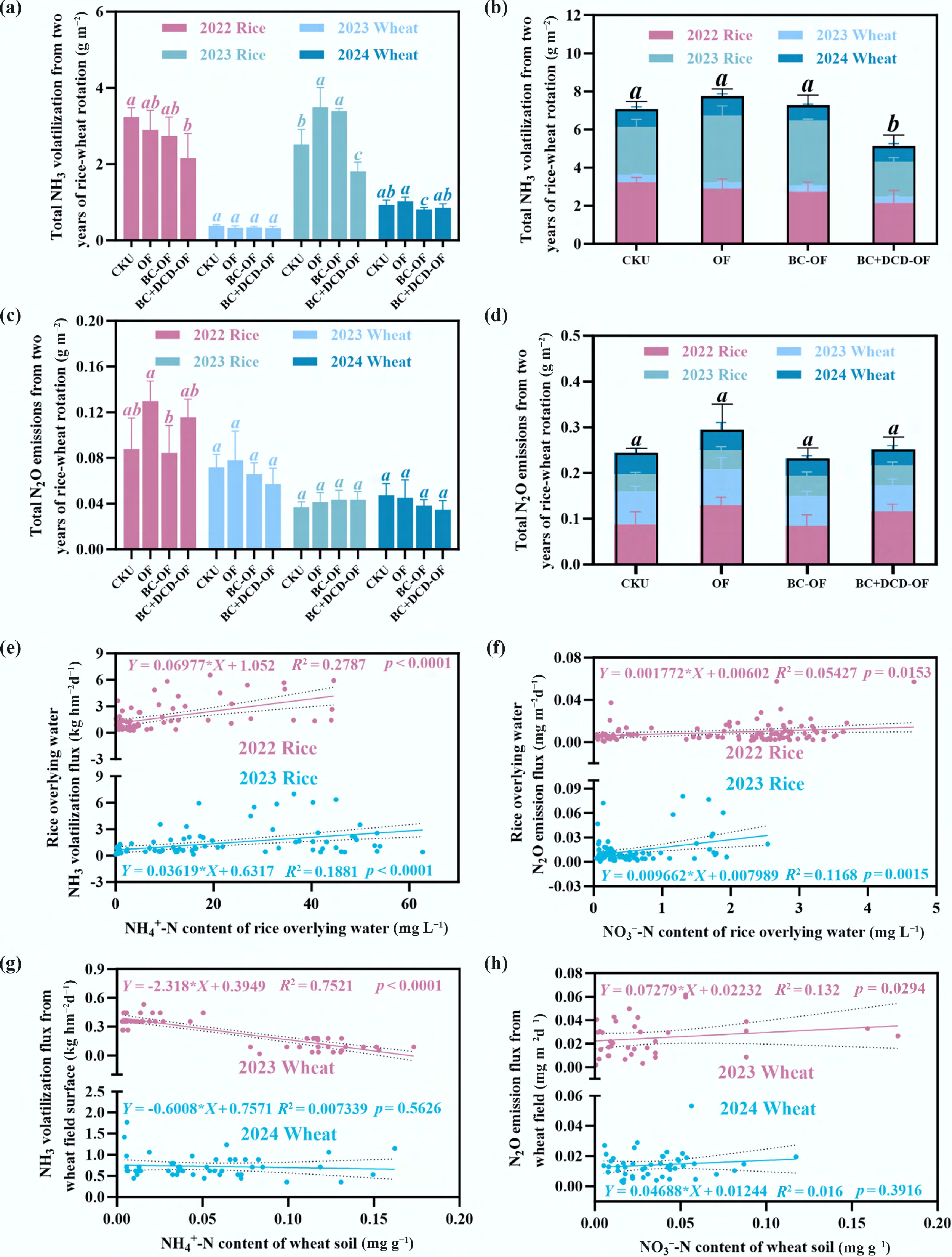
Figure 1.
(a) Total NH3 volatilization during a single growing season; (b) over the entire rice-wheat rotation; (c) total N2O emissions during a single growing season; and (d) over the entire rotation under different fertilization treatments from 2022 to 2024. Panels (e) and (f) show the relationships between NH3 volatilization, N2O emission fluxes, and NH4+-N and NO3−-N concentrations in the overlying water during the rice season, while panels (g) and (h) present the relationships between NH4+-N and NO3−-N concentrations in the soil during the wheat season. Data are presented as mean ± SD (n = 3). Different lowercase letters above the bars indicate significant differences among treatments at p < 0.05. CKU, urea only; OF, conventional straw-chicken manure organic fertilizer; BC-OF, organic fertilizer amended with 15% biochar; BC + DCD-OF, organic fertilizer amended with 15% biochar and 0.5% dicyandiamide. BF, SF1, and SF2 represent the basal, first, and second supplementary N fertilization periods, respectively. All abbreviations presented in Figure 1 are adopted uniformly in the subsequent figures.
Over the 2-year rotation (Fig. 1b), CKU emitted 7.1 g m−2 of NH3, and only the BC + DCD-OF treatment significantly reduced emissions by 27.1%. Notably, compared with OF (7.8 g m−2), the incorporation of BC alone reduced cumulative NH3 volatilization by 5.9%, whereas the combination of BC with DCD achieved a much greater reduction of 33.6%.
NH3 volatilization in rice-wheat rotations is governed by soil and overlying water properties (e.g., pH, NH4+-N, NO3−-N), temperature, and microbial and enzymatic activities. In the 2022 rice season, the combined use of organic and inorganic fertilizers reduced NH3 volatilization. However, the slow mineralization of organic fertilizers and the limited duration of crop growth resulted in residual N effects[17], leading to NH4+-N accumulation in subsequent seasons (2023 wheat and rice, and 2024 wheat). Elevated NH4+-N concentrations in overlying water and soil (Fig. 2a, d), together with increased pH (Fig. 2c, f), explain the higher emissions observed in the OF and BC-OF treatments in 2023 compared with 2022.
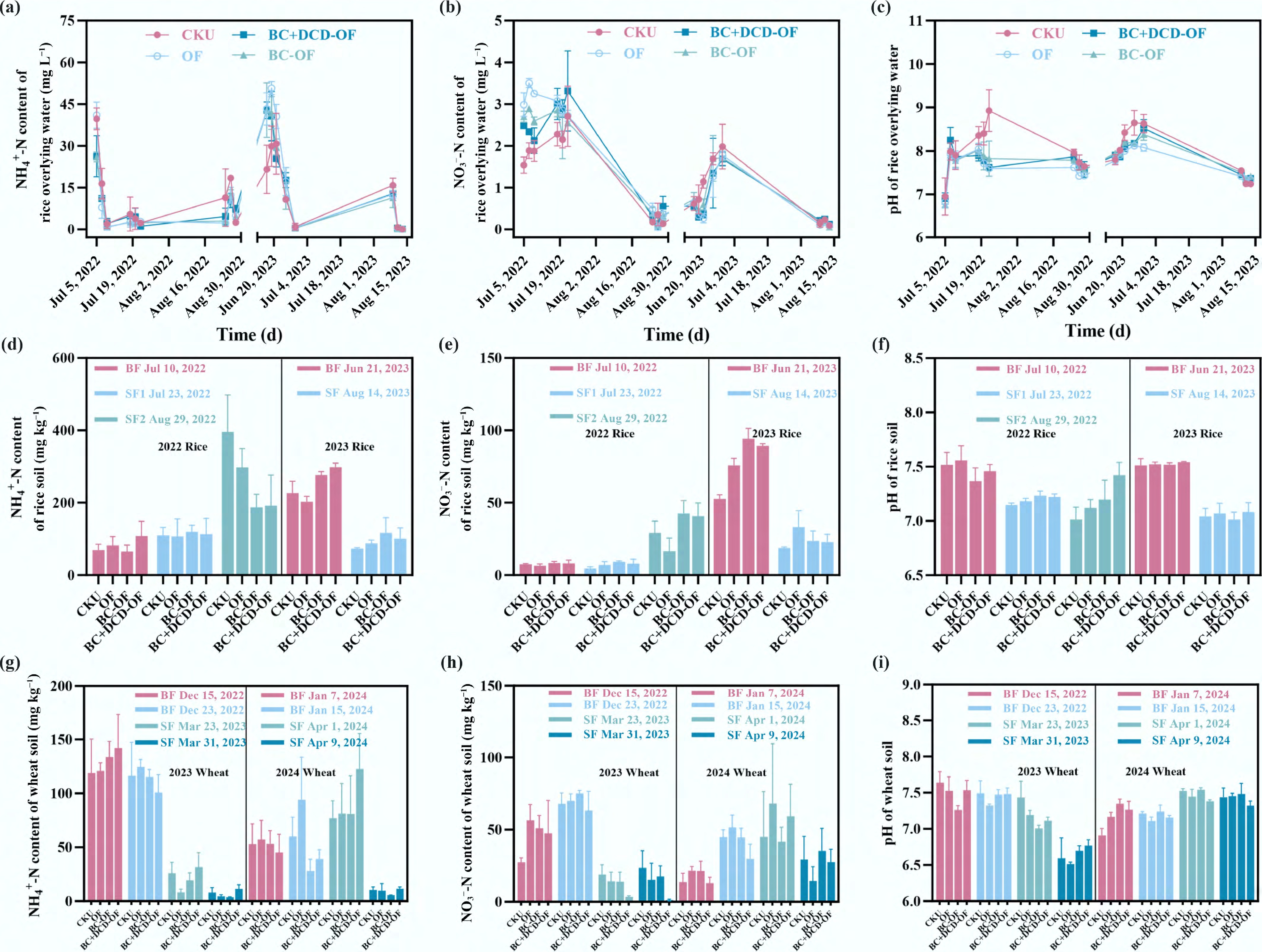
Figure 2.
Chemical characteristics of the overlying water and soil under different fertilization treatments during the rice-wheat rotation. Panels (a)–(c) show NH4+-N concentration, NO3−-N concentration, and pH of the overlying water during the rice seasons. Panels (d)–(f) present soil NH4+-N, NO3−-N, and pH in the rice-growing period, while panels (g)–(i) show soil NH4+-N, NO3−-N, and pH during the wheat-growing period. Data are presented as mean ± SD (n = 3). Different lowercase letters above the bars indicate significant differences among treatments at p < 0.05.
Consistent with this mechanism, NH3 volatilization showed a significant positive correlation with NH4+-N during the rice seasons (Fig. 1e), reflecting NH4+-N supply from urea hydrolysis and organic N mineralization. In contrast, a negative correlation was observed during the 2023 wheat season (Fig. 1g), likely due to enhanced NH4+-N adsorption by humified organic matter and the suppressive effect of low temperatures on NH3 production[17]. No significant correlation was detected in the 2024 wheat season, probably because organic fertilizer was not applied.
Previous studies have shown that NH4+-N-rich organic fertilizers can stimulate NH3 volatilization by accelerating urea hydrolysis and increasing NH4+-N concentrations in overlying water[5], consistent with the present findings. Relative to OF alone, BC-OF and BC + DCD-OF significantly reduced NH3 volatilization. Biochar-mediated reductions in NH3 volatilization were likely associated with its adsorption capacity for reactive nitrogen species and its buffering effect on pH fluctuations, as widely reported in previous studies[9]. The additional mitigation observed under BC + DCD-OF was consistent with the known inhibitory effects of DCD on ammonium oxidation, although direct evidence of microbial functional inhibition was not assessed in this study[12]. Although the effectiveness of DCD combined with urea in field systems remains debated[18,19], its co-application with BC in organic fertilizers proved effective in this study and in previous composting research[6].
Overall, the combined application of biochar and dicyandiamide in organic fertilizers showed a more persistent NH3 mitigation effect across the 2-year rice-wheat rotation than organic fertilizer alone. Biochar supplied immediate physicochemical buffering by dampening pH peaks, while DCD may have suppressed microbial N transformations, collectively moderating NH4+-N accumulation and reducing NH3 volatilization. This synergistic strategy lowered reliance on rapidly hydrolyzed urea, improved soil buffering capacity, enhanced N retention and availability to crops, and reduced environmental risks associated with NH3 emissions.
Nitrous oxide emissions in the rice-wheat rotation
-
N2O emissions did not differ significantly among treatments, indicating that the treatments had no adverse effect on N2O emissions (Fig. 1c), with seasonal cumulative emissions ranging from 0.08 to 0.13 g m−2 in rice and remaining similarly low in wheat, indicating that N2O was a minor nitrogen loss pathway in this system. In the 2022 rice season, N2O emissions were higher under OF (0.13 g m−2) than under CKU (0.09 g m−2), whereas BC-OF exhibited the lowest emission level (0.08 g m−2) and BC + DCD-OF showed a moderate increase (0.12 g m−2) that was not statistically significant. No significant differences among treatments were detected in subsequent rice and wheat seasons.
Although most seasonal differences were not statistically significant, a consistent pattern was observed across crops. Organic fertilizer application tended to increase N2O emissions during rice cultivation but reduce emissions during wheat cultivation relative to CKU. Relative to OF, both BC-OF and BC + DCD-OF generally showed higher N2O emissions in rice seasons and lower emissions in wheat seasons, suggesting contrasting N2O responses under flooded and non-flooded conditions. When evaluated over the entire rotation, cumulative N2O emissions did not differ significantly among treatments; however, compared with OF, cumulative emissions were 21.2% and 14.5% lower under BC-OF and BC + DCD-OF, respectively (Fig. 1d).
Across the 2-year rice-wheat rotation, cumulative N2O emissions were uniformly low (0.23–0.29 g m−2) and did not differ significantly among treatments, indicating that the limited absolute emission magnitude constrained the statistical space for detecting treatment effects. In contrast, NH3 volatilization represented the dominant N loss pathway, with cumulative emissions (51.3–77.5 kg ha−1) exceeding N2O losses by several orders of magnitude. From a system-level perspective, mitigation strategies targeting NH3 therefore exert a substantially greater influence on overall N losses and environmental performance than strategies focused solely on N2O. This distinction is particularly relevant given that a fraction of volatilized NH3 is subsequently converted to atmospheric N2O, further amplifying its indirect environmental impact[18].
Consistent with previous findings, conventional organic fertilizer alone was ineffective in reducing N2O emissions during the rice-wheat rotation, likely due to organic carbon inputs stimulating denitrification and N2O production[20]. The incorporation of BC into organic fertilizer tended to reduce N2O emissions relative to OF, which can be attributed to BC-mediated improvements in soil structure, aeration, and moisture regulation, as well as suppression of denitrification-driven N2O production[21]. Moreover, BC has been shown to promote the reduction of N2O to N2 through an electron shuttle mechanism[22].
When BC and DCD were co-applied, additional mitigation of N2O was limited. This likely reflects partial overlap in their dominant mechanisms, whereby BC-induced reductions in nitrification substrates or microbial shifts reduce the marginal inhibitory effect of DCD. In addition, the temperature sensitivity and limited persistence of DCD under dynamic rice-wheat conditions may further constrain its effectiveness, as evidenced by the marked decrease in DCD half-life with increasing temperature[23].
Overall, N2O emissions in this rice-wheat rotation remained low regardless of fertilization treatment, and differences among treatments were comparatively small. These results indicate that, under the experimental conditions of this study, fertilization management exerted a limited influence on cumulative N2O emissions, especially when compared with its effects on NH3 volatilization.
Dynamics of nitrogen forms and pH in overlying water and soils
-
The dynamics of inorganic nitrogen forms and pH in overlying water and soils exhibited clear temporal and seasonal variability during the rice-wheat rotation and responded differently to fertilization treatments (Fig. 2). These variations provided important context for understanding gaseous nitrogen losses and subsequent biological responses.
Overlying water during rice seasons
-
During the 2022 and 2023 rice seasons, concentrations of NH4+-N and NO3−-N in overlying water showed pronounced fluctuations following BF and SF events (Fig. 2a, b). Across treatments, NH4+-N peaked shortly after BF, with the highest concentrations observed under CKU and OF. In 2022, peak NH4+-N concentrations reached 39.7–41.0 mg L−1 in CKU and OF, whereas lower peaks were recorded under BC-OF and BC + DCD-OF (26.0–26.3 mg L−1). A similar pattern was observed in 2023, when OF treatments reached 42.3–43.3 mg L−1, while BC-containing treatments maintained lower concentrations, particularly during SF.
In contrast, NO3−-N concentrations increased more gradually over time. In 2022, NO3−-N in CKU increased from 1.5–1.8 to 2.2–2.7 mg L−1 by SF1, whereas in 2023 it rose from approximately 0.6 to 2.0 mg L−1 by day 14. The BC + DCD-OF treatment delayed early nitrate accumulation relative to other treatments, although higher NO3−-N concentrations were observed during SF1 (2.9–3.3 mg L−1), followed by a rapid decline during SF2. Overall, BC-containing treatments moderated NH4+-N peaks, while DCD addition altered the timing of nitrate accumulation.
Overlying water pH showed a consistent increasing trend after BF, reaching maximum values during SF1 and declining thereafter (Fig. 2c). In 2022, pH ranged from 6.8–7.0 shortly after BF and increased to 8.4–9.0 in CKU during SF1, remaining 0.3–1.3 units higher than in organic fertilizer treatments. Similar temporal patterns were observed in 2023, with CKU exhibiting the largest pH increase between days 6 and 10 before stabilizing after SF.
Soil nitrogen forms and pH during rice-wheat rotation
-
Soil NH4+-N, NO3−-N, and pH also displayed strong seasonal variation during both rice and wheat phases of the rotation (Fig. 2d–i).
During the 2022 rice season, soil NH4+-N remained relatively stable during BF and SF1 (~100 mg kg−1) but increased markedly during SF2, reaching 396.0 mg kg−1 under CKU. In contrast, organic fertilizer treatments, particularly BC-OF and BC + DCD-OF, maintained substantially lower NH4+-N concentrations. In the 2023 rice season, NH4+-N concentrations were higher during BF (203.0–298.4 mg kg−1) but declined to approximately 100 mg kg−1 during SF across all treatments. Soil NO3−-N concentrations were generally low during BF in 2022 but increased during SF, with higher values observed under organic fertilizer treatments than under CKU. In 2023, NO3−-N concentrations remained consistently higher in organic fertilizer treatments throughout BF and SF, indicating sustained nitrate formation associated with gradual nitrogen release. Soil pH during both rice seasons showed a slight decline from BF to SF, with limited treatment differences, except during SF2, when BC + DCD-OF maintained relatively higher pH values.
During the 2023–2024 wheat seasons, soil NH4+-N generally decreased following fertilization, with lower concentrations during SF compared with BF. In 2024, NH4+-N dynamics diverged among treatments, with CKU and OF showing transient increases after BF, whereas BC-OF and BC + DCD-OF exhibited continued declines. Soil NO3−-N increased during BF and declined during SF in both wheat seasons, although seasonal variability among treatments was more pronounced than during rice seasons. Soil pH decreased from BF to SF in 2023 but showed an overall increasing trend in 2024, particularly under CKU, reflecting interannual differences in soil acid-base responses.
Across the 2022–2024 rice-wheat rotation, pH and inorganic nitrogen forms (NH4+-N and NO3−-N) emerged as key factors associated with crop yield and gaseous nitrogen losses (Fig. 3a–d). The observed coupling between NH3 volatilization, NH4+-N availability, and pH dynamics suggests that emission regulation was primarily driven by substrate availability and acid–base equilibrium rather than direct microbial inhibition alone.
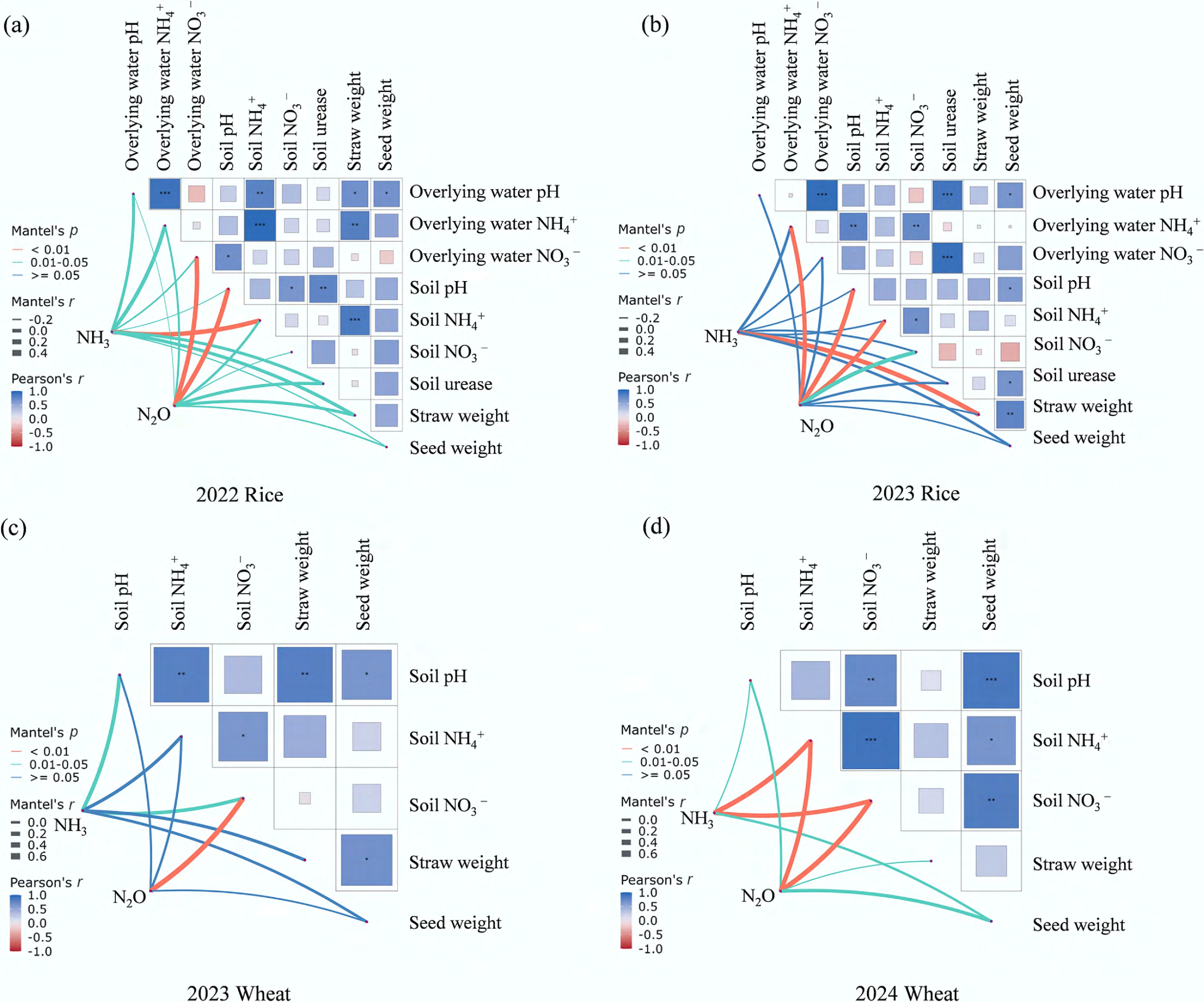
Figure 3.
Network heatmap showing NH3 and N2O emissions from the rice-wheat rotation (2022–2024) and their correlations with overlying water and soil chemical indicators. Color intensity indicates the strength and direction of correlations.
During rice seasons, both overlying water and soil pH showed significant positive associations with NH4+-N and NO3−-N, consistent with enhanced urea hydrolysis and nitrification under elevated pH. Notably, under flooded conditions, nitrate formation appeared to be more strongly related to pH than to NH4+-N availability, as indicated by the pronounced pH-NO3−-N relationship in the 2023 rice season. Such pH-dependent nitrification under submerged conditions has been rarely quantified in rice-wheat rotation systems. In addition, seed weight was positively associated with urease activity but negatively associated with soil NO3−-N, suggesting that excessive pH-stimulated nitrification may reduce nitrogen-use efficiency, in line with previous reports that rapid NH4+-N to NO3−-N conversion increases nitrogen losses and limits crop nitrogen uptake under flooded regimes[24].
During wheat seasons (Fig. 3c, d), pH again emerged as a significant driver, but with season-specific differences in transformation pathways. Higher pH favored NH4+-N accumulation in 2023 wheat, yet in 2024 wheat it instead promoted stronger nitrification, as shown by the robust correlation between NO3−-N and seed weight[25]. This indicates a shift from an ammonification-dominated regime to a nitrification-dominated regime across years, potentially linked to interannual variation in soil moisture and microbial functional composition[26]. Across both wheat years, grain yield consistently showed stronger correlations with inorganic N forms than with straw biomass, suggesting preferential allocation of available N to reproductive growth, a trend widely recognized but rarely quantified in relation to pH-driven N turnover.
The Mantel tests further clarified the mechanistic pathways underlying gaseous N losses. NH3 emissions were chiefly governed by NH4+-N distribution and pH across all four datasets, reflecting the co-control of substrate supply and acid-base equilibrium—an observation consistent with volatilization theory but here demonstrated across a long-term rotation with integrative water-soil data. In contrast, N2O emissions were jointly associated with NO3−-N, NH4+-N, and soil pH, indicating that both nitrification and denitrification intermediates contribute to N2O production. These observations are consistent with previous mechanistic studies showing that soil pH strongly regulates the activity of nitrifying and denitrifying microorganisms and controls nitrification rates[27], thereby influencing both NH3 volatilization and N2O emissions. They also highlight seasonal differences in the relative dominance of these N transformation pathways between the rice and wheat growing periods.
Collectively, these results suggest that pH acts as an important system-level factor shaping the timing and direction of nitrogen transformation processes in the rice-wheat rotation. BC- and DCD-containing fertilizers primarily moderate the magnitude and temporal distribution of inorganic nitrogen in overlying water and soils, rather than fundamentally altering seasonal transformation pathways. These associated dynamics provide a mechanistic context for the observed variation in NH3 volatilization and N2O emissions and for associated responses in enzyme activity and microbial community structure. Overall, management practices that influence pH and nitrogen availability may contribute to improved nitrogen-use efficiency and emission mitigation, although their effectiveness is likely to vary with seasonal conditions and fertilization regimes.
Enzyme activity and bacterial community responses associated with nitrogen transformation
-
Soil urease activity and bacterial community composition responded differently to fertilization treatments during the rice-wheat rotation, reflecting the combined effects of organic inputs, biochar amendment, and nitrification inhibitor application on nitrogen transformation processes.
Soil urease activity during the rice seasons exhibited clear interannual variation (Fig. 4a). In 2022, urease activity under BC + DCD-OF was 15.9% higher than that under CKU, whereas no significant differences were observed for OF or BC-OF. In contrast, during the 2023 rice season, continuous application of organic fertilizers resulted in significantly lower urease activity, with reductions of 17.7%–30.4% relative to CKU. This pattern suggests that short-term organic amendments may stimulate urease production, while prolonged organic inputs may lead to downregulation of enzyme activity, potentially due to altered substrate availability or microbial adaptation.
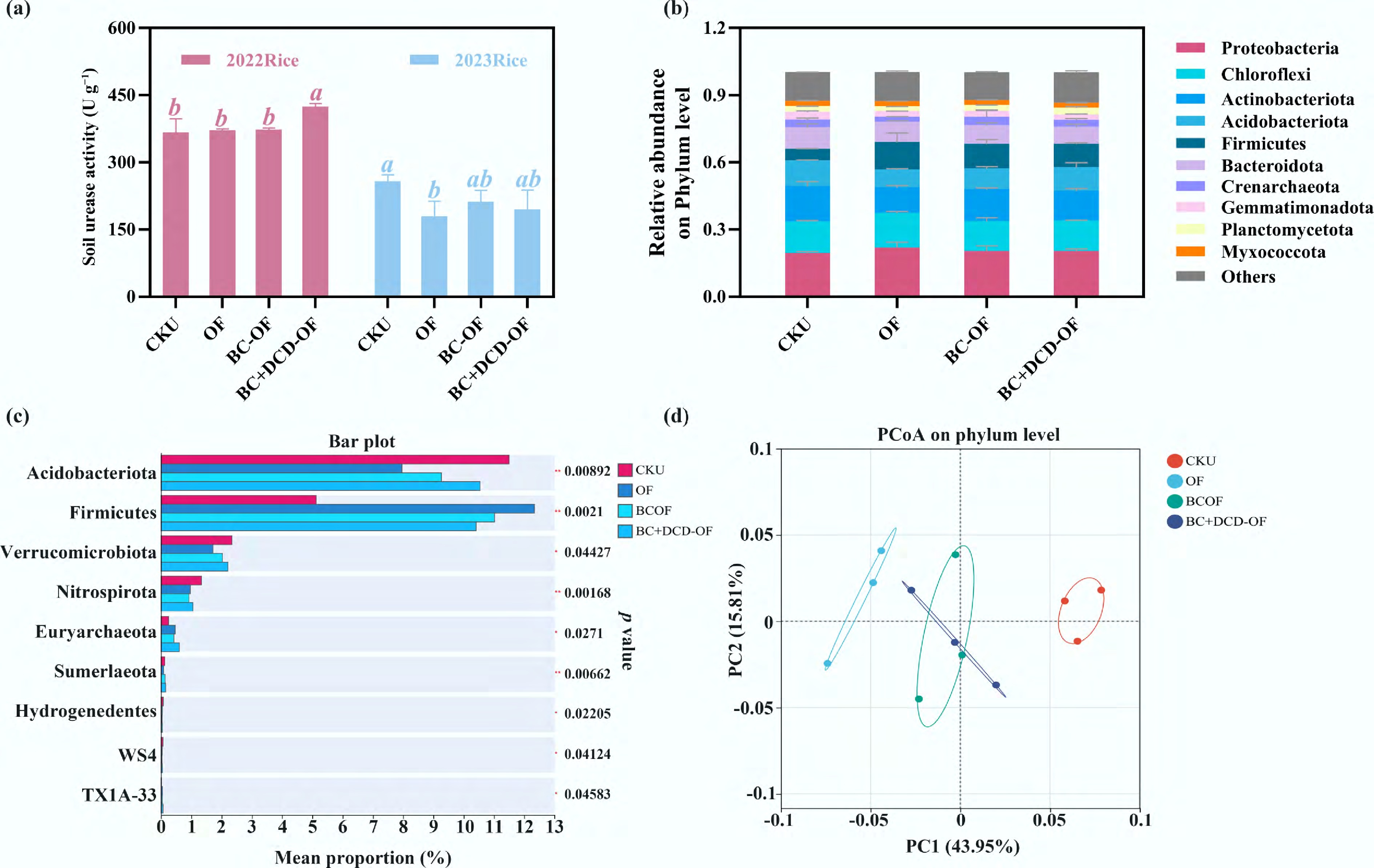
Figure 4.
(a) Soil urease activity during the rice-growing periods in 2022 and 2023. (b) Relative abundance of dominant bacterial phyla. (c) Significance testing of intergroup differences based on community composition. (d) Principal coordinates analysis (PCoA) of soil bacterial communities under different fertilization treatments. Data are presented as mean ± SD (n = 3). Different lowercase letters above the bars indicate significant differences among treatments at p < 0.05.
At the phylum level, Proteobacteria, Chloroflexi, Actinobacteriota, and Acidobacteriota dominated bacterial communities across all treatments, together accounting for more than 50% of total sequences (Fig. 4b). Proteobacteria remained relatively stable among treatments, whereas organic fertilizer application mainly altered the relative abundance of Chloroflexi, Firmicutes, and Bacteroidota. Compared with CKU, Chloroflexi increased under OF but declined under BC-OF and BC + DCD-OF, while Firmicutes were markedly enriched under all organic fertilizer treatments and Bacteroidota generally decreased.
Differential abundance analysis further showed that BC-OF and BC + DCD-OF enriched Firmicutes, Euryarchaeota, Sumerlaeota, and TX1A-33, while reducing Acidobacteriota, Verrucomicrobiota, Nitrospirota, and Hydrogenedentes (Fig. 4c). The decline in Nitrospirota, a key nitrite-oxidizing group, indicates altered nitrification-related microbial niches under biochar-based fertilization. PCoA based on Bray–Curtis distances revealed clear separation among treatments (Fig. 4d), with CKU forming a distinct cluster and BC-OF and BC + DCD-OF occupying separate ordination spaces, suggesting progressive restructuring of bacterial community composition following the incorporation of organic fertilizer, biochar, and DCD.
Application of different organic fertilizers induced selective shifts in key bacterial phyla, particularly Chloroflexi, Firmicutes, and Bacteroidota. Relative to CKU, Chloroflexi declined under BC-OF and BC + DCD-OF, likely because the porous structure and stable carbon pool of biochar are unfavorable for taxa dependent on soluble carbon substrates[28]. In contrast, Firmicutes were strongly enriched under OF, BC-OF, and BC + DCD-OF, reflecting their high stress tolerance and capacity for organic matter decomposition. The lower enrichment of Firmicutes in BC- and DCD-containing treatments compared with OF suggests that carbon-based amendments partially suppressed the decomposition of N-containing organic substrates. These stratified responses were mainly attributed to biochar-induced improvements in soil aeration and water retention, which reshaped microbial habitats[29], whereas DCD exerted limited influence on overall community composition[30].
The enrichment of Euryarchaeota and Sumerlaeota indicates that biochar-mediated environmental changes favored N-fixing and N-transforming microorganisms, consistent with previous reports that biochar promotes biological N fixation[31]. Although the functional role of Sumerlaeota remains unclear, its marked increase suggests potential involvement in organic N transformation. Conversely, Nitrospirota, a key nitrite-oxidizing bacterial group, was significantly suppressed under BC-OF and BC + DCD-OF, indicating inhibition of nitrite-to-nitrate conversion. This decline may result from competitive interactions with Firmicutes, as reported previously[32]. Overall, the enrichment of Firmicutes, Euryarchaeota, and Sumerlaeota suggests that biochar-based organic fertilizers shifted microbial communities toward enhanced mineralization and N transformation, consistent with observations under organic amendments[33]. However, given that this study is based on taxonomic profiling, these observations should be interpreted as indicative of potential functional shifts rather than direct evidence of specific biochemical processes.
Biochar has been widely reported to restructure microbial communities and influence nitrification and denitrification processes by modifying soil microenvironments[34]. In the present study, the separation of BC + DCD-OF from BC-OF in the PCoA indicates that DCD altered the community structure established by biochar. However, biochar may adsorb DCD and reduce its bioavailability, thereby weakening nitrification inhibition[35] and potentially allowing the persistence of nitrification-related taxa such as Firmicutes and Euryarchaeota.
BC-OF and BC + DCD-OF were associated with shifts in microbial community composition, characterized by increased relative abundance of Firmicutes and Euryarchaeota and reduced representation of Nitrospirota. These changes coincided with differences in NH3 volatilization and N2O emission patterns, suggesting a partial decoupling of gaseous nitrogen loss pathways under biochar- and DCD-containing fertilization regimes. Rather than directly suppressing specific microbial functions, biochar-based organic fertilizers appeared to influence nitrogen transformation processes through integrated modifications of soil physicochemical conditions, enzyme activity, and microbial community structure, thereby providing a mechanistic context for the observed variation in nitrogen dynamics and gaseous nitrogen losses across treatments.
It should be noted that the microbial analysis in this study was primarily based on 16S rRNA gene sequencing at the taxonomic level, which provides insights into community composition but does not directly reflect functional activity. Therefore, the inferred links between microbial shifts and nitrogen transformation processes, such as nitrification and denitrification, should be interpreted with caution. Future studies incorporating functional gene quantification (e.g., amoA, nxr, nirK, nirS, nosZ) or process-based measurements are required to validate the underlying mechanisms.
Crop growth and yield under reduced nitrogen input
-
Organic fertilizers increased rice plant height (Fig. 5a) in 2022 by 0.1%–2.4% (CKU 71.3 cm) and in 2023 by 0.4%–3.0% (CKU 80.6 cm). Wheat height in 2023 increased by 9.1%–14.7% (CKU 57.7 cm), while in 2024, without organic fertilizers, heights decreased by 5.1%–6.4% (CKU 59.1 cm). Leaf SPAD values (Fig. 5b) were generally unaffected by organic amendments in rice. In 2023 wheat, OF was 6.3% lower than CKU (55.4), with BC-OF and BC + DCD-OF showing no significant differences. In 2024 wheat, BC-OF was 6.0% lower than CKU (54.3), while OF and BC + DCD-OF were similar to CKU.
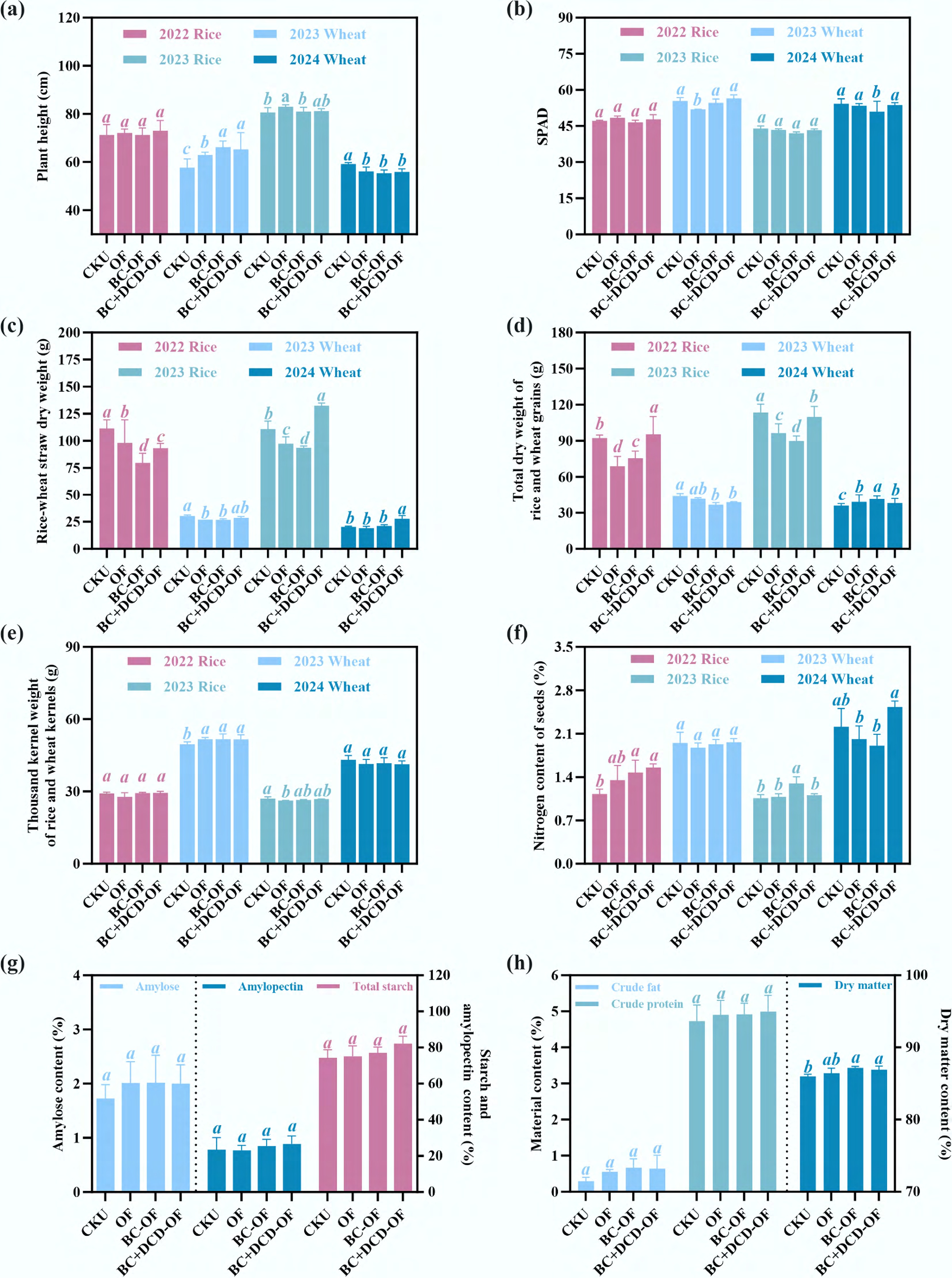
Figure 5.
(a) Plant height, (b) SPAD value of flag leaves, (c) straw dry weight, and (d) grain yield of rice and wheat across two rotations, as well as (e) thousand-kernel weight, (f) grain N content, (g) starch content, and (h) crude fat and protein contents of rice and wheat grains under different fertilization treatments. Data are presented as mean ± SD (n = 3). Different lowercase letters above the bars indicate significant differences among treatments at p < 0.05.
Straw weight varied by crop and season (Fig. 5c), CKU had the highest dry weight in 2022 rice (1,575.2 g m−2) and 2023 wheat (429.9 g m−2). BC + DCD-OF was highest in 2023 rice (1,870.7 g m−2) and 2024 wheat (393.1 g m−2). Other treatments were intermediate or lower. Seed dry weight followed similar trends (Fig. 5d). BC + DCD-OF increased by 3.4% over CKU in 2022 rice (1,305.1 g m−2) and by 6.2%–15.5% in 2024 wheat (509.4 g m−2), whereas CKU led in most 2023 seasons. Thousand-kernel weight showed minor differences (Fig. 5e), CKU was slightly higher in 2023 rice (27.0 g pot−1), and OF and BC-OF treatments were similar or lower in other seasons. Seed N content increased substantially with organic fertilizers in rice (Fig. 5f), BC + DCD-OF increased seed N by up to 38% in 2022; wheat showed smaller increases, and OF and BC-OF sometimes reduced seed N. Rice quality indices (Fig. 5g, h), including starch, amylose, amylopectin, protein, and fat, were not significantly affected. BC-containing treatments had higher dry matter, up to 86.0%, indicating improved nutrient accumulation. Under reduced N input, BC + DCD-OF sustained or enhanced biomass, grain yield, and seed quality. Its positive effects on crop productivity were more consistent in rice than in wheat, likely reflecting seasonal variability and differences in residual nutrient dynamics.
In this study, the combined application of organic and inorganic fertilizers had little effect on rice plant height but significantly influenced wheat plant height. During the 2023 wheat season, organic fertilizer application markedly increased plant height. However, in the 2024 wheat season, when no additional organic fertilizer was applied, plant heights in the OF, BC-OF, and BC + DCD-OF treatments were significantly lower than in the CKU treatment. This suggests that the positive effect of organic fertilizers on plant height was restricted to the season of application, with no residual benefit to the subsequent crop. SPAD values, closely correlated with leaf chlorophyll and N content[36], showed no significant changes in rice leaves across fertilizer treatments. The effect on wheat SPAD values was also limited, with only a 6.0% increase relative to CKU. Overall, N status differences among treatments within the same growing season were minimal for both rice and wheat.
The data show that rice grain yields under OF and BC-OF were reduced by 19.5%–19.6% compared with CKU, whereas BC + DCD-OF maintained yields at a comparable level. The yield reductions under OF and BC-OF are likely related to the slow release and delayed mineralization of organic N, as N in organic fertilizers predominantly exists in organic forms that require microbial conversion to plant-available NH4+-N and NO3−-N. This process is constrained by temperature, moisture, the C:N ratio, and microbial activity, and the 30% reduction in total N input may have further aggravated N deficiency during critical growth stages[37]. Such temporal mismatches between N supply and crop demand likely suppressed leaf expansion, tillering, and panicle differentiation, resulting in yield losses[38]. In contrast, BC + DCD-OF mitigated these deficiencies by combining the adsorption and slow-release properties of BC with the nitrification inhibition effect of DCD, enhancing N retention and synchronizing N availability with crop demand. The most pronounced yield loss occurred under BC-OF, as BC does not directly supply N but instead facilitates the stabilization of inorganic N in soil pools, reducing its immediate availability for plant uptake[1]. Conversely, BC + DCD-OF limited yield reduction because DCD acted as both a nitrification inhibitor and a slow-release N source, sustaining N supply despite partial degradation under composting conditions[19].
Regarding seed N content, the combined organic-inorganic fertilization strategy increased N concentrations in rice kernels but decreased them in wheat kernels. The increase in rice seed N content likely resulted from the prolonged mineralization of organic fertilizers, which maintained N availability beyond the immediate fertilization window. In addition, organic fertilizers supplied other essential nutrients, including phosphorus and potassium, further supporting crop growth. The presence of BC also enhanced N uptake efficiency in rice[1], contributing to the observed increase in kernel N concentration.
Given that this study was conducted using a soil-column system under controlled conditions, caution is warranted when extrapolating the results to field-scale agricultural systems, and further field-based validation is needed.
Evaluation of the potential economic benefits of organic and inorganic fertilization on rice-wheat crop rotation
-
The economic evaluation in this study was conducted as a scenario-based analysis based on experimental results combined with Monte Carlo simulation. Figure 6a–c shows ecological cost (Ecost) and health cost (Hcost) for all treatments. Ecost reflects hazards from N2O emissions, water eutrophication, and soil acidification. Hcost represents health risks from N forms generated by fertilizers[39]. Conventional OF slightly increased total costs compared to CKU (Ecost + Hcost: +1.9%, 5,687.7 CNY ha−1). BC-OF reduced costs by 1.8%, while BC + DCD-OF achieved the largest reduction of 21.8%. BC reduces N loss during the composting process and continues to lower emissions after application to the soil, enhancing environmental protection and human health.
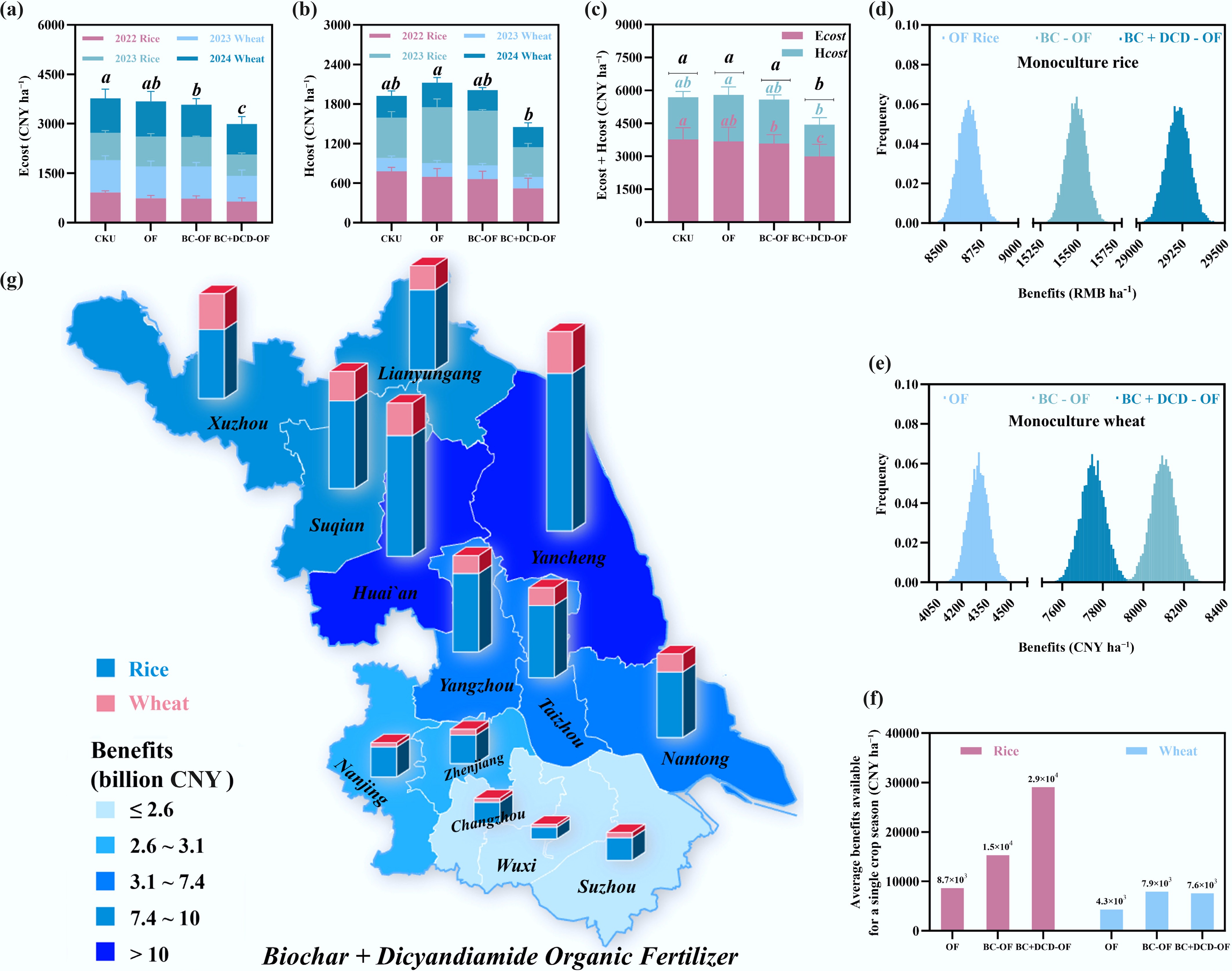
Figure 6.
Economic and ecological cost-benefit analysis under different fertilization treatments. Panels (a)–(c) show the total ecological cost (Ecost), health cost (Hcost), and combined cost (Ecost + Hcost), respectively. Panels (d) and (e) present the simulated potential economic benefits for single rice and wheat seasons, while panel (f) shows the simulated average potential economic benefits for the rice-wheat rotation. Panel (g) illustrates the potential total economic benefits of BC + DCD-amended organic fertilizer for 13 cities in Jiangsu Province, China. Data in panels (d)–(g) were obtained from 10,000 Monte Carlo simulations. Ecost represents the combined environmental hazards associated with nitrogen losses, including atmospheric pollution, water eutrophication, and soil acidification, while Hcost represents health hazards associated with different nitrogen forms generated through fertilizer application. Data are presented as mean ± SD (n = 3). Different lowercase letters above the bars indicate significant differences among treatments at p < 0.05.
BC + DCD-OF was the most effective treatment, followed by BC-OF. OF showed limited benefits. Economic efficiency was higher in rice than in wheat. In the rice season, BC + DCD-OF and BC-OF exceeded OF by 235.5% and 76.8%. In wheat, the increases were 84.1% and 76.1%. These results highlight the clear economic advantage of combining BC and DCD with organic fertilizers.
Simulation results suggest that incorporating small amounts of BC and DCD into organic fertilizers can improve the economic performance of combined organic-inorganic fertilization while maintaining stable crop yields, outperforming other organic fertilizer treatments. Using BC + DCD-OF combined with urea and production data (
https://tj.jiangsu.gov.cn/col/col85282/index.html ) from 13 cities in Jiangsu Province, the estimated income gains are intended to illustrate potential regional implications under representative scenarios rather than to predict outcomes of large-scale adoption. The analysis indicates larger potential economic benefits in northern Jiangsu (CNY 7.9–14.6 billion annually) and central Jiangsu (CNY 6.5–7.4 billion), with more modest gains in southern, industry-dominated cities (CNY 1.6–3.0 billion). Given the relatively high nitrogen inputs in Taihu Lake basin cities, these regions may also offer greater potential for environmental co-benefits[41].In summary, combining organic and inorganic fertilizers in agriculture can reduce environmental impacts and increase potential economic benefits for farmers. However, the current economic assessment is preliminary, based on limited data. This study focuses on three key aspects: reducing N inputs, selling organic food, and reducing urea use. Future research should incorporate more factors to develop a comprehensive assessment system. The results are derived from simulations under predefined assumptions and should be interpreted as indicative trends rather than definitive economic predictions. The economic analysis is based on scenario simulations informed by controlled experimental data and does not fully capture the complexity and variability of real-world agricultural systems; therefore, the findings should be interpreted with caution and require further validation through field-scale studies.
-
This study evaluated combined organic-inorganic fertilization in a 2-year rice-wheat soil-column experiment. Biochar- and dicyandiamide-amended organic fertilizer significantly reduced reactive nitrogen losses while maintaining crop productivity under reduced mineral N input. Specifically, BC + DCD-OF reduced NH3 volatilization by up to 33.4% compared with conventional OF, while maintaining rice grain yield at levels comparable to the control. In contrast, N2O emissions did not differ significantly among treatments, indicating no increase in emission risk. The effectiveness of this strategy was more consistent in rice than in wheat, highlighting the influence of seasonal variability and residual nutrient dynamics. These effects contributed to improved nitrogen use efficiency and reduced environmental risks. This study provides new insights into the integrated regulation of nitrogen losses through the co-amendment of biochar and dicyandiamide under reduced nitrogen input. The results indicate that biochar- and dicyandiamide-amended organic fertilizer represents a potentially effective management strategy under controlled conditions, but further validation under field-scale conditions is required to confirm its applicability in low-input agricultural systems.
-
It accompanies this paper at: https://doi.org/10.48130/aee-0026-0016.
-
Not applicable.
-
The authors confirm their contributions to the paper as follows: Wang Huang: writing – original draft, investigation, data curation; Lisha Wang: writing – review & editing; Xueliu Gong: writing – original draft, investigation; Rongjun Bian: writing – review & editing; Xinyue Lu: investigation; Yuanqing Bu: writing – review & editing, funding acquisition; Yunyi Liang: investigation; Haijun Sun: writing – review & editing, supervision, funding acquisition, formal analysis, conceptualization; Yanfang Feng: writing – review & editing, supervision, funding acquisition, conceptualization; Changlei Xia: writing – review & editing; Jiang Jiang: writing – review & editing; Lihong Xue: writing – review & editing, Funding; All authors reviewed the results and approved the final version of the manuscript.
-
The datasets used or analyzed during the current study are available from the corresponding author on reasonable requests.
-
This study was supported by the National Key Research and Development Program of China (2024YFD1700300), the Jiangsu Agricultural Science and Technology Innovation Fund (CX(22)2045), the Basic Research Program of Jiangsu (BK20251168), the National Natural Science Foundation of China (U2340202), and the Jiangsu Funding Program for Excellent Postdoctoral Talent (2025ZB009).
-
The authors declare that they have no known competing financial interests or personal relationships that could have appeared to influence the work reported in this paper.
-
Full list of author information is available at the end of the article.
- The supplementary files can be downloaded from here.
- Copyright: © 2026 by the author(s). Published by Maximum Academic Press, Fayetteville, GA. This article is an open access article distributed under Creative Commons Attribution License (CC BY 4.0), visit https://creativecommons.org/licenses/by/4.0/.
-
About this article
Cite this article
Huang W, Wang L, Gong X, Bian R, Lu X, et al. 2026. Ammonia mitigation and economic gains from dicyandiamide and biochar-amended organic fertilizer: a 2-year rice-wheat rotation study. Agricultural Ecology and Environment 2: e019 doi: 10.48130/aee-0026-0016 

Ammonia mitigation and economic gains from dicyandiamide and biochar-amended organic fertilizer: a 2-year rice-wheat rotation study
- Received: 24 February 2026
- Revised: 11 April 2026
- Accepted: 08 June 2026
- Published online: 22 June 2026
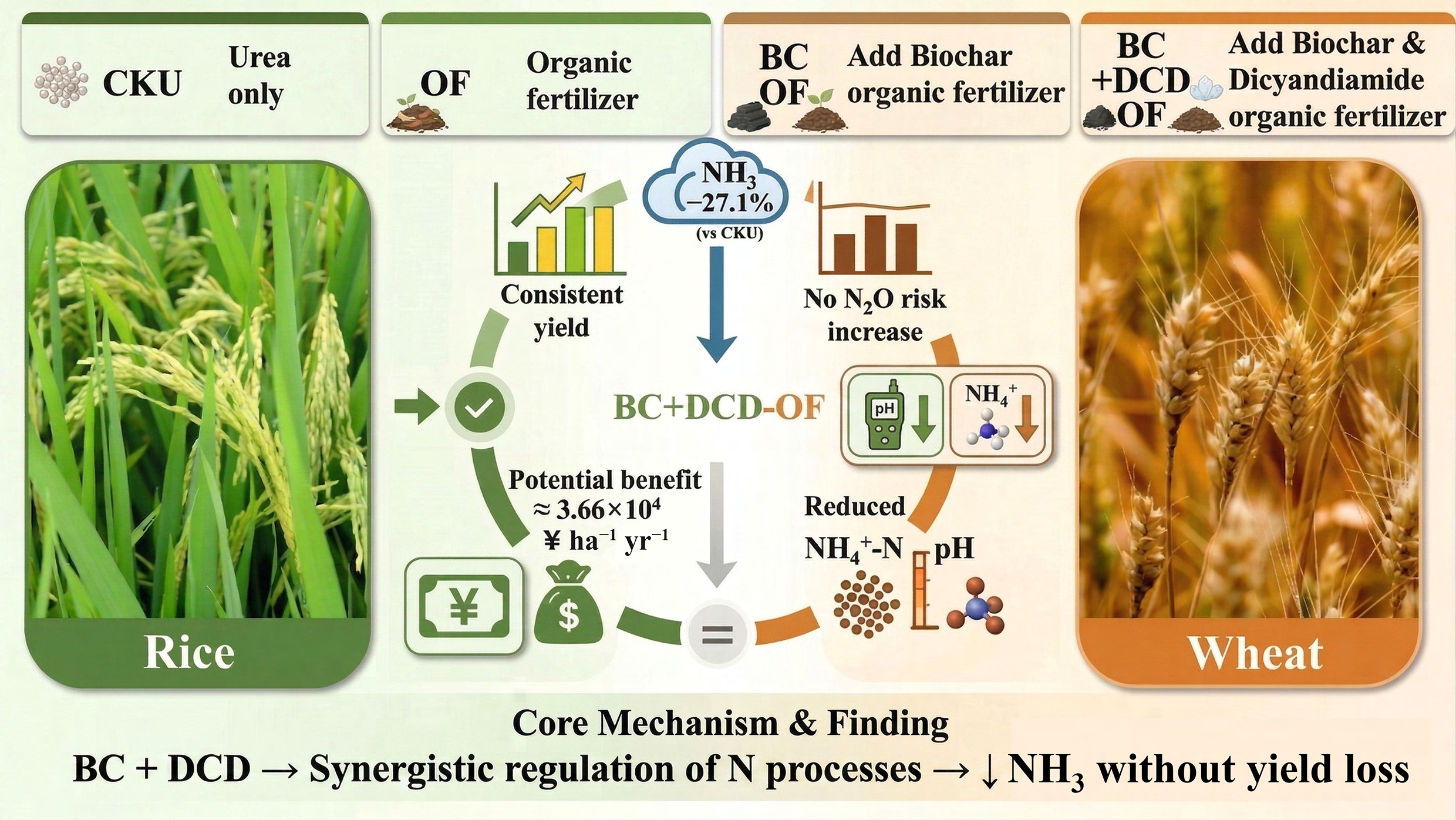
Abstract: Substantial agricultural areas rely heavily on inorganic nitrogen (N) fertilizers while generating large quantities of straw biomass; converting straw into compost and subsequently applying it in combination with reduced inorganic N inputs represents a promising pathway to mitigate N losses and improve sustainability. Biochar (BC) and dicyandiamide (DCD) were incorporated during composting and applied via organic fertilizer to potentially enhance nitrogen retention and regulate nitrogen transformation processes. A greenhouse soil-column experiment was conducted to evaluate the BC + DCD-amended organic fertilizer under a 30% inorganic N reduction across two rice-wheat rotations. Mechanistically, the reduction in NH3 emissions under BC treatments was associated with changes in overlying water NH4+-N concentrations and pH, which are key factors regulating NH3 volatilization. In addition, DCD addition was linked to changes in nitrogen transformation processes, as reflected by shifts in nitrogen forms. The combined application of BC and DCD exhibited a synergistic effect, substantially mitigating NH3 volatilization compared with BC amendment alone. BC + DCD-OF reduced cumulative NH3 losses by 27.1% relative to CKU while maintaining crop productivity. In contrast, conventional organic fertilizer (OF) and BC-based organic fertilizer (BC-OF) increased NH3 emissions and reduced rice yield. Nitrous oxide (N2O) emissions did not differ significantly among treatments and were comparable to CKU, indicating no increase in emission risk. Simulation analysis suggested that BC + DCD-OF could generate potential benefits under the experimental conditions of approximately 3.66 × 10⁴ CNY ha−1 per year. Overall, these results identify BC + DCD co-amended organic fertilizer as a promising strategy for reducing NH3 losses and sustaining productivity.