












-
Livestock is a very important sector in the national economy of Ethiopia, contributing about 39% of agricultural GDP, 25.3% of the country's total GDP, and 20% of foreign exchange earnings[1]. Besides its critical role in economic importance, livestock provides essential food products such as meat, milk, and eggs and supports household livelihoods. However, feed shortage both in quantity and quality remains a major constraint to the sustainable development of the sector.
There is an increasing recognition of the use of alternative ruminant feeds, including lignocellulosic biomass and cereal straws, along with other agricultural residues, as a means of providing energy and nutrients toward sustainable animal production. The major agricultural residues in Ethiopia include those from cereals such as maize, teff, sorghum, wheat, and barley, which, combined, are over 80% of available crop residues. Despite their availability, utilization is very limited due to the poor nutritional value of the feed. Most crop residues have a characteristic low protein and energy content and high level of fiber, thus resulting in reduced digestibility and overall feeding value[2].
Lignocellulosic agricultural by-products contain a high proportion of structural carbohydrates (approximately 55%–75%), which are bound to lignin. This complex reduces the palatability, digestibility, and nutrient availability of the feed[3]. Lignin, a complex polymer of phenolic compounds, is resistant to degradation in the anaerobic environment of the rumen, thereby negatively affecting feed digestibility by ruminants[4,5]. Various pretreatment strategies including physical, chemical, thermal, and biological methods, or combinations thereof have been employed to improve the digestibility of lignocellulosic biomass. However, chemical treatments present practical limitations, such as high costs, energy requirements, and environmental pollution[6,7]. Biological degradation of lignin using lignolytic fungi offers a promising, eco-friendly alternative[8].
White-rot fungi, which inhabit wood, are particularly effective in metabolizing lignin while minimally degrading cellulose and hemicellulose. This selectivity preserves carbohydrates in the treated biomass, making them available as an energy source for rumen microbes and the animal[9]. The ability of white-rot fungi to degrade highly lignified biomass has garnered significant attention for improving ruminant nutrition[10]. By selectively breaking down lignin, these fungi increase the availability of cellulose and hemicellulose, thereby enhancing the nutritional value and digestibility of lignocellulosic feed[11].
Therefore, using white-rot fungi as a biological treatment for agricultural residues represents a low-cost, environmentally friendly biotechnological approach to improve the nutritive value of crop residues and support sustainable livestock production. The present study aims to evaluate the capacity of white-rot fungi to degrade various lignocellulosic biomasses and assess their effect on the chemical composition and invitro digestibility of agricultural residues.
-
Fungal isolates (WR-35, WR-14, WR-80, WR-18, WR-62, WR-25 and WR-51) utilized in this research were acquired from the Microbial Biotechnology Research Laboratory, National Agricultural Biotechnology Research Center (NABRC). Previously they were isolated from decaying wood, morphologically characterized and preserved at 4 °C on potato dextrose agar (PDA) slant with 20% glycerol.
Inoculum preparation and refreshment of fungal isolates
-
For the development of inoculum, potato dextrose agar (pH 5) was prepared, sterilized at 121 °C for 15 min and poured into Petri plates. After solidification of the medium, the plates were inoculated with 6 mm diameter plug of white-rot fungal isolates and incubated at 28 °C for 7 d.
Substrate collection
-
The substrates wheat straw, teff straw, barley straw (obtained from local farmers' farm), grass (obtained from the Dairy Research program, Holeta Agricultural Research Center) and sugarcane bagasse (obtained from Wonji Shoa Sugar Factory) were chopped to 2−4 cm.
Substrate preparation and inoculation
-
The chopped substrates were soaked in tap water for 24 h to ensure complete moisture penetration, after which excess water was drained. Substrate inoculation and solid-state fermentation were conducted following the method of Shrivastava et al.[12] with slight modifications. Briefly, the moistened substrates were supplemented with a mineral salt solution containing (g/L): K2HPO4, 1.73; KH2PO4, 0.68; (NH4)2SO4, 4; MgSO4·7H2O, 0.1; CaCl2, 0.02; MnSO4, 0.01; and FeSO4, 0.03. Aliquots of 50 g substrate were transferred into 250 mL flasks and sterilized at 121 °C for 15 min. Each sterilized flask was inoculated with eight 6 mm discs of a 7-day-old actively growing fungal culture and incubated at 28 °C under 70% relative humidity for 21 d. Post-incubation, the substrates were dried at 65 °C for 24 h and milled through a 1 mm sieve for chemical analysis and invitro digestibility assays. Uninoculated flasks, devoid of fungal mycelia, served as controls.
Chemical analysis
-
The chemical composition of each agricultural biomass was determined following Zheng et al.[3]. Dry matter (DM), crude protein (CP), and crude ash (CA) were analyzed using AOAC methods (2006). Fiber fractions—neutral detergent fiber (NDF), acid detergent fiber (ADF), and acid detergent lignin (ADL) were measured with an ANKOM Fiber Analyzer 2000 I[13]. NDF (aNDFom) was analyzed using heat-stable amylase, and ADL (sa) was obtained by solubilizing cellulose in sulfuric acid, with all values reported exclusive of residual ash. Hemicellulose and cellulose contents were calculated as the differences between NDF-ADF and ADF-ADL, respectively. Crude protein was determined by the Kjeldahl method using CuSO4 as a catalyst (ISO 5983).
Statistical analysis
-
Experiments were conducted in triplicate using a completely randomized design (CRD) to assess the effects of white-rot fungal isolates on the chemical composition and invitro digestibility of agricultural residues. Data were analyzed in R (Rx64 3.6.3) with ggplot2 for graphing. Results are presented as means ± SD, and statistical significance was determined by one-way ANOVA. Two-way ANOVA was used to determine the interaction effect of fungal isolate and substrate type with LSD separation at p < 0.05.
-
Previously isolated and preserved white-rot fungi were refreshed on potato dextrose agar to obtain pure isolates as shown on Fig. 1.
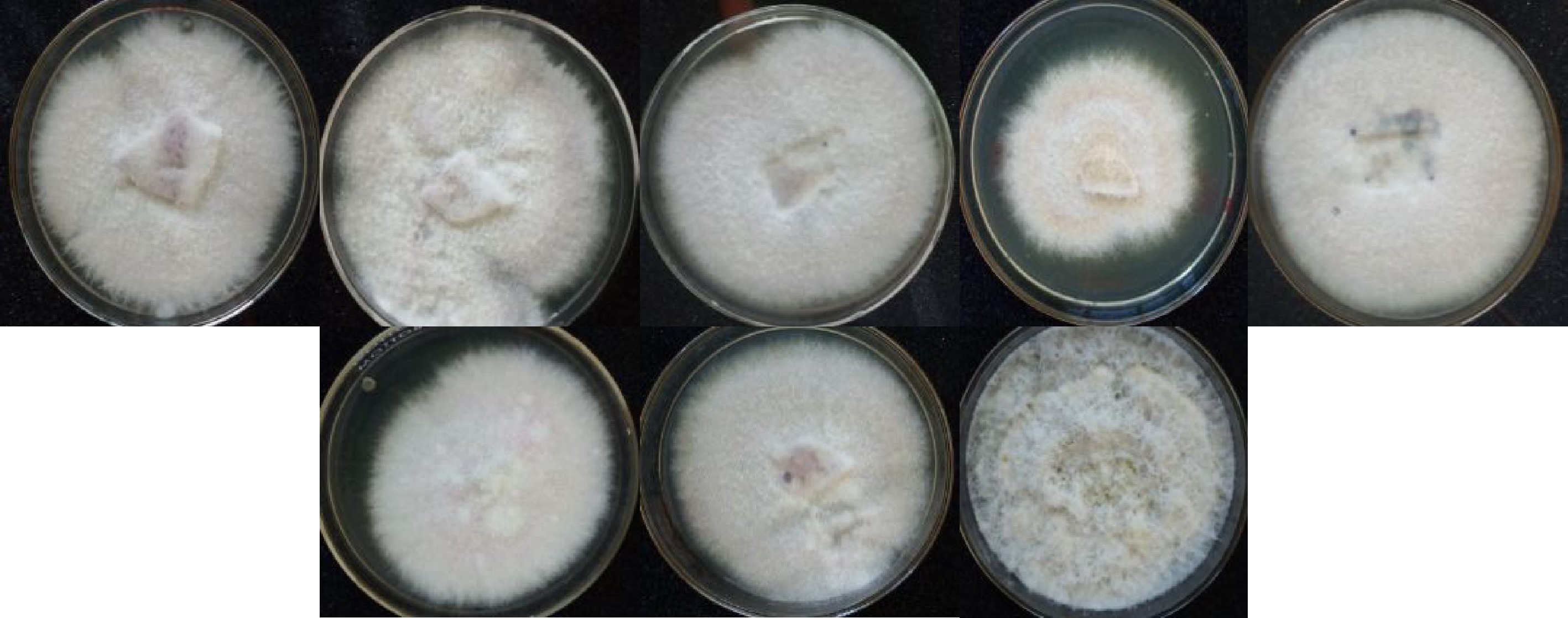
Figure 1.
Pure white-rot fungal isolates on PDA.
Solid state fermentation and fungal growth on different biomasses
-
All white-rot fungal isolates grew on all types of agricultural residues and the fungi mycelium colonized the substrate (Fig. 2).
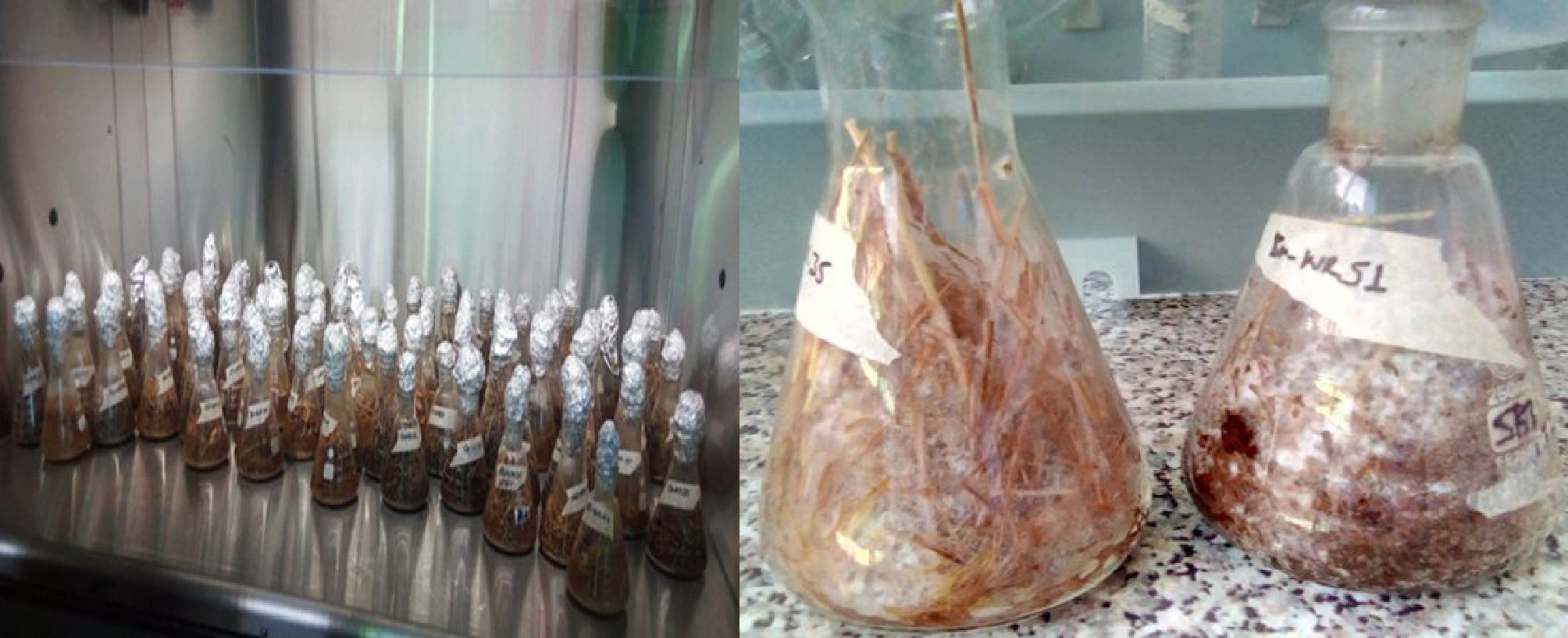
Figure 2.
Solid state fermentation of agricultural residues and fungal growth on the biomass.
Morphological identification of white-rot fungal isolates
-
Based on their morphological traits (colony growth rate, surface and reverse pigmentation on potato dextrose agar and hyphal characteristics) white-rot fungal isolates were tentatively identified at the genus level. Strong saprophytic potential was demonstrated by all isolates' extremely rapid radial growth, which resulted in the formation of well-developed colonies in a brief incubation period. The isolates were assigned to the genera Pycnoporus (WR-62), Trametes (WR-25), Trametes versicolor (WR-80 and WR-51), Lentinus spp. (WR-18), Ganoderma spp. (WR-35), and Phanerochaete chrysosporium (WR-14) (Table 1).
Table 1. Morphological characteristics of white-rot fungal isolates.
Fungal isolates Colony morphology on PDA Hyphal system Genus Top and reverse image on PDA WR-62 Growth rate: very fast;
Colony color (top): white, cottony;
Reverse pigmentation: bright orange-redTrimitic Pycnoporus 
WR-25 Growth rate: very fast;
Colony color (top): white, fluffy;
Reverse pigmentation: reddish-brownTrimitic Trametes 
WR-80 Growth rate: very fast;
Colony color (top): white, fluffy;
Reverse pigmentation: yellowishTrimitic Trametes versicolor 
WR-18 Growth rate: very fast;
Colony color (top): fluffy white mycelium with a pale yellow-green tinge;
Reverse pigmentation: from dark in the center to lighter at the edgesDimitic Lentinus species 
WR-35 Growth rate: very fast;
Colony color (top): white, fluffy mycelium in the center with a smooth outer edge;
Reverse pigmentation: orange and reddish huesTrimitic Ganoderma species 
WR-14 Growth rate: very fast;
Colony color (top): fluffy, white, radial mycelial with a darker center;
Reverse pigmentation: orange to reddish colorMonomitic Phanerochaete chrysosporium 
WR-51 Colony color (top): white, fluffy mycelium;
Reverse pigmentation: light yellowTrimitic Trametes versicolor 
Chemical composition of treated and untreated agricultural residues
-
This study focused on the different changes that took place in the chemical composition of five agricultural residues including sugarcane bagasse, barley straw, wheat straw, teff straw and grass straw when treated with various white-rot fungal (WRF) isolates. The main goal of fungal treatment was to increase the digestibility of these lignocellulosic materials by degrading lignin selectively and leaving the structural carbohydrates intact or with minimal changes. The results indicated that the agricultural residues processed with WRF isolates were indeed significantly modified in their chemical composition and invitro digestibility, wherein the improvement in the contents of ash, NDF, ADF, ADL, and IVDMD was clearly shown.
The chemical composition of sugarcane bagasse was highly influenced by the treatment of different white-rot fungal (WRF) isolates (Table 2). The DM content reduced from 49.12% in the untreated control to 44.62% in the WR-62 treatment. There was a slight increase in the ash content across most treatments, while NDF and ADF values revealed moderate reductions. The ADL content reduced in all the fungal treatments, with the lowest values recorded for WR-18 and WR-62 at 7.57% and 7.56%, respectively. On the contrary, IVDMD significantly improved, increasing from 47.28% in the control to 49.93% in the WR-35-treated bagasse. This is evidence that compositional changes took place in the sample, especially regarding the distribution of lignin and fiber fractions, due to the application of these fungi.
Table 2. Effect of white-rot fungal treatment on chemical composition sugarcane bagasse.
Treatments Chemical composition (g/100 g DM) DM Ash NDF ADF ADL IVDMD WR-35 45.63 ± 0.17bcd 8.00 ± 0.21ab 84.425 ± 1.63bc 45.63 ± 0.71bcd 7.93 ± 0.1bc 49.93 ± 0.35a WR-14 45.36 ± 0.08bcd 7.39 ± 0.28b 85.765 ± 0.06ab 45.36 ± 0.28bcd 7.985 ± 0.15bc 49.51 ± 1.1ab WR-80 46.42 ± 0.09b 7.635 ± 0.15ab 84.73 ± 0.23abc 46.42 ± 0.2b 8.02 ± 0.14b 49.68 ± 0.92ab WR-18 45.375 ± 0.07bcd 6.225 ± 0.12c 83.765 ± 0.29c 45.375 ± 0.11bcd 7.57 ± 0.0d 48.44 ± 0.13bc WR-62 44.62 ± 0.17d 8.405 ± 0.66a 83.595 ± 0.06c 44.625 ± 0.77d 7.565 ± 0.01d 49.13 ± 0.06ab WR-25 45.14 ± 0.3cd 7.475 ± 0.57b 84.41 ± 0.28bc 45.14 ± 0.85cd 7.56 ± 0.05d 49.13 ± 0.52ab WR-51 46.17 ± 0.13bc 7.745 ± 0.25ab 84.39 ± 0.31bc 46.17 ± 0.01bc 7.80 ± 0.08c 48.81 ± 0.16ab Untreated 49.12 ± 0.3a 5.25 ± 0.35d 85.88 ± 0.17a 49.12 ± 0.27a 8.785 ± 0.04a 47.28 ± 0.59c The same superscript lowercase letters on the top right side within columns indicate that the values are not significantly different, whereas different superscript letters indicate that the values are significantly different at p < 0.05. This investigation showed that the untreated barley demonstrated high NDF (87.05%), ADF (48.79%), and ADL (7.94%) contents, in contrast to the treated one, which had significantly low values of these components. The lowest ADF and ADL values were in WR-80 at 40.51% and 6.66%, respectively. Hence, IVDMD improved significantly, and the highest digestibility of 47.41% was recorded for WR-14 (Table 3).
Table 3. Effect of white-rot fungal treatment on chemical composition of barley straw.
Treatments Chemical composition (g/100 g DM) DM Ash NDF ADF ADL IVDMD WR-35 91.60 ± 0.17bc 7.54 ± 0.16b 83.25 ± 0.23c 43.780 ± 0.64bc 6.905 ± 0.08cd 45.49 ± 0.21d WR-14 91.975 ± 0.18b 9.85 ± 0.41a 85.485 ± 0.6ab 42.56 ± 2.83bc 7.46 ± 0.03b 47.40 ± 0.45a WR-80 91.165 ± 0.28c 7.29 ± 0.03bc 81.045 ± 1.08d 40.505 ± 1.49c 6.655 ± 0.01d 45.745 ± 0.32cd WR-18 91.38 ± 0.51bc 7.98 ± 0.72b 82.91 ± 0.42c 43.025 ± 0.97bc 6.985 ± 0.25cd 46.795 ± 0.01ab WR-62 91.465 ± 0.35bc 7.68 ± 0.40b 82.945 ± 0.78c 42.01 ± 0.76bc 6.815 ± 0.04cd 45.99 ± 0.24cd WR-25 91.42 ± 0.25bc 7.58 ± 0.11b 83.88 ± 1.24bc 43.89 ± 0.93b 7.075 ± 0.21c 46.30 ± 0.04bc WR-51 91.77 ± 0.07bc 6.685 ± 0.16c 82.935 ± 0.35c 44.22 ± 0.65b 6.955 ± 0.01cd 45.90 ± 0.49cd Untreated 93.45 ± 0.04a 5.715 ± 0.2d 87.05 ± 0.41a 48.79 ± 0.028a 7.94 ± 0.24a 40.99 ± 0.48e The same superscript lowercase letters on the top right side within columns indicate that the values are not significantly different, whereas different superscript letters indicate that the values are significantly different at p < 0.05. According to Table 4, white-rot fungal treatment decreased NDF, ADF, and ADL content of wheat straw from the highest values in untreated straw (NDF 89.51%, ADF 49.63%, and ADL 7.08%) to lower levels in treated samples (e.g., ADL 6.31% in WR-18). The IVDMD increased from 38.34% (untreated) to 46.39% (WR-14).
Table 4. Effect of white-rot fungal treatment on chemical composition of wheat straw.
Treatments Chemical composition (g/100 g DM) DM Ash NDF ADF ADL IVDMD WR-35 91.825 ± 0.62b 10.55 ± 0.81ab 85.245 ± 2.99b 47.82 ± 0.06bc 6.82 ± 0.14ab 45.855 ± 0.29ab WR-14 92.07 ± 0.49b 10.08 ± 0.01abc 86.96 ± 0.51ab 47.34 ± 0.33bcd 6.775 ± 0.06abc 46.39 ± 0.0a WR-80 91.905 ± 0.23b 10.88 ± 0.38ab 86.655 ± 0.11b 47.82 ± 0.28bc 6.485 ± 0.05cd 45.955 ± 0.19ab WR-18 91.795 ± 0.15b 10.54 ± 0.82ab 84.675 ± 1.07b 46.61 ± 0.76cd 6.305 ± 0.13d 46.30 ± 0.13a WR-62 91.76 ± 0.20b 11.00 ± 0.64a 86.815 ± 0.11ab 47.885 ± 0.06b 6.59 ± 0.01bcd 46.105 ± 0.30ab WR-25 91.770 ± 0.07b 9.78 ± 0.08bc 85.94 ± 0.54b 46.465 ± 0.77d 6.60 ± 0.13bcd 45.50 ± 0.16b WR-51 91.630 ± 0.13b 9.245 ± 0.47c 85.00 ± 0.74b 46.465 ± 0.77d 6.51 ± 0.26bcd 45.75 ± 0.17ab Untreated 93.15 ± 0.37a 8.905 ± 0.05c 89.51 ± 1.02a 49.63 ± 0.13a 7.08 ± 0.18a 38.34 ± 0.81c The same superscript lowercase letters on the top right side within columns indicate that the values are not significantly different, whereas different superscript letters indicate that the values are significantly different at p < 0.05. Teff straw treated with white-rot fungal isolates showed reductions in all fiber components, while untreated straw demonstrated high fiber fractions (NDF: 82.77%, ADF: 47.23%, ADL: 6.97%). The lowest lignin content (5.59%) was recorded in WR-51, and the highest IVDMD (47.26%) in WR-80 (Table 5).
Table 5. Effect of white-rot fungal treatment on chemical composition of teff straw.
Treatments Chemical composition (g/100 g DM) DM Ash NDF ADF ADL IVDMD WR-35 91.105 ± 0.19b 6.705 ± 0.25c 80.33 ± 0.76bc 42.93 ± 0.81c 5.595 ± 0.09d 45.885 ± 0.32b WR-14 91.17 ± 0.18b 7.360 ± 0.41bc 82.555 ± 1.45a 44.12 ± 0.76bc 6.180 ± 0.27bc 46.325 ± 0.06ab WR-80 91.06 ± 0.29b 7.705 ± 0.08b 82.05 ± 1.56ab 43.485 ± 1.14bc 5.690 ± 0.08d 47.26 ± 1.30a WR-18 91.20 ± 0.12b 7.15 ± 0.37bc 79.495 ± 0.71c 43.695 ± 0.33bc 5.860 ± 0.03cd 46.085 ± 0.30ab WR-62 91.215 ± 0.03b 7.155 ± 0.39bc 80.805 ± 0.67abc 44.67 ± 0.30b 5.890 ± 0.03cd 45.955 ± 0.30b WR-25 91.28 ± 0.02b 7.790 ± 0.03b 82.205 ± 0.60ab 46.635 ± 0.46a 6.305 ± 0.09b 45.775 ± 0.08b WR-51 91.07 ± 0.02b 8.770 ± 0.16a 81.24 ± 0.37abc 43.22 ± 0.01bc 5.585 ± 0.09d 45.675 ± 0.06b Untreated 94.33 ± 0.16a 4.60 ± 0.62d 82.765 ± 0.45a 47.225 ± 0.49a 6.965 ± 0.37a 43.06 ± 0.54c The same superscript lowercase letters on the top right side within columns indicate that the values are not significantly different, whereas different superscript letters indicate that the values are significantly different at p < 0.05. When compared to other residues, grass straw demonstrated the most pronounced improvement in IVDMD, reaching 58.11% in WR-80-treated samples compared to 49.94% in the untreated control. The reduction in ADL (from 7.22% to 6.15%) and moderate decreases in NDF and ADF support the conclusion that WR-80 has a potent delignification capacity (Table 6).
Table 6. Effect of white-rot fungal treatment on chemical composition of grass straw.
Treatments Chemical composition (g/100 g DM) DM Ash NDF ADF ADL IVDMD WR-35 89.00 ± 0.20c 7.09 ± 0.08bc 69.775 ± 0.74d 40.995 ± 0.39c 6.51 ± 0.1bc 55.125 ± 1.12cd WR-14 89.255 ± 0.29bc 10.98 ± 0.96a 71.045 ± 1.32cd 40.44 ± 0.04c 6.81 ± 0.04b 57.16 ± 0.21ab WR-80 89.65 ± 0.10bc 7.795 ± 0.45bc 72.255 ± 0.42bc 40.935 ± 0.56c 6.15 ± 0.07e 58.11 ± 0.62a WR-18 89.36 ± 0.20bc 7.02 ± 0.27bc 69.55 ± 1.24d 40.90 ± 0.04c 6.505 ± 0.12bcd 55.855 ± 0.77bc WR-62 89.50 ± 0.33bc 7.86 ± 0.13b 71.39 ± 1.70bcd 40.66 ± 0.58c 6.19 ± 0.03de 54.075 ± 0.74de WR-25 90.325 ± 1.4b 6.86 ± 0.03c 69.925 ± 0.36d 40.72 ± 0.25c 6.285 ± 0.01cde 54.60 ± 0.66cde WR-51 89.86 ± 0.11bc 7.29 ± 0.2bc 73.415 ± 0.13ab 42.24 ± 0.20b 6.305 ± 0.02cde 53.28 ± 0.57e Untreated 92.68 ± 0.49a 5.72 ± 0.3d 74.54 ± 0.65a 47.815 ± 0.21a 7.215 ± 0.35a 49.94 ± 0.41f The same superscript lowercase letters on the top right side within columns indicate that the values are not significantly different, whereas different superscript letters indicate that the values are significantly different at p < 0.05. Effect of white-rot fungal treatment on hemicellulose content of agricultural residues
-
This finding showed that the white-rot fungal treatment significantly reduced the hemicellulose content of all types of agricultural residues treated (Fig. 3). Hemicellulose degradation varied with fungal isolate and substrate type, indicating a selective enzymatic depolymerization of hemicellulosic components by fungi.
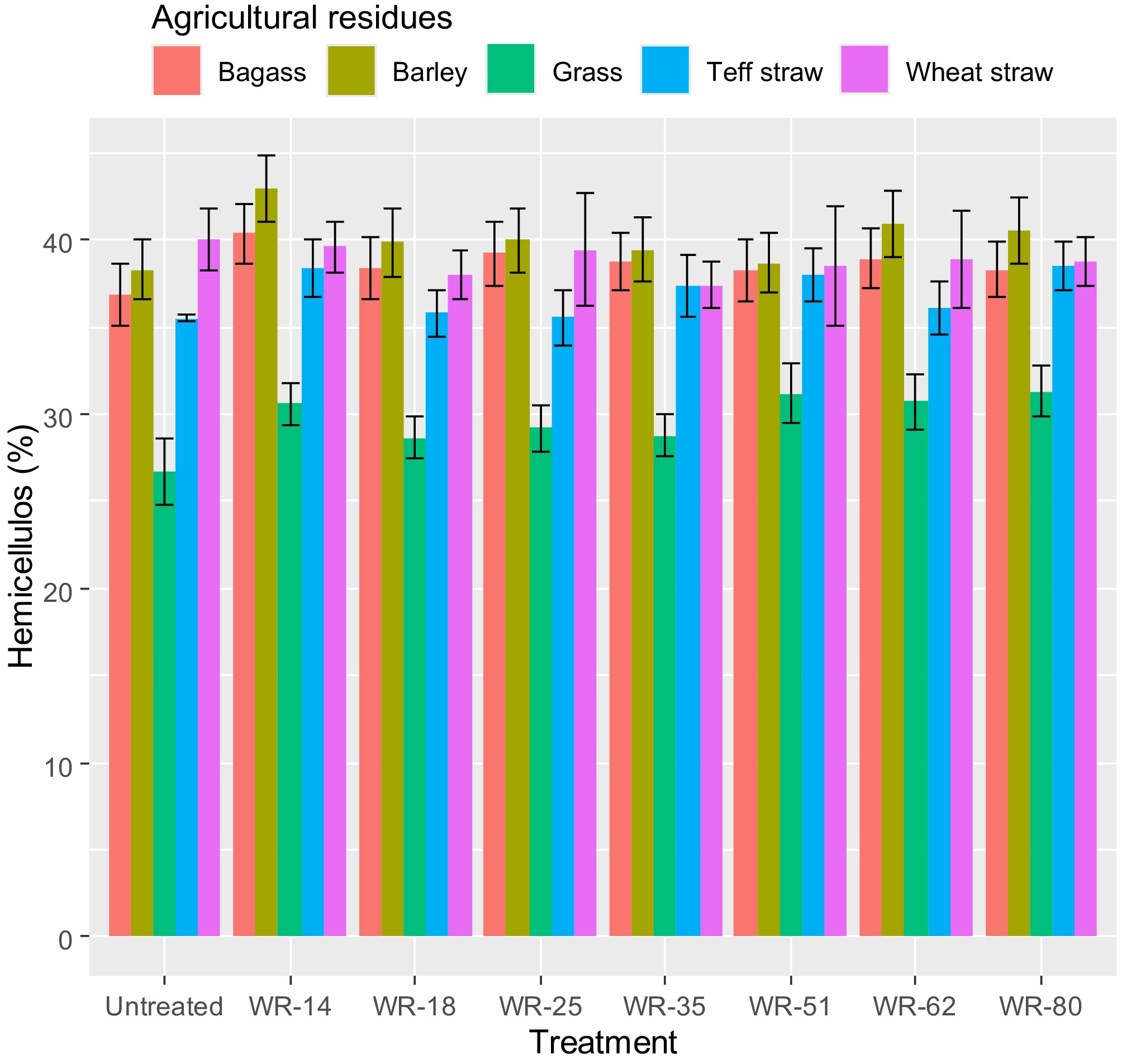
Figure 3.
Effect of white-rot fungal treatment on hemicellulose content of agricultural residues.
Effect of white-rot fungal treatment on cellulose content of agricultural residues
-
Treatment of lignocellulosic biomass with white-rot fungi showed a moderate reduction in cellulose content as presented in Fig. 4. Cellulose degradation was comparatively lower than other cell wall components according to the present study.
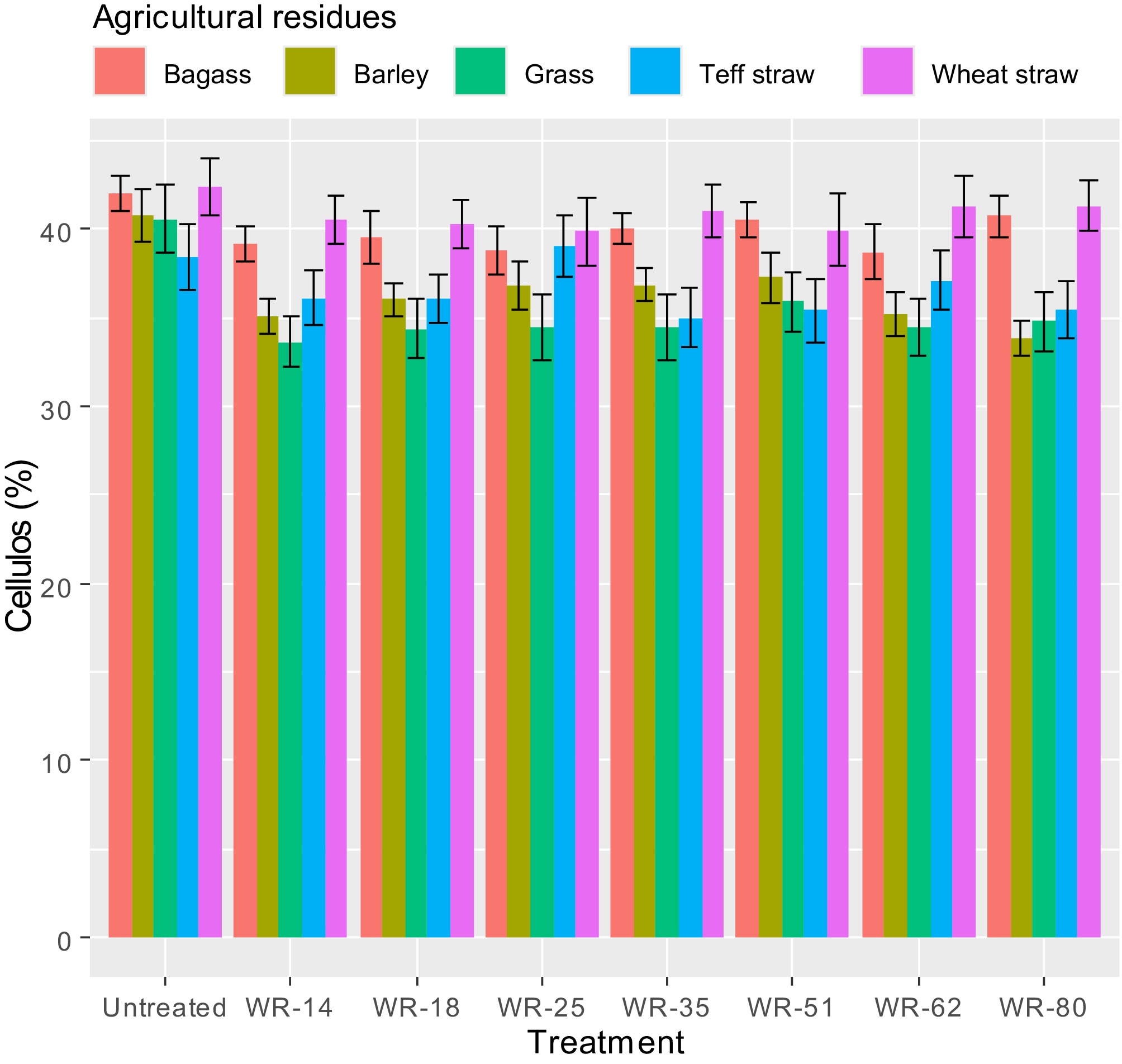
Figure 4.
Effect of white-rot fungal treatment on cellulose content of agricultural residues.
Effect of white-rot fungal treatment on crude protein content of agricultural residues
-
In our investigation, treatment of various agricultural residues with white-rot fungi significantly increased the crude protein content of the lignocellulosic biomasses (Fig. 5).
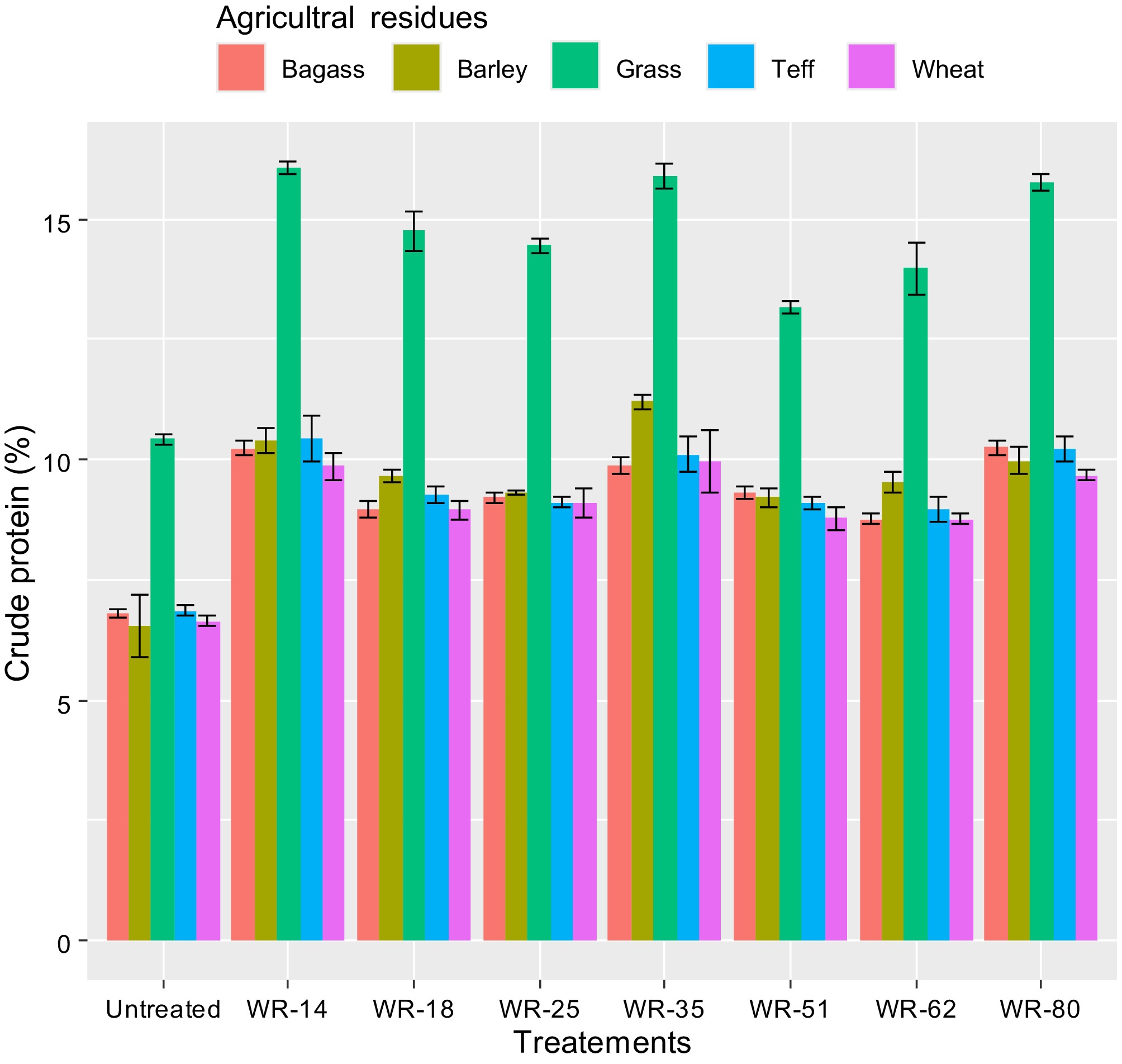
Figure 5.
Effect of white-rot fungal treatment on crude protein content of agricultural residues.
Fungal isolates and substrates interaction effect on chemical composition
-
Two-way ANOVA revealed that fungal isolate, substrate type, and their interaction significantly (p < 0.05) influenced fiber fractions, lignin concentration, crude protein (CP), ash, dry matter (DM) and invitro dry matter digestibility (IVDMD), confirming that the magnitude of nutritional improvement depended primarily on the compatibility between fungal physiology and substrate characteristics.
Biological treatment markedly reduced structural carbohydrates compared with untreated materials. The highest ADF values were observed in untreated wheat and sugarcane bagasse (~49.5%), whereas several fungal treatments particularly isolates applied to grass and bagasse reduced ADF to ~40%–44%, indicating substantial delignification. A similar pattern was detected for NDF, which declined from ~89.6% in untreated wheat to ~69%–73% in grass treated with selected isolates. ADL also decreased markedly, with untreated bagasse exhibiting the highest lignin (~8.79%), while fungal treatments reduced lignin to ~5.59%–6.10% (Fig. 6).
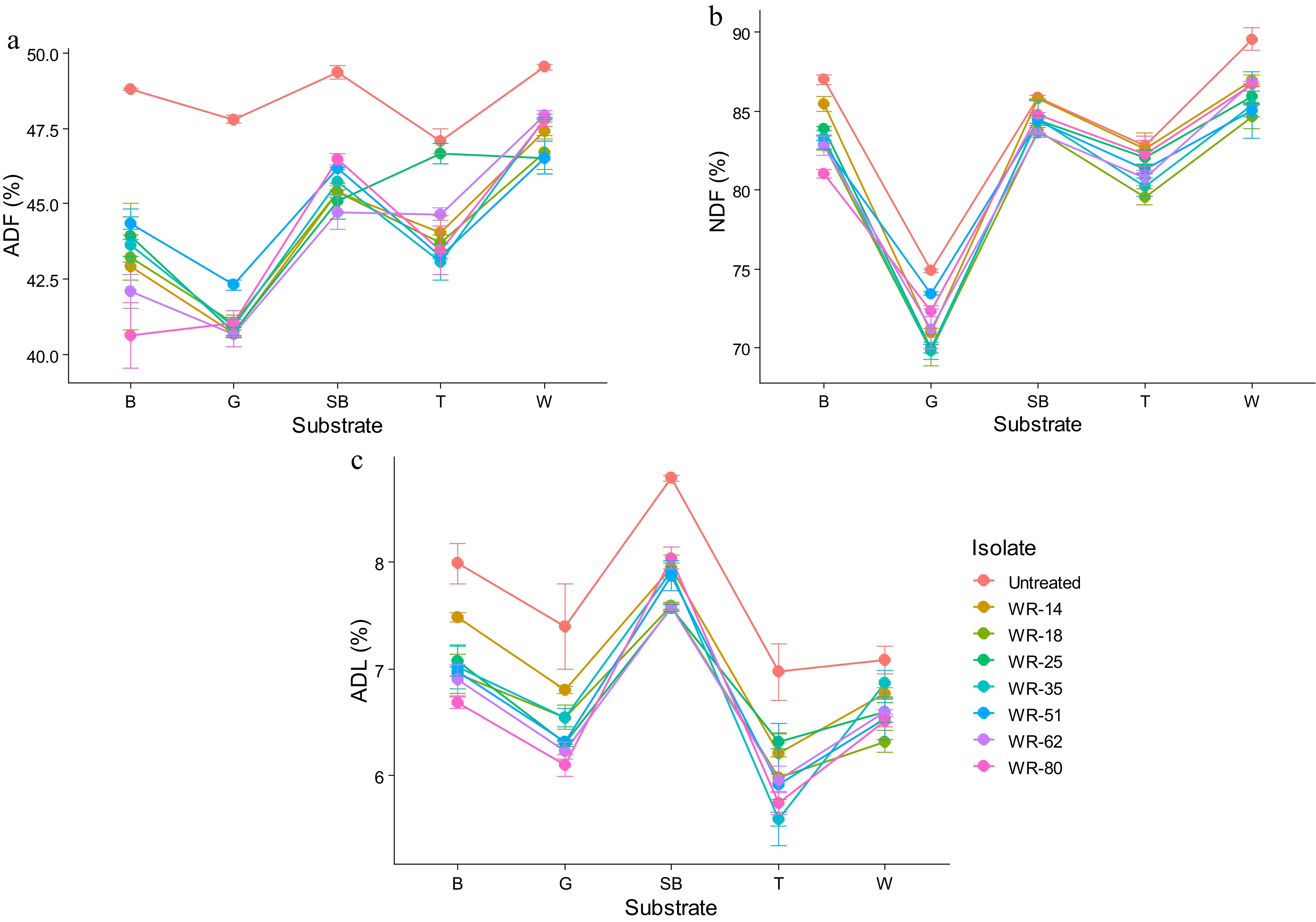
Figure 6.
Interaction effect of WRF isolates and substrates on fiber and lignin content: (a) ADF%, (b) NDF%, and (c) ADL%.
Fungal treatment substantially improved crude protein (CP) content across substrates. The highest concentration (~16%) occurred in fungus-treated grass, representing more than a twofold increase compared with untreated wheat (~6%–7%). Protein enrichment was less pronounced in cereal residues but remained consistently higher than untreated controls (Fig. 7). This increase likely reflects fungal biomass accumulation and nitrogen incorporation during solid-state fermentation.
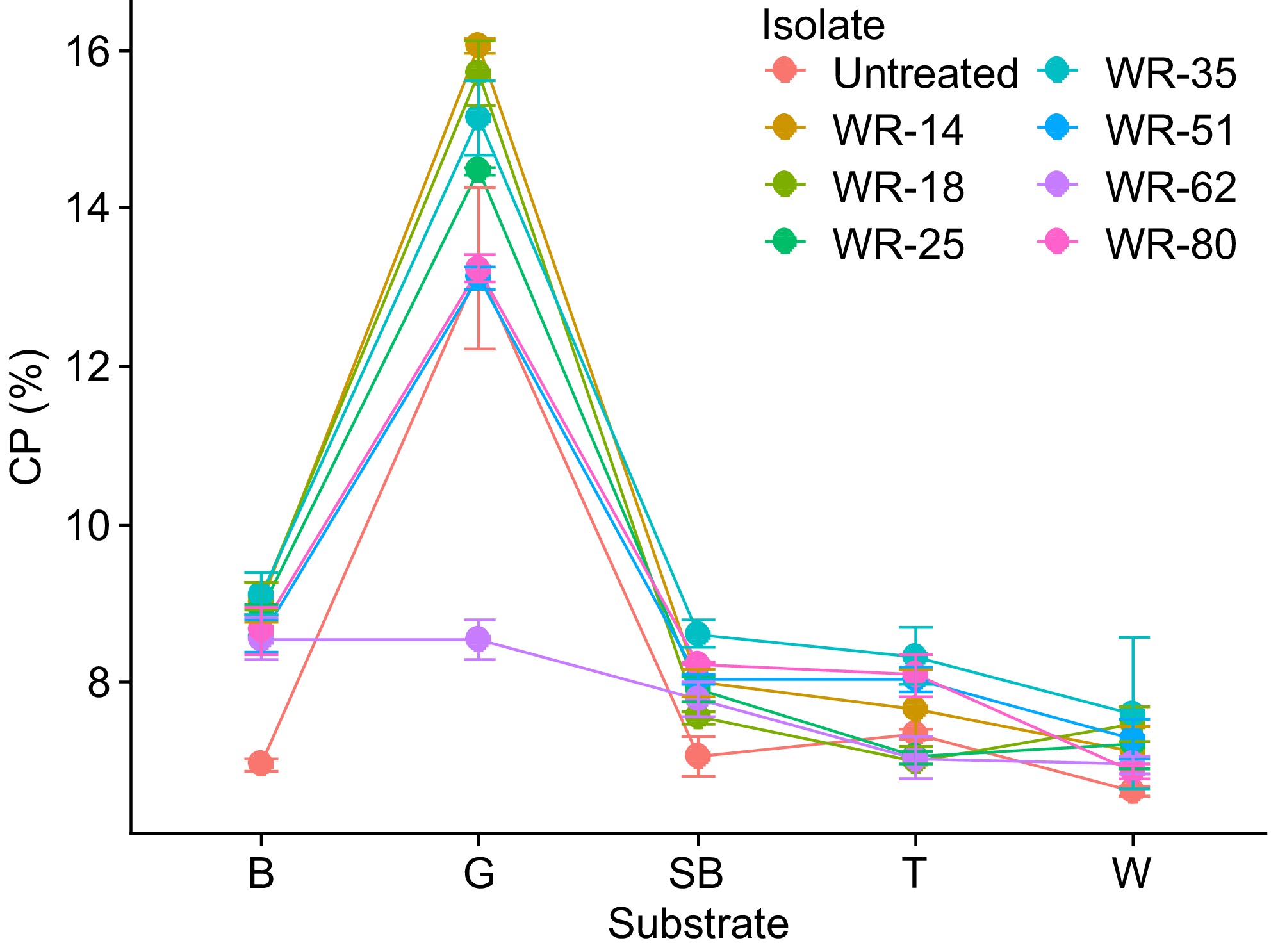
Figure 7.
Interaction effect of WRF isolates and substrates on protein content.
Ash concentration increased in most fungal-treated substrates, exceeding 11% in some wheat treatments while remaining below 6% in untreated materials. This pattern suggests progressive organic matter degradation accompanied by mineral concentration. Ash content increased in several treated substrates, reaching > 11% in fungus-treated wheat compared with < 6% in untreated grass and barley (Fig. 8).
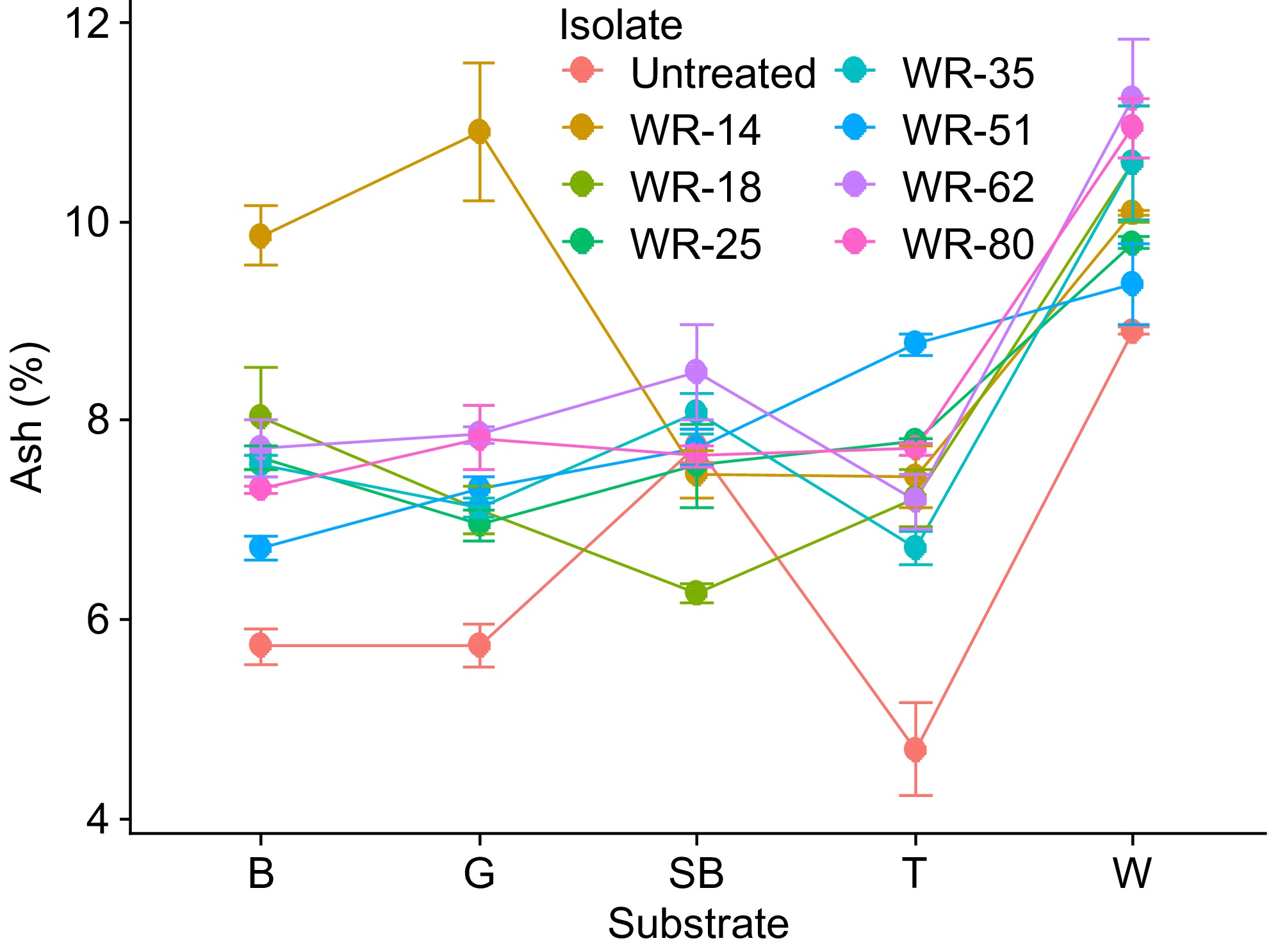
Figure 8.
Interaction effect of WRF isolates and substrates on ash content.
Untreated substrates exhibited the highest DM values (≈92%–95%), whereas fungal treatments slightly reduced DM (≈88%–92%) as shown in Fig. 9. The decline likely reflects metabolic losses as fungi utilize structural carbohydrates for growth. Such reductions are expected during fermentation because lignin degradation enables microorganisms to access energy substrates. Importantly, moderate DM loss is generally acceptable when accompanied by improvements in digestibility and protein content.
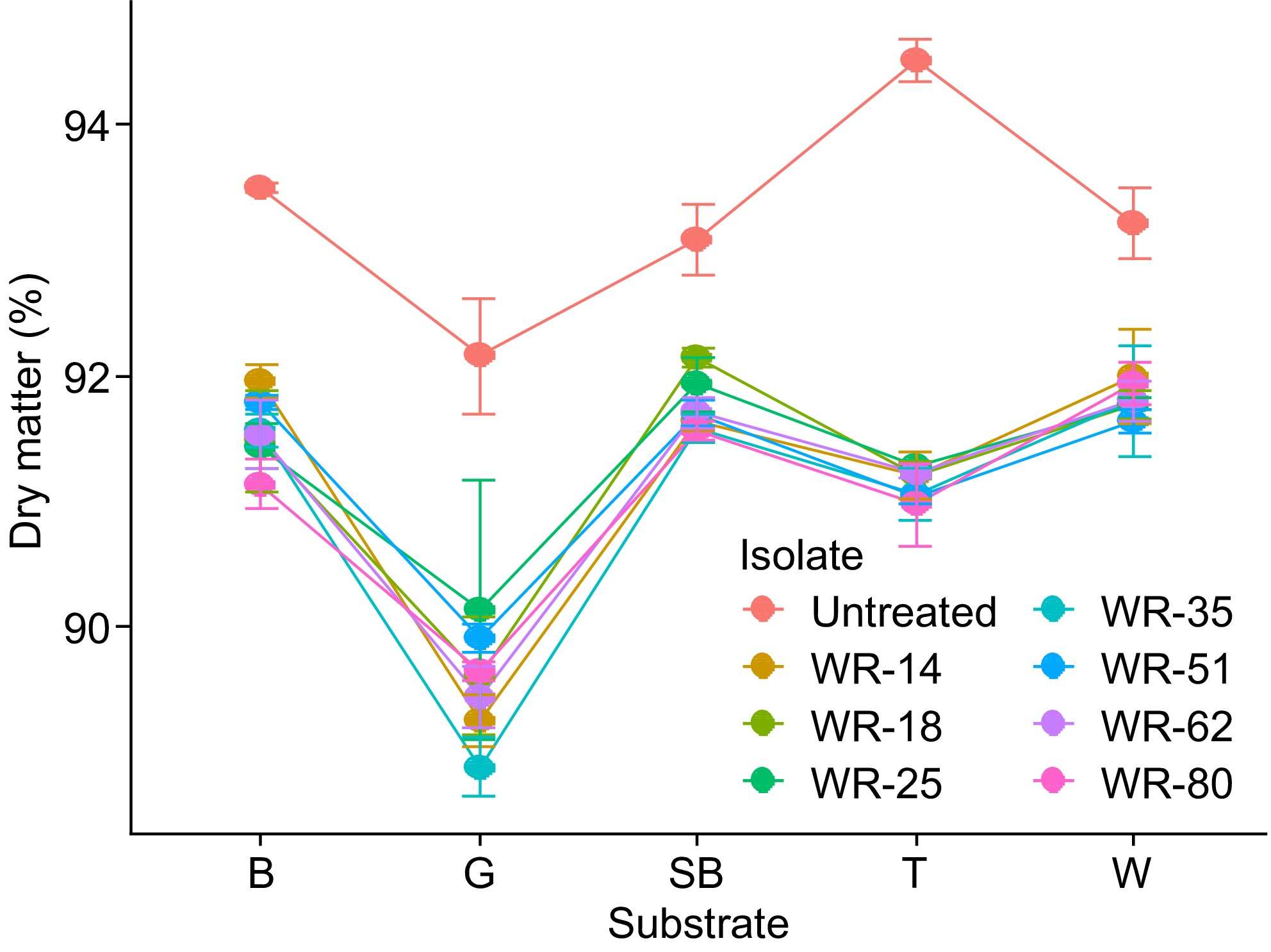
Figure 9.
Interaction effect of WRF isolates and substrates on DM content.
IVDMD responded strongly to fungal pretreatment. The highest digestibility (> 58%) was observed in treated grass, whereas untreated wheat remained the least digestible (~38%). Sugarcane bagasse and cereal straws exhibited intermediate improvements (Fig. 10). Collectively, these responses demonstrate a pronounced isolate × substrate interaction, with grass consistently supporting the greatest nutritional enhancement.
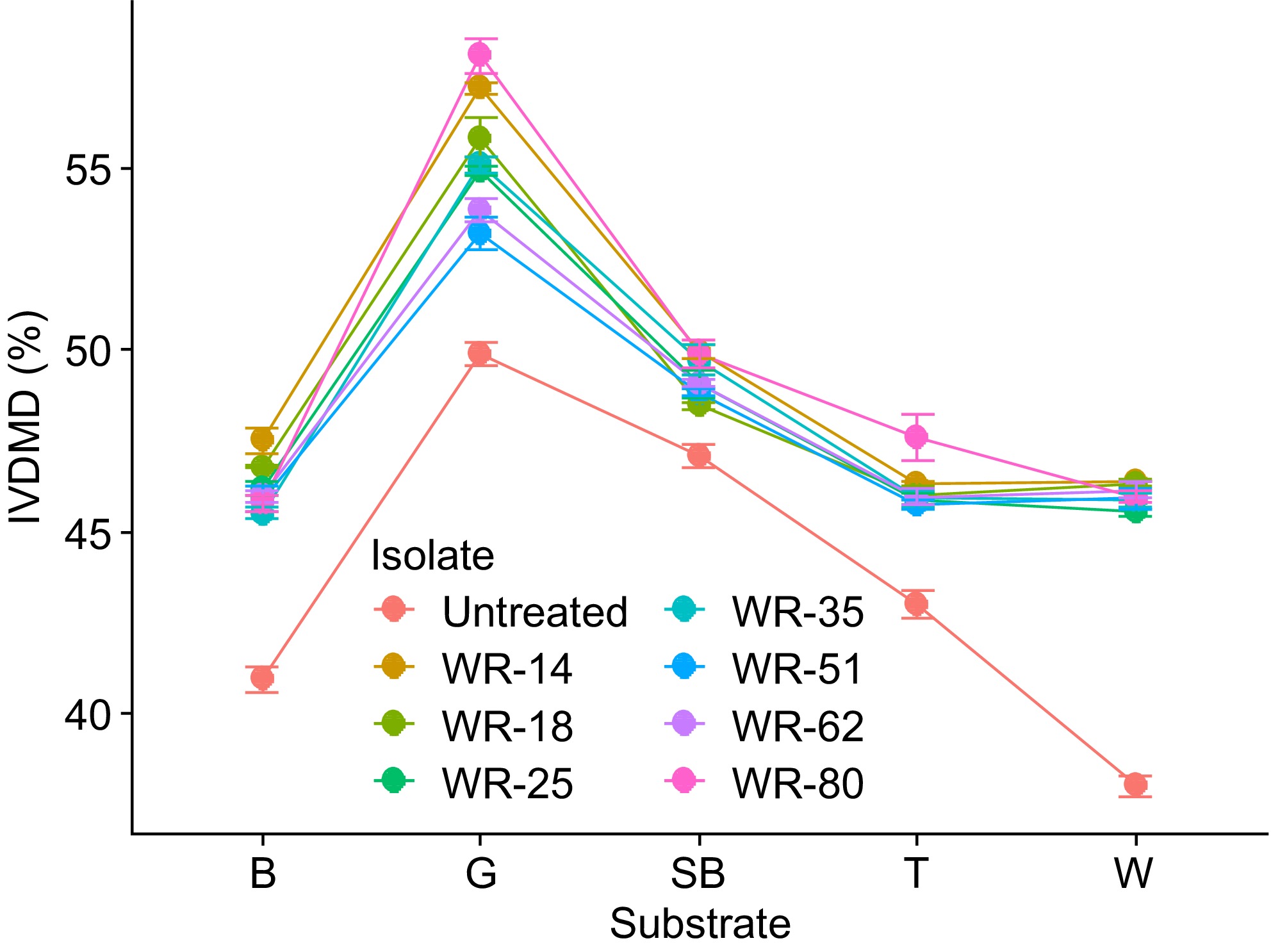
Figure 10.
Interaction effect of WRF isolates and substrates on IVDMD.
-
The improvements in white-rot fungal treated lignocellulosic residues suggest that WRF treatment changed their structural composition, which led to better digestibility. Consistent with this observation, Bento et al.[14] showed that treating agro-industrial residues with either Pleurotus ostreatus PLO06 or Lentinula edodes UFV73 drastically changed their chemical composition and boosted crude protein content, thereby enhancing invitro digestibility of neutral detergent fiber while decreasing the contents of lignin and structural carbohydrates. Based on this, it may be further inferred that mechanisms related to lignin degradation and preservation of carbohydrates also occurred in the present study, supporting the potential of WRF in biological pretreatment of agricultural residues.
The decreases in NDF, ADF and ADL after WRF treatment are indicative of effective partial delignification, which probably improved the accessibility of cellulose and hemicellulose to ruminal microbial enzymes. This improved degradability of fiber was also reflected in increased IVDMD values. The findings are in agreement with those obtained by Bento et al.[14], who showed that white-rot fungi are able to degrade both structural and non-structural components of lignocellulosic residues, such as sugarcane bagasse, reducing NDF, ADF, and lignin contents.
The results of present study indicate that white-rot fungi improved the nutritional value of barley straw through the selective degradation of lignin. Wang et al.[15] reported the ability of white-rot fungal treatment to degrade lignocellulose and reduce the lignin content of highland barley straw, increase the levels of crude protein, and improve nutritional quality.
The reduction in fibre fractions and increase in IVDMD of treated wheat straw observed in this study agree with those reported by Niu et al.[16], indicating that white-rot fungal pretreatment of wheat straw improved organic matter degradability and reduced methane production. In addition, van Erven et al.[17] confirmed that Ceriporiopsis subvermispora and Lentinula edodes selectively degrade lignin in wheat straw without causing substantial loss of carbohydrates. The improved digestibility observed clearly indicates that fungal enzymatic activity indeed disrupted the lignin-carbohydrate complexes sufficiently, improving cell wall degradability. In agreement with these findings, Shrivastava et al.[12] also found that fungal treatment of wheat straw significantly (p < 0.05) reduced all cell wall constituents, including ADF, NDF, hemicellulose, lignin, and cellulose.
The present study has shown that treatment of teff straw with white-rot fungal isolates significantly reduced key fiber components (NDF, ADF, and ADL) and improved invitro dry matter digestibility (IVDMD). Straw without treatment had high fractions of fiber, hence accessibility to rumen microbes was negligible and the nutritive value correspondingly low. In contrast, one of the isolates (WR-51) resulted in a minimum lignin (ADL) content of 5.59%, while another (WR-80) resulted in the highest IVDMD of 47.26%. All improvements are in good agreement with expectations for the mode of action of white-rot fungi. Overall, these results suggest that the application of white-rot fungi can be a practical strategy to upgrade teff straw as ruminant feed by reducing lignin content and enhancing digestibility.
WR-80 treatment significantly improved the IVDMD of grass straw, reflecting enhanced microbial accessibility. The reduction in ADL and moderate decreases in NDF and ADF indicate effective delignification and partial fiber breakdown. Grass straw responded better than other residues, likely due to its cell wall composition. These results demonstrate WR-80's potential to improve forage digestibility, warranting further optimization and invivo evaluation.
This finding aligns with several recent studies. For instance, Zhao et al.[18] reported that fermentation of corn straw with white-rot fungi (Pleurotus eryngii or Lentinus edodes) for 28 d degraded lignin and improved nutritional value of corn straw feed. Similarly, Thomsen et al.[19] demonstrated that a combination of the ensiling and white-rot fungal treatments of wheat straw efficiently reduced lignin content and increased enzymatic sugar release, thereby enabling an ethanol yield of 66%. These results also point out the selectivity of fungi in removing lignin and hemicellulose while partially preserving cellulose, which is useful for improving feed quality. White-rot fungi generally have a selective ligninolytic system that prefers the degradation of lignin and hemicellulose over cellulose. Similarly, Khan et al.[20] reported that different white-rot fungal species such as Ceriporiopsis subvermispora, Lentinula edodes, and Pleurotus eryngii achieve selective lignin degradation with minimal carbohydrate loss, markedly improving nutritional quality and fermentation efficiency.
The enhancement of the protein might result from the addition of fungal mycelia to the substrate while colonizing adding nitrogenous substances, and increasing the overall protein profile. Various findings agree with this observation. For example, in a study by Olagunju et al., treatment of sorghum straw with white-rot fungal species (Pleurotus ostreatus, P. djamor, and Trametes versicolor) increased crude protein content by 68%–330%[21]. Similarly, Wang et al.[15] reported that solid-state fermentation of highland barley straw with white-rot fungi (Pleurotus species) significantly increased crude protein, soluble protein and non-protein nitrogen fractions.
The variation among fungal isolates in this study indicates differences in enzymatic profiles and degradation methods. Some caused higher dry matter loss due to their aggressive attack, while some had selective lignin depletion but negligible reduction in carbohydrates, an important criterion for feed improvement. Among the isolates tested, WR-14, WR-18, WR-35 and WR-80 were found to perform satisfactorily, especially in grass substrate.
The isolate WR-80, identified as Trametes versicolor, proved to be the best performer in terms of balance and effectiveness on multiple parameters showing marked reduction in fiber fractions and the highest increase in digestibility, thus signifying its potent lignocellulolytic activity. While WR-35 was able to produce the lowest ADL value, WR-80 provided the best overall improvement by enhancing digestibility along with a reduction in structural fraction. The response of different substrates to fungal attack also seemed to vary, with grass straw showing a relatively higher increase in digestibility due to variations in cell wall composition and/or lignin structure affecting colonization and enzymatic action[22].
In summary, the results show that the white-rot fungal pretreatment has great promise for improving lignocellulosic agricultural residues. White-rot fungal pretreatment, being an environmentally clean and safe technology, efficiently degrades lignin, enhances protein content, and improves the digestibility of agricultural residues, and so has the potential to improve livestock feed with WR-80 (Trametes versicolor) showing maximum efficacy. However, further scale-up and invivo experiments should be performed to demonstrate the actual applicability of this technology on the feeding characteristics and impact on animals during feeding trials.
-
In conclusion, this study demonstrates that pretreatment with white-rot fungi effectively enhances the nutritional quality of various agricultural residues by reducing lignin content, partially degrading cellulose and hemicellulose, and significantly increasing crude protein levels. The findings highlight the potential of white-rot fungi as biological agents for improving the feed value of lignocellulosic agricultural by-products. Among the tested isolates, WR-14, WR-80 and WR-35 consistently exhibited superior performance in lignin degradation and in vitro dry matter digestibility (IVDMD) enhancement, identifying them as promising candidates for sustainable animal feed production. The selective delignification observed is particularly advantageous for ruminant feed, as it increases the availability of fermentable carbohydrates while minimizing biomass loss. Biological pretreatment approaches offer a cost-effective and environmentally friendly alternative to chemical delignification and hold significant potential for enhancing the nutritional quality of agricultural residues. Future research should focus on the molecular characterization of effective white-rot fungi, optimization of treatment conditions, and scaling up production for practical animal feed applications.
The authors would like to acknowledge the Ethiopian Institute of Agricultural Research, Addis Ababa, Ethiopia for funding this research.
-
The present study did not include any experiments involving humans or animals.
-
The authors confirm their contributions to the paper as follows: study conception, data collection, laboratory experiments, manuscript drafting, and data analysis and interpretation were conducted by Abena T; data collection and laboratory experiments were carried out by Bekele M; sample collection and laboratory work were performed by Tadesse T; and manuscript review and editing were undertaken by Workie M. All authors reviewed the results and approved the final version of the manuscript.
-
All data generated or analyzed during this study are included in this published article.
-
The authors declare that they have no conflict of interest.
- Copyright: © 2026 by the author(s). Published by Maximum Academic Press on behalf of Nanjing Agricultural University. This article is an open access article distributed under Creative Commons Attribution License (CC BY 4.0), visit https://creativecommons.org/licenses/by/4.0/.
-
About this article
Cite this article
Abena T, Bekele M, Tadesse T, Workie M. 2026. Improvement of nutrient composition and digestibility of lignified crop residues using white-rot fungus. Animal Advances 3: e030 doi: 10.48130/animadv-0026-0016 

Improvement of nutrient composition and digestibility of lignified crop residues using white-rot fungus
- Received: 22 November 2025
- Revised: 20 March 2026
- Accepted: 24 April 2026
- Published online: 02 November 2026
Abstract: White-rot fungi have the remarkable ability to selectively degrade lignin, thereby enhancing the nutritional quality of lignified plant biomass for ruminants. This delignification process improves the accessibility and degradability of polysaccharides, which are key limitations in the efficient conversion of lignocellulosic materials into biofuels, biochemicals, and animal feed. However, the selectivity and time efficiency of fungal delignification still require further investigation through solid-state fermentation and optimization of pretreatment conditions for different biomass types. The present study aimed to evaluate the capacity of white-rot fungi to degrade various lignocellulosic biomasses and assess their effect on the chemical composition and in vitro digestibility of agricultural residues. Five types of residues including sugarcane bagasse, barley straw, teff straw, wheat straw, and grass straw were subjected to solid-state fermentation (SSF) with seven white-rot fungal isolates (WR-35, WR-14, WR-80, WR-25, WR-18, WR-62, and WR-51) for 21 d. The chemical composition of each fermented substrate was then analyzed. The findings indicated that white-rot fungal treatments significantly altered both the chemical composition and in vitro digestibility of the agricultural residues. All fungal isolates notably increased crude protein (CP), ash content, and in vitro dry matter digestibility (IVDMD), while reducing neutral detergent fiber (NDF), acid detergent fiber (ADF), and acid detergent lignin (ADL) levels. Among the tested isolates, WR-14, WR-18, WR-35, and WR-80 showed superior performance, particularly on grass substrates. Notably, Trametes versicolor (WR-80) exhibited the most balanced effect, significantly reducing fiber fractions and enhancing digestibility. Substrate-dependent responses, with greater improvements observed in grass straw. Overall, white-rot fungal pretreatment, is an effective and environmentally sustainable approach for upgrading lignocellulosic residues into improved livestock feed, though further optimization and in vivo validation are needed.
-
Key words:
- Agricultural residues /
- Chemical Composition /
- Lignocellulosic biomass /
- White rot fungi