












-
Tea plant [Camellia sinensis (L.) O. Kuntze] is a globally significant economic crop, and improvements in its cultivation are critical to the sustainability of the industry. As a major producer and consumer of high-quality green tea[1], the widespread and aggressive weed infestation in China presents a substantial challenge to tea garden management[2]. Weeds in tea gardens exhibit rapid growth and strong competitiveness, depriving tea plants of water, nutrients, and light, which inhibits plant development and reduces product quality, thereby threatening the productivity and profitability of the tea industry[2−4].
Conventional weed management in young tea gardens relies mainly on tillage and manual weeding—methods that are labor-intensive, require repeated application, and incur high costs. Chemical herbicides offer an efficient alternative, but their long-term use raise serious concerns, including the evolution of herbicide-resistant weed populations[5] and the risk of excessive residues in soil and tea products[6], conflicting with the goals of ecological sustainability and food safety. Consequently, ecologically based weed management strategies, particularly intercropping systems, have become essential for the sustainable development of the tea industry.
In recent years, ecological weed control practices in tea gardens, such as artificial mulching and green manure intercropping, have attracted increasing attention, with numerous studies and practical applications reported worldwide[7−9]. Artificial mulching (e.g., plastic film, weed barrier fabric, or rice straw) and green manure intercropping can effectively inhibit weed growth[10,11], while also enhancing soil enzyme activity and promoting tea bud sprouting and plant growth[12,13]. Compared with artificial mulching, green manure intercropping offers additional benefits, including reduced soil bulk density and compaction, improved soil structure and thus greater long-term sustainability. Leguminous green manure intercropping, for instance, has been widely used in tea gardens for decades, as it elevates land and light energy utilization efficiency, enhances soil ecosystem multifunctionality[9], regulates the tea garden microclimate, alleviates high-temperature and drought stress on tea plants under extreme weather[14], improves soil fertility[15,16], and modulates amino acid and theanine metabolism to improve tea quality[17−19].
In addition to leguminous species, gramineous green manures have emerged as promising alternatives for weed control in tea gardens, primarily due to their rapid growth and high biomass production[10,12]. Preliminary evidence suggests their potential in weed suppression, soil improvement, and tea quality regulation[10,11]. For instance, Lolium perenne intercropping in tea gardens reduces topsoil temperature, increases soil nutrient levels, and enhances soil microbial abundance[20]. Despite these advantages, the practical application of gramineous green manure intercropping faces a key challenge: to avoid nutrient competition with tea plants, these green manures are typically planted outside the tea plant fertilization furrows. As a result, the fertilization furrows—critical zones for tea plant nutrient uptake—remain vulnerable to both weed infestation and nutrient leaching. Mulching these furrows with weed barrier fabric represents a promising solution; however, the combined effects of gramineous green manure intercropping and weed barrier fabric mulching remain poorly understood. This knowledge gap underscores the need for systematic research to optimize the integrated application of these technologies.
Given these research gaps, a comprehensive evaluation of different gramineous green manure intercropping strategies is urgently needed to clarify their effects on tea garden ecosystems. In this study, we implemented six weed control treatments in a tea garden: a control group, weed barrier fabric mulching alone, intercropping with two gramineous green manures (L. perenne and Vulpia myuros), and combined treatments of each green manure intercropping with weed barrier fabric mulching. By assessing changes in tea garden habitat, tea plant and green manure growth, soil physicochemical properties, and tea quality parameters under these treatments, this study aims to identify the most effective and sustainable weed control strategies. The findings will provide a theoretical basis for improving ecological weed management in tea gardens and ultimately support the sustainable development of the tea industry.
-
This experiment was conducted at the Jiangsu Academy of Agricultural Sciences (118°51′59.44′′ E, 32°2′24.94′′ N), which is located in a subtropical monsoon climate zone with four distinct seasons, abundant rainfall, an average annual temperature of 15.3 °C, and an average annual precipitation of 1,106.5 mm.
Three-year-old 'Longjing 43' tea plants were used in this study. The row spacing of tea plants was 1.2 m, and each row was 28 m in length. The soil type was Alfisol, and its initial physicochemical properties (before the experiment) were determined as follows: soil pH was 6.68, organic matter content was 13.00 g/kg, total nitrogen (TN) content 0.91 g/kg, available phosphorus (AP) content 87.52 mg/kg, and available potassium (AK) content 225.63 mg/kg. The weed barrier fabric used in this experiment was made of polyethylene.
Experimental design
-
This experiment was conducted from October 2022 to June 2023. A total of six different treatments were set up in the experiment, including the clean tillage control (CK), weed barrier fabric mulching (M), L. perenne intercropping (LP), L. perenne with mulching (LP-M), V. myuros intercropping (VM) and V. myuros with mulching (VM-M) (Supplementary Table S1). Each group of treatment included four rows of tea plants. In the CK treatment, inter-row weeds were regularly removed by machine, and weeds close to the tea plants were manually removed. Treatment M was to cover all the empty spaces between the tea rows with a 120 cm-width weed barrier fabric. Treatments LP and VM were to broadcast grass seeds between the tea rows, and the area with a width of 30–40 cm on each side of the tea plants was the area without green manure intercropping. Treatments LP-M and VM-M were to cover the blank area with a width of 30–40 cm on each side of the tea plants with a 40 cm-wide weed barrier fabric on the basis of intercropping.
L. perenne and V. myuros were sown in October 2022, at sowing rates of 37.5, and 30 kg/ha, respectively. The soil between the tea rows was first plowed twice with a rotary tiller. After the soil became loose, the grass seeds were broadcast, and the grass seeds were covered with thin soil using a rake. To prevent excessive shading of tea plants by green manure, L. perenne was pruned monthly from March to May 2023, with the pruning height controlled at 15–20 cm to maintain a uniform canopy.
Base fertilizer was applied in October 2022, including 750 kg/ha tea-specific formula fertilizer (N:P2O5:K2O = 18:8:12) and 1,500 kg/ha rapeseed cake organic fertilizer. A topdressing of 300 kg/ha urea was applied in February 2023. Additionally, 75 kg/ha urea was top-dressed for green manure in April 2023 to promote growth.
Tea garden habitat monitoring
-
Habitat monitoring was conducted at two key growth stages of green manure, 18 d apart: (1) T1 (May 25, 2023); green manure at the vigorous growth stage; (2) T2 (June 12, 2023); green manure completely withered and lodged. Monitoring was conducted between 15:00 and 17:00 using the following instruments and methods. Soil temperature and humidity were measured at a depth of 15 cm in interrow soil and fertilization furrows (directly below the canopy drip line) using a SMART soil temperature and humidity detector (PH328, SMART Sensor, China), with three measurements per plot and an average value calculated. Canopy air temperature and humidity were measured at the center of the tea canopy (100 cm above the ground) using a digital thermo-hygrometer (GM1362, Benetech, China), with three replicate measurements per plot, and an average value recorded.
Green manures and tea plant growth measurements
-
On May 23, 2023 (vigorous growth stage of green manure crops), three representative 1 m-long intercropping segments were randomly selected in each plot. The aboveground parts of green manure in the segments were harvested, and fresh weight was measured using an electronic balance to calculate biomass (t/ha). Meanwhile, the natural height of the green manure was measured using a tape measure, and the coverage width was recorded by measuring the horizontal spread range of the canopy, with three replicates per segment. On June 6, 2023, three tea plants with uniform growth were randomly selected in each plot. Plant height and canopy width were measured with a tape measure, and the diameter of the main trunk was measured with a vernier caliper.
Detection of tea shoots quality
-
On June 2, fresh tea shoots with one bud and one leaf were sampled from each plot, with three replicates, immediately placed in an ice box, and brought back to the laboratory. The samples were fixed by microwave to inactivate enzymes, then dried in a constant-temperature oven at 60 °C to a constant weight, and ground into powder for quality analysis.
The contents of tea total polyphenols (TP), free amino acids (AA), water extractives, caffeine, and catechin components were detected. The total content of free amino acids was determined according to the national standard method (GB/T 8314-2013)[21]; the water extracts of tea were determined according to the national standard (GB/T 8305-2013)[22]; the content of total polyphenols was determined according to the national standard method (GB/T 8313-2018)[23]; the caffeine content (GB/T 8312-2013),[24] and catechin content (GB/T 8313-2018)[23] in the methanol extract of tea polyphenols were determined via liquid chromatography (1260 Infinity III LC System, Agilent Technologies, USA).
Determination of soil physicochemical properties
-
In early June, soil samples were collected from the 0–20 cm layer of fertilization furrows in each experimental plot. For each plot, six sampling points were randomly selected, and soil samples were mixed to form a composite sample. After removing stones and plant residues, the samples were air-dried naturally in a well-ventilated room, ground, and sieved through 2 and 0.15 mm sieves for subsequent analysis.
The detection methods referred to Analysis Methods of Soil Agricultural Chemistry[25]. The ring knife method was used to measure the in-situ soil bulk density and water content at a depth of approximately 10 cm. Soil pH was measured with an ORION 3 STAR pH meter (ORION 3 STAR, Thermo Fisher, USA) in 1:2.5 (w/v) soil deionized water suspension. Soil electrical conductivity (EC) was measured with an electrical conductivity meter (FE38-standard, Mettler Toledo, Switzerland) after mixing soil and water at a ratio of 1:5 (w/v). The contents of TN and total carbon (TC) in the soil were determined using a Vario Max CN analyzer (Vario Max, Elementar, Germany), and the content of soil organic matter (SOM) was calculated from the TC by a conversion factor of 1.724. AP was extracted with an ammonium fluoride-hydrochloric acid solution and determined by the molybdenum-antimony-scandium colorimetric method (NY_T 1121.7-2014). AK was extracted with ammonium acetate and determined using an AA-7000 atomic absorption spectrophotometer (AA-7000, Shimadzu, Japan).
Economic benefit analysis
-
Economic benefits were calculated in Chinese Yuan (CNY) per ha and evaluated based on actual input and output data during the experiment (Supplementary Table S2). The economic value of the harvested L. perenne biomass, which was sold as hay for animal feed, was also calculated. The net input of each treatment was calculated based on the above-mentioned input costs and output values. The net input reduction was obtained by subtracting the net input of intercropping and mulching treatments from that of the CK.
Statistical analysis
-
All experimental data were presented as mean ± standard deviation (SD). Excel 2016 and SPSS 18.0 were used to conduct statistical analysis on the measured sample data. Except for the economic indicators, all other measured indicators were subjected to one-way analysis of variance (ANOVA) and two-way ANOVA. One-way ANOVA was employed to test the significance of differences among treatments, with Duncan's multiple range test for post hoc comparisons; lowercase letters were used to indicate significant differences (p < 0.05). Two-way ANOVA was applied to compare the differences and interaction effects between green manure types and mulching, and asterisks were used to indicate significant differences. Pearson correlation analysis was performed using the 'corrplot' package in R 4.4.1 to explore the correlation among tea garden habitat, soil physicochemical properties, tea plant growth, and quality parameters. The correlation coefficient (r) was calculated, and significance was set at p < 0.05.
-
As depicted in Fig. 1a, on June 27, weeds in the CK treatment exhibited robust growth, spreading extensively around tea rows and plants. In contrast, mulching and intercropping treatments effectively suppressed weed infestation. Under M, LP, and VM treatments, no weeds were observed between tea rows, with only a few emerging near tea roots in areas not fully covered by mulch or green manure. Notably, combined intercropping-mulching treatments (LP-M, VM-M) achieved superior weed control due to the synergistic effect of green manure and weed barrier fabric. By early June, the withered and lodged L. perenne and V. myuros continued to inhibit weed growth, confirming that both gramineous green manure intercropping and mulching are effective strategies for tea garden weed management.
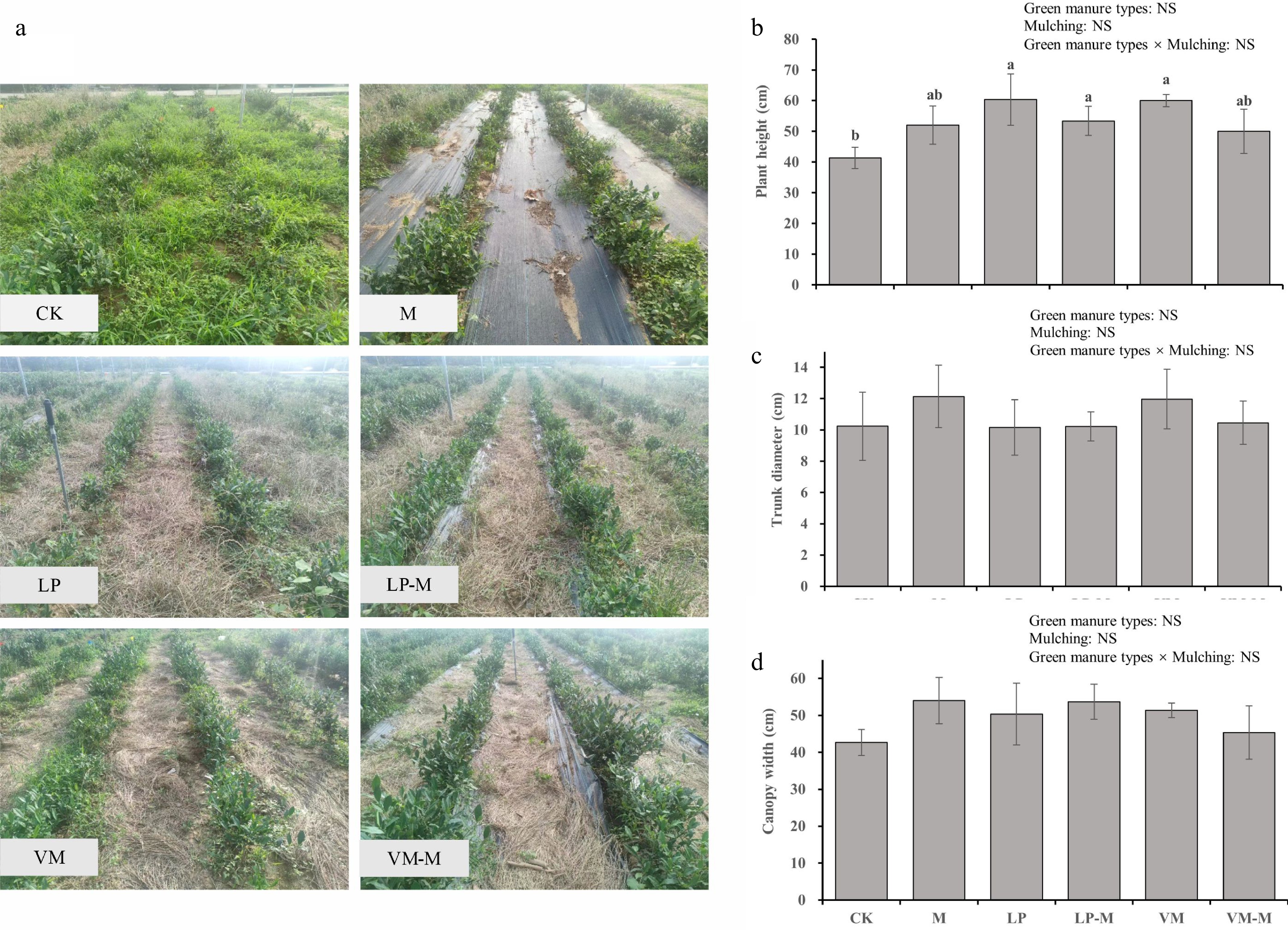
Figure 1.
Effects of different weed control treatments on the growth of (a) weeds, and (b)–(d) tea plants. CK, control; M, weed barrier fabric mulching; LP, L. perenne intercropping; LP-M, LP with mulching; VM, V. myuros intercropping; VM-M, VM with mulching. Different letters in the same column indicate significant differences in one-way ANOVA among groups (p < 0.05). Significant difference of two-way ANOVA indicated as ** p < 0.01; * p < 0.05; NS, not significant.
The biomass of L. perenne was significantly higher than that of V. myuros: the fresh weight per pruning was 29.50 t/ha for L. perenne (2.33 times that of V. myuros), and its total biomass over the growth period was approximately 7 times higher than that of V. myuros (p < 0.05; Supplementary Table S3). L. perenne also had a significantly greater height (1.94 times that of V. myuros), while V. myuros showed a larger coverage width (1.32 times that of L. perenne) after lodging (p < 0.05).
In terms of tea plants, CK had the lowest plant height. In contrast, LP, LP-M, and VM significantly increased plant height by 45.97%, 29.03%, and 45.17%, respectively, compared with CK (p < 0.05; Fig. 1). No significant differences in trunk diameter or canopy width were observed among treatments.
Effects of different weed control treatments on tea garden habitat
-
At the vigorous growth stage of green manure (T1, May 25, 2023), intercropping treatments (LP, LP-M, VM, VM-M) significantly reduced interrow soil temperature by 6.34–7.44 °C compared to CK and M (p < 0.05; Fig. 2a). Soil moisture in LP-M, VM, and VM-M was significantly lower than in CK and M (Fig. 2b). For fertilization furrow soil, intercropping treatments decreased temperatures by 3.90–5.04 °C relative to CK (p < 0.05; Fig. 2c), while canopy air temperature in LP-M, VM, and VM-M was reduced by 2.27–2.50 °C (p < 0.05; Fig. 2e). Additionally, all intercropping treatments increased canopy air humidity compared to CK and M (p < 0.05; Fig. 2f).
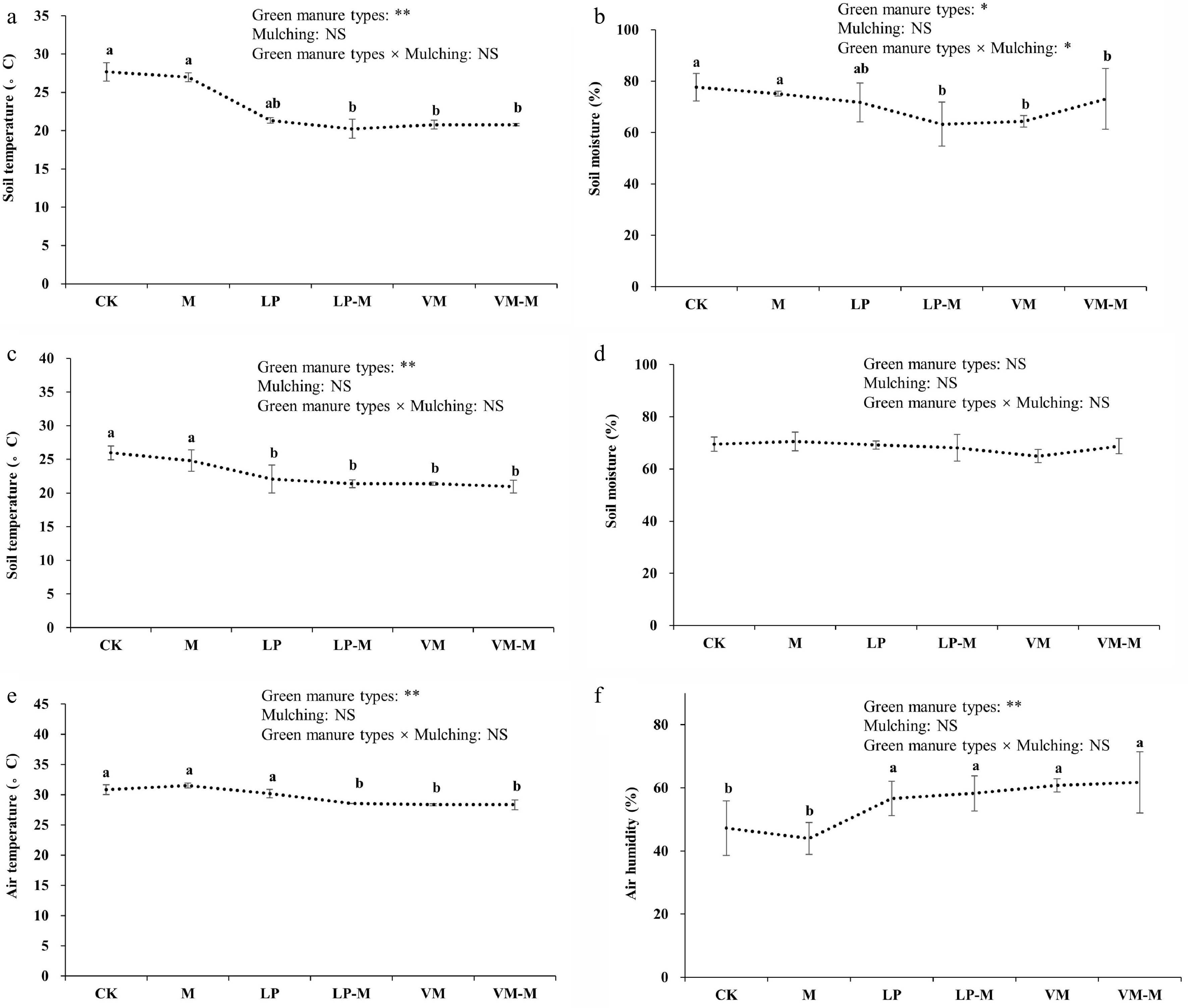
Figure 2.
The influence of different weed control treatments on the habitat of tea gardens at T1. (a) Interrow soil temperature; (b) interrow soil moisture; (c) fertilization furrow soil temperature; (d) fertilization furrow soil moisture; (e) canopy air temperature; (f) canopy air moisture. CK, control; M, weed barrier fabric mulching; LP, L. perenne intercropping; LP-M, LP with mulching; VM, V. myuros intercropping; VM-M, VM with mulching. Different letters indicate significant differences in the one-way ANOVA among groups (p < 0.05). Significant difference of two-way ANOVA indicated as ** p < 0.01; * p < 0.05; NS, not significant.
At the green manure withering stage (T2, June 12, 2023), intercropping treatments still reduced interrow soil temperature by 2.00–6.27 °C and fertilization furrow soil temperature by 2.10–5.47 °C relative to CK (Supplementary Fig. S1a, c). However, the cooling and humidity-enhancing effects of intercropping was weakened, particularly for L. perenne, with no significant differences in canopy air temperature among all treatments (Supplementary Fig. S1e). Two-way ANOVA revealed that green manure intercropping, rather than mulching, was the primary factor driving significant changes in tea garden habitat parameters (p < 0.05, or p < 0.01).
Effects of different weed control treatments on soil physicochemical properties
-
Mulching alone (M) significantly increased soil water content compared to other treatments (p < 0.05; Table 1). In contrast, all intercropping treatments reduced soil water content, with LP and VM-M showing significant decreases of 7.48% and 6.99% relative to CK (p < 0.05). Except for LP, all treatments significantly decreased soil pH by 0.33–0.76 compared to CK, with the largest reduction in LP-M (p < 0.05). Relative to CK, soil EC increased by 186.62% in the M treatment and 225.19% in the VM-M treatment, while it decreased significantly in the LP and LP-M treatments (p < 0.05). Regarding soil nutrients, VM-M significantly increased SOM by 15.60% compared to CK (p < 0.05); M, LP-M, and VM-M increased TN by 19.26%, 42.22%, and 37.78%, respectively, and LP-M increased AP by 13.15% (p < 0.05). Conversely, LP significantly decreased SOM, TN, and AP by 16.20%, 13.33%, and 18.45%, respectively (p < 0.05). Two-way ANOVA confirmed significant effects of green manure type, mulching, and their interaction on soil physicochemical properties (p < 0.05, or p < 0.01; Table 1).
Table 1. Influence of different weed control treatments on soil physicochemical parameters in tea gardens.
Treatment Water content (%) Bulk density (g/cm3) pH EC (μS/cm) SOM (g/kg) TN (g/kg) AP (mg/kg) AK (mg/kg) CK 24.32 ± 1.31 b 1.38 ± 0.05 ab 5.27 ± 0.23 a 223.40 ± 0.46 c 15.74 ± 0.31 bc 1.35 ± 0.02 c 254.28 ± 8.30 b 457.4 ± 26.39 d M 26.25 ± 0.69 a 1.45 ± 0.06 a 4.94 ± 0.02 b 640.30 ± 1.47 b 14.53 ± 0.37 cd 1.61 ± 0.02 b 264.43 ± 12.96 b 624.77 ± 12.4 b LP 22.50 ± 0.83 c 1.40 ± 0.08 a 5.17 ± 0.08 a 199.80 ± 7.94 d 13.19 ± 0.31 d 1.17 ± 0.04 d 207.37 ± 14.57 c 446.87 ± 35.75 d LP-M 23.84 ± 1.28 bc 1.28 ± 0.03 b 4.51 ± 0.03 c 112.20 ± 5.38 e 16.76 ± 1.32 ab 1.92 ± 0.09 a 287.71 ± 16.83 a 682.53 ± 45.02 a VM 23.49 ± 1.83 bc 1.37 ± 0.08 ab 4.92 ± 0.03 b 226.23 ± 5.20 c 16.88 ± 1.39 ab 1.40 ± 0.09 c 226.74 ± 6.69 c 421.77 ± 9.52 d VM-M 22.63 ± 1.07 c 1.43 ± 0.16 a 4.92 ± 0.06 b 726.47 ± 24.06 a 18.20 ± 0.33 a 1.86 ± 0.01 a 221.47 ± 13.98 c 521.43 ± 13.48 c Two-way ANOVA (F-value) Green manure types 2.548 1.177 11.185** 1,131.804** 39.787** 37.855** 22.377** 107.468** Mulching 1.029 0.240 37.641** 2,205.230** 78.247** 1,530.065** 62.977** 708.081** Green manure types × mulching 0.553 0.226 8.735* 939.069** 58.513** 130.855** 42.724** 40.028** Different letters in the same column indicate significant differences in one-way ANOVA among groups (p < 0.05). * Indicates significant differences in two-way ANOVA (* p < 0.05; ** p < 0.01). CK, control; M, weed barrier fabric mulching; LP, L. perenne intercropping; LP-M, LP with mulching; VM, V. myuros intercropping; VM-M, VM with mulching; EC, electrical conductivity; SOM, soil organic matter; TN, total nitrogen; AP, available phosphorus; AK, available potassium. Effects of different weed control treatments on tea shoot quality
-
CK had the highest TP content, while all other treatments exhibited a reduction in TP content (Fig. 3). M and VM significantly increased AA content by 7.88% and 12.03% relative to CK (p < 0.05), while LP decreased AA content by 8.71% (p < 0.05). The TP/AA ratio in VM was 18.73% and 20.61% lower than that in CK and LP, respectively (p < 0.05). Caffeine content in CK was the highest, with LP and LP-M showing a significant reduction of 9.69% and 8.30% (p < 0.05). No significant differences in water extract content were observed among treatments.
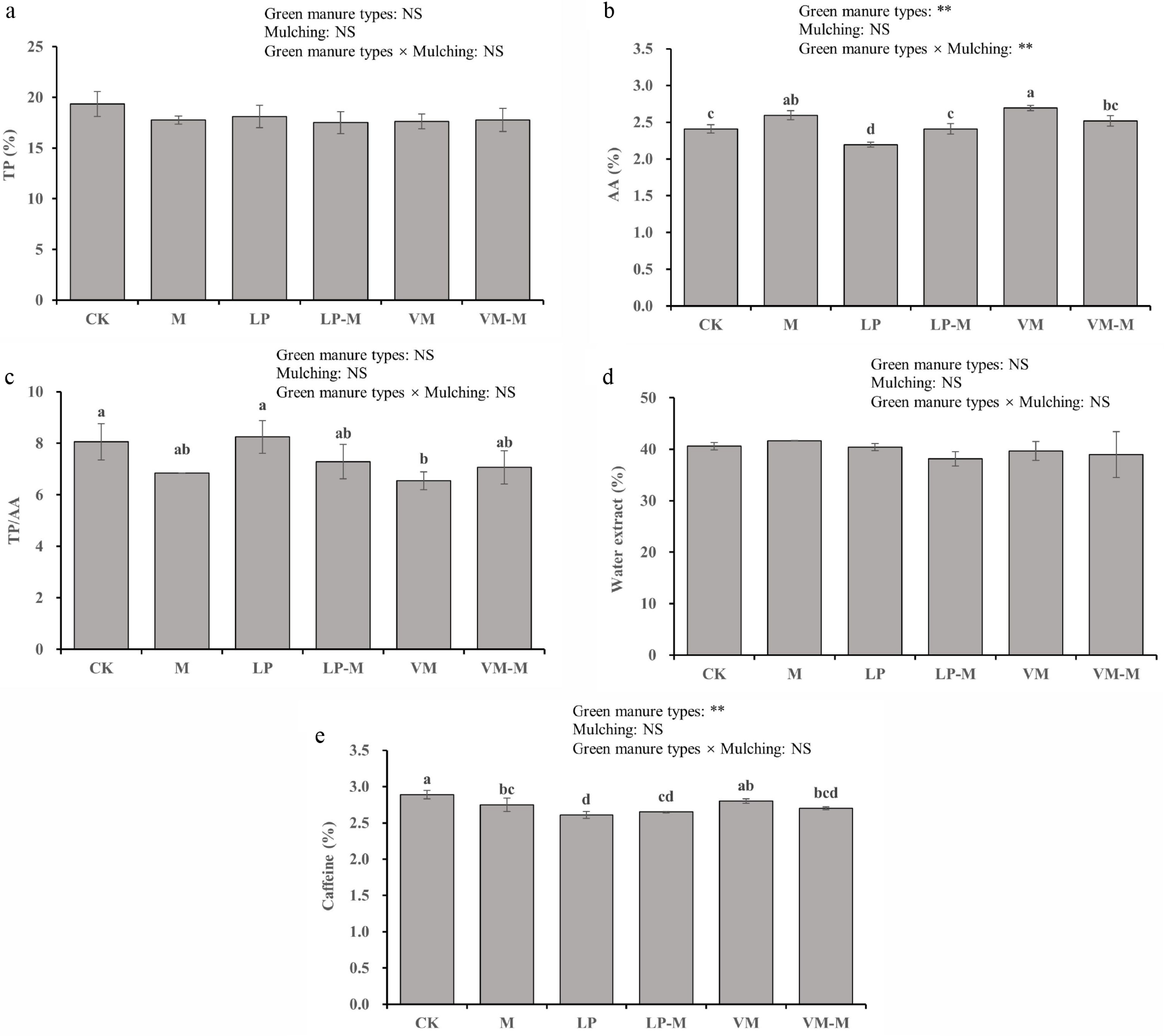
Figure 3.
Effects of different weed control treatments on the content of (a) AA, (b) TP, (c) water extract, (d) caffeine, and (e) ratio of TP/AA of tea shoots. Different letters in the same column indicate significant differences in one-way ANOVA among groups (p < 0.05). * Indicates significant differences in two-way ANOVA (** p < 0.01). CK, control; M, weed barrier fabric mulching; LP, L. perenne intercropping; LP-M, LP with mulching; VM, V. myuros intercropping; VM-M, VM with mulching; TP, total polyphenols; AA, free amino acids.
For catechin components, LP-M and VM-M significantly decreased total catechins by 5.08% and 4.67% compared to CK (p < 0.05; Fig. 4). Ester-type catechins (epigallocatechin gallate [EGCG], epicatechin gallate [ECG]) were reduced in most treatments: EGCG decreased by 5.21% (LP-M) and 4.95% (VM-M), while ECG decreased by 13.06% (LP-M), 9.33% (VM), and 13.81% (VM-M) (p < 0.05). Two-way ANOVA showed that green manure type significantly affected AA and caffeine content, while mulching influenced gallocatechin (GC), epigallocatechin (EGC), ECG, and total catechins (p < 0.05 or p < 0.01; Figs 3, 4).
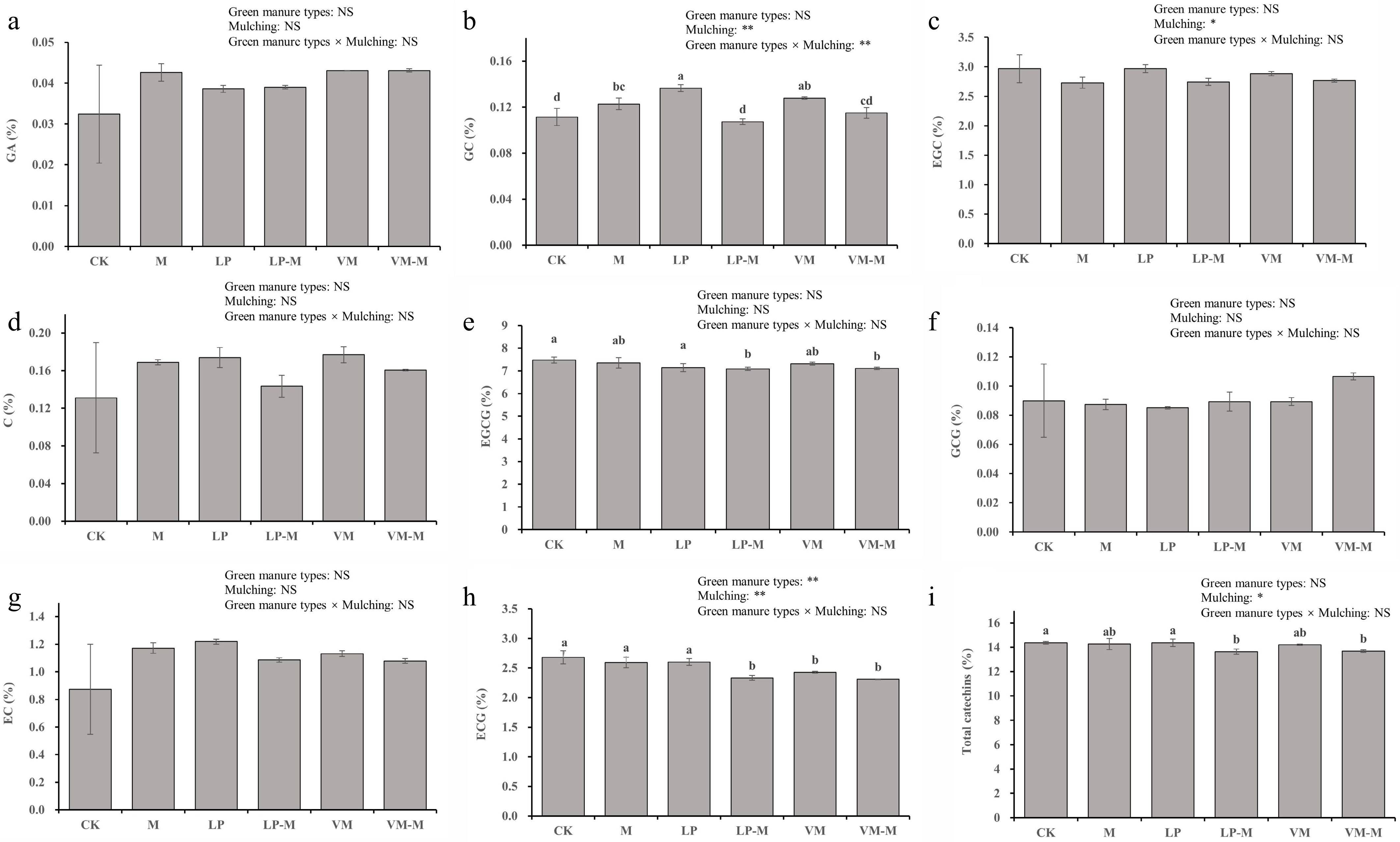
Figure 4.
Effects of different weed control treatments on the content of catechin components in tea shoots. Different letters in the same column indicate significant differences in one-way ANOVA among groups (p < 0.05). * Indicates significant differences in two-way ANOVA (* p < 0.05; ** p < 0.01). CK, control; M, weed barrier fabric mulching; LP, L. perenne intercropping; LP-M, LP with mulching; VM, V. myuros intercropping; VM-M, VM with mulching; GA, gallic acid; GC, gallocatechin; EGC, epigallocatechin; C, catechin; EGCG, epigallocatechin gallate; GCG, gallocatechin gallate; EC, epicatechin; ECG, epicatechin gallate.
Effects of different weed control treatments on economic benefits
-
The ranking of total and net inputs in all treatments was CK > VM-M > M > VM > LP-M > LP (Table 2). CK had the highest total input (30,000 CNY/ha), primarily due to weeding costs. LP achieved the lowest net input (−4,900 CNY/ha) because of low seed costs (¾ of V. myuros) and additional income from hay sales. Compared to CK, LP, and LP-M reduced net input by 34,900, and 25,600 CNY/ha, respectively, while M and VM reduced it by 10,000 and 12,000 CNY/ha. VM-M had the weakest effect, with a net input reduction of only 2,700 CNY/ha.
Table 2. Economic benefit analysis under different weed control treatments (CNY/ha).
Treatment Material input Labor input Hay output Total input Net input Net input reduction Weed barrier
fabricGrass seed
costCovering and
planting costTotal cost of
manual weedingCK − − − 30,000 − 30,000 30,000 M 14,000 − 3,000 3,000 − 20,000 20,000 10,000 LP − 2,250 3,000 7,500 17,700 12,800 −4,900 34,900 LP-M 9,333 2,250 3,000 7,500 17,700 22,100 4,400 25,600 VM − 9,000 3,000 6,000 − 18,000 18,000 12,000 VM-M 9,333 9,000 3,000 6,000 − 27,333 27,333 2,700 '−' represents the absence of this item. Net input = total input – hay output; net input reduction was calculated as the absolute value relative to that of CK. CK, control; M, weed barrier fabric mulching; LP, L. perenne intercropping; LP-M, LP with mulching; VM, V. myuros intercropping; VM-M, VM with mulching. Correlation analysis of tea garden habitats, soil properties, tea growth, and quality
-
Pearson correlation analysis (Fig. 5) showed that canopy air temperature was significantly positively correlated with water extract (r = 0.60) and total catechins (r = 0.63) but negatively correlated with SOM (p < 0.05). Soil temperature was positively correlated with total catechins, TP, and water extract (p < 0.05). Canopy air humidity was positively correlated with SOM and negatively correlated with total catechins, TP, and water extract (p < 0.05).
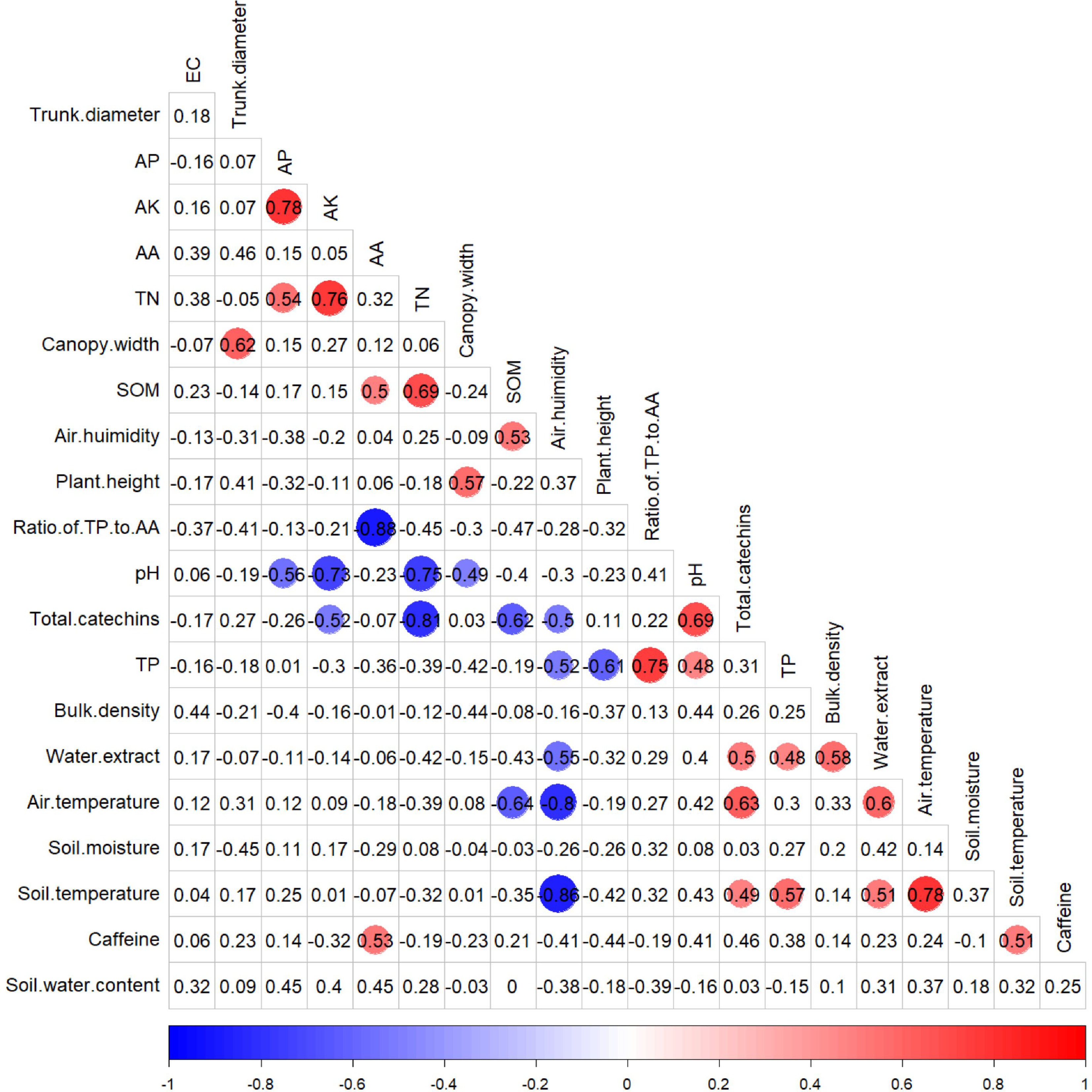
Figure 5.
Pearson correlation analysis of tea garden habitat, tea plant growth, soil physical and chemical properties, and tea quality under different intercropping treatments. More negative values (blue) indicate stronger negative correlations, and more positive values (red) indicate stronger positive correlations. The colored circle indicates statistical significance (p < 0.05).
Soil pH was negatively correlated with TN (r = −0.75), AP (r = −0.56), and AK (r = −0.73) (p < 0.05). TN was positively correlated with SOM (r = 0.69), AK (r = 0.76), and AP (r = 0.54) (p < 0.05). Tea plant height was negatively correlated with TP (r = −0.61), while total catechins were negatively correlated with TN, SOM, and AK (p < 0.05).
-
Artificial mulching and green manure intercropping are known to suppress weeds while modulating tea garden microenvironments. For instance, L. perenne intercropping reduces topsoil temperature and soil compactness while enhancing deep-soil water retention[10], and wood-tea intercropping systems lower leaf temperature and photosynthetically active radiation flux while increasing leaf relative humidity[26]. These habitat-modulating effects are amplified under extreme climatic conditions: straw mulching or V. myuros intercropping mitigates winter cold stress by stabilizing soil temperature and root membrane integrity[27], whereas maize-tea intercropping alleviates summer sunburn and improves tea plant survival via shading[28].
Consistent with these findings, our study showed that intercropping treatments (LP, LP-M, VM, VM-M) significantly reduced soil and canopy air temperatures while increasing canopy humidity relative to CK and M during the vigorous growth stage of green manures. This cooling effect is due to the soil surface cover formed by green manure, which reduces direct solar irradiation and subsequent soil heating. However, as L. perenne and V. myuros withered and ambient temperatures rose, the microclimate-regulating capacity of intercropping diminished—particularly for L. perenne—with no significant differences in canopy air temperature among treatments (Supplementary Fig. S1e). Two-way ANOVA further confirmed that green manure intercropping, rather than mulching, was the primary driver of habitat modifications (significant differences were observed at p < 0.05 and p < 0.01), underscoring the central role of gramineous species in microenvironment optimization.
Effects of different weed control treatments on soil physicochemical properties
-
Intercropping and mulching are well-documented to alter soil physical and chemical properties. Specifically, V. myuros intercropping in the tea garden reduces soil compactness and enhances soil water-holding capacity[10], while rice straw mulching or Trifolium repens intercropping decreases bulk density and increases SOM in the plow layer[14]. In contrast, our study revealed a contrasting pattern: CK and M treatments exhibited higher soil water content, whereas intercropping treatments reduced moisture levels (Table 1). This discrepancy is likely explained by the well-developed root systems of gramineous green manures, which effectively absorb and drain excess soil water, thereby alleviating waterlogging risk in tea garden ecosystems.
Regarding soil pH, all treatments except LP significantly reduced soil pH compared with CK, conflicting with previous reports that V. myuros intercropping either stabilizes or elevates soil pH[10]. This variation may stem from differences in soil texture, tea plant age, and fertilizer management across studies. Nevertheless, the LP-M treatment exhibited a potential for excessive soil acidification, highlighting the need for monitoring in long-term field applications. Notably, the experimental period of this study (October 2022 to June 2023) was relatively short and cannot capture cumulative trends in soil pH under LP-M treatment. Long-term implementation of LP-M may lead to sustained soil acidification, which could affect soil nutrient activation, mineral element uptake by tea plant roots, and soil microbial community structure, thereby impacting tea garden ecosystem function. In addition, the single intercropping treatments (LP, VM) in this study reduced soil TN and AP contents, but the short experimental period precludes the determination of whether this nutrient reduction represents a temporary competitive effect, or will lead to sustained soil nutrient depletion. The long-term dynamic balance of soil nutrients under different intercropping modes thus requires further investigation.
Green manure intercropping is generally recognized for improving soil fertility and reshaping microbial communities. Previous studies have shown that intercropping tea with species such as persimmon[29], chestnut trees[13], walnut[30], and soybean[15] increase soil enzyme activity, SOM, TN, AK, and AP. However, in this study, sole intercropping treatments (LP, VM) reduced soil TN and AP contents, whereas combined intercropping-mulching treatments (LP-M, VM-M) significantly increased SOM, TN, AP, and AK contents. This distinct nutrient dynamic is primarily attributed to the weed barrier fabric modifying root distribution, nutrient uptake competition, and soil nutrient mineralization processes in the tea-green manure intercropping system. The weed barrier fabric physically restricts the extension of gramineous green manure roots into the 30–40 cm wide tea fertilization furrow zone (the core nutrient absorption area of tea plants), creating a clear root partitioning pattern between tea plants and green manures. This spatial separation effectively eliminates the intense competition for soil N and P commonly observed in single intercropping systems[17,31]. In combined intercropping treatments, the weed barrier fabric not only blocks green manure root invasion, but also promotes exclusive utilization of nutrients in the fertilization furrows by tea plant roots.
Furthermore, the weed barrier fabric mulching in the fertilization furrow zone modulates soil nutrient mineralization by improving the soil microenvironment (e.g., stable temperature and humidity). It enhances the activities of nitrogen-fixing bacteria and phosphatase[32,33], accelerating the mineralization of soil organic nitrogen and the conversion of insoluble phosphorus to available forms, thereby increasing the effective supply of TN and AP. Meanwhile, the mulching layer reduces surface runoff and nutrient leaching in the fertilization furrows[34,35], contributing to the continuous accumulation of soil nutrients in combined treatments. Collectively, these findings highlight the necessity of integrating weed barrier fabric or supplementary fertilization strategies with gramineous green manure intercropping to prevent soil nutrient depletion in tea plantation ecosystems.
Pearson correlation analysis (Fig. 5) further clarified the relationships between soil properties and ecosystem outcomes: intercropping-induced reductions in pH and increases in SOM, TN, AP, and AK directly influenced tea growth and quality, with quality parameters (e.g., water extract, total catechins) exhibiting stronger associations with soil physicochemical properties.
Effects of different weed control treatments on tea plant growth and quality
-
Habitat optimization via green manure intercropping exerts a direct regulatory effect on tea plant growth. Numerous previous studies have shown that intercropping tea with Ophiopogon japonicus significantly increased tea plant growth[36], and walnut-tea intercropping enhances tea plant growth by providing shade and increasing ambient humidity[37]. Furthermore, V. myuros intercropping improves budding density and 100-bud weight[10,11]. In our study, LP, LP-M, and VM treatments significantly increased tea plant height compared with CK. This growth-promoting effect is likely driven by two factors: first, reduced soil water content (Table 1) effectively mitigates waterlogging stress; second, mild shading from green manure induces upward elongation of tea shoots, optimizing light capture efficiency for photosynthesis.
Green manure intercropping further modulates tea quality. Previous studies have shown that intercropping tea with green manures can increase AA, TP, caffeine, and water extract contents in tea leaves[11,17,38]. Our study partially aligned with these reports; VM treatment significantly increased AA content and reduced the TP/AA ratio, key indicators of improved taste quality. However, LP treatment decreased AA content, presumably associated with reduced soil TN, SOM, and AP resulting from vigorous L. perenne growth (Table 1). Additionally, M treatment also improved quality by increasing AA and decreasing TP and caffeine, which contrasts previous reports[12] and may be attributed to mulching-induced increases in soil TN, AP, and AK (Table 1).
Elevated ambient air temperatures have been shown to increase TP and decrease AA, thereby raising the TP/AA ratio[39−41]; high temperatures also negatively affect theanine accumulation in tea plants[42]. Notably, in this study, all intercropping and mulching treatments reduced TP, specific catechin monomers (EGCG, ECG) and caffeine contents compared with CK. These results are consistent with the findings of Chen et al.[43] but conflict with those of Zhang et al.[11]. These discrepancies may arise from seasonal variation in sampling (spring vs summer/autumn) or differences in mulching materials and intercropped species, which alter microenvironmental conditions and nutrient availability. The reduction in ester-type catechins (EGCG and ECG) has direct practical implications for tea sensory quality and market acceptance; EGCG and ECG are primary contributors to tea astringency and bitterness[44], and their moderate reduction in intercropping/mulching treatments softens the sensory profile, making tea more palatable to consumers who prefer milder, less astringent green tea products. Similarly, reduced caffeine content in intercropping treatments aligns with market demand for low-caffeine tea products, expanding the consumer base to include caffeine-sensitive groups such as the elderly and children[45,46].
Pearson correlation analysis further revealed that intercropping-mediated reductions in soil and air temperatures, as well as increases in humidity were significantly associated with decreased total catechins, TP, and water extract content. These results emphasize the critical role of habitat modification in regulating the synthesis and accumulation of tea quality-related compounds. Importantly, the study establishes a direct link between cooler and more humid microclimatic conditions and reduced TP and catechin levels, reinforcing the significance of microclimate regulation for optimizing key tea quality parameters in tea plantation management.
Context-dependent suitability and combined intercropping regime of gramineous green manure
-
Our findings confirm that L. perenne is superior for economic benefits in tea plantations, while V. myuros is superior for tea quality. However, these species-specific advantages are accompanied by inherent trade-offs and strong context dependence on practical cultivation conditions. L. perenne reduces weeding labor and yields hay (offsetting input cost), but causes intense nutrient competition (lower soil TN, SOM, and AP), requires pruning, and loses microclimate regulation after withering. In contrast, V. myuros improves AA content and TP/AA ratio but has higher seed costs (fivefold that of L. perenne), no hay output, weaker late-stage weed control, and slight soil nutrient reduction. The suitability of the two species is highly dependent on regional climate, soil properties, and production objectives: L. perenne is more suitable for rainy subtropical tea plantations with developed animal husbandry and higher initial soil pH[47], whereas V. myuros is preferable for plantations focused on high-quality green tea production[10].
To maximize the synergistic effects of gramineous green manure and weed barrier fabric, a simplified combined cultivation regime is proposed to achieve weed suppression and reduce nutrient competition. The key configuration is as follows: a weed barrier fabric with a width of 30–40 cm is laid on both sides of tea plants to cover the critical fertilization furrow zone, while the remaining inter-row area is used for gramineous green manure planting. This spatial layout maintains strict isolation between the green manure root system and the tea plant fertilization furrow, and the full coverage of green manure in the inter-row area eliminates growth space for weeds.
-
This study assessed the effects of gramineous green manure intercropping, alone, or in combination with weed barrier fabric mulching, on tea garden ecosystems. Intercropping with L. perenne and V. myuros—particularly when combined with mulching—effectively suppresses weeds and optimizes habitats by reducing soil and canopy temperatures while increasing canopy humidity. Combined treatments (LP-M, VM-M) exerted a significant synergistic effect on soil nutrient accumulation, effectively mitigating the nutrient competition observed in sole intercropping systems. All intercropping/mulching treatments reduced tea astringency by decreasing TP, ester-type catechins, and caffeine contents; among them, VM increased AA content and lowered the TP/AA ratio to improve taste, while LP achieved the greatest reduction in net input. In summary, gramineous green manure intercropping, especially the integrated mode with mulching, provides a sustainable weed management solution for tea production, with V. myuros being ideal for quality improvement and L. perenne for economic benefits. Future research should optimize their applicability across regions and cultivars.
-
The authors confirm contribution to the paper as follows: study conception and design: Yang Y, Hu Z, Shi Y, Tang J; data collection: Hu Z, Li T, Ai Z, Mu B; analysis and interpretation of results: Hu Z, Li H, Li R; draft manuscript preparation: Hu Z, Yang Y. All authors reviewed the results and approved the final version of the manuscript.
-
The datasets generated during and/or analyzed during the current study are available from the corresponding author or the first author on reasonable request.
-
The authors declare that they have no conflict of interest.
-
accompanies this paper online at: https://doi.org/10.48130/bpr-0026-0015.
- Supplementary Table S1 Experimental arrangement.
- Supplementary Table S2 Basis for estimating economic benefits.
- Supplementary Table S3 Growth conditions of green manure crops under different weed control treatments.
- Supplementary Fig. S1 The influence of different weed control treatments on the habitat of tea gardens at T2.
- Copyright: © 2026 by the author(s). Published by Maximum Academic Press, Fayetteville, GA. This article is an open access article distributed under Creative Commons Attribution License (CC BY 4.0), visit https://creativecommons.org/licenses/by/4.0/.
-
About this article
Cite this article
Hu Z, Ji L, Tang J, Li T, Mu B, et al. 2026. Gramineous Lolium perenne/Vulpia myuros intercropping improves tea growth and quality via habitat modification. Beverage Plant Research 6: e035 doi: 10.48130/bpr-0026-0015 

Gramineous Lolium perenne/Vulpia myuros intercropping improves tea growth and quality via habitat modification
- Received: 28 January 2026
- Revised: 24 March 2026
- Accepted: 16 April 2026
- Published online: 08 September 2026
Abstract: Tea is a globally important economic crop, yet weed infestation severely impairs its growth and quality. To address this challenge, this study evaluated the effects of gramineous green manure intercropping (alone, or with weed barrier fabric mulching) on the microenvironments, soil properties, tea growth, quality, and economic viability. A field experiment was conducted with six treatments: control (CK), mulching (M), Lolium perenne intercropping (LP), L. perenne with mulching (LP-M), Vulpia myuros intercropping (VM), and V. myuros with mulching (VM-M). Key parameters were monitored and analyzed. The results demonstrated that intercropping effectively inhibited weed growth, modulated the microclimate, reduced inter-row soil temperature by 3.44–7.44 °C, canopy air temperature by 0.66–2.50 °C, while increasing canopy relative humidity by 2.92%–20.87%. Combined treatments synergistically accumulated soil nutrients: VM-M increased soil organic matter by 15.63%, LP-M elevated total nitrogen by 42.22%, and available potassium by 49.22%. Regarding plant growth, both LP and VM significantly increased tea plant height. In terms of tea quality, VM increased free amino acid content by 12.03%, and concurrently lowered total polyphenols by 8.88%; all intercropping/mulching reduced tea polyphenols, ester-type catechins, and caffeine. Economically, the LP treatment achieved the greatest reduction in net input costs by lowering weed control expenses and generating additional income from hay production. This study demonstrates that gramineous green manure intercropping, particularly when combined with mulching, effectively suppresses weeds, improves tea garden habitats, maintains soil fertility, reduces input costs, and enhances tea growth and quality—providing a sustainable weed management solution for tea production.