











-
A major contributor to employment, food security, and rural livelihoods, agriculture is a fundamental component of the Bangladeshi economy[1,2]. Boro rice and maize cultivation are of paramount importance in the agricultural sector[3,4], specifically in the northern region of the country, where these crops are extensively cultivated[1,3]. The socioeconomic features and agroclimatic conditions of the northern region make it an essential place to study the dynamics of agricultural output and profitability[5,6]. In Bangladesh, a major component of food security has been the highly yielding winter season crop known as boro rice, which is profitable[7,8]. Its cultivation aligns with the government's strategy to boost rice production during the dry season when water availability can be controlled through irrigation[9−11]. On the other hand, due to rising demand in the poultry and livestock feed industries, maize farming has emerged as a viable substitute for conventional cereal crops. The dual benefits of higher profitability and lower water requirements make maize a viable option for farmers facing resource constraints[12,13]. Benefit-cost analysis (BCA) serves as a critical tool for evaluating the economic viability of agricultural practices. By comparing the total costs (TC) incurred with the benefits derived, BCA provides insights into the efficiency and sustainability of resource allocation[14,15].
A comprehensive BCR may assist in identifying which crop, and under what circumstances, offers greater economic returns in the context of farming maize and boro. In the northern region, where limited resources demand cautious decision-making to optimize productivity and profitability, such analyses are especially pertinent[1,16]. The importance of understanding the economic trade-offs between boro and maize farming cannot be overstated[6,16]. Farmers in the northern area must adapt their methods to ensure long-term sustainability in light of growing challenges of climate change, water shortages, and rising farmers' production costs[16]. Higher agricultural water scarcity in the northwest region stems from water unavailability, while in the southwest, it is driven by poor water quality[17]. For instance, while boro rice cultivation is highly dependent on irrigation, making it vulnerable to water scarcity, maize offers a relatively drought-resistant alternative that could mitigate these risks[11,18,19]. However, maize farming requires initial investments in seeds, fertilizers, and technical knowledge[20,21], which may act as barriers for resource-constrained farmers. Although the existing research emphasizes the economic potential of both crops, it also emphasizes the need of region-specific analysis. Maize farming is more profitable than boro rice; moreover, they also highlight the fact that outcomes depend on variables, including input costs, market accessibility, and governmental support[20,22]. Therefore, in order to provide farmers, policymakers, and development practitioners with useful information, a targeted examination of the background of the northern area is necessary.
The study assumes the hypothesis that the performance of maize is better than the performance of boro rice in the northern region of Bangladesh because maize needs comparatively less irrigation, labour, and variable input costs, and it is able to produce higher net return and a higher BCR. This is especially significant in the context of climate change, when water scarcity, unpredictable rainfall, rising irrigation expenses and increased production costs make water-intensive boro rice less water-efficient in utilizing water for production. Maize, however, is less water-intensive and more tolerant of dry-season resource limitations, and thus may offer a more profitable and climate-smart alternative for farmers. Thus, it is useful to compare the profitability of maize and boro rice not just to determine the better of the two, but also to understand why maize might be better in the face of climate-induced stress on agricultural resources.
This study aims to conduct a detailed benefit-cost analysis of boro and maize farming in the northern region of Bangladesh. By examining key economic indicators such as gross returns, net benefits, and input-output ratios, the study seeks to offer evidence-based recommendations for optimizing resource use. In doing so, it contributes to the broader discourse on sustainable agricultural practices and rural development in Bangladesh.
-
Research on the economic evaluation of agricultural techniques has been crucial, especially in regions where resource constraints and environmental challenges influence farming decisions. Due to their importance in ensuring food security and increasing farmer livelihoods in Bangladesh, boro rice and maize growing have drawn a lot of attention in the literature. In order to frame the benefit-cost study of these two crops in Bangladesh's northern area, this section summarizes previous research.
Boro rice cultivation has long been regarded as a cornerstone of Bangladesh's agricultural strategy. Boro rice accounts for over 50% of the country's total rice production[9]. Its high yield potential and adaptability to controlled irrigation have made it a preferred choice for farmers, particularly during the dry season. However, boro rice has difficulties, such as its high cost of cultivation, excessive water use, and susceptibility to water shortages brought on by climate change[12]. Its long-term sustainability has to be reevaluated in light of these concerns, particularly in areas with limited resources.
On the other hand, growing maize has become a viable option that is both ecologically and economically sustainable. The growing demand for maize in the poultry and livestock feed industries has spurred its cultivation[21]. Maize is an appropriate crop for areas experiencing water shortage since it uses a lot less water than boro rice and is more drought-tolerant[18]. Additionally, it is necessary to find out how profitable it is to grow maize, pointing to lower input-output ratios and larger net returns than conventional cereal crops[22]. However, challenges such as limited access to quality seeds and market linkages remain barriers to its widespread adoption.
Boro rice farming has a good benefit-cost ratio (BCR), with BRRI Dhan28 and BRRI Dhan29 having BCRs of 1.26 and 1.55, respectively[1], and in Bangladesh's wetland regions, the output of boro rice is greatly impacted by labor and seed quality. On the other hand, maize farming is a profitable business, as shown by the average benefit-cost ratio of 1.90 on a cash-cost basis and 1.18 on a total-cost basis[23]. However, both crops have challenges, including higher labor costs, quality seeds, and fertilizers, but no marketing costs.
Benefit-cost analysis (BCA) has been extensively applied to evaluate the economic performance of agricultural practices. It provides a thorough framework for stressing the need of taking into account both direct and indirect costs and benefits[15]. In the context of boro and maize farming, the utility of BCA helps to identify optimal crop choices under varying resource constraints[12]. Because regional differences in soil quality, water availability, and market access have a substantial influence on results, these studies highlight the need for specialized assessments.
Regional studies that concentrate on Bangladesh's northern area provide complex insights on the trade-offs between growing maize and boro. For instance, it was found that in regions with limited irrigation resources, maize cultivation is more profitable than boro rice[24]. However, they also note that boro rice remains indispensable for food security, necessitating a balanced approach to crop planning. Farmers who used integrated agricultural techniques optimized resource efficiency and financial rewards by combining the advantages of both crops[18].
In summary, the body of current research offers a strong basis for comprehending the economic dynamics of maize and boro cultivation. Although boro rice is still essential for maintaining food security, maize is a viable substitute that supports sustainability and financial success. This study builds on these insights by conducting a region-specific benefit-cost analysis, aiming to inform policy and practice in the northern region of Bangladesh.
-
The research area must be chosen before beginning any in-depth study. 'The area in which a farm survey is to be conducted relies on the particular purpose of the survey and the possible cooperation from the respondents'[25]. To meet the study's aims, a preliminary survey was carried out in the districts of Lalmonirhat and Dinajpur (Figs 1 and 2). Primary data for the current study were acquired from the districts of Lalmonirhat and Dinajpur. Finally, three upazilas from Lalmonirhat (Patgram, Kaliganj, and Sadar) and three upazilas from Dinajpur (Sadar, Birganj, and Bochaganj) were chosen for the study. This study was conducted in the districts of Lalmonirhat and Dinajpur in Bangladesh's northern area.
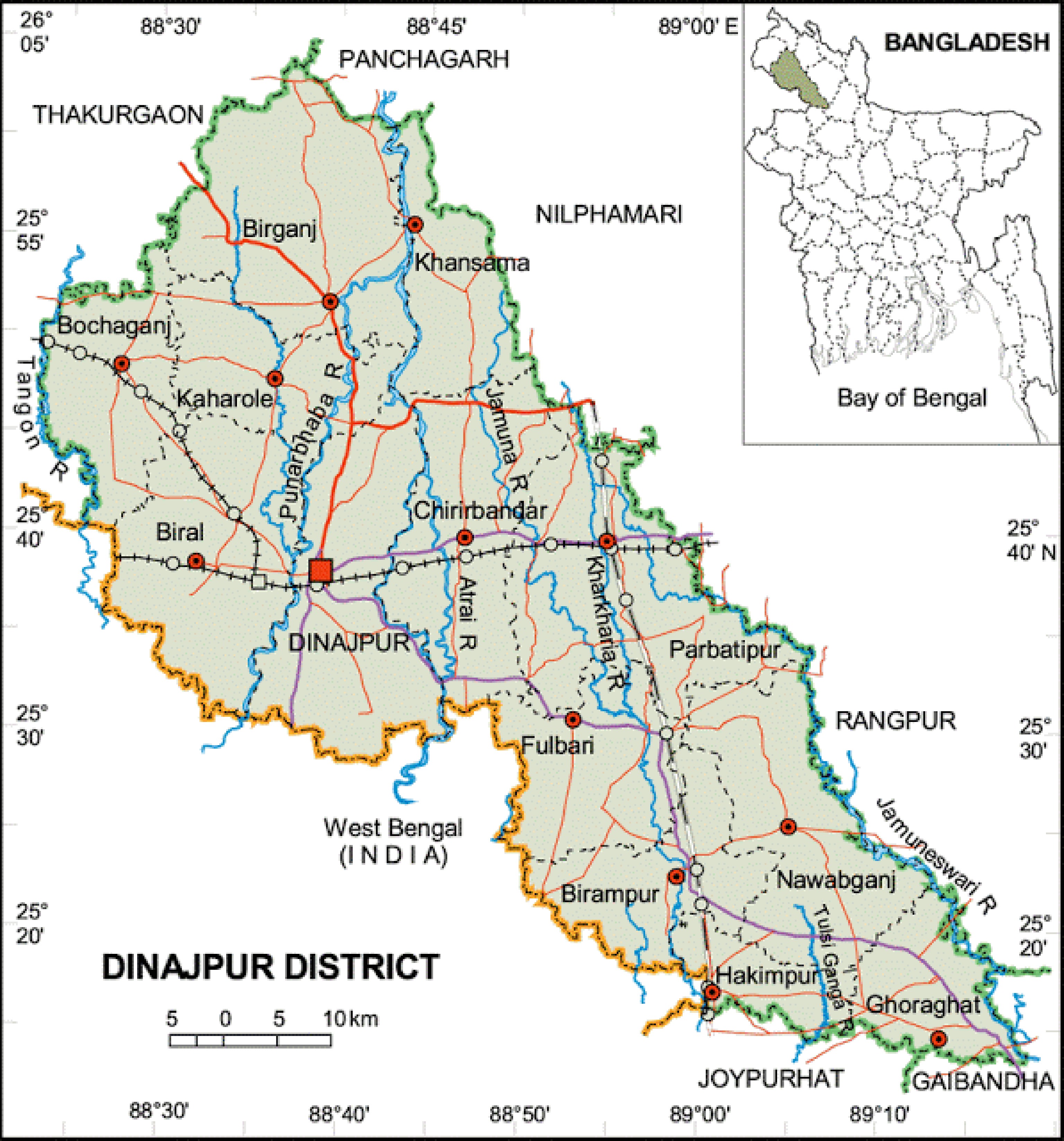
Figure 1.
District map of Dinajpur. Map source: Office of Dinajpur Sadar Upazila (
https://bangladesh-map-all.blogspot.com/p/blog-page_11.html ).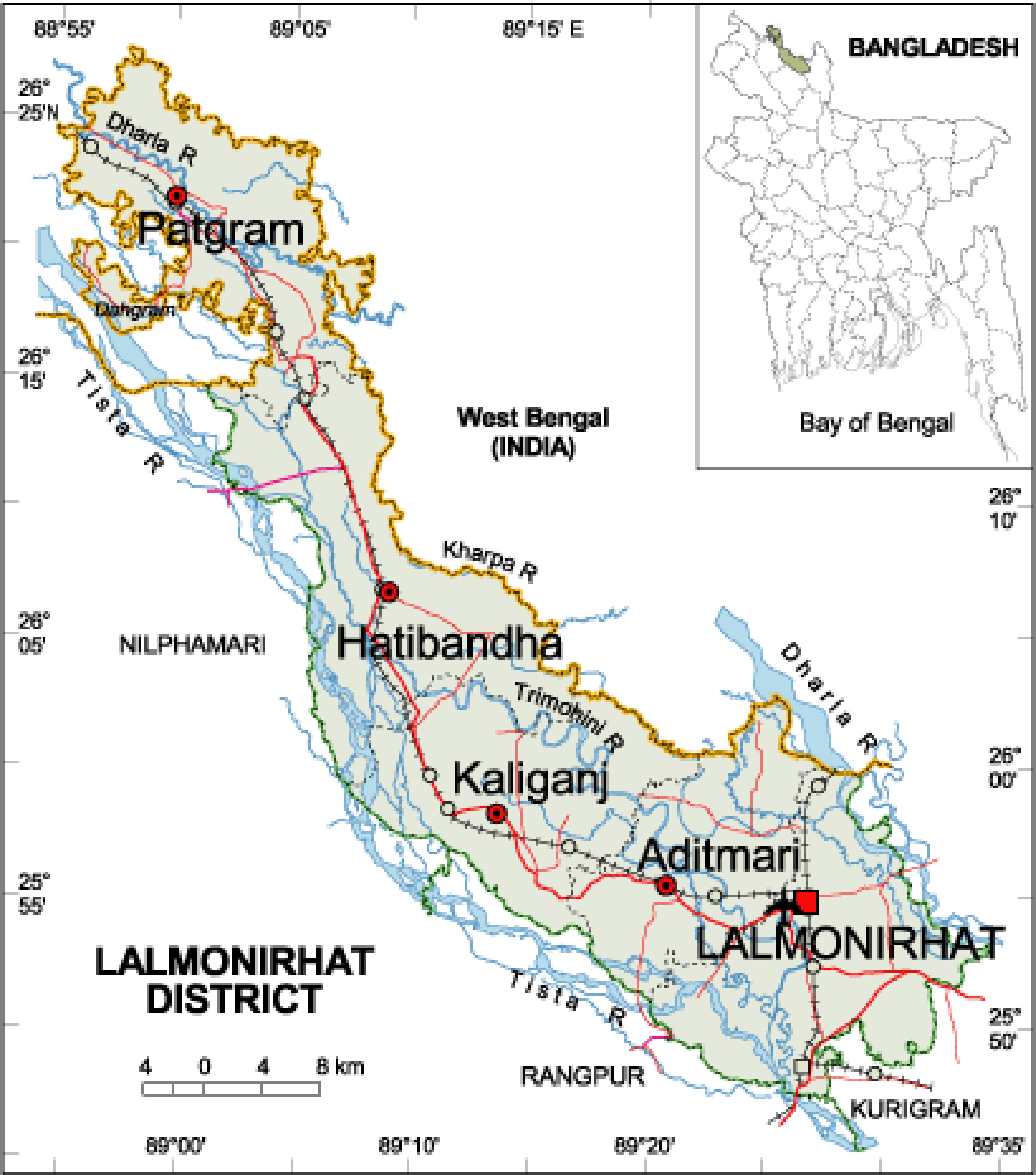
Figure 2.
District map of Lalmonirhat. Map source: Office of Dinajpur Sadar Upazila (
www.bangla2000.com/bangladesh/Districts/lalmonirhat.shtm ).Dinajpur district is surrounded by Thakurgaon and Panchagarh districts to the north, Joypurhat and Gaibandha districts to the south, Rangpur and Nilphamari districts to the east, and West Bengal (Indian State) to the west. The total area of the district is 3,437.98 km2 (1,327.41 sq. miles), of which 78.87 km2 (30.45 sq. miles) is forest. It is located between 25°10' N and 26°04' N and 88°23' E and 89°18' E. Dinajpur has an area of 3,444.30 km2. It falls under the jurisdiction of Rangpur Division. Dinajpur district has 13 upazilas (sub-districts): Dinajpur Sadar, Ghoraghat, Kaharola, Birol, Birgonj, Khansama, Chorkai, Parbotipur, Hakimpur, Birampur, Nababgonj, Bochagonj, Fulbari, and Chibirbondor, with 101 Unions, 1,926 Mauzas, and 2,131 Villages. Dinajpur district has a total population of 29,90,128 (male 15,08,670 and female 14,81,458), a sex ratio of 102:100, a population density of 868/km2, and an annual growth rate of 1.22%. It also has a literacy rate of 52.40% (55.70% for men and 49.10% for women), and a school attendance rate of 56.70% for children aged five to 24. Dinajpur has a hot, wet, humid tropical climate. The district experiences a distinct monsoonal season, with an annual average temperature of 25 °C (77 °F) and monthly averages ranging from 18 °C (64 °F) in January to 29 °C (84 °F) in August. The economy of Dinajpur is primarily focused on agricultural production. Dinajpur is well-known for its rice production, which is now being expanded to include maize. 'Katharivog' rice is among the best produced in Bangladesh. Dinajpur is also well-known for its wheat and maize production.
Lalmonirhat is a district in northern Bangladesh. It belongs to the Rangpur Division. Lalmonirhat District was founded in 1984. It is divided into five upazilas, two municipalities, 18 wards, 85 mahallas, 41 union parishads, 425 mouzas, 484 villages, and 33 enclaves. The Teesta Riverbasin's soil composition is primarily alluvial (80%), with barind soil accounting for the remaining 20%. The temperature ranges from 32 to 11 °C, with an average annual rainfall of 2,931 mm. Lalmonirhat's total population is 1,256,099, with 628,799 males and 627,300 females. Lalmonirhat's population density is 1,000 per km2. The Lalmonirhat district covers 1,247.37 km2 104 sq. miles) and is located between 25°18' N and 25°57' N and 88°56' E and 89°32' E. It is bounded on the north by West Bengal's Kochbihar and Jalpaiguri, on the south by Rangpur, and on the east by Kurigram and the Nilphamari district. Lalmonirhat district's international boundary is 281.6 km long. Agriculture accounts for 72.99% of income, while non-agricultural laborers account for 3.46%, commerce for 10.49%, and services for 6.32%.
Lalmonirhat and Dinajpur were purposefully chosen based on preliminary data because they have a large number of farmers who cultivate maize and boro rice.
Lalmonirhat and Dinajpur districts were purposively selected for this study because of the importance of these two districts as agricultural areas in the North of Bangladesh where the cultivation of boro rice and maize is widespread. The areas are considered suitable for making comparisons between the profitability of maize and boro rice farming as the farmers of these districts are making a gradual shift from water-intensive boro rice farming to maize farming. The chosen districts are also comparable in terms of agro-ecology: dry season crop production, irrigation agricultural systems, and active cereal-based cropping systems. Thus, comparison of the cost, return, BCR, and efficiency in the use of the resources is made between the two crops to get an appropriate context to study. Moreover, the upazilas chosen were easily accessible for field survey, farmers were available and cooperative, and the areas used representative information on the farming activities of two crops, maize and boro rice, in the northern region of Bangladesh. This was because Lalmonirhat and Dinajpur were found to be suitable sites for comparing the benefit-cost of maize and boro rice production.
Sample size determination
-
The formula proposed by Israel was used to calculate sample size[26]. Because the proportion of efficient and non-efficient is unknown, the total population is known; hence, the following method is applicable for this study. The total number of farm households in each village with land ownership was obtained from the Agricultural Extension Office, and this demographic serves as the basis for the current study.
The sample size formula used in Bartlett et al.[27] was selected as it best suited the survey-based study, as it aims to estimate a population proportion with a specified level of confidence and desired margin of error. In this study, the formula is appropriate for the requirements of the research because the total population of farmers was determined based on the local agricultural record, but the proportion of efficient and non-efficient farmers was not clearly determined. Hence, the formula was used to calculate the statistically reliable sample size at a 95% confidence level with a margin of error of 5%. This helped to ensure that the number of 300 farm households selected was sufficient to represent the maize and boro rice farmers in Lalmonirhat and Dinajpur and to make a valid comparison of cost, return, profitability, and BCR between maize and boro rice. That is
$ n=\dfrac{{t}^{2}(p)(q)}{{d}^{2}} $ (1) where, n = sample size, t = value for selected alpha level of 0.025 in each tail = 1.96 (the alpha level of 0.05 indicates the level of risk the researcher is willing to take that true margin of error may exceed the acceptable margin of error). p = proportion of population engaged in maize production activities, q = proportion of population who do not engage in maize production activities, d = acceptable margin of error for proportion being estimated = 0.05 (error the researcher is willing to accept).
According to the DAE (2017)[28], maize farmers accounted for 26.5.5% of families that harvested staple and/or cash crops in the previous 12 months prior to September 2017.
Assuming a 95% confidence level and 5% margin of error, the sample size was calculated as follows:
$ n=\dfrac{{1.96}^{2}\times 0.265\times 0.735}{{0.05}^{2}} = 299.30.\rm\; That\; is\; 300. $ As a result, 300 houses from two districts were selected for the study using a random sample procedure.
Sampling technique and sampling procedure
-
This study adopted a multistage sampling technique. In the first stage of the sampling design, two districts were purposefully picked from Bangladesh's northern area based on maize production levels. Dinajpur and Lalmonirhat were the selected districts. In the second stage, three upazilas from each district were deliberately chosen based on the concentration of maize production intensity and the change from boro rice to maize. In the third step, 30 villages were selected at random from each of the two districts (Table 1).
Table 1. Study areas selected in the different districts.
Dinajpur Lalmonirhat Dinajpur sadar Birganj Kaharole Patgram Kaliganj Lalmonirhat sadar Korni Shahorgram Shundorpur Panbari Votmari Chinipara Chehelgaji Husnapara Mukundapara Kashbari Modati Lamuriharadi Shovra Madovbati Ramchandrapur Kani Chandrapur Harivanga Mohadebpur Pakura Kamur Baura Chaparhut Adorshapara Bochagonj Robipur Kantogir Kuchilbari Tush vander Foringer digi Source: Field survey, 2017. There were 300 total sample farmers, and ten maize and boro rice producers were chosen at random from each of the designated villages. Despite the fact that the proportion of maize growers varies by district/upazila/village, 50 respondents were randomly picked from each of the six upazilas studied. The fourth stage of the sampling technique for the current study comprised selecting ten maize farmers from a list of maize farmers in each village, with the assistance of agricultural extension workers working in the villages of the chosen upazila. This was accomplished by randomly selecting a maize farmer from the list, followed by selecting the kth (sampling interval) farmer in the list or frame. k was computed by dividing the population of maize farmers in a specific hamlet by the sample size of 300.
Data collection tools, materials, and pre- test
-
In this study, both primary and secondary data from various sources were utilized. A structured questionnaire was used to collect primary data on socioeconomic variables such as demographic characteristics, extension services, credit access, price data, the amount and cost of labor used, the amount and cost of inputs such as seed and fertilizer, and the amount of outputs obtained. The survey was conducted by qualified enumerators from Hajee Mohammad Danesh Science and Technology University in Dinajpur and Bangladesh Agricultural University in Mymensingh. Before beginning thorough data collection, an informal survey was conducted to gather preliminary information about the district's general farming system.
The questionnaire was also pre-tested, and any necessary tweaks and modifications were made. The pre-test results were utilized to update the questionnaire, making it more focused and easier to administer. After incorporating the pre-test findings, the questionnaire was ready for delivery, and comprehensive data collection was carried out in the research region.
Furthermore, separate checklists were developed and used to guide discussions with farmer groups and individual key informants, among other things, to capture an understanding of the overall rice and maize production scenario and identify any other related issues that might play an important role in transferring rice farming to maize farming. Finally, a thorough 'observatory toolset' was created to conduct a fast care analysis and keenly capture the context of the reason for converting.
The primary data gathering tools used in the study were structured questionnaires and interviews. The structured questionnaire included both open- and closed-ended questions. Open-ended questions allowed respondents to express themselves, whereas closed-ended questions provided pre-coded solutions in which respondents chose the option with which they agreed the most.
The questionnaire consisted of six components. The first section included the respondent's identification, as well as his or her district and operational region. The second portion asked questions about maize producers' personal and household characteristics.
The third component addressed concerns about the inputs or resources used in maize production and the conversion of rice fields to maize, while the fourth section addressed maize output and marketing. The fifth portion addresses maize farming sustainability, while the last secton discusses maize farming restrictions and opportunities in comparison to rice cultivation.
Processing of data
-
The collected information was manually revised and coded. The acquired data was then thoroughly summarized and analyzed. To satisfy the study's aims, data were processed and transferred to Excel sheets for tabulation. Furthermore, data were entered into a computer and analyzed using the following software: Microsoft Excel, Statistical Package for Social Science (SPSS), and STATA 14. It should be emphasized that statistics were first collected in local units. After the necessary checks, it was transformed into common international quantities such as hectares, metric tons, and so on.
Measurement of financial costs and returns
-
Data were analyzed using percentages and arithmetic mean or average to explain socioeconomic characteristics of maize and boro rice growers, input utilization, costs and returns of maize and boro rice production, and the undiscounted BCR. The TC is made up of two components: total variable cost (TVC) and total fixed cost (TFC). TVC covers the cost of human labor (both family-supplied and hired, with the cost of family-supplied labor determined by imputing the market pay rate), mechanical power, seed, manure, chemical fertilizers, pesticides, and irrigation. TFC includes land rent (if owned land is used, the market rate is imputed) as well as operating capital interest. The gross return (GR) is calculated by multiplying total production by the unit market price of output. Profit or gross margin (GM) is defined as GR – TVC, whereas net return (NR) is GR – TC. Finally, the BCR is calculated using the GR/TC formula. The economic analysis was conducted using the relevant input and output shadow prices.
Computation of total cost
-
The TC of a product is the monetary worth of all inputs utilized to manufacture that product. In other words, it is calculated by adding the market values of all inputs and services needed to manufacture the product. Cost items are classified into numerous sorts, including variable costs, fixed costs, cash costs (out-of-pocket expenses), and so on. TC encompasses all variable and fixed cost categories used in production.
The TC was estimated as follows:
$ {TC}_{i}=\sum\limits_{i=1}^{n}{P}_{xi}{X}_{i}+TFC $ (2) where, TCi = In the jth pattern, Xi represents the quantity (kg/ha) of the maize/boro rice variable input. Pxi = The variable input for maize/boro rice is priced per unit (Tk/kg). TFC = A crop's total fixed cost comprises the cost of tools and equipment, land utilization, and operating capital interest.
Computation of gross return
-
Gross return was computed by multiplying an enterprise's total volume of production by the average pricing (average farm gate price) of that commodity during the harvesting period[29]. Gross return was calculated using the equation shown below.
$ \sum{GR}_{i}=\sum{Q}_{xi}{P}_{xi}+\sum{Q}_{bi}{P}_{bi} $ (3) (Tk/kg) of the by-product of ith crop i = 1, 2, 3... n number of crops in respective cropping pattern GRi = Gross return (Tk/ha) from maize/boro-rice crops
Qmi = Quantity of the main product (kg/ha) of maize/boro-rice crop in individual cropping pattern Pmi = Per unit price (Tk/kg) of the main product of maize/ boro-rice crops
Qbi = Quantity of the by- product (kg/ha) of maize/boro-rice crops
Pbi = Per unit price
Compilation of farmers profit (gross margin and net return)
-
Farmers' profits can be presented in two ways: (a) by analyzing gross margin (GM), where variable costs are removed from total return, and (b) by calculating net return (NR), which is estimated by removing all costs (including fixed costs) from gross return. Furthermore, in the case of an algebraic equation for calculating profit, as follows:
$ {\pi }_{i}=\sum\limits_{i=1}^{n}{GR}_{i}-{TC}_{i} $ (4) where, πi = Profit or net return (Tk/ha) of maize/boro rice crops, TCi = TC (Tk/ha) of the maize/boro rice crops.
After substituting in the expressions for GRi and TCi from Eqs (2) and (3), then Eq. (4) was as follows:
$ (a) {\prod}_{ij}(GM)=\sum\limits_{i=1}^{n}{Q}_{mi}{P}_{mi}+\sum\limits_{i=1}^{n}{Q}_{bi}{P}_{bi}-\sum\limits_{i=1}^{n}{P}_{xi}{X}_{i} $ $ (b) {\prod}_{ij}(NM)=\sum\limits_{i=1}^{n}{Q}_{mi}{P}_{mi}+\sum\limits_{i=1}^{n}{Q}_{bi}{P}_{bi}-(\sum\limits_{i=1}^{n}{P}_{xi}{X}_{i}+TFC) $ Benefit-cost ratio (BCR)
-
A BCR is a metric that shows the link between an organization's relative expenses and benefits, expressed in monetary or qualitative terms. If an enterprise has a BCR greater than 1.0, it is projected to provide a positive net present value to a company and its investors (Table 2).
Table 2. BCR range interpretation.
Value range of BCR Generic interpretation BCR < 1 Investment option generates losses. BCR = 1 Investment option is neither profitable nor loss. BCR > 1 Investment option is profitable Source: Author Illustration 2017. The BCR is calculated by dividing the present value of benefits by that of costs and investments. -
Farmers growing boro rice and maize in Lalmonirhat and Dinajpur differ demographically and socio-economically, and this impacts farming experience and access to resources (Table 3). Most farmers fall in the 15–45 age cohort, where younger farmers are more likely to grow maize, especially in Lalmonirhat (64.67%), while boro rice farmers tend to be slightly older. In terms of education, there is also a significant difference: 68.1% of maize farmers have no formal education, especially in Lalmonirhat, while 25.7% of boro rice farmers have no formal education. Then, a larger segment of the boro rice farmers, 33.7%, have completed primary education, while 12.7% completed SSC, suggesting maize is more easily accessible to less-educated individuals. Land-use patterns also suggest differences: 71.55% of maize farmers farm one plot, while 52% of boro rice farmers farm multiple plots; agricultural differences reflect possible differences in water use and input use.
Table 3. Characteristics of boro rice and maize farmers.
Variable Boro rice (pooled sample) (n = 300) Maize (pooled sample) (n = 300) Lalmonirhat (n = 150) Dinajpur (n = 150) Freq % Freq % Freq % Freq % Age group of farmers (years) 15–45 185 61.5 176 58.67 97 64.67 79 52.67 46–60 81 24.3 84 28.00 29 19.33 55 36.67 Greater than 60 34 14.2 40 13.33 24 16 16 10.67 Educational level No formal education 77 25.7 127 42.4 102 68.1 25 16.7 Primary school 101 33.7 43 14.25 8 5.6 34 22.9 Middle school/JSC 61 20.3 92 30.55 20 13.2 72 47.9 SSC 38 12.7 27 9.00 14 9 14 9 Collage and above 23 7.7 12 3.85 6 4.2 5 3.5 Number of plot One plot 144 48.0 215 71.55 103 68.8 111 74.3 More than one plot 156 52.0 85 28.45 47 31.2 39 25.7 Association membership No 191 63.7 203 67.7 96 63.9 107 71.5 Yes 109 36.3 97 32.3 54 36.1 43 28.5 Ready market last year No 288 96.0 58 19.45 31 20.8 27 18.1 Yes 12 4.0 242 80.55 119 79.2 123 81.9 Access to extension No 211 70.3 169 56.25 79 52.8 89 59.7 Yes 89 29.7 131 43.75 71 47.2 61 40.3 Access to credit No 244 81.3 244 81.25 121 80.6 123 81.9 Yes 46 15.3 56 18.75 29 19.4 27 18.1 Access to good roads Tarred with potholes/rough and marshy 167 55.7 149 49.65 104 69.4 45 29.9 Tarred but not asphalt/rough and smooth 133 44.3 1151 50.35 46 30.6 105 70.1 Source: Field Survey, 2022. Maize farmers enjoy significant advantages for market access and adequate infrastructure, with 80.55% of maize farmers accessing well-established markets, where only 4% of boro rice farmers do; this reflects the commercial potential of maize. Moreover, extension service providers are more likely to serve maize farmers (43.75%) than they are to serve boro rice farmers (29.7%), with the greatest availability of extension services for a farmer being in Lalmonirhat (47.2%). Similarly, all farmers face access to finance, with over 80% of farmers (both types) without access to credit, although farmers growing maize in Lalmonirhat have slightly better access to finances (19.4%). In terms of infrastructure, about 50.35% of maize farmers report smoother road access, with the better access especially applicable for maize farmers in Lalmonirhat (70.1%). Comparatively, about 44.3% of boro rice farmers report smooth road access, presenting an infrastructural equity issue that has significant effects on accessibility to markets and efficiencies. These issues also have collective effects on both economic sustainability and productivity of boro rice farming and maize farming in the region.
Table 4 provides descriptive statistics for farmers' characteristics by groups, comparing boro rice farmers and maize farmers in Lalmonirhat and Dinajpur. The average age of all boro rice farmers (49.25 years) is slightly greater than that of maize farmers (49.34 years), while all the farmers of Dinajpur (52.45 years) are older than those of Lalmonirhat (46.22 years). For education level, maize farmers have a higher mean education (5.54 years) than boro rice farmers (4.23 years). Dinajpur (7.1 years) farmers are also more educated than Lalmonirhat farmers (3.97 years). In years of experience, boro rice farmers (22.11 years) had more experience than maize farmers (6.10 years), while the Lalmonirhat farmers had a shorter experience (7.11 years) than farmers in Dinajpur, who had an average of 5.09 years of experience.
Table 4. Descriptive statistics of farmers' characteristics.
Indices variables selected Boro rice (pooled sample) n = 300 Maize (pooled sample) n = 300 Lalmonirhat (n = 150) Dinajpur (n = 150) Min Ma M SD Min Ma M SD Min Ma M SD Min Ma M SD Farmer's age (years) 15 75 49.25 9.21 15 75 49.34 11.61 19 75 46.22 14.33 18 69 52.45 11.7 Education (years) 0 18 4.23 3.12 0 19 5.54 4.97 0 15 3.97 6.03 1 16 7.1 3.86 Experience (years) 3 56 22.11 12.47 1 17 6.10 10.83 1 17 7.11 13.34 1 13 5.09 10.37 Farm size (ha) 0.1 9 0.74 8.1 0.2 11 2.36 12.71 0.2 9 2.74 1.7 0.3 11 1.97 4.73 Number of farm plots 0.7 7 1.78 1.34 0.4 15 1.43 2.16 0.5 15 1.54 0.73 0.4 10 1.31 4.12 Extension visits 0 19 3.44 4.33 0 4 2.16 4.83 0 3 1.45 1.48 0 5 2.87 3.71 Size of household 2 12 5.47 4.11 3 9 5.18 4.71 4 8 5.33 6.49 3 9 5.02 5.09 Patterns of landholding indicate that maize farmers have a larger average farm size (2.36 ha) than boro rice farmers (0.74 ha), and that farmers from Dinajpur have a farm size (1.97 ha) slightly larger than those from Lalmonirhat (2.74 ha). Also, on average, boro rice farmers have cultivated more plots (1.78) compared to maize farmers (1.43), and this could also make a difference in how the land is managed. Access to extension services was fairly low, with maize farmers receiving slightly more visits (2.16) compared to boro rice farmers (3.44), and Dinajpur received more visits compared to Lalmonirhat (2.87 compared to 1.45). The household size is pretty consistent among the groups, with maize farmers having a slightly larger average (5.18) than boro rice farmers (5.47), which illustrates the socio-economic context of farming households.
Table 5 illustrates significant differences in technological practices of boro rice and maize farmers in the districts of Lalmonirhat and Dinajpur in terms of input usage, seed types, and conservation practices. The vast majority of boro rice farmers (100%) use fertilizer, whereas for maize farmers, this number is only 79.33%, with very slight variances between the two locations. The use of pesticides is significantly greater among boro rice farmers (56.6%) than maize farmers (4.33%), suggesting potential differences in pest management best practices and crop susceptibility. In terms of seed variety usage, there is again a clear difference between the two crop types, with a remarkable number of boro rice farmers (97.66%) using improved seeds while a considerably smaller number (65%) of maize farmers rely on traditional seeds, which shows a gap in technological change. Across both groups, the usage of manure application is again low as well, particularly among maize farmers (2.33%), which shows their reliance on chemical fertilizers. Boro rice farmers did not employ zero tillage; however, maize farmers did, with a response of 28.66%, with 31.2% of this response being from the Lalmonirhat region and 25.7% from the Dinajpur region. The survey indicates conservation practice potential in maize farming, as seen with zero tillage.
Table 5. Distribution of boro rice and maize farmers according to technology used.
Particular variables selected Boro rice (pooled sample) n = 300 Maize (pooled sample) n = 300 Lalmonirhat (n = 150) Dinajpur (n = 150) Freq % Freq % Freq % Freq % Fertilizer use No 0 0 62 20.66 29 19.4 33 22.2 Yes 300 100 238 79.33 121 80.6 117 77.8 Pesticide use No 130 43.4 287 95.66 144 95.8 143 95.1 Yes 170 56.6 13 4.33 6 4.2 7 4.9 Seed variety used Traditional 7 2.34 195 65 86 57.6 109 72.9 Improved 293 97.66 105 35 64 42.4 41 27.1 Manure use No 262 87.37 293 97.66 148 98.6 145 96.5 Yes 38 12.63 7 2.33 2 1.4 5 3.5 Farmer ensured zero tillage No 300 100 214 71.33 103 68.8 111 74.3 Yes 0 0 86 28.66 47 31.2 39 25.7 Choice of technologies No use 3 1.11 68 22.66 28 19.11 40 26.44 Improved seed 181 60.2 51 17 21 14.05 30 20.22 Fertilizer and row planting 109 36.46 164 54.66 95 63.34 69 45.8 All technologies 7 2.23 17 5.66 6 3.5 11 7.54 Overall use of multiple technologies is also limited for both groups of farmers. Only 5.66% of maize farmers and 2.23% of boro rice farmers are using all of the technologies that are available to them. There is, however, a higher percentage of maize farmers using fertilizer with row planting (54.66%) when compared to boro rice farmers (36.46%). The data revealed that regionally, maize farmers in Lalmonirhat are using better or improved seeds as well as utilizing zero tillage measures more so than farmers in Dinajpur, which could lead to increased production. Overall, the study demonstrates a commonality across farmers' production: they often use fertilizer, while also not using advanced farming practices, especially for maize farmers. While each of these gaps or issues in the farming systems could also be improved through extension and technologies such as better access to improved seed or by using improved farming practices of sustainable farming approaches, as seen in Dinajpur farmers, the result is clear: the farmers need assistance with productivity and long-term farming agricultural sustainability.
The data serve as a comprehensive account of the TVC associated with maize and boro-rice production in two regions of Bangladesh, Lalmonirhat and Dinajpur (Table 6). The data are organized into a number of separate components that reflect the inputs required for each of the crops, allowing for a comparative analysis of the costs of production across the two crops and regions. The analysis draws on a pooled sample of 300 maize and boro-rice farms (150 from each region), with costs reported in Bangladeshi Taka (TK) per hectare.
Table 6. Per hectare total variable cost of maize and boro-rice production (Tk/ha).
Variable Boro rice (pooled sample) n = 300 Maize (pooled sample) n = 300 Lalmonirhat (n = 150) Dinajpur (n = 150) Variable cost (A) Seedling 5,111.04 8,889.05 9,089.79 8,688.31 Urea 3,733.9 5,531.21 5,506.6 5,556.42 TSP 3,556.44 5,151.7 5,046.7 5,256.7 MP 2,708.14 3,044.82 2,922.71 3,166.93 Power tiller 6,698.5 6,017.75 6,758.4 5,385.09 Irrigation 16,986.7 5,121.7 5,381.7 4,861.68 Insecticides 4,513.12 3,492.22 3,767.61 3,216.83 Manure 2,594.8 2,519.38 2,624.12 2,414.64 Labor cost 40,183.17 30,377.75 30,944.98 29,810.53 Total variable cost (A) 86,084.92 70,199.9 72,042.61 68,357.13 Fixed cost Land use cost 37,607.17 36,185 35,320 37,050 Interest on operating capital 5034.2 5,265 5,403.2 5,126.8 Total fixed cost (B) 42,641.37 41,450 40,723.2 42,176.8 Total cost (A + B) 128,726.3 111,649.9 112,765.8 110,533.9 Variable cost: variable cost refers to the costs of production that change according to the level of output or size of farming activity. Total variable cost is the total expenditure on all variable inputs used in agricultural production during a given period. Fixed cost refers to the costs of agricultural production that do not change with the level of output in the short run. Total Fixed Cost (TFC) is the total expenditure on all fixed inputs used in agricultural production during a given period. Labour constraints are also more important for boro rice production than maize production, as seen in the cost breakdown. The cost breakdown also shows that boro rice production is more vulnerable to labour shortage and higher fuel prices than maize production. The higher labour cost for boro rice was due to a higher number of labour-intensive operations in the preparation of seedlings, transplanting, irrigation, weeding, and harvesting of boro rice compared to maize. Thus, during the peak season, if there is a shortage of agricultural labour, it will lead to a rise in wages, which can directly lead to a rise in TVC for the production of boro rice. However, maize is much less labour-intensive and is less affected by labour shortages. Likewise, higher fuel prices could lead to higher land preparation, irrigation and transportation costs. This effect is more pronounced in boro rice as it is highly irrigated, particularly in dry seasons. The cost of irrigation for boro rice was significantly higher than maize, which means any increase in the cost of diesel or electricity would further impact the profitability of boro rice. Maize has lower demand for water and lower labour cost, and hence is comparatively more cost-efficient and labour- and fuel-price responsive. Therefore, the cost of maize production is not only associated with the input mix used at the present time but also with its sensitivity to future cost shocks.
Total variable costs
-
The TVC for maize and boro rice production in the pooled sample are markedly different, as indicated by the findings. The TVC for boro rice is found to be 86,084.92 Tk/ha, while the TVC for maize is 70,199.90 Tk/ha. This indicates that, in general, boro rice production is more expensive than maize production by an average of 15,885.02 Tk/ha. The TVC for boro rice is higher due to higher levels of labor and irrigation and a higher level of inputs of fertilizer and insecticides, which are generally more intensive in rice than in maize production.
Regional variations in costs
-
When the data is broken down by region, a few key trends emerge. In Lalmonirhat, the TVC is 72,042.61 Tk/ha for boro rice and 68,357.13 Tk/ha for maize. In Dinajpur, costs are also 72,042.61 Tk/ha for rice and 68,357.13 Tk/ha for maize. These costs are regionally similar, with costs of maize production being slightly higher in Dinajpur than in Lalmonirhat, by 1,000 Tk/ha. This slightly higher cost may relate to regionally based inputs, labor availability, and environmental factors contributing to differences in production practices.
Breakdown of costs by category
-
The data is further disaggregated into various components of production costs, each of which plays a role in the overall expenditure for both crops.
The average seedling cost per hectare for boro rice based on the pooled sample shows 5,111.04 Tk/ha, whereas 8,889.05 Tk/ha shows the average seedling cost for maize; this difference in seedling costs is due to differences in the kind of seedling planted for rice vs maize and potentially differences in seed quality and variety. Furthermore, the rationale for a higher seedling cost of maize could be related to the fact that hybrid seeds are utilized, which would be costlier than rice varieties.
The fertilizer costs consist of Urea, Triple Super Phosphate (TSP), and Muriate of Potash (MP). The overall fertilizer cost for boro rice is more expensive than maize. The cost of Urea is 3,733.90 Tk/ha for boro rice and 5,531.21 Tk/ha for maize. The TSP cost is 3,556.44 Tk/ha for boro rice and 5,151.7 Tk/ha for maize. The higher fertilizer cost in maize is likely because of the different nutrient requirements— maize, on average, requires higher crop nutrients such as nitrogen and phosphorus.
The costs of power tilling represent a critical production cost for both crops, as land preparation is an important activity in the production process. The cost of a power tiller is 6,698.50 Tk/ha for boro rice and 6,017.75 Tk/ha for maize. This price difference is because tillage techniques differ for the two crops. Rice farming often requires significantly more land preparation than maize production because of irrigation requirements, which require additional tilling.
Another area in which there is a considerable difference is irrigation costs. The irrigation costs for boro rice are 16,986.70 Tk/ha, while for maize, irrigation costs are 5,121.70 Tk/ha, an amount that is quite low. This is mainly because boro rice, which is a water-intensive crop, requires a lot of water to flood the field during the time of growing, at least compared to maize, which is a dryland crop; its irrigation costs are much lower.
The expense of using insecticides in boro rice is considerably larger than that of continuous maize, at 4,513.12 vs 3,492.22 Tk/ha. The increased risk of pests and diseases for boro rice compared to maize accounts for this difference. Rice paddies, which are more waterlogged than maize, prompt larger pest populations, and we must spray more often.
Manure expense is almost equivalent for the two crops. The cost of manure for boro rice is 2,594.80 and 2,519.38/ha TK for maize. The lower manure expense for maize could be due to the crop having lower nutrient demands under some growing conditions, as maize can sometimes be grown with fewer organic sources.
Labor is frequently the dominant variable of agricultural production costs in countries like Bangladesh. The labor cost associated with boro rice is 40,183.17 Tk/ha, while the labor cost for maize is 30,377.75 Tk/ha. The cost is much higher for boro rice given the intensive labor and effort it required for transplanting, irrigation management, and harvesting compared to maize, which is relatively easier to cultivate in crop production.
Fixed costs
-
The fixed costs incorporate charges for land utilization and expenses for operational capital, which arise irrespective of the crops that are produced. The cost of land utilization for boro rice was 37,607.17 Tk/ha, whereas the cost for maize production was 36,185.00 Tk/ha. The slight difference in land utilization cost between maize and boro rice crops is attributed to the costs of land rental and land preparation, which are somewhat similar for both crops in the study areas. The operating capital cost incurred for maize is slightly higher (5,265.00 Tk/ha) than for boro rice (5,034.20 Tk/ha) due to the necessity to invest greater resources in maize production, especially in hybrid seeds, and possibly other inputs.
Total cost
-
Ultimately, when we account for all of the costs, both variable and fixed costs, the total costs associated with the production of boro rice in the pooled sample were 128,726.30 Tk/ha, and the total costs associated with the production of maize were 111,649.90 Tk/ha. This indicates that, in general, boro rice is approximately 17,076.40 Tk/ha more expensive to produce compared to maize. The primary drivers of this difference are the greater costs associated with labor and irrigation, which are more intensive for rice as opposed to maize.
Table 7 included in the current study provides a comparative in-depth financial performance of maize and boro rice production in the sampled regions of Lalmonirhat and Dinajpur, Archives of Bangladesh. These outputs include Total Return (TR), Variable Cost (VC), Fixed Cost (FC), Gross Margin (GM), Net Return (NR), and BCR of maize and boro rice, and these outputs can be used to assess the profitability and efficiency of the economic farming of maize and boro rice in the selected regions.
Table 7. TR, GM, net profit, and BCR of maize and boro-rice (Tk/ha) in the study areas.
Variable Boro rice (pooled sample) n = 300 Maize (pooled sample) n = 300 Lalmonirhat (n = 150) Dinajpur (n = 150) Total return (TR) (Tk.) 136,540.5 144,474.2 139,500.3 149,448.1 Variable cost (VC) (Tk.) 85,305.93 70,199.87 68,357.13 720,42.61 Fixed cost (FC) (Tk.) 41,717.94 41,450 42,176.8 40,723.2 Gross margin (TR-VC) (Tk.) 51,234.52 74,274.32 71,143.19 77,405.45 Net return TR-(VC+FC) 9,516.6 32,824.33 28,966.4 36,682.25 BCR (full cost basis) 1.07 1.3 1.26 1.33 BCR (variable cost basis) 1.60 2.06 2.04 2.07 Source: Field survey, 2022. Total Return (TR)
-
Total Return (TR) is defined as the earnings from the sale of crops per hectare, which represents the total income of the farmer before costs. In the pooled sample obtained for boro rice, the TR is 136,540.5 Tk/ha, while maize has a TR of 144,474.2 Tk/ha. This means maize produces a higher total return for the farmer of 7,933.7 Tk/ha compared to boro rice. Therefore, maize is more profitable in terms of the gross income produced from the sale of crops, due to the yield potential or market price for maize in the study regions. When examining the total return by regions, Lalmonirhat has a TR of 139,500.3 Tk/ha for boro rice and 139,500.3 Tk/ha for maize. Dinajpur has a TR of 149,448.1 Tk/ha for maize. The higher returns in Dinajpur are likely due to more favorable growing conditions, such as weather, soil fertility, or better farming practices.
Variable cost (VC)
-
Variable costs are defined as costs that vary with the level of production of crops such as seeds, fertilizers, irrigation, labor, and other required inputs. Based on the pooled sample, VC for boro rice is 85,305.93 Tk/ha, while maize is less at 70,199.87 Tk/ha. This indicates that producing maize takes fewer inputs than boro rice, as represented by lower VC. The savings are likely related to lower irrigation requirements and less labor, as maize typically requires less intensive water management and fewer chemical inputs for pest control in comparison to boro rice. Looking across the locations, the VC for boro rice is higher both in Lalmonirhat (68,357.13 Tk/ha) and Dinajpur (72,042.61 Tk/ha) when compared to maize cultivation, confirming the pattern that rice is typically more input-costly than maize. For these two districts, maize had lower VC, signaling lower input costs for either better production practices or lower input pricing for the two crops.
Fixed cost (FC)
-
Fixed costs are those costs that are incurred and not contingent on the level of production, such as land rental, interest on capital, or other overhead costs. For boro rice, the fixed cost is 41,717.94 Tk/ha, whereas it is 41,450 Tk/ha for maize. The fixed cost is nearly equal for boro rice and maize, which implies that land use and capital costs are quite similar when considering both rice and maize in those regions. Such rationale is common since both crops typically utilize a similar farming infrastructure and have comparable capital investments for land preparation and machinery. The breakdown by region illustrates that fixed costs are slightly higher for boro rice in Lalmonirhat (42,176.8 Tk/ha) compared to maize (40,723.2 Tk/ha) in the respective region. The impacts can be for specific boro rice farming requirements, land rental variations, and the cost associated with rice irrigation infrastructure, which may be higher in the area of Lalmonirhat itself. Dinajpur fixed costs are nearly identical for both crops, being 42,176.8 Tk/ha for boro rice and a fixed cost of 40,723.2 Tk/ha for maize.
Gross margin (GM)
-
Gross margin is the difference between TR and VC, which demonstrates profitability from the crop after variable expenses. Gross margin from boro rice in the pooled sample was 51,234.52 Tk/ha, while maize had a gross margin of 74,274.32 Tk/ha. While boro rice had a higher TR, maize was much more profitable in covering VC. Specifically, maize generated an additional gross margin of 23,039.8 Tk/ha. This supports our earlier conclusion that maize is generally a lower-cost crop in the study areas with a higher TR per unit of input. Separation by region, Lalmonirhat's boro rice had a GM of 71,143.19 Tk/ha while maize in Lalmonirhat generated 71,143.19 Tk/ha. In Dinajpur, maize gross margin was higher at 77,405.45 Tk/ha. Differences in GM were again largely from differences in TR and VC between regions. Margin at Dinajpur was particularly high suggesting better margin environments perhaps due to soil, climate, or overall farm management leading to greater profitability.
Net return (NR)
-
The NR indicates the profit remaining after variable and fixed costs are deducted from total returns. The pooled NR for boro rice is 9,516.60 Tk/ha, compared to 32,824.33 Tk/ha for maize, which is a difference of 23,307.73 Tk/ha. This larger difference in net return indicates that maize is more profitable than boro rice, both in terms of its ability to cover costs and the available profit after costs are counted. Furthermore, the net return rankings by region confirm these findings. In Lalmonirhat, the net returns were 28,966.4 Tk/ha for boro rice and 36,682.25 Tk/ha for maize. In Dinajpur, we observed even higher net returns for both boro rice and maize at 36,682.25 Tk/ha. The substantially higher net return from maize is indicative of relative advantages from either good local conditions or good efficiency in resource use and therefore presents the opportunity for a better choice to farmers in these regions.
Benefit-cost ratio (BCR)
-
The BCR estimates the return on investment for every unit of investment. A BCR greater than 1 indicates a positive investment. The study presents two measures of BCR: a full-cost measure (which includes both variable and fixed costs) and a VC measure (which only includes costs associated with production). The pooled sample BCR on a full-cost basis is 1.07 for boro rice and 1.30 for maize. This means that for every 1 Tk/ha invested in boro rice production, the farmer earns 1.07 Tk/ha in return for boro rice and 1.30 Tk/ha for maize. In summary, maize provides a better return based on the maize's full costs than boro rice. The BCR for boro rice based on the variable costs is 1.60, while the BCR for maize is 2.06. This illustrates that farmers can collect significantly more in return on 1 Tk/ha spent on maize compared to boro rice. BCR values based on variable costs are notably greater than based on a full costs; this highlights the role of variable cost efficiency in profitability. Specifically, Lalmonirhat has a boro rice BCR of 1.26 and a maize BCR of 1.33, while Dinajpur has a maize BCR of 1.33 and a boro rice BCR of 1.26. This indicates, from a cost perspective, that maize is more profitable than boro rice in both locations, with more favorable returns in Dinajpur.
In summary, the fiscal assessment of maize and boro rice farming in the study regions indicates that maize is the more lucrative crop, regardless of total return, gross margin, net return, or benefit-cost ratio. In general, maize has a higher total return per unit of cost, due to lower variable costs (labor and irrigation) as well as higher gross margins. Boro rice provides higher total returns, yet higher input costs associated with boro rice in combination with a more intensive production system result in lower overall profits compared to maize. Overall, the findings suggest that maize is the more economically efficient crop to grow for farmers in Lalmonirhat and Dinajpur and a more financially sustainable and profitable choice.
Figure 3 shows a comparative assessment of key economic indicators in maize production in Dinajpur and Lalmonirhat districts in Bangladesh. There are six variables that are being compared in the graph: total cost (TC), total return (TR), variable cost (VC), fixed cost (FC), gross margin (GM), and net return. The blue bars represent the values for Dinajpur, and the red bars represent the data from Lalmonirhat. As can be observed in the graph, Dinajpur has greater levels of total return, gross margin, and net return, suggesting that this region is more profitable than Lalmonirhat. Despite having lower total costs, the returns from growing maize are greater in Dinajpur. The indicators examined include total revenue (TR), total cost (TC), variable cost (VC), fixed cost (FC), gross margin (GM), and net return. The indicators indicate that TR is slightly higher in Dinajpur (149,448.1 Tk/ha) relative to Lalmonirhat (139,500.3 Tk/ha), which indicates slightly better total revenue in Dinajpur. Furthermore, the TC also shows a higher value of 112,765.8 TK for maize production in Dinajpur and 110,533.9 Tk/ha in Lalmonirhat. This indicates that input, productivity, or market differences may exist between the two regions. The results suggest that the VC is more expensive for farmers in Dinajpur (68,357.13 Tk/ha) vs Lalmonirhat (72,042.61 Tk/ha), while FC remained consistent in Dinajpur (42,176.8 Tk/ha) vs Lalmonirhat (40,723.2 Tk/ha). In addition, the BCR values show that maize farming is more profitable than boro rice farming in the study areas. The BCR of maize was 1.30 while it was 1.07 for boro rice on full cost basis. This resulted in maize generating 1.30 Tk/ha for every Tk/ha invested while boro rice only generated 1.07 Tk/ha for every Tk/ha invested. Moreover, maize had a higher BCR (2.06) than the boro rice (1.60) even on a variable cost basis, which means efficiency in using the production inputs. The BCRs for maize were 1.33 (Dinajpur) and 1.26 (Lalmonirhat), indicating that Dinajpur had relatively higher profits and efficient resource use ratios than Lalmonirhat. Under the prevailing production conditions in both enterprises, all BCR values are greater than one, indicating that both firms were profitable, but the maize farm had much higher economic return and investment efficiency.
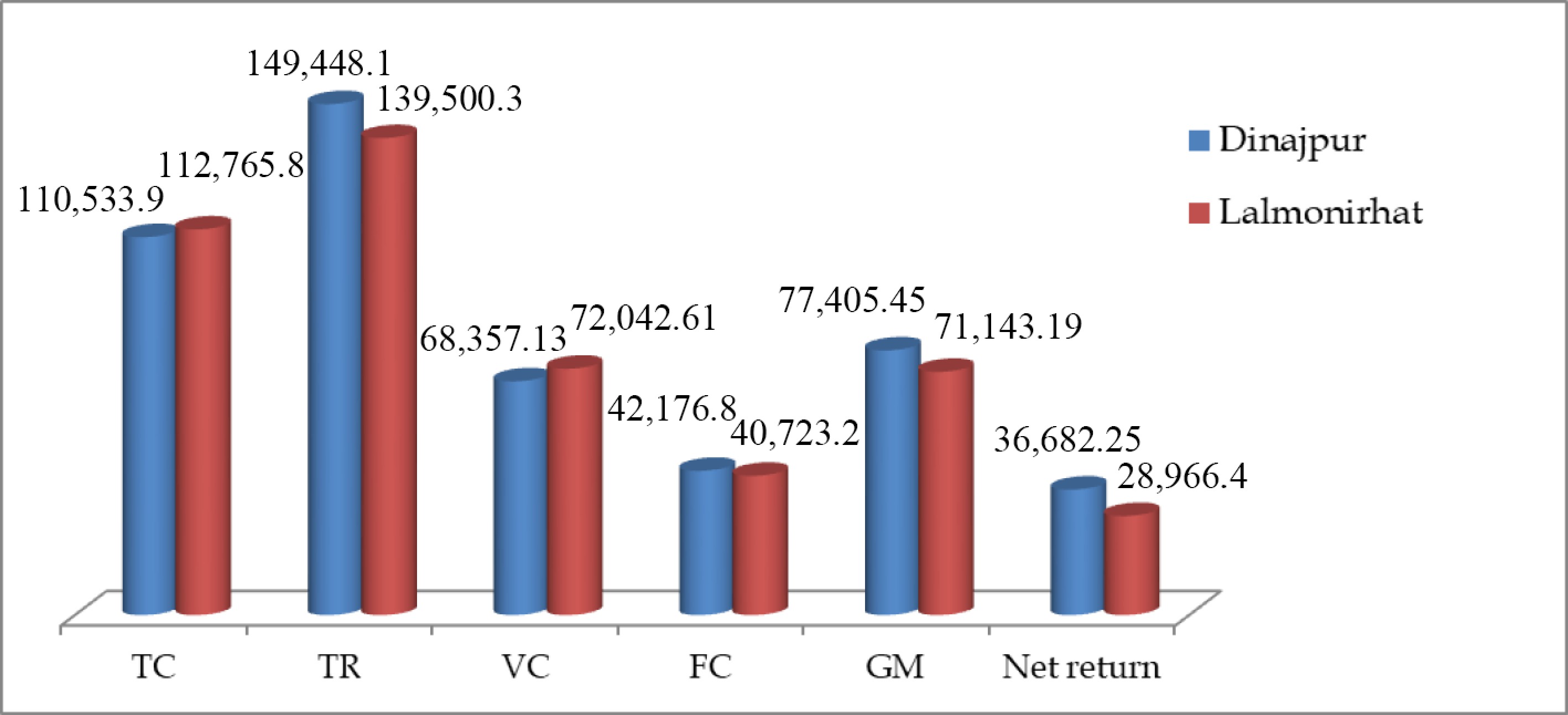
Figure 3.
TC, TR, VC, FC, GM, and net return of maize production of Dinajpur and Lalmonirhat district.
Both GM and Net Return provide additional insights regarding economic performance differences. Dinajpur has a larger GM (77,405.45 Tk/ha) than Lalmonirhat (71,143.19 Tk/ha), which indicates more profitability before fixed costs are considered. Dinajpur also had a greater net return after FC (36,682.25 Tk/ha) than Lalmonirhat (28,966.4 Tk/ha), which lends further support to the conclusion that maize production in Dinajpur is more profitable. The findings also demonstrate regional disparities in maize farming profitability, indicating that greater economic returns could be achieved through specific targeted initiatives, such as reducing costs and technology use, if undertaken in Lalmonirhat specifically.
-
This study aims to undertake a comprehensive economic analysis of the costs and benefits associated with boro and maize cultivation in the northern region of Bangladesh. The results lend credence to the hypothesis that the poor performance of maize compared to boro rice is largely a result of the more efficient use of certain resources by maize, such as irrigation water and labour. The lower irrigation cost of maize than boro rice shows that maize is more appropriate in the context of climate change when water supply in the dry season is unpredictable. The benefit-cost comparison of boro rice and maize production in northern Bangladesh suggests maize production is a more economically feasible and resource-efficient option than traditional boro rice farming, especially in the face of increasing water scarcity and climate uncertainties. Maize activities have a higher BCR of 1.30, compared to boro rice, which has a BCR of 1.07, due to lower implicit variable costs (70,199.90 Tk/ha for maize vs 86,084.92 Tk/ha for boro rice), and a higher net return of 32,824.33 Tk/ha compared to 9,516.60 Tk/ha. The higher BCR of maize suggests that the production of maize is economically significant for farm household income security and long-term sustainability of agriculture. Maize produced a higher net return and BCR than boro rice; thus, farmers can gain more profit from investing per unit of investment. This is especially significant for small- and medium-scale farm households as enhanced profitability can positively impact cash income, lessen financial pressure, and boost investment power in seeds, fertilizer, education, health, and other household needs. Scaled up to a policy level, in certain suitable areas, maize can be encouraged as a secondary crop to boro rice, particularly where irrigation water is scarce and production expenses are increasing. This, however, doesn't mean that boro rice should be totally replaced because rice is still an indispensable part of national food security. Rather, a balanced crop diversification strategy should be able to minimize production risk, enhance income stability, and facilitate sustainable utilization of land and water resources. As a result, policy support should be directed towards quality maize seed, readily available credit, extension training, irrigation efficiency, improved road networks, storage facilities, and improved market linkages to enable maize production to improve household income security and long-term agricultural sustainability goals. The economic advantage applies to maize due to the prices of variable inputs and outputs of maize, which are better than those for boro rice production. This includes the relationship to water, since maize production costs are more closely related to irrigation (5,121.70 Tk/ha for maize compared to 16,986.70 Tk/ha for boro rice), and labor (30,377.75 Tk/ha for maize compared to 40,183.17 Tk/ha for boro rice, aligning with global imperatives to prioritize drought-resilient crops amid escalating water scarcity[18,19]. Regional variations also explain that Dinajpur has greater profitability in maize (BCR: 1.33) than Lalmonirhat (1.26), which is due to better overall infrastructure like tarred roads (70.1% accessibility in Dinajpur vs 29.9% in Lalmonirhat) and better agroclimatic conditions in Dinajpur to grow maize crops. Nonetheless, regardless of the reasoning, both regions have systemic challenges: 81.25% of farmers did not have enough credit access, while 56.25% of farmers did not access extension services, and these factors can hinder scalability. The existence of traditional seed varieties (65% of maize farmers were using traditional seeds) and limited adoption of sustainable practices (28.66% for zero tillage) inhibit productivity increases and justify action consideration. These findings validate maize's role in climate-smart agriculture while highlighting the precarious balance between economic efficiency and food security, as boro rice remains indispensable for staple grain production despite its ecological costs[9,11,30].
The socio-economic characteristics of maize farmers—who are younger (58.67% aged 15–45), less formally educated (42.4% no schooling), but commercially driven—demonstrate a generational transition to market-driven agriculture due to demands from poultry and livestock[20,21,31]. This transition is uneven, however, and although 80.55% of maize farmers have market access, boro rice farmers are excluded (4% market access), which adds to inequality in income. Policymakers should successfully address these disparities through a multi-pronged approach, including subsidizing drought-resistant seeds, increasing access to microcredit programs, as well as strengthening rural infrastructure—for example, cold storage and processing units—both of which are key to reducing post-harvest losses that shine a spotlight on inequalities in access. Estimates of post-harvest losses due to economic factors alone in the case of maize in Bangladesh suggest these losses range between 15% and 20%[20,23]. Adding maize as a staple into national food security systems could broaden food options and limit overdependence on rice. The international community could benefit through engaging countries to meet Sustainable Development Goals (SDGs) of zero hunger (SDG 2), and climate-resilient food systems (SDG 13) through boiled maize. However, increasing the consumption of maize without instituting a participatory approach in communities will be challenging. Many farmers have highly fragmented land—71.55% do not farm more than a plot[24,32]—and the socio-cultural contexts around foods such as rice will need to be challenged. Gender-sensitive policies are just as important because women make up 35%–40% of the agricultural labor force in Bangladesh, but women are not as able to access land, credit, and make decisions[21]. Strengthening cooperatives and using digital platforms to get real-time market data could be of great help for smallholders, especially in remote areas like Patgram and Bochaganj, where the road conditions are still bad (50.35% report rough, marshy roads). At the same time, helping farmers work towards agroecological practices, such as planting maize with legumes as intercrops, would improve soil health and biodiversity, and reduce the environmental impact of monocropping[13,19]. While the study focuses on Dinajpur and Lalmonirhat, which limits generalizability to other agroclimatic zones (e.g., coastal or central Bangladesh, where soil salinity or flooding may modify crop dynamics)[8,10], the study relies on cross-sectional data for 2022, which precludes longitudinal analysis of climate impacts or market volatility, while also eliminating the possibility of incorporating qualitative factors that may also impact farmers' choices (e.g., social and cultural preferences to rice). Future studies should enlarge the geographic scope to encompass comparative studies in the Haor wetlands and Barind tracts, where water availability and soil characteristics are quite different. Long-term studies are also needed to assess the long-term sustainability of maize systems under a changing climate, such as erratic rainfall and increasing temperatures[13,19]. A detailed schematic figure on the discussions is given below in Fig. 4.
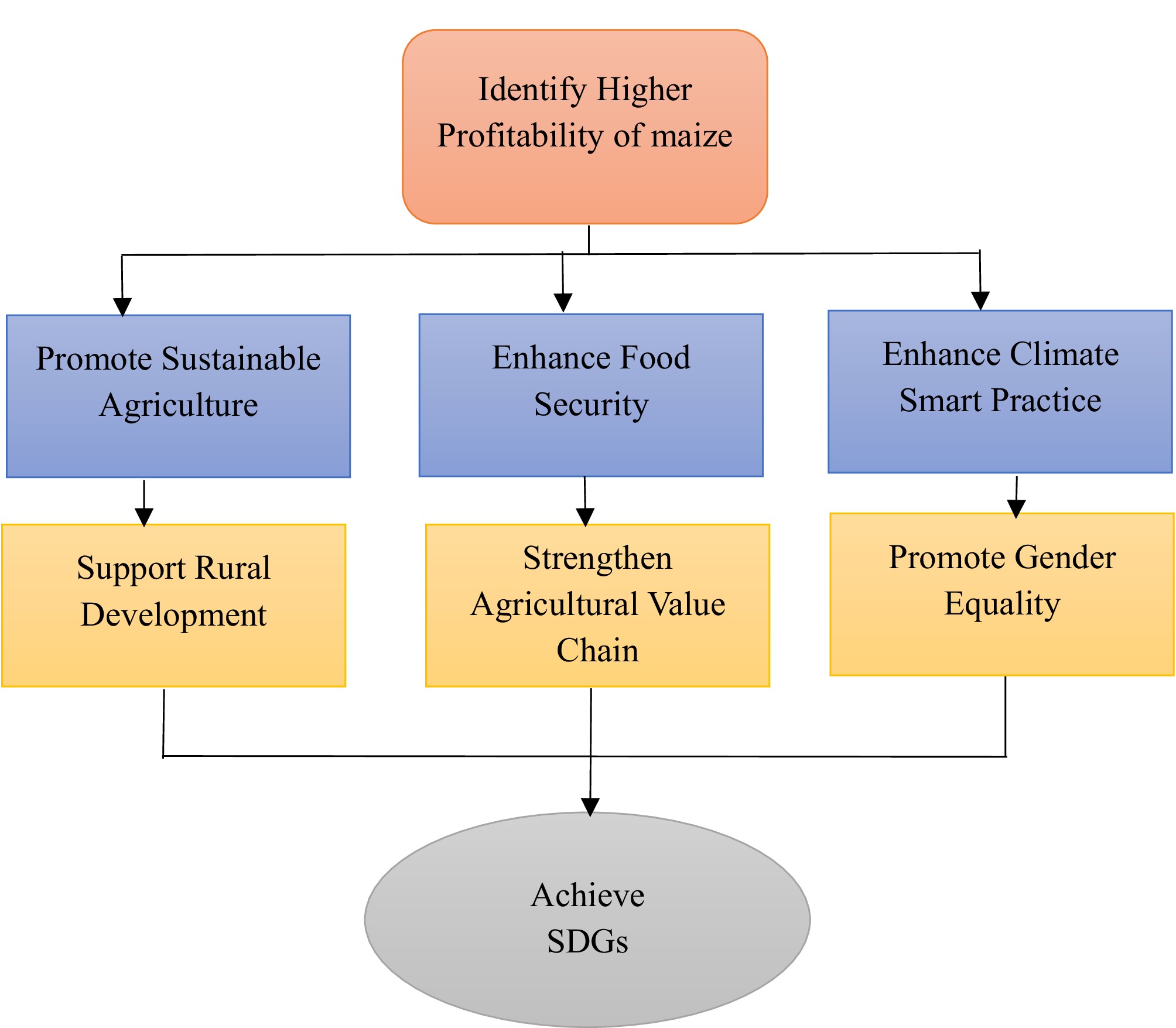
Figure 4.
Maize cultivation in the study areas.
Reduced economic efficiency of maize and boro rice production is also due to the regional environmental and institutional conditions. Crop productivity, production cost, and the farmer's profit can be directly affected by soil fertility, irrigation availability, market access, road infrastructure, extension services, and support from local government. Higher maize productivity and reduced production risk are possible at higher production level in some northern districts due to fertile alluvial soils and comparatively better agro-climatic conditions. At the same time, government extension programmes, input subsidies, irrigation facilities and agricultural training can enhance farmers' uptake of improved technologies and management practices. Road connectivity and market accessibility have also been documented to have a significant impact on farm-gate prices, transportation and post-harvest losses, which in turn have an impact on the profitability of cereal crops. Thus, the different profitability of Lalmonirhat and Dinajpur cannot be solely attributed to the nature or characteristics of the crop but also to the differences in the institutional support, infrastructure development and market system. The above external factors need to be taken into account when assessing the economic viability of maize and boro rice production in northern Bangladesh. Moreover, water scarcity is a growing problem in maximizing the profitability of crops in the face of climate change. When the dry season arrives, boro rice is very sensitive to irrigation water and any decrease in groundwater availability, irregular rainfall, delay in seasonal water recharge, or rise in temperature could directly lead to an increase in irrigation frequency and cost of production. An increase in temperature can also lead to more water required to grow crops and to lower input-use efficiency, particularly if farmers rely on diesel- or electricity-powered pumps. Hence, boro rice production could be expected to incur more irrigation costs, fuel/electricity costs, and production risk under future climate change conditions. Maize, in comparison, however, needs smaller amounts of irrigation and can do better under relatively dry conditions than boro rice. This indicates that maize could be a more viable option in the north of Bangladesh under climates of reduced water availability. Maize is not risk-free, however, as extreme heat, drought during the flowering period of maize, and varying market prices could impact yield and income. Thus, future agricultural development strategies should encourage climate-smart crop diversification, water use efficiency, the introduction of drought-tolerant maize, and structured assistance for profitability and food security. It is important to consider the regional variation in profitability in the agro-climatic local context of northern Bangladesh. Water stress is present in Lalmonirhat and Dinajpur, while they are also experiencing less rain during the winter season, and they are highly dependent on irrigation. These conditions influence crop selection, land preparation, labour application, fertilizer responses, and yield stability. Under drier conditions, maize is better suited, whereas Boro rice is more vulnerable to water stress and increasing input costs. In addition, the BCR findings do not conclude that maize is more profitable than Boro rice, but this finding needs to be taken with a pinch of salt until the season can be considered. Profitability of a crop can vary with time as a result of the variation in input prices, fuel cost, labour availability, rainfall pattern, irrigation access, pest pressure, yield variation, and demands in the market. Thus, the improved BCR of maize should be considered a significant short-term economic benefit, and a longer-term multi-season study is required to establish if the same profitability trend persists over the longer term and if it is sustainable. On the contrary, for issues related to education, access to credit, and extension, policymakers must provide support to practical solutions that benefit farmers. This includes conducting training for farmers on improved maize seeds, water management, fertilizer use, pest management, and maize storage. It is also recommended that the government make provisions for providing farmers with access to cheap agricultural loans, which would enable them to afford good seeds and inputs for growing maize. Other steps include provision of better extension services, forming farmers' associations, input assistance, storage, and market linkage, all of which could help minimize risks in the production process.
Future research should focus on conducting longitudinal studies to examine the long-term economic sustainability and climate resilience of maize and boro rice farming under changing environmental and market conditions. Comparative studies involving other alternative crops such as wheat, mustard, and vegetables could also help determine whether maize remains the most profitable and resource-efficient option in northern Bangladesh. In addition, future studies may include larger sample sizes, different agro-ecological regions, and advanced econometric or risk-analysis models to further validate and strengthen the findings of the present study.
-
To foster sustainable agricultural development, reduce poverty, and enhance food security in Bangladesh, policymakers should focus on promoting maize cultivation as a more profitable and resource-efficient alternative to boro rice. Given that maize offers higher profitability through greater net returns, gross margins, and a higher benefit-cost ratio, especially in regions like Lalmonirhat and Dinajpur, the government should incentivize its production. This can be achieved by providing subsidies for inputs like seeds, fertilizers, and irrigation tools, alongside training programs that teach farmers efficient cultivation practices, pest control, and market access strategies. Diversifying crop production to include maize alongside rice can also improve food security, offering a nutritious and cost-effective alternative to rice and reducing dependency on a single crop. However, there are also important policy implications of the differences observed between Lalmonirhat and Dinajpur from a regional perspective. The economic efficiency of maize production was higher in the case of Dinajpur, possibly due to better accessibility to the market, favorable agro-climatic conditions, and better farm management practices. On the other hand, lower profitability in Lalmonirhat calls for location-specific interventions in terms of improving infrastructure such as roads, agricultural extension services, access to better-quality seeds, financing, and irrigation facilities. Hence, there cannot be one national strategy for crop diversification. Additionally, rural development initiatives should focus on empowering smallholder farmers by offering microcredit, building infrastructure, and targeting women with gender-sensitive programs that address their specific challenges in agriculture. Ensuring equal access to resources, such as land and finance, will support women's financial independence and reduce gender disparities in agriculture. Finally, the government should promote maize as part of a broader strategy to diversify farming systems, build economic resilience, and improve livelihoods, thus contributing to the achievement of multiple Sustainable Development Goals, including poverty reduction (SDG 1), economic growth (SDG 8), food security (SDG 2), and gender equality (SDG 5).
-
The authors confirm their contribution to the paper as follows: study conception and design, methodology, validation: Ahmad B, Yeasmin (Lucky) R; investigation, resources: Ahmad B; formal analysis: Ahmad B, Selim S; software, data curation: Selim S, Hasan MR; visualization: Yeasmin (Lucky) R, Hossain MA; draft manuscript preparation: Ahmad B, Yeasmin (Lucky) R, Selim S, Hasan MR, Hossain MA; writing – review & editing: Ahmad B, Selim S, Hasan MR, Hossain MA; supervision, funding acquisition: Yeasmin (Lucky) R; project administration: Yeasmin (Lucky) R, Hossain MA. All authors reviewed the results and approved the final version ofthe manuscript.
-
The datasets generated and/or analyzed in the current study are available from the corresponding author upon reasonable request.
-
Authors declare that they have no conflict of interest.
- Copyright: © 2026 by the author(s). Published by Maximum Academic Press, Fayetteville, GA. This article is an open access article distributed under Creative Commons Attribution License (CC BY 4.0), visit https://creativecommons.org/licenses/by/4.0/.
-
About this article
Cite this article
Ahmad B, Yeasmin (Lucky) R, Selim S, Hasan MR, Hossain MA. 2026. Benefit-cost analysis of boro and maize farming in the northern region of Bangladesh. Circular Agricultural Systems 6: e025 doi: 10.48130/cas-0026-0024 

Benefit-cost analysis of boro and maize farming in the northern region of Bangladesh
- Received: 29 November 2025
- Revised: 14 July 2026
- Accepted: 18 July 2026
- Published online: 22 October 2026
Abstract: This study investigates the financial performance of maize and boro rice production in the Lalmonirhat and Dinajpur districts of Bangladesh. Data were collected from 300 households randomly selected from six upazilas within the two districts. This investigation focused on evaluating the economic factors, including total cost (TC), total return, gross return, net return, and the benefit-cost ratio (BCR), to acknowledge the economic viability of the crops. The findings show that maize farming is comparatively more profitable than boro rice. Total variable cost (TVC) of maize was lower (BDT 70199.90/ha) compared to boro rice (BDT 86,084.92/ha), indicating that maize production needs fewer inputs, especially in terms of labor and irrigation. However, maize showed a higher total return (BDT144,474.2/ha) compared to boro rice (BDT136540.5/ha), which directly contributed to its higher profitability. The gross margin for maize was significantly higher, with a pooled value of BDT 74,274.32/ha compared to BDT 51,234.52/ha for boro rice. The net return from maize is also significantly higher, with a difference of BDT 23,307.73/ha. The BCR for maize (1.30) was also higher than for boro rice (1.07), signifying a better investment for maize production. Regional disparities were noted in the profitability of maize, where Dinajpur had a higher rate compared to that of Lalmonirhat. This study supports the profitability of maize cultivation and reveals its possible spread in both districts, with implications for policy in agricultural planning and resource use.
-
Key words:
- Maize farming /
- Boro rice /
- Economic performance /
- Benefit-cost ratio (BCR) /
- Regional disparities