










-
Crop intensification using high-yielding hybrids and intensive cropping systems has increased crop production but can also accelerate soil fertility decline and dependence on synthetic fertilizers[1]. Maize and soybean are important food, feed, and income-generating crops, particularly in smallholder farming systems, but their productivity is constrained by declining soil fertility, climatic variability, pests, diseases, and inefficient resource use[2,3]. Such constraints can limit the sustainability of intensive monocropping systems and their capacity to meet increasing food and feed demands[3]. Alternatively, multiple cropping can increase crop production, improve land-use efficiency, and enhance farm income, particularly for smallholders with limited land resources[4].
Declining soil fertility under continuous monocropping can constrain maize productivity and pose challenges to sustainable maize production. As a leguminous crop, soybean can contribute biologically fixed nitrogen to the cropping system through symbiotic N2 fixation, while its complementary resource use with maize may improve overall system productivity[5]. Because maize and soybean have compatible growing seasons and contrasting growth characteristics, their intercropping can facilitate more efficient use of available land, light, water, and nutrients. In addition, complementary resource use between component crops can enhance total productivity and economic returns, even when the yield of an individual crop is lower than under sole cropping[6]. Therefore, maize-soybean intercropping represents a potential strategy for improving resource-use efficiency and farm returns while supporting more sustainable crop production under local conditions.
Soybean production is also constrained by poor establishment, diseases such as Soybean Mosaic Virus, and variable productivity among cultivars[7,8]. These issues are common in existing varieties such as William-82, Ajmeri, NARC-I, NARC-II, and Rawal-I. Seed inoculation with beneficial bacteria, particularly Bradyrhizobium japonicum, has shown potential to improve soybean growth and yield by enhancing biological nitrogen fixation. Seed inoculation with B. japonicum has been reported to improve soybean growth and yield under different soil and environmental conditions, including low-temperature conditions[9], N-deficient calcareous soils[10], and in combination with phosphorus fertilization[11]. Co-inoculation with Bradyrhizobium and Azospirillum has also been associated with improved nodulation and shoot growth[12]. Nevertheless, the effectiveness of inoculation may vary among soybean varieties and environmental conditions, and limited information is available on the combined effects of soybean variety and inoculation technique on the productivity of both crops under maize-soybean intercropping.
Based on these considerations, we hypothesized that soybean inoculation would improve soybean growth and yield under maize-soybean intercropping, with responses varying among soybean varieties and inoculation techniques. Therefore, this study aimed to evaluate the interactive effects of soybean variety and inoculation technique on the growth and yield of soybean and maize. A field experiment was conducted using three soybean varieties and three inoculation techniques in a 3 × 3 factorial randomized complete block design with three replications. The findings may provide evidence for identifying suitable soybean variety-inoculation combinations for improving productivity in maize-soybean intercropping under the tested field conditions.
-
The field experiment was conducted at the Agronomic Research Area, University of Agriculture, Faisalabad, Pakistan, during early spring under a semi-arid climate, with temperatures ranging from 22 to 25 °C during the experimental period. The experimental soil was sandy clay loam. Three soybean varieties, Ajmeri, Rawal-1, and NARC-2, were selected because they are established cultivars developed and evaluated under Pakistani production conditions. These varieties were used to assess varietal responses to different inoculation techniques under maize-soybean intercropping. Three inoculation treatments were evaluated: no inoculation, soil inoculation, and seed inoculation with B. japonicum. The uninoculated treatment served as the control, while soil and seed inoculation represented two methods of introducing the rhizobial inoculant into the cropping system. These treatments were selected to compare the effects of inoculation method and soybean varietal response under the experimental conditions. The experiment was arranged as a randomized complete block design (RCBD) with a 3 × 3 factorial arrangement and three replications. The factors comprised three soybean varieties and three inoculation treatments, resulting in nine treatment combinations. Within each block, the nine treatment combinations were randomly assigned to experimental plots to minimize positional effects. Maize and soybean were sown on the same day in plots measuring 2.4 m × 5 m. The experiment was conducted to evaluate the effects of soybean variety, inoculation technique, and their interaction on maize and soybean growth and yield.
Crop husbandry
-
Maize and soybean were intercropped on beds using double-row maize planting with 90 cm row-to-row spacing, which was selected to provide adequate space for both crops and facilitate efficient intercrop management under local field conditions. The field was tilled two to three times using a tractor-mounted cultivator to a depth of 10–12 cm, with each tillage operation followed by planking. Sowing was carried out on beds using the traditional chopa method, with seed rates of 25 kg·ha−1 for maize and 75 kg·ha−1 for soybean. The maize hybrid Pioneer-1574 was selected because of its suitability for the local agroecological conditions and its adaptation to the production environment of Faisalabad. Nitrogen, phosphorus, and potassium were applied at 250, 125, and 125 kg·ha−1, respectively, following the recommended fertilizer rates for maize-based production under the experimental conditions. Urea, single superphosphate (SSP), and sulphate of potash (SOP) were used as N, P, and K sources, respectively. The full P and K doses and half of the N dose were applied at sowing, while the remaining N was applied with the first irrigation. Ten irrigations of approximately three acre-inches each were applied according to crop requirements, with the first irrigation at 15 d after sowing and subsequent irrigations scheduled according to crop growth stage and field moisture conditions. Weeding was performed three times at 20, 35, and 50 d after sowing to minimize weed-crop competition. Furadan was applied at the six-leaf stage at 20 kg·ha−1 to protect maize from borer and shoot fly infestation.
Yield and yield-related data collection
-
At maturity, 10 representative maize cobs were randomly selected from each experimental plot. The grains from each cob were counted and averaged, and 1,000-grain weight was determined from a representative grain sample. Above-ground biomass from each plot was harvested at maturity, dried to a constant weight, and weighed using a weighing balance. The weight of stalks and cobs was used to calculate biological yield, which was expressed as t·ha−1. Grain yield was recorded after shelling the cobs and converted to t·ha−1[13].
For soybeans, representative plants were randomly selected from each plot to measure the recorded growth and yield traits. Plant height (cm), number of pods plant−1, 1,000-seed weight (g), biological yield (t·ha−1), grain yield (t·ha−1), and seed oil content (%) were recorded. Plant height and pods plant−1 were measured from selected plants, while 1,000-seed weight and yields were determined from harvested samples and expressed as g or t·ha−1, respectively. Seed oil content was determined by Soxhlet extraction[14]. The extracted oil was recovered, dried to constant weight, and expressed as a percentage of the original sample weight.
Statistical analysis
-
Data were analyzed using Fisher's analysis of variance (ANOVA) in IBM SPSS Statistics (v31). Soybean variety and inoculation technique were considered independent variables, while the measured traits were treated as response variables. The main effects and their interaction were evaluated, and treatment means were compared using Tukey's honestly significant difference (HSD) test at the 5% probability level[15].
-
The effects of soybean varieties and inoculation techniques on yield and yield-related traits of spring maize are presented in Table 1. Soybean variety did not significantly affect maize plant height (p > 0.05), which ranged from 184.11 with Ajmeri to 188.29 cm with NARC-2. However, soybean variety significantly affected 1,000-grain weight, number of grains per cob, biological yield, and grain yield (p < 0.05). Rawal-1 recorded the highest 1,000-grain weight (262.31 g), biological yield (16.03 t·ha−1), and grain yield (5.49 t·ha−1), compared with 247.20 g, 14.18 t·ha−1, and 4.77 t·ha−1, respectively, for Ajmeri. These represented differences of 6.1%, 13.0%, and 15.1%, respectively. Rawal-1 also produced more grains per cob (284) than Ajmeri (250.22), while NARC-2 (265.22) was intermediate (p < 0.05).
Table 1. Influence of inoculation techniques and different soybean varieties on yield and yield related traits of spring maize.
Plant height (cm) 1,000-grain weight (g) Number of grains per cob Biological yield (t·ha−1) Grain yield (t·ha−1) Soybean varieties (V) Ajmeri 184.11 247.20 250.22 B 14.18 4.77 Rawal-1 186.78 262.31 284 A 16.03 5.49 NARC-2 188.29 261.80 265.22 AB 15.91 5.46 HSD (p ≤ 0.05) NS 13.47 21.07 1.45 0.66 Inoculation techniques (I) No inoculation 183.65 B 246.80 239 C 12.50 4.72 Soil inoculation 194.08 A 266.75 297 A 17.58 5.74 Seed inoculation 181.44 B 257.75 263.22 B 16.03 5.27 HSD (p ≤ 0.05) 5.51 13.47 21.07 1.45 0.66 Interaction (V × I) NS Fig. 1 * NS Fig. 2 * Fig. 3 * HSD (p ≤ 0.05) 32.19 3.46 1.57 Means not sharing a letter in common within a row differ significantly at the 5% probability level.The different uppercase letters indicate statistically significant differences among the treatments, as determined by Tukey's HSD test at p < 0.05. An asterisk (*) indicates statistical significance at p < 0.05. Inoculation technique significantly affected maize plant height, number of grains per cob, biological yield, and grain yield, but not 1,000-grain weight. Soil inoculation resulted in 194.08 cm plant height, 297 grains per cob, 17.58 t·ha−1 biological yield, and 5.74 t·ha−1 grain yield. Compared with no inoculation, soil inoculation increased plant height, grains per cob, biological yield, and grain yield by 5.7%, 24.3%, 40.6%, and 21.6%, respectively. Seed inoculation resulted in 181.44 cm plant height, 263.22 grains per cob, 16.03 t·ha−1 biological yield, and 5.27 t·ha−1 grain yield.
The soybean variety × inoculation technique interaction was non-significant for plant height and number of grains per cob but significant for 1,000-grain weight, biological yield, and grain yield (Table 1). Rawal-1 with soil inoculation recorded the highest 1,000-grain weight (287.33 g), biological yield (19.03 t·ha−1), and grain yield (6.96 t·ha−1), whereas uninoculated Ajmeri recorded the lowest values (235.00 g, 11.89 t·ha−1, and 4.11 t·ha−1, respectively) (Figs 1−3). Thus, the treatment combination that produced greater grain weight also recorded greater biological and grain yield. The HSD values for the interaction were 32.19 g, 3.46 t·ha−1, and 1.57 t·ha−1 for 1,000-grain weight, biological yield, and grain yield, respectively.
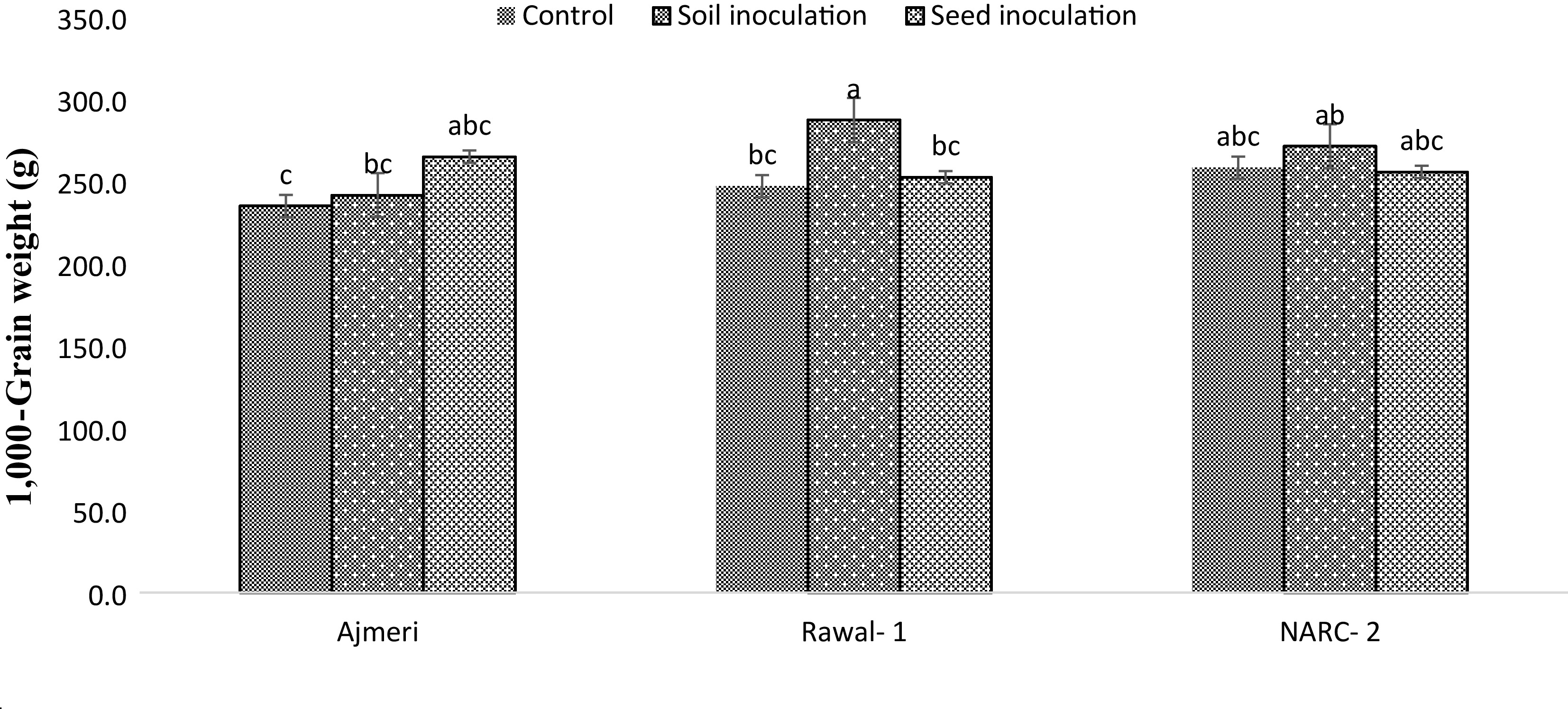
Figure 1.
Interactive effect of soybean varieties and inoculation techniques on 1,000-grain weight (g) of spring maize. The different lowercase letters indicate statistically significant differences among the treatments, as determined by Tukey's HSD test at p < 0.05. Means sharing the same lowercase letter are not significantly different.
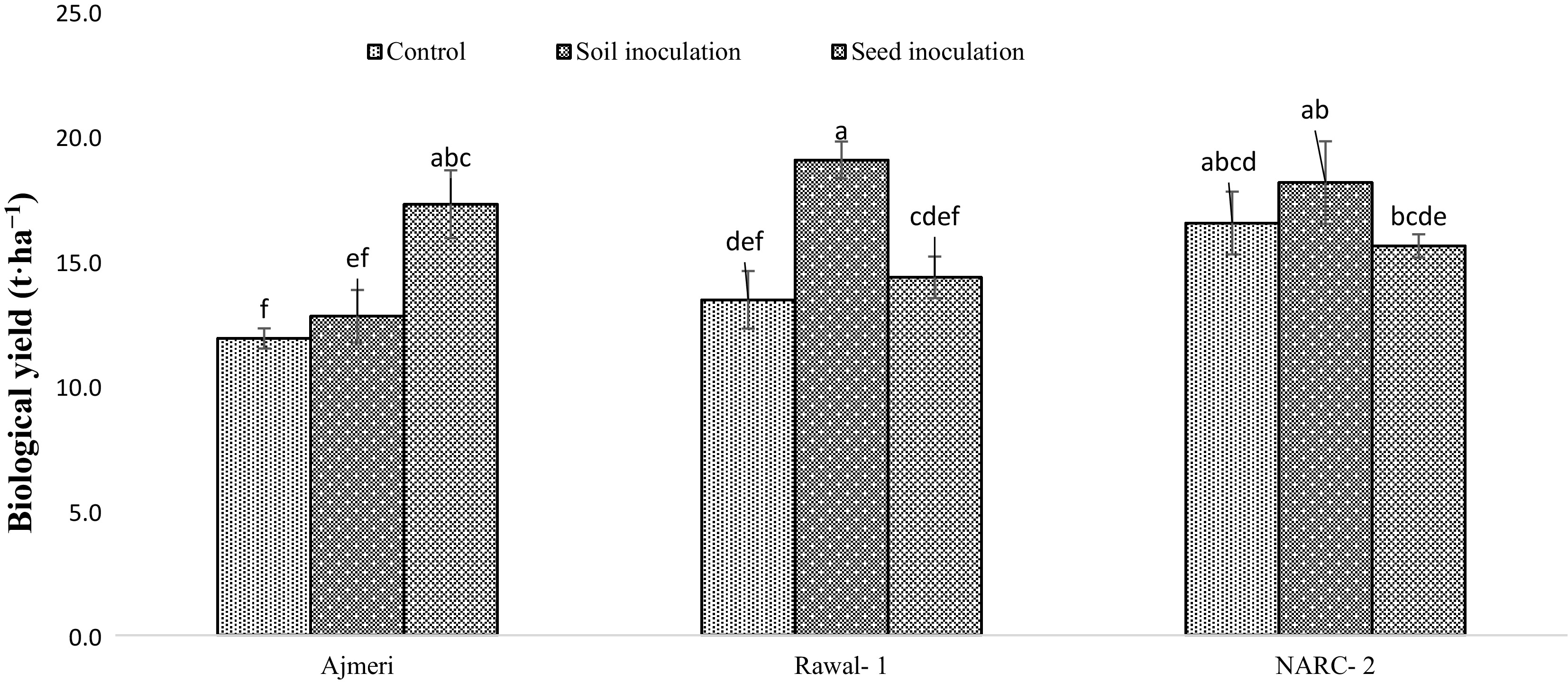
Figure 2.
Interactive effect of soybean varieties and inoculation techniques on biological yield (t·ha−1) of maize. The different lowercase letters indicate statistically significant differences among the treatments, as determined by Tukey's HSD test at p < 0.05. Means sharing the same lowercase letter are not significantly different.
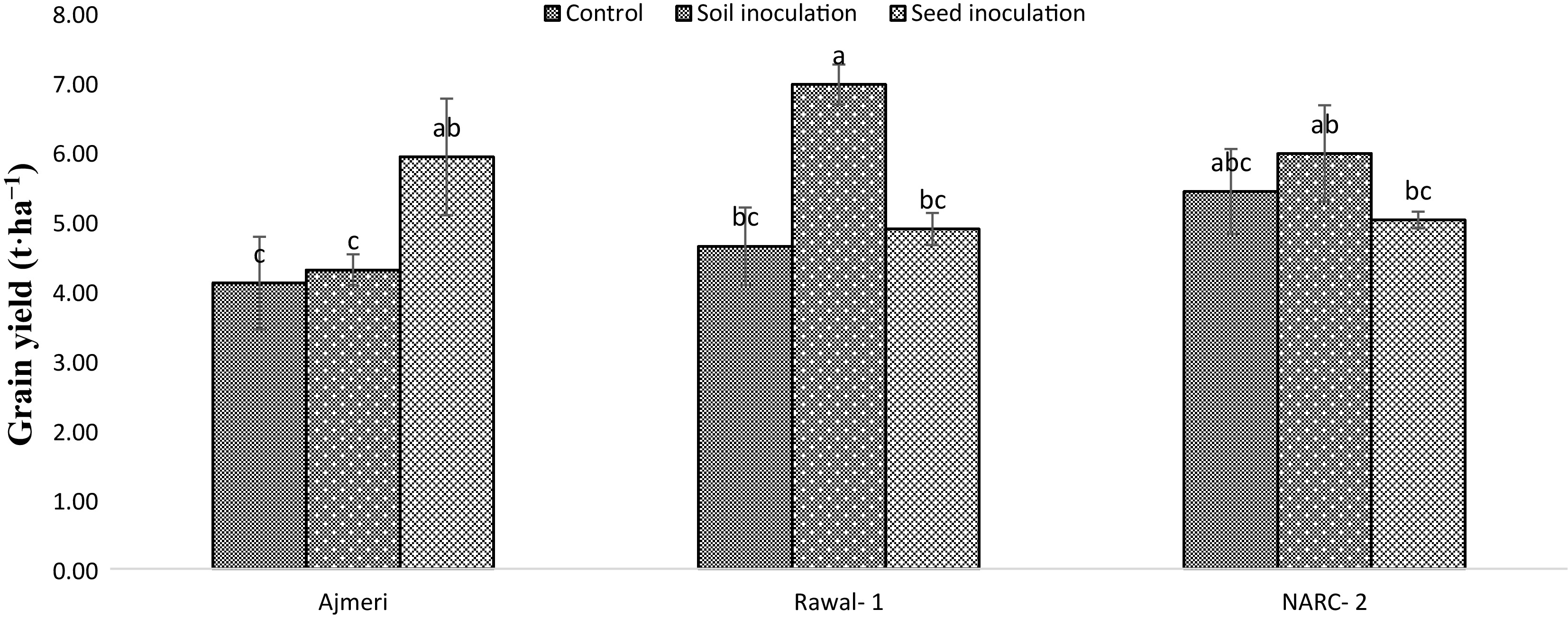
Figure 3.
Interactive effect of soybean varieties and inoculation techniques on grain yield (t ha−1) of maize. The different lowercase letters indicate statistically significant differences among the treatments, as determined by Tukey's HSD test at p < 0.05. Means sharing the same lowercase letter are not significantly different.
Effects of soybean variety and inoculation technique on soybean growth, yield, and seed oil content
-
The effects of soybean varieties and inoculation techniques on soybean growth, yield, and seed oil content are presented in Table 2. Soybean variety significantly affected all measured traits (p < 0.05). Rawal-1 recorded the highest plant height (89.00 cm), number of pods plant−1 (109.14), 1,000-seed weight (130.48 g), biological yield (2.70 t·ha−1), grain yield (1.14 t·ha−1), and seed oil content (18.24%). Compared with Ajmeri, Rawal-1 increased these traits by 14.8%, 26.3%, 35.0%, 56.1%, 67.6%, and 38.1%, respectively (p < 0.05). NARC-2 recorded intermediate values for most traits, while its plant height (74.66 cm) was lower than that of both Ajmeri and Rawal-1 (p < 0.05).
Table 2. Influence of inoculation techniques and different soybean varieties on yield and yield related traits of soybean.
Plant height
(cm)Number of
pods per plant1,000-grain weight
(g)Biological yield
(t·ha−1)Grain yield
(t·ha−1)Seed oil content (%) Soybean varieties (V) Ajmeri 77.52 B 86.44 C 96.68 C 1.73 C 0.68 C 13.21 C Rawal-1 89 A 109.14 A 130.48 A 2.70 A 1.14 A 18.24 A NARC-2 74.66 C 97.11 B 101.58 B 1.86 B 0.76 B 14.32 B HSD (p ≤ 0.05) 2.37 1.39 1.28 0.04 0.03 0.39 Inoculation techniques (I) No inoculation 72.63 C 85.52 C 98.53 C 1.90 C 0.74 C 13.52 C Soil inoculation 80.66 B 97.95 B 107.44 B 2.09 B 0.85 B 15.32 B Seed inoculation 87.88 A 110.11 A 122.77 A 2.32 A 0.99 A 16.93 A HSD (p ≤ 0.05) 2.37 1.39 1.28 0.04 0.03 0.39 Interaction (V × I) Fig. 4 * Fig. 5 * Fig. 6 * Fig. 7 * Fig. 8 * Fig. 9 * HSD (p ≤ 0.05) 5.66 3.32 3.08 0.09 0.07 0.93 Means not sharing a letter in common within a row differ significantly at the 5% probability level. The different uppercase letters indicate statistically significant differences among the treatments, as determined by Tukey's HSD test at p < 0.05. An asterisk (*) indicates statistical significance at p < 0.05. Inoculation technique also significantly affected all measured traits. Seed inoculation resulted in the highest plant height (87.88 cm), number of pods plant−1 (110.11), 1,000-seed weight (122.77 g), biological yield (2.32 t·ha−1), grain yield (0.99 t·ha−1), and seed oil content (16.93%). Compared with no inoculation, seed inoculation increased these traits by 21.0%, 28.8%, 24.6%, 22.1%, 33.8%, and 25.2%, respectively. Soil inoculation produced intermediate values for all traits.
The interaction between soybean variety and inoculation technique was significant for all six traits (Table 2), with interaction means presented in Figs 4−9. Seed-inoculated Rawal-1 consistently recorded the highest values for plant height (98.67 cm), number of pods plant−1 (125.74), 1,000-seed weight (147.07 g), biological yield (2.88 t·ha−1), grain yield (1.23 t·ha−1), and seed oil content (19.29%), whereas uninoculated Ajmeri recorded the lowest values (68.23 cm, 77.00 pods plant−1, 87.17 g, 1.54 t·ha−1, 0.53 t·ha−1, and 11.13%, respectively). Thus, the treatment combination producing greater plant growth and yield components also resulted in higher biological and grain yields and seed oil content. The corresponding HSD values were 5.66 cm, 3.32 pods plant−1, 3.08 g, 0.09 t·ha−1, 0.07 t·ha−1, and 0.93%, respectively.
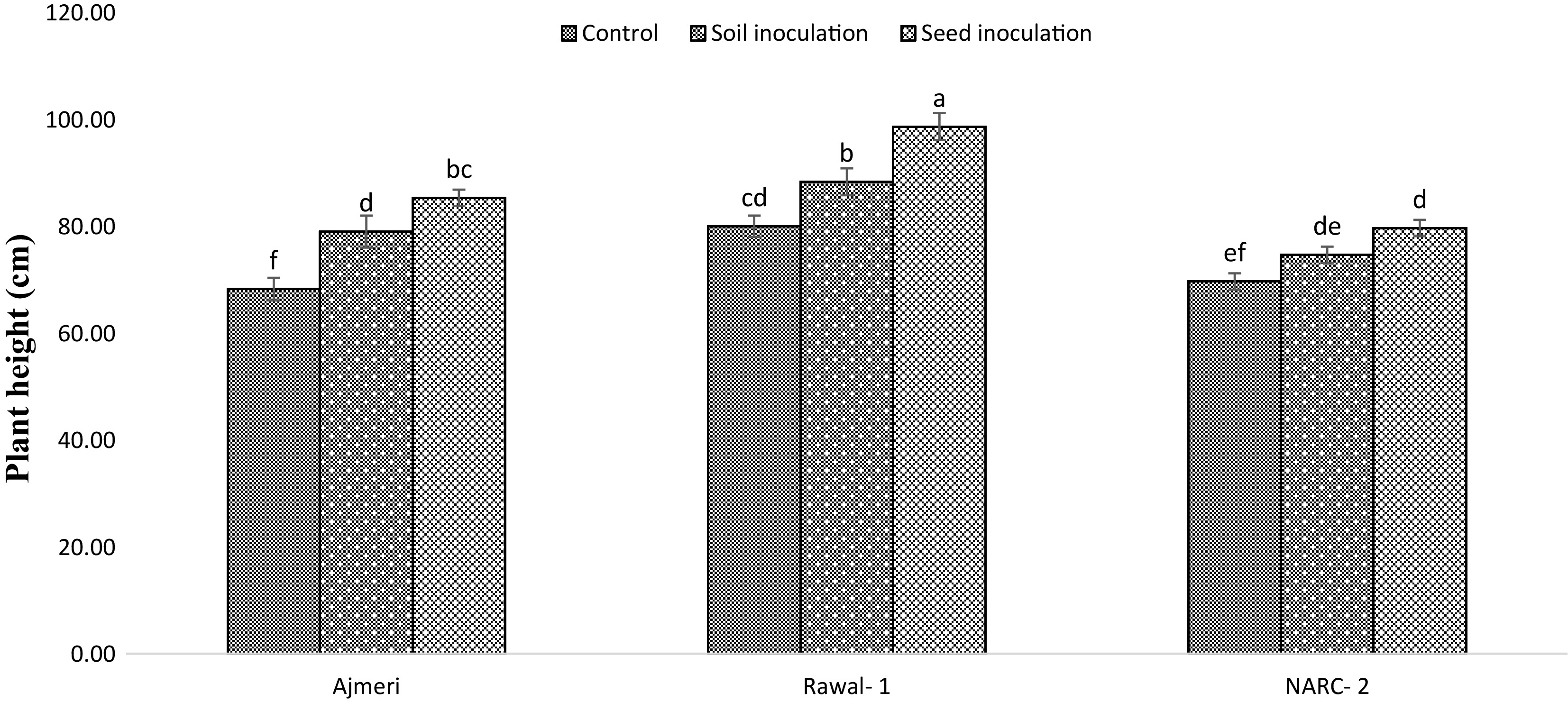
Figure 4.
Interactive effect of soybean varieties and inoculation techniques on plant height (cm) of soybean. The different lowercase letters indicate statistically significant differences among the treatments, as determined by Tukey's HSD test at p < 0.05. Means sharing the same lowercase letter are not significantly different.
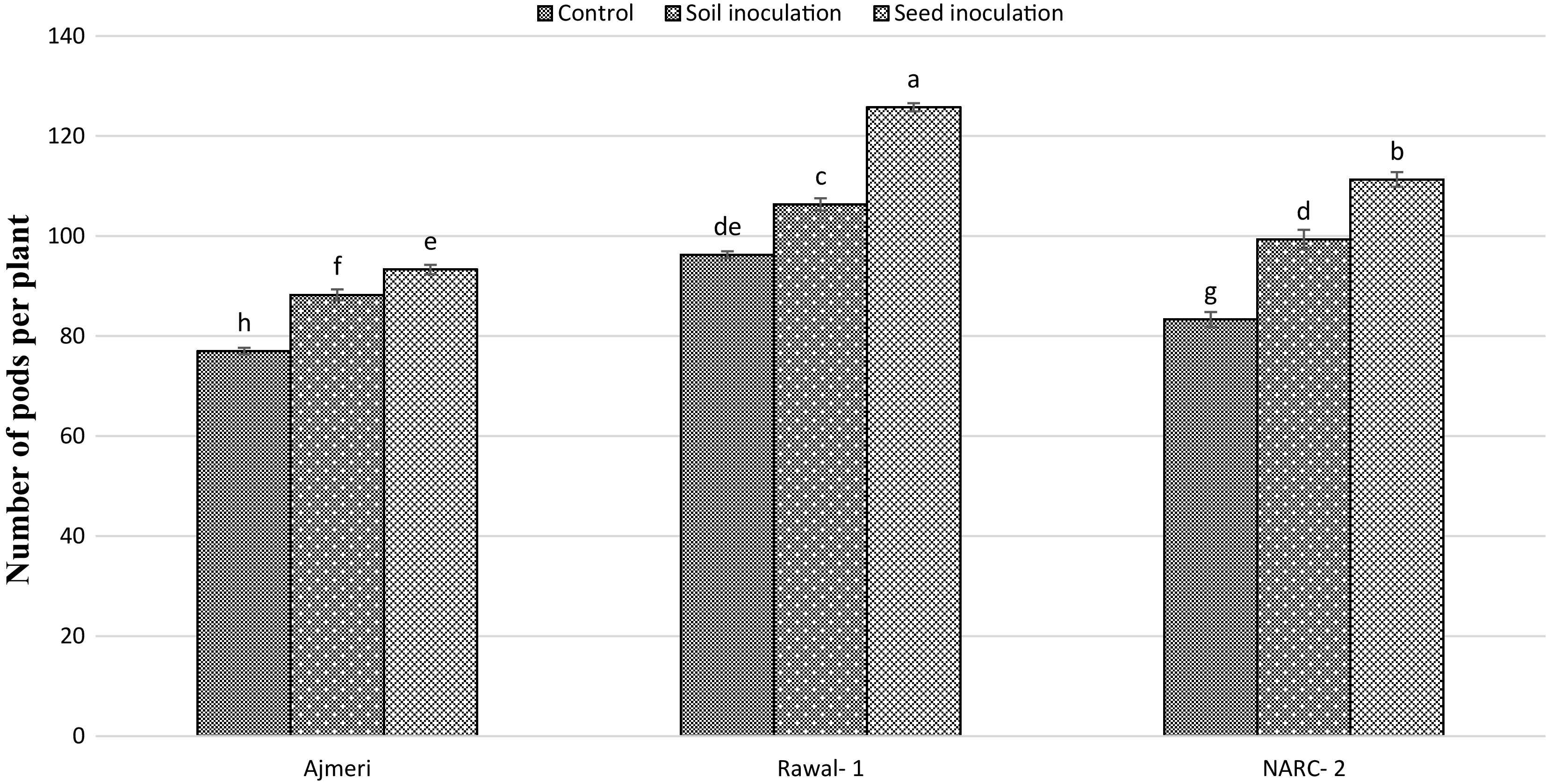
Figure 5.
Interactive effect of soybean varieties and inoculation techniques on number of pods per plant of soybean. The different lowercase letters indicate statistically significant differences among the treatments, as determined by Tukey's HSD test at p < 0.05. Means sharing the same lowercase letter are not significantly different.
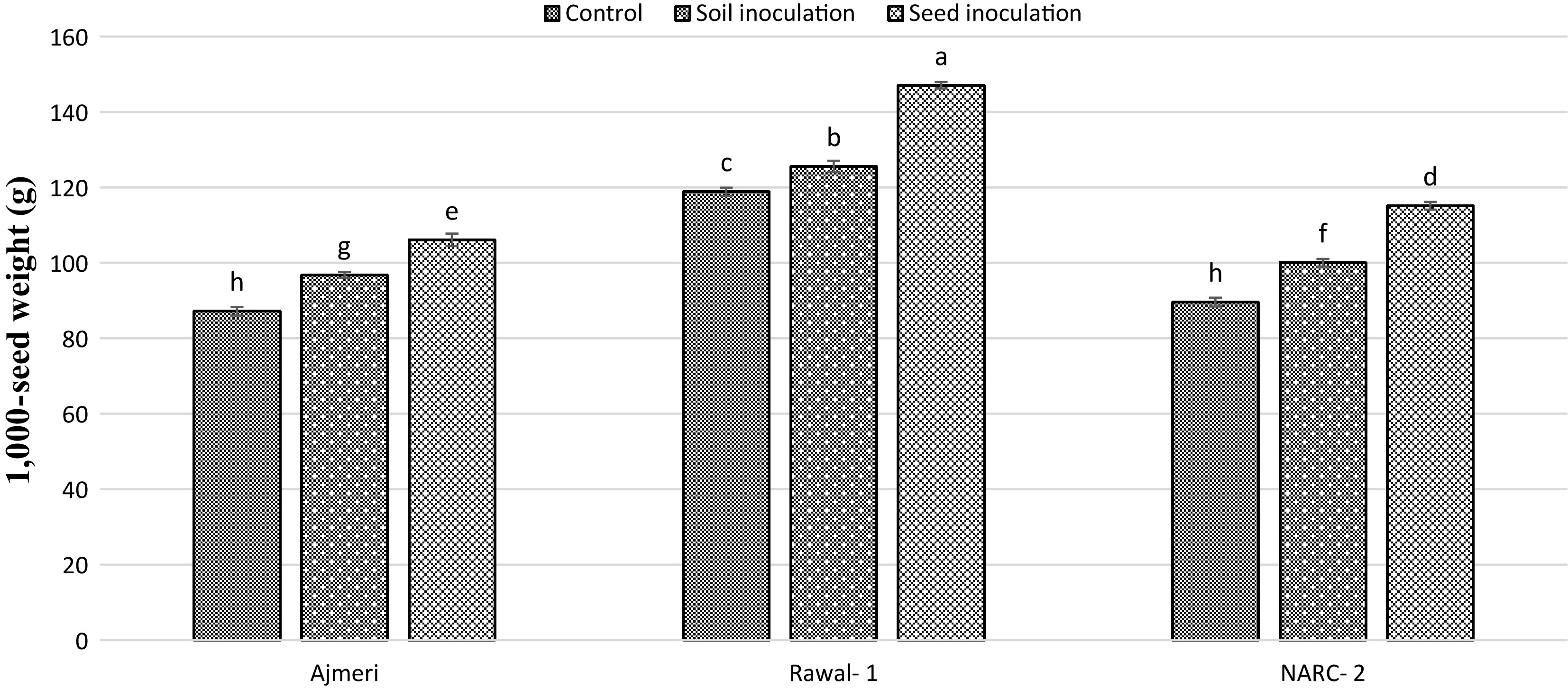
Figure 6.
Interactive effect of soybean varieties and inoculation techniques on 1,000-grain weight (g) of soybean. The different lowercase letters indicate statistically significant differences among the treatments, as determined by Tukey's HSD test at p < 0.05. Means sharing the same lowercase letter are not significantly different.
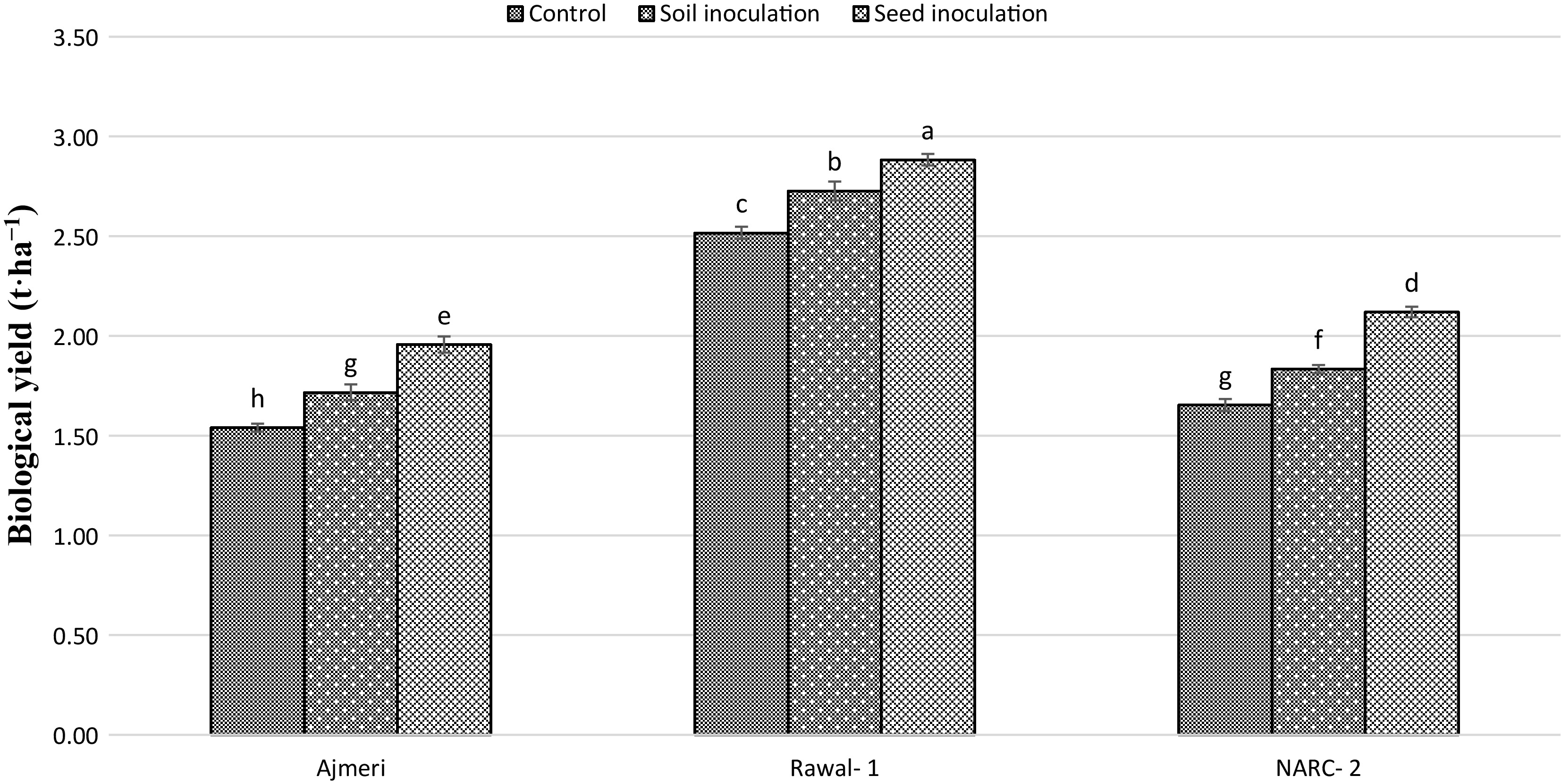
Figure 7.
Interactive effect of soybean varieties and inoculation techniques on biological yield (t·ha−1) of soybean. The different lowercase letters indicate statistically significant differences among the treatments, as determined by Tukey's HSD test at p < 0.05. Means sharing the same lowercase letter are not significantly different.
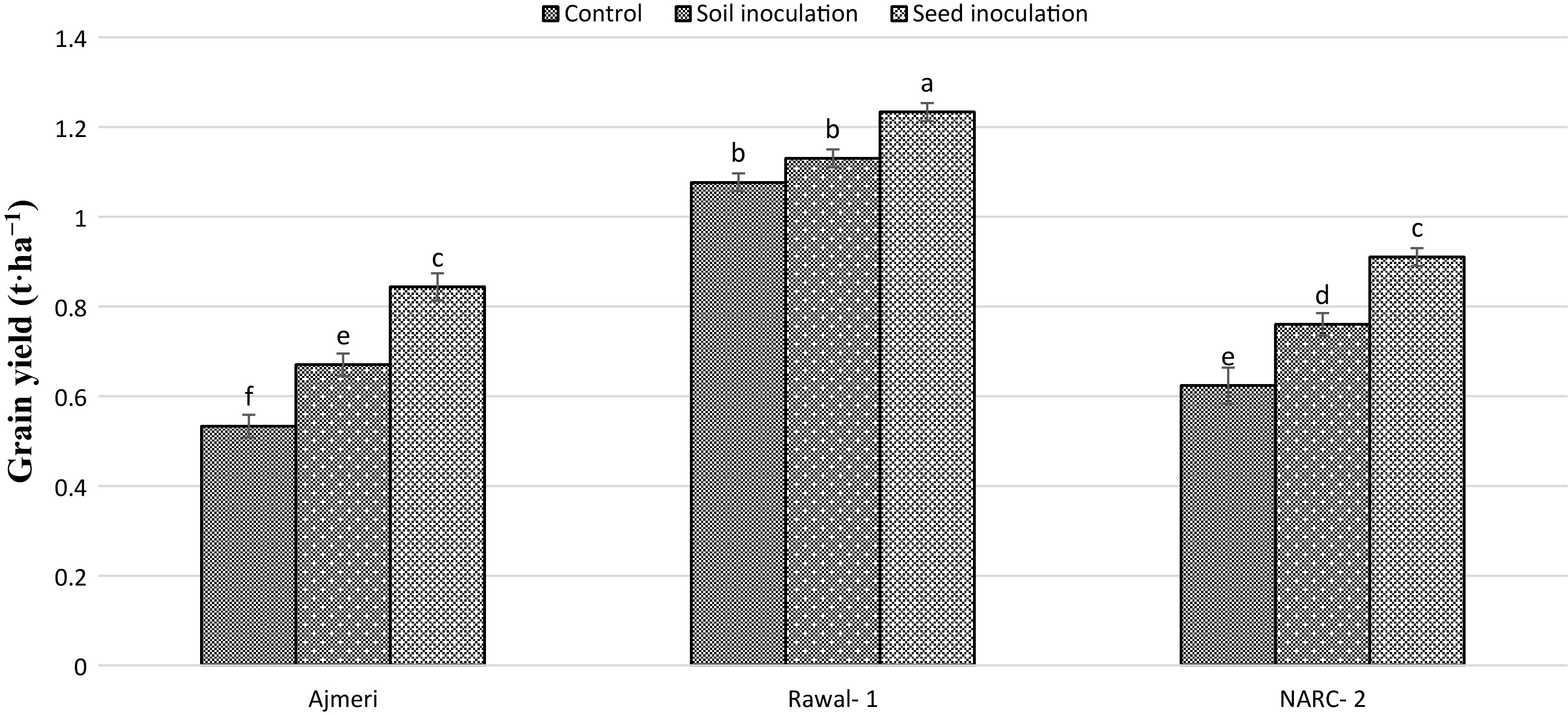
Figure 8.
Interactive effect of soybean varieties and inoculation techniques on grain yield (t·ha−1) of soybean. The different lowercase letters indicate statistically significant differences among the treatments, as determined by Tukey's HSD test at p < 0.05. Means sharing the same lowercase letter are not significantly different.
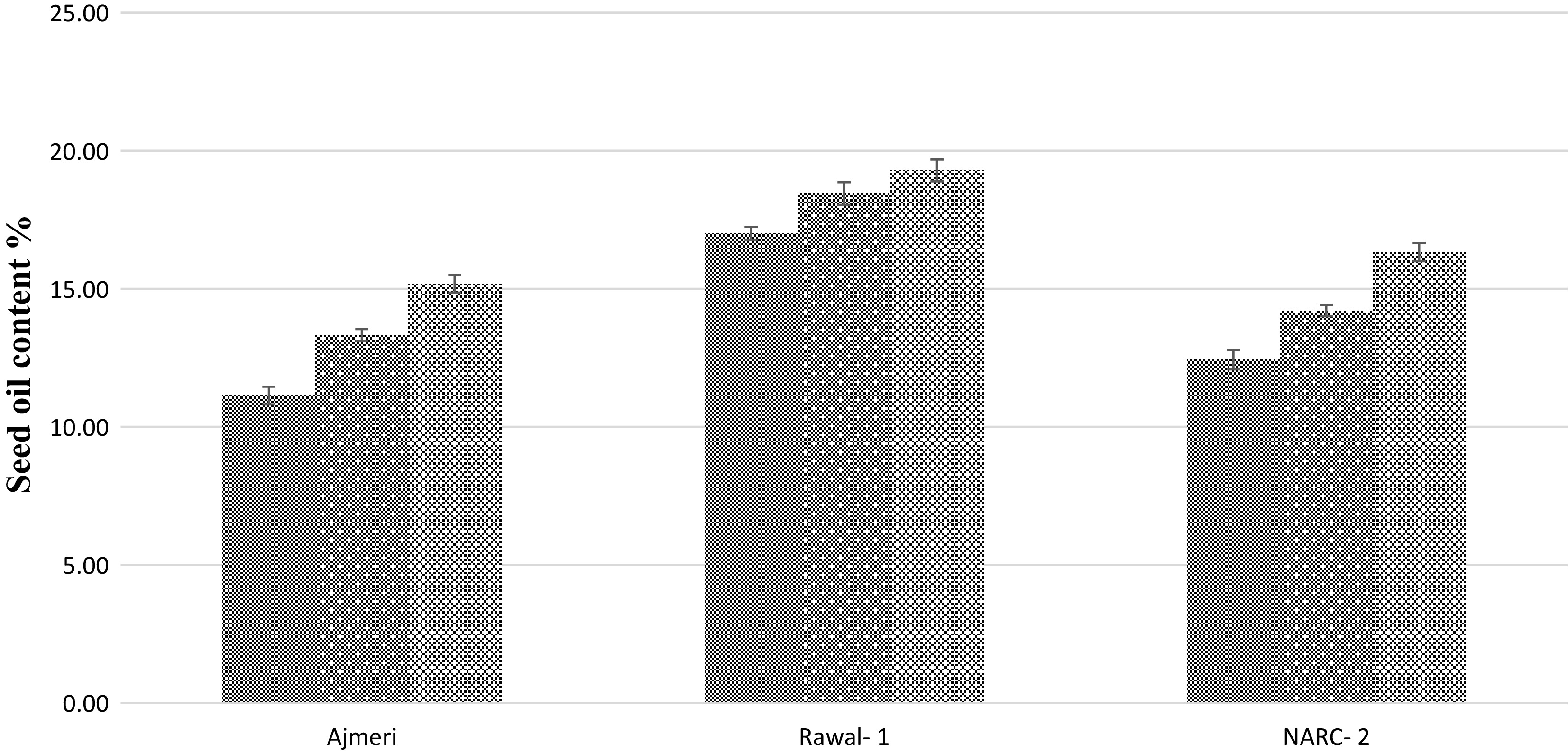
Figure 9.
Interactive effect of soybean varieties and inoculation techniques on seed oil content (%) of soybean. The different lowercase letters indicate statistically significant differences among the treatments, as determined by Tukey's HSD test at p < 0.05. Means sharing the same lowercase letter are not significantly different.
For 1,000-seed weight, seed-inoculated Rawal-1 recorded 147.07 g, compared with 87.17 g in uninoculated Ajmeri, representing a 68.7% difference (Fig. 6). Biological yield increased from 1.54 t·ha−1 with uninoculated Ajmeri to 2.88 t·ha−1 with seed-inoculated Rawal-1, corresponding to an 87.2% difference (Fig. 7). Similarly, grain yield increased from 0.53 t·ha−1 under uninoculated Ajmeri to 1.23 t·ha−1 with seed-inoculated Rawal-1, representing a 131.3% difference (Fig. 8). Seed oil content increased from 11.13% with uninoculated Ajmeri to 19.29% with seed-inoculated Rawal-1, corresponding to a 73.2% difference (Fig. 9). The HSD values for the interactions were 5.66 cm, 3.32 pods plant−1, 3.08 g, 0.09 t·ha−1, 0.07 t·ha−1, and 0.93% for plant height, number of pods plant−1, 1,000-seed weight, biological yield, grain yield, and seed oil content, respectively.
-
Results presented in Table 1 show that different inoculation techniques in combination with soybean varieties significantly affected maize productivity. Plant height may be influenced by legume inoculation in maize-legume intercropping systems, as plants growing under competition for light may exhibit greater vertical growth[16]. Similarly, various inoculation methods significantly affected plant height of maize under maize-legume intercropping systems[17]. However, as light interception and hormonal responses were not measured in the present study, these mechanisms should be considered possible explanations rather than experimentally verified causes. The increase in plant height was also accompanied by higher biological yield (Table 1), which may reflect differences in resource competition and crop growth under the intercropping system.
The number of grains per cob and grain weight are important components of maize grain yield. The increase in these parameters may be associated with improved nutrient availability and complementary interactions between maize and legumes in the intercropping system[18]. Rhizobial inoculation may indirectly contribute to these interactions through its role in biological nitrogen fixation by the legume component, potentially improving nutrient availability within the system. However, nutrient availability and uptake by maize were not directly measured in the present study; therefore, this mechanism should be considered a possible explanation rather than a demonstrated effect.
Furthermore, in cereal-legume intercropping systems, seed inoculation of legumes has been associated with enhanced nodulation and biological nitrogen fixation, which may contribute to improved nutrient availability within the intercrop[19]. Previous studies have also reported significant effects of inoculation methods on 1,000-grain weight and other yield-contributing traits of maize[20]. The potential contribution of enhanced nitrogen availability to cereal performance in legume-based intercropping has been reported in previous studies[21,22]. In the present study, the positive response of maize yield to different inoculation treatments and legume varieties may reflect both inoculation effects and varietal differences in the legume component. However, because nodulation, soil nitrogen dynamics, and crop nitrogen uptake were not directly measured, the underlying mechanisms cannot be confirmed from the present experiment. Previous research has also suggested that rhizobial inoculation may promote plant growth and nutrient availability[23−25]. The reported 28% increase in maize grain yield compared with sole-cropped maize (Table 1) is consistent with previous findings associating legume-cereal intercropping and inoculation with improved nutrient availability[26], but the specific contribution of nitrogen fixation to this increase requires further experimental verification.
Effects of soybean variety and inoculation technique on soybean growth, yield, and seed oil content
-
The significant effects of soybean variety and inoculation technique on growth, yield, and seed oil content (Table 2) indicate that soybean performance under maize-soybean intercropping varied with both genotype and inoculation treatment. Rawal-1 consistently performed better than Ajmeri and NARC-2, suggesting greater varietal suitability for the tested intercropping conditions. Similar varietal differences in soybean growth and yield have been reported previously[27,28].
Seed inoculation with B. japonicum generally resulted in greater plant height and number of pods plant−1 than soil and non-inoculated treatments. This response may be associated with enhanced biological nitrogen fixation and nitrogen availability to soybean. Previous research has reported increased seed nitrogen content following B. japonicum inoculation[29,30]. However, nitrogen fixation and nutrient uptake were not directly measured in the present study; therefore, this mechanism should be considered a possible explanation rather than a confirmed causal effect.
The higher 1,000-grain weight observed under seed inoculation was accompanied by greater grain yield, particularly in Rawal-1. This relationship suggests that improved seed development contributed to the observed yield advantage, consistent with previous findings[31,32]. Differences in biological yield may also reflect variation in competitive interactions between maize and soybean. Maize may compete with soybean for light and other resources, potentially limiting soybean biomass accumulation[33]. However, these mechanisms were not directly measured in the present study and therefore require further investigation.
Seed oil content was significantly influenced by soybean variety and inoculation technique. The higher oil content recorded in Rawal-1, particularly under seed inoculation, suggests that both varietal characteristics and inoculation treatment may influence oil accumulation. Previous studies have similarly reported increased soybean oil content following B. japonicum inoculation compared with non-inoculated treatments[34,35]. Nevertheless, because environmental and physiological determinants of oil accumulation were not directly measured, their relative contribution to the observed varietal and inoculation effects cannot be separated in the present study.
-
This study indicates that maize-soybean intercropping with appropriate inoculation can improve soybean productivity under the tested field conditions. Seed-inoculated Rawal-1 showed potential for improving soybean grain yield and seed oil content, producing the highest soybean grain yield (1.23 t·ha−1) and seed oil content (19.29%). The soybean grain yield represented a 131.3% increase over uninoculated Ajmeri (0.53 t·ha−1), while soil-inoculated Rawal-1 produced the highest maize grain yield (6.96 t·ha−1). Although maize grain yield may be reduced under intercropping, the additional soybean yield may provide compensatory benefits. The observed responses may vary with soil conditions, growing season, environmental variability, soybean genotype, and inoculation technique. Further multi-season and multi-location studies, including economic assessment, are needed to validate the consistency and practical feasibility of this approach.
The authors acknowledge the Department of Agronomy, University of Agriculture, Faisalabad, for providing research facilities. This research received no external funding.
-
Not applicable.
-
The authors confirm contributions to the paper as follows: study conception and design: Khan HZ, Suffyan M, Shabir MA; data collection: Suffyan M, Ali M; analysis and interpretation of results: Shabir MA, Iqbal A, Anjum F, Aslam M, Saleem MF, Naeem A; draft manuscript preparation: Shabir MA, Khan HZ. All authors reviewed the results and approved the final version of the manuscript.
-
The datasets generated during the current study are available from the corresponding author upon reasonable request.
-
The authors declare that they have no conflict of interest.
- Copyright: © 2026 by the author(s). Published by Maximum Academic Press, Fayetteville, GA. This article is an open access article distributed under Creative Commons Attribution License (CC BY 4.0), visit https://creativecommons.org/licenses/by/4.0/.
-
About this article
Cite this article
Khan HZ, Suffyan M, Shabir MA, Aslam M, Anjum F, et al. 2026. Interactive effects of inoculation techniques and soybean varieties on a maize-soybean system. Circular Agricultural Systems 6: e024 doi: 10.48130/cas-0026-0029 

Interactive effects of inoculation techniques and soybean varieties on a maize-soybean system
- Received: 17 June 2026
- Revised: 08 September 2026
- Accepted: 09 September 2026
- Published online: 09 October 2026
Abstract: Conventional cropping systems may contribute to declining soil fertility and crop productivity. Maize-soybean intercropping offers a potential approach to improve resource use and overall crop productivity. Therefore, a field study was conducted at the Agronomic Research Area, University of Agriculture, Faisalabad, Pakistan, to evaluate the effects of soybean variety and inoculation technique on the productivity of soybean intercropped with spring-planted maize. Three soybean varieties (Ajmeri, Rawal-1, and NARC-2) were evaluated in combination with three inoculation techniques: no inoculation, soil inoculation, and seed inoculation with Bradyrhizobium japonicum. It was hypothesized that inoculation, particularly seed inoculation, would improve soybean performance and contribute to enhanced productivity of the maize-soybean intercropping system. All soybean varieties were intercropped with maize in 90-cm-spaced double-row strips. The interaction between soybean variety and inoculation technique significantly affected maize 1,000-grain weight, biological yield, and grain yield. Soil-inoculated Rawal-1 produced the highest values (287.33 g, 19.03 t·ha−1, and 6.96 t·ha−1, respectively), whereas uninoculated Ajmeri recorded the lowest (235.00 g, 11.89 t·ha−1, and 4.11 t·ha−1). For soybean, the interaction significantly affected all measured traits, with seed-inoculated Rawal-1 producing the highest pods plant−1 (125.74), 1,000-seed weight (147.07 g), grain yield (1.23 t·ha−1), and seed oil content (19.29%). Hence, uninoculated Ajmeri showed the lowest performance. Overall, optimizing soybean variety and inoculation technique can enhance maize-soybean intercropping productivity, with Rawal-1 showing strong potential: soil inoculation favored maize productivity, while seed inoculation maximized soybean yield and seed quality.
-
Key words:
- Maize;
- Soybean varieties;
- Intercropping;
- Inoculation techniques