











-
The accelerating convergence of climate change, global energy insecurity, and food systems' instability has emerged as one of the most critical challenges of the 21st century. Rapid population growth, urbanization, and escalating resource consumption have intensified pressure on conventional agricultural and energy systems, which are increasingly recognized as major contributors to greenhouse gas (GHG) emissions, biodiversity loss, and environmental degradation. According to recent global assessments, food production alone accounts for approximately one-third of anthropogenic GHG emissions, and conventional livestock farming represents one of the most resource-intensive and environmentally burdensome components of this system. The interconnected challenges of climate change, energy insecurity, and food instability have driven the search for sustainable, low-carbon alternatives that support key sustainable development goals (SDGs), especially in the areas of climate action, food security, and public health[1−4].
Within this context, edible insects have gained growing scientific and policy attention as a promising component of future sustainable food and energy systems. Insects exhibit remarkable feed conversion efficiency, high reproductive rates, and the ability to thrive on organic sidestreams, making them uniquely suited for circular bioeconomy models. Compared with traditional livestock, insect farming requires substantially lower land, water, and energy inputs while generating significantly reduced GHG emissions. These characteristics position edible insects as a potential leverage point for mitigating climate change while simultaneously addressing protein shortages in a rapidly expanding global population[5,6].
Beyond their nutritional advantages, edible insects represent an underexplored nexus connecting sustainable energy systems, environmental resilience, and public health. Insect biomass production can be integrated with renewable energy technologies, waste valorization, and decentralized food systems, enhancing overall energy efficiency and reducing dependency on fossil-fuel-intensive agricultural practices. Moreover, insect-based production chains can contribute to energy recovery through the utilization of organic waste streams, aligning closely with circular economy principles and low-carbon development pathways[7,8].
From a public health and ecological perspective, the relevance of insects extends beyond nutrition and energy efficiency. Climate change is profoundly reshaping the distribution, abundance, and behavior of disease vectors, including mosquitoes, sandflies, and other arthropods responsible for transmitting malaria, leishmaniasis, dengue, and emerging arboviruses. Rising temperatures, altered precipitation patterns, and disruption of the ecosystem have expanded the geographic range of vector species, intensifying the global burden of vector-borne diseases. In this context, the integration of edible insect systems may offer indirect yet meaningful contributions to vector management by reducing ecological pressures, modifying land-use patterns, and promoting sustainable alternatives to intensive livestock production that often exacerbate habitat disruption[9,10].
Furthermore, the conceptual linkage between edible insects and vector control introduces an innovative interdisciplinary framework that connects food security, climate adaptation, and disease prevention. By reimagining insects not solely as disease vectors but also as valuable biological resources, it becomes possible to reshape societal perceptions and policy approaches toward more holistic, systems-based solutions. Such an approach aligns with the principles of One Health and Planetary Health, emphasizing the interdependence of human, animal, and environmental well-being[11,12].
Despite the growing body of literature on edible insects and sustainability, the existing studies remain fragmented, often addressing nutritional, environmental, or economic aspects in isolation. Comprehensive syntheses that integrate energy efficiency, climate mitigation potential, and implications for vector-borne disease dynamics remain limited. This gap restricts the development of coherent policy frameworks and hinders the translation of scientific insights into actionable strategies for sustainable development[13,14].
Although numerous review articles have examined edible insects from nutritional, environmental, or life cycle assessment (LCA) perspectives, relatively few have integrated these dimensions within a comprehensive sustainability framework that simultaneously considers sustainable energy systems, the circular bioeconomy, climate change mitigation, and public health. In particular, the potential interactions between insect-based production systems and vector-borne disease management have received limited attention in previous syntheses. The present review addresses this knowledge gap by adopting an interdisciplinary One Health perspective that brings together these traditionally separate research domains into a unified conceptual framework[15−19].
Therefore, this review aims to critically examine the role of edible insects within the broader context of sustainable energy and food systems, with particular emphasis on their potential contributions to climate change mitigation, resource efficiency, and vector-borne disease management. By synthesizing interdisciplinary evidence across entomology, energy systems, environmental science, and public health, this article seeks to provide a holistic framework for understanding how insect-based systems can support resilient, low-carbon, and health-oriented development pathways. In doing so, the review aspires to inform researchers, policymakers, and stakeholders seeking innovative solutions at the intersection of energy sustainability, food security, and global health[6,20].
Recent advances have further expanded the scientific understanding of edible insects as key components of sustainable food systems and circular bioeconomy strategies, highlighting their increasing relevance for climate-resilient agriculture, resource-efficient food production, and integrated sustainability policies[21−24].
-
This study was designed as a comprehensive, interdisciplinary narrative review integrating concepts from sustainable energy systems, environmental sciences, entomology, and public health. The methodological framework was developed to systematically evaluate the role of edible insects within the broader context of sustainable food production, climate change mitigation, and vector-borne disease dynamics. Rather than focusing on a single disciplinary perspective, the present study adopts a systems-based approach, enabling the examination of interactions among energy efficiency, ecological sustainability, and health-related outcomes associated with insect-based food systems. The overall methodological structure was guided by the principles of sustainability science and the One Health framework, emphasizing the interconnectedness of human health, environmental integrity, and biological systems. This integrative perspective allowed for a comprehensive synthesis of evidence across multiple domains, including renewable energy utilization, GHG mitigation, entomological ecology, and disease vector management[11,25].
Literature search strategy
-
A systematic and reproducible literature search was conducted across multiple scientific databases, including Web of Science, Scopus, ScienceDirect, PubMed, and Google Scholar. These databases were selected to ensure broad coverage of peer-reviewed literature spanning energy systems, environmental sciences, entomology, public health, and sustainable agriculture. The search strategy employed a combination of controlled vocabulary terms and free-text keywords related to four primary thematic domains: (1) Edible insects and entomophagy, (2) sustainable energy and resource efficiency, (3) climate change and environmental impacts, and (4) vector-borne diseases and public health implications. Representative search terms included but were not limited to "edible insects", "insect-based protein", "sustainable food systems", "energy efficiency", "greenhouse gas emissions", "climate change mitigation", "vector-borne diseases", "mosquito ecology", and "One Health." Boolean operators (AND, OR) and truncation strategies were applied to maximize retrieval sensitivity while maintaining thematic relevance. The literature search was limited to peer-reviewed articles published in English, with a primary focus on studies published within the last two decades to capture recent scientific developments and technological advancements. However, seminal and highly cited earlier works were also included where they provided foundational theoretical or methodological insights[26−29].
Approximately 560 records were initially identified through searches of Web of Science, Scopus, ScienceDirect, PubMed, and Google Scholar after removal of obvious duplicates. Following title and abstract screening, approximately 170 articles were retained for full-text assessment. According to the predefined eligibility criteria, 92 studies were ultimately included in the final qualitative synthesis. These studies formed the evidence base for the thematic analysis presented in this review. Although the present work is a narrative review rather than a formal systematic review, reporting these approximate numbers improves methodological transparency and provides readers with a clearer understanding of the literature selection process[30−33].
Study selection and eligibility criteria
-
All retrieved records underwent a multistage screening process. Initially, titles and abstracts were screened to exclude articles that were clearly unrelated to the study objectives, such as those focusing solely on conventional livestock systems without relevance to sustainability or those addressing insect biology without environmental or energy-related implications. Full-text screening was subsequently conducted, based on predefined inclusion criteria: (1) Relevance to edible insects or insect-derived systems; (2) explicit discussion of sustainability, energy efficiency, or environmental impact; and/or (3) relevance to vector ecology, disease transmission, or public health implications under changing climatic conditions. Studies were excluded if they lacked methodological transparency, focused solely on laboratory-scale nutritional analyses without environmental context, or were not accessible in full text. To enhance analytical robustness, priority was given to review articles, LCA studies, empirical investigations, and policy-oriented analyses that provided quantitative or conceptual insights into the sustainability performance of insect-based systems[34,35].
Data extraction and thematic synthesis
-
Relevant information from selected studies was systematically extracted using a structured data extraction framework. Key variables included the study's objectives, methodological approaches, geographic context, insect species examined, production or processing systems, energy inputs and outputs, environmental impact indicators, and implications for public health and vector control. Extracted data were then synthesized through a qualitative thematic analysis. This process involved iterative coding and categorization to identify recurring patterns, conceptual linkages, and knowledge gaps across the literature. Particular attention was paid to intersections between insect-based food systems and broader dimensions of sustainability, such as energy use efficiency, GHG mitigation, waste valorization, and ecosystems' resilience. Thematic synthesis enabled the integration of heterogeneous data sources into a coherent analytical narrative, facilitating cross-sectoral interpretation and highlighting emerging research trends relevant to sustainable development and climate resilience[36−40].
To systematically evaluate the multifaceted role of edible insects, an analytical framework was developed linking three core domains: (1) Sustainable energy and resource efficiency, (2) climate change mitigation and adaptation, and (3) vector-borne disease dynamics. This framework served as a conceptual tool to examine how insect-based systems can influence each domain individually and synergistically. Energy-related analyses focused on feed conversion efficiency, resource utilization, and potential integration with renewable energy and circular bioeconomy models. Climate-related assessments considered GHG emissions, land-use change, and ecological footprint reduction associated with insect farming compared with conventional livestock systems. Health-related dimensions explored both direct and indirect effects on vector ecology, disease transmission patterns, and food systems' resilience under climate stressors.
By synthesizing evidence across these dimensions, the framework facilitated a holistic understanding of the multifunctional role of edible insects within sustainable development pathways[5,41].
Quality assessment and limitations
-
To enhance the scientific rigor of this narrative review, all included studies were critically evaluated according to their methodological transparency, scientific quality, relevance to the review objectives, and the consistency of the reported findings. Because the present study was designed as a narrative synthesis rather than a systematic review or meta-analysis, no formal quality assessment tool (e.g., risk of bias checklist or evidence-scoring system) was applied. Instead, greater emphasis was placed on high-quality review articles, LCA studies, well-designed empirical investigations, and policy-oriented analyses that provided robust quantitative or conceptual evidence that was relevant to sustainable energy systems, climate change mitigation, circular bioeconomy, and public health. The authors also considered the methodological strengths and limitations of the available literature during data synthesis. Variations in study design, geographical setting, insect species, production systems, analytical methods, and reported outcome measures limited direct comparisons across studies and precluded quantitative evidence synthesis. Furthermore, several topics discussed in this review, particularly the potential links between edible insect production and vector-borne disease mitigation, remain supported primarily by indirect or conceptual evidence rather than extensive empirical investigation. Consequently, these findings should be interpreted cautiously and regarded as emerging research directions requiring further validation. Despite these limitations, the comprehensive and interdisciplinary approach adopted in this review enables the integration of evidence from multiple scientific disciplines, providing a balanced and evidence-informed synthesis of the current state of knowledge. This approach helps identify existing knowledge gaps, highlights priorities for future research, and supports the development of evidence-based policies for sustainable insect-based food systems[42−46].
As this study is based exclusively on secondary data derived from published literature, no ethical approval or informed consent was required. All sources were appropriately cited, and the review adhered to principles of academic integrity and responsible research conduct[47,48].
-
The systematic screening and selection process yielded a substantial body of literature addressing the intersection of edible insects, sustainability, energy efficiency, and public health. In total, the reviewed studies encompassed a wide range of geographical contexts, production systems, and analytical frameworks, reflecting the growing global interest in insect-based solutions within sustainable development agendas. The included literature comprised experimental studies, LCAs, modeling-based analyses, and integrative reviews, allowing for a multidimensional evaluation of the environmental, energetic, and health-related outcomes. Across the selected studies, a consistent emphasis emerged on the superior resource efficiency of insect-based systems compared with conventional livestock production. Quantitative indicators related to land use, feed conversion, GHG emissions, and energy demand were repeatedly reported, enabling a comparative assessment across different production models and ecological settings[6,49].
Analysis of the reviewed data revealed that insect farming systems consistently demonstrate high energy conversion efficiency relative to traditional animal agriculture. Reported feed conversion ratios (FCRs) for commonly studied edible insects, such as Tenebrio molitor, Hermetia illucens, and Acheta domesticus, were substantially lower than those documented for ruminant and monogastric livestock, indicating a reduced energy input per unit of edible protein produced. Several studies highlighted that insect production systems require significantly less land and water, with reductions ranging from moderate to substantial depending on the species and rearing conditions. Energy demand associated with feed production, housing, and processing was also markedly lower, particularly when insects were reared on organic sidestreams or agro-industrial by-products. These findings collectively demonstrate the high energy use efficiency of insect-based systems and their potential contribution to reducing the overall environmental footprint of food production[5,50]. In addition to energy efficiency, insect farming offers a sustainable means of addressing food production challenges. By requiring fewer resources like land, water, and energy compared with conventional livestock, insect farming enhances food security in resource-scarce regions, contributing to global food production resilience under climate stress.
A consistent outcome across LCAs was the comparatively low GHG emission profile of insect farming. Methane and nitrous oxide emissions, which are key contributors to agricultural climate forcing, were substantially lower in insect production systems than in conventional livestock operations. Quantitative estimates indicated that, per unit of protein produced, edible insects generate a fraction of the CO2-equivalent emissions associated with beef, pork, or poultry production. Furthermore, several studies reported that integrating insect farming into circular bioeconomy models, particularly those utilizing organic waste streams as feed substrates, further amplifies the emission reductions. These closed-loop systems not only decrease reliance on external feed inputs but also contribute to waste valorization, thereby enhancing the system's overall sustainability and climate resilience[49,51].
Results from the reviewed literature indicate that insect-based production systems can be effectively integrated into decentralized and low-carbon energy frameworks. Insect farming exhibits compatibility with renewable energy inputs, such as solar- or biogas-powered climate control and processing units, reducing dependency on fossil energy sources. In addition, residual biomass and frass generated during insect rearing were frequently identified as valuable co-products with potential applications in bioenergy production and soil fertility enhancement. This multifunctional utilization of insect biomass supports a circular energy–food nexus, where material and energy flows are optimized across interconnected systems. Such integration enhances the system's overall efficiency and aligns with broader sustainability transitions aimed at decarbonizing agri-food supply chains[8,52].
The reviewed studies also provided emerging evidence on the indirect relationships between insect-based food systems and vector-borne disease dynamics. Although edible insects are taxonomically distinct from disease vectors, changes in land use, waste management, and ecological conditions associated with sustainable insect farming may influence vectors' habitats and population dynamics. In particular, reductions in uncontrolled organic waste accumulation and improved environmental management practices have been associated with lower breeding suitability for vectors such as mosquitoes and sandflies. However, it is important to note that the current evidence base is largely indirect and derives primarily from environmental management and ecological studies rather than from direct epidemiological investigations of insect farming systems. Therefore, the potential contribution of edible insect production to vector-borne disease mitigation should be interpreted as a plausible conceptual mechanism that warrants further empirical validation through longitudinal and field-based research[53,54].
Collectively, the results demonstrate that edible insect production systems offer measurable advantages across multiple sustainability dimensions. These include enhanced energy efficiency, reduced GHG emissions, improved resource utilization, and potential ancillary benefits for vector control and public health resilience. The convergence of these outcomes underscores the strategic relevance of insect-based systems within integrated frameworks addressing climate change, energy security, and health sustainability. The synthesized evidence highlights that the role of edible insects extends beyond alternative protein provision, positioning them as a multifunctional component of future sustainable energy–food–health systems. These findings provide a robust empirical foundation for the subsequent discussion of policy implications, research gaps, and pathways for scaling insect-based solutions within global sustainability agendas (Tables 1 and 2 and Figs. 1−3)[41,50].
Table 1. Comparison of selected sustainability indicators between edible insect and conventional livestock production systems.
Indicator Edible insects* Beef cattle Pigs Poultry Key references Feed conversion ratio (kg feed/kg protein) 1.2–2.0 6–10 3–5 2–3 [5,35,49] Water use (L/kg protein) 1,000–3,000 15,000–20,000 6,000–8,000 4,000–5,000 [5,50] Land use (m²/kg protein) 2–5 50–200 10–20 5–10 [5,8,50] GHG emissions (kg CO2-eq/kg protein) 2–6 50–60 7–12 6–10 [49,50,58] Energy demand (MJ/kg protein) 20–35 100–120 30–50 25–35 [8,50] Production cycle (days) 30–60 400–600 150–200 40–60 [35,41] Circular bioeconomy integration High Low Low–moderate Moderate [52,56] Organic waste valorization potential High Limited Limited Limited [52,56] * Representative edible insect species include T. molitor, H. illucens, and A. domesticus. Values represent approximate ranges synthesized from published LCA and sustainability studies and may vary according to the production system, geographical location, feed substrate, and methodological assumptions. Table 2. Sustainability indicators and potential contributions of edible insect production systems.
Sustainability domain Indicator Representative value/observation Sustainability implication Environmental sustainability GHG emissions 2–6 kg CO2-eq/kg protein Reduced climate impact compared with conventional livestock Environmental sustainability Land use 2–5 m²/kg protein Lower pressure on land resources and biodiversity Environmental sustainability Water use 1,000–3,000 L/kg protein Improved resilience in water-limited regions Energy efficiency Feed conversion ratio 1.2–2.0 kg feed/kg protein Efficient conversion of feed into edible biomass Energy efficiency Energy demand 20–35 MJ/kg protein Reduced energy requirements across the production chain Energy efficiency Renewable energy compatibility High Potential integration with solar-, biogas-, and waste-to-energy systems Circular bioeconomy Organic waste utilization High utilization of agro-industrial by-products Supports resource recovery and waste reduction Circular bioeconomy Frass generation Valuable by-product for soil amendment Enhances nutrient recycling and soil fertility Circular bioeconomy Biomass valorization Production of chitin, protein, lipids, and bio-based products Promotes circular production systems Public health and food security Nutritional quality High-quality protein and essential micronutrients Supports dietary diversity and food security Public health and food security Waste management improvement Reduced accumulation of organic residues May contribute to improved environmental hygiene Public health and ecosystem resilience Habitat management More controlled production environments Potential indirect influence on vector breeding conditions† † Current evidence regarding vector-borne disease mitigation is primarily indirect and based on environmental management, habitat modification, and ecological sustainability studies rather than direct epidemiological investigations. Values and observations are synthesized from representative studies included in this review and may vary according to the insect species, production systems, feed substrates, geographical conditions, and methodological assumptions. 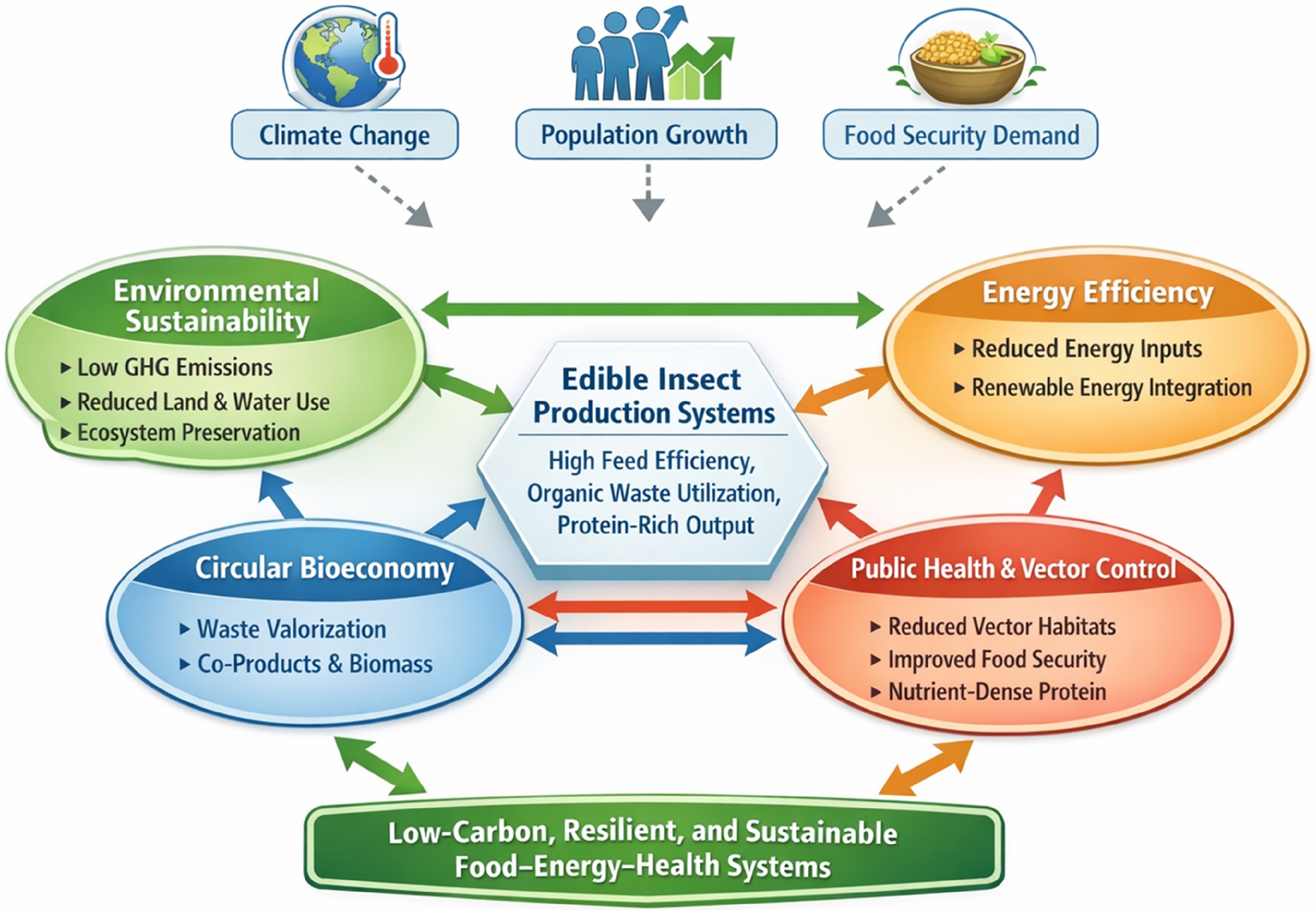
Figure 1.
Conceptual framework illustrating the integration of edible insect production within sustainable energy–food–health systems.
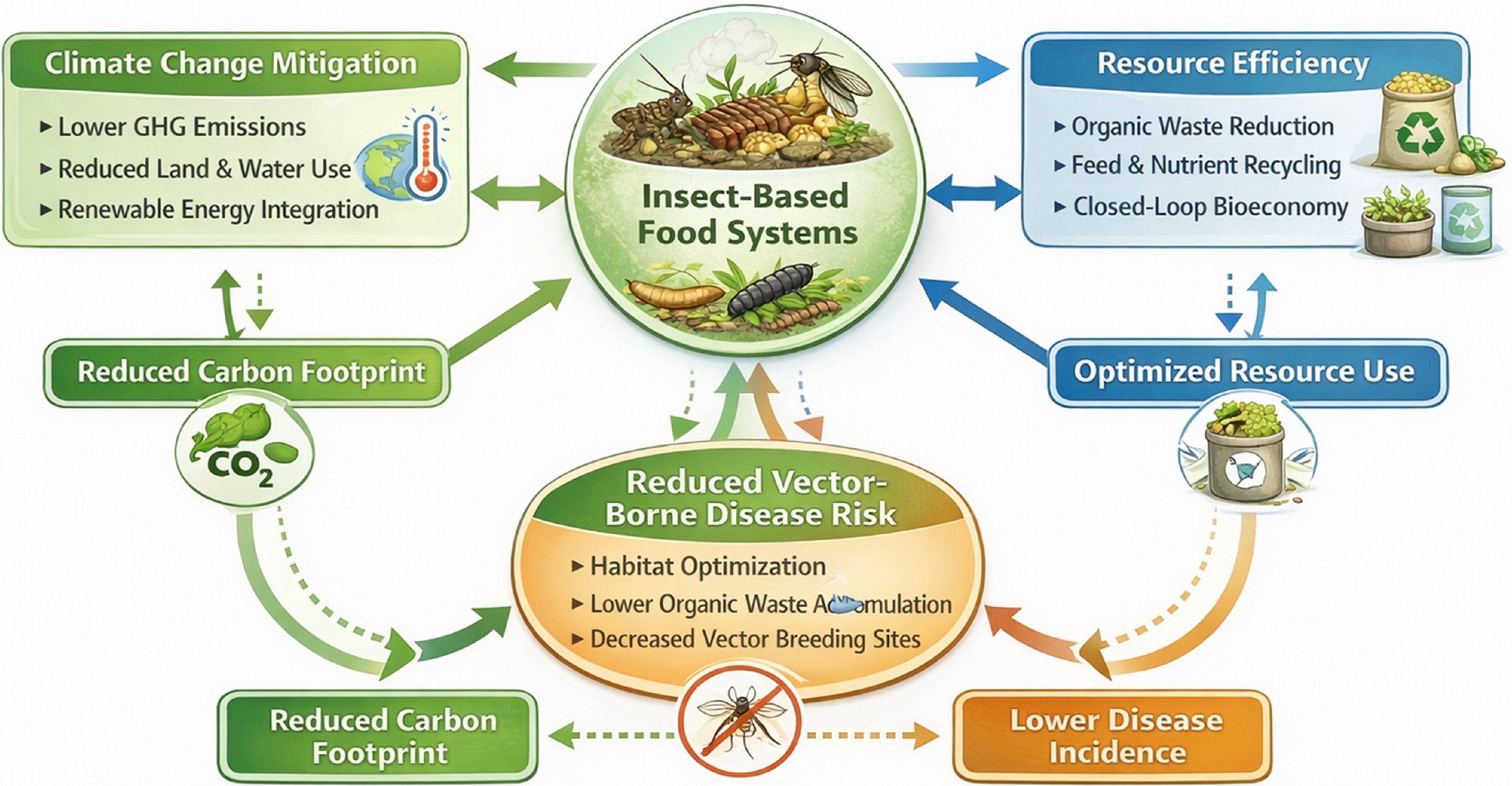
Figure 2.
Pathways linking insect-based food systems to climate change mitigation, resource efficiency, and reduced vector-borne disease risk.
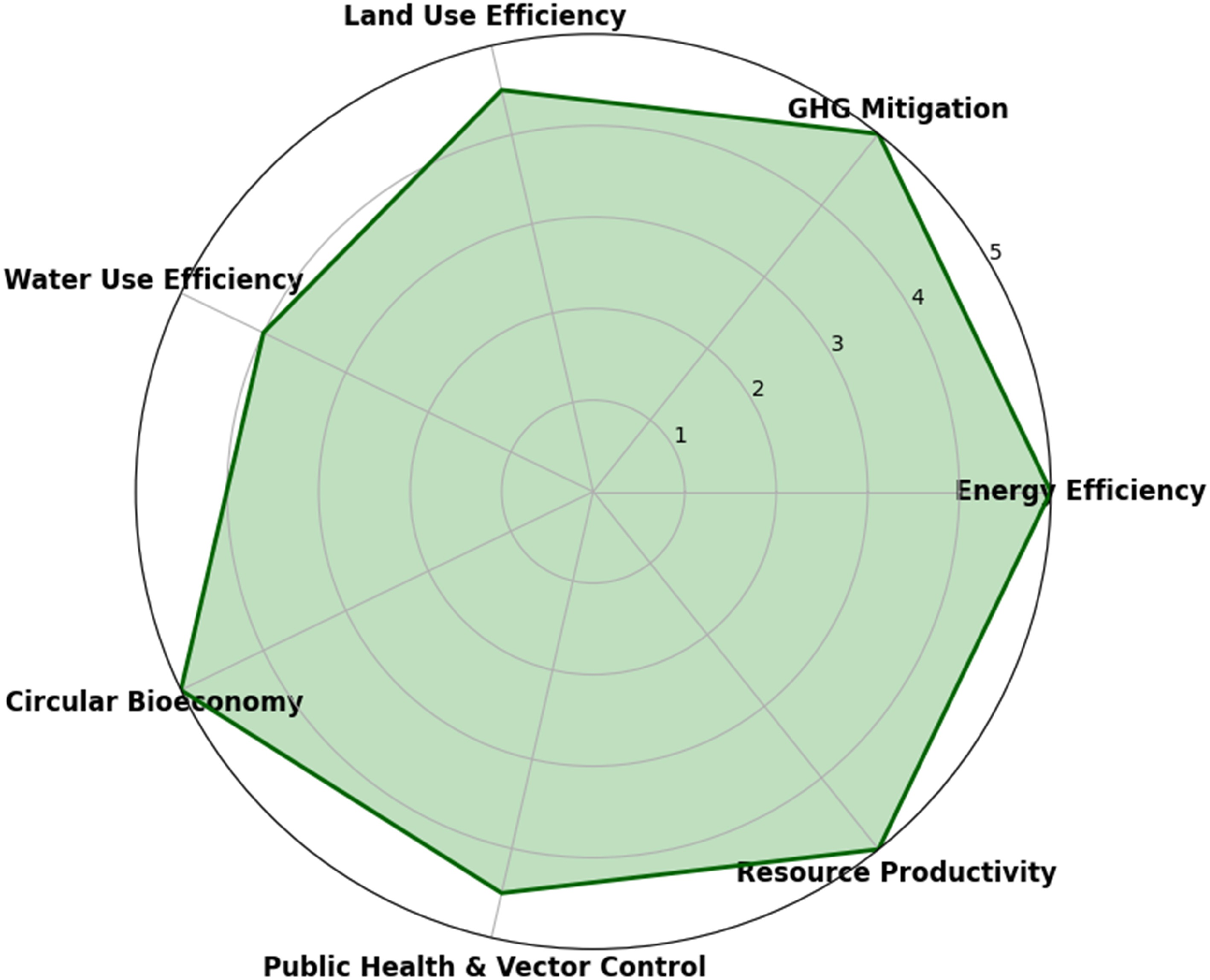
Figure 3.
Sustainability performance radar of edible insect production systems.
-
The present study provides a comprehensive synthesis of current evidence regarding the role of edible insects within the interconnected domains of sustainable energy systems, climate change mitigation, and public health. By integrating findings across environmental science, entomology, and sustainability research, the results contribute to a growing body of literature that positions insect-based systems as multifunctional components of future low-carbon and resource-efficient food systems. The discussion below contextualizes the key findings within broader scientific and policy frameworks, highlighting their implications, limitations, and relevance for future research and implementation[6,20].
One of the central insights emerging from this analysis is the reframing of edible insects not merely as alternative protein sources but as integral elements of sustainable energy–food systems. The results indicate that insect-based production systems exhibit consistently superior energy efficiency when compared with conventional livestock agriculture. This efficiency is driven by favorable feed conversion ratios, reduced metabolic losses, and the ability to utilize low-value organic substrates. From an energy systems perspective, these characteristics translate into lower cumulative energy demand per unit of edible output, aligning closely with global objectives for energy conservation and decarbonization. The integration of insect farming into circular bioeconomy models further reinforces its relevance to sustainable energy transitions. By valorizing organic residues and agro-industrial by-products, insect production can function as a bioconversion pathway that simultaneously reduces waste streams and generates high-value biomass. This circularity not only enhances material efficiency but also contributes to lowering the indirect energy inputs associated with waste management and feed production. Such systemic efficiency gains are increasingly recognized as critical for achieving long-term sustainability targets under climate-constrained scenarios[5,50].
Compared with recent review articles published over the last 5 years, the present review adopts a broader interdisciplinary perspective that extends beyond conventional evaluations of edible insects as sustainable protein sources. Recent reviews have primarily concentrated on LCAs, nutritional composition, food safety, consumer acceptance, or the environmental sustainability of insect production systems. Although these studies have substantially advanced knowledge regarding the ecological and nutritional benefits of edible insects, they generally examine these topics independently rather than within an integrated systems framework. In contrast, the present review synthesizes evidence across sustainable energy systems, climate change mitigation, the principles of a circular bioeconomy, and vector-borne disease management, thereby establishing a conceptual nexus that has received comparatively limited attention in previous literature. Furthermore, by explicitly incorporating the One Health perspective, this review highlights the indirect ecological and public health implications of insect-based production systems that have rarely been discussed collectively in earlier reviews. This integrated synthesis therefore expands the current understanding of edible insects from an alternative food source to a multifunctional component of sustainable development, providing a more comprehensive framework for future research, policy development, and interdisciplinary collaboration[55−57].
The findings underscore the substantial potential of insect-based systems to contribute to climate change mitigation efforts. Compared with conventional livestock systems, insect production consistently demonstrates lower GHG emissions, particularly with respect to methane and nitrous oxide, two gases with high global warming potential. These reductions are attributable to both biological factors, such as the absence of enteric fermentation, and structural factors, including reduced land-use intensity and shorter production cycles. Moreover, the integration of insect farming into diversified agroecological systems may help alleviate indirect drivers of climate change, such as deforestation and land-use change associated with the expansion of feed crops. By decreasing reliance on land-intensive livestock production, insect-based systems can contribute to preserving carbon-rich ecosystems and enhancing the landscape's resilience. These findings align with broader climate mitigation strategies that emphasize demand-side interventions and systemic efficiency improvements rather than solely technological substitution[49,58].
A notable contribution of this study is the explicit linkage between insect farming and sustainable energy systems. The results highlight the capacity of insect production to operate synergistically with renewable energy technologies and waste-to-energy pathways. For example, the utilization of residual biomass from insect rearing as input for biogas production or soil amendment exemplifies closed-loop energy and nutrient cycles. Such integrative approaches support the transition toward decentralized, low-carbon energy systems while enhancing overall resource productivity.
From a systems perspective, the coupling of insect-based food production with renewable energy infrastructure offers a pathway to reduce dependency on fossil fuels across multiple stages of the agri-food value chain. This multifunctionality is particularly relevant in the context of climate-resilient food systems, where energy reliability, resource efficiency, and environmental performance must be addressed simultaneously[8,59].
Beyond the environmental and energy dimensions, the findings also highlight important public health implications. Although edible insects are distinct from disease vectors, the broader ecological and management practices associated with insect farming can indirectly influence vector-borne diseases' dynamics. Improved waste management, reduced accumulation of organic refuse, and more controlled production environments may contribute to limiting the breeding habitats for vector species such as mosquitoes and sandflies. Furthermore, by alleviating the pressures associated with intensive livestock farming, such as land degradation and habitat disruption, insect-based systems may indirectly reduce ecological conditions that favor the emergence and spread of vector-borne pathogens. This perspective aligns with the One Health framework, emphasizing that human health outcomes are intrinsically linked to environmental integrity and sustainable resource management[10,11].
Nevertheless, a critical distinction should be made between conceptual implications and evidence directly supported by empirical studies. The hypothesis that sustainable insect production may contribute to reducing vector-borne disease risks is currently supported mainly by indirect observations related to waste management, habitat modification, and ecosystem stewardship rather than by controlled epidemiological studies demonstrating causal reductions in disease transmission. Consequently, the proposed relationship should be viewed as an emerging interdisciplinary hypothesis grounded in ecological reasoning and the One Health framework, not as a conclusively established public health outcome. Future research should therefore prioritize field-based assessments, longitudinal surveillance studies, and integrated ecological–epidemiological analyses to determine whether insect-based production systems produce measurable effects on vectors' abundance, pathogen transmission, or disease incidence under real-world conditions[60−66].
The findings of this study resonate strongly with international sustainability agendas, including the United Nations' SDGs, particularly those related to climate action (SDG 13), responsible consumption and production (SDG 12), zero hunger (SDG 2), and good health and well-being (SDG 3). By offering a multifunctional solution that links food security, energy efficiency, and environmental protection, insect-based systems represent a strategic opportunity for integrated policy development. However, the successful scaling of such systems requires supportive regulatory frameworks, public acceptance, and investment in technological innovation. Policymakers must consider region-specific socioeconomic and ecological contexts to ensure that insect-based solutions are implemented in a socially equitable and environmentally sound manner. Addressing cultural perceptions, regulatory barriers, and knowledge gaps will be essential for translating scientific potential into practical impact[57,67].
Recent reviews published during 2024–2025 further reinforce the rapid evolution of insect-based food systems, particularly regarding industrial-scale production, integration with the circular bioeconomy, food safety, and technological innovation. These studies emphasize that insect farming is increasingly viewed not only as an alternative protein source but also as a bioconversion platform capable of transforming organic sidestreams into high-value products while supporting resource recovery and low-carbon production systems. At the same time, recent literature also highlights remaining challenges, including consumer acceptance, regulatory harmonization, LCA under commercial-scale production, and economic scalability. These developments underscore the importance of interdisciplinary research integrating environmental science, food technology, public health, and sustainability policy to fully realize the potential of insect-based production systems[55−57].
Despite their considerable sustainability advantages, several practical challenges remain before insect-based production systems can be implemented at large commercial scales. Regulatory frameworks governing edible insects continue to differ substantially among countries, creating uncertainties for producers and international markets. Consumer acceptance also remains variable across cultural contexts, with concerns related to food safety, familiarity, and perceptions of insect consumption influencing their adoption in the market. Furthermore, economic scalability depends on continued technological innovation, automation, production efficiency, and the establishment of stable supply chains capable of competing with conventional protein sources. Addressing these challenges through coordinated research, regulatory harmonization, public education, and industrial investment will be essential for realizing the full sustainability potential of edible insect production systems[68,69].
Although the present synthesis provides a comprehensive overview, several limitations warrant consideration. The heterogeneity of methodologies, metrics, and system boundaries across existing studies constrains a direct quantitative comparison and meta-analytical synthesis. Additionally, long-term empirical data on large-scale insect farming operations remain limited, particularly in relation to energy balances, lifecycle emissions, and ecosystem interactions.
Future research should prioritize standardized assessment frameworks, longitudinal studies, and region-specific analyses to refine understanding of the environmental and health implications of insect-based systems. Greater integration of the socioeconomic dimensions, including consumer acceptance, policy incentives, and market dynamics, will also be critical for translating conceptual benefits into scalable solutions[14,50].
-
In summary, the findings presented in this study reinforce the potential of edible insects to function as a nexus linking sustainable energy systems, climate change mitigation, and public health resilience. By bridging traditionally separate domains, insect-based systems offer a compelling pathway toward more resilient, resource-efficient, and environmentally responsible food and energy systems. The interdisciplinary synthesis presented in this review highlights the importance of integrating edible insect production into broader sustainability strategies that encompass the principles of the circular bioeconomy, climate adaptation, and the One Health framework. Future research should prioritize large-scale longitudinal studies and field-based assessments to validate the environmental, ecological, and public health impacts of insect-based production systems under diverse geographical and socioeconomic conditions. In addition, the development of standardized methodologies for LCA, sustainability evaluation, and environmental monitoring would improve comparability across studies and support evidence-based decision-making. From a policy perspective, governments and international organizations should promote clear regulatory frameworks, encourage investment in sustainable insect farming technologies, and foster public awareness and stakeholder engagement to facilitate the responsible integration of edible insects into climate-resilient and circular food systems. In summary, the findings presented in this review reinforce the potential of edible insects to serve as an important nexus connecting sustainable energy systems, climate change mitigation, the circular bioeconomy, and public health resilience. By integrating these traditionally separate domains within a One Health perspective, insect-based production systems offer a promising pathway toward more resource-efficient, climate-resilient, and environmentally sustainable food systems. Future research should prioritize three key areas. First, large-scale industrial implementation should be evaluated through pilot and commercial-scale studies to assess production efficiency, economic feasibility, and environmental performance under real-world conditions. Second, long-term LCA studies using standardized methodologies are needed to quantify the environmental impacts and sustainability benefits of insect-based production systems across diverse geographical and production contexts. Third, greater attention should be devoted to the socioeconomic dimensions, including consumer acceptance, market development, regulatory harmonization, and public engagement, to facilitate the responsible and widespread adoption of insect-based food systems. Collectively, these research priorities will strengthen the scientific evidence base and support the development of effective policies that promote edible insects as multifunctional components of sustainable, low-carbon, and resilient food systems[70−72].
The author thanks the Research Vice-Chancellor of Iran University of Medical Sciences. This research received no specific grant from any funding agency in the public, commercial, or not-for-profit sectors.
-
Not applicable
-
The author confirms sole responsibility for the following: design and execution, and writing the manuscript.
-
All data generated or analyzed during this study are included in this published article.
-
The authors declare that they have no conflict of interest.
- Copyright: © 2026 by the author(s). Published by Maximum Academic Press on behalf of Nanjing Agricultural University. This article is an open access article distributed under Creative Commons Attribution License (CC BY 4.0), visit https://creativecommons.org/licenses/by/4.0/.
-
About this article
Cite this article
Abbasi E. 2026. Edible insects as a sustainable nexus of energy efficiency, climate change mitigation, and vector-borne disease management. Food Materials Research 6: e020 doi: 10.48130/fmr-0026-0020 

Edible insects as a sustainable nexus of energy efficiency, climate change mitigation, and vector-borne disease management
- Received: 12 June 2026
- Revised: 17 July 2026
- Accepted: 22 July 2026
- Published online: 09 October 2026
Abstract: The growing pressures of climate change, resource depletion, and food insecurity have intensified the search for sustainable and energy-efficient food systems. The integration of insect farming into circular bioeconomy models offers a novel approach to food production, reducing waste and enhancing resource efficiency, thus contributing to alleviating food insecurity. Edible insects have emerged as a promising solution because of their high nutritional value, low environmental footprint, and potential contribution to climate change mitigation and public health resilience. This study took a comprehensive narrative review approach, integrating peer-reviewed literature from multidisciplinary databases to evaluate the role of edible insects within sustainable energy and food systems. Studies addressing energy efficiency, greenhouse gas emissions, resource utilization, and implications for vector-borne disease dynamics were systematically analyzed and synthesized. The findings demonstrate that insect-based production systems exhibit significantly higher energy efficiency and lower greenhouse gas emissions compared with conventional livestock. Insect farming showed strong potential for integration into circular bioeconomy models through waste valorization and reduced resource inputs. Additionally, improved environmental management associated with insect production may indirectly contribute to mitigating vector-borne disease risks. The results highlight edible insects as a multifunctional component of sustainable development, linking food security, climate change mitigation, and public health. Their integration into future agri-food systems could enhance resource efficiency, support low-carbon transitions, and contribute to ecosystem resilience.