












-
Soil organic carbon (SOC) is a central component of the terrestrial carbon cycle and is a key determinant of soil fertility, ecosystem resilience, and climate regulation[1,2]. Terrestrial vegetation annually fixes approximately 120 Gt carbon via photosynthesis, yet less than half of this carbon remains stored in biomass, as the majority is translocated belowground to roots and symbiotic mycorrhizal fungi, forming the foundational input pathway for SOC[3,4]. Mycorrhizal extraradical hyphae—filamentous networks extending centimeters to meters beyond root surfaces—account for 30% of total soil microbial biomass globally[5], and plants allocate an estimated 13.12 Gt CO2e carbon annually to mycelial tissue across arbuscular mycorrhizal (AM), ectomycorrhizal (ECM), and ericoid mycorrhizal (ErM) systems[6,7]. This massive carbon flux positions the mycelium as an important regulator of SOC's formation, decomposition, and long-term mineral stabilization.
The soil zone influenced by fungal hyphae, often termed the hyphosphere, differs from the rhizosphere in both its spatial structure and function[8]. Roots are large, relatively long-lived organs that occupy a limited fraction of soil pore space. By contrast, fungal hyphae are fine, dynamic filaments capable of penetrating small pores inaccessible to roots[9]. They can transport recently fixed carbon over millimetre- to centimetre-scale distances from the rhizosphere to mineral soil particles, thereby redistributing carbon throughout the soil matrix[10,11]. Recent studies have therefore argued that although plant litter, root exudates, and plant allocation to symbionts are the ultimate sources of new carbon inputs, fungal hyphae are often the dominant biological mechanism by which this carbon is distributed across mineral surfaces and microsites relevant to the formation of mineral-associated organic matter[12,13]. This shift from a root-centered to a hypha-inclusive view is especially important for understanding mineral-associated organic carbon (MAOC), commonly considered a relatively persistent SOC fraction. Because mycorrhizal hyphae contact an extensive mineral surface area, deposit chemically distinct compounds, and shape the microbial community's composition, they may strongly regulate both the rate and chemistry of MAOC's formation[14,15]. The hyphosphere should therefore not be treated merely as a zone of decomposition but also as a point of entry for new soil carbon.
Mycorrhizal fungi are not functionally uniform. AM, ECM, and ErM fungi differ in their evolutionary history, host associations, nutrient acquisition strategies, enzymatic capacities, hyphal morphology, and necromass chemistry[16−18]. These differences generate contrasting effects on the formation and loss of SOC. AM fungi associate with most herbaceous plants, many crops, and many broadleaf trees[16]. They generally rely on inorganic nutrient uptake and do not possess the broad oxidative enzymatic capacity typical of many decomposer fungi[18]. Their influence on SOC is therefore mediated through plants' productivity, hyphal biomass turnover, aggregation, glomalin-related soil proteins, and stimulation of free-living decomposers[19]. ECM fungi, which are common in many boreal and temperate forests, can access organic nitrogen through enzymatic and oxidative mechanisms and may compete with saprotrophs for limiting nutrients[18,20]. This competition can suppress decomposition under some conditions, a phenomenon often referred to as the Gadgil effect, but the strength and direction of this effect depend strongly on litter quality, nitrogen availability and fungal traits[21,22]. ErM fungi, associated primarily with ericaceous shrubs, are particularly important in acidic, organic-rich boreal, temperate, and heathland soils[23]. They possess substantial enzymatic capacity to access complex organic substrates and occur with host plants producing tannin-rich litter, creating SOC dynamics that cannot be reduced to the traditional AM–ECM dichotomy[17].
Climate change further complicates these relationships. Rising atmospheric CO2, warming, and altered precipitation regimes and nitrogen deposition can influence plants' carbon allocation, mycorrhizal colonization, extraradical mycelial biomass, the fungal community's composition, and decomposition processes[24−26]. Elevated CO2 can increase belowground carbon allocation and stimulate mycorrhizal growth where nutrients are limiting[25], but this response may weaken under nitrogen saturation or drought stress. Nitrogen deposition can reduce the host's C investment in mycorrhizal nutrient foraging[26], suppress hyphal production and shift ECM fungal communities[27]. Warming can increase microbial respiration and accelerate necromass decomposition, but it may also modify plants' productivity and soil mineral interactions[28]. Changes in precipitation can alter fungal growth, aggregation, and transport of dissolved organic carbon[29]. Predicting SOC feedbacks under global climate change therefore requires a mechanistic understanding of hyphal processes across mycorrhizal guilds.
This review synthesizes evidence from recent conceptual, experimental and meta-analytical studies on fungal hyphae and SOC. We focus on three major questions. First, how do mycorrhizal hyphae contribute directly and indirectly to the formation of SOC? Second, how do AM, ECM, and ErM fungi differ in their effects on particulate and mineral-associated SOC pools? Third, how are these processes altered by major climate change-related drivers? Most existing mycorrhizal–SOC studies focus on a single mycorrhizal guild, and co-occurrence interactions among AM, ECM, and ErM fungi and the regulatory roles of understory ErM shrubs are largely overlooked. This review addresses this research gap by synthesizing the available empirical evidence comprehensively. We argue that mycorrhizal hyphae are central regulators of SOC dynamics and that explicit incorporation of hyphal traits and mycorrhizal guilds into soil carbon models is necessary for robust predictions of terrestrial carbon cycling.
-
The concept of the rhizosphere has been foundational in soil ecology because roots are the major conduits of carbon input and nutrient uptake (Fig. 1). However, roots do not act alone. Mycorrhizal fungi extend the functional reach of roots through extraradical hyphae, generating a hyphosphere that can occupy soil domains that are spatially distant from the root surface[30]. This distinction is crucial because SOC formation is highly microsite-dependent. Organic molecules must be deposited near mineral surfaces, within aggregates or in pores where microbial access and environmental conditions favor their persistence[31]. Hyphae, by virtue of their size and growth form, are suited to deliver carbon to such microsites. In this regard, hyphae can explore orders of magnitude more pore volume than roots and can contact mineral particles that are physically inaccessible to roots[8,9]. This spatial distribution indicates that hyphae may play a disproportionate role in delivering plant-derived carbon to mineral soil particles, especially in deeper or microsites with lower organic matter where roots and fresh litter inputs are sparse.
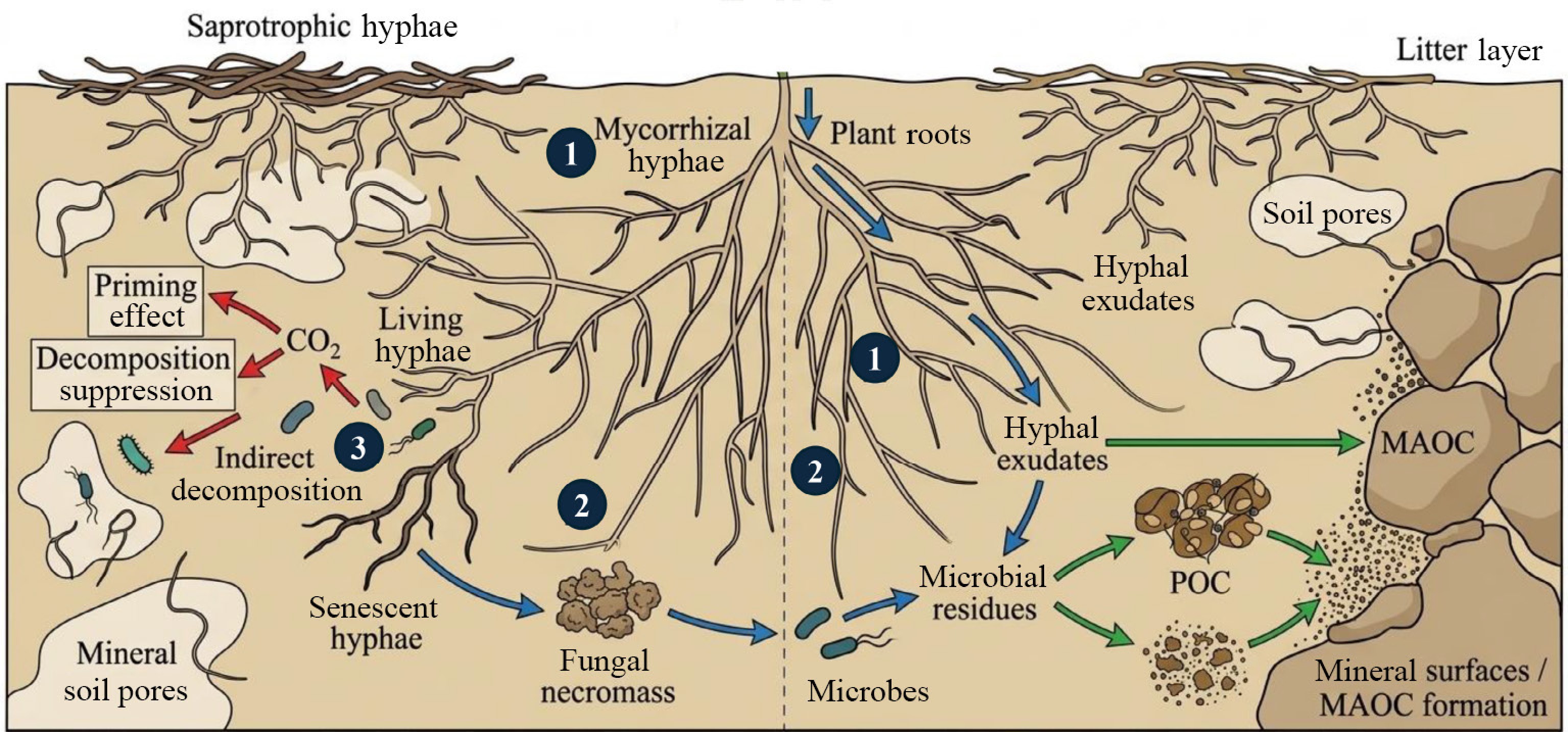
Figure 1.
Hyphal pathways of the formation of SOC. Mycorrhizal hyphae redistribute recently fixed plant carbon from the rhizosphere to distant mineral microsites. Living hyphae release exudates, form biomass, and interact with saprotrophic fungi and other microbes. Upon senescence, hyphal necromass can be decomposed, incorporated into particulate organic matter or stabilized as mineral-associated organic matter. The balance among input, respiration, and stabilization depends on the fungal guild, soil mineralogy, nutrient availability and climate. The image depicts the full pathway of hyphal carbon input, microbial transformation, formation of particulate organic carbon, and stabilization of MAOC, separating two pathways: direct carbon input from living hyphae and indirect microbial regulation.
The hyphosphere also differs chemically from the rhizosphere. Living hyphae release soluble compounds, including sugars, amino acids, and organic acids, which can stimulate bacterial growth, influence pH, and promote mineral weathering[32]. Hyphal cell walls contain chitin, proteins, lipids, and, in some taxa, melanin; upon death, these compounds become fungal necromass, a major microbial residue pool[33]. Because microbial residues can bind to mineral surfaces and become incorporated into mineral-associated organic matter, hyphal turnover links short-lived fungal biomass to longer-term SOC stabilization[34]. Importantly, hyphae influence not only the quantity but also the form of carbon deposited in soil. Different fungal guilds and taxa vary in their cell wall composition, exudate chemistry, extracellular polymeric substances, and interactions with bacteria[35]. These differences can alter whether carbon enters particulate organic matter, becomes mineral-associated, is respired rapidly, or contributes to aggregate formation. Therefore, understanding the formation of SOC requires more than just quantifying root input; it requires characterization of the extent, activity, and functional diversity of the hyphosphere. In many soil microsites, guilds co-occur, compete, or facilitate one another. Their interactions determine whether carbon is stabilized as microbial residue, lost as CO2, or retained as particulate material. A hypha-centered framework therefore provides a mechanistic bridge linking plant carbon allocation, microbial community ecology, and physical protection of the soil.
Direct carbon inputs from living mycorrhizal hyphae
-
A primary pathway by which mycorrhizal fungi influence SOC is the direct transfer of plant photosynthates into the extraradical mycelium[36] (Fig. 1). Plants divert 10%–30% of fixed photosynthates to mycorrhizal symbionts in exchange for soil nutrients[16]. This carbon is first invested in building extraradical hyphal networks that expand the soil foraging volume of roots by 10–100-fold. Global estimates show that ECM hosts allocate 9.07 Gt CO2e year–1 to the mycelium, far exceeding AM systems (3.93 Gt CO2e), whereas ErM shrubs contribute a smaller but regionally significant 0.12 Gt CO2e[36]. This carbon supports fungal respiration, growth, exudation, and production of hyphal biomass. Although a portion is rapidly respired, another portion enters soil as living biomass, exudates, and, eventually, necromass[3,20]. Living hyphae represent a dynamic carbon pool with high turnover. Extraradical mycelium can proliferate rapidly in response to nutrient patches and decline when the host's carbon supply or moisture is limiting[37]. This dynamism makes hyphal production difficult to quantify, but available evidence suggests that mycorrhizal mycelium can represent a large global carbon flux[16,36].
In addition, hyphal exudates can be released in more distant mineral microsites, including regions with lower organic matter content[38]. This may increase the probability that some compounds interact with mineral surfaces before being fully mineralized[39]. Hyphae also physically bind soil particles, promote aggregation, and create microsites where organic matter may be protected from decomposers[32,39]. The contribution of living hyphae to SOC depends on the balance between production and turnover. High hyphal production does not automatically increase SOC if decomposition and respiration increase proportionally[40]. Conversely, even rapidly turning over hyphae can contribute to persistent SOC if their residues are efficiently stabilized on minerals or within aggregates[41]. Therefore, the key question is not simply how much carbon enters the hyphae but how fungal traits, soil minerals, microbial interactions, and environmental conditions determine the fate of hyphal carbon. Mycorrhizal guilds differ in the carbon cost to the host and in the functions supported by that carbon. Here, ECM fungi often receive substantial carbon investments to support extensive mycelia and organic nutrient mining, especially under low availability of inorganic nitrogen[42]. AM fungi generally form fine hyphae that acquire phosphorus and other mineral nutrients and can influence aggregation[18]. ErM fungi occur in nutrient-poor, acidic soils where access to organic nitrogen is critical[43]. These differences in function and environment shape whether hyphal carbon primarily supports nutrient acquisition, decomposition suppression, priming, or stabilization.
Fungal necromass as a major pathway of SOC stabilization
-
Fungal necromass is increasingly recognized as a central component of stable SOC[44] (Fig. 1). When hyphae senesce, their cell wall compounds and cytoplasmic residues enter the soil organic matter pool. These residues may be decomposed, transformed by other microorganisms, occluded in aggregates, or absorbed onto mineral surfaces[45]. Because microbial residues often have chemical properties that are favorable for mineral association, fungal necromass can be an important precursor of persistent SOC[46]. The decomposition of ECM fungal necromass has received particular attention because ECM biomass turnover represents a significant input to forest carbon and nutrient cycles[38]. The rate at which this necromass decomposes is controlled by both intrinsic and extrinsic factors. Intrinsic factors such as tissue chemistry, stoichiometry and morphology, nitrogen concentration, chitin content, melanin content, and cell wall structure can all affect decomposability[47]. Extrinsic factors include physical protection within the soil structure, association with mineral surfaces, soil moisture, temperature, pH, and the composition of the decomposer community[48,49]. Melanin is especially important for some ECM and ErM fungi. Melanized fungal tissues are generally more resistant to decomposition than nonmelanized tissues, partly because melanin can protect cell walls from enzymatic attack and environmental stress[50]. Taxa producing dark, melanized hyphae may therefore generate necromass that persists longer than lightly melanized taxa[51]. However, chemical recalcitrance alone does not determine long-term persistence of SOC. Even chemically labile compounds can persist if they are physically protected or mineral-associated, whereas chemically resistant material can be decomposed under favorable conditions. Thus, the persistence of fungal necromass arises from interactions among chemistry, microbial access, and soil mineralogy.
AM fungal necromass may follow a different stabilization pathway. AM fungal hyphae are generally less melanized and may turn over rapidly, but their residues and associated glycoproteins can contribute to aggregate formation and potentially to MAOC[19,52]. The importance of glomalin-related soil proteins has been widely discussed, although their interpretation requires caution because operationally defined Glomalin-related soil protein (GRSP) pools can include non-AM fungal materials[53]. Nevertheless, AM hyphae influence soil aggregation, and aggregation can protect organic matter from decomposition[54]. Necromass is also a nutrient source. Fungal residues contain nitrogen, phosphorus, and amino sugars, and their decomposition can recycle nutrients to microbes[30]. Therefore, necromass is not simply a carbon sink; it is part of coupled carbon–nutrient cycling. The same properties that slow carbon loss may also slow nutrient release, influencing plants' nutrient acquisition strategies and microbial competition. In ECM systems, slow necromass decomposition may contribute to organic horizon accumulation and high soil carbon/nitrogen ratios[55]; conversely, in AM systems, faster turnover may support nutrient cycling but require mineral association or aggregation for the long-term persistence of carbon[56,57].
Mineral-associated organic matter and the need to include hyphae
-
The distinction between particulate organic carbon (POC) and MAOC has become a useful framework for SOC research[58] (Fig. 1). POC consists largely of partially decomposed plant and microbial residues, often with relatively fast turnover unless physically protected[15]. MAOC includes organic compounds sorbed to mineral surfaces or co-precipitated with metals and is often more persistent[59]. Hyphae can influence both fractions. A key insight from recent work is that mycorrhizal fungi can transport carbon to mineral particles that are spatially distant from roots[60]. This challenges models in which the formation of new MAOC is driven mainly by dissolved organic carbon moving from roots or litter[61]. Because hyphae directly contact mineral surfaces, release organic compounds, and leave necromass at those surfaces, they may create localized hotspots of MAOC formation[62]. Furthermore, the extent to which hyphae contribute to MAOC is still poorly quantified. Many studies measure total SOC but do not separate the particulate and mineral-associated fractions. This is a major limitation because mycorrhizal effects may differ among fractions. For example, a recent synthesis of AM fungi in agricultural systems found that most studies did not include SOC fractionation[19]. The limited data suggest that AM fungi may increase labile or particulate carbon under some conditions, although the effects on mineral-associated carbon remain uncertain and may even be negative in specific cases. Existing empirical evidence cannot support the universal conclusion that AM fungi consistently enhance stable SOC pools under all environmental contexts.
For ECM systems, the accumulation of organic horizons and particulate material is often emphasized, particularly in boreal and coniferous forests. However, ECM hyphae also enter mineral soil and may contribute necromass to mineral-associated pools[63]. Whether ECM-derived necromass is stabilized as MAOC or remains in particulate organic matter depends on the soil's texture, mineralogy, depth, moisture, and decomposer activity[39]. Ericoid systems, often characterized by acidic organic-rich surface soils, may accumulate substantial particulate and organo-mineral carbon through the combined effects of recalcitrant shrub litter, fungal necromass, and inhibition of decomposition[64,65]. Future research should explicitly connect hyphal production, necromass chemistry, andthe formation of SOC fractions. Isotope tracing, fungal ingrowth cores, NanoSIMS imaging, and compound-specific biomarkers can together identify where hyphal carbon goes and how long it persists. Without such fraction-specific evidence, total SOC responses remain difficult to interpret because increases in labile carbon do not necessarily imply enhanced long-term sequestration.
-
AM fungi form symbioses with the majority of terrestrial plant species, including many crops, grasses, and several broadleaf trees[16]. Their extraradical hyphae enhance the uptake of phosphorus, micronutrients and water, and their effects on plant productivity can indirectly increase carbon inputs to the soil[66]. Because AM fungi are widespread in agricultural and grassland ecosystems, their potential role in SOC sequestration has attracted considerable attention[19]. AM fungi can influence SOC through several mechanisms (Fig. 2). First, they may increase plant growth and belowground carbon allocation, thereby increasing root residues and rhizodeposition[67]. Second, AM hyphae contribute their own biomass and necromass to the soil[18]. Third, hyphae promote soil aggregation by physically enmeshing particles and producing compounds associated with aggregate stability[52]. Fourth, AM fungi alter microbial communities and can stimulate decomposition through priming[68]. The direction of AM fungi's effects on SOC is not universally positive. Studies in agricultural soils report positive, neutral, and negative responses[52,69,70]. A recent quantitative review compiling field and pot experiments that directly manipulated mycorrhizal status found that AM fungi's effects on SOC are context-dependent, and stronger positive responses were generally better supported in pot experiments than in field conditions[19]. This distinction matters, because pot experiments often have simplified communities, constrained rooting volumes, and controlled conditions that may amplify detectable effects. Field soils contain complex microbial communities, variable mineralogy, tillage history, nutrient inputs, and climatic fluctuations, all of which can alter AM fungi's effects. Soil fertility is a major modifier. AM fungi's benefits to plants and carbon input are often greater in low-phosphorus or otherwise nutrient-limited soils[66]. However, fertilization can reduce plants' dependence on AM fungi and lower carbon allocation to the symbiosis[16]. Soil pH also influences AM colonization and hyphal development, with many AM fungi performing better in near neutral to alkaline conditions[71]. The initial soil organic matter content may further condition responses: Soils with low organic matter may show stronger relative changes after inoculation with AM fungi, but such increases may not necessarily represent persistent SOC[72].
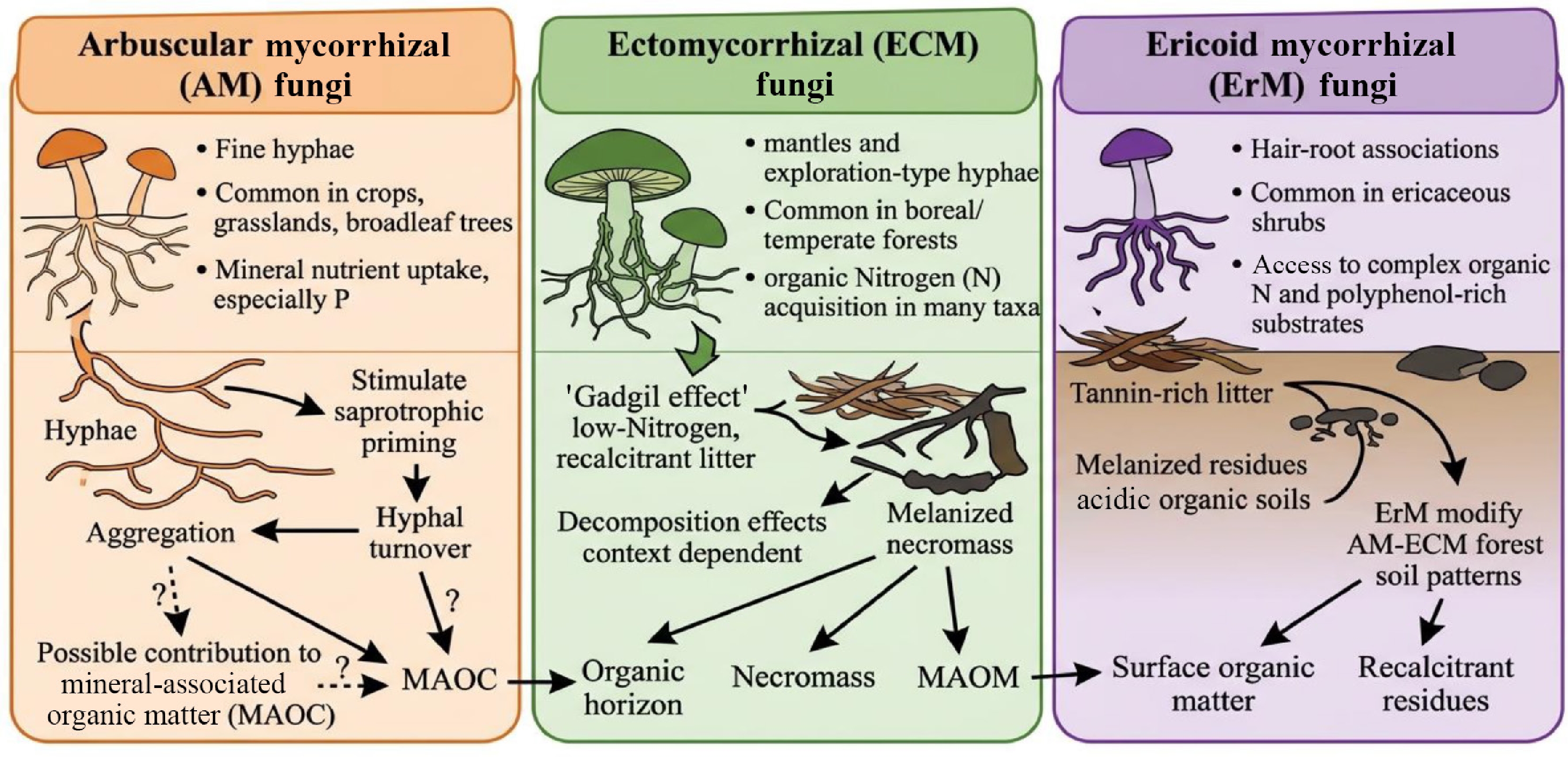
Figure 2.
Contrasting mechanisms by which AM, ECM, and ErM fungi regulate SOC. Mycorrhizal guilds differ in their hyphal traits, nutrient acquisition, and interactions with decomposers. AM fungi mainly influence SOC through plant productivity, aggregation, hyphal turnover, and priming. ECM fungi can either suppress or stimulate decomposition depending on nitrogen availability, litter quality, and fungal traits, and melanized necromass may contribute to persistent SOC. ErM fungi combine enzymatic access to complex organic substrates with the tannin-rich host litter and chemically resistant residues, strongly influencing surface SOC and modifying trees' mycorrhizal effects.
The relationship between AM fungi and SOC fractions remains unresolved. Some mechanisms, such as aggregation, could promote persistence by physically protecting particulate organic matter and microbial residues[4,35]. Hyphal turnover and microbial processing could also contribute to mineral-associated organic matter[45,52]. However, the available meta-analytical evidence highlights a major research gap in studies that separate POC and MAOC. The sole fractionation evidence included in one recent review suggested contrasting responses of POC and MAOC, indicating that total SOC alone may mask divergent fraction-level effects[19]. Therefore, claims about AM fungus-driven stable carbon sequestration require direct measurement of SOC fractions and residence times. AM fungi may also stimulate SOC loss through priming[68]. Because AM fungi lack the enzymatic machinery to decompose complex organic polymers directly, they often rely on free-living saprotrophs to mineralize nutrients from organic matter[16,18]. Labile C released by roots and hyphae can stimulate saprotrophic bacteria and fungi, increasing respiration and the decomposition of existing SOC[68]. This priming can release nutrients for plants but may reduce older SOC pools[73]. Whether AM fungi increase or decrease net SOC therefore depends on the balance among enhanced C input, aggregation and mineral stabilization versus stimulated decomposition. In agroecosystems, management strongly affects AM fungi–SOC relationships. Tillage disrupts hyphal networks, reduces aggregates' stability, and can accelerate SOC loss[72]. Diverse rotations, cover crops, reduced tillage, and organic amendments may support AM fungi communities and increase belowground carbon inputs[74]. However, inoculation alone is unlikely to guarantee SOC gains in field soils if compatible hosts, appropriate nutrient conditions, and a stable soil structure are absent. AM fungi should therefore be considered part of an integrated management strategy rather than a universal carbon sequestration tool.
ECM fungi, decomposition, and SOC persistence
-
ECM fungi dominate many boreal and temperate forests and associate with important tree genera such as Pinus, Picea, Betula, Quercus, and Fagus. Unlike AM fungi, many ECM fungi can access organic nitrogen and phosphorus through extracellular enzymes and oxidative mechanisms[16]. This capacity links ECM fungi directly to decomposition and SOC turnover. One of the most debated ECM effects is the suppression of saprotrophic decomposition through competition for nitrogen, commonly known as the Gadgil effect[18]. In this mechanism (Fig. 2), ECM fungi receive carbon from the host plants and use it to acquire organic nutrients, thereby reducing nutrients' availability to free-living saprotrophs[21,22]. Saprotrophic decomposition slows, potentially increasing litter or soil carbon storage. However, the Gadgil effect is not universal. It depends on the substrate quality, nutrient limitations, the fungal community's composition, and the environmental context[35]. In addition, litter quality is a central control. In low-quality, high-lignin, nitrogen-poor conifer litter, ECM fungi may successfully compete with saprotrophs for scarce organic nitrogen[75], slowing litter mass loss. In higher-quality broadleaf litter with more accessible nutrients, saprotrophs may decompose litter effectively regardless of ECM fungi's presence[76], and suppression may be weak or absent. This helps explain inconsistent experimental results across forest types. ECM dominance alone does not predict SOC accumulation; the traits of both fungi and substrates must be considered. ECM fungal communities contain substantial functional diversity[38]. Some taxa invest in extensive rhizomorphic mycelia and possess enzymes associated with organic nutrient mining[42]. Others specialize more in mineral nutrient uptake and have reduced decomposer capacity[44]. Nitrogen availability can shift ECM communities along this functional spectrum. Under low inorganic nitrogen, plants may allocate more carbon to ECM fungi capable of organic nitrogen acquisition, increasing hyphal production and enzyme activity[49,54]. Under high nitrogen availability or chronic nitrogen deposition, host plants may reduce carbon allocation to ECM fungi, the extraradical mycelium may decline, and communities may shift toward nitrophilic taxa with lower capacity for organic matter decomposition[16,38].
ECM necromass is another major SOC pathway. Turnover of ECM biomass represents a significant input to forest carbon and nutrient cycles[21,22]. Decomposition of ECM necromass varies among species because of differences in nitrogen concentration, melanin content, cell wall chemistry, and morphology. Melanized ECM tissues may decompose slowly and contribute to persistent organic matter[50], especially when physically protected or mineral-associated. However, ECM necromass can also be decomposed and recycled, so its persistence depends on the soil context. ECM fungi's effects on SOC can therefore be bidirectional. ECM fungi may increase SOC by suppressing saprotrophic decomposition, producing resistant necromass, and promoting organic horizon accumulation[54]. They may decrease SOC by mining organic matter for nitrogen, producing oxidative enzymes, and stimulating decomposition under some conditions[77]. The net effect depends on nutrient limitations, litter chemistry, fungal traits, and the climate. This functional complexity argues against simple classifications in which ECM forests always store more soil carbon than AM forests. While ECM-dominated boreal and coniferous forests often have thick organic horizons and high carbon/nitrogen ratios, temperate ECM forests with nutrient-rich litter may show weaker carbon accumulation[3,4,78]. Moreover, understory vegetation, especially ericoid shrubs, can modify apparent ECM effects. Accurate prediction of ECM-mediated SOC dynamics requires trait-based approaches rather than host association labels alone.
ErM fungi and understory control of SOC
-
ErM fungi associate with plants in the Ericaceae and related groups, including many shrubs that are common in boreal forests, heathlands, peatlands, and acidic temperate forest understories[66]. Although ericoid hosts are often smaller than trees, their influence on SOC can be disproportionate because they produce chemically distinctive litter and associate with fungi capable of accessing complex organic nutrients[17]. ErM fungi possess enzymatic capacities that allow them to degrade organic nitrogen compounds, protein–polyphenol complexes, and other substrates commonly found in acidic, organic-rich soils[79]. Their hosts often produce litter and fine roots rich in tannins and polyphenols[80]. These compounds can bind proteins, inhibit general microbial decomposition, and contribute to accumulation of organic matter. Ericoid fungi can access some of these otherwise protected nutrient pools, giving their hosts an advantage in nutrient-poor environments[22]. Ericoid systems therefore combine two features that are relevant to SOC: recalcitrant plant inputs and specialized fungal nutrient acquisition. Tannin-rich litter and fungal residues can slow decomposition and promote organic matter accumulation[81]. Moreover, ErM fungi can decompose specific complex substrates to acquire nutrients. This duality distinguishes ErM systems from both AM and ECM systems. They are not merely a minor variant of ECM nutrient mining, nor can their effects be ignored in forests dominated by AM or ECM trees. Recent forest studies emphasize that ericoid shrubs can confound or modify classical AM–ECM biogeochemical patterns[17]. Understory ericaceous vegetation may alter surface soil carbon and nitrogen independently of overstory trees' mycorrhizal type. In landscapes where ErM shrubs co-occur with ECM trees, soil carbon/nitrogen ratios, organic matter accumulation, and nitrogen cycling may reflect combined tree–shrub–fungal interactions rather than overstory mycorrhizal dominance alone[4,18]. Ignoring shrub-layer ErM vegetation can therefore bias the interpretation of soil carbon patterns. The necromass of ErM fungi may also contribute to persistent SOC, particularly where melanized tissues and chemically resistant host litter accumulate in cold, acidic, or waterlogged soils[82]. However, global quantitative datasets on ErM fungi's hyphal biomass production and necromass turnover remain extremely limited; boreal peatlands and temperate heathlands represent priority ecosystems for targeted field observations. This is a critical research gap because ErM-dominated or ErM-influenced ecosystems often store large soil carbon stocks and are sensitive to climate warming, shrub expansion, and nitrogen deposition.
Interactions among mycorrhizal guilds and saprotrophs
-
Natural ecosystems rarely contain only one fungal guild. AM, ECM, and ErM plants may co-occur, and their associated fungi interact with saprotrophic fungi, bacteria, and soil fauna[66]. These interactions can determine net SOC outcomes. A guild-specific framework is useful, but it must be embedded in the community context. Competition between mycorrhizal fungi and saprotrophs is central in ECM and ErM systems. ECM fungi can suppress saprotrophs by competing for nitrogen, but saprotrophs may dominate when litter quality is high or inorganic nitrogen is abundant[50,78]. ErM fungi can both inhibit general decomposers through creating tannin-rich litter environments and access complex organic substrates themselves[79,80]. AM fungi often stimulate saprotrophs indirectly through labile carbon inputs because they rely on saprotroph-mediated mineralization of organic nutrients[69,70]. Bacteria also shape hyphal carbon's fate. The hyphosphere can harbor bacterial communities distinct from those of bulk soil[72]. Bacteria may consume hyphal exudates, decompose necromass, produce extracellular polymeric substances, alter mineral surfaces, and mediate organo-mineral stabilization[83]. Fungal–bacterial co-occurrence patterns differ between mycorrhizal fungi and nonmycorrhizal fungi across soil niches, implying that fungal identity can structure bacterial communities in ways that are relevant to the formation of SOC[59,70]. The plant community's composition determines the carbon supply to different fungal guilds. Changes in tree species, grass dominance, shrub expansion, or crop rotations alter mycorrhizal associations and litter chemistry simultaneously[19,48,50,54]. Therefore, attributing SOC changes to mycorrhizal fungi alone requires a careful separation of fungal effects from host plants' traits. Experimental designs combining mycorrhizal manipulation, plant community, isotope tracing, and SOC fractionation are needed to disentangle these effects.
-
Elevated atmospheric CO2 can increase photosynthesis and belowground carbon allocation, potentially increasing mycorrhizal colonization, extraradical hyphal growth and hyphal carbon inputs to the soil[25,33] (Fig. 3). However, this response depends strongly on nutrient limitations. If nitrogen or phosphorus constrains plant growth, plants may allocate more carbon to mycorrhizal fungi to acquire nutrients. In ECM systems, elevated CO2 may stimulate organic nitrogen mining where inorganic nitrogen is low, potentially increasing both hyphal biomass and the decomposition of organic matter[26]. In AM systems, elevated CO2 may increase plants' productivity and rhizodeposition, but may also enhance priming if labile carbon stimulates other microbes[70]. The long-term SOC effect of elevated CO2 is therefore uncertain. Increased carbon input can be offset by increased microbial respiration or nutrient mining[33]. Where hyphal necromass is stabilized on minerals or within aggregates, elevated CO2 could enhance the formation of SOC, where additional carbon fuels decomposition, SOC gains may be limited[84].
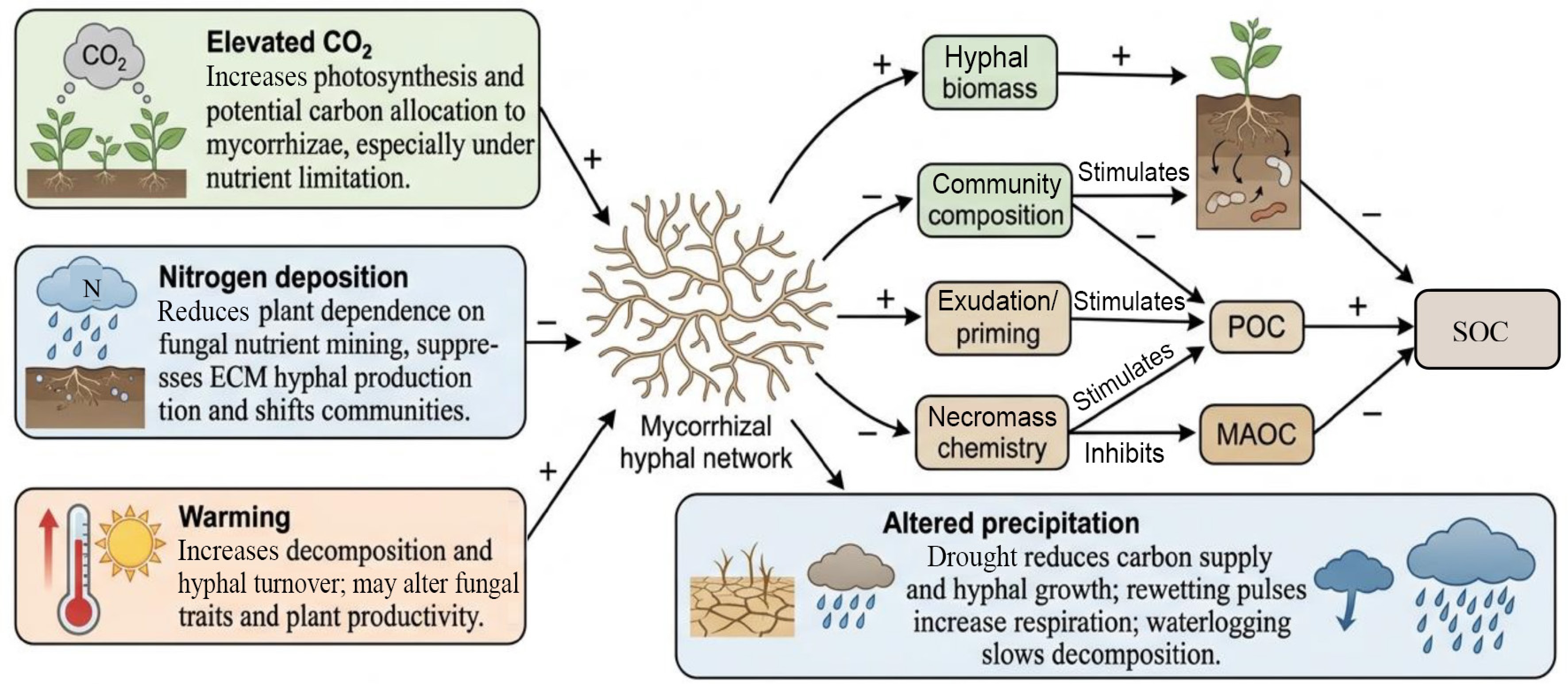
Figure 3.
Climate change-related drivers alter mycorrhizal carbon allocation, hyphal traits, and SOC stabilization pathways. Global climate change modifies SOC through direct effects on plants, fungi, and the soil's physical conditions. Elevated CO2 may enhance mycorrhizal carbon fluxes where nutrients limit plant growth, whereas nitrogen deposition often reduces hosts' carbon allocation to nutrient-foraging mycelium. Warming and altered precipitation affect hyphal growth, decomposition, necromass turnover, and stabilization. The net SOC feedback depends on the balance among increased carbon input, microbial respiration and physical or mineral protection. All four global change drivers rarely act independently in natural ecosystems; their combined nonadditive effects jointly reshape hyphal traits and the ultimate net SOC balance.
Warming accelerates biological rates, including microbial respiration, enzymatic activity, hyphal growth, and necromass decomposition[85]. It may increase plants' productivity in cold ecosystems, potentially increasing carbon allocation to mycorrhizal fungi, but it also increases decomposition and CO2 loss[86]. The net SOC response depends on whether increased inputs exceed the increased losses and whether new residues are stabilized. In boreal and high-latitude systems, warming can alter ECM and ErM communities, stimulate shrubs' expansion, and deepen active layers in permafrost soils[87]. These changes may increase the decomposition of previously protected organic matter. Ericoid shrubs may expand under warming in some regions, adding tannin-rich litter and ErM fungal pathways, but they may also increase nutrient cycling and microbial activity[17,88]. In temperate systems, warming may intensify drought stress, reducing hyphal growth despite higher temperatures[89]. Warming may also shift fungal traits. Taxa with faster growth and lower melanization may become more competitive under some conditions, potentially reducing necromass's persistence; alternatively, stress-tolerant melanized fungi may increase under drought and heat stress[86,89].
Nitrogen deposition and drought
-
Nitrogen deposition is one of the strongest modifiers of mycorrhizal function (Fig. 3). In nitrogen-limited ecosystems, plants rely heavily on mycorrhizal fungi for nutrient acquisition. Nitrogen saturation reduces host plants' carbon allocation to mycorrhizal symbionts, inhibits extraradical mycelial production, and weakens the fungal capacity for organic nutrient mining[16,18]. In ECM forests, nitrogen enrichment often suppresses fungal biomass, reduces organic nutrient-mining activity, and shifts communities toward taxa better adapted to inorganic nitrogen[38,42]. This can weaken the Gadgil effect and alter the decomposition of organic matter. Nitrogen addition may also affect the chemistry of fungal necromass. Higher nitrogen availability can change fungal carbon/nitrogen ratios, growth rates, and decomposition susceptibility[56]. If nitrogen deposition reduces hyphal production, direct fungal carbon inputs to the soil decline[5]. At the same time, reduced enzyme investment in organic matter decomposition could either increase or decrease SOC, depending on whether the saprotrophs respond positively to nitrogen enrichment[20,26,27]. These interacting pathways explain why nitrogen's effects on SOC are often ecosystem-specific. In AM systems, fertilization can reduce mycorrhizal colonization and hyphal length, especially when phosphorus is added[16,37]. Nitrogen addition alone may have variable effects depending on phosphorus limitations and the plant community's composition. In agricultural systems, high fertilizer inputs may reduce the incremental contribution of AM fungi to SOC by weakening plants' dependence on symbiosis[19,67].
Soil moisture regulates hyphal growth, enzyme diffusion, oxygen availability, and mineral interactions[89]. Drought can reduce plants' photosynthesis and carbon allocation to mycorrhizal fungi, suppress hyphal growth, and limit decomposition[38]. Some mycorrhizal fungi improve plants' drought tolerance by enhancing water uptake, but prolonged drought can reduce the productivity of both plants and fungi[90]. Drying–rewetting cycles can cause pulses of microbial respiration and necromass turnover. Hyphae may be damaged during drought and decomposed upon rewetting, creating transient carbon and nutrient pulses[12]. Aggregation mediated by fungal hyphae may influence soil water retention and protect organic matter, but repeated disturbance can destabilize aggregates[49]. Excess precipitation or waterlogging reduces oxygen availability and can slow decomposition, potentially increasing the accumulation of SOC[91]. However, anaerobic conditions also alter microbial pathways and may reduce mycorrhizal activity. In peatlands and wet heathlands, ErM fungi operate within moisture regimes that strongly shape organic matter's persistence[17,88].
-
Most soil carbon models represent plant inputs, decomposition pools, and environmental modifiers but do not explicitly include mycorrhizal hyphae, fungal guilds, or necromass traits[92,93]. This omission limits predictive power because hyphae influence both the input location and the decomposition dynamics. Models that treat belowground carbon as homogeneous root input miss the spatial redistribution of carbon by hyphae to mineral microsites. Improved models should incorporate at least four fungal dimensions. First, carbon allocation to mycorrhizal fungi should vary with plant type, nutrient availability, and climate[38]. Second, fungal guilds should differ in their decomposition capacity, priming effects, and necromass chemistry[35]. Third, hyphal biomass turnover should feed microbial residue and mineral-associated pools rather than only fast-cycling litter pools[79]. Fourth, climate responses should act through both plant productivity and fungal functional traits[80,86]. A trait-based approach may be more robust than a simple AM versus ECM classification. Relevant traits include exploration type, hyphal diameter, melanization, enzyme capacity, carbon/nitrogen ratio, growth rate, exudation, and mineral-surface affinity. For AM fungi, traits related to hyphal length, aggregation, and phosphorus acquisition may be central. For ECM fungi, organic nitrogen mining capacity, melanization, and exploration type may be key[35,90]. For ErM fungi, enzyme capacity for polyphenol–protein complexes and interactions with tannin-rich litter are essential. Model development requires empirical datasets linking hyphal production to SOC fractions and turnover times. Field experiments should combine mycorrhizal exclusion or ingrowth approaches with isotopic tracing, fractionation into POC and MAOC, mineralogical characterization, and sequencing of the fungal community. Long-term experiments across climate gradients are especially valuable because short-term increases in fungal biomass may not translate into persistent SOC.
-
Several gaps currently limit our understanding of hyphal control over SOC. First, hyphal carbon fluxes are difficult to quantify in the field. Measurements of root colonization do not necessarily represent extraradical hyphal biomass or activity[38]. Future studies should measure hyphal length, biomass production, turnover, and carbon use efficiency directly. Second, SOC fractionation is still underused in mycorrhizal research[76]. Total SOC measurements cannot reveal whether fungal effects increase persistent mineral-associated carbon or transient particulate carbon. Studies should routinely separate POC and MAOC and, where possible, estimate turnover. Third, fungal necromass chemistry needs broader taxonomic coverage[16]. ECM necromass studies show strong interspecific variation, but AM and ERM necromass remains less characterized. Melanin, chitin, glucans, nitrogen concentration, and mineral-binding properties should be compared across guilds and taxa. Fourth, ErM systems are underrepresented in general SOC frameworks[4,17]. Understory ericaceous shrubs can substantially alter soil carbon and nitrogen patterns, particularly in boreal and temperate forests. Forest biogeochemical studies should include the shrub layer's mycorrhizal composition rather than relying solely on overstory trees' mycorrhizal type. Fifth, climate change experiments should examine interacting drivers. Elevated CO2, warming, nitrogen deposition, and altered precipitation rarely act alone. Their combined effects on plant allocation, fungal communities, priming, and stabilization may be nonadditive. Finally, management applications require field validation. Inoculation of AM fungi, reduced tillage, tree species selection, and restoration of fungal networks may influence SOC, but the outcomes depend on the soil type, climate, plant community, and nutrient status. In addition, field manipulation experiments should routinely separate POC and MAOC fractions alongside isotopic tracing to disentangle transient labile carbon inputs from long-term persistent SOC stocks. Translating mycorrhizal mechanisms into carbon sequestration strategies requires realistic field experiments and long-term monitoring.
-
Mycorrhizal hyphae are central regulators of SOC dynamics. They transport plant carbon beyond the roots, deposit organic compounds at mineral microsites, form necromass, regulate aggregation, and alter decomposer communities. Their effects cannot be captured by root inputs alone. AM, ECM, and ErM fungi differ fundamentally in their nutrient acquisition, decomposition interactions, and stabilization pathways. AM fungi influence SOC through productivity, aggregation, hyphal turnover, and priming, but field evidence for consistent SOC gains remains context-dependent. ECM fungi can suppress or stimulate decomposition, depending on litter quality, nitrogen availability and fungal traits, and their necromass may contribute to persistent carbon pools. ErM fungi and their host shrubs create distinct organic matter dynamics through enzymatic access to complex substrates and chemically resistant litter–fungal residues. Climate change will reshape these pathways by altering plants' carbon allocation, nutrient limitations, the fungal community's composition, and the soil's physical conditions. Elevated CO2 may increase hyphal carbon input where nutrients are limiting, but nitrogen deposition can suppress mycorrhizal investment. Warming and altered precipitation may accelerate decomposition or change stabilization pathways. Predicting SOC feedbacks therefore requires an explicit representation of mycorrhizal hyphae, fungal necromass, and guild-specific traits. The emerging evidence supports a clear conclusion: The hyphosphere cannot be ignored in SOC research. Our study highlights the knowledge gap in ErM shrub–tree fungal interaction research and emphasizes the necessity of integrating understory vegetation into future mycorrhizal carbon studies. Incorporating different types of mycorrhizal hyphae into empirical studies, management frameworks, and carbon models will substantially improve our understanding of soil carbon's persistence under global climate change.
-
The authors confirm their contributions to the paper as follows: study conception and design, funding acquisition: Xie L; formal analysis, draft manuscript preparation: Zhang X; investigation: Zhi S, An R, Wang Y; writing − review and editing: Zhang X, Xie L; supervision: Xie L. All authors reviewed the results and approved the final version of the manuscript.
-
Data sharing is not applicable to this article as no datasets were generated or analyzed during the current study.
-
The authors declare that they have no conflict of interest.
- Copyright: © 2026 by the author(s). Published by Maximum Academic Press, Fayetteville, GA. This article is an open access article distributed under Creative Commons Attribution License (CC BY 4.0), visit https://creativecommons.org/licenses/by/4.0/.
-
About this article
Cite this article
Zhang X, Xie L, Zhi S, An R, Wang Y. 2026. Mycorrhizal hyphae as central regulators of soil organic carbon dynamics under climate change. Forestry Research Advances 1: e017 doi: 10.48130/fra-0026-0015 

Mycorrhizal hyphae as central regulators of soil organic carbon dynamics under climate change
- Received: 13 August 2026
- Revised: 05 September 2026
- Accepted: 17 September 2026
- Published online: 12 October 2026
Abstract: Soil organic carbon (SOC) is the largest terrestrial carbon pool, and mycorrhizal extraradical hyphae function as the primary biological factor transferring photosynthetic carbon from plants into the soil. Arbuscular mycorrhizal (AM), ectomycorrhizal (ECM), and ericoid mycorrhizal (ErM) mycelial networks differ fundamentally in their carbon allocation, extracellular enzyme activities, necromass chemical composition, and competitive interactions with free-living saprotrophs, generating divergent SOC accumulation. This review synthesizes mechanistic evidence of mycelium-mediated SOC cycling, contrasts functional disparities across the three major mycorrhizal guilds, and evaluates how rising CO2, nitrogen deposition, warming and shifting precipitation regimes alter mycelial biomass, community composition, and their downstream soil carbon feedbacks. Recent field and meta-analytical data demonstrate that ECM fungi rely on host carbon to scavenge organic nitrogen, producing context-dependent suppression of litter decomposition (the Gadgil effect), whereas AM hyphae accelerate rhizosphere priming but form mineral-stabilized necromass to build persistent SOC pools. Critically, understory ErM shrubs independently modify trees' AM–ECM biogeochemical relationships, introducing confounding variability widely overlooked in forest mycorrhizal frameworks. Climate perturbations rewire plant–fungal carbon for nutrient trade-offs: Low inorganic nitrogen environments amplify ECM hyphal production and organic matter breakdown capacity, whereas nitrogen saturation suppress extraradical mycelium and weakens eCO2 fertilization gains. Major outstanding challenges include disentangling interactive mycorrhizal guild effects, scaling plot-level hyphal observations to global Earth system models, and resolving divergent long-term SOC dynamics across boreal, temperate and tropical biomes. Integrating mycelial functional traits into climate–carbon models will greatly improve the reliability of predictions on terrestrial carbon–climate feedbacks and provide theoretical support for soil carbon sequestration management worldwide.