











-
Grapevines (Vitis L.) are among the earliest domesticated fruit crops[1], with their initial cultivation period in the Near East[2] and South Caucasus[3] dating as far back as approximately 6,000–8,000 years. Currently cultivated across all continents except Antarctica, grapevines have become one of the world's most widely distributed and economically valuable crops[4], and over the years, China has emerged as a leading wine consumer and producer globally. Grape berries have a dense nutritional profile and are rich in soluble sugars, vitamin C, anthocyanins, and essential minerals. Specifically, their skins contain phenolic compounds, dietary fiber, and volatile aromatic substances, whereas their seeds contain bioactive constituents, including fixed oils, proanthocyanidins, proteins, and vitamins. These bioactive compounds exhibit clinical efficacy owing to their antioxidant activity and ability to mitigate cardiovascular risk[5]. Further, in contemporary societies, grapes and their derivatives are not only considered as gastronomic delights but also hold great significance in terms of cultural symbolism, historical charm, and local customs.
The Xizang Autonomous Region, located in the southwestern hinterlands of China's Qinghai–Xizang Plateau, is globally recognized as 'the third pole of the earth', 'the roof of the world', and 'the water tower of Asia'[6]. Its distinctive geographical location and climate have nurtured abundant natural resources and unique ecosystems, and it is currently one of the regions with the best ecological environment and richest biodiversity in the world[7]. In Xizang, grapes are of considerable importance and have a cultivation history of approximately 1,400 years. However, the viticulture industry long remained geographically limited owing to environmental constraints and underdeveloped infrastructure, and it was not until the 21st century did it begin to develop rapidly. In recent decades, global warming, manifested by rising temperatures[8], lake expansion[9], and increased precipitation[10] in Xizang has profoundly affected regional viticulture. Nevertheless, existing literature on grape cultivation in this region remains limited, and systematic research is lacking. We aim to comprehensively synthesize Xizang's topography and climatic features, the historical evolution and current status of its viticulture industry, highlight the distribution of germplasm resources, and clarify fruit quality attributes. We further examine the impacts of global warming on Xizang grapes, diagnose existing industry challenges, and propose strategies for improvement. This systematic literature review may benefit fruit tree researchers and growers by providing a scientific basis for advancing the Xizang grape industry.
-
To ensure comprehensive and unbiased coverage of the literature, we searched Google Scholar (
https://scholar.google.com/ ), Baidu Scholar (https://xueshu.baidu.com/ ), PubMed (https://pubmed.ncbi.nlm.nih.gov/ ), Springer (https://link.springer.com/ ), Web of Science (www.webofscience.com ), China National Knowledge Infrastructure (www.cnki.net ), and the Wanfang Database (www.wanfangdata.com ), without restrictions on publication date or geographical location. The search encompassed a wide range of document types, including articles, reviews, books, and conference proceedings, and employed key terms and phrases such as grapevine, wine, grape fruit quality and cultivation, topography, and climate in Xizang. Literature focusing on cultivation techniques and research conducted outside Xizang or unrelated to its internal regions was excluded. In addition, we consulted authoritative sources, including the Flora of China, Flora of Xizang, Geography of Xizang, local yearbooks, and books related to Xizang grapes for relevant data. Our team's long-term production practices, field investigations, and research experience on Xizang grapes were also integrated into this systematic review. -
The Xizang Plateau has unique geographical features and is characterized by a highly diverse climate. With an average altitude exceeding 4,000 m, it is the highest-altitude region on Earth. The plateau also possesses exceptionally abundant solar resources, with solar radiation levels one-third to more than two-fold higher than those of other plains at the same latitude. Its annual sunshine duration, averaging 3,100–3,400 h, makes it one of the regions on Earth with the longest sunlight exposure. The terrain slopes downward from northwest to southeast, resulting in pronounced climatic contrasts. Specifically, the southeastern area is characterized by a warm and humid climate, whereas the northwestern area experiences a severely cold and arid climate. Annual precipitation decreases markedly, from approximately 5,000 mm in the southeast to approximately 50 mm in the northwest, leading to transitions among tropical, subtropical, plateau temperate, plateau sub-cold, and plateau-cold climatic zones. Substantial altitudinal variation has also produced a distinctive vertical zonation phenomenon, commonly described as 'one mountain with four seasons, ten miles with different weather'[11]. In addition to serving as the source region of the Yarlung Zangbo River, the Xizang Plateau forms a major passageway for the Nujiang (Salween River) and Lancang (Mekong River) rivers, providing substantial water resources to South and Southeast Asia. Xizang also contains the world's largest cluster of plateau lakes, comprising approximately 300 lakes, each with an area exceeding 10 km2[9].
Grapevines are perennial plants that favor moderate temperatures, abundant light, drought tolerance, and soils with good air permeability. They exhibit strong ecological adaptability, with a general low-temperature tolerance range from –15 to –25 °C[12]. Optimal growth conditions include an annual sunshine duration of ≥ 1,500 h, and annual precipitation of 500–900 mm. Xizang's vast territory features a complex and diverse topography, which can be broadly divided into four physiographic regions: the Himalayan High-mountain Region, Northern Xizang Plateau (i.e., the Changtang Plateau), Southern Xizang Valley (i.e., Yarlung Zangbo Valley), and the Eastern Xizang High-mountain Canyon Area (i.e., the Hengduan Mountains Region) (Fig. 1). (1) The Himalayan High-mountain Region, located in southern Xizang primarily consists of several approximately east–west–trending mountain ranges with an average elevation of approximately 6,000 m; pronounced ecological contrasts exist between the southern slopes, which receive abundant rainfall and support lush vegetation, and northern slopes, which experience limited precipitation and sparse vegetation cover. The northern foothills form part of the endorheic lake-basin belt of the Qinghai–Xizang Plateau, where fertile lakeside pastures constitute prime grazing grounds[13]. (2) The Northern Xizang Plateau lies between the Kunlun, Tanggula, Gangdise, and Nyenchen Tanglha mountain ranges, where dome-shaped hills and basins account for approximately three-fifths of the total area. At an average elevation of 4,600–5,100 m, this region has a high-altitude frigid climate characterized by arid to semi-arid conditions; annual mean temperatures below 0 °C, July temperatures below 10 °C, relatively warm conditions from June to August, predominant nocturnal rainfall during the wet season, and frequent strong winds in winter and spring. Furthermore, owing to its extensive natural grasslands, it constitutes Xizang's primary pastoral region[14]. (3) The Southern Xizang Valley lies between the Gangdise Mountain ranges and Himalayas and encompasses the watersheds of the Yarlung Zangbo River and its tributaries, including the Nyangchu, Lhasa, and Niyang rivers. It is characterized by valley plains and lacustrine basins of varying widths, with an average elevation of approximately 3,500 m, and its relatively flat terrain and fertile soils make it Xizang's primary agricultural heartland[15]. (4) The Eastern Xizang High-mountain Canyon Area, also known as the Hengduan Mountains, consists of deeply incised valleys transitioning from an east–west, to a north–south orientation, and is traversed by the Nujiang, Lancang, and Jinsha rivers (i.e., the Three-Rivers)[6]. At average elevations of approximately 5,200 m in the north and 4,000 m in the south, this region exhibits pronounced vertical climatic belts, where lower-elevation valleys and slopes are influenced by warm and humid currents of the Indian Ocean, resulting in temperate to subtropical semi-humid climates with an annual average temperature of 3–8 °C and annual precipitation of 400–800 mm, which are suitable for the development of valley agriculture and planting[16,17]. Among these regions, the Southern Xizang Valley and Eastern Xizang High-mountain Canyon Area constitute the dominant grape-producing areas in Xizang.
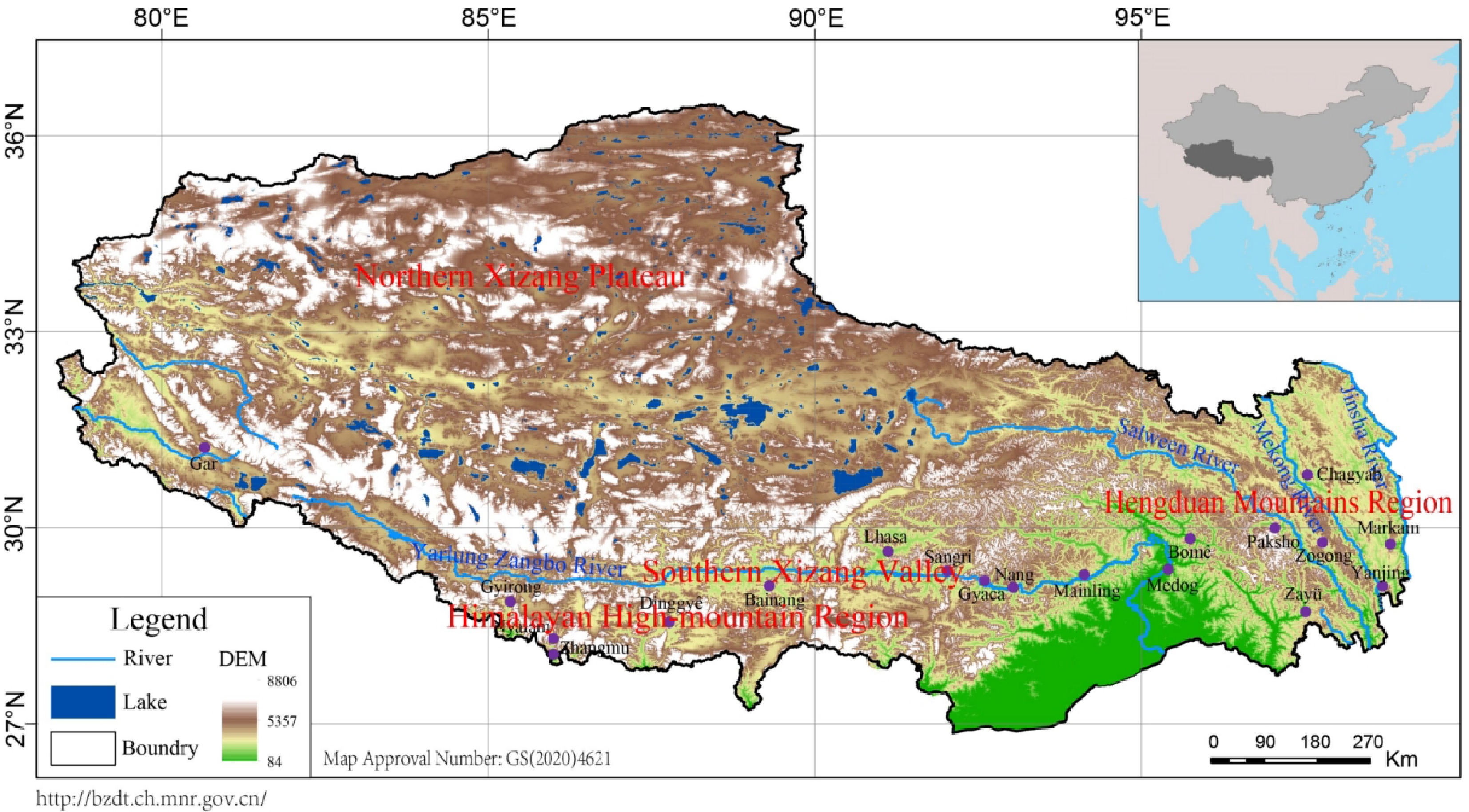
Figure 1.
Topography and main grape planting areas in Xizang. The data is from the National Catalogue Service for Geographic Information (
www.webmap.cn ) and China Statistical Yearbook (www.yearbookchina.com ). -
The earliest documented evidence of viticulture in Xizang dates back to the Tubo dynasty (7th century). Historical records in 'The Feast of the Wise' indicate that winemaking techniques had been mastered during the reign of Songtsen[18]. This account is visually corroborated by sculpted frescoes in the southern hall of the Daden Mingyur Podrang Palace, which depicts wine being presented at Songtsen Gampo's banquet, and serves as indirect evidence of early grape cultivation[19]. In addition, the Xizang medical classic 'Tara Pharmacopoeia', written in the mid-8th century, mentions grapevine, suggesting that grapevines were already under cultivation in the Tubo region at the time[20]. Furthermore, the form and decorative patterns of a 'beast and grape' mirror discovered during a cultural relic survey at Changmeijian Temple in Bainang County in the 1990s suggest an early to mid-Tang Dynasty origin (7th–8th century), providing additional material evidence for the early presence of viticulture in Xizang[21]. Despite these early records, grape cultivation remained largely limited to manorial estates and temple grounds owing to socioeconomic constraints and feudal agricultural systems; widespread viticultural development was therefore delayed until modern times.
Qamdo is one of Xizang's earliest documented viticultural regions. Historically, Zogong and Markam counties have served as critical transit routes connecting the Tubo dynasty to the Nanzhao Kingdom (an 8th-century polity in modern Yunnan Province, China), functioning as indispensable segments of the ancient 'Tea-Horse Road' for transporting Yunnan tea into Xizang[22]. Recently, the highest-altitude and largest-scale ancient grape tree group in China, primarily distributed near the Nujiang River Valley and the Lancang River Valley at altitudes 2,500–3,300 m, and comprising grapevines belonging to Eurasian and Oriental varieties, was discovered in Zogong County. Via growth cone measurements and ring-diameter regression estimation, the largest tree in these vineyards, with a diameter and ground circumference of 160 and 210 cm respectively, was determined to be 416 years old. Presently, this tree continues to grow normally and bear fruit, setting a new record for Eurasian grapevines in China. This discovery provides empirical evidence for the 'Tea-Horse Road introduction theory' regarding the origin of wine in southwestern China[23]. Additionally, Portuguese missionary António de Andrade, who arrived in Xizang in 1624 for missionary work, documented the geographic setting, natural products, and local customs of Xizang in a letter dated 1626, mentioning 'grapes'[24]. This letter suggested that grapevines were cultivated in Xizang at the time. Further, by the mid-19th century, French missionary Deng Deliang introduced small black grapes (possibly a variety closely related to 'Cabernet Sauvignon') along with modern cultivation and winemaking techniques in Yanjing, Markam County[25]. Thus, the Markam region became established as one of China's earliest modern viticulture and winemaking hubs, with the employed techniques subsequently spreading to the high-altitude zones of the Three-River Basin[26].
Prior to the 1980s, Xizang lacked large-scale viticultural zones. Grape planting was minimal and limited to regions such as Qamdo and Nyingchi[27,28]. From 2000, however, the industry began experiencing rapid development, marked by the adoption of protected cultivation systems, and presently, key grapevine production clusters are concentrated in the Lhasa River valley basin, Bainang County, and Bomê and Mainling counties in Nyingchi[29,30]. Alongside this rapid industrial development, Cai et al.[31] successfully introduced six Vitis vinifera L. cultivars, namely, 'Crimson Seedless', 'Centennial Seedless', 'Rizamat', 'Flame Seedless', 'Manicure Finger', and 'Red Globe', using rain-sheltered cultivation techniques in Mainling farm, Nyingchi. Further, between 2009 and 2016, Xizang Eastern Treasure Winery Co., Ltd. identified 'Cabernet Sauvignon', 'Syrah', 'Chardonnay', 'Yan 73', 'Rose Honey', and 'Crystal' as wine varieties adapted to Markam County, Qamdo[32]. In 2018, Qushui Rongshun Biotechnology Co., Ltd. introduced six cultivars, including 'Vidal', 'Ultra-High Altitude A', and 'Chardonnay', to Lhasa[33]. Furthermore, in 2024, the viticulture research team of the Xizang Academy of Agriculture and Animal Husbandry Sciences (TAAAS) reported a grape yield of 11,250 kg/ha during the second productive year of a vineyard in the Emma resettlement area (3,900 m) in Rinbung County, Shigatse[34].
Presently, all prefecture-level divisions in Xizang have established viticultural operations that predominantly focus on wine grape cultivars, whereas table grape production remains limited[35]. Grapevines have also been planted in residential courtyards in Qamdo, Nyingchi, and Lhasa. Notably, the Ngari and Nagchu regions, which historically lacked tree growth owing to extreme climatic conditions (i.e., high-cold and desert climates, with mean annual temperatures ranging from 0 to −2 °C, and −0.9 to −3.3 °C, respectively), have recently become areas of grapevine cultivation. In addition, Menshi Village in Gar County achieved pioneering viticulture at an altitude of 4,300 m in 2016 through the use of greenhouses combined with soil improvement using organic fertilizers, and in 2024, the vineyard achieved a grape yield of 2,250 kg/ha. According to recent studies, grape varieties such as 'Summer black', 'Muscat Hamburg', and 'Red Barado' can successfully produce two harvests per year under facility-based cultivation conditions in Lhasa (3,650 m)[36]. Overall, the total grape planting area in Xizang, excluding residential courtyard plantings, is approximately 3,000 ha, with approximately 1,000, 600, and 400 ha located in Markam, Sangri, and Zogong counties, respectively. Furthermore, in 2023, the average grape yield in Xizang was approximately 9,375 kg/ha, and the total yield was approximately 5,000 tons[37].
In 2019, 'Markam Grapes' (Fig. 2), cultivated at elevations of 2,200–2,700 m, obtained organic certification, while 'Yanjing Grapes' received Protected Geographical Indication status[38]. Additionally, in 2023, Sangri County in Xizang (elevation > 3,600 m) was certified as 'The World's Highest-Elevation Vidal Vineyard'[35], vertically surpassing the former record holder, the Colome Estate vineyard in Salta (3,111 m), by approximately 500 m[39]. Furthermore, the novel early-ripening wine grape cultivar Yunniang No. 3, developed by the Chuxiong Academy of Agricultural Sciences, exhibits resistance to downy mildew and powdery mildew and moderate resistance to gray mold and white rot. Consequently, this cultivar is suitable for high-altitude cultivation in Xizang and Yunnan under conditions of annual precipitation ≤ 700 mm[40].
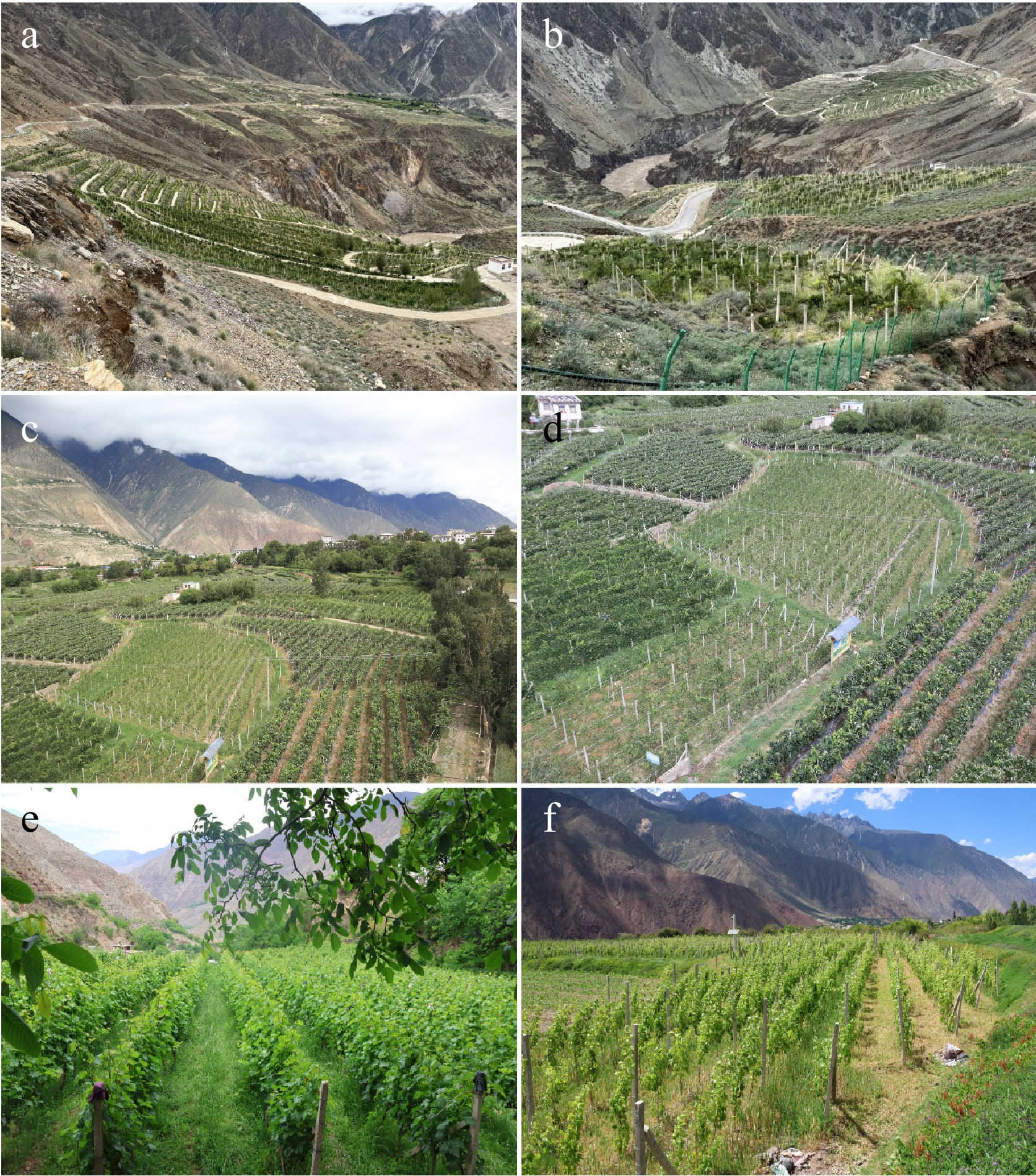
Figure 2.
Xizang vineyards. (a), (b) Ranba village vineyard in Zhayu Town, Zogong County; (c)−(f) Dameiyong vineyard in Naxi Town, Markam County.
-
Germplasm resources, comprising both wild species and cultivated varieties, constitute the material foundation for identifying superior genes, advancing breeding innovation, and conducting fundamental research. Xizang is one of China's most climatically diverse and fruit tree resource-rich regions[41]. In particular, the eastern foothills of the Himalayas and deep mountain valleys of the Hengduan Mountains harbor exceptionally abundant wild fruit tree resources, characterized by high botanical diversity and wide distribution[42,43]. The wild grape germplasms currently identified in Xizang include V. betulifolia Diels et Gilg., and V. lanata Roxb., both of which are native to the region[44,45]. Specifically, V. betulifolia grows on slopes within evergreen broad-leaved forests at altitudes of approximately 1,600 m and has been recorded in Zayü County, whereas V. lanata primarily occurs on slopes or in shrublands, and is more widely distributed across several counties, including Medog, Zayü, Bomê, Gyirong, Zhangmu, Nyalam, and Dinggyê, at elevations of 1,600–3,100 m[46]. The complex and diverse climatic environment of Xizang has facilitated the adaptive evolution of grape germplasms, endowing both V. betulifolia and V. lanata with remarkable genetic diversity, strong disease resistance, and tolerance to barren conditions[47], thereby making them exceptional genetic resources for grape variety improvement and the development of superior rootstocks[15].
Based on multiple surveys and investigations, researchers from the Comprehensive Scientific Expedition Team of the TAAAS and Chinese Academy of Sciences preliminarily determined that only two early cultivated V. vinifera varieties, white-skinned and purple-skinned grapes, exist in the region[27]. Primarily distributed in Zogong, Markam, Paksho, Chagyab, Gyaca, and Nang, these grapevines, predominantly aged 50–100 years, were introduced from India. Presently, however, over 30 superior cultivars, originating from domestic as well as international sources, are cultivated in Xizang (Table 1), with the cultivated germplasm resources mainly distributed in Zogong, Markam, Paksho, Mainling, and Chagyab in the southern Xizang valley and the Three-River valley of eastern Xizang. Further, these varieties grow in warm semi-humid and warm semi-arid climatic zones, with average altitude, annual precipitation, annual temperature, and annual sunshine duration of 1,100–4,010 m, 350–850 mm, 7–13 °C, and 2,000–3,000 h, respectively[27,44]. Specifically, in areas with altitudes < 2,700 m, such as the Three-River valley in Qamdo, open-field cultivation is predominantly practiced, with a focus on wine grape varieties, whereas in areas at elevations of 2,700–4,010 m, including Lhasa, Nyingchi, Shannan, and Shigatse, facility cultivation is adopted, associated with higher planting costs and a primary emphasis on fresh varieties[34]. By integrating facility cultivation with mulching technology, the cultivar 'Centennial Seedless' can even thrive in high-altitude frigid desert climates characterized by harsh ecological conditions, such as those in Gar County, Ngari Prefecture, at an elevation of approximately 4,300 m[48]. The introduction and long-term selection of these elite cultivars have established a critical germplasm foundation for developing distinctive Xizang grape varieties with enhanced high-altitude adaptability.
Table 1. Grape cultivars recently introduced to Xizang.
Number Variety name Species genus Type Introduction area Altitude (m) Ref. 1 Kyoho Vitis vinifera × Vitis labrusca Fresh Nyingchi, Chengguan 2,860, 3,650 [35,49] 2 Crimson Seedless Vitis vinifera Fresh Mainling 2,860 [31] 3 Rizamat Vitis vinifera Fresh Mainling 2,860 4 Manicure Finger Vitis vinifera Fresh Mainling, Chengguan 2,860, 3,650 [30,31] 5 Centennial Seedless Vitis vinifera Fresh Mainling, Gar 2,860, 4,300 [31,48] 6 Flame Seedless Vitis vinifera Fresh Mainling, Chengguan 2,860, 3,650 [31,50] 7 Red Globe Vitis vinifera Fresh Mainling, Chengguan 2,860, 3,650 8 Cabernet Sauvignon Vitis vinifera Wine Markam 2,200−2,700 [32] 9 Syrah Vitis vinifera Wine Markam 2,200−2,700 10 Yan 73 Vitis vinifera Wine Markam 2,200−2,700 11 Rose Honey Vitis vinifera × Vitis labrusca Wine Markam 2,200−2,700 12 Crystal Vitis vinifera Wine Markam 2,200−2,700 13 Chardonnay Vitis vinifera Wine Markam, Qushui 2,200−2,700, 3,600 [32,33] 14 Cabernet Gernischt Vitis vinifera Wine Markam 2,200−2,700 [38] 15 Gold Finger Vitis vinifera × Vitis labrusca Fresh Chengguan 3,650 [50] 16 Red Milk Vitis vinifera Fresh Chengguan 3,650 17 Muscat Hamburg Vitis vinifera Fresh Chengguan 3,650 18 Summer black Vitis vinifera × Vitis labrusca Fresh Chengguan 3,650 19 Ultra-High Altitude A Vitis vinifera Wine Qushui 3,600 [33] 20 Beibinghong Vitis vinifera × Vitis amurensis Wine Qushui 3,600 21 Xiangyue Vitis vinifera × Vitis labrusca Fresh Chengguan 3,650 [30] 22 Okubo Vitis vinifera × Vitis labrusca Fresh Chengguan 3,650 23 Reliance Vitis vinifera × Vitis labrusca Fresh Chengguan 3,650 24 Red Barado Vitis vinifera Fresh Qushui, Chengguan 3,600, 3,650 [50,51] 25 Vidal Vitis vinifera × Vitis labrusca Wine Qushui, Sangri 3,600 [35] 26 Merlot Vitis vinifera Wine Markam 2,900 27 Marselan Vitis vinifera Wine Markam 2,900 28 Petit Verdot Vitis vinifera Wine Markam 2,900 29 Pinot Noir Vitis vinifera Wine Markam 2,900 30 Black Pearl Vitis vinifera × Vitis labrusca Wine Markam 2,900 31 Shine Muscat Vitis vinifera Fresh Chengguan 3,650 32 Sudan Rose Vitis vinifera × Vitis labrusca Fresh Chengguan 3,650 PGI, Protected Geographical Indication. -
Overall, grapes from the Xizang region exhibit excellent quality, implying that the region is suitable for cultivating high-quality wine grapes[52]. Ecological factors, such as altitude[53], temperature[54], and soil type[55], not only determine the grape variety that can be planted but also influence grape berry quality. For example, as altitude increases, the intensity of UV radiation is enhanced significantly[56]. UV-B radiation promotes higher skin concentrations of anthocyanins and flavonols through the upregulation of UFGT, OMT2, FLS1, and F3'OH[57], while downregulating BES1 expression[58]. However, UV-C promotes the accumulation of flavan-3-ols in juvenile grape fruit by positively regulating VvMYBPA1[59]. Moreover, within a certain altitudinal range, higher elevations are beneficial for the accumulation of total phenolics, quercetin[60,61], tannins, resveratrol, antioxidants[62,63], flavor compounds[64], organic acids, and soluble solids[65] in grape fruits. Interestingly, beyond a threshold altitude, decreasing temperatures and reduced effective accumulated temperature offset these benefits, despite increased UV intensity and greater diurnal temperature amplitude, comprehensive grape fruit quality does not improve, and may even decline[66,67]. Therefore, in Xizang, where elevations exceed 2,700 m, facility cultivation is required to maintain quality advantages and stable yields. Overall, owing to altitude-induced 'stress effects' (Fig. 3), Xizang grapes exhibit a distinct regional advantage and are markedly superior in overall quality to grapes grown at comparable latitudes elsewhere, with soluble solid contents of 22%–26% and total phenolic contents of 920–1,250 mg/kg. Furthermore, the predominantly sandy gravelly brown soils of Xizang (pH 7.8–8.5) with excellent permeability, mineral-rich and pollution-free irrigation water—approximately 70% derived from snowmelt—and unique indigenous soil microorganisms (e.g., Meyerozyma caribbica, which inhibits Aspergillus ochraceus on grapes) collectively contribute to the distinctive terroir and flavor profile of Xizang grapes[55].
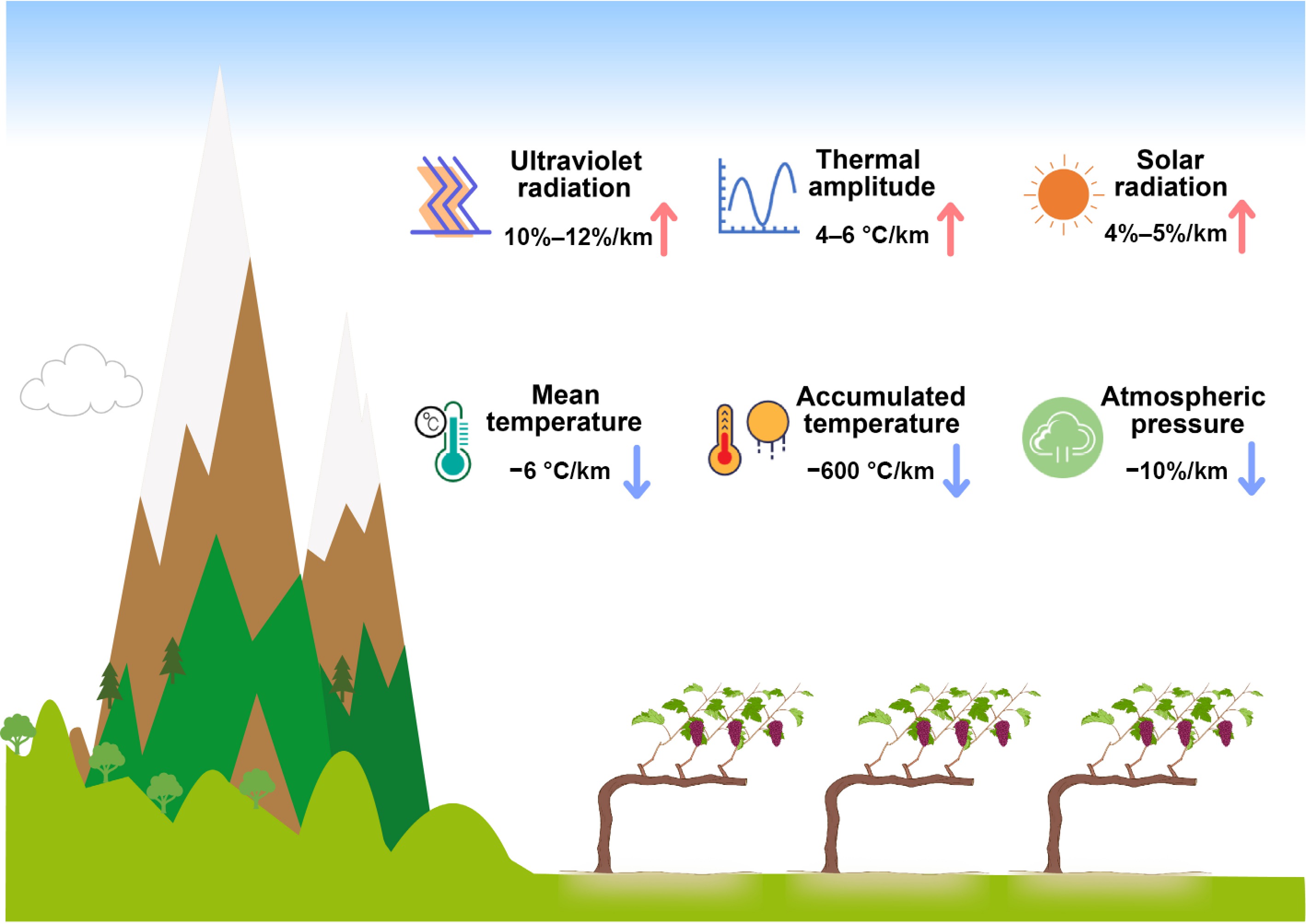
Figure 3.
Climate parameters change with increasing altitude.
Xizang wine stands out as a unique product of the Qinghai–Xizang Plateau, carrying symbolic 'terroir aura' significance across domestic, religious, and commercial contexts[68]. The Hengduan Mountains[69] and eastern Himalayan foothills[70] constitute a premier viticultural zone and are noted as one of the highest-elevation (2,200–3,700 m), and lowest-latitude (29°–30° N) wine grape-growing regions globally. A recent study on the wine quality of 'Cabernet Sauvignon' demonstrated that high altitude is conducive to the formation of ethyl acetate, thereby enhancing fruity aromas in wine, such as banana and pineapple notes[66]. Wines from Xizang are primarily categorized as red or white according to the grape variety used, as well as the fermentation protocol and wine-aging process employed. There are also unique wine types that represent regional culture, such as wines with added Xizang herbs and yak milk[71], blended wines[72], and specialty icewines[26]. Notably, icewine, distinguished by its uniquely concentrated sweet and mellow flavor, represents the epitome of winemaking excellence. Icewines, made from grapes harvested at −7 °C on the Xizang Plateau, exhibit superior quality, with the 'Semillon' cultivar outperforming the 'Riesling', 'Chardonnay', and 'Italian Riesling' cultivars[73]. The current vinicultural varieties in Xizang include the 'Cabernet Sauvignon', 'Syrah', 'Merlot', 'Marselan', 'Petit Verdot', 'Pinot Noir', and 'Black Pearl' cultivars[35], with the 'Black Pearl' cultivar, predominantly cultivated in Markam County, being the Xizang signature variety. Further, Losong Tsering innovated winemaking techniques by successfully integrating traditional Xizang methods with modern oenology[32], and currently, 11 wineries operate across the Xizang Autonomous Region, producing acclaimed brands including 'Dameiyong', 'Xizang Red Nectar', and 'Success Red'[35], with 'Dameiyong' earning a Gold Medal at the 8th Asia Wine Competition.
-
The Xizang Plateau is warming rapidly at a rate more than twice higher than the global average[74], and as a consequence of this warming trend, increased wetting, and vegetation expansion have become increasingly evident[75]. Monitoring data suggest that the Qinghai–Xizang Plateau experienced a 1.23 °C increase in temperature between 1961 and 2005[8]. Additionally, over the past 30 years, ice and snow melt have increased in this region by approximately 0.07%, and Xizang Plateau lakes have expanded by 9,871 km2[9], with the northern lakes expanding at a faster rate than their counterparts south of the plateau[76]. The precipitation pattern in the Qinghai–Xizang Plateau has also changed significantly owing to global warming. The analysis of monthly precipitation data for 1961–2023 showed a significant increase in precipitation at a rate of 4.17 mm/decade[77], with the northern area showing a clear increasing trend[78]. Pronounced warming–wetting trends across the Xizang Plateau in recent decades has triggered significant vegetation greening[79], with forest, shrub, and sparse vegetation land cover increasing by 0.30%, 0.02%, and 0.77%, respectively, and inducing socio-ecological changes in the Third Pole Mountains[80]. The vegetation growing season in Xizang has also increased by approximately 15–20 d owing to global warming[10].
Climate change-induced shifts and reshaping of optimal viticultural zones present considerable challenges for the wine industry in Xizang[81]. Winter temperature increases may create more favorable overwintering conditions for wine grapes. However, frequent summer heat waves and high winter temperatures owing to climate change may adversely affect grapevines and berries[82], forcing vineyards to expand to higher altitudes[83,84]. Additionally, given that Xizang is characterized by extensive plateaus and mountainous terrain and predominantly a high-altitude, cold region, rising temperatures are expected to promote the upward expansion of suitable grape planting areas. Temperature gradients with elevation are relatively consistent across different mountain ranges, and with a modern lapse rate of approximately 0.53–0.70 °C per 100 m[85], the current temperature projections indicate that the present thermal regimes may shift upward by approximately 170–230 m. Climate warming also substantially affects grape berry quality in high-altitude regions, with key manifestations including a reduced anthocyanin-to-sugar ratio, an earlier onset of grape color change, increased total soluble solids content[86], and decreased organic acid content[87]. Exposure to solar radiation can also enhance quercetin 3-glucoside content[88], possibly leading to a decrease in fruit pollination rate, worsening fruit sunburn[89], and uneven ripening[90]. Moreover, climate warming on the Qinghai–Xizang Plateau may trigger a series of disasters, such as glacier collapse and desertification[91], leading to an increase in the incidence of extreme events[92]. As most of Xizang's grape-growing areas are located in river valley plains, an increase in rainfall may cause mountain torrents, which pose a significant threat to industrial security. Although higher altitude regions are expected to experience more pronounced global warming effects this century[93], uncertainties still exist regarding the future evolution of the climate in the Three Poles region[94].
-
Despite its relatively short grapevine modern-cultivation history, Xizang produces high-quality grapes and premium wines owing to the distinctive terroir of its berries. However, current research and resource utilization in Xizang viticulture still faces several challenges as follows: (1) Primary research in this field has predominantly focused on cultivar selection[49,50], fruit quality regulation[95], cultivation techniques[51,96−98], pest management[99], and soil assessment[100]; however, this body of research lacks sustainability and systematic integration, is constrained by the scarcity of long-term experimental datasets, involves limited physiological and mechanistic studies under Xizang conditions, and lacks standardized quality assessment protocols across studies. (2) Wild grape resources in Xizang exhibit broad distribution and high genetic diversity; nevertheless, the exploitation of elite germplasms and functional genes remains critically underdeveloped. (3) Compared with the inland regions of China and international standards, viticultural management remains relatively underdeveloped in Xizang, with some vineyards still experiencing issues such as coulure, berry splitting, and millerandage, while potential trade-offs—such as reduced yield stability, frost risk, and sunburn—have not received sufficient attention. (4) Despite Xizang's distinct geographical advantages, its wine production sector faces an acute shortage of high-level technical talent and lacks participation from specialized research and development enterprises in value-added wine processing. (5) Finally, although climate change is significantly affecting Xizang viticulture, potential maladaptive risks, including extreme climatic events, water availability constraints and glacier-related hazards are not yet sufficiently integrated into viticultural planning scenarios.
-
Viticulture has become a vital economic pillar in certain areas of Xizang, owing to the unique climate and geographical characteristics of this region, which have created ideal conditions for producing exceptional grape berries and high-quality wine. In recent years, the promotion and widespread adoption of protected agriculture across the Xizang region, coupled with advances in cultivation techniques, has led to the rapid development of the viticulture industry in this region. In addition, the high-altitude provenance and superior fruit quality of Xizang grapes attracts consumers from both within and outside the region. A burgeoning tourism sector has also significantly promoted the development of local viticulture. Amid escalating climate change, high-altitude viticulture in cold-climate zones has emerged as a critical adaptation strategy, and the unique terroir of Xizang demonstrates exceptional potential for premium grape cultivation and industry expansion. Therefore, to fully realize this potential, it is necessary to: (1) emphasize the cultivation and introduction of professional and technical personnel, establish dedicated research teams, and conduct in-depth investigations into the formation of characteristic qualities, as well as the genes and mechanisms of stress resistance; (2) leverage endemic germplasm resources to enhance the selection of superior rootstocks, while strengthening the introduction of new varieties and the cultivation of indigenous varieties; (3) reinforce the introduction, demonstration, and dissemination of efficient cultivation techniques, while improving the technical skills and professional capacity of grape growers; (4) introduce high-tech enterprises and draw on advanced management models to drive integrated, high-value industrial development centered on regional uniqueness, particularly the high-altitude terroir, and (5) implement scientific planning for the grape industry by establishing long-term natural environment monitoring and response mechanisms, actively preventing natural disasters, and avoiding orchard construction in low-lying areas and debris-flow-prone zones. Overall, Xizang's distinctive grapes and wines have great potential for development, suggesting a promising outlook for the region's viticulture industry as the planting area and grapevine output continue to expand.
This work was supported by the Science and Technology Projects of Xizang Autonomous Region, China (XZ202301ZY0020N), the Young Growth Fund of Vegetable Research Institute of Xizang Academy of Agriculture and Animal Husbandry Sciences (SCS2025CZJJ04), and the Scientific Research Start-up Fund for High-level Introduced Talents of Henan Institute of Science and Technology (103020224001/073). We thank Prof. Lan Deng (Xizang Academy of Agricultural and Animal Husbandry Sciences) for her review comments and for providing vineyard pictures.
-
The authors confirm their contributions to the paper as follows: conceptualization: Lu G, Zhang S, Que Y; writing − original draft preparation, data analysis, supervision, funding acquisition: Lu G, Zhang S; writing − review and editing: Lu G, Zhang S, Que Y. All authors reviewed the results and approved the final version of the manuscript.
-
All data generated or analyzed during this study are included in this published article.
-
The authors declare that they have no conflict of interest.
-
# Authors contributed equally: Guilong Lu, Shanshan Zhang
- Copyright: © 2026 by the author(s). Published by Maximum Academic Press, Fayetteville, GA. This article is an open access article distributed under Creative Commons Attribution License (CC BY 4.0), visit https://creativecommons.org/licenses/by/4.0/.
-
About this article
Cite this article
Lu G, Zhang S, Que Y. 2026. Grapevine cultivation in the Xizang Plateau, the highest-altitude vineyard region: a systematic literature review. Fruit Research 6: e018 doi: 10.48130/frures-0026-0008 

Grapevine cultivation in the Xizang Plateau, the highest-altitude vineyard region: a systematic literature review
- Received: 01 December 2025
- Revised: 28 January 2026
- Accepted: 24 February 2026
- Published online: 09 May 2026
Abstract: Xizang, located in the southwestern region of the Qinghai–Xizang Plateau and often referred to as 'the roof of the world', is the highest-altitude grape-cultivation region globally. Although its viticultural heritage dates back to the Tubo Dynasty (7th century CE), industry development was impeded for over a millennium owing to bioclimatic extremes and technological limitations in the pre-industrial era. However, with major advances in transportation infrastructure and agrotechnological innovation, the viticulture industry began to experience transformative growth in the 21st century. As a result, the Southern Xizang Valley (Yarlung Zangbo Valley) and Eastern Xizang High-Mountain Canyon Area (Hengduan Mountains Region) have emerged as the dominant grape-growing areas in Xizang. In parallel, global climate change is reshaping the Xizang environment, enhancing the viability of high-altitude viticulture and enabling unprecedented expansion of climatically suitable viticultural zones. Despite these developments, systematic reviews of viticulture-related literature for this region remain scarce. Therefore, we conducted this systematic literature review to comprehensively characterize the viticulture industry in Xizang, incorporating its geomorphological and climatic context and multiple aspects of grape cultivation, including historical development, current practices, and fruit quality attributes. We also examined the impacts of global warming on regional viticulture and berry composition, elucidated key challenges in both industry practices and scientific research, and proposed evidence-based strategies for future industry advancement. This review provides a scientific reference for rational planning, cultivation model selection, and in-depth research on Xizang grapes.
-
Key words:
- Xizang Plateau /
- Grapevine /
- Cultivation history /
- Global warming /
- Fruit quality