













-
Ginkgo biloba L. is a valuable relict tree species whose leaves are rich in bioactive constituents, particularly flavonoids and terpene lactones, and represent an important source of raw material for the production of G. biloba extract (GbE)[1]. Because of its well-documented antioxidant, anti-inflammatory, microcirculatory, and neuroprotective properties, GbE has been widely used in phytopharmaceuticals, health supplements, and functional products[2]. However, the accumulation of flavonoids and other active compounds in G. biloba leaves is strongly influenced by cultivation practices, environmental conditions, and tree age[3]. Previous studies have shown that increasing tree age markedly decreases leaf metabolic activity and quality formation in G. biloba. Therefore, the development of effective rejuvenation strategies to maintain juvenile characteristics and prolong the harvest period of high-quality leaves is essential for efficient leaf-oriented G. biloba production[4].
Rejuvenation in woody plants can be achieved through several approaches, including tissue culture, grafting, and pruning. Among these, pruning is widely used because it is simple to implement and readily applicable under field conditions, making it an effective practice for rejuvenation and canopy renewal in woody plant production[5]. By removing apical dominance, pruning can stimulate the outgrowth of latent buds at the stem base, dormant buds around the root collar, and adventitious buds from the roots, thereby promoting regrowth and restoring relatively juvenile traits. In addition to its role in vegetative renewal, pruning can substantially alter branch architecture, leaf development, photosynthetic performance, and secondary metabolism. In G. biloba, pruning at different heights has been reported to stimulate sprouting and increase leaf flavonoid and terpene lactone contents[4]. Similar effects on rejuvenation and metabolite accumulation have also been observed in other woody species, such as Cunninghamia lanceolata and Cinnamomum camphora[6,7]. These findings highlight pruning as an important silvicultural practice for restoring juvenility and vigor in woody plants.
The recovery of aboveground growth after pruning depends largely on the reactivation of buds and the rapid establishment of new shoots, processes that are tightly coordinated by plant hormones[8]. Auxin, cytokinin (CTK), gibberellin (GA), strigolactones (SLs), and signaling molecules such as jasmonic acid and salicylic acid all participate in the release of apical dominance, dormancy break, and lateral shoot development[9−12]. In particular, the balance between auxin and cytokinin plays a central role in axillary buds' outgrowth and formation of the branching pattern[13]. As a form of mechanical injury, pruning not only disrupts endogenous hormone transport and signaling, but may also reprogram the expression of genes associated with cell division, tissue differentiation, and regenerative growth, thereby facilitating sprouting and shoot regeneration[4,14,15].
Beyond its effects on vegetative growth, pruning may also promote the accumulation of secondary metabolites through wound-induced metabolic reprogramming[4]. Flavonoids, a major class of products derived from the phenylpropanoid pathway, contribute both to stress adaptation and to the medicinal quality of G. biloba leaves[16]. Mechanical damage and other external stimuli have been shown to induce the expression of key structural genes involved in flavonoid biosynthesis, including PAL (Phenylalanine ammonia-lyase), C4H (Cinnamate 4-hydroxylase), CHS (Chalcone synthase), CHI (Chalcone isomerase), F3'H (Flavonoid 3'-hydroxylase), F3'5'H (Flavonoid 3',5'-hydroxylase), and FLS (Flavonol synthase), thereby enhancing the production of flavonoid compounds[17]. Improved photosynthetic capacity may further support this process by increasing carbon assimilation and substrate availability for secondary metabolism[18].
Despite these advances, current studies on pruning in G. biloba have focused mainly on sprouting, morphological recovery, and metabolite changes following one-time or single-year pruning treatments. By contrast, the responses of plant growth and leaf quality to consecutive annual pruning remain poorly understood. In leaf-harvesting G. biloba plantations, annual pruning is commonly applied to maintain reduced tree stature and continuous branch renewal. However, whether repeated annual pruning sustainably affects regenerative capacity, leaf development, and flavonoid accumulation remains unclear. In the present study, untreated trees (Ctrl), trees subjected to main trunk-pruning (MT), and trees subjected to consecutive branch-pruning (BT) were used to investigate the effects of different pruning regimes on shoot sprouting, leaf morphogenesis, and total flavonoid content accumulation. Transcriptome sequencing, Kyoto Encyclopedia of Genes and Genomes (KEGG) enrichment analysis, and weighted gene co-expression network analysis (WGCNA) were used to elucidate the molecular mechanisms underlying growth recovery and flavonoid accumulation under consecutive pruning.
-
The experiment was conducted at the G. biloba plantation of Yangzhou University (32°23′N, 119°25′E). Five-year-old G. biloba seedlings with uniform growth and no visible symptoms of pests or diseases were selected as the plant materials. All plants were five years old at the beginning of the experiment in July 2023. For the consecutive branch-pruned trees (BT), G. biloba plants that had undergone basal main trunk pruning (coppicing) in July 2023 were used. Following regrowth, multiple new branches developed, and these newly formed branches were further pruned back to approximately 10 cm from their bases in July 2024. In July 2024, the main stem was cut at approximately 10 cm above ground level to establish the main trunk-pruned trees (MT). The upper fully expanded peripheral leaves from newly emerged shoots of G. biloba were collected on July 7, 2025, for subsequent analyses. Untreated plants were used as the control (Ctrl), and leaves were collected from newly emerged shoots at developmental stages similar to those of MT and BT plants. Each treatment included three biological replicates, with a total of 15 plants.
Measurement of growth traits and physiological parameters
-
Sampling and measurements were conducted on July 7, 2025, using G. biloba plants from the Ctrl, MT, and BT treatments. Plant height was measured from the ground surface to the highest growing point using a measuring tape. Stem diameter was determined at 10 cm above the ground using a digital caliper. Leaf area was measured with a leaf area meter (LI-3000C, LI-COR, USA). Leaf fresh weight was determined using an analytical balance. Leaves were then heated at 105 °C for 30 min to inactivate enzymes, followed by oven-drying at 80 °C to constant weight for determining the dry weight. Leaf water content (%) was calculated as (Fresh weight − Dry weight) / Fresh weight × 100%.
Determination of total flavonoid content
-
Total flavonoid content was determined using a plant flavonoid assay kit (Suzhou Comin Biotechnology Co., Ltd., Suzhou, China) according to the manufacturer's instructions. Leaf samples were collected on July 7, 2025, from G. biloba plants in the Ctrl, MT, and BT treatments. Dried leaf samples were ground into powder, and 0.02 g of the powder was accurately weighed and extracted with 2 mL of 70% ethanol at 60 °C for 2 h under shaking. After centrifugation at 12,000 rpm for 10 min, the supernatant was collected. Absorbance was measured at 510 nm, and total flavonoid content was calculated accordingly.
Transcriptome sequencing
-
Leaf samples from Ctrl, MT, and BT G. biloba plants collected on July 7, 2025, were subjected to RNA sequencing analysis, with three biological replicates for each treatment. Total RNA was extracted using the TRIzol method. RNA quality was assessed prior to library construction, and only samples with an RNA integrity number (RIN) > 7.0 were used. cDNA libraries were then constructed and sequenced on the Illumina NovaSeq 6000 platform using a paired-end 150-bp strategy (PE150), generating at least 6 Gb of clean data per sample.
Raw reads were quality-filtered using Trimmomatic v0.39 to remove adapter sequences and low-quality reads. Clean reads were aligned to the G. biloba reference genome using HISAT2 v2.2.1. Gene expression levels were quantified with StringTie v2.1.4 and normalized as fragments per kilobase of transcript per million mapped reads (FPKM). Differentially expressed genes (DEGs) were identified using DESeq2 with thresholds of a fold change ≥ 2 and adjusted p < 0.05. Kyoto Encyclopedia of Genes and Genomes (KEGG) enrichment analysis was performed using the clusterProfiler package. The functional names of all genes are listed in Supplementary Table S1.
Weighted gene co-expression network analysis
-
Weighted gene co-expression network analysis (WGCNA) was performed in R using the WGCNA package. Genes with a coefficient of variation (CV) > 0.1 were selected for network construction. After determining the soft-thresholding power (power = 30), the adjacency matrix and topological overlap matrix (TOM) were generated, and gene modules were identified using the dynamic tree pruning method. In total, seven modules were identified with the parameters minModuleSize = 20 and mergeCutHeight = 0.25. Pearson correlation coefficients between module eigengenes (MEs) and total flavonoid content were then calculated to identify modules significantly associated with the trait (|r| > 0.8, p < 0.05). KEGG enrichment analysis of the genes in the key modules was conducted using clusterProfiler.
Quantitative real-time polymerase chain reaction analysis
-
Total RNA was extracted from leaves under different pruning treatments using an RNA extraction kit (Vazyme, Nanjing, China). Samples were ground into a fine powder in liquid nitrogen, and 0.1 g of the tissue was used for RNA isolation. RNA concentration and quality were assessed using a NanoDrop 2000 spectrophotometer (Thermo Fisher Scientific, Waltham, MA, USA). Key genes involved in flavonoid biosynthesis (GbCHS and GbC4H) and plant hormone signal transduction (GbSAUR, GbGH3, and GbCYCD3) were selected for quantitative real-time polymerase chain reaction (qRT-PCR) validation, and the gene-specific primers used for this are listed in Supplementary Table S2. Real-time PCR was performed using SYBR qPCR Master Mix (Vazyme, Nanjing, China). Actin was used as the internal reference gene for normalization, and relative gene expression levels were calculated using the 2−ΔΔCᴛ method.
Statistical analysis
-
All experiments included at least three biological replicates. Data are presented as the mean ± standard deviation (SD). Statistical analyses were performed using GraphPad 7.0 software (GraphPad Software Inc., La Jolla, CA, USA). Letters indicate significant differences based on one-way analysis of variance (ANOVA) (p < 0.05).
-
Different pruning treatments markedly altered the bud sprouting position, shoot growth, and leaf morphology in G. biloba (Fig. 1a–h). No obvious new shoots emerged from the basal part of untreated control plants (Ctrl). After MT (coppicing or main trunk pruning), multiple new shoots arose, mainly from the cut surface of the main stem and the region immediately below it. Under consecutive pruning (BT), new shoots were primarily produced from the base of lateral branches below the cutting site, indicating a stable capacity for shoot renewal. Compared with Ctrl, both MT and BT produced noticeably larger leaves with deeper lobes, and the leaves in the BT treatment retained more pronounced juvenile characteristics.
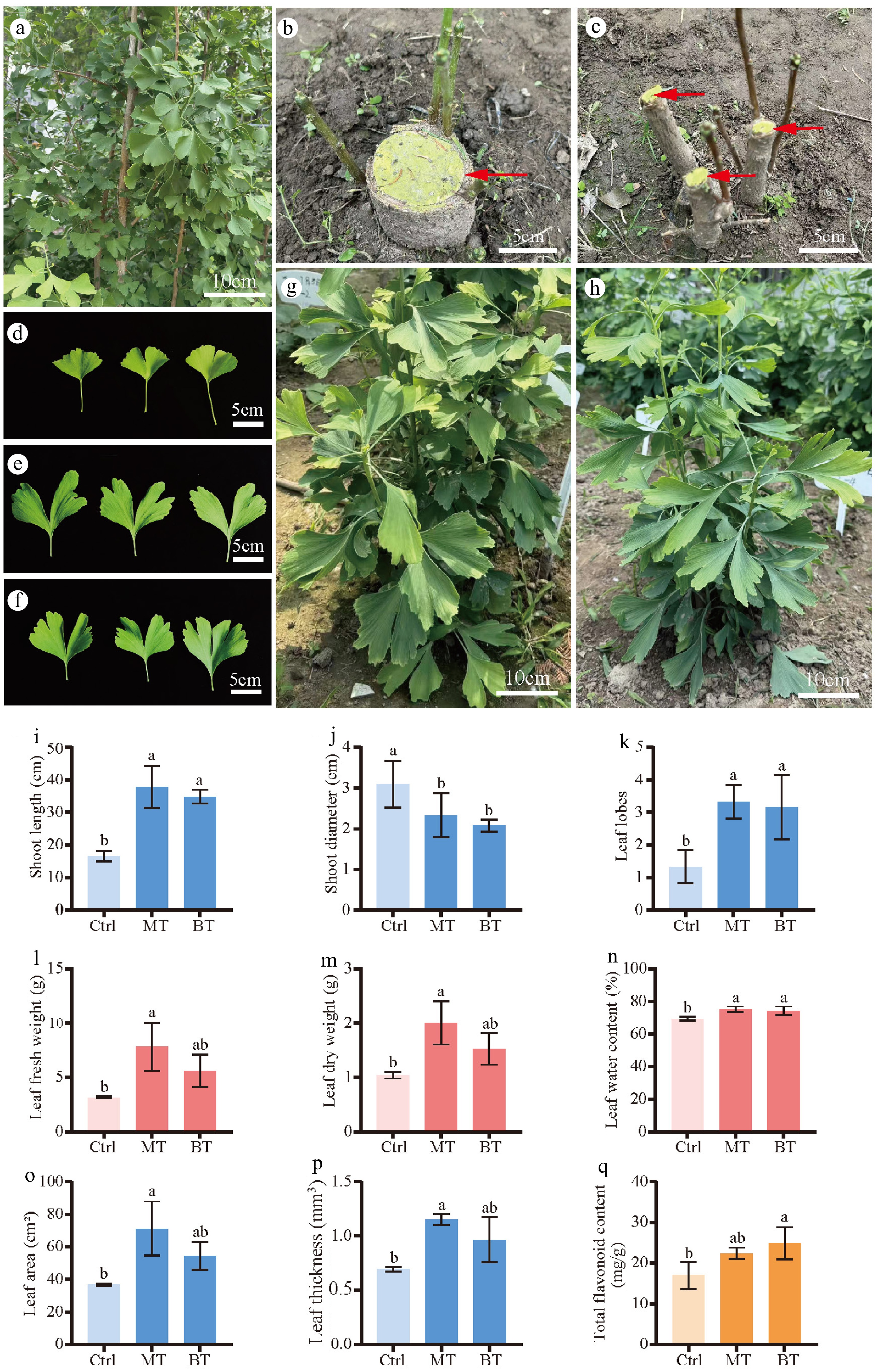
Figure 1.
Effects of different pruning treatments on plant growth and leaf traits in G. biloba. (a) Untreated control plant (Ctrl); (b) basal part of the main trunk-pruning treatment (MT); (c) basal part of the consecutive branch-pruning treatment (BT). (d) Leaves of Ctrl plants; (e) leaves of MT plants; (f) leaves of BT plants. (g) Regenerated shoots of MT plants and (h) regenerated shoots of BT plants. Quantitative analyses included (i) new shoot height, (j) new shoot stem diameter, (k) number of leaf lobes, (l) leaf fresh weight, (m) leaf dry weight, (n) leaf water content, (o) leaf area, (p) leaf thickness, and (q) total flavonoid content. Data are presented as the means of at least three biological replicates (±SD). Letters indicate significant differences based on one-way ANOVA (p < 0.05).
Analysis of plant growth traits showed that the new shoot height in the MT and BT groups reached 37.92 ± 6.46 and 34.94 ± 2.03 cm, respectively, both of which were significantly higher than that in the Ctrl group (16.67 ± 1.53 cm), indicating that pruning treatments markedly promoted new shoot elongation (Fig. 1i). In contrast, the stem diameter of newly formed shoots did not differ significantly between MT and BT (Fig. 1j). Leaf trait measurements further showed that, relative to Ctrl, both MT and BT generally increased leaf area, leaf thickness, number of lobes, and single-leaf fresh and dry weight (Fig. 1k–p). Among these, leaf area in the MT group reached 71.06 ± 9.59 cm2, which is significantly higher than that in both Ctrl and BT. Leaf thickness and lobe number were significantly increased in both MT and BT, indicating that pruning treatment substantially affected leaf development. For single-leaf biomass, both fresh weight and dry weight were significantly higher in MT than in Ctrl. Leaf water content was also significantly higher in both MT and BT than in the control. Although BT did not exceed MT in leaf area or single-leaf biomass, its leaves still exhibited developmental traits associated with rejuvenation.
Total flavonoid content differed significantly among treatments. Leaves from the Ctrl group contained 16.97 ± 1.69 mg/g total flavonoids, which was significantly lower than that in the MT group (22.43 ± 0.68 mg/g) and the BT group (24.89 ± 1.97 mg/g). Relative to Ctrl, total flavonoid content increased by 32.2% in MT and 46.7% in BT (Fig. 1q). Overall, both pruning treatments significantly promoted flavonoid accumulation in G. biloba leaves, with BT showing a higher accumulation level and a stronger increasing trend.
Transcriptomic responses of G. biloba leaves to pruning treatment
-
To clarify the molecular basis underlying changes in leaf development and flavonoid accumulation after pruning, transcriptome sequencing was performed on leaf samples from Ctrl, MT, and BT plants. In total, 62 Gb of high-quality sequencing data was obtained. Principal component analysis (PCA) showed that samples from the three treatments formed distinct clusters with good consistency among biological replicates. Compared with Ctrl, both MT and BT were clearly separated, indicating that pruning substantially altered the leaf transcriptome (Fig. 2a). MT and BT were also distinctly separated from each other. MT samples were mainly distributed in the positive region of PC2, whereas BT samples were mainly located in the negative region of PC2, suggesting that MT and BT induced different transcriptional responses.
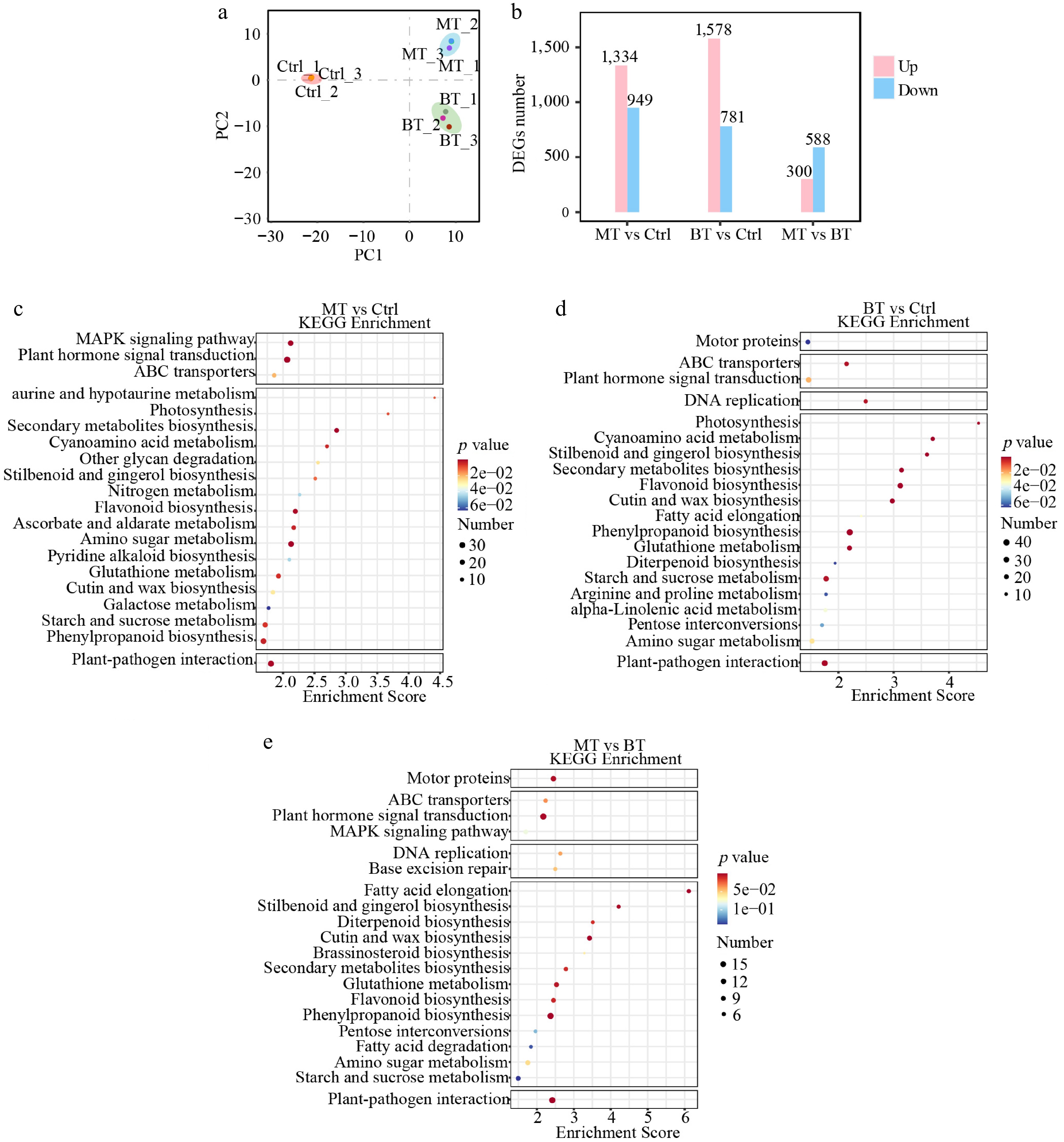
Figure 2.
Transcriptome analysis of G. biloba leaves under different pruning treatments. (a) PCA showing the clustering patterns of samples from different treatment groups. (b) Statistics of DEGs, including the numbers of upregulated and downregulated genes in three comparison groups: MT vs Ctrl, BT vs Ctrl, and MT vs BT. (c–e) KEGG pathway enrichment analysis of DEGs in the MT vs Ctrl (c), BT vs Ctrl (d), and MT vs BT (e) comparison groups, respectively.
Differential expression analysis identified 2,283 DEGs in MT vs Ctrl, including 1,334 upregulated and 949 downregulated genes. In BT vs Ctrl, 2,359 DEGs were detected, including 1,578 upregulated and 781 downregulated genes. In MT vs BT, 888 DEGs were identified, of which 300 were upregulated and 588 were downregulated. Compared with MT vs Ctrl, the BT vs Ctrl comparison contained more DEGs, especially more upregulated genes (Fig. 2b). KEGG enrichment analysis showed that DEGs in all three comparisons were mainly enriched in plant hormone signal transduction, photosynthesis, biosynthesis of secondary metabolites, flavonoid biosynthesis, phenylpropanoid biosynthesis, and starch and sucrose metabolism (Fig. 2c–e).
Expression patterns of key genes involved in photosynthesis under pruning treatment
-
To further investigate the molecular basis of leaf developmental changes under pruning treatment, DEGs associated with the photosynthesis pathway were analyzed (Fig. 3a,b). In total, 14 key DEGs involved in the light reactions of photosynthesis were identified. Among them, 13 genes were upregulated in both BT and MT, whereas only one gene was downregulated, indicating that pruning still activated the expression of photosynthesis-related genes (Fig. 3c). These DEGs included Photosystem I genes GbPsaG (Photosystem I subunit G; evm.TU.chr5.623), GbPsaO (Photosystem I subunit O; evm.TU.chr4.2135), and GbPsaK (Photosystem I subunit K; evm.TU.chr12.216); Photosystem II genes GbPsbA (Photosystem II reaction center protein D1; evm.TU.ctg6271.4) and GbPsbQ (Photosystem II oxygen-evolving enhancer protein 3; evm.TU.chr3.2107); and several GbLHCII (Light-Harvesting Complex II) genes, including GbLhcb1 (Light-harvesting chlorophyll a/b-binding protein 1; evm.TU.chr9.1808, evm.TU.chr9.1809, evm.TU.chr9.1810), GbLhcb2 (evm.TU.chr5.1533, evm.TU.chr5.1534), GbLhcb3 (evm.TU.chr1.2698), and GbLhcb5 (evm.TU.chr1.1520), all of which were significantly upregulated in BT. Similar expression trends were observed in MT. In addition, GbAtpH (ATP synthase subunit H; evm.TU.chr5.221) was also significantly upregulated in both BT and MT. Taken together, these results indicate that genes involved in the light reactions, including components of Photosystems I and II, the light-harvesting antenna complex, and adenosine triphosphate (ATP) synthesis, were broadly upregulated after pruning, suggesting that enhanced photosynthetic processes may contribute to leaf development under this treatment.
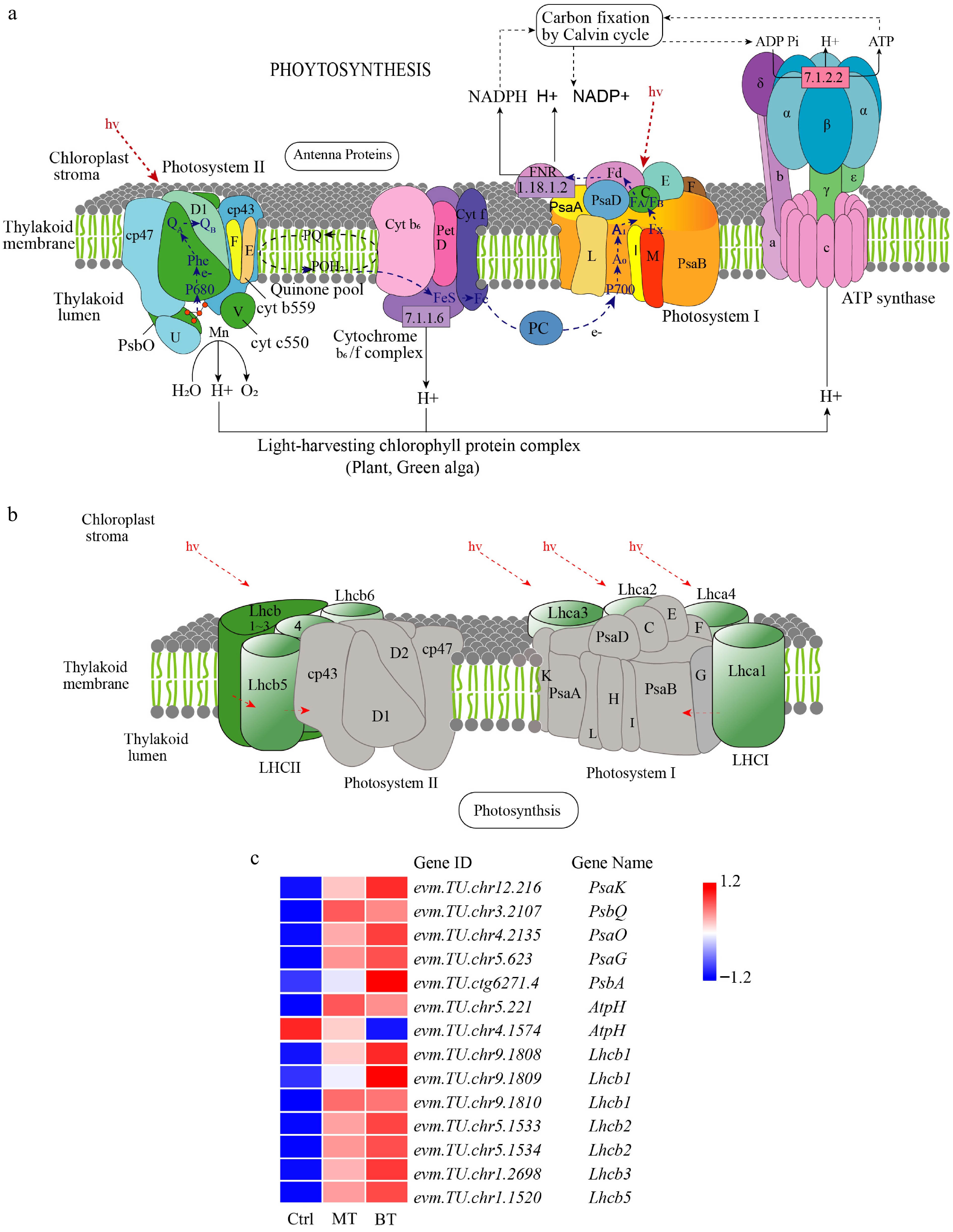
Figure 3.
Expression changes of genes related to photosynthesis pathways in G. biloba under different pruning treatments. Photosynthesis pathway (a) and photosynthetic antenna protein pathway (b) from the KEGG database. (c) Heatmap of key genes involved in each component of the photosynthesis pathway.
Expression characteristics of genes involved in plant hormone signal transduction under pruning treatment
-
DEGs related to plant hormone signal transduction were analyzed further, involving five hormone pathways: auxin, cytokinin, brassinosteroid, jasmonic acid, and salicylic acid (Fig. 4). Overall, BT significantly affected the expression of multiple hormone signaling genes, mainly through coordinated changes in genes associated with growth regulation and stress responses.
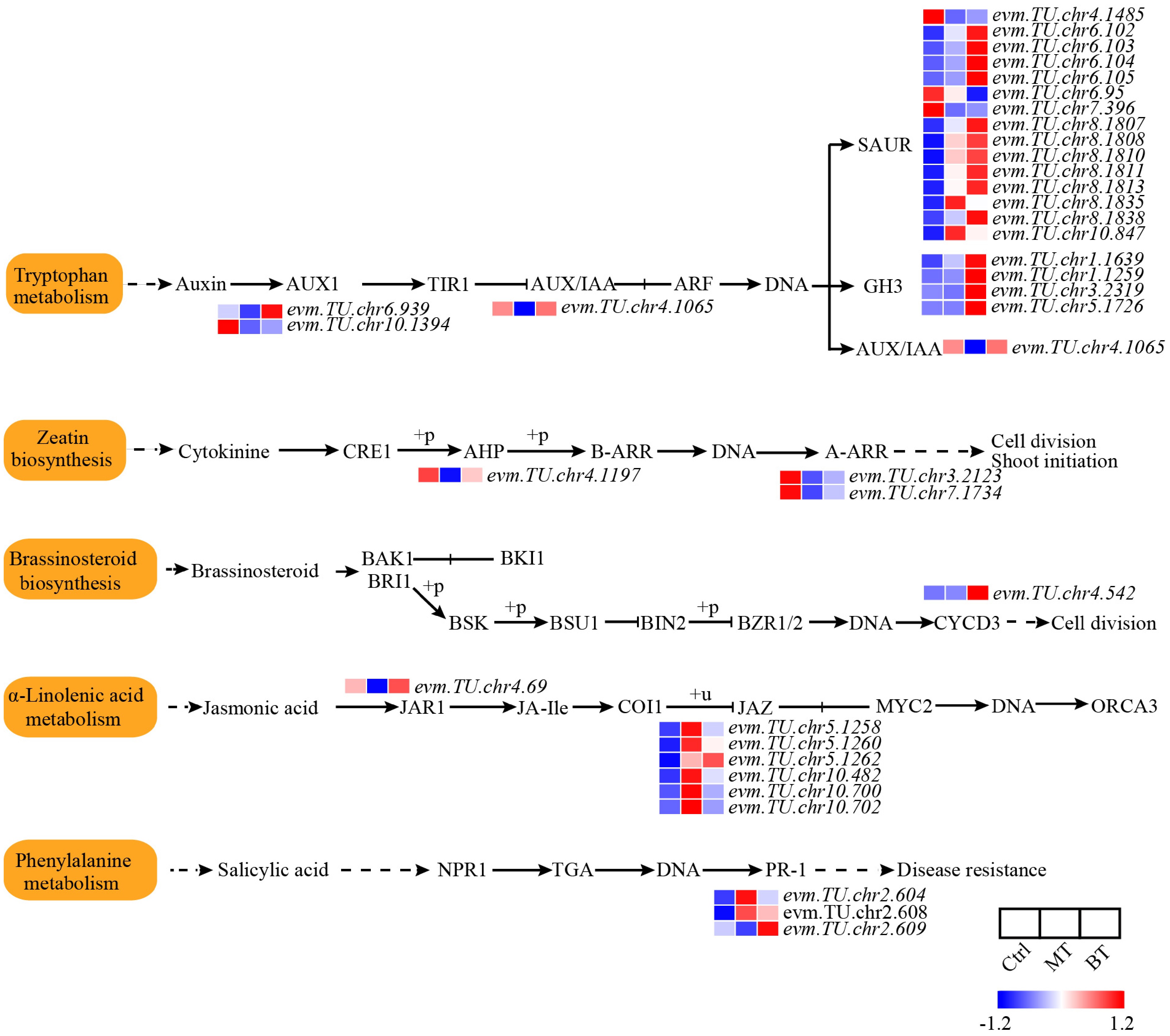
Figure 4.
Expression patterns of genes involved in plant hormone signal transduction pathways in G. biloba under different pruning treatments. GH3 and SAUR genes are involved in auxin homeostasis. ARR and AHP genes are associated with cytokinin signaling and homeostasis. CYCD3 genes participate in brassinosteroid signaling. JAZ family genes are involved in jasmonic acid signaling. PR-1 genes are associated with salicylic acid signaling.
In the auxin signaling pathway, 23 DEGs were identified. Among them, four GbGH3 (Gretchen Hagen 3 family) family genes showed significantly higher expression in BT than in both Ctrl and MT. In addition, 15 GbSAUR (Small auxin-up RNA) family genes were identified, 12 of which were highly expressed in both MT and BT, with most showing the highest expression in BT. In the cytokinin signaling pathway, two GbA-ARR (Arabidopsis response regulator) genes (evm.TU.chr3.2123 and evm.TU.chr7.1734) and a GbAHP (Arabidopsis histidine phosphotransfer proteins) gene (evm.TU.chr4.1197) were identified, and all were significantly downregulated in both MT and BT. In the brassinosteroid signaling pathway, one GbCYCD3 (Cyclin D-type protein) gene (evm.TU.chr4.542) was highly expressed in BT, suggesting that consecutive pruning may promote hormone responses associated with growth recovery.
In the jasmonic acid signaling pathway, six GbJAZ (Jasmonate ZIM-domain proteins) family genes, which function as key negative regulators, were highly expressed in both MT and BT. In the salicylic acid signaling pathway, two GbPR-1 (Pathogenesis-related protein 1) genes (evm.TU.chr2.604 and evm.TU.chr2.608) were highly expressed in both MT and BT, whereas another GbPR-1 gene (evm.TU.chr2.609) was specifically highly expressed in BT, indicating that pruning induced salicylic acid-mediated defense responses more strongly.
Expression patterns of genes involved in flavonoid and lignin biosynthesis under pruning treatment
-
As physiological analysis showed that pruning significantly promoted flavonoid accumulation in the leaves. Genes associated with the flavonoid biosynthetic pathway were examined further to explore the underlying molecular mechanisms. In total, 15 DEGs were identified, of which 11 showed significantly higher expression in MT and BT than in Ctrl. These included one GbPAL gene, three GbC4H genes, and four GbCHS genes, all of which were highly expressed in both MT and BT. In addition, one GbF3′5′H gene (evm.TU.chr10.110), and two key flavonol synthase genes, GbFLS (evm.TU.chr3.756 and evm.TU.chr12.1047), were also significantly more highly expressed in MT and BT than in Ctrl. Notably, evm.TU.chr12.1047 and evm.TU.chr10.110 showed the highest expression in BT and were significantly more highly expressed than in both Ctrl and MT (Fig. 5).
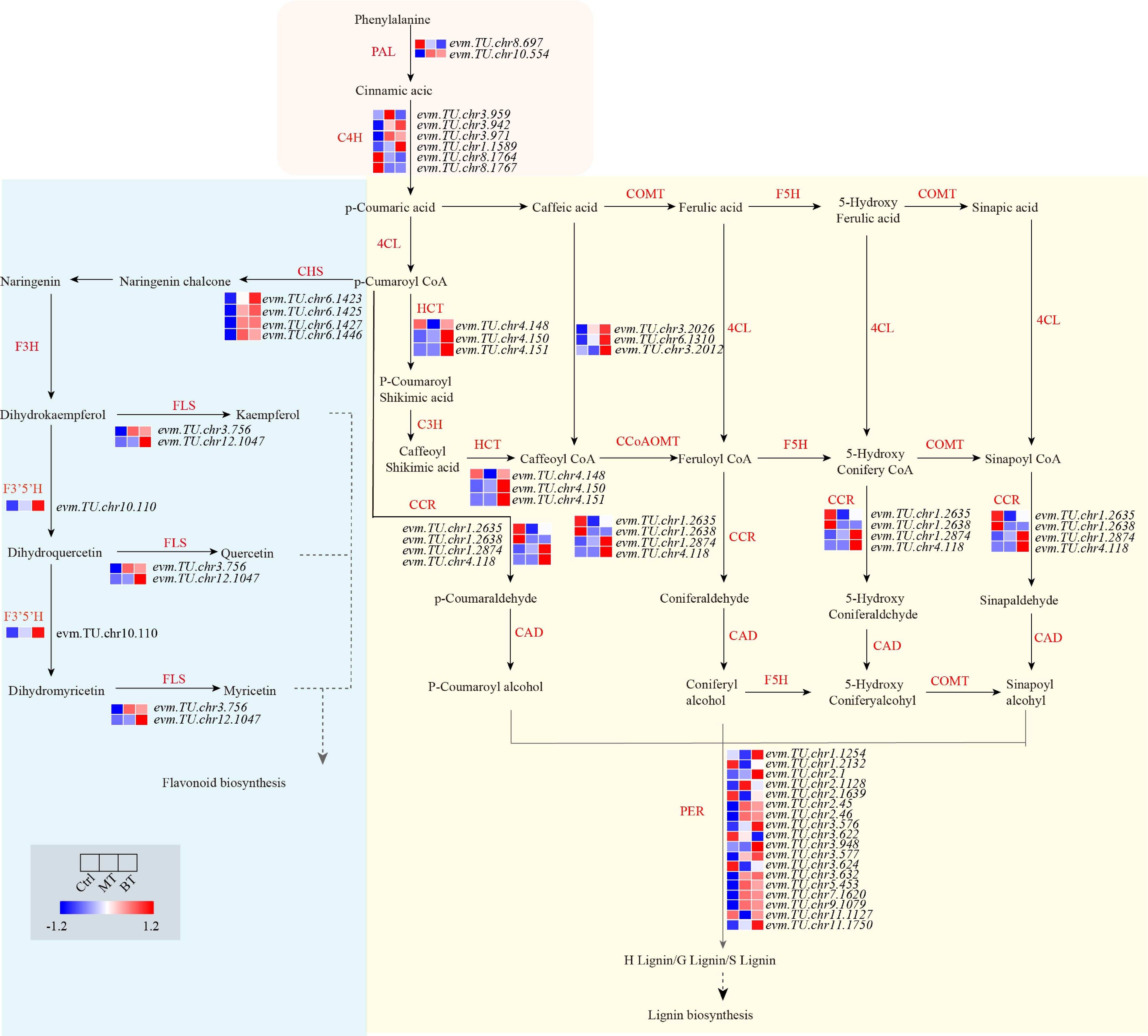
Figure 5.
Expression profiles of genes involved in flavonoid and lignin biosynthesis under different pruning treatments. Multiple PER family members are represented in the H-, G-, and S-lignin biosynthetic pathways.
Because both flavonoids and lignin are derived from the phenylpropanoid pathway, genes involved in lignin biosynthesis were also analyzed. In total, 28 DEGs were identified, including 3 GbHCT (Hydroxycinnamoyl transferase) genes, 3 GbCCoAOMT (Caffeoyl-CoA O-methyltransferase) genes, 4 GbCCR (Cinnamoyl-CoA reductase) genes, and 18 GbPER (Class III peroxidases) genes. Among the upstream genes in the lignin biosynthetic pathway, two GbHCT, three GbCCoAOMT, and two GbCCR genes were significantly highly expressed in BT, indicating that the pruning treatment promoted processes related to lignin precursor biosynthesis. Among the downstream genes associated with lignin polymerization, 11 GbPER family genes showed significantly higher expression in both MT and BT than in Ctrl, suggesting that pruning also enhanced the expression of genes related to lignin polymerization (Fig. 5).
WGCNA identifies key genes associated with flavonoid biosynthesis under the pruning treatments
-
To identify gene modules associated with flavonoid content, WGCNA was performed, based on the DEGs. Seven co-expression modules were identified, namely brown, light green, black, red, cyan, light cyan, and gray. Module–trait relationship analysis showed that the cyan module was strongly and positively correlated with flavonoid content (r = 0.88, p = 0.002), whereas the light green module was negatively correlated with flavonoid content (Fig. 6a, b).
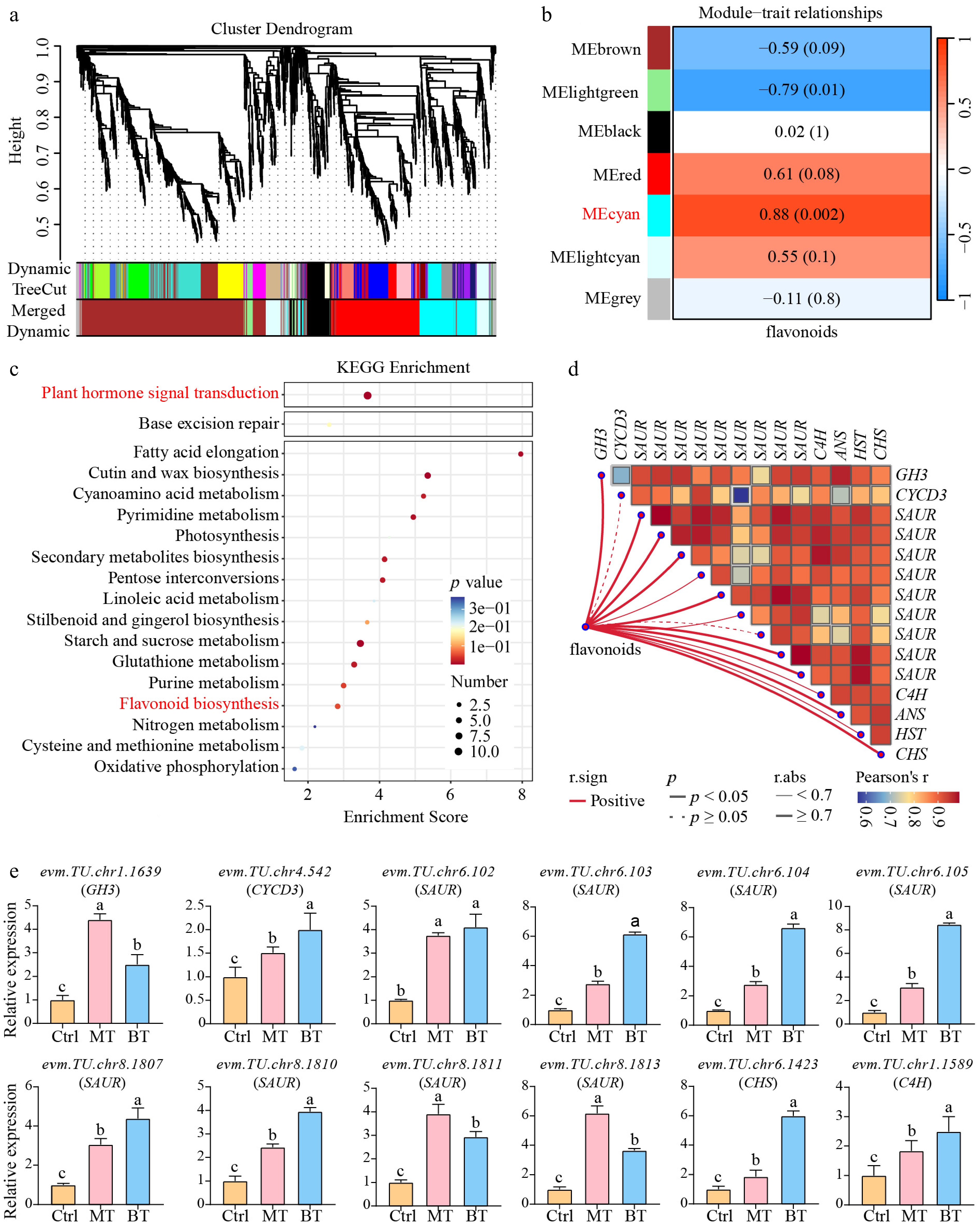
Figure 6.
WGCNA-based identification of the key modules and core genes associated with flavonoid biosynthesis. (a) Clustering dendrogram based on the dissimilarity topological overlap of DEGs between different pruning treatment groups. Seven distinct modules were identified. (b) Relationships between the modules and flavonoid content. (c) KEGG enrichment analysis of genes in the MEcyan module. (d) Screening of the genes significantly correlated with flavonoid content in the MEcyan module by correlation analysis. SAURs are auxin early-responsive genes rather than transcription factors. (e) Expression levels of the key genes related to flavonoid biosynthesis in the Ctrl, MT, and BT groups detected by qRT-PCR. Data are presented as the means of at least three biological replicates (±SD). Letters indicate significant differences based on one-way ANOVA (p < 0.05).
To further characterize the biological functions of the cyan module, KEGG enrichment analysis was performed for genes within this module (Fig. 6c). The results showed that cyan module genes were mainly enriched in flavonoid biosynthesis and plant hormone signal transduction. A gene–trait association network was then constructed for the cyan module, revealing that several genes in this module were positively associated with flavonoid content. These included multiple structural genes involved in flavonoid biosynthesis, such as GbCHS and GbC4H. In addition, several genes related to plant hormone signaling were identified, including auxin-responsive genes (GbSAURs and GbGH3) and the brassinosteroid- and growth-related gene GbCYCD3 (Fig. 6d).
Further analysis of the expression patterns of these key genes across the treatments showed that the flavonoid biosynthetic genes GbCHS and GbC4H were significantly upregulated in both MT and BT, with the highest expression observed in BT. Similarly, GbGH3, GbSAUR, and GbCYCD3 were all expressed at significantly higher levels in MT and BT than in Ctrl, and GbCYCD3 and six GbSAUR genes showed the highest expression levels in BT (Fig. 6e). These results indicate that pruning treatment not only strongly induced the expression of structural genes involved in flavonoid biosynthesis, but also coordinately activated regulatory genes associated with auxin and brassinosteroid signaling.
-
G. biloba leaves are the primary raw material for GbE, and their utilization depends not only on leaf yield-related traits but also on the accumulation of bioactive compounds such as flavonoids[19]. Previous studies have evaluated leaf yield and flavonoid accumulation under different planting densities and developmental stages[20,21]. In the present study, both MT and BT markedly altered the bud sprouting position, branch renewal pattern, and leaf morphology relative to the untreated control, and significantly increased the total flavonoid content in leaves. These results indicate that pruning, as a rejuvenation and renewal practice, not only promotes the recovery of vegetative growth but also improves leaf quality.
Compared with MT, BT resulted in weaker shoot elongation and did not further increase leaf area or biomass, yet it maintained more pronounced juvenile traits and produced the highest flavonoid content. This suggests that consecutive pruning sustains a stronger renewal state and a relatively juvenile developmental program, thereby favoring flavonoid accumulation. From an applied perspective, MT may be more suitable for rapid canopy restoration and production of larger leaves, whereas BT appears to be more effective for maintaining renewal capacity and enhancing long-term leaf quality in leaf-harvesting plantations.
Transcriptome analysis showed a clear separation of the Ctrl, MT, and BT samples in PCA, indicating that pruning substantially reshaped the transcriptional landscape of G. biloba leaves, and that MT pruning treatment generated a distinct expression pattern relative to the BT pruning treatment. In the differential expression analysis, both the total number of DEGs and the number of upregulated genes were higher in BT vs Ctrl than in MT vs Ctrl, suggesting that consecutive pruning triggered a stronger transcriptional response.
Among photosynthesis-related genes, core subunit genes of Photosystem I and Photosystem II, genes encoding light-harvesting Complex II proteins, and ATP synthase subunit genes were generally upregulated in both MT and BT, with many showing higher expression in BT. These findings suggest that repeated pruning did not weaken photosynthesis-related molecular activity in the leaves; instead, it may have maintained or even enhanced light capture, electron transport, and ATP synthesis. Previous studies have shown that sufficient photosynthetic assimilates and reducing power not only support leaves' structural development and biomass accumulation, but also provide carbon skeletons and energy for phenylpropanoid and flavonoid biosynthesis[22−24]. If we combine these results with the phenotypic results of the present study, it is reasonable to infer that the upregulation of photosynthesis-related genes induced by consecutive pruning may provide an important physiological basis for the maintenance of juvenile leaf traits and the higher flavonoid accumulation observed in BT. Although BT did not promote leaf expansion to the same extent as MT, the sustained activation of photosynthesis-related genes may have enhanced metabolic activity per unit of leaf area, thereby allowing more assimilates to be allocated to secondary metabolism.
Pruning disrupts apical dominance and alters the source–sink relationships and hormone distribution within plants, thereby triggering substantial hormonal reprogramming during regenerative growth[25]. In this study, plant hormone signal transduction was one of the key pathways significantly enriched in BT, with stronger regulation of the related genes than in MT, suggesting that reconfiguration of hormone signaling networks may underlie the sustained effects of consecutive pruning.
In the auxin signaling pathway, multiple GbGH3 and GbSAUR family genes were upregulated in both MT and BT, with most showing the highest expression in BT. GH3 genes are involved in auxin homeostasis and stress responses[26,27], whereas SAUR genes are associated with cell elongation and organ growth[28,29]. Their elevated expression suggests that BT may sustain shoot regeneration and leaf development through enhanced auxin responsiveness. In contrast, the cytokinin signaling genes GbA-ARR and GbAHP were downregulated in both MT and BT, indicating that pruning treatment may promote the renewal of growth by altering the balance between auxin and cytokinin signaling[30,31]. In addition, the brassinosteroid-related gene GbCYCD3 was significantly upregulated in BT, implying enhanced cell division activity and maintenance of juvenile developmental characteristics under consecutive pruning. We also observed increased expression of GbJAZ genes in the jasmonic acid pathway and GbPR-1 genes in the salicylic acid pathway, particularly in BT. This suggests that pruning treatment activated not only regenerative growth signals but also defense- and wound-related responses. Previous studies have shown that jasmonic acid, salicylic acid, and indole-3 acetic acid coordinate in regulating flavonoid metabolism and contribute to stress-induced secondary metabolite accumulation[27,32,33,34]. Therefore, the hormonal reprogramming induced by pruning may simultaneously support the renewal of growth and promote flavonoid accumulation through the activation of defense-related metabolic pathways.
The phenylpropanoid pathway is a central hub of secondary metabolism in plants, giving rise to a range of important downstream products, including flavonoids and lignin[35]. In G. biloba, flavonoids, especially flavonols, are key active constituents that determine leaves' medicinal quality and extract value[1,36]. In the present study, pruning treatment significantly increased total flavonoid content in G. biloba leaves, and the transcriptomic data provide a molecular explanation for this response. The coordinated upregulation of flavonoid biosynthetic genes suggests that consecutive pruning may enhance metabolic flux toward flavonol biosynthesis through sustained activation of the phenylpropanoid pathway. PAL and C4H control flux into the phenylpropanoid pathway, CHS catalyzes a key step in flavonoid backbone formation, and FLS and F3′5′H further influence flavonols' biosynthetic efficiency and B-ring hydroxylation patterns[37−39]. The stronger expression of these genes in BT therefore suggests that consecutive pruning not only increased flavonoid accumulation but also enhanced the overall metabolic flux through the flavonoid biosynthetic pathway. In other words, the higher flavonoid content observed in BT is unlikely to be explained merely by apparent differences arising from leaf morphology or water status, but more likely reflects a substantial activation of the flavonoid biosynthesis program.
At the same time, genes involved in lignin biosynthesis, including GbHCT, GbCCoAOMT, GbCCR, and multiple GbPER genes, were also significantly upregulated in MT and BT, indicating overall activation of phenylpropanoid metabolism after pruning. Because flavonoids and lignin share common upstream precursors, their simultaneous enhancement suggests that consecutive pruning increased total flux through the phenylpropanoid pathway rather than simply shifting carbon allocation among competing branches. Given that BT leads to sustained shoot renewal, maintenance of juvenile leaf traits, and continued requirements for mechanical support and tissue construction in developing shoots, enhanced expression of lignin-related genes is physiologically reasonable.
The WGCNA results further support this interpretation. The cyan module, which was strongly and positively correlated with total flavonoid content, was enriched in flavonoid biosynthesis and plant hormone signal transduction. This module contained not only flavonoid structural genes such as GbCHS and GbC4H, but also hormone- and growth-related genes such as GbGH3, GbSAUR, and GbCYCD3. These results indicate that the promotion of flavonoid accumulation by consecutive pruning is not an isolated metabolic event but is rather the outcome of coordinated reprogramming of leaf development, hormone regulation, and secondary metabolism. The generally higher expression of these candidate genes in BT further suggests that consecutive pruning is more effective than main trunk pruning in sustaining the coupled regulatory network linking hormone signaling, developmental maintenance, and flavonoid biosynthesis.
-
In this study, we demonstrated that pruning treatment markedly influenced leaf development and secondary metabolism in G. biloba. Notably, BT was more effective than MT in maintaining juvenile leaf traits and promoting higher flavonoid accumulation compared with untreated plants. Transcriptome analysis indicated that these effects were associated with the broad reprogramming of genes involved in photosynthesis, hormone signaling, phenylpropanoid metabolism, and flavonoid biosynthesis. In particular, pruning treatment upregulated genes related to photosynthetic activity, growth regulation, and key steps in flavonoid biosynthesis, suggesting coordinated enhancement of carbon assimilation, regenerative growth, and secondary metabolite production. Overall, flavonoid accumulation under pruning appears to result from the integrated regulation of photosynthesis, hormone signaling, and phenylpropanoid/flavonoid pathways, providing a mechanistic basis for its application in rejuvenation of G. biloba and high-quality leaf production. Future work should focus on functional validation of the key candidate genes to further elucidate their regulatory roles in flavonoid biosynthesis under pruning-induced rejuvenation.
The authors are very grateful for the support of the National Natural Science Foundation of China (No. 32572098, 32101558), Jiangsu Training Program of Innovation and Entrepreneurship for Undergraduates (No. 202511117070), and the China Postdoctoral Science Foundation (No. 2024M752724).
-
Not applicable.
-
The authors conform their contributions to the paper as follows: Wang J, Wang X, and Wang Q designed the experiment and drafted the article. Wang J, Wang X, Li J, and Xu R collected the samples used in the experiment and conducted the data analysis. Wang J detected the expression of genes using qRT-PCR. Lu J, Jiang Z, and Wang Q reviewed the manuscript and provided critical revisions. All authors reviewed the results and approved the final version of the manuscript.
-
RNA sequencing data were deposited in the Genome Sequence Archive of the National Genomics Data Center (accession number CRA042202).
-
The authors declare that they have no conflict of interest.
-
accompanies this paper online at: https://doi.org/10.48130/frures-0026-0022.
-
# Authors contributed equally: Jingyu Wang, Xinyi Wang
- Supplementary Table S1 Functional annotations of the identified genes.
- Supplementary Table S2 Primers were used in this study.
- Copyright: © 2026 by the author(s). Published by Maximum Academic Press, Fayetteville, GA. This article is an open access article distributed under Creative Commons Attribution License (CC BY 4.0), visit https://creativecommons.org/licenses/by/4.0/.
-
About this article
Cite this article
Wang J, Wang X, Li J, Xu R, Jiang Z, et al. 2026. Consecutive pruning maintains juvenility and enhances flavonoid accumulation in Ginkgo biloba. Fruit Research 6: e032 doi: 10.48130/frures-0026-0022 

Consecutive pruning maintains juvenility and enhances flavonoid accumulation in Ginkgo biloba
- Received: 30 April 2026
- Revised: 27 May 2026
- Accepted: 29 May 2026
- Published online: 06 August 2026
Abstract: Ginkgo biloba leaves are rich in flavonoids and are an important raw material for G. biloba leaf extracts. Pruning is commonly used as a rejuvenation practice to enhance secondary metabolite accumulation, but the mechanisms by which consecutive pruning regulates leaf development and flavonoid accumulation remain unclear. Here, untreated (Ctrl), main trunk-pruned (MT), and consecutive branch-pruned (BT) trees were compared for growth, leaf traits, total flavonoid content, and transcriptomic responses. Both MT and BT promoted shoot regeneration and increased leaf thickness, lobe number, and single-leaf biomass, and significantly elevated total flavonoid content, with BT showing a 46.7% increase over Ctrl. Transcriptome analysis revealed that BT induced more upregulated differentially expressed genes than MT, which were mainly enriched in photosynthesis, plant hormone signal transduction, phenylpropanoid metabolism, and flavonoid biosynthesis. Genes related to photosystems, light-harvesting antenna complexes, GbGH3, GbSAUR, GbCYCD3, and key flavonoid biosynthetic enzymes, including GbPAL, GbC4H, GbCHS, GbF3′5′H, and GbFLS, were markedly upregulated. Weighted gene co-expression network analysis identified GbCHS, GbC4H, GbGH3, GbSAUR, and GbCYCD3 as candidate genes associated with flavonoid accumulation under consecutive pruning. Taken together, consecutive pruning promotes leaf development and flavonoid accumulation in G. biloba, supporting its use for rejuvenation and high-quality leaf production.
-
Key words:
- Ginkgo biloba /
- Consecutive pruning /
- Flavonoids /
- Plant hormones /
- Transcriptome /
- WGCNA