













-
The peach (Prunus persica [L.] Batsch) is an economically important fruit belonging to the Rosaceae family. It is extensively grown in China, Spain, Italy, the United States, and Greece (United Nations Food and Agriculture Organization Statistics Division)[1]. Although these nations are the primary producers, many other countries that do not cultivate peaches import substantial quantities. As a perishable fruit, peaches face significant issues with spoilage and postharvest losses, which play a major role in global food waste[2]. To minimize spoilage and prolong the shelf life of peaches to approximately 14–21 d, they are usually stored at temperatures ranging from 0 to 5°C[3]. However, storing peaches at these temperatures for 2–3 weeks can result in chilling injury (CI)[4].
Fruits from sensitive species exposed to low temperatures during CI undergo various physiological, biochemical, and genetic changes that lead to metabolic disruptions[5,6]. These alterations result in disorders, such as internal browning (IB) or flesh browning, surface pitting, mealiness, failure to ripen, flavor loss, and decay[7]. IB is the most prevalent disorder observed in peaches during cold storage[5,8]. Low-temperature-induced browning of peaches negatively affects their flavor and nutritional value, leading to significant losses in the commercial sector[9,10]. Therefore, understanding the mechanisms of browning during cold storage is essential for improving the quality of peach fruits.
The intricate composition of browning mechanisms in various plant species has been extensively documented. Browning results from a series of physiological and biochemical processes that occur in fruits under conditions of senescence or stress, and is categorized as either enzymatic or nonenzymatic[11]. Enzymatic browning is the most prevalent phenomenon observed in fruits and vegetables. Polyphenol oxidase (PPO) is a key enzyme involved in such browning. It catalyzes the oxidation of aromatic substrates to produce brown by-products[12]. PPO activity is positively correlated with the browning of peaches at low temperatures[13]. Furthermore, recent research has demonstrated that the browning of fruit during storage is caused by another PPO known as laccase[14,15]. Laccases (LACs; benzenediol: oxygen oxidoreductase, EC 1.10.3.2) are a large group of blue multicopper oxidases (MCOs) that are prevalent in plants, insects, bacteria, and fungi. These enzymes are responsible for oxidizing a wide variety of substrates, such as polycyclic aromatic hydrocarbons, aromatic amines, and phenols[16,17], thus contributing to various biological processes. The Arabidopsis thaliana mutant, transparent testa10/12/16 (TT10/12/16), which generates an enzyme similar to LAC, delays the browning of its seed coat during development. TT10/12/16 encodes a protein, known as LAC-PPO, located in the developing testa, where it is linked with flavonols and proanthocyanidins[18]. Previous research has suggested that a disruption in the expression of genes encoding LACs may cause a shift in substrate flow within the phenylpropanoid pathway[19] Furthermore, an increase in the expression of LAC-encoding genes (MdLAC7) was observed during apple (Malus domestica) peel browning[20]. The pericarp of litchi (Litchi chinensis) contains a LAC enzyme known for its ability to degrade anthocyanins (ADE/LAC), which plays a vital role in fruit browning after harvest[21]. However, the role of LACs in the browning of peach fruit during cold storage remains unexplored.
Cold tolerance in peaches is associated with transcriptional modifications in stress-responsive genes and the redox metabolism[22,23]. Transcription factors (TFs), including WRKYGQK (WRKY), Myeloblastosis (MYB), and NAC, significantly influence plants' growth, development, and stress responses[24,25]. PuMYB21 and PuMYB54 in 'Nanguo' pears (Pyrus ussuriensis) accelerate lipid breakdown, enhance browning, and activate the transcription of PuPLDβ1 (phospholipase D)[26]. In plants, most WRKY TFs bind to the W-box (TTGAC) and target genes to control growth, development, and secondary metabolism[27]. Numerous studies have shown that abiotic stresses such as drought, oxidative stress, soil salinity, cold, and heat stress are controlled by WRKY TFs[28−30]. In banana (Musa acuminata) fruit, MaWRKY26 can trigger the expression of jasmonic acid biosynthesis genes (MaLOX2, MaAOS3, and MaOPR3) to regulate cold tolerance[31]. Oxidative stress increases the expression of SlWRKY75 and triggers the development of tissue browning in tomato (Solanum lycopersicum)[32]. Lipoxygenase gene transcription is regulated by MaWRKY70 in banana fruits during the development of CI, which is associated with membrane lipid degradation[33]. Despite this progress, the specific function of WRKY TFs in chilling-induced browning of peaches remains unknown.
In this study, we examined the effects of various physiological characteristics of two different peach cultivars during cold storage. We assessed the expression levels of several LAC family genes and WRKY TFs by reverse transcription–quantitative polymerase chain reaction (RT-qPCR). Consequently, we identified a divergent WRKY TF (PpWRKY19-like) that regulates a LAC family gene (PpLAC7) using dual luciferase and yeast one-hybrid assays. We investigated the functions of PpWRKY19-like and PpLAC7 by overexpressing them in fruit flesh. Our findings offer valuable insights into the mechanisms underlying the chilling-induced browning of peaches during cold storage.
-
In this study, we used two peach cultivars, 'Zhongtao No. 14' ('Zhongtao14') and 'Zhongyou No. 13' ('Zhongyou13'). These cultivars were harvested at commercial ripeness from the peach breeding orchard at the Zhengzhou Fruit Research Institute, Chinese Academy of Agricultural Sciences, Henan, China (34°74′ N 113°62′ E). Approximately, 150 fruits without mechanical damage, disease, or pests were selected for the postharvest process. IB symptoms and physiological characteristics were assessed before storage on Day 0. The fruits were subsequently stored at 4 °C for 42 d, and each parameter was evaluated every 14 d. After the observations were complete, the flesh was cut into small pieces. These pieces from multiple fruits were then combined within the same batch, quickly frozen in liquid nitrogen, and stored in an ultra-low-temperature refrigerator for future testing.
Analysis of IB index and physiological characteristics
-
The IB index was assessed on the basis of the internal browning area of the peach fruit, using a scale ranging from 0 to 4: 0 = no browning, 1 = 1%–25%, 2 = 26%–50%, 3 = 51%–75%, and 4 = 76%–100% browning[34]. At each sampling timepoint, three biological replicates were used, with each replicate comprising nine fruits.
The formula: Internal browning index = [(internal browning score) × (number of fruits with this internal browning score)]/(4 × total number of fruits in each treatment). The results were expressed as percentages.
The malondialdehyde (MDA) content, antioxidant capacity, total phenol content and LAC activity were determined using commercial biochemical assay kits purchased from Suzhou Grace Biotechnology Co., Ltd. (Suzhou, China). For all assays, 0.1 g of peach mesocarp tissue was homogenized in 1 mL of the corresponding ice-cold extraction buffer, kept on ice for 10 min, and centrifuged at 12,000 rpm for 5 min at 4 °C. The supernatant was collected for subsequent physiological measurements, and the soluble protein concentration of the extract was quantified via the Bradford assay for unit normalization. Three biological replicates were utilized for each time point.
MDA content was evaluated via the thiobarbituric acid (TBA) heating method. The absorbance of the reaction mixture was recorded at 532 nm and 600 nm, and the final value was calculated using the difference in absorbance (A532 – A600) and are expressed as nmol·mg-1 protein.
Total phenol content was determined via the Folin–Ciocalteu method, with absorbance recorded at 760 nm, and the results are expressed as mg·mg-1 protein of gallic acid equivalents.
Antioxidant capacity was evaluated using the 2,2'-azino-bis(3-ethylbenzothiazoline-6-sulfonic acid) (ABTS) radical scavenging method at a wavelength of 734 nm and is expressed as U·mg−1 protein.
LAC activity was measured by monitoring the kinetic oxidation rate of the substrate, ABTS, at 420 nm, and is expressed as U·mg−1 protein.
RNA extraction, cDNA synthesis, and RT-qPCR
-
RNA was extracted using a Huayueyang Mini Kit (Beijing Huayueyang Biotechnology Co., Ltd.). Each sampling time point had three biological replicates. For cDNA synthesis and gDNA removal, we used the HiScript® III RT SuperMix for the qPCR kit (+gDNA wiper) from Vazyme (Nanjing, China). Primers were designed using the Primer5 program for quantitative reverse transcription–polymerase chain reaction (qRT-PCR) (Supplementary Table S1). Primer specificity was confirmed by sequencing the polymerase chain reaction (PCR) products and performing a melting curve analysis. The PpACT gene from peaches was used as an internal control[35]. PowerUp SYBR Green Master Mix (Thermo Fisher Scientific) was used for qRT-PCR on an ABI PRISM 7500 Fast Sequence Detection System 160. The 2−ΔΔCᴛ method was used to assess gene expression levels[36].
Phylogenetic analysis of WRKY TFs and PpLAC7
-
The protein sequences of PpWRKYs were analyzed through a BLAST search against the Arabidopsis thaliana database, TAIR (
www.arabidopsis.org ), to find similar sequences. In addition, the protein sequences of PpLAC7 were analyzed through a BLAST search against the Prunus persica, A. thaliana, and Malus domestica libraries. The phylogenetic trees were constructed using the neighbor joining method in MEGA11 software, with a bootstrap analysis of 1,000 replicates to assess branch support.Subcellular localization of PpWRKY19-like
-
The complete PpWRKY19-like sequence, excluding the stop codon, was amplified and fused into a pSAK277 vector containing green fluorescent protein (GFP)[37]. All primers are listed in Supplementary Table S2. The resulting PpWRKY19-like–pSAK277(GFP) construct was introduced into Agrobacterium tumefaciens GV3101 and subsequently infiltrated into tobacco (Nicotiana benthamiana) leaves[38]. After 3 d, the fluorescence in the tobacco leaves was examined using a Nikon AIR HD25 laser scanning confocal microscope (Nikon, Japan).
Dual luciferase assay
-
Full-length TF Prupe.5G110700 (PpWRKY19-like) sequences and the promoter Prupe.6G267700 (PpLAC7) were used to construct the pGreen II 62-SK and pGreen II 0800-LUC vectors. The primers are listed in Supplementary Table S2. These constructs were introduced into A. tumefaciens GV3101 containing a p-soup via electroporation. Dual luciferase assay was performed on tobacco leaves (N. benthamiana), following a previously described method[39]. Briefly, to achieve an optical density at 600 nm (OD600) of 0.75, A. tumefaciens cells with the constructs were suspended in a solution of dH2O, 150 µM acetosyringone, 10 mmol·L−1 2-(N-morpholino)ethanesulfonic acid (MES), and 10 mmol·L−1 MgCl2 at pH 5.6. A. tumefaciens cultures containing the TF and promoter constructs were mixed in a 10:1 ratio for infiltration into tobacco leaves. Firefly and Renilla luciferases (LUC and REN, respectively) were quantified using a spark multimode microplate reader (Tecan, Switzerland) with dual luciferase assay reagents (Promega, USA) after 3 d of infiltration. An empty vector (SK) containing the promoter was set as a control.
Yeast one-hybrid assay
-
To conduct the yeast one-hybrid (Y1H) assay, the −2,000-bp region of the PpLAC7 promoter was extracted from peach genomic DNA and then inserted into the pAbAi vector. The yeast strain Y1HGold was co-transformed with the recombinant plasmids pGADT7-PpWRKY19-like and pAbAi-PpLAC7-pro following the guidelines provided by the manufacturer (Clontech). An AD empty vector (pGADT7) with the PpLAC7 promoter was used as a negative control. Transformants were cultured in SD/−Ura drop-out medium (SD without Uracil). Once colonies were selected and diluted in sterile double-distilled (dd) H2O to achieve an OD600 of 0.5, a 3 μL suspension was applied to SD/−Leu drop-out medium (SD without Leucine) containing the antibiotic Aureobasidin A (AbA400) and incubated at 30 °C. All primers are listed in Supplementary Table S2.
Transient overexpression of PpWRKY19-like and PpLAC7 in peach flesh
-
The enzyme EcoRI was used to amplify and insert the PpWRKY19-like and PpLAC7 gene sequences into the pSAK277 vector. Detailed information about the primers are provided in Supplementary Table S2. The newly constructed vectors, pSAK277-PpWRKY19-like and pSAK277-PpLAC7, were introduced into the A. tumefaciens strain GV3101. Subsequently, these vectors were used to treat the sliced flesh of 'Zhongyou13' which did not show browning symptoms during cold storage. Peach fruits with peel were immersed in a 5% (w/v) sodium hypochlorite solution for 20 min. To treat the peach flesh, the Agrobacterium strains containing the vectors were mixed with a solution as described for the dual luciferase assay. The sliced flesh was immersed in this solution for 10 min, followed by rinsing with ddH2O three or four times. The samples were then dried using filter paper. The slices were cultured on Murashige and Skoog (MS) medium, which contained 6.5 g agar, 30 g sucrose, and 4.43 g M519 (MS basal medium with vitamins). Before adding agar, the pH was adjusted to 5.8, and 1 mL of timentin (2,000 mg/mL) was added. The samples were kept under light conditions at 25 °C for 3 d.
Statistical analysis
-
All statistical analyses were performed using Microsoft Excel (Microsoft, Redmond, WA, USA). Student's t-tests were used for analyzing the significance (* p < 0.05, ** p < 0.01, *** p < 0.001). We used GraphPad Prism 9.01 to draw the figures.
-
The primary indicator of CI is internal browning[34]. Of these two cultivars, 'Zhongtao14' began to exhibit IB symptoms after 14 d, with the IB index reaching 54% at 28 d and 80% at 42 d. In contrast, 'Zhongyou13' showed no IB symptoms during cold storage (Fig. 1a, b). MDA damages the cell membrane during cold storage, contributing to fruit browning[35]. In 'Zhongtao14', MDA content significantly increased from 0.80 to 2.98 nmol·mg-1 protein over the cold storage period. Conversely, 'Zhongyou13' did not show a significant rise in MDA content (Fig. 1c). 'Zhongtao14' exhibited fluctuations in total phenol content throughout the cold storage period, whereas 'Zhongyou13' demonstrated a reduced total phenol content (Fig. 1d). Antioxidant activity in 'Zhongyou13' increased significantly; however, 'Zhongtao14' displayed a minor increase at 14 d, followed by a substantial decline (Fig. 1e).
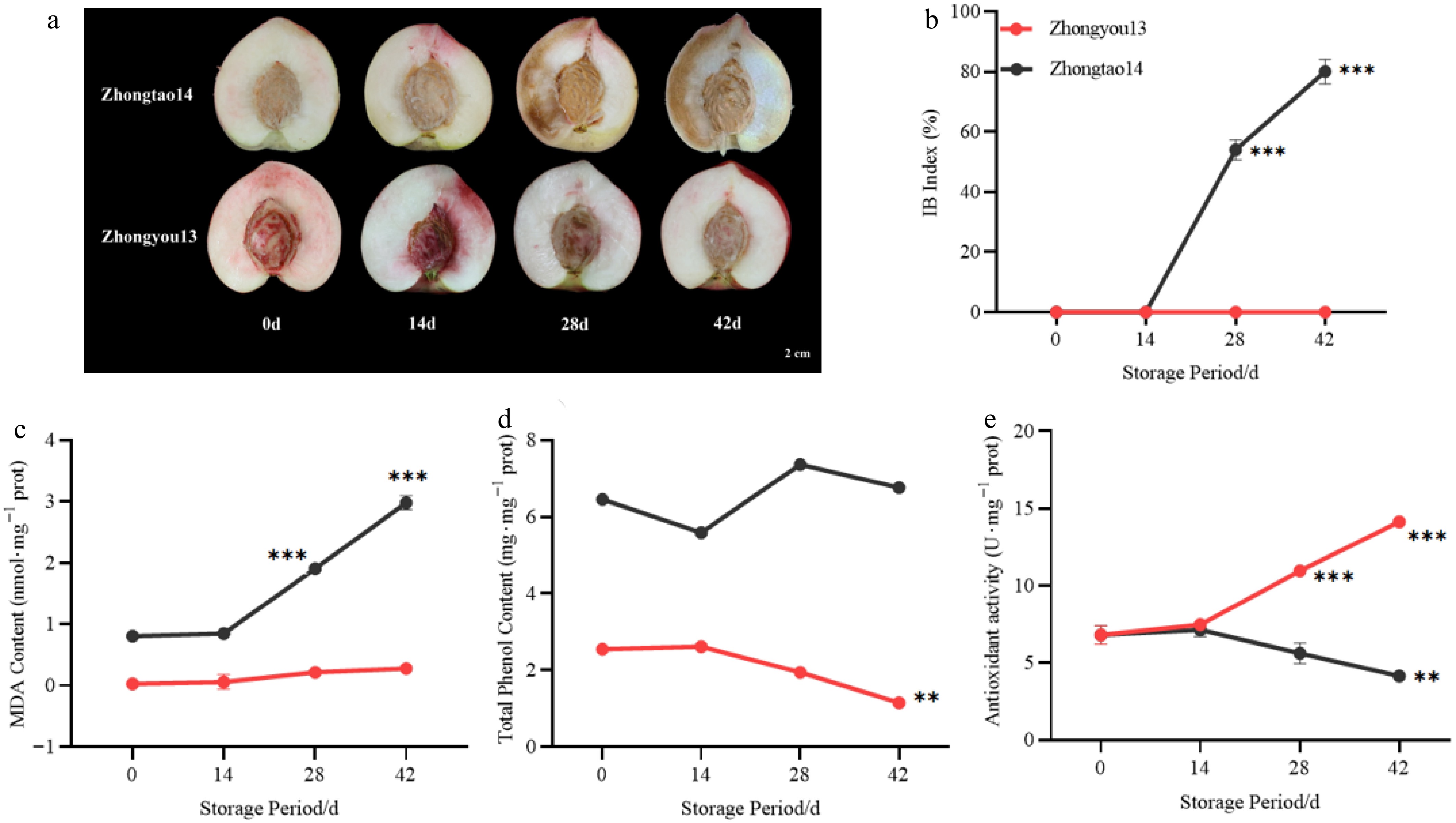
Figure 1.
Phenotypic characteristics, MDA content, total phenol content, and antioxidant activity in different peach cultivars. (a) Internal browning symptoms in two different peach cultivars. Scale bar = 2 cm, (b) IB index, (c) MDA content, (d) antioxidant activity, and (e) total phenol content. Error bars indicate the means ± standard error (SE) from three biological replicates. * indicates significant differences between the control (0 d) and the different cold storage treatment timepoints (14, 28, and 42 d) based on Student’s t-tests (* p < 0.05, ** p < 0.01, *** p < 0.001).
Analysis of the relative expression of LAC family genes and LAC activity
-
We identified two genes from the LAC family, PpLAC7 (Prupe.6G267700) and PpLAC9 (Prupe.8G048100), from our previous transcriptome examination of a browning cultivar, 'Zhongtao No. 9' ('Zhongtao9')[40], which exhibited increased expression during cold storage (Supplementary Fig. S1a). Subsequently, RT-qPCR analysis indicated that the expression levels of PpLAC7 and PpLAC9 varied among the cultivars during cold storage (Fig. 2a, b). In 'Zhongtao14', PpLAC7 expression was 213.96 times higher at 42 d compared with 0 d. In contrast, 'Zhongyou13' did not show a significant increase in PpLAC7 expression. Similarly, PpLAC9 expression in 'Zhongtao14' was 21.94 times higher at 42 d compared with 0 d, whereas 'Zhongyou13' did not exhibit an upregulation of PpLAC9. LAC activity in 'Zhongtao14' increased significantly from 13.14 to 123.84 U·mg-1 protein over the cold storage period. However, 'Zhongyou13' did not show a significant increase in LAC activity during cold storage (Fig. 2c).
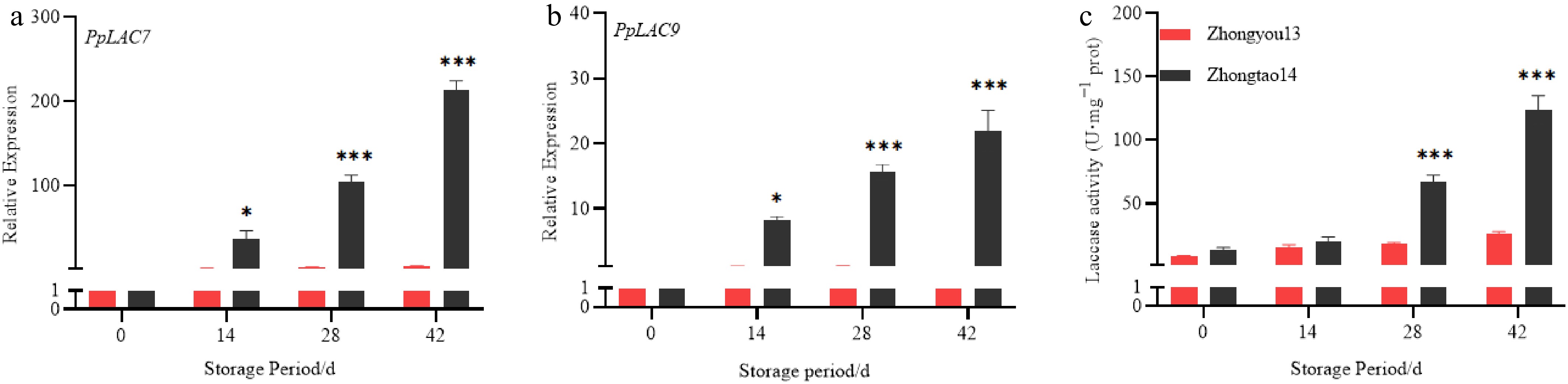
Figure 2.
Effect of relative expression of LAC family genes and LAC activity in different peach cultivars. (a) Analysis of the relative expression of PpLAC7, (b) PpLAC9, and (c) LAC activity. Error bars indicate the means ± SE from three biological replicates. * indicates significant differences between the control (0 d) and the different cold storage treatment timepoints (14, 28, and 42 d) based on Student's t-tests (* p < 0.05, ** p < 0.01, *** p < 0.001).
Expression profiles of WRKY TFs and sequence features, proteins, and subcellular localization of PpWRKY19-like
-
To identify WRKY transcription factors, we used our previous transcriptome data from 'Zhongtao9', a cultivar showing browning during cold storage[40]. We screened 14 WRKY TFs and among these, eight WRKY TFs, namely PpWRKY65 (Prupe.4G066400), PpWRY19-like (Prupe.5G110700), PpWRKY74 (Prupe.6G345100), PpWRKY75 (Prupe.1G223200), PpWRKY48 (Prupe.1G114800), PpWRKY47 (Prupe.3G002300), PpWRKY40 (Prupe.3G098100), and PpWRKY71 (Prupe.3G174300), exhibited upregulated expression levels during cold storage (Supplementary Fig. S1b). We validated the expression levels of these eight TFs in 'Zhongtao14' and 'Zhongyou13' using RT-qPCR (Fig. 3). In 'Zhongtao14', all TFs showed significant upregulation compared with Day 0, whereas 'Zhongyou13' did not show a notable increase throughout the cold storage period. Interestingly, PpWRKY19-like exhibited a 198.58-fold increase in 'Zhongtao14', which was the highest expression level among all the candidate TFs. Therefore, we selected PpWRKY19-like for further analysis. Although it was initially identified as a WRKY family member via transcriptome annotation, sequence analysis and AlphaFold-based structural modeling revealed that PpWRKY19-like possesses an atypical architecture compared with canonical WRKY TFs. It lacks the WRKYGQK heptapeptide, and the protein contains a tandem array of six C2H2-type zinc finger domains (Fig. 4b, c). These domains exhibit the conserved C-X2-C and H-X3-H spacing characteristic of the transcription factor IIIA (TFIIIA) - type zinc finger family, which is known for high-affinity DNA binding. This structural divergence suggests that PpWRKY19-like has undergone a neofunctionalization event, where the expanded C2H2 domains have compensated for the loss of the canonical WRKY domain, maintaining the ability to recognize and transactivate the W-box elements in the promoter region. Despite this structural divergence, its strong phylogenetic clustering with AtWRKY40 suggests that it is a divergent WRKY-related transcription factor (Fig 4a). To determine its subcellular localization, we transiently expressed the PpWRKY19-like-pSAK277(GFP) fusion construct and pSAK277(GFP) (as a control) in tobacco leaves. The GFP signal was observed in the cell membrane, cytosol, and nucleus of the control leaves expressing pSAK277(GFP). In contrast, leaves expressing PpWRKY19-like-pSAK277(GFP) showed GFP signals exclusively localized in the nucleus (Supplementary Fig. S2). This finding suggests that PpWRKY19-like is a nuclear-localized protein.
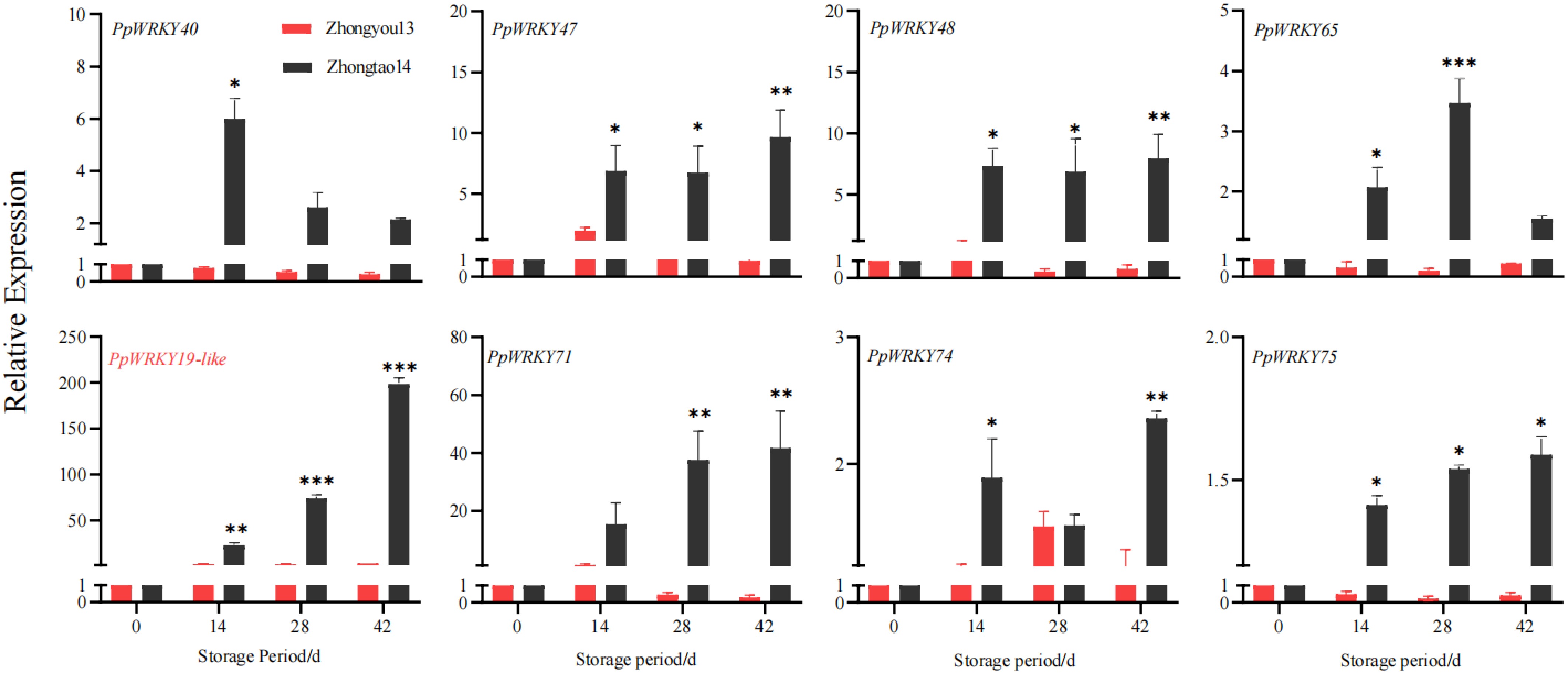
Figure 3.
Relative expression of WRKY TFs in different peach cultivars during cold storage. Error bars indicate the means ± SE from three biological replicates. * indicates significant differences between the control (0 d) and the different cold storage treatment timepoints (14, 28, and 42 d) based on Student’s t-tests (* p < 0.05, ** p < 0.01, *** p < 0.001).
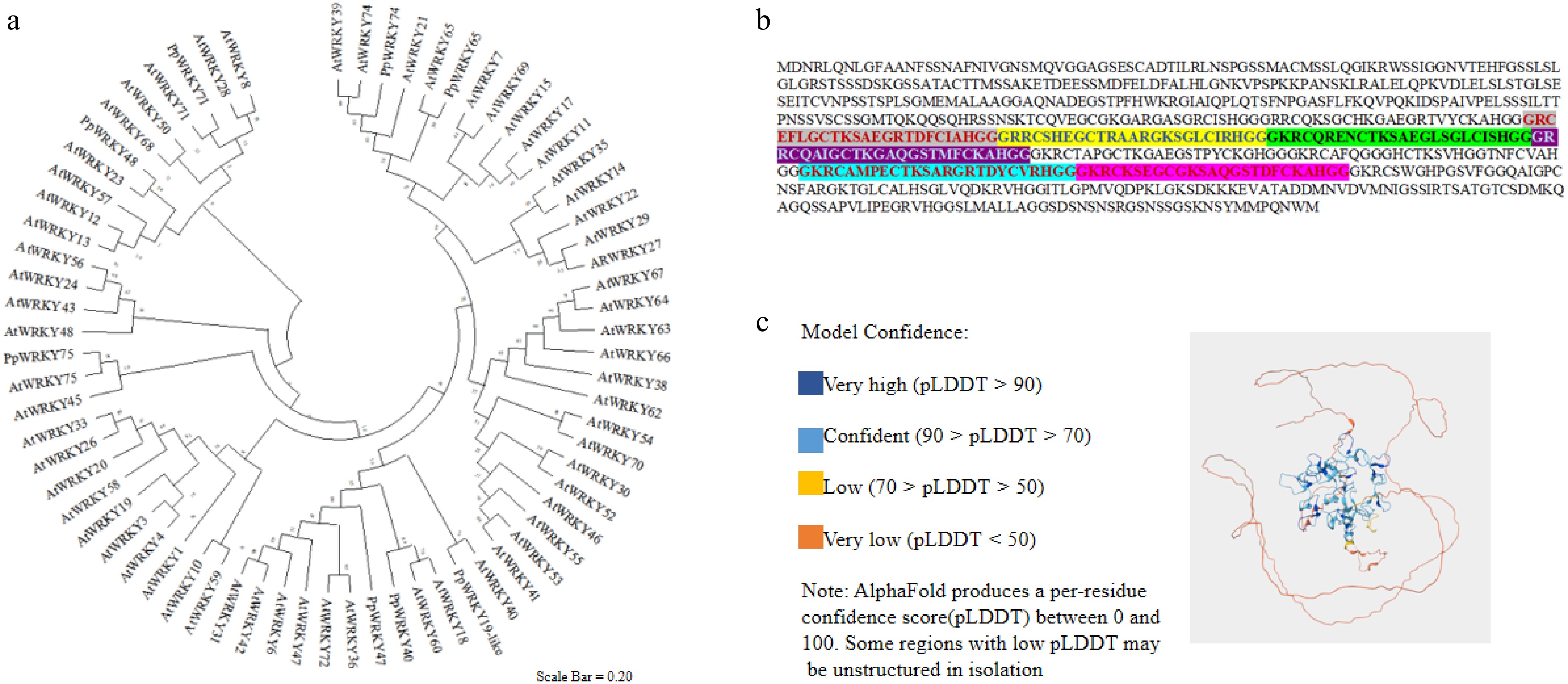
Figure 4.
Sequence features of PpWRKY19-like and its protein. (a) A rooted neighbor joining phylogenetic tree relating to PpWRKY TFs in Arabidopsis thaliana. (b) The deduced amino acid sequence of PpWRKY19-like. The colored sequences are the C2H2 zinc finger domains. (c) A hypothetical three-dimensional (3D) structural model of WRKY19-like as predicted by the AlphaFold model.
PpWRKY19-like binds to the promoter of PpLAC7
-
Analysis of the cis-acting elements within the gene promoter revealed the presence of WRKY-binding sites (TTGAC) in PpLAC7 and PpLAC9 (Fig. 5a). The potential regulatory effects of PpWRKY19-like on the expression of PpLAC7 and PpLAC9 were investigated using a dual luciferase assay. The results indicated that PpWRKY19-like transactivated the PpLAC7 promoter, leading to an approximately fivefold increase in expression, whereas it did not activate the PpLAC9 promoter's expression (Fig. 5b, c). Therefore, PpLAC7 was considered as a potential candidate gene for further analysis. The Y1H assay showed that PpWRKY19-like interacted directly with the PpLAC7 promoter (Fig. 5d). These findings provide that, despite lacking the canonical WRKYGQK motif, the multi-zinc finger architecture of PpWRKY19-like allows it to retain high affinity and functional specificity for W-box (TTGAC) elements, suggesting that PpWRKY19-like is a key regulator of PpLAC7-mediated browning.
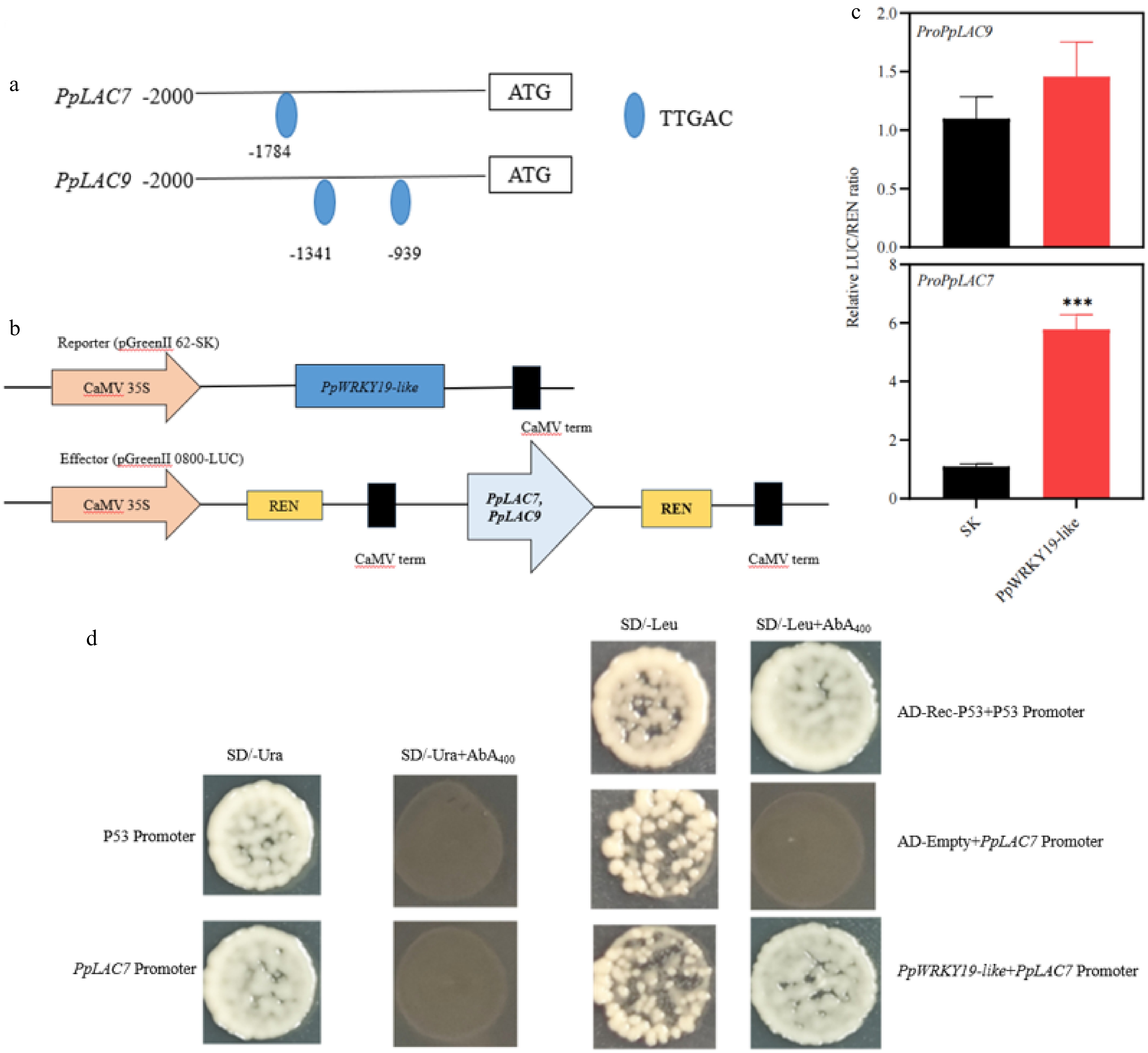
Figure 5.
PpWRKY19-like binds to the PpLAC7 promoter. (a) Binding sites in PpLAC7 and the PpLAC9 promoter. (b) Reporter and effector vectors applied in the dual luciferase assay. (c) The fluorescence ratio of LUC/REN for the empty vector (SK) combined with the promoter, standardized to 1. (d) Examination of the interaction between PpWRKY19-like and the PpLAC7 promoter using the Y1H assay. Autoactivation of the PpLAC7 promoter was assessed on SD medium without Ura, supplemented with 400 ng mL−1 Aureobasidin A (SD/−Ura+AbA400). The interaction was evaluated on SD medium lacking Leu with 400 ng mL−1 AbA (SD/−Leu+AbA400). Positive control: p53 and its promoter; negative control: the AD empty vector + PpLAC7 promoter. Error bars represent the mean ± SE from three replicates. * indicates significant differences between the SK (control) and the PpWRKY19-like (treatment) based on Student’s t-tests (* p < 0.05, ** p < 0.01, *** p < 0.001).
Transient overexpression of PpWRKY19-like and PpLAC7 enhances browning in peach flesh
-
To investigate the functions of PpWRKY19-like and PpLAC7 in peach fruit browning during cold storage, we used the peach flesh of 'Zhongyou13', which did not exhibit browning symptoms during cold storage (Fig. 1a). After three days of infiltration, peach flesh overexpressing PpWRKY19-like (OE-PpWRKY19-like) and PpLAC7 (OE-PpLAC7) showed visible browning compared with the empty vector (Fig. 6a). Quantitative PCR analysis revealed significant upregulation of PpLAC7 and PpWRKY19-like in OE-PpWRKY19-like compared with the empty vector. Additionally, OE-PpLAC7 showed significant upregulation of PpLAC7 (Fig. 6b, c). LAC activity significantly increased in OE-PpWRKY19-like and OE-PpLAC7 compared with the empty vector (Fig. 6d). These findings suggest that PpWRKY19-like and PpLAC7 play significant roles in peach fruit browning during cold storage.
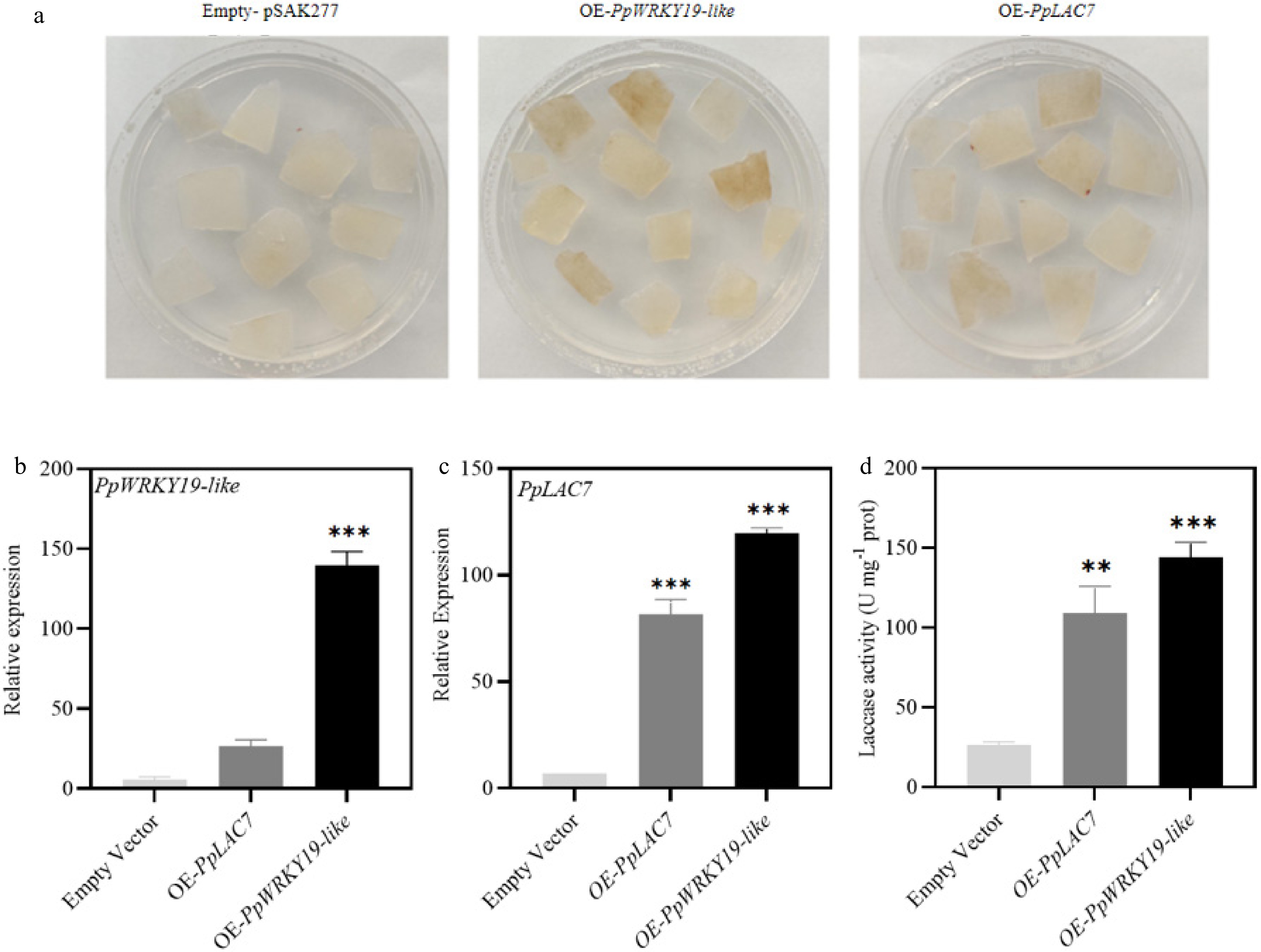
Figure 6.
Functional verification of PpWRKY19-like and PpLAC7 in peach flesh. (a) Peach flesh showing the incidence of browning in OE-PpWRKY19-like and OE-PpLAC7 samples after three days of infiltration. Relative expression of (b) PpWRKY19-like, (c) PpLAC7, and (d) LAC activity in OE-PpWRKY19-like and OE-PpLAC7 compared with the empty vector (pSAK277). Error bars represent the mean ± SE from three replicates. * indicates significant differences between the control (empty vector) and treatments (OE-PpLAC7 and OE-PpWRKY19-like) based on Student’s t-tests (* p < 0.05, ** p < 0.01, *** p < 0.001).
-
Cold storage is commercially used to maintain fruits' freshness and transport them safely by slowing metabolism and respiration, thereby extending shelf life[41]. However, peaches are highly susceptible to CI, particularly flesh browning, which restricts preservation during storage[42]. In this study, the cultivar 'Zhongtao14' exhibited severe IB symptoms after 42 d at 4 °C, whereas 'Zhongyou13' did not show IB symptoms (Fig. 1a, b). A previous report indicated that elevated MDA levels are primary indicators of membrane damage and development of CI[43]. The significant increase in MDA in 'Zhongtao14' suggests that membrane lipid peroxidation was associated with its increased browning incidence (Fig. 1c). Furthermore, the substantial increase in antioxidant activity in 'Zhongyou13' reflects an effective capacity for reactive oxygen species (ROS) scavenging, which mitigated oxidative stress. In contrast, the decline in antioxidant activity in 'Zhongtao14' after 14 d suggests an inadequate defense mechanism, allowing for the accumulation of oxidative damage[44]. The imbalance between stress-induced phenolic synthesis and antioxidant capacity in 'Zhongtao14' hastened cellular compartmentalization breakdown, providing substrates for enzymatic browning[45].
Regulation of PpLAC7-mediated browning during cold storage
-
PPOs are primarily responsible for fruit browning, and LACs are considered to be crucial variants of PPOs that significantly contribute to this process[20,46]. LAC activity has been implicated in peach fruit browning because of its insensitivity to the PPO inhibitor 4-hexylresorcinol[46]. Our findings showed that LAC activity increased significantly in the browning cultivar 'Zhongtao14', which correlated with the severity of IB symptoms (Figs. 1a, b, and 2c). LcLAC can be polymerized with polyphenols and is involved in callus browning[47]. LcLAC7 enhances pericarp browning during storage by facilitating the breakdown of anthocyanin[14].We identified two genes, PpLAC7 and PpLAC9, that showed a significant increase in 'Zhongtao14' (Fig. 2a, b). Notably, PpWRKY19-like specifically transactivated the PpLAC7 promoter (Fig. 4). Given its phenotypic association and functional activation, PpLAC7 was identified as the primary candidate for chilling-induced browning in peaches. Phylogenetic analysis grouped PpLAC7 with MdLAC7 (Supplementary Fig. S3), which was recently reported to directly enhance peel browning in apples[22], suggesting a conserved role for LAC7 in fruit browning.
PpWRKY19-like acts as a divergent regulator of cold stress
-
WRKY TFs significantly regulate plants' growth and development, secondary metabolism, and responses to biotic and abiotic stressors[48]. Notably, VvWRKY28, a cold-induced WRKY gene in grapes (Vitis vinifera), regulates the expression of genes associated with cold stress and cold stress resistance[49]. Similarly, CsWRKY46 modulates cold stress-responsive genes in cucumbers (Cucumis sativus), leading to increased cold tolerance[50]. In our study, we found that the relative expression of PpWRKY19-like was positively correlated with the IB index and the expression of PpLAC7 (Figs. 1a, b, 2a, and 3a). PpWRKY19-like promoted browning by directly binding to the PpLAC7 promoter and activating its expression (Fig. 5). Furthermore, overexpression of PpWRKY19-like significantly upregulated PpWRKY19-like and PpLAC7, and overexpression of PpLAC7 significantly upregulated PpLAC7, thereby enhancing laccase activity and promoting tissue browning (Fig. 6). Previous studies have reported that WRKYs are involved in the cold tolerance of fruits and are associated with browning symptoms during cold storage. MaWRKYs play a crucial role in the browning of banana peel by binding to W-box motifs in the MaNCED1 and MaNCED2 promoters[51]. EjCML19 and EjWRKY7 collaboratively enhance the transcription of genes associated with browning in loquats (Eriobotrya japonica) during cold storage[52]. The phylogenetic tree showed that PpWRKY19-like had a close genetic relationship with A. thaliana AtWRKY40 (Fig. 4a). Genetically close homologous genes might share similar functions. A recent study reported that A. thaliana WRKY40 is involved in osmotic and cold stress responses[53]. Thus, PpWRKY19-like may show similar function in cold stress. A study reported that WRKY members that exhibit a total or partial loss of the signature WRKY or zinc-finger motifs are categorized as Group IV[54]. Although these "incomplete" members were previously thought to be nonfunctional, recent studies suggest that such structural divergence can result from extensive evolutionary domain expansion or loss within the Rosaceae family[55]. We therefore classified PpWRKY19-like as a divergent member of WRKY family that has undergone extensive domain expansion while maintaining its functional ability to bind W-box elements. By integrating these structural insights into the PpWRKY19-like/PpLAC7 pathway, we propose a schematic model illustrating the regulatory mechanism of cold-storage induced browning development in peach fruit (Fig. 7). Among other PpWRKYTFs, PpWRKY74 clustered with AtWRKY74 and AtWRKY39. AtWRKY39 positively regulates hormonal signaling pathways that mediate stress responses[56]. PpWRKY40 was clustered with AtWRKY60 and AtWRKY18. AtWRKY18 and AtWRKY60 act as positive regulators of abscisic acid (ABA) sensitivity and abiotic stress responses[57]. PpWRKY48 clustered with AtWRKY23. AtWRKY23 is involved in ammonium-induced repression of primary root growth in A. thaliana under ammonium toxicity[58]. PpWRKY71 clustered with AtWRKY71. WRKY71 acts antagonistically against salt-delayed flowering in A. thaliana[59]. PpWRKY65 and PpWRKY47 clustered with AtWRKY65 and AtWRKY36. There have been no relevant reports on AtWRKY65 or AtWRKY36 under abiotic stress. This comparative analysis highlighted the functional divergence of WRKY TFs under different abiotic stresses. However, functional validation was conducted using transient expression systems, and thus future research using stable transgenic peach callus transformation will be necessary to further confirm the long-term regulatory mechanisms of this pathway. In addition, further investigations are needed to explore the role of additional WRKYs in the browning of peach fruit during cold storage.
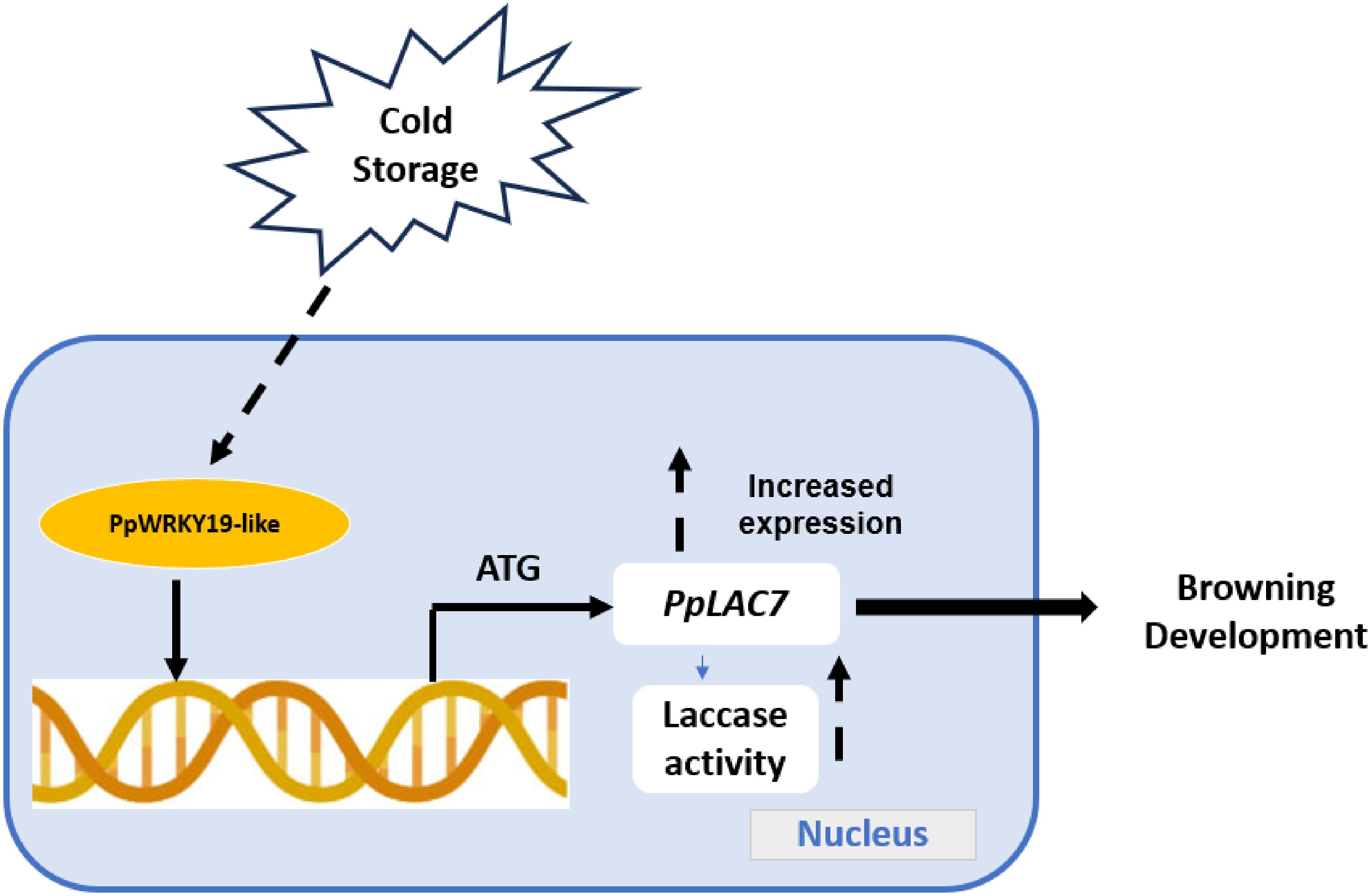
Figure 7.
A proposed model of how PpWRKY19-like regulates the expression of PpLAC7 to promote the development of browning in peaches during cold storage.
-
This study elucidates the physiological and molecular mechanisms underlying chilling-induced IB in peach fruit. We demonstrate that cultivar-specific sensitivity to cold storage is mediated by differences in membrane lipid peroxidation (MDA), antioxidant capacity, and phenolic metabolism. Our findings identify the LAC gene PpLAC7 as a critical enzymatic regulator of browning that is directly activated by the divergent transcription factor PpWRKY19-like. We confirmed that PpWRKY19-like binds to the PpLAC7 promoter to activate its transcription, thereby accelerating the development of enzymatic browning. These results provide novel insights into the regulatory networks governing CI and offer promising genetic targets for improving the postharvest quality and storage life of peach fruit.
-
The authors confirm their contributions to the paper as follows: study conception and design: Badrunnesa A, Zeng W; data collection: Badrunnesa A, Zhan W, Li A; analysis and interpretation: Badrunnesa A, Zhan W, Meng J; draft manuscript preparation: Badrunnesa A, Duan W, Sun S; critical revision: Niu L, Pan L, Cui G, Zeng W. All authors reviewed the results and approved the final version of the manuscript.
-
The datasets generated during and/or analyzed in the current study are available from the corresponding author on reasonable request.
-
The authors declare that they have no conflict of interest.
-
This accompanies this paper online at: https://doi.org/10.48130/frures-0026-0025.
-
# Authors contributed equally: Akhi Badrunnesa, Wenduo Zhan
- Supplementary Table S1 Primers for RT-qPCR.
- Supplementary Table S2 Primers sequences used for constructions of different plasmids.
- Supplementary Fig. S1 Heatmap showing the expression levels of different (a) laccase family genes and (b)WRKY TFs during cold storage (Trascriptome data of IB sensitive cultivar, Zhongtao9).
- Supplementary Fig. S2 Sub-cellular localization of PpWRKY19.
- Supplementary Fig. S3 A rooted neighbor-joining phylogenetic tree relating to PpLAC7 in Prunus persica, Arabidopsis thaliana, and Malus domestica.
- Copyright: © 2026 by the author(s). Published by Maximum Academic Press, Fayetteville, GA. This article is an open access article distributed under Creative Commons Attribution License (CC BY 4.0), visit https://creativecommons.org/licenses/by/4.0/.
-
About this article
Cite this article
Badrunnesa A, Zhan W, Li A, Meng J, Duan W, et al. 2026. PpWRKY19-like regulates peach fruit browning during cold storage by activating PpLAC7 expression. Fruit Research 6: e035 doi: 10.48130/frures-0026-0025 

PpWRKY19-like regulates peach fruit browning during cold storage by activating PpLAC7 expression
- Received: 24 April 2026
- Revised: 10 June 2026
- Accepted: 25 June 2026
- Published online: 31 August 2026
Abstract: Cold storage is widely used postharvest to preserve fruits; however, extended storage can trigger chilling injury (CI), manifesting as internal browning (IB) in peaches (Prunus persica), which severely affects marketability. The physiological and molecular mechanisms underlying this phenomenon remain unclear. In this study, we compared two peach cultivars with contrasting storage phenotypes: 'Zhongtao No. 14', which exhibited severe IB, and 'Zhongyou No. 13', which did not show any IB symptoms. Comparative physiological analysis revealed significant differences in malondialdehyde (MDA) accumulation, total phenol content, antioxidant capacity and laccase enzymatic activity between the cultivars. We identified a laccase gene, PpLAC7, and a divergent WRKY transcription factor, PpWRKY19-like, whose expression levels were strongly correlated with browning severity. Dual-luciferase and yeast one-hybrid assays confirmed that PpWRKY19-like directly binds to the PpLAC7 promoter. Functional validation through overexpression in fruit flesh further demonstrated that PpWRKY19-like activates PpLAC7 expression, significantly enhancing laccase activity and promoting browning. This study elucidates a novel regulatory module, PpWRKY19-like–PpLAC7, providing significant insights into the enzymatic mechanisms of chilling injury and offering genetic targets for improving postharvest peach quality.
-
Key words:
- Cold storage /
- Browning /
- Peach fruit /
- PpWRKY19-like /
- PpLAC7