













-
Grapes (Vitis spp.) are among the most economically valuable fruit crops worldwide, with berries widely used for fresh consumption, winemaking, and food processing[1−3]. Hybrid breeding is the primary strategy for grape cultivar innovation, enabling the integration of desirable traits such as disease resistance, stress tolerance, and superior fruit quality through genetic recombination[4−7]. However, breeding efficiency is severely constrained by poor seed-to-seedling transition[8,9]. Grape hybrid seeds typically exhibit deep physiological dormancy, with natural germination rates of only 30%–50%, seedling uniformity below 60%, and prolonged establishment cycles[10−12]. These issues directly reduce hybrid population sizes and the probability of selecting superior genotypes, representing a major bottleneck in grape breeding[5,13]. Recent genomic studies on grape hybridization have also highlighted the need to monitor deleterious mutations in hybrid offspring, which may affect their fitness[14].
'Shine Muscat' (Vitis labrusca × V. vinifera) is currently the dominant table grape cultivar in Asian markets, characterized by excellent fruit quality, unique muscat aroma, and high consumer acceptance. Using 'Shine Muscat' as the maternal parent to breed new cultivars combining large berry size, disease resistance, and stress tolerance is a core direction in grape breeding[15,16]. Although artificial pollination systems have been optimized and fruit set rates significantly improved, a complete standardized system for germination and seedling establishment of 'Shine Muscat' hybrid seeds remains lacking, severely restricting breeding progress[17].
Exogenous gibberellic acid (GA3) soaking is a conventional method to break seed dormancy, functioning via the classic antagonistic GA–ABA regulatory module, which has been extensively validated in model plants and crops[18−20]. At the molecular level, bioactive GAs promote DELLA protein degradation to activate germination-related genes, while ABA stabilizes DELLA proteins and upregulates ABI5 to maintain dormancy[21,22]. In grapevines, ABA signaling also extends to secondary metabolism, as demonstrated by the ABA-responsive transcription factor VvbZIP026, which promotes anthocyanin biosynthesis[23]. ABA governs the entire lifecycle of seed dormancy, including induction during maturation, maintenance during dry storage, and release during imbibition and germination[21,24]. During seed development, sustained ABA accumulation promotes embryo maturation and prevents pre-harvest sprouting; after imbibition, high ABA levels suppress radicle cell wall loosening, inhibit energy metabolism, and block the transition from dormancy to germination[21,25]. In woody crops like grape, seeds develop deeper dormancy than annual crops, and optimal hormone treatment parameters vary widely across cultivars[26,27].
ABA homeostasis—the dynamic balance of ABA biosynthesis, catabolism, and signaling throughout germination—determines seed dormancy status and germination performance[22,24,28]. The coordinated downregulation of ABA and upregulation of bioactive GAs are essential for radicle protrusion and seedling establishment[24,25,29]. Differences in endogenous GA–ABA balance in ovules and immature embryos are the main drivers of variation in embryo rescue efficiency across hybrid combinations[12,30]. Exogenous ABA can counteract GA3-induced germination in a dose-dependent manner, providing direct functional evidence for ABA's dormancy-maintaining role[21]. However, grape seed response to GA3 remains highly genotype-dependent[26,27], and most existing studies optimize parameters based on a single genotype without systematic validation across diverse paternal backgrounds. Moreover, how paternal genotype regulates dynamic ABA changes during germination in 'Shine Muscat' hybrid seeds remains unclear.
In this study, we selected 'Shine Muscat' as the female parent and hybridized it with nine outstanding male grape varieties carrying complementary agronomic traits. We carried out three core research tasks: optimizing seed germination parameters via an L9(34) orthogonal experiment, verifying the broad applicability of the optimized protocol across hybrid progenies with distinct paternal backgrounds, and revealing the linkages between paternal genotype, dynamic ABA changes throughout germination and seed germination performance; we also supplemented exogenous ABA tests to confirm ABA's physiological roles. Collectively, this work targets the bottlenecks of low germination percentage and uneven seedling growth in grape cross breeding, and delivers both operable technical schemes and physiological theoretical support to accelerate new grape variety breeding.
-
The experiment was conducted at the Grape Germplasm Resource Garden of Henan Institute of Science and Technology (Xinxiang, Henan, China; 35°18' N, 113°54' E) from 2024 to 2025. The female parent was 'Shine Muscat'. Nine elite male parents with complementary agronomic traits were selected: 'Romantic Beauty', 'Moldova', 'Shenzhou Red', 'Queen Nina', 'Giant Rose', 'Hotan Red', 'Sweet Sapphire', 'Zuijinxiang', and 'Gold Finger'. All plant materials were cultivated cultivars collected from the institutional germplasm garden, with no wild species involved. The collection and use of these materials complied with institutional and national guidelines for cultivated plant research in China.
A total of ten combinations were established: one self-pollinated control (S0: 'Shine Muscat' self-pollination) and nine hybrid combinations (C1 to C9, as detailed in Supplementary Table S1). Artificial hybridization was performed following the standard protocol described by Zhou et al.[31]. Mature hybrid berries with soluble solids content ≥ 18 °Brix were harvested in September 2024. Seeds were manually extracted, cleaned of residual pulp, and air-dried at 22–25 °C for 7 d until moisture content (dry basis) stabilized at 12%–15% (w/w). To break primary dormancy, seeds were soaked in distilled water for 24 h, mixed with sterilized moist sand (moisture content 60%–70%), and subjected to cold stratification at 4 ± 1 °C for six months (until March 2025)[10,11].
Orthogonal experimental design for germination parameter optimization
-
Based on preliminary trials and references to previously reported methods for grape seed germination[26,27], an L9(34) orthogonal design was used to optimize three key germination factors: GA3 concentration (A: 0.1, 0.2, 0.3 g/L), soaking duration (B: 24, 36, 48 h), and incubation temperature (C: 20, 25, 30 °C). The nine treatment combinations (T1–T9) are listed (Supplementary Table S2). The initial optimization was performed using self-pollinated 'Shine Muscat' seeds. Stratified seeds were surface-sterilized with 75% (v/v) ethanol for 15 min, rinsed three times with sterile distilled water, and then soaked in the corresponding GA3 solution. For each treatment, three independent culture replicates were set up, with 50 seeds per replicate. After soaking, seeds were placed in 90 mm Petri dishes lined with two layers of moist absorbent cotton and one layer of Whatman No. 1 filter paper, with a minimum spacing of 1 cm between seeds. Dishes were sealed with Parafilm® (Bemis Company, Inc.) and incubated in complete darkness in a constant-temperature incubator. Germination was recorded daily. A seed was considered germinated when the radicle emerged ≥ 2 mm[10,11]. The final germination rate was calculated on day 7 of incubation.
Universality validation of optimized parameters across hybrid genotypes
-
To test whether the optimized parameters derived from self-pollinated seeds apply to hybrid seeds with different paternal genotypes, all nine hybrid combinations (C1–C9) were subjected to the top three treatments (T7, T4, T2) from the orthogonal experiment. For each hybrid combination and treatment, three biological replicates of 50 seeds each were used. Germination rates were recorded on day 7. A two-way analysis of variance (ANOVA) was used to evaluate the interaction between genotype and treatment effect.
Evaluation of germination characteristics of hybrid combinations
-
All nine hybrid combinations and the self-pollinated control were germinated under the optimized parameters (T7 treatment: 0.3 g/L GA3 for 24 h, incubation at 25 °C in darkness). Three biological replicates per combination with 50 seeds per replicate were used. Germination was recorded daily for 7 d. The following parameters were calculated:
Germination vigor (%): cumulative germination percentage on day 4.
Final germination rate (%): cumulative germination percentage on day 7.
Germination index (GI): GI = Σ(Gt/Dt), where Gt is the number of germinated seeds on day t, and Dt is the number of days after incubation[11].
Mean germination time (MGT, d): MGT = Σ(Dt × Nt) / ΣNt, where Nt is the number of newly germinated seeds on day t.
Multi-stage quantification of endogenous ABA content
-
To capture ABA homeostasis throughout germination rather than at a single time point, five key stages were sampled based on the characteristic morphological phases of radicle emergence observed during germination: Stage 0 (dry mature seeds): untreated dry seeds, cumulative time = 0 h (prior to GA3 soaking); Stage 1: immediately upon completion of the 24 h GA3 soaking (cumulative time = 24 h from the start of soaking, before dark incubation); Stage 2: after subsequent 48 h dark incubation following GA3 soaking (cumulative time = 72 h from the start of soaking); Stage 3 (initial radicle protrusion, radicle ≤ 0.5 mm): sampled upon reaching this morphological phenotype with variable cumulative time; Stage 4 (optimal sowing stage, radicle 1-2 mm): sampled upon reaching this morphological phenotype with variable cumulative time. For each hybrid combination and the control, three independent biological replicates were set for each sampling stage, with 50 seeds pooled per biological replicate, and three technical replicates were performed for each sample. Approximately 0.5 g of fresh seed tissue was collected for each replicate at each stage.
Samples were ground to a fine powder in liquid nitrogen. ABA was extracted in pre-cooled 80% (v/v) methanol containing 1 mmol/L butylated hydroxytoluene (BHT) at 4 °C for 12 h. The extract was centrifuged at 10,000 × g for 20 min at 4 °C. The supernatant was purified using a C18 solid-phase extraction column, dried under nitrogen, and redissolved in chromatographic methanol. Endogenous ABA content was quantified via ultra-high-performance liquid chromatography coupled with tandem mass spectrometry (UPLC-MS/MS; Waters Xevo TQ-S, USA) operating under electrospray ionization negative mode (ESI-) and multiple reaction monitoring (MRM) using an external standard method. Chromatographic conditions: Waters ACQUITY UPLC BEH C18 column (2.1 mm × 100 mm, 1.7 μm); mobile phase: 0.1% formic acid in water (A) and methanol (B) for gradient elution; flow rate 0.3 mL/min; column temperature 40 °C; injection volume 2 μL. Mass spectrometry was performed in negative electrospray ionization (ESI-) and multiple reaction monitoring (MRM) mode. The method recovery rate ranged from 89.2% to 94.6%, and the relative standard deviation (RSD) was < 5%. The average ABA content across the five stages was calculated as an integrated indicator reflecting the overall ABA accumulation pattern throughout germination. For descriptive convenience, we operationally refer to this multi-stage average ABA level as the multi-stage average ABA content in this study[24], which reflects the net outcome of dynamic ABA metabolism during germination.
Exogenous ABA treatment assay
-
To directly verify the physiological role of ABA in regulating grape seed germination[21], exogenous ABA gradient treatments were applied on top of the optimal GA3 regime (0.3 g/L GA3, 24 h soaking). Three representative groups were selected: S0 (self-pollinated control), C1 (high germination vigor), and C9 (low germination vigor). Four ABA concentrations were tested: 0 (control), 5, 10, and 20 mg/L. Each treatment consisted of three biological replicates with 50 seeds per replicate. After cold stratification and surface disinfection, seeds were soaked in mixed solutions of 0.3 g/L GA3 and the respective ABA concentration for 24 h, then incubated at 25 °C in darkness. Final germination rates were recorded on day 7.
Sowing, transplanting, and post-transplant management
-
Seeds at the optimal sowing stage (radicle length 1–2 mm) have completed dormancy release with balanced GA–ABA homeostasis, conferring strong root geotropism and stress resistance. Sowing earlier or later than this window leads to poor vigor or mechanical damage. Based on this physiological benchmark, we developed a full-cycle system bridging laboratory germination with field production.
Plastic nutrient pots (10 cm inner diameter × 11 cm depth) were filled with vermiculite:perlite:peat (1:1:3, v/v)[29]. Seeds were sown at 0.5–1 cm depth with radicles oriented downward. Substrate moisture was maintained at > 80% water-holding capacity to sustain GA activity and avoid ABA elevation. Trays were kept in a greenhouse at 25–37 °C; the plastic cover was removed 5–7 d after emergence. At the two-to three-true-leaf stage, humidity was gradually reduced and diluted N-P-K (20:10:20, 0.1%–0.2%) was applied weekly[30,32].
Transplanting was performed when seedlings reached three to five true leaves, 8–10 cm height, and well-developed roots. Operations were scheduled for overcast days or late afternoons to minimize transpiration stress. Seedlings were excavated with intact root balls to avoid wound-induced ABA biosynthesis. Planting holes (30–40 cm depth) were prepared at 25 × 45 cm spacing; backfilling with gentle lifting ensured root-soil contact. Immediate irrigation followed transplanting, and soil moisture was maintained at 70%–80% field capacity for one to two weeks, then shifted to a dry-wet cycle[30,32]. Transplant survival rate was recorded one month after transplanting.
Repeatability validation of the standardized technical system
-
A full-cycle repeatability validation was conducted from March to June 2025 using four representative hybrid combinations: C1 (high vigor), C2 and C3 (medium vigor), and C4 (low vigor). For each combination, three biological replicates of 50 seeds each were processed strictly according to the standardized system. Germination rate, seedling emergence rate, and transplant survival rate were recorded. Paired-sample t-tests were used to compare these metrics between the initial experiment and the validation trial.
Statistical analysis
-
All data are presented as mean ± standard deviation (SD) from three biological replicates. Data organization was performed using Microsoft Excel 2021; statistical analyses were conducted using SPSS 22.0 (IBM Corp., USA) and R 4.2.0. Range analysis and multi-way ANOVA based on orthogonal array design were used to evaluate the effects of GA3 concentration, soaking duration, and incubation temperature on germination rate. One-way ANOVA followed by Tukey's HSD post-hoc test was used to compare germination parameters and ABA contents among different combinations. Two-way ANOVA was used to analyze the interaction between genotype and treatment effect. Pearson correlation analysis was used to assess the relationship between final germination rate and multi-stage average ABA content; this analysis indicates association only and does not imply causation. Paired-sample t-tests were used for repeatability validation. Identical hybrid combinations were paired between the original experiment and the independent validation trial to eliminate genotypic variation when assessing systematic differences across trials. The significance level was set at p < 0.05, and extremely significant differences at p < 0.01.
-
Under the optimized treatment, seeds showed sequential morphological changes during germination, with radicle protrusion occurring first, followed by elongation to the optimal sowing length. Under the optimized treatment (0.3 g/L GA3 soaking for 24 h, dark incubation at 25 °C), seed germination displayed distinct sequential morphological stages. The initial protrusion stage, defined as radicle length ≤ 0.5 mm, marked the completion of dormancy release and the onset of radicle elongation (Fig. 1a). When 60%–70% of seeds developed radicles of 1–2 mm with robust elongation vigor, this was defined as the optimal sowing stage (Fig. 1b). Precise control of this stage not only supports rapid root establishment via close contact between radicles and the substrate but also avoids mechanical damage caused by excessive radicle elongation (≥ 3 mm) during sowing.
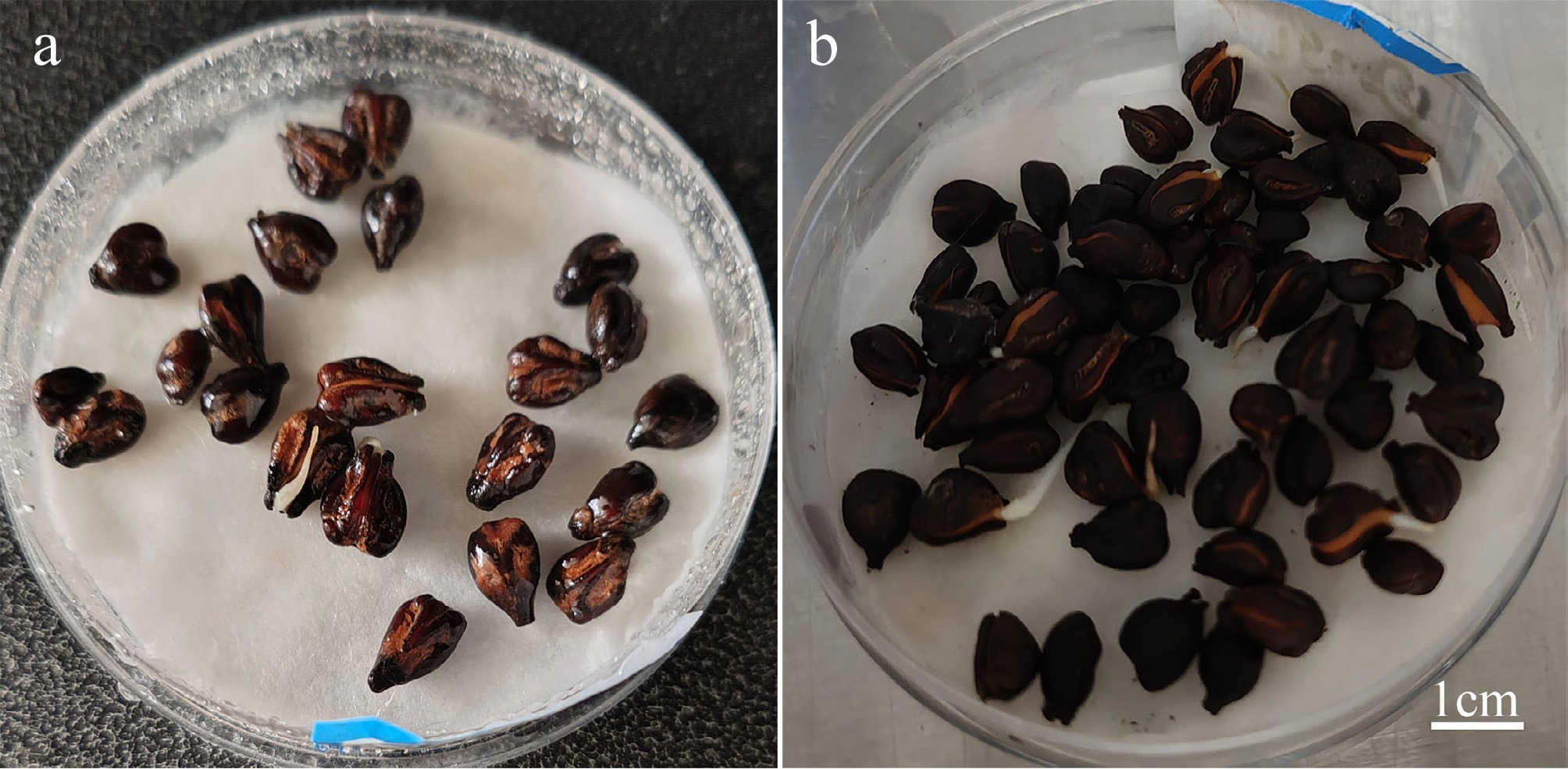
Figure 1.
Morphological stages of radicle emergence during germination of grape hybrid seeds. (a) Initial radicle protrusion stage. (b) Optimal sowing stage. Scale bars: 1 cm.
The high-vigor hybrid combination C1 ('Shine Muscat' × 'Romantic Beauty') exhibited prominent germination synchrony, with over 85% of seeds reaching the optimal sowing morphology within 24 h. In contrast, only 35%–40% of seeds met this criterion under 0.1 g/L GA3 (suboptimal concentration) (Fig. 2). These results confirm that synergistic regulation of the germination system and environmental parameters determines seed vigor expression and provides a quantifiable morphological standard for linking germination induction to large-scale sowing.
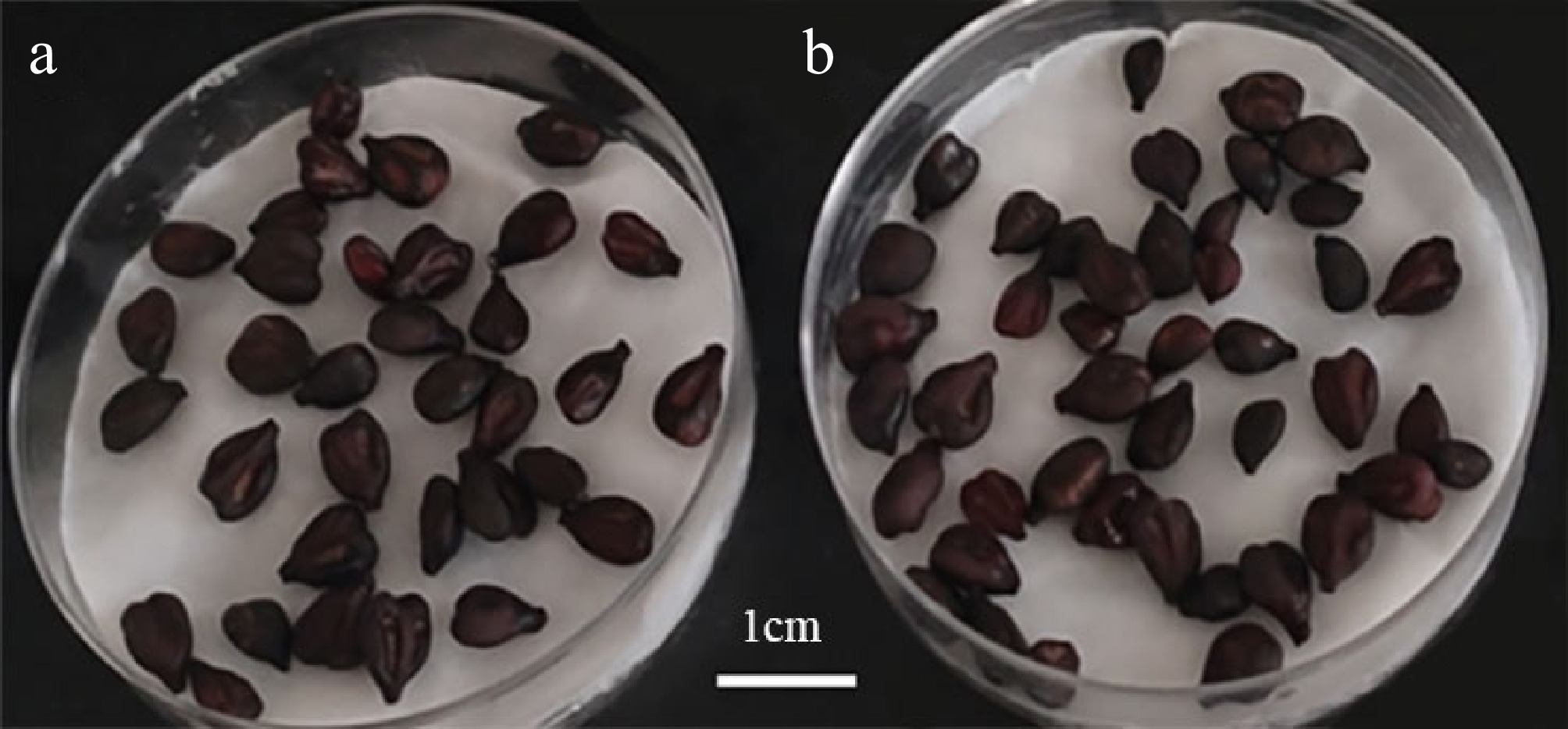
Figure 2.
Seed germination morphology of 'Shine Muscat' × 'Romantic Beauty' under different GA3 concentrations. (a) 0.1 g/L GA3 group. (b) 0.3 g/L GA3 group. Scale bars: 1 cm.
Optimization of key germination parameters and the dominant effect of incubation temperature
-
Using an L9(34) orthogonal design on self-pollinated 'Shine Muscat' seeds, significant variation in final germination rate was observed across the nine treatment combinations (p < 0.05), ranging from 64.3% ± 2.6% (T9) to 92.5% ± 2.3% (T7) (Fig. 3). Treatment T7 (0.3 g/L GA3, 24 h soaking, 25 °C dark incubation) achieved the highest germination efficiency, which was 1.44-fold higher than that of the lowest-performing T9.
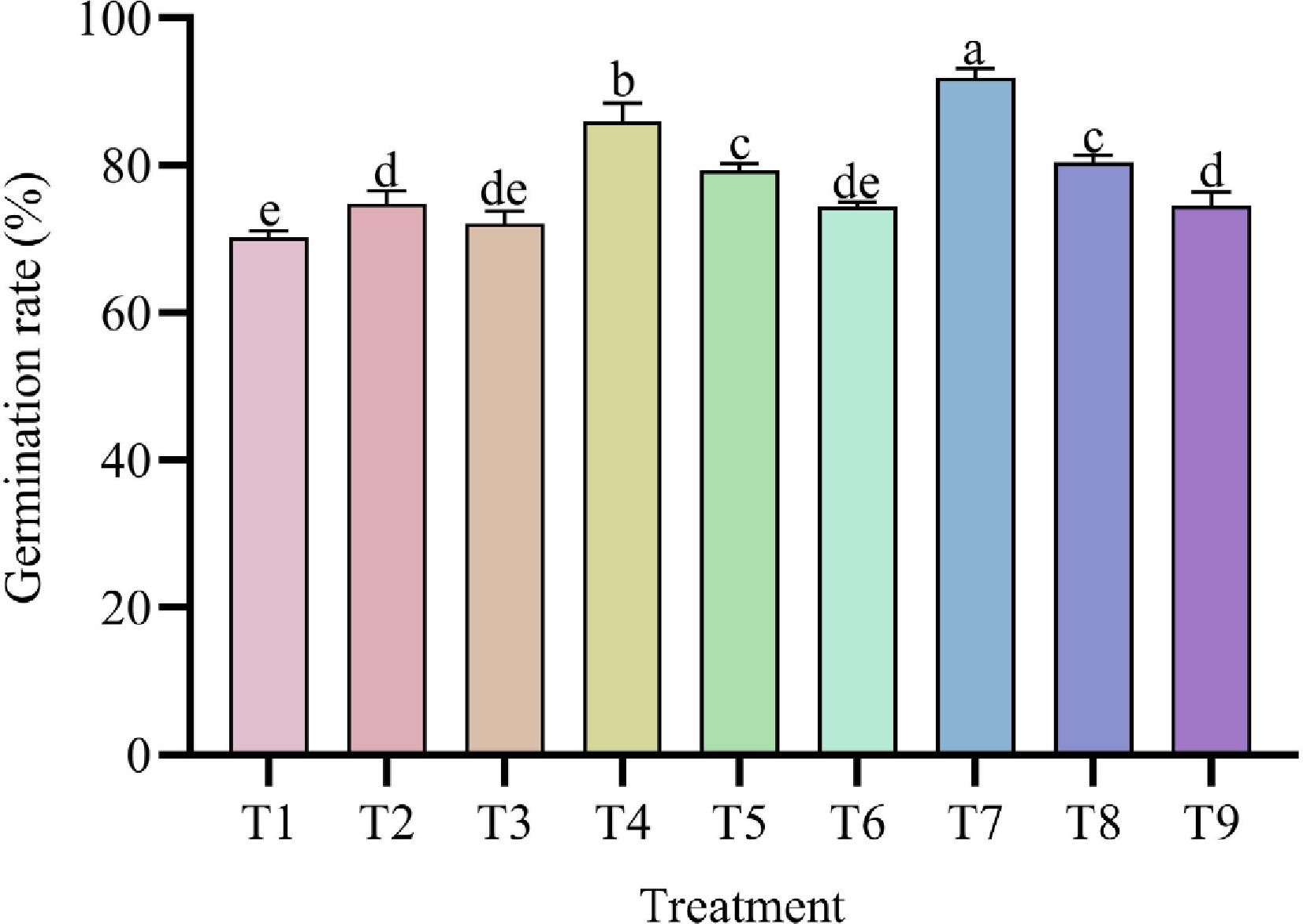
Figure 3.
Effects of different orthogonal treatments on germination rate of self-pollinated 'Shine Muscat' seeds. Different lowercase letters above columns indicate significant differences among treatments (p < 0.05). Data are mean ± SD, n = 3.
Range analysis indicated that within the gradient ranges set in this experiment, the magnitude of germination rate fluctuation caused by each factor ranked as incubation temperature (range R = 12.83) > seed soaking duration (R = 8.77) > GA3 concentration (R = 7.14) (Supplementary Table S3). ANOVA further confirmed that incubation temperature exerted the most significant effect (F = 64.26, p < 0.001), followed by soaking duration (F = 34.81, p < 0.001) and GA3 concentration (F = 24.98, p < 0.001) (Supplementary Table S4).
Universal applicability of optimized parameters across hybrid combinations with diverse paternal genotypes
-
To test whether the optimized parameters derived from self-pollinated seeds are applicable to hybrid seeds with different paternal backgrounds, the top three treatments (T7, T4, T2) were tested across all nine hybrid combinations. The T7 treatment consistently yielded the highest germination rate in all combinations, with values ranging from 48.5% to 88.8%, significantly higher than those of T4 and T2 within the same genotype (p < 0.05) (Table 1).
Table 1. Germination rate of different hybrid combinations under the top three treatments from the orthogonal experiment (%).
Hybrid combination T2 treatment T4 treatment T7 treatment C1 76.4 ± 3.1 b 82.7 ± 2.8 b 88.8 ± 2.4 a C2 70.2 ± 2.9 b 78.5 ± 3.2 b 85.3 ± 2.7 a C3 68.7 ± 3.3 b 75.4 ± 2.9 b 82.6 ± 3.1 a C4 58.3 ± 2.8 b 64.2 ± 3.0 b 70.5 ± 2.6 a C5 55.7 ± 3.2 b 61.8 ± 2.7 b 68.3 ± 2.9 a C6 53.2 ± 2.7 b 59.4 ± 3.1 b 65.7 ± 3.0 a C7 51.6 ± 3.0 b 57.3 ± 2.8 b 63.2 ± 2.7 a C8 49.8 ± 2.9 b 55.2 ± 3.2 b 60.4 ± 2.8 a C9 40.2 ± 2.6 b 45.7 ± 2.9 b 48.5 ± 2.8 a Different lowercase letters in the same row indicate significant differences among treatments (p < 0.05). Data are mean ± SD, n = 3. Two-way ANOVA showed that both paternal genotype (F = 92.74, p < 0.001) and treatment (F = 76.31, p < 0.001) had significant main effects on germination rate, while no significant genotype × treatment interaction was detected (F = 1.247, p = 0.218). This indicates that the relative superiority of the T7 protocol is consistent across all paternal genotypes. Even for low-germination-vigor combinations such as C9 ('Shine Muscat' × 'Gold Finger'), T7 still outperformed other treatments. The absence of genotype × treatment interaction demonstrates the robust universality of this optimized parameter set, addressing a key limitation of previous genotype-specific protocols. This finding enables the application of a uniform germination procedure in large-scale hybrid breeding programs involving multiple paternal parents, greatly improving operational efficiency.
Paternal genotype is associated with variation in germination vigor of hybrid seeds
-
Under the standardized optimized T7 treatment, all germination parameters—germination vigor, final germination rate, germination index, and mean germination time—differed significantly among the nine hybrid combinations (p < 0.05) (Fig. 4). Among all combinations, C1 exhibited the best germination performance among hybrid groups. Its germination vigor was statistically comparable to S0; however, its final germination rate and germination index were significantly lower than the self-pollinated control S0 (p < 0.05), and its mean germination time (2.8 ± 0.2 d) was significantly longer than S0 (p < 0.05). Combinations C2 and C3 also showed relatively high vigor among hybrid combinations, but both were inferior to the self-pollinated control S0. In contrast, C9 had the poorest germination performance, with a final germination rate of only 48.5% ± 2.8%, significantly lower than all other combinations (p < 0.05).
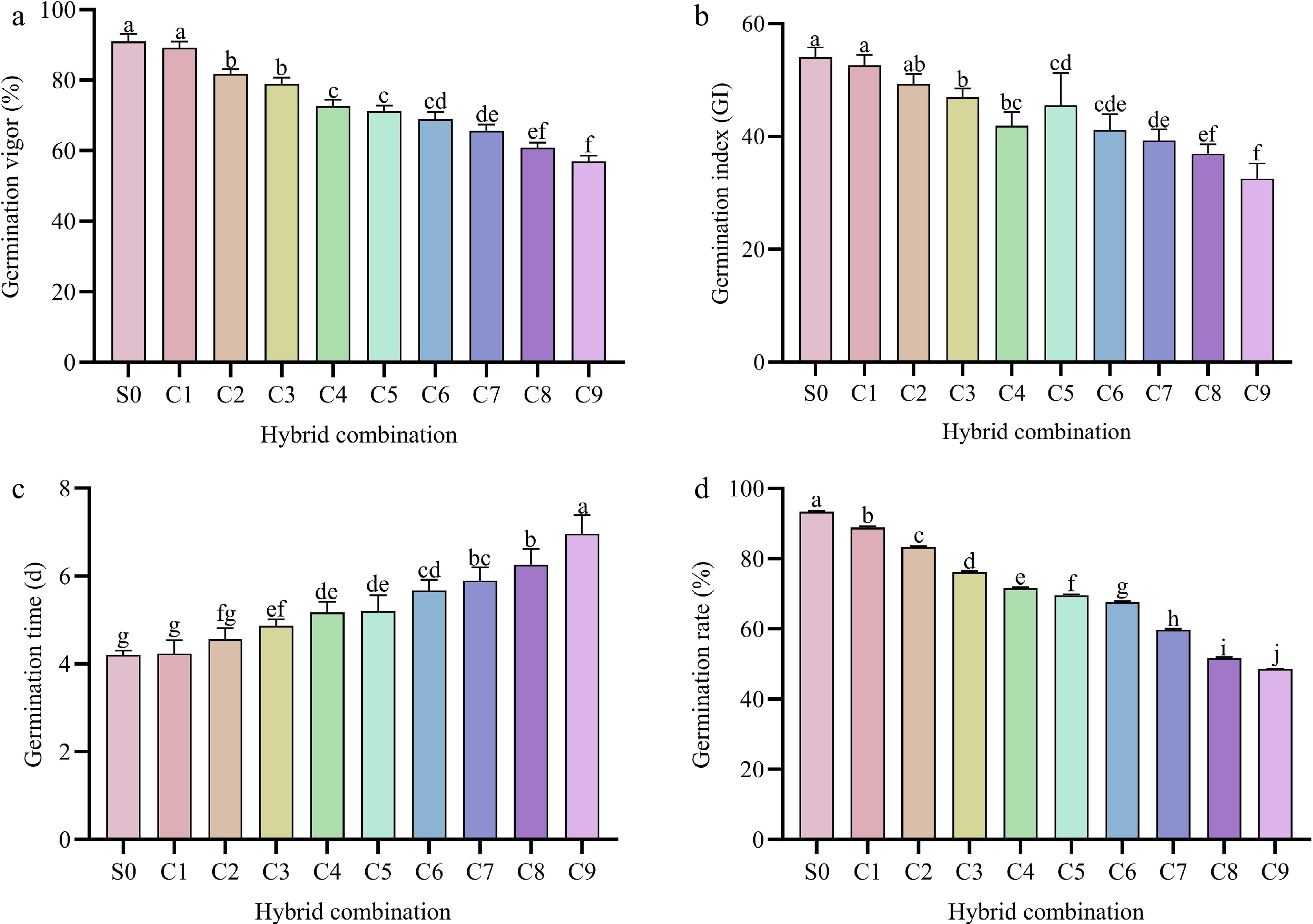
Figure 4.
Effects of paternal genotype on germination characteristics of 'Shine Muscat' hybrid seeds. (a) Germination vigor. (b) Final germination rate. (c) Germination index. (d) Mean germination time. S0 represents the self-pollinated control; C1–C9 represent different hybrid combinations. Different lowercase letters indicate significant differences among combinations. Lowercase letters denote significant differences across all entries including the self-pollinated S0 control (p < 0.05); n = 3.
These results indicate that paternal genetic background is significantly associated with germination vigor variation in 'Shine Muscat' hybrid seeds. The consistent variation in germination vigor among combinations implies inherent differences in endogenous physiological status, particularly phytohormone homeostasis, which is further investigated below.
Dynamic changes in endogenous ABA content throughout germination are strongly negatively correlated with seed germination vigor
-
To capture the dynamics of endogenous ABA across germination rather than a single time point, five stages were sampled based on radicle emergence morphology: dry mature seeds (Stage 0), 24 h after GA3 soaking (Stage 1), 48 h of dark incubation (Stage 2), initial radicle protrusion (Stage 3, ≤ 0.5 mm), and optimal sowing stage (Stage 4, 1–2 mm). For each combination, three biological replicates (50 seeds pooled per replicate) and three technical replicates were used.
Endogenous ABA declined continuously throughout germination in all groups, from the highest level in dry seeds to the lowest at Stage 4. High-vigor genotypes (S0 and C1) showed a more pronounced reduction in endogenous ABA during germination relative to the low-vigor genotype C9, indicating faster catabolism in high-vigor combinations. Paternal genotype significantly affected ABA content at each stage and the multi-stage average (p < 0.05, Fig. 5a). The high-vigor C1 maintained the lowest average ABA, while the low-vigor C9 had the highest, a 19.7% difference. All hybrids had higher average ABA than S0 (p < 0.05).
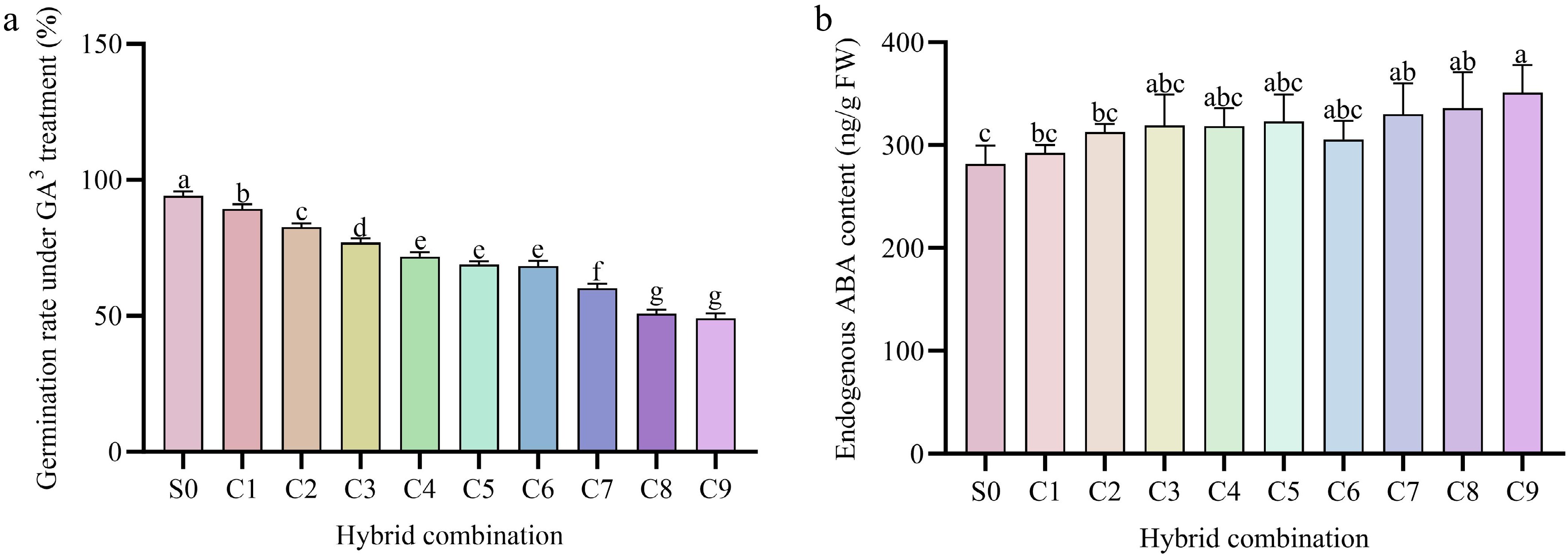
Figure 5.
Multi-stage average ABA content across germination and its correlation with final germination rate. (a) Multi-stage average endogenous ABA content of different hybrid combinations, calculated from five consecutive sampling stages (dry seed, 24 h soaking, 48 h incubation, initial radicle protrusion, optimal sowing stage). Each group includes three biological replicates (50 seeds pooled per replicate) and three technical replicates. Different lowercase letters indicate significant differences (p < 0.05); (b) Pearson correlation between multi-stage average ABA content and final germination rate (n = 10, r = −0.892, p < 0.001).
Pearson correlation revealed a strong negative correlation between final germination rate and multi-stage average ABA content (r = –0.892, p < 0.001, Fig. 5b), based on genotypic means. Seeds with lower ABA levels exhibited higher vigor, while those with sustained high ABA showed deeper dormancy. These findings suggest that paternal genotype is associated with ABA accumulation patterns during germination, and that multi-stage average ABA content is closely correlated with dormancy depth and germination vigor, consistent with the classic GA–ABA antagonistic model. Multi-stage ABA measurement may serve as a physiological indicator for pre-screening high-germination combinations in breeding. However, correlation does not imply causation, and the underlying mechanisms require further investigation.
Exogenous ABA application verifies dose-dependent inhibitory effect on grape seed germination
-
To verify ABA's functional role, exogenous ABA gradient treatments were applied on the optimal GA3 background using three representative groups: S0 (self-pollinated control), C1 (high vigor), and C9 (low vigor).
ABA exhibited a significant dose-dependent inhibitory effect on germination (Supplementary Table S5). At 5, 10, and 20 mg/L ABA, germination rates progressively declined across all groups, with reductions of 8.2–12.4, 13.4–23.8, and 25.7–42.1 percentage points, respectively. This assay provides direct functional evidence that ABA is a key hormone maintaining grape seed dormancy, and that elevated ABA concentrations significantly counteract GA3-induced germination. The observed genotypic differences in germination-reduction magnitude further support the role of endogenous ABA accumulation as a major driver of germination vigor variation among hybrid combinations.
Standardized seedling cultivation system matched with germination physiological status improves transplant survival
-
Leveraging the distinct morphological threshold of radicle elongation (1–2 mm) as a physiological anchor for sowing timing, we developed an integrated, standardized seedling production pipeline that unifies laboratory germination protocols with field nursery practices. At this developmental juncture, seeds have fully exited physiological dormancy, attained a balanced endogenous GA–ABA status, and exhibit pronounced root geotropism and stress resilience, representing the optimal window for transfer to substrate cultivation. Across the nine hybrid combinations evaluated, this pipeline achieved an overall transplant survival rate of 85.6%, alongside markedly improved uniformity in seedling emergence and early vegetative growth relative to conventional practices. Rather than treating germination and seedling establishment as discrete steps, the system aligns every operational transition with underlying shifts in seed/seedling physiological status, thereby preserving germination-derived vigor throughout the entire seed-to-seedling continuum and converting mechanistic insights into hormone regulation into a practically actionable production framework.
The full workflow is organized into three interconnected, sequentially deployed functional modules (Fig. 6a–v). The first module encompasses pre-germination seed processing and controlled germination induction (Fig. 6h–m): seeds undergo cleaning, cold stratification to release primary dormancy, surface disinfection, and GA3-mediated germination promotion under dark, temperature-controlled conditions, yielding a synchronous population of germinated seeds at the optimal developmental stage for subsequent sowing. The second module addresses plug seedling production under standardized conditions (Fig. 6n–p). This module specifies uniform substrate composition, sowing depth, and controlled greenhouse management during early seedling growth, which fosters consistent emergence patterns and supports the development of well-structured, vigorous root systems. The third module covers field transplanting and post-transplant acclimation (Fig. 6a–g, 6q–v). Standardized protocols are implemented for pre-transplant seedling quality screening, careful extraction of seedlings with intact root balls to minimize wounding stress, uniform planting hole preparation and field establishment, and structured post-transplant irrigation and moisture management. Together, these procedures reduce transplant shock and support stable survival and growth across hybrid genotypes with differing inherent vigor levels.
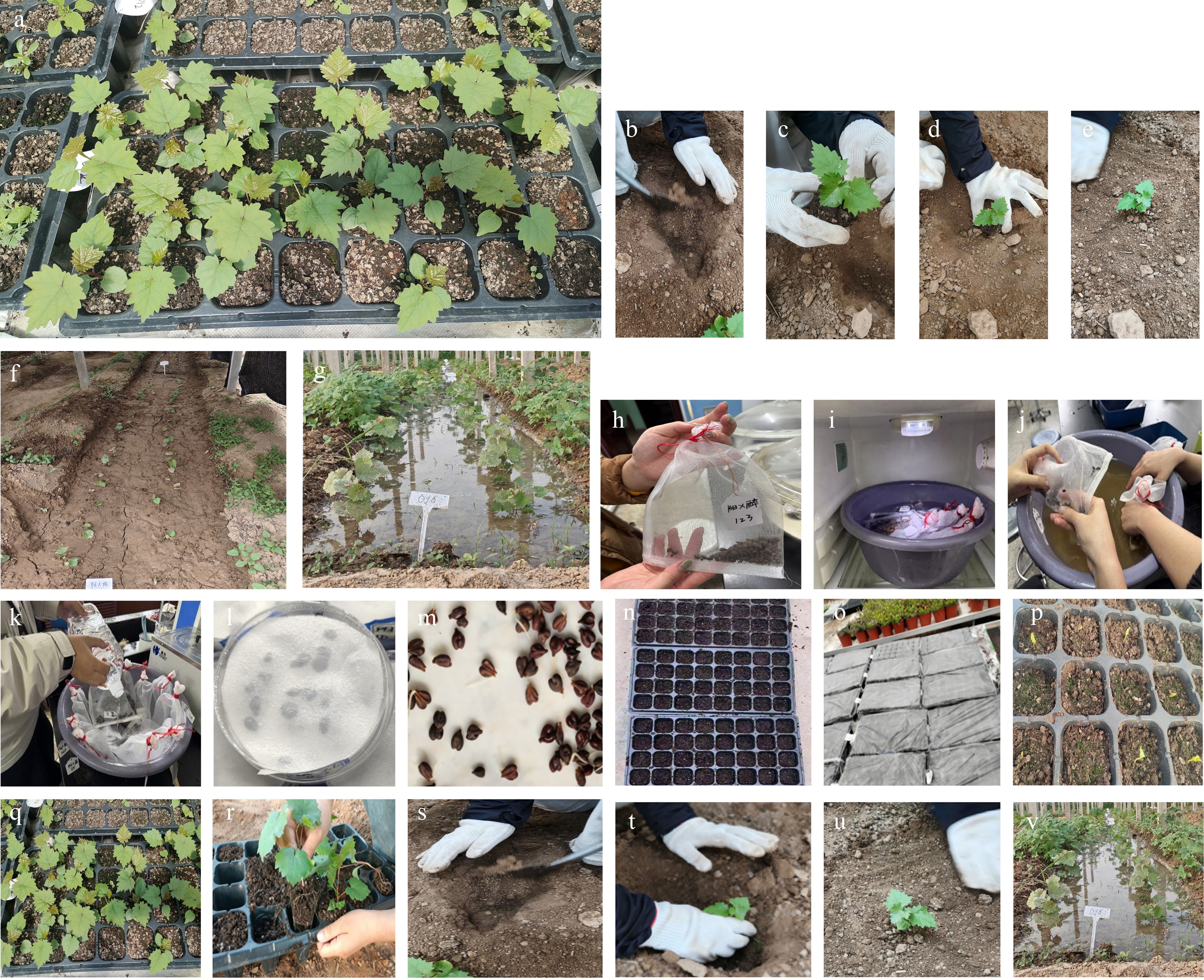
Figure 6.
Integrated full-cycle standardized technical system for seedling production of 'Shine Muscat' hybrid grape seeds: (a) Selection of qualified seedlings. (b) Seedling lifting with intact root balls. (c) Hole digging. (d) Field planting. (e) Soil backfilling. (f) Root watering immediately after transplanting. (g) Post-transplant moisture management. (h)–(m) Seed treatment and germination induction stage. (n)–(p) Sowing and seedling raising stage. (q)–(v) Seedling transplanting and field management stage.
Overall, this end-to-end standardized system establishes a quantifiable, replicable technical framework for large-scale hybrid grape seedling production, effectively bridging the historical disconnect between laboratory-focused germination optimization and applied field breeding operations.
Repeatability validation of the standardized technical system
-
The standardized technical system exhibited stable and reproducible performance across the independent full-cycle validation trial (Fig. 7). C1 remained the highest-performing combination, with 92.1% ± 3.1% germination rate, 88.7% ± 2.8% seedling emergence rate, and 86.4% ± 3.2% transplant survival rate. Medium-vigor combinations C2 and C3 showed stable germination rates of 87.6% ± 2.9% and 83.4% ± 3.3%, respectively, with transplant survival rates consistently above 83%. Even the low-vigor C4 exhibited reproducible performance, with a 58.2% ± 3.5% germination rate and 72.3% ± 4.1% transplant survival rate.
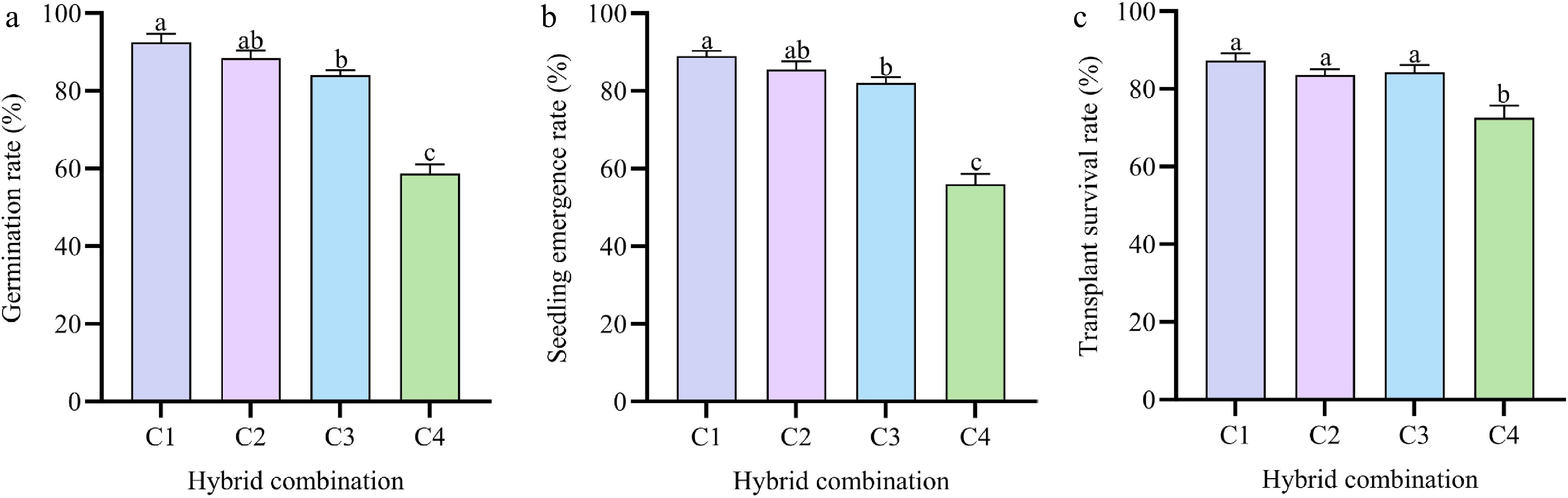
Figure 7.
Repeatability validation of key seedling establishment metrics in the standardized technical system across genetically diverse grape hybrid combinations. (a) Germination rate. (b) Seedling emergence rate. (c) Transplant survival rate. C1–C4 represent hybrid combinations with different germination vigor. Different lowercase letters indicate significant differences among combinations (p < 0.05), n = 3.
Paired-sample t-tests detected no statistically significant systematic bias between the two trials for all measured indicators (paired by identical hybrid combinations to control for genotype-related variation): germination rate (mean difference = + 1.95%, t = 1.423, df = 3, p = 0.249), seedling emergence rate (mean difference = + 2.10%, t = 1.587, df = 3, p = 0.210), and transplant survival rate (mean difference = + 1.43%, t = 1.128, df = 3, p = 0.341) (Supplementary Table S6). The relative standard deviation (RSD) of all metrics across replicates was below 4% in the validation trial.
-
Poor seed germination and non-uniform seedling establishment have long been recognized as critical bottlenecks constraining grape hybrid breeding efficiency[10,12]. In this study, using 'Shine Muscat' hybrid seeds, we systematically optimized key germination parameters via an L9(34) orthogonal design and validated the broad applicability of the optimized protocol across nine paternal genotypes. Through multi-stage dynamic ABA quantification, we revealed the association between paternal genetic background, endogenous ABA accumulation patterns, and germination vigor, with functional verification provided by exogenous ABA gradient treatments. On this basis, we established a full-cycle standardized system encompassing seed treatment, germination induction, sowing, seedling cultivation, and field transplanting, offering a reproducible and scalable solution with a theoretical foundation for practical grape breeding.
Exogenous GA3 is the most commonly used approach for breaking physiological dormancy in grape seeds; however, its efficacy frequently exhibits pronounced genotype dependence[27]. Our results demonstrated that the optimal treatment for self-pollinated 'Shine Muscat' seeds was 0.3 g/L GA3 soaking for 24 h followed by dark incubation at 25 °C, achieving a germination rate of 92.5%, significantly higher than all other combinations. This finding aligns with Bolt et al.[27], who reported that appropriate GA3 concentration and short-duration soaking effectively release dormancy, whereas excessive concentration, prolonged soaking, or suboptimal temperatures reduce germination efficiency. Both range analysis and ANOVA identified incubation temperature as the primary limiting factor, exerting a greater effect than GA3 concentration and soaking duration. This is consistent with studies in other crops where the optimal temperature (25 °C) enhances the activity of key hormone-metabolizing enzymes, such as gibberellin biosynthetic enzymes (GA3ox) and ABA catabolic enzymes (CYP707A), thereby promoting bioactive GA accumulation and ABA degradation to initiate germination[25]. A major limitation of previous studies is that optimized parameters were predominantly derived from single genotypes, with universality across hybrid combinations lacking systematic validation. By testing the optimized T7 treatment across nine hybrid combinations with diverse paternal backgrounds, we found that this treatment consistently achieved the highest germination rate in all combinations, with no significant genotype-by-treatment interaction. This robustly demonstrates the broad-spectrum applicability of the optimized parameters across different hybrid progenies of 'Shine Muscat', overcoming the long-standing issue of genotype-specificity.
The classic antagonistic GA–ABA regulatory model in seed dormancy and germination has been extensively validated in model plants and various crops[19,22]. ABA is recognized as the pivotal hormone governing the establishment, maintenance, and release of physiological dormancy[28]; however, most previous studies quantified ABA at single time points, inadequately capturing its dynamic homeostasis throughout germination. Through multi-stage quantification covering the entire germination cycle, we observed a continuous decline in endogenous ABA across all groups, with paternal genotype significantly influencing both stage-specific ABA dynamics and overall accumulation patterns. The final germination rate exhibited a highly significant negative correlation with the multi-stage average ABA level (r = –0.892, p < 0.001). This negative correlation suggests that endogenous ABA accumulation is closely linked to dormancy depth and germination vigor in grape seeds, consistent with Sano & Marion-Poll[24] that ABA metabolism plays a central role in regulating seed germination. Notably, all hybrid combinations shared the same maternal parent and were subjected to identical environmental and treatment conditions; therefore, the observed differences in ABA dynamics and germination traits are most likely associated with paternal genotypic variation[33,34]. However, this inference requires further validation through genetic and molecular studies. Beyond ABA accumulation, additional paternal-derived traits may also contribute to germination vigor differences, including seed coat thickness and permeability, reserve substance composition, and embryonic development status, which may act independently or in conjunction with ABA metabolic pathways. To directly verify ABA's physiological function, we performed exogenous ABA gradient treatments on the optimal GA3 background. The results demonstrated a significant dose-dependent inhibitory effect on germination, with the C9 combination—characterized by inherently higher multi-stage average ABA content—showing a larger magnitude of germination reduction upon exogenous ABA addition. This provides direct evidence that ABA functions as a key hormone maintaining dormancy and that elevated ABA concentrations significantly antagonize GA3-induced germination, consistent with the classic GA–ABA antagonistic regulatory model[21,24]. At the breeding level, this finding offers valuable guidance for parental selection[35,36].
By precisely matching the optimized hormonal regimen with the physiological status of germinating seeds, we established a full-cycle standardized system encompassing sowing, seedling cultivation, transplanting, and post-transplant management[30,32]. Under this system, the average final germination rate of all nine hybrid combinations reached 70.2%, approximately 1.8-fold higher than the 30%–50% natural germination rate reported in previous studies[10−12]. The average transplant survival rate across all hybrid combinations reached 85.6%, and the system showed stable performance across hybrid combinations with different vigor levels. This achievement directly bridges hormonal regulation theory with large-scale seedling production, effectively addressing the technical gap between laboratory optimization and field application[30,32]. Moreover, the morphological standard—defining radicle length of 1–2 mm as the optimal sowing stage—provides an intuitive and quantifiable criterion for operational management, strongly supporting standardized implementation.
-
Through systematic optimization and cross-genotype validation, this study established highly efficient germination parameters applicable to 'Shine Muscat' hybrid seeds. Multi-stage dynamic ABA quantification and exogenous ABA functional verification demonstrated that paternal genotype is significantly associated with germination vigor and ABA accumulation patterns throughout germination, with germination rate exhibiting a strong negative correlation with multi-stage average ABA level. The full-cycle standardized technical system established on this foundation significantly improved germination rate, seedling uniformity, and transplant survival rate, while demonstrating excellent repeatability and genotype universality. The established full-cycle standardized germination and seedling establishment system, together with the revealed association between paternal genotype, dynamic ABA homeostasis and germination vigor, not only provides a practical, scalable technical solution to boost grape hybrid breeding efficiency, but also offers a physiological framework for targeted parental selection and further mechanistic dissection of seed dormancy regulation in woody fruit crops.
-
The authors confirm their contributions to the paper as follows: study conception and design, project administration, funding acquisition: Li G; investigation: Li J, Gai R, Li Y; data curation, formal analysis, draft manuscript preparation: Li J; methodology development, validation: Gai R; research resources provision: Fan X; visualization, software application: Cheng J; manuscript review and editing: Fan X, Li G; study supervision: Zhou R, Li G. All authors reviewed the results and approved the final version of the manuscript.
-
Data will be made available upon request from the corresponding author.
-
The authors declare no competing interests.
-
accompanies this paper online at: https://doi.org/10.48130/frures-0026-0031.
-
# Authors contributed equally: Jiaxin Li, Ruxin Gai
- Supplementary Table S1 Agronomic traits of parental grape cultivars used in this study.
- Supplementary Table S2 L9(34) orthogonal experimental design for grape seed germination optimization.
- Supplementary Table S3 Range analysis of the effects of different factors on seed germination rate.
- Supplementary Table S4 ANOVA of the effects of different factors on seed germination rate.
- Supplementary Table S5 Effects of different exogenous ABA concentrations on seed germination rate (%).
- Supplementary Table S6 Paired-sample t-test comparisons of seedling establishment metrics between the initial and repeatability validation trials.
- Copyright: © 2026 by the author(s). Published by Maximum Academic Press, Fayetteville, GA. This article is an open access article distributed under Creative Commons Attribution License (CC BY 4.0), visit https://creativecommons.org/licenses/by/4.0/.
-
About this article
Cite this article
Li J, Gai R, Li Y, Cheng J, Zhou R, et al. 2026. Optimized standardized system for grape hybrid seed germination and seedling establishment via GA3-mediated regulation of endogenous ABA homeostasis and paternal genotype effects. Fruit Research 6: e038 doi: 10.48130/frures-0026-0031 

Optimized standardized system for grape hybrid seed germination and seedling establishment via GA3-mediated regulation of endogenous ABA homeostasis and paternal genotype effects
- Received: 27 April 2026
- Revised: 02 July 2026
- Accepted: 06 August 2026
- Published online: 09 September 2026
Abstract: Grape hybrid breeding is severely constrained by poor seed germination and non-uniform seedling establishment, particularly when 'Shine Muscat' is used as the maternal parent, and a complete, reproducible pipeline from seed treatment to transplanting has not been established. In this study, we crossed 'Shine Muscat' with nine elite male parents and employed an L9(34) orthogonal design to optimize gibberellic acid (GA3) concentration, soaking duration, and incubation temperature. The optimized parameters were verified across all hybrid combinations, and we analyzed the relationships among paternal genotype, dynamic changes in endogenous abscisic acid (ABA) throughout germination, and seed germination traits. The optimal treatment (0.3 g/L GA3 soaking for 24 h followed by dark incubation at 25 °C) yielded a maximum germination rate of 92.5% for self-pollinated seeds, and two-way ANOVA revealed a non-significant genotype × treatment interaction, confirming broad universality. The final germination percentage exhibited an extremely significant negative correlation with the multi-stage average ABA content across all germination sampling stages. Paternal genetic background was significantly associated with variations in ABA accumulation patterns and germination vigor, and exogenous ABA application confirmed a dose-dependent inhibitory effect on germination, supporting a functional role for ABA in this process. The established full-cycle standardized system achieved an average transplant survival rate of 85.6% and demonstrated excellent operational repeatability. This study provides a repeatable and scalable protocol to improve grape hybrid breeding efficiency and offers a physiological basis for parental selection.
-
Key words:
- Vitis spp. /
- Hybrid breeding /
- Seed dormancy release /
- Gibberellin /
- Abscisic acid /
- Paternal genotype /
- Seedling establishment