













-
Tropical forests harbor a significant portion of the world's tree biodiversity, with an estimated 6,000 tree species yet to be discovered in tropical and subtropical regions[1,2]. Globally, the Lauraceae rank among the four most species-rich woody families in forest ecosystems, alongside the Euphorbiaceae, Fabaceae, and Rubiaceae (POWO,
https://powo.science.kew.org ). Within the Lauraceae, the genus Caryodaphnopsis Airy Shaw exhibits a distinctive amphi-Pacific disjunct distribution: one lineage comprising 11 species is found in Southeast Asia[3], while the other, consisting of five species, is restricted to tropical rainforests in South America[4].The genus Caryodaphnopsis has recently been expanded to 23 species, most notably with the addition of three new taxa from China in 2024: C. cangyuanensis, C. hekouensis, and C. rubrinervis, described by Zhang et al.[3] using an integrated morphological and molecular approach. This work builds on a history of continued discovery since the tropical genus was first established by Airy Shaw in 1940[5]. Other significant contributions include the description of C. parviflora from Peru, characterized by its glabrous leaves[6]; C. malipoensis from China, noted for its densely pubescent ovary[7]; and C. carmensis and C. yariguiensis from Colombia, featured by the golden pubescence on the vegetative part and the stamens with a pair of glands located between the middle portion of filament, respectively[8].
Molecular methods, including DNA barcoding and gene phylogenetics, provide effective information for identification and comparison of closely related species, using both chloroplast genomic markers and nuclear sequences. Rohwer[9] used the chloroplast marker matK to investigate the relationships of genera of Lauraceae and indicated that C. tonkinensis formed a weakly supported clade. Chanderbali et al.[10] used chloroplast sequences (trnL-trnF, psbA-trnH, trnT-trnL, and rpl16) and nuclear barcoding markers (26S ribosomal DNA [rDNA] and ITS rDNA) to reconstruct the phylogenetic relationships of Lauraceae and showed that C. bilocellata is most closely related to C. tomentosa. Li et al.[4] assessed the phylogenetic interrelationships of the eight Caryodaphnopsis species using two nuclear markers, ITS and RPB2, and supported two monophyletic clades with species in Asia and America, respectively.
To distinguish the Caryodaphnopsis species, genome data are useful to find more variable regions and sites than molecular diagnostic methods[11]. Song et al.[12] used the chloroplast genomes to investigate the relationships of genera of Lauraceae and indicated that C. henryi and C. malipoensis formed a well-supported clade. Song et al.[13] used chloroplast genomes to reconstruct the phylogenetic relationships of Lauraceae and showed that C. henryi, C. malipoensis, and C. tonkinensis formed a 100% supported clade. Cao et al.[14] assessed the phylogenetic relationships of the nine Caryodaphnopsis species in Asia using chloroplast genomes and supported six clades. Yang et al.[15] reconstructed the phylogenetic relationships of the 11 Caryodaphnopsis species using mitochondrial genomes, nuclear ribosomal cistron sequences (nrDNA), and chloroplast genomes, and supported four, six, and five different clades, respectively. Zhang et al.[3] reconstructed a new phylogeny using single-nucleotide polymorphisms that divided the Caryodaphnopsis into two clades: a three-species clade from lowland forests and an eight-species clade from limestone mountain forests. These phylogenetic trees represent evolutionary relationships among Caryodaphnopsis species, but they yield inconsistent conclusions regarding which species are more closely related.
The discordance among different phylogenetic analyses has been largely ascribed to the choice of genomic regions as well as incomplete taxon sampling. Here, we address both issues by analyzing the 344 nuclear single-copy orthologous genes from 47 Caryodaphnopsis individuals collected from China, Myanmar, and Vietnam, as well as one individual from South America. Using concatenation and coalescent methods, we reconstruct well-supported phylogenetic trees for Caryodaphnopsis species in Asia. In addition, we describe a new species, Caryodaphnopsis minutiflora Yu Song bis & Hualong Su.
-
During the 2023−2025 field investigations, the natural population of the suspected new Caryodaphnopsis species was found in low-altitude karst terrain in the tropical forest of Longdi (200 m), Sanlian Village, Wude Township, Longzhou County, Chongzuo City, Guangxi Zhuang Autonomous Region (Fig. 1). We collected a number of specimens bearing flowers on 24 April, 2025, and specimens bearing fruit on 13 July, 2025. Other specimens of C. bilocellata, C. cangyuanensis, C. hekouensis, C. laotica, C. latifolia, C. malipoensis, C. metallica, C. rubrinervis, and C. tonkinensis were collected in China, Myanmar, and Vietnam from 2015 to 2025 (Supplementary Table S1). In addition, we consulted digital type specimens from the Herbarium of Beijing Institute of Botany (PE), the Herbarium of Guangxi Institute of Botany (IBK), the Global Biodiversity Information Facility (
www.gbif.org ), and JSTOR Global Plants (https://plants.jstor.org ), and conducted a systematic comparison between the suspected new species and its close relatives. Voucher specimens are deposited in the Herbarium of Bazi Collection & Botanical Garden (BAZI; located at Unit 3-402, Huanyugongsi, Qiwen Avenue, Mengzi, Yunnan 661100, China).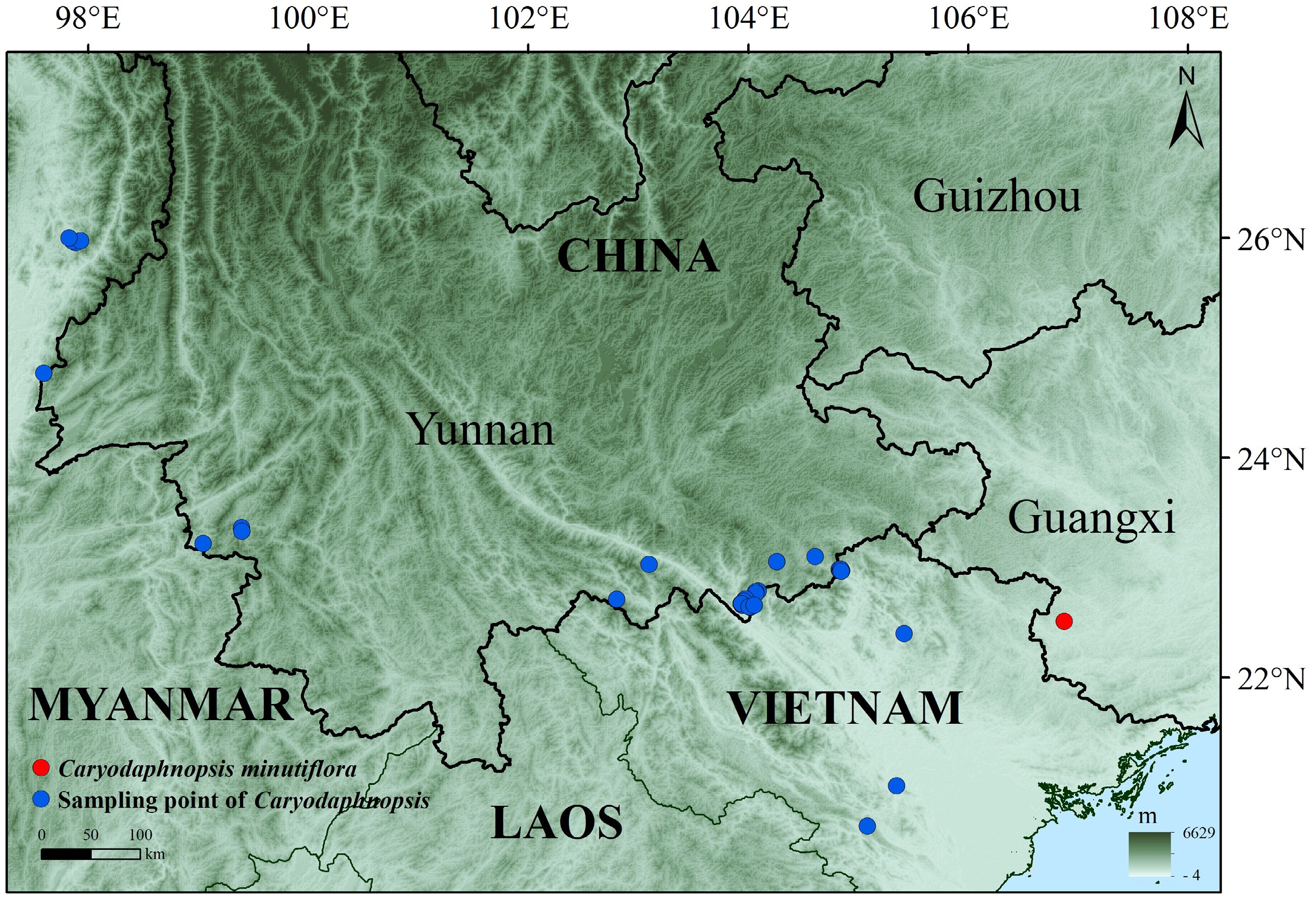
Figure 1.
Distribution map showing the new species Caryodaphnopsis minutiflora sp. nov. and other sampled Caryodaphnopsis species in Asia (Map No. GS [2024] 0650;
https://cloudcenter.tianditu.gov.cn/administrativeDivision ).DNA extraction and sequencing
-
Three individuals of the suspected new Caryodaphnopsis species and 31 individuals representing nine other Caryodaphnopsis species were included in the molecular analyses (Supplementary Table S1). Genomic DNA was extracted from silica-dried leaves collected from these 34 trees using a modified CTAB method[16]. A total of 3 μg of DNA per sample was then fragmented to construct short-insert libraries (approximately 500 bp) for sequencing on the Illumina HiSeq 2500 platform at Kaitai Mirror Gene Technology Co., Ltd, in Beijing. In addition, raw sequence data for 13 individuals of eight Caryodaphnopsis species (SRR27551528~SRR27551582) were obtained from Zhang et al.[3], and data for the outgroup species C. burgeri (ERR7619617) were downloaded from Johnson et al.[17].
Extracting target sequences and phylogenetic analysis
-
The raw reads obtained were cleaned and filtered using the CAPTUS pipeline (
https://edgardomortiz.github.io/captus.docs ). Target capture data were generated for 48 Caryodaphnopsis samples using the Angiosperm353 probe set, following the protocols described by Zhang et al.[18]. A total of 344 nuclear single-copy orthologous genes of the 48 Caryodaphnopsis individuals were extracted using HybPiper v2.1.6 (https://github.com/mossmatters/HybPiper ). Both concatenation-based and coalescent-based approaches were then employed to reconstruct the phylogeny of Caryodaphnopsis using the 344-gene dataset. Sequences of the South American species C. burgeri were selected as the outgroup[4]. Maximum likelihood phylogenetic analysis was performed using IQ-TREE 2[19], with the best-fit substitution model for the 344-gene matrix determined to be 'GTR + F + R3'. Node support was assessed using 1,000 bootstrap replicates (ML–BS). The coalescent-based species tree of Caryodaphnopsis was inferred using ASTRAL with node support estimated by posterior probability (PP)[20].Morphological anatomic observation
-
Morphological characters of Caryodaphnopsis species were examined using a digital single-lens reflex (DSLR) camera and a stereoscopic microscope (SM). Gross morphological features, including stems, leaves, inflorescence, flowers, branches, and fruit, were documented with a Canon EOS 850D camera. For microscopic observation, perianth lobes, stamens, and pistils were carefully placed upright on moist tissue paper and imaged under a Leica M125 C SM, with photomicrographs captured using LAS v5.1.0.25446 software. All imaging work was conducted at the Guangxi Key Laboratory of Landscape Resources Conservation and Sustainable Utilization in the Lijiang River Basin, Guangxi Normal University.
-
The matrix of 344 nuclear single-copy orthologous genes was used to reconstruct phylogenetic trees of 48 Caryodaphnopsis individuals. The 344-gene sequence matrix had an alignment length of 201,836 bp, with 2,068 distinct sites and 817 parsimony-informative sites. Across all 48 Caryodaphnopsis individuals, there was 1.83-fold variation in the sizes of nuclear gene sequences, ranging from a minimum of 108,905 bp in C. cangyuanensis (SY57982) to a maximum of 200,301 bp in C. bilocellata (SRR27551581). In both concatenation-based and coalescent-based trees (Figs 2 and 3), we identified four highly supported clades among the 14 Caryodaphnopsis species in Asia. The first-diverging clade comprises one individual of C. poilanei from Vietnam, two individuals of C. henryi from China, four individuals of C. cangyuanensis from China, and four individuals of an unidentified Caryodaphnopsis species from both China and Myanmar. The second clade includes one individual of C. metallica from Vietnam, three individuals of C. baviensis from Vietnam, and six individuals of C. bilocellata from China (ML−BS = 98%, PP = 0.66). The third clade includes three individuals of Caryodaphnopsis minutiflora from China (ML−BS = 100%, PP = 1.00). The fourth clade has three individuals of C. laotica, three individuals of C. malipoensis, four individuals of C. hekouensis, three individuals of C. tonkinensis, three individuals of C. rubrinervis, and seven individuals of C. latifolia from China (ML−BS = 100%, PP = 1.00). Sisterhood of the third clade with the unidentified Caryodaphnopsis species and the fourth clade containing C. hekouensis, C. laotica, C. latifolia, C. malipoensis, C. tonkinensis, and C. rubrinervis was strongly supported. The coalescent-based species trees were largely consistent with the topologies of the concatenation-based species tree, with differences only in subclades that are weakly supported at the species level (Fig. 3), such as the locations of C. poilanei (ML−BS = 81%, PP = 0.73), C. latifolia (ML−BS = 51%, PP = 0.47), and C. hekouensis (ML−BS = 73%, PP = 0.71).
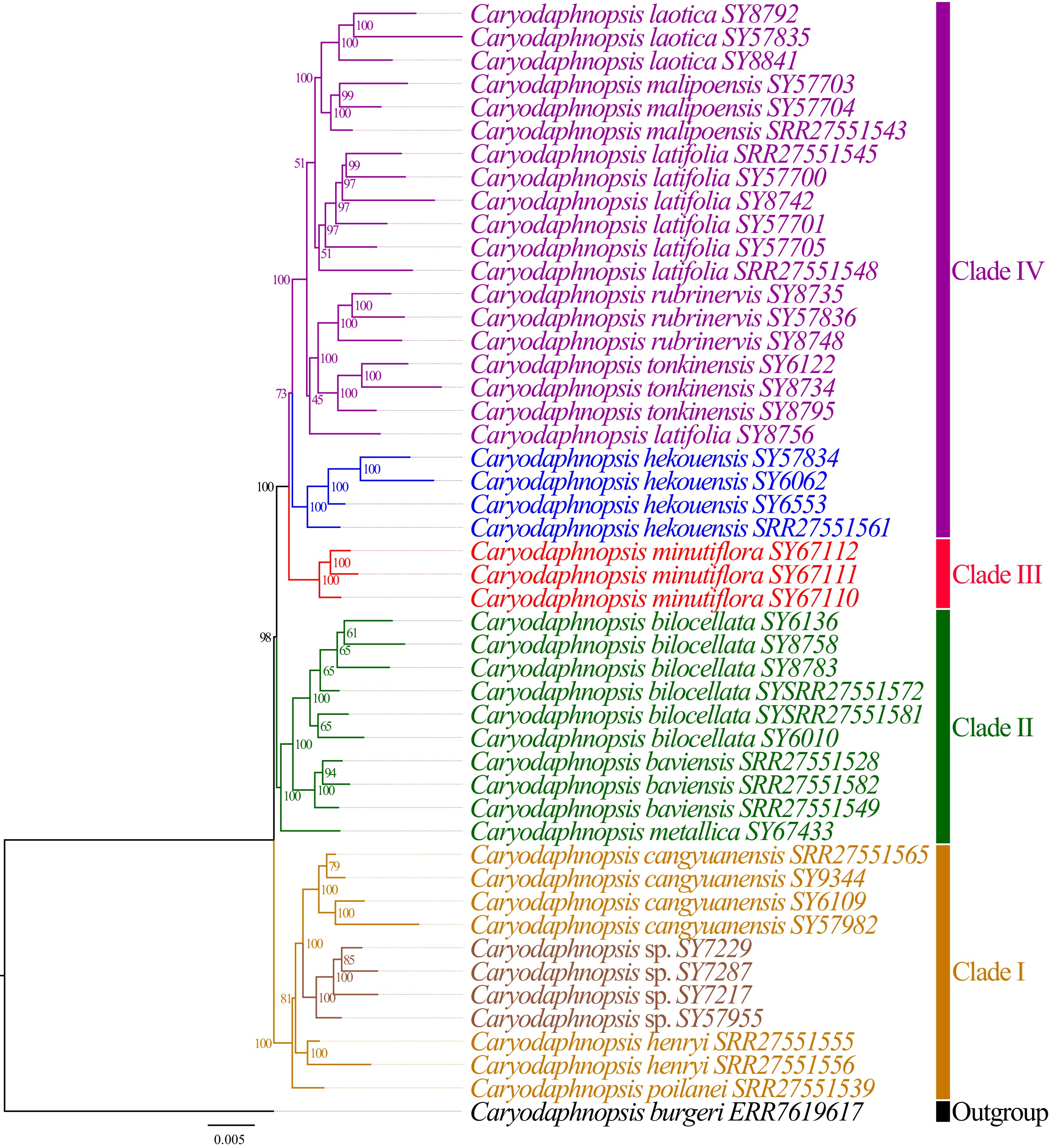
Figure 2.
Concatenation-based species tree inferred from 344 nuclear genes using IQ-TREE. C. burgeri from South America was used as the outgroup. Numbers at the nodes are bootstrap support values (ML–BS).
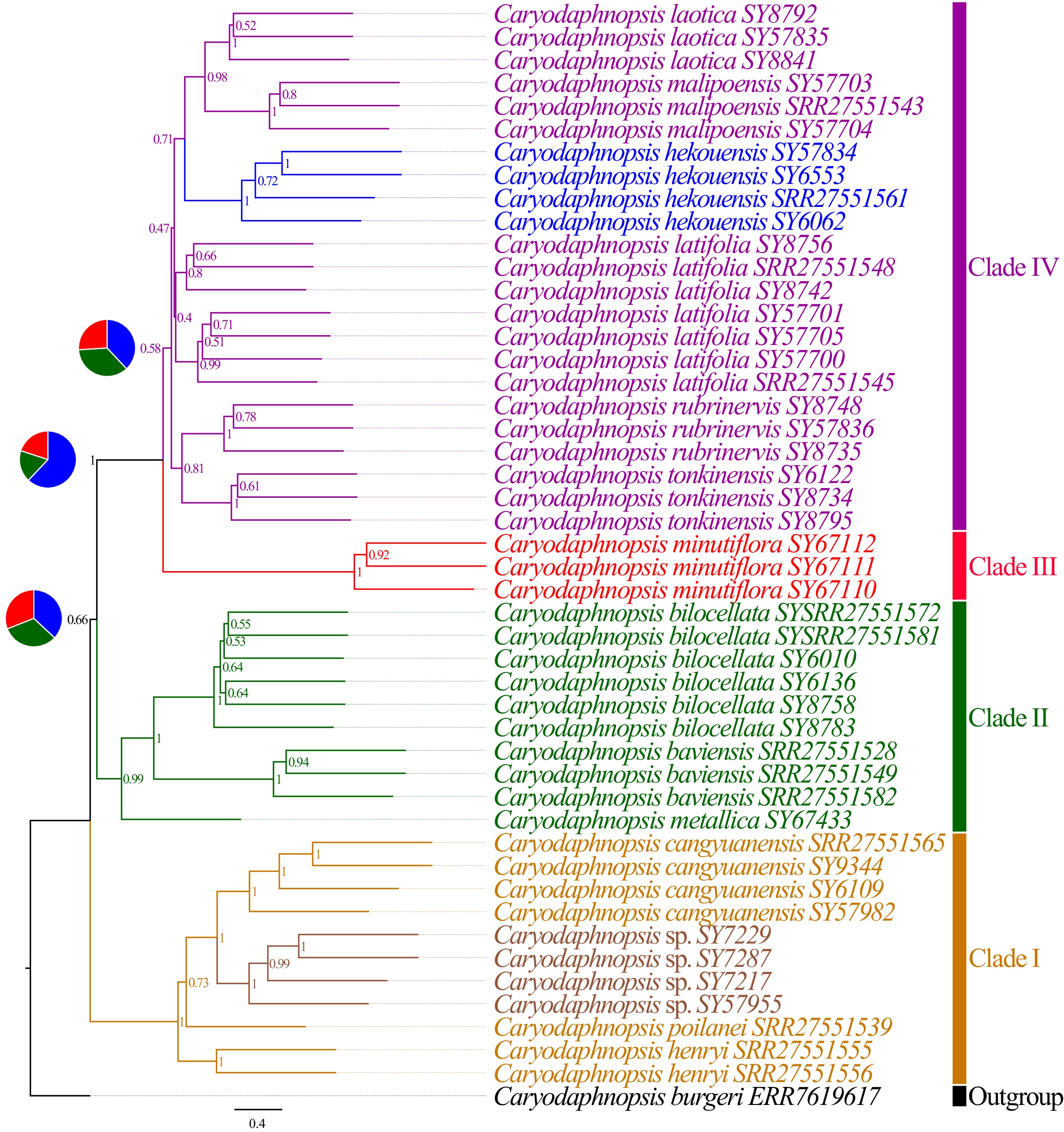
Figure 3.
Coalescent-based species tree inferred from 344 nuclear genes using ASTRAL. C. burgeri from South America was used as the outgroup. Node numbers indicate PP values. Pie charts at three backbone nodes show gene-tree concordance and conflict proportions. Blue, concordant gene trees; green, second-most-common conflict; red, all other conflicting topologies.
Morphological analyses
-
Individuals of the unidentified Caryodaphnopsis tree species are restricted to low-elevation primary forests on tropical limestone hills in Guangxi, southwestern China (Fig. 4a). They bear opposite to subopposite leaves on glabrous branchlets (Fig. 4b). The leaves are smooth, ovate to elliptic-oblong, 11.2−16.5 cm long (n = 60), and borne on green stems (Fig. 4c). Inflorescences are axillary or terminal, forming large panicles 4.2−15(−20) cm in length (Fig. 4d). The minute flowers (Fig. 4e), 3−4 mm in corolla diameter when fresh (n = 12), possess six perianth lobes arranged in two whorls (Fig. 5a, b): the three outer lobes are minute, triangular, and about 0.7 mm long (Fig. 5c, d), whereas the three inner lobes are pubescent, larger, and broadly ovate, approximately 2 mm long (Fig. 5e, f). Nine fertile stamens are arranged in three whorls (Fig. 5g−l), with the stamens of the fourth whorl reduced and sterile (Fig. 5m, n). The ovary is superior, glabrous, and encloses a single ovule, with a short style in transition to its apex (Fig. 5o). The fruits are glabrescent, pyriform, 2.0−3.5 cm long (n = 12), and resemble those of C. cangyuanensis (Fig. 4f, g).
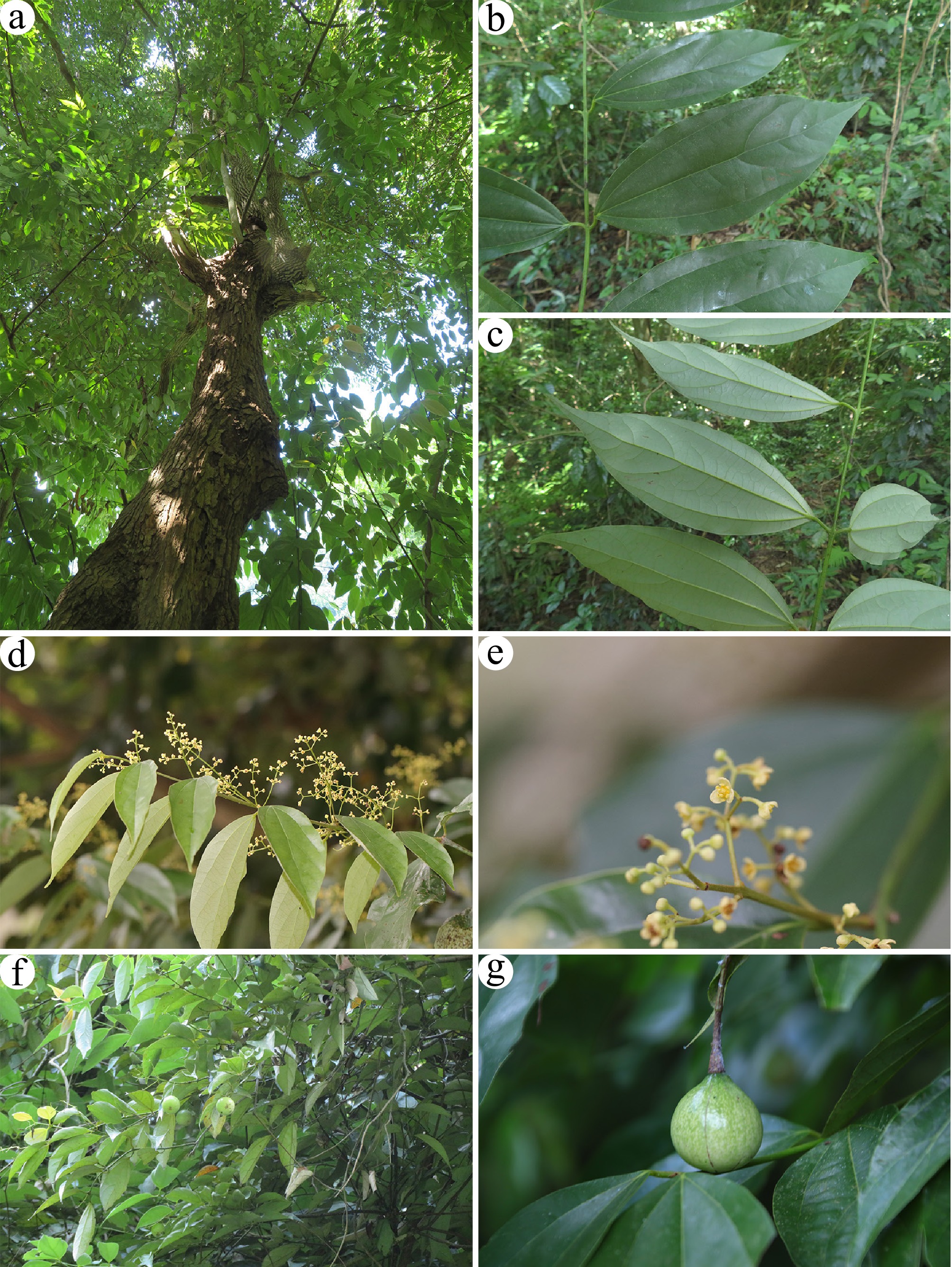
Figure 4.
Caryodaphnopsis minutiflora sp. nov. (a) Habit; (b) leaf adaxial surface; (c) leaf abaxial surface; (d) flowering branches; (e) flower; (f) fruiting branches; (g) pyriform and glabrous fruit.
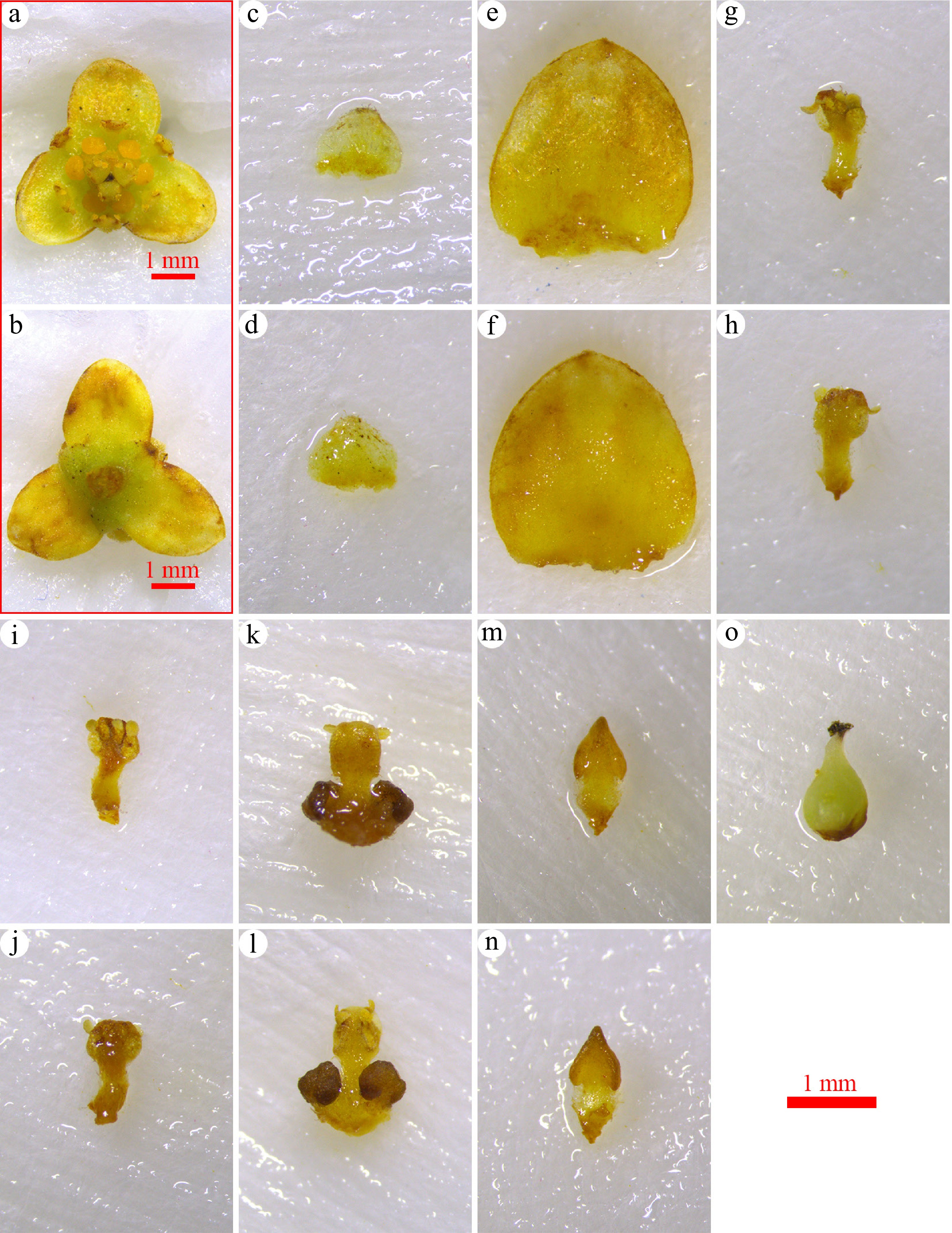
Figure 5.
Anatomical structure of a flower of Caryodaphnopsis minutiflora sp. nov. (a) Front view of the flower; (b) back view of the flower; (c) perianth lobes of the first whorl, adaxial side; (d) perianth lobes of the first whorl, abaxial side; (e) perianth lobes of the second whorl, adaxial side; (f) perianth lobes of the second whorl, abaxial side; (g) stamen of the first staminal whorl, adaxial side; (h) stamen of the first staminal whorl, abaxial side; (i) stamen of the second staminal whorl, adaxial side; (j) stamen of the second staminal whorl, abaxial side; (k) stamen of the third staminal whorl, adaxial side; (l) stamen of the third staminal whorl, abaxial side; (m) staminode of the fourth staminal whorl, adaxial side; (n) staminode of the fourth staminal whorl, abaxial side; (o) pistil. In images (c)–(o), the separated scale bar (as seen in the last image) represents 1 mm.
Morphological comparison
-
The unidentified Caryodaphnopsis species is morphologically similar to C. baviensis, C. bilocellata, C. cangyuanensis, C. henryi, C. latifolia, C. metallica, C. poilanei, and C. tonkinensis, with which it shares the glabrous or glabrescent young branches, leaves, and fruit (Fig. 6). However, it differs from C. bilocellata in having four-celled anthers (Supplementary Table S2); from C. metallica in having glabrescent outer tepals abaxially (Supplementary Table S2); and from C. baviensis in having pyriform fruit (Supplementary Table S2). Furthermore, the unidentified species shares a large inflorescence with C. latifolia and C. baviensis (Table 1; Supplementary Table S2); it shares small fruit with C. cangyuanensis, C. henryi, and C. latifolia (Table 1; Supplementary Table S2), and it shares a pyriform fruit shape with C. bilocellata, C. cangyuanensis, and C. malipoensis (Table 1; Supplementary Table S2). Notably, the flowers of this unidentified species are smaller than those of any other Caryodaphnopsis species in Asia (Fig. 6).
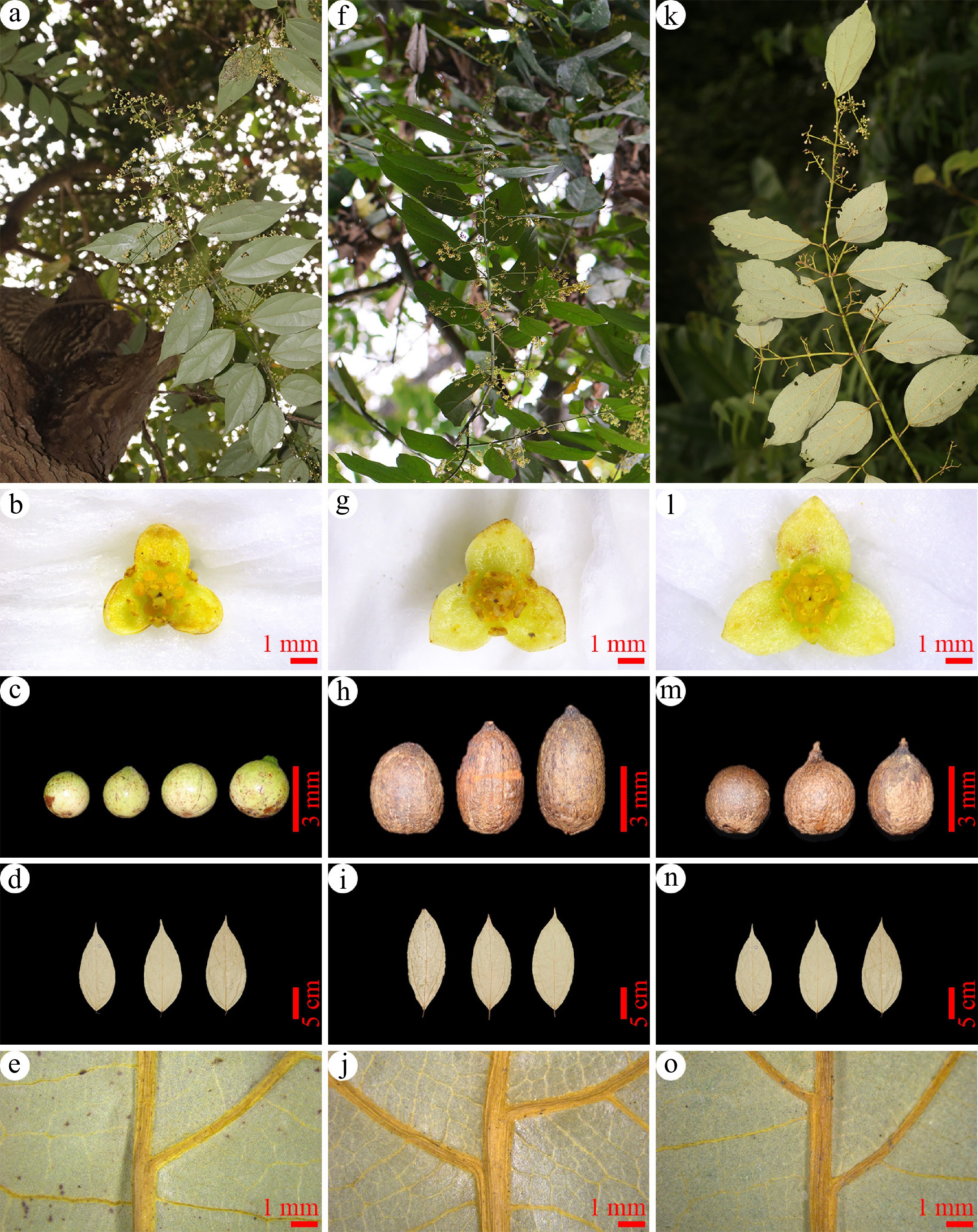
Figure 6.
Morphological comparison between Caryodaphnopsis minutiflora sp. nov., Caryodaphnopsis tonkinensis, and Caryodaphnopsis cangyuanensis. (a)−(e) C. minutiflora sp. nov.; (f)−(j) C. tonkinensis; (k)−(o) C. cangyuanensis; (a), (f), (k) inflorescence; (b), (g), (l) flower; (c), (h), (m) fruit; (d), (e), (I), (j), (n), (o) back view of the leaf.
Table 1. Morphological comparison between Caryodaphnopsis minutiflora and six congeneric species.
Character C. minutiflora C. hekouensis C. laotica C. latifolia C. malipoensis C. rubrinervis C. tonkinensis Young branch pubescence Glabrescent Densely pubescent Densely pubescent Glabrescent Densely pubescent Densely pubescent Glabrous Leaf pubescence (abaxially and petioles) Glabrous Densely pubescent Densely pubescent Glabrous Densely pubescent Glabrescent Glabrous Fruit pubescence Glabrous Densely pubescent Densely pubescent Glabrous to glabrescent Pubescent and furfuraceous Glabrous to glabrescent Glabrous to glabrescent Anther locules Four-celled Four-celled Four-celled Four-celled Four-celled Four-celled Four-celled Outer tepals pubescence Abaxially: glabrescent; adaxially: glabrescent Abaxially: densely pubescent; adaxially: densely pubescent Abaxially: densely pubescent; adaxially: glabrescent Abaxially: densely pubescent; adaxially: densely pubescent Abaxially: densely pubescent; adaxially: glabrous Abaxially: densely pubescent; adaxially: densely pubescent Abaxially: glabrescent; adaxially: glabrescent Inflorescence size (cm) 4.2–15(–20) 3–11.2 2.5–11 10–14 1.4–4.2 6–17 2–3.5 Fruit shape Pyriform Almost ellipsoid, slightly pyriform Almost ellipsoid, slightly pyriform Subglobose Pyriform Ellipsoid Ellipsoid Fruit size (cm) 2.0–3.5 × 2.0–3.6 5.5–6 × 3.5–4 4 × 3.5 2.5 × 2.5 6.8–8.3 × 4.6–5.7 6–9 × 4–6 5.5–6 × 3.5–4 -
Our previously proposed phylogenies of Caryodaphnopsis were based on analyses using chloroplast and mitochondrial genome sequences[14,15]. Both datasets have proven to provide robust and statistically well-supported relationships among deep lineages of the family Lauraceae[11–13]. However, phylogenetic relationships inferred from chloroplast and mitochondrial genomes among these Lauraceae species have remained contentious, largely owing to cytonuclear discordance[11]. To address this, the Angiosperms353 gene set was selected to reconstruct the phylogenetic relationships among Eugenia (Myrtaceae)[21], Hymenocoleus (Rubiaceae)[22], and Juncus (Juncaceae)[23], and our phylogenetic analyses based on 344 nuclear gene sequences of 15 species of Caryodaphnopsis have yielded a well-supported hypothesis clarifying the interspecific relationships among members of the genus in Asia.
Phylogenetic relationships among the Caryodaphnopsis species in Asia
-
This study included 48 individuals representing all 14 Caryodaphnopsis species from China, Laos, Myanmar, and Vietnam, along with one individual of C. burgeri from Colombia. From these plants, a total of 344 nuclear gene sequences yielded well-resolved phylogenies (Figs 2 and 3), providing robust support for the relationships between a four-species lineage from China, Myanmar, and Vietnam (C. cangyuanensis, C. henryi, C. poilanei, and C. sp.) and a ten-species lineage from China, Laos, and Vietnam (C. baviensis, C. bilocellata, C. hekouensis, C. laotica, C. latifolia, C. malipoensis, C. metallica, C. minutiflora, C. tonkinensis, and C. rubrinervis), consistent with the backbone topologies of previously published phylogenies[3,15]. Our topology further reveals a 100% supported sister relationship between a six-species clade from Southeastern Yunnan, China (clade IV; C. hekouensis, C. laotica, C. latifolia, C. malipoensis, C. tonkinensis, and C. rubrinervis) and the single-species clade (clade III) composing C. minutiflora from southwestern Guangxi, China (Fig. 2). In contrast, no such sister relationship was recovered between the same six-species Yunnan clade (clade IV) and another three-species clade (clade II) distributed across Yunnan and Vietnam, which includes C. bilocellata and C. metallica or C. baviensis[3,15]. In addition, our topology also indicates a 100% supported monophyletic clade (clade II) containing C. baviensis, C. bilocellata, and C. metallica (Fig. 2), which supports the relationships: sisterhood of C. baviensis and C. bilocellata, followed by C. metallica.
Distinguishing Caryodaphnopsis minutiflora from its morphologically similar relatives
-
To date, the genus Caryodaphnopsis comprises 13 recognized species in Asia. The new taxon described here is morphologically similar to C. cangyuanensis[3], C. henryi, and C. tonkinensis (Fig. 4). It shares with C. tonkinensis abaxially shiny leaf blades but differs by its relatively small fruit, large inflorescence, and minute flowers (Fig. 6a, b). It shares with C. cangyuanensis the pyriform and relatively small fruit but can be distinguished by its large inflorescence, abaxially shiny leaf blades, and minute flowers (Fig. 6a, c). Likewise, it shares with C. henryi the relatively small fruit but is set apart by its pyriform fruit, abaxially shiny leaf blades, and minute flowers (Supplementary Table S2). Consequently, we recognize and describe it here as a new species: Caryodaphnopsis minutiflora Yu Song bis & Hualong Su. This new species grows in karst forests at approximately 200 m elevation in southwestern Guangxi, China, whereas the other five species C. hekouensis, C. laotica, C. latifolia, C. malipoensis, and C. rubrinervis, are restricted to middle-elevation karst forests (ca. 850–1,150 m) in southeastern Yunnan, China[3].
Taxonomy treatment
-
Caryodaphnopsis minutiflora Yu Song bis & Hualong Su, sp.nov. (Figs 4, 5, 6a−e, 7)
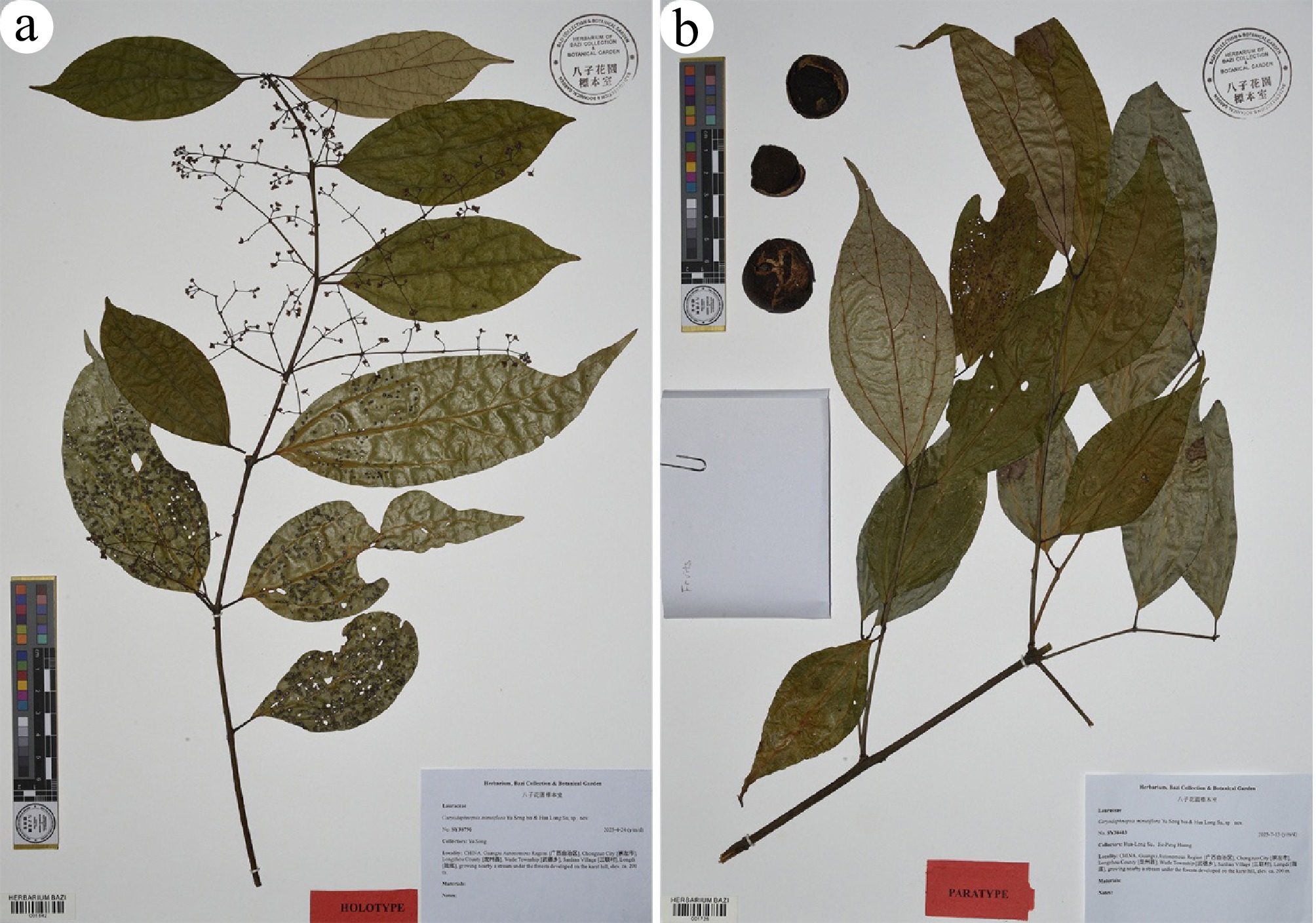
Figure 7.
Type specimens of Caryodaphnopsis minutiflora sp. nov. (a) Flowering specimen, holotype, SY38796 (BAZI barcode 001842!); (b) fruiting specimen, paratype, SY38403 (BAZI barcode 001726!).
Vernacular name: — 广西檬果樟 (Guang Xi Meng Guo Zhang) in Chinese.
Type: — CHINA. Guangxi Zhuang Autonomous Region: Chongzuo City, Longzhou County, Wude Township, Sanlian Village, Longdi, growing near a stream under forests developed on karst hills, elev. ca. 200 m, 106.87384502° E, 22.51228937° N, 24 April 2025, Yu Song bis SY38796 (holotype: BAZI barcode 001842! Flowering; isotype: BAZI barcode 001841! Flowering).
Diagnosis: — The new species is distinguished from C. hekouensis, C. laotica, and C. malipoensis by its glabrous leaves and fruit, and from C. latifolia, C. rubrinervis, and C. tonkinensis by its small pyriform fruit and minute flowers.
Description: — Trees, 10–12 m tall. Bark tawny, longitudinally cracked. Branchlets slender, terete, green, glabrous, striate when dry. Leaves opposite or subopposite; leaf blade ovate or elliptic-oblong, 11.2–16.5 × 3.6–6.4 cm, papery, glabrous on both surfaces, upper surface dark green, lower surface light green; triplinerved; midrib concaved above, protruded beneath, secondary veins three or four pairs (sometimes the first and second pairs of secondary veins are obvious, while the third are not), basal ones arising from midrib 2−9 mm above leaf base and excurrent into upper 1/2 of leaf blade, other lateral veins arising from midrib near the middle of leaf blade or above, alternate, rarely subopposite, interconnected at ends, transverse veins arising from lateral veins and interconnected by veinlets, all veins slender and elevated abaxially; apex acuminate; base acute to obtuse; petioles 0.8–1.7 cm, flat, grooved above, glabrous. Panicles axillary or terminal, slender, 4.2–15(–20) cm long, rachis sparsely pubescent and branched; branches opposite or subopposite, yellowish-brown pubescent, horizontal or ascending, rebranched or not, terminal branchlet bearing a 3-5-7-flowered corymbose cyme; bracts and bracteoles subulate, length 0.2–0.5 mm, yellowish-brown pubescent. Pedicels slender, 1–3 mm long, densely pubescent. Flowers yellowish-white or yellow, 3–4 mm in diam. Perianth lobes six, outer ones minute, triangular, ca. 0.8–1.0 × 1.0 mm, glabrescent on both surfaces, inner lobes larger, broadly ovate, 2.4–2.6 × 2.1–2.4 mm, glabrescent on the outside, densely pubescent inside. Fertile stamens nine, ca. 1–1.2 mm in the first and second whorls, those of the third whorl each with two basal subsessile yellow subglobose glands, others lacking glands, stalks of glands glabrous; anthers yellowish, all four-celled; staminodes sagittate, shortly stalked, pubescent. Ovaries ovoid or ovoid-globose, glabrous; attenuate at apex into a style, including style ca. 1.2 mm; stigma small. Fruit pendulous, pyriform in shape, 2.0–3.5 × 2.0−3.6 cm, glabrous, stalk ca. 0.5 cm in diam., glabrous, slightly thickened towards the fruit.
Etymology: — The specific epithet 'minutiflora' refers to its minute flowers.
Habitat: — This species grows in the forests of karst areas at altitudes of 200 m, near streams. It blooms from March to May, and the fruit hangs on the trees from June to August.
Additional specimens examined: — CHINA. Guangxi Zhuang Autonomous Region: Chongzuo City, Longzhou County, Wude Township, Longgeng, Guangxi Nonggang National Nature Reserve, Boundary Marker No. 49, under the dense forest on limestone hills, elev. ca. 180 m, 106.86368° E; 22.50961° N, 19 July 2022, Xueyu Huang, Qiuyan Lu & Huan Cai, ZYB02936 (PE barcode 02417282, earliest known collection). Wude Township, Sanlian Village, Longdi, growing near a stream under forests developed on karst hills, elev. ca. 200 m, 106.87384502° E, 22.51228937° N, 13 July 2025, Hualong Su & Jiepeng Huang, SY38403 (paratype: BAZI barcode 001726! Fruiting).
Distribution: — This species is only found in a restricted area in SW Guangxi, China.
Conservation: — At present, only one population has been found in Guangxi Nonggang National Nature Reserve, with about 15 mature individuals distributed around streams. There is a banana plantation next to the population, and some individuals are less than 1 m away from the banana plantation and are at risk of being cut down. Based on the Guidelines for Using the IUCN Red List Categories and Criteria (v16; IUCN 2024), the species qualifies under Criterion D (very small or restricted population) and is assigned a preliminary conservation status of Critically Endangered (CR), as the number of mature individuals is fewer than 50.
-
In this study, we demonstrate that the combination of 344 nuclear single-copy orthologous genes with systematic sampling provides robust, highly supported phylogenetic relationships among Caryodaphnopsis species in Asia. The resulting topology differs from previous analyses and supports two key sister relationships: first, a clade comprising C. hekouensis, C. laotica, C. latifolia, C. malipoensis, C. tonkinensis, and C. rubrinervis is sister to our new taxon C. minutiflora, rather than to the clade containing C. bilocellata and C. baviensis; second, C. metallica is sister to the subclade formed by C. bilocellata and C. baviensis. On the basis of this molecular evidence and distinct morphological traits—namely large inflorescences, minute flowers, and pyriform fruit—we formally recognize and describe Caryodaphnopsis minutiflora as a new species.
-
The authors confirm their contribution to the paper as follows: study conception and design: Su H, Song Y; data collection: Su H, Guo Y, Fang M; analysis and interpretation of results: Su H, Guo Y, Fang M, Lin J, Chen H, Yang Z, Hoang TS, Li J Tan Y, Song Y; draft manuscript preparation: Su H. Guo Y. Song Y. All authors reviewed the results and approved the final version of the manuscript.
-
The raw sequence data used in this study were sourced as follows: the data labeled 'SY' were generated by our research group; data for 13 individuals of eight Caryodaphnopsis species (SRR27551528–SRR27551582) were obtained from Zhang et al.[3], and data for the outgroup species C. burgeri (ERR7619617) were downloaded from the dataset from Johnson et al.[17].
-
The authors declare that they have no conflict of interest.
-
accompanies this paper online at: https://doi.org/10.48130/gcomm-0026-0017.
- Supplementary Table S1 The species and credential information of the Asian group of Caryodaphnopsis involved in this study.
- Supplementary Table S2 Morphological comparison between Caryodaphnopsis minutiflora and other six Caryodaphnopsis species.
- Copyright: © 2026 by the author(s). Published by Maximum Academic Press, Fayetteville, GA. This article is an open access article distributed under Creative Commons Attribution License (CC BY 4.0), visit https://creativecommons.org/licenses/by/4.0/.
-
About this article
Cite this article
Su H, Guo Y, Fang M, Lin J, Chen H, et al. 2026. Nuclear phylogenomics of Caryodaphnopsis (Lauraceae) species in Asia with description of a new species from China. Genomics Communications 3: e019 doi: 10.48130/gcomm-0026-0017 

Nuclear phylogenomics of Caryodaphnopsis (Lauraceae) species in Asia with description of a new species from China
- Received: 23 April 2026
- Revised: 29 July 2026
- Accepted: 03 August 2026
- Published online: 31 August 2026
Abstract: A well-supported phylogeny is essential for understanding the evolutionary history and lineage of species. However, newly discovered species can challenge previous incomplete estimates, thereby refining infrageneric classification and species relationships. In this study, we reconstructed phylogenies using 344 nuclear single-copy orthologous genes from 48 individuals, covering at least 14 Caryodaphnopsis species currently recognized in Asia. Our phylogenies recovered four well-supported clades of Caryodaphnopsis in the family and identified one new Caryodaphnopsis species in the third clade, designated as C. minutiflora sp. nov., which was discovered in low-altitude karst terrain within the tropical forests of southwestern Guangxi, China. This new species shows molecular phylogenetic affinity with members of the fourth clade, including C. hekouensis, C. laotica, C. latifolia, C. malipoensis, C. tonkinensis, and C. rubrinervis from karst forest, while sharing morphological similarities with C. cangyuanensis and C. henryi from the early-diverging clade in Asia. Notably, C. minutiflora can be readily distinguished by its large inflorescences, minute flowers, and pyriform fruits. Describing new species is crucial for refining phylogenetic patterns, as demonstrated by this study, which resolves the uncertainty among Caryodaphnopsis species in Asia and identifies a new taxon, C. minutiflora. The discovery of this new taxon, in turn, underscores the importance of continued taxonomic exploration for evolutionary inference.
-
Key words:
- Caryodaphnopsideae /
- Lauraceae /
- Taxonomy /
- Karst /
- Tropical forests