













-
Pearl millet (Pennisetum glaucum L.) is a multifunctional C4 plant native to Africa, valued for its forage, grain, and bioenergy applications. It has attracted considerable attention due to its rapid growth, high biomass productivity, and favorable nutritional composition[1,2]. As one of the most widely cultivated species in arid, semi-arid, and saline-alkaline environments, pearl millet exhibits exceptional tolerance to heat, drought, salinity, and nutrient-poor soils[3,4]. Therefore, identifying key stress-responsive genes in pearl millet is of considerable importance for the genetic improvement of stress-resilient forage varieties.
Small GTPases function as essential molecular switches in cellular signal transduction by cycling between GTP-bound and GDP-bound states[5,6]. In plants, these proteins are broadly involved in stress adaptation and developmental regulation. According to their sequence features and structural characteristics, small GTPases are generally classified into five classical subfamilies: Rat sarcoma virus oncogene (Ras), Ras homologous (Rho), Ras-related protein in brain (Rab), ADP-ribosylation factor (Arf)/ Secretion-associated Ras-related GTPase (Sar), and Ras-related nuclear protein (Ran), although the Ras subfamily is largely absent in plants[7,8]. Increasing evidence indicates that small GTPases have been directly implicated in stress regulation across diverse plant species. For instance, Arabidopsis thaliana AtRAN1 increases cold tolerance by regulating nuclear homeostasis[9] and downstream signalling pathways. RabA2b modulates the plasma membrane proteome and improves drought tolerance in Arabidopsis[10]. In rice, overexpression of OsRab7 has been shown to significantly enhance drought and heat tolerance by increasing the activities of antioxidant enzyme systems[11]. In addition, heterologous expression of AtARA6/RabF1 in soybean enhances salt tolerance via SNARE complex-mediated vesicle trafficking[12]. Collectively, these findings underscore the functional diversity of small GTPases and their central roles in plant abiotic stress responses.
To date, genome-wide characterization of the small GTPase family has been completed in several model and crop species, including Arabidopsis[6], rice (Oryza sativa L.)[13], Lotus japonicus[14], and Solanum lycopersicum[15]. However, the composition, evolutionary nature, and abiotic stress-responsive roles of the small GTPase family in pearl millet remain unexplored. This knowledge gap hinders a detailed molecular understanding of its remarkable stress tolerance.
In this study, we identified 106 members of the small GTPase gene family in the pearl millet genome and conducted a comprehensive analysis of their chromosomal distribution, gene structure, evolutionary relationships, and expression patterns under multiple abiotic stress conditions. We further identified several small GTPase genes that exhibited strong transcriptional responses to salt, high temperature, and drought stress. These findings provide a set of promising candidate genes for dissecting the molecular mechanisms underlying small GTPase-mediated multi-stress adaptation in pearl millet. In addition, our findings establish a foundation for the functional exploitation of this gene family to enhance stress tolerance in other plant species through genetic improvement strategies.
-
Genome sequences, protein sequences, and corresponding annotation files for pearl millet, rice, and Arabidopsis were downloaded from the Millet (
http://milletdb.novogene.com/home ) and NCBI (www.ncbi.nlm.nih.gov ) databases[16]. Protein sequences of the small GTPase gene family in rice[17] were retrieved from the NCBI database using the corresponding gene IDs.Hidden Markov model (HMM) profiles for the Arf, Rab, Ran, and Rho domains (PF00025, PF00071, PF00476, PF01815)[8,18] were retrieved from the Pfam database via InterPro (
www.ebi.ac.uk/interpro )[19]. Rice and pearl millet protein sequences were aligned using the BLASTP module in TBtools-II (v2.154) with an E-value threshold of 1e−5. Redundant sequences were removed using CD-HIT with an 85% sequence identity threshold and a 75% bidirectional alignment coverage cutoff. Conserved domain completeness was subsequently assessed using HMMER v3.3 against Pfam HMM profiles. Proteins with domain coverage below 65% were excluded, and the remaining non-redundant complete protein sequences were retained for subsequent gene family analyses.Phylogenetic analysis and protein property assessment
-
Multiple sequence alignments of small GTPase protein sequences were performed using MEGA7.0. Phylogenetic analysis was constructed using the neighbor-joining method with 1,000 bootstrap replicates, with all other parameters set to default[20]. The resulting tree was refined and visualized using iTOL v7 (
https://itol.embl.de )[21]. Physicochemical properties of small GTPase members, including molecular weight (MW), amino acid length, and isoelectric point (pI), were predicted using the Protein Parameter Calc module in TBtools-II[22].Conserved motif identification, structural characterization, and promoter cis-elements analysis
-
Conserved motifs in candidate small GTPases were identified using MEME (
https://meme-suite.org/meme/tools/meme )[23], with a maximum of ten motifs and motif lengths ranging from six to 200 amino acids; all other parameters were set to default. Phylogenetic tree, gene structure, and conserved motifs of pearl millet small GTPase genes were then jointly visualized.For cis-regulatory element analysis, 2,000 bp upstream promoter sequences of 106 small GTPase genes were extracted based on the genome annotation. Putative cis-regulatory elements were identified and annotated using Plant CARE (
http://bioinformatics.psb.ugent.be/webtools/plantcare/html ). The cis-element profiles were then integrated with the phylogenetic dataset, and both the phylogenetic tree and cis-element distribution were jointly visualized within TBtools-II.Genomic distribution, syntenic relationships, and evolutionary duplication analysis
-
Chromosomal locations of small GTPase genes in pearl millet were mapped based on genome annotation files. Genome annotation files for rice (O. sativa), Arabidopsis, sorghum (Sorghum bicolor), and Brachypodium (B. distachyon) were obtained from the NCBI database. Syntenic relationships, gene duplication, and Ka/Ks were analyzed.
Orthologous gene families across seven species—P. glaucum, O. sativa, A. thaliana, S. bicolor, B. distachyon, Hordeum vulgare, and Vitis vinifera—were identified using OrthoFinder[24], and a normalized matrix of gene family sizes was generated. A species phylogeny was reconstructed using the MCMCTree program in the PAML package, incorporating divergence time constraints from the TimeTree database (
www.timetree.org/ ) as calibration points. Divergence times were estimated using a relaxed molecular clock model, and a time-calibrated phylogenetic tree was constructed from orthologous sequences. Gene family expansion and contraction were subsequently analyzed using CAFE5 (Computational Analysis of Gene Family Evolution 5).Expression pattern analysis of small GTPases under salt, drought, and heat stresses
-
Using the amino acid sequences of identified pearl millet small GTPases, BLAST searches were performed against the pearl millet transcriptome database (
http://milletdb.novogene.com/home ) to retrieve expression data under salt, drought, and heat stress conditions. Expression heatmaps under these stress treatments were generated using TBtools-II.GO and KEGG analysis
-
KEGG pathway enrichment analysis was conducted using the OmicShare online platform (
www.omicshare.com/ ). GO enrichment analysis was performed using Phyper (www.geneontology.org/ ). GO terms with p < 0.05 were considered significantly enriched and retained for presentation.Plant materials, stress treatments, and qRT-PCR analysis
-
Seeds of pearl millet (Tifleaf 3) were surface-sterilized with 3% sodium hypochlorite and germinated on Petri dishes (100 × 21 mm) lined with moist filter paper in a growth chamber at 25 °C under a 12 h light/12 h dark photoperiod. After 7 d, seedlings were transferred to hydroponic culture in half-strength Hoagland's nutrient solution (pH 5.7–5.8). Twenty-day-old seedlings were subjected to 250 mM NaCl, 20% PEG 6000, or heat stress (45/40 °C, day/night). Samples were collected at 0, 1, 3, 5, 7, 24, 48, 96, 144 h after treatment, immediately frozen in liquid nitrogen, and stored at –80 °C for downstream qRT-PCR analysis.
Total RNA was extracted using the RNA Extraction Kit R4151 (R4151, Magen, Chengdu, China), and first-strand cDNA was synthesized using a reverse transcription Kit (Exongen, Chengdu, China). qRT-PCR was performed using the qRT-PCR Kit (No. 488, Yugong, Chengdu, China) on a Bio-Rad CFX Connect qRT-PCR System. Each treatment and time point included three biological replicates and three technical replicates. Relative gene expression was calculated using the 2−ΔΔCᴛ method[25], with ubiquitin-conjugating enzyme E2 (UBC-E2)[26] used as the internal reference. Data were analyzed using Microsoft Office Excel 2010 and GraphPad Prism 8.0. Primers are listed in Supplementary Table S1.
-
To characterize small GTPases in pearl millet, we performed a genome-wide search using hidden Markov models (PF00025, PF00071, PF00476, and PF01815) retrieved from the Pfam database. A total of 106 candidate small GTPase members were identified. Based on their domain features and phylogenetic relationships, these proteins were classified into four subfamilies—Rab, Rho, Ran, Arf/Sar—along with an unclassified group of small GTPases (uSGTPase). The Rab subfamily was the largest, comprising 54 members, followed by the Arf/Sar (26 members), Rho (13 members), Ran subfamily (four members), and uSGTPases (nine members) (Fig. 1). Analysis of physicochemical properties revealed broad variation across the family, including amino acid sequence length ranging from 55 to 647 residues, molecular weight between 6.33 and 71.66 kDa, and theoretical isoelectric point (pI) spanning 4.33 to 9.81 (Supplementary Table S2).
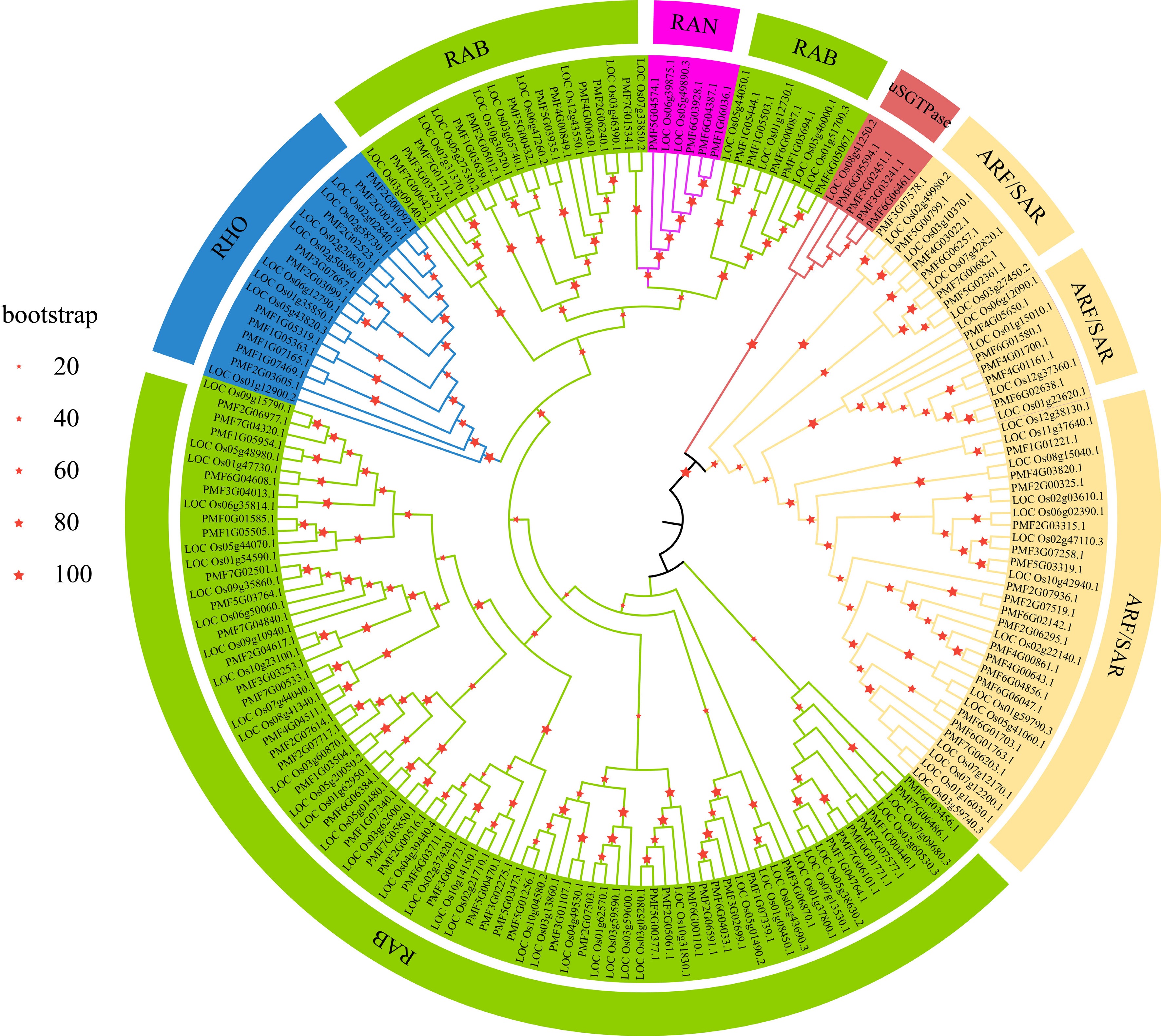
Figure 1.
Phylogenetic tree of small GTPases in P. glaucum and O. sativa. The colors green, pink, yellow, red, and blue represent Rab, Ran, Arf/Sar, uSGTPase, and Rho.
Conserved motif composition and subfamily-specific distribution
-
To investigate the structural diversity and potential functional differentiation of the small GTPase family members, conserved motif and gene structure analyses were performed on all 106 identified proteins. As shown in Fig. 2, a total of ten conserved motifs were identified across the family. Motifs 1 and 2 were present in all subfamilies, whereas motif 7 was specifically detected in the Rho subfamily. The Rab subfamily exhibited the greatest motif diversity, containing six to seven motifs (motifs 1–6 and 10), with motif 6 being unique to this subfamily. In contrast, the Sar and uSGTPase subgroups contained only three or four motifs (motifs 1–3 and 9).
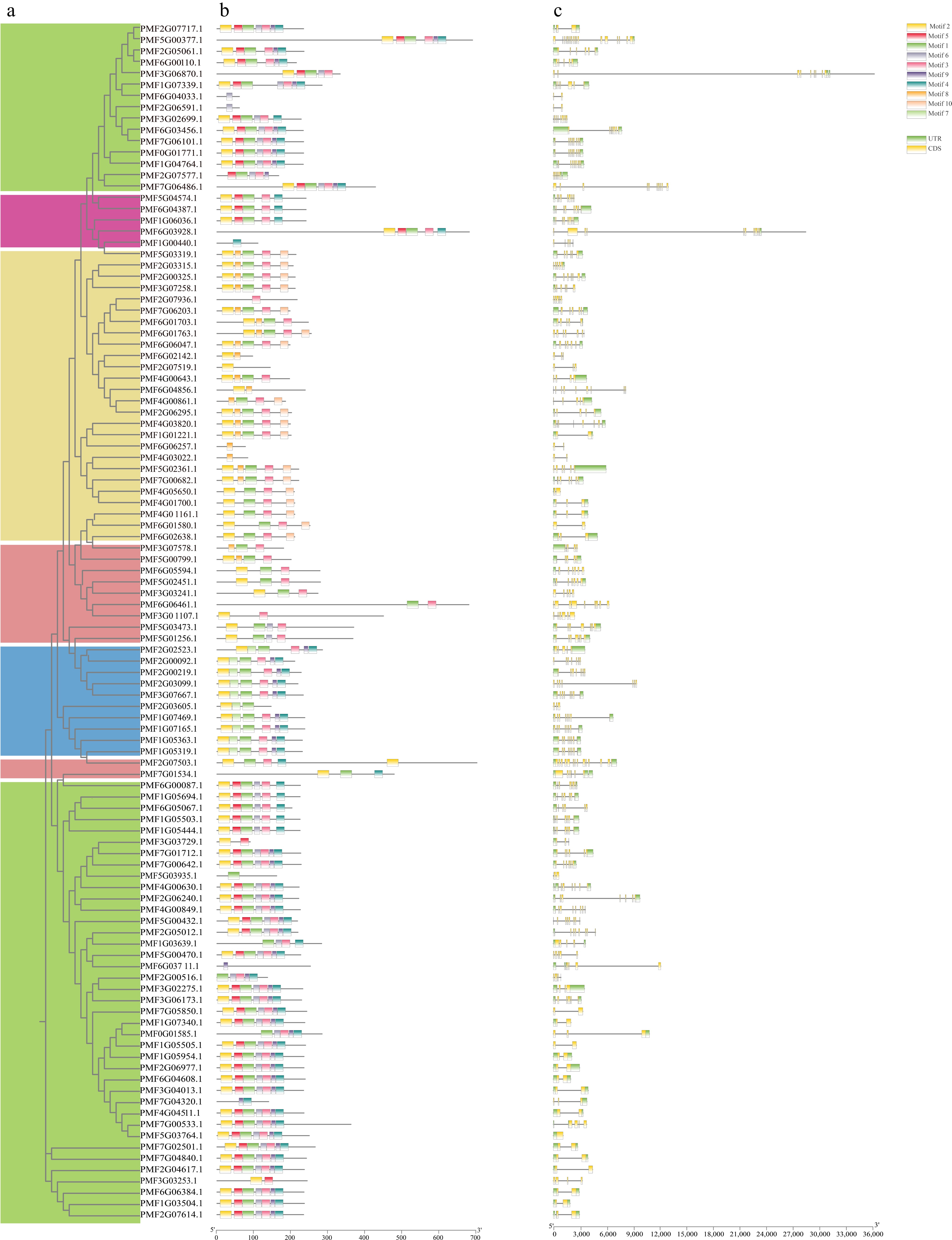
Figure 2.
Gene structures and conserved motifs of small GTPases in pearl millet. (a) Phylogenetic analysis of small GTPases. The colors green, pink, yellow, red, and blue represent the Rab, Ran, Arf/Sar, uSGTPase, and Rho subfamilies. (b) Identification of conserved motifs in each subfamily protein. (c) Analysis of gene structure of all the small GTPase genes.
Gene structure analysis showed that intron numbers varied from 1 to 17 among family members. Notably, the Rab subfamily displayed the widest variation, including both intronless gene and members containing up to 17 introns. Only one gene, PMF5G03764.1, was intronless. Collectively, the presence of universally distributed motifs (e.g., motifs 1 and 2) suggests functional conservation across the family, whereas subfamily-specific motifs (e.g., motifs 6 and 7) together with substantial variation in intron numbers highlight structural and potential functional diversification within the small GTPase family.
Chromosomal localization and duplication events of small GTPases
-
To examine the chromosomal distribution and expansion mechanisms of the 106 small GTPase genes in pearl millet, we mapped them onto the genome. Of these, 104 genes were distributed across seven chromosomes, while the remaining two were anchored on scaffolds (Fig. 3a). The distribution was highly uneven across chromosomes. Chromosome 2 contained the largest number (21), accounting for approximately 20.2%, followed by 20 on chromosome 6 (~19.2%). In contrast, chromosome 4 harbored the fewest members (10, ~9.6%). Chromosome 1 contained 17 genes (~16.3%), whereas chromosomes 3, 5, and 7 each carried 12 genes.
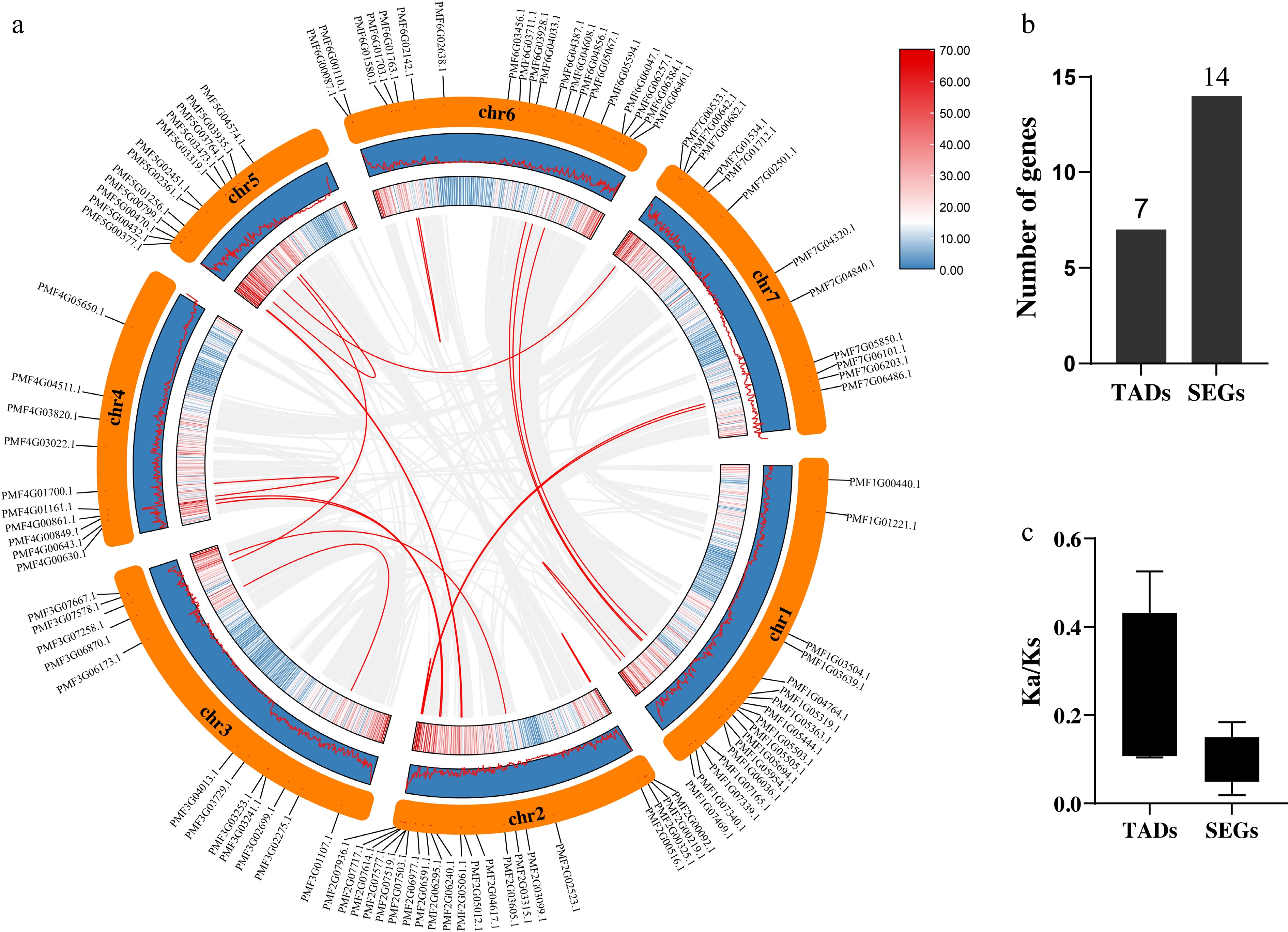
Figure 3.
Chromosomal distribution and gene duplication of small GTPases in pearl millet. (a) Chromosomal locations and syntenic relationships of small GTPase genes. (b) Numbers of tandem and segmental duplications. (c) Ka/Ks ratios of duplicated gene pairs.
Divergence time estimates were further analyzed to assess the relationship between gene family expansion and species evolution. The results indicated multiple expansion and contraction events of gene families across species; however, no significant expansion or contraction was detected for the small GTPase family in pearl millet (Supplementary Fig. S1 and Supplementary Table S3). We further analyzed other gene duplication events within the small GTPase family. A total of seven tandem duplications (TADs), including PMF6G01763.1/PMF6G01703.1, PMF1G07165.1/PMF1G07469.1, PMF2G00092.1/PMF2G00219.1, PMF2G07717.1/PMF2G07614.1, PMF4G01700.1/PMF4G01161.1, PMF5G01256.1/PMF5G03473.1, PMF3G06173.1/PMF3G02275.1, and 14 segmental duplications (SEGs) involving 26 genes were identified (Fig. 3b). These results suggested that small GTPase genes have expanded through both tandem and segmental duplication during evolution. All duplicated gene pairs exhibited Ka/Ks ratios < 1 (Fig. 3c), indicating that they have predominantly evolved under purifying selection.
Interspecies synteny analysis and evolutionary conservation of small GTPases
-
To investigate the evolutionary conservation and diversification of small GTPase genes, we performed systematic analyses between pearl millet and three monocot species (Brachypodium distachyon, Zea mays, and O. sativa), as well as one dicot model (A. thaliana). As shown in Fig. 4, 11 syntenic gene pairs were identified between pearl millet and Arabidopsis, 72 with B. distachyon, and 81 with rice. The highest number of syntenic gene pairs was observed between pearl millet and maize (108 pairs), approximately ten times that of Arabidopsis (Fig. 4; Supplementary Table S4). Overall, these results indicated that the small GTPase gene family is highly conserved across plant lineages. Notably, pearl millet shares substantially more syntenic gene pairs with monocots than with Arabidopsis, with the strongest conservation observed in maize.
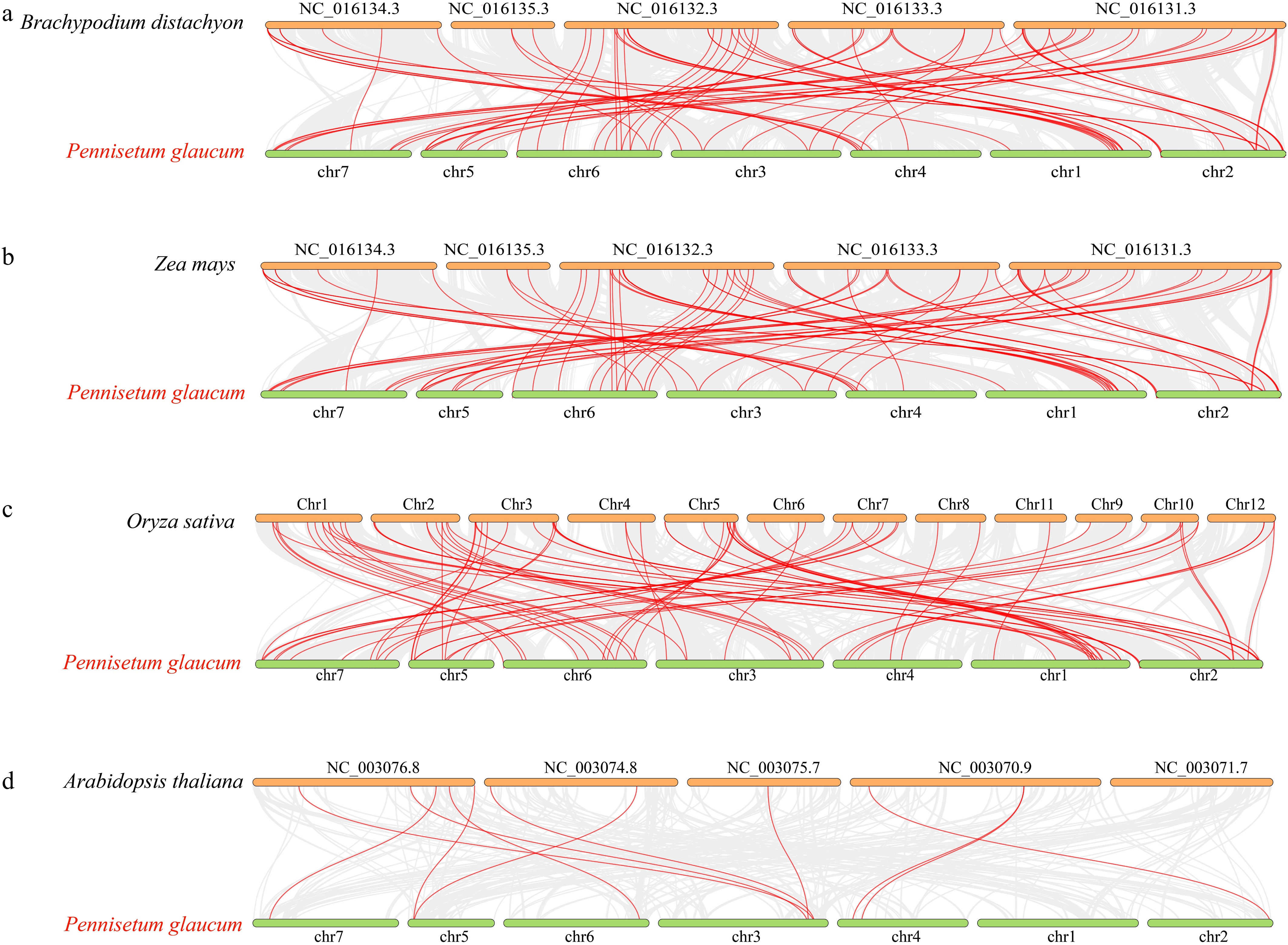
Figure 4.
Synteny analysis among P. glaucum, B. distachyon, A. thaliana, Z. mays, and O. sativa. Red lines indicate collinear pairs of small GTPase genes.
Cis-elements analysis in the promoters of small GTPase genes
-
Furthermore, we analyzed cis-regulatory elements in the ~2,000 bp upstream regions of 106 small GTPase genes. A total of 28 distinct cis-elements were identified. Among them, three were associated with light responsiveness and three with protein-binding activity, while more than 60% were related to abiotic stress responses. These stress-responsive elements included motifs associated with drought inducibility, defense and stress responsiveness, low-temperature responsiveness, wound-responsiveness, MYB binding sites, anaerobic induction, anoxic-specific inducibility, gibberellin and hormone responsiveness, including abscisic acid, methyl jasmonate (MeJA), salicylic acid, gibberellin, and auxin (Fig. 5; Supplementary Table S5). Collectively, the high proportion of stress-related cis-elements suggests that many small GTPase genes may participate in regulating plant responses to abiotic stress.
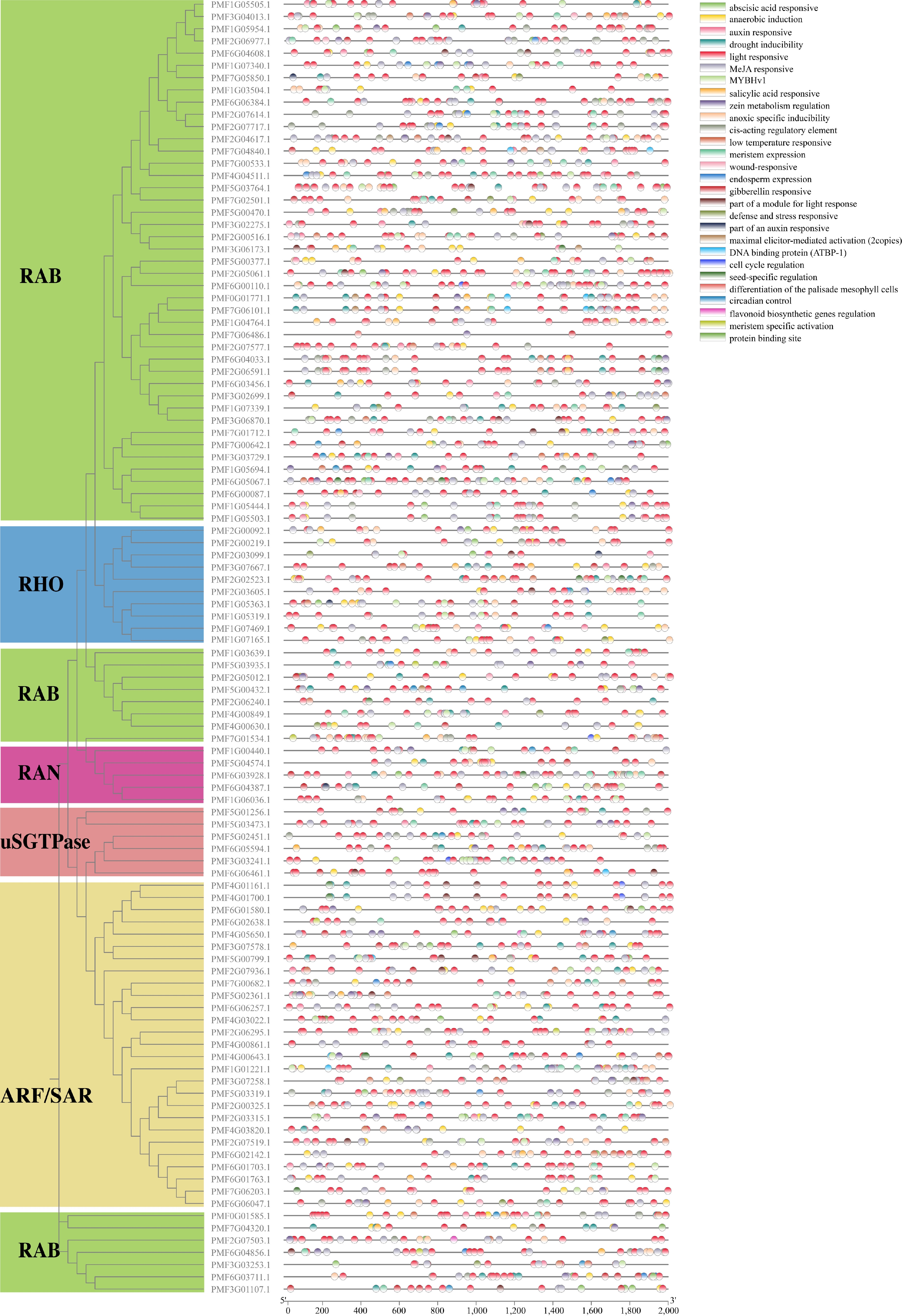
Figure 5.
Analysis of cis-acting regulatory elements in small GTPase gene promoters. Cis-elements identified in the 2.0 kb upstream region of small GTPase genes are shown, indicating potential regulatory roles in abiotic and biotic stress responses.
Expression profiling of small GTPase genes under multiple abiotic stresses
-
To characterize the expression patterns of small GTPase genes in pearl millet under abiotic stress, we analyzed transcriptomic data from a public database (
http://milletdb.novogene.com/home ) under salt, high-temperature, and drought treatments.Under salt stress, 97 genes exhibited significant differential expression (log2(fold change) > 0.5 and p < 0.05), which can be grouped into two main patterns. One group was rapidly induced at the early stage of stress (1–3 h) and remained highly expressed at the later stages (48–144 h), while the other group showed overall downregulation or transient suppression at specific time points.
Under heat stress, 95 genes were differentially expressed (log2(fold change) > 0.5 and p < 0.05). Some genes showed sustained upregulation throughout the treatment period, suggesting roles in heat stress perception, protein homeostasis, and oxidative stress protection. Others exhibited an early induction (1 or 3 h) followed by gradual downregulation, suggesting potential roles in rapid stress responses and early defense against heat stress.
Under drought stress, 71 genes were responsive, with more than 50 genes significantly upregulated (log2(fold change) > 0.5 and p < 0.05) during the mid-to-late stages (24–96 h), while a smaller subset showed early and rapid induction (Fig. 6a–c; Supplementary Tables S6–Supplementary Table S8).
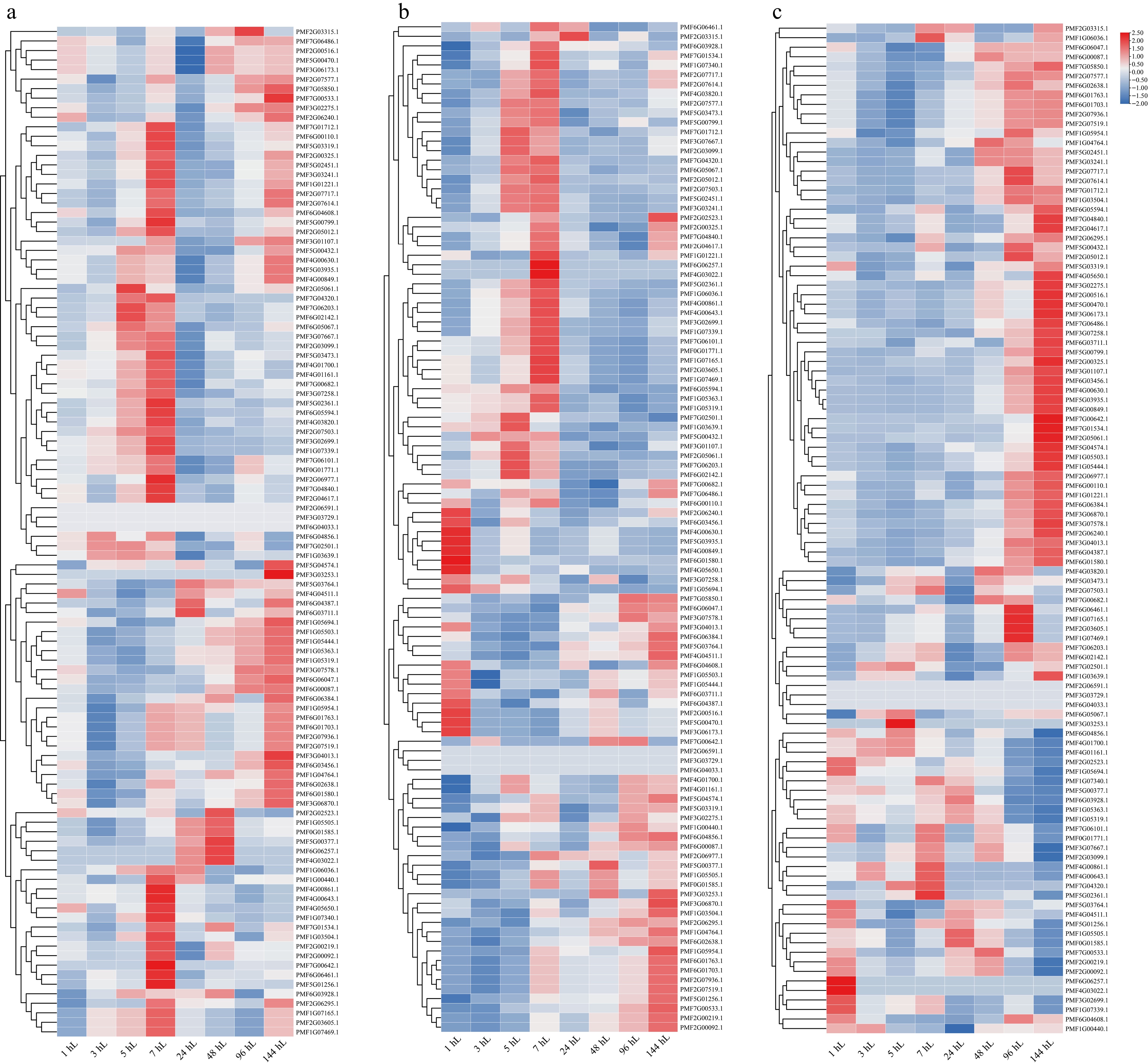
Figure 6.
Expression of small GTPase family genes in response to salt, heat, and drought stress. (a) Expression of small GTPases under salt stress. (b) Expression of small GTPases under heat stress. (c) Expression of small GTPases under drought stress.
Notably, 63 genes responded to all three stress conditions (Supplementary Table S9), suggesting that these genes may play central roles in mediating cross-tolerance to multiple environmental stresses.
GO and KEGG analysis of 63 stress-responsive small GTPase genes
-
We further conducted Gene Ontology (GO) and Kyoto Encyclopedia of Genes and Genomes (KEGG) enrichment analysis for 63 small GTPase genes in pearl millet that were commonly responsive to all three stress conditions. GO enrichment analysis showed that these genes were mainly associated with biological processes related to transcription cis-regulatory region binding, guanyl nucleotide binding, G-protein beta/gamma-subunit complex binding, and DNA replication (Fig. 7a; Supplementary Table S10). KEGG pathway analysis further indicated that these genes were predominantly enriched in nucleocytoplasmic transport, protein export, ubiquitin-mediated proteolysis, and protein processing in the endoplasmic reticulum (Fig. 7b; Supplementary Table S10).
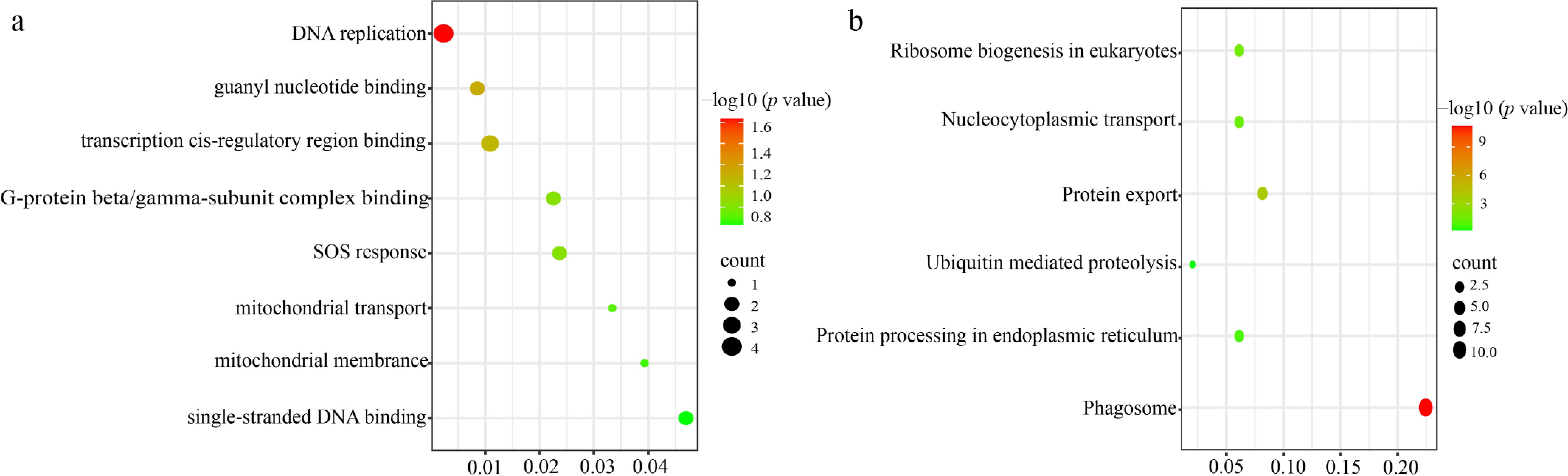
Figure 7.
GO and KEGG analysis of 63 stress-responsive small GTPase genes in pearl millet. (a) GO analysis. (b) KEGG analysis.
qRT-PCR validation of small GTPase genes responsive to multiple abiotic stresses
-
To validate the transcriptomic results, eight small GTPases (PMF1G07340.1, PMF2G07503.1, PMF1G05505.1, PMF1G06036.1, PMF4G00861.1, PMF5G02361.1, PMF6G06257.1, and PMF4G01161.1) were selected from 63 genes that rapidly and consistently responded to all three stress conditions within 48 h, and their expression patterns were examined by qRT-PCR. All eight genes exhibited significant expression changes under salt, heat, and drought stresses, with distinct temporal patterns. Under salt stress, all eight genes peaked within 24 h, with PMF6G06257.1 showing the strongest induction (approximately 16.2-fold relative to the control). Under heat stress, six genes reached their maximum expression at 7 h, whereas PMF1G05505.1 and PMF4G01161.1 peaked at 3 and 144 h, respectively. Notably, PMF1G06036.1 showed the strongest heat-responsive induction, with more than a 13.0-fold increase. Under drought stress, all genes except PMF2G07503.1 and PMF1G06036.1 reached peak expression within 24 h, while these two genes peaked at 48 h. Among all drought-responsive genes, PMF4G00861.1 exhibited the highest induction, with an approximately 17.5-fold increase relative to the control (Fig. 8). Collectively, these results support the involvement of these genes in abiotic stress responses and suggest that they may serve as promising candidate genes for improving stress tolerance in pearl millet.
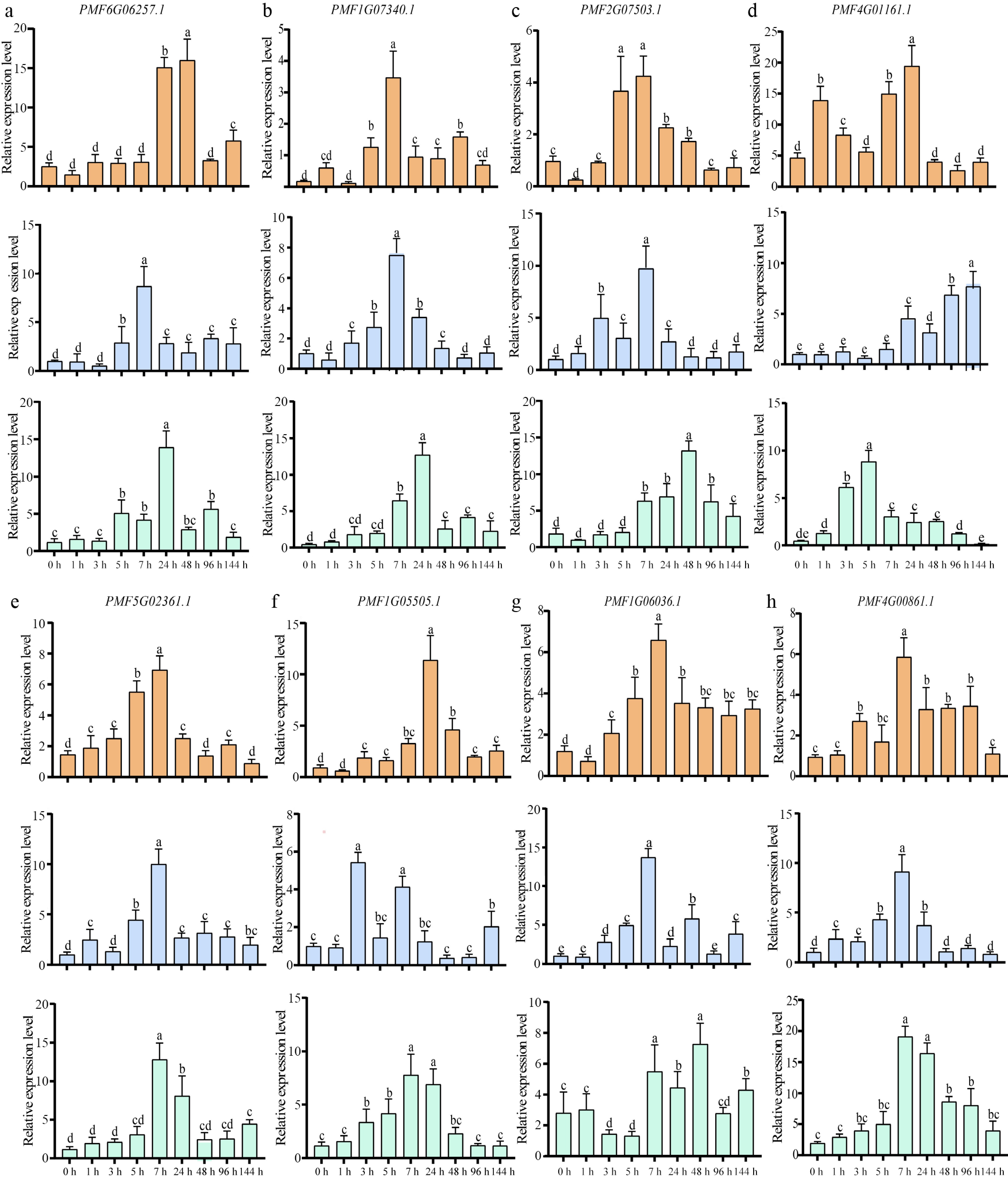
Figure 8.
Expression levels of eight small GTPase genes in pearl millet under salt, heat, and drought stress. Statistical significance was determined using one-way analysis of variance (ANOVA; p < 0.05), with significant differences indicated by different lowercase letters. Yellow, purple, and green represent salt, heat, and drought stress, respectively.
-
As molecular switches in cellular signal transduction, small GTPases play essential roles in plant growth, development, and stress responses. Their classification and functional characteristics are highly conserved across species[8,27]. Pearl millet is a valuable forage with strong tolerance to multiple abiotic stresses. However, no systematic analysis of the small GTPase gene family in pearl millet has been reported to date. In this study, we identified and comprehensively characterized the small GTPase gene family in pearl millet and revealed 63 members that are commonly responsive to heat, drought, and salt stress.
The small GTPase gene family identified in this study contains 106 members, a higher copy number than has been reported in several representative plant species, including A. thaliana[6] and rice[28]. This may be related to the fact that the pearl millet genome[29] is larger than that of Arabidopsis (~125 Mb)[30] and rice (~430 Mb)[31]. However, CAFE analysis based on a time-calibrated phylogeny revealed no significant lineage-specific expansion or contraction. Genome size is not proportionally reflected in the expansion of this gene family, suggesting that genome-wide expansion in pearl millet is not accompanied by uniform gene family expansion and is more likely driven by lineage-independent processes in subgenomic duplications[32]. Further tandem (TADs = 7) and segmental duplications (SEGs = 14) corroborate this speculation. Nevertheless, these two types of duplication events may be more likely associated with earlier evolutionary processes rather than recent species-specific expansion. Combined with low Ka/Ks ratios observed among duplicated gene pairs, these results suggest long-term evolutionary constraint acting on this gene family. Collectively, these results suggest that this gene family has undergone limited recent expansion in pearl millet and that its evolutionary dynamics are primarily shaped by duplication retention under strong purifying selection rather than rapid large-scale expansion events.
Interspecies synteny analysis revealed that the number of syntenic gene pairs between pearl millet and three monocot species (O. sativa, Z. mays, and B. distachyon) was substantially higher than that with the dicot A. thaliana. This trend is consistent with the phylogenetic relationships among these species and indicates greater evolutionary conservation of the small GTPase family within monocots. Notably, syntenic interactions between pearl millet and maize were particularly prominent, with 108 syntenic pairs identified—approximately ten times the number observed with Arabidopsis. This strong syntenic relationship suggests possible functional conservation of specific small GTPases in stress-response pathways between pearl millet and maize. For instance, the ZmArf GTPase in maize plays a specific role in heat stress defense[33]; its syntenic homolog in pearl millet may perform a similar function. These syntenic relationships thus provide valuable guidance for selecting candidate genes for functional validation.
In addition to previously identified subfamilies[28], we identified a candidate lineage of small GTPase proteins in pearl millet that is not clearly represented in current classification frameworks. This group is characterized by several distinctive molecular features, including divergence in conserved small GTPase signature motifs and a domain organization pattern that differs from that of canonical Ras/Rab/Rho/Arf family members[6]. Phylogenetic analysis further indicates that these proteins form a well-supported monophyletic clade, suggesting potential evolutionary divergence from established small GTPase subfamilies. However, we acknowledge that functional validation and broader taxonomic sampling will be necessary to definitively establish its classification as a novel subfamily.
Expression profiles revealed distinct stress-responsive patterns within the small GTPase family in pearl millet under salt, heat, and drought treatments. A total of 97, 95, and 71 genes were differentially expressed under salt, heat, and drought stress, respectively, with 63 genes responsive to all three conditions. This substantial overlap suggests that a large subset of small GTPase genes may function as an integrated component of a coordinated multi-stress regulatory network. The convergence of stress-responsive genes further suggests potential crosstalk between distinct abiotic stress signaling pathways, wherein small GTPases may be involved in integrating upstream signals and orchestrating downstream responses. Previous studies have demonstrated that small GTPases are involved in key cellular processes, including osmoregulation, antioxidant defense, and cell wall remodeling[34−36]. Specifically, Ran GTPases are implicated in nucleocytoplasmic transport, whereas Rab GTPases are primarily associated with vesicle trafficking from the endoplasmic reticulum to the Golgi apparatus[8]. GO and KEGG enrichment analyses in this study revealed consistent functional categories, suggesting that these 63 co-responsive genes may contribute to stress adaptation through protein–protein interaction networks and vesicle-mediated transport processes, thereby facilitating intracellular signaling and protein trafficking under combined abiotic stress conditions.
To validate the transcriptomic data, eight small GTPase genes co-responsive to all three stresses were selected for qRT-PCR analysis. All eight genes exhibited significant expression changes under salt, heat, and drought treatments, with distinct temporal patterns, suggesting that these genes may function as integrative nodes in coordinating drought, heat, and salt signaling pathways. Although a gene is involved in multiple stress pathways, it sometimes has primary functions[37]. In this study, PMF6G06257.1, PMF4G00861.1, and PMF1G06036.1 were all induced by three stresses, while their expressions were more prominent under salt, drought, and heat, respectively, suggesting that these three genes may possess primary functions in response to a particular stress. Collectively, these results further support the rapid and robust function of small GTPases in stress signal transduction.
Nevertheless, the expression patterns of specific genes varied across different stresses, suggesting that distinct subfamily members, or even members within the same subfamily, may perform stress-specific regulatory functions. Future studies integrating functional characterization and protein-protein interaction analyses in single or comparative plant lines will be essential to elucidate the precise molecular mechanisms and regulatory networks of small GTPase subfamilies under defined stress conditions. Such efforts will further enhance our understanding of how the small GTPase family in pearl millet orchestrates its remarkable multi-stress resilience. Moreover, small GTPase members responsive to additional stresses, such as cold and nutrient deprivation, remain to be systematically identified, which will facilitate a more comprehensive comparative framework for understanding their evolutionary and functional diversification, ultimately contributing to the improvement of stress resilience in grasses.
-
In conclusion, this study presents the first genome-wide characterization of the small GTPase family in pearl millet. A total of 106 members were identified, including an unclassified subfamily. Combinatorial gene duplication under purifying selection and prominent synteny with maize highlight evolutionary conservation. Expression profiling revealed that 63 small GTPase genes are responsive to multiple abiotic stresses. Among them, qRT-PCR validation of eight representative genes demonstrated that PMF6G06257.1, PMF4G00861.1, and PMF1G06036.1 are strongly responsive to salt, drought, and heat stress, respectively, highlighting their potential as candidate genes for improving stress tolerance in crop breeding programs. Collectively, these findings establish a comprehensive framework for understanding the molecular basis of multi-stress resilience in pearl millet and provide valuable genetic resources for crop/grass improvement.
-
The authors confirm contribution to this study as follows: study conception and design: Xie Z; experimental work and data analysis: Zhou Y, Gu C; plant cultivation: Zhu J, Xia Y, Zhang X, Ding H, Shen J; draft manuscript preparation: Xie Z, Zhou Y; manuscript revision: Xie Z, Yu G, Huang L. All authors reviewed the results and approved the final version of the manuscript.
-
All data generated or analyzed during this study are included in this published article and its supplementary information files.
-
The authors assert that the research was performed without any commercial or financial affiliations that could be seen as potential conflicts of interest.
-
accompanies this paper online at: https://doi.org/10.48130/grares-0026-0023.
-
# Authors contributed equally: Yi Zhou, Chunru Gu
- Supplementary Table S1 Primers of PgGP genes used for qRT-PCR.
- Supplementary Table S2 Basic informationon the small GTPase family genes in Pennisetum glaucum.
- Supplementary Table S3 Contraction and expansion of the small GTPase gene family in Pennisetum glaucum.
- Supplementary Table S4 Collinear gene display of the Pennisetum glaucum the small GTPase family genes.
- Supplementary Table S5 Analysis of Cis-Acting Elements in the Promoters of the small GTPase family genes in Pennisetum glaucum.
- Supplementary Table S6 The expression of small GTPase family genes under salt stress.
- Supplementary Table S7 The expression of small GTPase family genes under heat stress.
- Supplementary Table S8 The expression of small GTPase family genes under drought stress.
- Supplementary Table S10
- Supplementary Table S9 The small GTPase family genes were expressed under three stresses (salt, heat and drought).
- Supplementary Table S10 Overview table of GO and KEGG enrichment analysis.
- Supplementary Fig. S1 Divergence time estimation among Pennisetum glaucum, Oryza sativa, Arabidopsis thaliana, Sorghum bicolor, Brachypodium distachyon, Hordeum vulgare, and Vitis vinifera.
- Copyright: © 2026 by the author(s). Published by Maximum Academic Press, Fayetteville, GA. This article is an open access article distributed under Creative Commons Attribution License (CC BY 4.0), visit https://creativecommons.org/licenses/by/4.0/.
-
About this article
Cite this article
Zhou Y, Gu C, Zhu J, Xia Y, Zhang X, et al. 2026. Comprehensive analysis of the small GTPase family uncovers its multifaceted roles in abiotic stress responses in pearl millet (Pennisetum glaucum L.). Grass Research 6: e026 doi: 10.48130/grares-0026-0023 

Comprehensive analysis of the small GTPase family uncovers its multifaceted roles in abiotic stress responses in pearl millet (Pennisetum glaucum L.)
- Received: 08 April 2026
- Revised: 19 June 2026
- Accepted: 13 July 2026
- Published online: 18 September 2026
Abstract: Pearl millet (Pennisetum glaucum L.) is an important forage crop valued for its high yield, superior nutritional quality, and strong tolerance to diverse environmental stresses. Small GTPases are key regulators of abiotic stress responses in plants and have been extensively characterized in multiple species; however, a comprehensive genome-wide analysis of this gene family in pearl millet and its involvement in stress responses remains lacking. Here, we identified 106 small GTPase family members in the pearl millet genome. Based on their domain structures, these proteins were classified into four subfamilies—Rab, Rho, Ran, Arf/Sar—and an unclassified group of small GTPases. Evolutionary analysis showed that this gene family has undergone substantial expansion driven by both tandem and segmental duplication events. Synteny analysis indicated that small GTPase genes in pearl millet are highly conserved among monocots. Transcriptomic profiling under salt, heat, and drought stress conditions showed that 97, 95, and 71 genes, respectively, were significantly responsive to these stresses, with 63 genes being commonly responsive to all three. Eight representative multi-stress-responsive genes were further validated by qRT-PCR, supporting their potential roles in integrating multiple abiotic stress signaling pathways. Collectively, our findings provide important candidate genes for the functional characterization of small GTPases in pearl millet, offering new insights into the genetic basis of stress tolerance that may be leveraged for crop improvement.
-
Key words:
- Pearl millet /
- Small GTPases /
- Salt /
- Heat /
- Drought