












-
Ciliates are a phylum (Ciliophora) of protists that inhabit a wide range of environments worldwide[1,2]. As one group of the oldest extant unicellular eukaryotes, they have nuclear dimorphism and diverse nutritional modes, and in some cases, complex life histories[3−5]. They play crucial roles in the biogeochemical cycles through the microbial loop and serve as sensitive bioindicators for assessing soil quality and the efficacy of wastewater treatment systems due to their responsiveness to environmental change[6−8]. They can also promote plant growth through strategies such as translocating nutrients (e.g., phosphorus) to root zones, regulating beneficial bacterial groups, and driving the migration of diazotrophs towards the rhizosphere[9−11]. Together, these features underscore the ecological and evolutionary significance of ciliates, making them a model group for exploring biodiversity, ecosystem functioning, and responses to environmental change.
DNA barcoding, particularly using amplicons of 18S rRNA gene variable regions, is widely applied to investigate ciliate biodiversity and community structure. Regular amplicon sequencing with universal eukaryotic primers often yields sequences predominantly from non-ciliate organisms (e.g., fungi, algae, or other eukaryotes), thereby reducing both cost-effectiveness and sensitivity of ciliate detection[12−15]. Another approach follows a two-step process in which PCR products from overly long ciliate-specific regions are re-amplified for short-read sequencing. Specifically, ciliate-specific primers first amplify a > 600 bp 18S rRNA gene fragment—too long for the merged paired-end reads generated by current short-read sequencers[16]. To avoid the high costs of long-read library preparation and sequencing, these products are subsequently re-amplified with universal eukaryotic primers targeting the V4 region to produce shorter inserts suitable for short-read sequencing, which are then used for regular two-step amplicon library preparation[17]. However, this adds extra hands-on time, introduces additional PCR biases, and adds to consumable costs. Furthermore, other existing ciliate-specific primers suitable for amplicon sequencing are also limited to lower taxa, e.g., Euplotes[18] or rumen ciliates[19]. Therefore, the development of streamlined phylum-specific amplicon library preparation methods is needed.
In this study, we developed a one-step library preparation approach for ciliate-specific amplicon sequencing based on a recently published one-step PCR amplicon library preparation protocol[20]. The ciliate-specific short primers were designed based on 18S rRNA gene sequences from all known ciliate classes and non-ciliate eukaryotes. To evaluate their performance, genomic DNA from clone-cultured ciliate strains, alongside soil and aquaculture pond-sediment samples, was tested, comparing the new primers with universal eukaryotic primers widely used (Fig. 1). This approach provides a cost-effective, fast, and convenient tool for ciliate research, particularly with broad applications in environmental biology and ecological monitoring involving a large number of samples.
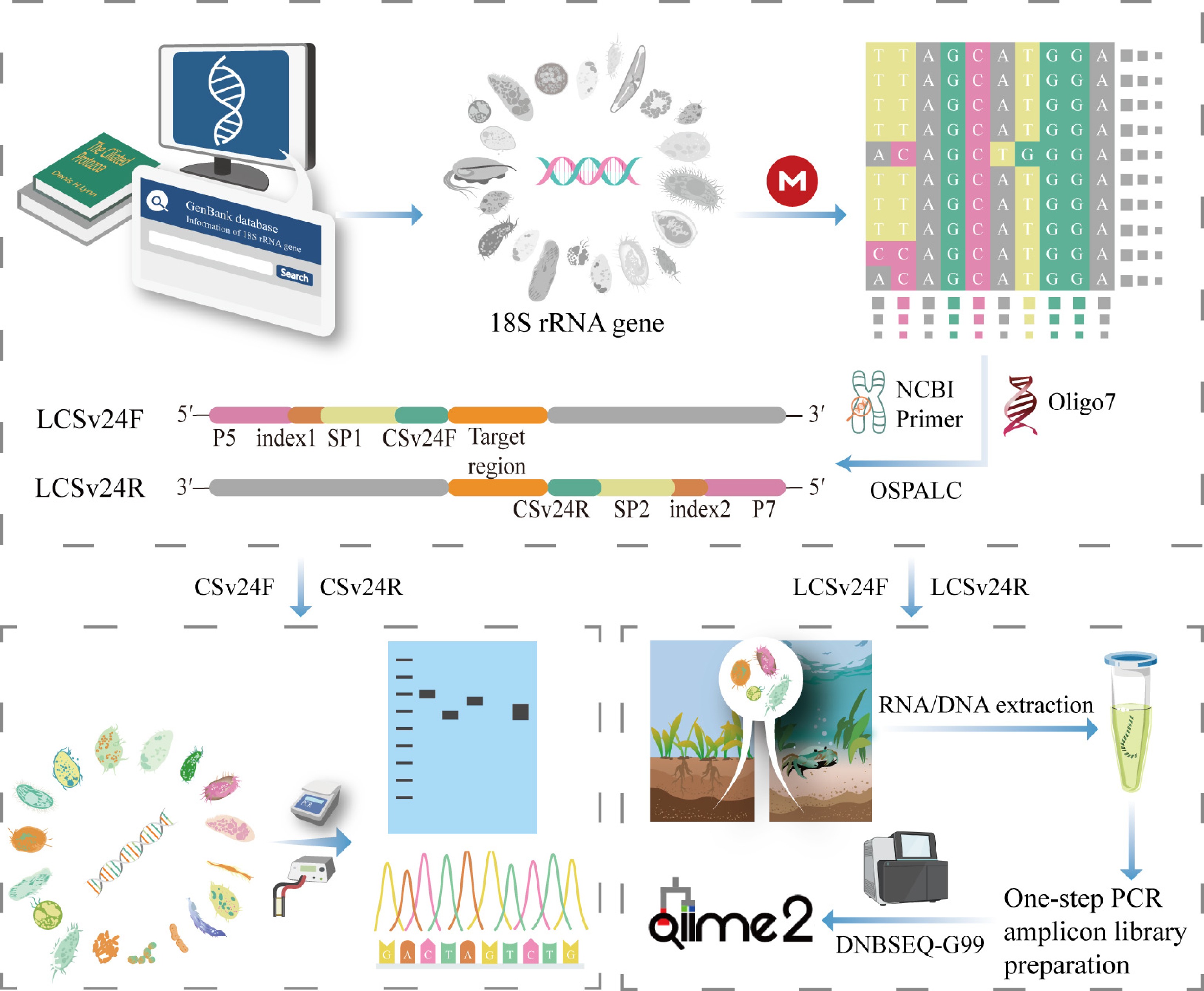
Figure 1.
Schematic workflow for designing and testing the ciliate-specific approach.
-
We prepared clonal cultures of 13 ciliate species representing five classes within Ciliophora and four non-ciliate eukaryotes for extracting genomic DNA (Supplementary Fig. S1; Supplementary Table S1)[21]. Three biological replicates of soil samples (top 5 cm) were collected from the Yushan Campus of Ocean University of China (36.06° N, 120.33° E) in Qingdao, Shandong Province, China (May 6, 2025). Another three biological replicates of aquaculture pond sediment samples were collected from the Jintan River Crab Aquaculture Zone (31.59° N, 119.47° E) in Changzhou, Jiangsu Province, China (August 2, 2025).
DNA/RNA preparation
-
We extracted high-quality genomic DNA of each strain in the mock community using the MasterPure™ Complete DNA and RNA Purification Kit (Lucigen/Epicentre, USA). In addition, genomic DNA from three unculturable ciliate species representing three additional classes was kindly provided by the Laboratory of Protozoology, Ocean University of China (Supplementary Table S1). Because of their extremely limited quantity, these DNA samples were used only to test the efficacy of short Ciliophora-specific PCR primers. For soil samples, total RNA was extracted using the EZNA® Soil RNA Kit (Omega Biotek Inc., USA, 0.5 g soil for each sample), followed by DNase treatment. RNA was reverse-transcribed to cDNA using the HiScript III 1st Strand cDNA Synthesis Kit (+gDNA wiper) (Vazyme, China). For pond sediment samples, total DNA was extracted using the DNeasy® PowerSoil® Pro Kits (QIAGEN®, Germany, 0.5 g sediment for each sample). RNA was extracted from soil samples to assess the applicability of the method across different template types, as well as DNA from pond sediments.
Primer design
-
To design ciliate-specific short primers, we retrieved 18S rRNA gene sequences of 112 ciliate species spanning 16 classes and 28 phylogenetically related non-ciliate eukaryotes from NCBI GenBank. Cariacotrichea was not included because only one partial sequence (< 1,100 bp) was available. Of the 140 sequences, 27 were full length (19.3%), and 113 were partial (80.7%) (Supplementary Table S2). We first aligned all sequences in MEGA v.11.0.13 with ClustalW default parameters[22] and retained only genomic regions shared across the complete dataset. Sites falling outside this common region or within gaps were discarded. We then aligned the 112 ciliate sequences to identify conserved candidate sites and visualized the alignment in Jalview v2.11.5.1 (Supplementary Fig. S2)[23]. Candidate sites were chosen based on several criteria: primer length of 18–22 bp, GC content of 40%–60%, and a predicted amplicon size of 400–550 bp. Within the design dataset (Supplementary Table S2), primers were required to cover ≥ 90% of the 112 ciliate sequences under the criteria of ≤ 2 mismatches per primer and no mismatch within the last five bases at the 3' end, while showing > 99% specificity against the non-ciliate sequences. Candidate primers meeting these criteria were further evaluated in silico using NCBI Primer-BLAST v2.5.0[24], Oligo v7.56[25], and TestPrime v1.0[26].
Following our previously developed amplicon-library procedures[20], we further designed the long primers LCSv24F/LCSv24R based on the ciliate-specific short primers CSv24F/CSv24R. The long and short primer pairs share target-binding sequences; the long primers additionally contain P5/P7 adapters and indices at their 5' ends. Thus, both primer pairs target the same variable region and produce the same insert length (Table 1). Moreover, eukaryotic universal long primers targeting V4 (L18V4F/L18V4R) and V8–V9 (L18V89F/L18V89R) regions (Table 1) were designed[27−30]. Each long primer consists of a sequencing adaptor, an index, and a ciliate-specific short primer (Fig. 2). The indices of the long primers were designed using a shell script for different samples (Supplementary Table S3). All primers were synthesized and purified with ULTRAPAGE by Sangon Biotech (Shanghai, China).
Table 1. Primer sequences used in this study.
Primer name Sequences (5′–3′) CSv24F GWTGGTAGTGTATYKGAC CSv24R CTATTBYATTATTCCMWGCT 82F GAAACTGCGAATGGCTC EUKB TGATCCTTCTGCAGGTTCACCTAC LCSv24F AATGATACGGCGACCACCGAGATCTACACNNNNNNNNTCGTCGGCAGCGTCAGATGTGTATAAGAGACAGGWTGGTAGTGTATYKGAC LCSv24R CAAGCAGAAGACGGCATACGAGATNNNNNNNNGTCTCGTGGGCTCGGAGATGTGTATAAGAGACAGCTATTBYATTATTCCMWGCT L18V4F AATGATACGGCGACCACCGAGATCTACACNNNNNNNNTCGTCGGCAGCGTCAGATGTGTATAAGAGACAGCCAGCASCYGCGGTAATTCC L18V4R CAAGCAGAAGACGGCATACGAGATNNNNNNNNGTCTCGTGGGCTCGGAGATGTGTATAAGAGACAGACTTTCGTTCTTGATYRA L18V89F AATGATACGGCGACCACCGAGATCTACACNNNNNNNNTCGTCGGCAGCGTCAGATGTGTATAAGAGACAGATAACAGGTCTGTGATGCCCT L18V89R CAAGCAGAAGACGGCATACGAGATNNNNNNNNGTCTCGTGGGCTCGGAGATGTGTATAAGAGACAGCCTTCYGCAGGTTCACCTAC For long primer pairs, bold text denotes P5/P7 adapters, 'NNNNNNNN' denotes indices, italics denote sequencing-primer binding sites, and regular text denotes 18S rRNA target-binding sequences. 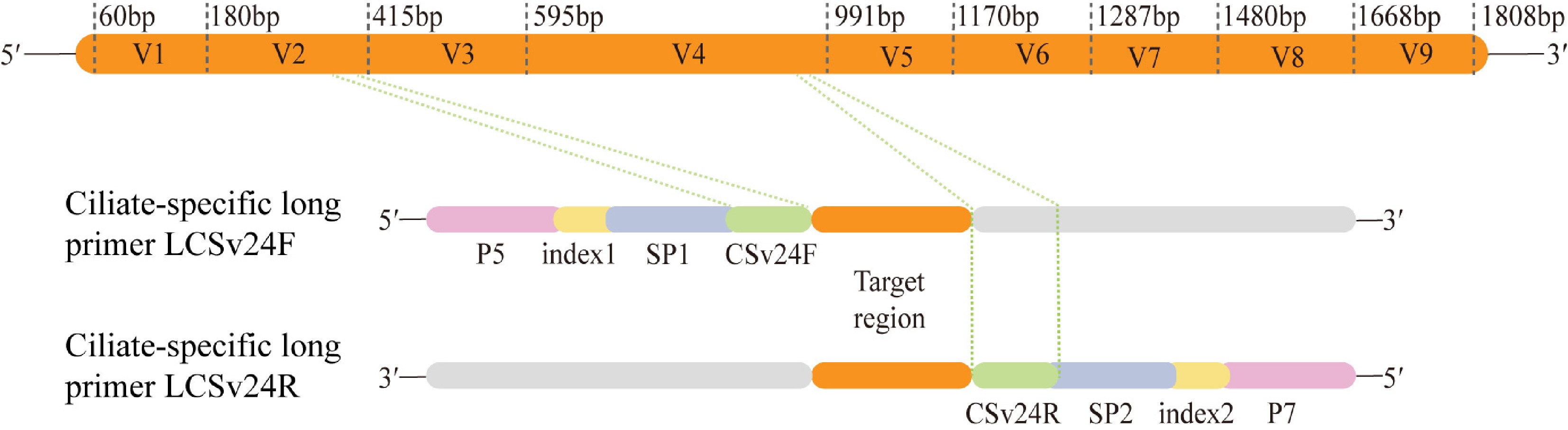
Figure 2.
Illustrations of the long primer design. The top orange panel depicts the canonical nine variable regions of the 18S rRNA gene (V1–V9), with those of Saccharomyces cerevisiae as a reference. Bottom panels show the structure of the newly designed ciliate-specific long primers LCSv24F/LCSv24R.
Testing the specificity and sensitivity of short ciliate-specific primers
-
The genomic DNA of each species was amplified using short ciliate-specific primers (CSv24F/CSv24R), with the universal eukaryotic primers 82F (5′-GAAACTGCGAATGGCTC-3′) and EUKB (5′-TGATCCTTCTGCAGGTTCACCTAC-3′) as the control, to target the 18S rRNA gene for Sanger sequencing. We used a 25 μL PCR reaction system, which included 12.5 μL of KeyPo Master Mix (Dye Plus, high fidelity, Vazyme China), 0.5 μL of the 10 μmol/L forward primer, 0.5 μL of the 10 μmol/L reverse primer, 9.5 μL of nuclease-free H2O, and 2 μL of the template DNA. The PCR conditions involved an initial denaturation at 98 °C for 30 s, followed by 30–35 cycles (as recommended by the polymerase manufacturer) of 98 °C for 30 s, 46 °C for 5 s, and 72 °C for 5 s, with a final extension at 72 °C for 1 min. Finally, the PCR products were Sanger sequenced at Sangon Biotech (Shanghai, China). We trimmed and assembled the sequences using SeqMan[31] and validated them by NCBI BLAST (
https://blast.ncbi.nlm.nih.gov/Blast.cgi , accessed on October 8, 2025). Sensitivity was calculated as the number of ciliate species in the test that were successfully amplified by the primers (True Positives, TP) divided by the total number of ciliate species actually present in the test (TP + False Negatives, FN): Sensitivity = TP/(TP + FN). Conversely, specificity was calculated as the number of non-ciliate species in the test that were correctly not amplified (True Negatives, TN) divided by the total number of non-ciliate species present in the test (TN + False Positives, FP): Specificity = TN/(TN + FP).Amplicon library preparation and sequencing of environmental samples
-
Amplicon libraries for soil and pond-sediment samples were constructed via a single-step conventional PCR. The PCR reactions involved three long primer sets: the ciliate-specific primer pair LCSv24F/LCSv24R (targeting the V2–V4 region of the 18S rRNA gene) and two universal eukaryotic primer pairs, L18V4F/R (V4 region) and L18V89F/R (V8–V9 region) (Table 1). We recommend the following touch down PCR conditions, after numerous trials: an initial denaturation at 98 °C for 30 s, followed by 15 touchdown cycles of 98 °C for 30 s, annealing starting at 51 °C for 5 s and decreasing by 1 °C per cycle, and 72 °C for 5 s, then 20 cycles of 98 °C for 30 s, 35 °C for 5 s, and 72 °C for 5 s; with a final extension at 72 °C for 1 min. Finally, all libraries were sequenced on a DNBSEQ-G99 sequencer (Novogene, Beijing) using PE300 mode. The mean numbers of raw reads obtained for soil samples were approximately 1.52 × 10⁶, 9.32 × 10⁵, and 2.83 × 10⁶ for LCSv24F/LCSv24R, L18V4F/L18V4R, and L18V89F/L18V89R, respectively. Corresponding means for pond sediment were 1.33 × 10⁶, 8.78 × 10⁵, and 2.25 × 10⁵ reads (Supplementary Table S4).
Amplicon analysis
-
We performed amplicon analysis using QIIME2 v2023.7[32]. Raw reads were merged, denoised with QIIME DADA2[33], and quality-filtered with QIIME q-score. Chimeric feature sequences were filtered by QIIME vsearch[34]. For the environmental samples, feature sequences with frequencies < 0.01‰ were removed while retaining very rare Ciliophora class-level ASVs. Taxonomy was assigned with QIIME feature-classifier, with feature classification using QIIME feature-classifier[35]. Finally, all filtered feature sequences were annotated using the SILVA database (release 138, 99% of OTUs full-length sequences)[35−39]. After Shannon-rarefaction and filtering, we performed statistical analyses and compared ciliates diversity detected by ciliate-specific long primers and universal eukaryotic primers by calculating Shannon metrics. Statistical analyses were performed in R v4.4.2[40], and plots were generated using ggplot2[41]. We plotted Venn diagrams using jvenn[42]. The maximum likelihood tree was constructed using q2-alignment and q2-phylogeny plugins with the ultrafast bootstrap approximation (200 iterations) within the QIIME 2 platform.
-
To achieve high-sensitivity and high-specificity amplicon sequencing of ciliates, we first designed short ciliate-specific primers for regular PCR targeting the hypervariable regions of the 18S rRNA gene, based on sequences with broad taxonomic coverage across the phylum Ciliophora (Table 1). The sequence dataset included 112 ciliate species representing 16 classes with publicly available 18S rRNA gene sequences. The reference set also included 28 non-ciliate eukaryotes representing major protistan lineages related to ciliates, plus choanoflagellates and fungi (Supplementary Table S2). The short primers were designed to produce amplicons < 600 bp for PE300 sequencing. These analyses resulted in the forward primer CSv24F (5′-GWTGGTAGTGTATYKGAC-3′) and reverse primer CSv24R (5′-CTATTBYATTATTCCMWGCT-3′), which target V2–V4 regions of ciliates and produce 427–520 bp amplicons (Supplementary Table S2).
According to the analysis using Oligo v7.56[25], CSv24F/CSv24R showed suitable physicochemical properties for efficient PCR. Specifically, the forward and reverse primers had low self-complementarity (overall ΔG, −23.6 and −24.3 kcal/mol) and negligible duplex formation (ΔG, −0.6 and −0.7 kcal/mol). Their 3'-end stabilities (−6.1 and −6.9 kcal/mol) and Tm ranges (46.3–50.4 and 45.4–51.4 °C) supported specific amplification. Using Oligo v7.56 to evaluate the binding performance in the design dataset, the pair matched 101 of 112 ciliate sequences (90.18%) under the predefined mismatch criteria. It predicted no amplification of the 28 non-ciliate sequences (Supplementary Fig. S2; Supplementary Table S2). Primer-BLAST v2.5.0 further showed that 99% of the top 200 hits belonged to ciliates, with predicted amplicon lengths of 405–494 bp (Supplementary Table S5). TestPrime analysis of 2,935 SILVA ciliate sequences predicted > 69% coverage and > 99% specificity[26]. The lower SILVA-based coverage primarily reflected differences in the high representation of taxa with low amplification efficacy, such as Litostomatea, which had relatively lower primer-matching rates in SILVA than in the primer-design dataset. Nevertheless, class-specific mismatch patterns were generally consistent between the two datasets (Supplementary Table S6). Overall, CSv24F/CSv24R achieved a decent predicted coverage and high specificity for ciliates.
High amplification specificity and sensitivity of CSv24F/CSv24R validated by PCR using ciliate genomic DNA
-
For further validation of the specificity and sensitivity of the ciliate-specific conventional PCR primers CSv24F and CSv24R, we performed PCR amplifications using genomic DNA from each of 13 ciliates and four non-ciliate microbial eukaryotes in the mock community, with the universal eukaryotic primers 82F/EUKB as the control. The control primers successfully amplified all 17 species, whereas CSv24F/CSv24R amplified 12 of the 13 ciliate species, with the exception of Chaenea vorax (class Litostomatea), and none of the four non-ciliate eukaryotes (Fig. 3). Three additional unculturable ciliate species were also successfully amplified by CSv24F/CSv24R (Supplementary Fig. S3). All species in the PCR validation were further confirmed by Sanger sequencing and NCBI BLAST (Supplementary Table S7). Overall, CSv24F/CSv24R successfully amplified 15 of the 16 ciliate species tested but none of the four non-ciliate eukaryotes, corresponding to a sensitivity of 93.75% and a specificity of 100%.
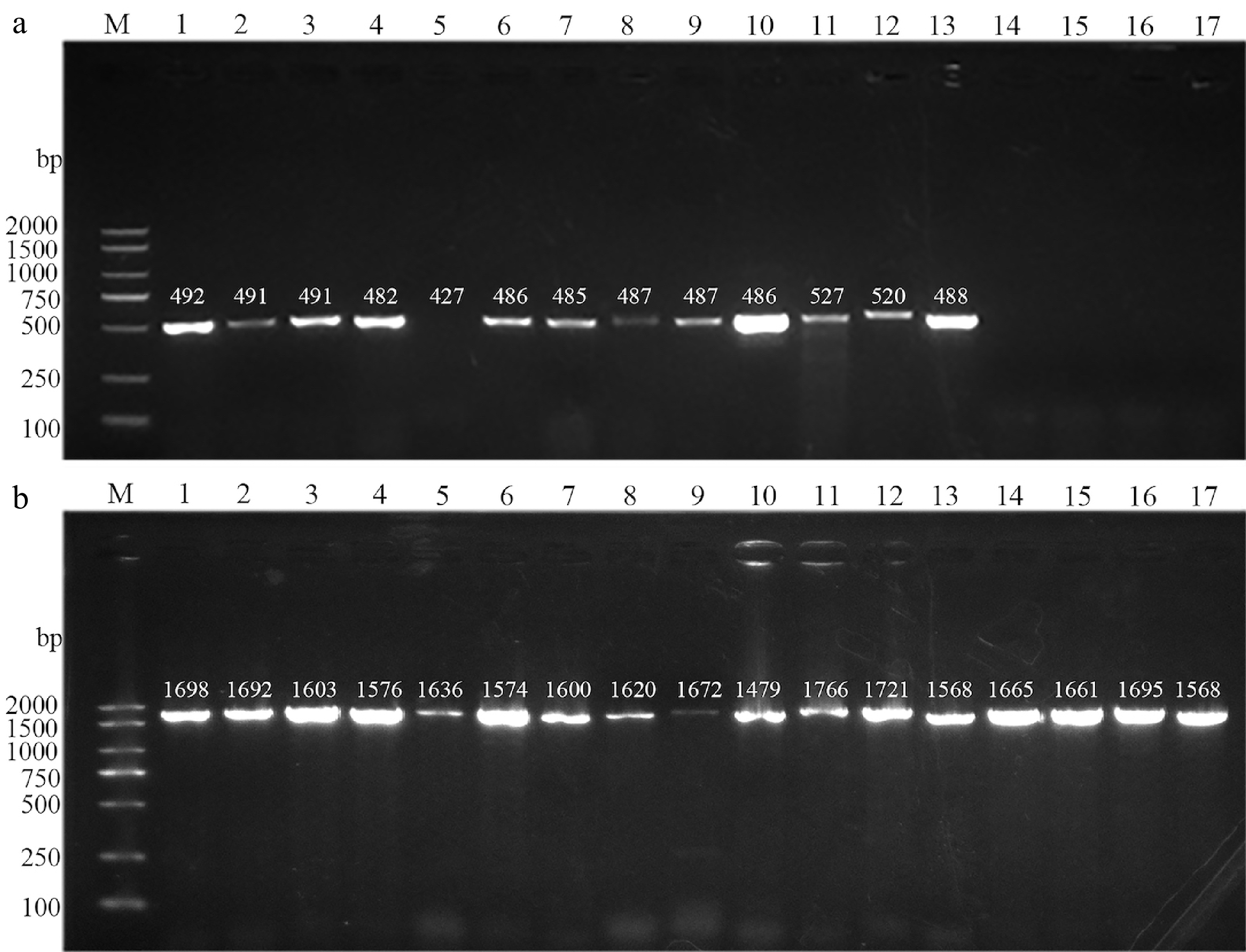
Figure 3.
Gel electrophoresis of PCR products of species in the mock community. (a) PCR products of short ciliate-specific primers CSv24F/CSv24R across 17 species. (b) Amplification of 18S rRNA genes of all 17 species with universal eukaryotic primers (82F/EUKB). Lane M: DNA marker; Lanes 1–13: Ciliate species (1: Colpoda steinii RZ4A; 2: Colpoda elliotti YX31C03; 3: Colpoda aspera QS14C26; 4: Blepharisma sinuosum WS; 5: Chaenea vorax C13; 6: Paramecium biaurelia 3D49; 7: Tetrahymena pyriformis ZSX20180820; 8: Uronema apomarinum PJ12H01; 9: Glauconema trihymene LCC01; 10: Metanophrys cf. sinensis W7; 11: Euplotes rariseta YHW001; 12: Euplotes vannus YHW14D25; 13: Apourosomoida sp. LHA081A01); Lanes 14–17: Non-ciliate eukaryotes (14: Rhodotorula mucilaginosa WK19D12; 15: Saccharomyces cerevisiae S288C; 16: Schizosaccharomyces pombe 972h-; 17: Poterioochromonas sp. DZG4B). Details of all strains are in Supplementary Tables S1, and the expected amplicon sizes are marked above the corresponding gel lanes.
High specificity and sensitivity of amplicons from environmental samples using ciliate-specific long primers
-
Although CSv24F/CSv24R performed well with laboratory-cultured ciliates, their effectiveness in diverse natural communities required further validation. We therefore extracted total DNA from three sediment samples collected from a eutrophic aquaculture pond, where ciliate diversity is typically high, to more comprehensively validate the effectiveness of the ciliate-specific long primers[43,44]. To evaluate applicability to different template types, we also extracted total RNA from three natural soil samples and compared amplicon sequencing using ciliate-specific and universal eukaryotic long-primer pairs (Fig. 2), as soils are well-known biodiversity hotspots for microbial eukaryotes[45−47].
In soil samples, ciliate-specific long primers (LCSv24F1–F2, LCSv24R1–R3; Table 1; Supplementary Table S3) showed high specificity, with ciliates accounting for 98.45% of the total 1.67 × 10⁴ ASVs. In contrast, ciliate sequences represented only 8.71% of the 3,823 ASVs obtained with universal eukaryotic long primers L18V89F/L18V89R and 6.45% of the 4,418 ASVs obtained with L18V4F/L18V4R (Fig. 4a). The ciliate classes amplified by ciliate-specific long primers LCSv24F/LCSv24R were consistent with those obtained using universal long primers L18V4F/L18V4R or L18V89F/L18V89R (Fig. 5a). The ciliate-specific long primer pair yielded higher ASV counts for six classes—Colpodea, Oligohymenophorea, Spirotrichea, Phyllopharyngea, Prostomatea and Nassophorea—compared to both pairs of the universal eukaryotic long primers, indicating its enhanced detection capability for these classes in the soil samples (Fig. 5b; Supplementary Fig. S4; Supplementary Table S8). Moreover, we found that the ciliate-specific long primers also performed better than at least one universal eukaryotic long primer pair in detecting Plagiopylea (Fig. 5b; Supplementary Fig. S4; Supplementary Table S8). However, the relative abundance of Litostomatea was over 100-fold lower than that obtained with the universal primers. This limitation was consistent with the PCR validation results using ciliate genomic DNA and the lower in silico-predicted primer-binding affinity for this class (Fig. 3a, lane 5; Supplementary Tables S2, S6).
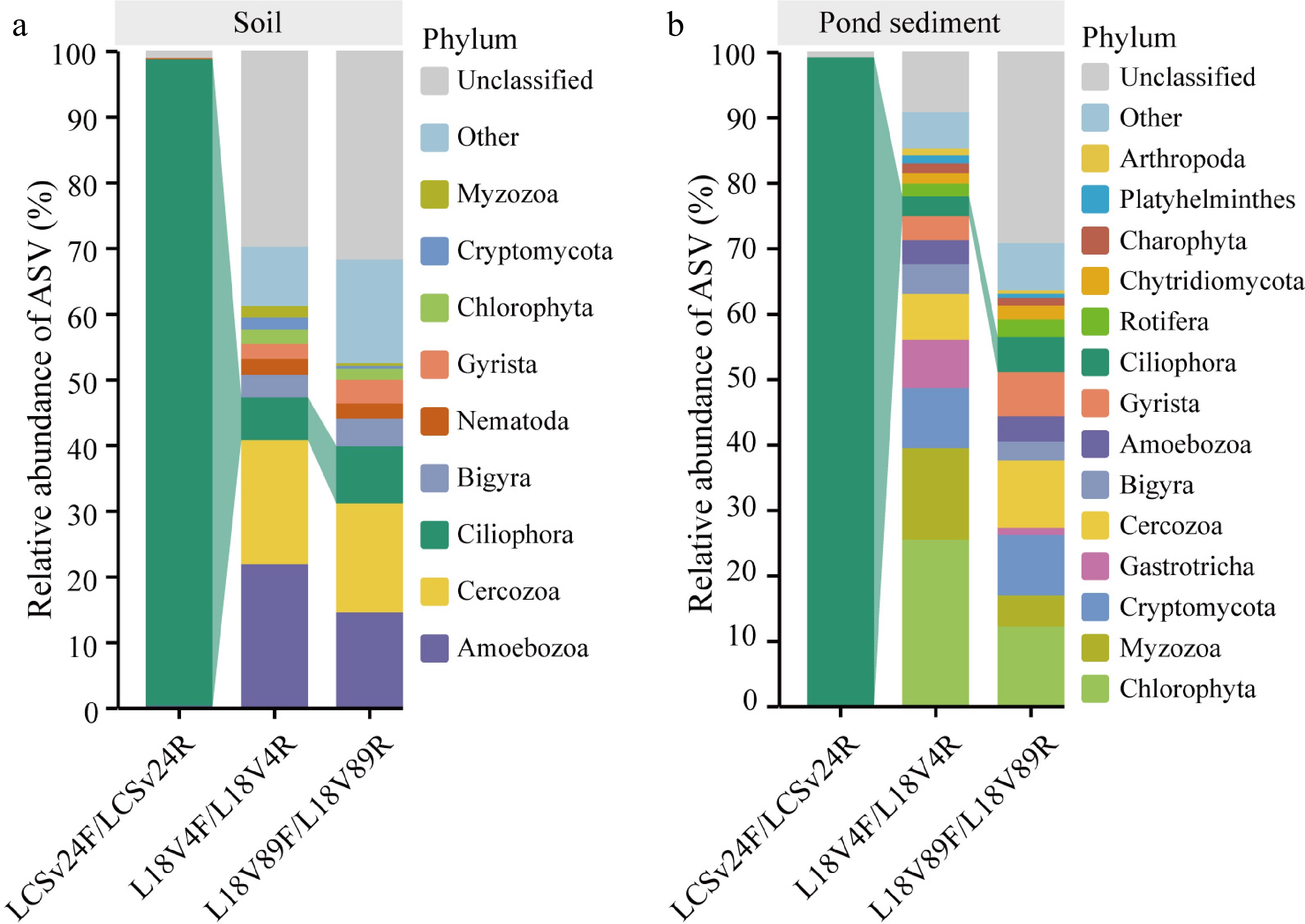
Figure 4.
Phylum-level community compositions of soil and pond sediment samples. Relative abundances of ASVs across phyla are shown for (a) soil and (b) pond sediment samples. The most abundant phyla are shown in each panel; “Other” represents the combined abundance of phyla not individually shown, whereas “Unclassified” represents ASVs for which no phylum-level annotation was obtained. Information of ciliate-specific long primers (LCSv24F/LCSv24R, targeting V2–V4 regions of the 18S rRNA gene) and long eukaryotic universal primers (L18V4F/L18V4R—targeting V4 regions, and L18V89F/L18V89R—targeting V8–V9 regions) is in Table 1.
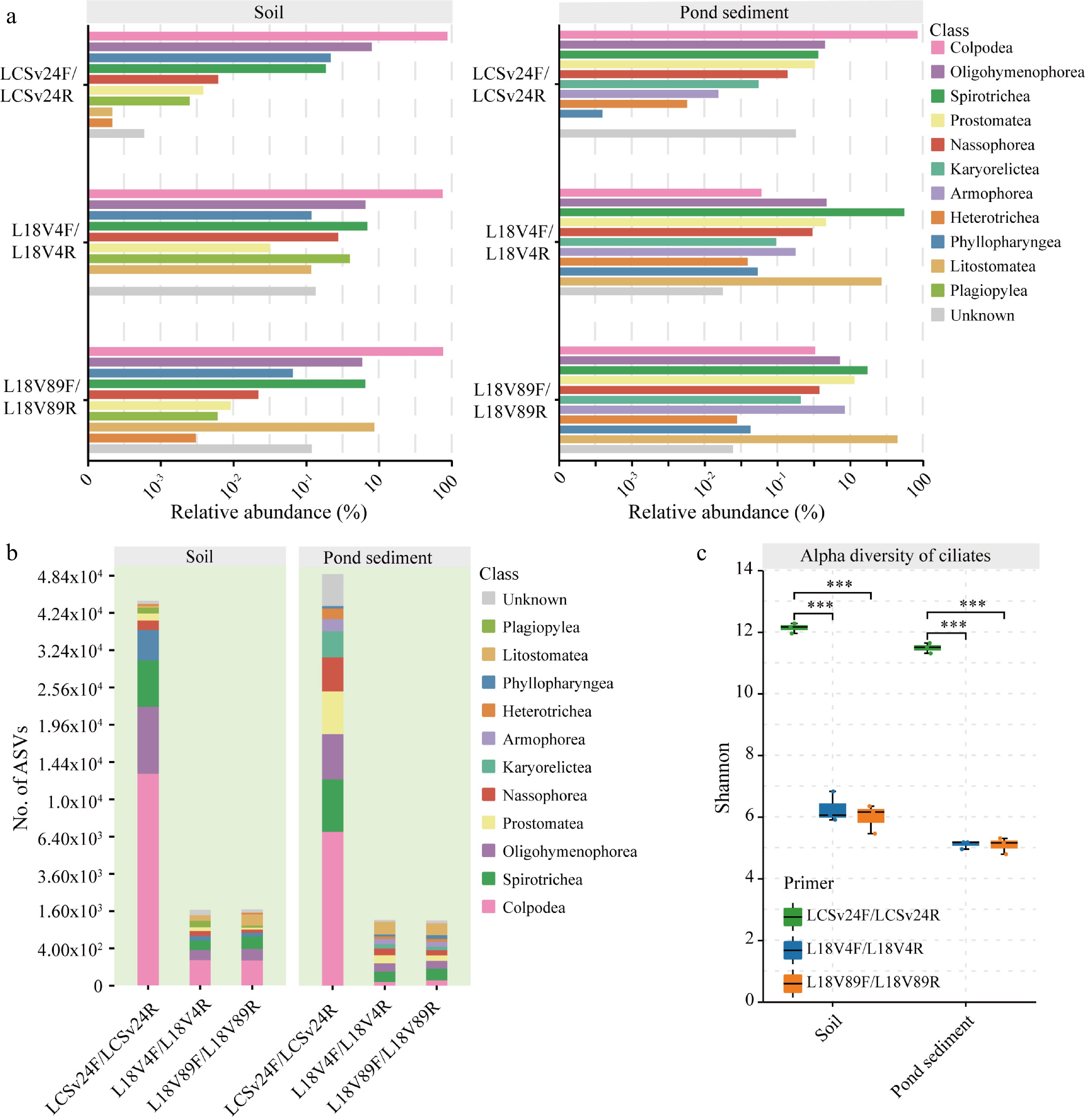
Figure 5.
Ciliate-diversity assessment for soil and pond sediment samples after rarefaction of sequences. (a) Relative abundances of feature sequences across ciliate classes in the environmental samples; gray bars represent unknown ciliate classes. To prevent low-abundance classes from becoming invisible and high-abundance classes from dominating the visual scale, the x-axis presents log10(relative abundance × 105). (b) Number of ASVs in environmental samples using ciliate-specific long primers and two universal eukaryotic long primer pairs, colored by class, with a square root-transformed y-axis. (c) Comparison of alpha diversity (Shannon index) in environmental samples using different primers. Statistical significance was determined using a Student's t-test (*** p < 0.0001).
Similarly, in aquaculture pond sediment samples, LCSv24F/LCSv24R again showed higher specificity than the universal long primers, with 9,614 ciliate ASVs accounting for 99.07% of the total, compared with only 5.35% of 2,656 ASVs for L18V89F/L18V89R and 3.03% of 5,276 ASVs for L18V4F/L18V4R (Fig. 4b). Although all primer sets recovered similar ciliate classes, the ciliate-specific primers detected substantially more ASVs from the eight non-Litostomatea classes at equivalent sequencing depths (Fig. 5b; Supplementary Fig. S4; Supplementary Table S8), but were much weaker in amplifying Litostomatea species, consistent with the in silico prediction and the testing results on genomic DNA of Chaenea vorax (Figs 3, 5b; Supplementary Tables S2, S6). We further performed an in silico mismatch analysis using 17 representative Litostomatea species, which showed that CSv24F/CSv24R had higher mismatch rates than the universal eukaryotic primers used in our study, providing sequence-level evidence for the observed weak amplification of this class (Supplementary Table S9).
We further estimated the ciliate alpha diversity (the mean species diversity in a site at a local scale) of the soil and aquaculture pond sediment samples using the Shannon index, based on the ciliate-specific or universal amplicon approaches. Significantly higher ciliate alpha diversity was revealed by the ciliate-specific approach in both environments (Fig. 5c; Supplementary Fig. S4), recovering many genera detected by the universal primers as well as additional genera missed by them (Supplementary Fig. S5). These results further support that the ciliate-specific amplicon approach is more effective than universal eukaryotic primers for detecting and characterizing ciliate biodiversity in environmental samples.
-
Using bioinformatic design, in silico and empirical testing at levels of clonal strain cultures and natural communities, our study systematically demonstrated the near-perfect ciliate specificity of the approach based on newly designed ciliate-specific long primers (LCSv24F and LCSv24R) for amplicon library preparation with just one conventional PCR. Additional long primers with multiplexed indices were also developed for amplicon library preparation across multiple samples (Supplementary Table S3). Although the approach showed reduced efficiency for ciliates of the class Litostomatea, the ciliate classes detected in soil samples using this approach were consistent with previous reports of soil ciliate diversity[48−50]. The approach therefore remains a convenient and cost-effective tool for targeted analyses of ciliate biodiversity and community structure. It may particularly facilitate class-targeted sequencing of Colpodea, Spirotrichea, Oligohymenophorea, Prostomatea, and Nassophorea, many members of which are abundant in soils[51,52].
Compared with previously published ciliate-specific primers[16,19,53,54], this amplicon approach provides broad coverage across multiple ciliate lineages while maintaining high predicted specificity and compatibility with short-read high-throughput sequencing platforms (Supplementary Table S10). Notably, unlike conventional two-step library preparation with universal eukaryotic primers, the one-step workflow requires only a single PCR and no intermediate purification, thereby reducing setup, cycling, hands-on time, and consumable use. More importantly, it also improves sequencing efficiency by enriching ciliate-derived sequences: ciliate ASVs accounted for 98.45% and 99.07% of total ASVs in soil and aquaculture pond sediment samples, respectively, compared with 8.71% and 5.35% for L18V89F/L18V89R and 6.45% and 3.03% for L18V4F/L18V4R (Fig. 4). Thus, universal primers would require substantially greater sequencing depth and cost to achieve comparable ciliate coverage. Previous work has shown that the library-preparation protocol used here reduces costs, simplifies the workflow, and shortens processing time compared with two-step protocols targeting V4 or V9. It may also reduce technical artifacts, including chimera formation during amplification[20]. Moreover, this approach could be further improved for taxa with weak primer binding, such as Litostomatea, for which low amplification efficiency was caused by multiple mismatches and indel-associated shifts in the CSv24R-binding region. As further optimization would require extensive degeneracy without reliably resolving these shifts, we introduced an additional Litostomatea-specific primer pair (5′-GWTGGTAGTGTATTGGAC-3′) and reverse primer (5′-WYAYTCGTTATTCCATGCT-3′) as a targeted supplementary strategy (Table 1; Supplementary Tables S2, S6, and S9; Supplementary Fig. S6). In silico mismatch analysis using the SILVA database preliminarily indicated that this primer pair had high predicted coverage and specificity for Litostomatea, with minimal predicted amplification of other classes (Supplementary Table S11). The primer pair also showed high amplification efficiency in PCR reactions (Supplementary Fig. S7, lane 2). Although multiplex PCR combining LCSv24F/LCSv24R with these Litostomatea-specific primers may provide a promising solution, its performance requires further validation using diverse environmental samples[48−50].
As all amplicon-based approaches are subject to biases in taxon quantification—arising from differential amplification efficiencies among paralogous copies within a genome, and interspecific differences in rRNA gene dosage[55,56]—the relative abundances of ciliate taxa inferred here should be interpreted with caution. High-resolution taxonomic inference based solely on amplicon data remains insufficient, because extensive sequence variation of marker gene alleles could exist within an individual[57]. This also complicates direct comparisons of resolution among different ciliate-specific primers. Future evaluations of this approach should incorporate mock communities representing a broader diversity of protist lineages—although we made substantial efforts to maximize taxonomic coverage in the present study—while also assessing consistency across different molecular markers. In addition, microscopic validation should be integrated to better evaluate the recovery of diverse ciliate lineages, and single-cell qPCR or other calibration approaches should be used to achieve more accurate quantification of species abundance.
Currently, unculturable species are predominant among ciliates[58], mock-community validation was limited to a subset of recognized classes despite efforts to include diverse representative strains. Several classes, including Karyorelictea, Armophorea, Phyllopharyngea and other less accessible lineages, were not represented in the wet-lab validation. Through in silico mismatch analyses, Karyorelictea showed the lowest predicted primer coverage and the highest mismatch frequencies among the unvalidated classes, followed by Armophorea, Muranotrichea, and Odontostomatea with intermediate matching rates and non-negligible mismatch frequencies. In contrast, the remaining classes showed high predicted matching rates and low mismatch frequencies (Supplementary Fig. S2; Supplementary Tables S2 and S6). This pattern was further supported by an independent analysis using the SILVA database as a reference (Supplementary Table S10)[26]. Notably, in our pond sediment samples, the ciliate-specific primers unexpectedly showed higher amplification efficiency for Karyorelictea than universal eukaryotic primers (Supplementary Table S8), which likely reflects favorable primer binding in the particular Karyorelictea species amplified from these samples, underscoring the importance of validating primer performance across diverse environmental samples rather than relying solely on in silico predictions. Future efforts to isolate or culture ciliate representatives across a greater diversity of classes will be essential to rigorously test the phylum-level specificity and sensitivity of the primers. Expanding the sample diversity would allow a more comprehensive evaluation of the primers' performance across different environmental conditions and ciliate communities. Furthermore, conventional amplicon library preparation using environmental DNA can yield false-positive detections because it amplifies remnant DNA from cells that no longer exist in the environment. To mitigate this, treatments such as PMA (propidium monoazide) could be applied prior to DNA extraction to target the living ciliate community[59,60].
Another key advantage of this approach is the enhanced detection power for unstudied or rare ciliates. For example, 3 ASVs from the soil samples and 291 ASVs from pond sediments could not be assigned to any known ciliate-class-level taxa. Further phylogenetic analyses showed that these unclassified ASVs formed distinct, well-supported clades, with soil-derived ASVs clustering into a single unique lineage and sediment-derived ASVs diversifying into multiple independent branches (Figs 5b, 6; Supplementary Table S8). Together, these results demonstrate that ciliate-specific long primers are effective for revealing hidden ciliate diversity (rare or novel ciliate biota) and hold strong potential for uncovering novel evolutionary lineages in environmental samples.
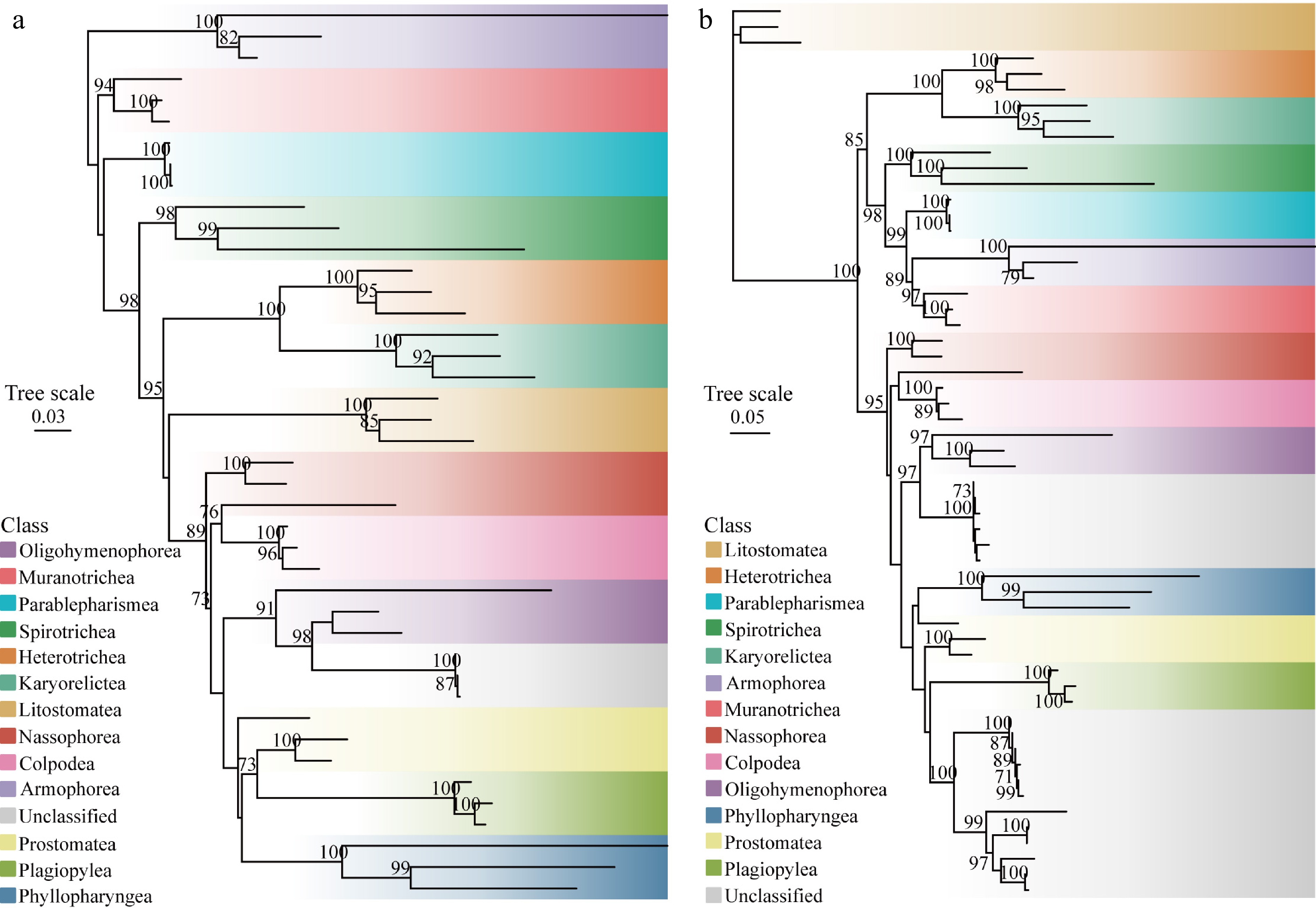
Figure 6.
Maximum likelihood trees constructed based on the sequences for known species in NCBI and unknown species from environmental samples. (a) Phylogenetic tree based on ASVs from soil samples, incorporating 14 known classes from Supplementary Table S2 and all three class-level unknown ASVs. (b) Phylogenetic tree based on ASVs from pond sediment samples, incorporating the same 14 known classes and 18 class-level unknown ASVs (randomly selected from 291 ASVs). The scale bar represents nucleotide substitutions per site. Nodes with bootstrap values > 70 are shown. The color blocks represent different species at the class level, with gray corresponding to taxa unclassified at this level.
-
Overall, the combination of specificity, sensitivity, broad taxonomic coverage, streamlined workflow, and exceptional cost-effectiveness establishes this one-step library preparation approach—targeting 18S rDNA V2–V4 regions for ciliate-specific amplicon sequencing—as an ideal tool for large-scale, high-throughput studies of ciliate diversity and community structure, especially for Colpodea, Oligohymenophorea, Spirotrichea, Prostomatea, and Nassophorea. Its simplicity and precision not only enable more efficient and accurate studies of ciliate communities but also provide a conceptual framework for developing targeted one-step amplicon library preparation strategies for other monophyletic taxonomic groups. By facilitating more precise and scalable estimation of microbial diversity, this ciliate-sequence enrichment has the potential to advance research in microbial ecology, environmental monitoring, and biodiversity studies.
We thank Xumiao Chen, Xuming Pan, Yang Bai, Yong Jiang, Jie Huang, Xiangrui Chen, Weiwei Liu, Jialu Wang, and Hongwei Yue for technical help. All computations were done on the IEMB-1 computation clusters at OUC.
-
This study involved publicly available sequence data obtained from the NCBI GenBank database, environmental samples, and laboratory cultures of unicellular protists. No human participants, vertebrate animals, clinical trials, or personal information were involved. Therefore, ethics committee approval was not required for this study.
-
The authors confirm their contributions to the paper as follows: study conception and design: Deng Z, Hu G, Ni J, Long H, Zhang Y; data collection: Deng Z, Hu G; analysis and interpretation of results: Deng Z, Hu G, Ni J; reagents and equipment: Long H, Zhang Y. All authors reviewed the results and approved the final version of the manuscript.
-
The data that support the findings of this study are available in the NCBI SRA repository under BioProject accession number PRJNA1373506. These data were derived from the following resources available in the public domain: NCBI SRA (www.ncbi.nlm.nih.gov/sra) and GenBank (www.ncbi.nlm.nih.gov/genbank). The 18S rRNA gene sequences for the mock community, along with their GenBank accession numbers, are provided in Supplementary Table S1. Any additional data not included in the above repository are available within the supplementary materials.
-
The authors declare that they have no conflict of interest.
-
accompanies this paper online at: https://doi.org/10.48130/jzser-0026-0012.
- Supplementary Fig. S1
- Supplementary Table S1 Details of the mock community and other unculturable ciliate species in this study.
- Supplementary Table S2 Details of SSU rRNA gene sequences of species used for ciliate‑specific primer design and their mismatch analysis in silico.
- Supplementary Table S3 Alternative primer indices.
- Supplementary Table S4 Illumina sequencing summary of natural soil and pond sediment samples by Ciliophora-specific long primers and universal eukaryotic long amplicon primers (PE300).
- Supplementary Table S5 Species details of top 200 hits for short ciliate-specific primers in Primer-BLAST.
- Supplementary Table S6 In silico mismatch analysis of ciliate-specific primers CSv24F/CSv24R targeting ciliate 18S rRNA gene sequences from the SILVA database.
- Supplementary Table S7 Validation of the mock community and other unculturable ciliate species based on Sanger sequencing.
- Supplementary Table S8 Statistics of taxonomically class from rarefied ASV data.
- Supplementary Table S9 In silico mismatch analysis of ciliate-specific and universal primers in the ciliate class Litostomatea.
- Supplementary Table S10 Comparison of the ciliate-specific primers CSv24F/CSv24 used in this study with previously published ciliate-specific primers.
- Supplementary Table S11 In silico mismatch analysis of Litostomatea-specific primers (forward primer: 5'-GWTGGTAGTGTATTGGAC-3'; reverse primer: 5'-WYAYTCGTTATTCCATGCT-3') targeting ciliate 18S rRNA gene sequences from the SILVA database.
- Supplementary Fig. S1 Microscopic images of ciliate species constituting the mock community (scale bar = 10 μm).
- Supplementary Fig. S2 Wrapped multiple sequence alignment of CSv24F/CSv24R targeting regions in 112 ciliates (16 classes) and 28 non‑ciliate eukaryotes species viewed by Jalview v2.11.5.1.
- Supplementary Fig. S3 PCR validation of the ciliate-specific primer pair CSv24F/CSv24R using genomic DNA from three unculturable ciliate species.
- Supplementary Fig. S4 Rarefaction curves of the Shannon index for ciliates.
- Supplementary Fig. S5 Venn diagram of identified genera in environmental samples using ciliate-specific primers and two sets of universal eukaryotic primers.
- Supplementary Fig. S6 Wrapped multiple sequence alignment of CSv24F/CSv24R targeting regions in 17 representative Litostomatea species viewed by Jalview v2.11.5.1.
- Supplementary Fig. S7 Validation of the newly designed Litostomatea-specific primer set by PCR.
- Copyright © 2026 by the author(s). Journal of Zoological Systematics and Evolutionary Research published by Maximum Academic Press on behalf of John Wiley & Sons Ltd. This is an open access article under the terms of the Creative Commons Attribution License, which permits use, distribution and reproduction in any medium, provided the original work is properly cited.
-
About this article
Cite this article
Deng Z, Hu G, Ni J, Pan H, Lynch M, et al. 2026. Efficient enrichment of ciliate sequences using a phylum-specific one-step amplicon approach. Journal of Zoological Systematics and Evolutionary Research 2026: e013 doi: 10.48130/jzser-0026-0012 

Efficient enrichment of ciliate sequences using a phylum-specific one-step amplicon approach
- Received: 08 May 2026
- Revised: 02 August 2026
- Accepted: 06 August 2026
- Published online: 18 September 2026
Journal of Zoological Systematics and Evolutionary Research
2026,
Article number: e013 (2026)
|
Cite this article
Abstract: Ciliates (phylum Ciliophora) contribute substantially to ecosystem functioning, but ciliate biodiversity surveys often waste sequencing throughput on non-ciliate taxa or require re-amplification of long ciliate-specific products that are poorly compatible with short-read sequencing platforms. To enable efficient, ciliate-targeted community profiling frameworks for biodiversity and ecological research, we developed a Ciliophora-specific amplicon sequencing approach using the LCSv24F/LCSv24R primer system, which targets the V2–V4 regions of the 18S rRNA gene. Tests with genomic DNA from 16 ciliate species covered eight classes and four non-ciliate taxa showed complete specificity and 93.75% sensitivity for the embedded target primers CSv24F/CSv24R. In soil and aquaculture pond sediment samples, ciliate sequences represented 98.45% and 99.07% of total Amplicon Sequence Variant (ASV) counts, respectively, far exceeding the proportions obtained with universal eukaryotic primers. The approach consistently recovered Colpodea, Oligohymenophorea, Spirotrichea, Prostomatea, and Nassophorea classes, although amplification of Litostomatea was less efficient. It also detected more unclassified ciliate taxa, indicating improved recovery of rare or taxonomically unresolved lineages. Overall, this one-step approach therefore enables efficient ciliate biodiversity profiling and offers a framework for targeted amplicon sequencing in microbial ecology, environmental monitoring, and biodiversity research.