












-
Arnebia guttata Bunge is a perennial herbaceous plant of the family Boraginaceae[1]. It serves as the source plant for the traditional Chinese medicinal material Arnebiae Radix. The root is used medicinally and contains primary active constituents such as hydroxynaphthoquinones, flavonoids, phenols, esters, terpenoids, and organic acids[2]. The 2025 edition of the Chinese Pharmacopoeia stipulates that the content of alkannin (C16H16O5) and β,β-dimethyl-acryl-alkannin (C21H22O6) in Arnebiae Radix must not be less than 0.80% and 0.30%, respectively. Arnebiae Radix is used to clear heat and cool the blood, promote circulation and detoxification, and induce eruptions and eliminate spots[3]. Clinically, it is primarily used for conditions such as burns, erysipelas, eczema, and diabetic foot ulcers, and has demonstrated significant efficacy against cervical cancer, colon cancer, and liver cancer[4−9]. Due to the remarkable therapeutic efficacy of the medicinal herb Arnebiae Radix, its source plant has long suffered from overharvesting, leading to the depletion of wild resources. Currently, Arnebia euchroma (Royle) I. M. Johnst. has been listed as a Class II protected plant in the National Key Protected Wild Plants List[10]. Moreover, multiple investigative studies indicate that the wild reserves of A. guttata are significantly lower than those of A. euchroma[11,12]. Consequently, implementing in situ conservation measures for the wild populations of both species, systematically collecting and preserving germplasm resources, and establishing standardized cultivation practices for cultivated varieties have become imperative. However, in artificial cultivation practices, growers' singular focus on maximizing yield often results in insufficient accumulation of medicinal constituents within the plants. This, in turn, severely compromises clinical efficacy and drug safety. Against this backdrop, effectively enhancing the content of active constituents in the medicinal parts of A. guttata is of paramount importance for ensuring the stability of medicinal material quality and its clinical application value.
Plant microbiomes are regarded as the "second genome" of plants. Based on their colonization sites, they can be categorized into rhizosphere, phyllosphere, and endophytic microbiomes. Among these, rhizosphere microorganisms primarily originate from plant root surfaces and surrounding soil. They not only exert significant regulatory effects on plant growth and development, stress resistance, and the synthesis and accumulation of secondary metabolites but also play a pivotal role in carbon sequestration and nutrient cycling within terrestrial ecosystems[13−16]. For example, research has found that the Basidiomycota can enhance the phosphorus uptake of plants and improve their stress resistance[17], and the Glomeromycota can enhance mineral element uptake in Taraxacum mongolicum Hand.-Mazz. under salt stress conditions[18,19]. Microbial fertilizers are a new type of environmentally friendly bio-fertilizer that demonstrates significant potential in promoting plant growth, improving crop quality, and enhancing soil health. They contribute to advancing environmental sustainability and building a circular economy system[20,21]. For example, soil fungi such as Solicoccozyma and Archaeorhizomyces, along with soil bacteria such as Pseudonocardia and Sphingomonas, show a significant positive correlation with the content of active compounds in A. guttata[22]. Cultivated varieties and wild medicinal plants often exhibit significant differences in biomass and secondary metabolite accumulation, with these variations regulated by multiple factors, including soil nutrients, climatic conditions, and other environmental factors[23−25]. Similar phenomena have been observed in other medicinal plants; for instance, wild Gardenia jasminoides J. Ellis exhibits a distinct chemical profile compared with its cultivated counterparts, a variation largely attributed to the recruitment of specific rhizosphere microbial communities under distinct environmental conditions[26]. Given the increasing depletion of wild resources and the persistent challenge of quality decline under artificial cultivation, harnessing rhizosphere microbial regulation to enhance the accumulation of medicinal components represents a promising strategy for ensuring the sustainable supply of Arnebiae Radix. A systematic comparison of rhizosphere microbial communities between cultivated and wild A. guttata is therefore essential to identify candidate targets and establish a theoretical basis for this approach.
In summary, by systematically comparing the compositional and functional differences between cultivated and wild A. guttata rhizosphere microbial communities, it is anticipated that beneficial microbial communities associated with the accumulation of its medicinal components can be identified. This provides a theoretical basis for developing specialized microbial fertilizers tailored to this medicinal plant.
-
High-performance liquid chromatography (HPLC) analysis was conducted following the method of Ding et al.[27], using an Agilent C18 column. The mobile phase was acetonitrile–0.05% formic acid (70:30), the volume flow rate was 1 mL/min, the detection wavelength was 275 nm, the column temperature was 30 °C, and the injection volume was 10 μL. Under the above chromatographic conditions, the three target components could be completely separated (Supplementary Fig. S1). Quantification was performed using the external standard method. Standard solutions of alkannin (0.01808 mg/mL), acetylshikonin (0.08360 mg/mL), and β,β-dimethyl-acryl-alkannin (0.03976 mg/mL) were prepared and injected under the same chromatographic conditions as the samples, with each standard solution injected in triplicate. The content of each target component in the samples was calculated using the peak area ratio of the standard to the sample and expressed as a percentage of the dry weight of the root powder (%, w/w).
Rhizosphere soil sample collection
-
In October 2023, samples of both A. guttata plants and their rhizosphere soils were collected. Wild A. guttata (A group) was sampled in Alxa, Inner Mongolia, China (38°40′32.99″ N, 105°45′35.06″ E), and cultivated plants (Z group) were sampled from the Medicinal Botanical Garden of Baotou Medical College, Inner Mongolia University of Science and Technology (40°36′49.248″ N, 108°59′21.31″ E) (Fig. 1). The Z group sowed A. guttata seeds in seedling cups. Once grown into 1-year-old seedlings, they were transplanted to the medicinal plant garden. Field planting spacing was 30 cm × 30 cm. During the growing season, weeding and watering were performed six times each year. No fertilizers were applied throughout the entire process. For the Z group, 3-year-old plants under uniform cultivation management were selected. Five biological replicates were set for each sampling site. Rhizosphere soil was collected using the shaking-off method, thoroughly homogenized, and divided into two subsamples: one stored at low temperature for soil microbial analysis, and the other air-dried, ground, and sieved for soil nutrient determination. The aerial and underground parts of the same individuals were simultaneously harvested to ensure comparable physiological status. For the wild group, individuals whose plant height and stem/root collar diameter were similar to those of the 3-year-old cultivated plants were selected, thereby minimizing developmental-stage differences in the accumulation of pharmacodynamic components[28]. After shade-drying and grinding the plant material, all A group plant samples were thoroughly mixed and divided into three parallel samples. Z group samples were processed identically. All parallel samples were stored at −20 °C for phytochemical analysis. Samples were coded as A and Z based on their source.
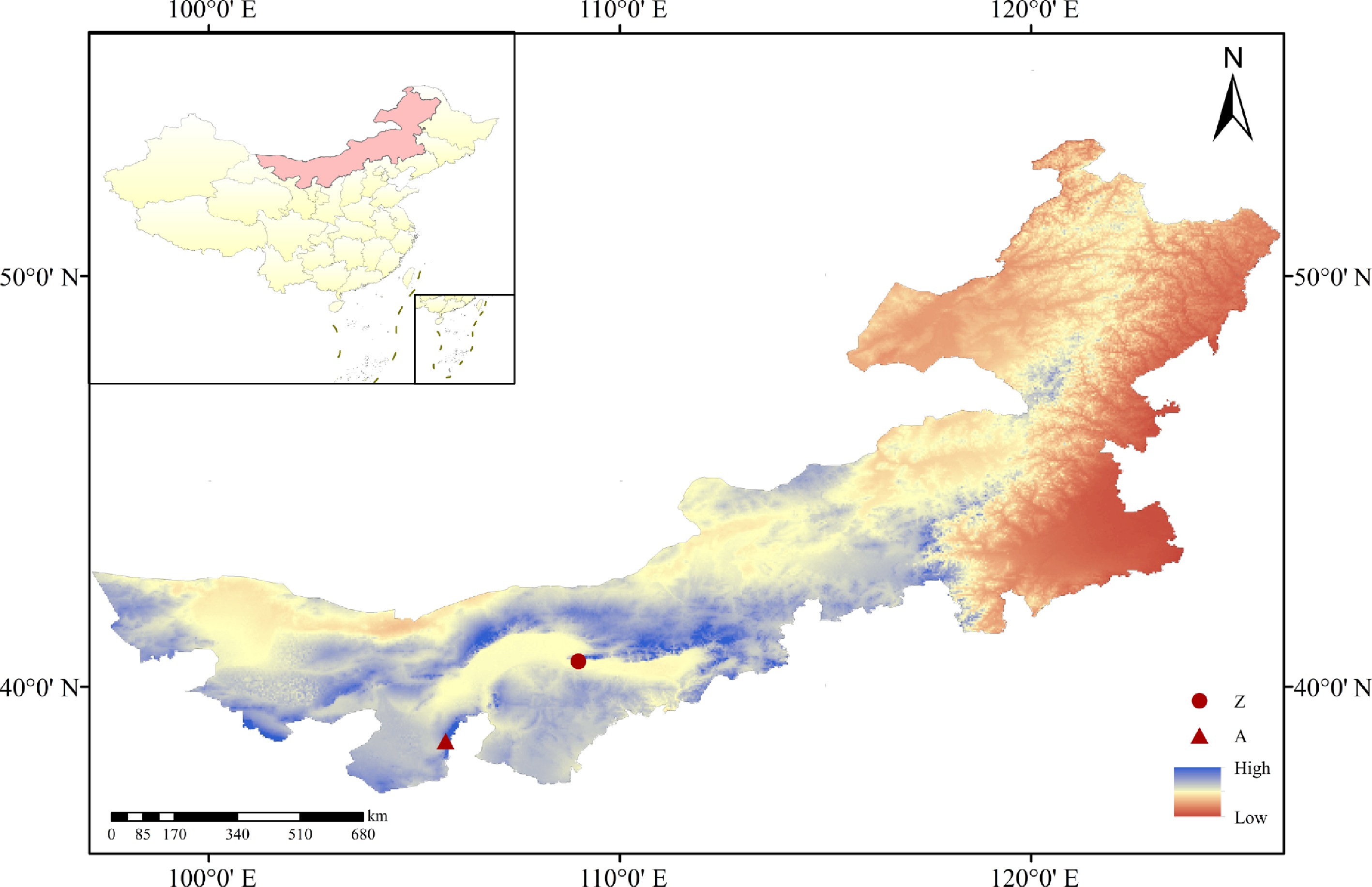
Figure 1.
Geographic locations of wild (Group A, Alxa) and cultivated (Group Z, Baotou) Arnebia guttata sampling sites in Inner Mongolia, China. The base map data used in this study are the 2024 standard administrative division data (Map Approval No. GS [2024] 0650) from the National Platform for Common Geospatial Information Services (Tianditu), available at
www.tianditu.gov.cn .Determination of rhizosphere microorganisms
-
Genomic DNA was extracted from the samples, and the V3 + V4 region of 16S rDNA was amplified using specific barcoded primers. The primer sequence was as follows: 341F: CCTACGGGNGGCWGCAG; 806R: GGACTACHVGGGTATCTAAT. The purified amplification product (i.e., amplicon) was ligated to the sequencing adaptor to construct a sequencing library and was sequenced on an Illumina platform. After sequencing the original data, a large amount of low-quality or nonbiologically significant data (such as chimeras) were generated due to PCR and sequencing errors. Therefore, to ensure the statistical reliability and biological effectiveness of subsequent analyses, Reads utilization, Tags splicing, OTU (operational taxonomic unit) clustering, and other data processing steps were strictly controlled. After sequencing the Raw Reads, the low-quality Reads were first filtered and then assembled. The double-ended Reads were spliced into Tags, and then the Tags were filtered. The resulting data were called Clean Tags. Clustering was performed based on Clean Tag to remove the chimera Tag detected during the process of clustering analogy, and the resulting data were called Effective Tags. After obtaining OTUs, abundance statistics were performed based on Effective Tag (Supplementary File 1).
Determination of soil nutrient content
-
Soil nutrient content was determined following the method described by Shidan[29].
Soil organic matter
-
Soil organic matter was determined by the potassium dichromate (K2Cr2O7) heating oxidation method. First, a 0.25 g soil sample, sieved through a 0.25 mm sieve, was accurately weighed. Next, 10.0 mL of 0.8000 mol/L 1/6 K2Cr2O7 solution was added. The mixture was heated in an oil bath, and then N-phenylanthranilic acid (C13H11NO2) indicator was added. Finally, the mixture was titrated with 0.2000 mol/L FeSO4 solution, and the soil organic matter (O) content was calculated.
Hydrolyzable nitrogen
-
Hydrolyzable nitrogen was determined by the alkali diffusion method. A 2.00 g soil sample and a 0.20 g FeSO4 sample were weighed separately and placed in the outer chamber of the diffusion dish. Next, 2.0 mL of 2% H3BO3 mixed indicator solution was added to the inner chamber. Immediately, 10.0 mL of 2.0000 mol/L NaOH solution was added to the outer chamber, and the diffusion dish was promptly sealed. The diffusion dish was then incubated in a constant-temperature incubator at 40 °C for 24 h. Finally, 0.0100 mol/L HCl solution was added to the inner chamber for titration. The endpoint was reached when the solution changed from blue to a faint red color and the hydrolyzable nitrogen (N) content in soil was calculated.
Available phosphorus
-
The molybdenum-antimony colorimetric method was used to determine available phosphorus. A 2.50 g soil sample, passed through a 1.00 mm sieve, and a 2.00 g sample of phosphorus (P)-free carbon powder were weighed separately into conical flasks. Next, 20.0 mL of 0.5000 mol/L NaHCO3 solution was added, and the mixture was shaken at 150 rpm for 30 min on a shaker. The solution was then filtered using P-free filter paper. Simultaneously, standard P solutions at concentrations of 0, 0.1000, 0.2000, 0.3000, 0.4000, and 0.5000 μg/mL were prepared to plot the P standard curve. Next, 10.0 mL of the filtered sample solution was pipetted, 30.0 mL of distilled water was added, and 5.0 mL of molybdenum-antimony mixed color reagent was precisely added and placed in a 50.0 mL volumetric flask. The mixture was then allowed to stand for 30 min. Finally, the soil P content was determined using a spectrophotometer at a wavelength of 660.00 nm.
Available potassium
-
Available potassium was determined by employing the ammonium acetate flame photometric method. A 5.00 g sample of soil, passed through a 1.00 mm sieve, was weighed, and 50.0 mL of neutral 1.0000 mol/L CH3COONH4 solution was added. The mixture was shaken for 30 min, and then filtered using dry ordinary filter paper. The filtrate was determined using a flame photometer. Simultaneously, potassium standard solutions were prepared at concentrations of 0, 2.5000, 5.0000, 10.0000, 15.0000, and 20.0000 μg/mL. Finally, the available potassium (K) content in soil was calculated by correlating the standard curve with the absorbance values measured by the K.
Data processing and analysis
-
Data were organized and statistically analyzed using Excel and SPSS (version 27.0). All quantitative data were expressed as mean ± standard deviation (mean ± SD). Differences between the two groups were assessed using Student's t-test (independent samples), with p < 0.05 considered statistically significant (p < 0.05 marked as *, p < 0.01 as **, and p < 0.001 as ***). Biological replicates were set as follows: microbial 16S rRNA sequencing, n = 5; soil nutrient content determination, n = 5; HPLC quantification, n = 3. Figures were generated using GraphPad Prism 10.1.2 and the Genedenovo online cloud platform (
www.genedenovo.com/about.html ). -
The active component content of cultivated and wild A. guttata was determined using HPLC (Supplementary Fig. S2). The results indicated that cultivated A. guttata contained an alkannin content of approximately 0.060%, an acetylshikonin content of approximately 0.309%, and a β,β-dimethyl-acryl-alkannin content of approximately 0.627%. In contrast, wild A. guttata from the Alxa region contained only approximately 0.001% alkannin and 0.006% acetylshikonin, while β,β-dimethyl-acryl-alkannin was not detected (Table 1). These findings indicate that the medicinal component content in wild A. guttata is significantly lower than that in cultivated A. guttata.
Table 1. Results of sample content determination (mean ± SD, n = 3).
Samples Potency Cultivated A. guttata sample Wild A. guttata sample Alkannin 0.060 ± 0.002 a 0.001 ± 0.001 b Acetylshikonin 0.309 ± 0.009 a 0.006 ± 0.002 b β,β-dimethyl-acryl-alkannin 0.627 ± 0.306 — Different letters in the same row indicate significant differences (p < 0.05). — means not detected. Differences in the physicochemical properties of soil around the roots of wild and cultivated A. guttata
-
Among the four measured soil physicochemical parameters, all indicators showed significant differences between the A and Z groups (Fig. 2). Group Z displayed markedly higher levels of available K, N, and O, whereas Group A environments demonstrated significantly superior readily available P content. This contrast clearly highlights the disparity in soil nutrients between the two growth regimes.
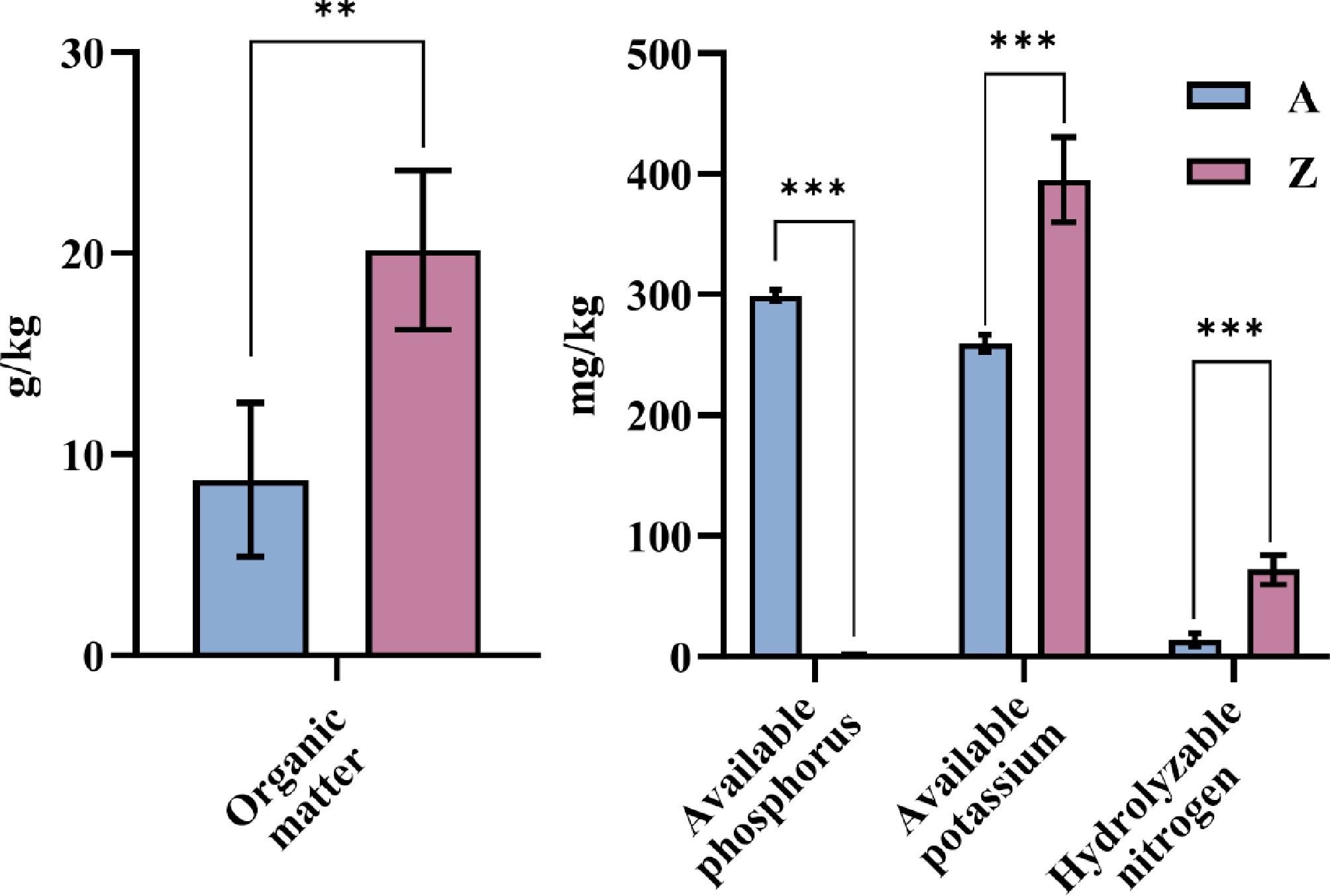
Figure 2.
Comparison of physicochemical parameters in rhizosphere soil between wild (Group A) and cultivated (Group Z) Arnebia guttata (* p < 0.05, ** p < 0.01, *** p < 0.001, n = 5).
Sequencing data preprocessing and low-abundance OTU filtering
-
Sequencing of 16S rRNA gene amplicons from 10 A. guttata rhizosphere soil samples yielded a total of 1,289,784 double-ended Illumina raw reads. Following rigorous quality control, sequence assembly, and chimera removal, 1,004,729 high-quality effective tags were obtained, representing an average effective data proportion of 77.91%. This indicates reliable sequencing data quality suitable for subsequent analysis. To minimize the sequencing noise and the potential impact of rare species on subsequent analyses, OTUs with relative abundances below 0.005% across the entire data set were excluded. The sparsity curve plotted based on the Shannon index indicates that all samples reached a plateau at a sequencing depth of 800 sequences (Supplementary Fig. S3). This confirms that the volume of sequencing data is both reasonable and sufficient to support subsequent microbial community analysis.
Analysis of differences in diversity and composition of rhizosphere microbial communities between wild and cultivated A. guttata
-
Through effective tag statistics and low-abundance OTU filtering, a total of 3,017 OTUs were obtained. The number of OTUs reflects the relative abundance of bacterial communities in the rhizosphere soil of A. guttata under different cultivation conditions. The results indicate that OTU counts differed between Group Z and Group A at phylum, class, order, family, genus, and species levels, though Group Z's rhizosphere soil contained fewer total OTUs than Group A. Specifically, Group Z's rhizosphere soil harbored 1,737 OTUs, while Group A's rhizosphere soil contained 2,070 OTUs, with 790 shared OTU taxa (Fig. 3a). At the genus level, Group Z root zone soil harbored 80 unique OTUs, while Group A root zone soil contained 44 OTUs distinct from cultivated soil, with both groups collectively encompassing 201 OTUs (Fig. 3b).
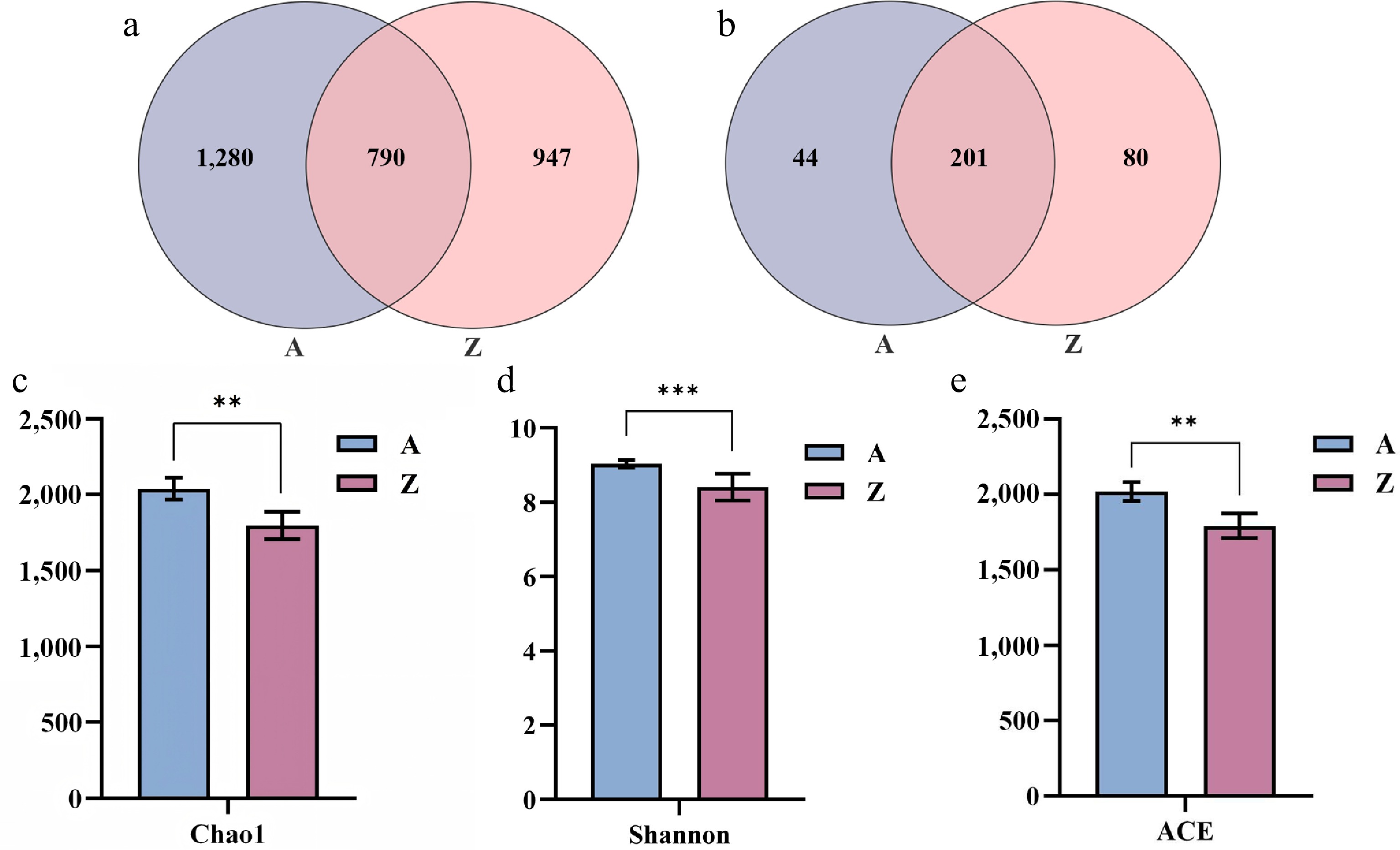
Figure 3.
Comparison of OTU abundance and alpha diversity in rhizosphere soil bacterial communities between wild (Group A) and cultivated (Group Z) Arnebia guttata: (a) Venn diagram showing the number of total observed OTUs shared and unique between the two groups. (b) Venn diagram at the genus level. (c−e) Comparisons of the Chao1 (c), Shannon (d), and ACE (e) alpha diversity indices between groups. Statistical significance was determined by Student's t-test (* p < 0.05, ** p < 0.01, *** p < 0.001, n = 5).
Alpha diversity metrics, commonly employed to assess microbial diversity and abundance, revealed significant differences between Group Z and Group A for both Chao1 (p < 0.01) and Shannon (p < 0.001) indices, with Group A consistently exceeding Group Z (Fig. 3c, d). Concurrently, Group A exhibited higher ACE indices (Fig. 3e) and Simpson indices than Group Z, indicating a more complex and stable microbial community structure within the rhizosphere microenvironment of Group A (Supplementary Table S1).
Beta diversity analysis is primarily employed to assess differences in microbial community structure across distinct samples. The UPGMA clustering tree constructed based on the phylum-level community structure revealed that samples from Group Z and Group A formed distinct branches, indicating significant separation in their community compositions (Fig. 4a). This intergroup disparity was further supported by the Adonis statistical test (p < 0.05; Fig. 4b). To further validate these findings, we conducted PCoA (Principal Coordinate Analysis) and NMDS (Non-metric Multidimensional Scaling) analyses based on phylum-level community composition. These revealed that Group A samples clustered tightly within the plots, whereas Group Z samples exhibited relatively dispersed distribution, reflecting greater heterogeneity in the rhizosphere microbial community structure of Group Z (Fig. 4c, d). Welch's t-test indicated higher intragroup heterogeneity in Group Z than in Group A (Fig. 4e). Combined with the Anosim result (Fig. 4f), these analyses consistently support the conclusion that the two groups harbor distinct rhizosphere bacterial communities. Collectively, these findings demonstrate that cultivation environments not only shape rhizosphere microbial communities distinctly from wild populations but also introduce additional variables through cultivation management practices, thereby increasing community heterogeneity.
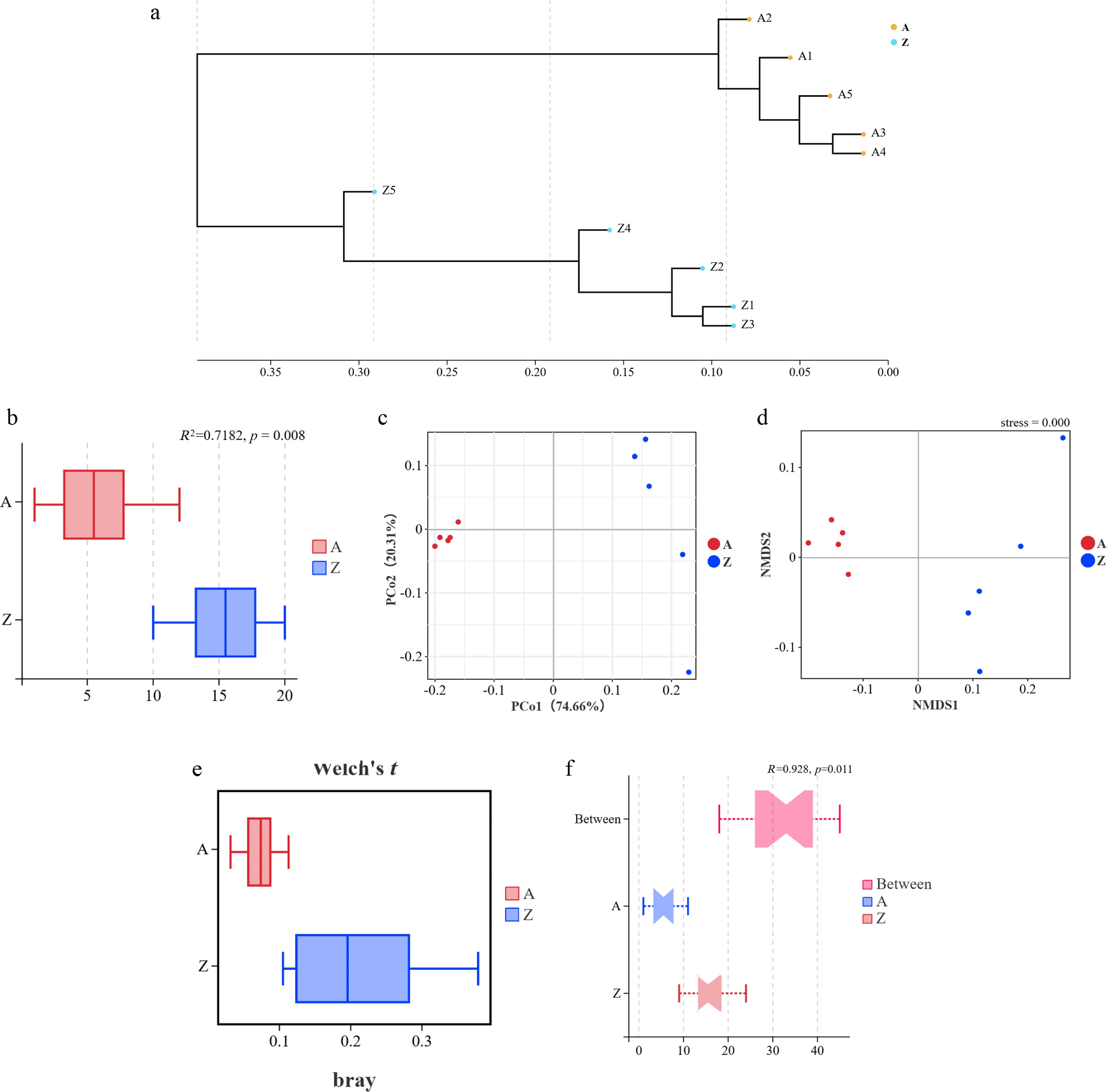
Figure 4.
Differences in rhizosphere bacterial community structure between cultivated (Group Z) and wild (Group A) Arnebia guttata based on phylum level, and analysis of intragroup heterogeneity. (a) UPGMA clustering tree analysis based on phylum-level community structure. (b) Adonis statistical test based on phylum-level community structure. (c, d) PCoA analysis (c) and NMDS analysis (d) based on phylum-level community composition. (e) Welch's t-test based on phylum-level community structure (comparison of intragroup heterogeneity). (f) Anosim analysis.
At the phylum level, Proteobacteria (relative abundance 16.81%−27.54%), Actinobacteriota (8.30%−31.31%), and Firmicutes (1.71%−19.09%) were the three most dominant phyla (Fig. 5a). Actinobacteriota exhibited higher relative abundance in Group A, whereas Proteobacteria and Firmicutes dominated in Group Z. Further analysis revealed that the dominant microbial community in Group Z centered on Bacillus. At taxonomic levels from class to genus, the relative abundance of the Bacilli class in Group Z was significantly higher than in Group A. This dominance extended to its subordinate order Bacillales, Bacillaceae family, and Bacillus genus, with significant differences observed at both the family and genus levels (Fig. 5b−f). Moreover, intergroup differential analysis based on Welch's t-tests at the phylum level and random forest analysis indicated that Actinobacteriota and Acidobacteriota were indicator groups for Group A, while Patescibacteria served as the indicator group for Group Z (Fig. 6).
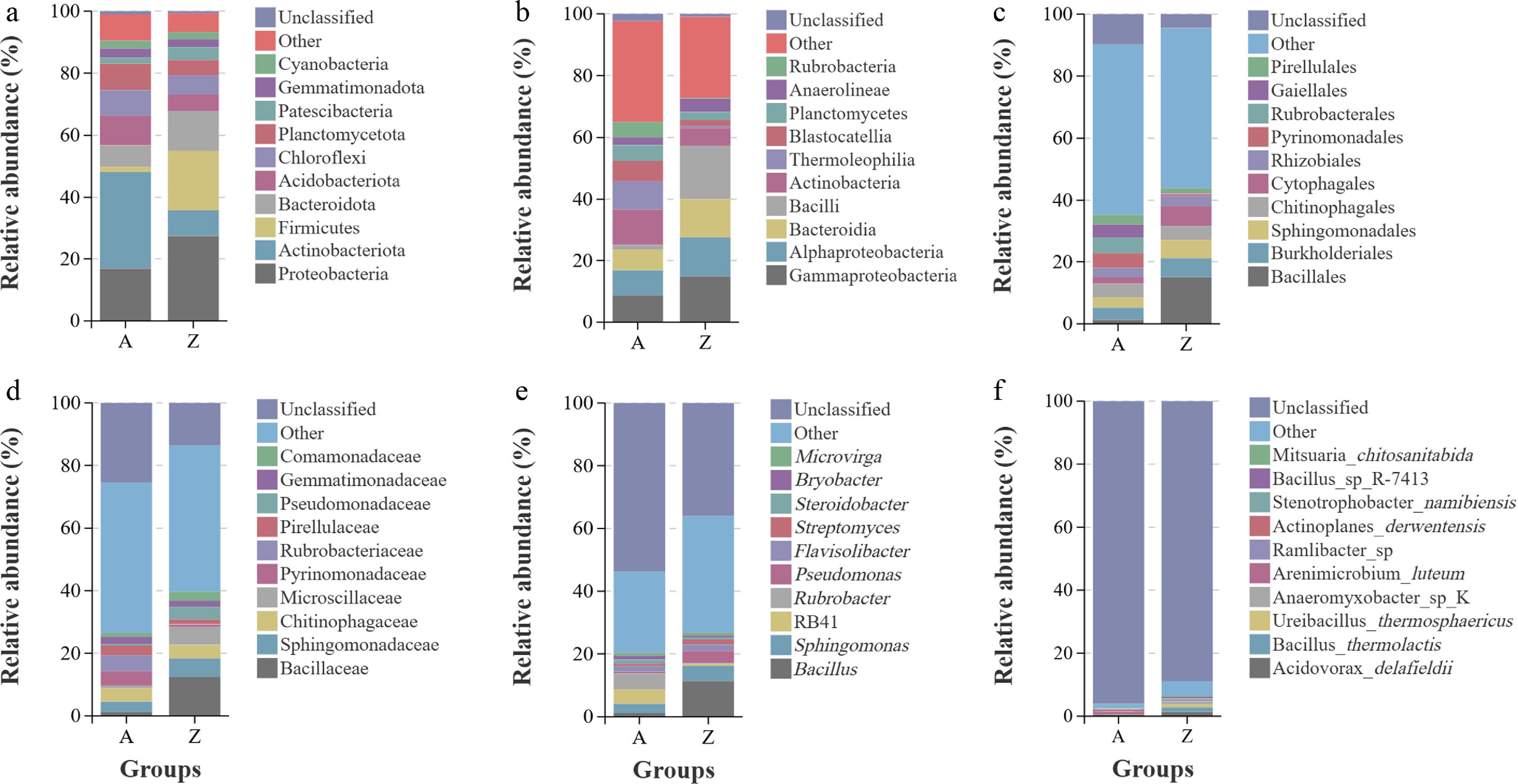
Figure 5.
Distribution of rhizosphere microbiota in cultivated (Group Z) and wild (Group A) Arnebia guttata: (a) phylum; (b) class; (c) order; (d) family; (e) genus; and (f) species.
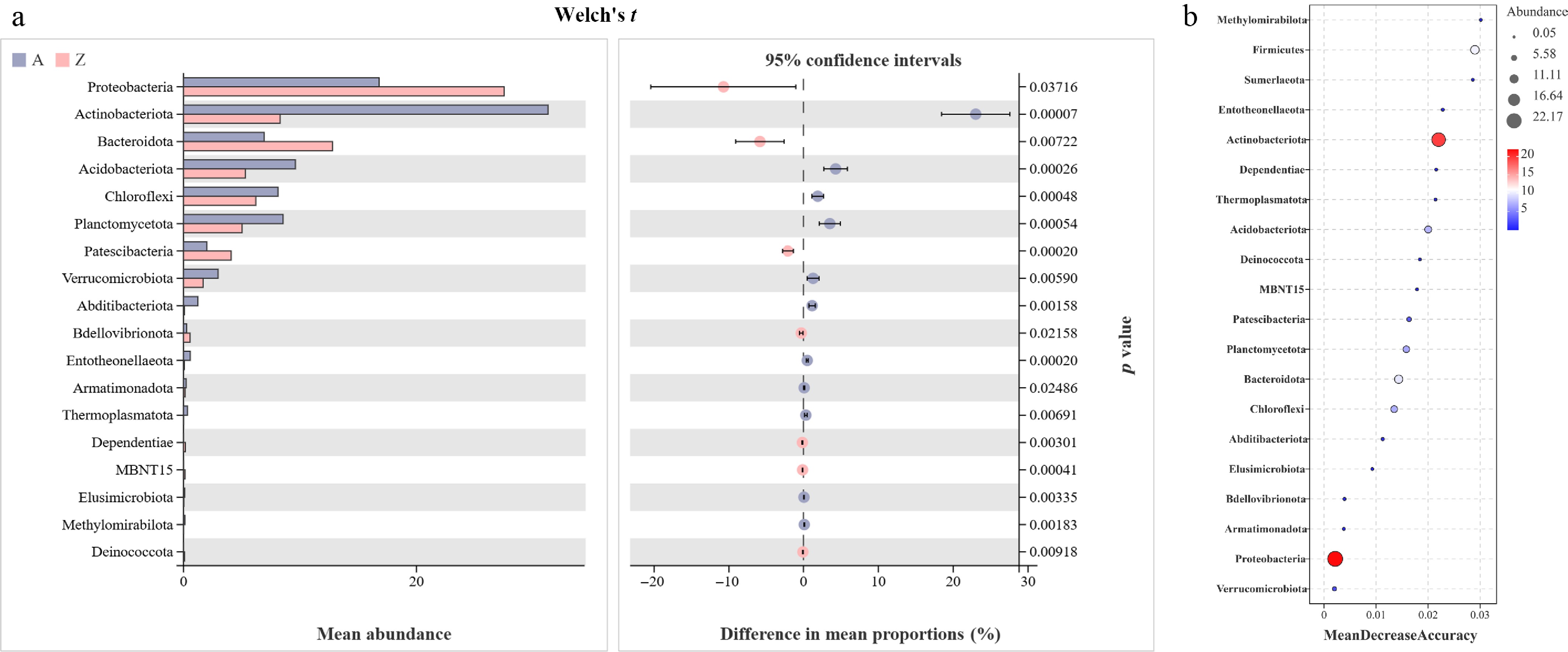
Figure 6.
Differences between cultivated (Group Z) and wild-type (Group A) Arnebia guttata and indicated microbial communities identified by Welch's t-test at the phylum level (a) and random forest analysis (b).
Prediction of rhizosphere microbial community function and its correlation analysis with environmental factors
-
We employed Tax4Fun to predict bacterial community functions. Based on functional annotations and abundance data from the KEGG (Kyoto Encyclopedia of Genes and Genomes,
www.kegg.jp ) pathway databases, we selected the top 36 most abundant functional items. Heatmaps were generated by plotting their abundance across samples, followed by KEGG functional abundance clustering analysis (Fig. 7a). The results indicate that, compared with the wild group, the cultivated group was enriched in pathways including Translation, Replication and Repair, Transcription, Folding, Sorting and Degradation, and Glycan Biosynthesis and Metabolism. These functions are predominantly associated with the rapid growth and proliferation of the rhizosphere microbial community itself. In the wild group, pathways such as Membrane Transport, Biosynthesis of Other Secondary Metabolites, Amino Acid Metabolism, Metabolism of Other Amino Acids, Xenobiotics Biodegradation and Metabolism, and Transport and Catabolism were predicted to be enriched, suggesting a functional profile oriented toward complex metabolic networks and environmental stress adaptation. These functions typically involve complex metabolic networks and are primarily associated with survival strategies such as the degradation of exogenous substances, nutrient recycling, and adaptation to environmental stress.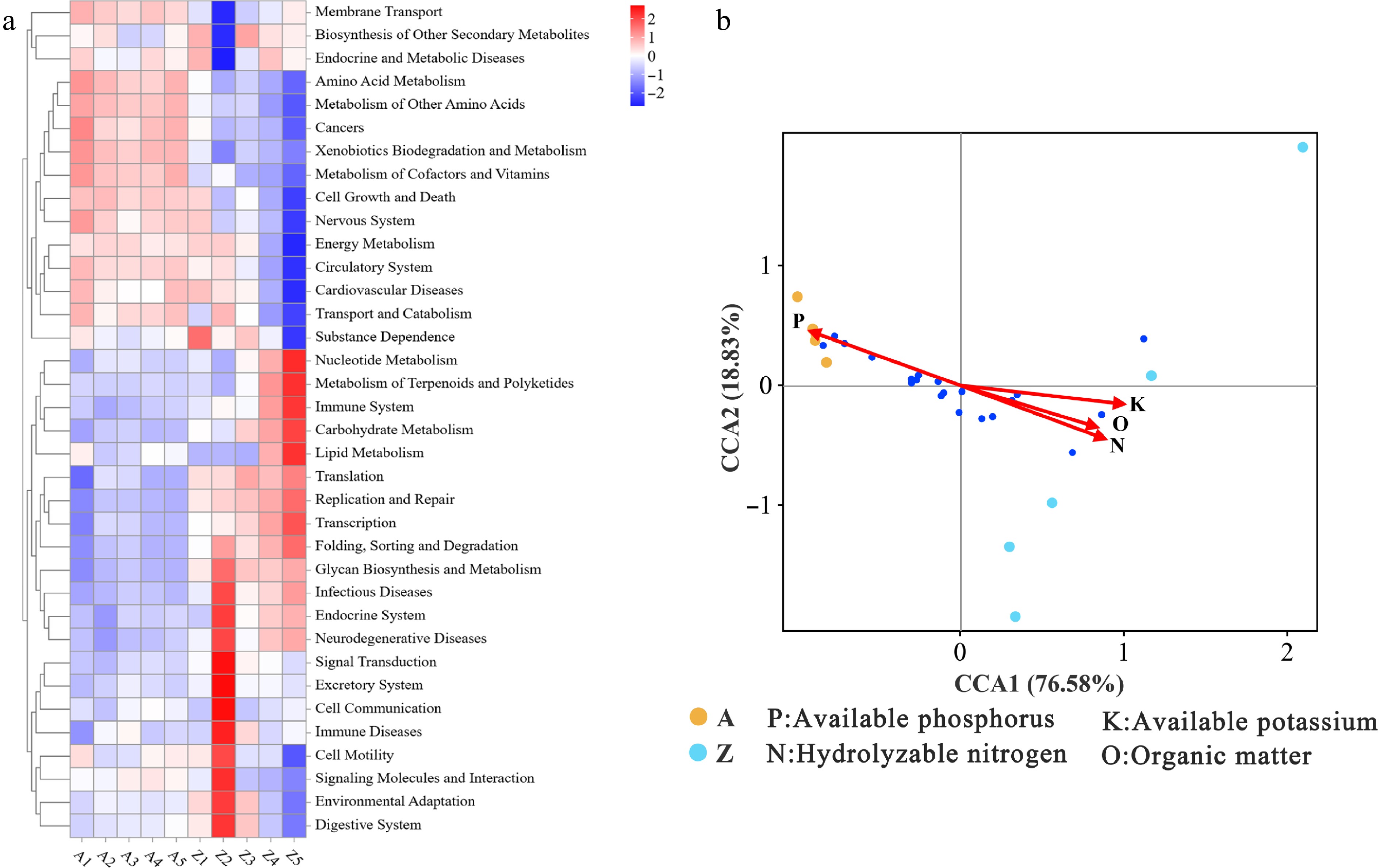
Figure 7.
Comparison of functional characteristics between cultivated and wild-type Arnebia guttata root-zone bacterial communities and their association with environmental factors: (a) Community functional heatmap based on Tax4Fun prediction and KEGG database (top 36 high-abundance pathways). (b) Canonical correspondence analysis (CCA) reveals the driving role of key environmental factors (K, O, N, and P) on community structure; the blue dots in the figure represent the top 20 bacterial phyla by abundance.
The results of the canonical correspondence analysis (CCA) (Fig. 7b) demonstrated a significant correlation between the microbial community structure and nutrient-environmental factors in this study. The first two ordination axes collectively explained 95.41% of the variation in species distribution, with the primary axis (CCA1) contributing 76.58% of the variance. The relationship between sample grouping and environmental factors revealed that Z-group samples were closely correlated with environmental factors such as K, O, and N, whereas A-group samples were primarily influenced by P. Further analysis of indicator taxa–environment associations revealed that Group A's indicator taxa, such as Actinobacteriota and Acidobacteriota, clustered with the P factor in the ordination plot. Conversely, Group Z's indicator taxa, Patescibacteria, exhibited positive correlations with O, N, and K factors.
-
The results of this study indicate that the content of key naphthoquinone bioactive compounds in cultivated A. guttata is significantly higher than in wild A. guttata. This difference may be closely related to the nutrient status of their rhizosphere soils. Cultivated sites exhibit higher levels of N and K, while wild sites are rich in readily available P. Furthermore, cultivated and wild A. guttata have shaped distinctly different rhizosphere bacterial communities. The rhizosphere of wild A. guttata exhibits greater microbial diversity and a more stable community structure, enriched with Actinobacteriota and Acidobacteriota phyla. In contrast, the cultivated rhizosphere is dominated by Proteobacteria, Firmicutes, and the indicator group Patescibacteria, exhibiting higher community heterogeneity. Functional prediction analysis further suggested these divergent ecological strategies. Microbial functions in the cultivated rhizosphere were predicted to favor rapid growth and reproduction, whereas wild-type microbes were more engaged in complex stress responses and survival maintenance processes, including secondary metabolite synthesis, degradation of exogenous substances, and nutrient cycling, consistent with their adaptation to nutrient-poor environments. Although the enrichment of certain microbial groups in the cultivated group co-occurred with higher bioactive compound content, this study emphasizes that the relationship is not straightforwardly causal. Future research should employ stable isotope probing and single-cell technologies to verify the actual roles of specific microbial groups in host secondary metabolism at the functional subprocess level.
Soil nutrients are key factors influencing the growth and productivity of terrestrial plants, with their availability directly regulating root growth, development, and other nutrient-dependent plant physiological processes[30−32]. For example, P and N in the soil exhibit a positive correlation with the quality and yield of Pinellia ternata (Thunb.) Ten. ex Breitenb[33]. Concurrently, the mitigating effects of different fertilization levels on abiotic stress vary. The alleviation of frost damage stress by N fertilization exhibits site specificity, whereas high P fertilization treatments significantly reduce yield losses caused by frost damage. K fertilization similarly contributes to mitigating the yield reduction effects induced by frost damage stress[34]. This pivotal role is not only prevalent in crops and economic plants but also pervades the individual developmental stages of trees. As the tree grows, the primary constraints on its radial growth gradually shift from early-stage competition for light to later-stage limitations in soil nutrient supply. Soil nutrient conditions significantly influence microbial community structure, with different nutrient factors exerting regulatory effects on microbial communities through mechanisms such as promotion or inhibition[35]. For instance, research on the rhizosphere microbiome of Olea europaea L. indicates that soil total N and O are key environmental factors shaping its microbial communities. Further combined analysis of soil nutrient profiles and microbiome data revealed that taxa such as Rhodopseudomonas RB41 and Sphingomonas species hold potential application value in enhancing host nutrient uptake and stress resistance[36].
In the cultivated group with higher concentrations of active pharmaceutical ingredients in this study, the microbial community structure exhibited a negative correlation with soil P content. Therefore, it is speculated that the higher contents of alkannin, acetylshikonin, and β,β-dimethyl-acryl-alkannin in A. guttata might be associated with the low-P environment. Under low-P conditions, plant roots secrete certain organic acids and acid phosphatase, which degrade organic P compounds in soil—such as nucleic acids, phospholipids, and glycolipids—converting them into absorbable inorganic P[37]. Microbial functional predictions for the wild group also indicate a preference for survival-related functions such as the degradation of exogenous substances and nutrient recycling. Furthermore, studies indicate that prolonged P fertilization weakens the mediation of P starvation responses and defense mechanisms by soil microbial communities, thereby inhibiting crop growth. Conversely, under low-P conditions, P starvation responses and defense mechanisms of plants are prominently activated, subsequently enhancing P uptake and growth[38,39]. P is also a major factor shaping soil microbial communities[40]. Furthermore, studies indicate that reducing P application increases microbial genetic diversity in rhizosphere soil, enhances P activation and absorption, and promotes cotton root growth. However, it is noteworthy that existing research generally indicates that while low P stress may stimulate certain secondary metabolic pathways, it may also inhibit root absorption of N and K[41,42]. The potential mechanisms linking low-phosphorus stress to the remodeling of rhizosphere microbial communities may be multifaceted. Under phosphorus deficiency, plants alter the quantity and composition of root exudates—including organic acids, sugars, and secondary metabolites—which act as selective substrates that restructure the rhizosphere microbiome[43,44]. This exudate-mediated recruitment tends to favor microbial taxa equipped with phosphorus-solubilizing and phosphorus-mineralizing capabilities, such as certain members of Actinobacteriota, which were enriched in the wild group in this study[45]. Concurrently, the microbial community undergoes a functional shift: metagenomic studies have shown that low-phosphorus conditions upregulate genes associated with phosphorus transport, organic phosphorus mineralization, and secondary metabolite biosynthesis in the rhizosphere microbiome[46]. These microbially mediated changes in phosphorus bioavailability and rhizosphere chemistry may, in turn, feed back onto plant secondary metabolism, for example by altering the carbon-to-nutrient balance or by modulating phytohormone signaling pathways involved in stress responses[47,48]. Such bidirectional plant–microbe interactions under phosphorus limitation may explain the coordinated variation among low phosphorus availability, distinct microbial community structures, and elevated accumulation of medicinal component observed in our results.
Therefore, to comprehensively evaluate the feasibility of low-P cultivation strategies, it is necessary to systematically investigate the dynamic accumulation patterns of the medicinal constituents and the rhizosphere microbial community structure in A. guttata under low-P stress, together with their ultimate impact on the yield of medicinal parts. This will provide a scientific basis for the precise cultivation and quality regulation of this medicinal herb. At the same time, we acknowledge that due to limitations in sampling conditions, we did not conduct a common garden experiment, which would have confounded the effects of cultivation management and geographic/climatic factors, and thus prevented inferences about their independent influences on rhizosphere microecology. Nevertheless, the strong association observed here between available phosphorus, microbial community structure, and medicinal component contents suggests that phosphorus stress may represent a key driving factor that transcends a single geographic background—a hypothesis that urgently awaits validation through more rigorously controlled experiments (e.g., a common garden design combined with controlled phosphorus fertilization).
The results of this study indicate that Actinobacteriota exhibited higher relative abundance in Group A, whereas Proteobacteria and Firmicutes were more dominant in Group Z. The analysis of intergroup differences based on Welch's t-test further revealed that Actinobacteriota and Acidobacteriota were indicator groups for Group A, while Patescibacteria served as the indicator group for Group Z. Moreover, secondary metabolite content was generally higher in Group Z than in Group A. The enriched bacterial taxa in Group Z (Proteobacteria, Firmicutes, and Patescibacteria) exhibited a clear covariation with the high levels of bioactive constituents. Combined with the functional prediction analysis results (enrichment of growth and metabolism-related pathways in the rhizosphere microorganisms of Group Z), we speculate that these taxa may not directly "promote" the synthesis of secondary metabolites, but rather indirectly regulate the secondary metabolic processes of the plant by rapidly utilizing rhizosphere nutrients, thereby altering the plant's carbon–nitrogen balance or the rhizosphere microenvironment. This hypothesis requires further verification through inoculation experiments with synthetic communities (SynComs). It should be noted, however, that the aforementioned association is primarily based on synchronous changes in community composition and metabolite content, and therefore cannot directly infer causal mechanisms[49−52]. Therefore, to avoid overinterpreting correlation as causation, future research must further distinguish which specific microbial functional subprocesses genuinely drive the accumulation of pharmacologically active compounds. This necessitates decomposing ecosystem functions into more specific metabolic or regulatory modules, identifying which microbial community traits (such as aggregation traits or emergent properties) can predict these processes, and subsequently deciphering the functional contributions of key taxa and their interaction networks. Such an analytical strategy facilitates a more systematic elucidation of the ecological and molecular mechanisms through which microbes influence host secondary metabolism[53,54]. Several aspects of the present study warrant further investigation. All samples were collected from a single cultivated site and a single wild site, each with five biological replicates. While this design enabled an in-depth comparison under well-defined conditions, it limits generalization across the broader geographic range of the species. Additionally, although wild individuals were selected to match cultivated plants in size, their true chronological age could not be determined, and a residual developmental effect cannot be entirely excluded. These considerations frame the present study as an exploratory investigation that generates testable hypotheses for future multisite and common garden experiments.
To validate the hypothesized link between low phosphorus availability and medicinal component accumulation, future research may employ techniques such as stable isotope probing (SIP), fluorescence in situ hybridization coupled with flow cytometric sorting (FISH-FACS), nano secondary ion mass spectrometry (NanoSIMS), and single-cell physiological analysis. These approaches can directly trace the metabolic activity of candidate microbial groups (e.g., Actinobacteriota) in phosphorus mobilization and secondary metabolite induction under controlled low-P conditions, thereby providing mechanistic evidence to guide microbial regulation strategies[55,56].
Moreover, it should be noted that the Tax4Fun functional prediction employed in this study is based on an inferential analysis of 16S rRNA gene sequences[57]. Although it provides an overview of the potential functional spectrum of microbial communities, its results have certain limitations. First, it relies on the completeness of reference genomes, which may fail to capture the true functional diversity of the vast number of uncultivable microorganisms present in soil[58]. Second, predictions based on species classification fail to reflect the actual metabolic activity and gene expression patterns of microorganisms within the rhizosphere environment[59]. Finally, microbial communities exhibit functional redundancy, meaning that changes in the abundance of a single taxonomic group do not necessarily lead to linear alterations in ecosystem function[60]. Therefore, the conclusions regarding functional pathways presented herein should be regarded as a hypothesis awaiting validation. Future research necessitates direct validation of predicted key functional pathways using methods such as metagenomics, metatranscriptomics, or targeted metabolomics, to more precisely elucidate the mechanistic link between rhizosphere microbial functions and the accumulation of A. guttata bioactive compounds.
-
Based on the sampling sites examined in this study, cultivated A. guttata accumulated significantly higher levels of alkannin, acetylshikonin, and β,β-dimethyl-acryl-alkannin than wild plants, accompanied by distinct rhizosphere soil nutrients (higher available K, O, and N in cultivated and higher available P in wild) and bacterial communities. The wild rhizosphere showed higher alpha diversity and enrichment of Actinobacteriota and Acidobacteriota, whereas the cultivated rhizosphere was dominated by Proteobacteria, Firmicutes, and Patescibacteria. Functional prediction suggested that cultivated microbes were enriched in growth-related pathways, whereas wild microbes were enriched in stress-adaptation pathways. Correlation analysis suggested a potential association between low available P and the accumulation of medicinal component; however, this remains a speculative hypothesis derived from field survey data and requires validation through controlled experiments. These findings provide a basis for improving cultivated A. guttata quality via microbial regulation.
-
The authors confirm contribution to the paper as follows: study conception and design: Li M, Zhang C; experiment operation: Zhong X, Bao H, Gong Y; data collection: Song M, Zhang S, Li J; analysis and interpretation of results: Zhong X, Gong Y, Song M; study guidance: Li M, Zhang C; draft manuscript preparation: Zhong X, Bao H, Li M, Zhang C; funding acquisition: Li M, Zhang C. All authors reviewed the results and approved the final version of the manuscript.
-
All the data generated or analyzed during this study are included in this published article and its supplementary information files.
-
The authors declare that they have no conflict of interest.
-
accompanies this paper online at: https://doi.org/10.48130/mpb-0026-0017.
- Supplementary Table S1 Community diversity of cultivated and wild A. guttata.
- Supplementary Fig. S1 Chromatogram of standard reference substances.
- Supplementary Fig. S2 HPLC chromatograms of A. guttata samples.
- Supplementary Fig. S3 Rarefaction curve of Shannon index.
- Supplementary File 1 Representative sequences of all OTUs for taxonomic classification (all.otus.representative.txt).
- Copyright: © 2026 by the author(s). Published by Maximum Academic Press, Fayetteville, GA. This article is an open access article distributed under Creative Commons Attribution License (CC BY 4.0), visit https://creativecommons.org/licenses/by/4.0/.
-
About this article
Cite this article
Zhong X, Bao H, Gong Y, Song M, Zhang S, et al. 2026. Soil–microbial interactions control medicinal component accumulation in cultivated Arnebia guttata Bunge. Medicinal Plant Biology 5: e021 doi: 10.48130/mpb-0026-0017 

Soil–microbial interactions control medicinal component accumulation in cultivated Arnebia guttata Bunge
- Received: 19 April 2026
- Revised: 27 May 2026
- Accepted: 03 July 2026
- Published online: 28 August 2026
Abstract: This study compared cultivated and wild Arnebia guttata Bunge in terms of medicinal components, rhizosphere soil nutrients, and bacterial communities to identify the microecological factors associated with quality. High-performance liquid chromatography (HPLC) analysis revealed that cultivated plants accumulated markedly higher levels of alkannin (0.060%), acetylshikonin (0.309%), and β,β-dimethyl-acryl-alkannin (0.627%) than wild plants (0.001%, 0.006%, and not detected, respectively). Rhizosphere soils differed significantly between the two groups: cultivated soils contained higheravailable potassium, hydrolyzable nitrogen and soil organic matter, whereas wild soils had higher available phosphorus. 16S rRNA sequencing showed that the wild rhizosphere harbored greater bacterial alpha diversity and was enriched in Actinobacteriota and Acidobacteriota, while the cultivated rhizosphere was dominated by Proteobacteria, Firmicutes, and the indicator taxon Patescibacteria. Functional prediction using Tax4Fun suggested that cultivated microbes were enriched in growth-related pathways, whereas wild microbes were enriched in stress adaptation pathways. A negative correlation between available phosphorus and medicinal component contents was observed, hinting at a possible role of low-phosphorus conditions in metabolite accumulation. Based on the sampled sites, these findings reveal distinct rhizosphere microecological profiles between cultivated and wild A. guttata, identify candidate microbial groups linked to the accumulation of medicinal components, and provide a basis for improving cultivated quality through microbial regulation. The predicted functional profiles await validation by multiomics approaches.