











-
Guizhou is a landlocked province located in the southwestern part of China, defined by its geographical coordinates at latitudes 24°37′–29°13′ N and longitudes 103°37′–109°32′ E, situated on the Yunnan–Guizhou plateau. The province has an average elevation of approximately 1,100 m, with the highest point reaching 2,900 m, predominantly in the western and central regions. It is bordered by Hunan to the east, Guangxi to the south, Yunnan to the west, and Sichuan and Chongqing to the north. Guizhou experiences a humid subtropical climate characterized by abundant precipitation, a distinct rainy season, and a high number of cloudy days, which surpass 220 days annually. The relative humidity remains above 70%, significantly influencing the fungal diversity in those regions through the varied topography and air circulation patterns[1].
In addition to its climate, Guizhou is recognised as one of the four primary medicinal material-producing regions in China, boasting an extensive array of biological resources. It is referred to as "Western China's Medicine Center" because of its abundance of ethnomedical resources[2]. The province is a major source of many "hero" herbs used in Traditional Chinese Medicine (TCM) and ethnic minority medicine[3]. The term "hero" herbs (often translated from Chinese concepts like Longtou / 龍頭 "dragon-head" or Gugan / 骨干 "backbone" products) is an industrial and economic marketing term. Among the five most notable medicinal materials of the province are Gastrodia elata (Tianma), Eucommia ulmoides (Duzhong), Houttuynia cordata (Zhe'ergen), Dendrobium (Shihu), and Bletilla striata (Baiji). They carry the highest economic value for Guizhou with their high medical efficacy recognised nationwide[4,5,6].
Organisms are commonly grouped into ecological guilds that reflect their shared resource use and similar ecological roles. Endophytic fungi (EFs) are types of fungal organism that inhabit the intracellular or intercellular spaces of host plant tissues, providing benefits to their hosts without evidently inducing disease or forming typical mycorrhizal structures. Recent research has highlighted their diversity, ecological roles, and interactions with host plants and other microbiomes within their symbiotic relationships (Table 1). This study specifically examines the role of secondary metabolites produced by endophytic fungi (Table 2), emphasizing their significance in complex ecological interactions and their applications in modern medicine, agriculture, and industry.
Table 1. Endophytic fungi isolated from Guizhou medicinal plants.
Medicinal plants from Guizhou Chinese name Endophytic fungi at the genus level Ref. Nothapodytes pittosporoides 马比木 (Mǎ bǐ mù) Monilochaetes, Diaporthe, Colletotrichum, Phyllosticta, Pestalotiopsis, Fusarium, Lophiostoma, Hypoxylon, Leptostroma, Zasmidium, Epicoccum, Sphaerulina, Talaromyces, Phoma, Periconia, Xylaria, Botryosphaeria, Aspergillus, Alternaria, Mycosphaerella, Penicillium, Spiroplana, Peroneutypa, Cercophora, Trichoderma, Pseudocercospora, Pseudofusicoccum, Acrocalymma, Peyronellaea [8,9] Artemisia annua 黄花蒿 (Huánghuāhāo) or青蒿 (Qīnghāo) Phomopsis [29] A. japonica 牡蒿 (Mǔhāo) Pestalotiopsis [27] Ginkgo biloba 白果 (Bái Guǒ) Alternaria, Aspergillus, Colletotrichum, Fusarium, Penicillium, Pestalotiopsis, Phomopsis, Trichoderma, Xylaria [28] Reineckea carnea 吉祥草 (Jíxiáng cǎo) Pestalotiopsis [26] Taxus chinensis var. mairei 台灣紅豆杉 (Nánfāng hóng dòushān) Alternaria [30] Berchemia polyphylla var. leioclada 光枝勾儿茶 (Guāngzhī gōur chá) Diaporthe [33] Alsophila spinulosa 桫椤 (Suōluó) Colletotrichum, Plectosphaerella, Xylaria, Nemania, Hypoxylon, Daldinia, Arthrinium, Apiospora, Nigrospora, Fusarium, Pestalotiopsis, Neopestalotiopsis, Microdochium, Gaeumannomyces, Phomopsis, Cladosporium, Cercospora, Epicoccum, Stagonosporopsis, Ascochyta, Alternaria, Phaeosphaeria, Pyrenochaetopsis, Trametes, Bjerkandera [37] Dicranopteris ampla 大芒萁 (Dà máng qí) Cladosporium, Cladophialophora, Massicellispora, Neofabraea, Miniglobosispora, Colletotrichum, Ilyonectria, Geniculoseta, Tainosphaeria, Omnidemptus, Collariella, Nigrospora, Castanediella [40] D. linearis 铁芒萁 (Tiě máng qí) Amorocoelophoma, Massicellispora, Miniglobosispora, Diaporthe, Dactylonectria, Nigrospora, Hypoxylon [40] D. pedata 芒萁 (Máng qí) Neofusicoccum, Phyllosticta, Cladosporium, Arxiella, Paraboeremia, Periconia, Stagonospora, Alternaria, Verruconis, Pezicula, Populomyces, Pseudopopulomyces, Diaporthe, Colletotrichum, Sphaerostilbella, Dactylonectria, Ilyonectria, Pseudodactylaria, Arcopilus, Trichocladium, Pestalotiopsis, Neopestalotiopsis, Nigrospora [40] Eucommia ulmoides 杜仲 (Dù Zhòng) Phomopsis, Diaporthe, Nigrospora, Epicoccum, Leptosphaerulina, Xylaria, Colletotrichum, Trametes [46] Pinus massoniana 马尾松 (Mǎ Wěisōng) Diplodia, Lasiodiplodia, Macrophomina, Neofusicoccum, Cladosporium, Epicoccum, Leptosphaerulina, Phoma, Paraconiothyrium, Paraphaeosphaeria, Periconia, Phaeosphaeria, Phaeosphaeriopsis, Alternaria, Preussia, Cladophialophora, Penicillium, Pezicula, Anthracobia, Diaporthe, Phomopsis, Colletotrichum, Acrostalagmus, Trichoderma, Eucasphaeria, Stilbella, Dactylonectria, Fusarium, Ilyonectria, Tolypocladium, Myrmecridium, Chaetomium, Collariella, Cercophora, Neurospora, Nigrospora, Arthrinium, Hypoxylon, Neopestalotiopsis, Pestalotiopsis, Robillarda, Nemania, Whalleya, Xylaria, Coprinellus, Pholiota, Peniophora, Tilletiopsis, Filobasidium, Cunninghamella, Umbelopsis [50] Phyllanthus emblica 余甘子 (Yú Gānzǐ) Penicillium, Lichtheimia, Diaporthe, Phyllosticta, Neofusicoccum [56] Coix lacryma-Jobi 薏苡仁 (Yìyǐrén) Curvularia, Alternaria, Setophoma, Citrullus, Clonostachys, Cordyceps, Beauveria, Fusarium, Sarocladium, Talaromyces, Colletotrichum, Cochliobolus, Bipolaris, Leptosphaeria, Epicoccum, Gaeumannomyces [61] Blumea balsamifera 艾纳香 (Ài nà xiāng) Fusarium, Trichoderma, Neurospora, Diaporthe, Nodulisporium, Aspergillus, Penicillium, Curvularia, Phoma, Bjerkandera, Ceriporia [69] Dendrobium aphyllum 兜唇石斛 (Dōuchún shíhú) Biscogniauxia [74] Houttuynia cordata 哲尔根 (Zhé'ěrgēn) Ilyonectria, Penicillium [78] Table 2. Metabolites produced by endophytic fungi of Guizhou medicinal plants.
Organisms Host Compounds Type Structure Ref. Pestalotiopsis microspora JXC03 Reineckea carnea Chrysophanol Quinone 
[26] Pestalotiopsis microspora JXC03 Reineckea carnea Physcion Quinone 
[26] Pestalotiopsis microspora JXC03, Pestalotiopsis uvicola GMH31 Reineckea carnea, Artemisia japonica Ergosterol Steroid 
[26,27] Pestalotiopsis microspora JXC03 Reineckea carnea Curcumin Polyphenol 
[26] Pestalotiopsis microspora JXC03 Reineckea carnea Emodin Quinone 
[26] Pestalotiopsis microspora JXC03 Reineckea carnea Apigenin Flavone 
[26] Pestalotiopsis microspora JXC03, Pestalotiopsis uvicola GMH31, GZUYX13 Reineckea carnea,
Artemisia japonica, Ginkgo bilobaKaempferol Flavonol 
[26−28] Pestalotiopsis microspora JXC03 Reineckea carnea Resveratrol Polyphenol 
[26] Pestalotiopsis microspora JXC03, Pestalotiopsis uvicola GMH31, GZUYX13, Phomopsis castaneae-mollissimae GQH87 Reineckea carnea,
Artemisia japonica, Ginkgo biloba, A. annuaQuercetin Flavonoid 
[26−29] Pestalotiopsis microspora JXC03 Reineckea carnea Rhein Quinone 
[26] Pestalotiopsis microspora JXC03 Reineckea carnea Daucosterol Steroid 
[26] Pestalotiopsis microspora JXC03, Pestalotiopsis uvicola GMH31 Reineckea carnea,
Artemisia japonicaUrsolic acid Triterpene 
[26,27] Phomopsis castaneae-mollissimae GQH87 Artemisia annua Oleanolic acid Triterpene 
[29] Pestalotiopsis uvicola GMH31, Diaporthe sp. QX4G6 Artemisia japonica, Berchemia polyphylla var. leioclada Tyrosol Monophenol 
[27,33] Pestalotiopsis uvicola GMH31 Artemisia japonica 7-hydroxycoumarin Monophenol 
[27] Pestalotiopsis uvicola GMH31 Artemisia japonica Bilobalide Terpenoid 
[27] Pestalotiopsis uvicola GMH31 Artemisia japonica Vanillic acid Monophenol 
[27] Pestalotiopsis uvicola GMH31 Artemisia japonica Protocatechuic acid Polyphenol 
[27] Pestalotiopsis uvicola GMH31 Artemisia japonica Rutin Flavonoid 
[27] Pestalotiopsis uvicola GMH31 Artemisia japonica Genistein Flavonoid 
[27] Pestalotiopsis uvicola GMH31 Artemisia japonica 1,8-dihydroxyanthraquinone Quinone 
[27] Pestalotiopsis uvicola GMH31 Artemisia japonica Verbascoside Polyphenol 
[27] Pestalotiopsis uvicola GMH31 Artemisia japonica Isoverbascoside Polyphenol 
[27] Pestalotiopsis uvicola GMH31 Artemisia japonica Leucosceptoside A Polyphenol 
[27] Pestalotiopsis uvicola GZUYX13 Ginkgo biloba Ginkgolide B Terpenoid 
[28] Pestalotiopsis uvicola GZUYX13 Ginkgo biloba Parthenolide Terpenoid 
[28] Pestalotiopsis uvicola GZUYX13, Phomopsis castaneae-mollissimae GQH87 Ginkgo biloba Luteolin Flavonoid 
[28,29] Pestalotiopsis uvicola GZUYX13 Ginkgo biloba Mollugin Terpenoid 
[28] Phomopsis castaneae-mollissimae GQH87 Artemisia annua Curcumol Terpenoid 
[29] Phomopsis castaneae-mollissimae GQH87 Artemisia annua Luteolin-7-O-glucoside Flavonoid 
[29] Phomopsis castaneae-mollissimae GQH87 Artemisia annua Naringenin Flavonone 
[29] Alternaria semiverrucosa GZCC 22-2029 Taxus chinensis var. mairei Daidzein Flavonoid 
[30] Alternaria semiverrucosa GZCC 22-2029 Taxus chinensis var. mairei Andrographolide Diterpenoid 
[30] Alternaria semiverrucosa GZCC 22-2029 Taxus chinensis var. mairei Dihydroartemisinin
Terpenoid
[30] Alternaria semiverrucosa GZCC 22-2029 Taxus chinensis var. mairei Crocetin Terpenoid 
[30] Alternaria semiverrucosa GZCC 22-2029 Taxus chinensis var. mairei Xanthohumol Flavonoid 
[30] Alternaria semiverrucosa GZCC 22-2029 Taxus chinensis var. mairei Ingenol Diterpenoid 
[30] Alternaria semiverrucosa GZCC 22-2029 Taxus chinensis var. mairei Dehydroandrographolide Terpenoid 
[30] Alternaria semiverrucosa GZCC 22-2029 Taxus chinensis var. mairei Ginkgolic acid Monophenol 
[30] Alternaria semiverrucosa GZCC 22-2029 Taxus chinensis var. mairei α-Linolenic acid Essential fatty acid 
[30] Alternaria semiverrucosa GZCC 22-2029 Taxus chinensis var. mairei Lupenone Triterpene 
[30] Alternaria semiverrucosa GZCC 22-2029 Taxus chinensis var. mairei 5-Hydroxymethylfurfural Ketone 
[30] Berchemia
polyphylla var. leiocladaDiaporthe sp. QX4G6 Dibutyl phthalate Plasticizer 
[33] Berchemia
polyphylla var. leiocladaDiaporthe sp. QX4G6 3-(4-toluphenoxy)-propionic acid Monophenol 
[33] -
Ma Bi Mu, Nothapodytes pittosporoides (Icacinaceae), is a TCM herb distributed mainly in southern China which produces camptothecin. Rotted wood of Ma Bi Mu can be used as medicine, which has the effect of dispelling wind and dampness, regulating qi and dispersing cold. The whole plant contains camptothecin and its derivatives, which are important sources of precursor compounds for camptothecin anticancer drugs[7]. Its EFs have attracted wide attention. Zhou et al.[8] identified the EF genus Monilochaetes by using a combination of internal transcribed spacer (ITS) and large subunit ribosomal RNA (LSU) sequence data. The isolates from the healthy leaves of N. pittosporoides in Tongren City, Guizhou Province, were described as Monilochaetes nothapodytis. Subsequent research by Qiao et al.[9] involved isolating samples from various parts of Ma Bi Mu across different seasons, with analyses based on sequences from the ITS region. The isolates were classified into three classes: Dothideomycetes, Sordariomycetes, and Eurotiomycetes. Among these, the dominant genera were Diaporthe, Colletotrichum, and Phyllosticta, with Diaporthe representing over 50% of the isolates. The relationships between the host and fungi have not yet described. To understand more about roles of those fungi, the detailed study is needed.
Since 2017 to present, eight species of ethno-medicinal plants (Artemisia annua, Artemisia argyi, Artemisia lactiflora, Dendrobium catenatum, Ginkgo biloba, N. pittosporoides, Reineckea carnea, and Taxus chinensis var. mairei) from Guizhou Province were involved in diversity studies of the EFs associated with the hosts as well as the bioactive compounds isolated from the fungi. The species of Artemisia are mostly perennial herbs dominating the vast steppe communities of Asia. In Asia, particularly in China, Japan, and Korea, A. annua grows wild. Chinese herbalists have been using it to cure many kinds of illnesses since ancient times[10,11]. China started a national research project to combat malaria in 1967. The most effective herb was discovered to be A. annua after more than 380 herbal extracts were assessed for their antimalarial properties[12]. Additionally, the active ingredient of A. annua against malaria was identified as artemisinin (endoperoxide sesquiterpene lactone)[13]. Since then, A. annua has been widely recognized as the sole commercial source of artemisinin. In China, A. argyi is one of the Dragon Boat Festival symbols and is distributed almost all over the country, except for extremely arid and alpine regions. Additionally, their shoots and seedlings can be used as vegetables and tea. Folium Artemisia argyi (FAA) is described in the Chinese Pharmacopoeia as having a strong and bitter flavor, a warm nature, little toxin, and the ability to disperse cold, relieve pain, aid menstruation, and stop bleeding[14]. Another Artemisia, A. lactiflora, is used as folk medicine in Guangdong and Guangxi (Qi Artemisia), which has the effects of clearing heat, detoxifying, relieving cough, acting as an anti-inflammatory, activating blood, dispersing blood stasis, and clearing menstruation, and it is used to treat liver and kidney diseases, as well as for the treatment of bloodworm disease[15,16]. In China, the D. catenatum plant is used to treat rheumatism. The plant accumulates a series of sesquiterpene dendrobane alkaloids such as dendrobine and flavonoids, including naringenin[17]. Ginkgo biloba is one of the most ancient plants on earth. Fossils of G. biloba date back more than 200 million years. It contains flavones and terpene trilactones, and it has been used extensively in TCM for a long time to treat various kinds of illnesses[18]. Terpene trilactones, a class of primary therapeutic efficacy compounds in G. biloba, offer a variety of pharmacological activities, including neuroprotective properties and the ability to serve as specific platelet-activating factor antagonists (selective antagonists of glycine receptors)[19,20,21]. Reineckea carnea (commonly known as Chinese lucky grass, ribbon lily, or false Mondo grass) is a low-growing evergreen perennial plant native to the dense forests and shady slopes of China and Japan. In TCM, its rhizomes have historically been utilized in tonics to treat coughs and support respiratory health[22]. Taxus chinensis var. Mairei is also referred to as Chinese yew, a regularly used TCM ingredient that is classified as a provincial standard medicinal ingredient in China[23]. Branches with leaves are the main therapeutic components. It is used clinically for masses, edema, and trouble urinating. Its properties are slightly sweet, bitter, and neutral, and it enters the kidney and heart, with the effects of lowering swelling, dispersing masses, promoting menstruation, and diuresis[24]. Paclitaxel, taxanes, flavonoids, and polysaccharides are the primary active components of Taxus[25]. Because of its potent antitumor properties, paclitaxel is the main treatment for lung, breast, ovarian, head and neck malignancies.
A number of bioactive, chemical, and genetic methods have been applied to screen the bioactivity of EFs and their chemical compounds. Pestalotiopsis microspora (JXC03) and Pestalotiopsis uvicola (GMH31) possessed strong P-glycoprotein (P-gp) inhibitory activity[26,27]. Pestalotiopsis microspora (JXC03) was isolated from the TCM plant Reineckea carnea. Twelve compounds were determined, namely chrysophanol, physcion, ergosterol, curcumin, emodin, apigenin, kaempferol, resveratrol, quercetin, rhein, daucosterol, and andursolic acid. Interestingly, chrysophanol, physcion, emodin, apigenin, kaempferol, resveratrol, quercetin, and rhein, the main active ingredients of Polygonum cuspidatum, were isolated as secondary metabolites from an EF for the first time[26]. The EF Pe. uvicola (GMH31), which was isolated from the TCM plant A. japonica, was chosen for chemical and biological studies as part of search for novel bioactive compounds from EFs. Li et al.[27] studied the secondary metabolites of this strain and obtained 17 compounds with potent biological effects. Ginkgo biloba is the sole source of bilobalide (BB), which is utilized in herbal supplements and medicines. Despite its significant BB content and availability, the overharvesting of G. biloba trees threatens the ecological balance. Consequently, there is a growing initiative to explore alternative methods for BB production to mitigate the environmental impacts. Pestalotiopsis uvicola (GZUYX13) was investigated for P-gp inhibitors. Ginkgolide B, parthenolide, kaempferol, bilobalide, quercetin, luteolin, and mollugin were discovered by Qian et al.[28]. Ginkgolide B, kaempferol, bilobalide, quercetin, and luteolin were identified as the primary active constituents of G. biloba, suggesting that Pe. uvicola (GZUYX13) can synthesize similar metabolites to those present in its host plants. A study on BB-producing Pe. uvicola (GZUYX13) from G. biloba plants is valuable for industrial application and basic research. In addition, the EF Phomopsis castaneae-mollissimae (GQH87), isolated from A. annua, has been subjected to chemical and biological studies, leading to the isolation of six compounds: Oleanolic acid, curcumol, quercetin, luteolin, luteolin-7-O-glucoside, and naringenin[29]. Another study investigated the EF Alternaria semiverrucosa from T. chinensis var. marei, revealing its biological activity, particularly its ethyl acetate extract (EAE) which exhibits inhibitory effects on cervical cancer cells. Higher EAE concentrations caused significant morphological changes, increased apoptosis rates, and inhibited cell invasion and migration. Protein analysis showed increased levels of pro-apoptotic proteins, whereas levels of the anti-apoptotic protein Bcl-2 and migration-related proteins MMP1 and MMP9 decreased. In vivo experiments indicated that EAE can suppress tumor growth in a mouse xenograft model[30]. In summary, studies have elucidated EFs' diversity in eight ethno-medicinal plants from Guizhou province and evaluated their secondary metabolites with P-gp inhibition effects, which has laid a foundation for obtaining new P-gp inhibitors as well as other potential compounds.
Roots, stems, or leaves of Berchemia species are used medicinally to dissipate wind and moisture, stimulate blood circulation, reduce pain, and treat coughs and phlegms. Tiebaojin is a widely used traditional medicine in Guangxi Zhuang and southwest minority regions in China. After examination, it was discovered that Tiebaojin is derived from four species of Berchemia, namely B. lineata, B. floribunda, B. polyphylla, and B. polyphylla var. leioclada[31]. In TCM, B. polyphylla var. leioclada is a significant plant. It has been demonstrated to produce a number of distinct metabolites such as glycosides, quinones, lignans, terpenes, and flavonoids. Several bioactivities can be found, including antibacterial, analgesic, anti-inflammatory, anti-tumor, anti-diarrheal, and antioxidant properties[32]. Investigation of the metabolites of the EF Diaporthe sp. (QX4G6) from B. polyphylla var. leioclada in Guizhou found four monomeric compounds[33]. These were identified as dibutyl phthalate, 1[(12E,16E)-12,16-eicosadienoyl]-2-[(E,E)-7,10-octadecadienoyl]-3-stearacylglycerol, 3-(4-toluoxy)-propionic acid, and tyrosol. In summary, all the four compounds were isolated from the metabolites of the EF Diaporthe sp. (QX4G6), and three compounds showed clear antibacterial activity against Escherichia coli and Salmonella in vitro, which provided a theoretical basis for the further development and utilization of EF metabolites from B. polyphylla var. leioclada[33].
Tree ferns are highly valued for their ornamental appearance and as a source of natural compounds with therapeutic applications. Alsophila spinulosa (flying spider-monkey tree fern) is a mesozoic ancient relic fern species with high medicinal and ornamental value[34−37]. According to the Atlas of the Use of Chinese Medicinal Herbs for Bone Injuries, it can be used to treat chest trauma hemoptysis, rheumatic pain, old back pain, wind and fire toothache, lung heat cough, and other diseases. The shape of the Als. spinulosa tree is beautiful, and the crown is like a giant umbrella, which has high ornamental value and it is regarded as an ornamental plant. Because of its antiquity and status as a relict, Als. spinulosa has important scientific research value, and its existence is of great significance for the study of palaeobotany, plant systematics, the rise and fall of dinosaurs, and geological changes. It has a very long history, so it is called a "living fossil" of terrestrial plants[38,39]. Liu et al.[37] evaluated EF from Als. spinulosa. Ascomycota was the dominant phylum compared with Basidiomycota. Sordariomycetes and Dothideomycetes were the dominant classes, with Glomerellales and Xylariales being the dominant orders. At the genus level, Colletotrichum and Xylaria were the dominant genera in the rachis and pinna. Recently, Bao et al.[40] studied the diversity of EF in the medicinal ferns of the genus Dicranopteris, focusing on D. ampla, D. linearis, and D. pedata, which are prevalent in Guizhou and possess active substances that may lead to the development of novel structural compounds. Dicranopteris has substantial therapeutic potential and is traditionally used to increase blood circulation, stop bleeding, eliminate internal heat, induce diuresis, and reduce edema[41−45]. Their study found 84 endophytic fungal strains from various tissues, which were identified as 59 distinct species[40]. The study improved our knowledge of the diversity of EFs linked to medicinal ferns and established a basis for future research on their ecological roles and pharmacological potential.
To discover EF resources with the regional characteristics of Guizhou and provide a reference for the diversity of EFs and the development and utilization of EF in Eucommia ulmoides, Chen et al.[46] isolated endophytic fungi from Eu. ulmoides in Bijie City, resulting in a total of 93 strains identified as various genera, including Colletotrichum sp., Diaporthe sp., Epicoccum nigrum, Leptosphaerulina sp., Nigrospora sp., Phomopsis sp., Sordariales sp., Trametes lactinea, and Xylaria apiculata. Among these, Diaporthe sp. and Phomopsis sp. were found to be the dominant genera. Eucommia ulmoides has been utilized in TCM for over 2,000 years for treating a variety of health issues such as lumbar and knee pain, osteoporosis, hepatoprotection, and reproductive disorders, as documented in the ancient text Shen Nong Ben Cao Jing (Shen Nong’s Classic of Herbal Medicine). Recent research has highlighted its therapeutic effects on conditions like hypertension, hyperglycemia, diabetes, obesity, Parkinson's disease, and Alzheimer's disease. Additionally, Eu. ulmoides exhibits a range of pharmacological activities, including antioxidant, anti-inflammatory, neuroprotective, anti-fatigue, anti-aging, anti-cancer, and immunoregulation effects, leading to increased interest in its applications in modern medicine[47].
Pinus massoniana, commonly known as Masson's pine, is an evergreen tree native to central and southern China, Taiwan, and northern Vietnam, valued for its timber, resin, and medicinal properties. It is listed in Shen Nong Ben Cao Jing and the Pharmacopoeia of the People's Republic of China. Its needles, bark, pollen, and turpentine have been used in Chinese folk medicine to cure cancer, rheumatism, arthralgia, hemorrhage, and inflammation. It compares favorably, with well-known antioxidants like α-tocopherol, butylated hydroxyanisole, butylated hydrosytoluene, and quercetin. High-performance liquid chromatography (HPLC) analysis revealed that P. massoniana bark extract contains several polyphenolic compounds with strong, dose-dependent antioxidant and radical-scavenging activities, including taxifolin, epicatechin, and epigallocatechin galloate[48,49]. In order to investigate the diversity of EFs in P. massoniana from Guizhou Province, tissue isolation techniques were used to separate the fungi from the roots, stems, and leaves of healthy 30-year-old trees over several seasons[50]. The study revealed that the fungi could be categorized into 10 classes, 21 orders, 37 families, 55 genera, and 69 species. The dominant genera were Alternaria, Fusarium, Penicillium, Pestalotiopsis, and Trichoderma spp. The most abundant EFs were found in autumn, but fewer were found in summer. The diversity was richer in roots than in stems, with the highest similarity between stems and roots. Further exploration is needed to understand the species composition, influencing factors, and function development of EFs in P. massoniana.
Phyllanthus emblica, commonly known as Amla or Indian gooseberry, is a small to medium-sized deciduous tree renowned for its edible fruit and numerous health benefits. Numerous studies indicate that amla fruits are rich in phytochemicals, particularly ascorbic acid and essential amino acids, making them valuable for functional food and for producing nutritional supplements[51]. Amla's pharmacological benefits have led to its recognition as one of the Three Sacred Fruits in ethnomedicine, alongside Terminalia chebula and Terminalia bellirica[52]. Its dual medicinal and edible nature is acknowledged in the Homologous Catalogue of Medicine and Food published by China's National Health Commission[53], and it is included in the Chinese Pharmacopoeia (2020)[15]. In traditional Ayurvedic medicine, amla is used for preventive and therapeutic purposes, with phytochemical studies identifying about 239 bioactive compounds, including phenolic acids, tannins, flavonoids, and polysaccharides[54,55]. In the study by Lan et al.[56], 43 strains of EFs were isolated from the fruit of Phy. emblica, including Diaporthe, Lichtheimia, Neofusicoccum, Phyllosticta, and Penicillium. Penicillium was a dominant genus. Penicillium chrysogenum was dominant species.
Annual millet (Coix lacryma-Jobi) is a member of the Graminae family with the common names of adlay, coix, Job's tears, or Chinese pearl barley. Coix is a common health-promoting cereal crop for many indigenous people in China's hill areas. Traditionally, Chinese used coix cereal as medicinal food, tea, and a herbal decoction to treat diabetes, inflammation, and neuralgia[57]. Coix seeds have strong chemical constituents that scavenge cellular oxidants[58−60]. Many research groups have confirmed that consumption of coix as whole seeds or extracts is beneficial; specifically, separated seed portions and extracts with different solvents are better for normal health and for treating different anatomical and physiological abnormalities in both animal and human studies. There are also abundant resources of EFs in different tissues of coix such as Al. longissima, Beauveria pseudobassiana, Bipolaris sp., Citrullus lanatus, Clonostachys rosea, Colletotrichum spp., Cordyceps brongniartii, Curvularia coicis, Epicoccum spp., Fusarium spp., Gaeumannomyces glycinicola, Leptosphaeria microscopica, Setophoma terrestris, and Talaromyces verruculosus. Some EFs produce natural active products, which lays a foundation for the industrial application of this resource and has potential for further exploration and research[61].
Blumea balsamifera is used as incense because of its high essential oil content. It commonly referred as Ainaxiang and Dafeng'ai in Chinese[62]. It was first documented by Sun Simiao in Bei Ji Qian Jin Yao Fang (Essential Formulas Worth a Thousand Gold for Emergencies) in 652 AD. Blumea balsamifera-based medicinal ingredients have the potential to reduce pain, remove heat, and promote resuscitation. Eczema, dermatitis, beriberi, lumbago, menorrhagia, rheumatism, skin injuries, and pesticide are all treated with the entire plant or its leaves as a raw TCM substance[62]. Medicinal properties of B. balsamifera result in pain relief, clear heat, and resuscitation. A variety of physiological activities such as the anticancer[63−65], antifungal[64,66], radical-scavenging[67], and anti-obesity[68] characteristics of B. balsamifera leaf extracts have been confirmed. The primary active ingredient, L-borneol, was shown to have a high degree of volatility. There have been reports of flavonoids and terpenoids with a variety of biological actions in addition to an essential oil[62]. In 2017, a study conducted in Guizhou focused on the diversity of EF associated with B. balsamifera, isolating specimens from various plant parts including the roots, branches, and leaves. The analysis incorporated morphological characteristics along with evaluations of its ITS rDNA sequence, leading to the identification of 11 distinct genera. Among these, Aspergillus, Curvularia, Fusarium, and Trichoderma were found to be the most prevalent genera. The study highlighted that leaves exhibited the highest diversity and population of EFs. Moreover, specific regions such as Luodian, Wangmo, Ceheng, and Zhenfeng prefectures demonstrated notably higher species diversity, with Luodian standing out in particular. Seasonal variations were also noted, revealing that the peak species richness occurred in July, whereas the highest isolation frequency of fungi was recorded in December. Interestingly, while the overall distribution of EFs appeared to be relatively consistent across different localities and growth periods, notable differences emerged in their distribution among the various plant parts[69].
In China, the traditional medicinal plant Dendrobium has a wide range of clinical uses. According to reports, Dendrobium includes various kinds of bioactive compounds, primarily alkaloids and polysaccharides. According to previous studies, Dendrobium possesses pharmacological properties that include immunological modulation, antiviral, anti-inflammatory, and antioxidant effects. In particular, the neuroprotective and antiaging properties of Dendrobium have been thoroughly studied in many kinds of cell and animal models. The impact of Dendrobium on the liver has gained more interest in recent years as a novel extract with potential to investigate its therapeutic benefits[70]. For over 2,300 years, a significant number of native species from the genus Dendrobium have been utilized in traditional medicine in China. In TCM, the fresh or dried stem of many Dendrobium species is considered a "superior grade" tonic because of its traditional benefits for the stomach, kidney, and lung; for body fluid production; and for removing heat. Approximately 41 species in genus Dendrobium have been recorded in TCM[71]. As recorded in the New Compilation of Materia Medica (Chinese name: Ben Cao Zai Xin), Dendrobium has the effect of "regulating stomach Qi and clearing stomach fire". The Inner Canon of Materia Medica (Chinese name: Ben Cao Nei Jing) describes D. nobile as "nourishing the stomach and benefiting fluid, an incomparable wonder drug" [72]. Among Dendrobium species, D. nobile is a well-known in cultural and medicinal significance. Known as Shi Hu' or Shi Hu Gen, this herb is used because of its tonic, nourishing, and replenishing properties. It is used to treat various health conditions, such as respiratory and digestive disorders, providing immune support and helping with physical endurance and skin health. D. nobile is associated with the stomach, kidney, and lung meridians, and its pharmacological potential is attributed to its diverse chemical constituents[73]. Endophytic Biscogniauxia dendrobii was isolated from healthy stem of D. aphyllum in an orchid nursery in Xingyi, Guizhou Province[74].
In Guizhou and southwest China, H. cordata is a popular condiment that has long been used in traditional Chinese herbal ethnomedicinal practices. It is also consumed by people in southeast Asia[75]. Numerous pharmacological characteristics of H. cordata have been demonstrated, such as antibacterial, antiviral, anti-inflammatory, immunological, anticancer, and antimutagenic effects[76]. Its flavonoids and volatile oils have been found to be particularly effective medicinal metabolites[77]. According to Ye et al.[78], EFs stimulate the accumulation of key medicinal secondary metabolites in H. cordata, specifically targeting its essential volatiles and flavonoids. Analysis showed that the endophytes stimulated the host plant in different ways: Ilyonectria liriodendra increased the growth of rhizomes and the accumulation of most of the phenolics and volatiles; unidentified fungi promoted the accumulation of the medicinal compounds afzelin, decanal, 2-undecanone, and borneol without influencing the host plant's growth; and Penicillium citrinum increased the fresh weight, total leaf area and height of the plants, as well as the growth of the rhizomes, but had only a small effect on the concentration of major secondary metabolites.
-
Fungal–plant interactions have been present for 460 million years, with almost all terrestrial plants having EFs. However, the mechanism of symbiosis between fungi and host plants remains inconclusive. Zhao et al.[79] investigated the relationship between endophytic Fusarium lateritium (Fl617) and tomato (Solanum lycopersicum) plants, revealing that this strain has a reduced genome size, fewer pathogenicity-related genes, and a lower presence of plant cell wall-degrading enzymes. The findings also highlight a scarcity of secondary metabolites and common Fusarium toxins, as well as the absence of essential pathogenicity factors (Fig. 1). The authors hypothesize that EFs have adapted their genomes for improved plant interactions because of the consistent microenvironment provided by plants.
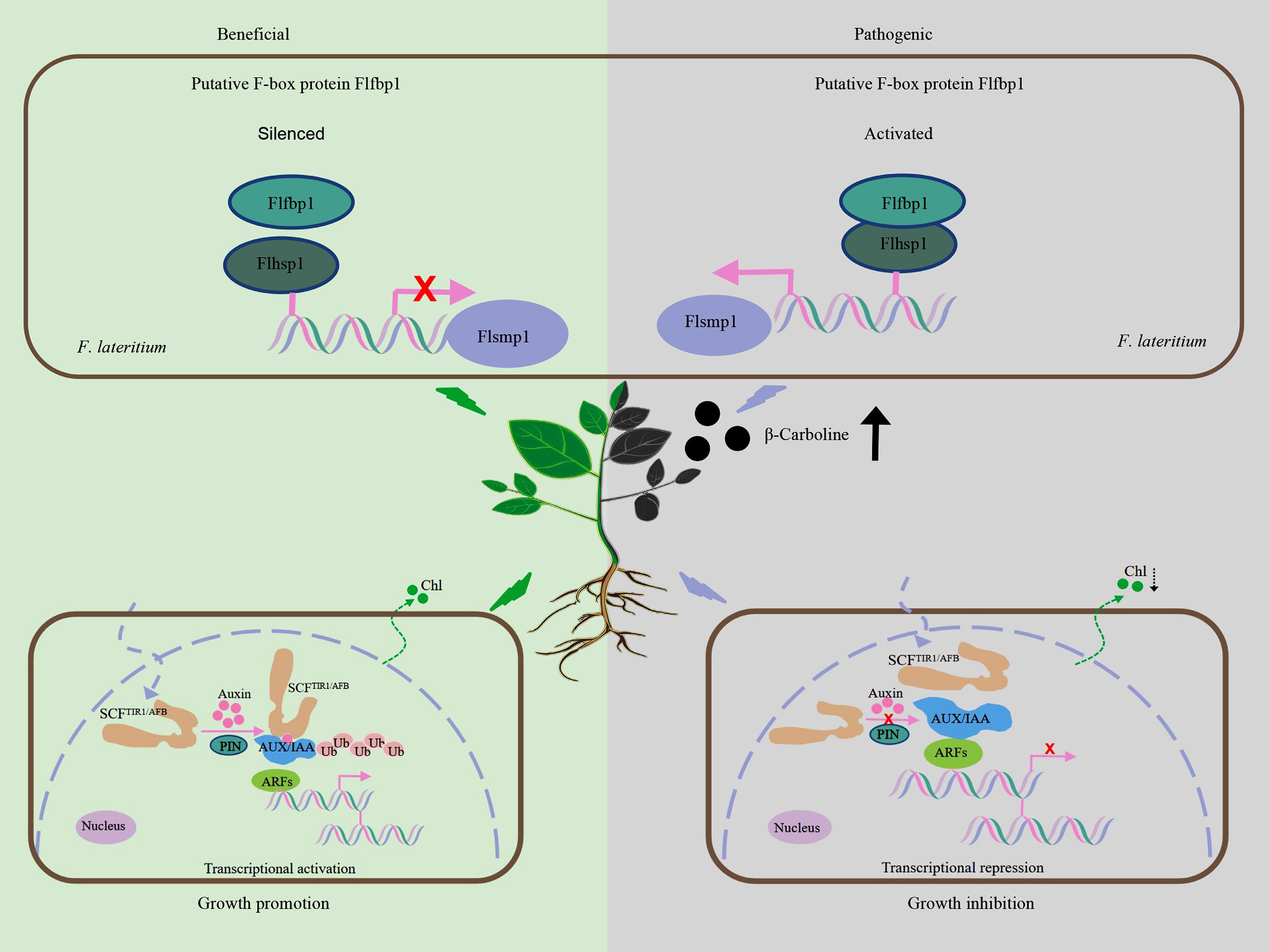
Figure 1.
A model illustrating F. lateritium Fl617's state transition (beneficial to pathogenic) in regulating plant growth via β-carboline and auxin signaling (
https://doi.org/10.48130/mycosphere-0026-0009 ).Endophytic fungi are an important source of novel antitumor substances. Acadesine is currently undergoing Phase III clinical trials as a promising drug candidate. Research into its biosynthesis revealed that overexpression of the veA gene, a global regulator, significantly boosts production of acadesine in the EF F. solani (HB1-J1) and enhances the antitumor activity of its extracts. Transcriptome and metabolome analyses of a veA-overexpressing strain (FsveAOE14) identified a 10-step pathway for the synthesis of acadesine, with adenylosuccinate lyase PurB being a crucial enzyme. Although veA overexpression reduces purB levels, the upregulation of its homologs, pro06469 and pro10879, compensates for this reduction, influencing acadesine synthesis positively. Furthermore, strains that overexpress purB demonstrate significantly improved extracts' efficacy against A549 nonsmall-cell lung cancer cells and elevated levels of additional antitumor compounds such as 3-methyladenine and taurine. Overall, these findings underscore veA's role in regulating acadesine biosynthesis through key enzymes like PurB, thereby enhancing both acadesine and other beneficial antitumor metabolites in F. solani extracts[80].
Alternaria alstroemeria, an EF, was found to inhibit A549 tumor cells through its crude extracts. According to Feng et al.[81], the transformant, AaLaeA, lost its antitumor activity through overexpression of the global regulator AaLaeA. Metabolomics analysis showed lower levels of secondary metabolic substances with antitumor activity, particularly flavonoids, in AaLaeA compared with the wild strain. A gene encoding a FAD-binding domain protein (Fla1) was downregulated. Overexpression of AaFla1 increased antitumor activity against A549, with a sevenfold higher inhibition ratio than the wild strain. Additionally, the accumulation of antitumor metabolites increased. The study suggests that AaLaeA controls the transcription of AaFla1 in Al. alstroemeria, negatively affecting the production of antitumor compounds.
From 2021, Guo et al. focused on isolating native EFs to enhance plant development, soil quality, and stress resistance. The goal was to identify mycorrhizal fungi that promote plant development in Guizhou's blueberry cultivations. Fusarium equiseti (Y-037) demonstrated the highest colonization intensity. It significantly improves root morphology, biomass, and seedling height. Inoculating these native mycorrhizal fungi helps optimizes the rhizosphere. It alters the bacterial community's structure, increases soil enzyme activity, and naturally boosts fruit yields[82].
-
Not too many EFs have been explored in Guizhou, which has a high diversity of plants. The great majority of EFs' symbiotic connections are still unknown because only 1%–2% of the approximately 300,000 plant species have been studied, and few data have been gathered from aquatic ecosystems[83]. The high potential for use of the compounds released by EF–host symbiotic interactions in biomedicine and sustainable agriculture is currently drawing more attention to endogenous biology. The fundamental processes of endophytes and their biological and ecological functions are of interest to scientists. The numerous studies conducted in the field of endophytic biological research emphasize its significance. Even though EF research has garnered a lot of interest, there are still many issues that need to be resolved in the ensuing decades.
To identify and isolate novel EFs and analyze their associated mutualistic or antagonistic signalling pathways during symbiosis, it is essential to select appropriate host plants and their healthy tissues or organs. The challenge is exacerbated by the existence of certain fungal strains that are either sterile or nonculturable, complicating the artificial culture processes. To address these issues, the development of de novo bioengineering systems or modifications to traditional isolation techniques is necessary. The biosynthesis of natural products from EFs, particularly secondary metabolites, relies on inducing stimuli either from the host plants or through the symbiotic relationship. In artificial axenic cultures, EFs often struggle to produce the same chemical compounds as they would in a symbiotic environment, primarily because of the lack of plant-mediated signals or stimuli. Additionally, for those EFs that have been successfully isolated and cultured, a notable decline in secondary metabolite production is observed with each successive subculture under axenic monoculture conditions[84]. Consequently, ongoing monitoring of in vivo stimuli in natural settings and ensuring the maintenance of the isolated EFs in culture pose significant challenges in the field.
In order to understand the endosymbiotic interactions between EFs and hosts, fungal secondary metabolites are important. Through the transition biogenesis of secondary metabolites in artificial culture, endosymbiosis can be indirectly observed. The optimal nutrients and concentrations in artificial media used for EF culture need to be discovered. It is necessary to address the degradability of SMs retrieved from the target EFs as well. In vitro or under axenic culture, compounds that are isolated from a symbiont may be unstable. As a result, obtaining these necessary new chemicals in an artificial medium is challenging.
In the current "omics" era, tools such as transcriptomics, proteomics, genomics, epigenomics, and their related meta-omics (meta-genomics, meta-transcriptomics, and meta-proteomics) will be extremely helpful in shedding light on the gray areas of myco-endophytic growth. Those techniques will aid in tackling the previously described difficulties in order to learn more about the microbes and their interactions within the interior niches of host plants. Moreover, innovative molecular models of these EF–host interactions will be more successfully and productively constructed by collaborative research across omics technologies and other fields, like combinatorial chemistry. Recently, a pan-genome has been used over single linear reference genomes in plants and fungi[85,86]. The key advantages of using a pan-genome over a single linear reference genome for plant and fungi genetic studies and breeding include the following.
• Improved identification of genetic variants: Pan-genomes can capture a more comprehensive set of genetic variations, including complex structural variations (SVs) like insertions, deletions, and inversions, which are often missed when aligning sequencing reads to a single linear reference. This allows for better identification of causal variants associated with important traits[86].
• Enhanced population genomic analysis: Pan-genomes provide a unified coordinate system for reanalyzing large-scale resequencing data and identifying a more complete set of genetic variants, including SVs that may have been under selection during crops' domestication and breeding[86].
• Reduced mapping bias for epigenetic studies: Aligning epigenomic data (e.g., chromatin accessibility, histone modifications) to a pan-genome can help reduce the mapping bias that occurs when using a single linear reference, enabling more accurate identification of epialleles[87,88].
• Improved genomic selection accuracy: Incorporating SVs called from pan-genomes has been shown to partially rescue the "missing heritability" problem in genomic selection, potentially boosting prediction accuracy for complex traits[89].
• Expanded gene pool for breeding: Pan-genomes, especially super pan-genomes that include wild relatives, can provide access to a broader set of allelic variations for gene pyramiding and molecular breeding[89,90].
Pan-genomics of fungi involves studying the complete set of genes within fungal species, enhancing our understanding of genetic diversity, pathogenicity, and potential applications in biotechnology and medicine. This concept has evolved from its initial application in bacteria to include eukaryotic organisms like fungi, driven by advancements in genome sequencing technologies. The field of fungal pan-genomics is rapidly expanding, providing critical insights into the genetic diversity and adaptability of fungi. Its applications span from improving our understanding of fungal pathogens to enhancing biotechnological innovations, making it a vital area of research in both medicine and agriculture. As sequencing technologies continue to advance, the potential for pan-genomics to transform our understanding of fungal biology will only grow[91−93].
-
Secondary metabolites mediate biochemical communication between EFs and host plants. These communications influence interactions among EFs, host plants, and pathogens, determining the host range for EFs and endophyte populations. The biosynthesis of secondary metabolites during symbiosis is regulated by genetic mechanisms such as gene clustering, transcription factors, and genetic alterations in the hosts. Regulatory mechanisms may have coevolved with EF–host symbiosis initiation. Secondary metabolites are increasingly being examined for their biological potential in medicine, agriculture, and industry. Further molecular investigations are needed to understand endophyte–host relationships at the genomic level. Research is required to identify the hidden genes involved in secondary metabolite biosynthesis and the production of novel compounds in axenic culture.
-
Not applicable.
-
The authors confirm their contributions to this study as follows: Chuankid B contributed to the interpretation of the results and took the lead in writing the manuscript. He Z aided in the analysis. Kang JC supervised the project. All authors reviewed the results and approved the final version of the manuscript.
-
Not applicable.
-
The authors declare that they have no conflict of interest.
- Copyright: © 2026 by the author(s). Published by Maximum Academic Press on behalf of Jilin Agricultural University. This article is an open access article distributed under Creative Commons Attribution License (CC BY 4.0), visit https://creativecommons.org/licenses/by/4.0/.
-
About this article
Cite this article
Chuankid B, He Z, Kang JC. 2026. Fungal endophytes associated with medicinal plants from Guizhou: A review. Panfungi 1: e012 doi: 10.48130/panfungi-0026-0006 

Fungal endophytes associated with medicinal plants from Guizhou: A review
- Received: 29 March 2026
- Revised: 31 July 2026
- Accepted: 15 August 2026
- Published online: 21 September 2026
Abstract: Guizhou province is notable for its rich biodiversity, including various species of medicinal plants and medicinal animals, contributing significantly to China's medicinal resources. Prominent medicinal materials from Guizhou include Gastrodia elata and Eucommia ulmoides. Additionally, endophytic fungi, which inhabit plant tissues and offer ecological benefits without causing disease, are explored for their diversity and interactions with host plants. The significance of secondary metabolites in these interactions and their uses in industry (biopesticides or biocontrol), agriculture (mycorrhizal fungi that promote plant growth, health, and nutrient uptake), and medicine (e.g. bilobalide, herbal supplements) are highlighted in this review.
-
Key words:
- Endophytic fungi /
- Medicinal plants /
- Symbiosis /
- Secondary metabolites /
- Southwest China