













-
The pursuit of carbon neutrality has accelerated the global transition to sustainable energy systems, positioning hydrogen as a critical multifunctional asset-serving as both a versatile energy vector and an essential chemical feedstock. Its unique versatility enables it to address two core challenges of the energy transition: mitigating the intermittency of renewable sources (such as solar and wind) through long-duration storage, and decarbonizing 'hard-to-abate' sectors that lack viable electrification pathways. Hydrogen serves as a critical decarbonization solution for multiple hard-to-abate sectors, including heavy freight transport (maritime and road haulage), energy-intensive industrial processes (e.g., steel and cement manufacturing), and low-carbon ammonia production for modern agriculture. Under the International Energy Agency’s Net Zero Emissions by 2050 Scenario, worldwide hydrogen demand is forecast to increase nearly seven-fold—rising from around 90 million tonnes (Mt) in 2022 to approximately 600 Mt by mid-century[1]. However, the current global hydrogen production capacity is far from matching this rapidly growing demand. For example, it is expected that by 2030, hydrogen production in the United States will increase from > 1 to 10 Mt per year. In 2019, China's hydrogen production reached 22 Mt, accounting for one-third of the global hydrogen production[2]. This is far from meeting the urgent global demand for hydrogen and the requirements for clean hydrogen production. According to the source of hydrogen and whether there are measures for carbon capture and storage during the production process, as well as the final carbon emissions, hydrogen is classified into grey hydrogen (a fossil fuel hydrogen production method without carbon reduction measures; a mature process, low cost, with high carbon emissions); blue hydrogen (using carbon capture, utilization, and storage [CCUS] technology, significantly reducing carbon emissions and increasing costs); and green hydrogen (hydrogen production through electrolysis of water using renewable energy, with high costs). Although green hydrogen best meets human needs, the reality is that grey hydrogen still holds a dominant position, accounting for over 80%[3]. In light of the limitations of existing hydrogen production strategies, it is essential to pursue alternative and sustainable avenues for hydrogen generation.
This gap between hydrogen’s growing demand and the limitations of conventional production routes has spurred interest in alternative feedstocks and technologies, particularly those that leverage underutilized hydrocarbon resources while minimizing carbon emissions. Heavy oil and oil sands, as typical high-viscosity unconventional resources, have global recoverable reserves of 1,908 × 108 t, accounting for 43.2% of the world’s total recoverable unconventional oil reserves, making them promising feedstocks for ISHG[4]. Unlike direct consumption or refining of heavy oil (which is energy-intensive and emission-heavy), converting it into hydrogen unlocks the value of this unconventional resource while aligning with low-carbon goals. Compared with traditional industrial hydrogen production methods, the in-situ hydrogen production method for heavy oil uses subsurface reservoirs as large-scale natural chemical reactors and utilizes complete well network equipment in oil fields, greatly reducing costs. In addition, this method, called underground in-situ hydrogen generation (ISHG), extracts hydrogen from the generated synthesis gas while storing impurities such as carbon dioxide in the reservoir, which has a low-carbon effect.
The ISHG method ignites a portion of the oil reservoir by injecting ordinary/oxygen rich air into underground storage to form a high-temperature and high-pressure environment, and then adjusts and controls the combustion gasification process of coke gasification through gas and water injection, promoting the hydrogen production reactions while suppressing hydrogen consumption reactions[5,6]. Figure 1 shows two typical well patterns for ISHG field application in heavy oil reservoirs. Due to the production of various synthetic gases, in order to improve the degree of hydrogen enrichment, it is necessary to use a downhole hydrogen membrane separator to extract hydrogen to the surface, while sealing other gases such as carbon dioxide in the reservoir[7].
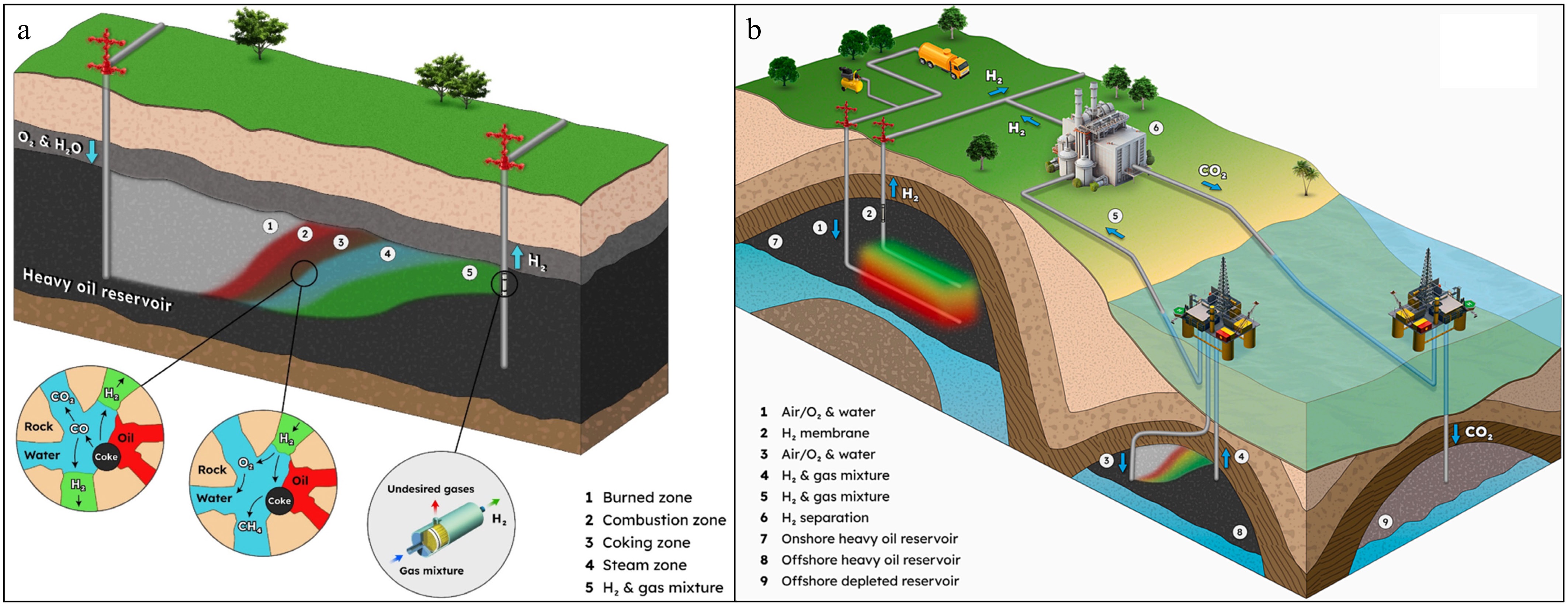
ISHG not only provides a low-carbon transformation path for the traditional petroleum industry but also has significant economic advantages over conventional hydrogen production technologies. Cost-effective hydrogen production is the cornerstone of the development of a low-carbon hydrogen economy. The cost of green hydrogen is very high, ranging from 4.2–10.3 USD/kg, which is higher than that of grey hydrogen and blue hydrogen[10]. Therefore, blue hydrogen that has undergone carbon reduction treatment is still the best choice at present. The ISHG technology using heavy oil as raw material has good cost-effectiveness.
In theory, heavy oil has multiple pathways for ISHG due to its complex composition of hydrocarbons. According to the reaction system and core mechanism, ISHG can be divided into three core independent and mutually coupled mechanisms: High-temperature Pyrolysis, Aquathermolysis, and Gasification. Among them, high-temperature pyrolysis and aquathermolysis are oxygen-free hydrogen generation routes, while Gasification is an oxygen-assisted hydrogen generation route[11,6]. Among them, high-temperature pyrolysis to produce hydrogen is the gasification of organic compounds contained in crude oil as the ambient temperature increases. The concept of aquathermolysis for heavy oil upgrading was first introduced by Hyne[12], referring to a suite of catalytic and thermal reactions—including desulfurization, denitrification, hydrogenation, and ring-opening processes—that occur when heavy crude is treated with high-temperature water or steam, typically in the range of 200–350 °C. In this process, water acts not only as a solvent and heat-transfer medium but also as a hydrogen donor and catalyst, facilitating the partial upgrading of heavy hydrocarbons into lighter fractions. Gasification of crude oil occurs through oxidation in the reservoir environment, resulting in the dehydrogenation of heavy oil to produce coke and gases mainly composed of CO2, CO, CH4, and H2. Afterwards, it undergoes coke gasification and water-gas shift reactions with water vapor at high temperature and pressure, ultimately achieving the goal of lightening heavy oil and producing combustible gases. To realize this potential, a deep understanding of the core thermochemical mechanisms driving heavy oil-to-hydrogen conversion-high-temperature pyrolysis, aquathermolysis, and gasification is essential, as these processes dictate efficiency, hydrogen yield, and environmental performance[13,14]. Figure 2 shows the differences and connections between the three mechanisms.
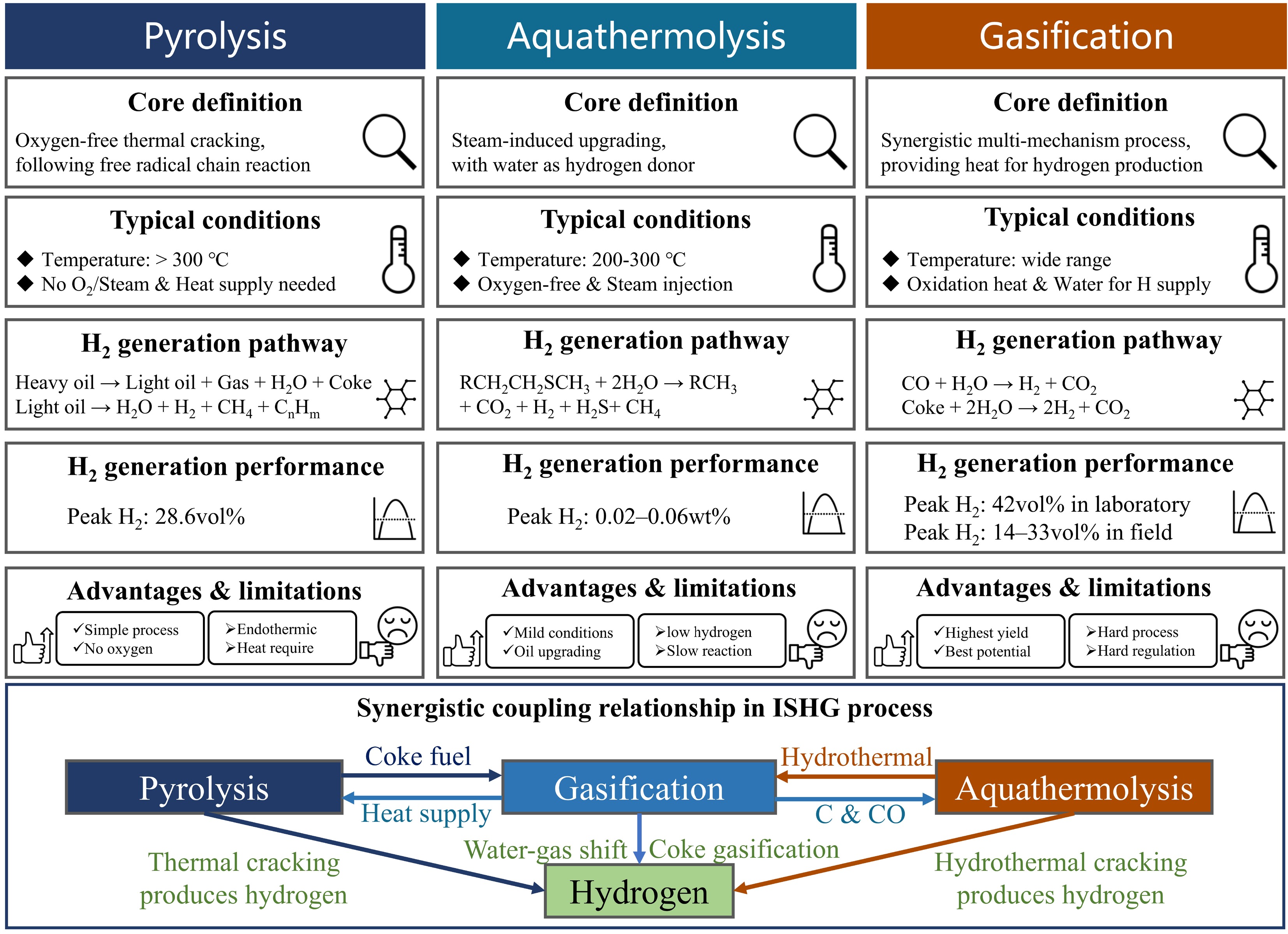
Figure 2.
The differences and connections between the three mechanisms.
Despite the growing research attention on heavy oil ISHG, there are still several unresolved core scientific questions that restrict the development and application of this technology, which this review aims to systematically address. First, it clarifies the intrinsic differences, core advantages, and application limitations of the three core ISHG mechanisms in terms of reaction pathways, hydrogen generation performance, and sorts out the academic consensus and existing problems in current experimental and numerical simulation research; second, it reveals the synergistic coupling mechanism among the three core mechanisms in the actual ISHG process and clarifies the competitive and inhibitory relationships between hydrogen generation and hydrogen consumption reactions; and third, it proposes targeted and implementable optimization paths and future research priorities to break through the above bottlenecks, so as to improve the hydrogen production efficiency, economic viability, and low-carbon performance of heavy oil ISHG technology.
Through a comprehensive and critical analysis of the above three mechanisms, this review aims to establish a complete cognitive framework for heavy oil ISHG, guide subsequent academic research, and accelerate the development of efficient and low-carbon hydrogen generation technology from heavy oil.
-
The high-temperature pyrolysis of heavy oil mainly involves two types of reactions: cracking and condensation. The cracking reaction is the production of small molecules through the decomposition and dealkylation of large molecules, which absorbs heat. The condensation reaction is the further polymerization of heavy components to form larger molecules with lower hydrogen-to-carbon ratios, releasing heat. At present, it is widely believed that heavy oil pyrolysis follows a free radical reaction mechanism, including free radical generation, diffusion, chain transfer, and termination processes. The reaction of hydrocarbon radicals can be divided into three stages: chain initiation, growth, and termination. Unlike light oil and gas-phase cracking, heavy oil cracking mainly occurs in the liquid phase, which has a significant impact on reaction rate and activation energy.
Early pyrolysis experiments still mainly focused on the impact of temperature increase on crude oil and the changes in products. From the investigation into the thermal decomposition of Athabasca Bitumen, Speight examined its structural evolution during pyrolysis[15]. Experimental distillation at 460 °C demonstrated that the bitumen yielded 55.3% light oil, 25.4% coke, 17% gas, and 2.3% resin. After pyrolysis, the aromaticity and carbon, hydrogen, nitrogen, oxygen, and sulfur atom distribution of asphalt oil and its pyrolysis products undergo significant changes. Table 1 shows the typical pyrolysis reaction process[16]. It also indicates the fact that pyrolysis serves as the basis for other reactions. Yang et al. employed thermogravimetric analysis coupled with mass spectrometry (TGA-MS) to investigate the mechanistic pathways of hydrogen formation during the pyrolysis of heavy oil, and found that hydrogen, methane, and other substances were all produced by pyrolysis and coke dehydrogenation reactions[17]. Tang et al. studied the hydrogen production pattern of heavy oil pyrolysis through thermogravimetric mass spectrometry analysis (TG-MS) and found that at the same stage, the activation energy for hydrogen production in light oil components was higher than that in heavy components. The hydrogen production efficiencies of the two components were 7.8 wt% and 3.3 wt%, respectively[18].
Table 1. The typical pyrolysis reaction process.
Stage Chemical reaction Heat variation Temperature (°C) Pyrolysis Heavy oil → Light oil + Gas + H2O + Coke Endothermic > 300 Secondary cracking Light oil → H2O + H2 + CH4 + CnHm; Light oil + H2O → H2 + CO Endothermic / Steam reforming reaction CnHm + 2nH2O → (2n + 0.5m) H2 + nCO2 Endothermic > 700 Water-gas reaction CO + H2O → H2 + CO2 Exothermic 300–600 Methane formation CO + 3H2 → CH4 + H2O; CO2 + 4H2 → CH4 + 2H2O Exothermic 300–600 Methane decomposition CH4 + H2O → 3H2 + CO Endothermic > 500 Boudouard reaction Coke + CO2 → 2CO Endothermic > 700 Coke gasification Coke + 2H2O → 2H2 + CO2 Endothermic > 700 Li et al. studied the pyrolysis characteristics of two heavy oils at different heating rates based on thermogravimetric analysis (TGA) data[19]. The kinetic performance of the pyrolysis reaction was evaluated using Friedman, Flynn–Wall–Ozawa (FWO), and Kissinger–Akahira–Sunose (KAS) methods, and a distributed activation energy model. The results indicate that quality loss mainly occurs during the active pyrolysis stage. A sample produces CH4, H2O, CO, and CO2 within the temperature range of 400–600 °C, resulting in mass loss. The distributed activation energy model (DAEM) method provides better reaction kinetics parameters for the pyrolysis process.
The catalytic role of reservoir minerals has become increasingly recognized in pyrolysis processes. Phillips et al. proposed a reaction scheme for Athabasca heavy oil within a sandstone matrix to systematically evaluate how mineral surfaces influence pyrolysis kinetics and product distribution[20]. Experimental results demonstrate that the pyrolysis of oil sands yields a greater proportion of solid coke residue and gaseous products compared to the thermal cracking of pure asphalt. The yield of heavy oil is lower at 360 and 400 °C, but higher at 420 °C, while the yield of asphaltene is the opposite. At 360 °C, the yield of light and medium oil is higher, while the yield is lower at 400 and 420 °C. The methane content is 45%–53%, the unsaturated hydrocarbon content is 3.0%–7.5%, the hydrogen content is 0.7%–4.0%, the carbon dioxide content is 2.5%–6.5%, the carbon monoxide content is 1%–6%, and the hydrogen sulfide content is 0.8%–5.6%. Wang & Anthony studied the cracking behavior of asphaltene and found that it undergoes both cracking and condensation reactions simultaneously, and the small molecular substances generated further affect the coking process[21]. He et al. heated crude oil and reservoir source rock samples in a pressure vessel at 380 °C for 72 h, resulting in the cracking of crude oil into gas, tar pitch, and residual liquid[22]. Experimental analyses indicate that the relative concentrations of n-heptane, methylcyclohexane, and toluene in liquid pyrolyzates can serve as diagnostic markers to differentiate between the cracking of crude oil and that of reservoir source rocks. This distinction arises because clay minerals present in the rock matrix exert a pronounced 'matrix effect', influencing the adsorption–desorption dynamics and thus altering the distribution of light hydrocarbons generated during thermal cracking. Luo et al.[23] used thermogravimetric mass spectrometry (TG-MS) analysis to examine the catalytic role of clay minerals in enhancing hydrogen yield during crude oil pyrolysis. Results indicate that hydrogen evolves during both primary pyrolysis and subsequent coke dehydrogenation stages, a phenomenon attributed to the acidic catalytic activity and ion-exchange capacity of the mineral matrix. Furthermore, the presence of catalytic acid sites on clay surfaces significantly lowers the temperature threshold required for hydrogen formation.
Due to the fact that coke is the main product of pyrolysis, its formation has also received attention. Gentzis et al. studied the effect of different carbonaceous particles on the thermal reaction coking of asphalt in the Athabasca block. The study found that adding fullerene soot with a large specific surface area can prolong the coking induction period of asphalt and improve the yield of liquid-phase products[24]. Schabron et al. studied the coking kinetics at 400–500 °C and found that residue coking is divided into two stages of first-order reaction, with the second-stage reaction being the dominant reaction at high temperatures. As the reaction temperature increases, the second-stage reaction begins to become the main coking reaction[25]. Wang et al. conducted experimental research on the coking characteristics of heavy oil cracking and oxidation, and found that the oxygen content of heavy oil increased by about 9% after low-temperature oxidation. The coking content of oxidized heavy oil was 17.0%, while that of crude oil was 11.3%[26].
Figure 3 shows an SEM image of pyrolyzed coke; it can be seen that the pyrolysis coke of crude oil has a small particle size, rough surface, high porosity, and good activity. Experimental work by Xiong et al. demonstrates that the presence of CO and H2 suppresses the further fragmentation of chain hydrocarbons, aromatic clusters, and oxygen-containing functional groups within the liquid product phase, promotes liquid production, and inhibits gas production and coking[27]. Han et al. studied the characteristics of pyrolysis of ultra-heavy oil through pressure thermogravimetric analysis (PTGA) and linear heating experiment (LHP). It was found that pyrolysis started at 100 °C and almost completed at 500 °C. The peak gasification efficiency of 55.1% was achieved at the terminal pyrolysis temperature of 600 °C, while carbonaceous residue averaged 25.8% of the initial feedstock. The resulting gas phase was predominantly composed of hydrogen and methane, which constituted 70.4% and 29.6% by volume, respectively[28].
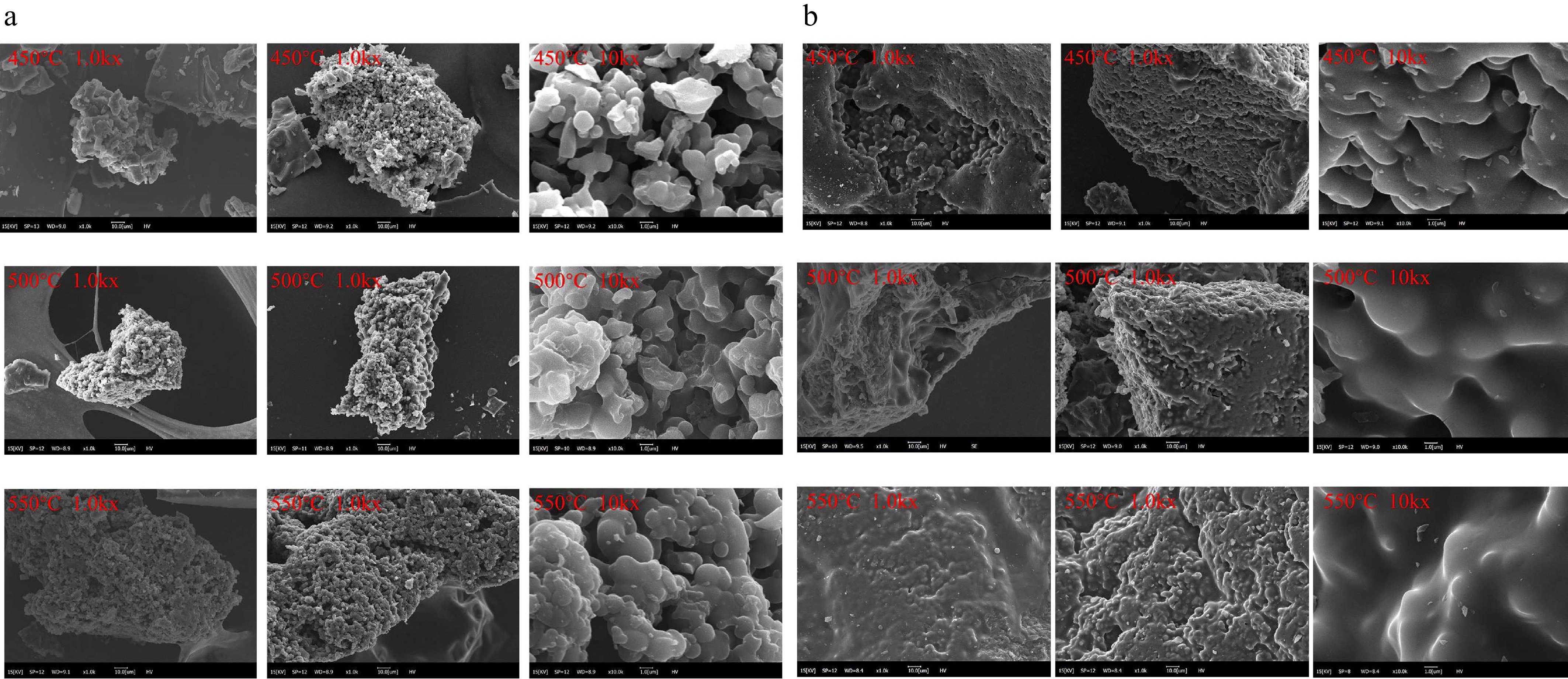
Figure 3.
SEM image of pyrolyzed coke[26] (Licence no. 6239390127009). (a) Crude oil. (b) Oxidized heavy oil.
The kinetics and parameters of pyrolysis reactions have also been developed. Hayashitani et al. established a pseudo-component reaction model for the pyrolysis of Athabasca asphalt and applied it to numerical simulations during thermal recovery processes[29]. The experimental analysis indicates that the gaseous products consist of 40%–50% methane, 20%–25% ethane, 10%–15% propane, 5%–10% butane, and 3%–5% pentane by volume. It is noted that the sum of these reported ranges is 78%–95%, suggesting the possible presence of additional minor gaseous constituents not listed here, as well as CO, CO2, H2S, H2, and other components; but the gas is integrated into a pseudo component. In their kinetic analysis of crude oil pyrolysis, Lin et al. introduced two distinct lumped-parameter models. The first reduces the system to two pseudo-components—representing heavy and light oil fractions—while the second incorporates an additional intermediate fraction, resulting in a three-pseudo-component scheme comprising heavy, medium, and light oil[30]. The new kinetic model not only includes kinetic parameters, but also introduces stoichiometric coefficients and correction coefficients to describe the changes in asphalt composition. However, Lin et al.'s model did not take into account gas components. In their investigation of Buton oil sands from Indonesia, Ma et al. employed differential scanning calorimetry (DSC) and thermogravimetric analysis (TGA) to characterize the pyrolytic behavior across a range of heating rates[31]. The apparent activation energy of oil sand pyrolysis was determined to be 13–85 kJ/mol using the Friedman method, with a conversion rate of 10%–90%, and it was found that the activation energy increased with the increase in conversion rate. In addition, it was found that the InA and E of oil sand pyrolysis showed a linear relationship. Li et al. investigated the pyrolysis behavior of two heavy oils using thermogravimetric analysis (TGA) across multiple heating rates[19]. The kinetic performance of the pyrolysis reaction was assessed through the Friedman, Flynn–Wall–Ozawa (FWO), and Kissinger–Akahira–Sunose (KAS) isoconversional methods, supplemented by a distributed activation energy model. Their findings demonstrate that significant mass loss occurs predominantly during the active pyrolysis phase. Within the temperature interval of 400–600 °C, the samples generated CH4 and H2, along with oxygenated compounds including H2O, CO, and CO2, resulting in mass loss. The DAEM method provides better reaction kinetics parameters for the pyrolysis process. Liu et al. employed a high-pressure, high-temperature reactor system to examine hydrogen generation from heavy oil, systematically varying gaseous environments, temperature, and pressure as key operational parameters[32]. The experimental results showed that under nitrogen conditions, after 10 d of constant temperature at 425 °C and 6 MPa, hydrogen concentration reached 28.6%. In addition, numerical simulation software revealed that hydrogen production from heavy oil involves a low-temperature water-gas shift reaction (150–250 °C), a pyrolysis stage (250–325 °C), and a high-temperature water-gas shift reaction stage (325–425 °C).
For the study on high-temperature pyrolysis, the initial research emphasis primarily centered on understanding the pyrolysis mechanisms for converting heavy oil into lighter fuels, which later evolved to experimental-based reaction models based on pseudo components. The research focuses on the in-situ thermal recovery process of oil sand reservoirs and improves the accuracy of the simulation by introducing chemical reactions and other influences. Overall, research on pyrolysis has focused on the impact of the pyrolysis process on the entire in-situ combustion process and the performance of heavy oil upgrading to produce light oil, without paying attention to the effect of pyrolysis itself on heavy oil gasification for hydrogen production.
Numerical simulations
-
Pyrolysis simulations were mainly based on reaction kinetics simulations, establishing relationships between gas, liquid, and solid components. Belgrave et al. and Yang et al. investigated the pyrolysis reaction of Athabasca bitumen[33,34]. According to their reaction plan, the pyrolysis reaction pathway can be divided into three reactions: The process involves two primary transformations: the initial conversion of soft asphalt into a more condensed asphalt phase, followed by its subsequent breakdown into solid coke and gaseous products. But the reaction pathway is relatively simple, and the complex gas composition of the product is studied as a gas pseudo-component as a whole. This approach omitted a detailed speciation analysis of the gas phase, such as quantifying individual components like hydrogen, methane, carbon oxides, and hydrogen sulfide. Kapadia et al[35]. expanded Yang et al.'s model and considered the generation of multiple gases. The improved pyrolysis model of asphalt by Kapadia et al. is shown in Fig. 4. Kapadia et al. mainly focus on the production of hydrogen and methane through cracking, and categorize other gases into heavy molecular weight gas (HMWG) pseudo components to ensure the conservation of total gas content.
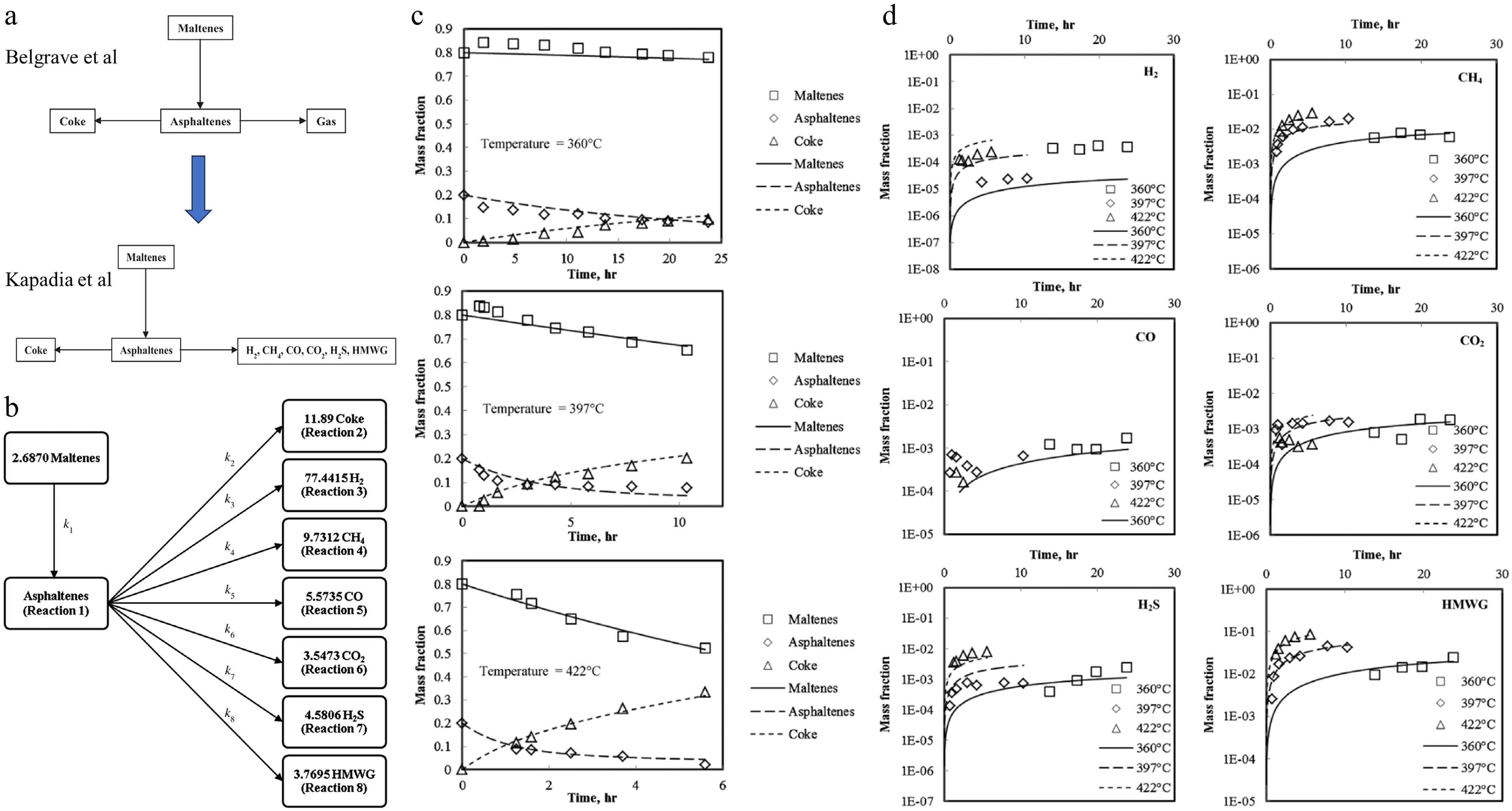
Figure 4.
Kapadia's improved bitumen pyrolysis model[35] (Licence no. 6239390397386). (a) Model improvement. (b) Pyrolysis pathway. (c) Multiphase component simulation results. (d) Gas production components.
With the deepening of the study, pyrolysis simulation has evolved from a simple kinetic model to a simulation of complex hydrocarbon evolution. In addition, different simulation methods, including multi-physics, field coupling, and molecular dynamics simulation, have also entered the field of vision. Ganji et al. developed single-component, four-component, and multi-pseudo-component reaction kinetics models to estimate the mass transfer caused by thermal decomposition at high temperatures. The improved pyrolysis model of asphalt by Kapadia et al. is shown in Fig. 5. Finally, it was found that the model with 11 pseudo-components had the highest accuracy[36]. We acknowledge the improvement in accuracy of complex models, but for industrial applications, it is even more necessary to couple multiple physical fields, retaining core information for reservoir-scale simulations.
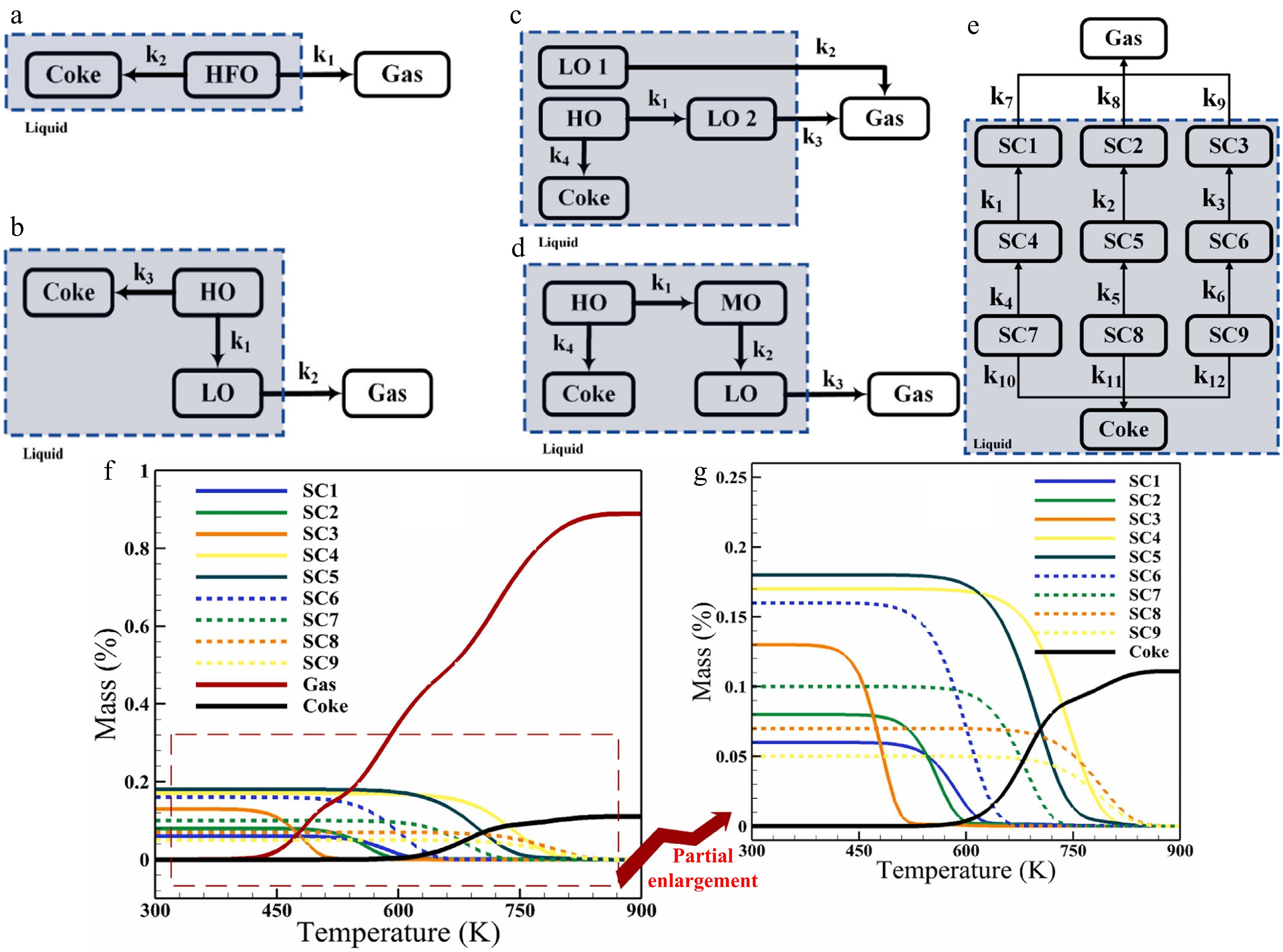
Figure 5.
Reaction kinetics model and multi-component simulation results proposed by Ganji[36] (Licence no. 6244050832583). (a) Model 1. (b) Model 2. (c) Model 3. (d) Model 4. (e) Model 5. (f) Simulation results of Model 5.
Based on the experimental findings, a novel pseudo-component kinetic model was constructed by Han et al., which elucidates the interdependent temporal evolution of thermal profiles, product yield distributions, and coke-deposition behavior[28]. It shows that coke begins to form at 92 °C, with a final mass fraction of 26.1%. Starting from 158 °C, CH4 is generated with a fraction of 30.7%; H2 starts to form at 333 °C, and over time, the mass fraction slightly increases, ultimately reaching 1.3%. During pyrolysis, the exterior region of an oil droplet experiences more rapid heating due to direct exposure to the elevated ambient temperature, which intensifies thermal cracking reactions at the surface. Meanwhile, heat transfer limitations create a significant thermal lag within the droplet’s core, resulting in a marked temperature gradient between the surface and interior. He et al. studied the effect of pyrolysis on hydrogen production from heavy oil from a microscopic perspective and the reaction pathways of various component conversions through molecular dynamics simulations[37]. The results indicate that saturated fractions are more prone to pyrolysis, resulting in the production of gaseous hydrocarbons (C1–C4). Properly increasing pressure is beneficial for hydrogen production. Water molecules generate hydrogen radicals through pyrolysis, promoting the formation of hydrogen molecules. Figure 6 shows multi-field physical coupling and molecular dynamics simulation methods. For high-temperature pyrolysis, the main technical bottlenecks include the high energy consumption caused by its strong endothermic property and the reservoir plugging risk caused by coking. The targeted solutions include pre-injection of clay-based catalysts to reduce the initial pyrolysis temperature threshold, and coupling with the in-situ combustion process of gasification to achieve self-sustaining heat supply for pyrolysis, which provides a clear direction for the optimization of pyrolysis-assisted ISHG technology.
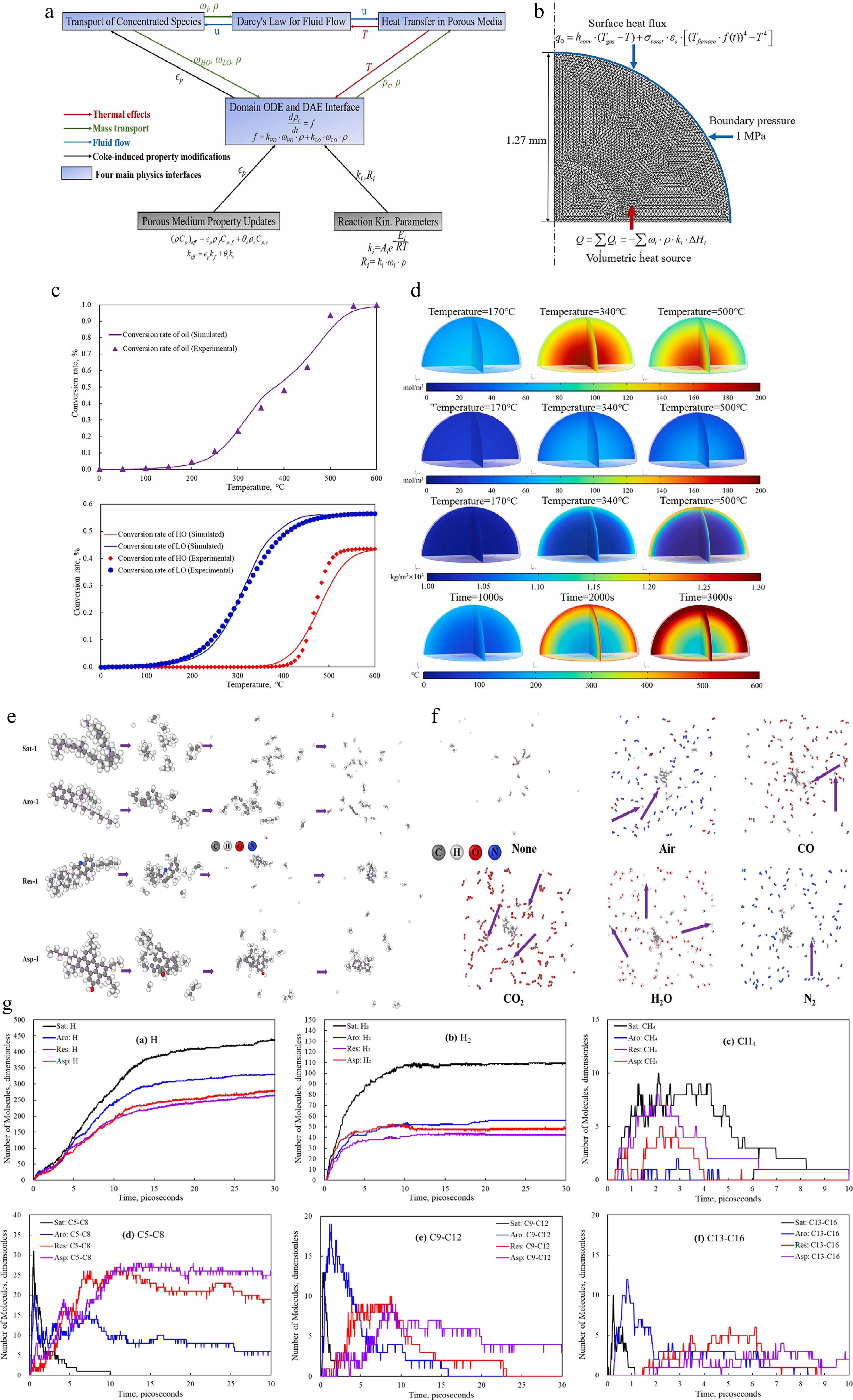
Figure 6.
Multi-field physical coupling and molecular dynamics simulation methods[28, 37] (Licence no. 6239390806160, 6244051274881). (a) Multi-field coupling framework. (b) Grid generation. (c) Fitting results. (d) 3D results. (e) Component pyrolysis. (f) Atmosphere influence. (g) Gas conversion pathway.
For high-temperature pyrolysis numerical models, the unique assumptions include the simplification of the free radical chain reaction into lumped global reactions and the neglect of the dynamic catalytic effect of clay minerals on the pyrolysis process, which are the main sources of systematic error for pyrolysis simulation. The oversimplified pseudo-component division also leads to deviations between the simulated and actual coke formation behavior, further affecting the prediction accuracy of subsequent hydrogen production from coke dehydrogenation.
-
The aquathermolysis reaction was initially widely studied as an important mechanism for viscosity reduction in heavy oil upgrading. Hydrogen provides a function similar to that of a hydrogen donor, making crude oil lighter through hydrogenation. Hyne initially set the temperature for hydrothermal reactions at 200–300 °C based on the steam injection temperature in the oil field. However, research is often not limited to this temperature range alone.
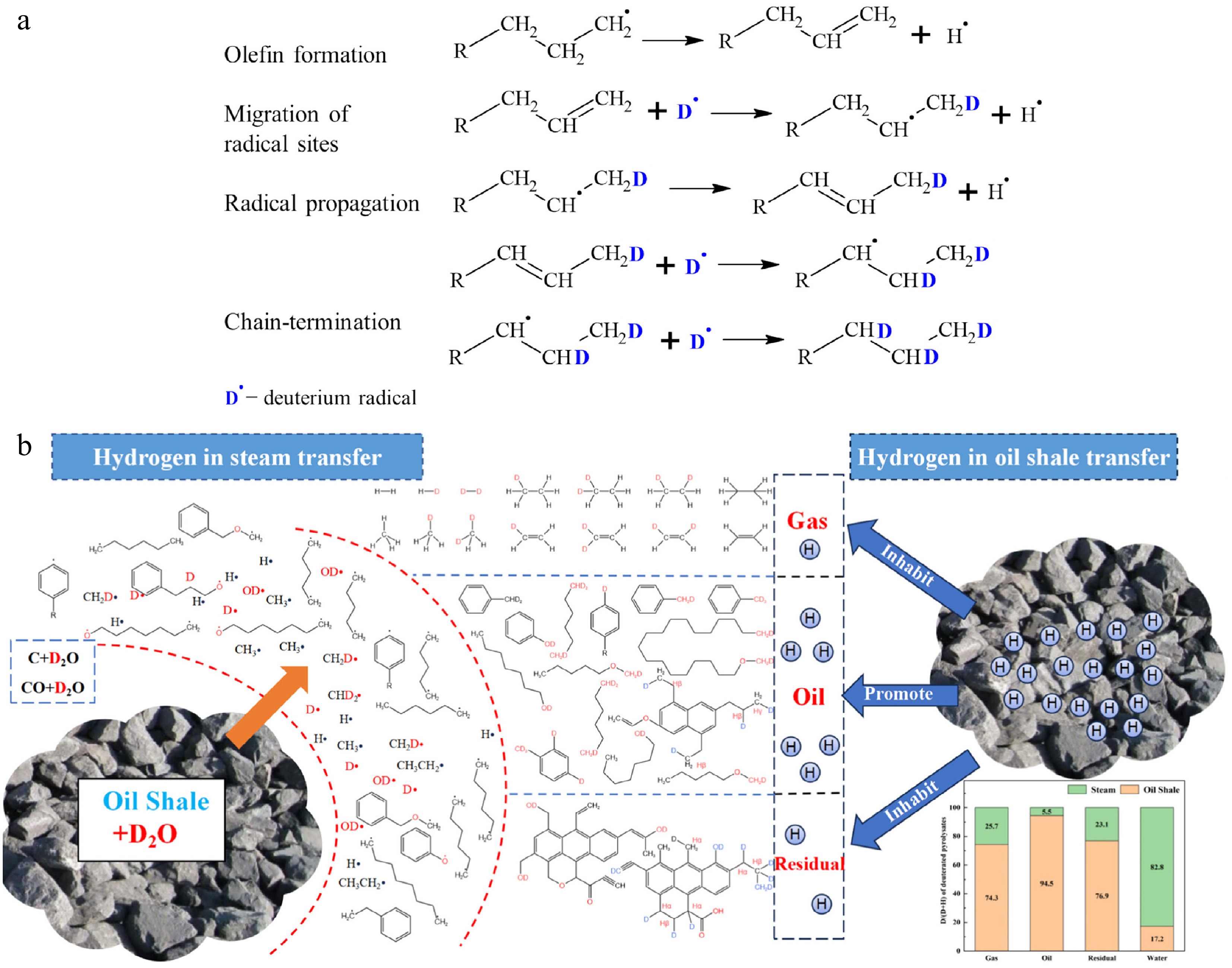
Factors such as reaction temperature, hydrogen donor, water addition, reaction time, and catalyst all have significant impacts on the aquathermolysis reaction. Research has shown that metal salt catalysts can lower reaction temperatures and improve viscosity reduction efficiency. The main types of catalysts include water-soluble transition metal salts, oil-soluble transition metal salts, superacids, and ionic liquids. There have been studies using deuterium tracer technology for hydrothermal modification. Figure 7 shows the transport path of the hydrogen element in aquathermolysis. The hydrogen doping mainly occurs through two mechanisms: free radical and ion pathways.
On the one hand, aquathermolysis experiments focus on the viscosity reduction effect of heavy oil, and many experimental conclusions have been drawn. In aquathermolysis experiments performed on native reservoir core samples, Belgrave et al. observed that thermal pretreatment of the crude oil significantly enhanced the yields of CO, H2, and light hydrocarbon gases, particularly within the 250–300 °C reaction window. This preheating stage effectively reduces initial viscosity by promoting early-stage cracking of heavy molecular components. When the temperature rises from 360 to 420 °C, the content of hydrogen and methane is 1.1–2.1 mg/g and 14–64 mg/g, respectively[40]. To investigate heavy oil aquathermolysis under controlled pressure, Song et al. constructed a variable-volume high-pressure/high-temperature reactor system capable of simulating in-situ reservoir conditions[41]. The results show that after reaching equilibrium in the reaction, time no longer affects the effect. After the reaction, the amount of resin and asphalt decreases, light hydrocarbons increase, and the ratio of H/C increases. The main reactions include gelatinous hydrogenation and asphaltene desulfurization. Huang et al. established experimentally that elevated concentrations of resin and asphaltene fractions correlate directly with prolonged kinetic equilibrium during hydrothermal degradation. Specifically, their findings indicate that samples richer in these heavy molecular components require significantly extended reaction durations to achieve complete thermal decomposition under hydrothermal conditions[42]. The equilibrium temperature for aquathermolysis of oil samples with different viscosities is the same. Low-viscosity oil mainly undergoes gum cracking, while the gum and asphaltene cracking of medium-high-viscosity oil occur simultaneously, with long-chain hydrocarbon fracture as the main mechanism. Al-Muntaser et al. investigated the catalytic upgrading of high-sulfur heavy oil in subcritical, near-critical, and supercritical aqueous-phase environments, and analyzed the characteristics of the products (gas, liquid, and coke)[43]. The results indicate that under subcritical conditions (250 °C), a limited fraction of sulfur is eliminated from the feedstock, yielding a gas-phase mixture containing trace amounts of light hydrocarbons, hydrogen sulfide, carbon dioxide, and hydrogen. Under near-critical (350 °C) and supercritical (400 °C) conditions, the upgrading of heavy oil into lighter fractions is accompanied by a marked decrease in heteroatom content, including sulfur and nitrogen compounds, an increase in saturated fatty acid content, a decrease in aromatic hydrocarbons, resin, and asphaltene content, and a high methane yield. Tang et al. conducted aquathermolysis experiments in a closed reactor under conditions of 200–280 °C and 12–72 h, and proposed a comprehensive kinetic model involving multiple gas-liquid components. The results indicate that methane and high molecular weight gas (HMWG) mainly come from saturated hydrocarbon evaporation and asphaltene cracking, and asphaltene gasification in heavy oil is the main source of hydrogen, carbon dioxide, and hydrogen sulfide[44].
Due to the low temperature of aquathermolysis, it is necessary to combine catalysts to promote hydrogen production. The experimental results of aquathermolysis conducted by Belgrave et al. showed that preheating and oxidizing crude oil can increase the generation of H2, and the mineral composition of rock cores affects the generation of CO2[45]. Fan et al. investigated the catalytic influence of reservoir minerals on heavy oil aquathermolysis, systematically examining how temperature, water concentration, and reaction duration affect key properties such as viscosity and average molecular weight[46]. Experimental findings demonstrate that minerals possess catalytic capacity to promote reaction kinetics, thereby significantly lowering the viscosity and average molecular weight of crude oil through surface-mediated mechanisms. Chen et al. studied the viscosity-reducing effect of a new catalyst, iron aromatic sulfonate, reducing the viscosity of crude oil in multiple heavy oil blocks by 86%–91%[47]. Yi et al. separated asphaltene and resin from Liaohe heavy oil and studied the aquathermolysis effect of heavy oil under different catalyst conditions. The ranking of catalyst effectiveness was found to be: no catalyst < NiSO4 < FeSO4 < nickel cycloalkanoate < iron cycloalkanoate[48]. Chen et al. first synthesized the nano heteropolyacid catalyst K3PMo12O40 for the catalytic aquathermolysis of ultra heavy oil[49]. Wang et al. comprehensively analyzed the catalytic reaction process of heavy oil aquathermolysis[50]. Seven reaction mechanisms of Fe3+ and Mo6+ ions were described, including pyrolysis, depolymerization, hydrogenation, isomerization, ring-opening, oxidative alcoholysis, esterification, and molecular reconstruction. The former primarily influences resin fractions, saturated hydrocarbons, and oxygen-containing functional groups, whereas the latter predominantly alters asphaltene components, aromatic hydrocarbons, and sulfur-containing moieties. Zhang et al. investigated the catalytic performance of a composite system—consisting of native reservoir minerals, nickel sulfate, and formic acid—in the aquathermolysis upgrading of heavy crude oil from the Liaohe oilfield[51]. Experiments have shown that minerals have a catalytic effect, and the viscosity reduction rate of the nickel sulfate catalyst is 50%, which increases to 71.8% after adding formic acid. Zhao et al. studied the catalytic effect of formic acid on the aquathermolysis of ultra-heavy oil[52]. The synergistic interaction between catalytic species and hydrogen-donor agents substantially accelerates hydrothermal reaction kinetics by concurrently lowering activation barriers and enhancing in-situ hydrogen transfer. Lyubimenko et al. studied the reaction mechanism of heteroatom compounds and polycyclic aromatic hydrocarbons under hot steam[53]. The results indicate that the presence of hydrogen-donor species, such as polycyclic aromatic hydrocarbons and formic acid, can promote both hydrogenation and hydrocracking reactions during thermal upgrading processes. Chao et al. developed a catalyst that possesses a bifunctional design, combining a well-defined catalytic center with an integrated hydrogen-supplying framework, copper alkyl ester sulfonate[54]. Research has shown that this catalyst can promote the viscosity reduction and upgrading of heavy oil. Djimasbe et al. proposed an Al2O3-supported nickel cobalt alloy catalyst for the production of hydrogen from ultra-heavy oil under supercritical water (SCW) conditions[55]. The results showed that the molar concentration of hydrogen produced at a temperature was only 1.1%, and the hydrogen concentration increased to 6.1% under SCW. Under the conditions of the NiCo/Al2O3 catalyst, the hydrogen production is 11.8%, and the methane production is 40.5%. Katnov et al. found that the organic dispersion of nano-metallic sodium particles enhances the hydrogen production process of heavy oil; sodium reacts with water to produce hydrogen, increasing the hydrogen yield from 0.1 wt% to 1.2 wt%[56]. By forming sodium sulfide and carbonate, hydrogen sulfide and carbon dioxide are consumed, which has an environmentally benign effect. Overall, the efficiency of hydrogen production through conventional aquathermolysis is relatively low. Table 2 summarizes the hydrogen generation efficiency of aquathermolysis in current literature. It can be found that the hydrogen production efficiency of aquathermolysis is between 0.02 and 0.06 wt%, and the overall gasification rate is between 0.16 and 0.21 wt%, indicating relatively low efficiency.
Oil sample Viscosity, mPa·s (50 °C) Reaction time, h Catalyst CH4, wt% H2, wt% Gasification rate Heavy oil, Xinjiang, China 2,578.6 72 None 0.044 0.064 0.209% Heavy oil, Liaohe, China 183 72 NiO − − 0.157% Heavy oil, Cuba 9,963.7 24 None 1.257 (vol%) 0.06 (vol%) − Oil-soluble 1.401 (vol%) 0.01 (vol%) − Extra heavy oil, Liaohe, China 11,514–16,874 48 None 0.392 0.020 − Air-soluble 0.608 0.030 − Oil-soluble 0.582 0.025 − Water-soluble 0.467 0.024 − Heavy oil, Liaohe, China 124.3 36 None 0.677 0.026 − The proposal of aquathermolysis technology was initially aimed at upgrading heavy crude oil so that it can produce light components with the participation of high-temperature steam, reduce viscosity, and be easy to extract. In addition, due to the lower hydrogen production rate of aquathermolysis compared to high-temperature pyrolysis, it is difficult to achieve in-situ hydrogen production efficiency. However, due to its milder reaction conditions and wide space, there is still potential for hydrogen production.
Numerical simulations
-
Computational modeling of aquathermolysis predominantly addresses the development of kinetic frameworks and the determination of their parameters. Initial studies established that the process proceeds through the cleavage of C–S bonds in complex molecular structures like resins and asphaltenes, yielding gaseous products including light hydrocarbons, hydrogen, methane, hydrogen sulfide, and carbon dioxide.
Clark et al. studied the mechanism of heavy oil aquathermolysis and the formation pathways of H2S, CO, and CO2[12]. The following aquathermolysis reactions were proposed:
$\rm Bitumen \xrightarrow{\mathrm{Steam}(\mathrm{Minerals})200-300{\text{°C}}} CH_{4} + Hydrocarbons + H_{2}S + CO_{2} + CO + H_{2} $ (1) Belgrave et al. proposed, based on experimental data, that the products of aquathermolysis reactions include gas, coke, asphaltene, light oil, and heavy oil, and proposed the following hydrothermal reactions, including kinetic parameters[40,61]:
$ \begin{split}\quad\quad\quad\rm{ASPH} \to & \;\rm {a}_{ {11}} Coke + a_{ {12}} HO +\\& \rm a_{ {13}} LO+a_{ {14}} {H}_{ {2}} + a_{ {15}} {CH}_{ {4}} +a_{ {16}} CO + \\& \rm a_{ {17}} {CO}_{ {2}} +a_{ {18}} {C}_{ {2}} H6+a_{ {19}} {C}_{ {3+}} +a_{ {110}} {H}_{ {2}} {S} \end{split}$ $ \rm {HO \to a}_{ {21}} Coke + a_{ {22}} LO + a_{ {23}} {CH}_{ {4}} + a_{ {24}} {C}_{ {2}} {H}_{ {6}} + a_{ {25}} {C}_{ {3+}} $ $ \rm{LO \to a}_{ {31}} Coke + a_{ {32}} {CH}_{ {4}} + a_{ {33}} {C}_{ {3}} {H}_{ {6}} + a_{ {34}} {C}_{ {3+}} $ (2) Lamourex et al. established a sulfur-based kinetic model for oil sand aquathermolysis based on experimental results, predicting the distribution of sulfur components and the generation of H2S during the oil sand aquathermolysis process[62]. The following aquathermolysis reactions were proposed:
$ \rm{S}^{ {ASP}} \to a_{ {11}} {S}^{ {H2S}} + a_{ {12}} {S}^{ {INS}} + a_{ {13}} {S}^{ {ARO}} + a_{ {14}} {S}^{ {RES}} $ $ \rm{S}^{ {RES}} \to a_{ {21}} {S}^{ {H_2S}} + a_{ {22}} {S}^{ {INS}} + a_{ {23}} {S}^{ {ARO}} $ $ \rm{S}^{ {ASP}} + S^{ {RES}} + S^{ {ARO}} + S^{ {INS}} + S^{ {H_2S}} = 1 $ (3) Kapadia et al. proposed a novel kinetic model to describe the aquathermolysis behavior of Athabasca bitumen, which extended Clark's model and added a high molecular weight (HMWG) gas pseudo-component[63]. The model demonstrates predictive accuracy for both sulfur- and carbon-oxide gases (e.g., H2S, CO/CO2) as well as combustible light hydrocarbons such as methane and hydrogen. The proposed aquathermolysis reaction is as follows:
$ \begin{split}\rm Bitumen \xrightarrow{\text{Steam}\left(\text{Minerals}\right)200-300{\text{°C}}}\;&\rm 4.83 CH_{4} + 1.87 HMWG + 2.27 H_{2}S +\\&\rm 1.76 CO_{2} + 2.77 CO + 38.44 H_{2}\end{split} $ $ \rm{CO + H}_{ {2}} O \leftrightarrow CO_{ {2}} + H_{ {2}} $ (4) The simulation study of aquathermolysis can be applied to steam thermal recovery of heavy oil. Huang et al. established a basic model for the numerical simulation of aquathermolysis reactions[64], determined the modified chemical equations, and calculated the kinetic parameters by reasonably dividing the oil components. The findings demonstrate that aquathermolysis effectively lowers the viscosity of heavy oil, enhances overall crude recovery, and decreases water saturation in the near-wellbore region (Fig. 8). Zhang et al. established a mathematical model considering the catalytic aquathermolysis effect of rock cores, and the kinetic model was subsequently implemented to replicate and evaluate steam-assisted gravity drainage (SAGD) operations[65]. The results indicate that rock cores can promote gas production through aquathermolysis reactions. Pyrolysis reactions are primarily concentrated in the upper reservoir section and in proximity to production wells.
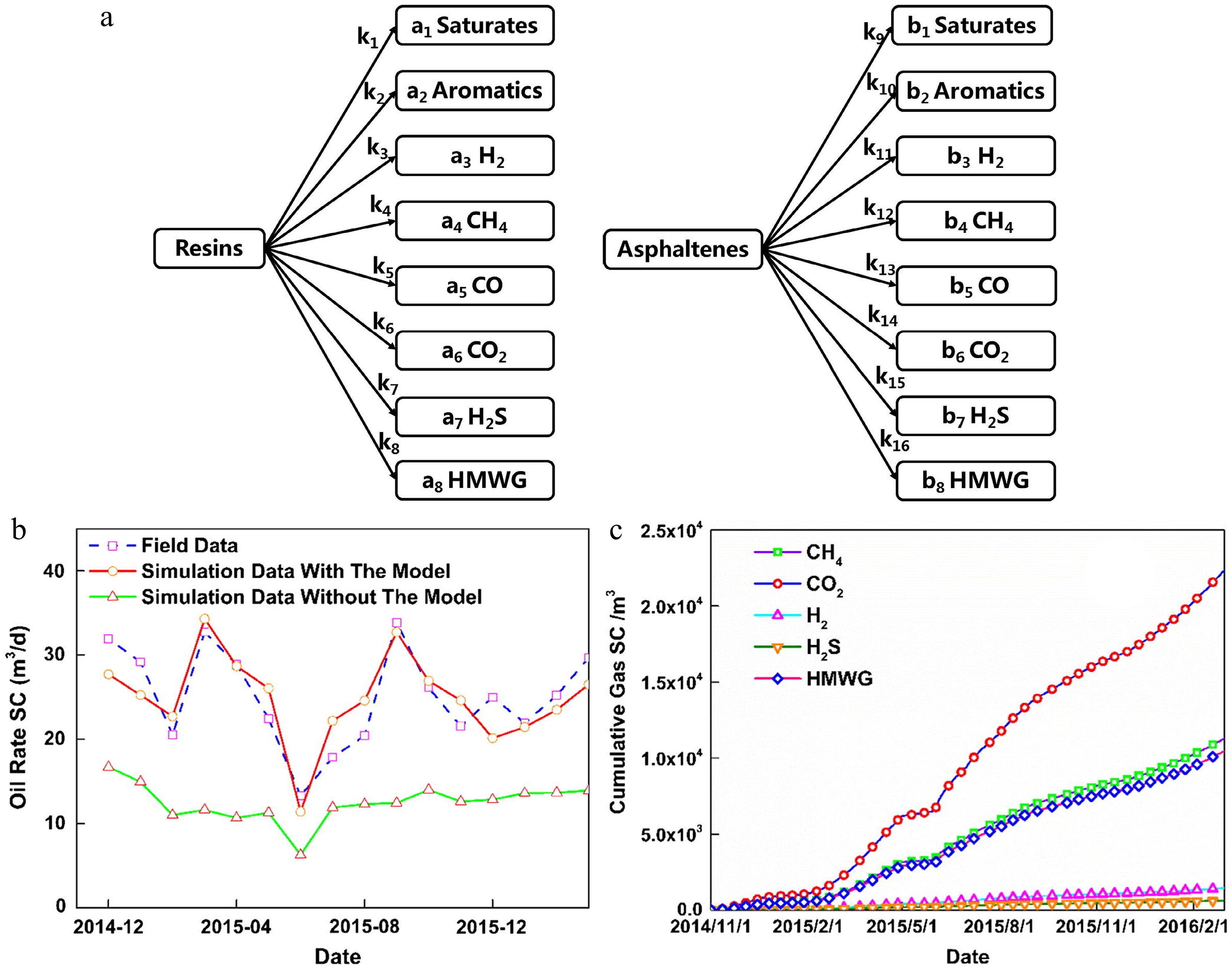
Figure 8.
The aquathermolysis model and simulation results applied to oilfield production[66] (Licence no. 6239681443442). (a) Model. (b) Fitting results. (c) Gas production results.
Tirado et al. analyzed and discussed the current kinetic models of aquathermolysis reactions[67]. A systematic review was conducted to synthesize existing findings on operational parameters, kinetic rate expressions, associated kinetic constants, and catalyst-mediated degradation pathways. It is believed that there is little research on the kinetics model of aquathermolysis in the literature, and the influence of hydrogen donors has not been considered. Xu et al. conducted an in-depth study on the viscosity-reduction mechanism of heavy-oil steam huff and puff by combining molecular dynamics and quantum mechanics simulations[68]. They modelled three types of viscosity reducers, compared the average cluster size of asphaltene in each heavy oil viscosity reducer, analyzed the interaction between the characteristic atoms of viscosity reducer branches and asphaltene and resin, and explained the differences in different effects.
The kinetic modelling of heavy-oil aquathermolysis has progressively advanced from initial single-pseudocomponent representations to more refined SARA (saturates, aromatics, resins, asphaltenes) fraction-based frameworks, and further to complex multicomponent models that discretize the oil into carbon-number-specific reaction families. In theory, the finer the division of crude oil, the more accurately it can reflect its component changes, but it also increases the difficulty of determining the reaction equation and may affect the stability and convergence of simulation calculations. In applied settings, achieving an optimal compromise between model accuracy and computational expense is therefore essential. For aquathermolysis-assisted ISHG, the core technical bottlenecks are the extremely low hydrogen production efficiency and the strong dependence on catalysts. The targeted solutions include the development of supercritical water-adapted high-activity catalysts to improve the gasification efficiency of heavy components, and the optimization of steam injection parameters to enhance the hydrogen donation effect of water, which provides a feasible path for improving the hydrogen production performance of aquathermolysis.
For aquathermolysis numerical models, the unique assumptions include the conventional reactions at steam temperature in the reservoir and the fixed catalytic kinetic parameters of transition metals, ignoring the special reactions of metal ions and reservoir mineral composition in steam and crude oil, as well as the deactivation of catalysts in the long-term hydrothermal environment. These assumptions are the main sources of error for the quantitative prediction of hydrogen production efficiency in aquathermolysis simulation.
-
In this paper, gasification is defined as a synergistic in-situ hydrogen generation (ISHG) process integrating high-temperature pyrolysis, aquathermolysis, and oxidation reactions (a comprehensive gasification process); it is essentially a comprehensive hydrogen generation reaction coupling temperature-dependent pyrolysis, aquathermolysis, and oxidation[69]. Gasification is the core multi-mechanism coupling reaction mechanism that dominates the hydrogen production process of in-situ combustion (ISC) technology. Correspondingly, ISC is the complete reservoir engineering technical system that realizes the gasification process and industrial-scale ISHG in heavy oil reservoirs. As an important mechanism of ISHG technology, gasification relies on in-situ combustion (ISC) to build a sustained high-temperature and high-pressure reaction environment underground, which enables the synergistic occurrence of the above pyrolysis, aquathermolysis, and oxidation reactions. There have been many studies on ISC, among which oxidation is the most critical. Current models describe crude oil oxidation as a three-stage process, comprising low-temperature oxidation (LTO), a fuel deposition interval, and high-temperature oxidation (HTO)[70].
During the low-temperature oxidation (LTO) stage, which occurs below approximately 300 °C, oxygen primarily reacts with volatile light fractions to form hydroperoxides. These unstable intermediates subsequently undergo isomerization and decomposition, yielding a range of oxygenated compounds—including alcohols, ketones, aldehydes, and carboxylic acids—while also releasing gaseous products such as CO2 and CO[71]. The core of the LTO stage may be concisely outlined below:
$ \rm{Hydroperoxide \to LTO\;residue + CO}_{ {2}} + H_{ {2}} {O} $ (5) The temperature during the fuel deposition stage is 370–500 °C. Within this temperature range, oxygen consumption and oxidation reaction heat release decrease with increasing temperature, also known as the negative temperature gradient region (NTGR)[72]. During this stage, elevated temperatures facilitate hydrogen generation primarily through the formation of initial coke deposits and their subsequent involvement in gasification and water-gas shift reactions[8]. The reaction is as follows:
$ \rm{LTO\;residue \to Coke + Hydrocarbons + CO + CO}_{ {2}} + H_{ {2}} {O} $ $ \rm{Coke + H}_{ {2}} O \leftrightarrow H_{ {2}} + CO $ $ \rm{CO + H}_{ {2}} O \leftrightarrow H_{ {2}} + CO_{ {2}} $ (6) The HTO process occurs above 500 °C and maintains a large amount of heat environment through coke combustion. HTO can be expressed as:
$ \rm{Coke + O}_{ {2}}\to CO + CO_{ {2}} + H_{ {2}} {O} $ (7) At the HTO stage, deposited coke can undergo methanation with hydrogen to produce CH4. While this reaction consumes both coke and hydrogen, sustaining in-situ high-temperature conditions remains essential to drive the process forward.
In the past, most ISC experiments did not record hydrogen data because the focus was on enhanced oil recovery (EOR). In fact, the hydrogen content itself is relatively low due to the lack of natural mineral catalysis and the intervention of water vapor. With the on-site production of hydrogen-rich synthesis gas from heavy oil ISC, the molar content once reached over 20%. Table 3 lists the hydrogen concentrations reported from ISC sites[73−77].
Table 3. The hydrogen concentrations reported from ISC sites.
Year Reservoir Porosity Permeability (mD) Viscosity (mPa·s) Depth (m) Method Peak hydrogen 1977 Utah Tar Sand 31% 600–700 > 106 107 ISC 14% 1979 Marguerite Lake 30% 1,000–3,000 > 105 450 ISC 33% 1985 Wolf Lake 32% 1,000–3,000 > 40,000 108–230 ISC 25% 2006 Whitesands 36% 3,000–12,000 / / THAI 10% 2009 Kerrobert 32% 2,000–6,000 > 21,000 789 THAI 7% The hydrogen concentration in the in-situ combustion project of Marguerite Lake is high, which is worth a detailed review. A combustion test was conducted in the test area, which includes three injection-production wells, T2, T3, and T4. Since 1983, four wells in the main well pattern have been converted to the mode of injecting oxygen-enriched air. It was found that all operational measures—steam huff and puff, gas injection fire drive, and combustion gasification—have hydrogen generation. The well locations, injection rate, and hydrogen concentration are shown in Fig. 9.
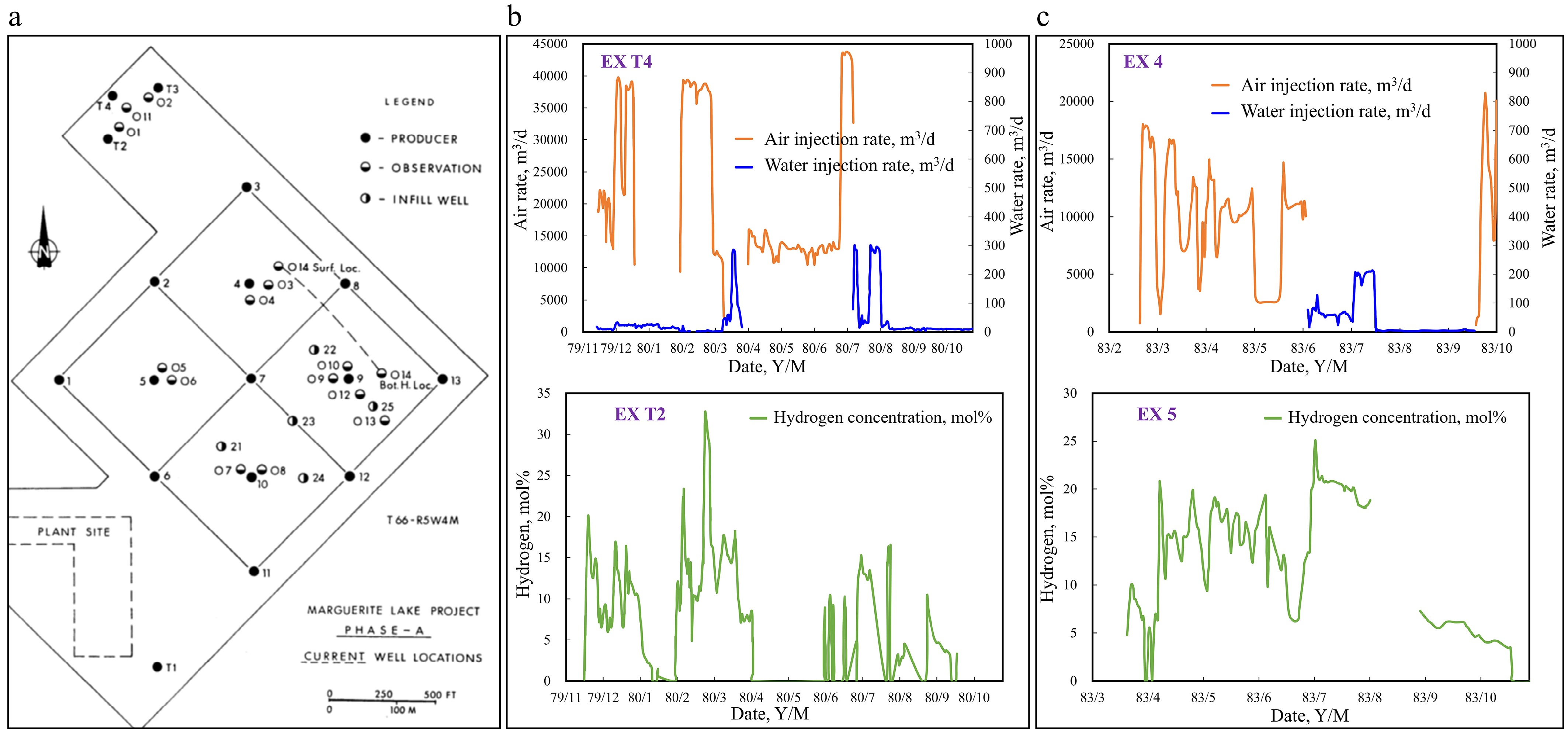
Figure 9.
The well locations, injection rate, and hydrogen concentration. (a) Well locations. (b) Hydrogen concentration of EX T4. (c) Hydrogen concentration of EX 4.
It can be seen from Fig. 9b that a combustion field test, involving the combined injection of air and water, was initiated in the EX T4 well cluster in November 1979 to evaluate enhanced oil recovery performance. The maximum air injection rate has reached 40,000 m3/d. Since March 1980, the maximum water injection rate has reached 300 m3/d, and the maximum hydrogen concentration can reach 33%. It can be seen in Fig. 9c that the combustion field test has been carried out in well cluster EX 4 since February 1983, and the maximum air injection rate has reached 20,000 m3/d. Since June 1983, continuous water injection has been carried out. The injection level in the early stages was about 50 m3/d, and increased to 200 m3/d in July. The water injection was basically stopped in mid-July, and the maximum hydrogen concentration could reach about 21%.
People have seen the hope of ISHG, and indoor experiments have followed suit with research. Yan et al. conducted combustion tube experiments to study the correlation between flue gas components (O2, CO2, CH4, N2, etc.) and combustion state during the ISC process[78]. The results indicate that under steam injection conditions, the methane content is greater than 40% during the preheating stage and less than 10% during the high-temperature combustion stage. He et al. studied the effects of different oil products and coke on in-situ hydrogen production under reservoir core and artificial sand filling model conditions through linear temperature oxidation experiments (RTO), and investigated the gas injection and water injection parameters[79]. It was found that coke gasification and water-gas transfer are the main hydrogen production reactions. The results demonstrated that heavy oil exhibits markedly enhanced hydrogen yield compared to light oil during oxidative thermal conversion; furthermore, the study introduced the concept of hydrogen generation efficiency (HGE) and derived its defining quantification formula. Ifticene et al. concluded through combustion and gasification experiments that hydrogen consumption reactions were accelerated in reservoir sand above 750 °C[9]. Further investigation into the influence of reservoir sand composition is necessary to clarify whether it suppresses or promotes hydrogen generation within the formation. Moreover, hydrogen yield can be modulated through the strategic adjustment of operational parameters, including air and steam injection rates, cyclic scheduling, oxygen concentration, and steam temperature. Okere & Sheng used experimental and numerical methods based on saturated hydrocarbons, aromatics, resins, and asphaltene (SARA) to reveal the multi-stage oxidation process and hydrogen production characteristics of saturated hydrocarbons at low and high temperatures[80]. They believe that production efficiency can be improved by precisely controlling temperature, reducing adverse side effects, and reservoir damage. Pu et al. found through reactor experiments that more hydrogen gas is produced when the temperature is above 400 °C[81]. When the reaction temperature increased from 300 to 600 °C, the total gas yield increased from 12 to 1,320 mL/g. Zhao et al. investigated the reaction pathway and mechanism of in-situ heavy oil gasification for hydrogen production under nitrogen and air conditions through reactor experiments[82]. Under nitrogen atmospheres, hydrogen formation has been confirmed to occur through both primary pyrolysis and secondary coke dehydrogenation reactions. Under air (oxidizing) conditions, the heavy oil exhibited a hydrogen generation efficiency (HGE) of 27.4%, corresponding to a hydrogen yield of 179.4 mL/g of feedstock. Figure 10 shows the experimental equipment and hydrogen production characteristics during the ISHG process. From Fig. 10a–c, it can be seen that a one-dimensional combustion tube (CT), ramped temperature oxidation (RTO), and reaction autoclave (RA) are the most commonly used devices. In addition, the detection of gas products usually relies on gas chromatography, mass spectrometry, and online analysis equipment (with reduced accuracy and stability). Figure 10d–g shows the significant changes in hydrogen production concentration under different operations and conditions (air/water/nitrogen ratio and catalytic species). It can be observed that mineral catalysis and precise oxygen and water content can produce the highest concentration of hydrogen gas.
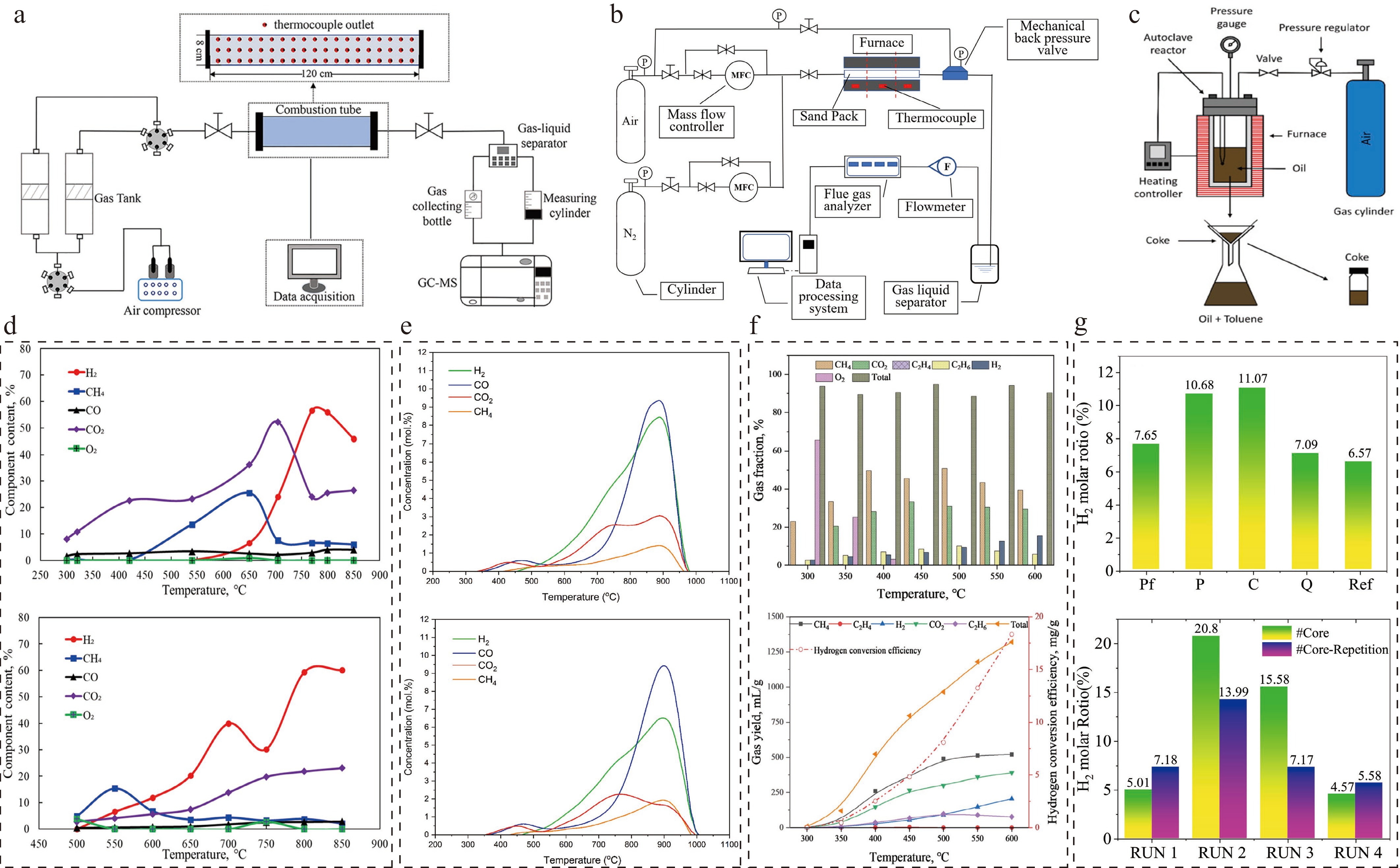
Figure 10.
The experimental equipment and hydrogen production characteristics during the ISHG process[79, 83,84] (Licence no. 502059445, 6239691210953, 6239691378567, 6239700073771, 6239700217452). (a) CT. (b) RTO. (c) RA. (d) Mineral-catalyzed and N2/Air/H2O-regulated hydrogen. (e) Coke-gasified and N2/H2O-regulated hydrogen. (f) Fixed-water-content oil oxidized hydrogen. (g) Mineral-catalyzed and multiple-round gasified hydrogen.
Catalysts are critical in in-situ hydrogen generation (ISHG) processes. Afanasev et al. demonstrated through combustion-tube experiments that nickel-based catalysts promote in-situ upgrading of heavy oil during steam-air co-injection, leading to a measurable reduction in oil density. This upgrading is accompanied by hydrogen evolution, which arises from thermally driven cracking and hydrocarbon scission reactions facilitated by the catalyst[85]. Jin et al. studied the catalytic effect of minerals on heavy oil gasification for hydrogen production through reactor and gas chromatography experiments[84]. They found that plagioclase and clay significantly promoted hydrogen production, with Fe2S being converted to Fe2O3 and Fe3O4, which remained active in multiple rounds of catalysis. Wang et al. applied nano nickel catalysts to the in-situ generation of hydrogen-rich syngas in heavy-oil reservoirs. The results showed that the highest yield under catalyst conditions was 20.1%, the peak hydrogen concentration was 5.0%, and the efficiency from heavy oil was 397.9 mL/g. Figure 11 shows the catalyst development of hydrogen generation from 1995 to 2024. From Fig. 11, it can be seen that the development trend of hydrocarbon conversion catalysts is gradually evolving with energy demand and low-carbon trends. Early focus is on basic optimization of a single product, with the core of improving the yield and stability of hydrocarbons. In the intermediate stage, dual-function and multi-metal catalysts are used to achieve tar treatment, carbon reduction, and other processes, while expanding the product to synthesis gas. At present, we are moving towards multifunctional integration, low-carbon adaptation, and industrial implementation. Catalysts simultaneously support industrial adaptation such as hydrogen production, in-situ carbon capture, and synergistic utilization of byproducts.
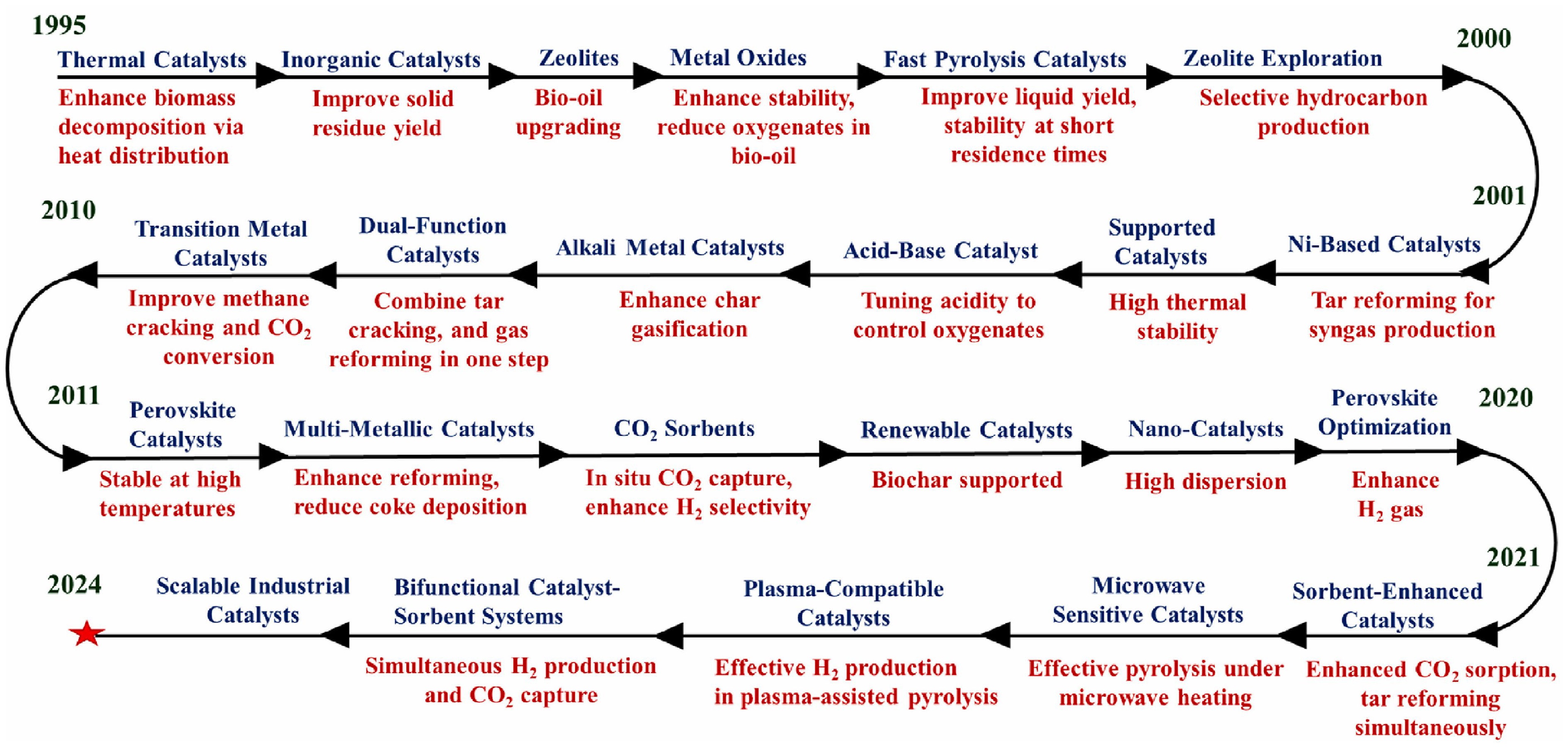
Figure 11.
The catalyst development of hydrogen generation from 1995 to 2024[86] (Licence no. 6239700454313).
Overall, ISHG is a feasible method that can supplement green hydrogen production and meet future energy demands, but it also poses challenges in monitoring and internal regulation of reservoirs. Further enhancement of hydrogen production efficiency is needed to improve economic feasibility. The successful development of in-situ hydrogen generation (ISHG) requires an integrated approach that bridges advances in reservoir engineering, fluid chemistry, geology, catalysis, and process design. At scale, ISHG could leverage existing petroleum infrastructure, thereby enabling the transformation of a carbon-intensive industry into a supplier of zero-carbon hydrogen.
Numerical simulations
-
Early gasification models focused on in-situ combustion and heat generation effects. Therefore, models often do not consider synthesis gas components, including hydrogen and methane.
Stipanov et al. introduced a kinetic model to describe both low- and high-temperature oxidation (LTO and HTO) of heavy oil[87]. This framework employs a single irreversible global reaction that encompasses the combustion of deposited coke into carbon oxides, methane, and water.
$ \rm LTO \left.\begin{array}{l}\rm Maltenes_{ {(s)}} + d1\;O_{ {2(g)}}\to {e1\;CO}_{ {(g)}} + f1\;CO_{ {2(g)}} + g1\;H_{ {2}} {O}_{ {(g)}}\\ \rm {Maltenes}_{ {(s)}} + d2\;O_{ {2(g)}}\to b2\;Asphaltenes_{ {(s)}} + g2\;H_{ {2}} {O}_{ {(g)}}\\ \rm {Asphaltenes}_{ {(s)}}\to {a3\;Maltenes}_{ {(s)}} + c3\;Coke_{ {(s)}} + f3\;CO_{ {2(g)}} + h3\;CH_{ {4}} \end{array}\right.$ (8) $ {\rm{HTO}}\;\;\,{\mathrm{Coke}}_{ {({\mathrm{s}})}} + {\mathrm{d}}3\;{\mathrm{O}}_{ {2({\mathrm{g}})}} \to {{\mathrm{e}}4\;{\mathrm{CO}}}_{ {({\mathrm{g}})}} + {\mathrm{f}}4\;{\mathrm{CO}}_{ {2({\mathrm{g}})}} + {\mathrm{g}}4\;{\mathrm{H}}_{ {2}} {{\mathrm{O}}}_{ {({\mathrm{g}})}} + {\mathrm{h}}4\;{\mathrm{CH}}_{ {4}} $ (9) Gradually, the potential for in-situ hydrogen production was discovered, and the model also considered the production of synthesis gas. Kapadia et al. introduced a comprehensive kinetic framework to assess the hydrogen generation capacity of Athabasca heavy oil[88]. The model incorporates reaction pathways for pyrolysis, oxidation/combustion, hydrogen formation, and hydrogen consumption. The simulation results indicate that Athabasca heavy oil exhibits a hydrogen production peak at temperatures of 320–380 °C and pressures of 4 MPa. Kinetic examination shows that the predominance of pyrolysis and low-temperature oxidation leads to substantial coke formation, thereby enhancing the rate of hydrogen production. Kapadia et al. investigated the mechanistic pathways for hydrogen generation via in-situ gasification of heavy oil, developing a detailed reaction network that integrates both in-situ combustion and gasification steps. This framework was subsequently applied to simulate the gasification process under field-relevant conditions[89]. Building upon SAGD technology, a novel in-situ gasification technique for heavy oil was developed, incorporating cyclic steam and controlled oxygen injection. The resulting synthesis gas achieves a hydrogen molar concentration of 20%–30%. Analysis of the data reveals that hydrogen yield is maximized when the oxygen concentration is maintained at its minimum operational level. In fact, the hydrogen production reaction model improved by Kapadia et al. has been widely used in various scales of ISHG research, as shown in Fig. 12; the subsequent changes are only reflected after the Sara components are subdivided.
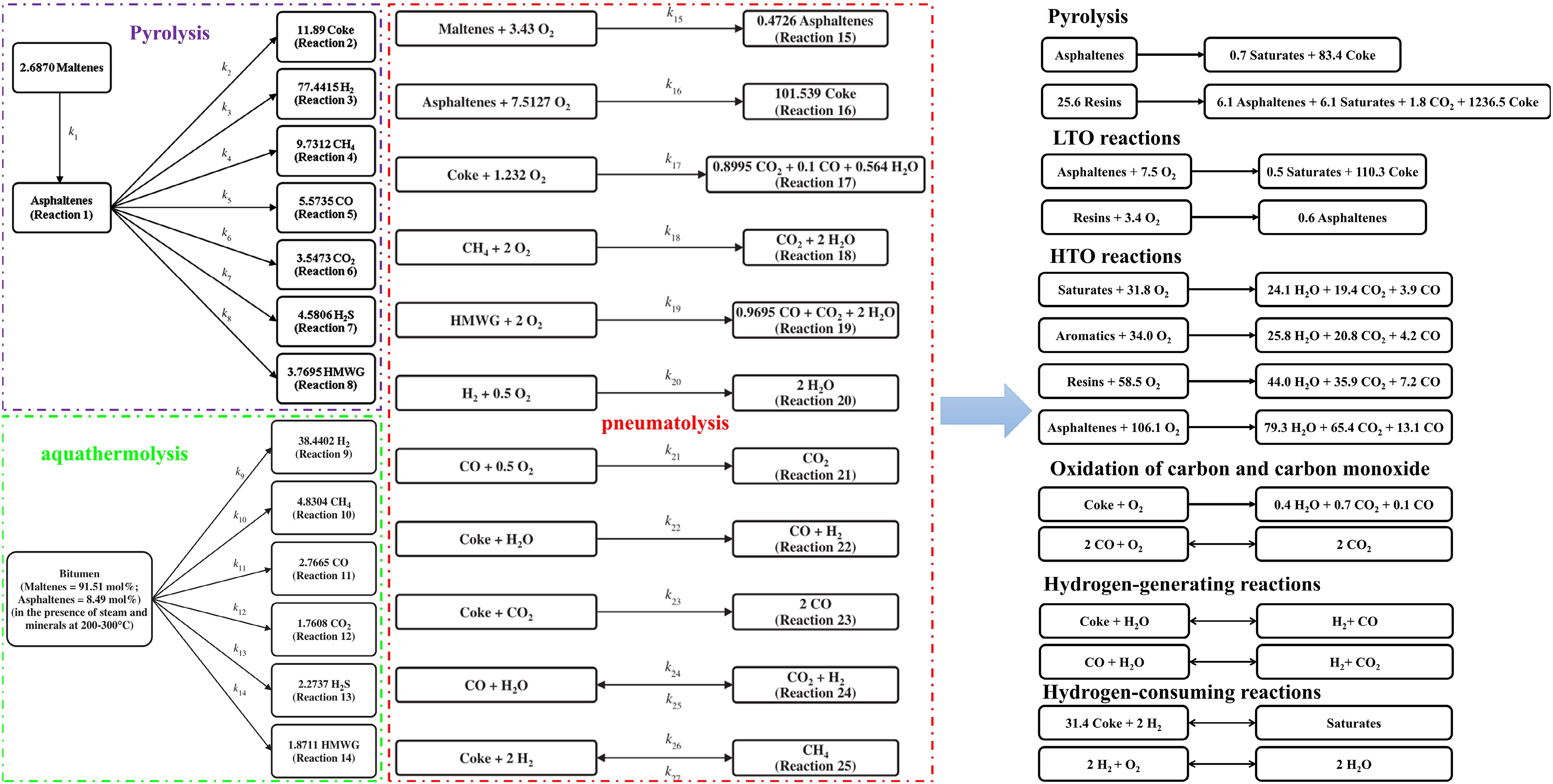
Figure 12.
Differences of reaction models in the ISHG process.
Perkins reviewed the mathematical models of in-situ combustion and gasification and proposed that using reservoir numerical models to simulate and study in-situ combustion and gasification under reservoir heterogeneity (including fractures) is a feasible approach[90]. Ikpaka & Ugwu developed a framework for designing on-site combustion models, which mainly includes processes such as steam reforming, partial oxidation, self-heating conversion, and pyrolysis[91]. The results of this model indicate that in on-site hydrogen production research, hydrogen output exhibits a dependency on the injected steam-to-carbon ratio, suggesting an optimal range for maximizing gasification efficiency. This shows an upward trend. Song et al. developed a one-dimensional combustion tube model using numerical simulation software CMG-STARS, which is the most widely used mainstream commercial software for heavy oil ISHG numerical simulation at present[92]. Its core advantages include mature built-in kinetic modules for thermal recovery, in-situ combustion, and multi-component thermochemical reactions, high compatibility with conventional oilfield injection–production processes, and abundant field application cases in the petroleum industry. Its main limitations are insufficient flexibility for customizing complex multi-mechanism coupling kinetic models and significantly reduced computational efficiency for ultra-large-scale reservoir models with refined grids and multi-component reactions. The results showed that at a temperature of 800 °C, the H2 concentration in the gas product of heavy oil hydrogen production could reach 34%. The sensitive parameters for hydrogen production were injection medium temperature, O2/N2 ratio, H2O fraction, and oil saturation. Okere & Sheng established a numerical simulation method considering the SARA components of heavy oil and studied the in-situ production of hydrogen through combustion gasification. It is believed that the current cost of in-situ hydrogen production is high and still requires technological upgrading and optimization[93]. They believe that production efficiency can be improved by precise temperature control, reducing adverse side effects and reservoir damage, and the optimal oxygen-to-nitrogen injection ratio has been determined. Hamdy et al. studied the effects of oxygen content and steam injection rate on in-situ combustion behavior, temperature distribution, and crude oil recovery in oil reservoirs[94]. In addition, the optimal content of injected oxygen and steam was obtained, with the highest H2 fraction reaching 42%. Ifticene & Yuan studied the hydrogen production effect of circulating injection of air and steam in oil reservoirs using a two-dimensional reservoir model incorporating both vertical and horizontal well configurations. Key operational parameters including gas injection rate, steam injection rate, steam temperature, and oxygen concentration were systematically evaluated[95]. Okere & Sheng systematically analyzed the effects of key factors on hydrogen and syngas generation, focusing on reservoir characteristics (porosity, permeability), thermal conditions, injection pressure, and the CO2/O2 ratio in the injected gas[96]. The results indicate that reservoir characteristics significantly affect hydrogen generation. High porosity can increase the hydrogen production rate and enhance combustion and gasification processes by promoting better entry of reactants into the oil. Song et al. determined the optimal parameter combination using numerical simulation software CMG-STARS combined with machine learning methods[97]. The results indicate that under the condition of co-injection of gas and water, gasification reaction dominates the production of H2, with a peak hydrogen production temperature of about 400 °C and a hydrogen production efficiency of 57.7 kg/m3. In addition to CMG-STARS, other mainstream numerical simulation tools used in current ISHG research include Eclipse and Comsol: Eclipse has outstanding advantages in reservoir engineering basic calculations and grid adaptability, but lacks built-in modules for complex thermochemical reactions; Comsol has strong multi-physics coupling capabilities, but has poor adaptability to oilfield injection-production engineering.
The simulation development of ISHG mainly focuses on reservoir numerical simulation research. Kapadia et al. established a dynamic model with multiple reactions, clarified the peak hydrogen production conditions (20%–30%), and participated in the design of on-site schemes; at present, the development of refined optimization is underway. As the core mechanism for industrial-scale ISHG, gasification faces core technical bottlenecks including the instability of the combustion front, the difficulty of multi-parameter dynamic regulation, and the low hydrogen enrichment of produced gas. The targeted solutions include the development of intelligent monitoring technology for the combustion front, machine learning-assisted real-time optimization of injection-production parameters, and the integration of downhole hydrogen separation technology, which are the core directions for the industrial application of ISHG technology. The selection of numerical simulation software for on-site scheme design should comprehensively balance the simulation accuracy of thermochemical mechanisms, computational efficiency of reservoir-scale models, and adaptability to field injection-production processes.
Notably, the practical application and predictive reliability of the above numerical models are fundamentally constrained by their inherent core assumptions and potential error sources. Current mainstream ISHG numerical models generally adopt four types of core simplifications: homogeneous reservoir physical property assumptions, lumped pseudo-component reaction kinetic assumptions, local thermal equilibrium for multi-phase mass-heat transfer, and constant boundary conditions for field engineering. These simplifications correspondingly introduce four main sources of error: systematic errors from reservoir heterogeneity simplification, uncertainty errors from fixed kinetic parameters fitted by laboratory experiments, numerical dispersion errors from grid and time step settings, and deviation errors from dynamic field boundary mismatches. These factors have negligible impacts on the qualitative revelation of the influence law of key parameters on ISHG hydrogen production performance, but will lead to a deviation in quantitative prediction for laboratory-scale experiments and a 20%–40% deviation for field-scale tests, which is the core bottleneck restricting the engineering application of current ISHG numerical models. Targeted optimization of these limitations, including the development of multi-scale heterogeneous reservoir models and full-cycle field-calibrated dynamic reaction kinetic models, is the key direction for future research in this field.
-
This review systematically summarizes the research progress, reaction mechanisms, and technical challenges of the three core ISHG mechanisms (High-temperature Pyrolysis, Aquathermolysis, and gasification; the multi-mechanism synergistic process underpinning in-situ combustion gasification for heavy oil reservoirs, and conducts a critical analysis by integrating the latest empirical data and advances in numerical simulation. The principal outcomes and derived conclusions are summarized below.
First, each of the three mechanisms has distinct reaction characteristics and hydrogen generation pathways. High-temperature pyrolysis is dominated by endothermic free radical reactions, where heavy oil decomposes into light hydrocarbons, gas (H2, CH4), and coke; the reaction kinetics are strongly influenced by temperature and mineral catalysis. Aquathermolysis, occurring under milder conditions (200–300 °C), relies on steam-induced upgrading of heavy oil components (resins, asphaltenes), and is significantly enhanced by catalysts, though its hydrogen production efficiency is limited by slow reaction rates and low gasification rates (0.16–0.21 wt%). Gasification, the most promising mechanism for industrial application, integrates ISC-induced oxidation (the low-temperature oxidation stage enables fuel precursor accumulation, whereas high-temperature oxidation governs the combustion of the resulting coke) with coke gasification and water-gas shift reactions, achieving peak hydrogen volume fractions of 14–42 vol% in laboratory experiments and field pilot tests; key parameters (O2/N2 ratio, steam injection rate, reservoir porosity) significantly regulate hydrogen yield and reaction uniformity.
Second, the synergistic coupling effect among the three mechanisms is the core factor for optimizing the overall ISHG performance. For example, pyrolysis not only produces hydrogen gas but also produces coke, which is a key fuel for maintaining combustion, while hydrothermal cracking reduces the viscosity of heavy oil to enhance the diffusion of reactants during pyrolysis and gas-phase cracking processes. Numerical simulation for ISHG has evolved from simple pseudo-component lumped models to multi-physics coupled models and machine learning-assisted optimization methods, which can accurately predict hydrogen generation performance and reaction front propagation. Molecular dynamics simulations have also been widely applied to reveal the microscopic reaction mechanisms of ISHG.
Third, we identify the key technical bottlenecks restricting the industrial application of heavy oil ISHG, which are the core constraints for the transformation from laboratory research to field-scale industrial application. This includes: (1) difficulty in targeted deep reservoir delivery and hydrothermal instability of catalysts under high-temperature and high-pressure reservoir conditions; (2) limitations in prediction accuracy and computational efficiency of numerical models in characterizing reservoir mineral catalytic effects and multi-mechanism synergistic coupling processes; (3) low downhole hydrogen enrichment degree, which puts forward high requirements for efficient downhole hydrogen separation or low-cost surface purification technology; (4) high full-process costs including catalyst injection, wellbore maintenance, and injection-production process dynamic adjustment.
Targeting the core pain points of current catalysts in field application, including the rapid decay of catalytic activity under long-term high-temperature, high-pressure, and high-salinity reservoir conditions, poor migration and dispersion performance in reservoir pores leading to limited effective swept radius, high cost of large-scale on-site injection, and poor compatibility with existing oilfield injection-production processes.
The future research focus should be on the following targeted, mechanism-matched aspects to address the identified technical bottlenecks: (1) For the targeted injection difficulty and high-temperature instability of catalysts, develop clay mineral-supported nano Ni/Fe/Co-based alloy catalysts to improve hydrothermal stability, construct a temperature-responsive slow-release catalyst system for targeted reservoir delivery, and propose a graded catalyst injection strategy adapted to achieve full-process catalytic enhancement; (2) For the accuracy and computational efficiency limitations of numerical models, build a multi-scale coupled model integrating pore-scale molecular dynamics simulation, core-scale kinetic model and reservoir-scale engineering model, propose a stepwise kinetic parameter calibration method based on lab-to-field test data, and adopt an adaptive grid encryption strategy to balance the prediction accuracy and computational speed of multi-mechanism coupling processes; (3) For the low hydrogen enrichment degree, develop high-temperature resistant composite membrane separators for downhole in-situ hydrogen separation, optimize the low-cost pressure swing adsorption-membrane coupled surface purification process adapted to existing oilfield infrastructure, and synergistically optimize the ISHG injection-production parameters to improve downhole hydrogen concentration from the source; (4) For the high engineering application costs, carry out ISHG technology transformation based on the existing well pattern and surface system of heavy oil thermal recovery blocks to save infrastructure investment, develop low-cost catalysts using oilfield solid waste as raw materials and realize catalyst recycling, and build a machine learning-assisted intelligent optimization model for injection-production parameters to reduce the full-process operating cost; (5) Coupling ISHG with CCUS technology through downhole in-situ CO2 sequestration while hydrogen separation, and conduct large-scale field pilot tests to systematically verify the technical stability, economic feasibility and low-carbon potential of the heavy oil ISHG technology.
In summary, heavy oil ISHG represents a sustainable approach to addressing global hydrogen shortages, while also valuing underutilized hydrocarbon resources. By breaking through the above core technical bottlenecks and fully unlocking the synergistic coupling potential among high-temperature pyrolysis, aquathermolysis, and gasification, ISHG technology is expected to facilitate the transformation of the traditional petroleum industry into a supplier of low-carbon hydrogen, aiding progress toward international carbon neutrality and sustainable energy targets.
The author would like to thank all co-authors for their contributions. The work is supported by the National Natural Science Foundation of China (Grant Nos 52604055, 52404036), the Shaanxi Provincial Natural Science Foundation (2026JC-YBQN-0600) and the Scientific Research Program Funded by Shaanxi Provincial Education Department (25JK0606).
-
The authors confirm their contributions to this study as follows: writing − original draft, writing − review and editing: He H; investigation and validation: Liu S, Liu P; conceptualization and methodology: He H, Guo Y, Liu P, Xin C; visualization and data processing: Liu J; supervision and project administration: Chen X. All authors reviewed the results and approved the final version of the manuscript.
-
The datasets generated during and/or analyzed in the current study are available from the corresponding author upon reasonable request.
-
The paper has not been published before and is not under consideration for publication anywhere else; its publication has been approved by all co-authors, as well as by the responsible authorities-tacitly or explicitly at the institute where the work has been carried out. The authors declare no competing financial interests or personal relationships with other people or organizations.
- Copyright: © 2026 by the author(s). Published by Maximum Academic Press, Fayetteville, GA. This article is an open access article distributed under Creative Commons Attribution License (CC BY 4.0), visit https://creativecommons.org/licenses/by/4.0/.
-
About this article
Cite this article
He H, Liu S, Guo Y, Liu J, Chen X, et al. 2026. A review of multi-mechanism coupling in in-situ hydrogen generation from heavy oil: focusing on high-temperature pyrolysis, aquathermolysis, and gasification. Progress in Reaction Kinetics and Mechanism 51: e024 doi: 10.48130/prkm-0026-0018 

A review of multi-mechanism coupling in in-situ hydrogen generation from heavy oil: focusing on high-temperature pyrolysis, aquathermolysis, and gasification
- Received: 08 April 2026
- Revised: 07 May 2026
- Accepted: 23 June 2026
- Published online: 27 August 2026
Abstract: The global transition toward carbon neutrality has driven a surge in demand for low-carbon hydrogen. Heavy oil, an unconventional resource with recoverable reserves accounting for nearly half of the world’s total unconventional oil resources, has emerged as a promising feedstock for in-situ hydrogen generation (ISHG). This technology utilizes underground reservoirs as natural reactors and reduces the carbon footprint through coupled in-situ carbon sequestration. This review systematically synthesizes state-of-the-art advances in the three core mechanisms of heavy oil ISHG: High-temperature Pyrolysis, Aquathermolysis, and Gasification (a synergistic process integrating pyrolysis, aquathermolysis, and oxidation reactions). For each mechanism, we elaborate on key experimental findings, advances in numerical simulation, and critical influencing factors. This review reveals that high-temperature pyrolysis follows a free-radical chain reaction mechanism, with hydrogen mainly derived from hydrocarbon cracking and secondary coke dehydrogenation; aquathermolysis relies on steam-induced hydrothermal reactions, whose efficiency can be significantly enhanced by transition metal catalysts, but its non-catalytic hydrogen production efficiency is extremely low; Gasification is driven by in-situ combustion (ISC), which includes three sequential oxidation stages and achieves the highest hydrogen yield (peak volume fraction up to 42 vol%) mainly through high-temperature coke gasification and water-gas shift reactions. Moreover, synergistic effects among the three mechanisms are identified as critical for improving hydrogen production efficiency. Finally, we identify the unresolved key technical bottlenecks restricting the industrialization of ISHG technology and propose targeted, specific future research directions. This review establishes a systematic cognitive framework for the reaction mechanisms of heavy oil ISHG and provides theoretical guidance and technical references for the development of efficient, low-carbon ISHG technologies.
-
Key words:
- Heavy oil /
- In-situ hydrogen generation /
- Pyrolysis /
- Aquathermolysis /
- Gasification